Pope Leo XIV’s visits to Turkey and Lebanon were about religious diplomacy

Source: The Conversation – USA (3) – By Ramazan Kılınç, Professor of Political Science, Kennesaw State University

Pope Leo XIV and the Armenian patriarch of Constantinople, Archbishop Sahag II Mashalian, celebrate a liturgy in the Armenian Apostolic Cathedral of Istanbul, Turkey, on Nov. 30, 2025. Dilara Acikgoz/AP Photo

On his visit to Turkey and Lebanon between Nov. 27 and Dec. 2, 2025, Pope Leo XIV met with political and religious leaders, celebrated Mass and visited historical sites.

The trip marked the 1,700th anniversary of the Council of Nicaea, which resolved core doctrinal differences, with the aim of advancing Christian unity at the time.

The Vatican framed the visit to the two Muslim-majority countries as a gesture of interreligious dialogue, as well as support for local minority Christian communities.

Through interfaith dialogue and symbolic acts, religious leaders often act as diplomats to strengthen relationships with other faith groups as part of religious diplomacy.

Traditional diplomacy often prioritizes political and economic interests, whereas religious diplomacy builds on identities and values. But as a scholar of religion and politics, I have often seen how religious diplomacy complements conventional diplomatic tools – the pope’s visit being the most recent example.

Turkey and religious freedom

Lebanon and Turkey have a long history of Christianity, dating back to the early centuries of the religion. The Bible mentions Jesus visiting Tyre and Sidon, coastal cities in Lebanon. Many early Christian communities thrived in lands of modern-day Turkey, such as Ephesus, Antioch and Cappadocia.

Despite Turkey’s significance in the history of Christianity, today Christians constitute less than 0.5% of its population. These include diverse Christian communities, from Armenian Orthodox, Greek Orthodox and Syriac Orthodox to Roman Catholic and Protestant.

Turkey’s constitution guarantees religious freedom, but Christians face legal and administrative hurdles in matters such as building places of worship.

The pope’s visit did not directly confront these structural issues, but the trip itself drew international attention to the plight of Christians.

The pope met with Muslim leaders to foster dialogue. He visited Istanbul’s Blue Mosque, an architectural icon for Turkish Muslims. In a meeting with Turkish President Recep Tayyip Erdoğan, the pope emphasized Turkey’s role as “a bridge between East and West, Asia and Europe.”

Even the pro-government media, which does not usually support rights for religious minorities, highlighted Turkey’s responsibility to provide religious freedoms for its Christian minorities in its coverage of the trip.

Several people walking in a large dome-like structure with high ceilings. Some are dressed in black suits and a few in white robes.
Pope Leo at the Blue Mosque in Turkey.
AP Photo/Emrah Gurel

Challenges of Lebanese Christians

Christians make up about a third of the Lebanese population – the largest proportion of any country in the Middle East.

Maronite Catholics, an Eastern Catholic community that traces its roots to the fourth century, constitute the largest group among Lebanese Christians. They are followed by Greek Orthodox communities, concentrated in Beirut and Mount Lebanon. Other groups include Melkite Greek Catholics, Armenian Apostolic, Armenian Catholics, Syriac Orthodox, Syriac Catholics, Assyrians, Chaldean Catholics, Copts and various Protestant communities.

Christians in Lebanon enjoy constitutional protections and better political representation than Christians in other Middle Eastern countries. Lebanon’s confessional system allocates power among religious communities. The president must be a Maronite Christian, the prime minister must be a Sunni Muslim, the speaker of the parliament must be a Shia Muslim; parliament and cabinet seats are split equally between Christians and Muslims.

However, Christians are concerned with their decreasing population in Lebanon. They constituted over 50% of the population when Lebanon gained its independence from France in 1943. Over the years, many Christians left Lebanon because of economic pressures, the dominance of the Shia group Hezbollah and insecurity stemming from Israeli strikes.

The pope advised political leaders to prioritize cooperation over sectarian interests within its confessional political system. As a gesture, he joined Muslim leaders in Martyrs’ Square in Beirut and shared readings from both the Gospels and the Quran.

Moral boost

The pope’s visit provided a morale boost for Lebanese Christians. Many saw the pope’s presence as encouragement to stay in Lebanon despite all the concerns.

Yet, some expressed disappointment that the pope did not travel to southern Lebanon, where Christian villages have suffered from Israeli strikes.

However, the pope reiterated the Vatican’s support for a two-state solution to the Israeli-Palestinian conflict as the only way to resolve “the conflict they continually live.”

Religious diplomacy

Through his visits to Turkey and Lebanon, Pope Leo XIV intertwined religious teachings with cultural gestures to promote a message of peaceful coexistence.

By meeting Christian groups in Turkey and Lebanon, he offered moral support and visibility to minorities facing insecurity and emigration pressures. By meeting with Muslim leaders, he showcased the Vatican’s commitment to coexistence and dialogue with Islam.

It remains to be seen whether the pope’s religious diplomacy will lead to tangible policy outcomes. Yet, one thing is clear: Religious diplomacy serves as a valuable tool for encouraging dialogue and understanding as it did with the pope’s visit.

The Conversation

Ramazan Kılınç does not work for, consult, own shares in or receive funding from any company or organization that would benefit from this article, and has disclosed no relevant affiliations beyond their academic appointment.

ref. Pope Leo XIV’s visits to Turkey and Lebanon were about religious diplomacy – https://theconversation.com/pope-leo-xivs-visits-to-turkey-and-lebanon-were-about-religious-diplomacy-271208
Fossil science owes a debt to indigenous knowledge: Lesotho missionary’s notes tell the story

Source: The Conversation – Africa (2) – By Julien Benoit, Associate professor in Vertebrate Palaeontology, University of the Witwatersrand

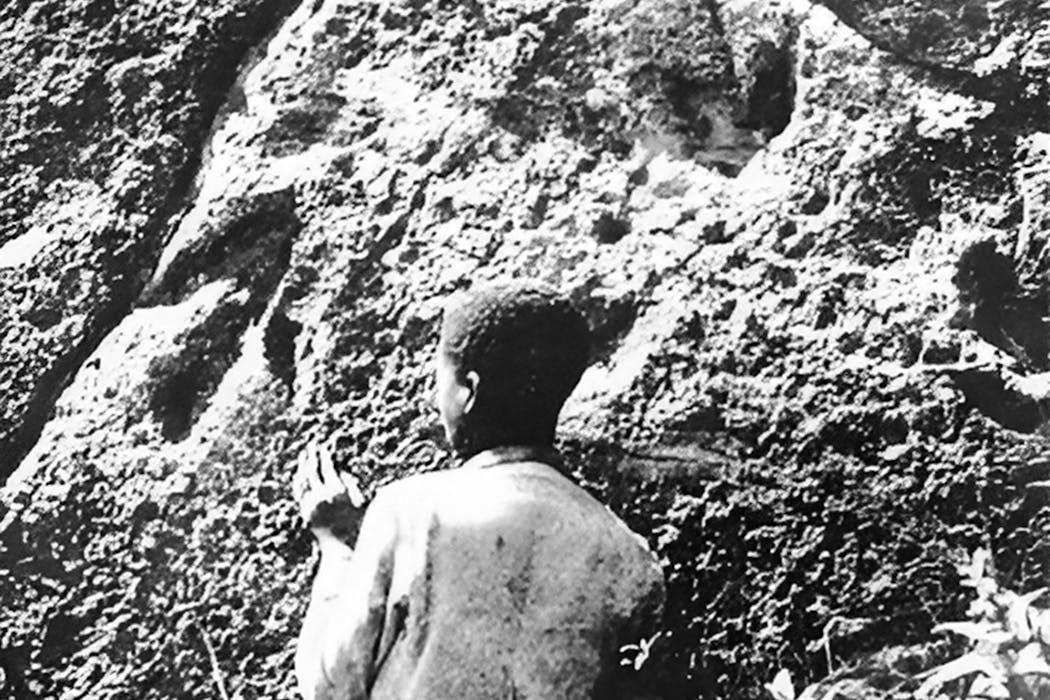
Dinosaur footprints at Morija, Lesotho, in 1906. The person standing in front of the rock slab covered with tridactyl fossil footprints is not identified. Photos courtesy of the Institut des Sciences de l’Evolution of the University of Montpellier, France , CC BY-NC-SA

For over a century, the scientific literature has credited western missionaries with “discovering” fossils in Lesotho, the small, mountainous country surrounded by South Africa.

The narrative typically begins with figures like the French missionary Hermann Dieterlen, who, in 1885, reported unusual “petrified bird tracks” near the settlement of Morija. This account implies that earth sciences like the study of rocks and fossils arrived in Lesotho from Europe.

In contrast, our research supports the notion that the local people recognised, interpreted and explained these fossils before missionaries arrived. Our research focus is on the dinosaur bones and tracks of Lesotho, its geomythology (cultural explanations of geological phenomena), and indigenous palaeontology.

Our recent study revisits the private archives of French missionary and self-taught palaeontologist Paul Ellenberger (1919–2016). He lived in Lesotho from 1953 to 1970 as part of a three-generation missionary family. During this period, he documented various fossils and published his findings in scientific literature. After returning to France, he earned a PhD in palaeontology in the mid-1970s. His contributions laid the foundation for the study of animal fossil tracks and traces in southern Africa.

His notes reveal that the Basotho and San people in Lesotho not only noticed fossils but also integrated them into their culture as geomyths.

This matters beyond Lesotho. Scientific history has often portrayed African indigenous communities as passive background figures. Fossils were deemed “discovered” only when Europeans documented them, despite what local people already knew.

Revisiting Ellenberger’s archives corrects this imbalance. His notes support that indigenous knowledge informed scientific discovery. As some sciences grapple with their colonial legacies, narratives like this offer a path forward.

Fossils in Lesotho

Lesotho is part of the southern African main Karoo Basin, one of the world’s richest continental fossil archives. It is a record of several major evolutionary and environmental transitions. This includes the rise of dinosaurs after the end-Permian mass extinction some 252 million years ago.

Both body fossils and trace fossils have been found in Lesotho and its surroundings. Erosion of fossil-rich rocks exposes numerous dinosaur, amphibian and reptile trackways, fish trails and burrows, alongside full or partial skeletons and plant remains. Thus, fossils are part of Lesotho’s rugged landscape.

For the Basotho, giant bones eroding from the hills are not mere curiosities; they are referred to the Kholumolumo. This was an enormous, all-devouring mythical creature whose thunderous footsteps echoed across the landscape, leaving footprints behind.

This folktale aligns closely with the fossil record: skeletons and trackways, mostly of dinosaurs, which are prevalent in the sky-high exposures of the Maloti (or the Drakensberg, as the mountain range is known in South Africa).


Read more:
Dinosaur tracksite in Lesotho: how a wrong turn led to an exciting find


The Kholumolumo myth serves as a cultural framework that preserves real observations of Lesotho’s fossil heritage over time. It’s an example of early citizen science – local people identifying recurring patterns in their environment and explaining them within their own cultural framework.

Ellenberger’s original archival materials reveal that this local knowledge was highly practical. When French palaeontologists arrived in 1955, they were guided to Maphutseng – now known for one of southern Africa’s richest dinosaur bone beds – by Samuel Motsoane. He was a local schoolteacher who had known the “stone bones” since childhood, in the 1930s.

The San and the fossil footprints

The Basotho and San were among the first in southern Africa to examine giant footprints preserved in stone and ponder: what walked here?

The indigenous San people, who followed a hunter-gatherer way of life before their culture disappeared from Lesotho, were masters in the interpretation of tracks. They could identify the size, behaviour and movement of living animals from a single footprint. Ellenberger believed they applied these skills to fossil tracks as well.


Read more:
Mysterious South African cave painting may have been inspired by fossils


His manuscripts describe rock art at Mokhali Cave that appears to depict a dinosaur footprint alongside bipedal creatures reminiscent of the three-toed dinosaur fossils preserved in nearby outcrops.

Ellenberger also noted that some San myths seemed to differentiate between the tracks of four-legged animals in the lowlands and those of two-legged animals higher in the mountains.

In southern Africa, fossil tracks of bipedal dinosaurs are found in higher rock layers only, where the rocks are younger. Lower rocks contain only quadrupedal trackways made by more primitive animals.

So the myths appear to demonstrate some level of understanding of the evolution of species.

Although this seems more speculative, his core observation remains valid: the San recognised patterns in the fossil record and integrated them into their worldview. They observed their land with precision long before formal palaeontology developed in the area.

Rethinking the narrative of ‘discoveries’

The diaries show that locals guided researchers to fossil sites. They recognised fossil bones and tracks as evidence of ancient animals, and preserved this understanding through stories that served as explanations.

Ellenberger himself valued this intellectual tradition: he spoke Sesotho fluently, collaborated with locals, and documented their insights respectfully. His notes credit half a dozen Basotho who discovered fossils of important scientific value.

His notes show that the roots of awareness and interpretation of fossils in southern Africa predate European expeditions and reach into the deep sense of place held by the people living among these fossils since generations. Their interpretations were not “quaint myths” but sophisticated observations shaped by centuries of engagement with the land.

Acknowledging this enriches the scientific record, broadens our understanding of early palaeontology, and honours the contributions of communities whose insights led to important discoveries. Ellenberger has left us an empowering and inspiring legacy for the new generation of southern African palaeontologists.

The Conversation

Julien Benoit receives funding from DSTI-NRF GENUS (Centre of Excellence in Palaeosciences) and African Origins Platform.

Emese M Bordy receives funding from DSTI-NRF GENUS (Centre of Excellence in Palaeosciences). www.genus.africa

Charles Helm does not work for, consult, own shares in or receive funding from any company or organisation that would benefit from this article, and has disclosed no relevant affiliations beyond their academic appointment.

ref. Fossil science owes a debt to indigenous knowledge: Lesotho missionary’s notes tell the story – https://theconversation.com/fossil-science-owes-a-debt-to-indigenous-knowledge-lesotho-missionarys-notes-tell-the-story-270431

Young, undocumented immigrants are finding it increasingly hard to attend college as South Carolina and other states restrict in-state tuition or ban them altogether

Source: The Conversation – USA (2) – By William McCorkle, Associate Professor of Education, College of Charleston

Students at Arizona State University protest against a Republican student group encouraging people to report undocumented immigrants in January 2025 . Ross D. Franklin/Associated Press

The Trump administration’s aggressive deportation policies have heightened stress among the country’s approximately 14 million immigrants who are living in the U.S. without legal authorization.

The sharp rise in dramatic arrests and deportations of immigrants over the past year has received widespread media attention.

A less publicized issue is that many young, undocumented immigrants are also finding it harder to apply to and stay in college.

As someone who researches teacher training and was a high school teacher in South Carolina, I have researched how restrictive education policies make it harder for immigrant students, particularly undocumented students, to receive a college degree.

A green expanse of grass and trees is seen with people sitting under a tree.
The University of South Carolina is the largest public university in the state.
Wikimedia, CC BY

Bumpy path to higher education for undocumented students

In 1982, the Supreme Court ruled that students could not be discriminated against based on their immigration status.

This ruling ensured that immigrant students could not be denied entrance to public K-12 schools.

The caveat is that the ruling did not extend to higher education.

In 1996, Congress approved the Illegal Immigration Reform and Responsibility Act, which made it harder for undocumented immigrants who are deported to reenter the U.S., among other changes to increase border security.

This law also said that states could not provide in-state tuition to undocumented students at public universities, unless they gave the same benefits to out-of-state American citizens.

Then, in the early 2000s, a bipartisan group of Texas representatives helped pass a bill that opened up in-state tuition to undocumented students. The bill based tuition and scholarships on specific residency requirements, such as graduating from high school in the state, allowing the bill to circumvent the 1996 federal law.

Also in the early 2000s, California, Illinois, Washington and New York also passed similar legislation that allows undocumented immigrants to receive in-state tuition – and in some cases, state scholarships – at state universities.

Even some conservative states, such as Utah, Oklahoma and Kansas, passed such legislation during the early 2000s that let undocumented immigrants pay in-state tuition at public universities and colleges.

The tide turns

But just a few years later, things began to shift.

In 2008, South Carolina became the first state to ban undocumented students from studying at public colleges and universities altogether.

Georgia and Alabama quickly followed suit with similar bans.

In 2012, after Congress created the Deferred Action for Childhood Arrivals program to allow immigrants who came to the U.S. as children to temporarily work, study and stay in the U.S., some schools in South Carolina briefly banned DACA students from attending public universities – despite the new federal law.

The schools reversed course the next year following a lawsuit by the American Civil Liberties Union of South Carolina, but still required DACA students to pay out-of-state tuition.

Until 2015, South Carolina even denied in-state tuition for some American citizens with undocumented parents. The state reversed the policy following a lawsuit.

The trend toward more restrictive policies toward undocumented students has continued during the Trump administration.

In February 2025, Florida passed a law that revoked in-state tuition for undocumented students. Florida still allows undocumented immigrants to enroll at public colleges and universities, as long as they pay full tuition.

And over the summer, the Department of Justice challenged Oklahoma’s and Texas’ in-state tuition policies, which had allowed all undocumented students to pay in-state tuition.

Both states quickly ended their policies.

Texas and Oklahoma still allow DACA recipients to attend public universities and pay in-state tuition rates.

As of 2025, 22 states and Washington D.C. allow undocumented students to pay in-state tuition. The remaining states, meanwhile, either do not have a state policy, require undocumented immigrants to pay out-of-state tuition, or bar them entirely from attending public universities.

A challenging environment

Overall, these shifts make it harder for many undocumented students to go to and stay in college.

The price of in-state tuition at public universities varies, but it typically offers in-state residents a much lower tuition rate than students coming from out of state. While the average in-state tuition at public colleges costs about US$11,610 for the 2024-25 school year, out-of-state students paid $30,780, on average, during this same time frame.

Undocumented students do not qualify for federal financial aid, so paying out-of-state tuition at a public university usually prevents immigrants from pursuing a college degree.

Some research shows that in-state tuition policies help reduce undocumented college students’ dropout rates by about 8%.

In-state tuition policies also increase college enrollment of noncitizen Latino students by 54%.

A blockade for students

I began teaching social studies at a high school in South Carolina in 2012, soon after many of these restrictions on immigrant students were enacted. I found that many educators and students were not aware of these restrictions until students applied to colleges or sought state licenses.

My students included DACA recipients who completed a two-year program in areas like cosmetology, only then to be told they would not be allowed to practice in the state.

My later research focused on DACA students who aspired to become educators but had to either stop pursuing that goal or go out of state to teach. Other immigrant students I surveyed in my research said they lost motivation in the high school classroom due to the restrictions to pursue higher education.

An aerial view shows a large group of people walking together on a track.
Students stage a walkout at a high school in Charlotte, N.C., on Nov. 18, 2025, protesting Border Patrol operations targeting undocumented immigrants.
John Moore/Getty Images

Carryover effects

Policies that make it easier for undocumented immigrants to attend college don’t just affect individual students and their families – they also have a positive effect on local economies.

Research from 2025 shows that when undocumented students can pay in-state tuition, they become more likely to have a job after graduation.

Another study from Clemson University and the nonprofit group Hispanic Alliance found that South Carolina could be losing up to $68 million a year in revenue due to the license policy for DACA recipients.

I have known undocumented people who are aspiring doctors and teachers and moved to other states since they could not study or receive professional licenses in South Carolina.

Restrictive education policies could mean that some of the most talented immigrant students will leave their respective states. However, the average undocumented immigrant student will not usually pursue or delay higher education if the tuition is not affordable.

I believe these policies will ultimately mean a less educated and productive society.

The Conversation

William McCorkle does not work for, consult, own shares in or receive funding from any company or organization that would benefit from this article, and has disclosed no relevant affiliations beyond their academic appointment.

ref. Young, undocumented immigrants are finding it increasingly hard to attend college as South Carolina and other states restrict in-state tuition or ban them altogether – https://theconversation.com/young-undocumented-immigrants-are-finding-it-increasingly-hard-to-attend-college-as-south-carolina-and-other-states-restrict-in-state-tuition-or-ban-them-altogether-267597

With a deadline looming, Lebanon is under pressure to disarm Hezbollah or risk another war

Source: The Conversation – Global Perspectives – By Amin Saikal, Emeritus Professor of Middle Eastern Studies, Australian National University; The University of Western Australia; Victoria University

Lebanon faces a grave predicament. Israel wants the Hezbollah militant group based in the country to be disarmed. Hezbollah has refused to give up its arms as long as Israel threatens Lebanon. And the Lebanese government is not strong enough to subdue Hezbollah on its own.

This is a recipe for renewed internal conflict in Lebanon, as well as another round of war between Israel and Hezbollah. The cost could be devastating for both Lebanese and regional stability.

Israel’s two-month war on Hezbollah

Israel and Hezbollah have been at loggerheads since the Lebanese group’s creation, with help from the Islamic Republic of Iran, in the early 1980s.

Successive Israeli leaders have sought to stifle Hezbollah’s growth as a formidable paramilitary force in Lebanese politics and threat to Israel’s national security. Israel invaded Lebanon in 1982 and 2006 to try to destroy the group, without much success.

However, Israel’s war against Hamas in Gaza gave it another opportunity to take on Hezbollah when the group joined the conflict in solidarity with Hamas.

After nearly a year of Hezbollah rocket attacks on northern Israel and Israeli retaliation, Prime Minister Benjamin Netanyahu opened a “new phase” of the Gaza war in September 2024.

Using unprecedented means, such as remote detonation of the group’s pagers and 2,000-pound (900kg) US-made “bunker buster” bombs, the Israel Defence Forces (IDF) quickly pierced Hezbollah’s defences. It decapitated the group by killing its firebrand and strategic-minded leader, Hassan Nasrallah, and his successor, Hashem Safieddine.

Shaky ceasefire

When a ceasefire took hold after nearly two months of fighting, 3,800 people in Lebanon were killed, many of them civilians. Israel lost more than 80 soldiers and 47 civilians. Some 1.2 million Lebanese people were displaced, along with around 46,000 Israelis.

Israel claimed to have eliminated many of the group’s hideouts and assets, including ammunition depots and infrastructure, especially in Beirut and southern Lebanon. The IDF also pushed most of Hezbollah’s forces back to the Litani River – 29 kilometres north of the Israeli border.

In February of this year, Israel withdrew its troops from most of southern Lebanon, but maintained control of five strategic points inside Lebanon after the deadline to withdraw its troops.

Then, in August, Israel said it would pull back the rest of its forces only when the Lebanese army was able to take over positions currently manned by Hezbollah operatives and the group was totally disarmed.

Under the terms of the ceasefire, brokered by the United States and France in November 2024, the Lebanese army is responsible for disarming Hezbollah. The Trump administration has set a December 31 deadline to disarm the group.

But the reformist Lebanese Prime Minister Nawaf Salam’s task has become very difficult, with Israel regularly bombing what it calls Hezbollah targets to ensure the group does not regain its pre-war strength.

Israeli strikes have killed at least 127 Lebanese civilians and wounded dozens since the start of the ceasefire.

Hezbollah has vowed not to disarm. Its new chief, Sheikh Naim Qassem, has warned the Lebanese government against giving in to Israeli and American demands.

He also said if Israel broadens its attacks into another war, Hezbollah’s missiles “would fall” on Israel.

Will war return?

Hezbollah has been weakened as Tehran’s most important pillar of influence in the Middle East. But it still remains well-manned and equipped. It also remains popular among the Shias who form the largest segment of Lebanon’s religiously and politically divided population.

Salam, a Sunni Muslim, has his work cut out for him.

On the one hand, he presides over a “consociational” system of governance, in which different religious and sectarian groups share power in proportion to the size of their communities under the presidency of General Joseph Aoun (a Christian). This does not augur well for long-term national unity.

On the other hand, Salam needs to deal with a shattered economy and finances – and, more importantly, the Israeli demand that Hezbollah be disarmed.

If Salam deploys the Lebanese armed forces, numbering around 60,000 active personnel, to force Hezbollah to disarm, this could trigger a devastating civil war, similar to the one that gripped Lebanon from 1975 to 1990. If he doesn’t, he risks Israel’s wrath and another round of war.

There is no easy way out of this explosive situation. But the key to a viable resolution lies largely with the Trump administration. It needs to restrain Israel from continuing to breach the ceasefire to give time to Salam’s government to find a non-confrontational way to defuse the situation.

Lebanon has endured many tragic episodes in its turbulent history and can survive its current predicament, as well. As the renowned Lebanese-American writer, poet and artist Khalil Gibran (1881–1931) has said:

We are a nation strong in its weakness, majestic in its concealment, speaking while silent and giving while begging, we are the burden of a thicket, while our enemy looks at us from a high place then descends and seizes us with his claws and bites our bodies with his beak, enjoying our taste, but he cannot swallow us and will not be able to swallow us.

The Conversation

Amin Saikal does not work for, consult, own shares in or receive funding from any company or organisation that would benefit from this article, and has disclosed no relevant affiliations beyond their academic appointment.

ref. With a deadline looming, Lebanon is under pressure to disarm Hezbollah or risk another war – https://theconversation.com/with-a-deadline-looming-lebanon-is-under-pressure-to-disarm-hezbollah-or-risk-another-war-271523

Jane Austen’s happiness was complicated – her last heroine in Persuasion knew why

Source: The Conversation – UK – By Anna Walker, Senior Arts + Culture Editor, The Conversation

Summer Evening on the Southern Beach by Peder Severin Krøyer (1893). Skagens Museum

Jane Austen’s Paper Trail is a podcast from The Conversation celebrating 250 years since the author’s birth. In each episode, we’ll be investigating a different aspect of Austen’s personality by interrogating one of her novels with leading researchers. Along the way, we visit locations important to Austen to uncover a particular aspect of her life and the times she lived in. In episode 6, we explore whether Jane was happy, using her last published novel, Persuasion, as our guide.

Given that happy endings in Jane Austen’s novels chiefly revolve around a love match with the desired hero, some might conclude that as Austen remained a lifelong spinster, happiness must have eluded her. But this groundbreaking writer was a woman who filled her life with meaning through interests, friendships, socialising, travel, and most of all, a purpose.

The Cobb in Lyme Regis
The Cobb in Lyme Regis remains much as Austen would have known it.
Nada Saadaoui, CC BY-SA

Of course Austen had her fair share of worries. This was especially true after her father died, and she, her mother and her sister Cassandra found themselves in much reduced circumstances in less salubrious lodgings in Bath and then Southampton. A life of genteel poverty was leavened by her close relationships with the women in her life, including her good friends Martha Lloyd and Anne Sharp, a fellow writer with whom Austen could discuss the business of writing.

Much like her lovelorn heroine Anne Elliot, Austen had little affection for Bath. She missed the verdant Hampshire countryside of her youth and found the city oppressive, despite its lively social whirl. After eight years she returned to her beloved county when her brother Edward offered his mother and sisters a house on his estate at Chawton.

Here the women settled into a more comfortable life, allowing Austen the space and peace to write. It was at Chawton in 1815 that she wrote her final novel, Persuasion – the story of happiness lost and regained. The world-weary Anne Elliot, whose bloom has withered and is considered past her prime at 27, is still pining for Frederick Wentworth, the man she was persuaded to give up years before, when he re-enters her life as a dashing naval captain.

In the sixth episode of Jane Austen’s Paper Trail, Jane Wright is joined by Nada Saadaoui of the University of Cumbria, whose research examines Austen’s depiction of walking in Romantic-era English landscapes, to answer the question: was Jane happy?

A seaside landscape
Jane Wright and Nada Saadaoui walked in Austen’s footsteps in Lyme Regis.
Jane Wright, CC BY-SA

Austen’s abiding love of walking is reflected in the character of Anne, who finds restoration and renewal in the act. Taking in the sea air at the Cobb in Lyme Regis, the two explore what this coastal Dorset town meant to Austen, and how it inspired the pivotal scene in Persuasion where Anne and Wentworth reignite the spark of their connection.

“In walking and being out of doors, these characters open themselves up to transformation,” says Saadaoui, “and we see, especially for Anne, that this walk along the Cobb becomes a walk back to herself – to her strength, her voice, her true self, and her happiness.”

Painting of Jane Austen with her back to us
A portrait of Austen painted by her sister Cassandra during one of their visits to Lyme Regis.
Wiki Commons

Later on, Anna Walker sits down with two more Austen experts – John Mullan, professor of literature at University College London, and Freya Johnston, professor of English at the University of Oxford – to comb through what clues Persuasion offers about Austen’s own happiness.

Johnston has studied Austen’s remaining letters closely. “Quite often [she] sounds angry. She also sounds quite bitter … but there is also happiness in the letters. Certainly a degree of pride in her achievements as an author and just an enjoyment of writing.”

Mullan believes Austen also derived happiness from her family: “I think if you could beam yourself down to an Austen family gathering, [you’d find that] they were a really rather terrific family. I think that they were open-minded, intelligent, humorous, optimistic people … they valued Jane’s talents and her intelligence and enjoyed hearing her read bits of her writing to them. And I think that that one can’t overestimate how important that must have been to her.”

Listen to episode 6 of Jane Austen’s Paper Trail wherever you get your podcasts. And if you’re craving more Austen, check out our Jane Austen 250 page for more expert articles celebrating the anniversary.

You can also sign up to receive a free Jane Austen 250 ebook from The Conversation, bringing together a collection of our articles celebrating her life and works.

This is the last episode of Jane Austen’s Paper Trail – however we will be running a special Q&A episode in January where you can put your questions to our panel of experts. Please send your questions to podcast@theconversation.com


Disclosure statement

Nada Saadaoui, John Mullan and Freya Johnston do not work for, consult, own shares in or receive funding from any company or organisation that would benefit from this article, and has disclosed no relevant affiliations beyond their academic appointment.


Jane Austen’s Paper Trail is hosted by Anna Walker with reporting from Jane Wright and Naomi Joseph. Senior producer and sound designer is Eloise Stevens and the executive producer is Gemma Ware. Artwork by Alice Mason and Naomi Joseph.

Listen to The Conversation Weekly via any of the apps listed above, download it directly via our RSS feed or find out how else to listen here.

The Conversation

ref. Jane Austen’s happiness was complicated – her last heroine in Persuasion knew why – https://theconversation.com/jane-austens-happiness-was-complicated-her-last-heroine-in-persuasion-knew-why-270591

Guinea-Bissau coup: election uncertainty has triggered military takeovers before

Source: The Conversation – Africa (2) – By Salah Ben Hammou, Postdoctoral Research Associate, Rice University

Guinea-Bissau has had nine attempted coups and five successful ones since its independence in September 1973. Salah Ben Hammou, a researcher with a focus on the politics of military coups, explains that the coup on 26 November 2025 appears to have followed earlier patterns of military intervention. It undermines Guinea-Bissau’s already fragile efforts to stabilise democratic governance.


How does the latest coup fit into Guinea-Bissau’s history of military takeovers?

This latest episode fits into a pattern of electoral coups that the country has experienced in the last two decades. In 2003 and 2012 the armed forces intervened at moments of electoral uncertainty.

The 26 November coup followed the same logic. It came just one day before the electoral commission was due to release the results of the 23 November presidential election, a contest already mired in controversy. Major opposition parties had been barred from running and President Umaro Sissoco Embaló faced accusations of overstaying his mandate. Both candidates claimed victory before any official results were announced.

Given this backdrop, the coup’s timing strongly suggests that the intervention was intended to preempt or nullify one potential outcome: the victory of opposition candidate Fernando Dias da Costa.

Many observers suspect that Embaló may have helped instigate or tacitly approved the military’s move to prevent an opposition victory.

There is still no definitive evidence of Embaló’s role. But incumbents have, in some cases, instigated coups against their own governments to void unfavourable election outcomes or preempt mass unrest. Sudan’s 1958 coup and Bolivia’s 1951 episode are classic examples.

What are the implications of the coup?

The coup undermines Guinea-Bissau’s already fragile efforts to stabilise democratic governance in two key ways.

First, it entrenches the military as the ultimate arbiter of political power, privileging the barracks over the ballot box. Once the armed forces are viewed – by incumbents, opposition forces, or the public – as a legitimate referee in political disputes, incentives shift. Instead of resolving conflicts through elections or courts, political competitors are more likely to seek military intervention when outcomes appear uncertain or unfavourable. This dynamic has long plagued Guinea-Bissau, and the latest coup reinforces it.

Second, and closely related, by effectively vetoing a core democratic process, the coup deepens the institutional backsliding already underway. In the months leading up to the vote, Guinea-Bissau had seen the exclusion of major opposition parties, disputes over term limits, and allegations of presidential overreach. The military’s intervention now entrenches these anti-democratic practices.

Whether or not Embaló played a direct role, the signal is clear: electoral rules and constitutional procedures can be overridden by force when they are inconvenient. The new junta’s reliance on Embaló’s allies to staff the new government further suggests continuity, not rupture, from the previous administration.

Economically, the coup is unlikely to benefit the general population. Nearly 70% live below the poverty line, making it one of the poorest countries in the world. Instability deters foreign investment, disrupts trade and stalls development projects. Even recent gains in the cashew industry, around 5.1% this year, risk being undermined.

What are the regional implications of the coup?

For anyone following developments in west Africa, and the continent more broadly, over the last five years, Guinea-Bissau’s latest coup will come as no great surprise. It joins a growing roster of countries under military rule. Each successful takeover in this so-called coup wave sends a clear signal: such interventions are possible and, in some contexts, tolerated.

Yet the broader impact will hinge on the junta’s next moves. It is not just the initial seizure of power that matters. Jonathan Powell and I have highlighted a pattern in which military rulers now remain in power for long periods compared with coups in the early 2000s. Transitional timelines, like the one-year promise announced by Guinea-Bissau’s junta, are increasingly symbolic rather than binding.

As I noted earlier this year in Foreign Policy, efforts to consolidate power, from delaying elections to manipulating them, also embolden other junta leaders across the region.

Guinea-Bissau’s military leaders are likely to study the strategies of their counterparts in west Africa and adopt them. In turn, the tactics they employ will provide a template for others. This type of learning is what will continue to solidify the return to military rule.

What should Ecowas and the African Union do?

Coups are rarely isolated events; they are usually symptoms of deeper political challenges. In Guinea-Bissau, the environment leading up to the coup, marked by Embaló’s efforts to undermine the electoral process, largely went unchecked. That created conditions that made military intervention more likely.

Regional organisations like Ecowas also face real constraints in addressing these challenges. Embaló threatened to expel Ecowas mediators attempting to negotiate a resolution to the electoral timeline. The same constraints are usually present after coups take hold.

That said, Ecowas and the African Union cannot afford to look away from post-coup developments. Every step the junta takes, whether shaping electoral timelines or managing opposition activity, must be scrutinised.

Both organisations should coordinate a unified diplomatic approach alongside other regional actors to secure clear, credible commitments to free and fair elections. Any attempts to delay the transition, manipulate political competition, or suppress dissent must be met with swift and meaningful consequences.

A key component of this strategy should be a ban on electoral participation for anyone involved in the coup. Existing mechanisms already allow for such measures, but their effectiveness depends on consistent application. Regional organisations have yet to do that.

Without such consistency, coups carry minimal consequences. And those who orchestrate them continue to profit from their actions.

The Conversation

Salah Ben Hammou does not work for, consult, own shares in or receive funding from any company or organisation that would benefit from this article, and has disclosed no relevant affiliations beyond their academic appointment.

ref. Guinea-Bissau coup: election uncertainty has triggered military takeovers before – https://theconversation.com/guinea-bissau-coup-election-uncertainty-has-triggered-military-takeovers-before-271368

Benin’s failed coup: three factors behind the takeover attempt

Source: The Conversation – Africa (2) – By John Joseph Chin, Assistant Teaching Professor of Strategy and Technology, Carnegie Mellon University

Military elements attempted to topple Benin’s government in early December 2025. However, unlike other coups across the Sahel and west Africa since 2020, this bid triggered a military response from Benin’s neighbours.

Benin is a west African state of 14.8 million people bordered by Togo, Burkina Faso, Niger and Nigeria.

Responding to two requests for assistance from the government of President Patrice Talon, Nigeria deployed fighter jets and the Economic Community of West African States (Ecowas) deployed elements of its standby force to target and dislodge the pro-coup forces.

Ecowas intervention likely played an important role in undermining the coup’s momentum and restoring order. The dozen or so putschists scored early tactical successes. They captured and broadcast from the national television station, occupied a military camp, and even took the two senior-most army officers hostage. But once Ecowas intervened militarily, any fence-sitters concluded that loyalists would prevail. Rather than a broad-based uprising, only 14 were arrested with a few plotters still at large.

I’m a scholar who maintains the Colpus dataset of coups and I have documented the history of post-second world war coups. As part of this work, I have sought to document the complex causes and effects of Africa’s post-2020 “epidemic of coups”, now entering its fifth year.

Though details remain scant on the motives of the coup plotters led by Lt. Col. Pascal Tigri, three structural factors likely contributed to the latest coup attempt:

From democratic backsliding to democratic u-turn?

Benin does not have a history of recent coups. It had not suffered a bona fide coup attempt since January 1975.

In the first 15 years after independence from France in 1960, Dahomey (as the country was then called) experienced nine coup attempts, making it one of the most coup-prone countries in sub-Saharan Africa during the early Cold War period.

However, political instability through the early 1970s gave way to the stable and durable personalist regime of Mathieu Kérékou (1972-1990). This was followed by electoral democracy after the Cold War.

Until recently, Benin had been heralded as one of Africa’s “democratic outliers” and success cases of democratic survival despite challenging conditions. Though poor, Benin has seen decades of improving average living standards. Economic growth in 2025 was 7.5%; the latest unrest cannot be blamed on poverty or an economic crisis.

However, data on three key dimensions of democracy shows that although electoral contestation and participation have endured, constraints on the executive (and thus liberal democracy overall) have declined in Benin since Talon’s election as president in 2016.

According to autocratic regime data from US political scientists Barbara Geddes, Joe Wright and Erica Frantz as well as the Varieties of Democracy (V-Dem) project (which surveys experts about democracy worldwide), Benin slipped back into an electoral autocracy in 2019. That is when opposition candidates were prevented from competing in parliamentary elections. The polls were marred by repression of mass protests and an internet shutdown.

In 2021, an electoral boycott led to Talon’s easy re-election.

V-Dem data show a very partial and incomplete democratic rebound since 2022. The opposition was allowed to compete in the January 2023 parliamentary elections. And earlier this year Talon confirmed that he would not seek an unconstitutional third term.

The potential for a coup, however, was foreshadowed last fall when the regime alleged that it had uncovered a coup plot involving a presidential hopeful in 2026. Last month, parliament’s vote to create a Senate was condemned by the opposition as allowing Talon a means to influence affairs after he steps down.

With the main opposition party barred from running in next year’s presidential election, Talon is expected to hand off power to his ally and finance minister, Romuald Wadagni.

Though the political leanings of Tigri and coup plotters remain unclear, Tigri claimed to seek to “free the people from dictatorship”.

The coupmakers also presumably sought to block the upcoming 2026 parliamentary and presidential elections.

A growing jihadist threat

Among the coup leaders’ key complaints was Talon’s mismanagement of the country. In particular, they cited “continuing deterioration of the security situation in northern Benin and “the ignorance and neglect of the situation of our brothers in arms who have fallen at the front” due to worsening jihadist violence.

A number of coups in nearby countries since 2020 have been preceded by rising levels of political violence and deepening insecurity born of jihadist insurgencies. That was certainly the case in Mali, Burkina Faso and to a lesser extent Niger.

Since last year, it has been clear that the jihadist violence was spilling over from Sahel neighbours such as Burkina Faso and Niger into the borderlands of west Africa. This included Benin’s north. ACLED data show a major increase in political violence events since 2022. And a spike in political fatalities in 2024:

Much of this increased violence is attributable to the advance of operations by the al-Qaida affiliated group Jama’at Nusrat al-Islam wal-Muslimin (JNIM). The group also managed to launch its first fatal attack in Nigeria at the end of October.


Read more:
Nigeria’s new terror threat: JNIM is spreading but it’s not too late to act


Russia has become the primary security partner for the Sahel Alliance. The defence pact was signed in 2023 by post-coup juntas of Burkina Faso, Mali and Niger to defeat jihadists and maintain power.

Nevertheless, Benin has continued to rely on western security partners to aid its counter-insurgency efforts and bolster border security. Notably, Benin continues to welcome military cooperation with France. Since 2022 Paris has pledged greater military aid to combat terrorism.

In September, US Africa Command commander General Dagvin Anderson visited Benin to underscore cooperation to oppose terrorism.

During the coup attempt, Tigri reportedly warned against French intervention and railed against “imperialism”. The speech reportedly ended with the phrase “The Republic or Death”, which echoes the new motto of Burkina Faso’s junta.

This suggests that the coup makers may have been inspired by others in the Sahel.

Risk of the coup belt expanding

The Benin events mark the third coup attempt and first failed coup this year in the Sahel region. There have been 17 coup attempts in Africa since 2020, including 11 successful coups. This makes the African coup belt stretching across the Sahel and west Africa the global epicentre of coups.


Read more:
Africa’s power grabs are rising – the AU’s mixed response is making things worse


West Africa’s latest “copycat” coup attempt was condemned by the African Union, European Union and Ecowas. Yet it was praised by pro-Russian social media accounts, reflecting a growing cleavage between the Russia-aligned juntas of the Sahel Alliance and the remaining Ecowas-aligned civilian regimes of west Africa.


Read more:
Coups in west Africa have five things in common: knowing what they are is key to defending democracy


Although Nigeria-led Ecowas threatened military intervention after the coup in Niger in July 2023, the regional body only actually militarily intervened to defeat the coup attempt in Benin. Nigeria, it appears, has drawn a line in the sand to retain a buffer from further instability – including JNIM operations. On the same day of the coup attempt in Benin, it was reported that Nigeria was seeking greater aid from France to combat insecurity.

The Conversation

John Joseph Chin does not work for, consult, own shares in or receive funding from any company or organisation that would benefit from this article, and has disclosed no relevant affiliations beyond their academic appointment.

ref. Benin’s failed coup: three factors behind the takeover attempt – https://theconversation.com/benins-failed-coup-three-factors-behind-the-takeover-attempt-271540

PFAS in pregnant women’s drinking water puts their babies at higher risk, study finds

Source: The Conversation – USA (2) – By Derek Lemoine, Professor of Economics, University of Arizona

Studies show PFAS can be harmful to human health, including pregnant women and their fetuses. Olga Rolenko/Moment via Getty Images

When pregnant women drink water that comes from wells downstream of sites contaminated with PFAS, known as “forever chemicals,” the risks to their babies’ health substantially increase, a new study found. These risks include the chance of low birth weight, preterm birth and infant mortality.

Even more troubling, our team of economic researchers and hydrologists found that PFAS exposure increases the likelihood of extremely low-weight and extremely preterm births, which are strongly associated with lifelong health challenges.

What wells showed us about PFAS risks

PFAS, or perfluoroalkyl and polyfluoroalkyl substances, have captured the attention of the public and regulators in recent years for good reason. These man-made compounds persist in the environment, accumulate in human bodies and may cause harm even at extremely low concentrations.

Most current knowledge about the reproductive effects of PFAS comes from laboratory studies on animals such as rats, or from correlations between PFAS levels in human blood and health outcomes.

Both approaches have important limitations. Rats and humans have different bodies, exposures and living conditions. And independent factors, such as kidney functioning, may in some cases be the true drivers of health problems.

We wanted to learn about the effects of PFAS on real-world human lives in a way that comes as close as possible to a randomized experiment. Intentionally exposing people to PFAS would be unethical, but the environment gave us a natural experiment of its own.

We looked at the locations of wells that supply New Hampshire residents with drinking water and how those locations related to birth outcomes.

We collected data on all births in the state from 2010 to 2019 and zoomed in on the 11,539 births that occurred within 3.1 miles (5 kilometers) of a site known to be contaminated with PFAS and where the mothers were served by public water systems. Some contamination came from industries, other from landfills or firefighting activities.

A conceptual illustration shows how PFAS can enter the soil and eventually reach groundwater, which flows downhill. Industries and airports are common sources of PFAS. The homes show upstream (left) and downstream (right) wells.
Melina Lew

PFAS from contaminated sites slowly migrate down through soil into groundwater, where they move downstream with the groundwater’s flow. This created a simple but powerful contrast: pregnant women whose homes received water from wells that were downstream, in groundwater terms, from the PFAS source were likely to have been exposed to PFAS from the contaminated site, but those who received water from wells that were upstream of those sites should not have been exposed.

Using outside data on PFAS testing, we confirmed that PFAS levels were indeed greater in “downstream” wells than in “upstream” wells.

The locations of utilities’ drinking water wells are sensitive data that are not publicly available, so the women likely would not have known whether they were exposed. Prior to the state beginning to test for PFAS in 2016, they may not have even known the nearby site had PFAS.

PFAS connections to the riskiest births

We found what we believe is clear evidence of harm from PFAS exposure.

Women who received water from wells downstream of PFAS-contaminated sites had on average a 43% greater chance of having a low-weight baby, defined as under 5.5 pounds (2,500 grams) at birth, than those receiving water from upstream wells with no other PFAS sources nearby. Those downstream had a 20% greater chance of a preterm birth, defined as before 37 weeks, and a 191% greater chance of the infant not surviving its first year.

Per 100,000 births, this works out to 2,639 additional low-weight births, 1,475 additional preterm births and 611 additional deaths in the first year of life.

Looking at the cases with the lowest birth weights and earliest preterm births, we found that the women receiving water from wells downstream from PFAS sources had a 180% greater chance of a birth under 2.2 pounds (1,000 grams) and a 168% greater chance of a birth before 28 weeks than those with upstream wells. Per 100,000 births, that’s about 607 additional extremely low-weight births and 466 additional extremely preterm births.

PFAS contamination is costly

When considering regulations to control PFAS, it helps to express the benefits of PFAS cleanup in monetary terms to compare them to the costs of cleanup.

Researchers use various methods to put a dollar value on the cost of low-weight and preterm births based on their higher medical bills, lower subsequent health and decreased lifetime earnings.

We used the New Hampshire data and locations of PFAS-contaminated sites in 11 other states with detailed PFAS testing to estimate costs from PFAS exposure nationwide related to low birth weight, preterm births and infant mortality.

The results are eye-opening. We estimate that the effects of PFAS on each year’s low-weight births cost society about US$7.8 billion over the lifetimes of those babies, with more babies born every year.

We found the effects of PFAS on preterm births and infant mortality cost the U.S. about $5.6 billion over the lifetimes of those babies born each year, with some of these costs overlapping with the costs associated with low-weight births.

An analysis produced for the American Water Works Association estimated that removing PFAS from drinking water to meet the EPA’s PFAS limits would cost utilities alone $3.8 billion on an annual basis. These costs could ultimately fall on water customers, but the broader public also bears much of the cost of harm to fetuses.

We believe that just the reproductive health benefits of protecting water systems from PFAS contamination could justify the EPA’s rule.

Treating PFAS

There is still much to learn about the risks from PFAS and how to avoid harm.

We studied the health effects of PFOA and PFOS, two “long-chain” species of PFAS that were the most widely used types in the U.S. They are no longer produced in the U.S., but they are still present in soil and groundwater. Future work could focus on newer, “short-chain” PFAS, which may have different health impacts.

A woman holding a small child fills a glass with water.
If the water utility isn’t filtering for PFAS, or if that information isn’t known, people can purchase home water system filters to remove PFAS before it reaches the faucet.
Compassionate Eye Foundation/David Oxberry via Getty Images

PFAS are in many types of products, and there are many routes for exposure, including through food. Effective treatment to remove PFAS from water is an area of ongoing research, but the long-chain PFAS we studied can be removed from water with activated carbon filters, either at the utility level or inside one’s home.

Our results indicate that pregnant women have special reason to be concerned about exposure to long-chain PFAS through drinking water. If pregnant women suspect their drinking water may contain PFAS, we believe they should strongly consider installing water filters that can remove PFAS and then replacing those filters on a regular schedule.

The Conversation

Ashley Langer receives funding from the National Science Foundation.

Bo Guo and Derek Lemoine do not work for, consult, own shares in or receive funding from any company or organization that would benefit from this article, and have disclosed no relevant affiliations beyond their academic appointment.

ref. PFAS in pregnant women’s drinking water puts their babies at higher risk, study finds – https://theconversation.com/pfas-in-pregnant-womens-drinking-water-puts-their-babies-at-higher-risk-study-finds-270051

Gen Z is burning out at work more than any other generation — here’s why and what can be done

Source: The Conversation – Canada – By Nitin Deckha, Lecturer in Justice Studies, Early Childhood Studies, Community and Social Services and Electives, University of Guelph-Humber

Gen Z workers are reporting some of the highest burnout levels ever recorded, with new research suggesting they are buckling under unprecedented levels of stress.

While people of all age levels report burnout, Gen Z and millennials are reporting “peak burnout” at earlier ages. In the United States, a poll of 2,000 adults found that a quarter of Americans are burnt out before they’re 30 years old.

Similarly, a British study measured burnout over an 18-month period after the COVID-19 pandemic and found Gen Z members were reporting burnout levels of 80 per cent. Higher levels of burnout among the Gen Z cohort were also reported by the BBC a few years ago.

Globally, a survey covering 11 countries and more than 13,000 front-line employees and managers reported that Gen Z workers were more likely to feel burnt out (83 per cent) than other employees (75 per cent).

Another international well-being study found that nearly one-quarter of 18- to 24-year-olds were experiencing “unmanageable stress,” with 98 per cent reporting at least one symptom of burnout.

And in Canada, a Canadian Business survey found that 51 per cent of Gen Z respondents felt burnt out — lower than millennials at 55 per cent, but higher than boomers at 29 per cent and Gen X, at 32 per cent.

As a longstanding university educator of Gen Z students, and a father of two of this generation, the levels of Gen Z burnout in today’s workplace are astounding. Rather than dismissing young workers as distracted or too demanding of work-life balance, we might consider that they’re sounding the alarm of what’s broken at work and how we can fix it.


No one’s 20s and 30s look the same. You might be saving for a mortgage or just struggling to pay rent. You could be swiping dating apps, or trying to understand childcare. No matter your current challenges, our Quarter Life series has articles to share in the group chat, or just to remind you that you’re not alone.

Read more from Quarter Life:


What burnout really is

Burnout can vary from person to person and across occupations, but researchers generally agree on its core features. It occurs when there is conflict between what a worker expects from their job and what the job actually demands.

That mismatch can take many forms: ambiguous job tasks, an overload of tasks or not having enough resources or the skills needed to respond to a role’s demands.

In short, burnout is more likely to occur when there’s a growing mismatch between one’s expectations of work and its actual realities. Younger workers, women and employees with less seniority are consistently at higher risk of burnout.

Burnout typically progresses across three dimensions. While fatigue is often the first noticeable symptom of burnout, the second is cynicism or depersonalization, which leads to alienation and detachment to one’s work. This detachment leads to the third dimension of burnout: a declining sense of personal accomplishment or self-efficacy.

Why Gen Z is especially vulnerable to burnout

Several forces converge to make Gen Z particularly susceptible to burnout. First, many Gen Z entered the workforce during and after the COVID-19 pandemic.

It was a time of profound upheaval, social isolation and changing work protocols and demands. These conditions disrupted the informal learning that typically happens through everyday interactions with colleagues that were hard to replicate in a remote workforce.

Second, broader economic pressures have intensified. As American economist Pavlina Tcherneva argues, the “death of the social contract and the enshittification of jobs” — the expectation that a university education would result in a well-paying job — have left many young people navigating a far more precarious landscape.

The intensification of economic disruption, widening inequality, increasing costs of housing and living and the rise of precarious employment have put greater financial pressures on this generation.

A third factor is the restructuring of work that is taking place under artificial intelligence. As workplace strategist Ann Kowal Smith wrote in a recent Forbes article, Gen Z is the first generation to enter a labour market defined by a “new architecture of work: hybrid schedules that fragment connection, automation that strips away context and leaders too busy to model judgment.”

What can be done?

If you’re reading this and feeling burnt out, the first thing to know is that you’re not overreacting and you’re not alone. The good news is, there are ways to recover.

One of burnout’s most overlooked antidotes is combating the alienation and isolation it produces. The best way to do this is by building connection and relation to others, starting with work colleagues. This could be as simple as checking in with a teammate after a meeting or setting up a weekly coffee with a colleague.

In addition, it’s important to give up on the idea that excessive work is better work. Set boundaries at work by blocking out time in your calendar and clearly signalling your availability to colleagues.


Read more:
Managers can help their Gen Z employees unlock the power of meaningful work − here’s how


But individual coping strategies can only go so far. The more fundamental solutions must come from workplaces themselves. Employers need to offer more flexible work arrangements, including wellness and mental health supports. Leaders and managers should communicate job expectations clearly, and workplaces should have policies to proactively review and redistribute excessive workloads.

Kowal Smith has also suggested building a new “architecture of learning” in the workplace that includes mentorship, provides feedback loops and rewards curiosity and agility.

Taken together, these workplace transformation efforts could humanize the workplace, lessen burnout and improve engagement, even at a time of encroaching AI. A workplace that works better for Gen Z ultimately works better for all of us.

The Conversation

Nitin Deckha is a member of the Institute for Performance and Learning and the Canadian Community of Corporate Educators.

ref. Gen Z is burning out at work more than any other generation — here’s why and what can be done – https://theconversation.com/gen-z-is-burning-out-at-work-more-than-any-other-generation-heres-why-and-what-can-be-done-270237

Warm oceans seem to be turning even ‘weak’ cyclones into deadly rainmakers

Source: The Conversation – UK – By Ligin Joseph, PhD Candidate, Oceanography, University of Southampton

The final week of November was devastating for several South Asian countries. Communities in Sri Lanka, Indonesia and Thailand were inundated as Cyclones Ditwah and Senyar unleashed days of relentless rain. Millions were affected, more than 1,500 people lost their lives, hundreds are still missing, and damages ran into multiple millions of US dollars. Sri Lanka’s president even described it as the most challenging natural disaster the island has ever seen.

When disasters like this happen, the blame often falls on a failure in early warnings or poor preparedness. This was the case with major floods in Kerala, south India, in 2018, which devastated my hometown.

But this time, the forecasts were largely accurate; the authorities knew the storms were coming, yet the devastation was still immense.

So, if the forecasts were good enough, why were the impacts still so severe?

Weak winds, extreme rain

One emerging explanation is that these storms were not dangerous because of their winds, but because they produced unusually intense rainfall.

Graph of wind speeds
This graph of all cyclonic storms over the north Indian Ocean since 2001 shows Ditwah and Senyar weren’t particularly windy. (Wind speed measured in knots. 1 knot is about 1.15 mph or 1.85 kph)
Ligin Joseph (data: IBTrACS), CC BY-SA

Consider Cyclone Ditwah. Its peak winds were around 75 km/h (47 mph). That’s windy, but nothing special. In the UK, it would be classified merely as a “gale” rather than a “storm”. It was far weaker than the 220 km/h winds of the powerful 1978 cyclone that also struck Sri Lanka. Yet Ditwah still caused massive devastation.

What explains this apparent contradiction? It’s too early to say definitively, but climate change is likely a part of the story. Even when storms are not especially strong in wind terms, the amount of rain they carry is increasing.

A warmer atmosphere holds more water

A well established meteorological rule helps explain why. For every degree of global warming, the atmosphere can hold about 7% more moisture.

As the planet warms, the air above us becomes a larger reservoir, waiting to dump more water on us. When storms form, they can tap into this expanded supply, often in extremely short bursts. Even if wind speeds are modest, the rainfall alone can be catastrophic.

The oceans matter even more

Warming oceans play an even more powerful role, as cyclones draw their energy from warm ocean waters. Satellite data from late November shows just how warm the eastern Indian Ocean was, with large areas more than 1°C above normal during Ditwah and Senyar.

Coloured map of Indian Ocean and SE Asian seas
In the days before the cyclones formed (20–24 November), the oceans were even warmer than usual, creating conditions that could have fuelled and intensified the rainfall.
Ligin Joseph (Data: OISST; track positions are approximate), CC BY-SA

Such warm anomalies are no longer unusual. The oceans have absorbed more than 90% of the excess heat trapped by greenhouse gases, and long-term observations show a clear upward trend in ocean temperatures.

That doesn’t necessarily mean cyclones are becoming more frequent – their formation still depends on other ingredients, such as low wind shear (small differences in wind speed and direction with height) and the right atmospheric structure.

What warmer oceans do change, however, is the amount of energy available to any storm that does manage to form. When the ocean is warmer, cyclones have more fuel and evaporation increases, loading the atmosphere with moisture that can fall as intense rain once a storm develops. Even weak cyclones can therefore hold exceptional amounts of rain.

Coloured map of Indian Ocean and SE Asian seas
Evaporation averaged for 26–27 November. Ditwah especially travelled over warm waters supplying large amounts of moisture to the atmosphere.
Ligin Joseph (Data: ERA5), CC BY-SA

The winds near the surface help this process along. As they move across the ocean, they sweep away the moisture-filled air just above the water and replace it with drier air, allowing evaporation to continue. Put together, warmer oceans, higher evaporation, and an atmosphere that can store more moisture, these factors can significantly intensify the rainfall associated with cyclones.

Coastline hugging makes flooding worse

Local geography amplified these effects. Both Ditwah and Senyar formed unusually close to land and travelled along the coastline for an extended period. This meant they stayed over warm waters long enough to continuously draw moisture, but remained close enough to land to dump that moisture as intense rainfall almost immediately.

Cyclone Ditwah, in particular, moved slowly as it approached Sri Lanka. Slow-moving storms can be especially dangerous as they repeatedly dump rain over the same area. Even if winds are weak, this combination of warm seas, coastal proximity and slow forward speed can be devastating.

A new threat

These storms suggest that climate change – especially ocean warming – is reshaping the risks posed by cyclones. The most dangerous storms may no longer simply be the ones with the strongest winds, but also the ones with the most moisture.

Forecasting systems, including new AI-powered weather models, are getting better at predicting cyclone tracks and wind speeds. Yet rainfall-driven flooding remains far harder to forecast. As oceans continue to warm, governments and disaster agencies will need to prepare for storms that may be weak in wind but extreme in rain.

These insights are based on preliminary analysis and emerging scientific understanding. More detailed peer-reviewed studies will be needed to pinpoint exactly why Ditwah and Senyar produced such extreme rainfall. But the pattern that is emerging – weak cyclones delivering outsized floods in a warming world – must not be ignored.

The Conversation

Ligin Joseph receives funding from the UK’s Natural Environment Research Council (NERC).

ref. Warm oceans seem to be turning even ‘weak’ cyclones into deadly rainmakers – https://theconversation.com/warm-oceans-seem-to-be-turning-even-weak-cyclones-into-deadly-rainmakers-271550