Brazil’s Bolsonaro may soon join ranks of failed coup plotters held to account − hampering the chance of any political comeback

Source: The Conversation – Global Perspectives – By John Joseph Chin, Assistant Teaching Professor of Strategy and Technology, Carnegie Mellon University

Former Brazilian President Jair Bolsonaro is seen at his residence in Brasilia on Sept. 3, 2025. Sergio Lima/AFP via Getty Images

Former Brazilian President Jair Bolsonaro could soon be convicted as a failed coup plotter.

Brazil’s Supreme Court is expected to deliver a verdict by Sept. 12 over charges that the former president and key aides plotted to overturn Bolsonaro’s 2022 election defeat to Luiz Inácio Lula da Silva. Prosecutors allege that Bolsonaro and others discussed a scheme to assassinate Lula and incited a riot on Jan. 8, 2023, in hopes that Brazil’s military would intervene and return Bolsonaro to power.

Bolsonaro maintains his innocence. But if found guilty, he could face a lengthy prison sentence.

As political scientists who have documented the fate of hundreds of coup leaders in the book “Historical Dictionary of Modern Coups D’état,” we have collected a dataset of every coup attempt since the end of World War II. Bolsonaro could soon join the ranks of thousands of coup plotters who have been brought to justice.

But not all coup plotters are held accountable for their actions. And even when they are – it doesn’t necessarily mark the end of their political ambitions.
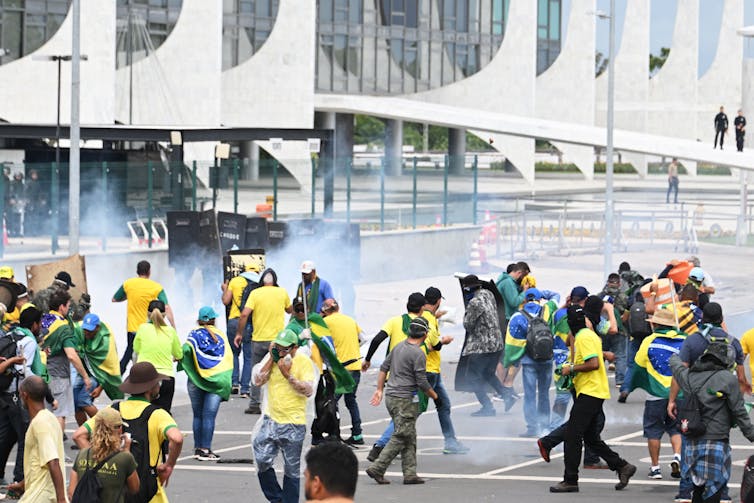
Men and women fill a street with smoke swirling around.
Supporters of former President Jair Bolsonaro clash with police outside the Planalto Palace in Brasilia on Jan. 8, 2023.
Evaristo Sa/AFP via Getty Images

Coup and punishments

Plotting a coup is risky business. Some of those who attempt to seize or usurp power unconstitutionally are killed during their takeover bid, particularly when security forces loyal to the incumbent leader foil the attack. Christian Malanga, an exiled former army captain who led a violent attempt to seize power in the Democratic Republic of Congo, is one such example. He was killed in the ensuing shootout in May 2024.

But most leaders of failed coups survive.

And although they typically face punishment, the severity of consequences varies greatly; it often depends on whether the attempt is a self-coup, which is a power grab by an incumbent leader, or an attempt to oust a sitting government.

The most common fate of failed self-coup leaders in democracies is impeachment and removal from office, as occurred to Indonesia’s Abdurrahman Wahid in July 2001, Ecuador’s Lucio Gutiérrez in April 2005, Peru’s Pedro Castillo in December 2022, and South Korea’s Yoon Suk Yeol in April 2025.

Some coup plotters and their co-conspirators are charged in a court and, if convicted, sent to prison. Malanga’s American co-conspirators were ultimately sentenced to life in prison in April 2025.

A similar fate could befall Bolsonaro. A conviction in his case could mean 40 or more years in a Brazilian prison for the 70-year-old.

Still, it could be worse – failed coupists are often punished outside of independent courts, where the penalty is often more severe. Coup plotters have been summarily executed or sentenced to death by a military tribunal or a “people’s court.” The longtime Zairean dictator Mobutu Sese Seko executed over a dozen junior officers and civilians after his government uncovered an alleged coup plot in 1978.

One recent estimate suggests 40% of coup conspirators suffer relatively light punishment. Many coup backers are simply demoted or purged from the government without facing trial or execution. An especially popular move is to send coup plotters into exile to discourage their supporters from mobilizing against the regime. Former Haitian president Dumarsais Estimé was forced into exile after his self-coup attempt failed in May 1950; he died in the U.S. a few years later.

Punishment doesn’t always end threat

The problem facing governments is that failed putschists pose a lingering political threat. Ousted leaders often plot “counter-coups” to return to power. For example, former president of the Philippines Ferdinand Marcos, after being ousted in the 1986 People Power movement, masterminded coup plots from exile, though he never returned to power.

Some succeed, such as David Dacko, who returned from exile to grab power in the Central African Republic in 1979, but only with the help of French forces.

Even when convicted or exiled, coup plotters may be later freed. Some members of Brazil’s Congress have already introduced a bill that could grant Bolsonaro amnesty.

A few former failed coup leaders manage to come to power later. Ghana’s Jerry Rawlings led a failed coup in May 1979 but went on to seize power in subsequent coups in June 1979 and 1981; Hugo Chavez was convicted and jailed for leading a failed coup in 1992 but ended up being elected president in Venezuela in 1998.

The risk of coupists going unpunished

Only one failed self-coup leader, as designated in our dataset, has managed to retain office – from where he worked, critics say, to successfully dismantle democracy: El Salvador’s strongman, Nayib Bukele. In February 2020, amid a standoff with the political opposition, Bukele threatened to dissolve the legislature, bringing with him armed soldiers to occupy the legislative assembly.

Though Bukele temporarily backed down, he faced no legal or political backlash. His party won a legislative supermajority in 2021, and he won reelection in 2024. Bukele’s ruling party recently lifted presidential term limits, allowing him to potentially rule for life.

The good news about punishing unsuccessful coup plotters is that because they’ve failed, they do not have to be coaxed out of power. Thus, holding them accountable for their actions should deter future plotters from attempting the same thing. In contrast, for a leader who has done unsavory things while still in office – such as killing domestic dissidents or committing war crimes – the threat of punishment once they leave power can backfire by giving them a reason to fight to stay in power.

In the long term, failed coup leaders who escape punishment are more likely to make a political comeback.

When defeated at the polls, both Donald Trump and Bolsonaro tried to overturn the official results. Both attempted to alter vote totals after they had lost and block an election winner from being inaugurated.

But for Trump there was no censure or punishment, and he is now back in power, where he has weakened the checks and balances that we and other political scientists see as crucial for the preservation of liberty and growing economic prosperity.

In contrast, a conviction for Bolsonaro would make it unlikely he could follow the same path to political resurrection. Even if he’s eventually pardoned, a guilty verdict makes him ineligible to compete again for Brazil’s presidency.

The Conversation

Joe Wright received funding for research on coups from the National Science Foundation and the Minerva Research Initiative.

John Joseph Chin does not work for, consult, own shares in or receive funding from any company or organization that would benefit from this article, and has disclosed no relevant affiliations beyond their academic appointment.

ref. Brazil’s Bolsonaro may soon join ranks of failed coup plotters held to account − hampering the chance of any political comeback – https://theconversation.com/brazils-bolsonaro-may-soon-join-ranks-of-failed-coup-plotters-held-to-account-hampering-the-chance-of-any-political-comeback-264565

Smart textiles may soon be able to control devices or monitor health

Source: The Conversation – Canada – By Sara Nabil, Assistant Professor of Human-Centered Computing, Queen’s University, Ontario

Imagine adjusting the temperature of the air conditioning or skipping a song in your car, not by fiddling with a screen or voice command, but simply by swiping your hand across the fabric of your seatbelt.

It sounds futuristic, but this is the direction automotive design could be shifting towards — away from screens and buttons, and towards multi-touch textiles that sense your gestures and respond to them.


Read more:
Interior design of the future will seem like magic


I am an interaction design professor and director of a research lab that develops smart textile technology. These textiles can transform how people interact with everyday objects and materials, including car interiors, by embedding touch-sensing stitches directly onto fabric elements.

These fabric-based interfaces can sense gestures like swipes, taps and presses, offering a safer and more intuitive alternative to touchscreen systems.

Touch screens and textiles

Advances in technology have led to the proliferation of screens for control and feedback in cars. In luxury cars, these screens are progressively becoming more advanced. Elon Musk’s Tesla, for example, has famously moved most vehicle controls onto a central touchscreen.

the inside of a car showing the steering wheel and touch screen
The interior of a Tesla Model 3.
(Shutterstock)

While this makes for a sleek interior, it’s not necessarily safer or easier to use.

My colleagues and I conducted a user study that showed how interacting with touchscreens while driving can significantly increase distraction and lane deviations. You have to take your eyes off the road, locate the button (while the car is moving and vibrating) and confirm the change, diverting your attention from what really matters.

As a multidisciplinary team of researchers — from electrical engineering and computing to art and design — who study human-computer interaction, we explored 3D-embroidery technology and computational design of e-textile sensors.

Inspired by traditional crafts, smart materials can be used to incorporate interaction as part of the process itself. In this way, we are able to digitally design multi-touch embroidered sensors (stitched using conductive thread into automotive materials like leather) to support wireless gesture-based control.

Technologies like 3D printing and laser-cutting help manufacture and prototype new products. Similarly, we have developed new fabrication methods in smart textile design, from e-sewing and e-serging to WovenCircuits.

These novel techniques support the integration of electronic threads while machine sewing, serging and overlocking, or weaving with little to no need for post-fabrication assembly of sensors or other parts.

A video showing how the smart seatbelt works.

Touch control

Voice input is a popular method for controlling devices and machines, but in vehicles, it’s neither reliable nor safe. Voice recognition technology has come a long way, but is still considered by scholars as an “unfulfilled promise.” For voice input to perform well, the user needs to be a native English speaker, in quiet surroundings and have a clear voice.

While voice input may work well during the software development and testing of those systems, real-world scenarios are different. Think of a user with loud children in the back seat, people with different accents, or what happens when driving through a loud construction zone.

Rather than using voice, screens or other inputs, our lab researched whether a car’s interior could become the interface. We digitally embroidered e-textile sensors onto faux leather seat and steering wheel covers and seatbelt pads.

For proof-of-concept, we designed three prototypes that control media while driving, with touch-sensing stitches that could play or pause audio, skip to the next track and adjust the volume. Our design was wire-free, relying solely on conductive thread, connected via Bluetooth and fully customizable to any vehicle.

Future applications

Our research lab develops touch-responsive interactions with everyday objects as part of a larger push towards designing interactive interior spaces. This is also known as “interioraction” and near-future “decoraction”.

A video showing how digital weaving can help make smart home furniture like a rug that detects when people step on it or a seat cover that corrects posture.

From stained-glass animation that act as information displays to interactive garments that support people with physical disabilities, some of these designs go beyond aesthetics and functionality. They open up new ways to think about usability, accessibility, and the way we design future tech.

E-textiles have applications that range from delivering health care to transforming any kind of object into a smart one. Circuits can be sewn into pre-existing textiles or rugs can be woven to detect accidental falls and send signals. Seat covers can detect pressure to subtly correct posture.

In these ways, smart textile designers are making future technologies less intrusive and more accessible and fun to interact with.

The Conversation

Dr. Sara Nabil receives funding from the Canada Foundation for Innovation (CFI), Queen’s University Research Initiation Grant, and The Natural Sciences and Engineering Research Council of Canada (NSERC).

ref. Smart textiles may soon be able to control devices or monitor health – https://theconversation.com/smart-textiles-may-soon-be-able-to-control-devices-or-monitor-health-252495

Today more than ever, biodiversity needs single-species conservation

Source: The Conversation – Canada – By Chris Johnson, Professor of Wildlife and Conservation Ecology, University of Northern British Columbia

Focused conservation efforts are essential for the protection and recovery of many species at risk, such as the monarch butterfly. (Chris Johnson), CC BY

Through the federal Building Canada Act, “projects of national interest” are being fast-tracked while hundreds of major resource projects are already under construction or planned in the next decade.

Clean water, climate stability, economic health and cultural heritage all depend on biodiversity. Yet this foundation is hardly mentioned as the government seeks to shore up Canada’s economic future amid a shifting global order.

The pressure to expedite approvals to dig, drill, cut and pipe has the potential to further weaken already fragile biodiversity protections. This is particularly the case for species at risk — those on the front lines of biodiversity loss that have never been adequately safeguarded under Canada’s existing policies.

Dedicated laws to protect individual species began to emerge in the 1970s, creating some of the best known and tested tools for preventing extinction. Yet in Canada, implementation has consistently fallen short: the federal Species at Risk Act has been the subject of sustained criticism over the past 20 years.

Academic researchers and civil society groups have shown that implementation has been inefficient and inconsistent. The evidence is clear that single-species conservation is taking too long, failing to recognize all endangered or potentially threatened species and their habitats and suffering from biases that favour economic priorities over protection.

In their race toward deregulation, some Canadian governments are using critiques of existing single-species laws to argue that they’re defunct or of relatively little value. The British Columbia government appears to have walked away from long-standing commitments to develop a provincial statute focused on the needs of individual species. The Ontario government recently repealed and replaced one of the strongest species-at-risk acts in the country.


Read more:
Ambitious changes to Canadian conservation law are needed to reverse the decline in biodiversity


a group of caribou
Endangered mountain caribou benefit from supplemental feeding, a single-species conservation effort.
(Chris Johnson)

Individual species need protection

In our recent study, we argue that these legislative tools are essential for assessing and protecting individual species. While current single-species conservation is costly, inefficient and biased, weak implementation doesn’t mean there’s no need for legislation. Deregulation in the name of economic expedience is not reform; it’s erosion of essential protections for biodiversity.

Species such as the swift fox and the whooping crane have been pulled back from the edge of extinction through intensive, costly and invasive conservation actions. Species-at-risk legislation is intended to enable this kind of dedicated attention through measures like captive breeding, translocation, veterinary care or active management of people, predators and ecological competitors.

Despite those successes, Canada lacks a coherent approach to halting biodiversity loss. Even commitments for more protected and conserved areas, while important and overdue, have not been designed to prioritize the needs of at-risk species.

two large white birds with long beaks in a green marshland
Species like the whooping crane have been pulled back from the edge of extinction through dedicated conservation efforts.
(Unsplash/Josie Weiss)

What the evidence says

We used publicly available conservation data to count the number of species that were threatened because there were only a few individuals, or that were found across a very small area in the wild. These are species that need help now. We also quantified threats to at-risk species, identifying those threats that need to be addressed directly by tailored actions, not simply more protected land and water.

Of the 550 wildlife species in Canada that were assessed as threatened or endangered by the Committee on the Status of Endangered Wildlife in Canada, more than 20 per cent were classified as at risk because they were a small population or had a very restricted distribution and were at risk of becoming extinct over a short time. For example, 97 endangered species had less than 250 mature individuals.

Data from the International Union for Conservation of Nature (ICUN) revealed that the most prominent threats facing at-risk species were from consumptive use including deliberate and unintentional harvesting, followed by pollution and the effects of climate change. These threats are not easily addressed by only focusing on increasing protected areas.

What’s at stake

Conservation success stories tell us that focused actions, such as captive breeding, are sometimes the only way to maintain small and range-restricted populations. Equally important are efforts to manage ecosystems on a large enough scale through protected areas, and by addressing pressures from human development and cumulative impacts that steadily erode habitats.

These broader measures can deliver long-term benefits for biodiversity as a whole, but they cannot substitute for processes that assess the status of individual species and empower targeted recovery actions. Weakening or abandoning species-specific policies is not just a policy shift; it is the loss of a crucial set of conservation tools.

Critiques of single-species approaches must not come at the expense of their continued implementation, whether through species at risk legislation or sector-specific natural resource regulation.

a sign featuring silhouettes of caribous and reading: caribou maternity pen ahead
Species-at-risk legislation facilitates focused recovery actions, such as maternity pens that reduce mortality for caribou calves.
(Chris Johnson)

These conservation tools can mobilize public and political will by drawing on the emotional power of threatened species and generating essential information about ecosystem change. They can also provide mechanisms to begin the process of rebuilding populations.

Although species-focused efforts have played an essential role in conservation, a fundamental shift is needed to move beyond crisis-driven, reactive measures and toward proactive, preventative strategies.

Addressing biodiversity loss at its roots requires mitigating systemic drivers of decline and adopting policies that prioritize long-term ecosystem resilience. To forsake species protections is not to move forward. It is to close the door on recovery before the story is over.

The Conversation

Chris Johnson receives funding from the Natural Sciences and Engineering Research Council of Canada, Mitacs, and the British Columbia Habitat Conservation Trust Foundation.

Justina C. Ray is President and Senior Scientist of the Wildlife Conservation Society (WCS) Canada. Funding sources to WCS Canada can be viewed through annual reports available at: https://www.wcscanada.org/About-Us/Annual-Reports.aspx.

ref. Today more than ever, biodiversity needs single-species conservation – https://theconversation.com/today-more-than-ever-biodiversity-needs-single-species-conservation-263023

How Trump’s dismissal of a Fed governor could redefine presidential power – if courts agree that he alone can interpret vague laws

Source: The Conversation – USA – By Claire B. Wofford, Associate Professor of Political Science, College of Charleston

The firing of Federal Reserve board member Lisa Cook isn’t just about Lisa Cook − it’s about presidential power. DNY59/Getty Images

President Donald Trump’s penchant to act first, ask later was on full display recently when he became the first president in American history to fire a member of the Federal Reserve Board.

Trump’s axing of federal employees is nothing new – thousands have been terminated, including the heads of agencies that, like the Federal Reserve, are designed to be insulated from presidential control.

But in removing Lisa Cook, Trump has entered into a morass of legal questions and challenged long-standing beliefs about the power of the president to control the U.S. economy.

Trump’s action, if upheld by courts, would upend the Fed’s century-long practice of formulating the nation’s monetary policy free from political pressure. It also could affect the budget of every American household, with the cost of goods and services influenced by political ideology more than financial expertise.

As a scholar of the American courts, I believe that, depending upon how courts resolve the case, it could also mark a significant shift in the ability of the judicial branch to check executive power.

Two men in dark blue suits, one standing behind a lectern and microphone.
Before he fired Lisa Cook, President Trump had spent months publicly attacking Federal Reserve Board Chairman Jerome Powell, right.
Saul Loeb/AFP via Getty Images

This agency is different

The dispute with Cook reached the public on Aug. 20, 2025, when Trump-appointed director of the Federal Finance Housing Agency Bill Pulte announced on social media that he had made a criminal referral to the Department of Justice about potential mortgage fraud by Cook. The DOJ subsequently opened an official investigation.

After Pulte’s announcement, Trump posted, “Cook must resign, now!!!” She refused and was officially fired by Trump five days later.

Cook then filed suit in federal court on Aug. 28, asking U.S. District Judge Jia Cobb to issue an emergency order blocking her removal. The litigation is ongoing.

Among the multitude of cases about Trump’s ability to fire employees of federal agencies, this one is different – because the agency is different.

Created by Congress in 1913 after a series of banking panics, the Federal Reserve is charged with managing the nation’s economy. It acts as the national bank, monitors the health of other financial institutions, and, most critically, develops monetary policy, which includes setting interest rates, the primary tool with which it manages inflation and ensures long-term economic growth and stability.

Precisely because of the Fed’s power, presidents have often tried to influence it. Sharp criticism of its members is nothing new. Trump has an ongoing and very public fight with the chair of the Fed board, Jerome Powell, about interest rates.

But a president actually firing a board member is something else entirely.

Supreme Court warning

The Fed is just one of dozens of what are termed “independent agencies.” These are part of the executive branch but designed by Congress to operate insulated from the president’s preferences and pressure. Over time, precisely because it is so powerful, the Fed’s ability to act free from the president has become particularly sacrosanct.

The primary mechanisms through which Congress ensures agency independence are “removal provisions,” statutory directives that define when and why the president can fire agency leadership. The Federal Reserve Act, the law that creates the Fed and sets out its structure and mission, provides that members of the board, called “Governors,” serve 14-year terms, “unless sooner removed for cause by the President.”

“For cause” may sound familiar because its appearance in a different law also recently triggered litigation. That happened when Trump removed the heads of two other independent agencies, Gwynne Wilcox of the National Labor Relations Board and Cathy Harris of the Merit Systems Protection Board. The Supreme Court decided in April that the restriction on the president’s ability to fire those two independent agency heads violated Article 2 of the Constitution.


Read more:
Supreme Court ignores precedent instead of overruling it in allowing president to fire officials whom Congress tried to make independent


In that same opinion, however, the court took pains to specify that its ruling did not apply to the Federal Reserve Board. Calling the Fed a “uniquely structured, quasi-private agency” with a “distinct historical tradition,” the majority signaled to Trump that booting members off the Federal Reserve Board was a no-go.

When he fired Cook, Trump flouted this directive. A legal battle was inevitable.

Four people sitting at one end of a large wooden table, at a meeting.
Lisa Cook, second from right, at a Federal Reserve board meeting in Washington, D.C., on June 25, 2025.
Saul Loeb/AFP via Getty Images

What’s behind the case

The case is complex and involves questions about whether Cook’s termination violates a congressional statute and the due process clause of the U.S. Constitution.

Notably, the parties are not arguing about the constitutionality of the removal provision itself, as they were in the Wilcox case. Instead, the dispute centers primarily around the meaning of “for cause” – that is, what reasons can legally justify firing a board governor. Unlike other statutes, which use additional terms such as “inefficiency, neglect or malfeasance of duty while in office,” the Federal Reserve Act provides no further guidance.

Trump argues that the – alleged – mortgage fraud is sufficient “cause” to remove Cook, particularly from an agency charged with managing the nation’s finances. Cook claims that mere allegations about private conduct before she was appointed to the board cannot justify her termination, particularly when those allegations appear to be a pretext for a political disagreement.

But lurking in the background of this seemingly picayune fight over a single word in a 111-year-old statute are fundamental questions about separation of powers, checks and balances, and which branch of government determines the law.

‘Say what the law is’

Trump’s fuller argument is actually quite bold.

As he is doing in other lawsuits, the president is asserting that he – and he alone – gets to determine the meaning of “cause.” The term, his lawyers write, is “capacious” and its meaning is entirely vested by Congress in the president. No court can second-guess his judgment.

The claim is striking and seems to fly in the face of the country’s system of checks and balances. In addition, if the branch of government charged with carrying out the law – the executive branch – also gets to define it, separation of powers also appears to be left by the wayside.

Cook counters that judicial review of termination decisions is critical.

If courts abandon their responsibility here, she argues, they will obliterate the independence of the Federal Reserve and subject the national economy to the short-term whims of a president rather than the long-term vision of economic experts.

And given the clear and continued acquiescence of Congress to this president’s broad assertions of power, they would also remove what, at least until the next presidential election, may be the last remaining check on executive power.

The case will likely reach the Supreme Court this fall, and the outcome is hard to predict. Trump has benefited from a string of victories there issued by a conservative majority that believes strongly in executive power and judicial deference to the president.

At the same time, it will be difficult to ignore the sentiments about the independence of the Fed that those same conservative justices expressed in the Wilcox case and the potential economic consequences a ruling for Trump might generate.

The court’s ultimate decision may actually depend upon what role it wants to play in the country’s fraying democratic system. The legendary Chief Justice John Marshall famously wrote in 1803 that it is “emphatically the province and duty of the judiciary department to say what the law is,” a sentiment inscribed on the marble wall of the Supreme Court building in D.C.

This case provides the opportunity to see whether the maxim still holds true.

The Conversation

Claire B. Wofford does not work for, consult, own shares in or receive funding from any company or organization that would benefit from this article, and has disclosed no relevant affiliations beyond their academic appointment.

ref. How Trump’s dismissal of a Fed governor could redefine presidential power – if courts agree that he alone can interpret vague laws – https://theconversation.com/how-trumps-dismissal-of-a-fed-governor-could-redefine-presidential-power-if-courts-agree-that-he-alone-can-interpret-vague-laws-264566

Flight attendants have gone 50 years without ground pay — here’s the reason behind it

Source: The Conversation – Canada – By Isabelle Dostaler, Vice-rectrice aux études et à la recherche, Université de l’Ontario français

The recent labour dispute between Air Canada and its flight attendants pulled back the curtain on one of the airline industry’s longest-standing injustices: flight attendants are paid only when planes are in motion, a practice that has persisted for more than 60 years across the global aviation industry.

On Aug. 14, Air Canada began cancelling flights ahead of a potential strike to allow an “orderly shutdown.” The strike started on Aug. 16, but less than 12 hours into it, the federal government attempted to force binding arbitration between the airline and its union.

The union defied the government order to return to work — an order that was never ratified by the court — until a tentative agreement was reached in the early hours of Aug. 19.

Much was at stake during the conflict, and both unions and carriers around the world likely followed it closely. Passenger traffic had returned to pre-pandemic levels, but profit margins were still thin. Stable fuel prices provided some financial relief, but economic and geopolitical uncertainties made carriers cautious about increasing labour costs.

The union, of course, had a very different perspective. For them, the dispute was an attempt to break new grounds and see compensation for ground duties become the new norm across the industry.

Why has such unfairness endured?

The persistence of unpaid ground time in the aviation industry can be explained through institutional isomorphism theory, a concept introduced by sociologists Paul DiMaggio and Walter Powell in 1983.

While organizational theorists had traditionally focused on the variety of organizational structures and strategies, DiMaggio and Powell argued that, over time, organizations in the same field tend to look and behave alike.

Institutional isomorphism helps explain why managers in the aviation industry often conform to established practices, even when change might make business sense. While we tend to think business performance is the primary goal pursued by managers, a key driver of their behaviour is actually legitimacy.

For example, while offering higher salaries to attract employees to an industry still suffering from a labour shortage might be a rational business decision, the reluctance to act differently from companies in the same sector can outweigh that logic.

The forces sustaining unpaid ground time

DiMaggio and Powell defined three types of institutional isomorphism: coercive, mimetic and normative. First, coercive isomorphism refers to the pressures organizations face from formal and informal constraints in an industry. Such constraints are particularly acute in air transportation, which is highly regulated in order to guarantee safety to passengers.

Within this regulatory framework, airtime — the period of time when an aircraft is in the air between takeoff and landing — has become a standard industry measure. Aviation authorities and industry bodies such as the International Air Transport Association, the International Civil Aviation Organization and the European Union Aviation Safety Agency have all reinforced its use by embedding it in the safety standards, operational practices and regulatory frameworks that airlines and national regulators must follow.

The concept of airtime also endured due to mimetic isomorphism, which occurs when organizations imitate the practices of others. In the case of aviation, reproducing historical practices like pay structures has allowed airlines to cope with the uncertainty of a business that has become highly cyclical ever since deregulation started in the United States in 1978.

The last, and one of the most interesting processes pushing organizations to look alike, is normative isomorphism. This refers to the influence of educational institutions and professional networks on organizational behavior.

It stems from the professionalization of work, according DiMaggio and Powell. Nurses, doctors, engineers, accountants, pilots and flight attendants all identify with their professions at least as much as they identify with the company they work for, if not more.

Air transport was a prestigious domain in its early days, which might have contributed to the belief that “real work” meant work in the air. In this sense, flight attendants themselves may have unintentionally helped reinforce this norm.

Could the Air Canada dispute spark a shift?

The Air Canada dispute may mark a turning point for labour standards in the airline industry.

In the post-pandemic period, when delays have been frequent due to labour shortages among mechanics, air traffic controllers and pilots, the unfairness of not paying flight attendants for work performed on the ground has become more visible.

A union victory on this front has the potential to create a snowball effect, with unpaid ground time becoming an illegitimate practice in the industry.

Whether the high-profile Air Canada labour dispute will cause a paradigm shift that causes ground pay to become the new norm in the airline industry remains to be seen. What does seem likely, however, is that after standing by the flight attendants despite the inconvenience and disruptions caused by the strike, the travelling public may view such a profound institutional change in a positive light.

The Conversation

Isabelle Dostaler does not work for, consult, own shares in or receive funding from any company or organisation that would benefit from this article, and has disclosed no relevant affiliations beyond their academic appointment.

ref. Flight attendants have gone 50 years without ground pay — here’s the reason behind it – https://theconversation.com/flight-attendants-have-gone-50-years-without-ground-pay-heres-the-reason-behind-it-263887

Why preserved vegetables can turn deadly – and how to stay safe

Source: The Conversation – UK – By Manal Mohammed, Senior Lecturer, Medical Microbiology, University of Westminster

Kmpzzz/Shutterstock

A food truck in southern Italy recently became the centre of a deadly health scare. A food-borne outbreak linked to preserved vegetables killed two people and sent more than a dozen to hospital.

At the same time, the UK’s Food Standards Agency warned shoppers to avoid jars of broccoli from a specific batch code, fearing they too could contain the same hidden danger, Clostridium botulinum, the bacterium that produces the toxin responsible for botulism – one of the deadliest food-borne illnesses known.

The canning process removes air from food and seals it tightly, creating an oxygen-free (anaerobic) environment. This is normally what keeps food safe for long storage – but it also creates the perfect conditions for C botulinum. Unlike many bacteria, it doesn’t need oxygen to grow.

Its spores, which are commonly found in soil, can survive cooking and processing. In low-acid foods such as broccoli, green beans, corn, beets and peas, if the canning process isn’t hot enough or long enough, those spores can “wake up”, multiply and release their toxin. Because the toxin is invisible, tasteless and odourless, contaminated food can look and smell perfectly normal while being deadly.

Botulism is rare but extremely serious and even a tiny amount can be deadly – just two nanograms per kilogram of body weight can be fatal.

The spores themselves are usually harmless if swallowed. But in an anaerobic environment they can germinate and release toxin. That’s why homemade preserved foods are a common cause of outbreaks.

Why botulism is so dangerous

Botulism is caused by a neurotoxin that attacks the nerves, leading to muscle weakness, breathing difficulties, paralysis, and, in severe cases, death. Symptoms usually appear within 18 to 36 hours of eating contaminated food, but can range from six hours to ten days.

Early signs include difficulty swallowing or speaking, drooping eyelids, blurred or double vision, facial weakness, vomiting and progressive muscle paralysis, which can cause respiratory failure.

Diagnosis is tricky, as symptoms can mimic other conditions, including stroke, Guillain-Barré syndrome (a rare autoimmune disorder where the body’s immune system attacks the nerves), and myasthenia gravis (a chronic condition that causes muscle weakness due to problems with communication between nerves and muscles). Doctors usually confirm botulism through clinical assessment and laboratory testing of serum, stool or food samples.

The main treatments for botulism are supportive care and antitoxin. Supportive care means treating the complications of the illness — for example, patients may need a ventilator if they develop breathing difficulties, or help managing infections. Antitoxin is a medication that binds to and neutralises the toxin circulating in the body. If given early, it can stop the toxin from causing further harm, though it cannot reverse damage already done. Survivors often face long recoveries with lingering fatigue and breathing problems.

There are simple but vital ways to reduce the risk of foodborne botulism. First, never eat food from cans or jars that are dented, bulging, leaking, or discoloured. If you can your own low-acid foods, make sure you boil them for ten minutes before eating to kill spores. And make sure use proper pressure canners and always follow tested canning instructions.

When in doubt, throw it out.

A deadly toxin with a double life

Despite its dangers, botulinum toxin also has important medical uses. When injected in minute, controlled doses, botulinum toxin can reduce muscle spasticity (a condition where muscles tighten or stiffen abnormally), treat chronic migraines, and manage conditions such as strabismus (crossed eyes) and cervical dystonia (a painful condition where the neck muscles contract involuntarily). The US Food and Drug Administration first approved it for medical use in 1989, and it has since been authorised for a wide range of treatments.

Botulinum toxin works by blocking nerve signals that trigger muscle contraction, smoothing wrinkles and fine lines, and has become a global cosmetic phenomenon. But the same toxin that has medical and aesthetic benefits can also cause catastrophic harm if misused. Unlicensed or poorly regulated injections are risky – and in August 2025, botulinum toxin was linked to a deadly outbreak in the UK.

Food-borne botulism is rare but deadly. Prevention depends on safe food handling, proper canning and avoiding suspicious-looking jars and cans. And while botulinum toxin has life-saving medical uses and cosmetic appeal, outside of controlled and licensed conditions it remains one of the most lethal substances on earth.

The Conversation

Manal Mohammed does not work for, consult, own shares in or receive funding from any company or organisation that would benefit from this article, and has disclosed no relevant affiliations beyond their academic appointment.

ref. Why preserved vegetables can turn deadly – and how to stay safe – https://theconversation.com/why-preserved-vegetables-can-turn-deadly-and-how-to-stay-safe-263161

Why did Japanese Prime Minister Shigeru Ishiba resign? And who might replace him?

Source: The Conversation – Global Perspectives – By Sebastian Maslow, Associate Professor, International Relations, Contemporary Japanese Politics & Society, University of Tokyo

Japanese Prime Minister Shigeru Ishiba has bowed to weeks of pressure from within his party and announced his resignation, less than a year after taking office.

His departure plunges Japan back into political uncertainty, reviving fears of a return to the revolving-door prime ministers who dominated the 1990s and late 2000s, before Shinzo Abe restored stability in 2012.

Whoever succeeds him must not only steady the Liberal Democratic Party (LDP), but also restore public trust in a political system battered by scandals, factional infighting and rising voter scepticism about one-party dominance.

Why is Ishiba leaving?

Ishiba took office only last September, after Fumio Kishida stepped down amid a string of scandals.

He inherited a deeply troubled party. Kishida was forced out in 2024 after revelations of extensive ties between the LDP and the Unification Church. The church had long been controversial in Japan, but became even more so after Abe’s assassination in 2022 by a man who held a grudge against it. The church’s ties to the LDP were revealed shortly thereafter.

A slush-fund scandal further eroded public trust in the party. Ishiba promised reform and stricter accountability — but that stance angered many senior figures, especially those implicated in the scandals he sought to confront.

The LDP lost its lower-house majority soon after his election, followed by further setbacks, including a defeat in the July upper-house poll. Calls for Ishiba to quit grew louder, with party heavyweights warning of a split in the conservative base if he clung to power. Over the weekend, he finally surrendered.

Ishiba justified the timing by pointing to the risk of a political vacuum during ongoing trade talks with the United States. With an agreement on tariff reductions concluded last week, he yielded to critics without resorting to the traditional prime ministerial weapon of dissolving parliament to silence his rivals.

The decision may appear puzzling. Recent polls showed Ishiba’s popularity edging upward, suggesting ordinary voters were warming to him.

But his downfall underlines how much sway the LDP’s old guard still holds behind the scenes, prioritising internal discipline over electoral momentum.

Koizumi vs Takaichi

The leadership race is already underway, with a vote expected in early October. Two names stand out.

On one side is Shinjiro Koizumi, 44, son of former prime minister Junichiro Koizumi. Representing the party’s more liberal wing, he has previously expressed support for same-sex marriage and allowing married couples to use separate surnames – positions that set him apart in the LDP.

As agriculture minister in Ishiba’s government, he won recognition for tackling rising rice prices and pushing reform in a sector long tied to LDP patronage politics.

Charismatic and popular with voters, Koizumi has cultivated ties with the opposition Japan Restoration Party. This support could prove crucial in the LDP forging a new coalition or shoring up its minority government with its coalition partner, Komeito, which would still need opposition backing to pass legislation.

If chosen, he would become Japan’s youngest-ever prime minister.

On the other side stands Sanae Takaichi, a staunch conservative who finished runner-up in last year’s leadership race.

A self-styled heir to Abe’s legacy, she opposes same-sex marriage and dual surnames, favours constitutional revision to clarify to the role of the country’s Self-Defense Forces, and regularly stresses the need to strengthen Japan’s military posture.

She has likened herself to former UK prime minister Margaret Thatcher, calling for bold fiscal spending and monetary easing to drive growth.

If elected, she would become Japan’s first female prime minister, though her hardline positions could strain ties with coalition partner Komeito.

A TBS poll this week puts Koizumi and Takaichi neck-and-neck, each at 19.3%, while a Nikkei survey from August 31 gives Takaichi a slim lead at 23%, just one point ahead of Koizumi.

Other contenders may emerge, including Chief Cabinet Secretary Yoshimasa Hayashi. Much will depend on the LDP’s choice of election format: whether rank-and-file members get a say, or only lawmakers in parliament.

Either way, candidates need the support of 20 members of the Diet (Japan’s parliament) to enter the race.

High stakes for Japan’s ruling party

The stakes could not be higher. With Ishiba’s departure, hopes of reforming the LDP have faded.

If the new leader fails to regain public confidence, the party risks falling victim to its own long dominance. To maintain power, it has been locked into defending the status quo, while new right-wing populist challengers, such as Sanseito, gain ground with anti-foreigner rhetoric.

With the next elections not due until 2028, Japan is entering another uncertain political chapter. Whether the LDP emerges strengthened or weakened will depend not just on who replaces Ishiba, but on whether the party can convince a sceptical public it is still capable of renewal.

The Conversation

Sebastian Maslow does not work for, consult, own shares in or receive funding from any company or organisation that would benefit from this article, and has disclosed no relevant affiliations beyond their academic appointment.

ref. Why did Japanese Prime Minister Shigeru Ishiba resign? And who might replace him? – https://theconversation.com/why-did-japanese-prime-minister-shigeru-ishiba-resign-and-who-might-replace-him-264768

The history of strikes in union and political movements in France

Source: The Conversation – France – By Stéphane Sirot, Professeur d’histoire politique et sociale du XXème siècle, CY Cergy Paris Université

The “bloquons tout” (“block everything”) movement has called for a nationwide shutdown on September 10 to protest the French government’s policies, and Jean-Luc Mélénchon, the leader of the hard-left France Unbowed party, is calling for a “general strike”. This concept played a major role in the revolutionary rhetoric of the early 20th century before falling into oblivion. What role have strikes played in French trade union and political history? What meaning do they have today?

While strikes do not occur more often in France than elsewhere in Western Europe, their place in the history of the French labor movement is nonetheless unique. For trade unions, strikes were once a preferred means of improving everyday life, and also at the heart of their revolutionary utopia. In other words, they were aimed at the overcoming of capitalism.

Over time, strikes have become firmly established as a central feature of social relations in France, but their utopian function has faltered. At the turn of the 20th and 21st centuries, like other expressions of class struggle, it has even been significantly devalued.

The disruption of the prevailing order by the workers

In addition to its role as a tool for defending living conditions and fighting for new rights, strikes are a primitive form of agglomeration of the working class, whose rise in power precedes and then accompanies the development of trade unionism.

When the right to form unions was granted in 1884, labor disputes, which had been decriminalized in 1864, were already well on their way to becoming a central feature of industrial relations. In other words, action preceded organization. Often, throughout the 19th century, action even laid the foundation for organization: unions were formed in the wake of social unrest, with some disappearing quickly once a strike was over, and others continuing to exist.

When la Confédération Générale du Travail (General Trade Confederation), known as the CGT, was founded in central France in 1895, it quickly adopted a set of values based on “worker autonomy” and “direct action”. Through its own struggles, independent of partisan structures and institutions, the working class was supposed to prepare for the “dual task”, defined by the trade union movement, of the prosaic struggle for immediate demands and the utopian prospect of overthrowing capitalism. This approach gives strikes a central role and tends to endow them with all kinds of virtues.

Strikes are seen as an education in solidarity, through the material mutual aid they often generate or through their interprofessional reach. They are also an education in class struggle, an “episode of social warfare”, as one of the pre-1914 leaders of the CGT wrote. This is why, whatever happens, “its results can only be favorable to the working class from a moral point of view, [because] there is an increase in proletarian militancy”. And if a strike is victorious, it is a form of collective recovery from capitalism, because it produces “a reduction in the privileges of the exploiting class”.

Finally, revolutionary trade unionists believe that a general strike provides workers with the weapon that will enable them to achieve the Holy Grail: the definitive demise of capitalism. This is the argument put forward in Comment nous ferons la Révolution (How We Will Bring About the Revolution) the only work in the activist field that describes in detail the process of appropriation of the means of production by the workers themselves, under the aegis of their unions, which then set about organizing a bright future.

A politically charged general strike in France never occurred and, thus, never led to radical social change. But such a utopia was not necessarily intended to be prophetic. Its function was also, and perhaps above all, to protect the labor movement from the siren calls of co-management of and support for the existing system, a project conceived in the last decades of the 19th century by the republican elites. In addition, maintaining a revolutionary course seems conducive to fuelling a “great fear” in the dominant order, which, to reassure itself, feels compelled to make concessions.

From the paradise of class struggle to the purgatory of ‘social dialogue’

While the first world war dealt the final blow to revolutionary trade unionism, two main approaches to strikes prevailed during the years of a split in the CGT (1922-1935). For the confederation of Léon Jouhaux, a socialist who was awarded a Nobel peace prize in 1951, the suspension of production was essentially a last resort to be used only if negotiations failed. For the CGTU, which was close to the French Communist Party (PCF), it could be a weapon that went beyond the mere satisfaction of economic demands. According to communist trade unionists, “as it develops, the strike inevitably becomes a political struggle pitting workers against the trinity of employers, government and reformists, demonstrating the need for a ruthless struggle that goes beyond the corporate framework”.

However, in trade union discourse and imagination, striking is no longer seen as a practice capable of promoting the principle of “worker autonomy” or bringing about the birth of a new society. It has lost its utopian dimension.

Nevertheless, a strike remains a major weapon. Until the second world war, trade unionism and the working class were not yet fully integrated into Western societies; the process was certainly under way, but not yet complete. Although gradually becoming more commonplace, collective bargaining struggled to find its place. Workers’ organizations therefore had to rely on a culture of struggle, which was almost the only means of improving daily life and temporarily disrupting the capitalist system of exploitation.

Subsequently, and until the 1960s and 1970s, strikes remained a very common feature of union practices, albeit for reasons that differed significantly from those of previous periods. Within the framework of the “Fordist compromise” (the exchange of productivity gains for purchasing power) and the institutionalization of trade unionism, strikes became primarily a means of managing systemic disruptions and promoting a slightly less inequitable distribution of wealth, in a logic of conflictual regulation of social relations. The act of stopping work became ritualized, as illustrated by the exponential increase in the number of days of action.

Furthermore, within the framework of the welfare states built up during the post-war economic boom, France and the Western world undergo a phase of progressive reforms which, on the surface, do not appear to be the result of a systematic and constant power struggle. It is reasonable to assume that, in the long term, this situation is partly responsible for the decline in the legitimacy of strike action. As soon as an improvement in living conditions appears possible through political action or through compromises agreed with the unions in the context of a “social dialogue” that is set to prosper, a shift is likely to occur that will relegate strikes to the status of a nuisance or an accident to be avoided.

It was then that employee organizations and their practices were confronted with, among other things, the effects of the economic climate (slowing growth, deindustrialization, job insecurity, individualization of wages, counterreforms dismantling the welfare state, etc.), the rise of liberalism – one of whose aims is to paralyze union action – and post-1968 changes in society (rise of individualism, decline of grand political utopias, etc.).

To this list of endogenous causes, it must be added those created by trade unionism itself. These include its distancing from the political arena and its role in this area; its inability to generate hope; and the contradictions raised by its nature as an institutional counterweight, torn between an obligation to oppose and a deep-rooted inclusion in society.

Delegitimization of strike action

In this context, the trade union movement at the turn of the 20th and 21st centuries seems to have significantly retreated to a strategy of survival. This appears to consist of saving its legitimacy, if necessary by distancing itself from the mobilization of workers and, ultimately, by abandoning the idea of breaking with the capitalist order.

For the past 30 or 40 years, one after another and to varying degrees, the major labor confederations have also embarked on a path that has fuelled doubt. There has even been rhetorical delegitimization of strike action. In 1985, Edmond Maire, then leader of the French Democratic Confederation of Labour (la Confédération française démocratique du travail or CFDT), said: “[…] the old myth that says union action is only about strikes is a thing of the past. Trade unions must abandon it.”

However, trade unionism based on “social dialogue” without leverage has never been as successful as that based on confrontation. In France, the major historical phases of significant social gains have resulted from trade union and popular mobilization. The Popular Front in the 1930s, liberation (la Libération) from German occupation in the 1940s, and May-June 1968 are striking examples.

Conversely, since the 1980s, characterized by the development of decentralized collective bargaining processes, the restriction of social rights has been steadily progressing. Except in November-December 1995, when a determined social movement, in this case a bloquant (blocking) and renewable one, managed to spread while sparking debates that were able to establish a link between professional demands and the societal choices they brought to light.

Throughout its history, trade unionism has rallied support and established itself as a social force feared by the ruling order, which, today as in the past, rarely concedes anything without feeling threatened. This has been achieved both through the utopian political project that it promoted, and through strike action, which it made a major paradigm.


A weekly e-mail in English featuring expertise from scholars and researchers. It provides an introduction to the diversity of research coming out of the continent and considers some of the key issues facing European countries. Get the newsletter!


The Conversation

Stéphane Sirot ne travaille pas, ne conseille pas, ne possède pas de parts, ne reçoit pas de fonds d’une organisation qui pourrait tirer profit de cet article, et n’a déclaré aucune autre affiliation que son organisme de recherche.

ref. The history of strikes in union and political movements in France – https://theconversation.com/the-history-of-strikes-in-union-and-political-movements-in-france-264823

Sustainable fuels could reduce the climate impact of military aircraft

Source: The Conversation – UK – By Elna Heimdal Nilsson, Professor of Aeronautical Sciences, Department of Aviation and Aeronautical Sciences, Lund University

Staff Sgt. Madelyn Brown

Military aircraft – from fighter jets to transport planes – are playing a significant role in today’s unstable world. Cumulatively, the operations carried out by these fleets, from combat missions to training flights, consume large amounts of fossil fuel.

Nevertheless, military aviation is rarely included in national climate inventories. In addition to greenhouse gases, aviation also emits other pollutants such as soot and particles, which affect both climate and air quality, and have detrimental effects on human health and ecosystems.

Recently, the UK government announced that it would purchase 12 F-35A fighter aircraft, some of which will be used to reduce a backlog in pilot training. The F-35A is the standard variant of the F-35 fighter jet.

While the decision is primarily motivated by defence and alliance commitments, it also has environmental implications. Expanding training activities will increase the number of flight hours, and consequently, fuel use and emissions. Fighter jets consume large quantities of fuel per flight hour.

The combustion process in aircraft engines releases carbon dioxide (CO₂), but the impact on the climate and environment extends further: emissions of soot particles, nitrogen oxide compounds, water vapour and sulphuric compounds influence atmospheric chemistry and cloud formation.

The persistent contrails and the cirrus clouds they generate are estimated to cause an impact on the climate comparable in magnitude to the warming effect of CO₂ from commercial aviation.

Any assessment of mitigation options must therefore consider both CO₂ and non-CO₂ effects arising from aircraft engine combustion. To mitigate aviation-related climate effects, the civil aviation sector has been promoting the development of sustainable aviation fuels (SAF).

When produced from waste oils or residues, hydroprocessed esters and fatty acids (Hefa) fuels – which are forms of sustainable aviation fuel – typically achieve 50–70% lower life-cycle CO₂ emissions compared with fossil-based jet fuel. Synthetic aviation fuels known as advanced power-to-liquid (PtL) e-fuels, produced using renewable electricity, could reduce emissions by more than 80%, though they are not yet available at scale.

Wars and climate change are inextricably linked. Climate change can increase the likelihood of violent conflict by intensifying resource scarcity and displacement, while conflict itself accelerates environmental damage. This article is part of a series, War on climate, which explores the relationship between climate issues and global conflicts.

In addition to a lower carbon footprint compared to fossil fuels, SAFs have
also been shown to produce fewer soot particles during combustion, reducing the likelihood and severity of contrails and cirrus clouds.

For technical reasons, down to the specific molecular composition SAF compared to fossil based jet fuel, commercial SAFs are currently not certified as standalone fuels. However, they are available for blends of up to 50% along with fossil-based jet fuels.

The quality of the sustainable fuels is very high and there is no technical barrier to their use in military aviation. The question is: to what extent can the climate and environmental impact of military aviation operations be reduced if sustainable aviation fuels are introduced?

Sustainable fuel and the F-35

Let’s take the example of the F-35, which was the aircraft purchased recently by the UK government. Under certain conditions, the F-35 can burn five tonnes of jet fuel in a single sortie lasting an hour. For comparison, a diesel car like the Volvo V70 would, in its whole lifespan, burn an amount of fuel corresponding to just four hours of combat manoeuvring with the F-35.

Technically, the F-35 is already approved to operate on blends of conventional kerosene and certified synthetic fuels. Similar to civil aviation standards, military standards allow for blending ratios of up to 50%, depending on the production pathway.

No modifications to engines or fuel systems are required. F-35 flights that used commercially available fuel with 40% SAF were carried out by the Norwegian Air Force in early 2025.

There are no significant technical barriers to the new F-35A aircraft entering UK service to operate on commercially available SAF blends with up to 50% renewable fuel. Compatibility is not the limiting factor, but, unfortunately, the availability and cost of fuel are.

For military training flights, which may involve large numbers of sorties, SAF can therefore provide significant reductions in life-cycle greenhouse gas emissions. A 50% blend of Hefa, for instance, could cut average CO₂ emissions per flight by around one third.

Since contrails can account for a large fraction of aviation’s total climate impact, this effect is potentially important. The strategic allocation of SAF to flights that are most likely to generate persistent contrails, like training missions at high altitude in humid conditions, could amplify the climate benefit of limited SAF supplies.

The UK’s acquisition of additional F-35A aircraft will help address a backlog in pilot training, but it will also increase emissions. From both a climate and national security perspective, SAFs represent the most practical near-term mitigation option.

The F-35 is technically compatible with sustainable aviation fuels – and substantial life-cycle emission reductions are achievable this way. Additional benefits may come from reduced contrail formation. However, limitations in global SAF production and their higher costs restrict the extent to which these fuels can currently be deployed.

SAFs will not make military aviation climate neutral, but they could substantially reduce its environmental footprint at a time when both security and sustainability are pressing concerns.

The Conversation

Elna Heimdal Nilsson does not work for, consult, own shares in or receive funding from any company or organisation that would benefit from this article, and has disclosed no relevant affiliations beyond their academic appointment.

ref. Sustainable fuels could reduce the climate impact of military aircraft – https://theconversation.com/sustainable-fuels-could-reduce-the-climate-impact-of-military-aircraft-264792

What we’ve learned about narcissism over the past 30 years

Source: The Conversation – UK – By Sarah A. Walker, Assistant Professor of Educational Psychology, Durham University

Nicoleta Ionescu/Shutterstock

You’ve probably seen the word “narcissist” thrown around online in headlines, on dating apps or in therapy-themed TikToks. But the label that people often unthinkingly slap on toxic bosses or reality TV villains hides a much more complicated psychological picture.

Psychologists have studied narcissism for many years, but over time, our understanding has evolved. One of the biggest changes is that today, narcissism is no longer seen as just grandiosity, arrogance or egotism.

Early scientific descriptions of narcissism focused on dominance, ambition and self-importance, all of which are traits associated with traditional masculine stereotypes. That meant narcissistic tendencies in women were often misread or overlooked. When those traits show up as emotional sensitivity, insecurity or relational manipulation, they sometimes still are misdiagnosed as anxiety, mood disorders or borderline personality disorder traits.

The most extreme and persistent forms of narcissism can sometimes be diagnosed as narcissistic personality disorder. This condition was added to the Diagnostic and Statistical Manual of Mental Disorders, the American Psychiatric Association’s diagnostic manual, in 1980. But most people with narcissistic tendencies won’t meet the threshold for a diagnosis.

So what does the research actually say?

Narcissism in general is now understood as a complex set of personality characteristics that can show up in different ways.

Psychologists had long suspected that there might be different kinds of narcissism, but it wasn’t until 1991 – when researcher Paul Wink and his colleagues presented a model including grandiose and vulnerable subtypes – that they were more formally recognised. Although there are other models, this remains one of the more popular approaches to understanding narcissistic tendencies in the wider population.

A 2021 review by US psychologist Joshua Miller and his colleagues pulled together decades of research to offer one of the most authoritative summaries of how psychologists now understand narcissism. It explains that narcissism has a common foundation, which includes things such as self-importance and entitlement. It then branches into different forms of narcissism, such as grandiosity, antagonism and vulnerability.

Researchers now often use the terms grandiose and vulnerable to describe two major forms of narcissism. One person with narcissistic traits may be bold with high levels of grandiose traits, confidence and emotional resilience. Another might be defensive, anxious and hypersensitive to criticism. Both show signs of narcissistic self-focus, but they end up looking quite different in how they experience and express emotion.

In a 2022 research paper I wrote with colleagues, we carried out the first meta-analysis examining how narcissistic traits relate to the ability to control one’s emotions. The results showed that vulnerable narcissism is consistently associated with greater emotional difficulty, which means these people might find it harder to keep their emotions in check.

In particular, people with high scores on vulnerable narcissism scales are more likely to rely on suppression. Suppression is a strategy that people use to hide or inhibit their emotional expressions, and has been linked to poorer wellbeing. On the surface, suppression might sound like self-control.

In some situations, it can be. For example, keeping a lid on your emotions when your boss is yelling at you. But trying to mute emotional expression without addressing the underlying emotions increases stress when it becomes our default strategy. It can worsen mental and physical health over time.

Montage of man against purple background with celebratory symbols.
Narcissism isn’t always this overt.
Roman Samborskyi/Shutterstock

In contrast, grandiose narcissism wasn’t linked with emotion regulation difficulties. In fact, several of the studies included in our analysis suggest that people with higher levels of grandiose traits may not experience as much emotional distress in the first place. This challenges the popular idea among researchers that people who exhibit narcissistic tendencies are also experiencing emotional instability.

Emotional intelligence and self-perception

The differences between forms of narcissism show up in emotional intelligence research as well. In a 2021 systematic review on narcissism and emotional intelligence, my colleagues and I found that people with grandiose traits often said they were good at understanding and managing emotions. For instance, how well they think they can handle anger or recognise other’s emotions.

But when their skills were tested using emotion tasks (such as recognising facial expressions or identifying the best way to respond to an emotional situation), their performance didn’t always match up with how skilled they said they were. This is consistent with a 2018 study which also found that people with grandiose tendencies rated themselves as emotionally skilled but performed worse on skill-based emotional intelligence tasks compared to other participants.

In contrast, people with vulnerable narcissistic traits tend to rate themselves lower in emotional intelligence, and seem to genuinely struggle more with managing emotions in everyday life.

So what should we make of all this?

It’s time to move beyond the pop-psych trend of labelling difficult people as narcissists. Narcissism isn’t about taking too many selfies. And no, the partner who ghosted you or the colleague who dominates meetings isn’t necessarily high in narcissistic traits either – no matter how much we might like to complain about them over coffee.

These kinds of casual diagnoses aren’t just unhelpful, they’re often wrong.

Narcissism is a complex psychological pattern that can show up in different ways and can reflect a deeper struggle with things such as self-esteem, emotion regulation and social connection. Understanding this doesn’t excuse people’s bad behaviour – not at all. But it does help us look past the stereotypes to get a clearer picture of what narcissistic traits look like in everyday life.

The Conversation

Sarah A. Walker does not work for, consult, own shares in or receive funding from any company or organisation that would benefit from this article, and has disclosed no relevant affiliations beyond their academic appointment.

ref. What we’ve learned about narcissism over the past 30 years – https://theconversation.com/what-weve-learned-about-narcissism-over-the-past-30-years-258505