Regulating AI use could stop its runaway energy expansion

Source: The Conversation – UK – By Shweta Singh, Assistant Professor, Information Systems and Management, Warwick Business School, University of Warwick

Generative AI promises to help solve everything from climate change to poverty. But behind every chatbot response lies a deep environmental cost.

Current AI technology requires the use of large datacentres stationed around the world, which altogether draw enormous amounts of power and consume millions of litres of water to stay cool. By 2030, datacentres are expect to consume as much electricity as all of Japan, according to the International Energy Agency, and AI could be responsible for 3.5% of global electricity use, according to one consultancy report.

The continuous massive expansion of AI use and its rapidly growing energy demand would make it much harder for the world to cut its carbon emissions by switching fossil fuel energy sources to renewable electricity.

So, we are left with pressing questions. Can we harness the benefits of AI without accelerating environmental collapse? Can AI be made truly sustainable – and if so, how?

We are at a critical juncture. The environmental cost of AI is accelerating and largely unreported by the firms involved. What the world does next could determine whether AI innovation aligns with our climate goals or undermines them.

At one end of the policy spectrum is the path of complacency. In this scenario, tech companies continue unchecked, expanding datacentres and powering them with private nuclear microreactors, dedicated energy grids or even reviving mothballed coal plants.

Aerial view of power plants
Microsoft is set to reopen Three Mile Island nuclear power plant in Pennsylvania to power its AI services. (Photo taken in 2008. The plant has been dormant since 2019).
Dobresum / shutterstock

Some of this infrastructure may instead run on renewables, but there’s no binding requirement that AI must avoid using fossil fuels. Even if more renewables are installed to power AI, they may compete with efforts to decarbonise other energy uses. Developers may tout efficiency gains, but these are quickly swallowed by the rebound effect: the more efficient AI becomes, the more it is used.

At the other end lies a more radical possibility: a global moratorium or outright restriction on the most harmful forms of AI, akin to international bans on landmines or ozone-depleting substances.

This is politically improbable, of course. Nations are racing to dominate the AI arms race, not to pause it. A global consensus on bans is, at least for now, a mirage.

But in between complacency and prohibition lies a window – rapidly closing – for decisive, targeted action.

This could take many different forms:

1. Mandatory environmental disclosure:

AI companies could report how much energy, water and emissions are used to train and use their models. Having a benchmark helps to measure progress while improving transparency and accountability. While some countries have started to impose greater corporate sustainability reporting requirements, there is significant variation. While mandatory disclosures alone won’t reduce consumption directly, they are an essential starting point.

2. Emissions labelling for AI services:

Just as carbon emissions labels on restaurant menus or supermarket produce can guide people to lower-impact options, users could be given a chance to know the footprint of their digital choices and AI providers, like efforts to measure the carbon footprint of websites. In the US, the blue Energy Star label, one of the country’s most recognisable environmental certifications, helps customers choose energy-efficient products.

Alternatively, AI providers could also temporarily reduce functionality to account for varying levels of renewable energy available that powers them.

3. Usage-based pricing tied to impact:

Existing carbon pricing aims to ensure that heavy users should pay their environmental share. Research shows that this works best when carbon is priced across the economy for all companies, rather than just specifically targeted at individual sectors. Yet much depends on digital tech providers fully accounting for such environmental burdens in the first place.

4. Sustainability caps or “compute budgets”:

This would especially target non-essential or commercial entertainment applications. Organisations may limit their employees’ usage similar to how they restrict heavy office printing or indeed corporate travel. As companies begin to measure and manage their indirect supply chain emissions, energy and water footprints from using AI may require new business policies.

5. Water stewardship requirements in water-stressed regions:

A simple regulation here would be to ensure no AI infrastructure depletes local aquifers unchecked.

Market forces alone will not solve this. Sustainability won’t emerge from goodwill or clever efficiency tricks. We need enforceable rules.

Consumer awareness isn’t enough

Awareness does help. But expecting individuals to self-regulate in a system designed for ease-of-use is naive. “Only use AI when needed” might soon be like “Don’t print this email” a decade or two ago – well-meaning, often ignored and utterly insufficient.

Plastic figures plant trees on top of paper saying 'please don't print'
Coming soon: an AI equivalent?
awstoys / shutterstock

The world is building an AI-powered future that consumes like an industrial past. Without guardrails, we risk creating a convenience technology that accelerates environmental collapse.

Maybe AI will one day solve the problems we couldn’t, and our concerns about emissions or water will seem trivial. Or maybe we just won’t be around to worry about them.

The way we engage with AI now – blindly, cautiously, or critically – will shape whether it serves a sustainable future, or undermines it. Policymakers should treat AI as it would any other wildly profitable resource-intensive industry, with carefully thought through regulation.


Don’t have time to read about climate change as much as you’d like?

Get a weekly roundup in your inbox instead. Every Wednesday, The Conversation’s environment editor writes Imagine, a short email that goes a little deeper into just one climate issue. Join the 45,000+ readers who’ve subscribed so far.


The Conversation

Frederik Dahlmann receives funding from National Institute for Health & Care Research (NIHR).

Shweta Singh does not work for, consult, own shares in or receive funding from any company or organisation that would benefit from this article, and has disclosed no relevant affiliations beyond their academic appointment.

ref. Regulating AI use could stop its runaway energy expansion – https://theconversation.com/regulating-ai-use-could-stop-its-runaway-energy-expansion-258425

Bolsonaro’s conviction marks a historic moment in Brazil’s political history

Source: The Conversation – UK – By Marieke Riethof, Senior Lecturer in Latin American Politics, University of Liverpool

Four out of five members of Brazil’s supreme court have voted to convict the former president, Jair Bolsonaro, for plotting a military coup after losing the 2022 election to his left-wing rival, Luiz Inácio Lula da Silva. Bolsonaro has been sentenced to more than 27 years in prison, though his lawyers say they will appeal the decision.

Seven of Bolsonaro’s allies have also been convicted on charges related to the coup attempt. Five of these people – Walter Braga Netto, Mauro Cid, Paulo Sérgio Nogueira de Oliveira, Augusto Heleno Ribeiro and Almir Garnier Santos – come from a military or navy background. Bolsonaro’s former justice minister, Anderson Torres, and the former director of Brazil’s intelligence agency, Alexandre Ramagem, have been convicted too.

This is the first time in Brazil’s long history of political instability that a coup attempt has led to a conviction. It is also symbolically important that the only woman on the panel, Judge Carmen Lúcia, cast the deciding vote. Bolsonaro has an established track record of making denigrating comments about women.

The date of the verdict is equally important. It was delivered on September 11, which coincides with the 52nd anniversary of the 1973 Chilean military coup. This shows how far democracy in the region has come since an era when much of South America was under military rule.

Alexandre de Moraes, the supreme court judge who led the Bolsonaro trial, alluded to this in August. He said that Brazil’s 1988 constitution established the judiciary’s independence by restricting “interference by the armed forces, whether official or semi-official, in Brazilian politics”.

These constitutional guarantees mean that politicians like Bolsonaro cannot undermine democratic institutions with impunity.

The coup attempt took place on January 8 2023, less than a week after Lula was inaugurated as Bolsonaro’s successor. Echoing the attack on the US Capitol building in Washington two years earlier, hundreds of Bolsonaro supporters stormed the national congress, presidential palace and supreme court in the capital, Brasília.

They left a trail of destruction. Although the protests appeared initially to be a spontaneous act, investigations soon unearthed evidence that the event had been planned by Bolsonaro and his allies.

A history of dictatorship and threats against democracy have cast a long shadow over Brazilian politics. A right-wing military dictatorship ruled the country between 1964 and 1985. It began when the armed forces overthrew the democratically elected president, João Goulart, amid an economic crisis and fears about a turn to the left. The US government of the time supported the coup.

Brazil established a National Truth Commission in 2012, which spent two years investigating the thousands of cases of torture, extrajudicial killings, enforced disappearances and other violations that occurred during this period. However, there have been no convictions.

Under pressure from mass demonstrations and an economic crisis, the military gradually relaxed repression in the 1980s and allowed political parties to form. Brazil has been under civilian control since then. But the armed forces began to play a significant political role again during Bolsonaro’s presidency.

General Hamilton Mourão, his vice-president, served in the military during the dictatorship. And various other military figures were appointed to powerful positions in government. Bolsonaro also regularly celebrated the dictatorship and downplayed its human rights violations.

There were various examples of democratic backsliding under Bolsonaro. He, for example, questioned the legitimacy of democratic election results in 2022 – comments that saw him barred from running in elections for seven years.

Within this context, the decision to convict Bolsonaro of an attempted coup is a strong sign that Brazil’s democratic institutions have been able to withstand threats to democracy and the rule of law. It is a signal that attempts to undermine the country’s democratic institutions will not go unpunished.

Beyond Brazil’s borders

Bolsonaro’s conviction resonates beyond Brazil. During his presidency, Bolsonaro positioned Brazil as a close ideological ally to Donald Trump, who was then in his first presidential term.

Trump referred to Bolsonaro’s trial as a “witch hunt” as the court case progressed. He hit Brazil with 50% tariffs, framing them as retaliation for Bolsonaro’s prosecution. Reacting to the guilty verdict, Trump said it was “very surprising” and compared it to his own judicial struggles.

Lula has spoken out against US interference in Brazilian politics, calling the idea that “Trump can dictate rules for a sovereign country like Brazil” unacceptable.

The Brazilian foreign affairs ministry has also criticised the US secretary of state, Marco Rubio, for interfering in the country’s sovereignty and democracy. In a social media post, Rubio called the conviction “unjust” and said the US “will respond accordingly to this witch hunt”.

Looking ahead, Brazil’s next presidential elections are in 2026. Unless Bolsonaro manages to appeal his conviction and election ban, he will not be running again for the foreseeable future. Although Lula has not formally announced his candicacy he would be the front-runner.

But if there is a run-off, which would most likely be with right-wing politician and former army captain Tarcísio de Freitas, the race will probably be very close. There is a risk that the conviction will turn Bolsonaro into a martyr, which would strengthen politicians like de Freitas, who identify themselves with Bolsonaro’s politics.

Ahead of his conviction, around 40,000 Bolsonaro supporters protested in Rio de Janeiro and São Paulo. These demonstrations indicate continuing support. However, regardless of what happens next, the supreme court’s decision makes it much less likely that challenges to democracy will succeed in Brazil.

The Conversation

Marieke Riethof does not work for, consult, own shares in or receive funding from any company or organisation that would benefit from this article, and has disclosed no relevant affiliations beyond their academic appointment.

ref. Bolsonaro’s conviction marks a historic moment in Brazil’s political history – https://theconversation.com/bolsonaros-conviction-marks-a-historic-moment-in-brazils-political-history-265210

Fewer international students are coming to the US, costing universities and communities that benefit from these visitors

Source: The Conversation – USA (2) – By Tara Sonenshine, Edward R. Murrow Professor of Practice in Public Diplomacy, Tufts University

The international student population is expected to experience a dive in the fall of 2025. iStock/Getty Images Plus

American college campuses from Tucson to Tallahassee are buzzing with the familiar routine of students getting settled in classes and dorms.

One new trend, though, is emerging.

An estimated 30% to 40% fewer international students are expected on American college campuses in the fall of 2025, compared with trends in the 2024-2025 academic year, according to according to NAFSA: Association of International Educators – a nonprofit that focuses on international education – and JB International, a for-profit educational technology firm.

In total, an estimated 150,000 fewer international students were expected to arrive this fall, due to new visa restrictions and visa appointments being canceled at U.S. embassies and consulates in many countries, such as India, China, Nigeria and Japan. NAFSA and JB International are expected to release updated data on international student enrollment in November 2025.

There were over 1.1 million international students – more than half of whom were from China or India – on American college campuses in the 2023-2024 academic year, according to the Institute for International Education, which monitors foreign student programs and shares the most comprehensive available recent data.

This sharp drop in international students could cost the U.S. economy US$7 billion in the 2025-26 school year, according to estimates from NAFSA.

For every three international students in the U.S., one new American job is created or supported by the average $35,000 these students spend in their local communities on housing, food and transportation, and other costs.

As a senior fellow at the Fletcher School of Law and Diplomacy at Tufts University and a former undersecretary of state for public diplomacy in the Obama administration, I oversaw many of the student exchange programs involving multiple countries around the globe. I foresee a major economic crisis over international students that could last for years.

Two young Chinese women with dark hair hold red flags with yellow stars on them. One of the women wears a light blue graduation robe and smiles.
A Chinese Columbia University student and a friend attend graduation in May 2019.
Mark Lennihan/Associated Press

A growing trend, quickly reversed

International students began coming to the U.S. in the early 20th century, when philanthropists like the Carnegie, Rockefeller and Mott families sought out scholars from the U.S. to go overseas. These philanthropists helped create international fellowships and grants that later on would often be funded by the U.S. government – like the Fulbright program, which gives money to American students to spend time and research abroad.

By 1919, nonprofits like the Institute for International Education
were serving as mediators between foreign students and American universities.

International student enrollment in the U.S. has steadily risen since the end of World War II, coinciding with an emerging world that became easier and cheaper to travel across. While 26,000 foreign students came to the U.S. in the 1949–1950 school year, that number had ballooned to 286,343 three decades later.

In the 1990s, there were more than 400,000 international students attending school in the U.S. each year. That number continued to climb and surpassed 500,000 in the early 2000s.

International student enrollment in the U.S. first topped more than 1 million in the 2015-2016 school year.

While international students made up just 1% of the 2.4 million university and college students in the U.S. in 1949-50, they were about 6% of the total 18.9 million students in the U.S. in 2023-24, according to the Migration Institute, a nonpartisan research organization.

This percentage is relatively small, however, compared with the international student representation in other countries.

International students represented 38% of overall Canadian university enrollment, made up 31% of all university students in Australia and 27% of all students in the United Kingdom during the 2024-2025 school year.

Trump’s warnings to international students

Within the first 90 days of his return to office, President Donald Trump invoked the 1952 Immigration and Nationality Act, which gives the secretary of state the authority to expel foreign students whose behavior could pose a threat to U.S. foreign policy interests.

The administration has since revoked the visas of 6,000 foreign students, the State Department reported in August 2025.

There have also been several high-profile arrests of international students, including Rumeysa Ozturk, a Turkish student at Tufts University. Immigration and Customs Enforcement officials arrested Ozturk in March 2025 shortly after the administration revoked her visa. Her arrest came one year after she co-wrote an opinion piece calling for Tufts to recognize a genocide in the Gaza Strip and to divest from all companies with ties to Israel.

Secretary of State Marco Rubio defended Ozturk’s arrest, saying in March that the government will not give visas to people who come to the U.S. intending to do “things like vandalizing universities, harassing students, taking over buildings, creating a ruckus.”

A federal judge ruled in May that there was no evidence showing Ozturk posed a credible threat to the U.S. She was then released from an immigration detention facility.

But her arrest coincided with the arrest of other international students in high-profile cases, like Mahmoud Khalil, a Columbia graduate student and U.S. permanent resident who was arrested after he participated in Palestinian rights protests on campus. These arrests all sent a message to foreign students: It is not as safe as it once was to come to the U.S.

The administration has announced other changes that will make it more difficult for foreign students to spend time in the U.S. – like a 2025 travel ban that prohibits or restricts the entry of people from 19 countries, mostly in the Middle East and Africa.

The administration also announced in August that it plans to cap the length of time foreign students can stay in the U.S. to four years. Currently, foreign students have a 60-day grace period to stay in the U.S. following graduation, before they must secure a work visa or another kind of authorization to legally stay in the country.

A group of young people wear black robes and black graduation hats and walk together. Some of the people hold globes.
Harvard graduates exit the university’s commencement ceremony holding globes in May 2025.
Sydney Roth/Anadolu via Getty Images

A simple math equation

New York University, Northeastern University in Boston and Columbia University hosted the largest number of international students in 2023-2024. But international students are not concentrated in just major, liberal cities.

Arizona State University hosted the fourth-highest number of international students that school year, and Purdue University in Indiana and the University of North Texas also are among the 10 schools that host the total most international students.

All of these schools – and others, like Kansas City colleges and universities, which are now welcoming far fewer international students than they planned to in the spring because some of the students could not get visas – will feel the financial effects of turning international students away from the U.S.

Doing the math, I believe that a solid argument can be made for increasing the numbers of foreign students coming to the U.S., not cutting back.

The Conversation

Tara Sonenshine does not work for, consult, own shares in or receive funding from any company or organization that would benefit from this article, and has disclosed no relevant affiliations beyond their academic appointment.

ref. Fewer international students are coming to the US, costing universities and communities that benefit from these visitors – https://theconversation.com/fewer-international-students-are-coming-to-the-us-costing-universities-and-communities-that-benefit-from-these-visitors-264012

Beauty sleep isn’t a myth – a sleep medicine expert explains how rest keeps your skin healthy and youthful

Source: The Conversation – USA (3) – By Joanna Fong-Isariyawongse, Associate Professor of Neurology, University of Pittsburgh

Getting enough sleep is one of the most accessible and powerful ways to maintain healthy skin. TatyanaGl/iStock via Getty Images

Have you ever woken up after a night of poor sleep, glanced in the mirror and thought, “I look tired?”

You’re not imagining it.

I am a neurologist who specializes in sleep medicine. And though “beauty sleep” may sound like a fairy tale, a growing body of research confirms that sleep directly shapes how our skin looks, how youthful it appears and even how attractive others perceive us to be.

What happens during sleep

Sleep is not just down time. Your body moves through distinct stages that serve different restorative functions. Deep, slow-wave sleep is the primary stage during which the body prioritizes tissue repair, muscle recovery and collagen production.

Growth hormone is released during this sleep stage, with most daily secretion occurring in the early part of the night. This hormone drives the body’s repair and rebuilding processes, helping to heal tissues, restore muscles and boost the production of collagen, the protein that keeps skin firm and elastic.

Slow-wave sleep also creates a unique hormonal environment that benefits the skin. Cortisol, the body’s main stress hormone, falls to its lowest point during this stage. Lower cortisol protects collagen, reduces inflammation and supports the skin barrier. At the same time, higher levels of growth hormone and prolactin, a hormone that helps regulate the immune system and cell growth, enhance immune function and tissue repair, helping skin recover from daily stressors.

The skin–sleep connection

The skin is your body’s largest organ, and it works hard while you sleep. Adequate sleep promotes hydration and barrier function, helping your skin maintain moisture and resist irritation. In contrast, sleep deprivation increases water loss through the skin, leaving it drier and more vulnerable to damage and visible signs of aging.

Sleep also plays a role in acne, a common skin condition that affects people of all ages. Poor sleep can raise inflammation and stress hormones such as cortisol, both of which may worsen breakouts. Consistent, restorative sleep, on the other hand, supports your skin’s ability to regulate oil production and recover from irritation.

Collagen repair and elasticity also depend heavily on adequate rest. In one study, short-term sleep restriction, defined as just three hours of sleep per night for two nights in a row, reduced skin elasticity and made wrinkles more noticeable.

Chronic sleep deficiency, also known in sleep medicine as insufficient sleep syndrome, refers to getting fewer than seven hours of sleep per night for at least three months, accompanied by daytime fatigue or impaired functioning. This state disrupts collagen production, weakens the skin barrier and fuels low-grade inflammation that undermines healing.

Studies show that the hormonal disruptions that occur with sleep loss elevate cortisol and accelerate oxidative stress, an imbalance between cell-damaging molecules and the body’s defenses, while impairing the very processes that keep skin resilient. Over time, these changes accelerate biological aging and leave the body less resilient to daily stressors.

Serums, sunscreens and moisturizers may be good for your skin, but they can’t make up for poor sleep habits.

Your face tells the story

Sleep loss does not only affect how skin functions. It also changes how the face appears to others. Controlled studies show that even after a few nights of reduced sleep, others consistently rated them as less attractive, less healthy and more fatigued. Common cues include paler skin, darker under-eye circles, red or swollen eyes, drooping eyelids and downturned mouth corners.

These signals are subtle but socially significant. Observers are less inclined to interact with or approach someone who looks sleep-deprived. Sleep also affects empathy and aesthetic perception, meaning that people who are well rested not only view others more positively but are also, in turn, viewed more positively by others. This reciprocal effect may help explain why job interviewers, dates, or even friends tend to respond more favorably to a well-rested face.

Sleep even influences how we perceive ourselves. People with poor sleep often report lower satisfaction with their own appearance.

Supporting your health

Prioritizing sleep is a powerful and accessible way to support appearance and overall health. So the next time you consider trading sleep for a few extra hours of work or entertainment, remember that your skin, your health and even your social presence will benefit from those hours of rest.

The Conversation

Joanna Fong-Isariyawongse does not work for, consult, own shares in or receive funding from any company or organization that would benefit from this article, and has disclosed no relevant affiliations beyond their academic appointment.

ref. Beauty sleep isn’t a myth – a sleep medicine expert explains how rest keeps your skin healthy and youthful – https://theconversation.com/beauty-sleep-isnt-a-myth-a-sleep-medicine-expert-explains-how-rest-keeps-your-skin-healthy-and-youthful-259363

Proposed cuts to NIH funding would have ripple effects on research that could hamper the US for decades

Source: The Conversation – USA (3) – By Mohammad S. Jalali, Associate Professor, Systems Science and Policy, Harvard University

The NIH is a node in an interconnected system producing health and medical advances. Anchalee Phanmaha/Moment via Getty Images

In May 2025, the White House proposed reducing the budget of the National Institutes of Health by roughly 40% – from about US$48 billion to $27 billion. Such a move would return NIH funding to levels last seen in 2007. Since NIH budget records began in 1938, NIH has seen only one previous double-digit cut: a 12% reduction in 1952.

Congress is now tasked with finalizing the budget ahead of the new fiscal year, which begins Oct. 1. In July, the Senate rejected the White House’s proposed cuts and instead advanced a modest increase. And in early September, the House of Representatives also supported a budget that maintains the agency’s current funding levels.

However, talk of cutting NIH funding is not a new development. Such proposals tend to resurface from time to time, and the ongoing discussion has created uncertainty about the stability of research overall and prompted concern among scientists about the future of their work.

As researchers studying complex health policy systems – and specifically, science funding policy – we see the NIH as one node in an interconnected system that supports the discovery of new knowledge, trains the biomedical workforce and makes possible medical and public health advances across the U.S.

Our research shows that while cutting NIH funding may appear to save money in the short term, it can trigger a chain of effects that increase long-term health care costs and slow the development of new treatments and public health solutions over time.

Seeing the bigger picture of NIH funding

NIH funding does not just support the work of individual researchers and laboratories. It shapes the foundation of American science and health care by training scientists, supporting preventive health research and creating the knowledge that biomedical companies can later build into new products.

To understand how funding cuts may affect scientific progress, the training of new researchers and the availability of new treatments, we took a broad look at existing evidence. We reviewed studies and data that connect NIH funding, or biomedical research more generally, to outcomes such as innovation, workforce development and public health.

In a study published in July 2025, we built a simple framework to show how changes in one part of the system – research grants, for example – can lead to changes in others, like fewer training opportunities or slower development of new therapies.

Eroding the basic research foundation

The NIH funds early-stage research that lacks immediate commercial value but provides the building blocks for future innovations. This includes projects that map disease pathways, develop new laboratory methods or collect large datasets that researchers use for decades.

For example, NIH-supported research in the 1950s identified cholesterol and its role in disease pathways for heart disease, helping to lay the groundwork for the later discovery of statins used by millions of people to lower cholesterol levels. Cancer biology research in the 1960s led to the discovery of cisplatin, a chemotherapy prescribed to 10% to 20% of cancer patients. Basic research in the 1980s on how the kidneys handle sugar helped pave the way for a new class of drugs for Type 2 diabetes, some of which are also used for weight management. Diabetes affects about 38 million Americans, and obesity affects more than 40% of the adults in the U.S.

A cancer patient receives chemotherapy in a clinic
Cisplatin, a chemotherapy widely used today, was developed through NIH-supported cancer biology research.
FatCamera/E+ via Getty Images

Without this kind of public, taxpayer-funded investment, many foundational projects would never begin, because private firms rarely take on work with long timelines or unclear profits. Our study did not estimate dollar amounts, but the evidence we reviewed shows that when public research slows, downstream innovation and economic benefits are also delayed. That can mean fewer new treatments, slower adoption of cost-saving technologies and reduced growth in industries that depend on scientific advances.

Reducing the scientific workforce

By providing grants that support students, postdoctoral researchers and early-career investigators, along with the labs and facilities where they train, the NIH also plays a central role in preparing up-and-coming scientists.

When funding is cut, fewer positions are available and some labs face closure. This can discourage young researchers from entering or staying in the field. The effect extends beyond academic research. Some NIH-trained scientists later move into biotechnology, medical device companies and data science roles. A weaker training system today means fewer skilled professionals across the broader economy tomorrow.

For example, NIH programs have produced not only academic researchers but also engineers and analysts who now work on immune therapies, brain-computer interfaces, diagnostics and AI-driven tools, as well as other technologies in startups and in more established biotech and pharmaceutical companies.

If those training opportunities shrink, biotech and pharmaceutical industries may have less access to talent. A weakened NIH-supported workforce may also risk eroding U.S. global competitiveness, even in the private sector.

Innovation shifts toward narrow markets

Public and private investment serve different purposes. NIH funding often reduces scientific risk by advancing projects to a stage where companies can invest with greater confidence. Past examples include support for imaging physics that led to MRI and PET scans and early materials science research that enabled modern prosthetics.

Our research highlights the fact that when public investment recedes, companies tend to focus on products with clearer near-term returns. That may tilt innovation toward specialty drugs or technologies with high launch prices and away from improvements that serve broader needs, such as more effective use of existing therapies or widely accessible diagnostics.

Surgeon examines an MRI of the brain
Imaging technologies such as MRI were developed through NIH funding for basic research.
Tunvarat Pruksachat/Moment via Getty Images

Some cancer drugs, for instance, relied heavily on NIH-supported basic science discoveries in cell biology and clinical trial design. Independent studies have documented that without this early publicly supported work, development timelines lengthen and costs increase, which can translate into higher prices for patients and health systems. When public funding shrinks and companies shift toward expensive products instead of lower-cost improvements, overall health spending can rise.

What looks like a budget saving in the near term can therefore have the opposite effect, with government programs such as Medicare and Medicaid ultimately shouldering higher costs.

Prevention and public health are sidelined

NIH is also a major funder of research aimed at promoting health and preventing disease. This includes studies on nutrition, chronic diseases, maternal health and environmental exposures such as lead or air pollution.

These projects often improve health long before disease becomes severe, but they rarely attract private investment because their benefits unfold gradually and do not translate into direct profits.

Delaying or canceling prevention research can result in higher costs later, as more people require intensive treatment for conditions that could have been avoided or managed earlier. For example, decades of observation in the Framingham Heart Study shaped treatment guidelines for risk factors such as high blood pressure and heart rhythm disorders. Now this cornerstone of prevention helps to avert heart attacks and strokes, which are far more risky and costly to treat.

A broader shift in direction?

Beyond these specific areas, the larger issue is how the U.S. will choose to support science and medical research going forward. For decades, public investment has enabled researchers to take on difficult questions and conduct decades-long studies. This support has contributed to advances ranging from psychosocial therapies for depression to surgical methods for liver transplants that do not fit neatly into market priorities, unlike drugs or devices.

If government support weakens, medical and health research may become more dependent on commercial markets and philanthropic donors. That can narrow the kinds of problems studied and limit flexibility to respond to urgent needs such as emerging infections or climate-related health risks.

Countries that sustain public investment may also gain an edge by attracting top researchers and setting global standards for new technologies.

On the other hand, once opportunities are lost and talent is dispersed, rebuilding takes far more time and resources.

The Conversation

The authors do not work for, consult, own shares in or receive funding from any company or organization that would benefit from this article, and have disclosed no relevant affiliations beyond their academic appointment.

ref. Proposed cuts to NIH funding would have ripple effects on research that could hamper the US for decades – https://theconversation.com/proposed-cuts-to-nih-funding-would-have-ripple-effects-on-research-that-could-hamper-the-us-for-decades-262419

Social scientists have long found women tend to be more religious than men – but Gen Z may show a shift

Source: The Conversation – USA (3) – By Ryan Burge, Professor of Practice, Danforth Center on Religion and Politics, Washington University in St. Louis

Students leave after attending a Catholic Mass at Benedictine College on Dec. 3, 2023, in Atchison, Kan. AP Photo/Charlie Riedel

For decades, one of the most consistent findings in religion research has been that women tend to be more religious than men. This holds true across dozens of countries and on nearly every measure of religiosity, from how often someone prays to how important faith is in their lives.

Social scientists have struggled to pinpoint a universal cause for this pattern. Theories run the gamut – from the claim that it has something to do with women being more risk averse to the argument that religion offers women support for social responsibilities around birth, death and raising children.

In the past few years, however, survey data in the U.S. has started to tell a different story. Today, there is less empirical evidence that women are more religious than men – a debate I’ve tracked closely as a quantitative scholar of American religion. Looking at Generation Z, in particular, a number of results have raised some eyebrows, pointing toward other divides throughout the country.

Shrinking gap

In 2023, the American Enterprise Institute’s Survey Center on American Life found that 39% of Gen Z women say they do not have a religious affiliation, compared to 34% of men from the same generation. The past several waves of data from the Cooperative Election Study, a national survey, have found that men born after 1990 – a mix of younger millennials and Gen Z – are slightly more likely to attend religious services weekly than women of the same age.

When I give a lecture or presentation, often the first question I’m asked is about this surprising result.

I warn people to take it with a grain of salt. According to data from the 2022 General Social Survey, one of the most well-respected national polls, the opposite is true: among Americans ages 18-45, women are still more likely to attend a house of worship nearly every week. And the Pew Religious Landscape Study, which was released in February 2025, concludes, “While the gender gap in American religion appears to be narrowing, there are still no birth cohorts in which men are significantly more religious than women.”

All together, a growing body of survey evidence suggests that the overall religiosity of young American adults does not vary significantly by gender.

A man wearing a long-sleeved t-shirt raises his arms in prayer inside a dark room.
The Cove, a pop-up Christian nightclub in Nashville, Tenn., was started in 2023 by Black Christian men in their 20s.
AP Photo/Jessie Wardarski

Anecdotal reports about scores of young men flocking to church or joining religious communities like Eastern Orthodoxy seem to grab headlines. However, the idea of a reversal in the gender gap is not supported by evidence – only that it is narrowing.

Drifting apart

If America’s gender gap around religion is changing, perhaps politics can help explain why.

A growing body of survey data suggests that overall, young men are moving further to the right on political matters, while young women are becoming increasingly progressive.

An NBC News poll in April 2025 found that among people ages 30-44, men were about 9 percentage points more likely to approve of Donald Trump’s job performance than women of the same age. Among those ages 18-29, the gap widened to a staggering 21 points.

A few months later, NBC polled nearly 3,000 young Americans about how they define success, asking them to select the top three factors from a list of 13. Overall, men between 18-29 rated “being married” and “having children” slightly higher than women their age. Among Gen Z men who voted for Trump, having children was the most important. Women who voted for Kamala Harris, meanwhile, ranked children near the bottom.

The largest religious traditions in America today are evangelical Protestant Christianity and the Catholic Church. Both groups’ teachings emphasize “traditional” gender roles, marriage and having children. For a growing wave of young progressive women, such teachings are at odds with their desire to make advances in the workplace and society. Some analysts argue that those tensions, as well as views on LGBTQ+ rights, are driving women away from institutional religion.

Three young women stand in church pews in a lofty sanctuary as they pray or sing.
Students from Loyola University Maryland participate in a prayer service in remembrance of Pope Francis at St. Ignatius Catholic Church on April 22, 2025, in Baltimore.
AP Photo/Stephanie Scarbrough

Opposite directions

As a result, Generation Z may be the most visible manifestation of the growing “God gap” in American politics.

In short, the religious compositions of the two major political parties have gone in opposite directions. In the 1990s, 67% of Republicans said they believed in God without a doubt, and 63% of Democrats said the same, according to my analysis of General Social Survey data. By 2022, certain belief in God had dropped to 39% among Democrats, while holding fairly steady among Republicans, at 63%. Twenty-eight percent of Democrats regularly attend a house of worship, compared to 42% of Republicans; in the 1970s, the gap was only 4 percentage points.

This all points to a broader, potentially more polarized future for the American public. Already, there is evidence that a growing number of people choose their house of worship based on political tribe, not just theological beliefs, making congregations less diverse. Women’s and men’s competing interests and preferences may make it harder to find a suitable partner. Common ground may be harder to find when there are fewer chances for interaction and conversation.

Ultimately, these trends suggest a future where polarization extends beyond politics and into the very fabric of American life – shaping where people worship, who they marry, and how communities form.

The Conversation

Ryan Burge receives funding from the John Templeton Foundation.

Ryan Burge is the Research Director for Faith Counts.

ref. Social scientists have long found women tend to be more religious than men – but Gen Z may show a shift – https://theconversation.com/social-scientists-have-long-found-women-tend-to-be-more-religious-than-men-but-gen-z-may-show-a-shift-263693

After Angela Rayner’s exit from government, what’s the future for employment rights in the UK?

Source: The Conversation – UK – By Rachel Scarfe, Lecturer in Economics, University of Stirling

CandyBox Images/Shutterstock

After the resignation of Angela Rayner, the UK government faces an urgent question: what will happen to its flagship employment rights bill? The former deputy prime minister was an important champion of the bill – and businesses have seized an opportunity to call for it to be diluted. At the same time, unions are pressing hard in the opposite direction.

Shortly after Labour won office in 2024, prime minister Keir Starmer described the bill as “the biggest levelling up of workers’ rights in a generation”, adding it was designed to give people “security, dignity and respect at work”.

In its manifesto, Labour had promised to “make work pay” – so the ambitious draft bill introduced in October 2024 contained 28 reforms to employment rights. These include requiring employers to guarantee workers a minimum number of hours; strengthening redundancy rights; rights to parental leave and protection from unfair dismissal from a worker’s first day; and expanding trade union rights.

Not only are the changes wide-ranging, they also affect a very large number of workers. There are, for example, nine million people in the UK who have been in their job for less than two years and who will gain the right to claim unfair dismissal.

The bill passed the House of Commons in March 2025. The House of Lords made some important amendments, giving workers a “right to request” rather than a “right to have” guaranteed working hours, increasing the qualifying period for unfair dismissal to six months (rather than one day), and reinstating the previous 50% turnout threshold for a trade union to vote for industrial action.

The planned legislation addresses a clear problem in the UK. In-work poverty and precarious work (characterised by low wages, uncertain income and insecurity) have been increasing. More and more people do not earn enough to make ends meet – between 1996 and 2024 the proportion of people in poverty who lived in families with at least one person working increased from 44% to 65%).

This is expensive – benefits paid to working people cost the government around £50 billion a year.

Introducing the bill, Rayner described it as “pro-growth, pro-business, pro-worker”. The UK’s slow productivity growth has been a problem since the financial crisis, and the government hopes that the better retention and higher job satisfaction that the bill could bring about will increase productivity. This view is broadly supported by academic research.

What do its critics say?

The government estimates that the bill will cost businesses between £900 million and £5 billion annually. This seems small, especially in comparison to total wage costs in the UK of more than £1.3 trillion.

However, it was introduced at a time when employers’ costs were already increasing. In April 2025, employers’ national insurance contributions increased from 13.8% to 15% of earnings, and the threshold for paying contributions fell from £9,100 a year to £5,000.

The minimum wage increased from £11.44 to £12.21 per hour for those over 21 and from £8.60 to £10 per hour for 18 to 20-year-olds. These changes hit sectors with lots of young, low-paid workers – hospitality and retail, for example – hardest. Employers in these sectors often use flexible working (such as zero-hours contracts) to offset the costs of higher minimum wages.

shopper pushing a trolley in a uk supermarket
If businesses pass rising staff costs on to consumers, the bill may end up harming the people it was designed to help.
1000 Words/Shutterstock

If this becomes more difficult because of restrictions imposed by the bill, employers can attempt to pass increased costs on to customers by raising prices. But if food prices increase, for example, this will hurt lower-paid workers (who spend a high proportion of their income on food) – the very people the bill is intended to help.

Of course, not all employers can pass on higher costs. Universities, for instance, have already estimated that national insurance increases cost them £430 million per year.

Restrictions to “fire and rehire” (where employers fire employees and rehire them under different terms, such as less generous pensions) may affect employers looking to restructure. In such cases, employers may instead cut jobs. With the number of UK vacancies falling for three years, this could accelerate the decline.

The UK’s new business secretary, Peter Kyle, has taken over the role of supporting the bill through parliament. He has previously supported it, although he has also committed to lowering regulation, which is seemingly at odds with this bill.

Both business and union leaders are lobbying hard ahead of the Commons debate on September 15. Unions are demanding Labour MPs be whipped to oppose the Lords’ amendments, and some have threatened to disaffiliate from the party if not. For now, the government insists it will pass the bill and reject the amendments. But businesses will hope that new ministers will be more sympathetic to their concerns.

There are still lots of details to be worked out. For example, the bill does not define what counts as the “minimum hours” workers would be guaranteed. With the timeline for introducing all the changes stretching to 2027, business leaders will have plenty of time to lobby for delayed implementation or to reduce its coverage.

The Conversation

Rachel Scarfe is a member of the Labour Party

ref. After Angela Rayner’s exit from government, what’s the future for employment rights in the UK? – https://theconversation.com/after-angela-rayners-exit-from-government-whats-the-future-for-employment-rights-in-the-uk-265141

Peter Mandelson was always a high risk appointment – his departure will not end the matter for Keir Starmer

Source: The Conversation – UK – By Martin Farr, Senior Lecturer in Contemporary British History, Newcastle University

The line between pulling off a diplomatic masterstroke and setting up an accident waiting to happen can be a fine one. In the seven-month fable of Peter Mandelson’s UK ambassadorship to the US, the crossing of that line has created a political polycrisis for which it is hard to think of a parallel.

In the week after the prime minister, despite his efforts, lost his deputy, and the week before the American president arrives in the UK for an unprecedented – and unpopular – second state visit, Keir Starmer, despite his efforts, has lost the person he controversially personally appointed to the UK’s highest diplomatic post. Worse, over a matter that also happens to implicate Donald Trump – a matter journalists could conceivably raise at the president’s and prime minister’s press conference during the forthcoming state visit.

The risk in the main was in the ambassadorship itself. The US is the UK’s closest and most important international ally and the Washington ambassador is the lynchpin of that relationship. They are the UK’s eyes and ears, permanently operating at the centre of the political and social life of the US capital in the way that no other country’s ambassador has been, is, or could be.

But the risk was also in the man. Prince of Darkness, Third Man, (only last week: “my familiar role as professional villain”), possessed of a public career already involving two high-profile reputation-wracking resignations, Mandelson has always been weapons-grade Marmite.

It was a reflection of post-Brexit British weakness, rather than strength – the desperate need for a trade deal – that Starmer turned to him. Yet personal relations being so important with this president, it can now be seen to have made less sense to have replaced a scandal-free ambassador – Karen Pierce – who was on the best possible terms with Trump and his people. She may return.

Its prominence is why, perhaps, DC is usually the only British ambassadorship that is ever “political” – that is, that a prime minister personally chooses someone who isn’t a diplomat. And even then, it’s rare. One may now see now why. The previous political appointment – in the 1970s – also ended inauspiciously, in a welter of recriminations over nepotism and extra-marital affairs resulting in best-selling novelisation and a hit movie.

The main grounds for Mandelson’s appointment were his public prominence (his “weight”), his experience as an EU trade commissioner, and his almost preternatural networking skills. The latter has been his undoing, given that for years he networked with the man who was to become the world’s most infamous sexual abuser of children.

To describe the appointment as high risk and high reward matters because of the supreme importance of the office and the singular character of the officer. If one can screen the Epstein stain momentarily, the widespread frustration in government was that Mandelson had been justifying that risk.

He was clearly an effective ambassador. Only the week before he delivered a trenchant statement of the contemporary special relationship; the day before he was sacked he had spent an hour with Trump. Ambassadors tend not to have meetings with presidents.

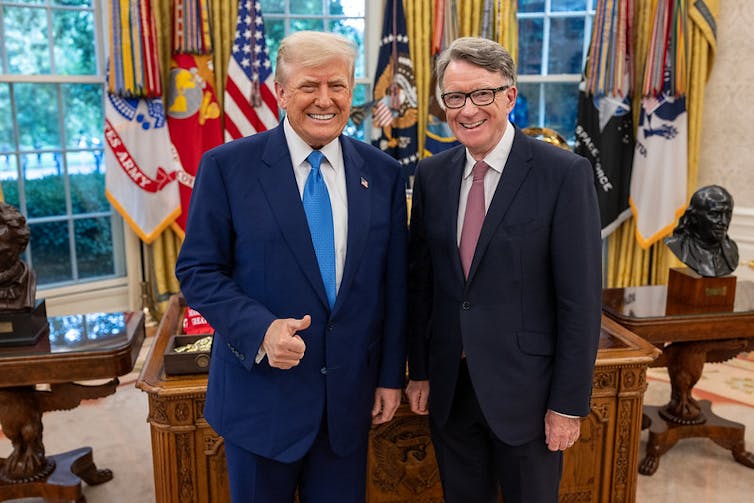
Peter Mandelson with Donald Trump
Mandelson meets Trump in.
UKinUSA/Flickr/Official White House Photo by Daniel Torok, CC BY-SA

Fundamentally this falls on the fallen. Mandelson knew of the Epstein material that has come to be made public, knowing that it might be made public. He admitted only this week that even more was likely to come after the initial, highly embarrassing, disclosure.

Mandelson took the UK’s most important diplomatic post knowing he was sitting on a ticking bomb. Given the precise nature of the explosive, the political obituary can certainly now be written about one of the most vivid public figures of the past 30 years.

But the more consequential damage will be to the man who appointed him. Downing Street’s statement that security vetting took place without its involvement is not credible.

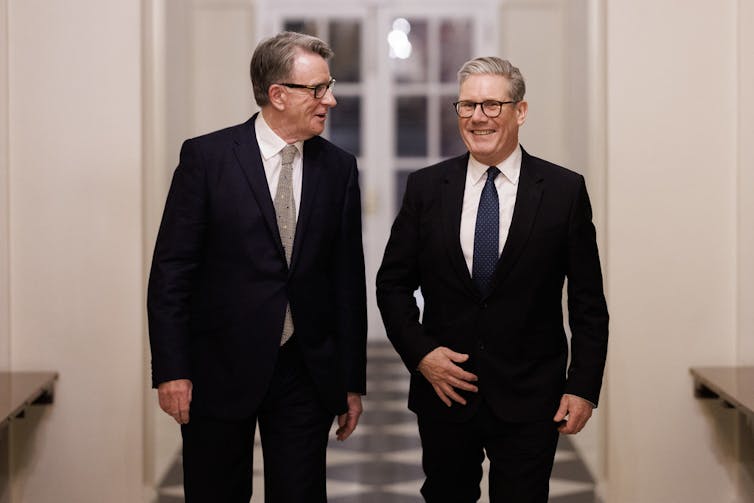
Peter Mandelson and Keir Starmer
Mandelson and Starmer, pictured in February 2025.
Flickr/Number 10, CC BY-NC-ND

Much may hinge on what the vetting files reveal – if they are revealed. The decision on whether to release them is a matter for MPs, and how Labour backbenchers choose to vote will be a significant indicator as to the mood in the party.

A crisis from Hades, replete with shadowy associations of global elites and paedophile rings; a hot buffet for online conspiracists, who may be more numerous and prominent in the US, but are far from reticent in the UK. And so the political class undergoes another detention.

The political damage to the government in general and to the prime minister in particular is hard to overstate. That is in part a matter of misfortune: that this particular major crisis comes a week after the previous one. But it has nevertheless provided the leader of the opposition with the most palpable success of her own benighted tenure. Seldom can a relaunch have relapsed so quickly.

However hapless he may increasingly appear, it’s too early to write Starmer’s political obituary. The election may be over three years away, his parliamentary majority is unassailable, and his party – unlike that of the leader of the opposition – has no culture of regicide (although mayor Andy Burnham, observing and pronouncing from Manchester, seems increasingly prepared to test that). Yet the very size of that majority, and the near certainty that many Labour MPs will be one-term, makes public expressions of discontent consequence-free, and consequently freer.

It’s more than curious that so innately risk-averse a person as Keir Starmer appointed so risk-taking a person as Mandelson to his country’s highest-profile international office. That misgivings were aired at the time, including in these very pages, is the least of it.


Want more politics coverage from academic experts? Every week, we bring you informed analysis of developments in government and fact check the claims being made.

Sign up for our weekly politics newsletter, delivered every Friday.


The Conversation

Martin Farr does not work for, consult, own shares in or receive funding from any company or organisation that would benefit from this article, and has disclosed no relevant affiliations beyond their academic appointment.

ref. Peter Mandelson was always a high risk appointment – his departure will not end the matter for Keir Starmer – https://theconversation.com/peter-mandelson-was-always-a-high-risk-appointment-his-departure-will-not-end-the-matter-for-keir-starmer-265159

Parasitic worms bury themselves in the brains of moose and elk – a new test can help diagnose these animals to prevent disease spread

Source: The Conversation – USA – By Richard Gerhold, Professor of Parasitology, University of Tennessee

The difficult-to-detect meningeal worm is spread by white-tailed deer and is a notorious killer of moose. AP Photo/Jim Cole, File

A moose in Minnesota stumbles onto the road. She circles, confused and dazed, unable to orient herself or recognize the danger of an oncoming semitruck. What kills her is the impact of 13 tons of steel, but what causes her death is more complicated. Tunneling through her brain is a worm that doomed both of them to die.

Commonly known as the brain worm, Parelaphostrongylus tenuis is a parasitic nematode that infects a large range of wild and domestic herbivores, such as moose and elk. The worm can migrate into the brain of unsuspecting hosts, where it may cause catastrophic disease and death.

While the Minnesotan moose is a hypothetical example, this worm has caused serious neurological impairments in many animals. The symptoms of the disease can vary, from disorientation and circling to paralysis across the animal’s back end, the inability to stand up and potentially death.

As parasitologists, we’ve been studying the effects these worms can have on moose populations in Minnesota. Tracking the spread of parasites and diseases in wild moose populations helps wildlife managers preserve those populations and reduce the spread to other animals or livestock.

While white-tailed deer can harbor these parasites without having any symptoms of disease, the worm can wreak havoc on populations of ungulates, like moose and elk, that aren’t adapted to the parasite. And tracking the disease in the wild isn’t easy.

The disease cycle

White-tailed deer harboring these parasites may shed the worms into their environment when they defecate. Snails and slugs then take up this larva, where it develops inside them to the point where it’s capable of infecting other types of deer, moose, elk and cattle.

A diagram showing a deer with the label 'definitive host' and a group of hooved mammals labeled 'atypical hosts,' and arrows between them.
The brain worm life cycle.
Jesse Richards

For us as parasitologists, the biggest challenge lies in detecting the disease before it irreversibly damages its host. Only white-tailed deer pass the parasite in their feces. This means we can’t detect this parasite by analyzing the poop of moose, or any animal, besides the white-tailed deer.

Once an animal is visibly sick, it’s too late for it to make a recovery. Only after their death can we recover the body and identify the parasite from where it’s embedded in the brain or spinal cord.

Even once we’ve recovered the body, finding a single, threadlike worm within the entirety of a moose or elk’s nervous system is time-consuming and often futile. Usually, wildlife biologists can only tell that an animal was infected by looking at microscopic evidence that suggests a parasite migrated through the central nervous system, and by analyzing DNA fragments left behind by the worm.

The first stage larvae of a Parelaphostrongylus tenuis worm.

Diagnostic confusion

To make things even harder, disease signs caused by other worms, like the arterial worm Elaeophora schneideri, look similar to brain worm and can affect Minnesota moose. The arterial worm generally lives in the neck of black-tailed deer and mule deer. Like P. tenuis, this parasite moves around in the bodies of hosts that aren’t adapted to it, and can cause harm.

Biologists attempting to diagnose a wild moose based on the visible clinical signs alone could easily confuse these two parasites and incorrectly conclude which parasite may have caused the disease. Given that the transmission of the parasites are vastly different, separate mitigation steps would be employed to minimize transmission.

And, biologists diagnosing based on microscopic findings in samples from the animal’s body still risk misidentifying the worm. The best way to get an accurate diagnosis is through genetic analysis – analyzing the DNA sequence of the worm causing disease. The DNA sequence will tell researchers whether it is P. tenuis or E. schneideri.

Serological testing

While genetic analysis can help researchers monitor the presence of the disease in a population, they can’t use it to diagnose live animals. But our team, with colleagues at the University of Tennessee College of Veterinary Medicine’s molecular diagnostic lab, has created a test that can help diagnose animals while they’re alive.

When a moose or elk has a brain worm, its cells produce antibodies, which are a type of protein in the blood that try to defend against the parasite. Our serological test looks for these antibodies in an animal’s blood.

To perform the testing, wildlife health specialists collect blood from sick or recently deceased animals and ship it to the lab. There, scientists run part of the blood through a test that looks for these specific antibodies against P. tenuis, so the animal isn’t misdiagnosed with another type of parasite.

This test, which the molecular diagnostic lab is now using to test samples sent in from across the country, has helped us monitor populations of moose and elk for this parasite. It can detect the parasite’s presence while the animals are still alive and without expensive genetic testing.

Ripple effects from testing

After the Minnesotan moose from our example is hit by a semitruck, wildlife officials find the deceased moose on the side of the road and quickly take a sample of her blood for testing. They send it off to the University of Tennessee, where it joins thousands of other samples from moose, elk and even caribou across North America.

Each submission helps our colleagues in the molecular diagnostic lab improve the test. The test can also screen blood samples from animals that live in areas where researchers haven’t detected P. tenuis. If positive, those results may alert biologists that the parasite is expanding into new areas and help them manage populations.

If a test at the molecular diagnostic lab indicates that the parasite is present in a new population early on, they will have more time to try to curb the disease spread. Wildlife managers may try to reduce snail and slug populations with controlled burns. Or, they might increase how many white-tailed deer hunters in the area can harvest to reduce the deer population.

We hope that in the future, other researchers will use the techniques behind this serological test to make similar tests for other infectious disease agents containing RNA or DNA.

The Conversation

Richard Gerhold works for the University of Tennessee and his research lab offers to perform serology tests for moose and elk for wildlife groups, as mentioned in the article, but this service is not widely advertised, and is not for profit. Funding for this research came from the National Center of Veterinary Parasitology, the National Park Service, and the Northeastern Wildlife Health Cooperative via funding from the state wildlife agencies of Maine, New Hampshire and Vermont, and the Minnesota Department of Natural Resources.

Jessie Richards works for the University of Tennessee and her research lab offers to perform serology tests for moose and elk for wildlife groups, as mentioned in the article, but this service is not widely advertised, and is not for profit. Her research funding comes from the University of Tennessee.

ref. Parasitic worms bury themselves in the brains of moose and elk – a new test can help diagnose these animals to prevent disease spread – https://theconversation.com/parasitic-worms-bury-themselves-in-the-brains-of-moose-and-elk-a-new-test-can-help-diagnose-these-animals-to-prevent-disease-spread-214908

‘Publish or perish’ evolutionary pressures shape scientific publishing, for better and worse

Source: The Conversation – USA – By Thomas Morgan, Associate Professor of Evolutionary Anthropology, Institute of Human Origins, Arizona State University

While developing his theory of natural selection, Charles Darwin was horrified by a group of wasps that lay their eggs within the bodies of caterpillars, with the larvae eating their hosts alive from the inside-out.

Darwin didn’t judge the wasps. Instead, he was troubled by what they revealed about evolution. They showed natural selection to be an amoral process. Any behavior that enhances fitness, nice or nasty, would spread.

Selection isn’t limited to DNA. All systems of inheritance, variation and competition inexorably lead to selection. This includes culture, and I’m one of a team of researchers at Arizona State University’s Institute of Human Origins who use a cultural evolutionary approach to understand human bodies, behavior and society.

Culture shapes everything people do, not least scientific practice – how scientists decide what questions to ask and how to answer them. Good scientific practices lead to public benefits, while poor scientific practices waste time and money.

Scientists vary. They might be meticulous measurement-takers or big-picture visionaries; cautious conservatives or iconoclastic radicals; soft-spoken introverts or ambitious status-seekers. These practices are passed on to the next generation through mentorship: All scientific careers start with years of one-on-one training, where an experienced scientist passes on their approach to their students. A successful scientist can train dozens of graduate students; meanwhile, poor strategies lead to an early career exit.

The currency of scientific success

When scientists apply for jobs or funding, the primary way they compete is through their research papers: reports they write describing their work that are peer-reviewed and published in scholarly journals.

One of the sources of selection on scientists is how these papers are evaluated. Experts can provide detailed assessments, but many hiring or promotion committees use blunter metrics. These include the total number of papers a scientist publishes, how many times their papers are cited – that is, referred to in other work – and their “h-index”: a statistic that blends paper and citation counts into a single number. Journals are rated too, with “impact factors” and “journal ranks”.

All these metrics can incentivize some rather odd outcomes. For instance, citing your own past papers in each new one that you write can inflate your h-index. Some unscrupulous researchers have taken this to the next level, forming “citation cartels” where the members agree to cite one another’s work as much as possible, no matter the quality or relevance.

chart for 2013 through 2022 with one line showing a gentle decline around 2019 for Ph.D.s added and a continuous incline with a stark rise around 2019 for articles published
Even as the number of Ph.D. degrees granted has declined, the number of research papers published has drastically increased.
Mark Hanson, Pablo Gómez Barreiro, Paolo Crosetto, Dan Brockington, CC BY

Recently there have been moves away from these simple-yet-flawed metrics. But without better alternatives, institutions simply put more emphasis on the raw number of publications, selecting for scientists to publish as much as they can, as fast as they can. Perhaps you’ve heard of the slogan “publish or perish,” or maybe even played the board game.

The publishing landscape

Scientists aren’t the only organisms in the scientific ecosystem. There are also publishers, the owners of the journals. Publishers live in an often-uneasy symbiosis with scientists, publishing their work, but also needing to make money off the process.

The traditional model was for journals to charge readers – or, more often, university libraries – subscription fees. This setup selects for journals to carefully vet their contents, as otherwise they will lose readers. Indeed, prominent journals reject the vast majority of submissions they receive.

The downside is that subscription fees block access for readers who can’t afford them. If you’ve ever tried to read an academic paper but been presented with a paywall, this is why.

Open access adaptation

The Open Access movement aims to make journal articles free for everyone to read and has led to many journals removing reader paywalls. But journals still need money, so most Open Access journals have swapped subscription fees for publication fees, paid by scientists on a per-paper basis.

journals collected in boxes on library shelves
The academic publishing landscape is shifting, as who ultimately pays for journals changes.
luoman/iStock via Getty Images Plus

This model allows anyone to read papers for free, but, as I have argued, it has also changed the selection pressures on journals, leading to some perverse outcomes.

There are two ways for journals to succeed in this new landscape. For prestigious journals, they can leverage their reputation to charge large publication fees, sometimes over US$10,000 per paper.

For low-prestige journals, no one would pay such large fees. They must instead focus on quantity over quality. Like scientists, they must “publish or perish,” and publishers are already adapting to this new pressure – publishing more papers, opening new journals, increasing acceptance rates and expediting peer review.

These changes created a new niche for scientists too, who are coevolving with the journals. An underhanded minority are adapting to laxer journal policies by using artificial intelligence to accelerate their research pipeline. The resulting papers are very low quality and so risk the authors’ reputations. However, until they are exposed, this strategy boosts research output and so brings rewards.

Alternatives

Publication fees aren’t the only model out there.

Diamond Open Access journals don’t charge fees at all and instead rely on donations.

Some scientists share what are called preprints, skipping peer review and putting their papers online for everyone to read for free. They may also publish them later in a conventional journal.

sepia colored printed page
Frontispiece of volume 1 from 1665 of the journal Philosophical Transactions – still published today by the Royal Society.
Royal Society, CC BY

Academic society journals, which date back to the 17th century, often tie free publication to society membership and rely on interpersonal relationships and reputations to incentivize high-quality work.

PCI’s or “peer community in’s” are groups of volunteer scientists aiming to wrest peer review away from journals entirely.

All of these are interesting options, and all would change the selective forces acting on both scientists and publishers. It makes sense to think about the evolutionary changes they could produce on the scientific landscape.

Why scientific evolution matters

Darwin’s parasitic wasps reveal two truths: Selection is both unavoidable and amoral.

Whatever the domain, selection can lead to outcomes you might not like. For science, these might include the emergence of paper mills, mass retractions, citation cartels, fraud, excessive fees or bizarre AI-written papers.

But science can also do tremendous good: It produced modern medicine, discovered electricity and computing, and put people on the Moon. Like Darwin with his wasps, those of us who care about the scientific enterprise don’t need to limit ourselves to asking why some people do bad things. Instead, we need to ask why bad acts are selected in the first place and design better systems.

Don’t blame the player, redesign the game. If we can put better rules in place, evolution will do the rest.

The Conversation

Thomas Morgan does not work for, consult, own shares in or receive funding from any company or organization that would benefit from this article, and has disclosed no relevant affiliations beyond their academic appointment.

ref. ‘Publish or perish’ evolutionary pressures shape scientific publishing, for better and worse – https://theconversation.com/publish-or-perish-evolutionary-pressures-shape-scientific-publishing-for-better-and-worse-259258