How we unlocked the secrets of Denmark’s oldest plank boat – with the help of an ancient fingerprint

Source: The Conversation – UK – By Mikael Fauvelle, Associate Professor and Researcher, Department of Archaeology and Ancient History, Lund University

Vikings Heading for Land, by Frank Dicksee (1873). Christie’s via Wikimedia

Around 2,400 years ago, before the emergence of the Roman empire, a small armada of boats approached the island of Als off the coast of southern Jutland in modern-day Denmark. The armada carried around 80 warriors armed with spears and shields. Some of them were officers, and these men carried iron swords.

The seafarers had travelled across what is now the Baltic Sea in sleek plank boats some 20 metres long. The planks were sewn together as boats at this time did not use metal nails, and the seams were caulked (waterproofed) with tar.

At some point along the voyage, they had stopped to repair their vessels. One of them left a partial fingerprint in the soft, newly applied caulking material between the plank seams. This sea-warrior – age and gender unknown – was inadvertently leaving a message for scientists (including me) who, more than two millennia later, would finally recognise the fingerprint’s significance using cutting-edge technology.

The small army was planning a quick marine assault on their enemies in Denmark – but their plans failed. Soon after they jumped on to the beach, these warriors were killed by the local defenders.

To give thanks for their victory against this invading force, the locals filled one of the boats with the weapons of the invaders and sank it into a local bog as an offering to the gods. Their decision to sink the boat in the bog has allowed future archaeologists to piece together clues about the events surrounding the attack, as well as the technology and society of these ancient people.

Today, this island bog in southern Denmark is known as the Hjortspring bog. In the late 19th century, the remains of the ancient boat were discovered, well preserved in its low-oxygen environment. At the time, the region had recently been conquered by Prussia and was part of the German empire, so the local Danes who found the boat kept their discovery secret until Als rejoined Denmark in 1920.

The boat was finally excavated in 1921, and has been on display at the National Museum of Denmark in Copenhagen ever since. The excavation used the best archaeological methods that were available in the 1920s – but the scientific techniques of modern archaeology were not yet available.

In 2023, researchers from Lund University and the University of Gothenburg began a collaboration with the national museum in order to use modern scientific methods to study the materials pulled out of the Hjortspring bog over a century earlier. Some of these samples had never been studied since the original excavation – meaning that a major mystery had surrounded the Hjortspring boat ever since. Where did these invading warriors from the 4th century BC come from?

The Hjortspring boat on display at the National Museum of Denmark.
Boel Bengtsson, CC BY-NC-SA

A surprising result

The weapons such as swords and spears found in the boat were used widely across northern Europe during the early Iron Age, giving few clues as to the boat’s provenance. Most archaeologists had assumed the boat came from somewhere nearby in Jutland, or perhaps from northern Germany.

By analysing the boat’s caulking material using a technique called gas chromatography-mass spectrometry, we were able to determine what chemical compounds the caulking tars were made from – a combination of animal fat and pine pitch.

This was surprising, since nearly all the pine forests in Denmark and northern Germany had already been cut down to make room for agriculture during the Neolithic period. We know this because geologists have studied ancient pollen in lakes and bogs to determine what species grew in different parts of Europe and at what times.

While the people who built the Hjortspring boat may have traded items to acquire their tar, it was at that time possible to waterproof boats using materials local to Jutland such as linseed oil and tallow (cow fat). So our investigation suggests the Hjortspring boat probably did not come from Jutland or northern Germany – but rather, from a more distant location with access to abundant pine forests.

The closest large pine forests during the 4th century BC were located along the coasts of the Baltic Sea to the east of modern-day Denmark. This means the crew of the Hjortspring boat, and their fellow seafarers, may have travelled hundreds of kilometres across open sea to launch their attack on Als.

We already knew that such long-distance voyages took place during the Bronze Age, when Scandinavians travelled far from home in search of copper. Iron was locally produced in Scandinavia, however, making the economic need for such voyages less obvious during the Iron Age.

A sea trial in a reconstruction of the Hjortspring boat.
Knut Valbjørn/Boel Bengtsson, CC BY-NC-SA

Nonetheless, our results indicate that long-distance trading and raiding continued well after the end of the Bronze Age. While we will never know exactly what drove the warriors to launch this particular attack, our research suggests that back then – just as today – political conflicts spanned regional borders and led young warriors to travel far from home.

We were also able to carbon-date some of the lime bast rope used on the boat, giving the first absolute date from the original excavation material. The cordage dated to between 381 and 161 BC, confirming the boat was from the pre-Roman Iron Age.

While selecting tar samples for our scientific analysis, we made another fantastic discovery: the “secret message” left by one of the crew in the form of a partial fingerprint left by one of the mariners on a small clump of tar.

Using X-ray tomography, we have made a digital 3D-model of the fingerprint, accurate to the nanometer scale. From our analysis of the print, we believe it was left by an adult, although we cannot say much more at present about who this individual was. This exciting find gives us a direct connection to this ancient warrior who once voyaged across the Baltic Sea.

Within the next year, we hope to be able to extract ancient DNA from the caulking tar on the boat, which could give us more detailed information about the ancient people who used this boat.

At present, our results show that the practice of long-distance maritime trading and raiding, which came to characterise the famous Viking Age, persisted over nearly 3,000 years of Nordic history. By studying this ancient boat, we can peer deeper into Scandinavia’s origins as a seafaring society.

The Conversation

Mikael Fauvelle received funding for this research from the Marcus and Amalia Wallenberg Foundation (Complex Canoes project), and the Riksbankens Jubileumsfond (Maritime Encounters programme).

ref. How we unlocked the secrets of Denmark’s oldest plank boat – with the help of an ancient fingerprint – https://theconversation.com/how-we-unlocked-the-secrets-of-denmarks-oldest-plank-boat-with-the-help-of-an-ancient-fingerprint-271977

ADHD: girls’ symptoms are often missed in school because they don’t fit stereotypes – new research

Source: The Conversation – UK – By Vlad Glăveanu, Professor of Psychology, Business School, Dublin City University

Daydreaming, talkativeness or restlessness can all be signs of ADHD. PeopleImages/ Shutterstock

Many girls with ADHD aren’t diagnosed until their late teens or adulthood. My recent research points to a possible explanation for this.

The study, published with my colleague Sorcha Walsh, found that while many of the women we interviewed may have displayed signs of ADHD while at school, these weren’t interpreted as such. This misrecognition not only meant that most waited years for a diagnosis – it also had long-term impacts on their sense of self.

The research involved in-depth interviews with 13 women aged 18-35 who had been officially diagnosed with ADHD either during childhood or, much more commonly, after leaving school. We analysed their accounts to identify recurring patterns in their school experiences, pathways to diagnosis and the impact ADHD had on their wellbeing and identity.

A striking pattern emerged across the interviews: none of the girls were overlooked because they were invisible. Rather, they were overlooked because what adults noticed didn’t fit the stereotype of ADHD.

Teachers repeatedly flagged difficulties – such as the girls being too chatty, unfocused, disorganised, “quirky” or emotionally reactive in school. It seems teachers saw such behaviour as personality traits or as typical girls’ behaviour.

For instance, one participant told us: “I was always known as chatty in school … I just thought it was being a girl as it has always been a trait of being a young girl.”

Another participant said: “I think it’s easy with girls to just … say that they’re a bit chatty or contrary or a bit dreamy … rather than getting down and looking a bit deeper…”

Several participants described receiving school reports that essentially listed ADHD indicators without any suggestion the traits might be signs of the neurodevelopmental condition.

This misrecognition had long-term consequences. Almost all participants went through school believing they were lazy, careless, “too emotional” or that they were “not trying hard enough”.

The deepest impact they described wasn’t on their grades but on their sense of self. Many internalised the idea that something was wrong with them – and several were misdiagnosed with anxiety, depression or even personality disorders before finally receiving an ADHD diagnosis in adulthood.

One unexpected finding was that an early diagnosis didn’t automatically protect girls from these negative experiences. The few participants who were diagnosed during school still struggled – not because the diagnosis was wrong, but because teachers didn’t understand how ADHD presents in females. Some received no meaningful support at all and others continued to be treated as if their behaviour was intentional rather than symptomatic.

This highlights an important nuance: timing of diagnosis matters, but understanding matters more.

Diagnostic culture

Our study sheds light on a broader issue within today’s diagnostic culture. We tend to diagnose what we already expect to see. When a condition is seen through a single stereotype, those who don’t fit that picture fall through the cracks.

For decades, ADHD has been culturally associated with the image of a young boy who can’t sit still, disrupts lessons or climbs on furniture. But our research showed that most of the girls we interviewed did not behave this way.

A girl sitting in class with her head resting on her hand, looking away from her desk dreamily.
Many women with ADHD learned to ‘mask’ their symptoms.
wavebreakmedia/ Shutterstock

This also reveals something deeper about how society responds to girls’ behaviour. Many of the women in our study spoke about masking (concealing symptoms to fit in or avoid judgement), overcompensating, people pleasing and doing everything possible not to disrupt others. These behaviours were rewarded. Their ability to cope, or at least appear to cope, was taken as evidence that they were fine.

But coping is not the same as thriving. Masking and overcompensation are linked to higher rates of anxiety, depression, burnout and lower quality of life among women with ADHD.

Diagnostic systems for ADHD have historically been designed around identifying observable, behavioural signs of the condition – such as hyperactivity, rule-breaking and disruptive classroom behaviour – rather than the more internal forms of distress and impairment.

This means established criteria may struggle to detect internal difficulties – such as emotional dysregulation (having trouble managing emotions or feeling overwhelmed), cognitive overload (mental exhaustion when faced with a lot of information or demands) or quiet inattention – which can also be signs of the condition. This creates a systemic inequality: the children who are easiest to overlook are also those most likely to be misunderstood.

As our study was relatively small, it will be important for future studies to examine whether these patterns can be replicated in larger or more diverse samples.

However, our findings are consistent with others from the wider literature, showing that girls with ADHD are more likely to present with predominantly inattentive and internalising symptoms. Research has also shown they’re likely to have their difficulties misattributed to anxiety or mood problems and to be diagnosed later or overlooked altogether compared with boys.

Supporting girls with ADHD

The women we spoke with offered clear suggestions for what would have made a difference.

Schools can support girls with ADHD, and spot the condition earlier, by recognising non-stereotypical signs of ADHD (including daydreaming, talkativeness or restlessness) – and ensuring teachers are properly trained in identifying ADHD and how is manifests differently in girls.

Participants suggested that it would be helpful as well if positive strengths, such as creativity, humour, quick-thinking and the ability to hyperfocus, were seen as assets to be nurtured in school – rather than being overlooked.

Those who had been diagnosed with ADHD while they were still in school also suggested that meaningful accommodations would have improved their experiences – such as more structure, breaks for movement and mentorship for girls with ADHD.

In the end, girls with ADHD do not need to be louder to be recognised. They need a school system that knows what to look for. Recognising their experiences earlier could prevent years of misunderstanding, self-doubt and missed potential.

The Conversation

Vlad Glăveanu does not work for, consult, own shares in or receive funding from any company or organisation that would benefit from this article, and has disclosed no relevant affiliations beyond their academic appointment.

ref. ADHD: girls’ symptoms are often missed in school because they don’t fit stereotypes – new research – https://theconversation.com/adhd-girls-symptoms-are-often-missed-in-school-because-they-dont-fit-stereotypes-new-research-271780

What looks like ‘overdiagnosis’ is really a system struggling to provide continuous care

Source: The Conversation – UK – By Oladayo Bifarin, Senior Lecturer School of Nursing and Advanced Practice, Liverpool John Moores University

UK health secretary Wes Streeting is launching an independent review into rising demand for mental health, ADHD and autism services in England. Fred Duval/Shutterstock

After waiting more than a year to see an NHS specialist, Sam’s assessment for ADHD took less than two hours. It happened over video, involved a short checklist and brief history, and ended with a swift decision.

Within weeks, Sam had a diagnosis, a prescription and a discharge letter back to the GP. But when symptoms worsened and medication side-effects appeared a few months later, no one seemed sure who was responsible for follow-up. As we know from our clinical and research work, stories like this are increasingly common in UK mental health and neurodevelopmental services.

Against this backdrop, the UK health secretary, Wes Streeting, has ordered an expert review of ADHD, autism and mental health diagnoses. Much of the public conversation focuses on overdiagnosis to suggest that normal distress is too quickly labelled as medical illness. Media coverage has linked these concerns to rising benefit claims related to depression, anxiety, autism and ADHD.

The debate is not only about clinical accuracy. It is also about who is considered too sick to work and what that means for the state. Some commentators suggest that people pursue diagnoses for advantages such as disability benefits or workplace adjustments. Critics argue that this framing implies people are gaming the system, rather than asking why so many are struggling in the first place.

While the public debate often focuses on individual motives, health services point to structural strain. NHS data shows record demand and severe pressure on mental health teams. Patients and families report long waits, repeated assessments and referrals that are rejected or misdirected, leaving some people lost in the system altogether.

Streeting’s recent opinion piece in the Guardian captured this tension. He acknowledged that his earlier remarks on overdiagnosis were divisive, and accepted that many people cannot access support when they need it. At the same time, he pointed to a steep rise in referrals for mental health and neurodevelopmental conditions, and argued that the review must uncover what is driving this.

The Centre for Mental Health, an independent UK charity that researches mental health policy and practice, welcomes the review but stresses that evidence already points to a genuine rise in distress linked to poverty, insecure housing, austerity and the pandemic. In a recent statement, its chief executive, Andy Bell, said there had been a clearly rising trend in mental health needs and that he had seen no evidence that mental health problems were being overdiagnosed.

Others argue the debate is misplaced. Miranda Wolpert, director of mental health at Wellcome, argues that the real challenge is not deciding who counts as mentally ill, but how to match different forms of distress to appropriate support. That support might be clinical therapy or medication, but it might also involve housing help, debt advice or peer support.

Professionals have been warning about system design for years. British psychiatry specialists have raised concerns about an overreliance on generic models and a drift away from specialist expertise. Mental health nurses have voiced similar concerns, warning that increasingly broad nurse training risks diluting skills and weakening continuity of care.

Seen in this context, what is often described as overdiagnosis looks more like the predictable outcome of the system itself. NHS care is structured around a sequence of triage, referral, assessment, diagnosis and treatment. People move through brief assessments and short packages of care before being discharged.

This model rewards speed and immediate certainty. It favours quick assessments, clear diagnostic labels and protocol-driven treatments – for example, offering cognitive behavioural therapy or SSRI medication, a common type of antidepressant, when someone scores above a threshold on a questionnaire. This makes planning and auditing easier, but encourages services to treat each case as a short episode that ends abruptly, rather than an evolving set of needs that may require ongoing support.

Diagnosis becomes the main tool for unlocking help. When this is the only mechanism that gives access to medication, therapy or educational support, diagnosis rates rise not because people are exaggerating distress, but because the system leaves them no other route to assistance.

And once an episode of care ends, responsibility is often unclear. Patients are discharged with short letters and must start again if their needs change. Referrals may be rejected because teams are overwhelmed and must focus on people at immediate risk.

Clinicians in primary care face similar pressures. Distress linked to financial strain, workplace problems or bereavement may be recorded as depression or anxiety, because diagnosis allows GPs to prescribe or refer.

Fragmentation across services deepens the problem. Patients are divided between multiple teams, with each handling only part of their needs. Checklists designed for screening rather than diagnosis can become shortcuts. Guidelines on depression, for example, specifically warn against relying on symptom counts alone.

Workforce strain further undermines continuity. In our experience, nurses, psychologists, occupational therapists and social workers often deliver complex care without consistent supervision. Burnout and vacancies weaken the system’s ability to offer stable, ongoing support.

The planned review arrives at a critical moment because its conclusions will shape who receives help and how services are redesigned. Counting diagnoses will not address the underlying issues. Rising rates reflect system pressures more than patient behaviour.

There is a clearer route forward. Research shows that when services are built around separate diagnosis-specific pathways, people can face delays and fragmented care because they are moved between teams that only deal with one part of their needs. Studies instead recommend approaches that focus on a person’s distress and support needs, rather than forcing them into rigid diagnostic categories.

Better coordination across different professions would also help teams spot overlapping issues, such as speech and language difficulties in autism or how ADHD medication might interact with antidepressants.

Shifting the focus away from strict criteria for emergency help would make it easier for people to receive support earlier and avoid preventable crises. A review that looks closely at how referrals work, how digital tools are used, how the workforce is trained and supported, and how continuity of care is maintained would give a more accurate picture of the system’s weaknesses and what needs to change.

The system is not failing because too many people seek help. It is failing because brief, discrete episodes of care cannot manage long-term, complex needs. Until that changes, debates about overdiagnosis will keep obscuring the real issue: building a mental health system that stays with people, instead of processing them and moving on.

The Conversation

Oladayo Bifarin receives funding from National Institute for Health and Care Research. The views expressed in this article are those of the author(s) and not necessarily those of NIHR or the Department of Health and Social Care.

Dan W Joyce receives funding from the National Institute of Health and Social Care Research (NIHR) and the Wellcome Trust.

ref. What looks like ‘overdiagnosis’ is really a system struggling to provide continuous care – https://theconversation.com/what-looks-like-overdiagnosis-is-really-a-system-struggling-to-provide-continuous-care-271667

Why domestic politics keeps complicating the conflict between Thailand and Cambodia

Source: The Conversation – UK – By Petra Alderman, Manager of the Saw Swee Hock Southeast Asia Centre, London School of Economics and Political Science

The border conflict between Thailand and Cambodia, which had previously flared up in July, resumed on December 7. More than 20 people, including four Thai and 11 Cambodian civilians, have reportedly been killed in the resumed hostilities since then. Half a million more people have been evacuated from border areas across both countries.

This comes less than two months after the Thai prime minister, Anutin Charnvirakul, and his Cambodian counterpart, Hun Manet, signed a peace deal on the sidelines of a meeting for the Association of Southeast Asian Nations in Malaysia. The US president, Donald Trump, who helped broker the end of the conflict, called the deal “historic”. So, why are the two countries fighting again?

For Anutin, the peace deal presented a clear domestic challenge as the border conflict had led to an outpouring of ultra-nationalist sentiment. He had recently replaced Paetongtarn Shinawatra as prime minister, after Shinawatra was removed from the premiership for being too conciliatory towards Cambodia.

Anutin rose to power in early September with the support of the progressive People’s party. He agreed to lead a minority government and call a snap election within four months of taking office. Since then, he has worked to maximise his party’s electoral fortunes by courting the powerful military and the more conservative segments of the Thai electorate.

A regional map of Thailand.
Fighting has spread along the border to six provinces in north-eastern Thailand and five provinces in Cambodia’s north and north-west.
PorcupenWorks / Shutterstock

As both of these groups have been buoyed by the conflict, Anutin could not afford to show weakness. He learned that in November when he had to apologise for publicly admitting that Thailand, like Cambodia, had encroached on its neighbour’s territory.

Within weeks of taking power, Anutin upped the nationalist ante by announcing he would put two bilateral memoranda of understanding on the border conflict from the early 2000s to a popular vote. The memoranda commit both countries to working together on demarcating their disputed land and maritime borders. Polling showed that many Thais would back a referendum to suspend them.

Then, on November 10, Anutin fuelled the nationalist fire further by suspending the implementation of the peace deal. He accused Cambodia of laying new land mines in the disputed border area after several Thai soldiers were injured during a routine patrol.

The human tragedy and some compelling evidence aside, this was an opportune moment for Anutin to bolster his nationalist credentials and curry favour with the military. He visited the injured soldiers, wept at their hospital beds, and authorised the military to use their full force to protect Thailand’s sovereignty.

Thailand’s military has never been under full civilian control. However, Anutin’s willingness to let the armed forces deal with the border conflict without exploring further diplomatic options played to a longstanding Thai narrative that depicts the military as the selfless guarantor of the nation. This allowed Anutin to tap into their soaring domestic popularity.

Anutin’s recent mishandling of floods in the southern province of Hat Yai, along with a fresh controversy linking him and other senior government figures to alleged transnational scam criminal Benjamin Mauerberger, added to these domestic calculations.

Anutin’s popularity dropped significantly in the wake of the floods, while his alleged links to Mauerbeger attracted much criticism and undermined his anti-corruption narrative. The escalating border tensions have provided a temporary domestic distraction. But on December 11, just five days into the renewed fighting, Anutin dissolved parliament.

The dissolution was not expected until the end of January, but Anutin faced a possible no-confidence vote over disagreements with the People’s party as to how Thailand’s 2017 military-drafted constitution should be amended. Leading a minority government, Anutin was unlikely to survive the no-confidence vote, so he pulled the plug preemptively.

Cambodia’s distraction tactics

As for Cambodia, Hun Manet is also not immune to domestic pressures. He is dealing with slowing economic growth that is at odds with his developmentalist agenda.

The border conflict has contributed to this but so have US tariffs and decreased investments from China, Cambodia’s largest trading partner and foreign investor. For now, Hun Manet can leverage the rally-around-the-flag effect of the border conflict to distract people from these issues.

Cambodia’s global reputation has also suffered due to its ever-expanding network of scam centres. Recent US and UK sanctions against Chen Zhi, a leading scam industry figure with close links to senior figures within the ruling Cambodian People’s party, have shone more negative light on the regime and have added to the country’s economic woes.

They have also threatened Hun Manet’s domestic anti-corruption narrative. Against this backdrop, Hun Manet may seek to leverage the renewed conflict to repair some of this damage. Cambodia has benefited from internationalising the conflict before.

As a smaller and militarily weaker country, Cambodia has always favoured international mediation of its border disputes with Thailand. This tactic has often paid off. Various rulings by the International Court of Justice have affirmed Cambodia’s ownership of the ancient Preah Vihear temple and its surrounding areas, a site of frequent border clashes with Thailand.

Anutin’s house dissolution complicates the escalating border conflict. As Anutin assumes limited caretaker duties, Thailand prepares for a possibly chaotic snap election within two months. This not only creates a temporary power vacuum that does not bode well for peace, but also provides further incentives for Anutin and conservative-leaning parties to use the conflict as an election mobilisation strategy.

Meanwhile, the Thai military has freedom to deal with the conflict as they see fit. As the humanitarian, economic and reputational costs mount, both countries and their people will lose out from the escalating conflict.

The Conversation

Petra Alderman does not work for, consult, own shares in or receive funding from any company or organisation that would benefit from this article, and has disclosed no relevant affiliations beyond their academic appointment.

ref. Why domestic politics keeps complicating the conflict between Thailand and Cambodia – https://theconversation.com/why-domestic-politics-keeps-complicating-the-conflict-between-thailand-and-cambodia-271660

Why Jane Austen readers still leave letters at her graveside

Source: The Conversation – UK – By Naomi Walker, Associate Lecturer in English Literature, The Open University

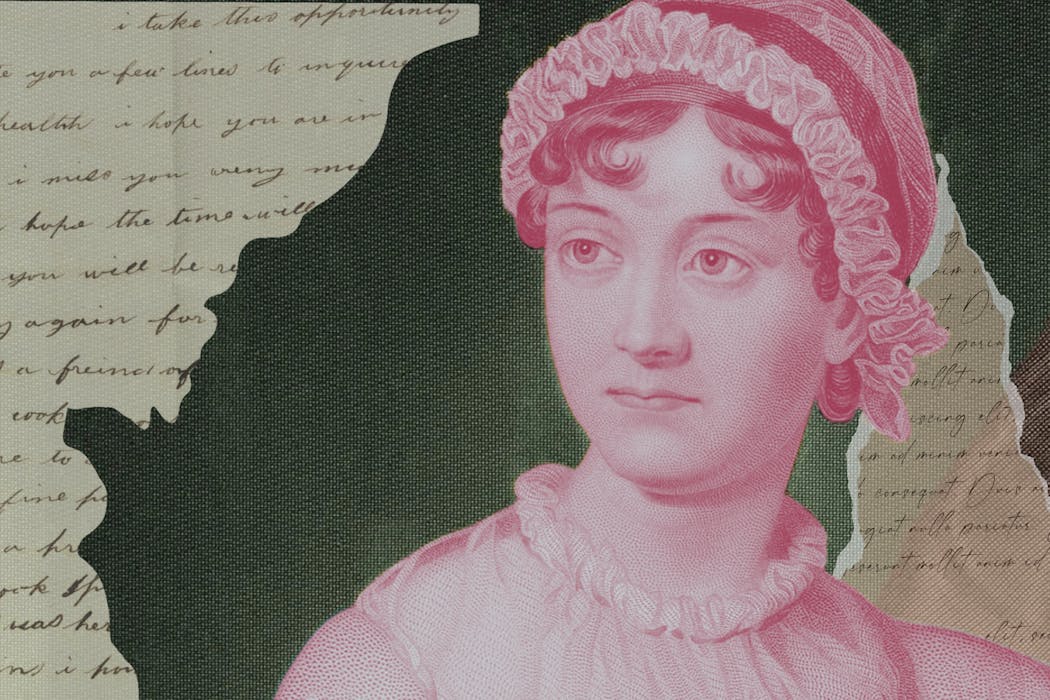
Canva, CC BY

When Jane Austen died in July 1817, aged just 41, she was buried in Winchester Cathedral. I moved to the city in 2025. As a lecturer in English literature, I have long researched and taught Austen’s novels, so I was keen to visit her final resting place.

Austen’s grave bears the words: “The benevolence of her heart, the sweetness of her temper, and the extraordinary endowments of her mind obtained the regard of all who knew her and the warmest love of her intimate connections.”

I was surprised that the epitaph makes no mention of her writing. I was also amazed to discover a basket by her graveside which was overflowing with handwritten letters addressed to Austen.

A quick glance through this correspondence showed me that the penfriends both appreciated her work and sought her advice on their love life. I found it fascinating that people would seek relationship guidance from a woman who not only had died over 200 years ago, but had herself never been married.

While her novels themselves stress the importance of marriage for a young lady at that time, Austen was only engaged to be married for one night, as she retracted her acceptance within 24 hours.

Reading the letters that had been left by Austen’s grave almost felt like an intrusion. Many were very personal and addressed her as a long-lost friend. Some of the letters were poetical and attempted to write in Austen’s own style.


This article is part of a series commemorating the 250th anniversary of Jane Austen’s birth. Despite having published only six books, she is one of the best-known authors in history. These articles explore the legacy and life of this incredible writer.


One letter stated:

I can’t believe I’m right here, in front of you. In this moment I’m thinking about the 10-year-old me, when I discovered books were my passion. You were one of the first authors I started reading and you made me fall in love with books, especially Pride and Prejudice. The wish I want to express now is to become like the girls you described. Each of them gave a contribution to creating my current personality. I just wanted you to know that you have been my comfort place when life was bad to me.

Another poignant letter reflected that: “Long is the reading. Long is the journey in this life.”

Perhaps the very attributes that were emphasised on Austen’s gravestone inspired her readers to seek this “intimate connection” with her, by writing letters which appealed to the “extraordinary endowments of her mind”. The fact that Austen apparently had a “sweetness of temper” and the “warmest love” may have suggested to her fans that she would be a suitable shoulder to cry on – someone who could offer solace and guidance when times were hard.

The letters at Austen's graveside.
The letters at Austen’s graveside.
Naomi Walker, CC BY-SA

Looking through the letters in the cathedral reminded me of reading the surviving correspondence between Austen and her friends and family. She often gave relationship advice in her letters to her nieces, so perhaps it was not so surprising after all that readers would seek similar guidance from her about their own lives.

Austen advised her niece, Fanny Knight, in a letter dated November 30 1814, regarding a marriage proposal that: “I dare not say, ‘determine to accept him.’ The risk is too great for you, unless your own Sentiments prompt it.”

She also pointed out that “I am at present more impressed with the possible Evil that may arise to You from engaging yourself to him – in word or mind – than with anything else.”

Austen proves herself to be a worthy aunt with this straight-talking and forthright relationship advice. With some modernising of the langauge, she could even be mistaken for a present-day agony aunt – her words of wisdom are just as pertinent today as they were then.

The fact that letters are placed by Austen’s resting place in Winchester Cathedral not only establishes a connection between the author and the place where she briefly lived but also shows a continued link between Austen and her readers. In an increasingly technological world, I find this very reassuring as it emphasises the continued power and impact of literature in our lives.


Looking for something good? Cut through the noise with a carefully curated selection of the latest releases, live events and exhibitions, straight to your inbox every fortnight, on Fridays. Sign up here.


The Conversation

Naomi Walker does not work for, consult, own shares in or receive funding from any company or organisation that would benefit from this article, and has disclosed no relevant affiliations beyond their academic appointment.

ref. Why Jane Austen readers still leave letters at her graveside – https://theconversation.com/why-jane-austen-readers-still-leave-letters-at-her-graveside-269752

How traditional Himalayan burning could help prevent mega wildfires

Source: The Conversation – UK – By Kapil Yadav, Postdoctoral Research Associate, Royal Holloway, University of London

Every year during December and January, in the Indian Himalayan state of Uttarakhand, rural communities carry out traditional burning on steep hill slopes to regenerate grass. These carefully timed burns, which take place when fuel stocks are low, are needed to support livestock and, indirectly, agriculture in the region.

Similar practices are observed among Indigenous and traditional groups in other regions, highlighting the importance of controlled burning in supporting livelihoods, maintaining biodiversity, and reducing wildfire risk.

Unfortunately, in Uttarakhand, these winter burning practices for regenerating grass remain misunderstood. They are often wrongly believed to happen in summer and blamed for wildfires, which means their important role in rural life remains overlooked.

Across the world, with wildfires becoming more frequent and intense worldwide, the limitations of a “zero-fire” government policy – which focuses on putting out all fires – are becoming ever more evident. However, recent interdisciplinary research highlights that adapting to climate change (and more wild fires) requires learning to live with fire, rather than attempting to extinguish it in every instance.

So there is renewed attention on Indigenous and traditional burning practices and how they can complement prescribed burning practices implemented by the state agencies. Controlled use of fire, which was once discouraged, is now cautiously reconsidered as a necessary tool for reducing the risk of mega wildfires.

My research examines these approaches to living with fire in the Uttarkashi district of the Uttarakhand Himalayas, where both officials and communities conduct controlled burning. It highlights that these different approaches differ in their social and environmental objectives, and community-led burning practices offer lessons for others.

At first glance, the fires lit by state agencies and those set by rural communities may appear similar in their timing and intensity: both are low-intensity burns conducted during winter months and remain confined to small areas. However, they differ in purpose and what they achieve.

For state agencies, prescribed burning is primarily a fire-prevention measure. The goal is to reduce inflammable material on the ground that could fuel wildfires in the summer. In this approach, the forest is valued primarily for its trees and carbon sequestration (the capturing, removal and permanent storage of CO₂ from the earth’s atmosphere), while the needs of local communities are given less importance. Moreover, these prescribed burning practices remain poorly implemented.

On the other hand, communities value forests more broadly and see forests as a site for both grass and trees. They emphasise that winter burns are crucial to sustaining grass. Without them, trees and unwanted shrubs spread, leaving less grass available for fodder.

When to set fires

Beena, a community member, explained to me why summer is not the right time for traditional burning: “Fires set during summer can damage the grass roots with their high intensity. This is not what we want. Also, there is a higher risk of fire spreading out of control.”

This careful use of fire by communities ensures the care of grass, which in turn sustains livestock. Manju Devi, another community member, explained the need for fire in traditional livelihoods: “If there is no fire, there is no grass. If there is no grass, what will our animals eat?” Livestock across Uttarakhand remains central, meeting domestic nutrition needs, supporting agriculture and generating income from the sale of milk and butter.

The use of fire also becomes part of supporting a wider web of relationships with the surrounding landscape. Mansukh, another community member, said that winter burning also supports nesting grounds for pheasant species, and as refuges and grazing grounds for young deer fawns. These traditional burns improve forage quality for deer and maintain the open grassy slope habitats of ground-nesting birds by limiting shrub and tree growth.

These findings suggest that while both community-led burning and state-led burning reduce wildfire risk, the former also sustains livelihoods, biodiversity, and a broader, more caring relationship with the forest.

Lessons from rural communities

It’s important to view the Himalayas as a living landscape, shaped by communities over centuries, rather than as pristine wilderness. Currently, only state agencies are legally permitted to conduct burns in Uttarakhand, a legacy of colonial-period forest legislation.

It is essential to value Indigenous and traditional fire knowledge, both in Uttarakhand and beyond. Often, communities are unfairly blamed for wildfires, and their knowledge is overlooked. When burning is done in secret due to stigma, the risk of accidental fires increases. The Indigenous and rural communities possess valuable solutions for managing wildfire risk. What is needed now is greater recognition of their experience and expertise.

The Conversation

Kapil Yadav receives funding from the National Geographic Society.

ref. How traditional Himalayan burning could help prevent mega wildfires – https://theconversation.com/how-traditional-himalayan-burning-could-help-prevent-mega-wildfires-268807

Rumours about replacing Keir Starmer overlook several important polling details

Source: The Conversation – UK – By Hannah Bunting, Senior Lecturer in Quantitative British Politics and Co-director of The Elections Centre, University of Exeter

Flickr/Number 10, CC BY-NC-ND

A prime minister who led a party to win 412 seats in an election held only 18 months ago might be expected to have the full support of his party and the public throughout the entire term of government. Yet rumours continue to swirl about Keir Starmer’s position.

The next general election isn’t scheduled until 2029, so why is there already so much speculation about Starmer potentially being replaced?

It’s well known in Westminster that there’s an optimum majority size – big enough to pass legislation easily, but not so big that you can’t keep everyone in the party moderately happy. Having 404 MPs (as it currently stands) means it is difficult to run a tight ship. Labour is also a broad church, so different factions will try to capitalise when policy decisions don’t go their way.

A prime example are the 49 Labour MPs who rebelled to vote against the government’s welfare bill in July and were suspended from the party as a result. This type of whip-defying rebellion is often seen with large majorities, partly because it’s not as costly for an MP’s party when they abstain or vote with their constituency – the vote will likely go through anyway.

But this kind of action by a vocal minority can exaggerate a feeling of disquiet. And during Starmer’s government, we’ve already seen an entire new political party established by one of the MPs he suspended.

Adding another layer are those who have leadership ambitions, such as health secretary Wes Streeting. Members of the parliamentary Labour party will speak to each other and these potential candidates about their aspirations. It only takes a few names and a handful of rebellions to rustle up rumours that someone else could do the top job better.

Lots of seats, not much public support

Labour won what has been called a “loveless landslide” in 2024 on just 34.6% of the vote in Great Britain. The low turnout meant that 40% of people didn’t vote, and nearly two-thirds of those who did opted for a party other than Labour. Though the electoral system delivered a large majority, it was always more precarious than the seat total made it look.

Some evidence suggests public support may have weakened further. The proportion of people who say the PM is doing badly has increased 33 percentage points since August 2024. The proportion of those saying he’s doing well has more than halved, from 36% to 15%. And people are becoming more certain about this opinion – in the early days after the election, a fifth of people said “don’t know” in this polling, whereas now that’s just 9%.

This comes against a backdrop of polling that reflects both fragmentation and uncertainty. The latest YouGov poll, commissioned by The Times and Sky News, shows Reform in the lead but still on just 26% – a very low figure for a party on top.

Labour is trailing at 19% and equal to the Conservatives. The Green party, newly led by Zack Polanski, is on 16% and the Liberal Democrats are on 14%. Among five parties, there’s only 12 points between the one polling highest and the one polling lowest.

The public is not congregating around one or even two parties. And importantly, the proportion of people who say they don’t know who they’ll vote for is high, at 14%.

The rate of uncertainty is highest for those who voted Labour in 2024 (19%) and lowest for those who voted for the Greens or Reform (6% and 7% respectively). This tells us that many people could still opt for Labour in a general election, but the traditionally smaller parties have more stable support. And also that the undecided 14% could change everything if a general election really were held tomorrow.

Despite all this, the conversation around voter uncertainty is rarely mentioned in headlines and rumours, so it looks like Starmer’s Labour government is doing very badly, and that Reform is a key challenger. This too can artificially inflate the sense that something needs to change.

Elections ahead

Away from speculative polling, there have been real votes cast since Labour came to office – in the 2025 local elections and in council byelections. Both Labour and the Conservatives dropped councillors in these contests, while Reform has been the main beneficiary along with the Liberal Democrats and Greens. This follows a trend from the previous few years – smaller parties and independents have been steadily gaining, while Labour and the Conservatives have been declining.


Read more:
UK local elections delivered record-breaking fragmentation of the vote


The councils up for election in 2025 were largely in Conservative-heavy areas. Those coming up next May are geographically challenging for Labour. There are at least 72 councils, including all 32 London boroughs, up for reelection and around two-thirds are being defended by Labour. If Reform continues its recent byelection successes and eats into Labour territory, it will give more credence to its challenger status.

That elections are also taking place in Scotland and Wales for devolved parliaments means Labour is facing a nationwide test. Poll ratings suggest the party will perform badly in both countries.

A big set of losses will be interpreted as a sign Starmer’s government is failing, even though the elections are likely to be low-turnout contests that actually represent the public’s continued diversity of opinions.

It’s expected that the Greens will also do fairly well, meaning Labour could be fending off opposition from both ends of the ideological spectrum. We may then see some Labour MPs calling for a leftward shift, and others for a move to the right. Those calling to stay the course will be the quietest.

There’s no denying Labour’s time in office has been difficult. But there have been successes too – notably, delivering on workers’ rights, housing and NHS appointment numbers. But a diverse and uncertain electorate, plus a large majority of MPs to satisfy, makes Labour’s job very difficult.

If the local elections go as expected, somebody could make a leadership challenge. But at the moment, it may be better the devil they know than face greater uncertainty under a new leader.

The Conversation

Hannah Bunting receives funding from the Economic and Social Research Council (ESRC).

ref. Rumours about replacing Keir Starmer overlook several important polling details – https://theconversation.com/rumours-about-replacing-keir-starmer-overlook-several-important-polling-details-271825

Can scientists detect life without knowing what it looks like? Research using machine learning offers a new way

Source: The Conversation – USA – By Amirali Aghazadeh, Assistant Professor of Electrical and Computer Engineering, Georgia Institute of Technology

Many carbon-rich meteorites contain ingredients commonly found in life, but no evidence of life itself. James St. John, CC BY

When NASA scientists opened the sample return canister from the OSIRIS-REx asteroid sample mission in late 2023, they found something astonishing.

Dust and rock collected from the asteroid Bennu contained many of life’s building blocks, including all five nucleobases used in DNA and RNA, 14 of the 20 amino acids found in proteins, and a rich collection of other organic molecules. These are built primarily from carbon and hydrogen, and they often form the backbone of life’s chemistry.

For decades, scientists have predicted that early asteroids may have delivered the ingredients of life to Earth, and these findings seemed like promising evidence.

Even more surprising, these amino acids from Bennu were split almost evenly between “left-handed” and “right-handed” forms. Amino acids come in two mirror-image configurations, just like our left and right hands, called chiral forms.

On Earth, almost all biology requires the left-handed versions. If scientists had found a strong left-handed excess in Bennu, it would have suggested that life’s molecular asymmetry might have been inherited directly from space. Instead, the near-equal mixture points to a different story: Life’s left-handed preference likely emerged later, through processes on Earth, rather than being pre-imprinted in the material delivered by asteroids.

Two hands with two molecules that are mirror images of each other shown over them.
A ‘chiral’ molecule is one that is not superposable with another that is its mirror image, even if you rotate it.
NASA

If space rocks can carry familiar ingredients but not the chemical “signature” that life leaves behind, then identifying the true signs of biology becomes extremely complicated.

These discoveries raise a deeper question – one that becomes more urgent as new missions target Mars, the Martian moons and the ocean worlds of our solar system: How do researchers detect life when the chemistry alone begins to look “lifelike”? If nonliving materials can produce rich, organized mixtures of organic molecules, then the traditional signs we use to recognize biology may no longer be enough.

As a computational scientist studying biological signatures, I face this challenge directly. In my astrobiology work, I ask how to determine whether a collection of molecules was formed by complex geochemistry or by extraterrestrial biology, when exploring other planets.

In a new study in the journal PNAS Nexus, my colleagues and I developed a framework called LifeTracer to help answer this question. Instead of searching for a single molecule or structure that proves the presence of biology, we attempted to classify how likely mixtures of compounds preserved in rocks and meteorites were to contain traces of life by examining the full chemical patterns they contain.

Identifying potential biosignatures

The key idea behind our framework is that life produces molecules with purpose, while nonliving chemistry does not. Cells must store energy, build membranes and transmit information. Abiotic chemistry produced by nonliving chemical processes, even when abundant, follows different rules because it is not shaped by metabolism or evolution.

Traditional biosignature approaches focus on searching for specific compounds, such as certain amino acids or lipid structures, or for chiral preferences, like left-handedness.

These signals can be powerful, but they are based entirely on the molecular patterns used by life on Earth. If we assume that alien life uses the same chemistry, we risk missing biology that is similar – but not identical – to our own, or misidentifying nonliving chemistry as a sign of life.

The Bennu results highlight this problem. The asteroid sample contained molecules familiar to life, yet nothing within it appears to have been alive.

To reduce the risk of assuming these molecules indicate life, we assembled a unique dataset of organic materials right at the dividing line between life and nonlife. We used samples from eight carbon-rich meteorites that preserve abiotic chemistry from the early solar system, as well as 10 samples of soils and sedimentary materials from Earth, containing the degraded remnants of biological molecules from past or present life. Each sample contained tens of thousands of organic molecules, many present in low abundance and many whose structures could not be fully identified.

At NASA’s Goddard Space Flight Center, our team of scientists crushed each sample, added solvent and heated it to extract the organics — this process is like brewing tea. Then, we took the “tea” containing the extracted organics and passed it through two filtering columns that separated the complex mixture of organic molecules. Then, the organics were pushed into a chamber where we bombarded them with electrons until they broke into smaller fragments.

Traditionally, chemists use these mass fragments as puzzle pieces to reconstruct each molecular structure, but having tens of thousands of compounds in each sample presented a challenge.

LifeTracer

LifeTracer is a unique approach for data analysis: It works by taking in the fragmented puzzle pieces and analyzing them to find specific patterns, rather than reconstructing each structure.

It characterizes those puzzle pieces by their mass and two other chemical properties and then organizes them into a large matrix describing the set of molecules present in each sample. It then trains a machine learning model to distinguish between the meteorites and the terrestrial materials from Earth’s surface, based on the type of molecules present in each.

One of the most common forms of machine learning is called supervised learning. It works by taking many input and output pairs as examples and learns a rule to go from input to output. Even with only 18 samples as those examples, LifeTracer performed remarkably well. It consistently separated abiotic from biotic origins.

What mattered most to LifeTracer was not the presence of a specific molecule but the overall distribution of chemical fingerprints found in each sample. Meteorite samples tended to contain more volatile compounds – they evaporate or break apart more easily – which reflected the type of chemistry most common in the cold environment of space.

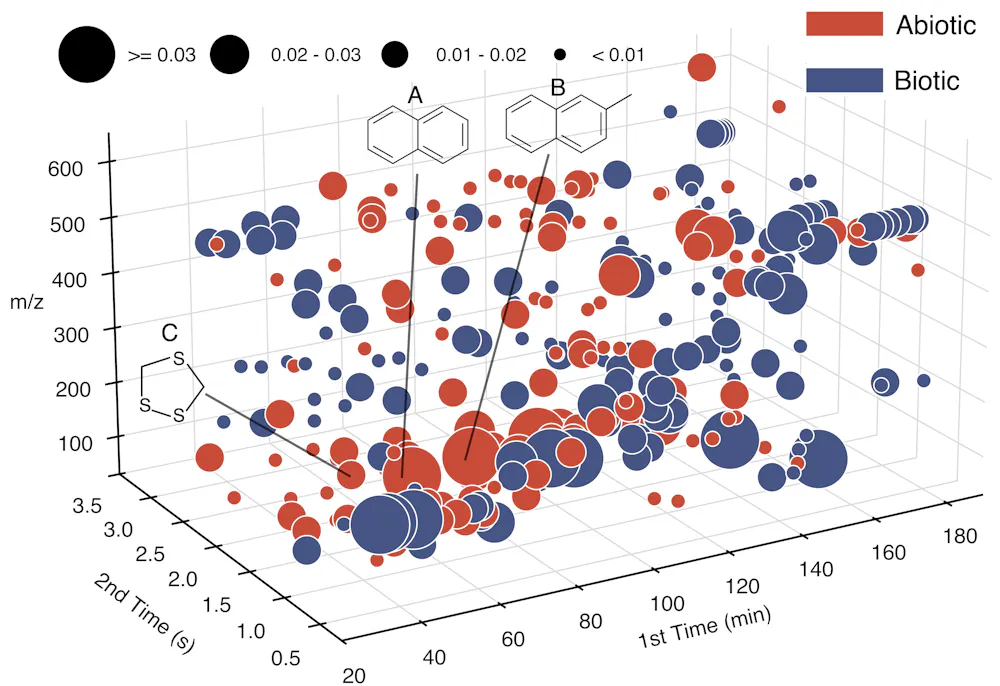
A graph showing a cluster of dots representing molecules, some in red and some in blue.
This figure shows compounds identified by LifeTracer, highlighting the most predictive molecular fragments that distinguish abiotic from biotic samples. The compounds in red are linked to abiotic chemistry, while the blue compounds are linked to biotic chemistry.
Saeedi et al., 2025, CC BY-NC-ND

Some types of molecules, called polycyclic aromatic hydrocarbons, were present in both groups, but they had distinctive structural differences that the model could parse. A sulfur-containing compound, 1,2,4-trithiolane, emerged as a strong marker for abiotic samples, while terrestrial materials contained products formed through biological process.

These discoveries suggest that the contrast between life and nonlife is not defined by a single chemical clue but by how an entire suite of organic molecules is organized. By focusing on patterns rather than assumptions about which molecules life “should” use, approaches like LifeTracer open up new possibilities for evaluating samples returned from missions to Mars, its moons Phobos and Deimos, Jupiter’s moon Europa and Saturn’s moon Enceladus.

The sample return capsule, a black box, sitting on the ground after touching down.
The Bennu asteroid sample return capsule used in the OSIRIS-REx mission.
Keegan Barber/NASA via AP

Future samples will likely contain mixtures of organics from multiple sources, some biological and some not. Instead of relying only on a few familiar molecules, we can now assess whether the whole chemical landscape looks more like biology or random geochemistry.

LifeTracer is not a universal life detector. Rather, it provides a foundation for interpreting complex organic mixtures. The Bennu findings remind us that life-friendly chemistry may be widespread across the solar system, but that chemistry alone does not equal biology.

To tell the difference, scientists will need all the tools we can build — not only better spacecraft and instruments, but also smarter ways to read the stories written in the molecules they bring home.

The Conversation

Amirali Aghazadeh receives funding from Georgia Tech.

ref. Can scientists detect life without knowing what it looks like? Research using machine learning offers a new way – https://theconversation.com/can-scientists-detect-life-without-knowing-what-it-looks-like-research-using-machine-learning-offers-a-new-way-271066

A Colorado guaranteed income program could help families, but the costs are high

Source: The Conversation – USA – By Jennifer C. Greenfield, Associate Professor of Social Work, University of Denver

Guaranteed income programs have grown in popularity in the U.S. as costs of living continue to rise. Glowimages/GettyImages Plus

In Colorado, full-time workers need to earn an hourly wage of at least $36.79 to afford $2,000 in monthly rent, which is below the federal fair market rate for a Denver-area two-bedroom unit.

More than 87% of low-income Coloradans spend more than one-third of their pretax income on housing — a common benchmark for housing affordability. High costs of housing, child care and transportation in Colorado are key drivers of a statewide cost of living that is 12% above the national average.

For many Coloradans, a few hundred extra dollars a month would go a long way. Yet today, the U.S. safety net appears more tenuous than ever and is unlikely to meet all their needs.

Nationally, over the 43-day government shutdown that began on Oct. 1, 2025, 1.4 million federal workers went without paychecks. More than 150,000 jobs were cut in the U.S. private sector in October alone.

As layoffs increase, fewer people are being hired into new positions. At the same time, the federal government shutdown put families receiving federal food assistance on an emotional roller coaster as aid was promised and then pulled away.

This recent federal funding uncertainty has resurfaced the idea of state or local programs that give people money without any strings attached.

Rise of guaranteed income programs

First proposed nationally during the Nixon administration in the 1970s, guaranteed income programs have grown more popular in the U.S.

The concept got a big boost when entrepreneur Andrew Yang proposed a $1,000 monthly stipend during his bid for the Democratic Party’s presidential nomination. Yang’s proposal called for giving all Americans money to help them deal with economic problems brought on by job losses tied to automation and new technologies.

In Colorado, both Boulder and Denver have piloted guaranteed income programs. In both cases the programs were studied using rigorous randomized-control trial research designs.

We are an academic research team comprised of a social scientist with a background in economic analysis, a social work scholar who studies policy approaches to reducing health and wealth disparities, and an urban planning scholar with expertise in state and local policy.

We were contracted to provide an independent evaluation and cost assessment of administering a statewide cash assistance program for Coloradans. Our estimates include projections for population changes, such as the aging workforce, and three tiers of support: from low, $25 per month, to medium, $100 per month, to high, $500 per month.

Rolling out a state government program that gives everyone money would be expensive, so we also estimated what it would cost to introduce a program just for the lowest-income Coloradans.

What are guaranteed income programs?

Guaranteed income programs are policies that support a population by giving people money on a regular basis — regardless of their income. They’re called universal basic income programs.

More common in practice are cash dividends. Dividends offer cash assistance to a qualifying group or segment of the population, such as people below a certain income or with a qualifying disability. An example of this is Michigan’s Rx Kids Program, which provides cash assistance for pregnant people, new parents and babies.

Guaranteed income programs can be administered at the neighborhood, city or state level. Programs in Cambridge, Massachusetts; Richmond, California; and Baltimore have all shown efficacy in targeting the needs of local communities.

For example, people who were enrolled in the Rise Up Cambridge program became more likely to be employed, get enough to eat and have housing – while making more money — than those who didn’t get cash assistance.

Most cash assistance programs have succeeded. Research by GiveDirectly and the Stanford Basic Income Project likewise find that beneficiaries of cash assistance programs are more likely to get involved in their local communities.

An ‘NBC News’ segment looks at a study of a universal basic income program. The study found that most people would spend the money on essentials like food and rent.

These programs can support people who have lost their jobs or are experiencing health crises. In Colorado, a statewide guaranteed income program could help low-income Coloradans facing high housing and child care costs.

Similarly, the program could help Colorado’s growing population of older people with fixed incomes.

It could also address fears that the rise of artificial intelligence will cause job losses and result in lower wages for many workers. Columbia Business School researchers have predicted a 5% decline in how much of the country’s total economic output goes to workers’ wages due to artificial intelligence.

Program, not panacea

While guaranteed income programs can help the people who get money from them, they are complicated, expensive and hard to administer.

Administering a guaranteed income program requires massive capacity to deploy and manage. The state would have to facilitate enrollment, keep mailing addresses or bank information updated and supervise transfers for more than 5 million Coloradans every single month. Some of this data may already exist at state agencies, but no one agency has all of this information at its disposal.

For instance, only 80% of adults, roughly 3.3 million people, in Colorado filed a tax return in 2023; only 175,000 workers filed a Family and Medical Leave Insurance claim in 2024; and just about 1 million adults are enrolled in Health First Colorado, the state’s Medicaid program. Even merging data across these agencies — an effort that is underway but is just getting started — would miss some households across the state.

A large building with a gold dome on a sunny day behind a green lawn.
It would cost more than half of Colorado’s annual general fund to give $100 a month to every Coloradan as part of a statewide income program.
Jan Butchofsky/GettyImages

In a world of finite budgets, a statewide universal program would have to be smaller per person, limiting its benefits. Giving all Colorado residents $100 per month would cost more than $7 billion each year. That’s more than half of Colorado’s annual general fund. However, it would cost half as much — $3.3. billion — to provide $500 per month to the 554,000 Coloradans who are below the federal poverty line, which is $32,150 for a family of five.

Finding this money within the state budget could require cutting spending elsewhere — potentially from other state-funded programs that benefit low-income families.

Trade-offs for policymakers

If federal food assistance, including the Supplemental Nutrition Assistance Program, is disrupted again, either by more funding freezes or new changes in eligibility rules, a statewide supportive assistance program could help offset the impact.

In 2024, the average American getting SNAP benefits received $6.11 per day, or less than $200 a month. One in 10 Coloradans, 584,500 people, receive SNAP benefits.

However, a guaranteed income program might risk pushing some households’ income above the eligibility cutoff for programs like SNAP — creating unintended consequences that harm household welfare. It’s unclear whether assistance from a basic income program would count as reportable income.

Where AI-driven job loss is concerned, guaranteed income programs could smooth transitions for laid-off workers needing to upskill or move industries. However, guaranteed income programs are not likely to be sufficient in scope or generous enough to cushion workers from a potential restructuring of the labor market, which may have already begun.

Assessing public support

Given the high costs of creating a statewide guaranteed income program for Colorado, getting substantial public buy-in would be necessary.

Children stand in front of a cafeteria line of food.
In 2025, Colorado voters passed legislation to fund a free lunch program for all students regardless of family income.
Helen H. Richardson/GettyImages

Recent election results, in which voters approved a new tax to fund free school meals for all students, suggest that Coloradans can support programs that help the most vulnerable families.

A recent privately funded poll in Colorado, which was informed by our evaluation’s estimates, found that 56% of voters would support a monthly $500 payment for all new parents, people experiencing homelessness, and low-income households. The poll found that Coloradans were less likely to support a program providing a smaller stipend to all Coloradans, regardless of their income.

Taken together, these polling results suggest that many Coloradans would support some form of need-based income assistance. However, the price of operating any statewide guaranteed income program could give them sticker shock.

Read more of our stories about Colorado.

The Conversation

Jennifer C. Greenfield was hired by Thinking Forward, LLC and the Denver Basic Income Project as a consultant to provide cost estimates and analysis of a potential cash dividend program in Colorado, as described in this article.

Kaitlyn M. Sims receives funding from the Wisconsin Department of Children and Families, the Arnold Ventures Foundation, and the Institute for Humane Studies. She was contracted by Thinking Forward, LLC, and the Denver Basic Income Project to provide a cost-benefit assessment of a statewide cash dividend for the state of Colorado.

Stefan Chavez-Norgaard was contracted by Thinking Forward, LLC, to provide a cost-benefit analysis and broad assessment of a statewide cash dividend program for the State of Colorado. He has also connected with organizations mentioned in this article, including the Denver Basic Income Project (DBIP) and the Fund 4 Guaranteed Income, supporter of the Compton Pledge.

ref. A Colorado guaranteed income program could help families, but the costs are high – https://theconversation.com/a-colorado-guaranteed-income-program-could-help-families-but-the-costs-are-high-269082

Trump administration replaces America 250 quarters honoring abolition and women’s suffrage with Mayflower and Gettysburg designs

Source: The Conversation – USA – By Seth T. Kannarr, Ph.D. Candidate in Geography, University of Tennessee

Coins convey important messages about what it means to be an American; the White House knows this. Max Zolotukhin, iStock/Getty Images Plus

The culture wars have arrived at the U.S. Mint.

Commemorative coins aimed at celebrating America’s 250th anniversary in 2026 were unveiled by the mint on Dec. 10, 2025, and they reflect the country’s currently divided politics and views of history.

In an unexpected move, most of the original designs for the “America 250” coins that were approved by two official committees in 2024 were abandoned and replaced. Most notably, the Black Abolition, Women’s Suffrage and Civil Rights quarters were replaced with quarters that instead commemorate the Mayflower Compact, Revolutionary War and the Gettysburg Address.

As a cultural geographer and coin collector, I believe the release of these new dimes, quarters and half-dollars offers a reminder that coins, despite their small size, share important messages about what it means to be an American.

This isn’t the first time politics has invaded the design of U.S. coins. The history contained in their designs is often negotiated and politicized, which is manifested into coins as public memory.

From Congress to your pocket

The production of these America 250 coins, part of the celebration formally referred to as the “American Semiquintennial,” was authorized by the Circulating Collectible Coin Redesign Act of 2020, which was signed into law by President Donald Trump in January 2021.

This reflects the long-standing formal process for designing and producing U.S. coins, both regular circulating ones and commemorative ones.

First, Congress calls for the production of new coins. Then, design ideas and draft art are solicited from medallic artists at the U.S. Mint, who create the raised, three-dimensional designs that are sculpted into models.

Two groups – the Citizens Coinage Advisory Committee, which exists to advise the U.S. Secretary of the Treasury on the designs of all U.S. coins and medals, and the federal Commission of Fine Arts, which provides advice to the federal government on matters of design and aesthetics, including memorials, buildings and coins – work together over time, including through public meetings, to review proposed designs and recommend revisions and selections of specific designs.

The recommendations of the advisory committee and the commission have in the past proved valuable to shaping the final depictions portrayed in coin engravings, but the final authority and decisions come from the Secretary of the Treasury.

In the case of the America 250 coins, the designs were discussed across multiple meetings in 2024, with the final report from the Commission of Fine Arts published on Oct. 24, 2024.

The final recommendations were for a dime that bears a “Liberty Over Tyranny” design; five quarters that would have the “Declaration of Independence,” “U.S. Constitution,” “Abolitionism,” “Suffrage” and “Civil Rights” as their respective designs; and a half-dollar that would bear a “Participatory Democracy” design.

Why the big switch?

The original dime and half-dollar images remained unchanged in the officially accepted designs unveiled on Dec. 10, 2025. However, all quarter designs were changed, eliminating the proposed images representing the Declaration of Independence, U.S. Constitution, Abolitionism, Suffrage and Civil Rights, with the exception of the reverse side of the Declaration of Independence quarter.

No official explanation for these changes were provided during the U.S. Mint’s design unveiling event. But it is not hard to see how the nation’s current political climate, in which President Donald Trump has complained that the Smithsonian focuses too much on “how bad slavery was” and not enough on the “brightness” of the country’s history, may have played a role.

This is significant for two primary reasons. One, the process for choosing the design was supposed to reflect public input, via the public meetings with the two advisory committees regarding these changes. But these fundamental changes were ultimately decided by the Secretary of the Treasury out of the public eye, likely in concert with other members of the Trump administration.

Second, these changes of the America 250 quarters reinforce a more traditional and exclusionary view of nation’s founding and continued progress. The new designs sideline Americans’ historical struggle against oppression and social injustice and are demonstrative of the Trump administration’s collective efforts to bar government statements and initiatives related to diversity, equity and inclusion.

The selective editing of American memory portrayed on the America 250 coins is not only a breach in established process, but it’s also a missed opportunity to provide new and diverse representation in an easy, yet meaningful, way.

Public memory in your pocket

Ever since the U.S. Mint opened in Philadelphia in 1792, coins and currency with depictions of American figures, symbolic representations and iconic inscriptions have circulated throughout the nation and the world.

For example, the Fifty States Quarters program, which ran from 1999 to 2008, was very popular among Americans who appreciated seeing different designs on quarters that were emblematic of their own state’s identity. For example, the Vermont version of the quarter included an image of Camel’s Hump Mountain and maple trees with sap buckets hung on them.

Scholars have argued that coins and currency are examples of everyday or banal nationalism, which refers to the often unnoticed expressions of national identity that persist throughout material culture and society.

Coins occupy sparing yet evident moments throughout our lives. You can find them in routine places, with little attention given to their presence, such as the bottom of your junk drawer, in the cup holder in your car or abandoned on the sidewalk.

A woman's hand holding coins.
What coins do you have in your pocket?
Grace Cary, Getty Images

To cultural geographers like me, coins serve as vessels of passive and active public memory. They subtly signal values and reinforce figures and events as important to American culture and history by being portrayed on government-issued coins.

This understanding further highlights the significance of the recent design changes to the America 250 coins. The removal of imagery of women, people of color and historic events important to marginalized people are not subtle choices.

Whether someone is an active coin collector or just looking to buy a candy bar at a convenience store, all people participate in the reproduction of American public memory. And they do this regardless of which narratives of public memory are chosen to be shared by the federal government.

What comes next?

Recent controversies regarding the end of production of the U.S. penny and the proposal for a new one-dollar coin commemorating President Donald Trump illustrate the American public’s continued interest and attention to coins and currency despite an increasingly digital age. The redesign of these America 250 coins is yet another story in this ongoing saga.


Read more:
Who wins and who loses as the US retires the penny


Historically, designs of coins or currency that are unpopular with the general public are ripe for being defaced, such as the scratching out of public figures or the complete destruction of the piece.

Although sometimes illegal, such an act sends a powerful political message of subversion against the government. This tends to be more common in other nations, beyond minor graffiti drawn onto paper currency in the U.S.

If the U.S. Mint maintains the product schedule of previous years, the America 250 coins should begin to circulate in February 2026. It may take time for the coins to arrive at banks, and even longer for them to show up as change from grocery stores, convenience shops and beyond.

Whether you believe in the appropriateness of the new designs or not, the coins and their backstory can serve as a prompt for discussion with friends and family, or even educating children, about what it means to be an American. The power – and the coins – will soon be in your hands.

The Conversation

Seth T. Kannarr does not work for, consult, own shares in or receive funding from any company or organisation that would benefit from this article, and has disclosed no relevant affiliations beyond their academic appointment.

ref. Trump administration replaces America 250 quarters honoring abolition and women’s suffrage with Mayflower and Gettysburg designs – https://theconversation.com/trump-administration-replaces-america-250-quarters-honoring-abolition-and-womens-suffrage-with-mayflower-and-gettysburg-designs-271811