Charlie Kirk talked with young people at universities for a reason – he wanted American education to return to traditional values

Source: The Conversation – USA (2) – By Daniel Ruggles, PhD Candidate in Politics, Brandeis University

Charlie Kirk speaks at Utah Valley University on Sept. 10, 2025, in Orem, Utah, shortly before he was shot and killed. Trent Nelson/The Salt Lake Tribune/Getty Images

Conservative activist Charlie Kirk was assassinated on Sept. 10, 2025, at the start of a college campus tour that centered on Kirk discussing politics – and education – with students.

A large part of Kirk’s political activism centered on what education should look like. Amy Lieberman, The Conversation’s education editor, spoke with Daniel Ruggles, a scholar of conservative youth activism, to better understand the beliefs about education that influenced Kirk and the connection he tried to make with young people.

A young man wearing a black t-shirt extends his arm toward a crowd of young people, many of whom are wearing red hats.
Charlie Kirk arrives to speak at University of Nevada in Reno in October 2024.
Andri Tambunan/AFP via Getty Images

What is most important to understand about Charlie Kirk’s views on education?

Charlie Kirk’s education philosophy was founded upon the idea of not being on the left. One of the problems with that approach is that it’s harder to explain your ideas and values in a positive way instead of just being “anti” left.

Conservatives, well before Kirk’s time, have been trying to reclaim education from liberals whom they view as valuing equity and belonging instead of timeless values of order and traditional values in society. This philosophy overall focuses on reclaiming education from liberals.

There is a lot of alignment with Kirk’s education philosophy and the Make America Great Again movement, but his approach predates Donald Trump’s rise. It is focused on returning to what conservatives call Western and “traditional” values. This means rolling back the clock to an idealized time when men and women had set gender roles in society and life was more harmonious and wholesome. At its best, this education philosophy can be valuable – teaching what society views as virtuous behavior, ethics and tradition – but it can also prioritize tradition and privilege over justice and equity.

This philosophy also has to do with not feeling a need to apologize for one’s identity. A big divide between liberals and conservatives is how they explain disadvantage. Conservatives like Kirk believe they should not have to apologize for their identities, and other people’s identities should not be a reason for special treatment.

This philosophy is not so much about making education more effective as much as it is about not being “woke.” De-woking the classroom is usually the overall goal. This involves ridding the classroom of what is known as grievance politics – meaning someone believes they have been marginalized because of their identity, race, gender or sexuality.

How far back can you trace this educational philosophy?

The 1960s had an explosion of progressive activism amid the New Left and antiwar movements as young adults realized that they could now demand certain rights. At the same time, there were a lot of young conservatives on campuses who felt fine with the way things were or who were concerned about some of the more radical ideas promoted by the New Left.

Universities became more inclusive in the 1960s, too. Generally, there were not any gender studies programs at American universities until the 1960s and 1970s, nor were there any race and ethnicity programs. Some conservatives pushed back on the emergence of these programs, saying that if there is an African American studies department, they want to see a conservative studies department, too.

After the 1960s, conservative education fights died down. Conservatives still wanted their voices heard on campus, but their merit-only based education philosophy seemed less relevant when left-wing campus protests had declined significantly.

How did Charlie Kirk capitalize on the conservative feelings regarding education?

Kirk founded his political nonprofit, Turning Point USA, in 2012. Kirk didn’t originally support Trump, but he became friends with Donald Trump Jr., and eventually became close with the president. Like Trump, Kirk saw academia as the source of a plethora of problems in American society. His goal was to make college campuses more friendly to conservative students by making conservative ideas like free market economics and traditional gender roles more popular.

There was a lot of foundation laying over time for Kirk’s conservative education philosophy. Hamas’ Oct. 7, 2023, attack in Israel, as well as the subsequent war in Gaza and Palestinian rights protests in the U.S., offered a moment for conservatives like Kirk to brand progressives at schools as this huge threat.

What was Kirk’s tour focused on accomplishing?

Kirk and others in the conservative youth movement want their followers to have a close relationship with them. This helps conservatives influence government and society, using college campuses to recruit young adults as conservative voters and activists, making the university appear less progressive in the process. Let’s say progressive college kids have Bernie Sanders or Che Guevara posters hanging in their dorm rooms. Conservatives like Kirk have built an all-encompassing, alternative world for young conservatives to become involved in, where they have proximity to political and thought leaders, including Kirk. Turning Point has used flashy slogans, signs and bumper stickers to help make conservatism cool on campus.

Kirk’s tour had just begun, but he had planned to make stops at universities in Colorado, Utah, Minnesota, Montana and other states. It was important that Kirk himself was in the room with young people, and that they could ask him questions and talk with him. He was considered approachable in a way that most politicians would not be.

Conservatives have used this strategy for a long time. My own research shows how college students would write to conservative leaders like Ronald Reagan and William F. Buckley in the 1960s and 1970s and these figures would write back. This kind of proximity between leaders and young supporters isn’t seen on the left. The goal is to cultivate a conservative movement community. Many of those conservative college students later worked for the government. Kirk’s tour was about continuing that kind of direct relationship between conservative leaders and young people.

Conservatives have a pipeline – meaning, let’s say you’re in high school and you discover conservative ideas by watching Charlie Kirk on YouTube. In college, you can go to Turning Point events and meet conservative leaders. After you graduate, you can even get a job with a conservative group through websites like ConservativeJobs.com. The point of the pipeline is to always give young conservatives a next step to becoming more involved in politics. While not everyone follows this pipeline, it helps the conservative movement cultivate new generations of talent. I think Kirk had a lot he was trying to accomplish, including building up a reservoir of young talent through Turning Point.

Two men wearing dark shirts with yellow writing stand behind a yellow roped off area that has signs that say 'American Comeback.'
FBI staff on Sept. 11, 2025, investigate the area at Utah Valley University where Charlie Kirk was shot and killed the day before.
Francisco Kjolseth/The Salt Lake Tribune via Getty Images

How is Turning Point distinct from the Republican Party and MAGA?

Turning Point isn’t the same as the Republican Party, but it’s helping to push the party further to the right. Turning Point has alienated other members of the conservative movement in certain ways. In 2018, the conservative youth group Young America’s Foundation accused Turning Point of taking over the conservative youth movement and crowding out other groups. Turning Point’s total revenue has grown considerably in the last few years, topping US$85 million in 2024 – that matters because money and attention help Turning Point push out other conservative voices.

Kirk and Trump agreed on a lot of policy issues. Kirk used Turning Point to define conservatism on his terms and to defend Trump. Education is the bulk of Turning Point’s work, a continuation of what has historically also been been the most important cultural issue on the right since the 1960s.

The Conversation

Daniel Ruggles does not work for, consult, own shares in or receive funding from any company or organization that would benefit from this article, and has disclosed no relevant affiliations beyond their academic appointment.

ref. Charlie Kirk talked with young people at universities for a reason – he wanted American education to return to traditional values – https://theconversation.com/charlie-kirk-talked-with-young-people-at-universities-for-a-reason-he-wanted-american-education-to-return-to-traditional-values-265190

Hunger among South African students: study shows those studying remotely need financial aid for food

Source: The Conversation – Africa – By Angelo Fynn, Specialist Researcher, University of South Africa

Food insecurity is associated with worse academic outcomes. PxHere

The spectre of food insecurity unfortunately haunts many households in South Africa.

Food security is commonly understood as having sufficient and nutritious food to live a healthy, active life. Access to sufficient food is a basic human right and is enshrined in the South African constitution.

Estimates from Statistics South Africa show that the proportion of households experiencing some form of food insecurity rose between 2019 and 2023 from 15.8% to 19.7%. Many households still seem to be feeling the pressure of slow economic growth and consumer price inflation. And a third of South Africans are unemployed.


Read more:
Too hungry to go to class: South Africa’s university students need better support


These pressures affect students too.

The South African higher education sector has made great strides in making tertiary education more accessible. While the National Student Financial Aid Scheme (NSFAS) was established to broaden access to post-school education, by providing for fees, accommodation and a stipend, levels of food insecurity among university students remain high.

It’s hard to say just how high. Sometimes students seek assistance discreetly due to stigma. What we do know is that while the 2025 NSFAS research report talks about a 5% increase in funding, Statistics South Africa figures show inflation rates higher than that for basic food items.

Education researchers are interested in this because food insecurity is associated with worse academic outcomes among university students. It’s linked to lower class attendance and lower academic performance, among other indicators, which then affects their psychological wellbeing.

However, most of this research is based on traditional (full-time) university students. Students in open, distance and e-learning institutions are under-researched when it comes to food insecurity. Distance learning students form a third of all tertiary education students enrolled in South African universities: 371,592 students, according to 2023 audited figures.

My research interests are in how students learn, cope and succeed. My aim is to help university management and academics understand the issues that students face. One of these is food insecurity.

In a study conducted on 7,494 students from a South African distance learning institution, I found that only 27.9% of those surveyed were food secure and 71.7% (5,380 individuals) were moderately to severely food insecure.

The finding is worrying when considered along with the negative impact that food insecurity has on academic outcomes, physical and psychological well-being.

Food insecurity among this group of students cannot be ignored. I recommend that a system of food grants should be considered.

Which students were the most food insecure

The sample of students was drawn from a South African public open, distance and e-learning institution with approximately 370,000 students. These students were from all walks of life. The majority of respondents (5,670) were female; 23% were male (1,705). The institution as a whole has a 70:30 female-to-male ratio.

About 61% (4,573) of respondents were the first in their immediate family to attend tertiary education. About 12% (896) were members of the LGBTI+ community. It was important to consider this group as some research shows they are disproportionately affected by food insecurity.

Only one in five of respondents were working full time and 14% were studying full time. The biggest group (26%) were unemployed and looking for work; 21% were not looking for work. The remainder were engaged in various forms of employment and study.

The majority (43%) indicated that they were dependent on some form of government grant as their main income, followed by 26% who relied on salaries or wages, 10% who were reliant on their parents and 12% who had no form of income. In terms of household income, 40% earned up to R1,200 (about US$68) per month.

When this data was broken down further, stark patterns of food access emerged.

  • those who identified as Black Africans reported the highest levels of food insecurity (42%)

  • 43.8% of first generation students reported severe food insecurity (compared with 27% of other students who were not first generation students)

  • members of the LGBTQ+ community were also found to be more at risk of severe food insecurity than the total response population.

Impact of food insecurity on students

Food insecurity has a negative impact on academic outcomes and on physical and psychological wellbeing.

Students may repurpose funds intended for study purposes to buy food, leaving them without the necessary materials to participate effectively in their education.

Psychological impacts of food insecurity can include increased rates of depression and anxiety associated with concerns around obtaining sufficient food.

Students may consume poor, more affordable food, higher in energy density but lower in nutrients.

Food pantries and grants

Open, distance and e-learning institutions face a challenge when it comes to addressing food insecurity. Students are geographically dispersed and may be enrolled in large numbers. The food pantry programmes found in contact institutions are simply not viable as the infrastructure required is large and costly.

Food pantry programmes are one of the most widely used interventions to combat food insecurity at universities globally. Common barriers to use are the stigma associated with using them, high rate of volunteer staff turnover, location of the programmes and complexity of eligibility criteria, among others.

Given the findings, I suggest that food grants for distance education students are necessary. Public-private partnerships could be explored, too, to address the issue of distance education student hunger.

The Conversation

Angelo Fynn does not work for, consult, own shares in or receive funding from any company or organisation that would benefit from this article, and has disclosed no relevant affiliations beyond their academic appointment.

ref. Hunger among South African students: study shows those studying remotely need financial aid for food – https://theconversation.com/hunger-among-south-african-students-study-shows-those-studying-remotely-need-financial-aid-for-food-264542

We created a support programme for schools in Nairobi’s informal settlements: what we learned

Source: The Conversation – Africa – By Benta A. Abuya, Research Scientist, African Population and Health Research Center

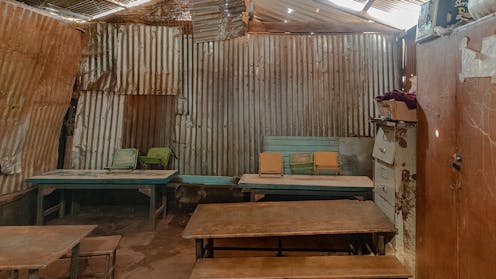
School room in Kibagare, Nairobi, Kenya. Ninara, via Flickr, CC BY

Access to school is considered to be better for children who live in urban areas than in rural areas in countries such as Kenya. But research shows that this access doesn’t translate into children doing better at school if the setting is an informal settlement. Despite being able to attend school, some children don’t fully enjoy their right to education, because the urban advantage seems to have dwindled in these contexts in recent years.

Some years ago, our team of researchers at the African Population & Health Research Center in Kenya examined the enrolment patterns in slums and non-slum communities in Nairobi. Our study found that pupils living in non-slum areas had higher rates of primary school completion (92%) than their counterparts in urban informal settlements (76%). And the pupils outside slums were more likely (76%) to go on to secondary school than the pupils in slums were (46%).

This motivated us to design and carry out an intervention, called Advancing Learning Outcomes and Transformational Change (ALOT Change). It was a nine-year after-school support programme that ran in three phases:

  • phase 1 from 2013 to 2015

  • phase 2 from 2016 to 2018

  • phase 3 from 2019 to 2022.

The programme consisted of homework support, mentoring in life skills (including relationship skills and responsible decision making), parental counselling and transition subsidies. In phase 2, we added a leadership component and boys into the programme. In phase 3 we added motivational talks, service learning and digital literacy.

Parents were encouraged to support their children and peers to learn from each other. Children were encouraged to think about careers.

ALOT Change aimed to contribute to a better future for boys and girls aged 12-19 in informal settlements. We implemented this intervention in two Nairobi settlements, Korogocho and Viwandani. Korogocho is reported to be more stable but to have worse health and socio-economic outcomes, while Viwandani is more transient, with a youthful, migrant population.

Once the intervention had run its course, we wanted to know whether it had made a positive impact on pupils’ literacy and numeracy scores. We analysed data from 577 pupils at baseline and 392 at endline during phase 3.

Our endline report showed modest improvements in literacy and numeracy, better self-confidence and aspirations, stronger parental involvement, and reduced delinquent behaviour among participants.

We found that the programme was particularly useful for follow-up cohorts who had been engaged in earlier phases.

Generally, the intervention had more impact among boys than girls, for pupils aged 12-13, and among pupils from least poor households. Numeracy improved more in Korogocho than in Viwandani.

These findings point to some adjustments that could be made to future interventions.


Read more:
Education in Kenya’s informal settlements can work better if parents get involved — here’s how


Evaluation of impact on numeracy and literacy achievement

Our evaluation compared two cohorts of boys and girls. The “follow-up cohort” were followed from primary school (2016-2018) into secondary schools. The “new cohort” started the programme in 2019 and were followed for three years.

The research questions were:

  • Did the intervention improve literacy and numeracy scores?

  • How did those scores vary?

  • Were there any differences between boys and girls?

In our analysis we chose to look at five groups, defined by their performance in literacy and numeracy tests. We explored the relationships between their performance and the students’ characteristics (age and gender) and household factors (like household head age, availability of reading materials at home, and household size).

Some of the highlights of our findings were that:

  • the intervention had a strong impact on numeracy among higher achievers

  • reading at home had a notable benefit for lower and middle achievers

  • girls tended to perform better than boys in literacy

  • boys scored better in numeracy than girls

  • the effects of the intervention on literacy and numeracy were sustained one year into secondary school

  • numeracy and literacy scores reduced in older age groups, as in other studies.

The follow-up cohort had been exposed to the intervention for three years (in phase 2) by the time we started assessing their performance. They performed better than the new cohort.


Read more:
10 years ago Kenya set out to fix gender gaps in education – what’s working and what still needs to be done


Gender differences in performance were evident at both lower and higher achievement levels. This finding mirrors those of other studies that speak to the need to encourage boys to enjoy reading to improve their reading abilities. But some studies explain this lag in reading by boys to the likelihood that boys are more inclined towards science, technology, engineering, and mathematics, which takes them away from the focus of reading competency.

Recommendations

The study points to the need to pay more attention to boys during the literacy sessions and to girls in the numeracy sessions during the implementation of the intervention programmes.

The reduction in scores at older ages suggests a need to adjust the programme to suit younger and older adolescents.

Programmes may need to further adapt interventions for older adolescents. Continuing with the same components of the intervention may not be feasible for older adolescents.

The Conversation

Benta A. Abuya works for APHRC. She does not receive funding from any organisation

ref. We created a support programme for schools in Nairobi’s informal settlements: what we learned – https://theconversation.com/we-created-a-support-programme-for-schools-in-nairobis-informal-settlements-what-we-learned-264594

Angolans are fed up with broken promises: why the ruling MPLA keeps stalling local elections

Source: The Conversation – Africa (2) – By Daniel Tjarks, Resarch Associate in Human Geography, Saarland University

Weeks of protests in July 2025 in Angola left 30 dead and hundreds imprisoned. Sparked by a hike in fuel prices, the outcome of a governmental effort to reduce subsidies, the unrest quickly spread across the country.

This escalation, along with the government’s uncompromising reaction, is symptomatic of two things: the country’s dire economic conditions, and mounting discontent over disappointed expectations of change in President João Lourenço’s Angola.

After 38 years of rule by José Eduardo dos Santos, Lourenço’s 2017 inauguration briefly had “many Angolans dreaming again”. Those dreams, however, have since been shattered.

One repeatedly broken promise recently slipped by almost unnoticed when, two weeks after the protests, Angola’s parliament quietly wrapped up the legislative year. While Angola’s MPs have begun to pave the way for the 2027 national elections through adjustments to electoral statutes, there was nothing on the agenda about the country’s long-promised local elections.

Over the past 15 years, Angolans have grown accustomed to delays and postponements of what was once hailed as a building block for a more democratic country. Back in 2010, the ruling MPLA had prominently recommitted to the election of local governments – the autarquias – in the country’s constitution.

This promise of decentralisation initially captured the imagination of civil society and international organisations. But it has given way to disillusionment after delays and lukewarm excuses. Justifications alternate between insufficient infrastructure, unresolved legislative issues, or the COVID-19 pandemic.

I am an interdisciplinary social scientist, and for my PhD I studied Angola’s cities and the country’s highly centralised system of local governance.

My research leads me to conclude that Angola’s government has no real interest in establishing the autarquias – at least not anymore. What’s got in the way of the ruling power’s decentralisation strategy has been an astoundingly rapid transformation of Angola’s traditional political geography.

This transformation of demography and party affiliation has increasingly deprived the ruling party, the MPLA, of the urban electorate that it once believed to be its core support group. This helps explain why hopes for systematic change in post-war Angola have mostly faltered.

The reversal of Angola’s political geography

In 2002, Angola emerged from decades of civil war as an autocratic one-party state. In the following years, the MPLA government under Dos Santos cautiously introduced reforms. These included the first peacetime multi-party elections in 2008 and the easing of repression. And with the 2010 constitution, the government recommitted to decentralisation.

After a sweeping 2008 victory, the MPLA stood at the height of its power. It had secured more than 80% of the national vote (the vast majority in all provinces) and Unita, its former war adversary, was weak and discredited. Flush with abundant oil revenues and Chinese credit lines, Angola’s government could feel fairly confident in its grip on power.


Read more:
Angola’s Dos Santos failed to provide a moral example and stop the plunder of the state


It also opted for the idea of “gradualism”. This meant restricting local elections to the party’s traditional city strongholds where it felt most secure in its electoral support.

However, the rise of Unita as the opposition party soon upended the government’s power calculus. Rooted in the Ovimbundu communities of the Angolan highlands, Unita had, during the years of war, often been described and framed as the rural counterpart to the supposedly more modern and urban MPLA. But soon after the war’s end in 2002, the party turned into a serious contender and managed to expand its support base.

It has also emerged as a viable alternative for a young and politically alienated urban electorate in Angola’s cities. For them, Unita offers a potential break with a political system in which they have lost faith.

The electoral results are unambiguous evidence of that. In each national election since 2008, the MPLA lost around 10% of the vote. This dynamic was most pronounced in the capital, Luanda, which Unita officially won for the first time in 2022.

This power shift in Luanda strikes at the very foundation of the MPLA system.

The imperative to control Luanda

Angola is dominated by its capital city – a system that I have elsewhere analysed as “metropolitan bias”. Around 40% of Angolan city dwellers live in the capital. It also generates and absorbs the vast majority of economic and financial resources in the country.

These riches underpin what other researchers have described as a type of urban “political settlement”. This means that the patronage structures and corruption characteristic of post-war Angola fundamentally depend on the financial capital attracted to the oil-fuelled real estate and construction sectors of Luanda.

An oppositional capital would be all but unacceptable to the ruling MPLA.


Read more:
Angola’s president has little to show for his promise of a break with the authoritarian past


Over the years the kleptocratic dynamics of Angola’s elite-controlled system have been laid bare by research on Angola’s political economy and the type of investigative journalism that produced the infamous Luanda Leaks. These have shown how the intertwining of the party-state with the petro-economy has facilitated the blatant self-enrichment of Angola’s ruling class.

In contrast, almost every second Angolan lives on less than US$3.65 a day. For their part, those close to the inner circle of power have largely distributed the country’s oil wealth among themselves.

From promises to manipulation

Judged against its own promises of decentralisation and faced with the emergence of a decidedly urban Unita electorate, the MPLA has a dilemma. For the last 15 years its solution has been to opt for a permanent delay.

Oppositional and civil society groups like the “Jovens pelas autarquias” (Youth for Local Government) have long denounced what’s occurred.

The latest chapter in the Angolan decentralisation saga came in 2025 with a new administrative structure. The number of local government units has been more than doubled and the capital splintered into 16 units.

This reform will allow the MPLA to blame delays on insufficient infrastructure for the foreseeable future. It will also ensure that, should autarquias be established at some point, local governments will remain relatively weak.

This is a well-worn anti-democratic strategy of manipulating decentralisation – tried and tested in countries such as Ethiopia, Malawi and Uganda.

There can be little doubt that the early enthusiasm that greeted Lourenço’s inauguration in 2017 has faded and that the current outlook for local democracy in Angola does not appear much brighter than under his predecessor.

One may therefore reasonably doubt that Angolans will see local elections taking place any time soon.

The most important question ahead is how the MPLA will respond to the type of escalating grievances that have recently erupted in the streets of Luanda. And to what extent it will allow these popular sentiments to find free and fair expression in the 2027 national elections.

The Conversation

Daniel Tjarks has received funding from ‘Fundação para a Ciência e a Tecnologia’ (FCT) under scholarship 2022.12544.BD.

ref. Angolans are fed up with broken promises: why the ruling MPLA keeps stalling local elections – https://theconversation.com/angolans-are-fed-up-with-broken-promises-why-the-ruling-mpla-keeps-stalling-local-elections-264294

How to avoid seeing disturbing content on social media and protect your peace of mind

Source: The Conversation – USA – By Annie Margaret, Teaching Assistant Professor of Creative Technology & Design, ATLAS Institute, University of Colorado Boulder

Social media often serves up disturbing images but you can minimize your exposure. Jacob Wackerhausen/iStock via Getty Images

When graphic videos go viral, like the recent fatal shooting of Charlie Kirk, it can feel impossible to protect yourself from seeing things you did not consent to see. But there are steps you can take.

Social media platforms are designed to maximize engagement, not protect your peace of mind. The major platforms have also reduced their content moderation efforts over the past year or so. That means upsetting content can reach you even when you never chose to watch it.

You do not have to watch every piece of content that crosses your screen, however. Protecting your own mental state is not avoidance or denial. As a researcher who studies ways to counteract the negative effects of social media on mental health and well-being, I believe it’s a way of safeguarding the bandwidth you need to stay engaged, compassionate and effective.

Why this matters

Research shows that repeated exposure to violent or disturbing media can increase stress, heighten anxiety and contribute to feelings of helplessness. These effects are not just short-term. Over time, they erode the emotional resources you rely on to care for yourself and others.

Protecting your attention is a form of care. Liberating your attention from harmful content is not withdrawal. It is reclaiming your most powerful creative force: your consciousness.

Just as with food, not everything on the table is meant to be eaten. You wouldn’t eat something spoiled or toxic simply because it was served to you. In the same way, not every piece of media laid out in your feed deserves your attention. Choosing what to consume is a matter of health.

And while you can choose what you keep in your own kitchen cabinets, you often have less control over what shows up in your feeds. That is why it helps to take intentional steps to filter, block and set boundaries.

Practical steps you can take

Fortunately, there are straightforward ways to reduce your chances of being confronted with violent or disturbing videos. Here are four that I recommend:

  1. Turn off autoplay or limit sensitive content. Note that these settings can vary depending on device, operating system and app version, and can change.
  1. Use keyword filters. Most platforms allow you to mute or block specific words, phrases or hashtags. This reduces the chance that graphic or violent content slips into your feed.

  2. Curate your feed. Unfollow accounts that regularly share disturbing images. Follow accounts that bring you knowledge, connection or joy instead.

  3. Set boundaries. Reserve phone-free time during meals or before bed. Research shows that intentional breaks reduce stress and improve well-being.

a settings screen with a red rectangle around one option
Where to turn off autoplay in your account on Facebook’s website.
Screen capture by The Conversation, CC BY-ND

Reclaim your agency

Social media is not neutral. Its algorithms are engineered to hold your attention, even when that means amplifying harmful or sensational material. Watching passively only serves the interests of the social media companies. Choosing to protect your attention is a way to reclaim your agency.

The urge to follow along in real time can be strong, especially during crises. But choosing not to watch every disturbing image is not neglect; it is self-preservation. Looking away protects your ability to act with purpose. When your attention is hijacked, your energy goes into shock and outrage. When your attention is steady, you can choose where to invest it.

You are not powerless. Every boundary you set – whether it is turning off autoplay, filtering content or curating your feed – is a way of taking control over what enters your mind. These actions are the foundation for being able to connect with others, help people and work for meaningful change.

More resources

I’m the executive director of the Post-Internet Project, a nonprofit dedicated to helping people navigate the psychological and social challenges of life online. With my team, I designed the evidence-backed PRISM intervention to help people manage their social media use.

Our research-based program emphasizes agency, intention and values alignment as the keys to developing healthier patterns of media consumption. You can try the PRISM process for yourself with an online class I am launching through Coursera in October 2025. You can find the course, Values Aligned Media Consumption, by searching for Annie Margaret at the University of Colorado Boulder on Coursera. The course is aimed at anyone 18 and over, and the videos are free to watch.

The Conversation

Annie Margaret works for/consults to Post Internet Project. She receives funding from University of Colorado Boulder PACES grant.

ref. How to avoid seeing disturbing content on social media and protect your peace of mind – https://theconversation.com/how-to-avoid-seeing-disturbing-content-on-social-media-and-protect-your-peace-of-mind-265178

Yes, this is who we are: America’s 250-year history of political violence

Source: The Conversation – USA – By Maurizio Valsania, Professor of American History, Università di Torino

Punishment by tar and feather of Thomas Ditson, who purchased a gun from a British soldier in Boston in March 1775. Interim Archives/Getty Images

The day after conservative activist Charlie Kirk was shot and killed while speaking at Utah Valley University, commentators repeated a familiar refrain: “This isn’t who we are as Americans.”

Others similarly weighed in. Whoopi Goldberg on “The View” declared that Americans solve political disagreements peacefully: “This is not the way we do it.”

Yet other awful episodes come immediately to mind: President John F. Kennedy was shot and killed on Nov. 22, 1963. More recently, on June 14, 2025, Melissa Hortman, speaker emerita of the Minnesota House of Representatives, was shot and killed at her home, along with her husband and their golden retriever.

As a historian of the early republic, I believe that seeing this violence in America as distinct “episodes” is wrong.

Instead, they reflect a recurrent pattern.

American politics has long personalized its violence. Time and again, history’s advance has been imagined to depend on silencing or destroying a single figure – the rival who becomes the ultimate, despicable foe.

Hence, to claim that such shootings betray “who we are” is to forget that the U.S. was founded upon – and has long been sustained by – this very form of political violence.

A fuzzy photo of a large car with a woman leaning over in the back seat to help a slumped man next to her.
First lady Jacqueline Kennedy leans over to assist her husband, John F. Kennedy, just after he is shot in Dallas, Texas, on Nov. 22, 1963.
Bettman/Getty Images

Revolutionary violence as political theater

The years of the American Revolution were incubated in violence. One abominable practice used on political adversaries was tarring and feathering. It was a punishment imported from Europe and popularized by the Sons of Liberty in the late 1760s, Colonial activists who resisted British rule.

In seaport towns such as Boston and New York, mobs stripped political enemies, usually suspected loyalists – supporters of British rule – or officials representing the king, smeared them with hot tar, rolled them in feathers, and paraded them through the streets.

The effects on bodies were devastating. As the tar was peeled away, flesh came off in strips. People would survive the punishment, but they would carry the scars for the rest of their life.

By the late 1770s, the Revolution in what is known as the Middle Colonies had become a brutal civil war. In New York and New Jersey, patriot militias, loyalist partisans and British regulars raided across county lines, targeting farms and neighbors. When patriot forces captured loyalist irregulars – often called “Tories” or “refugees” – they frequently treated them not as prisoners of war but as traitors, executing them swiftly, usually by hanging.

In September 1779, six loyalists were caught near Hackensack, New Jersey. They were hanged without trial by patriot militia. Similarly, in October 1779, two suspected Tory spies captured in the Hudson Highlands were shot on the spot, their execution justified as punishment for treason.

To patriots, these killings were deterrence; to loyalists, they were murder. Either way, they were unmistakably political, eliminating enemies whose “crime” was allegiance to the wrong side.

An old portrait of an older man in a black robe.
In 1798, Henry Brockholst Livingston – later a U.S. Supreme Court justice – killed James Jones in a duel. It did not affect his career.
US Supreme Court

Pistols at dawn: Dueling as politics

Even after independence, the workings of American politics remained grounded in a logic of violence toward adversaries.

For national leaders, the pistol duel was not just about honor. It normalized a political culture where gunfire itself was treated as part of the debate.

The most famous duel, of course, was Aaron Burr’s killing of Alexander Hamilton in 1804. But scores of lesser-known confrontations dotted the decade before it.

In 1798, Henry Brockholst Livingston – later a U.S. Supreme Court justice – killed James Jones in a duel. Far from discredited, he was deemed to have acted honorably. In the early republic, even homicide could be absorbed into politics when cloaked in ritual. Ironically, Livingston had survived an assassination attempt in 1785.

In 1802, another shameful spectacle unfolded: New York Democratic-Republicans DeWitt Clinton and John Swartwout faced off in Weehawken, New Jersey. They fired at least five rounds before their seconds intervened, leaving both men wounded. In this case, the clash had nothing to do with political principle; Clinton and Swartwout were Republicans. It was a patronage squabble that still erupted into gunfire, showing how normalized armed violence was in settling disputes.

Gun culture and its expansion

A small, antique pistol.
One of the matching pair of derringer pistols used by John Wilkes Booth in the assassination of President Abraham Lincoln in 1865.
Bob Grieser/Los Angeles Times via Getty Images

It is tempting to dismiss political violence as a leftover from some “primitive” or “frontier” stage of American history, when politicians and their supporters supposedly lacked restraint or higher moral standards. But that is not the case.

From before the Revolution onward, physical punishment or even killing were ways to enforce belonging, to mark the boundary between insiders and outsiders, and to decide who had the right to govern.

Violence has never been a distortion in American politics. It has been one of its recurring features, not an aberration but a persistent force, destructive and yet oddly creative, producing new boundaries and new regimes.

The dynamic only deepened as gun ownership expanded. In the 19th century, industrial arms production and aggressive federal contracts put more weapons into circulation. The rituals of punishing those with the wrong allegiance now found expression in the mass-produced revolver and later in the automatic rifle.

These more modern firearms became not only practical tools of war, crime or self-defense but symbolic objects in their own right. They embodied authority, carried cultural meaning and gave their holders the sense that legitimacy itself could be claimed at the barrel of a gun.

That’s why the phrase “This isn’t who we are” rings false. Political violence has always been part of America’s story, not a passing anomaly, and not an episode.

To deny it is to leave Americans defenseless against it. Only by facing this history head-on can Americans begin to imagine a politics not defined by the gun.

The Conversation

Maurizio Valsania does not work for, consult, own shares in or receive funding from any company or organization that would benefit from this article, and has disclosed no relevant affiliations beyond their academic appointment.

ref. Yes, this is who we are: America’s 250-year history of political violence – https://theconversation.com/yes-this-is-who-we-are-americas-250-year-history-of-political-violence-265171

Scientists detected a potential biosignature on Mars – an astrobiologist explains what these traces of life are, and how researchers figure out their source

Source: The Conversation – USA – By Amy J. Williams, Assistant Professor of Geology, University of Florida

NASA’s Perseverance rover explores Mars’ Jezero Crater. NASA/JPL-Caltech/MSSS, CC BY-NC

As the Perseverance rover traversed an ancient river valley in Mars’ Jezero Crater back in July 2024, it drilled into the surface and extracted a sample from of a unique, striped rock called Chevaya Falls. The rover’s instruments then analyzed the sample, which is called Sapphire Canyon, and surveyed the surrounding rock.

When scientists started looking into the data, they found two types of iron-rich minerals arranged on the rock in a distinctive, spotted pattern. Both these minerals are associated with life on Earth. One is found around decomposing organic matter on Earth, while the other is produced by certain microbes.

A team of researchers determined in a study published Sept. 10, 2025, that the sample contains a potential biosignature – which could suggest the red planet once hosted microbial life.

These minerals may have formed on the rock when ancient microbes used chemical reactions to produce energy. But chemical reactions not related to life can also produce these minerals under certain conditions.

To learn more, The Conversation U.S. asked Amy J. Williams, an astrobiologist at the University of Florida, about biosignature hunting on Mars and what’s so special about this Sapphire Canyon sample.

What are biosignatures?

A biosignature is any characteristic, element, molecule, substance or feature that serves as evidence for past or present life. It must be something that cannot be produced without life. Some examples include fossils, organic molecules derived from a biological process, or mineral patterns that form only through microbial activity.

An infographic showing six types of biosignatures, including organics, isotopes, minerals, chemicals, small-scale and large-scale structures
There are six types of biosignatures that scientists may find on Mars.
The Planetary Society, CC BY

A potential biosignature, which is how the Sapphire Canyon finding is described, is a substance or structure that might have a biological origin but requires more data or further study before scientists can make a conclusion about the absence or presence of life.

How do scientists determine whether something could be a biosignature on Mars?

Biosignatures come in many different flavors – chemical, physical or structural. Some are rather obvious, like a dinosaur fossil on Earth, but most are far more nuanced.

The search for ancient life on Earth partially informs the search for biosignatures on Mars. Researchers rely on subtle clues preserved in the rock record to address questions such as how long ago microbial life arose on Earth. We search for that evidence in environments such as craters and lake beds with high preservation potential, meaning those that are likely to preserve the biosignatures.

Scientists can apply these techniques to the search for life on Mars. That is why Perseverance was sent to Jezero Crater. In the ancient past, the crater hosted a river-fed lake, which on Earth would represent a habitable environment: one where life would want to live if it ever arose.

This crater was an ideal location to search for ancient life preserved in the rock record on Mars. Astrobiologists then search for chemical, textural and mineral patterns that resemble processes influenced by life back on Earth.

What makes this sample unique and interesting?

The Sapphire Canyon sample is unique because Perseverance’s PIXL and SHERLOC instruments revealed distinctive textures that were dubbed “leopard spots.” These spots are concentric reaction fronts – places where chemical and physical reactions occur – enriched in the minerals vivianite, which contains iron phosphate, and greigite, which is made of iron sulfide.

Dusty rocks on the surface of Mars, speckled with dark spots.
Chevaya Falls, a rock in the Martian Jezero Crater, is speckled with ‘leopard spots,’ which could indicate chemical reactions that may have once supported ancient life.
NASA/JPL-Caltech/MSSS

On Earth, vivianite often forms in environments with lots of decaying organic matter, while certain microbes that use sulfate for energy can produce greigite. Compounds in both these minerals are part of a chemical process called redox gradients, which refers to a series of gradual changes over physical space where chemicals can oxidize (lose electrons) or reduce (gain electrons).

One example is leaving your metal bike out in the rain. Over time, the reduced iron (Fe2+) will lose an electron and oxidize to rust (Fe3+). This process can happen nonbiologically, as exposure to water and oxygen drive the chemical changes that take your new bike to a rusty bike – I suggest not leaving it in the rain.

But some oxidation and reduction processes are so slow on their own that the only way they can occur is with living organisms that push the reactions forward. This process is how many microbes, such as bacteria, get the energy to live. Because these two minerals in the Sapphire Canyon sample both occur in redox gradients, scientists predict that microbial life, if it was ever present, could have played a role in the reactions that created these mineral signatures.

Now, scientists are looking into the explanations that wouldn’t require life to form these features on the sample.

Did scientists expect to find a sample like this?

This was a finding that we had hoped for. However, it was somewhat unexpected in this particular location. This sample came from some of the youngest sedimentary rocks the mission has investigated to date. An earlier prediction had assumed signs of ancient life would come from older Martian rock formations.

Finding these features in younger rocks widens the window of time that Mars was potentially habitable and suggests that Mars could have been habitable later in the planet’s history than scientists previously thought, and older rocks might also hold signs of life that are simply harder to detect.

NASA hosted a press conference on Sept. 10, 2025, about the mysterious sample.

What are the next steps to tell whether the sample indicates signs of past life, or whether the signature is from a nonbiological process?

The mineral associations are a potential fingerprint for those redox reactions that can occur when microbes drive the reaction forward – but abiotic processes, such as sustained high temperatures, acidic conditions and binding by organic compounds, could also explain them.

However, the Cheyava Falls rock shows no signs that it’s been exposed to the high heat or acidity usually required for greigite and vivianite to form nonbiologically. Still, the only definitive way to answer this question is to return the sample to Earth, where scientists can use advanced laboratory techniques to distinguish biological from nonbiological origins.

The Conversation

Amy J. Williams receives funding from NASA and is a scientist on the NASA Mars 2020 Perseverance rover mission.

ref. Scientists detected a potential biosignature on Mars – an astrobiologist explains what these traces of life are, and how researchers figure out their source – https://theconversation.com/scientists-detected-a-potential-biosignature-on-mars-an-astrobiologist-explains-what-these-traces-of-life-are-and-how-researchers-figure-out-their-source-265157

Why OpenAI’s solution to AI hallucinations would kill ChatGPT tomorrow

Source: The Conversation – UK – By Wei Xing, Assistant Professor, School of Mathematical and Physical Sciences, University of Sheffield

OpenAI’s latest research paper diagnoses exactly why ChatGPT and other large language models can make things up – known in the world of artificial intelligence as “hallucination”. It also reveals why the problem may be unfixable, at least as far as consumers are concerned.

The paper provides the most rigorous mathematical explanation yet for why these models confidently state falsehoods. It demonstrates that these aren’t just an unfortunate side effect of the way that AIs are currently trained, but are mathematically inevitable.

The issue can partly be explained by mistakes in the underlying data used to train the AIs. But using mathematical analysis of how AI systems learn, the researchers prove that even with perfect training data, the problem still exists.

The way language models respond to queries – by predicting one word at a time in a sentence based on probabilities – naturally produces errors. The researchers in fact show that the total error rate for generating sentences is at least twice as high as the error rate the same AI would have on a simple yes/no question, because mistakes can accumulate over multiple predictions.

In other words, hallucination rates are fundamentally bounded by how well AI systems can distinguish valid from invalid responses. Since this classification problem is inherently difficult for many areas of knowledge, hallucinations become unavoidable.

It also turns out that the less a model sees a fact during training, the more likely it is to hallucinate when asked about it. With birthdays of notable figures, for instance, it was found that if 20% of such people’s birthdays only appear once in training data, then base models should get at least 20% of birthday queries wrong.

Sure enough, when researchers asked state-of-the-art models for the birthday of Adam Kalai, one of the paper’s authors, DeepSeek-V3 confidently provided three different incorrect dates across separate attempts: “03-07”, “15-06”, and “01-01”. The correct date is in the autumn, so none of these were even close.

The evaluation trap

More troubling is the paper’s analysis of why hallucinations persist despite extensive post-training efforts (such as providing extensive human feedback to an AI’s responses before it is released to the public). The authors examined ten major AI benchmarks, including those used by Google, OpenAI and also the top leaderboards that rank AI models. This revealed that nine benchmarks use binary grading systems that award zero points for AIs expressing uncertainty.

This creates what the authors term an “epidemic” of penalising honest responses. When an AI system says “I don’t know”, it receives the same score as giving completely wrong information. The optimal strategy under such evaluation becomes clear: always guess.

The researchers prove this mathematically. Whatever the chances of a particular answer being right, the expected score of guessing always exceeds the score of abstaining when an evaluation uses binary grading.

The solution that would break everything

OpenAI’s proposed fix is to have the AI consider its own confidence in an answer before putting it out there, and for benchmarks to score them on that basis. The AI could then be prompted, for instance: “Answer only if you are more than 75% confident, since mistakes are penalised 3 points while correct answers receive 1 point.”

The OpenAI researchers’ mathematical framework shows that under appropriate confidence thresholds, AI systems would naturally express uncertainty rather than guess. So this would lead to fewer hallucinations. The problem is what it would do to user experience.

Consider the implications if ChatGPT started saying “I don’t know” to even 30% of queries – a conservative estimate based on the paper’s analysis of factual uncertainty in training data. Users accustomed to receiving confident answers to virtually any question would likely abandon such systems rapidly.

I’ve seen this kind of problem in another area of my life. I’m involved in an air-quality monitoring project in Salt Lake City, Utah. When the system flags uncertainties around measurements during adverse weather conditions or when equipment is being calibrated, there’s less user engagement compared to displays showing confident readings – even when those confident readings prove inaccurate during validation.

The computational economics problem

It wouldn’t be difficult to reduce hallucinations using the paper’s insights. Established methods for quantifying uncertainty have existed for decades. These could be used to provide trustworthy estimates of uncertainty and guide an AI to make smarter choices.

But even if the problem of user preferences could be overcome, there’s a bigger obstacle: computational economics. Uncertainty-aware language models require significantly more computation than today’s approach, as they must evaluate multiple possible responses and estimate confidence levels. For a system processing millions of queries daily, this translates to dramatically higher operational costs.

More sophisticated approaches like active learning, where AI systems ask clarifying questions to reduce uncertainty, can improve accuracy but further multiply computational requirements. Such methods work well in specialised domains like chip design, where wrong answers cost millions of dollars and justify extensive computation. For consumer applications where users expect instant responses, the economics become prohibitive.

The calculus shifts dramatically for AI systems managing critical business operations or economic infrastructure. When AI agents handle supply chain logistics, financial trading or medical diagnostics, the cost of hallucinations far exceeds the expense of getting models to decide whether they’re too uncertain. In these domains, the paper’s proposed solutions become economically viable – even necessary. Uncertain AI agents will just have to cost more.

However, consumer applications still dominate AI development priorities. Users want systems that provide confident answers to any question. Evaluation benchmarks reward systems that guess rather than express uncertainty. Computational costs favour fast, overconfident responses over slow, uncertain ones.

Falling energy costs per token and advancing chip architectures may eventually make it more affordable to have AIs decide whether they’re certain enough to answer a question. But the relatively high amount of computation required compared to today’s guessing would remain, regardless of absolute hardware costs.

In short, the OpenAI paper inadvertently highlights an uncomfortable truth: the business incentives driving consumer AI development remain fundamentally misaligned with reducing hallucinations. Until these incentives change, hallucinations will persist.

The Conversation

Wei Xing does not work for, consult, own shares in or receive funding from any company or organisation that would benefit from this article, and has disclosed no relevant affiliations beyond their academic appointment.

ref. Why OpenAI’s solution to AI hallucinations would kill ChatGPT tomorrow – https://theconversation.com/why-openais-solution-to-ai-hallucinations-would-kill-chatgpt-tomorrow-265107

Ten ways diabetes and dementia are linked

Source: The Conversation – UK – By Craig Beall, Associate Professor in Experimental Diabetes, University of Exeter

Alones/Shutterstock.com

The link between diabetes and dementia is becoming increasingly clear. New research shows how blood sugar problems affect brain health and vice versa. Here are ten evidence-based insights into how the two conditions are related.

1. Diabetes raises the risk of dementia

People with diabetes are about 60% more likely to develop dementia than those without, and frequent episodes of low blood sugar are linked to a 50% higher chance of cognitive decline.

2. Insulin resistance affects the brain too

Insulin resistance – the major cause of type 2 diabetes – happens when cells stop responding properly to insulin. This means that too much sugar, in the form of glucose, is left in the blood, leading to complications.

It usually affects the liver and muscles, but it also affects the brain. In Alzheimer’s, this resistance may make it harder for brain cells to use glucose for energy, contributing to cognitive decline.

3. A brain sugar shortage in dementia

The brain is only 2% of our body weight, but uses about 20% of the body’s energy. In dementia, brain cells appear to lose the ability to use glucose properly.

This mix of poor use of glucose and insulin resistance is sometimes unofficially called type 3 diabetes.

4. Alzheimer’s can raise diabetes risk

People with Alzheimer’s often have higher fasting blood glucose, even if they don’t have diabetes. This is a form of pre-diabetes. Animal studies also show that Alzheimer’s-like changes in the brain raise blood glucose levels.

Also, the highest genetic risk factor for Alzheimer’s, the APOE4 genetic variant, reduces insulin sensitivity by trapping the insulin receptor inside the cell, where it cannot be switched on properly.

5. Blood vessel damage links both conditions

Diabetes damages blood vessels, causing complications in the eyes, kidneys and heart. The brain is also at risk. High or varying blood glucose levels can injure vessels in the brain, reducing blood flow and oxygen delivery.

Diabetes can also weaken the brain’s protective barrier, letting harmful substances in. This leads to inflammation. Reduced blood flow and brain inflammation are strongly linked to dementia.

6. Memantine: a dementia drug born from diabetes research

Memantine, used to treat moderate to severe Alzheimer’s symptoms, was originally developed as a diabetes medication. It didn’t succeed in controlling blood glucose, but researchers later discovered its benefits for brain function. This story shows how diabetes research may hold clues for treating brain disorders.

7. Metformin might protect the brain

Metformin, the most widely used diabetes drug, does more than just lower blood glucose. It gets in to the brain and may lower brain inflammation.

Some studies suggest that people with diabetes who take metformin are less likely to develop dementia, and those who stop taking it may see their risk increase again.

Trials are testing its effects in people without diabetes.

Bottles of metformin on a shelf.
Metformin may lower brain inflammation.
Carl DMaster/Shutterstock.com

8. Weight-loss injections may reduce plaque buildup

GLP-1 receptors agonist drugs, such as semaglutide (Ozempic, Wegovy), lower blood glucose and support weight loss. Records show that people with diabetes on these drugs have a lower dementia risk. Comparing GLP1 drugs to metformin, studies have found that they were even more effective than metformin at reducing dementia risk.

Two major trials, Evoke and Evoke Plus, are testing oral semaglutide in people with mild cognitive impairment or early mild Alzheimer’s.

9. Insulin therapy might help the brain

Since insulin resistance in the brain is a problem, researchers have tested insulin sprays given through the nose. This method delivers insulin straight to the brain while reducing effects on blood sugar.

Small studies suggest these sprays may help memory or reduce brain shrinkage, but delivery methods remain a challenge. Sprays vary in how much insulin reaches the brain, and long-term safety has not yet been proven.

10. SGLT2 inhibitors may lower dementia risk

New evidence suggests that compared to GLP-1 receptor agonists, SGLT2 inhibitors, (a type of diabetes drug) are superior at reducing dementia risk, including Alzheimer’s and vascular dementia, in people with type 2 diabetes. These tablets lower blood sugar by increasing sugar removal in urine. This study builds on early evidence suggesting they lower dementia risk by reducing inflammation in the brain.

This growing body of evidence suggests that managing diabetes protects more than the heart and kidneys, it also helps preserve brain function.

Questions remain whether diabetes drugs only reduce the diabetes-associated dementia risk or whether these drugs could also reduce risk in people without diabetes.

However, diabetes research has been very successful in creating at least 13 different classes of drugs, multiple combination therapies, giving rise to at least 50 different medicines. These reduce blood sugar, improve insulin sensitivity and reduce inflammation. A “side-effect” may be better preservation of brain health during ageing.

The Conversation

Craig Beall currently receives funding from Diabetes UK, Breakthrough T1D, Steve Morgan Foundation Type 1 Diabetes Grand Challenge, Medical Research Council, NC3Rs, Society for Endocrinology and British Society for Neuroendocrinology.

Natasha MacDonald receives funding from Diabetes UK.

ref. Ten ways diabetes and dementia are linked – https://theconversation.com/ten-ways-diabetes-and-dementia-are-linked-264393

New exhibition explores history of decorative borders: from medieval manuscripts to William Morris

Source: The Conversation – UK – By Cynthia Johnston, Senior Lecturer in History of the Book, School of Advanced Study, University of London

Sir Galahad, the Quest for the Holy Grail by Arthur Hughes (1870). Works from pre-Raphaelite artists like Hughes are on display in the exhibition. Courtesy of National Museums Liverpool

The Nature of Gothic, at the Blackburn Museum and Art Gallery, explores the history of decorative borders over hundreds of years. It covers the period from the late medieval age to the Arts and Crafts Movement of the late 19th and early 20th centuries.

In the late medieval period, manuscripts that were produced in northern Europe often featured decorative borders that framed the text of both religious and secular works. These borders featured motifs from the classical world such as swirling acanthus leaves, Greek meanders and intricate patterns which interlace flowers, leaves and vines.

From the early decades of the 13th century these largely naturalistic forms, used to enhance the visual appeal of the page, began to be used more widely. They were added to the front of books and important sections within them, such as the beginnings of individual psalms or chapters of the Bible.

These naturalistic frames provided platforms tangible enough for figures, animals and grotesques to be placed upon. These characters often present an alternative reality to the verses of the psalms or Aristotle’s Libri Naturales that they decorate.

The meaning and intent of these spaces is yet to be fully understood. The battle of a miniature knight versus a fully armed snail, for example, might be interpreted as the moral fight against evil in the margins of the psalm. But the meaning of a tiny man pushing another in a wheel barrow adjacent to the beginning of Aristotle’s Libri Naturales is less clear.


Read more:
Why medieval manuscripts are full of doodles of snail fights


The great enthusiasm for the illustrated grotesques (hybrid creatures which combine human and fantastical animal forms) in these peripheral spaces began in northern France. Texts produced by the monastic schools which emerged with the rise of scholasticism in the late 12th century often carried this type of decoration.

I have been collaborating with the Blackburn museum for over a decade, and have curated this exhibition alongside Anthea Purkis, its curator of art. This exhibition features some early examples of this technique from manuscripts held by the museum as well as examples on loan from the British Library.

In the exhibition

Decorated page from a medieval manuscript
The Bedford Psalter and Hours.
British Library Collection

Although the names of very few medieval artists whose work appeared in manuscripts are known, Blackburn Museum and the British Library both hold examples of the intricate and sophisticated work of two known illuminators.

They are Mâitre Françoise, who ran his business in Paris in the third quarter of the 15th century, and Herman Scheere – perhaps the most renowned illuminator in London in the 15th century.

From his workshop on London Bridge, Scheere produced flowing extravagant frames for the pages of his books. His book the Bedford Psalter and Hours, (loaned by the British Library and on display in the exhibition) was commissioned by the younger brother of King Henry V. This aristocratic commission demonstrates the success of Scheere’s business and the appetite for the decorated border.

Some 15th century examples from northern Europe also show the influence of Islamic art on northern European aesthetics. A 15th-century Qur’an manuscript from the John Rylands Library and Research Centre in Manchester is on display in the exhibition. muh .aqqāq script is used for Arabic primary text while the interlinear script in Persian and Eastern Turkish is in minuscule naskh script. This reflects the various communities for whom the book was intended.

The beginnings of the chapters of the Qur’an manuscript, the ṣuwwar, are surrounded by borders filled with flowing abstract forms. They’re reminiscent of, but not imitative of, the natural world. This decorative tradition would have cross pollinated with western European cultures through trade and conflict.

Examples of Persian calligraphy also demonstrate the persistence of the trend for decorative borders at this time. The Rylands’ Persian MS 10, an album completed before 1785–1786AD, features an entwined Arabic calligraphy composition formed from two slogans Tawakkaltu bi-maghfirat al-Muhaymin (I entrust myself to the forgiveness of the Guardian) in black, and Huwa al-Ghafūr Dhū-al-Raḥmah (He is the All-Forgiving Lord of Mercy) in red thuluth script. Two dark indigo blue borders bear delicate silver and gold foliage surrounding a wide margin embellished with vibrant floral flourishes.

Migration to the printed page

In 15th century Germany, Johannes Gutenberg invented the moveable-type printing press. His new technology produced a codex (an ancient manuscript text in book form) that looked like a traditional manuscript with regard to text and margins.

Rubrication – the decoration of letters in coloured inks – was added by hand to the first printed books. As the ability of printers to produce more nuanced illustrations accelerated, the decorated border survived and thrived. Indeed, its importance as part of the aesthetic in terms of how a book should look to an early modern reader drove forward innovations in technology.

The Blackburn Museum’s collection of early printed books is full of examples of the new technology of print accommodating the decorative frame.

Falling in and out of favour

The decorated frame fell out of favour in the 16th and 17th centuries. For western European readers it began to appear old fashioned. But it returned during the Industrial Revolution, thanks to the work of the Pre-Raphaelite movement.

Pre-Raphaelite artists reached back to the medieval period for their inspiration as well as artistic practice. Dante Gabriel Rossetti, William Morris, Sir Edward Coley Burne-Jones, Arthur Hughes and their associates set out to reject the values and industrial production of the 19th century. Medieval narratives found new audiences in Pre-Rapahelite art such as Arthur Hughes’ Sir Galahad, the Quest for the Holy Grail. In the subsequent Arts and Crafts Movement, books, ceramics, textiles and furniture were produced with minimal mechanical intervention. The medieval decorative frame thrived across various media.

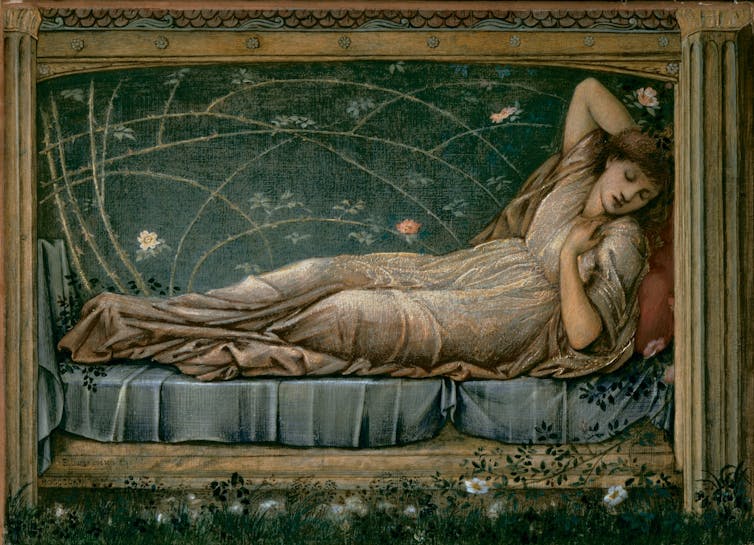
A painting of Sleeping Beauty
Sleeping Beauty by Edward Burne Jones (circa 1885).
Manchester Art Gallery

William Morris’ hand-written copy of The Rubaiyat of Omar Khayyam provides a compelling example of the after-life of the medieval margin. On each page, the text is surrounded by a lush decorated border which is punctuated by cameos that were designed by Burne-Jones and painted by Charles Fairfax Murray.

Poem decorated with leaves and gold
The Rubaiyat of Omar Khayyam, written and decorated by William Morris.
British Library Collection

The Nature of Gothic gives visitors the opportunity to compare the work of medieval masters of decorative art with the work produced by the Pre-Raphaelites and the Arts and Crafts Movement. Contemporary artist Jamie Holman and ceramicist Nehal Aamir also contribute modern interpretations of the decorated frame.

The result is a celebration of the verdant decorative frames which twist and turn through time, illuminating art of both the past and present.

The Nature of Gothic is at the Blackburn Museum and Art Gallery from September 13 to December 13.


Looking for something good? Cut through the noise with a carefully curated selection of the latest releases, live events and exhibitions, straight to your inbox every fortnight, on Fridays. Sign up here.


With thanks to Jake Benson for the translation of Persian 10.

The Conversation

Cynthia Johnston is employed by The Institute of English Studies, School of Advanced Study, University of London. She receives funding from Arts Council England. This exhibit has been supported by major loans from the British Library, the John Rylands Library and Research Centre, Manchester Art Gallery and the Liverpool Museums Trust among others.

ref. New exhibition explores history of decorative borders: from medieval manuscripts to William Morris – https://theconversation.com/new-exhibition-explores-history-of-decorative-borders-from-medieval-manuscripts-to-william-morris-261785