Pimple patches have hidden our blemishes for hundreds of years – historian explains

Source: The Conversation – UK – By Sara Read, Lecturer in English, Loughborough University

Two Women Wearing Cosmetic Patches, painter unknown (circa 1650). Compton Verney Art Gallery/Canva

You may have noticed people out and about with little stickers on their faces. Perhaps you’ve seen moons, stars, clouds or even smiley faces adorning people’s cheeks and chins. Maybe you wear them yourself. While some people do wear them as accessories, these colourful stickers are medicated “pimple patches”, designed to treat spots or acne.

Some of the patches simply contain a gel formula, which keeps the emerging blemish moist to aid healing. Some wearers opt for near-transparent film patches to get the benefit in a more inconspicuous way.

Far from a new fad, beauty patches have a long history. The trend first took off in 17th-century Europe, with patches made from paper, silk or velvet, or even fine leather, cut into lozenge shapes, stars or crescent moons.

They could be made in many colours, but black was generally preferred as it made a stark contrast to the idealised pale face of western upper-class men and women, who saw this complexion as a status symbol, showing they did not go outdoors to work. The play Blurt, Master-Constable from 1602 explains another appeal of the patches – when well applied, they could “draw men’s eyes to shoot glances at you”.

Mentions of patches occur regularly in print from the late 16th and early 17th century. Just like today, beauty patches had a dual function. In his 1601 play Jack Drum’s Entertainment, John Marston explains that: “Black patches are worn, some for pride, some to stay the rheum, and some to hide the scab.”

So, some were worn by people wanting to make themselves seem more attractive, and some – sometimes medicated – were used to dry up sores. Some patches were used to conceal blemishes like the scars left by diseases such as smallpox or even syphilis.


No one’s 20s and 30s look the same. You might be saving for a mortgage or just struggling to pay rent. You could be swiping dating apps, or trying to understand childcare. No matter your current challenges, our Quarter Life series has articles to share in the group chat, or just to remind you that you’re not alone.

Read more from Quarter Life:


This latter use was the reason moralists took issue with patches. One anonymous book from 1665 claimed a chaplain of King Charles I had given a sermon comparing beauty patches to the biblical mark of Cain. It is reported that he went so far as to suggest that wearing these accessories invited plague epidemics: “black-patches and beauty-spots … were Forerunners of other Spots, and Marks of the Plague”.

Other moralists focused on how, just like makeup, their job was to conceal and present a false front, which could trick admirers. This was a criticism that took on more weight into the 18th century, when people linked the use of patches to sexual promiscuity.

A Harlot’s Progress by William Hogarth (1731) is a series of images depicting the fall of a country girl, Moll Hackabout. Newly arrived in London, she is tricked by the real life brothelkeeper Elizabeth Needham. Needham’s face is covered with black patches.

Civil servant Samuel Pepys makes over a dozen mentions of these patches in his diary between 1660 and 1669. He first encountered “two very pretty ladies, very fashionable and with black patches, who very merrily sang all the way” on a business trip to the Hague in spring 1660.

The next day on a stroll through town, he noted how: “Everybody of fashion speaks French or Latin, or both. The women many of them very pretty and in good habits, fashionable and black spots.”

He noted that patches were often moistened with spit to hold them on. In May 1668, he recalled seeing Lady Castlemayne – mistress to Charles II – demanding a patch from the face of her maid, wetting it in her mouth and applying it to the side of her own face. We know from Pepys that James, Duke of York also favoured a patch or two.

By August that same year, Pepys noted in a diary entry that his wife Elisabeth was sporting black patches to a christening. Yet he seemed to have forgotten this when he noted in November that: “My wife seemed very pretty to-day, it being the first time I had given her leave to wear a black patch.” He sported a patch himself in September 1664 when he woke with a scabby mouth.

The fashion for wearing patches rose higher in the Restoration era (1660-1700), when returning royalist exiles from the Commonwealth brought home French fashions that they considered the height of sophistication.

English writer Mary Evelyn explained that mouches was the fashionable French name for “Flies, or, Black Patches”, since patches were called “flies” in French and sometimes in English too. Evelyn’s poem The Ladies Dressing-Room Unlock’d, published posthumously in 1690, was a biting satire on the Francophile fashions of Restoration London that Evelyn thought only the vulgar would indulge in.

While it is hard to see how people wearing spot patches nowadays might be subject to the same sorts of moralising backlash seen in the past, there are corners of the internet that mock people for going out in public with visible spot patches.

Whether they work or not, pimple patches are a harmless accessory. From the late 17th century, books begin to refer to patch boxes, ornate little containers specifically designed to hold patches.

Fashionable types came to like to be seen carrying a little silver box especially designed to hold their velvet or silk patches. Perhaps this will be the next development in the modern pimple patch craze.


Looking for something good? Cut through the noise with a carefully curated selection of the latest releases, live events and exhibitions, straight to your inbox every fortnight, on Fridays. Sign up here.


The Conversation

Sara Read does not work for, consult, own shares in or receive funding from any company or organisation that would benefit from this article, and has disclosed no relevant affiliations beyond their academic appointment.

ref. Pimple patches have hidden our blemishes for hundreds of years – historian explains – https://theconversation.com/pimple-patches-have-hidden-our-blemishes-for-hundreds-of-years-historian-explains-271013

How climate campaigns can cut through ad fatigue

Source: The Conversation – UK – By Sayed Elhoushy, Senior Lecturer in Marketing, Queen Mary University of London

Posters at Southwark station in London ‘advertise’ fossil fuels – an example of clear and meaningful messaging. Badvertising, CC BY-NC-ND

Since November 2025, commuters at Southwark tube station in London have been passing walls lined with vintage-style posters parodying oil and gas advertising, instead of ads promoting flights or energy companies. One 1950s-style poster shows a woman holding a small yellow aeroplane as if it were a cigarette; another has the slogan: For a quicker climate crisis use … Fossil Ads.

This visibility and attention to the climate crisis is welcome. But with more campaigns competing for attention – often with conflicting messages – the effect can quickly become overwhelming. Messages designed to raise awareness or inspire action also trigger ad fatigue.

Ad fatigue is well recognised in marketing: when people encounter the same message too often, it loses impact. A growing body of research shows that repeated exposure to similar advertising messages has negative consequences within and beyond climate contexts. Climate ad fatigue refers to a decline in effectiveness when people become overexposed to climate-related messages.

Researchers like me are investigating how certain climate messages create fatigue. One study shows that people who already feel worn down by constant climate messaging can become even more fatigued after seeing one more headline. That added fatigue doesn’t only decrease their interest — it reduces compassion and reduces willingness to support climate action.

three fossil ads posters on tube station wall
Posters at Southwark station in London ‘advertise’ fossil fuels.
Badvertising, CC BY-NC-ND

Another study highlights the role of attention. Paying attention to climate change is a precondition for climate-friendly action. But attention is easily disrupted. When people are stressed, distracted or overloaded with information, climate communication becomes something to tune out rather than engage with.

Despite rising fatigue, the advertising industry is expanding rapidly. Global ad spending is expected to reach US$1.17 trillion (£0.88 trillion) in 2025 up from roughly US$792 billion in 2024. Sustainability advertising represents a growing share as brands compete to position themselves as environmentally responsible.

Oil and gas companies have increased their climate-related communication. Although many of these campaigns focus on green initiatives or future sustainability goals, critics argue that the messaging can obscure ongoing fossil-fuel operations.

Transport for London records show that hundreds of oil and gas ads have run across its network in recent years. These campaigns reach millions of commuters.

The rise of counter campaigns

Across the UK and Europe, campaign groups are pushing for limits on fossil-fuel ads in public spaces. Examples include ad-free city initiatives and petitions to prohibit such advertising altogether.

Comparisons with past tobacco advertising rules are becoming more common, with some arguing that fossil-fuel ads should face similar restrictions. The campaign at Southwark station by Badvertising, by a climate charity called Possible, reflects this wider movement.

Yet, as both sides escalate their advertising, the public risks becoming more fatigued. Research shows that people – especially children and young people – increasingly worry about the planet and often feel sad, anxious, powerless or guilty.

These emotional reactions mirror wider findings that fear-based or stress-inducing contexts often reduce responsible behaviour. Managing these emotions is important.

If climate ads are starting to grow and feel tiring, repeating the same crisis-driven messages can push people away. What keeps attention instead is relevance, creativity, and variety.

A report by thinktank ClimateXChange shows that climate messages work better when they are rooted in local realities, focused on solutions, and linked to clear, achievable actions. Storytelling plays a key role here, helping people see how climate change connects with their own lives, rather than something abstract and difficult to influence.

Creativity matters too. Research shows that creative ads, characterised by high divergence and relevance, is less likely to wear out over time. A report by a climate charity also suggests that using different frames, voices and formats – from personal stories to humour, visuals or creative perspectives – can help advertisers prevent fatigue in increasingly crowded media environments.

For the public, managing climate ad fatigue isn’t about disengaging. It is about being more selective where attention goes. People can choose to ignore climate messages that place responsibility mainly on individual behaviour, and instead engage with communications that point to systemic causes and collective solutions.

Campaigns such as the Southwark posters do this by shifting attention away from personal choice and toward the industries and regulatory systems. Public support for restrictions on fossil fuel ads, similar to those applied to tobacco, would reduce misleading messages at their source instead of placing the burden on people to filter them out.


Don’t have time to read about climate change as much as you’d like?

Get a weekly roundup in your inbox instead. Every Wednesday, The Conversation’s environment editor writes Imagine, a short email that goes a little deeper into just one climate issue. Join the 47,000+ readers who’ve subscribed so far.


The Conversation

Sayed Elhoushy does not work for, consult, own shares in or receive funding from any company or organisation that would benefit from this article, and has disclosed no relevant affiliations beyond their academic appointment.

ref. How climate campaigns can cut through ad fatigue – https://theconversation.com/how-climate-campaigns-can-cut-through-ad-fatigue-269839

Why shoppers buy fast fashion even if they disagree with it

Source: The Conversation – UK – By Yang Ding, Lecturer in Marketing, University of Reading

Shoppers were able to browse Shein’s range in person at its first bricks-and-mortar space in Paris. Antonin Albert/Shutterstock

Every December, many shoppers plan to buy fewer things and choose more sustainable options. Yet as the month goes on, spending rises and fast fashion becomes hard to resist. Christmas has become a moment when good intentions collide with discounts and the emotional pull of seasonal fashion.

That contradiction became unusually visible when fashion giant Shein opened its first permanent shop inside the BHV department store in Paris in November. Crowds formed as shoppers tried to get in, while protesters stood outside holding signs and shouting “shame” over concerns about its ESG (environmental, social and governance) track record.

Shein has taken rapid turnaround times and low prices to a new level, taking it beyond fast fashion to “ultra-fast fashion”.

Some other brands with retail space inside the department store announced they planned to withdraw in protest at Shein’s presence. And the opening of new Shein stores across France has been delayed.

There was more controversy. The French government demanded controls, including age verification, on parts of Shein’s online platform amid investigations into banned weapons and childlike sex dolls on its site, placing the company under more scrutiny.

When it was made aware of the products in November, a spokesman for Shein said the company was taking the issue “extremely seriously”. It disabled the part of its site where third-party sellers list their products.

At the same time, shoppers entering the Paris store found higher prices than online, which added another layer to the debate over Shein’s transparency and the wider environmental and labour concerns linked to fast fashion.

What makes Christmas such a powerful moment for fast fashion is not only seasonal marketing but also the psychological dynamics that help consumers assuage their environmental guilt. Fast fashion already accounts for a significant share of online clothing sales in France, and Shein has become one of the largest retailers by volume, despite rising public criticism.

In the UK, sales of fast fashion have reached billions of pounds, with strong annual growth, suggesting that affordability eventually outweighs ethical concerns.

Research into consumer behaviour shows that people often use moral excuses to justify questionable purchases, telling themselves that everyone else is doing the same or that the harm is distant and indirect. This softens the ethical tension long enough to make the purchase.

Beyond guilt reduction, fast fashion benefits from what marketing researchers describe as temporal discounting. This is when consumers focus on short-term enjoyment and price rather than longer-term environmental damage.

Shein’s rapid production model turns digital trends into products within days, producing instant gratification. Future harms such as waste or emissions are psychologically distant at the moment of buying. These mechanisms help explain why fast fashion continues to flourish even as climate concerns grow.

In many ways, the Christmas rush exposes a wider conflict between consumers’ ethical intentions and the realities of global retail. This paradox is not only personal. It also shapes how governments and the public respond to Shein’s growing presence.

The protests outside the Paris store echo the tension across regulatory and societal institutions, where concerns about labour conditions and environmental impact collide with the influence of a company that has become central to contemporary fashion.

Why the Paris protests matter beyond ESG

It may be tempting to see the demonstrations in Paris simply as another reaction to environmental issues. Yet concerns around Shein were already part of the public debate long before the store opened. Fast fashion has relied for decades on outsourcing to cheaper manufacturing centres with limited worker protections.

Even after the Rana Plaza disaster in 2013 when 1,134 people (mainly garment workers), were killed in Bangladesh when their factory building collapsed, many European fast fashion companies continued to face criticism about their environmental violations across global supply chains.

What distinguishes the current controversy are not the ethical problems but the challenge Shein poses to the traditional balance of power in global fashion. For much of the past century, European companies dominated the industry and shaped international tastes.

Now Shein’s algorithmically-driven and hyperresponsive model is disrupting that dominance. This speed fuels waste and environmental damage even as its low prices keep attracting millions of shoppers.

In this sense, for Shein, Paris becomes more than a retail location. Success in one of the world’s fashion capitals would mark an important moment in Shein’s global expansion and signal that it is no longer operating at the margins.

It would also test whether this new type of fashion giant can prove itself beyond its online audience, in the eyes of regulators, partner brands and in-store shoppers.

The pushback Shein faces in Paris points to a broader anxiety about who now holds influence in the fashion industry. A Chinese fast fashion giant has bypassed traditional European gatekeepers and challenged the established hierarchy of who shapes the industry’s future.

In response to a 2024 report criticising working conditions in some of the factories it uses, Shein said in a statement it was “actively working to improve our suppliers’ practices, including ensuring that hours worked are voluntary and that workers are compensated fairly for what they do”. And with regard to criticisms about its environmental impact, Shein has said its use of AI has now cut the amount of waste generated in its production processes.

The Conversation

The authors do not work for, consult, own shares in or receive funding from any company or organisation that would benefit from this article, and have disclosed no relevant affiliations beyond their academic appointment.

ref. Why shoppers buy fast fashion even if they disagree with it – https://theconversation.com/why-shoppers-buy-fast-fashion-even-if-they-disagree-with-it-271452


What the year in polls tells us about Reform’s growth – and Labour and Tory losses

Source: The Conversation – UK – By Paul Whiteley, Professor, Department of Government, University of Essex

In the year and a half since Labour won a landslide in the 2024 general election, over 400 polls have been published. Combined, these polls tell a story of a government and its traditional opposition party losing support and fringe parties gaining ground. The big question this poses is whether Reform can win the next general election.

When these polls are combined into weekly averages since the general election, they show that Labour and Reform have averaged 25% in vote intentions over this period. The Conservatives have averaged 21%, the Liberal Democrats 13% and the Greens 9%.

Vote intentions since the 2024 election:

A chart showing the fluctuations in voting intention polls since the 2024 election.
The post-2024 polling outlook.
P Whiteley, CC BY-ND

The trends show that support for Labour has declined continuously since the election. In the case of the Conservatives, they were ahead of Reform until shortly after Kemi Badenoch was elected as leader. From this point on, Nigel Farage’s Reform party moved well ahead of both Labour and the Conservatives.

It appears that Badenoch’s strategy of trying to outdo Reform in rightwing rhetoric has failed. The Liberal Democrats have remained close to their 13% support throughout. The Greens received a boost when Zack Polanski was elected leader in September 2025. The Greens are now a strong rival to Labour, hoovering up leftwing voters who supported Labour in the general election. This is particularly true if the new leftwing Your Party cannot settle its internal squabbling.

Where does the Reform vote come from?

It is interesting to know where the Reform vote comes from – and especially whether it is taking more votes from Labour or the Conservatives. One way of finding this out is to conduct a panel survey to ask the same people about their voting intentions over time, to see if it changes. Unfortunately, this cannot be done with polling data since it’s too difficult and expensive for pollsters to keep contacting the same people.

An alternative and much easier way of finding out where the vote comes from is to look at the strength of the relationship between trends in Reform voting and voting for the other parties. To do this, we need to look at the changes in support for all five parties. As an example, the correlation between changes in the Reform vote and changes in the Conservative vote over this period is -0.40.

If the correlation were -1.0 that would mean a decrease of Conservative support by 1% would produce an increase in Reform support of 1%. If the correlation was zero it would mean the Conservative vote did not influence the Reform vote at all. It appears that there is a moderately strong negative relationship between Conservative and Reform voting. Put another way, a fall of 10% in Conservative voting translates into an increase in the Reform vote of 4%. A fall of 10% in support for Labour delivers an increase of 3% for Reform.

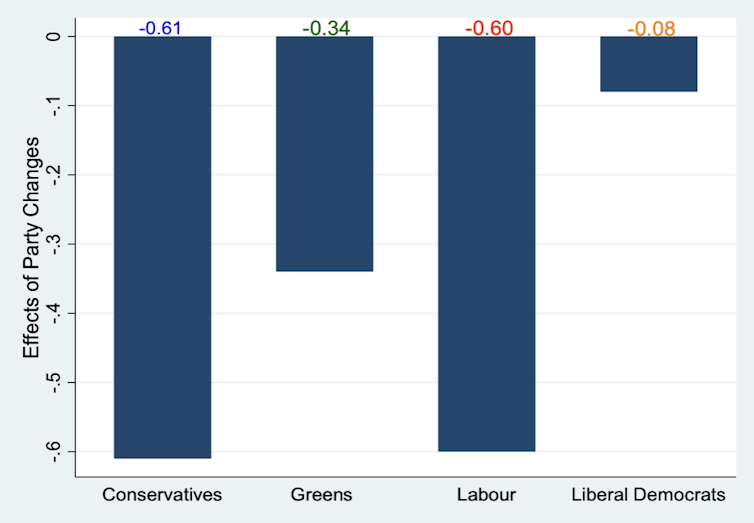
The effects of changes in vote intentions for the national parties on changes in Reform voting since the general election:

A chart showing on how voting intention has changed for four parties since the election.
It’s been downhill all the way since the election for some parties.
P Whiteley, CC BY-ND

However, there is a complication arising in the calculation when looking at each of the other parties and Reform voting separately. This approach fails to account for the relationships between these other parties.

If, for example, Reform does well against the Conservatives, this will help Labour because the Tories are a strong challenger to the Labour party. If Reform weakens support for the Tories, this could rebound to give Labour an advantage over Reform.

We need to look at the interactions between changes in support for all parties at the same time to get a clear picture.

This is done using multiple regression, which is a statistical technique that predicts changes in the Reform vote from changes in all the other party votes at the same time, thereby taking into account interactions between them.

The effects are quite strong, and they are roughly the same for Labour and the Conservatives. A fall of 10% for each of them boosts the Reform vote by 6%. The effect of Liberal Democrat voting on Reform, meanwhile, is negligible, with a coefficient of -0.08.

However, the Green vote does affect Reform, having a coefficient of -0.34. In other words, a fall of 10% in the Reform vote will boost the Green vote by about 3.4%.

The pattern observed in the polls is of Labour’s vote share continuously declining and of the Conservative vote increasing to begin with and then subsequently declining. This situation looks different when you consider their individual relationships to Reform but, in the event, when all the interactions are taken into account, they both end up losing votes to the newer party to the same extent.

This has implications for the May 2026 local elections. The leadership positions of both Keir Starmer and Badenoch are at risk if these contests turn out to be a disaster for their parties.

Unless Reform’s support starts to weaken, both parties could lose the same proportion of votes to Reform. And at the moment the party shows little sign of doing so. That said, there are four years to go at the outside to the next election – and with volatile polls like these, anything can happen.


Want more politics coverage from academic experts? Every week, we bring you informed analysis of developments in government and fact check the claims being made.

Sign up for our weekly politics newsletter, delivered every Friday.

The Conversation

Paul Whiteley has received funding from the British Academy and the ESRC.

ref. What the year in polls tells us about Reform’s growth – and Labour and Tory losses – https://theconversation.com/what-the-year-in-polls-tells-us-about-reforms-growth-and-labour-and-tory-losses-271827

I study rat nests − here’s why rodents make great archivists

Source: The Conversation – USA – By Alexandria Mitchem Hansen, Ph.D. Candidate in Anthropology, Columbia University

Old rat nests can contain fabrics, papers, animal bones, plant remains and other materials that have been undisturbed for hundreds of years. Andyworks/E+ Collection via Getty Images

Rats and other rodents and pests can make great archivists.

That’s because they forage food and build dens, storing fabric, paper, animal bones, plant remains and other materials under floorboards, behind walls and in attics, crawl spaces and wells. There, these materials might dry out and remain undisturbed for hundreds of years.

By analyzing the materials in these nests, archaeologists like me can learn more about the people who once lived nearby.

I studied a rat nest that was used by generations of rats over several decades and was found under the floorboards in the attic of the historic home at Bartram’s Garden in southwest Philadelphia. In 1728, Quaker farmer and naturalist John Bartram began to plant his garden, which is considered the oldest botanic garden in North America. I studied thousands of plants collected by rats and learned how the Bartram family used these plants for food, medicine, trade and study.

Exterior view of old stone building surrounded by grass and trees
A view of the Bartram family’s historic stone home.
Magpieturtle/Wikimedia Commons, CC BY

A 200-year-old nest

Rat nests are common in historic structures, particularly homes like Bartram’s that contained kitchens and buildings that were used for food storage, such as cellars.

Bartram collected plants from around eastern North America along with those sent to him by naturalists in Europe. His sons, John Jr. and William, and later his granddaughter Ann Bartram Carr, continued to expand the garden, which gained international fame during the 18th and 19th centuries.

The rat nest was discovered during historic preservation work at the Bartram home in 1977. My analysis of the materials in the nest indicates that it was formed in the late 18th and early 19th century. The materials are representative of the plants rodents would have been foraging from the Bartram home and garden.

The plants I identified weren’t restricted to those sold by the Bartram family as a part of their nursery business. Nor were they limited to plants that were traded between naturalists hoping to learn more about the flora of the American Colonies. They included crops such as wheat, buckwheat, corn, parsnips and beans grown by the family to feed themselves; herbs such as lemongrass, basil and mint used for medicine by the family; and many wild and weedy plants – for example, brambles, corn cockle, and broom and needle grasses – that were not intentionally grown by the Bartrams but were nonetheless collected by the rats on the property.

Small pentagon-shaped white trays including organic materials
Materials from the rat nest in the process of being sorted by the author, including hickory, walnuts, acorns, corn and peanuts.
Alexandria Mitchem Hansen, CC BY-NC-SA

By studying the plants foraged by these rats, I learned not only about the important scientific and commercial plants in the garden, but also about the food and medicine the family were eating and using, including imported snacks such as peanuts and Brazil nuts, which were not grown in the garden but could have been purchased in Philadelphia.

Sorting 11 pounds of material

I am an archaeobotanist, which means I recover and identify plants from the past.

Over the course of almost three years, I sorted through over 11 pounds (5 kilograms) of material from the rat nest recovered from the Bartrams’ home and stored at the Center for the Analysis of Archaeological Materials at the Penn Museum.

Because there is often a lot of material, archaeologists divide these kinds of samples using geological sieves, which are scientific screening tools that filter samples by size. This makes the material easier to sort.

Then I used a microscope to sort and identify the plants therein. Archaeobotanists find various parts of plants, including seeds, chaff, fruit pits, nutshells and cobs. The plants I identified ranged in size from whole corncobs to weed seeds smaller than half a millimeter.

To identify the species of plants, I used reference manuals, comparative collections of plant seeds and other parts, and help from the archaeobotanists at the Penn Museum. I also studied images from herbaria, which are collections of historic plants that have been preserved and archived.

In the future, I plan to focus on the weedy plants recovered from the rat nest. The majority of invasive species in the United States were originally introduced in horticultural contexts, including botanic gardens and nurseries. Data from Bartram’s Garden will help me and other scholars better understand the timing and details of this process.

Read more of our stories about Philadelphia, or sign up for our Philadelphia newsletter on Substack.

The Conversation

Alexandria Mitchem Hansen receives funding from the McNeil Center for Early American Studies, the American Philosophical Society, the Explorer’s Club, the Society for Historical Archaeology, the Society for Ethnobiology, and Columbia University.

ref. I study rat nests − here’s why rodents make great archivists – https://theconversation.com/i-study-rat-nests-heres-why-rodents-make-great-archivists-270357

People are getting their news from AI – and it’s altering their views

Source: The Conversation – USA – By Adrian Kuenzler, Scholar-in-Residence, University of Denver; University of Hong Kong

When a bot brings you the news, who built it and how it presents the information matter. Zentangle/iStock via Getty Images

Meta’s decision to end its professional fact-checking program sparked a wave of criticism in the tech and media world. Critics warned that dropping expert oversight could erode trust and reliability in the digital information landscape, especially when profit-driven platforms are mostly left to police themselves.

What much of this debate has overlooked, however, is that today, AI large language models are increasingly used to write up news summaries, headlines and content that catch your attention long before traditional content moderation mechanisms can step in. The issue isn’t clear-cut cases of misinformation or harmful subject matter going unflagged in the absence of content moderation. What’s missing from the discussion is how ostensibly accurate information is selected, framed and emphasized in ways that can shape public perception.

Large language models gradually influence the way people form opinions by generating the information that chatbots and virtual assistants present to people over time. These models are now also being built into news sites, social media platforms and search services, making them the primary gateway to obtain information.

Studies show that large language models do more than simply pass along information. Their responses can subtly highlight certain viewpoints while minimizing others, often without users realizing it.

Communication bias

My colleague, computer scientist Stefan Schmid, and I, a technology law and policy scholar, show in a forthcoming accepted paper in the journal Communications of the ACM that large language models exhibit communication bias. We found that they may have a tendency to highlight particular perspectives while omitting or diminishing others. Such bias can influence how users think or feel, regardless of whether the information presented is true or false.

Empirical research over the past few years has produced benchmark datasets that correlate model outputs with party positions before and during elections. They reveal variations in how current large language models deal with public content. Depending on the persona or context used in prompting large language models, current models subtly tilt toward particular positions – even when factual accuracy remains intact.

These shifts point to an emerging form of persona-based steerability – a model’s tendency to align its tone and emphasis with the perceived expectations of the user. For instance, when a user describes themselves as an environmental activist and another as a business owner, a model may answer the same question about a new climate law by emphasizing different, yet factually accurate, concerns for each of them. For example, the criticisms could be that the law does not go far enough in promoting environmental benefits and that the law imposes regulatory burdens and compliance costs.

Such alignment can easily be misread as flattery. The phenomenon is called sycophancy: Models effectively tell users what they want to hear. But while sycophancy is a symptom of user-model interaction, communication bias runs deeper. It reflects disparities in who designs and builds these systems, what datasets they draw from and which incentives drive their refinement. When a handful of developers dominate the large language model market and their systems consistently present some viewpoints more favorably than others, small differences in model behavior can scale into significant distortions in public communication.

Bias in large language models starts with the data they’re trained on.

What regulation can and can’t do

Modern society increasingly relies on large language models as the primary interface between people and information. Governments worldwide have launched policies to address concerns over AI bias. For instance, the European Union’s AI Act and the Digital Services Act attempt to impose transparency and accountability. But neither is designed to address the nuanced issue of communication bias in AI outputs.

Proponents of AI regulation often cite neutral AI as a goal, but true neutrality is often unattainable. AI systems reflect the biases embedded in their data, training and design, and attempts to regulate such bias often end up trading one flavor of bias for another.

And communication bias is not just about accuracy – it is about content generation and framing. Imagine asking an AI system a question about a contentious piece of legislation. The model’s answer is not only shaped by facts, but also by how those facts are presented, which sources are highlighted and the tone and viewpoint it adopts.

This means that the root of the bias problem is not merely in addressing biased training data or skewed outputs, but in the market structures that shape technology design in the first place. When only a few large language models have access to information, the risk of communication bias grows. Apart from regulation, then, effective bias mitigation requires safeguarding competition, user-driven accountability and regulatory openness to different ways of building and offering large language models.

Most regulations so far aim at banning harmful outputs after the technology’s deployment, or forcing companies to run audits before launch. Our analysis shows that while prelaunch checks and post-deployment oversight may catch the most glaring errors, they may be less effective at addressing subtle communication bias that emerges through user interactions.

Beyond AI regulation

It is tempting to expect that regulation can eliminate all biases in AI systems. In some instances, these policies can be helpful, but they tend to fail to address a deeper issue: the incentives that determine the technologies that communicate information to the public.

Our findings clarify that a more lasting solution lies in fostering competition, transparency and meaningful user participation, enabling consumers to play an active role in how companies design, test and deploy large language models.

The reason these policies are important is that, ultimately, AI will not only influence the information we seek and the daily news we read, but it will also play a crucial part in shaping the kind of society we envision for the future.

The Conversation

Adrian Kuenzler does not work for, consult, own shares in or receive funding from any company or organization that would benefit from this article, and has disclosed no relevant affiliations beyond their academic appointment.

ref. People are getting their news from AI – and it’s altering their views – https://theconversation.com/people-are-getting-their-news-from-ai-and-its-altering-their-views-269354

The world risks forgetting one of humanity’s greatest triumphs as polio nears global eradication − 70 years after Jonas Salk developed the vaccine in a Pittsburgh lab

Source: The Conversation – USA (3) – By Carl Kurlander, Senior Lecturer, Film and Media Studies, University of Pittsburgh

Dr. Jonas Salk displays his polio vaccine, which he developed in a University of Pittsburgh laboratory.
Bettmann/Bettmann Collection via Getty Images

It was like a horror movie. The invisible polio virus would strike, leaving young children on crutches, in wheelchairs or in a dreaded “iron lung” ventilator. Each summer, the fear was so great that public pools and movie theaters closed. Parents canceled birthday parties, afraid their child might be the next victim. A U.S. president paralyzed by polio called for Americans to send dimes to the White House to support the nonprofit National Foundation for Infantile Paralysis, established by President Franklin D. Roosevelt and his lawyer, Basil O’Connor. Celebrities from Lucille Ball to Elvis were enlisted to promote this “March of Dimes,” and mothers went door to door raising funds to conquer this dreaded disease.

Some of those funds went to 33-year-old scientist Jonas Salk and his team at the University of Pittsburgh, where they worked in a lab between a morgue and a darkroom to develop the world’s first successful polio vaccine.

To prove it worked, the experimental vaccine was tested on Pittsburgh schoolchildren and then 1.8 million children from around the country as part of the largest medical field trial in history. On April 12, 1955, when the Salk polio vaccine was declared “safe and effective,” church bells rang out, kids were let out of school, and headlines around the world celebrated the victory over polio.

When asked whether he was going to patent the vaccine, Salk told journalist Edward R. Murrow it belonged to the people and would be like “patenting the sun.”

I first learned about this 20 years ago when my students and I filmed the 50th anniversary celebration of the Salk polio vaccine at the University of Pittsburgh. I had just started teaching after working in Los Angeles as a screenwriter and TV producer, and the footage became “The Shot Felt Round the World,” a documentary that featured those we met that day.

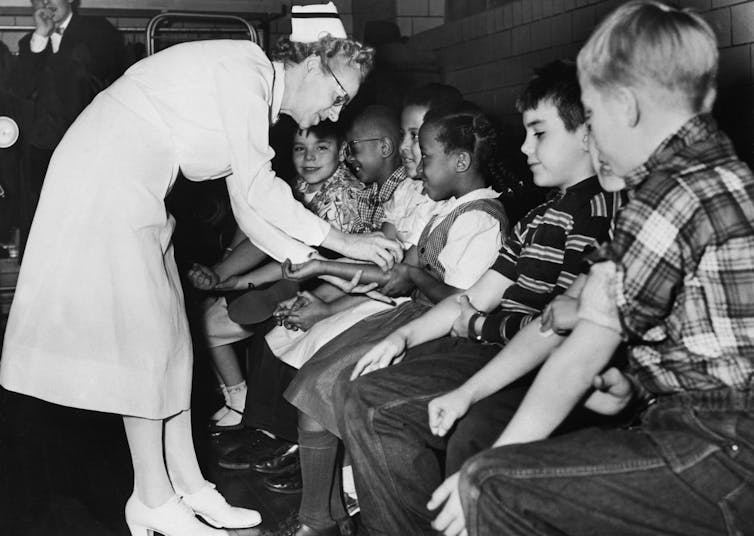
Black and white photo of nurse in white leaning over row of seated elementary school-aged children with sleeves rolled up
A nurse prepares children for a polio vaccine shot in February 1954 as part of a citywide testing of the vaccine on Pittsburgh elementary school students.
Bettmann/Bettmann Collection via Getty Images

The ‘Pittsburgh polio pioneers’

Among the people we interviewed was Ethyl “Mickey” Bailey, who worked in the lab pipetting the deadly polio virus by mouth, and Julius Youngner, the lab’s senior scientist who had worked on the Manhattan Project before coming to Pittsburgh. Within a decade, Youngner had worked on both the atomic bomb – which killed tens of thousands of people in just seconds in Hiroshima and Nagasaki, and hundreds of thousands more in the aftermath of the bombings – as well as the Salk vaccine, which spared millions from the scourge of “The Great Crippler.”

Three floors above the lab, Dr. Sidney Busis performed tracheotomies on 2-year-old iron lung patients, opening their windpipes so the ventilator could help them breath. The fierce Dr. Jesse Wright, an innovator in the field of rehabilitation sciences, ran the polio ward and she was also the medical director of the D.T. Watson Home for Crippled Children, where the Salk vaccine was first tested on humans. Polio victims like Jimmy Sarkett and Ron Flynn volunteered themselves as guinea pigs for a vaccine they knew would never benefit them.

Many “Pittsburgh polio pioneers,” as they called the local children who were given Salk’s still-experimental vaccine, in our documentary recalled getting the shot from Dr. Salk himself. Salk also gave it to his own children, including his eldest son Peter, then 10 years old, who later worked with his father on trying to develop an AIDS vaccine.

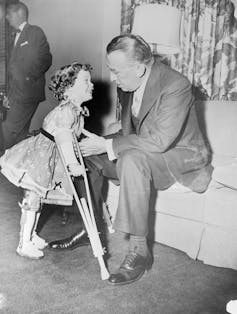
Young girl using crutches and leg braces smiles while walking to man in suit seated on a sofa
Kathy Dressel, a 3-year-old poster girl for the March of Dimes in Pennsylvania, smiles as she is greeted by Basil O’Connor, president of the National Foundation for Infantile Paralysis, in 1954.
Bettmann/Bettmann Collection via Getty Images

While Jonas Salk became the most famous scientist in the world, his relationship with the University of Pittsburgh became complicated and the administration rejected his plans for an institute. As a result, the Salk Institute for Biological Studies was built in 1963 on the coastline in La Jolla, California, where it fueled San Diego’s biotech industry.

Near the end of his life, Jonas would say sometimes he would run into people who didn’t know what polio was, and he found that gratifying. But today the world is paying a high price for those who don’t remember what life was like before these events and now question the value of vaccines. The polio virus may not be visible, but it is still with us.

The final mile to eradication

On Oct. 24, 2025, as the Salk vaccine turned 70, I was invited to screen the trailer for “The Shot Felt Round the World” at a World Polio Day event on Roosevelt Island in New York City, in a building next to the ruins of the Smallpox Hospital – a legacy of the only human disease ever eradicated.

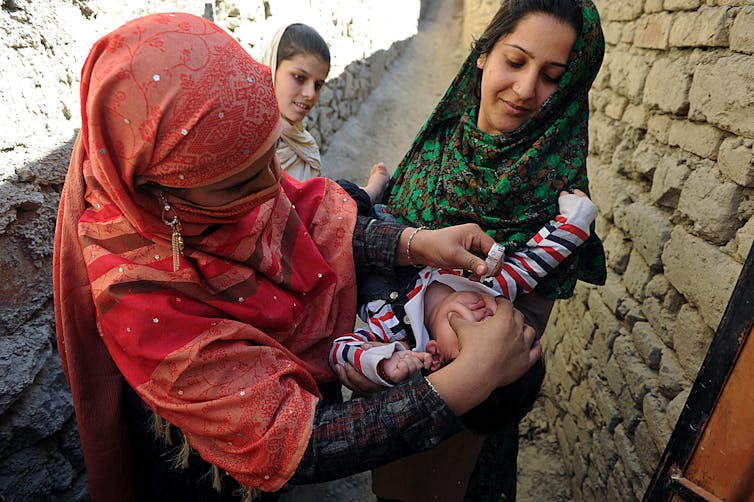
Those present included the executive director of UNICEF, the polio director from the Gates Foundation, the U.N. representative for Rotary International, and government officials from around the world who spoke about the global coalition dedicated to eradicating this disease. Since the 1980s, the Global Polio Eradication Initiative has put tremendous resources into taking polio from being endemic in 125 countries to now just in two: Pakistan and Afghanistan. This group whom I like to call “The Avengers of Public Health,” continue to work relentlessly to make the world polio-free.

Woman in traditional Afghan dress tries to squeeze medical drops into mouth of a baby held in another woman's arms
An Afghan health worker administers polio vaccine to a child in Kabul in 2010. Afghanistan and Pakistan are the only two countries where polio has not yet been eradicated.
Shah Marai/AFP via Getty Images

My greatest fear is that when polio is finally defeated, the world won’t recognize what an extraordinary achievement it is. In our film, Dr. Jonathan Salk, Jonas Salk’s youngest son, recalls his father wondering whether the model that developed the polio vaccine could be used to conquer poverty and other social problems.

Many of the polio survivors we spoke to at the 50th anniversary are no longer with us. To ensure future generations know this story, perhaps now is the time to launch a “March of Dimes” marketing techniques to engage young people from around the world to help finish the job that began in the Salk lab in Pittsburgh.

One polio survivor who is still alive is “The Godfather” director Francis Ford Coppola, who has spoken about contracting polio as a child. Imagine him being interviewed by his granddaughter Romy Mars, a TikTok influencer, and his daughter Sophia Coppola, the film director and actress. They could make a video that features cameos from actor and comedian Bill Murray, who played Franklin D. Roosevelt in a movie and whose sister had polio, U.S. Senator Mitch McConnell, who is a polio survivor, and Secretary of State Marco Rubio, whose grandfather was crippled from polio. For such a cruel disease, polio has a strange way of bringing us together.

I pray when we finally wipe polio off the planet, a feat the Global Polio Eradication Initiative targets for 2029, the whole world will celebrate and realize the power of pulling together to defeat a common enemy.

Read more of our stories about Philadelphia and Pennsylvania, or sign up for our Philadelphia newsletter on Substack.

The Conversation

Carl Kurlander has previously received grants from the Grable Foundation, the Pittsburgh Foundation, and the R.K. Mellon Foundation years ago for the making of the polio movie. He receives no residuals or revenues from thef ilm.

ref. The world risks forgetting one of humanity’s greatest triumphs as polio nears global eradication − 70 years after Jonas Salk developed the vaccine in a Pittsburgh lab – https://theconversation.com/the-world-risks-forgetting-one-of-humanitys-greatest-triumphs-as-polio-nears-global-eradication-70-years-after-jonas-salk-developed-the-vaccine-in-a-pittsburgh-lab-270042

As millions of Americans face a steep rise in health insurance costs, lawmakers continue a century-long battle over who should pay for health care

Source: The Conversation – USA (3) – By Robert Applebaum, Senior Research Scholar in Gerontology, Miami University

Dec. 15, 2025 – the deadline for enrolling in a marketplace plan through the Affordable Care Act for 2026 – came and went without an agreement on the federal subsidies that kept ACA plans more affordable for many Americans. Despite a last-ditch attempt in the House to extend ACA subsidies, with Congress adjourning for the year on Dec. 19, it’s looking almost certain that Americans relying on ACA subsidies will face a steep increase in health care costs in 2026.

As a gerontologist who studies the U.S. health care system, I’m aware that disagreements about health care in America have a long history. The main bone of contention is whether providing health care is the responsibility of the government, or of individuals or their employers.

The ACA, passed in 2010 as the country’s first major piece of health legislation since the passage of Medicare and Medicaid in 1965, represents one more chapter in that long-standing debate. That debate explains why the health law has fueled so much political divisiveness – including a standoff that spurred a record-breaking 43-day-long government shutdown, which began on Oct. 1, 2025.

In my view, regardless of how Congress resolves, or doesn’t resolve, the current dispute over ACA subsidies, a durable U.S. health care policy will remain out of reach until lawmakers address the core question of who should shoulder the cost of health care.

The ACA’s roots

In the years before the ACA’s passage, some 49 million Americans – 15% of the population – lacked health insurance. This number had been rising in the wake of the 2008 recession. That’s because the majority of Americans ages 18 to 64 with health insurance receive their health benefits through their employer. In the 2008 downturn, people who lost their jobs basically lost their health care coverage.

Seated man talks to a doctor in a clinic waiting room.
The goal of the Affordable Care Act was to significantly decrease the number of Americans without health insurance.
Drazen Zigic/iStock via Getty Images Plus

For those who believed government had a primary role in providing health insurance for its citizens, the growing number of people lacking coverage hit a crisis point that required an intervention. Those who place responsibility on individuals and employers saw the ACA as perversion of the government’s purpose. The political parties could find no common ground – and this challenge continues.

The major goal of the ACA was to reduce the number of uninsured Americans by about 30 million people, or to about 3% of the U.S. population. It got about halfway there: Today, about 26 million Americans, or 8%, are uninsured, though this number fluctuates based on changes in the economy and federal and state policy.

Health insurance for all?

The ACA implemented an array of strategies to accomplish this goal. Some were popular, such as allowing parents to keep their kids on their family insurance until age 26. Some were unpopular, such as the mandate that everyone must have insurance.

But two strategies in particular had the biggest impact on the number of uninsured. One was expanding the Medicaid program to include workers whose income was below 138% of the poverty line. The other was providing subsidies to people with low and moderate incomes that could help them buy health insurance through the ACA marketplace, a state or federal health exchange through which consumers could choose health insurance plans.

Medicaid expansion was controversial from the start. Originally, the ACA mandated it for all states, but the Supreme Court eventually ruled that it was up to each state, not the federal government, to decide whether to do so. As of December 2025, 40 states and the District of Columbia have implemented Medicaid expansion, insuring about 20 million Americans.

Meanwhile, the marketplace subsidies, which were designed to help people who were working but could not access an employer-based health plan, were not especially contentious early on. Everyone receiving a subsidy was required to contribute to their insurance plan’s monthly premium. People earning US$18,000 or less annually, which in 2010 was 115% of the income threshold set by the federal government as poverty level, contributed 2.1% of their plan’s cost, and those earning $60,240, which was 400% of the federal poverty level, contributed 10%. People making more than that were not eligible for subsidies at all.

In 2021, legislation passed by the Biden administration to stave off the economic impact of the COVID-19 pandemic increased the subsidy that people could receive. The law eliminated premiums entirely for the lowest income people and reduced the cost for those earning more. And, unlike before, people making more than 400% of the federal poverty level – about 10% of marketplace enrollees – could also get a subsidy.

These pandemic-era subsidies are set to expire at the end of 2025.

Cost versus coverage

If the COVID-19-era subsidies expire, health care costs would increase substantially for most consumers, as ACA subsidies return to their original levels. So someone making $45,000 annually will now need to pay $360 a month for health insurance, increasing their payment by 74%, or $153 monthly. What’s more, these changes come on top of price hikes to insurance plans themselves, which are estimated to increase by about 18% in 2026.

With these two factors combined, many ACA marketplace users could see their health insurance cost rise more than 100%. Some proponents of extending COVID-19-era subsidies contend that the rollback will result in an estimated 6 million to 7 million people leaving the ACA marketplace and that some 5 million of these Americans could become uninsured in 2026.

Congressional gridlock over a health care bill continues.

Policies in the tax and spending package signed into law by President Donald Trump in July 2025 are amplifying the challenge of keeping Americans insured. The Congressional Budget Office projects that the Medicaid cuts alone, stipulated in the package, may result in more than 7 million people becoming uninsured. Combined with other policy changes outlined in the law and the rollback of the ACA subsidies, that number could hit 16 million by 2034 – essentially wiping out the majority of gains in health insurance coverage that the ACA achieved since 2010.

Subsidy downsides

These enhanced ACA subsidies are so divisive now in part because they have dramatically driven up the federal government’s health care bill. Between 2021 and 2024, the number of people receiving subsidies doubled – resulting in many more people having health insurance, but also increasing federal ACA expenditures.

In 2025, almost 22 million Americans who purchased a marketplace plan received a federal subsidy to help with the costs, up from 9.2 million in 2020 – a 137% increase.

Those who oppose the extension counter that the subsidies cost the government too much and fund high earners who don’t need government support – and that temporary emergencies, even ones as serious as a pandemic, should not result in permanent changes.

Another critique is that employers are using the ACA to reduce their responsibility for employee coverage. Under the ACA, employers with more than 50 employees must provide health insurance, but for companies with fewer employers, that requirement is optional.

In 2010, 92% of employers with 25 to 49 workers offered health insurance, but by 2025, that proportion had dropped to 64%, suggesting that companies of this size are allowing the ACA to cover their employees.

Diverging solutions

The U.S. has the most expensive health care system in the world by far. The projected increase in the number of uninsured people over the next 10 years could result in even higher costs, as fewer people get preventive care and delayed health care interventions, ultimately leading to more complex medical care

Federal policy clearly shapes health insurance coverage, but state-level policies play a role too. Nationally, about 8% of people under age 65 were uninsured in 2023, yet that rate varied widely – from 3% in Massachusetts to 18.6% in Texas. States under Republican leadership on average have a higher percentage of uninsured people than do those under Democratic leadership, mirroring the political differences driving the national debate over who is responsible for shouldering the costs of health care.

With dueling ideologies come dueling solutions. For those who believe that the government is responsible for the health of its citizens, expanding health insurance coverage and financing this expansion through taxes presents a clear approach. For those who say the burden should fall on individuals, reliance on the free market drives the fix – on the premise that competition between health insurers and providers offers a more effective way to solve the cost challenges than a government intervention.

Without finding resolution on this core issue, the U.S. will likely still be embroiled in this same debate for years, if not decades, to come.

The Conversation

Robert Applebaum does not work for, consult, own shares in or receive funding from any company or organization that would benefit from this article, and has disclosed no relevant affiliations beyond their academic appointment.

ref. As millions of Americans face a steep rise in health insurance costs, lawmakers continue a century-long battle over who should pay for health care – https://theconversation.com/as-millions-of-americans-face-a-steep-rise-in-health-insurance-costs-lawmakers-continue-a-century-long-battle-over-who-should-pay-for-health-care-271901

How C-reactive protein outpaced ‘bad’ cholesterol as leading heart disease risk marker

Source: The Conversation – USA (3) – By Mary J. Scourboutakos, Adjunct Assistant Professor in Family and Community Medicine, Macon & Joan Brock Virginia Health Sciences at Old Dominion University

Blood vessel damage from fatty and high-sugar diets leads to inflammation, which can be detected by measuring C-reactive protein. Mohammed Haneefa Nizamudeen/iStock via Getty Images Plus

Heart disease is the leading cause of death in the United States.

Since researchers first established the link between diet, cholesterol and heart disease in the 1950s, risk for heart disease has been partly assessed based on a patient’s cholesterol levels, which can be routinely measured via blood work at the doctor’s office.

However, accumulating evidence over the past two decades demonstrates that a biomarker called C-reactive protein – which signals the presence of low-grade inflammation – is a better predictor of risk for heart disease than cholesterol.

As a result, in September 2025, the American College of Cardiology published new recommendations for universal screening of C-reactive protein levels in all patients, alongside measuring cholesterol levels.

What is C-reactive protein?

C-reactive protein is created by the liver in response to infections, tissue damage, chronic inflammatory states from conditions like autoimmune diseases, and metabolic disturbances like obesity and diabetes. Essentially, it is a marker of inflammation – meaning immune system activation – in the body.

C-reactive protein can be easily measured with blood work at the doctor’s office. A low C-reactive protein level – under 1 milligram per deciliter – signifies minimal inflammation in the body, which is protective against heart disease. An elevated C-reactive protein level of greater than 3 milligrams per deciliter, signifies increased levels of inflammation and thus increased risk for heart disease. About 52% of Americans have an elevated level of C-reactive protein in their blood.

Research shows that C-reactive protein is a better predictive marker for heart attacks and strokes than “bad,” or LDL cholesterol, short for low-density lipoprotein, as well as another commonly measured genetically inherited biomarker called lipoprotein(a). One study found that C-reactive protein can predict heart disease just as well as blood pressure can.

Why does inflammation matter in heart disease?

Inflammation plays a crucial role at every stage in the development and buildup of fatty plaque in the arteries, which causes a condition called atherosclerosis that can lead to heart attacks and strokes.

From the moment a blood vessel is damaged, be it from high blood sugar or cigarette smoke, immune cells immediately infiltrate the area. Those immune cells subsequently engulf cholesterol particles that are typically floating around in the blood stream to form a fatty plaque that resides in the wall of the vessel.

This process continues for decades until eventually, one day, immune mediators rupture the cap that encloses the plaque. This triggers the formation of a blood clot that obstructs blood flow, starves the surrounding tissues of oxygen and ultimately causes a heart attack or stroke.

Hence, cholesterol is only part of the story; it is, in fact, the immune system that facilitates each step in the processes that drive heart disease.

Three-dimensional concept of fatty plaque buildup in an artery.
Fatty plaque buildup in the arteries causes a blockage that starves tissues of oxygen and can lead to a heart attack or stroke.
wildpixel/iStock via Getty Images Plus

Can diet influence C-reactive protein levels?

Lifestyle can significantly influence the amount of C-reactive protein produced by the liver.

Numerous foods and nutrients have been shown to lower C-reactive protein levels, including dietary fiber from foods like beans, vegetables, nuts and seeds, as well as berries, olive oil, green tea, chia seeds and flaxseeds.

Weight loss and exercise can also reduce C-reactive protein levels.

Colorful variety of foods that help lower heart disease risk.
Diet plays a key role in heart disease risk.
monticelllo/iStock via Getty Images Plus

Does cholesterol still matter for heart disease risk?

Though cholesterol may not be the most important predictor of risk for heart disease, it does remain highly relevant.

However, it’s not just the amount of cholesterol – or more specifically the amount of bad, or LDL, cholesterol – that matters. Two people with the same cholesterol level don’t necessarily have the same risk for heart disease. This is because risk is determined more so by the number of particles that the bad cholesterol is packaged into, as opposed to the total mass of bad cholesterol that’s floating around. More particles means higher risk.

That is why a blood test known as apolipoprotein B, which measures the number of cholesterol particles, is a better predictor of risk for heart disease than measurements of total amounts of bad cholesterol.

Like cholesterol and C-reactive protein, apolipoprotein B is also influenced by lifestyle factors like exercise, weight loss and diet. Nutrients like fiber, nuts and omega-3 fatty acids are associated with a decreased number of cholesterol particles, while increased sugar intake is associated with a larger number of cholesterol particles.

Furthermore, lipoprotein(a), a protein that lives in the wall surrounding cholesterol particles, is another marker that can predict heart disease more accurately than cholesterol levels. This is because the presence of lipoprotein(a) makes cholesterol particles sticky, so to speak, and thus more likely to get trapped in an atherosclerotic plaque.

However, unlike other risk factors, lipoprotein(a) levels are purely genetic, thus not influenced by lifestyle, and need only be measured once in a lifetime.

What’s the best way to prevent heart disease?

Ultimately, heart disease is the product of many risk factors and their interactions over a lifetime.

Therefore, preventing heart disease is way more complicated than simply eating a cholesterol-free diet, as once thought.

Knowing your LDL cholesterol level alongside your C-reactive protein, apolipoprotein B and lipoprotein (a) levels paints a comprehensive picture of risk that can hopefully help motivate long-term commitment to the fundamentals of heart disease prevention. These include eating well, exercising consistently, getting adequate sleep, managing stress productively, maintaining healthy weight and, if applicable, quitting smoking.

The Conversation

Mary J. Scourboutakos does not work for, consult, own shares in or receive funding from any company or organization that would benefit from this article, and has disclosed no relevant affiliations beyond their academic appointment.

ref. How C-reactive protein outpaced ‘bad’ cholesterol as leading heart disease risk marker – https://theconversation.com/how-c-reactive-protein-outpaced-bad-cholesterol-as-leading-heart-disease-risk-marker-271143

Your next puffer jacket could be made from bulrushes, as carbon-storing peat farming takes off

Source: The Conversation – UK – By Zoe Lipkens, PhD Researcher, University of Leicester

martin.dlugo/Shutterstock

Have you ever wondered what keeps you warm in your winter jacket? Most jacket insulation is made from human made synthetic fibres (polyester) or natural down from ducks or geese. Some winter jackets are insulated with something a little more surprising – bulrushes.

A biomaterials company called Ponda is using the seed heads of bulrush cultivated in peatlands to create BioPuff as insulation for puffer jackets, an alternative to synthetic fibres and goose down. These jackets help to encourage wetter farming on peatlands, a practice known as paludiculture that helps keep carbon locked into the ground.

While paludiculture is a relatively new way of farming in the UK, my research investigates how this emerging farming practice is being implemented in north-west England.

It is crucial that peatlands remain wet or are rewetted to prevent the release of stored carbon. Once drained, peatlands emit a significant amount of carbon – degraded peatlands account for 4% of the UK’s total greenhouse gas emissions. Most (88%) of these emissions come from degraded lowland peatlands, which account for only 16% of the UK’s total peatland land area.

While the complete restoration of lowland peatland habitats is necessary, in many cases landowners and managers may not be willing to fully stop cultivating or grazing on parts of their agricultural peatland. Paludiculture has been proposed by UK policymakers and researchers as an innovative farming practice. In this scenario, peat soils remain wet to reduce peatlands’ carbon emissions. Simultaneously, landowners and managers can theoretically make an income from cultivating paludiculture crops.

The UK Paludiculture Live list consists of 88 native species that could be used for farming via paludiculture. This list is divided into categories including food crops (such as cranberry and celery), growing media (Sphagnum moss), fabrics (bulrush) and construction materials (such as common reed and freshwater bulrush).

Crop trials

Over the past five years there has been a growing network of researchers, landowners, land managers, conservationists, businesses and government advisors innovating and implementing paludiculture trials in north-west England. Celery, lettuce, blueberries, bulrush, and Sphagnum moss are some of first paludiculture crops that have been grown in this region.

One of the trials, delivered in partnership with the Lancashire Wildlife Trust, a tenant farmer, the landowner and Ponda, shows how paludiculture offers an opportunity for both the farming community and the sustainable fashion industry.

This trial was established with the aim to grow bulrush on five hectares (12 acres) of previously drained lowland peat soils.

After raising the water table level to between 30cm below ground level and the peat surface, the bulrush seeds were sown in June 2024 using a drone. More than a year later, the bulrush was successfully harvested in August 2025 using a specialised digger equipped with a reed-cutting bucket.

Bulrush seeds being sown by a drone at one of Lancashire Wildlife Trust’s paludiculture trial sites.

This trial was successful due to collaboration between the organisations and people in the partnership who shared paludiculture knowledge that specifically related to this region and farming practices on lowland peatlands elsewhere in the UK.

Additionally, it is crucial that paludiculture crops are supported by a concrete business case and market route so that landowners and land managers do not have to rely on variable government funding.

Uncharted waters

While paludiculture has progressed in the UK over the past five years, there are still challenges in upscaling this farming practice.

In terms of food crops, supermarkets may not accept paludiculture grown celery or lettuce if they do not match retailer requirements. The entire paludiculture market chain faces barriers from cultivation to commercialism.

These include challenges such as managing water table levels, having robust storage, handling, and processing infrastructure, market regulations and the market visibility of paludiculture products. These hurdles can make it difficult to expand trials up to larger farm and landscape scales.

Because much of the UK’s peatlands are owned by private landowners and often managed by tenant farmers, paludiculture must develop as a financially stable farming practice to ensure there is buy in from everyone involved.

However, transitioning from conventional drainage practices to wetter farming is not just a financial matter. Landowners, farmers and peatland practitioners must acquire new peatland rewetting knowledge and be willing to grow crops on wet soils. The paludiculture trial in the north-west demonstrates how these partnerships can form and help pave the way for more wetter peatland systems.

The next time you pass a wetland area, see if you can spot a bulrush. These boggy plants can help tackle climate change by storing carbon and could even be transformed into your next puffer jacket.


Don’t have time to read about climate change as much as you’d like?

Get a weekly roundup in your inbox instead. Every Wednesday, The Conversation’s environment editor writes Imagine, a short email that goes a little deeper into just one climate issue. Join the 47,000+ readers who’ve subscribed so far.


The Conversation

Zoe Lipkens receives funding from the University of Leicester’s Future 100 doctoral training pathway.

ref. Your next puffer jacket could be made from bulrushes, as carbon-storing peat farming takes off – https://theconversation.com/your-next-puffer-jacket-could-be-made-from-bulrushes-as-carbon-storing-peat-farming-takes-off-269958