How India’s unplanned hydropower dams and tunnels are disrupting Himalayan landscapes

Source: The Conversation – UK – By Diva Sinha, PhD Candidate, Department of Development Studies, SOAS, University of London

Uttarakhand, referred to as the land of gods, is also known as the energy state of India. It is home to several fast-flowing rivers at high altitudes that serve as the perfect backdrop for harnessing energy from water to produce hydroelectric power.

In this state, the Tehri dam, situated in Garhwal, is the highest dam in India. The amalgamation of rivers and high mountains in this area is ideally suited to producing electricity for rural and urban areas through hydropower and other renewable energy sources such as solar and wind.

In the neighbouring state of Ladakh, the Zoji La is one of the highest mountain passes in the world. It’s surrounded by the rugged terrain of Trans-Himalayas, with cold desert slopes, snow-capped peaks and alpine meadows. This biodiverse region is home to snow leopards, Himalayan brown bears, wolves, Pallas cats, yaks and lynx.

Zoji La also serves as a gateway for the movement of Indian military troops, enabling a constant armed force presence at the Indo-Chinese border. The construction of the Zoji La tunnel, poised to become the longest tunnel in Asia, allows India to rapidly deploy troops near the border with China while claiming to promote economic development in rural areas. Existing roads remain blocked by snow for up to six months each year, so without the new tunnel, access is limited.


Read more:
India-Pakistan conflict over water reflects a region increasingly vulnerable to climate change


Its construction, however, uses extensive blasting and carving of the mountain slopes using dynamite, which disrupts fragile geological structures of the already unstable terrain, generating severe noise and air pollution, thereby putting wildlife at risk.

Hydropower harnesses the power of flowing water as it moves from higher to lower elevations. Through a series of turbines and generators, hydroelectric power plants convert the movement of water from rivers and waterfalls into electrical energy. This so-called “kinetic energy” contributes 14.3% of the global renewable energy mix.

However, development of hydropower projects and rapid urbanisation in the Indian Himalayas are actively degrading the environmental and ecological landscape, particularly in the ecologically sensitive, seismically active and fragile regions of Joshimath in Uttarakhand and Zoji La in Ladakh.

The construction of hydropower plants, along with associated railways, all-weather highways and tunnels across the Himalayan mountains, is being undertaken without adequate urban planning, design or implementation.

At an altitude of 1,800m in the Garhwal region, land is subsiding or sinking in the town of Joshimath where more than 850 homes have been deemed as inhabitable due to cracks. Subsidence occurs naturally as a result of flash flooding, for example, but is also being accelerated by human activities, such as the construction of hydropower projects in this fragile, soft-slope area.

Satellite data shows that Joshimath sank by 5.4cm within 12 days between December 27 2022 and January 8 2023. Between April and November 2022, the town experienced a rapid subsidence of 9cm.

One 2024 study analysed land deformation in Joshimath using remote sensing data. The study found significant ground deformation during the year 2022–23, with the maximum subsidence in the north-western part of the town coinciding with the near completion of the Tapovan Vishnugad hydropower project in 2023. Another 2025 study highlights that hydropower projects, particularly the Tapovan Vishnugad plant near Joshimath, play a significant role in destabilising the region.

Dynamite and disaster risk

As part of my PhD research, I’ve been interviewing locals about how this is affecting them. “The subsidence in Joshimath is not solely the result of natural calamities,” said apple farmer Rivya Dimri, who once lived in the town but relocated to Lansdowne due to the inhospitable conditions of her ancestral home. She believes that a significant part of the problem stems from dam construction, frequent tunnelling and blasting, plus the widespread deforestation that has taken place to accommodate infrastructure development.

Farmer Tanzong Le from Leh told me that “the government is prioritising military agendas over the safety and security of local communities and the ecology of Ladakh”. He believes that “the use of dynamite for blasting through mountains not only destabilises the geological foundations of the Trans-Himalayan mountains but also endangers wildlife and the surrounding natural environment, exacerbating vulnerability in these already sensitive mountain regions”.

The twin challenges of haphazard and unplanned infrastructure development in Joshimath and Zoji La represent two sides of the same coin: poorly executed infrastructure projects that prioritise economic, energy, military and geopolitical ambitions over the safeguarding of nature and communities. Hydropower plants, tunnels and highways may bring economic benefits and geopolitical advantages, but without urgent safeguards, India risks undermining the very mountains that protect its people, wildlife, ecosystems and borders.


Don’t have time to read about climate change as much as you’d like?

Get a weekly roundup in your inbox instead. Every Wednesday, The Conversation’s environment editor writes Imagine, a short email that goes a little deeper into just one climate issue. Join the 45,000+ readers who’ve subscribed so far.


The Conversation

Diva Sinha does not work for, consult, own shares in or receive funding from any company or organisation that would benefit from this article, and has disclosed no relevant affiliations beyond their academic appointment.

ref. How India’s unplanned hydropower dams and tunnels are disrupting Himalayan landscapes – https://theconversation.com/how-indias-unplanned-hydropower-dams-and-tunnels-are-disrupting-himalayan-landscapes-261956

Dense, compact urban growth is favoured by mid-sized Canadian cities

Source: The Conversation – Canada – By Rylan Graham, Assistant Professor, University of Northern British Columbia

Mid-sized Canadian cities, like Regina, aim to curb urban sprawl by revitalizing downtowns — with mixed success. (28thegreat/Wikimedia Commons), CC BY

Canada’s mid-sized cities — those with populations between 50,000 to 500,000 — have long been characterized as low-density, dispersed and decentralized. In these cities, cars dominate, public transit is limited and residents prefer the space and privacy of suburban neighbourhoods.

Several mounting issues, ranging from climate change and the housing affordability crisis to the growing infrastructure deficit, are challenging municipalities to rethink this approach.

Cities are adopting growth management strategies that promote density and seek to curtail, rather than encourage, urban sprawl. Key to this is intensification, a strategy that prioritizes adding new housing in existing and mature neighbourhoods instead of outward expansion along the city’s edge.

City centres are often central to intensification strategies, given the abundance of vacant or underused land. Adding more residents supports downtown revitalization efforts, while simultaneously curbing urban sprawl.

Challenges of intensification

Despite the adoption of bold policies, our research shows that implementation remains a challenge. In 2013, Regina set an intensification target requiring that 30 per cent of the housing built each year would be located within the city’s mature and established neighbourhoods. But between 2014 and 2021, the target was missed each year, and almost all growth occurred at the edge of the city in the form of new suburban development.

This disconnect is not particularly unique and is often referred to as the “say-do gap,” where development outcomes differ from intentions. This presents real challenges for cities trying to shift away from low-density suburban growth towards higher-density development.

Because Canada is a suburban nation, dense and compact mid-sized cities are atypical. A series of barriers further entrench this, including low demand for high-density urban living, difficulties in assembling land, aging infrastructure and overly rigid planning rules and processes that stifle innovation.

The failure to implement higher-density development raises the question: is intensification in mid-sized cities more aspirational than viable?

Success stories

Several mid-sized cities have experienced recent success with intensification. This has been marked by a flurry of downtown development activity, including new condos and rental towers.

Between 2016 and 2021, the number of downtown residents in Canadian cities increased by 11 per cent, exceeding the previous five-year period of 4.6 per cent.

Among the success stories is Halifax, which had a 25 per cent increase — the fastest downtown growth in Canada. Kelowna was not far behind, with a 23 per cent increase in its downtown residential population.

Other mid-sized cities, including Kingston, Victoria, London, Abbotsford, Kamloops and Moncton, also experienced above-average growth over this period.

Evolving downtowns

This growth can be attributed to several factors, one of the most important being downtown livability: the presence of amenities and services that meet the needs of residents. Many downtowns have evolved to cater primarily to the needs of daytime office workers at the expense of residents, who live — or might like to live — downtown.

Kelowna, however, offers an alternative experience shaped by intentional efforts to make the downtown friendly to residents. Restaurants and cafes line the streets, mixed among services including medical offices, fitness studios and even a full-service grocery store, a rare find in a mid-sized city as many downtowns have become food deserts.

Cultural and civic amenities, including the central library, city hall, museums, galleries and entertainment venues — including a 7,000-seat arena — are downtown. The downtown also borders Okanagan Lake, offering access to recreational and natural amenities. Beyond convenience, the mix of amenities and services in Kelowna makes for a vibrant downtown, which is key to increasing the appeal for downtown living.

a downtown city street at dusk
Bernard Avenue in downtown Kelowna provides a mix amenities and services, including easy access to the shores of Okanagan Lake. These features enhance liveability and increase the appeal of the downtown as a place to reside.
(Nathan Pachal/flickr), CC BY

Other cities can take inspiration from Kelowna by re-imagining and reshaping the downtown as a vibrant urban neighbourhood — and not solely as a place where people come to work. Municipalities can complement these efforts by reforming overly complex and rigid regulations that impede intensification — not just downtown, but in other neighbourhoods too.

Reforming and clarifying regulations

Our research shows that while many developers support intensification in principle, they often favour low-density suburban development because it provides more predictable returns and approvals processes than downtown mixed-use developments. Many developers also lack the expertise to take on these more complex and riskier projects.

Unsurprisingly, developers in mid-sized cities want the same things as those in larger cities: clearer rules, faster approvals and financial incentives to build denser development in the locations planners are calling for, like downtowns. While developers have long advocated for these changes, governments are now responding with greater urgency.

The housing accelerator fund, introduced by the federal government in 2023, provides municipalities with millions in funding to support housing construction. In exchange, municipalities have reformed zoning regulations, introduced fiscal incentives and expedited the approval process.

In British Columbia, provincial legislation was introduced to permit up to four housing units on parcels that previously only allowed detached or semi-detached dwellings, and up to six units of housing on larger lots in residential zones near transit. The requirement for site-by-site public hearings has also been removed.

In B.C.’s larger cities, legislation was introduced to remove parking minimums and permit taller buildings and increased housing densities around transit hubs.

Regulatory reforms and improved approval processes aim to streamline development. While these are important changes in making mid-sized cities denser and more compact, the gap between planning ideals and market realities remains wide.

A major factor is opposition from residents and councillors, who frequently resist dense development because of perceptions and concerns about increased noise and traffic and lowered property values. This suggests there is work to be done beyond downtown investments, and regulatory and approval reforms to further facilitate intensification.


Read more:
From NIMBY to YIMBY: How localized real estate investment trusts can help address Canada’s housing crisis


Changing cities

Nonetheless, the surge of recent development activity and downtown population growth — in Halifax, Kelowna and elsewhere — reflect important milestones in the evolution of mid-sized cities.

This signals a notable departure from the longstanding narrative that frames these cities as low-density with depleted downtowns.

Recent developments give reason to be cautiously optimistic about a future where Canada’s mid-sized cities become denser and more compact, and with vibrant and liveable downtown cores.

The Conversation

Rylan Graham receives funding from SSHRC and the British Columbia Real Estate Foundation.

Jeffrey Biggar receives funding from SSHRC, MITACS, and the Province of Nova Scotia

ref. Dense, compact urban growth is favoured by mid-sized Canadian cities – https://theconversation.com/dense-compact-urban-growth-is-favoured-by-mid-sized-canadian-cities-262848

Bill C-4 privacy enhancements are modest and fail to regulate politicians’ use of social bots

Source: The Conversation – Canada – By Sophia Melanson Ricciardone, Postdoctoral Fellow, Department of Psychology, Neuroscience & Behaviour, McMaster University

Have you ever felt fired up with moral indignation after reading a controversial tweet, or after watching a YouTube video about a political topic?

Not only are you not alone, but these experiences online are likely by design. Our emotional landscapes have increasingly become the battleground where politicians compete for votes and power.

When political parties hire big data companies to help their candidates develop digital campaign strategies, like geofencing or programming social bots to inject key messaging into online political discussions, they could be treading on our universal rights and freedoms.

With our digital footprints — information about who we are — big data companies can group our likes, shares, retweets and purchases into virtual personality profiles and create content to match them.

This helps make what you read or watch seem personal and familiar, prompting the social parts of our brains to feel really good. And this, in turn, can cause us to lower our guard and trust information posted by social bots without even knowing it’s happening.

Social strengths make us vulnerable online

Historically, our social nature prepared us for the kind of large-scale co-operation that makes political institutions work. It enabled us to create the complex, modern societies we live in today. Understanding and sharing intentions were central to this evolution.

But there’s a catch: the very social strengths that make us successful as a species can now make us vulnerable online. With the use of AI technologies, our social connections can be simulated in highly realistic ways, manipulating our perceptions in the process.

AI-generated photos, videos and texts are being used for political advertising informed by augmented analytics, which create political ads personalized to our individual traits. This strategy is called microtargeting.

The situation gets more complicated when the content we see on social media isn’t created by humans but by social bots.

These are automated social media accounts designed to imitate us. By slipping naturally into our conversations, social bots make it nearly impossible to tell them apart from real human beings.

Bots increase exposure to negative and inflammatory content in online social systems. They also affect how we feel about the other side of the proverbial political divide. They can also give us the impression that our way of thinking is aligned with the consensus.

What Bill C-4 has to do with online data

In Canada, political parties use third-party firms that can program bots to post this kind of content on social media during elections. For instance, political parties can use bots to dampen or suppress some messages while amplifying others, and this remains a legal practice in Canada.

In June 2025, the federal government introduced a bill on affordability — Bill C-4, the Making Life More Affordable for Canadians Act — that also touched on political parties’ use of personal data.

The bill requires each party to develop a privacy policy, but it doesn’t set clear guidelines for how our data can be used. This means parties can still collect and use traces of our digital behaviour to inform how they use AI to strategically communicate with us online, as long as they follow the policies they create and self-regulate.

Though part of the bill proposes changes to the Canada Elections Act, focusing on how parties can use our personal information, it takes only a small step to protect privacy. While political parties will be obligated to create a policy about the use of citizens’ private data, they will not be required to stop collecting our online data or using it to making predictions about our voting behaviour.

It also fails to provide Elections Canada or the federal privacy commissioner the power to enforce meaningful limitations on the use of our online engagement for such purposes. Even if parties publish their privacy policies publicly, any third-party consultancies they hire are likely to remain beyond enforcement, creating significant gaps in accountability.

Why does this matter? Misused data could harm our rights to privacy and to participate in democratic elections free from manipulation.

Why political parties need universal guardrails

While Bill C-4 does force political parties to create privacy policies and assign someone to oversee them, the way those policies are handled is left up to the parties themselves.

Without clear and universal guardrails for how parties are allowed to collect and use our online data, Canadians remain at the mercy of whatever political parties decide to do.

Instead, Canada could follow the European Union’s example by prohibiting the use of data for online microtargeting purposes. We could also adopt a framework for the ethical use of citizens’ online data like the one currently being implemented in the United Kingdom, which would require political parties to obtain voters’ consent before using their data for campaign purposes.

Allowing parties to define their own rules and decide who enforces them leaves far too much open to interpretation and even potential abuse. And under the Canadian Charter of Rights and Freedoms, Canadians should be free to form political thoughts and opinions without interference from those who wield political power.

If we are not able to do so as voting citizens, can we genuinely say that our elections are free and fair? What, then, does this mean for democracy in Canada?

The Conversation

Sophia Melanson Ricciardone does not work for, consult, own shares in or receive funding from any company or organisation that would benefit from this article, and has disclosed no relevant affiliations beyond their academic appointment.

ref. Bill C-4 privacy enhancements are modest and fail to regulate politicians’ use of social bots – https://theconversation.com/bill-c-4-privacy-enhancements-are-modest-and-fail-to-regulate-politicians-use-of-social-bots-264758

Confronting residential schools denialism is an ethical and shared Canadian responsibility

Source: The Conversation – Canada – By Sean Carleton, Associate Professor, Departments of History and Indigenous Studies, University of Manitoba

In May 2021, when the Tk’emlúps te Secwépemc Nation announced preliminary results of their search for unmarked burials of children at the former Kamloops Indian Residential School (IRS), Canada was forced to reckon with a truth that Survivors had always carried: children were taken, and many never came home.

This difficult truth was already established years earlier, in 2015, by the Truth and Reconciliation Commission (TRC) of Canada’s final report, which confirmed more than 3,200 deaths of children as a result of the IRS system, including 51 at Kamloops.

The Kamloops announcement shook many Canadians and revealed that more children likely died at residential schools in Canada than the TRC reported. This was something the commission anticipated would happen with new research, and additional deaths have now been confirmed by First Nations and police as they have undertaken their own subsequent investigations.

Vigils sprang up across the country. Shoes, toys and teddy bears were placed on the steps of legislatures and churches to remember the children who died at residential schools. For a brief moment, Canada mourned with Indigenous Peoples; the truth of Survivors was acknowledged.

But four years later, residential school denialism — the downplaying and minimizing of residential school facts and the disavowal of the system’s abuse and harm — is on the rise.

As community initiatives and research related to missing children and unmarked burials have persevered and expanded, so too have efforts to diminish and disavow this very work.


Read more:
Residential school deaths are significantly higher than previously reported


Residential school denialism, as historian Crystal Gail Fraser has outlined, is an attack on truth. It seeks to dismiss the validity of ground searches and recast residential schools as humanitarian and benevolent.

Residential school denialism is not simply an alternate perspective. It is a form of harm that retraumatizes Survivors, undermines truth and perpetuates colonial ideas that jeopardize Canada’s ability to work with Indigenous Peoples to create a stronger future.

Confronting denialism is an ethical and shared responsibility.

The denialist playbook

Residential school denialism follows a pattern familiar from other forms of atrocity denialism. Holocaust denialism, genocide denialism and similar movements employ similar strategies: demand impossible “proof,” discredit Survivor and expert testimony and attack the reputations of researchers.

This can include denialists turning their attention toward those who dare to speak openly: Survivors, Indigenous communities and the experts who support them. What is often framed as “debate” seems more like a campaign of intimidation.


Read more:
We fact-checked residential school denialists and debunked their ‘mass grave hoax’ theory


Residential school denialism, then, is not just an attack on truth. It also increasingly has many of the hallmarks of an attack on truth-tellers and anyone who is listening.

Denialists often present themselves as “skeptics” or “truth seekers,” cloaking harmful narratives in the language of free speech and rational inquiry. They cast Survivor testimony as unreliable, “emotional” or politically or financially motivated.

In doing so, they promote an alluring colonial narrative that absolves Canada of responsibility. The reach extends beyond Canada: denying the harms and facts of residential schooling is increasingly being used globally to shape international opinion related to the legacies of the British Empire.

At its heart, denialism is not about evidence. It is about power — who gets to tell the story of residential schooling and whose voices are considered trustworthy — and it causes harm along the way.

The human cost

The damage caused by denialism is immediate and personal. Survivors who bravely share their experiences are accused of fabrication.

Kimberly Murray, who serves as special interlocutor for missing children and unmarked graves and burial sites associated with Indian Residential Schools, received abuse, threats and hate mail.

Via social media and online commentary, people advocating denialist claims have targeted individual university employees.

Indigenous and non-Indigenous scholars, including ourselves, have seen their names dragged into online forums, their work misrepresented, their credibility attacked.

Cumulatively, efforts that discredit and delegitimize prominent truth-tellers contribute to backlash by creating space — for example, in comment sections or via re-circulating media — for people to voice ignorant views about Indigenous Peoples and perpetuate anti-Indigenous racism.

The cost is not limited to reputation; it is emotional and psychological. It has also resulted in disrespectful physical presence at former IRS sites: Murray reported that at the former Kamloops IRS:

“Denialists entered the site without permission. Some came in the middle of the night, carrying shovels; they said they wanted to ‘see for themselves’ if children are buried there.”

Survivors and Elders, those who should be most honoured, are retraumatized by these attacks on their integrity.

We, among other scholars, calculate the risks of speaking publicly, knowing it may bring harassment. And we know some community leaders for whom it is the same.

Denialism thrives on fear and hate

Residential school denialism has flourished in today’s political and digital climate. The rise of far-right populism, entrenched anti-Indigenous racism and the ecosystem of social media provide fertile ground for dedicated people to flood online spaces with disinformation.

Denialists exploit the deliberate, careful pace of ground searches and archeological work. They portray the absence of immediate excavation results as evidence that nothing is there, and ignore the confirmed deaths from exhumation when they are announced.

Proper archaeological and community-led work takes time. It requires ceremony, consent and cultural respect as multiple Nations work collaboratively to figure out how to honour children who attended schools from various communities. Excavation is not always possible, or even desired. Denialists twist these hard realities into narratives of doubt.

Gaps in education, inconsistent coverage

This manipulation is made easier by gaps in public education, inconsistent media coverage and government hesitancy. Too often, denialist claims circulate unchallenged. In these silences, mis- and disinformation thrives.

Denialism is not an Indigenous problem; confronting it is a Canadian responsibility.

Non-Indigenous Canadians must take an active role: learning the history, correcting misinformation and standing with Survivors and communities as they confront the truth about residential schooling.

Journalists and scholars also have a responsibility to report with care, refusing to legitimize denialist rhetoric under the guise of “balance” and disingenuous “debate.”

Truth and reconciliation cannot survive if the truth is minimized, downplayed or disavowed.

Shared responsibility

Despite these challenges, Indigenous communities continue the work of truth-telling. Survivors share their stories with courage: for example, one has launched a defamation lawsuit.

Communities organize and lead ground searches. Journalists fight to reveal hidden truths about residential school crimes.

Writers and scholars contribute expertise to raise awareness and meet community needs. Each act of testimony, ceremony and research is also an act of resistance against erasure and disavowal.

The children we are searching for, and remembering, deserve nothing less than our courage to confront the truth in an effort to create a better future. This is our shared responsibility.

The Conversation

Sean Carleton receives funding from the Social Sciences and Humanities Research Council of Canada.

Benjamin Kucher does not work for, consult, own shares in or receive funding from any company or organisation that would benefit from this article, and has disclosed no relevant affiliations beyond their academic appointment.

ref. Confronting residential schools denialism is an ethical and shared Canadian responsibility – https://theconversation.com/confronting-residential-schools-denialism-is-an-ethical-and-shared-canadian-responsibility-265127

Politicizing federal troops in US mirrors use of military in Latin America in the 1970s and ’80s

Source: The Conversation – USA – By Kristina Mani, Professor of Politics, Oberlin College and Conservatory

U.S. Marines guard the Wilshire Federal Building in Los Angeles on June 22, 2025. AP Photo/Jae C. Hong

In his second term as president, Donald Trump has deployed U.S. military forces in rarely used roles in domestic law enforcement.

Besides sending military troops to Los Angeles to counter protests over immigration raids, Trump sent the National Guard to patrol the streets of Washington, D.C., claiming crime in the city is “out of control.”

As a political scientist who studies civil-military relations, I recognize the fundamental problems of militarizing domestic law enforcement, which the Posse Comitatus Act prohibits.

Militarizing law enforcement risks using excessive force against civilians by troops trained for warfare. And it undermines a constitutional principle, enshrined in the Bill of Rights, that limits the coercive power of the state against its citizens.

A more menacing problem, however, is politicizing the military through association with partisan politics. That erodes public trust in the armed forces.

With continued militarization of law enforcement, the United States is entering largely uncharted waters.

But in other countries, including Chile and Argentina, this is familiar territory. There, established democracies broke down in the 1970s into military dictatorships.

In the years before these breakdowns, the militaries in both countries were broadly opposed to meddling in politics.

However, civilian elites could not resolve their own governance failures. They exacerbated civil unrest and economic instability and successfully encouraged the military to intervene.

Trump administration tactics

Three Trump administration tactics mirror those of officials in Chile and Argentina who politicized their militaries.

The first is priming the public to focus on exaggerated threats to society. Trump administration officials have sought to “liberate” Los Angeles. They have touted arrests of the “… Worst of the Worst Criminal Illegal Aliens” in Los Angeles.

Priming the public this way establishes a danger so great that ordinary – civilian – resources are an insufficient response. Military resources become the solution.

Emblematic of this tactic is Trump’s executive order deploying the National Guard to Washington, D.C. He falsely declared a “crime emergency” in the capital so great as to “undermine critical functions of Government and thus the well-being of the entire Nation.”

The D.C. deployment has opened the door to Guard deployments in other cities. Deployment to multiple cities has the potential to normalize the presence of troops in communities nationwide.

Hundreds of portraits of people appear on a wall.
Portraits of people disappeared during the Gen. Augusto Pinochet dictatorship in Santiago, Chile, on July 7, 2023.
AP Photo/Esteban Felix

Latin American conditions in the 1970s were far more dire. Yet there, too, rather than find political solutions, elected leaders sounded alarms and looked to the military.

The months before Chile’s coup in 1973 were marked by rationing, strikes and street protests.

That led the opposition-dominated lower house of Congress to pass a resolution calling on the military to “put an end to” the government of President Salvador Allende, whom they lacked sufficient votes to constitutionally impeach.

Although Congress and Allende had months to work for compromise solutions to the nation’s problems, both remained intransigent. With the resolution, Congress handed the military a blank check to intervene. The military took over just three weeks later.

Using the military as backup

A second tactic is to place military forces in prominent missions as backup for nonmilitary personnel. The expectation is that they will reinforce each other seamlessly.

The Trump administration’s deployment of Marines in Los Angeles required that they protect federal immigration agents without engaging in law enforcement. In practice, however, lines may not be so clear.

Military troops may be tasked into law enforcement support operations where they directly confront civilians. This happened in Los Angeles, where Marines detained a civilian who had entered an unauthorized zone. Such detention is by law the job of local law enforcement.

Yet more worrisome is when federal troops back up operations by Immigration and Customs Enforcement. ICE, created after 9/11 to support domestic anti-terrorism efforts and enforce federal immigration laws, has broad territorial jurisdiction. It also has greater enforcement power and fewer use-of-force limitations than police. Its most striking methods – masked agents, arrests without court warrants – have brought comparisons to Nazi Germany’s Gestapo secret police.

At least 19 states have authorized National Guard deployments to collaborate with ICE in targeting illegal immigration. All this raises the question of what ICE methods military troops may absorb through the collaboration.

Argentina reflects a worst-case scenario of how the military can absorb practices from nonmilitary agents that erode its professionalism.

In the two years before the 1976 coup, the army was prepared to counter two guerrilla groups – Montoneros and ERP – that orchestrated bombings and attacked police and military installations. Yet senior officers were deeply divided over any collaboration with the Argentine Anticommunist Alliance, a paramilitary group created by the civilian government that eliminated the government’s rivals.

The military repeatedly resisted the government’s requests to work with the AAA, considering it a loose cannon and competitor aligned with the police. As political violence escalated, public support for the military to take the lead in counterinsurgency grew.

The growing crisis galvanized an interventionist sector in the military, enabling the 1976 coup. Once in power, it adopted the AAA’s horrific methods, including enforced disappearance and clandestine murder. In short, the military eliminated the group and adopted its death squad methods.

Several military men stand in front of microphones as one of them speaks.
Argentina’s dictator Gen. Jorge Rafael Videla is sworn in as president in Buenos Aires, Argentina, on March 24, 1976.
AP Photo/Eduardo Di Baia, File

Demanding political litmus tests

The third tactic may be the most debilitating within the military itself. It involves publicly shaming and firing military personnel for allegedly being woke.

The Trump administration seeks to eradicate wokeness from the military. Firings initially targeted officers at the highest ranks. Yet any misstep that can be deemed political – such as contradicting the president’s claims with intelligence assessments – appears to qualify for removal.

Yet while seeking to eliminate diversity, the tactic is likely to encourage a culture of institutional policing and concealment. This erodes military norms of merit-based promotion and professional trust.

In both Chile and Argentina, it was professedly apolitical officers who led the coups of the 1970s. Chile’s Gen. Augusto Pinochet and Argentina’s Gens. Jorge Rafael Videla and Roberto Viola had established reputations as officers opposed to intervention.

Yet while their appearance of being apolitical facilitated promotion to the highest ranks, it was no guarantee of moderation.

On the eve of the coup in Chile, the CIA reported uncertainty that Pinochet would “actively support” other leaders of the coup in the military.

Yet two months later, Pinochet had not only taken charge but was plotting to eliminate rival officers by arrest and even assassination. He also created a specialized intelligence agency to carry out political repression.

Similarly, Argentina’s Videla and Viola were long viewed as moderates. The CIA reported that Argentine officials and business leaders preferred Videla lead the coup, believing his moderate stance would leave political parties and labor organizations “unchanged.”

Yet after coups brought them to power, they endorsed repression and presided over the shuttering of all representative institutions. Systematic repression through extrajudicial executions and thousands of enforced “disappearances” followed.

The dangers of a partisan military

To be sure, none of these tactics destine the United States to democratic breakdown or military takeover. But Americans ignore the partisan use of the armed forces at their peril.

Fortunately, for Argentina and Chile there was a pathway out of dictatorship. But it took decades of concerted work by democratic leaders and citizens to restore full rule of law and rebuild democratic institutions.

To this day, their armed forces remain tainted by the weight of their misrule and repression some 50 years ago. This is not a path that other democracies can afford to take.

The Conversation

Kristina Mani does not work for, consult, own shares in or receive funding from any company or organization that would benefit from this article, and has disclosed no relevant affiliations beyond their academic appointment.

ref. Politicizing federal troops in US mirrors use of military in Latin America in the 1970s and ’80s – https://theconversation.com/politicizing-federal-troops-in-us-mirrors-use-of-military-in-latin-america-in-the-1970s-and-80s-263874

Trump’s use of FBI to target ‘enemies’ echoes FBI’s dark history of mass surveillance, dirty tricks and perversion of justice under J. Edgar Hoover

Source: The Conversation – USA – By Betty Medsger, Professor Emeritus of Journalism, San Francisco State University

The building in Media, Penn. where burglars in 1971 found evidence of decades of FBI abuses against citizens. Betty Medsger

As a candidate last year, Donald Trump promised retribution against his perceived enemies. As president, he is doing that.

At the Department of Justice, a “Weaponization Working Group” has a long list of Trump’s perceived enemies to investigate. At the FBI, director Kash Patel has conducted a political purge, firing the highest officials at the bureau and thousands of FBI agents who investigated alleged crimes by Trump as well as investigated participants in the Jan. 6, 2021, U.S. Capitol riots.

It marks the first time since J. Edgar Hoover’s 48-year reign as FBI director that the FBI has targeted massive numbers of people perceived to be political enemies.

Trump’s recent fury showed how much he expects top officials in federal law enforcement to carry out his retribution.

He was enraged when Erik S. Siebert, the U.S. attorney for the Eastern District of Virginia, decided there was insufficient evidence to charge two people Trump regards as enemies: former FBI director James Comey and New York Attorney General Letitia James.

I want him out,” Trump angrily told reporters on Sept. 19, 2025. Siebert resigned, although Trump claimed he had fired him.

Trump’s most recent demands for retribution came soon after top adviser Stephen Miller’s vow to prosecute leftists in the “vast domestic terror movement” – that the administration blames, without evidence, for Charlie Kirk’s assassination – using “every resource we have.”

As the director of the FBI, Patel will likely be in charge of the investigations of perceived enemies generated by the Department of Justice and the White House. He already has sacrificed the bureau’s independence, making it essentially an arm of the White House.

This isn’t the first time an FBI director has been driven by a desire to suppress the rights of people perceived to be political enemies. Hoover, director until his death in 1972, operated a secret FBI within the FBI that he used to destroy people and organizations whose political opinions he opposed.

A man with a beard and glasses and dark hair standing and appearing to almost be praying.
FBI Director Kash Patel reacts to Donald Trump’s address to a joint session of Congress at the U.S. Capitol on March 4, 2025.
AP Photo/Ben Curtis

A burglary’s revelations

Hoover’s secret FBI was revealed, beginning in 1971, when a group of people called the Citizens Commission to Investigate the FBI broke into an FBI office and removed files.

This group suspected Hoover’s FBI was illegally suppressing dissent. Given Hoover’s enormous power, they thought it was unlikely any government agency would investigate the FBI. They decided documentary evidence was needed to convince the public that suppression of dissent – what they considered a crime against democracy – was taking place.

A blue historical marker on a pole outside of a building, that commemorates 'FBI OFFICE BURGLARY.'
A historical marker commemorates the site of the burglary that exposed COINTELPRO.
Betty Medsger

In my book “The Burglary: The Discovery of J. Edgar Hoover’s Secret FBI,” I describe how these eight people decided to risk imprisonment and break into the FBI’s office in Media, Pennsylvania.

The files they stole and made public confirmed the FBI was suppressing dissent. But they revealed much more: Hoover’s secret FBI and the startling crimes he had committed. These secret operations had become so extensive that they eventually diminished the bureau’s capacity to carry out its core mission: law enforcement.

Hoover, one of the most admired and powerful officials in the country, had secretly conducted a wide array of operations directed against people whose political opinions he opposed.

The files revealed that agents were instructed to “enhance paranoia” and make activists think there was an FBI agent “behind every mailbox.” Questioning Vietnam war policy could cause anyone, even a U.S. senator, Democrat J. William Fulbright of Arkansas, to be placed under FBI surveillance.

It was the revelation of Hoover’s worst operations, COINTELPRO – what Hoover called The Counter Intelligence Program – that made Americans demand investigation and reform of the FBI. Until the mid-1970s, there had never been oversight of the FBI and little coverage of the FBI by journalists, except for laudatory stories.

A video chronicle about the 1971 break-in at an FBI office in Media, Pa., that uncovered vast FBI abuses.

‘Almost beyond belief’

The COINTELPRO operations ranged from crude to cruel to murderous.

Antiwar activists were given oranges injected with powerful laxatives. Agents hired prostitutes known to have venereal disease to infect campus antiwar leaders.

Many of the COINTELPRO operations were almost beyond belief:

· The project conducted against the entire University of California system lasted more than 30 years. Hundreds of agents and informants were assigned in 1960 to spy on each of Berkeley’s 5,365 faculty members by reading their mail, observing them and searching for derogatory information – “illicit love affairs, homosexuality, sexual perversion, excessive drinking, other instances of conduct reflecting mental instability.”

· An informant trained to give perjured testimony led to the murder conviction of Black Panther Geronimo Pratt, a decorated Vietnam War veteran. He served 27 years in prison for a murder he did not commit. He was exonerated in 1997 when a judge found that the FBI concealed evidence that would have proved Pratt’s innocence.

· The bureau spied for years on Martin Luther King Jr. After it was announced King would receive the 1964 Nobel Peace Prize, Hoover approved a particularly sinister plan that was designed to cause King to commit suicide.

A letter to 'KING' urging him to commit suicide, calling him 'filthy, abnormal, fraudulent.'
A letter sent anonymously by the FBI to Martin Luther King Jr. in 1964 urging him to commit suicide.
Wikipedia

· What one historian called Hoover’s “savage hatred” of Black people led to the FBI’s worst operation, a collaboration with the Chicago police that resulted in the killing of Chicago Black Panther Fred Hampton, shot dead by police as he slept. An FBI informant had been hired to ingratiate himself with Hampton. He came to know Hampton and the apartment very well. He drew a map of the apartment for the police on which he located “Fred’s bed.” After the killing, Hoover thanked the informant for his role in this successful operation. Enclosed in his letter was a cash bonus.

· Actress Jean Seberg was the victim of a 1970 COINTELPRO operation. In a memo, Hoover wrote that she had donated to the Panthers and “should be neutralized.” Seberg was pregnant, and the plot, approved personally by Hoover – as many COINTELPRO plots were – called for the FBI to tell a gossip columnist that a Black Panther was the father. Agents gave the false rumor to a Los Angeles Times gossip columnist. Without using Seberg’s name, the columnist’s story made it unmistakable that she was writing about Seberg. Three days later, Seberg gave birth prematurely to a stillborn white baby girl. Every year on the anniversary of her dead baby’s birth, Seberg attempted suicide. She succeeded in August 1979.

There was wide public interest in these revelations about COINTELPRO, many of which emerged in 1975 during hearings conducted by the Church Committee, the Senate committee chaired by Sen. Frank Church, an Idaho Democrat.

At this first-ever congressional investigation of the FBI and other intelligence agencies, former FBI officials testified under oath about bureau policies under Hoover.

One of them, William Sullivan, who had helped carry out the plots against King, was asked whether officials considered the legal and ethical issues involved in their operations. He responded:

“Never once did I hear anybody, including myself, raise the questions: ‘Is this course of action which we have agreed upon lawful? Is it legal? Is it ethical or moral?’ We never gave any thought to that line of questioning because we were just pragmatic. The one thing we were concerned about: will this course of action work, will it get us what we want.”

Ethical? Legal?

The future of the new FBI under Patel and Trump is unclear, especially in light of the president’s known tolerance for lawlessness, even violence. His gifts of clemency and pardons to Jan. 6 rioters are evidence of that.

As for Patel, fired FBI Officials stated in their recent lawsuit over those dismissals that Patel had told one of them it was “likely illegal” to fire agents because of the cases they had worked on, but that he was powerless to resist Trump’s demands.

The recent statements from both Trump and top aide Miller suggest the FBI’s independence, and broader constitutional requirements that the administration remain faithful to the law, are meaningless to them. They suggest that, like Hoover, they would criminalize dissent.

What will happen at the FBI after the internal purge ends? Will retribution fever wane? Will Patel refocus on the bureau’s chief mission, law enforcement? And will the questions asked in Congress in 1975, as the bureau was being forced to reject Hoover’s worst practices, be asked now: Is what we are doing ethical? Is it legal?

The Conversation

Betty Medsger does not work for, consult, own shares in or receive funding from any company or organization that would benefit from this article, and has disclosed no relevant affiliations beyond their academic appointment.

ref. Trump’s use of FBI to target ‘enemies’ echoes FBI’s dark history of mass surveillance, dirty tricks and perversion of justice under J. Edgar Hoover – https://theconversation.com/trumps-use-of-fbi-to-target-enemies-echoes-fbis-dark-history-of-mass-surveillance-dirty-tricks-and-perversion-of-justice-under-j-edgar-hoover-265364

Birding by ear: How to learn the songs of nature’s symphony with some simple techniques

Source: The Conversation – USA (2) – By Chris Lituma, Assistant Professor of Wildlife and Fisheries Resources, West Virginia University

A western meadowlark sings its mating song Danita Delimont/Gallo Images Roots RF collection via Getty Images

Waking up to the dawn chorus of birds – one of the natural world’s greatest symphonies – is a joy like no other. It is not surprising that bird-watching has become an increasingly popular hobby.

A simple way to start bird-watching is to buy a feeder, a pair of binoculars and a field guide, and begin watching birds from your window.

However, one of the most rewarding ways to identify birds is to listen to them and learn to recognize their songs.

As an ornithologist and educator, I often introduce students to the intricacies of bird songs, and I have developed some tricks that can make birding by ear less daunting.

Watch the American robin, a common songbird, singing it’s song and making calls.

Learning to listen

Learning bird songs is the difference between “hearing” and “listening.”

Listening requires full attention and limiting distractions. It means using your ears to pick up different patterns in the sounds that birds make. Every person has the capacity to listen and learn patterns in sound.

If I were to sing “da-da-da-DUM” most people would immediately recognize it as Beethoven’s Symphony No. 5. Alternatively, if I were to play the first few notes or beats of your favorite song, I’m certain you would know what it was and who sang it.

A wood thrush can sound like it’s saying “Frit-o-LAY.” To remember, you can picture a thrush eating Fritos. Cornell Lab of Ornithology

The ability to recognize bird songs uses the same part of the brain you use to recognize songs on the radio – the supratemporal, or auditory, cortex, an area just above the ears where your brain processes language and sound.

When you’re birding by ear, you use the same skills as when you’re recognizing music; listening to sounds, patterns, changes in pitch, in tone and in volume, but in nature rather than in music.

Watch a tufted titmouse sing “peter, peter.”

You can do this.

To begin learning to recognize bird songs, select two to three common bird songs that you hear frequently around your neighborhood.

Sometimes there are mnemonics that you can use to help remember the songs. For instance, the tufted titmouse says “peter, peter, peter” over and over. Sometimes it sings it fast, sometimes slow, but always “peter, peter, peter.” Whereas the Carolina wren says, “tea kettle, tea kettle, tea kettle”.

A barred owl hoots, ‘Who cooks for you?’

Songbirds aren’t the only birds with helpful mnemonics. Next time you hear a hooting sound, if it sounds like “who cooks for you, who cooks for you all,” that’s a barred owl.

Why and how songbirds sing

Watching the actual bird sing its song is one of the best ways to learn the bird and song together. Find a tufted titmouse and watch it sing “peter, peter, peter,” and you will remember it forever.

Try going out into the woods with your binoculars and following unfamiliar sounds.

Many species make unique sounds as they sing, chirp, hoot, screech or whistle. They vocalize like this for a variety of reasons – to attract a mate, defend a territory, alert other birds to threats, or to locate other individuals to form flocks or groups.

A white bellied bird with grey and black markings, and a bird with a rufous and white belly and bright blue wing and tail markings feeding on grains from a hanging feeder
A white-breasted nuthatch and eastern bluebird feed from a bird feeder.
Philippe Gerber/Moment via Getty Images Plus

Songbirds, such as the tufted titmouse and northern cardinal, are the group that ornithologists associate most with complex songs. They tend to have multiple notes and patterns that change in pitch and speed, rather than simple one-note or two-note calls.

These birds have a unique voice box called the syrinx, which translates to “double flute” in Greek and allows them to create two sounds at once.

How songbirds sing.

Birds learn their songs in multiple ways.

Songbirds are born with an innate “template,” which tells them the basics for the song to sing. But they also learn from listening to adults. Studies have found regional dialects of birds’ songs and evidence that some birds learn songs from their parents while still in the shell. Sometimes they learn songs from neighbors, who usually end up becoming competitors for territory.

Human activities can affect birdsong

Human behaviors can also affect how birds sing.

Studies have found that, in some instances, background noise can weaken territorial responses in males. And light pollution in suburban areas can prolong singing by up to an hour.

‘Rachel Carson and Silent Spring,’ an American Experience Documentary from PBS.

In 1962, scientist and conservationist Rachel Carson wrote the book “Silent Spring” after noticing how quiet the spring had become when the bird migration would normally be underway. The pesticide DDT had weakened egg shells, triggering a sharp decline in many bird populations. Many scholars and historians identify this book as leading to the creation of the U.S. Environmental Protection Agency under President Richard M. Nixon in 1970.

Getting started birding by ear

As you start learning bird songs, technology can come in handy. There are now dedicated apps, such as Cornell University’s Merlin, that can help you recognize bird songs as you are listening to them.

However, human abilities still outperform this technology, so use apps as a learning tool, not a crutch.

Visualizing the sound of birds as you learn. Cornell Lab of Ornithology

As humans, we have long depended on our ability to communicate with each other. I think we relate to birds because they are such vocal creatures too.

Learning their songs is a lifelong endeavor. Once you start tuning into the natural world, you’ll realize that there is something new waiting to be discovered.

The Conversation

Chris Lituma does not work for, consult, own shares in or receive funding from any company or organization that would benefit from this article, and has disclosed no relevant affiliations beyond their academic appointment.

ref. Birding by ear: How to learn the songs of nature’s symphony with some simple techniques – https://theconversation.com/birding-by-ear-how-to-learn-the-songs-of-natures-symphony-with-some-simple-techniques-260874

Air quality analysis reveals minimal changes after xAI data center opens in pollution-burdened Memphis neighborhood

Source: The Conversation – USA (2) – By Chunrong Jia, Professor of Environmental Health, University of Memphis

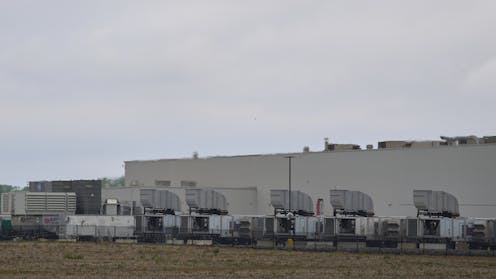
Gas turbines outside the xAI data center in Memphis. AP Photo/George Walker IV

Even before an Elon Musk-owned artificial intelligence company opened a data center in southwest Memphis, Tennessee, air pollution was so bad that residents of a nearby neighborhood were far more likely to get cancer from industrial air pollution than average Americans. Our analysis found that air pollution got only slightly worse as a result of the data center.

The xAI Supercluster began operations on Sept. 1, 2024, powered by natural gas turbines that began operating before the company applied for the required air pollution permits. As environmental health researchers at the University of Memphis, we were immediately concerned about the potential for the turbines to pollute the air even more and decided to investigate.

Combustion from natural gas turbines releases a complex mixture of pollutants, including fine and coarse particulate matter, nitrogen dioxide, sulfur dioxide and hazardous chemicals such as benzene, toluene, ethylbenzene and xylenes. Each of these compounds has been linked to serious health consequences, such as respiratory and cardiovascular illnesses, neurological effects, cancers and elevated mortality rates.

Southwest Memphis is home to predominantly Black people with low incomes. Local residents were concerned that the new data center would worsen long-standing problems of industrial pollution in their community, which includes levels of fine particulate matter, sometimes known as PM2.5, that have long been at or near the level the U.S. government says is the maximum allowable concentration.

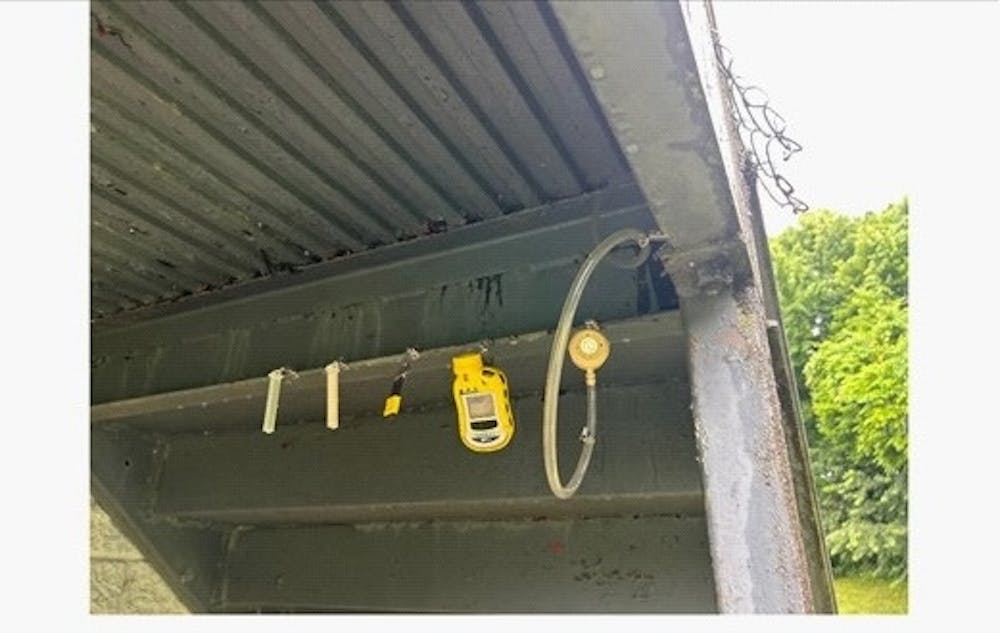
There were, and still are, no permanent air-quality monitors operating in the neighborhoods of southwest Memphis that are closest to the xAI data center. So we developed an approach that combined several types of measurements and calculations to determine what air pollution was like in the area before the data center opened, and what, if anything, changed after it was up and running.

A man in a suit and tie stands in front of a crowd, speaking while they hold signs.
Tennessee state Rep. Justin Pearson speaks at a community rally against gas turbines powering an xAI data center in Memphis.
Brandon Dill for The Washington Post via Getty Images

Examining multiple pictures

We focused on two neighborhoods: the Boxtown Subdivision, located 2½ miles (4 km) east of xAI, which is the community closest to the facility, and the Riverview Subdivision, 6.8 miles (11 km) northeast, a known air pollution hot spot near multiple industrial and traffic emissions sources.

To create a picture of local air quality, we looked at three elements. Using company-provided technical details about the turbines and information about how many were running at any one time, we examined how emissions move through the air in the local area. We looked at satellite data showing fine-particle pollution both before and after the turbines began operating. And we looked at data on current air pollution levels in Boxtown using a third-party company’s monitors on the ground.

The company reported to county health officials that the turbines would emit different amounts of 11 different pollutants, including 30 tons of sulfur dioxide and 94 tons per year of carbon monoxide. Using a computer model recommended by the U.S. Environmental Protection Agency, we calculated how that pollution would spread across the neighborhoods.

Our calculations found that the xAI turbines would contribute minimally to ambient air pollution in both neighborhoods. We also calculated that concentrations of sulfur dioxide, carbon monoxide and nitrogen dioxide would remain well below national standards.

Fine particulate matter

The modeling estimated that fine particulate matter would increase about 1% – though that increase would come on top of a level of fine particulate matter pollution that was already higher than the national limit.

We released our initial findings, based on the computer modeling of company-reported emissions, in March 2025. Since then, our findings have been confirmed by additional research involving direct measurements of air quality in the area.

To examine whether the xAI turbines had, in fact, increased fine particulate matter concentrations, we compared satellite measurements from before and after Sept. 1, 2024. The comparison showed no significant changes.

Some yellow and black equipment is attached under an overhang.
An air-quality sensor takes readings in southwest Memphis, Tenn., in June 2025.
City of Memphis

In addition, an independent accredited lab conducted a two-day monitoring campaign in June 2025. Its findings confirmed that our model’s predictions for fine particulate matter, carbon monoxide, nitrogen dioxide and formaldehyde aligned closely with observed concentrations.

Limitations remained, however: The lab’s monitoring techniques were not sensitive enough to detect trace levels of benzene, toluene, ethylbenzene, xylenes or sulfur dioxide. That makes it impossible to directly compare our model and real-world data for those pollutants.

A long-standing concern

Our analysis offers evidence that at least as of when we did our work, xAI’s natural gas turbines had not measurably degraded air quality in the surrounding neighborhoods. That said, any changes to the equipment used to generate power would likely change the data center’s emissions. And all our analyses assumed regular, normal turbine operations: Malfunctions or accidents can lead to emissions of excessive quantities of air pollutants until they are fixed or resolved.

Our findings confirmed that fine particulate matter has long been, and remains, a concern in the area. If we had access to sustained, community-based monitoring data, we could more clearly examine pollution levels and their public health effects in the community. We believe this type of monitoring by regulatory agencies and public health groups would be beneficial to the people of southwest Memphis, whether or not there is an xAI data center operating there.

Through our work, we aim to not only clarify the air pollution effects of a specific facility, but also highlight the importance of sustained scientific engagement in communities disproportionately affected by industrial emissions. By understanding and documenting the environmental health challenges faced by the residents of southwest Memphis, we hope to contribute to their ultimate mitigation.

The Conversation

Chunrong Jia received funding from the Environmental Protection Agency, National Institutes of Health, and JPB Foundation.

Abu Mohammed Naser Titu receives funding from the National Institute of Health.

Namuun Batbaatar does not work for, consult, own shares in or receive funding from any company or organization that would benefit from this article, and has disclosed no relevant affiliations beyond their academic appointment.

ref. Air quality analysis reveals minimal changes after xAI data center opens in pollution-burdened Memphis neighborhood – https://theconversation.com/air-quality-analysis-reveals-minimal-changes-after-xai-data-center-opens-in-pollution-burdened-memphis-neighborhood-265152

Title IX’s effectiveness in addressing campus sexual assault is at risk − a law professor explains why

Source: The Conversation – USA (2) – By Tammi Walker, Associate Professor of Law and Psychology, University of Arizona

Students, parents and others gather outside the White House to press the Biden administration to release updated Title IX rules on Dec. 5, 2023. Leigh Vogel/Getty Images for National Women’s Law Center

Most Americans assume that schools are legally required to protect students from sexual harassment and assault under Title IX – the federal law enacted in 1972 that bans sexual discrimination in education.

I am a law professor and researcher who has spent more than a decade examining the disconnect between what Title IX promises on paper and what students expect it to deliver in practice. What’s happening now isn’t just another policy shift – it’s a dismantling of protections many assume still exist.

Title IX’s 37 words

The main text of Title IX is just 37 words and reads: “No person in the United States shall, on the basis of sex, be excluded from participation in, be denied the benefits of, or be subjected to discrimination under any education program or activity receiving Federal financial assistance.”

This legal text doesn’t define sex or discrimination, or explain what kinds of behavior the act covers. For decades, the Department of Education filled in those gaps by writing detailed rules, providing guidance to schools and investigating when schools failed to comply.

In 2020, the Trump administration adopted much narrower rules. Colleges and universities have to act only when top officials – such as deans or Title IX coordinators – receive a report, and even then, their responses only have to avoid being “clearly unreasonable.”

In 2024, the Biden administration tried to widen those protections by requiring schools to step in whenever employees other than doctors and therapists learned of possible harassment, and to do so promptly and effectively. But in January 2025, a federal court blocked those rules before they could take effect.

Today those less protective 2020 rules remain in place, and the agency responsible for enforcing them is being dismantled.

In March 2025, President Donald Trump ordered the Department of Education to close. Legally, an executive order cannot abolish the department outright. That would require an act of Congress.

But the order has still reshaped the agency in practice by cutting staff and shuttering offices. The Office for Civil Rights, which handles Title IX and other discrimination complaints in schools, was especially hard hit. About 260 employees were laid off, and seven of its 12 regional offices were closed, even though more than 6,000 investigations were unresolved as of January.

A federal judge has since ordered those employees to be reinstated, with staff scheduled to return in phases through November 2025. It is not clear how these and other changes are going to affect how the office functions.

A system under strain

Beyond the headlines about layoffs, the deeper question is what happens when students turn to Title IX for protection.

The Heritage Foundation’s long-term vision provides a clue: Project 2025 proposes to move the Office of Civil Rights into the Department of Justice and limit its role to litigation of intentional discrimination cases.

While Trump distanced himself from Project 2025 on the campaign trail, his Cabinet includes authors of this policy blueprint. And in less than a year, the administration has moved forward with nearly half of Project 2025’s goals, including over 40% of the policies aimed at the Department of Education.

If the Department of Education can no longer resolve discrimination complaints within the agency, students will be left to pursue their claims directly in federal court. But the numbers show why that path cannot absorb the caseload.

In 2024, the Department of Education’s Office for Civil Rights received 22,687 discrimination complaints, including nearly 12,000 related to Title IX. By comparison, federal courts in 2024 nationwide heard fewer than 1,000 education-related civil rights cases.

Federal courts are understaffed, and even if federal judges had the capacity to absorb 20 times more cases, most students simply cannot afford that path. Lawsuits demand lawyers, months of preparation and often years before any resolution.

The Office for Civil Rights offers something fundamentally different from going to court. It provides low-cost investigations, mediation that could resolve cases in weeks instead of years. Its settlements address not just individual harm but institutional failures.

Some cases drag on, but students do not need lawyers, and the OCR often secures broader reforms through negotiated settlements – from campuswide training programs to complete overhauls of complaint procedures.

The office also published policy guidance and answered more than 11,000 public inquiries in 2024, providing clarity for schools and students alike. These tools didn’t eliminate the backlog, but they showed that the OCR could deliver meaningful results without the cost and delay of court.

But this system is exactly what’s at risk if Project 2025’s vision becomes reality. If the OCR loses its authority to resolve complaints, students will lose the only clear path to quick, affordable results and reliable information.

What this means for students

For schools and their students, that shift away from federal agencies would be dramatic. It would mean no more negotiated agreements, no more policy guidance, and no administrative investigations into systemic issues. Courts would decide what Title IX means, forcing students to file expensive lawsuits that drag on for years and require much stronger evidence of discrimination than the Office of Civil Rights ever demanded.

The administration has offered an alternative: “return our students to the states,” as President Donald Trump put it on March 20, 2025, when he signed the executive order outlining his plan to close the Department of Education.

But states cannot fill the enforcement gap left by eliminating the Office for Civil Rights’ role in resolving complaints and guiding schools. The OCR had the infrastructure to investigate cases, mediate disputes and issue clear policy guidance – capacities that most states simply do not have.

State laws addressing sexual discrimination in education vary dramatically – some provide strong protections, while others offer only limited coverage or lack enforcement mechanisms altogether. Kansas, for example, has antidiscrimination laws that do not explicitly cover education, leaving it unclear whether any state agency can investigate student complaints.

And in half the country, LGBTQ+ students still lack explicit statutory protection. In practice, that means a student’s rights depend less on Title IX itself than on where they happen to go to school.

The problems run deeper than just inadequate alternatives. Even under the current system, protections are already narrow: Schools must act only if complaints reach officials with the power to make institutional changes. A report to a trusted coach, professor or resident assistant may lead nowhere. When schools do respond, the standard is remarkably low – acknowledging a complaint or opening a limited investigation often satisfies legal requirements.

These narrow protections are becoming even less reliable as transparency erodes. The Department of Education stopped updating its public list of investigations in January 2025 and only resumed in June, after months of silence. As of August 2025, just 10 resolutions involving sexual discrimination at colleges had been posted – and half predated Trump’s second inauguration. Without accurate information, students have little insight into whether schools are being held accountable at all.

A young **missing word** buries her head between her knees and cries near a window.
Without strong federal enforcement, Title IX protections are easier for schools to ignore.
Yta23/iStock via Getty Images

The narrowing scope of federal protection

Title IX was written to ensure equal educational opportunity regardless of sex. But weak regulations, enforcement delays and shrinking federal oversight are steadily eroding that promise.

For students, the reality is stark: telling the wrong person about a complaint may trigger no response; minimal efforts by schools often satisfy legal requirements; and the federal agency once charged with oversight is being sidelined. If a litigation-only model takes hold, most students will have no realistic path to relief unless they can hire a lawyer and withstand years of court proceedings.

As I further explain in a new law review article – No Department, No Enforcement – Title IX remains law, but without meaningful enforcement it risks becoming a guarantee in name only. For students, that means rights promised but rarely delivered.

The Conversation

Tammi Walker previously received funding from the National Science Foundation.

ref. Title IX’s effectiveness in addressing campus sexual assault is at risk − a law professor explains why – https://theconversation.com/title-ixs-effectiveness-in-addressing-campus-sexual-assault-is-at-risk-a-law-professor-explains-why-258125

Mindfulness won’t burn calories, but it might help you stick with your health goals

Source: The Conversation – USA (3) – By Masha Remskar, Psychologist and Postdoctoral Researcher in Behavioral Science, Arizona State University

Meditation exists on a spectrum, from mindful moments and bursts of mindfulness to building up to a formal meditative practice. d3sign/Moment via Getty Images

Most people know roughly what kind of lifestyle they should be living to stay healthy.

Think regular exercise, a balanced diet and sufficient sleep. Yet, despite all the hacks, trackers and motivational quotes, many of us still struggle to stick with our health goals.

Meanwhile, people worldwide are experiencing more lifestyle-associated chronic disease than ever before.

But what if the missing piece in your health journey wasn’t more discipline – but more stillness?

Research shows that mindfulness meditation can help facilitate this pursuit of health goals through stillness, and that getting started is easier than you might think – no Buddhist monk robes or silent retreats required.

Given how ubiquitous and accessible mindfulness resources are these days, I have been surprised to see mindfulness discussed and studied only as a mental health tool, stopping short of exploring its usefulness for a whole range of lifestyle choices.

I am a psychologist and behavioral scientist researching ways to help people live healthier lives, especially by moving more and regulating stress more efficiently.

My team’s work and that of other researchers suggests that mindfulness could play a pivotal role in paving the way for a healthier society, one mindful breath at a time.

Mindfulness unpacked

Mindfulness has become a buzzword of late, with initiatives now present in schools, boardrooms and even among first responders. But what is it, really?

Mindfulness refers to the practice or instance of paying careful attention to one’s present-moment experience – such as their thoughts, breath, bodily sensations and the environment – and doing so nonjudgmentally. Its origins are in Buddhist traditions, where it plays a crucial role in connecting communities and promoting selflessness.

Over the past 50 years, however, mindfulness-based practice has been Westernized into structured therapeutic programs and stress-management tools, which have been widely studied for their benefits to mental and physical health.

Research has shown that mindfulness offers wide-ranging benefits to the mind, the body and productivity.

Mindfulness-based programs, both in person and digitally delivered, can effectively treat depression and anxiety, protect from burnout, improve sleep and reduce pain.

The impacts extend beyond subjective experience too. Studies find that experienced meditators – that is, people who have been meditating for at least one year – have lower markers of inflammation, which means that their bodies are better able to fight off infections and regulate stress. They also showed improved cognitive abilities and even altered brain structure.

But I find the potential for mindfulness to support a healthy lifestyle most exciting of all.

A senior couple sitting on the beach, pressing their feet together as the woman pulls the man's arms forward in a stretch.
Mindfulness meditation may enhance the psychological skills needed to follow through on exercise and other health habits.
Maria Korneeva/Moment via Getty Images

How can mindfulness help you build healthy habits?

My team’s research suggests that mindfulness equips people with the psychological skills required to successfully change behavior. Knowing what to do to achieve healthy habits is rarely what stands in people’s way. But knowing how to stay motivated and keep showing up in the face of everyday obstacles such as lack of time, illness or competing priorities is the most common reason people fall off the wagon – and therefore need the most support. This is where mindfulness comes in.

Multiple studies have found that people who meditate regularly for at least two months become more inherently motivated to look after their health, which is a hallmark of those who adhere to a balanced diet and exercise regularly.

A 2024 study with over 1,200 participants that I led found more positive attitudes toward healthy habits and stronger intentions to put them into practice in meditators who practiced mindfulness for 10 minutes daily alongside a mobile app, compared with nonmeditators. This may happen because mindfulness encourages self-reflection and helps people feel more in tune with their bodies, making it easier to remember why being healthier is important to us.

Another key way mindfulness helps keep momentum with healthy habits is by restructuring one’s response to pain, discomfort and failure. This is not to say that meditators feel no pain, nor that pain during exercise is encouraged – it is not!

Mild discomfort, however, is a very common experience of novice exercisers. For example, you may feel out of breath or muscle fatigue when initially taking up a new activity, which is when people are most likely to give up. Mindfulness teaches you to notice these sensations but see them as transient and with minimal judgment, making them less disruptive to habit-building.

Putting mindfulness into practice

A classic mindfulness exercise includes observing the breath and counting inhales up to 10 at a time. This is surprisingly difficult to do without getting distracted, and a core part of the exercise is noticing the distraction and returning to the counting. In other words, mindfulness involves the practice of failure in small, inconsequential ways, making real-world perceived failure – such as a missed exercise session or a one-off indulgent meal – feel more manageable. This strengthens your ability to stay consistent in pursuit of health goals.

Finally, paying mindful attention to our bodies and the environment makes us more observant, resulting in a more varied and enjoyable exercising or eating experience. Participants in another study we conducted reported noticing the seasons changing, a greater connection to their surroundings and being better able to detect their own progress when exercising mindfully. This made them more likely to keep going in their habits.

Luckily, there are plenty of tools available to get started with mindfulness practice these days, many of them free. Mobile applications, such as Headspace or Calm, are popular and effective starting points, providing audio-guided sessions to follow along. Some are as short as five minutes. Research suggests that doing a mindfulness session first thing in the morning is the easiest to maintain, and after a month or so you may start to see the skills from your meditative practice reverberating beyond the sessions themselves.

Based on our research on mindfulness and exercise, I collaborated with the nonprofit Medito Foundation to create the first mindfulness program dedicated to moving more. When we tested the program in a research study, participants who meditated alongside these sessions for one month reported doing much more exercise than before the study and having stronger intentions to keep moving compared with participants who did not meditate. Increasingly, the mobile applications mentioned above are offering mindful movement meditations too.

If the idea of a seated practice does not sound appealing, you can instead choose an activity to dedicate your full attention to. This can be your next walk outdoors, where you notice as much about your experience and surroundings as possible. Feeling your feet on the ground and the sensations on your skin are a great place to start.

For people with even less time available, short bursts of mindfulness can be incorporated into even the busiest of routines. Try taking a few mindful, nondistracted breaths while your coffee is brewing, during a restroom break or while riding the elevator. It may just be the grounding moment you need to feel and perform better for the rest of the day.

The Conversation

Masha Remskar previously received funding from UK Research & Innovation’s Economic and Social Research Council, and served as Head of Science at the Medito Foundation. The Medito Foundation is a non-profit that does not benefit financially from users downloading and using its mobile app.

ref. Mindfulness won’t burn calories, but it might help you stick with your health goals – https://theconversation.com/mindfulness-wont-burn-calories-but-it-might-help-you-stick-with-your-health-goals-260482