Little Amélie: a tender and creative exploration of the formation of childhood identity

Source: The Conversation – UK – By Rayna Denison, Professor of Film and Digital Arts, University of Bristol

Little Amélie or the Character of Rain is as much about animation as an artform as it is an adaptation of Belgian author Amélie Northomb’s book The Character of Rain (2000).

The French animated feature, co-directed by Maïlys Vallade and Liane-Cho Han, makes sophisticated use of animation style to interrogate the formation of the self in early childhood.

The film begins with Amélie telling us that she began as a god – a tube-like god – before being born into a “vegetative” state as a baby girl. After a spectacular time-lapse montage, Amélie recounts awakening as a toddler in the Kansai region of Japan in 1969 when an earthquake shocks her into being. This is her first true memory of being in the world.

All of this is shown through multiple transformations staged within carefully controlled contrasting colour schemes. Characters move in and out of Amélie’s life with their own colour palettes that refract through their surroundings, reinforcing Amélie’s understanding of them.

So, when Amélie’s Belgian grandmother visits and awakens her further by feeding Amélie white Belgian chocolate, she does so while wearing a cream-coloured outfit. The chocolate glows when Amélie eats it, and an animalistic Amélie transforms into a glowing little girl. Colour becomes one of Little Amélie’s key pleasures, amplifying themes and character interactions alike.

The uses of such contrasting and reflective colour become central to the film’s storytelling, providing a narrative framework that mirrors Amélie’s comprehension of the world.

These careful uses of colour build in importance through a series of transformations and magical moments that illustrate Amélie’s emerging stages of selfhood. Amélie’s god-like powers persist as she affects her environment, whether mundanely blowing on the surface of a pond or magically parting the sea when her family goes to the beach. And Amélie is affected by her surroundings in turn, changing shape, size and at one point transforming into raindrops during a downpour.

More than this, Vallade and Han place Amélie at the visual centre of the film, positioning shots from her point of view and at her level. In doing so they allow audiences to spend time alongside Amélie, revisiting their own childhoods.

Amélie’s explorations of her world – running through her home, feeding carp, or playing with spinning tops – all bring us visually into her worldvieww. This alignment between us and the film’s little protagonist make her moments of existential turmoil all the more compelling, especially when she learns her family is to leave her haven in Japan to return to Belgium.

Such moments hint at the philosophy underpinning the film’s narrative. Amélie is aligned with not just rain, but also the natural world, echoing the work of animation greats like Hayao Miyazaki. But, even while Amélie finds refuge in nature, in her darkest moment she desires a return to its most primordial form.

Little Amélie is also about connections across cultures. The connection between Amélie and the world are most explicit when her family’s housekeeper, Nishio, teaches Amélie how to write her name in Japanese. Nishio explains “You are the rain”, and teaches Amélie that part of her name, “Amé”, means rain in Japanese. They write the symbol together in condensation on a windowpane. This act reveals to Amélie what she sees as an immediate, inherent connection to Japanese culture. But, as this sequence foreshadows, Amélie’s understanding of herself as Japanese is as tenuous and fleeting as her imagination of herself as a tube.

Culture takes on a negative hue when lingering wartime resentments cause conflict between the loving Nishio and the family’s cold landlady, Kashima. When Nishio explains how she lost her family during the second world war firebombing of Kobe, the carrots being dropped into stew transform into bombs dropping while the washing of rice stands in for Nishio’s experience of being buried by the explosion that killed her family.

It is Nishio, too, who guides Amélie into the lantern festival that is used to celebrate those lost in the war (much to Kashima’s angry dismay). Without schooling to guide her, Nishio becomes Amélie’s conduit into culture, expanding her world beyond the haven of home. Nishio and Amélie develop a shared experience and understanding of Japan in these moments, framed with beautiful seasonal Japanese gardens and traditional shrines as well as the family home. As a result, the film lingers on how our identities in childhood are a product of our connections.

Through the exaggeration and amplification of these connections, Vallade and Han’s Little Amélie produces a story that reaches for metaphysical heights, even as it remains true to the small scale and scope of Amélie’s childhood world. It is the character of the film’s animation – its shifting scales, uses of colour and predilection for transformation – that reveal Amélie to audiences, making her, not a god, but a guide back to our own childhood experiences of the world.


Looking for something good? Cut through the noise with a carefully curated selection of the latest releases, live events and exhibitions, straight to your inbox every fortnight, on Fridays. Sign up here.


The Conversation

Rayna Denison does not work for, consult, own shares in or receive funding from any company or organisation that would benefit from this article, and has disclosed no relevant affiliations beyond their academic appointment.

ref. Little Amélie: a tender and creative exploration of the formation of childhood identity – https://theconversation.com/little-amelie-a-tender-and-creative-exploration-of-the-formation-of-childhood-identity-275949

Inside Aardman at the Young V&A: the creative magic behind Britain’s beloved stop-motion pioneers

Source: The Conversation – UK – By Christopher Holliday, Senior Lecturer in Liberal Arts and Visual Cultures Education, Department of Interdisciplinary Humanities, King’s College London

The art and craft of stop-motion animation has been celebrated in several exhibitions recently, including a show at London’s South Bank Centre and last year’s Tim Burton retrospective at the Design Museum. Now it’s the turn of Aardman as the studio celebrates almost half a century of silly characters, cracking jokes and comical villains in a new exhibition in London.

Since its founding in 1972 by Peter Lord and David Sproxton, the Bristol-based Aardman has cultivated an identity as one of animation’s most trusted and commercially successful production houses. Animator Nick Park joined in 1985, bringing Aardman Oscar success in 1991 with Creature Comforts – the first of many.

Widespread critical acclaim led to high-profile partnerships with Hollywood companies DreamWorks and Sony Pictures in the early 2000s. But it’s the studio’s homegrown history of feature films, animated shorts, TV series and various other projects that take centre stage at the Young V&A for the new Inside Aardman – Wallace and Gromit and Friends exhibition.

Drawn from the studio’s 50-year legacy, the gallery’s impressive collection of sets, puppets and other behind-the-scenes material provides an affectionate look at the production stories behind some of Aardman’s most celebrated animated creations.

The craft behind the art

The exhibition is a quickfire journey through the techniques and technologies of handmade claymation that have defined the company’s signature animation style.

We learn about the moveable metal armatures and sculpturing of Plasticine, silicone rubber and foam that build Aardman’s three-dimensional models. And we get to see the invisible labour of foley artists (sound creators) and sound designers involved in the realisation of Aardman’s animated screen worlds.

At the centre of the exhibition is the literal flagship piece – the huge galleon from The Pirates! In an Adventure with Scientists! (2012), which towers over the curated collection of miniatures. Other highlights include the prison cell set from Wallace & Gromit: Vengeance Most Fowl (2024), home to the villainous penguin Feathers McGraw. Visitors can also create their own performances and stop-motion shorts in special interactive booths.

One of the most welcome curiosities is that the archival and audiovisual materials are organised to reflect the various stages of stop-motion animation as a creative process. An impressive collection of pre-production artefacts include never-before-seen storyboards, concept art and illustrations. All are testament to the meticulous craftmanship of the animators and highlight the almost imperceptible details involved in building stop-motion animation from the ground up.

Lesser-known processes like needle-felting and “dope sheets” (drawings that break down dialogue into the appropriate mouth shapes frame-by-frame) accompany the more recognisable three-dimensional characters that celebrate the artisanal logic powering Aardman’s creativity.

What is clear from this peek inside the magical animated world of Aardman is that its animators are quintessential problem-solvers. The exhibition’s focus on the early Morph shorts reveals how clingfilm can function as an excellent substitute for water.

Similarly, the models and miniatures from A Grand Day Out (1989) show that lentils can have the appearance of well-worn rivets. Even icing sugar can give claymation models a duller, matte look. In the hands of Aardman’s skilled animators, everyday objects and materials can be transformed in all kinds of ways to sell the illusion.

Notable too among the wealth of handmade materials and processes is the spotlight on computer imaging and other forms of digital intervention – a surprise, perhaps, given Aardman’s renowned dedication to working with tangible, material objects. Yet the crude sketches doodled on scraps of paper from which the earliest story and character ideas were formed give way in the exhibition’s closing stages, to a recognition of other kinds of animated techniques.

Computer-generated layering and 3D printing add in visual effects largely impossible to achieve in stop-motion. Green screens and even virtual reality visualisations help the animators “design and test ideas for sets before building them”. All show how digital technology has come to occupy a central place in the production pipeline of Aardman films.

Rather than obscure such processes behind the lucrative business of handcraft for which Aardman is internationally celebrated, the exhibition rightly makes a virtue of the virtual. The studio chooses not to obscure how and where digital processes have contributed to their big-screen blockbusters – even if their computer-animated films Flushed Away (2006) and Arthur Christmas (2011) are curiously sidelined.

Many visitors will be well acquainted with the characters and objects brought together for Inside Aardman, yet there is enough devotion to animation as an industrial art form to satisfy creative practitioners and historians alike. This excellent collection at the V&A show confirms Aardman as masters of their craft within the tradition of British animation, and a studio that can rightfully claim to be the true pioneers of Plasticine.

Inside Aardman is on at the Young V&A, London, until November 26

Looking for something good? Cut through the noise with a carefully curated selection of the latest releases, live events and exhibitions, straight to your inbox every fortnight, on Fridays. Sign up here.


This article features references to books that have been included for editorial reasons, and may contain links to bookshop.org; if you click on one of the links and go on to buy something, The Conversation UK may earn a commission.

The Conversation

Christopher Holliday does not work for, consult, own shares in or receive funding from any company or organisation that would benefit from this article, and has disclosed no relevant affiliations beyond their academic appointment.

ref. Inside Aardman at the Young V&A: the creative magic behind Britain’s beloved stop-motion pioneers – https://theconversation.com/inside-aardman-at-the-young-vanda-the-creative-magic-behind-britains-beloved-stop-motion-pioneers-275899

Boofing: why taking illicit drugs rectally is so risky

Source: The Conversation – UK – By Joseph Janes, Senior Lecturer in Criminology, Swansea University

The route a drug takes into the body can matter as much as the drug itself – and rectal use brings risks that are rarely talked about openly.

Often called “boofing”, “booty bumping” or “plugging”, the practice involves taking drugs via the rectum rather than swallowing, snorting or injecting.

In health settings, this route is familiar through suppositories and enemas, especially when patients cannot take medication by mouth. Outside clinical contexts, however, rectal drug use brings a distinct set of dangers that are widely misunderstood. What matters from a public health perspective is not what people call it but how it affects the body.

Boofing itself isn’t new. Alcohol enemas were documented in early 20th-century medical journals. Opium and herbal preparations were used rectally in ancient China, Egypt and Greece. What is new is the way today’s drug markets intersect with this type of administration.

First, modern illicit drugs are often stronger and less predictable. High-potency MDMA or ecstasy, synthetic stimulants and adulterated cocaine mean people may seek faster or more intense effects from smaller amounts.

Second, boofing is sometimes presented as a way to avoid the perceived harms of snorting or injecting. Third, social media and nightlife networks have made it easier for different drug-taking practices to spread quickly, often without the medical context needed to understand the risks.

What happens when drugs are taken rectally?

The rectum has a dense network of blood vessels. Substances absorbed there can enter the bloodstream rapidly, often bypassing parts of the liver that would normally reduce a drug’s potency when swallowed.

The result can be effects that arrive faster and feel stronger than expected. That also means there is less room for error. A dose that feels manageable when taken orally or nasally may become overwhelming when absorbed rectally, increasing the risk of irritation, injury or potential overdose.

While dangers vary by substance, several risks apply broadly to rectal administration. Overdose risk is higher because absorption can be rapid and unpredictable. People may re-dose too quickly, assuming nothing has happened, only for delayed effects to arrive suddenly.

The lining of the rectum is delicate and easily damaged by caustic substances or repeated irritation. Small tears and inflammation increase vulnerability to infection. There is also a risk of transmitting HIV, hepatitis C and other infections, particularly if equipment is shared or hygiene is poor. Micro-abrasions can make transmission more likely too.

And unlike injecting, rectal drug use leaves no obvious external marks, which can delay recognition of harm when someone is in trouble.


Read more:
When did humans start experimenting with alcohol and drugs?


Different substances also carry different dangers. Stimulants such as cocaine, methamphetamine and synthetic cathinones or “bath salts” are commonly linked to boofing-related harms. Rapid absorption can put severe strain on the heart and nervous system, raising the risk of overheating, agitation, stroke or cardiac events.

MDMA brings concerns around dehydration and dangerous changes in body temperature, especially when faster onset of effects leads to repeated dosing. Opioids, including heroin and synthetic variants, can suppress breathing. Rectal absorption may still be fast enough to cause fatal overdose, particularly when combined with alcohol or sedatives.

Alcohol enemas are especially risky. Because alcohol bypasses the stomach, the body loses its natural warning system – vomiting – dramatically increasing the chance of alcohol poisoning.

There are also growing concerns around GHB (gamma-hydroxybutyrate), a powerful depressant with a very narrow margin between intoxication and overdose. In a 2019 Channel 4 documentary, a Prison and Probation Service safeguarding professional warned about cases involving GHB absorbed rectally when mixed with lubricant. The effects can be sudden and hard to detect, raising serious risks of unconsciousness and breathing suppression, and, in non-consensual contexts, drug-facilitated sexual assault.

Who does it and why context matters

There is no single “type” of person who engages in this practice. Research is limited, but people may experiment for different reasons including curiosity, faster onset or avoiding damage to the nose or veins.

Because boofing is highly stigmatised, open discussion is rare. That makes reliable information harder to find. This is a problem from a harm reduction perspective. Non-judgemental, evidence-based advice helps people make safer choices, whatever their circumstances.

Boofing harm-reduction tips.

Online, boofing is sometimes described as safer than injecting or snorting. That comparison is misleading. While it avoids needle injuries and nasal damage, the lack of visible harm can also create a false sense of security.

Much of the danger does not come from the route alone, but from unknown drug strength, contaminants and inconsistent supply. In illicit markets, changing how a drug is taken can increase risk.

Reducing harm

From a public health perspective, the goal is not to sensationalise this practice, but to reduce preventable harm. The University of Pittsburgh developed a safer boofing guide in 2023 to offer harm reduction advice.

Hygiene also matters. Rectal drug use can interact with sexual health. Invisible injuries can raise the risk of infection, including sexually transmitted infections, particularly if drugs are taken shortly before anal sex. Condoms, regular testing and HIV prevention tools remain central to reducing harm.

Boofing reflects a much older human tendency to experiment with different substances. What has changed is the context. Today’s drugs are often stronger, more adulterated and less predictable. At the same time, practices circulate rapidly online, frequently stripped of medical or public health advice.

Understanding rectal drug use, rather than sensationalising it, allows for more honest conversations about risk. This is not about encouraging drug use, but about recognising reality and reducing preventable harm in an increasingly volatile drug market.

The Conversation

The authors do not work for, consult, own shares in or receive funding from any company or organisation that would benefit from this article, and have disclosed no relevant affiliations beyond their academic appointment.

ref. Boofing: why taking illicit drugs rectally is so risky – https://theconversation.com/boofing-why-taking-illicit-drugs-rectally-is-so-risky-274690

Football has a real fossil fuel problem – and it’s not sustainable

Source: The Conversation – UK – By Daniel Svensson, Lecturer in Sport Management, Malmö University

In 1958, Brazil won the men’s Fifa World Cup in Sweden. The team, which included a 17-year-old Pelé, stayed in a modest country hotel and travelled by train or bus to small stadiums in cities such as Uddevalla and Göteborg.

Fan attendance was fairly low for that 16-team tournament. And so too was the the ecological impact of the event – especially compared to the 2026 World Cup which will see 48 teams and millions of supporters travel to and across North America.

For while football’s global reach is often highlighted as a positive thing that brings the world together, the beautiful game risks having a rather ugly impact on the planet.

This is partly down to ambitious plans to expand almost every aspect of elite football – more money, more matches, more tournaments, more fans – that have accelerated over recent decades. This could be seen as a positive development for anyone who enjoys football, but it also has some problematic consequences.

The expansion of international competitions for example, has led to increasing carbon dioxide emissions from football-related travel as teams, supporters and media representatives fly around the globe following the game.

A recent study estimated that as part of the growing ecological footprint of international sport, global football now has a carbon footprint similar to that of Austria.

So the high number of international matches, as seen in the remodelled Fifa men’s Club World Cup, the expanded men’s Euros of 2024 and the forthcoming men’s World Cup in 2026 challenges both the health of the players and the health of the planet.

These issues all point in the same direction – prioritising profit and growth over people and planet, and developing a dependence on the fossil-fuel economy.

There are plenty of examples. Oil-rich Saudi Arabia for instance, is often accused of sportswashing, but was named as host for the 2034 World Cup and continues to invest in the English Premier League. The 2022 Fifa World Cup in oil-rich Qatar was criticised for the environmental impact of new stadiums, new infrastructure and the use of cooling systems in the extreme heat.

Then there’s Fifa’s sponsorship deal with Aramco, a company estimated to be responsible for 4% of global greenhouse gas emissions since 1965. All of these are strong signs that fossil-fuelled growth in the economics of football has been normalised.

Some supporters and campaign groups have been criticising this development for a while now. But how is football responding?

Hope and glory?

Well, recently Fifa announced the creation of its own “peace prize” to recognise those who “unite people, bringing hope for future generations”. But while that ambition may sound admirable, the actions of global football suggest the opposite.

For instead of bringing hope, football is accelerating climate change through its a problematic dependence on fossil-fuel sponsorship. Research suggests that the sport also displays a distinct lack of support for those countries that are most severely affected by climate change.

There are though, some clubs doing their best to take environmental sustainability seriously. FC Porto, Real Betis and Malmö FF are all involved in the “Free Kicks” project, which requires clubs to assess their environmental performance in terms of things like energy savings and use of resources.

Their work shows that it is possible to combine top-level football with sustainable practices and good governance. And if Fifa is serious about bringing hope to future generations, it may want to learn from some of the people who have done precisely that.

World Cup in front of Doga skyline.
The Qatar World Cup was controversial.
Fitria Ramli/Shutterstock

Reducing the size and frequency of large international events would be a good start. So too would organising fixtures in such a way as to minimise their carbon footprint.

If all of this means accepting a deceleration in the expansion of global football in a bid to become more sustainable, would that really be so bad?

After all, those who saw a 17-year-old Pelé in Sweden in 1958 did not know about the coming climate crisis. But the football they followed back then was a lot more compatible with sustainable development than the sport is today.

The Conversation

Daniel Svensson is affiliated with The Sport Ecology Group. He receives funding from The Swedish Research Council for Sport Science.

ref. Football has a real fossil fuel problem – and it’s not sustainable – https://theconversation.com/football-has-a-real-fossil-fuel-problem-and-its-not-sustainable-270400

Britain’s relentless rain shows climate predictions playing out as expected

Source: The Conversation – UK – By Jess Neumann, Associate Professor of Hydrology, University of Reading

Large parts of the UK are experiencing relentless rainfall, with some places seeing rain for 41 consecutive days and counting. In Reading, in the south east of England, our university’s official rain gauge has recorded precipitation on 31 consecutive days – unprecedented in records stretching all the way back to 1908.

The pattern has not just made 2026 a bit dreary. It also reveals one way in which climate change is making the already naturally variable (some would say gloriously variable) British weather increasingly extreme.

In those 31 days, Reading has received 141mm of rain, compared to the 30-year average over that period of just 58mm – well over twice what we would expect at the time of year.

Higher than average rainfall totals are expected, well, half of the time. This is just how mean averages work. But it’s the nature of this current weather pattern that is so unusual, and is in keeping with the type of wetter winter situation for UK weather that climate scientists have been warning us to expect – even if we are still only just learning why exactly this is happening on a regional level.

Over the full breadth of a British year, the bigger picture is even more revealing. Last year, the UK was grappling with one of the hottest and driest summers on record. A succession of hot spells, combined with long periods that saw less than average rainfall, meant water supplies dwindled and widespread hosepipe bans were put in place.

As a whole, 2025 from spring onwards was exceptionally dry. Fast forward to the new year, and we’re facing the opposite – weeks of rainfall and flooding. These extremes are what we expect to see in this part of the world, as heat builds up in the global atmosphere and oceans. For British people, this is what climate change right now feels like.

More rain, more intense rain

What is causing this link between a warmer planet and wetter British winters? One fundamental link is in basic physics of the atmosphere as temperatures rise. Warmer air can hold more moisture – about 7% more for every one degree celsius of warming. This means that when it rains, on average it rains harder. Bigger, heavier downpours become more common.

Climate change is also disrupting the patterns of currents and cycles within the atmosphere and oceans that bring the UK much of its weather. As an island archipelago on the edge of three competing climate masses – the wet, mild Atlantic, the cold, dry Arctic, and the wildly variable temperatures of the Eurasian landmass – it is used to variability.

But one constant feature plays an oversized role in the type of weather we get: the jet stream – a ribbon of fast-flowing air high in the atmosphere. The position of the jet stream makes a big difference. Sometimes it flows to the north of Scotland, sometimes it is hundreds of miles further south towards Spain. This location matters, because the jet stream helps to blow whole weather systems – think of a big “bubble” of air carrying its own weather with it – from the Atlantic towards the UK.

Currently, the jet stream is positioned further south than typical for the time of year, steering consecutive wet and often windy weather systems directly towards the UK. At the same time, a high pressure system is sitting over parts of northern Europe, blocking the wet weather from moving further east.

The impact of climate change on the jet stream is complex, because this river of air circling the north pole from west to east is influenced by a lot of different factors. One thing we do know: the Arctic, at surface level, is warming faster than other parts of the planet. This means that the temperature difference between the poles and the equator, for air at lower levels at least, is not as big as it used to be. This may be influencing the jet stream to weaken and meander.

With less energy to push them along, these weather patterns can get stuck in one location, meaning that the systems of low air pressure associated with rainfall and storms can slow down or get stuck. When a system bringing rain parks itself over the UK for days on end, only to be followed by another system, and another, the result is relentless rainfall.

To complicate things further, high up in the atmosphere where the jet stream blows, climate change is actually making the temperature difference between equator and poles increase. This may be strengthening the speed and turbulence within the jet stream itself, and just adds to a complex picture of varying influence on UK rainfall.

The challenge of managing extremes

These rapid swings between drought and deluge pose serious practical challenges for everyone in the UK. Water companies must plan for both droughts and floods, even within the same year. Farmers face uncertain growing conditions, with crops rotting in the wet soil one month, and drying out in droughts a few months later. Infrastructure designed for the climate of the past may not cope with the extremes of the future.

Understanding these changes isn’t just an academic exercise. It’s essential for helping communities, businesses and governments prepare for what’s coming. As Britain experiences these climate extremes at first-hand, it is crucial to build resilience into plans for hotter and drier summers, and warmer wetter winters.

The Conversation

Jess Neumann is a trustee of River Mole River Watch, a water quality charity who work with, advise, and receive funding from environmental and conservation organisations and agencies, water companies, commercial services, local authorities and community groups.

Hannah Cloke advises the Environment Agency, the European Centre for Medium-range Weather Forecasts, the Copernicus Emergency Management Service, local and national governments and humanitarian agencies on the forecasting and warning of natural hazards. She is a member of the UKRI Natural Environment Research Council and a fellow of the European Centre for Medium-range Weather Forecasts. Her research is funded by the UKRI Engineering & Physical Sciences Research Council, the UKRI Natural Environment Research Council, the Foreign, Commonwealth & Development Office and the European Commission.

ref. Britain’s relentless rain shows climate predictions playing out as expected – https://theconversation.com/britains-relentless-rain-shows-climate-predictions-playing-out-as-expected-275840

Why Sigmund Freud is making a comeback in the age of authoritarianism and AI

Source: The Conversation – UK – By Carolyn Laubender, Senior Lecturer, Department of Psychosocial and Psychoanalytic Studies, University of Essex

Psychoanalysis is having a moment. Instagram accounts dedicated to Freudian theory have amassed nearly 1.5 million followers. Television shows like Orna Guralnik’s Couples Therapy have become compulsive viewing. Think pieces in The New York Times, The London Review of Books, Harper’s, New Statesman, the Guardian and Vulture are declaring psychoanalysis’s resurrection. As Joseph Bernstein of the New York Times put it: “Sigmund Freud is enjoying something of a comeback.”

For many, this revival comes as a surprise. Over the past half century, psychoanalysis – the intellectual movement and therapeutic practice founded by Sigmund Freud in 1900 Vienna – has been shunned and belittled in many scientific circles. Particularly in the English-speaking world, the rise of behavioural psychology and a ballooning pharmaceutical industry pushed long-form talking therapies like psychoanalysis to the margins.

But there’s a more complex global story to tell. In Freud’s own lifetime (1856-1939), 15 psychoanalytic institutes were established worldwide, including in Norway, Palestine, South Africa and Japan. And around the world – from Paris to Buenos Aires, from São Paulo to Tel Aviv – psychoanalysis often flourished throughout the 20th century.

Across South America, psychoanalysis continues to wield huge clinical and cultural influence. It remains so popular in Argentina that people joke you can’t board a flight to Buenos Aires without having at least one analyst on board.

There are several reasons why psychoanalysis became popular in some countries but not others. One relates to the 20th-century history of Jewish diaspora. As the Third Reich expanded, many Jewish psychoanalysts and intellectuals fled central Europe before the Holocaust. Cities like London, which received Freud and his entire family, were culturally reshaped by this refugee crisis.

But another, perhaps less obvious reason concerns the rise of authoritarianism. Psychoanalysis may have been created and spread in the crucibles of wartime Europe, but its popularity has often surged alongside political crisis.

Take Argentina. As left-wing authoritarian Peronism gave way to a US-sponsored “dirty war”, paramilitary death squads abducted, killed or otherwise “disappeared” roughly 30,000 activists, journalists, union organisers and political dissidents. Loss, silence and fear enveloped the emotional worlds of many.

Yet at the same time, psychoanalysis – with its interest in trauma, repression, mourning and unconscious truth – became a meaningful way of grappling with this oppression. Therapeutic environments for talking about trauma and loss became a technique for responding to, and perhaps even resisting, this political disaster. In a culture of state lies and enforced silence, simply speaking truth was a radical exercise.

Many of Freud’s original followers used psychoanalysis in a similar way. Surrounded by the inexplicable horrors of European fascism, figures like Wilhelm Reich, Otto Fenichel, Theodor Adorno and Erich Fromm saw psychoanalysis, typically combined with classical Marxism, as an essential tool for understanding how we develop and desire authoritarian personalities.

Half a world away in Algeria, the psychiatrist and anti-colonial activist Frantz Fanon relied heavily on psychoanalysis to protest the oppressive racial regimes of French colonialism. For all these doctors and philosophers, psychoanalysis was essential to political resistance.

Something similar appears to be happening today. As new forms of multinational autocracy rise, as immigrants are demonised and detained, and genocide is live-streamed, psychoanalysis is thriving once more.

A tool for making sense of the senseless

For some, neuropsychoanalysts like Mark Solms have provided the necessary links to take psychoanalysis up again. In his new book, The Only Cure: Freud and the Neuroscience of Mental Healing, Solms uses neuroscientific expertise – specifically his work on dreaming – to argue that Freud’s theory of the unconscious was right all along.

According to Solms, while drugs may be temporarily effective, they offer only short-term solutions. Only psychoanalytic treatments, he argues, provide any long-term curative effect.

But Solms is just one among many such resurgent figures – a growing cadre of clinician-intellectuals whose work has returned psychoanalysis to cultural esteem. Where Solms veers towards neurology, others including Jamieson Webster, Patricia Gherovici, Avgi Saketopoulou and Lara Sheehi return us to psychoanalysis’s political urgency.

Their work shows how psychoanalysis’s core concepts – the unconscious, the “death drive”, universal bisexuality, narcissism, the ego and repression – help make sense of our contemporary moment where other theories fall short.

Freud explained.

In a world of increasing commodification, psychoanalysis resists commercialised definitions of value. It emphasises deep time in a climate of shortening attention spans and insists on the value of human creativity and connection in a landscape of artificial intelligence overwhelm. It challenges conventional conceptions of gender and sexual identity, and prioritises individual experiences of suffering and desire.

The reasons for psychoanalysis’s contemporary resurgence mirror those that drove its earlier waves of popularity. In times of political upheaval, state-sponsored violence and collective trauma, psychoanalysis offers tools for making sense of the seemingly senseless. It provides a framework for understanding how authoritarian impulses take root in individual psyches and spread through societies.

More still, in an era where quick fixes and pharmaceutical interventions dominate mental health care, psychoanalysis insists on the value of sustained attention to human complexity. It refuses to reduce psychological distress to chemical imbalances in the brain or symptoms to be managed. Instead, it treats each person’s inner world as worthy of deep exploration.

The collective resurgence of interest in psychoanalysis is also challenging the field itself to transform. Old assumptions – like the idea that therapists should be neutral or that heterosexuality is the norm – are being challenged. And psychoanalytic practice is being reimagined alongside many social justice and solidarity movements. This is a moment in which many are coming together to reimagine what psychoanalysis can be.

Whether this renaissance will endure remains to be seen. But for now, as political crises mount and traditional therapeutic approaches seem insufficient, Freud’s insights into the human psyche are finding new audiences eager to understand the darkness of our times.

The Conversation

Carolyn Laubender does not work for, consult, own shares in or receive funding from any company or organisation that would benefit from this article, and has disclosed no relevant affiliations beyond their academic appointment.

ref. Why Sigmund Freud is making a comeback in the age of authoritarianism and AI – https://theconversation.com/why-sigmund-freud-is-making-a-comeback-in-the-age-of-authoritarianism-and-ai-273499

Don’t fall in love this Valentine’s Day – read Wuthering Heights

Source: The Conversation – UK – By Andrew McInnes, Reader in Romanticisms, Edge Hill University

Wuthering Heights is back in the news and racing up the bestseller lists, thanks to a new film version by the provocative director Emerald Fennell, starring Margot Robbie and Jacob Elordi. The film is marketing Wuthering Heights as “the world’s greatest love story”.

However, if this encourages you to read the novel for the first time and you’re expecting a boy-meets-girl romance, you might be in for a shock. Wuthering Heights is less happy ever after and more girl is already dead at the start of the novel, boy is haunted by girl, and then another boy is told the whole story by the girl’s old housekeeper.

But as an expert in Romantic period literature, I would argue Wuthering Heights is actually a perfect read on Valentine’s Day because it celebrates the head-spinning, hair-raising, all-consuming experience of falling in love.

“Love isn’t all chocolate boxes and roses / It’s dirtier than that”, Emily Brontë never wrote but might have, had she been alive in the 1990s and a fan of Jarvis Cocker, the lanky lead singer of Pulp. Brontë shares with Cocker an appreciation of the darker side of romance. Both Cocker and Brontë answer the question, “What is this feeling called love?” by characterising the emotion as violent, destabilising and disorienting.

Some Brontë scholars and readers of the book have expressed some scepticism about the film’s marketing as a perfect date movie, with one commentator arguing that Halloween would be a better release date for a tale of brooding revenge, toxic relationships and even potential necrophilia.

On the one hand, yes, Wuthering Heights follows Heathcliff from a foundling in Liverpool of uncertain origins to a gentleman of just-as-uncertain means. He’s intent on the destruction of his childhood home and neighbouring Thrushcross Grange, which stole away his childhood sweetheart, Catherine Earnshaw.

At one point, he threatens his own son and Catherine’s daughter (both confusingly called Linton): “Had I been born where laws are less strict and tastes less dainty, I should treat myself to a slow vivisection of those two, as an evening’s amusement.” This is not a man who is joking.

On the other hand, Brontë’s novel explores what it means to feel inseparably connected to another person. It involves almost all the messiness of last year’s horror film, Together, in which a couple find themselves literally melting into one another, which was indeed released for Halloween.

Trying to explain how she feels to Nelly Dean, her old housekeeper, Catherine tells her: “My great miseries in the world have been Heathcliff’s miseries, and I have watched and felt each from the beginning; my great thought in living is himself. If all else perished, and he remained, I should still continue to be; and, if all else remained, and he were annihilated, the universe would turn a mighty stranger. I should not seem part of it.”

Emily Brontë is a great poet as well as a powerful novelist, and passages like this are poetry too. Wuthering Heights is essentially a love poem – a poem which takes love as something to be experienced rather than explained. Love is experienced in a way that threatens the boundaries between self and other, male and female, nature and culture, life and death, reason and madness, heaven and hell.

Catherine’s attempt to explain her relationship with Heathcliff to Nelly ends in inarticulacy, with Nelly declaring herself unable to “make any sense of your nonsense”.

Before she trails off, Catherine provides a key to the puzzle box of the novel when she says: “Nelly, I am Heathcliff – he’s always, always in my mind, not as a pleasure, any more than I am always a pleasure to myself but, as my own being.” For Catherine, her relationship with Heathcliff is one of necessary union, mental, physical and spiritual.

After her death in childbirth, Catherine continues to haunt Heathcliff, who seeks his own union with her corpse in ordering his own coffin to be laid next to hers and opened up so they can rot together – a scene Fennell riffed on in her last film Saltburn as a naked Oliver graphically “grieves” over Felix’s grave.

Heathcliff hopes their bodies will literally become one in death. Their love may not have ended in a legal and religious union, but neither could death part them. As Jarvis Cocker once sang: “This is hardcore!”

Looking for something good? Cut through the noise with a carefully curated selection of the latest releases, live events and exhibitions, straight to your inbox every fortnight, on Fridays. Sign up here.


The Conversation

Andrew McInnes received funding from AHRC for his Early Career Researcher Leadership Fellow project, “The Romantic Ridiculous”, which ran from 2020-2022.

ref. Don’t fall in love this Valentine’s Day – read Wuthering Heights – https://theconversation.com/dont-fall-in-love-this-valentines-day-read-wuthering-heights-275600

Four foods that can help improve your cholesterol and boost heart health

Source: The Conversation – UK – By Ioannis Zabetakis, Associate Professor, Food Chemistry, University of Limerick

Diet can play a key role in preventing heart disease. Marian Weyo/ Shutterstock

Cholesterol has long been seen as a key culprit in cardiovascular disease. While it’s true that cholesterol does play a role, not all cholesterol is bad for us.

There are two main types of cholesterol.

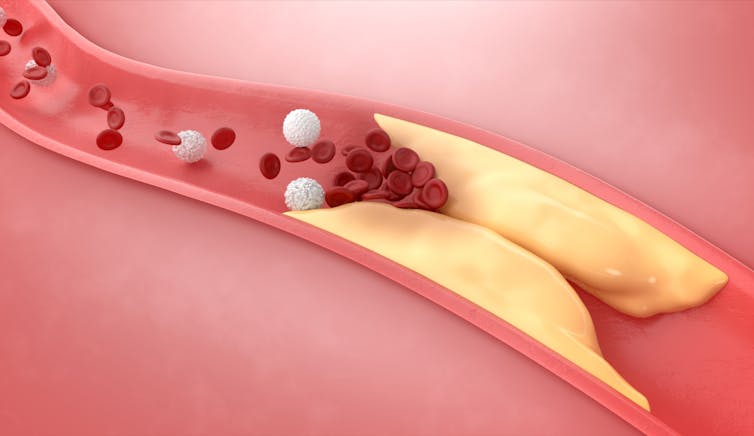
The first type is low-density lipoprotein or LDL cholesterol. This is often referred to as the “bad” cholesterol because it causes fat to collect in the arteries as plaques. This makes it harder for blood to pump throughout the body, leading to greater risk of a heart attack or stroke.

The second type is high-density lipoprotein (HDL) cholesterol — often referred to as “good” cholesterol.

HDL cholesterol has two key roles in the body. It removes excess bad cholesterol from the tissues and arteries and returns it to the liver so it can be removed from the body. HDL cholesterol also protects the artery walls so there’s less risk of a blockage forming.

Boosting HDL

The ratio of LDL to HDL in a person’s body is related to their cardiovascular disease risk. If you have a higher ratio of HDL to LDL, your cardiovascular disease risk will be lower. But if you have a lower ratio of HDL to LDL, you’ll have a higher risk of cardiovascular disease.

Fortunately, it’s possible to shift this ratio and increase HDL cholesterol levels. This can be achieved by exercising, quitting smoking and managing your weight, for example.

Certain foods can also improve HDL ratios.

The main way that diet helps boost HDL ratios is by reducing inflammation. Inflammation is a key problem in cardiovascular disease.

Inflammation makes it possible for blood platelets to stick together in our arteries at a much higher rate. This makes it difficult for the HDL cholesterol to do its job, which increases risk of blood clots forming and raises likelihood of heart disease.

A digital drawing depicting cholesterol plaques on the artery wall, blocking blood flow.
HDL helps prevent bad cholesterol from building up.
NPW-STUDIO/ Shutterstock

By eating anti-inflammatory foods, it makes it easier for HDL cholesterol to do its job of sweeping away excess LDL cholesterol. Here are four examples you can include in your diet:

1. Fruits and vegetables

Research shows that people who have diets high in fruits and vegetables have higher HDL cholesterol levels and a better total cholesterol ratio. They also have lower blood pressure and healthier blood sugar levels, all of which can be supportive to heart health.

Fruits and vegetables exert their positive effects by trapping free radicals.

Free radicals are highly reactive, unstable molecules that can cause damage to cells and trigger inflammation in the body. By preventing inflammation, this makes it possible for HDL cholesterol to continue doing its job of removing bad cholesterol and protecting the arteries.

2. Oily fish and olive oil

Oily fish (such as salmon, sardines and tuna) and olive oil are rich in a type of fat called “polar lipids”.

These lipids are able to reach the bloodstream more quickly compared to other types of fat, allowing them to reduce inflammation and prevent the aggregation of platelets more effectively.

Cell and animal studies have shown that a diet rich in the polar lipids from oily fish is effective in preventing blood clots from forming. This effect can help cholesterol ratios stay balanced, meaning cardiovascular disease risk is lower.

3. Fermented dairy

Fermented dairy products, such as yoghurt, kefir and cheese, can all have a positive effect on HDL levels.

During fermentation, the lipids are broken down into smaller compounds that have a greater anti-inflammatory effect than milk. They can also be metabolised faster by the body.

Fermented dairy products are also rich in polar lipids, which means that they can considerably reduce cardiovascular risk.

Research found that for every 20g of fermented dairy products people consumed each day, there was a modest reduction in cardiovascular disease risk.

4. Red wine

Finally, red wine is completely misunderstood. According to the latest research, moderate consumption of red wine (the equivalent of one to two small glasses per day) is linked with better HDL ratios.

Wine reduces inflammation when consumed in small quantities because it contains polar lipids. However, if wine intake is high, the negative, pro-inflammatory effect of alcohol outstrips the positive effect of the lipids.

This is why it’s important only to drink small amounts and in moderation – otherwise, alcohol can have many negative effects on the body. Indeed, the World Health Organization has said there is no safe level of alcohol consumption as the negatives, such as increased cancer risk even from light drinking, outweigh any positives.

Non-alcoholic wines also contain polar lipids. Research suggests that polar lipid extracts from non-alcoholic beverages have comparable benefits on preventing the formation of blood clots as their alcoholic counterparts.

Inflammation is a key factor in heart disease. By eating foods that reduce inflammation in the body, it’s possible to look after your heart health and lower cardiovascular disease by improving the ratio of HDL to LDL in the body.

The Conversation

Ioannis Zabetakis does not work for, consult, own shares in or receive funding from any company or organisation that would benefit from this article, and has disclosed no relevant affiliations beyond their academic appointment.

ref. Four foods that can help improve your cholesterol and boost heart health – https://theconversation.com/four-foods-that-can-help-improve-your-cholesterol-and-boost-heart-health-274583

Votes at 16: the UK government has a fight on its hands – but are politicians all missing the point?

Source: The Conversation – UK – By Andrew Mycock, Chief Policy Fellow, University of Leeds

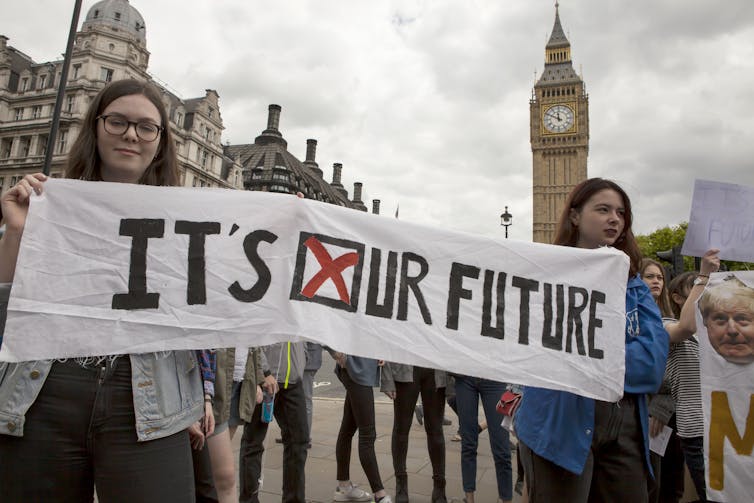
A 2016 protest in London calling for votes at 16. Ms Jane Campbell/Shutterstock

The UK government has unveiled plans to lower the voting age to 16 for general elections, heralding the delivery of a Labour pledge first made in 2010.

The intent of the UK government’s electoral reform is understandable. Faith in politicians and democracy is at an all time low. Keir Starmer’s election promise to restore trust in politics has been compromised by recent events. The introduction of the bill offers an opportunity to refresh Labour’s election promise and respond to public support for reforming the electoral system.

The three-decade campaign for the universal lowering of the voting age to 16 might not have a smooth passage through parliament, though. Labour’s support for the policy has proven lukewarm and sporadic, reflecting concerns over public opinion and also division on the policy itself.

The public has long been resolute in its opposition to such a change. And while young people have, historically, proven largely supportive of votes at 16, recent survey evidence suggests they are evenly divided. Many say they feel “unprepared” for the responsibility of voting.

Some within an already divided parliamentary Labour party will question why the government is focusing on electoral reform.

The strength of opposition to the bill in parliament will be key both in determining the nature of its passage and public acceptance of votes at 16. The Conservatives and Reform both formally oppose voting age reform. The Conservatives claim Labour is “hopelessly confused on whether 16 year olds are adults or not”. For them and many other opponents, the age of maturity, adulthood, and therefore enfranchisement still coalesce at 18.

But depicting 16 and 17-year-olds as too immature and lacking sufficient cognitive development runs the risk of politically alienating young people and fracturing the cohesion of the electorate. As votes at 16 advocates note, voting rights are not denied or taken away from those who have disabilities or deteriorating cognitive abilities (particularly in old age) which might limit their cognition, competency and comprehension.

The Conservatives also appear just as confused as they accuse Labour of being on this point. They empowered both the Scottish and Welsh governments to lower the voting age. And they allowed under-18s to choose three prime ministers in the past decade via party membership ballots.

There’s contradiction in Reform’s position too – and its actions from here will be interesting to watch. Recent polling indicates a growing number of young men support Reform above all other parties, and in more numbers than their older male counterparts. The party may have been opposed up until now, but a pragmatic U-turn may well be on the horizon. That in turn will likely defuse some of the political and public opposition to the bill.

Quantity over quality?

Ultimately, votes at 16 is likely to be passed into law due to Labour’s huge parliamentary majority. But how the government and supporters of the change decide to frame its success will be important. A focus on the numbers of young people signing on the electoral register and voting will tell us much about the quantity of participation but not its quality.

Evidence from Scotland indicates that the modest increases in voting of 16-to-17-year-olds when compared with 18-to-24-year-olds does not translate into more extensive political engagement. Lowering the age of enfranchisement has had no significant impact on the low numbers of young people who join political parties, trade unions, or who participate in their communities.

In Scotland, votes at 16 has had little impact on how party politics is conducted or how politicians engage and represent young people. Most young people do not believe politicians prioritise their needs. A growing number express disillusionment with democracy.

Lowering the voting age to 16 is, on its own, no panacea to the complex causes of youth political disengagement and is unlikely to strengthen the resilience of democracy in the UK. The government’s bill also sets out plans to improve youth democratic education and make electoral registration easier. Such measures will not create the drivers for young people to vote or participate in party politics.

Indeed, there is a collective failure of political parties of all hues to accept that they are in part responsible for the current youth democratic crisis. They need to look past a potentially divisive passage of votes at 16 in parliament and accept that now is the time to collectively improve the responsiveness of the current political system to younger voters and the public more widely.

The Conversation

Andrew Mycock has received funding from the Leverhulme Trust (2019-2021) in the past to support research into lowering the voting age.

ref. Votes at 16: the UK government has a fight on its hands – but are politicians all missing the point? – https://theconversation.com/votes-at-16-the-uk-government-has-a-fight-on-its-hands-but-are-politicians-all-missing-the-point-275476

Voting in supermarkets, bank cards as ID and £500,000 fines for breaking the rules – how British elections could be about to change

Source: The Conversation – UK – By Toby James, Professor of Politics and Public Policy, University of East Anglia


Shutterstock/ Zeynep Demir Aslim

Elections need periodic reform to ensure that they have integrity and fulfil their role in line with the times, and the British government has unveiled its proposals for doing just that.

Britain was widely regarded as one of the pioneers of such democratic electoral reforms. In the late 19th and early 20th century, reform acts extended the franchise to enable more people to vote. Anti-corruption and bribery rules prevented election candidates offering food and liquor for votes.

However, new threats have emerged to elections which means that further changes are needed to ensure that elections fully empower people. Threats can come from from overseas more easily these days – disinformation can spread online and algorithms can be manipulated to support candidates and parties. Money is more easily siphoned around the world into campaigns war chests.

What’s more, millions of people stayed at home at the 2024 general election – which recorded the lowest turnout in years. An estimated 7 million to 8 million people are not on the electoral register.

The weight of these challenges means that UK elections are therefore in urgent need of reform. The government’s representation of the people bill is the legislation that the government is proposing to improve the situation.

What will change?

The biggest proposed change is to allow around 1.7 million 16- and 17-year-olds to vote. This is historic. Governments come and go but changing who can vote in elections will be a lasting part of the political landscape – and something a future government will find difficult to repeal.

When it comes to new threats to electoral integrity, the government is making a change that will probably be welcomed by the public – the move towards automatic voter registration. Surveys show people support the idea idea and it will see many citizens added to the electoral roll without them having to do anything.

It’s a time saver but it also means people won’t end up being turned away on election day because they’ve not managed to register properly. Automatic and assisted forms of voter registration have been shown to increase the accuracy and completeness of the register. Like votes at 16, this will benefit young people most, as only 16% of 16-17s are registered.

Young people holding a sign reading 'it's our future' in front of the Houses of Parliament.
Young campaigners have won the right to vote.
Shutterstock/Ms Jane Campbell

The relatively new – and widely criticised – rules on voter ID are also being changed, arguably for the better. People will now be able to use their bank cards as ID rather than being expected to produce photo ID. A change of this kind should make voting much easier. The rules on photo ID have been shown to be discriminatory and a barrier to voting.

There will also be a pilot to try out voting at supermarkets and train stations rather than only at traditional polling stations.

There are also plans to strengthen the rules around political donations. The Electoral Commission will have greater powers to enforce rules and issue sanctions to those who break them. Powers are proposed to allow the commission to issue fines of up to £500,000 when people break the rules – a significant increase on the current £20,000 limit. There will also be tougher sentences for people convicted of intimidation during the electoral period.

What’s missing?

Despite the changes being proposed, the government has failed to address some key problems.

The rules on political finance, in particular, may not go far enough. Companies can currently make donations to political parties, provided that they operate in some way in the UK. The Electoral Commission has warned that foreign money could still be channelled through UK companies into political parties – unless loopholes are closed.

The government has also not taken steps to restore the independence of the Electoral Commission itself, a body which plays a key role in overseeing elections and referendums. It was stripped of its independence by Boris Johnson, in contrast to international best practice. But the bill promises no action on this.

And maybe foremost, Britain’s age-old first-past-the-post electoral system remains untouched. This may not be a surprise – few parties tinker with the rules that bring them to power. But the era of two-party politics that justified first-past-the-post has now gone and support for change is high.

The bill will shortly receive scrutiny within parliament, and detail will need to be fleshed out on how electoral officials implement the changes. These will provide opportunities to further strengthen the bill. But as it currently stands, its passing looks set to take its place as a historic moment for strengthening UK elections.

The Conversation

Toby James has previously received funding from the AHRC, ESRC, Joseph Rowntree Reform Trust, British Academy, Leverhulme Trust, Electoral Commission, Nuffield Foundation, the McDougall Trust, Unlock Democracy, International IDEA and the Canadian SSHRC.

ref. Voting in supermarkets, bank cards as ID and £500,000 fines for breaking the rules – how British elections could be about to change – https://theconversation.com/voting-in-supermarkets-bank-cards-as-id-and-500-000-fines-for-breaking-the-rules-how-british-elections-could-be-about-to-change-275885