How to stay positive when it never stops raining – a psychologist offers tips

Source: The Conversation – UK – By Luke Hodson, Assistant Professor, Department of Psychology, University of Warwick
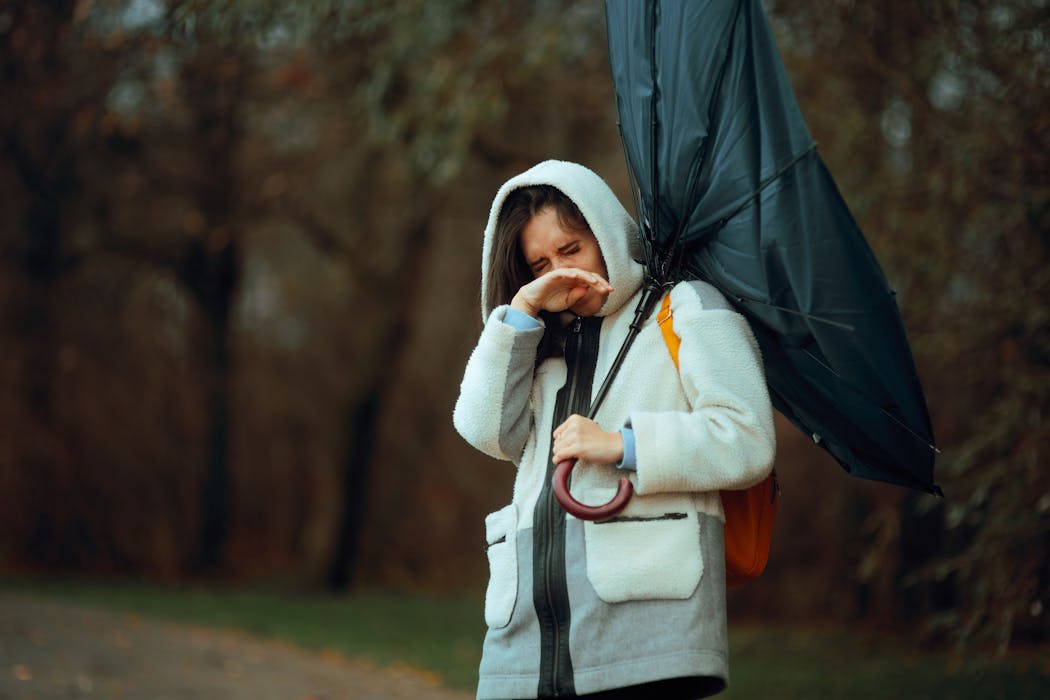
Nicoleta Ionescu/Shutterstock

The short, dark days of winter are never easy to get through. But for many people in the UK and across Europe, this winter has felt particularly gloomy because of the seemingly endless rain.

If you live in some parts of south-west England or the Welsh borders, at the time of writing it has rained every single day this year. Aberdeen, meanwhile, has just seen its first half-hour of sunshine for three weeks – its longest sunless period since records began.

The psychological impact of these dark, damp days can be significant. Seasonal affective disorder (SAD) affects around three in every 100 people in the UK, is more common in women, and is associated with symptoms such as loss of energy, weight gain and a desire to sleep more. We often become more fatigued in the cold and dark, making some of us feel like we just want to hunker down and wait for spring.

Endless rain makes things even harder – not least by adding an extra obstacle to going outside. There is lots of evidence about the psychological benefits of spending time in natural light and green spaces.

But we still need to get on with life despite the weather. With that in mind, my field of positive psychology – the exploration of wellbeing, flourishing and optimal functioning – has a few suggestions that might help.

I don’t want to trivialise the distress that some people feel at this time of year – nor the wider concerns about what all this rain means for climate change. But there are small things you can do to reframe how you view these endlessly dank days. We can’t change the weather, but we can try to change how it makes us feel.

Find small reasons for hope

There is an array of research showing the positive effects of hope. It can boost physical, psychological and social wellbeing, improve our ability to cope with stress, and even enhance cognitive flexibility. One way of seeking to lift your mood could be to think of ways to make you feel hopeful – not despite but because of the rainy weather.

For example, think of something that is really nice to do after you’ve been out in the rain. A long, hot bath, for example, or drying out in front of a wood fire in the pub with friends. Or curling up on the sofa with a hot chocolate and your damp-but-devoted dog.

The next time you need to go outside in the rain, set up a scenario like this that gives you something to look forward to. A moment of hope can go some way to helping you view the rain in a different, less defeatist way.

Set goals, fulfil, reflect

Another way of reframing things more positively is to set and fulfil small goals – and then, importantly, take time to reflect on these achievements. A good example at this time of year could be a home improvement you’ve been putting off, or arranging to see a friend you’ve not seen for a long time.

My research with colleagues has demonstrated the efficacy of goal setting and reflection on both wellbeing and cognitive outcomes. We found the important thing is not what the goals are, but the process of reflecting on your actions and their positive impact.

The broaden-and-build theory of positive emotions suggests these reflections can help expand the way we think and behave. This in turn helps build our social, cognitive and emotional resources to better help us survive when times are tough – for instance, during a period of awful winter weather.

What we are aiming for here is to create a more intrinsic motivation for living life – in other words, being motivated by our own values, strengths and ideas. You can start today, by taking a few moments to pat yourself on your back after you’ve managed to get some important things done despite the awful weather.

Britain’s record-breaking levels of rain. Video: Sky News.

Be grateful to nature

Gratitude probably conjures a specific feeling or concept in your mind. While quite difficult to define, it is generally considered to be the recognition that you have benefited from the action of another person.

Feeling grateful has a consistent impact on our ability to handle small daily hassles, and ameliorate the effect they can have on our wellbeing. Gratitude practices can be very quick – small “count your blessings” activities such as listing three things you are grateful for each day. And for many people, they are really effective.

On a more philosophical level, we can be grateful for things or concepts too – for example, nature. Recent evidence has shown that grateful-to-nature reflections can be just as effective at boosting wellbeing as other reflections of gratitude – in part by increasing your feelings of connection to nature. Even in a downpour, there are still many beautiful things to appreciate in the natural world around us, wherever you live.

Poor weather can also evoke powerful feelings of nostalgia, such as fond or sentimental reflections on past experiences – like a rainy summer holiday where everyone was stuck inside playing board games together. These have been found to be comforting in the face of adverse weather. Nostalgic reflections can enhance your tolerance for environmental discomfort, such as enduring the cold.

The ideas I’m describing here are deliberately small and may even sound trivial. Yet the science of positive psychology shows small, everyday tweaks to a routine can be really effective in fighting off the gloom that many of us are currently feeling. But a little bit of sunshine would be welcome too.

The Conversation

Luke Hodson does not work for, consult, own shares in or receive funding from any company or organisation that would benefit from this article, and has disclosed no relevant affiliations beyond their academic appointment.

ref. How to stay positive when it never stops raining – a psychologist offers tips – https://theconversation.com/how-to-stay-positive-when-it-never-stops-raining-a-psychologist-offers-tips-275894

Is this love? Don’t be Heathcliff and Cathy – what you should watch, read and play this week

Source: The Conversation – UK – By Naomi Joseph, Arts + Culture Editor, The Conversation

Emerald Fennell’s Wuthering Heights is a loose (very loose) adaptation of Emily Brontë’s novel. The film is, as the director has attested, the intense, “unhinged”, gothic story she remembers reading as a 14-year-old. As such, it is full of imagined passages and heightened romance and violence. It’s truly Fennellian in its excess – if you’ve seen Saltburn, her story of class envy, you know what that means (bathtub scene, grave scene, so many other scenes).

This new film version is not alone in marketing the story of star-crossed lovers as “the greatest love story of all time”. However, if you’ve ever read the book you know that it’s not really the sort of love anyone should strive for. It’s cruel and abusive. Heathcliff is not some broody prince but a violent tyrant. Cathy is spoiled and manipulative. Everyone around them suffers in the pair’s maddened need for each other. If you’re looking for love, this is perhaps not one you would want to emulate.

So this Valentines day we bring you recommendations that counter some of the worst traits found in Wuthering Heights.

Do you remember Wuthering Heights as romantic? Let us know in the comments what struck you most of Emily Brontë’s books the first time you read it.

The first recommendation, if you find yourself in need of some Wuthering Heights this Valentine’s day, is the Andrea Arnold film from 2011. This is a beautiful adaptation that stays true to the darkness and uncontrollable wildness of Brontë’s novel. The child actors are particularly incandescent and little Cathy (Shannon Beer) describing her love for Heathcliff is a beautiful piece of acting.

Wuthering Heights by Andrea Arnold is available on Disney+


Read more:
Was Emily Brontё’s Heathcliff black?


Playfulness

The romance in Wuthering Heights is dark and stormy, unnervingly intense and completely serious. It sounds like there are comic moments in Fennell’s film (intentional or not) but adult Cathy and Heathcliff could do with being a bit more playful with each other. The 1st-century Roman poet, Ovid, believed that play was important to attracting and keeping a lover. In his manual The Art of Love, one of his top tips is to play boardgames, and, importantly, play to lose.

Roman board game researchers Tim Penn and Summer Courts explain how the Romans used play to flirt. They also reveal how such play brought them together – the two became close over the course of their research and ended up married!

The Art of Love by Ovid


Read more:
Fall in love Roman-style by playing board games


If you’d like to play a game to foster romance this Valentines then we recommend you try out one of these five short game poems. These are small video games that only take a few minutes to play and each captures a feeling, a thought, or a fleeting moment.


Read more:
These five short video games work like poems – and they’re ideal for Valentine’s Day


Swoonworthy romance and repentant grief

If you want more of a fantasy view of love from the past – love that is more pure-hearted and less toxic – then watch the latest season of Bridgerton. This is the sort of swoonworthy, slightly silly romance we can go for. This season we see an upstairs-downstairs romance blossom and questions over class, power and consent explored. There is as much sex here as Fennel has injected into her Wuthering Heights, but it comes accompanied with a lot less horror.

This season’s couple meet at a masked ball; Meg Kobza, an expert in Regency social life, writes about three true love stories that began at such soirees.

Bridgerton is on Netflix now


Read more:
Bridgerton: three true tales of love at first sight at Regency masquerade balls


The thing about Wuthering Heights is that most people, including Fennell it seems, focus on the brief period of romance between adult Heathcliff and Cathy. The rest of the book follows him as he is consumed by grief after she dies, waging a life-long campaign of violence on himself and all around him. If you’re looking for an alternative tale of a man driven to madness and revenge by grief, then we recommend seeing the new adaptation of Hamlet starring Riz Ahmed.

Set in an uber-wealthy south-Asian community in modern-day London, Hamlet is the heir to a vast property developer empire. Greed and dodgy business deals abound in this adaptation by Aneil Karia. There are some clever twists on the well-known tale that Shakespeare adaptation expert Elizabeth Schafer found fascinating. However, unlike Fennell’s Wuthering Heights, it doesn’t cleave too far from Shakespeare’s original.

Hamlet is in cinemas now


Looking for something good? Cut through the noise with a carefully curated selection of the latest releases, live events and exhibitions, straight to your inbox every fortnight, on Fridays. Sign up here.


Read more:
Riz Ahmed’s British south-Asian Hamlet is a moody tale of grief and shady family business


The Conversation

ref. Is this love? Don’t be Heathcliff and Cathy – what you should watch, read and play this week – https://theconversation.com/is-this-love-dont-be-heathcliff-and-cathy-what-you-should-watch-read-and-play-this-week-275855

The five most romantic paintings of all time – according to art historians

Source: The Conversation – UK – By Yashaswini Chandra, Lecturer in South Asian Art History, University of Edinburgh

Bank Holiday by William Strang (1912). Tate

For Valentine’s Day, we asked five of our academic experts to tell us about the most romantic artwork they’ve ever encountered. From first dates to sleeping lovers, these are the paintings that have touched their hearts.

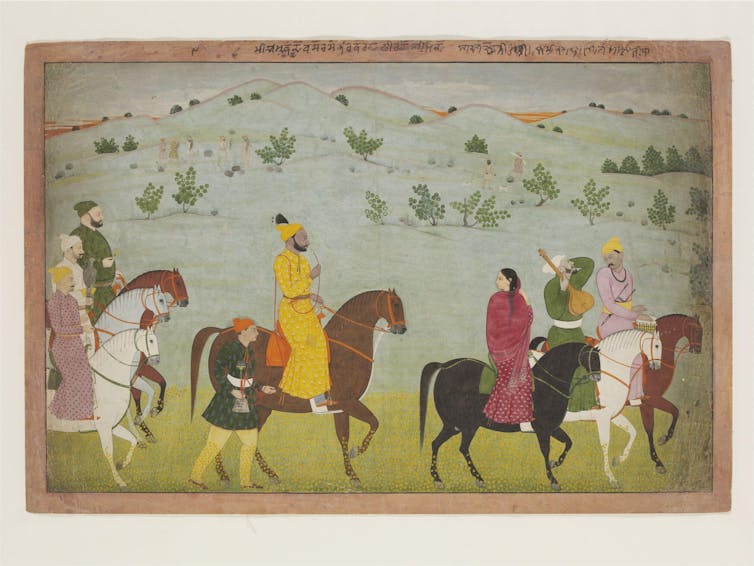
1. A Leisurely Ride by Nainsukh (circa 1740-1745)

At the heart of Nainsukh’s A Leisurely Ride, a court painting produced in the Pahari or Indian hill state of Jasrota in the mid-18th century, is an exchange of gaze which transfixes the moment.

Painting showing men and women riding horses in a rural location
A Leisurely Ride by Nainsukh (circa 1740-1745).
V&A South Kensington, CC BY-NC

In the painting, horses of varied hues stride across an Indian landscape. It comprises a mustard field against the backdrop of the smoky-blue rolling hills of Jasrota. The seven riders include a prince, Mian Mukund Dev. There’s a woman – a singer-dancer called Amal – and two musicians, who are at the front of the group and perform on the go. An escort of three nobles, one of whom holds a hunting bird, makes up the rear.

In the centre, the prince and his paramour exchange glances after she has turned around in the saddle to look at him as he follows her. He holds her gaze even as he coolly smokes a hookah, the base of which is carried by the bearer who walks alongside his horse – and time stands still in the hills.

Yashaswini Chandra is a lecturer in South Asian art history

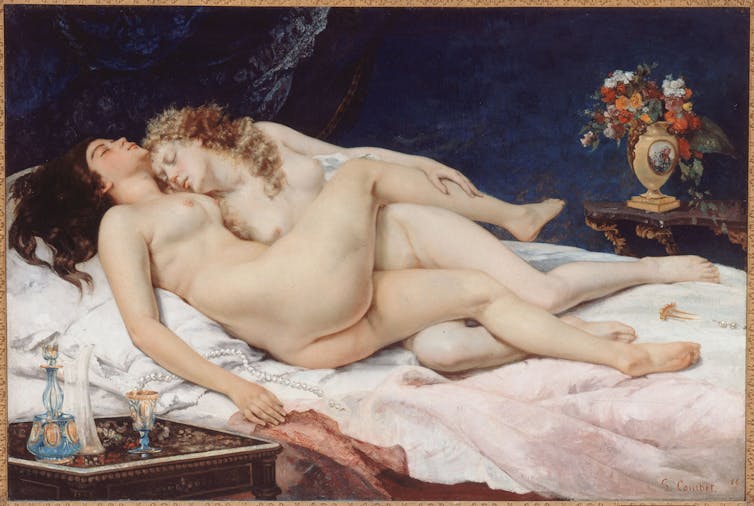
2. Le Sommeil by Gustave Courbet (1866)

I first saw Le Sommeil (The Sleepers) in the Petit Palais museum in Paris in 2011. I was at the end of a long relationship and the erotic tenderness of this painting really spoke to me.

Painting of two nude women sleeping in an embrace
Le Sommeil by Gustave Courbet (1866).
Petit Palais

The redhead was Joanna Hiffernan, an Irish artist, model and mistress of Courbet. The brunette was Constance Quéniaux, the mistress of the man who commissioned the painting, the Ottoman ambassador to France, Khalil Bey.

Despite Courbet’s reputation as a realist painter, it is not known if the two women depicted were lovers. But with its discarded clothes, broken pearl necklace and disordered bed, Le Sommeil has usually been read as a sexually charged challenge to 19th-century morality.

No wilting flowers to hint at the transgressive nature of queer love here! Yet, as the title suggests, this painting is not about the passion hinted at, but the gentle, comforting embrace of these two women in the intimacy of sleep.

Pippa Catterall is a professor of history and policy

3. Rinaldo and Armida by Nicolas Poussin (circa 1628)

The French painter Nicolas Poussin has a reputation for being a very high-minded and austere artist. Early on in his career, however, he painted many mythological and literary subjects in a sumptuous, colourful style inspired by 16th-century Venetian painting.

Painting of a sleeping soldier and a woman reaching for him, while her arm is grasped by a cherub
Rinaldo and Armida by Nicolas Poussin (circa 1630).
Dulwich Picture Gallery

One of these early paintings depicts a scene from a Renaissance epic, Jerusalem Delivered, by the Italian poet Torquato Tasso, first published in 1581. The wicked sorceress Armida plans to kill the noble warrior Rinaldo in his sleep, but, at the sight of his beauty, she falls instantly in love and drops her dagger.

The sudden rush of love that overwhelms Armida is brilliantly represented in the form of a winged putto or cupid who seizes her arm. The startled expression on her face and the tender way that her hand brushes Rinaldo’s are also eloquent of her unexpected feelings for him. It’s the vivid way that it conveys a sense of love as an irresistible force that makes this painting so romantic.

Emma Barker is a senior lecturer in art history

4. Medallion (YouWe) by Gluck (1937)

The English artist known as Gluck deliberately adopted a gender-neutral name, rejecting conventional labels and societal expectations of gender. Open about their relationships with women in England’s high society, Gluck’s life and work challenged social norms at a time when representations of lesbianism were heavily censored.

In 1936, Gluck fell passionately in love with the playwright Nesta Obermer and became utterly convinced of their shared future. Gluck went so far as to destroy letters, photographs and paintings associated with previous lovers. The couple exchanged rings, and to commemorate this symbolic union the artist painted Medallion (1937), a double portrait in which the figures appear almost fused as one.

Gluck occupies the foreground, identifiable by their distinctive cropped hair, while Nesta rests just behind, cheek to cheek. Their gaze is cast into the distance, emphasising private introspection. Measuring just over 30x35cm, the work’s scale and its conjoined subtitle, YouWe, reinforce its intimacy. Conceived as a private object and kept in Gluck’s studio rather than publicly exhibited, Medallion endures as a tender and iconic expression of love and queer desire.

Daniel Fountain is a senior lecturer in art history and visual culture

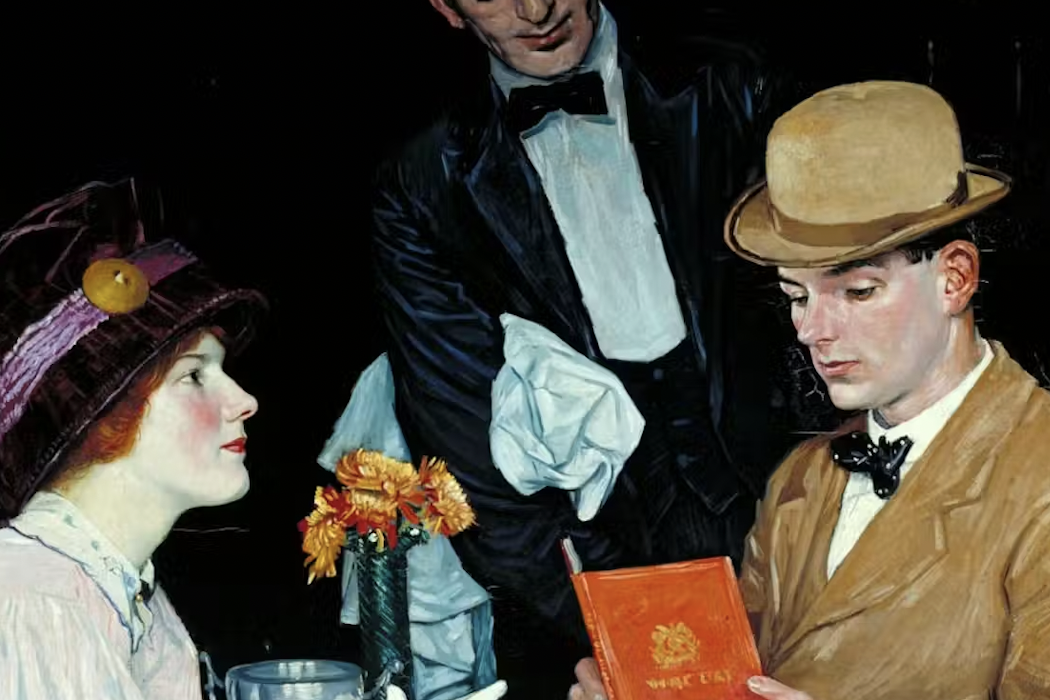
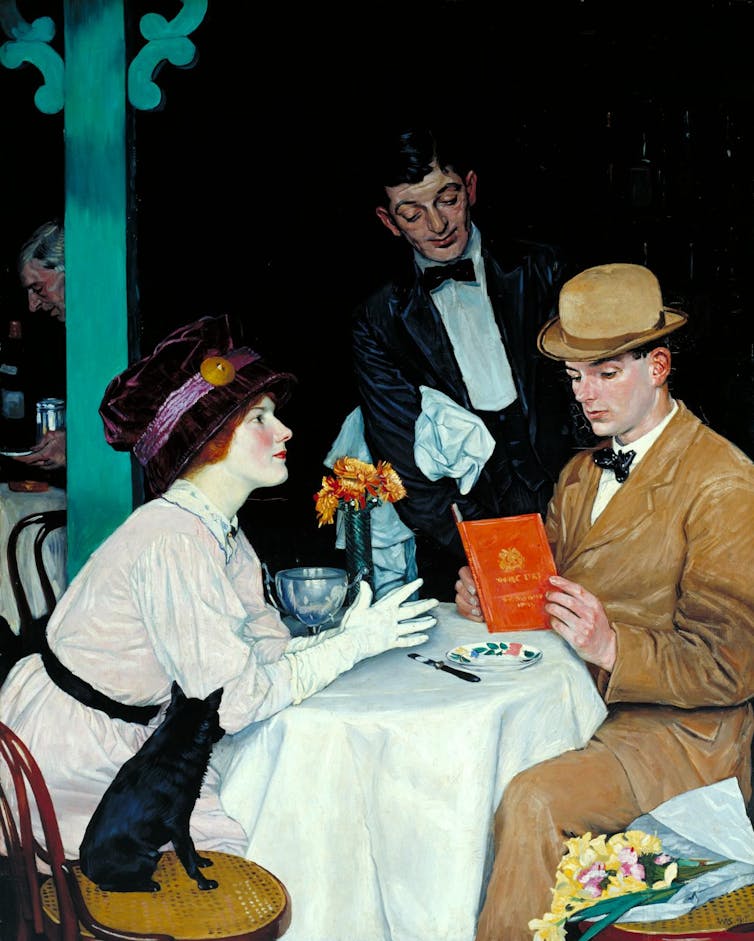
5. Bank Holiday by William Strang (1912)

The Scottish painter William Strang’s Bank Holiday, in the Tate Britain collection, is not obviously brimming with passionate adventure. But it has stuck in my mind as a touchingly realistic depiction of the slight social awkwardness of courtship.

Painting of a man and woman at a restaurant table
Bank Holiday by William Strang (1912).
Tate

The nice-looking couple in their best clothes are probably not yet married, while the bouquet and moment of ordering suggest hope and promise rather than settled familiarity. Although freighted with class and gender conventions, there is evident respect and esteem between them. The woman’s eyes wander, more in mild discomfiture than boredom, when their close conversation is interrupted by the waiter. However, she still leans attentively forward with her hands towards her companion, with the cat-like dog (often an artistic symbol of fidelity and sometimes desire) by her side.

Love and companionship take patience and learning how to spend time together. One only wonders how these two would have fared through the first world war that came two years later.

Marius Kwint is a reader in visual culture

What is your favourite romantic painting of all time? Let us know in the comments below


Looking for something good? Cut through the noise with a carefully curated selection of the latest releases, live events and exhibitions, straight to your inbox every fortnight, on Fridays. Sign up here.


The Conversation

The authors do not work for, consult, own shares in or receive funding from any company or organisation that would benefit from this article, and have disclosed no relevant affiliations beyond their academic appointment.

ref. The five most romantic paintings of all time – according to art historians – https://theconversation.com/the-five-most-romantic-paintings-of-all-time-according-to-art-historians-275374

How are Olympic host cities chosen?

Source: The Conversation – UK – By Laura Donnellan, Lecturer in Law , University of Limerick

For the first time in Olympic history, two cities are jointly hosting the Games: Cortina d’Ampezzo, a pretty ski resort in Italy’s spectacular Dolomites, and Milan, the country’s second largest city, 410km away. This will be Cortina’s second time hosting the Winter Games, after its successful event 70 years ago in 1956. It will be the first time Milan has ever hosted the Games. But how are host cities actually chosen and who is eligible?

Initially there were six other cities in the running: Stockholm-Åre, Sweden; Calgary, Canada; Graz, Austria; Erzurum, Turkey; Sapporo, Japan; and Sion, Switzerland. In June 2019, at the 134th International Olympic Committee (IOC) Session in Lausanne, IOC members voted to elect Milan-Cortina as the host cities for the 2026 Winter Games. The two were declared the winning bid with 47 votes and runner up Stockholm-Åre received 34 votes.

As part of its Agenda 2020 reforms in 2014, the IOC replaced its traditional system of cities tendering bids with a new approach based on targeted invitations to host the 2024 Games. Before these reforms, the bidding system was highly competitive as it involved numerous cities putting their names forward via their National Olympic Committees (NOCs).

Interested cities often incurred huge expense as they traversed through the various stages. At the end only one city was chosen and cities that were unsuccessful were discouraged from applying to host future Olympic events.

The current process is referred to as the “new norm” and has paved the way for the hosting of Games by more than one city as host. It was redefined broadly to include multiple cities, regions or countries, and reflects a shift toward a more collaborative, flexible and sustainability oriented approach.

The use of more than one city will decrease the need for expensive new facilities being built. In Cortina, the sites that hosted the 1956 Games will be repurposed for use once more as will be the facilities used in the Torino Winter Games from 2006.

Positive change

There has been a notable move from an overtly competitive system to one based on dialogue. The first step involves an informal exchange between the IOC, the NOC and the city or region. The second step is predicated on there being a positive response from the informal exchange and an interest from all involved to proceed.

This phase involves the “interested party” refining its Olympic project and it is not attached to a particular Game edition or year. The IOC offers bespoke support to the interested party and helps it develop its Games plan and vision. Central to that is the aim of maximising the benefits for local communities.

At this juncture, there is no written submission or legal or financial assurances in place. The IOC carries out a feasibility study and arranges for an independent human rights assessment by a specialist focusing on the city or region under consideration.

Once a positive feasibility study is received and assuming that the human rights evaluation has not raised any concerns, the process moves to the targeted dialogue phase with the designated “preferred hosts”.

The stage entails extensive consultation with the International Sports Federations, as well as the commissioning of independent reports assessing venue-related costs, levels of public support and potential environmental impacts.

The IOC’s executive board can put forward one or more preferred hosts for election. Preferred hosts are free to withdraw at this stage and return to the dialogue stage and interested parties are encouraged to continue to collaborate with the IOC for hosting a future Olympics. If required, the executive board holds a secret electronic ballot following a presentation by the preferred host(s). Upon election, the contract is immediately signed.

Learning from the past

The impetus for this new way of selecting hosts can be traced to the fallout from the Salt Lake City scandal, which exposed significant weaknesses in the bidding system in the late 1990s.

In November 1998, the IOC became embroiled in a scandal after it emerged that the daughter of an IOC member received a scholarship to attend a US university which was funded by the Salt Lake Organising Committee for the 2002 Winter Olympics. While it may have appeared somewhat innocuous, the reporting of the scholarship was just the beginning.

What followed was something no one could have envisaged. The United States Department of Justice carried out an investigation into allegations of bribery and corruption among IOC members. Prosecutors filed criminal charges – bribery, conspiracy and fraud – against two IOC members. However, both were acquitted after the judge concluded that the case was unfounded, noting the complete absence of criminal intent. The conduct of IOC officials also reached the US Congress, as I explore in my book, Sport and the Law.

In an interesting turn of events, Salt Lake City has been successful in its bid to host the XXVII Olympic Winter Games in 2034. It secured 83 votes in favour, and six against out of 89 valid votes .

In the wake of the reputational fallout from the Salt Lake City scandal, the IOC recognised the importance of good governance. The new bidding process represents a significant streamlining compared to previous models, and the transition can largely be viewed as a constructive step. It embraces sustainability, the reduction of costs for the host (largely supported by public funding), the importance of human rights, and maximising profits for the local economy.

For Milan-Cortina, hosting the Winter Games places the two cities on the global stage. As a historic dual pairing, Milan gets to showcase its role as a hub for ice sports. Aside from hosting the snow events, Cortina also gets to revisit its Olympic legacy 70 years after staging its first Winter Games.


Looking for something good? Cut through the noise with a carefully curated selection of the latest releases, live events and exhibitions, straight to your inbox every fortnight, on Fridays. Sign up here.


The Conversation

Laura Donnellan does not work for, consult, own shares in or receive funding from any company or organisation that would benefit from this article, and has disclosed no relevant affiliations beyond their academic appointment.

ref. How are Olympic host cities chosen? – https://theconversation.com/how-are-olympic-host-cities-chosen-275111

Trump insists Iran talks must continue, but military action is not off the table

Source: The Conversation – UK – By Christian Emery, Associate Professor in International Politics, UCL School of Slavonic and East European Studies, UCL

Israeli prime minister Benjamin Netanyahu’s trip to Washington on February 11 appears not to have achieved what many observers saw as its central purpose: to persuade Donald Trump to harden his demands on Iran to the point that negotiations between the countries fail. According to reports, Trump told Netanyahu he wanted talks with Iran to continue.

What will be concerning Netanyahu is that while he can probably rely on Trump to take a hard line on limiting Iran’s nuclear programme, it is less clear where his unpredictable ally stands on limiting Iran’s ballistic missile capabilities and ending its support for regional armed groups.

Trump had previously indicated that any deal with Iran had to include missiles. But more recently, he has suggested the US may be open to dropping this demand. On February 10, when asked by a reporter if an agreement with Iran would be acceptable if it only covers nuclear issues, Trump said: “Yeah, that would be acceptable, but the one thing and right up front, no nuclear weapons.”

This, as well as positive statements by US and Iranian officials about their brief indirect talks in Oman days earlier, will have spooked Israeli officials. Both Iran and Israel understand that it is missiles, not nuclear enrichment or even Iranian regional proxies, that underpin Iran’s increasingly shaky deterrence.

For the moment, Trump seems to think that a deal limited to the nuclear issue may be preferable to going to war to tackle everything else. Yet opponents of US military action, which include all of Washington’s Middle Eastern allies except Israel, should still be worried.

It is far from clear whether Iran will offer the kind of nuclear deal Trump would find acceptable, and Trump himself does not seem to know what else to do other than double down on military threats. That alone may scupper the talks.

Netanyahu is also a seasoned political operator who showed how adept he is at manoeuvring Trump into supporting military action in 2025, when the US joined Israel in striking Iranian nuclear facilities. And the current US military build-up in the Persian Gulf has now reached a point where that option is on the table.

Trump’s Iran policy

The uncertainty over whether Trump will strike Iran underscores how shallow his Iran policy is. He does not have a conventional, institutionalised policy apparatus of the kind the Obama administration relied upon to negotiate a deal to limit Iran’s nuclear programme in 2015.

Instead, Trump is pursuing indirect talks with Iran that are being overseen by two officials with no prior diplomatic experience. These two officials, Steve Witkoff and Jared Kushner, have simultaneously been tasked by Trump with ending the war between Russia and Ukraine.

Trump also seems undecided about whether any deal should focus narrowly on the nuclear issue or whether he should pursue something resembling a grand bargain. Nor has he articulated what he is prepared to offer Iran as part of a deal or how he would justify incentives such as sanctions relief for a regime that has just murdered thousands of its citizens in a brutal protest crackdown.

His approach to Iran is so ad hoc that it allows different groups with access to him, Netanyahu on one side and increasingly assertive regional states such as Saudi Arabia, Qatar and Turkey on the other, to influence key decisions. It was this latter group of Middle Eastern states that intervened recently to press Trump to proceed with talks when they threatened to collapse over Iran’s refusal to discuss issues beyond the nuclear file.

These states are cautioning Trump that US strikes might precipitate the collapse of the Iranian regime. However desirable that might seem, experience in Iraq, Libya and Syria suggests that state fragmentation, mass displacement, violence and regional destabilisation would be more likely than any orderly democratic transition.

And if strikes fall short of toppling the regime, even a weakened Iran could inflict serious economic and strategic damage on Gulf oil shipping and infrastructure.

Trump’s ad-hoc approach to diplomacy is in stark contrast to the Obama administration’s negotiations in 2015. Then, the International Atomic Energy Agency provided compliance verification and technical expertise, and the EU chaired the joint commission that oversaw the deal’s implementation.

The UN security council formalised the agreement under international law and established a mechanism for reimposing sanctions in the event of noncompliance. There was also a clear, if largely unfulfilled, strategic rationale related to Obama’s desire to reduce the US’s regional footprint and pivot towards Asia.

Trump’s approach is radically different. He withdrew the US from the nuclear deal in 2018 without a clear plan for what would replace it beyond something he could describe as better and attach his name to. He has no interest in brokering a multilateral agreement and does not appear to have a coherent set of demands or strategic aims that could anchor one.

A thin deal without substance, institutional anchoring and clear mechanisms for handling the inevitable disputes over sanctions relief and compliance is unlikely to endure, even if Trump can push the Iranians into signing it.

The Conversation

Christian Emery does not work for, consult, own shares in or receive funding from any company or organisation that would benefit from this article, and has disclosed no relevant affiliations beyond their academic appointment.

ref. Trump insists Iran talks must continue, but military action is not off the table – https://theconversation.com/trump-insists-iran-talks-must-continue-but-military-action-is-not-off-the-table-275857

Stop overthinking your Valentine’s gift – behavioural science says you’re probably worrying about the wrong thing

Source: The Conversation – UK – By Gaëlle Vallée-Tourangeau, Professor of Behavioural Science, Kingston University

Pixel-Shot/Shutterstock

Have you ever feared looking cheap or incompetent with your Valentine’s gift? Or perhaps you’ve dismissed the idea of exchanging gifts because you worried your partner would think it’s too corny.

If so, you’re not alone. But research suggests we may be missing out on an opportunity to strengthen our close relationships by rejecting this ritual entirely.

In romantic relationships, the act of giving serves as a fundamental signal of relationship value, where the investment of resources like time, effort and money communicates a partner’s level of commitment and care.

When choosing a Valentine’s gift for a loved one, we may find ourselves worrying about making the “wrong” choice and leaning towards a safe, albeit expensive option. Yet psychological research suggests we’re often worrying about the wrong thing when deciding on a gift. Expensive gifts aren’t inherently bad, but people systematically underestimate the appreciation our partner may feel when they receive a thoughtful gift, regardless of its polish.

A 2025 study documented what the researchers called the “who cares more” asymmetry. When giving gifts, we are good at judging the positive impact of a “good” gift, but we tend to catastrophise imperfection.

We are stricter judges of the gifts we offer than those we receive. And we overestimate the potential for a “bad” gift to make our partner upset or harm our relationship. This blindspot explains why we feel such intense pressure to avoid a “miss” when choosing a gift.

Paradoxically, this also explains why we might often miss out on choosing the better gift for our relationship. The problem arises when we default to expensive-but-generic options because they feel safer — the £200 trendy restaurant instead of that quirky pub from your third date.

Research reveals a pattern, called the gift gap. As givers, we often prioritise practical care when choosing gifts but as receivers, we prefer gifts that are “relational signalling”, that is, that convey thoughtfulness about the relationship.

This gift gap is exacerbated for gifts with sentimental value where thoughtfulness is communicated through an emotional attachment or nostalgia associated with the gift itself. Givers avoid them as risky because they require more vulnerability, yet recipients report appreciating them more.

There is some evidence to suggest that, while we are all susceptible to fall for the gift gap, women are more likely to overestimate the importance of selecting a good gift for their friends whereas men tend to overthink it when choosing a gift for their partner.

But here’s what makes this complicated: personalisation isn’t about price point. An expensive restaurant reservation can be deeply personal if it’s the place your partner has been hinting about for months, or where you first met. Fine chocolates can signal genuine care if you remembered their favourite artisan chocolatier from that trip to Paris.

This is where corny gifts gain their unexpected power, not as cheap replacements for thoughtful expensive gifts, but as evidence of a different kind of investment.

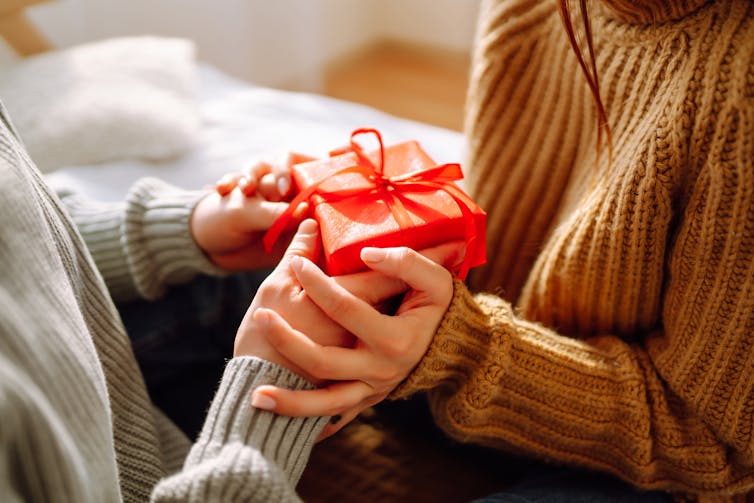
Two people exchanging a red gift box tied with ribbon.
Getting it right on Valentine’s day?
maxbelchenko/Shutterstock

These gifts work because they signal a receiver-focused sacrifice. They change how your partner sees you for the better. Perceiving your partner as willing to invest mental energy and to pay sustained attention to you is a better predictor of a relationship’s wellbeing than the actual gift quality.

A 2024 analysis of previous studies confirmed this pattern holds across relationship
types (such as friendships, romantic or work relationships) and occasions. The mismatch isn’t about money; it’s about vulnerability.

In fact, expensive gifts can backfire when they miss this personalisation mark. Suspiciously large expenditures can undermine appreciation of the gift when recipients question the giver’s motives or worry about reciprocation. For example, when asked to imagine receiving a wine bottle as a gift, participants in a 2024 study were more suspicious about the intent of the giver when the bottle was described as “expensive” rather than “typically priced”.

This study illustrates the principle of instrumentality, which is the psychological association between money and self-serving, transactional goals. Big, expensive presents can lead the recipient to look a gift horse in the mouth by questioning if the giver is trying to gain a specific favour or create a power imbalance.

It is important to note that the research evidence shows that expensive but unpersonal gifts are rarely a mark of a lack of effort on the giver’s part; rather the “gift gap” is most often a result of givers misunderstanding what recipients value and being stricter judges of their own performance than they would be of their partners.

So don’t worry about looking bad this Valentine, instead know it’s OK to risk looking a bit corny by showing you’ve genuinely been paying attention. In fact, that’s probably the best thing you can do for your relationship.

The Conversation

Gaëlle Vallée-Tourangeau does not work for, consult, own shares in or receive funding from any company or organisation that would benefit from this article, and has disclosed no relevant affiliations beyond their academic appointment.

ref. Stop overthinking your Valentine’s
gift – behavioural science says you’re probably worrying about the wrong thing – https://theconversation.com/stop-overthinking-your-valentines-gift-behavioural-science-says-youre-probably-worrying-about-the-wrong-thing-274579

3D scanning and shape analysis help archaeologists connect objects across space and time to recover their lost histories

Source: The Conversation – USA – By Carlo Rindi Nuzzolo, Postdoctoral Fellow in Archaeology, University of California, Los Angeles

The 3D scan of a mask fragment matches up with the scan of a different well-preserved mask. Carlo Rindi Nuzzolo

Today the world of Egyptology faces a silent crisis – not of looting, although that plays a part, but of disconnection. Walk into any major museum, from Copenhagen to California, and you see glass cases filled with what could be called orphaned artifacts: remarkable objects, often acquired in the 19th and early 20th century, that have been completely stripped of their histories. You can see what they are – a mummy’s painted foot case, a golden mask – but we have no idea where they came from. They are beautiful, but historically they are mute.

face of an ancient Egyptian mask
Sometimes an object can be mostly intact in a museum collection, but with few facts known about its origin.
Carlo Rindi Nuzzolo

Many objects entered museum collections at times when excavation and collecting practices were very different from today. In the past, excavated objects were often divided between institutions around the world, and display was prioritized over documentation. Over time, connections between pieces were lost. As a result, museums around the world hold remarkable artifacts whose backstories are thin, fragmentary or missing altogether.

Archaeologists like me working in the field today regularly uncover fragments: broken pieces of objects that once formed part of something larger. In some cases, those fragments may share the same underlying geometry with objects already held in museums. For example, a mummy’s foot case and a newly found shard may have been produced using the same mold, so they share a consistent three-dimensional form even if they are now separated by time, distance and absence of documentation.

Traditionally, evaluating whether a fragment matches up with a specific museum object has relied on visual judgment and incomplete records, rather than a quantitative comparison of shape.

This gap between excavation archaeology and museum collections is one of the most persistent challenges in the field. My research asks a simple question: Can we use digital tools to test whether fragments and museum objects might be related and, in doing so, recover parts of their histories that were previously inaccessible?

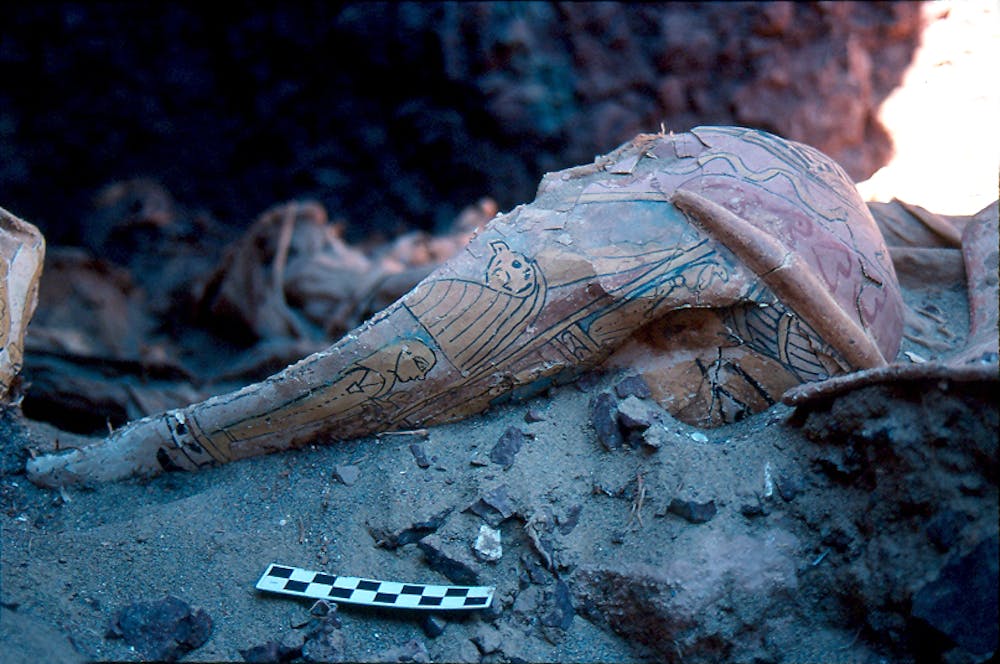
partial Egyptian funerary mask in dirt
Reuse over time and looting shifted and damaged the contents of an ancient Egyptian tomb. This displaced mummy mask could have a relationship to other artifacts already in museums around the world.
Carlo Rindi Nuzzolo

A long-standing problem in archaeology

Archaeology is, by nature, fragmentary. Objects break, decay or are disturbed over centuries. Traditionally, archaeologists have relied on visual inspection, stylistic comparison and written records to propose connections between fragments and objects. These approaches are still essential, but they also have limits. Visual judgments can be subjective, and archival documentation is often incomplete or inconsistent.

As a result, many potential links between excavated material and museum artifacts have remained speculative or have never been proposed at all. An object in a museum may appear complete yet still have a fragmented history. Without a way to test relationships systematically, fragments often remain sidelined as secondary or uninformative.

More than a century ago, the archaeologist Flinders Petrie argued that an object’s value lies not in its beauty but in the information it carries. An unremarkable fragment with a known history, he believed, could be more important than a finely made object without one. Today, digital tools are giving archaeologists new ways to put that idea into practice.

man, looking toward a laptop screen, holds small machine above an Egyptian mummy mask
Archaeologists can use handheld 3D scanners to noninvasively map objects in very fine detail.
Carlo Rindi Nuzzolo

Turning objects into data that can be compared

One of those tools is 3D scanning. Using portable scanners, it is now possible to capture the full surface geometry of an object with high precision, without touching or damaging it. Every curve, contour and variation in thickness can be recorded digitally.

Once scanned, an artifact becomes more than an image. It becomes data: a detailed digital model that can be rotated, measured, compared and analyzed. Importantly, this process is noninvasive. Fragile objects do not need to be moved, dismantled or physically tested.

For archaeologists and museum curators, this process opens up new possibilities. Objects held in different institutions, or fragments stored in excavation archives, can be compared digitally, even if the originals never leave their locations.

Scanning is only the first step. The real challenge lies in comparison. Rather than asking whether two pieces look similar, computational shape analysis allows researchers to ask a more precise question: How similar are their shapes?

In simple terms, the computer compares the geometry of two surfaces. It looks at curvature, thickness and spatial relationships, measuring how closely one surface matches another. It’s like comparing a kind of geometric fingerprint.

This approach doesn’t replace expert judgment. Instead, it supports it by providing measurable evidence that can confirm, refine or challenge visual impressions. It allows archaeologists to move from intuition to testing.

When a fragment meets a museum object

In a recent study published in the journal Heritage Science, I applied these methods to Graeco-Roman Egyptian funerary artifacts made of cartonnage, a composite material of linen, plaster and paint.

I created high-resolution 3D scans of excavated cartonnage fragments and compared them with an intact funerary mask held in a museum collection. The goal was not to reconstruct the object physically but to test whether their shapes were compatible in meaningful ways.

The comparison focused on three-dimensional geometry rather than decoration. This matters because cartonnage masks were often shaped in molds: If two objects were formed in the same mold, they can share highly consistent curvature and thickness patterns even when their painted surfaces differ.

3D image of a mask with a colorful overlay on part, including a color bar denoting how close a physical match points are
The mask reference surface is shown in gray, while the aligned fragment is colored based on the surface-to-surface distance at each point. Green indicates a good match with almost no distance. Cooler colors show areas where the fragment lies below the reference mask, and warmer colors show where it lies above.
Carlo Rindi Nuzzolo

I used a distance-mapping approach called deviation mapping. After aligning the 3D model of an excavated fragment to the corresponding region of the intact museum object, the algorithm calculates the distances between the two surfaces at thousands of points. Areas where the distances were consistently small are geometrically very similar. Areas with consistently larger distances indicate that the fragment’s shape diverges from the reference surface.

In this case, the surfaces corresponded closely, with differences generally of less than a millimeter – a level of agreement consistent with production in the same mold rather than a coincidental visual resemblance.

What mattered most was not a single “match” but the ability to evaluate relationships transparently and reproducibly, using shared digital evidence.

One of the most powerful aspects of this approach is that it works across distance. Researchers can easily share digital models, allowing them to compare fragments and objects held in different institutions, without transporting fragile artifacts. Excavation archives, museum collections and research institutions can begin to speak the same digital language, reconnecting evidence that has long been separated by geography and history.

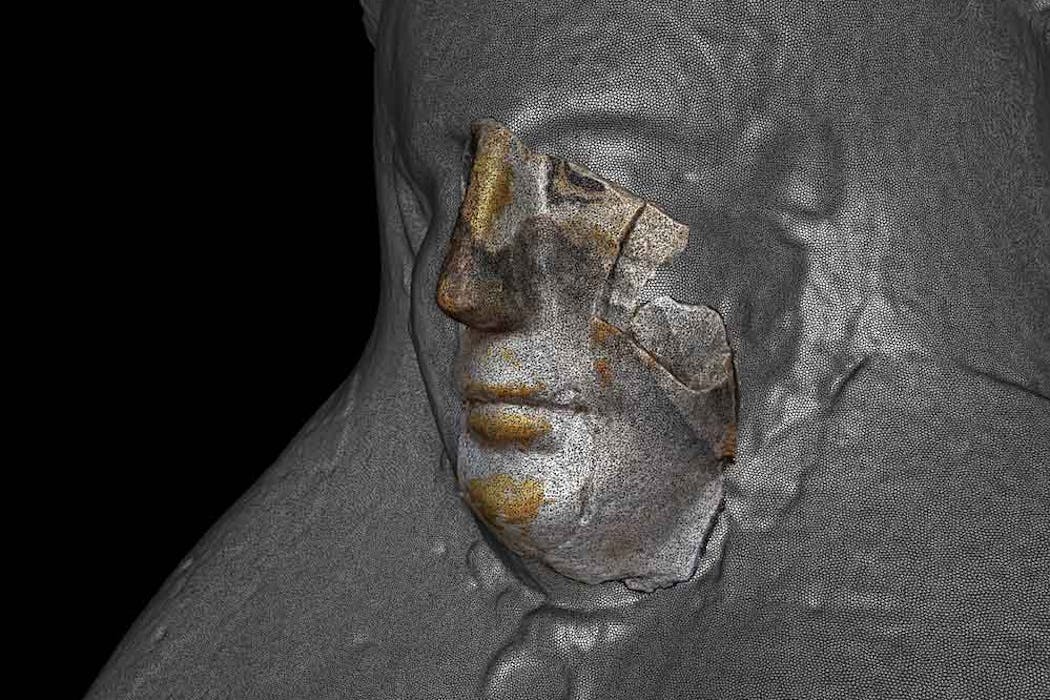
full face of Egyptian funerary mask in profile, pared with a scan focused on a fragment from the nose area
The mask fragment was a very close match to a complete mask, suggesting they were made in the same mold.
Carlo Rindi Nuzzolo

Digital tools are reshaping collections research

The work I describe here, part of my recent CRAFT Project, does not use artificial intelligence or machine learning. It relies on computer-based shape comparison and careful interpretation of metrological results. But it sits within a broader movement in heritage research.

Across the world, researchers and institutions are beginning to combine 3D scanning with machine learning to explore collections in different ways. For example, the EU-funded RePAIR project uses AI and robotics to help reassemble fragmented archaeological artifacts, while major institutions such as the Smithsonian are experimenting with AI-driven analysis of large 3D collections.

Together, these projects point to a future in which digital tools play an increasingly active role in how museums and archaeologists understand the past.

Digital archaeology is sometimes associated with flashy reconstructions or virtual displays. But its deeper value lies elsewhere. By giving fragments a new analytical role, digital methods allow archaeologists to recover relationships that were long thought irretrievably lost.

New digital methodologies are breathing new life into a long-standing archaeological principle: Modest fragments can carry outsized significance when they clarify an object’s origins and its lost context, finally allowing it to find its way back home.

The Conversation

The CRAFT Project (www.craft-project.net), led by Dr. Carlo Rindi Nuzzolo from 2022 to 2025, received research funding from the Marie Skłodowska-Curie Actions under the European Union’s Horizon 2020 Scheme.

ref. 3D scanning and shape analysis help archaeologists connect objects across space and time to recover their lost histories – https://theconversation.com/3d-scanning-and-shape-analysis-help-archaeologists-connect-objects-across-space-and-time-to-recover-their-lost-histories-273077

The intensity and perfectionism that drive Olympic athletes also put them at high risk for eating disorders

Source: The Conversation – USA (3) – By Emily Hemendinger, Assistant Professor of Psychiatry, University of Colorado Anschutz Medical Campus

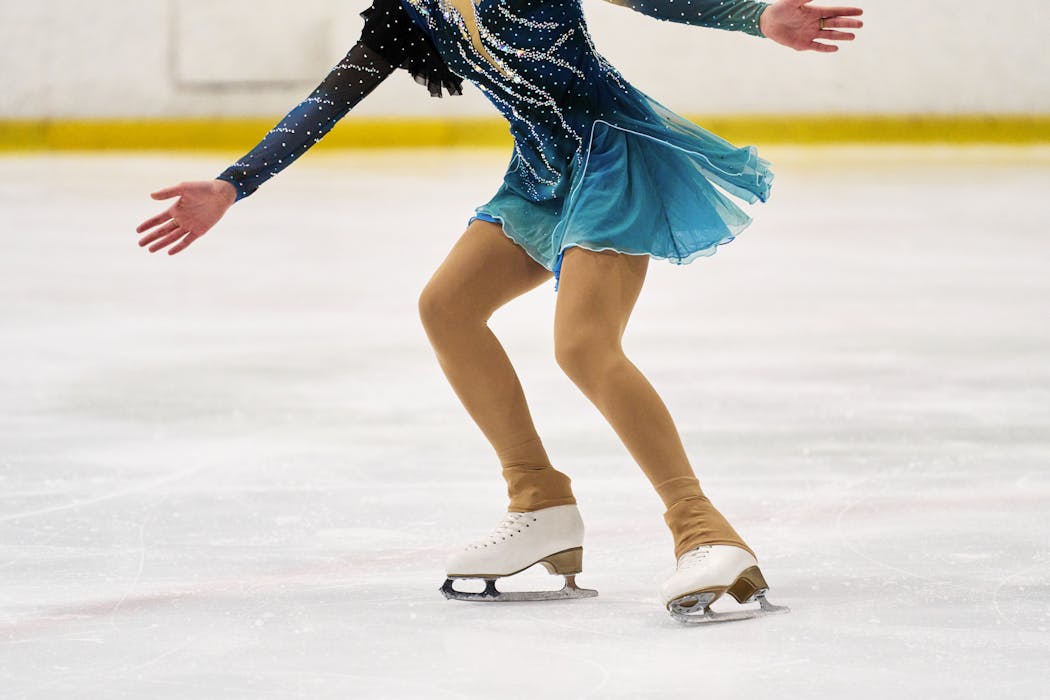
Several Olympic figure skaters have spoken publicly of their eating disorders in recent years. aire images/Moment via Getty Images

Olympians – athletes at the top of their sport and in prime health – are idolized and often viewed as superhuman. These athletes spend their lives focusing on building physical strength through rigorous training and diets that are honed to provide the nutrients necessary to excel at their sport.

However, athletes are at considerable risk for eating disorders and having an unhealthy relationship with food and their bodies.

The distinctive lifestyle of elite athletes can create a hotbed for eating disorders and disordered eating, meaning restrictive, compulsive, irregular or inflexible eating patterns, all of which can occur on a spectrum.

In 2019, 19% of male and 45% of female athletes worldwide experienced disordered eating behaviors, according to the International Olympic Committee. For perspective, in the general population, about 9% to 10% of Americans will have an eating disorder in their lifetime.

Several Winter Olympians, including cross-country skier Jessie Diggins, Alpine skier Alice Merryweather and figure skaters Gracie Gold, Adam Rippon and Yulia Lipnitskaya, have spoken about their experience with an eating disorder and disordered eating. Lipnitskaya, one of the youngest Winter Olympic gold medalists, retired at age 19 due to her battle with anorexia, a few short years after winning her 2014 team gold medal in Sochi, Russia.

As a specialist in eating disorders and anxiety, I regularly work with athletes and clients who experience eating disorders and disordered relationships with food and exercise. Based on my clinical and personal experience, I believe that the public can learn to better support athletes with eating disorders by considering the unique risk factors they face.

A young man, former figure skater Adam Rippon, stands with his hands in his pockets wearing an Olympics-themed sweater.
American figure skater and media personality Adam Rippon – shown here at the 2026 Olympics, where he is part of the NBC Sports coverage team – came out publicly in 2018 about the dangerous starvation diet he followed for years.
Vittorio Zunino Celotto/Getty Images Sport via Getty Images

How perfectionism makes athletes vulnerable

One contributing factor for disordered eating is an athlete’s temperament, since certain traits also show up as risk factors for eating disorders.

For example, an athlete’s constant desire to improve and their intense attention to detail can border on perfectionism and obsessiveness. An unrelenting focus on achievement and competitiveness are all associated with heightened risks of developing an eating disorder. Personality traits such as mental toughness, discipline, high pain tolerance and persistence may also lead to worsened eating disorder risk and behaviors in athletes.

These traits are also common risk factors for nonathletes but are often viewed as positive traits in athletes since they lead to high achievement and attainment. For instance, an athlete might restrict food intake to find focus, or delay eating to achieve a specific goal that day. Or they might engage in compulsive exercise regardless of hunger or injury, chalking it up to discipline.

What’s more, in athletes, typical signs of an eating disorder, such as training for long hours without appropriate breaks for meals or obsessing about only consuming certain healthy foods, can be overlooked due to the normalization of these behaviors in high-level sports.

An emphasis on leanness and muscular prowess

The primary sports where eating disorders traditionally surface are gymnastics, wrestling, dancing, bodybuilding and figure skating, since these are sports where weight and body image often come into play.

About 46% of athletes in so-called “leanness” sports have an eating disorder, compared with almost 20% of athletes in sports that are not weight-focused. That’s because athletes in weight-sensitive sports experience far more emphasis and demand on having a thin and muscular body, which often involves weight monitoring as part of their training or competition.

Athletes in these sports also experience high demands of constant competition, rigidity around their dieting and exercise schedule, high energy output and an incredibly high mental and physical strain on their bodies.

External factors can also put an athlete at risk for an eating disorder. For instance, in various sports like running, rock climbing and figure skating, there is a long-running belief that being at a lower weight will improve an athlete’s performance. This can lead to disordered behavior that may initially feel beneficial to performance; however, it can negatively affect performance and health over the long run. External pressure, such as weight stigma and pressure from coaches and family, media and societal standards of fitness and team culture around dieting and weight, also place athletes at high risk for eating disorders.

Former Olympic skier Alice Merryweather talks about her struggles with an eating disorder following the 2018 Olympics. Professionals recommend that when watching athletes perform, avoid commenting on their physical appearance and instead focus on what they’re doing and how amazing it is.

‘No pain, no gain’ culture

Another serious factor regarding eating disorders in high-level athletes is that a very small percentage of them seek treatment. A 2021 study found that among U.S. athletes who experienced disordered eating or had an official diagnosis, more than 95% were not in treatment and 75% had no intention of seeking it. For perspective, the help-seeking rate for those with disordered eating or eating disorders in the general population is between 32% and 40%., compared with around 5.4% in athletes.

In competitive sports, a “no pain, no gain” mentality can often directly and indirectly reward athletes who push themselves to the extreme. As a result, athletes may be less likely to seek treatment and to come forward with their issues for fear of not wanting to have restrictions on their practice and competition put in place, of being ostracized from their teammates or of losing sponsorship or scholarship opportunities.

Along with this comes a lack of awareness about eating disorders, stigma and unhealthy attitudes and assumptions toward mental health from coaches and other athletic personnel, all of which can impede an athlete’s likelihood of seeking care. Ultimately, seeking and receiving treatment can be difficult for athletes because athletes face sacrificing time away from their sport, which is often their livelihood.

Protective factors

Despite the stacked risk factors, athletes also have some protective factors against eating disorders working in their favor. For instance, exercising regularly and noncompulsively is associated with improved mental health. And participating in sports that emphasize body functionality over physical appearance can have a positive effect on athletes’ overall well-being.

Strong relationships between athletes and coaches who focus on creating a safe and supportive environment that prioritizes mental health – along with person-oriented coaching styles, rather than negative, performance-oriented coaching – can also be protective against disordered eating.

One preventive strategy that the International Olympic Committee has been working on is focusing on improving pre-competition assessment of health. This assessment will focus on an athlete’s body composition and other determinants of health, such as vital signs, to determine if they are fit to perform in the upcoming qualifiers and Olympic games. These guidelines may allow athletes to get much-needed help and support.

Athletes are not superhuman

Despite the perception of superhuman qualities, athletes who experience eating disorders experience all of the same consequences of eating disorders as the general population. But athletes also have higher risk of injury, decreased strength and endurance, and worsened athletic performance over time due to low energy availability and fatigue, and are more likely to experience anxiety, depression and suicidal ideation in their lifetime.

Research shows that early detection of disordered behaviors, awareness of eating disorders in athletics, and education for athletes, families and coaches are all strong prevention strategies.

Athletes often require a multi-disciplinary team to support them. This may include a therapist, psychiatrist, sports psychologist, registered dietitian, medical doctor, physical therapist, occupational therapist or any combination of these. This team can assist the athlete in stabilizing medications, improving nutritional intake and recognizing differences between athletic dedication and disordered behavior.

It is also critically important for family to be involved and that the athletes’ entire support system – as well as the public – remember that athletes are humans, with real emotions and struggles, just like the rest of us.

The Conversation

Emily Hemendinger does not work for, consult, own shares in or receive funding from any company or organization that would benefit from this article, and has disclosed no relevant affiliations beyond their academic appointment.

ref. The intensity and perfectionism that drive Olympic athletes also put them at high risk for eating disorders – https://theconversation.com/the-intensity-and-perfectionism-that-drive-olympic-athletes-also-put-them-at-high-risk-for-eating-disorders-273430

Colorectal cancer is increasing among young people, as James Van Der Beek’s death reminds us – cancer experts explain ways to decrease your risk

Source: The Conversation – USA (3) – By Christopher Lieu, Professor of Medical Oncology, University of Colorado Anschutz Medical Campus

Actor James Van Der Beek died from colon cancer at age 48. Andrew Toth/Getty Images

An increasing number of people are dying of colorectal cancer at a young age, including those as young as 20. Actor James Van Der Beek, who was diagnosed with colorectal cancer in 2023, died at age 48 on Feb. 11, 2026, bringing the disease back into the limelight.

The Conversation U.S. asked gastrointestinal oncologist Christopher Lieu and cancer researcher Andrea Dwyer to explain what’s known about early-onset colon cancer and what young people can do to protect themselves.

Why are more young people getting colorectal cancer?

Researchers have identified a number of factors associated with increasing numbers of young people developing colorectal cancer, but there is no one clear answer that explains this trend.

Lifestyle factors like ultra-processed foods and alcohol, as well as lack of exercise, have been linked to early-onset colorectal cancer. However, these are correlations that aren’t proven to be the cause of colorectal cancer in young adults.

Many researchers are focusing on the gut microbiome, which is an ecosystem of microorganisms in your gut that helps your body digest food and carry out other important functions. When the microbes in the gut are out of balance – a condition called dysbiosis – this causes a disruption that allows for inflammation and negative health effects, including increased cancer risk.

What increases your risk of developing colorectal cancer?

Beyond genetics, several lifestyle factors can increase your risk of developing colorectal cancer.

For example, someone’s diet plays a role in cancer risk. Eating a lot of red meat and processed foods and not enough dietary fiber can increase your risk of colorectal cancer. Alcohol also causes cancer – even having less than one drink a day can increase your cancer risk.

Smoking, obesity and lack of exercise are other factors that increase cancer risk.

Colorectal cancer is rising among young people.

What’s the survival rate for young people with colon cancer?

There is a lot of debate among researchers on whether there are differences in survival rates between those with early-onset colorectal cancer survival and those who develop the disease after age 50.

Finding cancer at an early stage can lead to five-year survival rates as high as 80% to 90%. When cancer is detected at an advanced stage where it has spread to other parts of the body, survival rates are closer to 10% to 15%.

One study found that young patients with metastatic colon cancer had a slightly lower survival rate compared with those age 50 or older.

What are early symptoms of colorectal cancer?

The most common signs and symptoms for early-onset colorectal cancer are blood in the stool, abdominal pain and a change in bowel habits, or any combination of these conditions. Unexplained anemia, or low red blood cell levels, is another potential symptom. These are warning signs that people should not ignore.

Having these symptoms does not necessarily mean you have colorectal cancer, but they are worth discussing with a physician. In some cases, your doctor may request a colonoscopy for further evaluation.

How does colon cancer screening work?

The first step is to have a conversation with your health care team about which test is right for you. Understanding what your risk category is helps guide screening, prevention and lifestyle changes to reduce your likelihood of colorectal cancer.

People with an average risk for colorectal cancer typically have no personal or significant family history of colorectal cancer, hereditary cancer, precancerous polyps or inflammatory bowel disease. They have several options for screening, including stool tests that check for blood and abnormal cells, as well as imaging scans to visualize the colon and rectum. Screening is recommended to begin at age 45 and should continue at regular intervals until age 75.

People with a high risk of colon cancer typically have a personal or family history of colorectal cancer, hereditary cancer or inflammatory bowel disease. They may also have several lifestyle risk factors. Colonoscopy is the only recommended screening test for those with high risk, and earlier and more frequent screening may be necessary.

How can you reduce your risk of colon cancer?

Communication and action are key. Talk to your health care team about your personal risk based on your age, family history and any signs and symptoms to ensure you’re matched with the screening exam and test best for you.

Take charge of your health. There are lifestyle factors you can control to reduce your personal risk of colorectal cancer. These include regular physical activity; a diet high in fruit, vegetables and fiber, and low in processed meats; and maintaining a healthy weight. Moderating or eliminating alcohol and tobacco use can also reduce your colorectal cancer risk.

Share information with loved ones and your health care team. Knowing your personal and family history of polyps or colorectal cancer and communicating it with your doctor can help ensure you get the right test at the right time. Sharing your personal history could save the lives of your children, siblings and parents.

The Conversation

The authors do not work for, consult, own shares in or receive funding from any company or organization that would benefit from this article, and have disclosed no relevant affiliations beyond their academic appointment.

ref. Colorectal cancer is increasing among young people, as James Van Der Beek’s death reminds us – cancer experts explain ways to decrease your risk – https://theconversation.com/colorectal-cancer-is-increasing-among-young-people-as-james-van-der-beeks-death-reminds-us-cancer-experts-explain-ways-to-decrease-your-risk-275886

How bird poo fueled the rise of Peru’s powerful Chincha Kingdom

Source: The Conversation – Global Perspectives – By Jo Osborn, Assistant Professor of Anthropology, Texas A&M University

Islands off the coast of Peru are home to millions of seabirds. Their droppings were an important fertiliser for Indigenous people in the Andes. Jo Osborn

In 1532, in the city of Cajamarca, Peru, Spanish conquistador Francisco Pizarro and a group of Europeans took the Inca ruler Atahualpa hostage, setting the stage for the fall of the Inca Empire.

Before this fateful attack, Pizarro’s brother, Pedro Pizarro, made a curious observation: other than the Inca himself, the Lord of Chincha was the only person at Cajamarca carried on a litter, a carrying platform.

Why did the Lord of Chincha occupy such a high position in Inca society? In our new study published in PLOS One, we find evidence for a surprising potential source of power and influence: bird poo.

A potent and precious resource

Chincha, in southern Peru, is one of several river valleys along the desert coast fed by Andean highland waters, which have long been key to irrigation agriculture. About 25 kilometres out to sea are the Chincha Islands, with the largest guano deposits in the Pacific.

Seabird guano, or excrement, is a highly potent organic fertiliser. Compared to terrestrial manures such as cow dung, guano contains vastly more nitrogen and phosphorus, which are essential for plant growth.

On the Peruvian coast, the Humboldt/Peru ocean current creates rich fisheries. These fisheries support massive seabird colonies that roost on the rocky offshore islands.

Rocky island covered in white bird droppings.
Seabirds use coastal islands to build their nests, and find food nearby in the rich fisheries of the Peruvian current.
Jo Osborn

Thanks to the dry, nearly rainless climate, the seabird guano doesn’t wash away, but continues to pile up until many meters tall. This unique environmental combination makes Peruvian guano particularly prized.

Our research combines iconography, historic written accounts, and the stable isotope analysis of archaeological maize (Zea mays) to show Indigenous communities in the Chincha Valley used seabird guano at least 800 years ago to fertilise crops and boost agricultural production.

We suggest guano likely shaped the rise of the Chincha Kingdom and its eventual relationship with the Inca Empire.

Lords of the desert coast

The Chincha Kingdom (1000–1400 CE) was a large-scale society comprising an estimated 100,000 people. It was organised into specialist communities such as fisherfolk, farmers and merchants. This society controlled the Chincha Valley until it was brought into the Inca Empire in the 15th century.

Given the proximity of historically important guano deposits on the Chincha Islands, Peruvian historian Marco Curatola proposed in 1997 that seabird guano was an important source of Chincha’s wealth. We tested this hypothesis and found strong support.

A biochemical test

Biochemical analysis is a reliable way to identify the use of fertilisers in the past. One experimental 2012 study showed plants fertilised with dung from camelids (alpacas and llamas) and seabirds show higher nitrogen isotope values than unfertilised crops.

Maize cobs on a grey background
Archaeological maize cobs were collected from sites in the Chincha Valley for isotopic analysis.
C. O’Shea

We analysed 35 maize samples recovered from graves in the Chincha Valley, documented as part of an earlier study on burial practices.

Most of the samples produced higher nitrogen isotope values than expected for unfertilised maize, suggesting some form of fertilisation occurred. About half of the samples had extremely high values. These results are so far only consistent with the use of seabird guano.

This chemical analysis confirms the use of guano on pre-Hispanic crops.

Imagery and written sources

Guano – and the birds that produce it – also held broader significance to the Chincha people.

Our analysis of archaeological artefacts suggests the Chincha people had a profound understanding of the connection between the land, sea and sky. Their use of guano and their relationship with the islands was not just a practical choice; it was deeply embedded in their worldview.

Carved wooden paddle decorated with red, green, and yellow paint, featuring a line of small figures at the top and animal carvings down the center.
This decorated wooden object from Chincha, which has been interpreted as either a ceremonial paddle or digging stick, depicts seabirds and fish alongside human figures and geometric designs.
The Met Museum, 1979.206.1025.

This reverence is reflected in Chincha material culture. Across their textiles, ceramics, architectural friezes and metal objects, we see repeated images of seabirds, fish, waves, and sprouting maize.

These images demonstrate the Chincha understood the entire ecological cycle: seabirds ate fish from the ocean and produced guano, guano fed the maize, and the maize fed the people.

This relationship may even be reflected today through local Peruvian place names. Pisco is derived from a Quechua word for bird, and Lunahuaná might translate to “people of the guano”.

Poo power

As an effective and highly valuable fertiliser, guano also enabled Chincha communities to increase crop yields and expand trade networks, contributing to the economic expansion of the Chincha Kingdom.

We suggest fisherfolk sailed to the Chincha Islands to acquire guano and then provided it to farmers, as well as to seafaring merchants to trade along the coast and into the highlands.

Chincha’s agricultural productivity and growing mercantile influence would have enhanced its strategic importance for the Inca Empire. Around 1400 CE, the Inca incorporated the Chincha after a “peaceful” capitulation, creating one of the few calculated alliances of its kind.

Although the “deal” made between Chincha and Inca remains debated, we suggest seabird guano played a role in these negotiations, as the Inca state was interested in maize but lacked access to marine fertilisers. This may be why the Lord of Chincha was held in such high esteem that he was carried aloft on a litter, as Pedro Pizarro noted.

The Inca came to value this fertiliser so much they imposed access restrictions on the guano islands during the breeding season and forbade the killing of guano birds, on or off the islands, under penalty of death.

Our study expands the known geographic extent of guano fertilisation in the pre-Inca world and strongly supports scholarship that predicted its role in the rise of the Chincha Kingdom. However, there is still much to learn about how widespread it was, and when this practice began.

The Conversation

The authors do not work for, consult, own shares in or receive funding from any company or organisation that would benefit from this article, and have disclosed no relevant affiliations beyond their academic appointment.

ref. How bird poo fueled the rise of Peru’s powerful Chincha Kingdom – https://theconversation.com/how-bird-poo-fueled-the-rise-of-perus-powerful-chincha-kingdom-275316