Does South Africa have a future without power cuts? Ramaphosa intervenes, but the drama isn’t over

Source: The Conversation – Africa – By Rod Crompton, Visiting Adjunct Professor, African Energy Leadership Centre, Wits Business School, University of the Witwatersrand

South African President Cyril Ramaphosa, in his 2026 State of the Nation address, announced that the country’s electricity transmission assets would move out of state-owned Eskom. This will happen once the newly established National Transmission Company of South Africa is unbundled into a fully independent company.

This is not the first time Ramaphosa has used his State of the Nation address to keep South Africa’s electricity reforms on track. In 2021, he raised the cap on private power generation from 1MW to 100MW. Minister Gwede Mantashe at the time admitted that the president had “twisted his arm”.

In 2022, Ramaphosa removed the cap altogether, unleashing a torrent of private investment.

Why did Ramaphosa need to intervene again in 2026?

Many would naturally expect a national electricity transmission company to have transmission assets. But for those who have followed South Africa’s long, zigzag road toward market reforms since it became government policy in the
white paper on Energy Policy in 1998, it is less of a surprise.

I was involved in drafting the white paper and the 2019 Eskom roadmap. I worked in the Department of Minerals and Energy, was a regulator at the National Energy Regulator of South Africa for 11 years and subsequently sat on the Eskom board for six years until I resigned in 2024.

If nothing else, Eskom management has a dogged determination in pursuit of their objectives. In this fight, where ideology and serious money are intertwined, it’s difficult to predict the outcome. It’s important because it’s a prelude to bigger fights to come.

Reverse creates alarm

In December 2025, Ramaphosa’s Minister of Electricity and Energy, Kgosientsho Ramokgopa, announced that instead of being unbundled into a fully independent company, the National Transmission Company of South Africa would remain a wholly owned Eskom subsidiary, with its assets staying inside Eskom. Only the System Operator would move outside Eskom.

This announcement was alarming for several reasons:

  • The South African Wholesale Electricity Market is meant to commence operations in April 2026. Eskom, as the dominant generator, would have a conflict of interest in a competitive market if it owned both generation and transmission assets.

  • It appeared, politically, to reverse an important advance made by the Electricity Regulation Amendment Act, which came into effect in January 2025. The act created the expectation that the National Transmission Company of South Africa would become fully independent outside Eskom within five years.

  • After severe electricity shortages between 2008 and 2024 (what Eskom terms “loadshedding”), analysts predict a return to power cuts around 2030 unless more renewable power stations are built in time. There is no shortage of willing investors, but the transmission grid is congested, especially in the western parts of the country where the wind and sunshine are best. The
    bulk of electricity demand is in the east, so the grid must be strengthened to transport power from west to east.

Ramaphosa predicted in his 2026 State of the Nation address that “by 2030, more than 40% of our energy supply will come from cheap, clean, renewable energy sources”.

Eskom plans to debottleneck the grid, targeting 14,500km of new transmission lines and 133,000 MVA (MegaVolt-Ampere) of additional transformers by 2034 at an estimated cost of US$27.5 billion.

An independent National Transmission Company of South Africa will need assets to borrow against if it is to contribute to grid expansion.

However, both Eskom and the state are effectively broke. The government cannot afford to continue the massive bailouts Eskom has needed to stay afloat over the last decade. Consequently, it must turn to the private sector.

It is planning public-private partnerships to enable private investors to expand the grid. But if Eskom’s transmission assets remain inside Eskom, those investors – as well as prospective investors in new generation capacity – would be less inclined to invest.

Both groups would fear that Eskom, as controller of the transmission assets, would discriminate against them in the emerging competitive market. Both want a level playing field and a fully independent grid to underpin the electricity market. Allowing Eskom to own the grid threatens investment and the market reform trajectory and also raises the spectre of future loadshedding.

Politically, Ramaphosa’s announcement is a public rebuke of his Minister of Electricity and Energy, who appears to have fallen under Eskom’s sway as it seeks to prolong its near-monopoly in the electricity market. Globally, monopolies do not relinquish market power easily.

In effect, Ramaphosa was settling a dispute between Eskom and the faction in his African National Congress that supports a developmental state dominated by state-owned companies, on one hand, and the National Treasury and those who recognise that depending on Eskom to solve the country’s electricity problems is unlikely to end well, on the other.

Ramaphosa went out of his way to say:

We are establishing a level playing field for competition, so that we are never again exposed to the risk of relying on a single supplier to meet our energy needs.

Why do Eskom and Ramokgopa want to keep the transmission assets inside Eskom?

The battle lines

They point to Eskom’s US$25 billion debt and note that lenders provided funds against the security of Eskom’s assets. If those assets shrink by removing the transmission lines, the lenders will object and demand repayment. Eskom would be unable to comply. Lenders with government guarantees would then turn to the government, which would also be unable to repay, leading to financial collapse.

This alarmist view ignores that utilities with debts in many countries have been restructured during market reforms. If they could negotiate solutions with lenders, why can’t Eskom?

Some believe Eskom is using debt as an excuse to retain market power, pointing to its legal challenge against the National Energy Regulator’s decision to grant electricity trading licences to five private traders.

Others believe Eskom is not receiving good financial advice and wonder why the National Treasury is not more forthright, given its extensive work in this area.

Eskom also cites its worry over:

  • the US$6.27 billion owed by municipalities

  • the need “to take account of the establishment of Eskom Green … proposed new subsidiary to house Eskom’s renewable energy business” and

  • the requirement for lender consents on a loan-by-loan basis.

Energy Council of South Africa chief executive James Mackay describes the unbundling framework as a “hot potato,” noting that “timing, risk and ensuring Eskom Generation doesn’t collapse (are) equally important”.

Ramaphosa recognises that difficulties remain:

Given the importance of this restructuring for the broader reform of the electricity sector, I have established a dedicated task team under the National Energy Crisis Committee to address various issues relating to the restructuring process.

It must report to him in three months.

Ramaphosa’s comments in his address prompted Eskom’s probably shortest-ever press release, in which it pledged full support for the task team.

So, it’s not a done deal.

Notably, Eskom does not endorse the president’s announcement. It more likely sees the task team as another platform to advance its views in the ongoing contestation over the path and pace of South Africa’s electricity reforms.

It will be interesting.

The Conversation

Rod Crompton does not work for, consult, own shares in or receive funding from any company or organisation that would benefit from this article, and has disclosed no relevant affiliations beyond their academic appointment.

ref. Does South Africa have a future without power cuts? Ramaphosa intervenes, but the drama isn’t over – https://theconversation.com/does-south-africa-have-a-future-without-power-cuts-ramaphosa-intervenes-but-the-drama-isnt-over-276015

As Alberta separatists court the U.S., prosperity is fuelling a sovereigntist turn

Source: The Conversation – Canada – By Tamara Krawchenko, Associate Professor, School of Public Administration, University of Victoria

In the past year, leaders of Alberta’s main separatist organization have travelled repeatedly to Washington, D.C., for quiet meetings with senior American government officials in the Treasury and State departments. They’ve reportedly discussed everything from adopting the American dollar to building an independent Alberta military.

These highly unusual interactions — which prompted Canada to warn the Donald Trump administration to respect Canadian sovereignty — are unfolding just as a new Angus Reid poll shows 29 per cent of Albertans would vote, or are inclined to vote, for separation if a referendum were held today.

This is a clear minority, but it’s also an indication of some discontentment. The more interesting question is why a province that has long been among Canada’s richest feels so hard done by that some are willing to contemplate breaking up the country.


Read more:
What if Alberta really did vote to separate?


Alberta defies the usual template

Andrés Rodríguez‑Pose, a professor of economic geography at the London School of Economics, argues that populist eruptions are rooted in regions suffering persistent economic decline, demographic loss and a pervasive sense that they have been “left behind” in a globalized economy.

In Europe and the United States, voters in deindustrialized regions have used the ballot box to punish political leaders for abandoning them. The core grievance is material and territorial: my region is poorer, ignored and slipping further behind.

Alberta does not fit that template.

Its economy has grown faster than any other province since 1950, and it still sits near the top of Canada’s income and employment league tables, even after oil price shocks.

In fact, a central anomaly of Canadian federalism is that Alberta’s economic heft far exceeds its population and representation in Ottawa, feeding a sense of under‑recognized importance rather than marginality.

Alberta is not a place that “doesn’t matter” economically; the anger of those who want to separate stems from believing it matters a great deal and is nonetheless disrespected.

A long history of grievance politics

To understand today’s sovereigntist turn, we need to situate it in Alberta’s political culture. For nearly a century, Alberta political leaders have fused populism, “western alienation” and oil politics into a powerful narrative about Ottawa exploiting the province’s resources.


Read more:
Alberta has long accused Ottawa of trying to destroy its oil industry. Here’s why that’s a dangerous myth


From Social Credit premiers William Aberhart and Ernest Manning through to Progressive Conservative Peter Lougheed, provincial governments portrayed hard‑working Albertans as besieged by federal political leaders and eastern “money powers” siphoning off “their” oil wealth.

That story hardened during the National Energy Program in the 1980s and was revived against former prime minister Justin Trudeau’s climate policies and carbon pricing, which UCP governments portrayed as an attack on a fossil‑fuel‑based way of life.

Recent scholarship shows how this individualism, free‑market ideology and fossil‑fuel identity has been continually updated through the Reform Party, the “firewall” letter, Jason Kenney’s “Fair Deal Panel” and, most recently, Premier Danielle Smith’s Alberta Sovereignty Within a United Canada Act.

Alberta’s sovereigntist politics are therefore less an aberration than a radicalization of longstanding themes: populist anti‑elite rhetoric, resentment of Ottawa and a deep attachment to oil and gas.

The Alberta Prosperity Project

The Alberta Prosperity Project (APP) crystallizes this paradox. Its leaders speak the language of hardship and urgency — “we see the writing on the wall” — and claim Alberta must seize “freedom, prosperity and sovereignty” from a confederation that no longer shares its “values” and “entrepreneurship.”

Their draft fiscal blueprint, The Value of Freedom, promises that independence would unleash tens of billions in savings, eliminate personal income tax, slash other taxes and transform Alberta into “the most prosperous country in the world.”

Central to this case is the complaint that Albertans pay too much to Ottawa and get too little back in return — especially through equalization and other transfers. In this telling, sovereignty — or at least a radically “restructured” relationship with Canada — is the only way to stop Ottawa from siphoning off the fruits of Alberta’s oil.

Yet this narrative glosses over Alberta’s own choices. During boom years, successive Conservative governments — strongly backed by many of the same constituencies now drawn to sovereigntist rhetoric — cut taxes, kept royalties comparatively low and resisted building a large, Norway‑style savings fund.


Read more:
Alberta budget means Albertans are trapped on a relentless fiscal rollercoaster ride


At the same time, Alberta chronically under-invested in health care, education and social services relative to its fiscal capacity, leaving systems stretched even before the COVID-19 pandemic. When oil prices fell, the result was not simply federal neglect but the exposure of a model that had privileged low taxes and immediate consumption over long‑term resilience.

In other words, the Alberta Prosperity Project is right that Albertans feel squeezed — but its account of who did the squeezing is selective. Sovereigntists who blame Ottawa and equalization for every shortfall ignore the role of provincial policy in creating the ongoing boom-and-bust cycle in Alberta.

‘Fossilized’ regionalism

Another source of discontent lies in the collision between Alberta’s oil‑dependent economy and the global climate transition.

Scholars say Alberta regionalism is “fossilized” — decades of political and economic investment in oil and gas have locked in expectations about jobs, identity and provincial autonomy.

As federal and international climate policies intensify, many Albertans interpret decarbonization as a threat. In a 2023 poll, three in five Albertans said they believe the province is right to resist the federal government’s net-zero goals.

The fear is not that Alberta has been excluded from growth, but that it will be deliberately left behind in the next economy while its existing wealth is constrained or stranded.

The Alberta Prosperity Project’s fiscal plan doubles down on hydrocarbons, promising prosperity through continued or expanded oil and gas development while railing against “externally imposed limits” on emissions.

Idiosyncrasies

The Alberta Prosperity Project embodies the idiosyncrasies of this approach. It calls for an independent, low‑tax petro‑state, denounces federal redistribution and promises world‑leading prosperity. Yet it rarely acknowledges that the same political camp has historically opposed higher royalties, stronger stabilization funds and robust social investment when times were good.

It presents the climate transition as an illegitimate imposition rather than a predictable structural shift that responsible governments could have prepared for.

Recent revelations that APP leaders have been workshopping state‑building with senior U.S. officials shows this isn’t just a symbolic protest, but an attempt to secure external backing for an oil‑centred future that Canada’s constitutional order and climate obligations cannot sustain.

Alberta’s sovereigntist discontent is a three-way collision: long‑cultivated politics of grievance against Ottawa; a self‑inflicted fiscal and social vulnerability rooted in decisions made during boom years; and a global energy transition that threatens a deeply embedded regional identity.

The danger? In insisting on a future of perpetual oil‑funded prosperity while railing against transfers and federal authority, movements like APP offer Albertans a superficially compelling story that cannot be reconciled with either Canada’s Constitution or the realities of a warming world.

The Conversation

Tamara Krawchenko is a Research Lead with the University of Victoria-led Accelerating Community Energy Transformation initiative; a Research Fellow with the Institute for Research on Public Policy; an expert panelist with the Canadian Climate Institute and; a board member with Ecotrust Canada.

ref. As Alberta separatists court the U.S., prosperity is fuelling a sovereigntist turn – https://theconversation.com/as-alberta-separatists-court-the-u-s-prosperity-is-fuelling-a-sovereigntist-turn-274914

Africa’s trade blocs were designed to unite the continent: four reasons they haven’t delivered

Source: The Conversation – Africa (2) – By Chidi Anselm Odinkalu, Professor of Practice, International Human Rights Law, Tufts University

In a rapidly fracturing world, regional integration could be a source of resilience for the African continent.

The African Union agreed in 2019 to establish the African Continental Free Trade Area founded on the building blocks laid by eight regional economic communities. These are the Arab Maghreb Union, the Common Market for Eastern and Southern Africa (Comesa), the Community of Sahel-Saharan States (Cen-Sad), the East African Community (EAC), the Economic Community of Central African States (Eccas), the Economic Community of West African States (Ecowas), the Intergovernmental Authority on Development (IGAD) and the Southern African Development Community (SADC).

But integration has made slow progress.

The World Bank issued a report 45 years ago which said a larger regional market would increase production and reduce “long-term obstacles to development”. Those obstacles included infrastructure deficits, payment and settlement systems, and political risk.

They persist to this day. Based on my research over more than three decades of work on regionalism in Africa, I suggest there are four main reasons why.

  • Integration experiments suffer from colonial dependency.

  • Integration has failed to address the informal nature of enterprise in Africa.

  • African countries do integration as an add-on to pre-existing colonial arrangements, instead of re-imagining them.

  • Regional integration in Africa has been burdened by mission creep, which makes its goals unclear.

I argue that institutions created by Africa’s leaders for this purpose must facilitate the continent as a space in which every African can thrive and diminish the tendency for national politics to trump shared progress.

The burden of colonial dependency

At the conclusion of the Berlin West Africa Conference in February 1885, European powers and the United States of America appointed themselves “to regulate the conditions most favourable to the development of trade and civilization … in Africa.”

In 1973, a pioneering study of Foreign Investments in the East African Common Market concluded that most of Africa’s post-colonial regional integration arrangements were “based on pre-independence links and institutions.”

For instance, the East African Common Market was successor to Britain’s colonial East African Federation and precursor of today’s East African Community. The Community’s recent effort to expand beyond this original geography has come at the price of cohesion, which endangers it.

Ecowas was the first to transcend patterns of colonial dependency. Uniquely, it included countries that won their independence from France, Portugal and the United Kingdom. Fifty years after Ecowas was founded, recent developments suggest the experience continues to be uneasy.

One reason for this is because the post-colonial association or partnership agreements between the European Union and African, Caribbean and Pacific countries is designed to farm and extract goods that are sent to be processed in Europe. From there, African countries import the processed goods at higher prices. This makes it impossible for Africa to grow industries that can employ its own people to process what it produces.

Informal nature of business activity

Around Africa, colonial rule thrived by routing or taking over indigenous enterprise. Those who survived it did so by going underground or operating informally. Since independence, most governments in the continent have failed to redress this historical pattern criminalising African enterprise.

As recently as 2023, the United Nations Economic Commission for Africa estimated informal cross-border trade in Africa at “between 30% and 72% of formal trade between neighbouring countries.” This excludes a huge proportion of African enterprise from the benefits of regional integration.

Integration as an add on, instead of a shared future

African countries continue to enter into regional integration not to re-imagine but as add-ons to pre-existing colonial arrangements. Recent estimates put the number of these arrangements at over 156. For a continent of 55 countries, this means confounding overlaps of both membership and mission.

In response, many have advocated rationalisation of Africa’s regional integration arrangements.

The AU’s decision to recognise eight regional economic communities was supposed to respond to this. But it has not eliminated the overlaps. For instance, Tanzania and the DRC respectively belong to the EAC and SADC. Eritrea and Sudan were simultaneously in the IGAD, Comesa, and Cen-Sad. French-speaking west African countries belong to both Ecowas and the Economic and Monetary Union of West Africa, better known as l’UEMOA.

What needs to happen next

Popular resentment against continuing colonial projects in parts of Africa may be high but it requires political imagination to transform that into constructive energy.

Burkina Faso, Mali and Niger exited Ecowas following rupture in relations with the colonial power, France. However, they still belong to l’UEMOA, whose currency system is backed by France.

It will take more than formal rules of market access or tax harmonisation to shrink informal trade. Women, for example, do over 70% of informal cross-border trade in Africa. An effective solution to this problem will require better frontier regimes and eliminate policies that discourage women from lawful enterprise.

Addressing mission creep

Rationalisation of Africa’s integration arrangements may already be quietly underway. Much of the focus is on membership overlaps. Since 2000, for instance, Ecowas has lost 25% of its membership, reducing it from 16 to 12 member states. Rwanda has withdrawn from Eccas and Eritrea from IGAD.

But the problem may be lack of clarity in the mission of Africa’s integration arrangements. In addition to economic issues, Africa’s regional integration regimes have also assumed burdens of collective security and governance oversight. The outcomes have been both unconvincing and destabilising. The exit in 2025 of Burkina Faso, Mali, and Niger from Ecowas is a recent example.

Without a clear political commitment to a shared future, Africa’s governments have been unable to manage the contradictions between economic integration, collective security and governance in one mission. The time has come for them to decide what they must prioritise so that regional integration in Africa will finally get the opportunity to prove and improve the continent’s prospects.

The Conversation

Chidi Anselm Odinkalu does not work for, consult, own shares in or receive funding from any company or organisation that would benefit from this article, and has disclosed no relevant affiliations beyond their academic appointment.

ref. Africa’s trade blocs were designed to unite the continent: four reasons they haven’t delivered – https://theconversation.com/africas-trade-blocs-were-designed-to-unite-the-continent-four-reasons-they-havent-delivered-274471

Digital monitoring is growing in South Africa’s public service – regulation needs to catch up

Source: The Conversation – Africa (2) – By Lesedi Senamele Matlala, Senior Lecturer and Researcher in Public Policy, Monitoring and Evaluations, University of Johannesburg

Government departments across South Africa are increasingly relying on digital tools to evaluate public programmes and monitor performance. This is part of broader public-sector reforms. Their aims are to improve accountability, respond to audit pressure and manage large-scale programmes with limited staff and budgets.

Here’s an example. National departments tracking housing delivery, social grants or infrastructure rollout rely on digital performance systems rather than periodic paper-based reports. Dashboards – a way of showing visual data in one place – provide near real-time updates on service delivery.

Another is the use platforms that collect mobile data. These allow frontline officials and contractors to upload information directly from the field.

Both examples lend themselves to the use of artificial intelligence (AI) to process large datasets and generate insights that would previously have taken months to analyse.

This shift is often portrayed as a step forward for accountability and efficiency in the public sector.

I am a public policy scholar with a special interest in monitoring and evaluation of government programmes. My recent research shows a worrying trend, that the turn to technology is unfolding much quicker than the ethical and governance frameworks meant to regulate it.

Across the cases I’ve examined, digital tools were already embedded in routine monitoring and evaluation processes. But there weren’t clear standards guiding their use.

This presents risks around surveillance, exclusion, data misuse and poor professional judgement. These risks are not abstract. They shape how citizens experience the state, how their data is handled and whose voices ultimately count in policy decisions.

When technology outruns policy

Public-sector evaluation involves assessing government programmes and policies. It determines whether:

  • public resources are used effectively

  • programmes achieve their intended outcomes

  • citizens can hold the state accountable for performance.

Traditionally, these evaluations relied on face-to-face engagement between communities, evaluators, government and others. They included qualitative methods that allowed for nuance, explanation and trust-building.

Digital tools have changed this.

In my research, I interviewed evaluators across government, NGOs, academia, professional associations and private consultancies. I found a consistent concern across the board. Digital systems are often introduced without ethical guidance tailored to evaluation practice.

Ethical guidance would provide clear, practical rules for how digital tools are used in evaluations. For example, when using dashboards or automated data analytics, guidance should require evaluators to explain how data are generated, who has access to them and how findings may affect communities being evaluated. It should also prevent the use of digital systems to monitor individuals without consent or to rank programmes in ways that ignore context.

South Africa’s Protection of Personal Information Act provides a general legal framework for data protection. But it doesn’t address the specific ethical dilemmas that arise when evaluation becomes automated, cloud-based and algorithmically mediated.

The result is that evaluators are often left navigating complex ethical terrain without clear standards. This forces institutions to rely on precedent, informal habits, past practices and software defaults.

Surveillance creep and data misuse

Digital platforms make it possible to collect large volumes of data. Once data is uploaded to cloud-based systems or third-party platforms, control over its storage, reuse and sharing frequently shifts from the evaluators to others.

Several evaluators described situations where data they’d collected on behalf of government departments was later reused by the departments or other state agencies. This was done without participants’ explicit awareness. Consent processes in digital environments are often reduced to a single click.

Examples of other uses included other forms of analysis, reporting or institutional monitoring.

One of the ethical risks that came out of the research was the use of this data for surveillance. This is the use of data to monitor individuals, communities or frontline workers.

Digital exclusion and invisible voices

Digital evaluation tools are often presented as expanding reach and participation. But in practice, they can exclude already marginalised groups. Communities with limited internet access, low digital literacy, language barriers or unreliable infrastructure are less likely to participate fully in digital evaluations.

Automated tools have limitations. For example, they may struggle to process multilingual data, local accents or culturally specific forms of expression. This leads to partial or distorted representations of lived experience. Evaluators in my study saw this happening in practice.

This exclusion has serious consequences especially in a country with inequality like South Africa. Evaluations that rely heavily on digital tools might find urban, connected populations and make rural or informal communities statistically invisible.

This is not merely a technical limitation. It shapes which needs are recognised and whose experiences inform policy decisions. If evaluation data underrepresents the most vulnerable, public programmes may appear more effective than they are. This masks structural failures rather than addressing them.

In my study, some evaluations reported positive performance trends despite evaluators noting gaps in data collection.

Algorithms are not neutral

Evaluators also raised concerns about the growing authority granted to algorithmic outputs. Dashboards, automated reports and AI-driven analytics are often treated as the true picture. This happens even when they conflict with field-based knowledge or contextual understanding.

For example, dashboards may show a target as on track. But in an example of a site visit, evaluators my find flaws or dissatisfaction.

Several participants reported pressure from funders or institutions to rely on the analysis of the numbers.

Yet algorithms reflect the assumptions, datasets and priorities embedded in their design. When applied uncritically, they can reproduce bias, oversimplify social dynamics and disregard qualitative insight.

If digital systems dictate how data must be collected, analysed and reported, evaluators risk becoming technicians and not independent professionals exercising judgement.

Why Africa needs context-sensitive ethics

Across Africa, national strategies and policies on digital technologies often borrow heavily from international frameworks. These are developed in very different contexts. Global principles on AI ethics and data governance provide useful reference points. But they don’t adequately address the realities of inequality, historical mistrust and uneven digital access across much of Africa’s public sector.

My research argues that ethical governance for digital evaluation must be context-sensitive. Standards must address:

  • how consent is obtained

  • who owns evaluation data

  • how algorithmic tools are selected and audited

  • how evaluator independence is protected.

Ethical frameworks must be embedded at the design stage of digital systems.

The Conversation

Lesedi Senamele Matlala is affiliated with the South Africa Monitoring and Evaluation Association (SAMEA). I am the chairperson

ref. Digital monitoring is growing in South Africa’s public service – regulation needs to catch up – https://theconversation.com/digital-monitoring-is-growing-in-south-africas-public-service-regulation-needs-to-catch-up-273288

Cement has a climate problem — here’s how geopolymers with add-ins like cork could help fix it

Source: The Conversation – USA (2) – By Alcina Johnson Sudagar, Research Scientist in Chemistry, Washington University in St. Louis

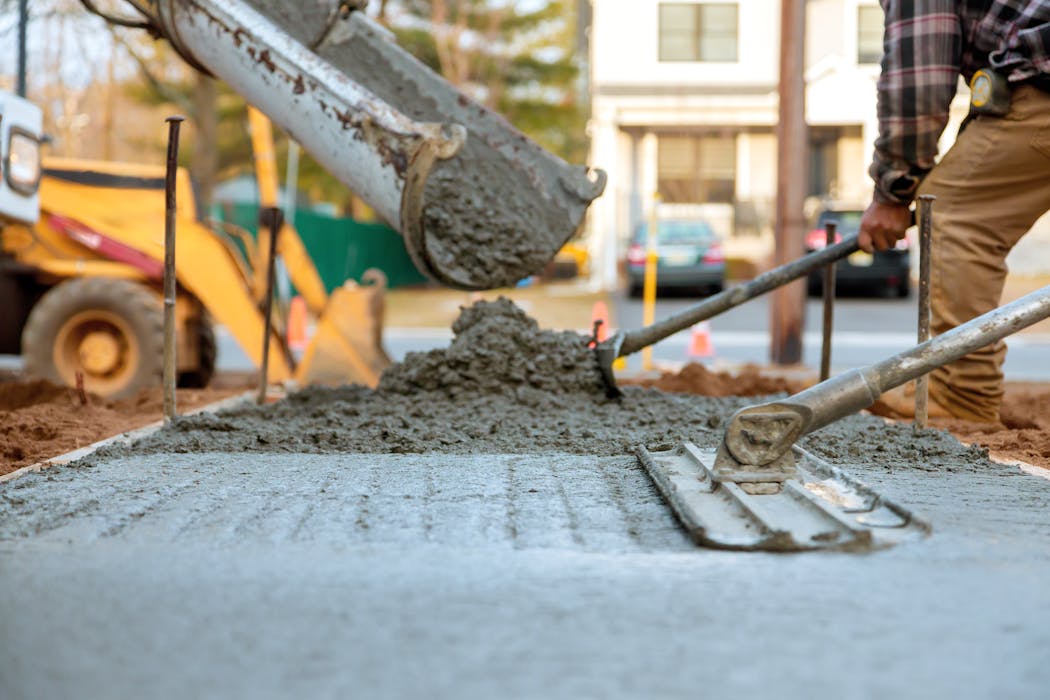
Portland cement, widely used for concrete, is responsible for about 8% of global greenhouse gas emissions. Photovs/iStock/Getty Images Plus

Concrete is all around you – in the foundation of your home, the bridges you drive over, the sidewalks and buildings of cities. It is often described as the second-most used material by volume on Earth after water.

But the way concrete is made today also makes it a major contributor to climate change.

Portland cement, the key component of concrete, is responsible for about 8% of global greenhouse gas emissions. That’s because it’s made by heating limestone to high temperatures, a process that burns a large amount of fossil fuels for energy and releases carbon dioxide from the limestone in the process.

The good news is that there are alternatives, and they are gaining attention.

Portland cement: A greenhouse gas problem

Cementlike substances have been used in construction for thousands of years. Architects have found evidence of their use in the pyramids of Egypt and the buildings and aqueducts of the Roman Empire.

The Portland cement commonly used in construction today was patented in 1824 by Joseph Aspdin, a British bricklayer.

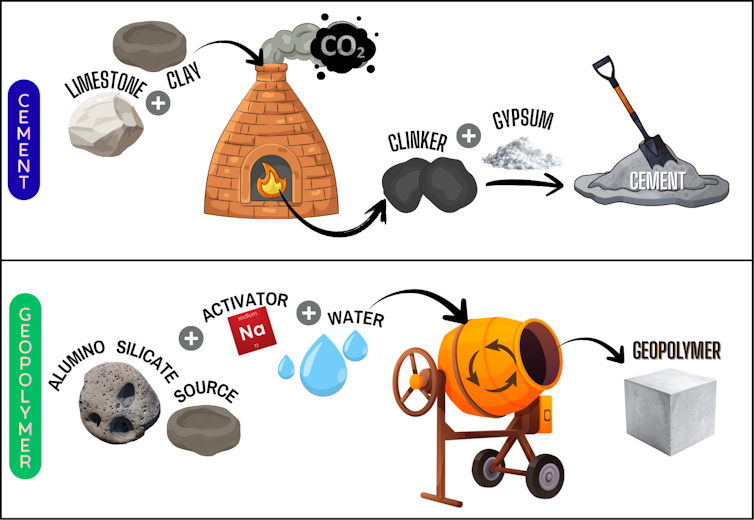
Modern cement preparation starts with crushing the excavated raw materials limestone and clay and then heating them in a kiln at around 2,650 degrees Fahrenheit (about 1,450 degrees Celsius) to form clinker, a hard, rocklike residue. The clinker is then cooled and ground with gypsum into a fine powder, which is called cement.

About 40% of the carbon dioxide emissions from cement production come from burning fossil fuels to generate the high heat needed to run the kiln. The rest come as the heat converts limestone (calcium carbonate) to lime (calcium oxide), releasing carbon dioxide.

In all, between half a ton and 1 ton of greenhouse gas is released per ton of Portland cement. Cement is a binding agent that, mixed with water, holds aggregate together to create concrete. It makes up about 10% to 15% of the concrete mix by weight.

Alternative technologies can lower emissions

As populations, cities and the need for new infrastructure expand, the use of cement is growing, making it important to find alternatives with lower environmental costs.

Concrete has seen the fastest growth among commonly used construction materials with rising population between 1950 and 2023
As population has increased, annual global Portland cement production has risen with it.
Hao Chen, et al., 2025, CC BY-NC-ND

Some techniques for reducing carbon dioxide emissions include substituting some of the clinker – the hard residue typically made from limestone – with supplementary materials such as clay, or fly ash and slag from industries. Other methods reduce the amount of cement by mixing in waste sawdust or recycled materials like plastics.

The long-term solution for reducing cement’s emissions, however, is to replace traditional cement completely with alternatives. One option is geopolymers made from earthen clay and industrial wastes.

Geopolymers: A more climate-friendly solution

Geopolymers can be made by mixing claylike materials that are rich in aluminum and silicon minerals with a chemical activator through a process called geopolymerization. The activator transforms the silicon and aluminum into a structure that will look like cement. All of this can happen at room temperature.

The major difference between cement and geopolymer is that cement is mainly made of calcium, whereas geopolymers are made of silicon and aluminum with some possible calcium in their structure.

Geopolymers offer advantages with lower number of steps, lower CO2 emission and lower water requirement over Portland cement
How the production of Portland cement and geopolymers compare.
Alcina Johnson Sudagar, CC BY-NC

These geopolymers have been found to possess high strength and durability, including resilience in freeze-thaw cycles and resistance to heat and fire, which are important requirements in construction. Studies have found that some geopolymers can provide comparable if not better strength than traditional cement and, because they don’t require heat the way clinker does, they can be produced with significantly lower greenhouse gas emissions.

Geopolymers can also be produced from a variety of raw materials rich in aluminum and silicon, including earthen clays, fly ash, blast furnace slag, rice husk ash, iron ore wastes and recycled construction brick waste. Geopolymer technology can be adapted depending on the clay or industrial waste locally available in a region.

A brief history of cement and geopolymers. Geopolymer International.

An added advantage of geopolymers is that changes to the mixture can produce a range of features.

For example, I and my co-researchers at the University of Aveiro in Portugal added a small amount of cork industry waste – the leftovers from creating bottle corks – to clay-based geopolymer and found it could improve the strength of the material by up to twofold. The cork particles filled the spaces in the geopolymer structure, making it denser, which increased the strength.

Similarly, additives such as sisal fibers from the agave plant, recycled plastic and steel fibers can change geopolymer properties. The additives do not participate in the geopolymerization process but act as fillers in the structure.

The structure of geopolymers can also be designed to act as adsorbents, attracting toxic metals in wastewater and capturing and storing radioactive wastes. Specifically, incorporating materials like zeolite that are natural adsorbents in the geopolymer structure can make them useful for such applications as well.

Where geopolymers are used now

Geopolymers have been used in many types of construction, including roads, coatings, 3D printing, coastal environmental protection, the steel and chemical industries, sewer rehabilitation and building radiation shielding and rocket launchpad and bunker infrastructure.

One of the earliest examples of a modern geopolymer concrete project was the Brisbane West Wellcamp airport in Australia.

It was built in 2014 with 70,000 metric tons of geopolymer concrete, which was estimated to have reduced the project’s carbon dioxide emissions by as much as 80%.

The geopolymer market is currently estimated to be between US$7 billion and $10 billion, with the largest growth in the Asia-Pacific region.

Analysts have estimated that the market could grow at a rate of 10% to 20% per year and reach about $62 billion by 2033.

In several countries, greenhouse gas regulations and green-building certifications are expected to support the continued growth of geopolymers in the construction industry.

Expanding the use of cement alternatives

The advantage of using industrial wastes in geopolymers is a double-edged sword, however. The composition of industrial wastes varies, so it can be difficult to standardize the processing methods. The geopolymer components need to be mixed in particular ratios to achieve desired properties.

Producing the activator for the geopolymer, typically done in chemical facilities, can raise the cost and contribute to the carbon footprint. And the long-term data about these materials’ stability is only now being developed given their newness. Also, these geopolymers can take longer to set than cement, though the setting time can be sped up by using raw materials that react quickly.

Developing cheaper, naturally available activators like agricultural waste rice husk with sustainable supply chains could help lower the costs and environmental impact. Also, printing the recipe on the raw material packaging could help simplify the job of determining the mixing ratio so geopolymers can be more widely used with confidence.

Even though geopolymer technology has some drawbacks, these low-carbon alternatives have great potential for reducing emissions from the construction sector.

The Conversation

Alcina Johnson Sudagar has received funding from GeoBioTec.

ref. Cement has a climate problem — here’s how geopolymers with add-ins like cork could help fix it – https://theconversation.com/cement-has-a-climate-problem-heres-how-geopolymers-with-add-ins-like-cork-could-help-fix-it-270354

How a largely forgotten Supreme Court case can help prevent an executive branch takeover of federal elections

Source: The Conversation – USA – By Derek T. Muller, Professor of Law, University of Notre Dame

Georgia General Election 2020 ballots are loaded by the FBI onto trucks at the Fulton County Election hub on Jan. 28, 2026, in Union City, Ga. AP Photo/Mike Stewart

The recent FBI search of the Fulton County, Georgia, elections facility and the seizure of election-related materials pursuant to a warrant has attracted concern for what it might mean for future elections.

What if a determined executive branch used federal law enforcement to seize election materials to sow distrust in the results of the 2026 midterm congressional elections?

Courts and states should be wary when an investigation risks commandeering the evidence needed to ascertain election results. That is where a largely forgotten Supreme Court case from the 1970s matters, a case about an Indiana recount that sets important guardrails to prevent post-election chaos in federal elections.

A clipping from a Nov. 4, 1970 newspaper with the headline 'Hartke in close battle for Senate.'
The day after Election Day in 1970, votes were very close in the Indiana election for U.S. Senate. A challenge to the outcome would lead to an important U.S. Supreme Court case.
The Purdue Exponent, Nov. 4, 1970

Congress’s constitutionally-delegated role

The case known as Roudebush v. Hartke arose from a razor-thin U.S. Senate race in Indiana in 1970. The ballots were cast on Election Day, and the state counted and verified the results, a process known as the “canvass.” The state certified R. Vance Hartke as the winner. Typically, the certified winner presents himself to Congress, which accepts his certificate of election and seats the member to Congress.

The losing candidate, Richard L. Roudebush, invoked Indiana’s recount procedures. Hartke then sued to stop the recount. He argued that a state recount would intrude on the power of each chamber, the Senate or the House of Representatives, to judge its own elections under Article I, Section 5 of the U.S. Constitution. That clause gives each chamber the sole right to judge elections. No one else can interfere with that power.

Hartke worried that a recount might result in ballots that could be altered or destroyed, which would diminish the ability of the Senate to engage in a meaningful examination of the ballots if an election contest arose.

But the Supreme Court rejected that argument.

It held that a state recount does not “usurp” the Senate’s authority because the Senate remains free to make the ultimate judgment of who won the election. The recount can be understood as producing new information – in this case, an additional set of tabulated results – without stripping the Senate of its final say.

Furthermore, there was no evidence that a recount board would be “less honest or conscientious in the performance of its duties” than the original precinct boards that tabulated the election results the first time around, the court said.

A state recount, then, is perfectly acceptable, as long as it does not impair the power of Congress.

In the Roudebush decision, the court recognized that states run the mechanics of congressional elections as part of their power under Article I, Section 4 of the U.S. Constitution to set the “Times, Places and Manner of holding Elections for Senators and Representatives,” subject to Congress’s own regulation.

At the same time, each chamber of Congress judges its own elections, and courts and states should not casually interfere with that core constitutional function. They cannot engage in behaviors that usurp Congress’s constitutionally-delegated role in elections.

The U.S. Capitol dome in a photo at night with a dark blue sky behind it.
Each chamber of Congress judges its own elections, with no interference by courts and states with that core constitutional function.
David Shvartsman, Moment/Getty Images

Evidence can be power

The Fulton County episode is legally and politically fraught not because federal agents executed a warrant – courts authorize warrants all the time – but because of what was seized: ballots, voting machines, tabulation equipment and related records.

Those items are not just evidence. They are also the raw materials for the canvassing of votes and certification of winners. They provide the foundation for audits and recounts. And, importantly, they are necessary for any later inquiry by Congress if a House or Senate race becomes contested.

That overlap creates a structural problem: If a federal investigation seizes, damages, or destroys election materials, it can affect who has the power to assess the election. It can also inject uncertainty into the chain of custody: Because ballots are removed from absentee envelopes or transferred from Election Day precincts to county election storage facilities, states ensure the ballots cast on Election Day are the only ones tabulated, and that ballots are not lost or destroyed in the process.

Disrupting this chain of custody by seizing ballots, however, can increase, rather than decrease, doubts about the reliability of election results.

That is the modern version of “usurpation.”

From my perspective as an election law scholar, Roudebush is a reminder that courts should be skeptical of executive actions that shift decisive control over election proof away from the institutions the Constitution expects to do the judging.

Congress doesn’t just adjudicate contests

A screenshot of a news story with a headline that says 'Congressional election observers deploy to Iowa for recount in uncalled House race.'
Congressional election observers were sent to Iowa in 2024 to monitor a recount.
Fox News

There is another institutional reason courts should be cautious about federal actions that seize or compromise election materials: The House already has a long-running capacity to observe state election administration in close congressional races.

The Committee on House Administration maintains an Election Observer Program. That program deploys credentialed House staff to be on-site at local election facilities in “close or difficult” House elections. That staff observes casting, processing, tabulating and canvassing procedures.

The program exists for a straightforward reason: If the House may be called upon to judge a contested election under Article I, Section 5, it has an institutional interest in understanding how the election was administered and how records were handled.

That observation function is not hypothetical. The committee has publicly announced deployments of congressional observers to watch recount processes in tight House races throughout the country.

I saw it take place first-hand in 2020. The House deployed election observers in Iowa’s 2nd Congressional District to oversee a recount of a congressional election that was ultimately certified by a margin of just six votes.

Democratic and Republican observers from the House politely observed, asked questions, and kept records – but never interfered with the state election apparatus or attempted to lay hands on election equipment or ballots.

Congress has not rejected a state’s election results since 1984, and for good reason. States now have meticulous recordkeeping, robust chain-of-custody procedures for ballots, and multiple avenues of verifying the accuracy of results. And with Congress watching, state results are even more trustworthy.

When federal investigations collide with election materials

Evidence seizures can adversely affect election administration. So courts and states ought to be vigilant, enforcing guardrails that help respect institutional boundaries.

To start, any executive branch effort to unilaterally inject itself into a state election apparatus should face meaningful scrutiny. Unlike the Fulton County warrant, which targeted an election nearly six years old, warrants that interrupt ongoing state processes in an election threaten to usurp the constitutional role of Congress. And executive action cannot proceed if it impinges upon the ultimate ability of Congress to judge the election of its members.

In the exceedingly unlikely event that a court issues a warrant, a court should not permit seizure of election equipment and ballots during a state’s ordinary post-election canvass. Instead, inspection of items, provision of copies of election materials, or orders to preserve evidence are more tailored means to accomplish the same objectives. And courts should establish clear chain-of-custody procedures in the event that evidence must be preserved for a future seizure in a federal investigation.

The fear driving much public commentary about the danger to midterm elections is not merely that election officials will be investigated or that evidence would be seized. It is that investigations could be used as a pretense to manage or, worse, disrupt elections – chilling administrators, disorganizing record keeping or manufacturing doubt by disrupting custody of ballots and systems.

Roudebush provides a constitutional posture that courts should adopt, a recognition that some acts can usurp the power of Congress to judge elections. That will provide a meaningful constraint on the executive ahead of the 2026 election and reduce the risk of intervention in an ongoing election.

The Conversation

Derek T. Muller does not work for, consult, own shares in or receive funding from any company or organization that would benefit from this article, and has disclosed no relevant affiliations beyond their academic appointment.

ref. How a largely forgotten Supreme Court case can help prevent an executive branch takeover of federal elections – https://theconversation.com/how-a-largely-forgotten-supreme-court-case-can-help-prevent-an-executive-branch-takeover-of-federal-elections-275603

Early Mars was warm and wet not icy, suggests latest research

Source: The Conversation – UK – By Gareth Dorrian, Post Doctoral Research Fellow in Space Science, University of Birmingham

ESA/DLR/FU Berlin (G. Neukum)

A recent study showed that Mars was warm and wet billions of years ago. The finding contrasts with another theory that this era was mainly cold and icy. The result has implications for the idea that life could have developed on the planet at this time.

Whether Mars was once habitable is a fascinating and intensely researched topic of interest over many decades. Mars, like the Earth, is about 4.5 billion years old and its geological history is divided into different epochs of time.

The latest paper relates to Mars during a time called the Noachian epoch, which extended from about 4.1 to 3.7 billion years ago. This was during a stage in solar system history called the Late Heavy Bombardment (LHB). Evidence for truly cataclysmic meteorite impacts during the LHB are found on many bodies throughout the solar system.

Two obvious scars from this era on Mars are the enormous Hellas and Argyre impact basins; both are well over a thousand miles across and each possesses enough volume to hold all the water in the Mediterranean with room to spare.

One might not imagine such a time being conducive to the existence of fragile lifeforms, yet it is likely to be the era in which Mars was most habitable. Evidence of landforms sculpted by water from this time is plentiful and include dried-up river valleys, lake beds, ancient coastlines and river deltas.

The prevailing climatic conditions of the Noachian are still a matter of intense debate. Two alternative scenarios are
typically posited: that this time was cold and icy, with occasional melting of large volumes of frozen water by meteorite impact and volcanic eruptions, or that it was warm, wet and largely ice-free.


Read more:
Signs of ancient life may have been found in Martian rock – new study


Brightening Sun

All stars, including the Sun, brighten with age. In the early solar system, during the Noachian, the Sun was about 30% dimmer than it is today, so less heat was reaching Mars (and all the planets). To sustain a warm, wet climate at this time, the Martian atmosphere would have needed to be very substantial – much thicker than it is today – and abundant in greenhouse gases like CO2.

But when reaching high enough atmospheric pressure, CO2 tends to condense out of the air to form clouds and reduce the greenhouse effect. Given these issues, the cold, icy scenario is perhaps more believable.

One of the main science goals of the Mars 2020 Perseverance Rover, which landed spectacularly in February 2021, is to seek evidence to support either of these two scenarios, and the new
paper
using data from Perseverance may have done just that.

Perseverance landed at the Martian location of Jezero crater, which was selected as the landing site because it once contained a lake. Views of the crater from orbit show several distinct fan-shaped deposits emanating from channels carved through the crater walls by flowing water. Within these channels are abundant deposits of clay minerals.

The new paper details recent analysis of aluminium-rich clay pebbles, called kaolinite, located within one of the ancient flow channels. The pebbles appear to have been subjected to intense weathering and chemical alteration by water during the Noachian.

While this is perhaps not surprising for a known ancient watery environment, what is interesting is that these clays are strongly depleted in iron and magnesium, and enriched in titanium and aluminium.


Read more:
Are we the Martians? The intriguing idea that life on Earth began on the red planet


This is important because it means these rocks were less likely to have been altered in a hydrothermal environment, where scalding hot water was temporarily released by melting ice caused by volcanism or a meteorite impact.

Instead, they appear to have been altered under modest temperatures and persistent heavy rainfall. The authors found distinct similarities between the chemical composition of these clay pebbles with similar clays found on Earth dating from periods in our planet’s history when the climate was much warmer and wetter.

False colour image of the dried up river delta in Jezero crater, which Perseverance is currently exploring.
Nasa

The paper concludes that these kaolinite pebbles were altered under high rainfall conditions comparable to “past greenhouse climates on Earth” and that they “likely represent some of the wettest intervals and possibly most habitable portions of Mars’ history”.

Furthermore, the paper concludes that these conditions may have persisted over time periods ranging from thousands to millions of years. Perseverance recently made headlines also for the discovery of possible biosignatures in samples it collected last year, also from within Jezero crater.

These precious samples have now been cached in special sealed containers on the rover for collection by a future Mars sample return mission. Unfortunately, the mission has recently been cancelled by Nasa and so what vital evidence they may or may not contain will probably not be examined in an Earth-based laboratory for many years.

Crucial to this future analysis is the so-called “Knoll criterion” – a concept formulated by astrobiologist Andrew Knoll, which states that for something to be evidence of life, an observation has to not just be explicable by biology; it has to be inexplicable without it. Whether these samples ever satisfy the Knoll criterion will only be known if they can be brought to Earth.

Either way, it is quite striking to imagine a time on Mars, billions of years before the first humans walked the Earth, that a tropical climate with – possibly – a living ecosystem once existed in the now desolate and wind-swept landscape of Jezero crater.

The Conversation

Gareth Dorrian does not work for, consult, own shares in or receive funding from any company or organisation that would benefit from this article, and has disclosed no relevant affiliations beyond their academic appointment.

ref. Early Mars was warm and wet not icy, suggests latest research – https://theconversation.com/early-mars-was-warm-and-wet-not-icy-suggests-latest-research-275347

Bangladesh Nationalist party secures victory in first election since Sheikh Hasina’s ousting

Source: The Conversation – UK – By Shahzad Uddin, Director, Centre for Accountability and Global Development, University of Essex

The Bangladesh Nationalist party (BNP) has won a landslide majority in the country’s first election since an uprising ended the 15-year rule of Sheikh Hasina in 2024. Results from the election commission confirmed that the BNP alliance had secured 220 seats in the 350-member parliament. The Islamist party Jamaat-e-Islami, which was banned by Hasina’s government, came second with 77 seats.

Tarique Rahman, the BNP leader who has spent 17 years living in self-exile in London, is set to assume leadership of the government. Rahman is the son of the former Bangladeshi president and BNP leader, Ziaur Rahman, and his wife Khaleda Zia, who previously served two terms as the country’s prime minister.

In its manifesto, the BNP pledged to build what it calls a “welfare-oriented and prosperous” nation. Commitments include expanded financial assistance for low-income families, strengthening the healthcare workforce, reforming education and boosting climate resilience.

Yet the party’s record is mixed. The BNP boycotted previous elections, including one in 2024, arguing they were neither free nor fair. And during earlier periods in office, the party faced criticism over corruption and governance standards. Regardless, the February 12 vote marks a political reset following one of the most turbulent periods in Bangladesh’s recent history.

The uprising in 2024 began with student protests demanding reforms to the government’s job quota system. But these protests quickly expanded into a broader movement challenging the concentration of executive power in the country. Reports from organisations such as Human Rights Watch during Hasina’s rule raised concerns about media restrictions, opposition arrests and alleged enforced disappearances.

Bangladesh’s security forces responded to the unrest violently, killing as many as 1,400 protesters in a crackdown that Hasina’s critics accuse her of ordering directly – an allegation she denies. The protests continued to swell and Hasina was forced to flee the country, entering exile in India.

An interim administration led by Nobel peace prize laureate Muhammad Yunus was formed to oversee efforts to stabilise state institutions and organise the election. The election, which also saw citizens vote on constitutional reforms aimed at preventing politicians from wielding excessive executive power again, was widely seen as a return to constitutional governance after months of provisional rule.

Banned from contesting

A defining feature of the election was that the interim administration banned Hasina’s party, the Awami League, from contesting. For decades, Bangladeshi politics has centred around rivalry between the Awami League and the BNP. So, removing the Awami League from the ballot fundamentally altered the competitive landscape.

With its principal rival excluded, the BNP became the only party with organisational capacity extensive enough to form a government. Smaller parties lacked comparable reach across constituencies, a structural absence that seems to have encouraged consolidation behind the BNP.

Voter turnout also appears to have been lower than many had anticipated for such a consequential election, with unofficial figures putting participation at 61%. In previous Bangladeshi national elections where all major political parties have participated fully, turnout has typically ranged from 75% to 80%.

Competitive democracy depends on there being a viable opposition. And excluding a major political party from contesting has complicated the interim administration’s claims of full democratic normalisation. Whether the Awami League’s absence is temporary or prolonged will shape Bangladesh’s future political stability.

The referendum on constitutional reforms, which supporters argue are necessary to prevent a return to the centralised authority seen under Hasina, passed comfortably. Eight out of ten voters backed the reforms. However, critics question whether constitutional change in the absence of the largest former governing party can fully reflect broad national consensus.

Regional recalibration

India will have watched Bangladesh’s election closely. In recent years, ties between the two countries have sunk to one of their lowest points in decades. India is widely perceived in Bangladesh as having enabled democratic backsliding by supporting Hasina during her years in power.

That perception led to widespread anti-Indian sentiment during the 2024 protests. And reports since then of military standoffs along the border, disputes over water-sharing agreements and concerns over trade imbalances have only added to public frustration. How the new government manages its relationship with India will shape regional stability and Bangladesh’s economic trajectory.

In its manifesto, the BNP steered clear of adopting positions that might unsettle voters or concern regional players such as India. But, at the same time, it has expressed willingness to engage constructively with India on contentious issues such as border killings, insurgent activity and water sharing.

The BNP holds a powerful parliamentary mandate. But the scale of its victory should not be mistaken for unconditional endorsement. Many votes were shaped by the absence of the Awami League and by a desire for reform after a period of violence and uncertainty.

Whether this moment sets in motion a durable democratic recovery for Bangladesh or another cycle of concentrated authority will depend on how power is exercised in the years ahead.

The Conversation

Shahzad Uddin does not work for, consult, own shares in or receive funding from any company or organisation that would benefit from this article, and has disclosed no relevant affiliations beyond their academic appointment.

ref. Bangladesh Nationalist party secures victory in first election since Sheikh Hasina’s ousting – https://theconversation.com/bangladesh-nationalist-party-secures-victory-in-first-election-since-sheikh-hasinas-ousting-275616

Pregnancy and pre-eclampsia: is aspirin the answer for everyone?

Source: The Conversation – UK – By Patricia Maguire, Professor, School of Biomolecular and Biomedical Science, University College Dublin

Irin Fierce/Shutterstock.com

A new study has ignited the debate over whether every pregnant woman should take low-dose aspirin.

For years, it has been recommended for women at high risk of pre-eclampsia. This dangerous condition can cause high blood pressure and organ damage. The argument for giving it to all pregnant women is straightforward: current screening isn’t perfect, and pre-eclampsia can be hard to predict.

Aspirin is cheap, widely available and generally safe, which makes it tempting to give it to everyone. But medicine rarely works well as a one-size-fits-all solution. The reality is that we still lack tools to identify early in pregnancy when placentas might struggle to support a baby.

Aspirin works by making platelets, the tiny blood cells that form clots, less likely to stick together. In pre-eclampsia, the placenta can trigger inflammation and overactive platelets, reducing blood flow to the baby. By reducing the stickiness of platelets, aspirin helps maintain healthy blood flow between the mother and the baby.

A pregnant woman on a bed.
Aspirin helps maintain healthy blood flow between mother and baby.
New Africa/Shutterstock.com

If aspirin is so effective, why not give it to everyone? In heart medicine, healthy older adults were once routinely advised to take daily low-dose aspirin, but several studies have showed that long-term bleeding risks outweigh the benefits and guidance has recently changed. Pregnancy is a much shorter window with treatment lasting only a few months, so the risk of serious bleeding in an otherwise healthy young woman is very low, and the consequences of pre-eclampsia can be severe.

Even so, aspirin doesn’t work the same way for everyone. Standard doses may be too low for women with a higher body mass index or increased blood volume. Absorption can be unpredictable, especially with enteric-coated tablets (which protect the stomach lining) or changes in digestion during pregnancy. And if tablets aren’t taken consistently, the drug can’t do its job.

Right now, doctors decide who should take aspirin mostly based on a woman’s medical history and known risk factors. This simple approach works, but it can miss some women who go on to develop pre-eclampsia, while others are treated just to be safe.

More advanced testing – combining a woman’s medical history with blood pressure checks, blood tests that show how well the placenta is working, and ultrasound scans – can spot more cases. The downside is that these tests need specialist training, extra equipment, and more time, which aren’t always available in everyday care.

The future: better biomarkers

My research looks at platelets and the tiny particles they release, called extracellular vesicles. These microscopic signals reflect how the placenta and maternal environment are interacting, and could identify problems months before symptoms appear. One day, such tests could guide personalised treatment, helping doctors know who really needs aspirin and who may not.

For now, if your doctor has prescribed aspirin in pregnancy, it’s important to continue taking it. It is a safe, effective and evidence-based treatment for women at higher risk of pre-eclampsia. But as science progresses, there’s real potential to move from broad guidelines to personalised care, giving every mother and baby the best chance of a healthy pregnancy.

This article was commissioned in conjunction with Prototypes for Humanity, a global initiative that showcases and accelerates academic innovation to solve social and environmental challenges. The Conversation is the media partner of Prototypes for Humanity 2025.

The Conversation

This article was commissioned in conjunction with Prototypes for Humanity, a global initiative that showcases and accelerates academic innovation to solve social and environmental challenges. The Conversation is the media partner of Prototypes for Humanity 2025. Patricia Maguire works for University College Dublin, Ireland, researching platelets and their role in pre-eclampsia. She receives funding from Enterprise Ireland and Research Ireland.

ref. Pregnancy and pre-eclampsia: is aspirin the answer for everyone? – https://theconversation.com/pregnancy-and-pre-eclampsia-is-aspirin-the-answer-for-everyone-275897

All things bright and beautiful need to be sustainable as well, says Church of England’s new flower policy

Source: The Conversation – UK – By Jill Timms, Assistant Professor in Sociology, University of Surrey

Millions of flowers are used to decorate England’s churches every year. Sandifan/Shutterstock

Anyone on the flower rota at England’s parish churches will now be reconsidering the way they do their arrangements, after Church of England leaders voted to use more seasonal and local flowers.

A motion to use sustainable flowers brought before the General Synod of the Church of England by the Bishop of Dudley, Martin Gorrick, was passed on February 12. The term “sustainable flowers” means using those that have travelled less distance, use less packaging and have been grown using without chemicals, high energy inputs or an excessive amount of water.

The General Synod, which considered the motion, is made up of all bishops plus representatives from every diocese, and includes the newly appointed Archbishop of Canterbury, Dame Sarah Mullally – who personally thanked those who brought the motion. The bishop said: “It is deeply theological, to honour the God who made the earth.”

Parish leaders will now need to be updated about what needs to change in planning the flowers for the front of the church.

For most churches this will mean using seasonal foliage and local flowers in weekly worship, rather than buying those grown thousands of miles away or by using intense heating to grow blooms out of season.

These sustainable flowers may come from churchyards, gardens, donation buckets or offerings from local garden clubs or allotment holders.

The motion encourages all places of worship to source what is local and seasonal to them, wherever possible. It aims to phase out the use of floral foam, which has traditionally been used for flower arranging. And it links the theology of stewardship of creation and the planet to how to treat nature, promoting seasonal and compostable flowers and foliage.

It is likely to mean trying different techniques such as going back to some traditional methods used before floral foam was invented in the 1950s.

I was there to hear the bishop say that the decision to phase out floral foam is about moving away from single-use plastics and manufactured alternatives, towards simpler methods of display, such as vases, sticks and other reusable and compostable materials.

What the church does matters, it uses millions of flowers every year in its displays. Its impact goes far beyond the church doors.

If the around 12,000 Church of England parishes only averaged two bunches a week, that would be over 1.2 million a year and millions of stems. Additionally there are huge numbers used at church events such as weddings and funerals, and brought into churchyards. The church’s decision could also drive more Fairtrade sales where local flowers are not available.

With this potential source of business changing, florists might be encouraged to provide plastic-free options, and consumers might be more aware when choosing their flowers – such as for St Valentine’s Day and beyond.

What else is needed?

Currently, even those who want to buy sustainable flowers will struggle to know what to look for. Details of the place of origin is rarely included on plastic wrapping and any independent verification of flowers meeting particular standards, for example Fairtrade, are rarely available to consumers. Fairtrade flowers do give more information to consumers, including place of origin and farm standards.

The Church of England’s decision shows a need for providing consumers with more information on the ecological standards that flowers have been grown to, impact on soil, biodiversity and on the local economy.

Flowers displayed in a church.

Shane Connolly, CC BY

These are issues that the Sustainable Flowers Research Project, an organisation set up by me and David Bek, a professor of sustainability at Coventry University, have been working on for years. We also work with flower suppliers and buyers to create more sustainable policies on farms and in shops.

A current government-funded project with the Flower Growing Collective, a network of regional flower selling hubs, is providing new routes to market for more than 60 growers. It also is creating convenient wholesale access for florists to buy local flowers, without needing to trail around multiple farms.

Farmers who already supply seasonal flowers can be found through organisations such as Flowers from the Farm. Other useful guidance is also available to help people find more environmentally friendly flowers. And a new sustainable church flowers national award scheme will encourage and acknowledge the work being done.

Hopefully church flower arrangers around the country will embrace this new approach, and see it as changing with the times.

The Conversation

Jill Timms receives funding from the UKRI/Defra Farming Innovation programme and the ESRC Impact Acceleration Account. She is also an affiliate of Sustainable Church Flowers (SCF).

ref. All things bright and beautiful need to be sustainable as well, says Church of England’s new flower policy – https://theconversation.com/all-things-bright-and-beautiful-need-to-be-sustainable-as-well-says-church-of-englands-new-flower-policy-275764