Michelin-star restaurants’ quiet luxury approach to marketing has to adapt in the era of social media

Source: The Conversation – UK – By Christina O’Connor, Associate Professor in Marketing, University of Limerick

Johnathan Ball/Shutterstock

Chanel, Christian Louboutin and Hermès are names that are synonymous with luxury, signifying elegance, craftmanship and prestige. These brands often use subtle, mysterious signals to communicate their status – things like minimalist designs or the red sole on a Louboutin shoe. Often termed “quiet luxury”, this trend is also seen in the world of high-end dining.

This approach to luxury branding is aimed at creating a desire in consumers to learn these signals. In this way, you become part of an exclusive group that can interpret them. Even if the brands are out of reach price-wise, the ability to “speak their language” brings a cache and status.

But social media has challenged this concept of quiet luxury by bringing brands closer to consumers. More than four billion people around the world use social media, so brands that once felt difficult to reach can now be accessed instantly.

When it comes to the services and hospitality sectors, the “luxury” is embedded in an experience rather than a product. The recent Michelin Awards were hosted in Dublin and saw two new Michelin-star restaurants being added in Ireland and 20 in the UK.

For these high-end dining establishments, social media has raised a different set of challenges for marketers trying to capture the magic of their offering while preserving some mystique. After all, giving too much detail away in a social media post may spoil the eventual experience for the consumer.

For example, the (now closed) Ultraviolet Shanghai restaurant in China boasted three Michelin stars. But its secret location was disclosed only to diners who reserved one of the ten seats available per night.

Going for the soft sell

In our recent study of luxury dining in the UK and Ireland, we interviewed the chefs, owners and marketing managers of 29 Michelin-star restaurants. Specifically, we asked them how they can sustain visibility and engagement in the noisy, ever-evolving world of social media – while preserving the core elements of luxury.

We found that luxury restaurants tend to favour a soft-sell approach to using social media to send these signals of quality. The idea is not to simply state what they offer. Rather, it is about a “show, don’t tell” approach that hints at the signals for those who can read between the lines.

As the consumer, you get a flavour (pun very much intended) of the luxury, which is meant to entice but not to reveal all. It’s about leaving you to speculate on what other ingredients and flavour combinations may await or other clues or hints about the luxury experience.

What also emerged from our interviews was the variety of experiences that these restaurants offer. Michelin (although secretive on its awarding criteria) applies consistent standards across all markets where it publishes its guide to the finest restaurants.

But at the same time, it describes a rich tapestry of varied dining experiences. There is no one-size-fits-all when it comes to delivering world-class food or communicating the quality of a restaurant on social media. For restaurants seeking to ascend to that luxury level, it’s about crafting a story on social media showcasing their quality and what makes them stand out, while maintaining that mysterious allure.

blurry shot of a table at a high-end restaurant.
Keep the mystery under wraps until diners arrive.
BorisK9/Shutterstock

One of the main takeaways from our study is how luxury restaurants preserve mystery to create excitement and inspire customers to visit. So-called “low-mystery” signals (like in-depth descriptions of dishes) hype up the restaurant. But elements of the experience that mark it as luxury (the service, ambience and ingredients, for example) can be strategically curbed in social media posts – “high-mystery” signals. In this way, the restaurant can hope to provoke a sense of surprise and awe in customers once they arrive.

In the future, agentic AI will undoubtedly play a bigger role in enhancing luxury hospitality by doing things like designing bespoke dining experiences. From a marketing perspective right now, gen-AI tools offer quick and convenient ways of generating social media content. But there’s a risk that this could hinder luxury allure rather than help it. Attempts to prompt gen-AI tools to create a sense of mystery and anticipation could go wrong and produce the opposite effect.

Whether in fashion or food, luxury brands that want to communicate superiority appear to be best served by using the soft-sell approach. High-mystery social media marketing can create desire in potential customers by preserving the mystique and allure of the product or service. Because if you know, you know – right?

The Conversation

The authors do not work for, consult, own shares in or receive funding from any company or organisation that would benefit from this article, and have disclosed no relevant affiliations beyond their academic appointment.

ref. Michelin-star restaurants’ quiet luxury approach to marketing has to adapt in the era of social media – https://theconversation.com/michelin-star-restaurants-quiet-luxury-approach-to-marketing-has-to-adapt-in-the-era-of-social-media-275640


A new diagnosis of ‘profound autism’ is on the cards. Here’s what could change

Source: The Conversation – Global Perspectives – By Kelsie Boulton, Senior Research Fellow in Child Neurodevelopment, Brain and Mind Centre, University of Sydney

When it comes to autism, few questions spark as much debate as how best to support autistic people with the greatest needs.

This prompted The Lancet medical journal to commission a group of international experts to propose a new category of “profound autism”.

This category describes autistic people who have little or no language (spoken, written, signed or via a communication device), who have an IQ of less than 50, and who require 24-hour supervision and support.

It would only apply to children aged eight and over, when their cognitive and communication abilities are considered more stable.

In our new study, we considered how the category could impact autism assessments. We found 24% of autistic children met, or were at risk of meeting, the criteria for profound autism.

Why the debate?

The category is intended to help governments and service providers plan and deliver supports, so autistic people with the highest needs aren’t overlooked. It also aims to re-balance their under-representation in mainstream autism research.

This new category may be helpful for advocating for a greater level of support, research and evidence for this group.

But some have raised concerns that autistic people who don’t fit into this category could be perceived as less in need and excluded from services and funding supports.

Others argue the category doesn’t sufficiently emphasise autistic people’s strengths and capabilities, and places too much emphasis on the challenges that are experienced.

What did we do?

We conducted the first Australian study to examine how the “profound autism” category might apply to children attending publicly funded diagnostic services for developmental conditions.

Drawing on the Australian Child Neurodevelopment Registry, we examined data from 513 autistic children assessed between 2019 and 2024. We asked:

  • how many children met the criteria for profound autism?
  • were there behavioural features that set this group apart?

Because we focused on children at the time of diagnosis, most (91%) were aged under eight years. We described these children as being “at risk of profound autism”.

What did we find?

Around 24% of autistic children in our study met, or were at risk of meeting, the criteria for profound autism. This is similar to the proportion of children internationally.

Almost half (49.6%) showed behaviours that were a safety risk, such as attempting to run away from carers, compared with one-third (31.2%) of other autistic children.

These challenges weren’t limited to children who met criteria for profound autism. Around one in five autistic children (22.5%) engaged in self-injury, and more than one-third (38.2%) showed aggression toward others.

So, while the category identified many children with very high needs, other children who didn’t meet these criteria also had significant needs.

Importantly, we found the definition of “profound autism” doesn’t always line up with the official diagnostic levels which determine the level of support and NDIS funding children receive.

In our study, 8% of children at risk of profound autism were classified as level 2, rather than level 3 (the highest level of support). Meanwhile, 17% of children classified as level 3 did not meet criteria for profound autism.

Our concern

We looked at children when they first received an autism diagnosis. Children were aged 18 months to 16 years, with more than 90% under the age of eight years.

This aligns with our earlier research, showing the average age of diagnosis in public settings is 6.6 years.

From a practical perspective, our biggest concern about the profound autism category is the age threshold of eight years.

Because most children are already assessed before age eight, introducing this category into assessment services would mean many families would need repeat assessments, placing additional strain on already stretched developmental services.

Second, modifications will be needed if this criteria is going to be used to inform funding decisions as it didn’t map perfectly onto level 3 support criteria.

On balance, however, our results suggest the profound autism category may provide a clear, measurable way to describe the needs of autistic people with the highest support requirements.

Every autistic child has individual strengths and needs. The term “profound autism” would need to be promoted with inclusive and supportive language, so as to not replace or diminish individual needs, but to help clinicians tailor supports and obtain additional resources when needed.

Including the category in future clinical guidelines, such as the national guideline for the assessment and diagnosis of autism, could help ensure governments, disability services and clinicians plan and deliver supports.

What can you do in the meantime?

If you’re concerned your child requires substantial support, here are some practical steps you can take to ensure their needs are recognised and addressed:

Explain your concerns

Not all clinicians have experience working with children with high support needs. Be as clear as possible about behaviours that affect your child’s safety or daily life, including self-injury, aggression or attempts to run away. These details, while difficult to share, help give a clearer picture of your child’s support needs.

It can also be a challenge to find and access clinicians with appropriate expertise. Another potential benefit of having a defined category is that it can better help families navigate care.

Ask about support for the whole family

Our studies show that many caregivers want more support for themselves but don’t always ask. Talk with clinicians about supports for yourself as well, including respite, or family support groups.

Reach out

Coming together with other carers and families can reduce your own isolation and normalise many of the unique challenges you face. Connecting with like-minded people can provide a supportive, empathetic and empowering community.

Plan for safety

For children with high support needs, prioritise safety planning with your child’s care team. This can include strategies to reduce risks, as well as planning how best to support your child’s interactions with health, education and disability services over time.


Read more:
Parents of autistic children are stressed. Here’s what they want you to know


The Conversation

Marie Antoinette Hodge is a Clinical Neuropsychologist at the Children’s Hospital at Westmead.

Kelsie Boulton and Rebecca Sutherland do not work for, consult, own shares in or receive funding from any company or organisation that would benefit from this article, and have disclosed no relevant affiliations beyond their academic appointment.

ref. A new diagnosis of ‘profound autism’ is on the cards. Here’s what could change – https://theconversation.com/a-new-diagnosis-of-profound-autism-is-on-the-cards-heres-what-could-change-271930

Why your brain has to work harder in an open-plan office than private offices: study

Source: The Conversation – Global Perspectives – By Libby (Elizabeth) Sander, MBA Director & Associate Professor of Organisational Behaviour, Bond Business School, Bond University

Arlington Research/Unsplash, CC BY

Since the pandemic, offices around the world have quietly shrunk. Many organisations don’t need as much floor space or as many desks, given many staff now do a mix of hybrid work from home and the office.

But on days when more staff are required to be in, office spaces can feel noticeably busier and noisier. Despite so much focus on getting workers back into offices, there has been far less focus on the impacts of returning to open-plan workspaces.

Now, more research confirms what many suspected: our brains have to work harder in open-plan spaces than in private offices.

What the latest study tested

In a recently published study, researchers at a Spanish university fitted 26 people, aged in their mid-20s to mid-60s, with wireless electroencephalogram (EEG) headsets. EEG testing can measure how hard the brain is working by tracking electrical activity through sensors on the scalp.

Participants completed simulated office tasks, such as monitoring notifications, reading and responding to emails, and memorising and recalling lists of words.

Each participant was monitored while completing the tasks in two different settings: an open-plan workspace with colleagues nearby, and a small enclosed work “pod” with clear glazed panels on one side.

The researchers focused on the frontal regions of the brain, responsible for attention, concentration, and filtering out distractions. They measured different types of brain waves.

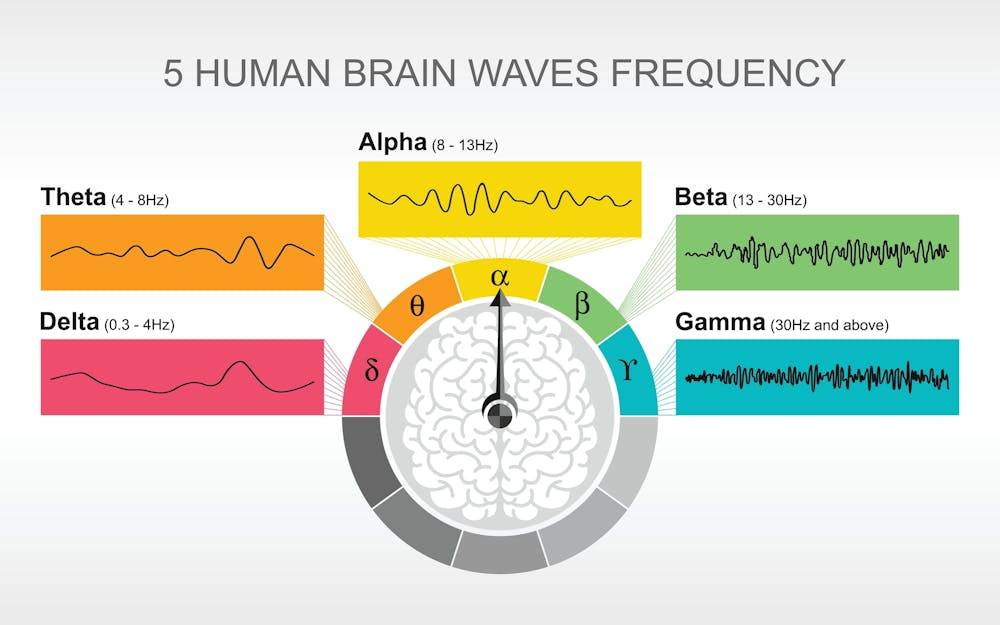
Brainwaves are grouped into five different wavelength categories.
Shutterstock

As neuroscientist Susan Hillier explains in more detail, different brain waves reveal distinct mental states:

  • “gamma” is linked with states or tasks that require more focused concentration
  • “beta” is linked with higher anxiety and more active states, with attention often directed externally
  • “alpha” is linked with being very relaxed, and passive attention (such as listening quietly but not engaging)
  • “theta” is linked with deep relaxation and inward focus
  • and “delta” is linked with deep sleep.

The Spanish study found that the same tasks done inside the enclosed pod vs the open-plan workspace produced completely opposite patterns.

It takes effort to filter out distractions

In the work pod, the study found beta waves – associated with active mental processing – dropped significantly over the experiment, as did alpha waves linked to passive attention and overall activity in the frontal brain regions.

This meant people’s brains needed progressively less effort to sustain the same work.

The open-plan office testing showed the reverse.

Gamma waves, linked to complex mental processing, climbed steadily. Theta waves, which track both working memory and mental fatigue, increased. Two key measures also rose significantly: arousal (how alert and activated the brain is) and engagement (how much mental effort is being applied).

In other words, in the open-plan office participants’ brains had to work harder to maintain performance.

Even when we try to ignore distractions, our brain has to expend mental effort to filter them out.

In contrast, the pod eliminated most background noise and visual disruptions, allowing participant’s brains to work more efficiently.

Researchers also found much wider variability in the open office. Some people’s brain activity increased dramatically, while others showed modest changes. This suggests individual differences in how distracting we find open-plan spaces.

With only 26 participants, this was a relatively small study. But its findings echo a significant body of research from the past decade.

What past research has shown

In our 2021 study, my colleagues and I found a significant causal relationship between open-plan office noise and physiological stress. Studying 43 participants in controlled conditions – using heart rate, skin conductivity and AI facial emotion recognition – we found negative mood in open plan offices increased by 25% and physiological stress by 34%.

Another study showed background conversations and noisy environments can degrade cognitive task performance and increase distraction for workers.

And a 2013 analysis of more than 42,000 office workers in the United States, Finland, Canada and Australia found those in open-plan offices were less satisfied with their work environment than those in private offices. This was largely due to increased, uncontrollable noise and lack of privacy.

Just as we now recognise poorly designed chairs cause physical strain, years of research has shown how workspace design can result in cognitive strain.

What to do about it

The ability to focus and concentrate without interruption and distraction is a fundamental requirement for modern knowledge work.

Yet the value of uninterrupted work continues to be undervalued in workplace design.

Creating zones where workers can match their workplace environment to the task is essential.

Responding to having more staff doing hybrid work post-pandemic, LinkedIn redesigned its flagship San Francisco office. LinkedIn halved the number of workstations in open plan areas, instead experimenting with 75 types of work settings, including work areas for quiet focus.

For organisations looking to look after their workers’ brains, there are practical measures to consider. These include setting up different work zones, acoustic treatments and sound-masking technologies, and thoughtfully placed partitions to reduce visual and auditory distractions.

While adding those extra features in may cost more upfront than an open plan office, they can be worth it. Research has shown the significant hidden toll of poor office design on productivity, health and employee retention.

Providing workers with more choice in how much they’re exposed to noise and other interruptions is not a luxury. To get more done, with less strain on our brains, better design at work should be seen as a necessity.

The Conversation

Libby (Elizabeth) Sander has received Industry Connections Grant research funding from the Australian government.

ref. Why your brain has to work harder in an open-plan office than private offices: study – https://theconversation.com/why-your-brain-has-to-work-harder-in-an-open-plan-office-than-private-offices-study-274946

The peer review system is breaking down. Here’s how we can fix it

Source: The Conversation – Global Perspectives – By Hamid R. Jamali, Professor, School of Information and Communication Studies, Charles Sturt University

Joshua Hoehne/Unsplash

Scientific publishing relies on peer review as the mechanism that maintains trust in what we publish. When we read a journal article, we assume experts have rigorously scrutinised it before publication. This crucial system is currently under severe strain.

We conducted a comprehensive study of Australian academic journals and their editors – surveying 139 editors and interviewing 27. The picture is concerning.

Finding qualified peer reviewers has become one of the most significant challenges editors face. When peer review cannot be secured adequately, both the long-term viability of journals and research integrity suffer. The voluntary system underpinning academic trust is breaking down.

The scale of the crisis

More than half of the editors we surveyed (55%) rated finding reviewers as a significant or very significant challenge.

Some described having to send out 30 or more invitations to secure just two reviewers. One called the process “ridiculous”. Another expressed frustration with authors who had recently published in their journal yet “repeatedly refuse to review” for it.

There are also reviewers who say yes and then never do the review, which delays the process further.

The consequences are significant. Some journals now reject manuscripts outright when they cannot find suitable reviewers, despite the work being in scope and potentially valuable.

Publishing articles takes longer and quality research can go unpublished because it cannot be properly peer reviewed. This is a systemic crisis.

Why academics decline review invitations

Peer review remains entirely voluntary. Academics review manuscripts without payment, formal recognition, or acknowledgement in their workload.

Researchers face pressure to increase the quantity, quality and impact of their research. At the same time, universities are actively discouraging the activities that sustain scholarly publishing, with many editors reporting that their universities have removed editorial and peer review roles from workload models entirely.

As a consequence of workload intensification, scholars protect their time more carefully. Post-COVID shifts in work-life balance have also made academics more selective about how they allocate effort. At the same time, submission volumes continue to grow: more papers to review, fewer willing reviewers, besides the fact that not every author is a qualified reviewer.

There is also a lack of reciprocity. Authors who have just published often decline to review. Some editors suggested publishing in a journal should come with an obligation to review for it.

Current strategies fall short

Editors, of course, have developed workarounds. These include using databases to identify reviewers, running reviewer training workshops to mentor emerging scholars, mining reference lists, and relying more heavily on editorial boards.

They also report rejecting more papers at the initial screening stage, before sending them out for peer review, to reduce the number of manuscripts that need reviewing. But this increases the time required of editors.

An emerging concern raised by some editors is the appearance of reviews generated by artificial intelligence (AI). These reviews can be vague, confusing, and fail to improve manuscripts. This worsens the crisis. Peer review is supposed to be conducted by peers after all.

Systemic change is essential

Short-term strategies won’t solve this crisis.

Some proposed solutions include paying reviewers or introducing mandatory review requirements for authors to review an equal number of articles to those they publish. But these are not easy to implement.

Peer review is so integral to the scholarly system that research would grind to a halt without it.

Yet it remains invisible in how universities and research bodies measure success in the current metric-driven culture.

The core of the problem, as one editor put it, is that “the extrinsic or intrinsic benefits are just not as strong as they used to be”. Therefore, it needs to be better recognised and incentivised by universities and other stakeholders by actions such as including it in workload models, highlighting it in promotion criteria and so on.

Why this matters

This crisis affects all of us who rely on published research. It threatens the viability of journals, particularly local or independent journals not owned by big publishers. But fundamentally, it jeopardises the integrity of the scientific record itself.

We have built a publishing system dependent entirely on voluntary labour, especially for local and independent journals. Without significant change – without formal recognition, support, and genuine incentives – the shortage of reviewers will deepen. Publication schedules will suffer. The diversity of publishing outlets will diminish. Trust in peer review will erode.

The solution requires action from multiple stakeholders including universities, funders and research assessment bodies.

Scholarly communities must understand that sustaining peer review is a shared responsibility. The voluntary system underpinning academic trust has been taken for granted too long. It’s time to start properly valuing it.

The Conversation

Edward Luca is an Associate Editor of the Journal of the Australian Library and Information Association (JALIA) and a Director of the Aurora Foundation Ltd.

Hamid R. Jamali and Simon Wakeling do not work for, consult, own shares in or receive funding from any company or organisation that would benefit from this article, and have disclosed no relevant affiliations beyond their academic appointment.

ref. The peer review system is breaking down. Here’s how we can fix it – https://theconversation.com/the-peer-review-system-is-breaking-down-heres-how-we-can-fix-it-275317

Trump has scrapped the long-standing legal basis for tackling climate emissions

Source: The Conversation – Global Perspectives – By Robyn Eckersley, Redmond Barry Professor of Political Science, School of Social and Political Sciences, The University of Melbourne

Regulating climate emissions just became more difficult. US President Donald Trump announced on Thursday the Environmental Protection Agency (EPA) has repealed its own 2009 legal finding that greenhouse gas emissions endanger human health.

Vindicated by a Supreme Court ruling in 2007, and based on scientific evidence, this so-called endangerment finding by the EPA provided the legal warrant for the regulation of greenhouse gases by the federal government. It underpinned the Obama administration’s Clean Power Plan, which regulated emissions from power plants. In his first term, Trump had tried to weaken it but a new version was introduced by the Biden administration.

Without the endangerment finding, and in the absence of new laws passed by both Houses of Congress, the federal government lacks the legal mandate for direct regulation of greenhouse emissions. The science hasn’t changed, but the obligation to act on it has been scrubbed out.

If you imagine the United States as a collection of big greenhouse gas pots with lids, the Trump administration has been lifting the lids off one by one, releasing more emissions by stepping up fossil fuel extraction, production and consumption. This legal finding held down the biggest lid on climate emissions — and Trump has pulled it right off. This will have a structural effect globally.

What is the endangerment finding, and how was it developed?

In 1970, when the US environment movement was at its most influential, Congress passed an important piece of legislation called the Clean Air Act. It empowered the new Environmental Protection Agency (EPA) to declare something a pollutant if it endangered public health. Initially, it was used to regulate pollutants such as smog or coal ash, the byproducts of industry.

During the George W. Bush presidency, the EPA made a ruling that greenhouse gases were also a pollutant within the meaning of the Clean Air Act. This ruling was challenged in 2007 by fossil fuel interests in the case of Massachusetts v EPA, but the court ruled (five judges to four) that carbon dioxide and other greenhouse gases were “air pollutants” that endangered human health and welfare. It directed the EPA to assess their impact on human welfare — allowing the agency to regulate them.

However, the Bush administration did not push the EPA to implement the ruling.

How was the endangerment finding used for climate action?

President Barack Obama promised to act on climate during his election campaign but faced a hostile Senate when he came to power. His efforts to enact an emission trading bill failed.

However, the endangerment finding allowed him to use his executive power to direct the EPA to regulate emissions. In his first term, the EPA issued new vehicle emissions regulations for cars and light trucks, and some power plants and refineries.

In his second term, Obama extended those regulations to all power plants. These moves represented the US’s first significant steps towards emissions reductions. They enhanced Obama’s diplomatic credibility in the negotiations for the Paris Agreement in 2015. This provided a footing for bilateral cooperation with China on clean energy, helping to build diplomatic trust between the world’s two biggest emitters. Their lead negotiators worked together in the final days of the negotiations to get the Paris Agreement over the line.

Why has Trump overturned it?

On February 12, Trump announced the EPA would rescind the legal finding it has relied on for nearly 20 years. Among all the wrecking balls he has swung at efforts to decarbonise the US economy, this is the biggest. He claims the legal finding hurts Americans. The EPA’s director, Trump-appointed Lee Zeldin, called the rule the “holy grail of climate change religion”.

“This determination had no basis in fact — none whatsoever,” Trump told the media on Thursday. “And it had no basis in law. On the contrary, over the generations, fossil fuels have saved millions of lives and lifted billions of people out of poverty all over the world.”

But without federal action to curb emissions, the impact of climate change will intensify. The US is the “indispensable state” when it comes achieving the goals and principles of the Paris Agreement. Although China’s annual aggregate emissions are much higher than the US’s, the US is the world’s largest historical emitter, which makes it the most causally responsible for the global heating that has already occurred.

Yet the Trump administration regards climate change as a hoax. Trump has withdrawn the US not only from the Paris Agreement but also the UN Framework Convention on Climate Change. In short, the US is now actively fanning the flame of global heating.

In a case of history repeating itself, the arguments being made by Zedlin are pretty much the same as those once put forward by the original opponents of the endangerment finding: claiming that the original legislation was supposed to apply only to local pollutants such as smog, but not greenhouse gases, and that the science isn’t clear.

Those arguments don’t stack up, because there is indisputable evidence that increasing concentrations of greenhouse gases do indeed harm human health and welfare. The EPA is obliged to regulate harmful pollutants at the specific source.

What’s next?

This move will trigger court cases, which won’t be resolved quickly. Zedlin and Trump will face a crowd of litigants, including environment groups and NGOs. The Trump administration will likely ignore these and steam ahead with its “drill, baby, drill” slogan.

If the lawsuits fail, or Trump ignores them, it will be devastating. There will be no overarching federal legislation directly regulating emissions in the US. What’s more, a new Democrat president committed to climate action will not have this easy lever to regulate greenhouse gases. Instead, they will have to get new climate legislation through an intensely polarised Congress.

However, there are ways forward. Assuming Trump is prepared to leave office after his second term (admittedly, a big if), it is possible a new Democratic administration might have the numbers in Congress to enact new climate legislation. In the meantime, climate action is continuing to ratchet up at the state and city level in many US states.

The Conversation

Robyn Eckersley currently receives funding from the Norwegian Research Council.

ref. Trump has scrapped the long-standing legal basis for tackling climate emissions – https://theconversation.com/trump-has-scrapped-the-long-standing-legal-basis-for-tackling-climate-emissions-275921

Ramaphosa and a stable electricity system in South Africa: the devils are in the detail

Source: The Conversation – Africa – By Mark Swilling, Distinguished Professor of Sustainable Development, Stellenbosch University

The strategic significance of the reference to energy reform in South African President Cyril Ramaphosa’s State of the Nation Address cannot be overstated.

Many media reports carried a sense of elation about how this clears the way for resolving the country’s long-term energy crisis. This sentiment is premature: there are many devils in the details that need to be attended to before the country can celebrate.

Ramaphosa announced that the soon-to-be established Transmission System Operator will own South Africa’s transmission assets. This would include all main powerlines and sub-stations. This was contrary to what had been expected, particularly by South Africa’s state-owned power utility Eskom. Its assumption was that it would retain ownership of the transmission assets via its subsidiary, the National Transmission Company of South Africa, that was established in 2024.

Ramaphosa disagreed.

We are restructuring Eskom and establishing a fully independent state-owned transmission entity. This entity will have ownership and control of transmission assets and be responsible for operating the electricity market.

He went on to say:

Given the importance of this restructuring for the broader reform of the electricity sector, I have established a dedicated task team under the National Energy Crisis Committee to address various issues relating to the restructuring process, including clear timeframes for its phased implementation. It will report to me within three months.

The implications of this statement are far-reaching.

Surprise move

The National Transmission Company of South Africa, established in July 2024, is the
current owner and operator of the national grid transmission system. It is entirely owned by Eskom Holdings. It was assumed that, within five years, it would be spun out of Eskom and reconstituted as the Transmission System Operator. In other words, in addition to owning the transmission assets, this entity would be the overall operator of the national grid, the manager of the build programme, and operator of the energy market provided for by the Energy Regulation Amendment Act.

In an opinion piece in December 2025 Dan Marokane, Eskom Group CEO elaborated on an announcement by the Minister of Energy and Electricty when he wrote:

Under the chosen modality, the (Eskom-owned) National Transmission Company of South Africa will remain the owner of transmission assets, entering a right-of-use agreement with the newly established Transmission System Operator … responsible for independently operating transmission assets, whether owned by the National Transmission Company of South Africa or private sector players under the envisioned Independent Transmission Projects programme.

This approach took some parts of government and major business and investment associations by surprise.

The objections by business stem from concerns about how the build-out of new energy capabilities will be financed. The US$25 billion plan on the table provides for a grid transmission build programme over the next 10 years to stabilise South Africa’s energy output.

But where will the money come from?

The money question

South African business and Enoch Godongwana, the Minister of Finance, argue that the only affordable and sustainable way to fund this kind of infrastructure build is to rope in the private sector. That there’s money available is not disputed. As a sustainable development scholar my own research for the National Planning Commission shows that there is a surplus of investment capital in South Africa to fund the just transition.

But there are concerns that investors will be reluctant to invest this capital in an Eskom subsidiary because Eskom’s balance sheet is compromised. And because of its track record and low ratings, Eskom is not regarded by some investors as trustworthy. And even if they do invest in Eskom, because of a perceived higher risk, this would raise the cost of capital and push up electricity prices.

Reportedly, Ramaphosa’s statement came after various consultations during December and January.

Why it matters

The widely supported government-approved Transmission Development Plan established by the National Transmission Company of South Africa makes provision for a R400 billion investment strategy over a 10-year period.

This will make it possible to build 14,400kms of new lines, 271 new
transformers and rehabilitate the existing infrastructure.

Given the state’s fiscal constraints, massive increases in public funding to achieve the plan’s targets are unlikely. It follows that the bulk will have to come from domestic
investors.

That means, if South Africa is truly committed to achieving the plan’s targets then it needs to make sure that the conditions are in place to unlock private capital for public infrastructures.

This is not privatisation. The aim is to mobilize South African capital to meet South Africa’s needs.

The danger of a return to loadshedding

If the conditions for increased private investment in this publicly-owned transmission infrastructure are not put in place, it is very likely that loadshedding will return in 2029.

Eskom’s Medium Term Adequacy Outlook makes clear the risks South Africa faces come 2029/30 when the three oldest power stations – Hendrina, Camden and Grootvlei – need to be decommissioned, and more after them.

The outlook also makes clear that if the much-needed 6GW of gas infrastructure does not come on-line in time to replace coal power, loadshedding is highly likely by 2029. But there is widespread doubt about this gas infrastructure materialising by 2029/30.

And so, if the National Transmission Company of South Africa cannot access the capital needed at the right price to massively expand the grid over the next five years, then the renewables (mainly wind) plus extensive backup that the country needs to prevent loadshedding by 2029/30 will not be able to connect into the national grid.

That will almost certainly result in the return of loadshedding.

Many analysts have raised doubts about whether Eskom has the headroom to raise the required debt against its own balance sheet. If they are correct, creating a “fully independent Transmission System Operator” that controls and owns its own assets is then presented as an easier way to raise debt at a lower price. In turn, this is supposed to have a beneficial impact on tariffs, and prevent loadshedding.

But this is a simplistic understanding of the solution.

The independent Transmission System Operator will take a few years to get established. The report the president wants will describe how the assets can be transferred over time without harming Eskom’s financial position. Sudden shifts should be avoided.

Furthermore, this report will have to deal with the details where the devils reside. In particular, if the Transmission System Operator is fully independent, then what matters is the full independence of the revenue system from Eskom, cost-reflective tariffs and revenue certainty (which includes a solution to the growing mountain of municipal arrears).

The call for a fully independent Transmission System Operator may give lenders the security they need, but the hidden threat is that the risk of revenue shortfalls gets transferred to the sovereign (and ultimately the tax payer).

In the meantime, the transmission build programme must be accelerated. Our research described how the energy transition can be accelerated. We also set out why a renewables-based economy enabled by the transmission build programme is not only the lowest-cost option compared to the alternatives, it is also central to “green growth” which the President described as “[t]he biggest opportunity of all… .”

To establish a fully independent state-owned Transmission System Operator within five years, alignment across three fronts will be required:

  • government-wide support for the policy direction described by the President,

  • managerial interests within the National Transmission Company of South Africa who see their futures beyond Eskom and act out accordingly over the medium- to long-term,and

  • a South African investment community prepared to make big ticket long-term investments in a pipeline of large-scale transmission projects over the next decade.

But this can only work if a revenue model can be designed that is independent of Eskom, guarantees cash flow discipline and ensures cost-reflective tariffs. No document to date addresses this crucial nexus.

With policy and revenue certainty, South African investors will be able to make 20-year investments to implement the Transmission Development Plan. By ensuring that the country avoids loadshedding, these policy-enabled investments will drive accelerated green growth.

The Conversation

Mark Swilling receives funding from National Research Foundation. He is affiliated with the National Transmission Company of South Africa in his capacity as a non-Executive Director. He writes in his academic capacity.

ref. Ramaphosa and a stable electricity system in South Africa: the devils are in the detail – https://theconversation.com/ramaphosa-and-a-stable-electricity-system-in-south-africa-the-devils-are-in-the-detail-276014

Is teasing playful or harmful? It depends on a number of factors

Source: The Conversation – Canada – By Naomi Andrews, Associate Professor of Child and Youth Studies, Brock University

Picture this: a group of girls are sitting at a table in the lunchroom when a boy walks by. One girl turns to another girl and laughingly says: “Oh, isn’t that your boyfriend? You should go kiss him!”

A different girl chimes in: “Yeah, go give him a big kiss!” The girl in question responds: “Shh, stop that. I don’t want him to hear you!” and she smiles, but her face goes red. Her friends continue, making kissing noises and laughing. The others in the group join in laughing as well.

How should the girl interpret that behaviour? Were the teasers being playful — or taunting her in an aggressive way?

The answer to that question is: it depends. Teasing is a common but complex behaviour that can serve pro-social functions, such as bonding, signalling relational closeness. But it can also have anti-social functions and harm the targeted person.

Like all complex social behaviours, teasing interactions are influenced by a number of factors, like the relationship between teaser and target, the content of the tease and the local and broader context.

Study about harmful or playful teasing

In our recent study, we developed a model that organizes these various factors and the links between them.

The study used semi-structured interviews with 27 university students, who we asked to describe a teasing interaction from their adolescence that they experienced as harmful and playful.


Read more:
Too many kids face bullying rooted in social power imbalances — and educators can help prevent this


Based on the interviews with participants, we developed a model to capture the many dynamics involved in teasing (such as the relationship between parties) and profiles of both harmful and playful teasing that shows where these factors differ.

Power differences, motives

As described by research participants, harmful teasing often includes content that is sensitive to the target, and might include a power difference between teaser and target based on factors like gender or sexuality, culture or racialization, as well as wealth or popularity. Some harmful content expressed was about sexuality (more than one participant mentioned homophobia) and ethnicity or religion (one participant was teased about wearing her hijab).


Read more:
Girls in hijab experience overlapping forms of racial and gendered violence


Playful teasing, on the other hand, often happens between close friends and is based on positive motives (for example, to be friendly, for encouragement). However, there is also substantial overlap between playful and harmful teasing.

Teasing can also start out as playful but “cross the line” to become harmful. Our systematic review of existing research about peer teasing revealed that youth consider a few key factors to determine what “crosses the line.”

The teaser’s body language, facial expressions and tone of voice combine to indicate the meaning behind the tease. Intent is important, and a teaser whose intent is clearly playful is less likely to cross the line.

Changes across development

The interplay between relationships and teasing content is also important. Youth in our study indicated that friends should know what to say and what not to say. That is, given their closeness, friends should know what specific content would cross the line. That said, teasing from friends can still hurt, particularly because they can have intimate knowledge of the target’s vulnerabilities.

Other research also points to important changes across children’s development. For example, researchers have noted that teasing is almost always interpreted as harmful by younger children. It isn’t until adolescence that youth recognize the potential for teasing to be playful.

This suggests that advances in cognitive, social and emotional skills across the transition to adolescence may better help youth understand the complexity and nuance that can be a part of these interactions.

For adults working with youth — or thinking about their own lives — it’s important to remember a social interaction may look harmless from the outside, but can still have negative consequences for those involved.

As for the distinction between teasing and bullying, what our research shows is that some harmful teasing can be considered bullying as it meets the hallmarks of that negative behaviour (power differential, intent, repetition), but not always.

Limits of playful teasing

Based on findings from our review and across our multiple studies, we suggest some insights around the limits of playful teasing that could be relevant for youth or adults in their own lives — or adults supporting children and youth.

  1. A good starting place for playful teasing is when the teaser has a positive, close relationship with the person they are teasing. The person being teased should feel comfortable enough to ask for the teasing to stop if they want; and then the teasing should stop right away.

  2. Teasing shouldn’t involve part of the target’s identity or involve sensitive topics. This is why having a close, positive relationship is a good prerequisite, so that the teaser knows what topics are “off-limits.”

  3. We should always be careful about teasing around an audience, as this can amplify the harm — even when the audience involves other friends.

  4. Check in with the person you’re teasing and pay close attention to their reaction. Often playful teasing is reciprocal.

  5. Repeated teasing — even about seemingly benign topics — is more likely to feel harmful.

Lastly, even if a teaser means to be playful, being teased can still hurt. Be prepared to make amends and engage in relationship repair if the playful tease “crosses the line” and harms someone.

The Conversation

The authors do not work for, consult, own shares in or receive funding from any company or organisation that would benefit from this article, and have disclosed no relevant affiliations beyond their academic appointment.

ref. Is teasing playful or harmful? It depends on a number of factors – https://theconversation.com/is-teasing-playful-or-harmful-it-depends-on-a-number-of-factors-273676

When norovirus hits the Olympics: The science behind the spread

Source: The Conversation – Canada – By Jennifer Guthrie, Assistant Professor of Microbiology and Immunology, Western University

Norovirus outbreaks have repeatedly shadowed major international events, and the Olympics are no exception. When thousands of athletes from around the world gather in one place, attention is usually on records broken and medals won. Yet the size and intensity of the Games can create conditions that allow infectious microbes to spread.

The outbreak at the 2026 Milan-Cortina Winter Games has already affected several teams, illustrating the real-world impact of such infections. Highly contagious and able to survive for days on surfaces, norovirus is one example of a pathogen that can move efficiently in these environments.

While norovirus outbreaks are often reported on cruise ships and in schools, global sporting events present additional challenges. Meals are served in centralized facilities, training and recreational spaces are shared and participants travel from countries around the world. In these environments, norovirus can spread rapidly through shared spaces and close contact.

Outbreaks at events like the Olympics are more than logistical setbacks. They reveal how the virus’s biology and the realities of mass gatherings make containment difficult.

What is norovirus?

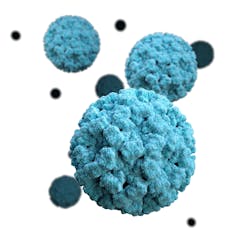
Illustration of blue norovirus particles
Norovirus is the leading cause of food-borne illness worldwide, causing hundreds of millions of cases each year.
(CDC/ Jessica A. Allen)

Norovirus is a highly contagious virus that causes acute gastroenteritis, an inflammation of the stomach and intestines. It is the leading cause of food-borne illness worldwide, causing hundreds of millions of cases each year.

Although infections are often brief, typically lasting 24 to 72 hours, symptoms can be intense. Sudden onset vomiting, watery diarrhea, nausea, stomach cramps and sometimes low-grade fever or body aches are common. Most healthy adults recover quickly, but young children, older adults and people who become dehydrated can experience serious complications.

One reason norovirus spreads so efficiently is its extremely low infectious dose: fewer than 20 viral particles may be enough to cause illness. By comparison, many other viruses require far higher doses to trigger infection.

In practical terms, microscopic contamination on food, surfaces or hands can be enough to make someone sick. The virus spreads primarily through the fecal–oral route, via contaminated food or water, direct person-to-person contact or touching contaminated surfaces and then the mouth.

Norovirus is also remarkably resilient. It can survive on surfaces for days, withstand freezing temperatures and resist many common disinfectants. It is not reliably killed by alcohol-based hand sanitizers, making thorough hand-washing with soap and water essential. Adding to the challenge, infected individuals can spread the virus before symptoms appear and may continue shedding it for days after recovery.

These characteristics of high infectivity, environmental persistence, and the ability to spread before and after symptoms appear make norovirus particularly difficult to control, especially in settings where large numbers of people live, eat and interact in close proximity.

Why the Olympics are a perfect storm

The Olympic Games bring together thousands of athletes, coaches, support staff and spectators for several weeks of intense competition. With back-to-back events, team meetings and travel between venues, athletes are in near-constant contact with teammates, competitors and staff. In the shared spaces of the Olympic Village, even small exposures can allow infections to move quickly.

The rapid turnover of participants and the arrival of athletes from multiple countries further increase the risk. Different viral strains can be introduced, and those infected may unknowingly carry the virus to others or even back home.

In this environment, speed is everything: norovirus can cause illness within a day or two of exposure, allowing outbreaks to spread quickly and challenging even the most well-prepared health teams.

Containment challenges during major sporting events

Isolation, sanitation and rapid testing are critical but difficult at scale. Containing norovirus during a global event like the 2026 Winter Olympics highlights the practical hurdles organizers face. In early February, a norovirus cluster among the Finland women’s hockey team forced the postponement of their opening game against Canada, as more than a dozen players were either ill or quarantined, showing how quickly an infectious outbreak can disrupt competition plans.

Testing is a key limitation. Norovirus is often diagnosed based on symptoms, and although laboratory tests are available, results may be delayed and capacity strained during a massive event. Because people can spread the virus before symptoms appear, transmission may already be underway by the time cases are confirmed.

Sanitation must also intensify quickly. Norovirus survives on surfaces and requires chlorine-based disinfectants applied thoroughly to high-touch areas across venues and athlete housing. Scaling these measures across large facilities demands rapid co-ordination and staffing.

Isolation is another essential tool. Separating symptomatic or exposed athletes can interrupt transmission but may disrupt team routines. After one player on Switzerland’s women’s hockey team tested positive, the entire team entered precautionary isolation and missed the opening ceremony, showing how a single case can have wide-reaching effects.

Containment ultimately depends on co-ordination among organizers, medical teams and public health authorities, along with clear communication to safeguard both health and competition.

Beyond the Games

The Olympics showcase the best of global unity, but they also reveal how tightly interconnected our world has become.

Managing infectious diseases at events of this scale requires constant preparedness, reminding us that public health planning is as essential as athletic preparation.

The Conversation

Jennifer Guthrie receives funding from the Canada Research Chairs program, the Canadian Institutes of Health Research, and the Natural Sciences and Engineering Research Council of Canada.

ref. When norovirus hits the Olympics: The science behind the spread – https://theconversation.com/when-norovirus-hits-the-olympics-the-science-behind-the-spread-275782

The IOC’s ban of a Ukrainian athlete over his helmet reveals troubling double standards

Source: The Conversation – Canada – By Adam Ali, Assistant Professor, School of Kinesiology, Western University

On Feb. 12, the International Olympic Committee (IOC) banned Ukrainian skeleton athlete Vladyslav Heraskevych from competition for wearing a helmet that featured images of fellow Ukrainian athletes who had been killed in Russia’s invasion of his home nation.

According to the Office of the United Nations High Commissioner for Human Rights, close to 15,000 Ukrainian civilians have been killed and 40,000 have been injured since Russia invaded Ukraine in February 2022.

Over the past four years, more than 450 Ukrainian athletes — including those adorned on Heraskevych’s helmet — have been killed, with many more injured or left with long-term disabilities.

The IOC’s decision has once again placed the Olympic movement at the centre of a longstanding debate over neutrality, political expression and human rights.

Neutrality and expression

The IOC stated that Heraskevych violated the athlete expression guidelines, saying:

“It is a fundamental principle that sport at the Olympic Games is neutral and must be separate from political, religious and any other type of interference. The focus at the Olympic Games must remain on athletes’ performances, sport and the harmony that the Games seek to advance.”

The IOC’s current rules on athlete expression stem from Rule 50 of the Olympic Charter, which doesn’t permit any kind of “demonstration or political, religious or racial propaganda” in Olympic areas.

The IOC’s decision has already been decried as unlawful and discriminatory by legal and human rights experts, who argue that it is inconsistent with the IOC’s application of its own policies in other instances.

For example, Italian snowboarder Roland Fischnaller displayed a Russian flag on his helmet, even though Russia’s national symbols were officially banned at the Games.

After Russia’s invasion of Ukraine, the IOC initially barred Russian athletes from competing under their national flag but later permitted some to participate as neutral athletes. This has drawn criticism, particularly in cases where Russian athletes have been linked to activity supporting the war in Ukraine.

While some might justifiably point to contradictions in the application of Olympic rules on athlete expression, as well within the policies themselves, the IOC’s decision illuminates a longer-standing concern.

As many scholars, activists and others have argued for decades, the IOC, with its current structure, is ill-equipped to provide global leadership in promoting peace and human rights through sport.

The limits of the Olympic Truce

This contradiction can be traced as far back as the Olympic Truce, first instituted in the 9th century BC in ancient Greece. In its contemporary form, the truce is intended to protect “as far as possible, the interests of the athletes and sport in general, and to harness the power of sport to promote peace, dialogue and reconciliation.”

In practice, however, peacemaking has been more of a rhetorical than actualized endeavour within the Olympic movement. The IOC frequently emphasizes sport’s perceived ability to help athletes and fans from different parts of the world overcome prejudice and discrimination through the Olympic Games.

Yet this key part of the Olympic mission is complicated by the IOC’s wish to maintain its image as an “essentially apolitical international organization, as political scientist Liam Stockdale has noted.

Maintaining a politically neutral stance while claiming to promote peace in global conflicts — such as the ongoing Russian invasion of Ukraine — is both contradictory and a purposeful form of naivete that allows the IOC to “sportswash” its way to further fill its financial coffers.

Although the IOC has often remained silent — and at times restricted athletes’ voices — on matters of social justice and human rights, its sanctions on Russia demonstrate that it is willing to take explicit positions when it deems necessary.

This stands in stark contrast to its banning of Heraskevych for highlighting the costs of Russia’s military adventure — Ukrainian lives.

Double standards at play

The debate over neutrality has also extended beyond Ukraine. The IOC has faced intense criticism over its continued silence towards Israel’s military campaign in Palestine following the Oct. 7, 2023 attacks by Hamas.

Israel’s actions have been described as constituting genocide by human rights organizations Amnesty International and Human Rights Watch, an independent United Nations commission and academic experts.

Hundreds of Palestinian athletes have been killed in Israeli attacks, according to the Palestine Olympic Committee and the Palestinian Football Association.

Committees, sport clubs, scholars and other advocates have called for Israel to be banned from the 2024 Paris Games and the current Winter Games in Italy.

To date, however, the IOC has not imposed restrictions on Israeli athletes or officials, maintaining its position that the Games must remain politically neutral. This reveals the IOC’s double standards in determining whose human rights and livelihoods are worth speaking up for, and whose they consider disposable.

Such actions mean it’s that much more imperative for athletes like Heraskevych to continue using one of global sport’s largest spectacles to shed light on atrocities taking place in Ukraine, Gaza and elsewhere, while athletic feats are celebrated on the ice, slopes and half-pipes in Italy.

The Conversation

Adam Ali does not work for, consult, own shares in or receive funding from any company or organisation that would benefit from this article, and has disclosed no relevant affiliations beyond their academic appointment.

ref. The IOC’s ban of a Ukrainian athlete over his helmet reveals troubling double standards – https://theconversation.com/the-iocs-ban-of-a-ukrainian-athlete-over-his-helmet-reveals-troubling-double-standards-275896

Gene-edited meat in Canada: To label or not to label?

Source: The Conversation – Canada – By Gwendolyn Blue, Professor, University of Calgary

The Canadian government’s recent approval of the first gene-edited animal to enter the food system has reignited debates over whether foods produced using genetic engineering techniques should be labelled.

Gene-edited animals, including faster-growing fish, heat-tolerant cows and disease-resistant pigs, have already been approved in the United States, Japan and several countries in South America. These decisions, including Canada’s approval, were made with limited public awareness and input.

Advocacy groups such as the Canadian Biotechnology Action Network, political parties including the Bloc Québécois and organic pork producers are calling for mandatory labelling of gene-edited meat in Canada.

Public demand

Public opinion research indicates that many Canadians view labelling gene-edited foods as essential. Polling commissioned by the Canadian Health Food Association suggests many Canadians want greater transparency about the use of gene editing for food production.

Studies in the United States also suggest that consumer acceptance increases when the benefits of gene editing are clearly communicated.

Similarly, a survey commissioned by the company that developed Canada’s first approved gene-edited pig found that many Canadians would consider purchasing gene-edited pork if health and environmental benefits were delivered.

Why label gene-edited meat?

Food labelling serves multiple purposes: it provides information about a product’s ingredients and the production methods involved. Labels also play a democratic role by promoting transparency and accountability. This in turn allows consumers to make choices that reflect health considerations as well as their ethical, political and environmental values.

Debates over the labelling of gene-edited meat often hinge on tensions between ethical principles such as protection and autonomy. On the one hand, governments are tasked with protecting the food supply and ensuring food safety. On the other hand, individual consumers have the right to know how food is produced and to make choices accordingly.

Proponents of labelling argue that consumers have a fundamental right to know what’s in their food, how it was produced and what potential risks are involved.

With gene-edited meat, public concerns include health and safety risks, as well as environmental consequences, animal welfare, corporate control of the food system via patents and licensing and threats to food sovereignty.

For example, gene-edited animals could potentially be harmed by unintended consequences, including off-target side effects. It is imperative to ensure traceability in commercial settings with clear mechanisms to report on animal health and welfare.

By enhancing consumer choice, labelling can also foster market competition.

Opponents of labelling argue that gene-edited foods are scientifically proven to be safe and that labelling could mislead consumers into assuming there is a risk where none exists. They argue that labels can create fear and confusion, potentially undermining the adoption of breeding techniques that could enhance health, reduce environmental impacts and improve food security.

Labelling also has political consequences. Market-based approaches shift responsibility to individual consumers, which can foreclose other avenues for collective decision-making about how food systems should be governed.

Mandatory versus voluntary labelling

Canada currently doesn’t require the labelling of genetically modified (GMO) or gene-edited foods. Under the Food and Drugs Act, labelling is mandated only when a product poses a health or safety concern.

This is at odds with approaches elsewhere. For example, the U.S. National Bioengineered Food Disclosure Standard requires companies to label genetically engineered foods, while decisions about the labelling of gene-edited foods are made on a case-by-case basis.

In Canada, voluntary labelling is permitted provided it’s truthful and not misleading. The Canadian Standards Board, scheduled soon to cease operations due to budget cuts, provides guidance on voluntary labelling for genetically engineered foods. Notably, its definition of genetic engineering excludes both conventional breeding and gene editing.

The Canada organics sector relies on voluntary non-GMO food labelling. Similar to international organic standards, certified organic products in Canada prohibit the use of genetically engineered and gene-edited seeds, feed and food.

Following Health Canada’s approval of gene-edited pigs in January, organic pork producer duBreton introduced Canada’s first verified non-gene-edited and non-cloned meat label.

This proposed label was also a response to a now-paused federal proposal to exclude cloned animals from the definition of novel foods, a move that would allow cloned meat to enter the market without consumer or government notification.

A lack of public engagement

The labelling of gene-edited meat raises several questions. Food labels can support consumer autonomy and transparency, but labels are not good at conveying complicated information. Labels also privilege market forces for making collective decisions, instead of other democratic processes such as public deliberation and stringent regulation.

In a regulatory context that largely promotes biotechnology while offering few opportunities for meaningful public engagement, it remains unclear whether labelling is the most effective democratic approach to gene-edited meat in Canada.

As gene-edited animals potentially become more common in global food systems, the question is not just whether to label these products, but which political opportunities labelling creates or restricts — and for whose benefit.

The Conversation

Gwendolyn Blue receives funding from the Social Sciences and Humanities Research Council. She is also affiliated with the Natural Sciences and Engineering Research Council funded training program, Genome Editing for Food Security and Environmental Sustainability (GEFSES).

ref. Gene-edited meat in Canada: To label or not to label? – https://theconversation.com/gene-edited-meat-in-canada-to-label-or-not-to-label-274904