How vaccines give our immune systems a home advantage

Source: The Conversation – Canada – By Anthony Wong, Post-Doctoral Fellow, Immunology, University of British Columbia

We are now approaching six years since COVID-19 was declared a pandemic by the World Health Organization, yet talk of vaccines and our immune systems persists in our cultural conversations — from political arenas to the dinner table.

The vaccination conversation has extended beyond the scientific community, resulting in controversial changes to the recommended vaccination schedule for children amid other changes to public health policy and funding cuts to vaccine development.

These changes coincide with reports of rising outbreaks of infectious diseases like measles in Canada and other countries that have historically been measles-free.


Read more:
US experiencing largest measles outbreak since 2000 – 5 essential reads on the risks, what to do and what’s coming next


Scientific evidence points to vaccines helping, rather than hindering, our immune systems. Each of us possesses a team of immune cells dedicated to protecting us against outside enemies or “pathogens” — harmful bacteria or viruses that can make us sick, like the viruses that cause COVID-19 or the common cold.

Front-line defenders

There are two kinds of players on our team of immune cells with distinct roles. The first are “front-line defenders” that stand guard and can respond immediately to intruding pathogens that enter our home turf.

These kinds of immune cells, called “innate” immune cells, are found in peripheral tissues around our bodies, including our respiratory tract, digestive tract and even on the surface of our skin. Their job is to rapidly clear pathogens by eating them in a process called “phagocytosis” (derived from an ancient Greek word meaning “to eat”) or releasing toxic compounds into their surrounding environment to target the pathogen indirectly.

Usually, innate immune cells can fight off intruding pathogens on their own. However, sometimes the enemy team is so formidable that front-line defenders are overwhelmed and call for backup.

Advanced responders

Another play that innate immune cells can make when things get tough is to pass the immune response on to the second kind of immune player, the “advanced responders.”

These immune cells, known as “adaptive” immune cells, must be activated by innate immune cells that have encountered the pathogen in order to respond.

Innate immune cells instruct adaptive immune cells on how to recognize the enemy based on unique molecular components of the bacteria or virus on the enemy team — and once adaptive immune cells acquire their target, they mount a powerful and highly specific response to the target pathogen.

Adaptive immune cell players include B cells, which secrete antibodies — small molecular agents that bind to the target pathogens and clear them from the body — as well as T cells, which can directly kill cells infected by the pathogen or provide extra support to B cells.

Importantly, a portion of adaptive immune cell populations can retain memory of the specific virus or bacteria they learned to fight off in an infection — so if you were to encounter that same pathogen again in the future, your adaptive immune cells would be able to clear the infection much faster, without needing activation from innate immune cells.
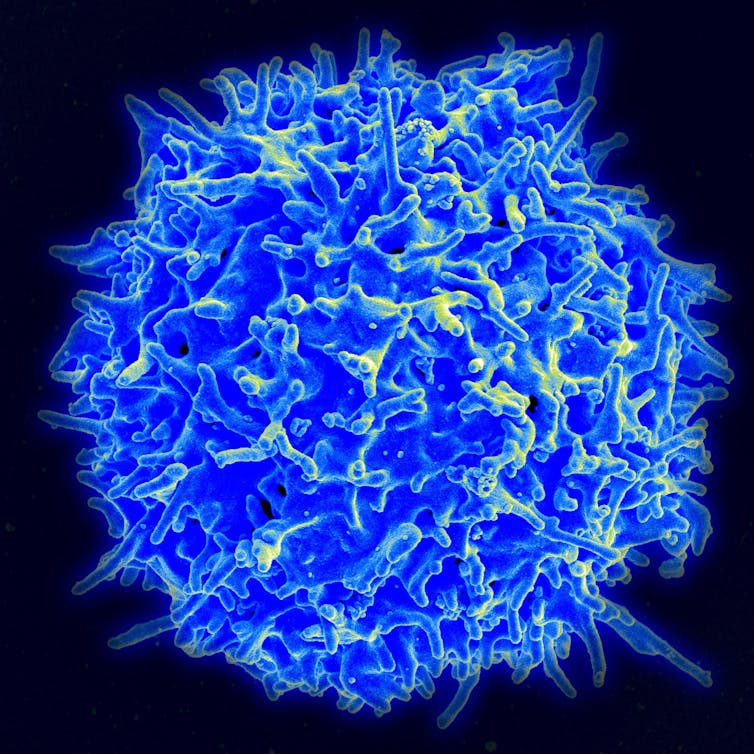
A bright blue cell.
A scanning electron micrograph of a healthy human T cell (also called a T lymphocyte).
(National Institute of Allergy and Infectious Diseases)

Training the team

While our team of immune cells can develop protection against a pathogen after fighting an infection, vaccines train it in advance — without requiring us to get sick.

Vaccines contain a component of a pathogen of interest or a compromised version of the pathogen, which does not have the capacity to cause disease.

For example, the COVID-19 vaccine contains a molecule called “mRNA” that encodes a small component of the virus that causes COVID-19, but not the virus itself.

This allows our immune cells to learn how to recognize and respond to the COVID-19 virus in advance of a potential infection. Specifically, the adaptive immune cells that will retain memory of the response can provide long-term protection if we encounter the real COVID-19 virus in the future.

Put simply, vaccines train our home immune players to prepare for the big game, before they face the enemy team — which is what any good coach would encourage.
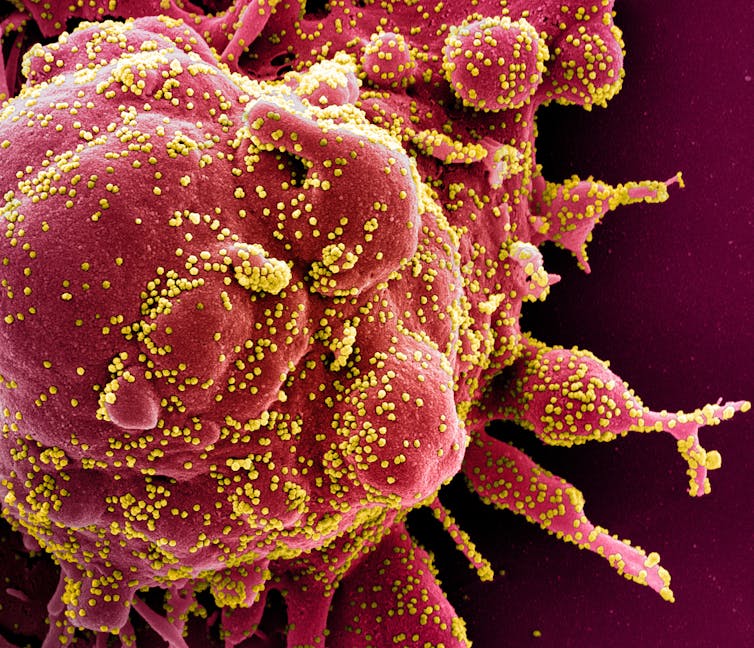
A red and yellow cell.
Colorized scanning electron micrograph of a cell (red) from a patient sample, heavily infected with SARS-COV-2 virus particles (yellow). Image captured at the NIAID Integrated Research Facility in Fort Detrick, Md.
(National Institute of Allergy and Infectious Diseases)

Moving forward

Vaccines, including mRNA vaccines used for COVID-19, are not a new strategy of disease prevention — they have been safely and effectively used for decades to protect us from various infectious diseases.


Read more:
It’s World Immunization Week. How prepared is Canada if vaccines are needed for a new pandemic?


For example, a successful vaccination campaign against smallpox led to its eradication from the world in 1980, which is widely considered a milestone of modern medicine. Today, vaccines are tightly regulated and monitored by health-care officials, including local public health authorities such as pediatricians.

Here in Canada, new vaccine technology is currently being developed by leading researchers for COVID-19 and other diseases. These continued efforts will equip current and future generations with immune protection against old and new foes — and allow vaccines to continue to provide our team with a home advantage.


Immunity and Society is a new series from The Conversation Canada that presents new vaccine discoveries and immune-based innovations that are changing how we understand and protect human health. Through a partnership with the Bridge Research Consortium, these articles — written by experts in Canada at the forefront of immunology, biomanufacturing, social science and humanities — explore the latest developments and their impacts.

The Conversation

Anthony Wong is a Post-Doctoral Fellow at the University of British Columbia that receives funding from Canadian Institutes of Health Research (CIHR), Health Research BC, and Canadian Biomedical Research Fund and Biosciences Research Infrastructure Fund (CBRF-BRIF) on behalf of the AVENGER project grant. Anthony Wong is affiliated with the Bridge Research Consortium (BRC).

ref. How vaccines give our immune systems a home advantage – https://theconversation.com/how-vaccines-give-our-immune-systems-a-home-advantage-275066

Sand mining and Kenya’s building boom: better rules are needed, but not from the top down

Source: The Conversation – Africa – By Kennedy Mkutu, Associate Professor, International Relations, United States International University

The sun is rising in Kenya’s Kajiado county, just outside Nairobi, and a truck is rumbling over dusty ground towards a riverbank. Young men guide the driver to a parking spot and then spring into action, each with a scoop, filling the truck from a heap of the most desirable building sand for which the area is famous.

The driver passes the time with a snack and a mug of tea poured from a flask by a mobile vendor. He pays each of the young men around US$10 for their labour and the landowner US$40-US$50 for the sand. The driver then starts out on his journey to deliver sand to hardware stores, building sites or informal selling points in Nairobi and its suburbs, paying county taxes and police bribes along the way.

Sand mining sites like this have been mushrooming along Kenya’s numerous river systems. They are serving a construction boom sparked by urbanisation and grandiose infrastructure programmes.

Yet Kenya has been singled out by the UN’s environmental programme as a country of unsustainable sand harvesting. The industry is troubled by insufficient regulation, environmental degradation and, at times, violent conflict.

We are peace and security researchers who have studied controversies around sub-Saharan Africa’s infrastructure projects. In a recent study, we researched contestations around sand harvesting, as well as sand commodity chains in Kenya. We mapped where industry benefits are concentrated and looked at how locally established governance mechanisms work to distribute benefits – and harms.

We examined sites in seven Kenyan counties. In the west, we visited Homa Bay near Lake Victoria. Outside Nairobi, we studied sites in Nakuru and Kajiado. In the drier eastern parts, we visited Taita Taveta and Makueni – once a hotspot of violent conflict among sand mining cartels. In dry regions, sand is critical to water storage, where it’s used to create dams that boost underground water storage. On the Kenyan coast, we studied sites in Kwale and Kilifi, which serve developments in and around the city of Mombasa. We spoke to loaders, landowners, leaders of informal youth groups and cooperatives, transporters, brokers and administrators.

We found the industry to be ordered and unruly at the same time.

National regulation on sand harvesting in most counties is rarely enforced. Therefore, the stability of extraction and transport of sand hinges on complex informal rules that distribute the benefits of the industry. The greatest profits in the sand industry are not made at the extraction sites but higher up along the commodity chain. Sand supports large numbers of people at the community level.

We argue that making the most of Kenya’s sand industry doesn’t lie in introducing top-down legislation. Rather, existing informal regulation should be harnessed and harmonised within formal rules. This would go a long way towards ensuring sustainable livelihoods and widespread inclusion.

The winners and losers

Scholarship on the extraction of natural resources across the global south has demonstrated the tendency toward the removal of natural resources and accumulation by powerful agents. They forcefully control mining activities and value chains and leave behind high social and ecological costs, a phenomenon known as extractivism.

Extractivism depletes ecosystems and deprives communities of the use of natural resources, fair access to them and the opportunity to benefit from the wealth generated.

Does sand harvesting in Kenya display these characteristics? Not entirely.

Sand is perhaps a bit different to precious minerals like gemstones. It’s bulky, less valuable, and in many countries widespread and accessible with basic tools. Sand is found in rivers and fields, and on private and common land.

At harvesting sites, groups of loaders and homegrown sand cooperatives are in many places highly organised with rules, rosters and even external shareholders. They ensure a wider distribution of gains at the local level. Loader group membership positions are coveted and bought at a high price from group organisers, and some groups or cooperatives build up economic strength and attract better transporting contracts. Larger contractors dictate conditions, driving down prices at the harvesting sites.

As a development mineral, sand also feeds concrete production that’s pivotal for grand infrastructure and housing schemes. These have the potential to boost economic growth.

However, there are certainly some tendencies for benefits to flow away from the source. Unsurprisingly, the largest profits are made at urban markets. While truck drivers at harvesting sites pay around US$90 for a 12-ton truck of sand, the same load is sold in Nairobi for up to US$400. In-transit costs such as taxes, bribes, fuel and salaries amount to around US$100.

Landowners accumulate revenues, too. However, where land is contested upon a backdrop of colonial and post-colonial dispossession – such as in the Kedong site in Nakuru – this can be particularly controversial. At one point when landowners hired excavators, community members rioted and destroyed them, fearing complete displacement from their source of livelihood.

County governments also benefit greatly from local taxation and have little incentive to regulate overextraction from fragile sites.

Bribery in the sand business also thrives on the informality. The police capitalise on regular sand transporting routes and uniformly request US$4-8 from every truck. Overloading can be managed with a “fee” at weighbridges. Some drivers find ways to store sand and sell it without their bosses’ knowledge.

Though ecological harms were not fully explored in our work, we found evidence of them, particularly in drier counties, such as Taita Taveta and Makueni, where river sand is a vital container for water storage. Communities are aware of the environmental cost of overextraction and call for better regulation of the industry.

What needs to happen

Effective collaboration is needed between various layers of governance to make the sand trade in Kenya equitable and sustainable.

This is largely absent. One notable exception is the robust and participatory management of sand in Makueni county, which also took decisive action against cartels and prevented exports out of the county until ecosystem recovery was certain.

Instead of introducing top-down legislation to manage the industry, however, harnessing existing informal regulations and harmonising them within formal rules would go a long way towards ensuring sustainable livelihoods and widespread inclusion, as the Makueni case has demonstrated.

These discussions matter because Kenya, among many other countries in the global south, is rapidly urbanising and has a number of huge infrastructure projects in the works.

Several of the sites we studied provided sand for the construction of the Standard Gauge Railway (built from 2014 to 2019). While many communities benefited from the project, it also exposed unequal relations between government, businesses and communities that made exploitative sand extraction possible.

Given that the railway line will be extended to the Ugandan border, regulation that allows for broad local participation is critical for assuring trust in the Kenyan governance system.

The Conversation

Kennedy Mkutu receives funding from FORMAS the Swedish Research Council for the promotion of research for a sustainable society as well as from VR – the Swedish Research Council.

Jan Bachmann receives funding from FORMAS, the Swedish Research Council for the promotion of research for a sustainable society as well as from VR – the Swedish Research Council.

ref. Sand mining and Kenya’s building boom: better rules are needed, but not from the top down – https://theconversation.com/sand-mining-and-kenyas-building-boom-better-rules-are-needed-but-not-from-the-top-down-275321

Mediation can speed up justice in South Africa: legal scholar makes the case

Source: The Conversation – Africa – By Debbie Collier, Professor of Law and Director of the Centre for Transformative Regulation of Work, University of the Western Cape

Communities in South Africa continue to be fractured by service delivery failures, crime and gang-related violence. The impact is felt by families and communities, and in schools, universities and businesses across the country.

A vicious cycle is being fuelled by a number of factors. These include constraints on law enforcement and credible allegations of corruption and political interference in the criminal justice system. At the same time, the judiciary is under strain.

The result is that government agencies, municipalities and service providers are frequently drawn into disputes. If litigated, these can take years to resolve. This drains public resources and further erodes trust in public institutions. Justice delayed is justice denied.


Read more:
Legal claims for medical mistakes are on the rise in South Africa: what’s behind the trend


Mediation can provide a crucial, timely and constructive way to resolve conflict before matters escalate into violence or protracted litigation. Mediation, facilitated by an impartial third party, supports dialogue and meaningful engagement between parties, and the settlement of disputes on mutually acceptable terms.

Mediation paved the way for South Africa’s transition from apartheid to democracy in 1994. It is deeply rooted in the country’s approach to conflict resolution and social dialogue.

Mediation is common practice in community disputes and in labour law and other statutory dispute resolution contexts. But its use in court proceedings has been limited.

The rules of court for the Magistrates’ Courts and the High Court provide for mediation in civil litigated matters. But the uptake has been slow. And the court-annexed mediation project in the Magistrates’ Courts has been put on hold.

Recent developments have seen a shift toward mandatory mediation in civil litigated matters. These include the South Africa Law Reform Commission’s discussion paper. This was published in early 2025 for public input on mediation in civil, commercial and community disputes.

As a labour law scholar and in leading the South African Law Reform Commission’s project on alternative dispute resolution, I have come to appreciate how mediation can transform conflict. It can provide an accessible dispute resolution mechanism across diverse contexts.

But to optimise the use of mediation the following are required:

  • wide-ranging awareness of mediation across institutions and communities and within the legal profession

  • support for training and skills development, particularly for community mediators who play a crucial role in dispute resolution and transforming conflict

  • an integrated and enabling regulatory, institutional and skills development framework, responsive to the diverse contexts in which mediation takes place.

The role of mediators in different contexts

A skilled mediator can mean the difference between conflict that results in violence, destruction and tragedy, and a negotiated outcome and constructive dialogue.

Community leaders, including religious and traditional leaders, can resolve a range of disputes and manage conflict within communities. This includes curbing community violence, de-escalating election violence, and intervening in student unrest and the destruction of property.

Training for community mediators

Mediation training should also be provided to counteract bullying in schools. Scholars can be equipped to intervene as peer mediators and resolve conflict constructively.

Mediation and peace building skills could also equip women to dismantle violence.

Mediation is already used in specialised statutory institutions and tribunals such as the Commission for Conciliation, Mediation and Arbitration, the Companies Tribunal and the South African Revenue Service. Its use can be extended to other administrative bodies supported by an enabling framework.

Mediation is part of a range of alternative dispute resolution mechanisms that can facilitate early dispute resolution and avoid protracted litigation. Hence many countries use court-connected mediation and alternative dispute resolution to improve access to justice.


Read more:
Do you need your day in court? The evolution of dispute resolution


Momentum towards court-connected mandatory mediation

A number of developments are under way, including:

However, the idea of mandatory mediation has received mixed reactions.

Concerns

A range of arguments against mandatory mediation have been mounted. These include:

Safeguards must be put in place to mitigate these risks. This includes judicial oversight and case management to ensure that mediation in court processes is used appropriately and supports access to justice.

Mediation isn’t a substitute for court proceedings in matters better suited to litigation. Judicial reform remains important, and litigation must be accessible in cases where it is best suited.

A compelling case for mediation

Integrating mediation within judicial processes provides an opportunity to resolve structural tensions within South Africa’s plural legal system.

South Africa’s legal system incorporates elements of English common law and Roman-Dutch civilian law, alongside deep-rooted systems of indigenous laws and traditional methods of conflict resolution. The result is a dissonance between the community oriented features of indigenous customs and the individualistic and industrial nature of statutory laws.

This dissonance is countered by the relational and restorative justice potential of mediation, which resonates with traditional methods of conflict resolution and opens up space to centre the foundational values of indigenous laws.

Next steps

The move towards mandatory mediation adds momentum to an evolving legal system and legal practice. It affirms indigenous values and practices.

Mediation could relieve pressure on the justice system and contribute to an enabling environment for social and economic development.

Access to justice is a public good. It requires access to appropriate legal resources, institutions, and dispute resolution mechanisms. Importantly, building an effective justice system is an ongoing project and a complex human undertaking that cannot be achieved through policy and law reform alone.

The Conversation

Debbie Collier is a commissioner of the South African Law Reform Commission (SALRC) and the project leader for Project 94 on Alternative Dispute Resolution. The views expressed in this article are not necessarily those of the SALRC. Debbie Collier receives funding from the National Research Foundation (NRF).

ref. Mediation can speed up justice in South Africa: legal scholar makes the case – https://theconversation.com/mediation-can-speed-up-justice-in-south-africa-legal-scholar-makes-the-case-270110

Burkina Faso has dissolved all political parties: why African coup leaders often turn on the people who supported them

Source: The Conversation – Africa (2) – By Salah Ben Hammou, Postdoctoral Research Associate, Rice University

The end of January 2026 effectively marked the end of party politics in Burkina Faso. On 29 January, Captain Ibrahim Traoré’s government formally dissolved all political parties, including those that had supported his September 2022 coup.

Parties had already been suspended since Traoré took power, but the junta framed this latest step as part of a broader state “restructuring” meant to reduce social divisions.

In practice, the move shuts down what little space remained for independent civic participation and further concentrates authority in Traoré’s hands. Party assets have also been taken over by the state.

For a junta that initially relied on enthusiastic civilian backing, the decision sits awkwardly alongside its rhetoric of popular mobilisation and revolutionary renewal. Yet this trajectory is far from surprising.

Across the Sahel and elsewhere in Africa, supporters of military takeovers are discovering that early enthusiasm rarely translates into lasting political influence. Coups that begin with popular support often end with the junta sidelining or overtly suppressing the very groups that helped stabilise its hold on power. The trend goes back decades.

I have extensively studied and written on military coups for nearly a decade, especially the recent coup wave in Africa.

I argue that once in power, military rulers have little incentive to share authority. Civilian groups are useful in the first days of a takeover. They provide crowds, legitimacy, and a sense that the coup reflects public frustration.

But those same groups quickly become inconvenient. They have their own leaders, their own constituencies, and their own expectations for the transition. They can criticise delays or mobilise supporters. This independence is precisely what juntas fear.

Early civilian enthusiasm should not be mistaken for a durable mandate, nor should it be read as evidence that a transition will remain inclusive.

Burkina Faso’s recent party ban is only the latest reminder. Support from outside the barracks may help usher in or stabilise a coup, but it rarely guarantees any lasting influence over what follows.

Buyer beware: Civilian support rarely leads to lasting influence

Contrary to how we typically think of coups, military takeovers frequently attract support from at least some segments of the civilian population. Sometimes civilians actively encourage a coup. They can also help ensure that it succeeds and stabilises.

These dynamics have been especially visible during Africa’s recent wave of coups. From Mali to Niger, military interventions have been welcomed, celebrated, and even endorsed by civil society groups, political parties, and other domestic actors. For coup leaders, these alliances offer visible legitimacy and a ready-made support base.

But an equally common trend follows. While civilian groups pledge support to maintain some influence in the post-coup order, juntas frequently sideline, marginalise, or altogether suppress even their erstwhile allies.

This pattern appears across eras and regions, cutting across ideological and social lines.

After Sudan’s 1969 coup, for instance, the Communist Party initially aligned itself with the Free Officers led by Col. Jaafar Nimeiri, offering crucial political backing. But within seven months, Nimeiri began sidelining the party, removing key Communist figures from government. By 1971, he had turned on them entirely, launching a brutal crackdown that crushed the party.

A similar trajectory followed Egypt’s 2013 coup. The protest movement Tamarod openly advocated for and later endorsed General Abdelfattah el-Sisi’s takeover. The influence of the movement and other political parties soon evaporated as civic space shrank.

Buyer’s remorse among coup supporters in the Sahel

Today, many of the civilian groups that championed the Sahel’s recent coups are going through the same experience as their predecessors elsewhere.

In Mali, the June 5 Movement–Rally of Patriotic Forces (M5‑RFP) – a broad coalition of opposition parties, clerics and activists associated with Imam Mahmoud Dicko – has become one of the most outspoken critics of Colonel Assimi Goïta’s junta.

Yet M5‑RFP was among the coup’s earliest supporters. After months of mass protests against President Ibrahim Boubacar Keïta, the movement welcomed the military’s intervention in August 2020 and expected to help steer the transition.

That expectation faded quickly. The junta sidelined M5‑RFP during the formation of the transitional government, excluding many of its leaders from key positions.

When Goïta carried out a second coup in May 2021, removing the civilian interim leadership and consolidating the military’s control, the movement’s influence shrank even further. What began as a tactical alliance ended with M5‑RFP pushed to the margins.

The aftermath of Guinea’s 2021 coup followed a similar trajectory. Opposition leaders against former president Alpha Conde initially welcomed Gen. Mamady Doumbouya’s coup. Expecting a meaningful role in the transition, party leaders even urged the Economic Community of West African States (Ecowas) not to impose sanctions and publicly legitimised the coup as a necessary move.

But much like the Malian experience, the junta did not accommodate the parties for their support, barring them from substantial representation. Little more than a year later, party members were arrested when they voiced opposition to their lack of inclusion in the transition.

Seen in this comparative light, Burkina Faso’s recent party dissolution fits an established pattern. Early political backing does not guarantee continued access or influence once military rulers entrench themselves.

The Conversation

Salah Ben Hammou does not work for, consult, own shares in or receive funding from any company or organisation that would benefit from this article, and has disclosed no relevant affiliations beyond their academic appointment.

ref. Burkina Faso has dissolved all political parties: why African coup leaders often turn on the people who supported them – https://theconversation.com/burkina-faso-has-dissolved-all-political-parties-why-african-coup-leaders-often-turn-on-the-people-who-supported-them-275637

How do people know their interests? The shortest player in the NBA shows how self-belief matters more than biology

Source: The Conversation – USA – By Greg Edwards, Adjunct Lecturer of English and Technical Communications, Missouri University of Science and Technology

Muggsy Bogues didn’t let his height get in the way of his mastery of the game. Focus on Sport/Getty Images

Curious Kids is a series for children of all ages. If you have a question you’d like an expert to answer, send it to CuriousKidsUS@theconversation.com.


How do people know their interests? For example, one person likes art and the other does not, but how and why does that happen? – Leia K., age 12, Redmond, Washington


Standing at 5 feet 3 inches tall and weighing 136 pounds, Muggsy Bogues did not fit the typical profile of a National Basketball Association athlete when he played professionally from 1987 to 2001. The average NBA player during Bogues’ rookie season was 6 feet 7 inches tall and weighed 208 pounds.

Despite that, Bogues had a successful NBA career, finishing among the league’s all-time leaders in career assists. He even made an appearance alongside Michael Jordan in “Space Jam.”

Muggsy Bogues in mid-air, arm extended to the net with basketball in hand, players of the competing team surrounding him
Believing you can fly to the net can help you stand among the giants.
Focus on Sport/Getty Images

It’s true that a person’s DNA shapes their physical traits, which can influence what activities feel possible for someone. For example, Jérémy Gohier, the 7-foot-6 Canadian eighth-grader, towers over his peers, making basketball an activity that likely felt possible and worth trying early on.

But biology alone would not fully explain why Bogues developed a lasting interest in basketball. Given his small stature, it may have suggested the opposite.

Instead, Bogues was introduced to basketball early in his life and had opportunities to learn the game in ways that helped him feel capable. He credited his coach, Leon Howard, as someone who supported him and taught him the game. Those early experiences gave him confidence and made him want to continue playing.

Bogues’ story raises a broader question that extends far beyond the world of sports: How do people recognize what they are interested in, and what motivates them to keep pursuing an activity?

Based on my research and what I have observed when teaching students in my own classroom, I believe whether people decide to stick with an interest comes down to self-efficacy: A person’s belief in their ability to succeed at a specific task.

Experience builds confidence

Motivation to keep doing specific activities often grows from access to opportunities, encouragement from others and chances to practice and improve. Moments of success in a task or activity, known as mastery experiences, can help people believe in their abilities.

Albert Bandura, a social psychologist who proposed the concept of self-efficacy, also identified other factors that shape self-efficacy. These include encouragement from others, learning by watching others be successful, and a person’s psychological and emotional state – such as whether they feel energized and excited or tense and anxious.

Bogues likely experienced all of these while practicing basketball. He benefited from coaches who believed in him, from studying the game by watching others and from learning how to perform under pressure.

Young person playing piano on a spotlit stage
Having people who support you in your endeavors makes it easier to step on stage.
sot/Stone via Getty Images

In my own research, I found that how confident teachers were with using classroom technologies varied depending on how much support and opportunity to learn they had. Those same factors often shape whether people feel capable enough to keep engaging with and being interested in an activity.

I have seen something similar in my almost 15 years of teaching students ranging from middle schoolers to 70-year-olds who decided to go back to school. When students struggle to get started on an assignment, they sometimes assume they are simply bad at it. However, once they take a small step and experience even minor success, their attitude often shifts to “I can do this,” which makes them more willing to keep going and ultimately end up liking the subjects.

This was even true in my own experiences as a student. When I took my first speech course as a high school senior at Missouri University of Science and Technology, I felt like a ball of nerves. I had no inkling I would one day enjoy being a professional communicator and return to this same institution decades later, winning awards and teaching speech and writing courses to students who seem just as nervous as I once was.

Embrace new opportunities

When people have new opportunities to discover what they can do, their small moments of success can help interests blossom into full-fledged passions.

If someone never gets the chance to experience early success and encouragement, they might disengage or lose interest in an activity over time.

But success does not always mean getting better at the activity itself.

People don’t have to be the best at whatever they become interested in it. Their interests may help them accomplish other goals such as stress relief or a sense of belonging. They may stay engaged not because they feel especially skilled in the activity, but because they believe it helps them reach these other goals that matter in their lives.

A specific activity may matter because it connects to someone’s life in personal ways. It might remind them of someone they love, offer an escape from a bad home life or help them make social connections. Even if people do not feel confident in the activity itself, they can still see it helping them reach these goals, which can be enough to keep them interested.

Close-up of child's hand fingerpainting on sheets of paper
Trying something new could lead to your favorite activity.
Virojt Changyencham/Moment via Getty Images

This is why it is important for people of all ages to try new things. Without access to basketball and training opportunities, Muggsy Bogues’ path might have looked very different. And if Bob Ross had not decided to take an art class while he was in the Air Force and continue practicing, the world may have never experienced “The Joy of Painting.”

Trying new things is the first step in developing interests. After that, having opportunities to build confidence and improve can help people sustain those interests for years to come.


Hello, curious kids! Do you have a question you’d like an expert to answer? Ask an adult to send your question to CuriousKidsUS@theconversation.com. Please tell us your name, age and the city where you live.

And since curiosity has no age limit – adults, let us know what you’re wondering, too. We won’t be able to answer every question, but we will do our best.

The Conversation

Greg Edwards does not work for, consult, own shares in or receive funding from any company or organization that would benefit from this article, and has disclosed no relevant affiliations beyond their academic appointment.

ref. How do people know their interests? The shortest player in the NBA shows how self-belief matters more than biology – https://theconversation.com/how-do-people-know-their-interests-the-shortest-player-in-the-nba-shows-how-self-belief-matters-more-than-biology-272492

White men file workplace discrimination claims but are less likely to face inequity than other groups

Source: The Conversation – USA – By Donald T. Tomaskovic-Devey, Professor of Sociology and Director of the Center for Employment Equity, UMass Amherst

In March 2025 the EEOC characterized DEI programs as potentially discriminatory against white men. Wong Yu Liang/Getty Images

In December 2025, Andrea Lucas, the chair of the U.S. Equal Employment Opportunity Commission, invited white men to file more sex- and race-based discrimination complaints against their employers.

“Are you a white male who has experienced discrimination at work based on your race or sex? You may have a claim to recover money under federal civil rights laws. Contact the @USEEOC as soon as possible,” she wrote in a post on X.

In February 2026, the EEOC began to investigate Nike on what the agency said was suspicion of discrimination against white workers.

Both initiatives followed the EEOC’s March 2025 characterization of diversity, equity and inclusion efforts, or DEI, as potentially discriminatory against white men. The EEOC characterization falls within the Trump administration’s larger pattern of calling DEI “illegal discrimination.”

At the Center for Employment Equity at the University of Massachusetts, we have done extensive research on who files discrimination charges with the EEOC.

Given the EEOC’s December 2025 solicitation for white men to file discrimination complaints, we revisited our prior research to see what is known about discrimination against white people and, in particular, what is known about white and white male discrimination charges registered with the EEOC.

As part of our research, the EEOC gave us access to discrimination charges submitted to the agency and state Fair Employment Practices Agencies from 2012 to 2016. By law, all U.S. employment discrimination claims must be submitted to the EEOC, or state agencies with equivalent roles, prior to any legal actions.

While the EEOC has a history of sharing its data with researchers stretching back to the 1970s, the EEOC stopped sharing current and historical data with researchers in 2016. As a result, we do not have any data on discrimination complaints after 2016. Judging by the EEOC’s yearly reports, the basic patterns have not changed much in the interim.

White men already file complaints

When we looked at all sex- and race-based discrimination charges received by the EEOC, unsurprisingly we found that men are much less likely than women to file sex-based discrimination charges. But white men do file about 10% of sex discrimination complaints. While Black, Hispanic and Asian male employees are more likely to file racial discrimination complaints, white men file about 9% of such complaints.

In the same study, when we compared legal charges filed with the EEOC to national survey data, we found that percentages submitting a legal complaint to the EEOC roughly correspond to the percentages of survey-reported experiences of discrimination at work. Together, these two findings suggest that white people generally, and white men in particular, were already filing employment discrimination charges.

A blonde-haired woman speaks in front of a microphone.
EEOC chair Andrea Lucas in December 2025 encouraged white men to file more discrimination complaints against their employers.
AP Photo/Mariam Zuhaib, File

Second, we did a deeper dive on sexual harassment charges. We found that while white men were 46% of the labor force, they filed 11% of sexual harassment charges and 11% of all other charges, most commonly tied to disability and age.

The general pattern is that, while white men already file discrimination charges, they are less likely to experience employment discrimination than other groups.

The risk of filing complaints

Charges filed with the EEOC can result in two types of benefits to the charging party: monetary settlements and mandated changes in workplace practices.

White men who filed sexual harassment charges received some benefit 21% of the time, lower than white women, at 29%. That’s also lower than Black women, 23%, and higher than Black men, 19%. The EEOC already receives discrimination charges from white men and, at least for sexual harassment, treats them similarly to other groups.

Most people who submit a discrimination charge do so to improve their employment experience and those of their co-workers. But submitting these claims to the EEOC or a state Fair Employment Practices Agency is a high-risk, low-reward act.

We found that, at least for sexual harassment, employers responded to white men’s complaints in much the same way as to other groups. White men who filed sexual harassment discrimination charges lost their job 68% of the time and experienced employer retaliation at about the same rate. Retaliation can include firing but also other forms of harassment at work, such as abusive supervision and close monitoring by human resource departments.

A swoosh logo is seen on a building.
The Nike logo is shown on a store in Miami Beach, Fla., on Aug. 8, 2017.
AP Photo/Alan Diaz, File

We found this pattern of employer retaliation and worker firings for all demographic groups that file any type of discrimination complaint. White men who file discrimination charges receive the same harsh treatment from their employers as any other group.

Urging more white men to submit discrimination complaints based on the perceived unfairness of DEI practices, as the EEOC has done, is likely to lead to job loss and retaliation from employers.

What will happen?

It’s possible that EEOC chair Lucas’ call for more discrimination charges from white men will increase the number of filings.

This is exactly what happened after 2012 when the EEOC ruled that the 1964 Civil Rights Act’s prohibition of sex discrimination also protected LGBTQ workers from sexual-orientation and gender-identity discrimination.

More concerning is the EEOC defining employer efforts to prevent discrimination and create inclusive workplaces as discrimination against white men.

In the end, all workers want to be treated fairly and with respect. Employer efforts to create such workplaces should be supported. It would be a better use of EEOC resources to support companies’ efforts to create such workplaces.

The Conversation

When this research was completed the authors received funding from the W.K.Kellogg Foundation, the U.S. National Science Foundation, and the U.S. Department of Labor.

When this research was completed the author received funding from the U.S. National Science Foundation, and the U.S. Department of Labor.

ref. White men file workplace discrimination claims but are less likely to face inequity than other groups – https://theconversation.com/white-men-file-workplace-discrimination-claims-but-are-less-likely-to-face-inequity-than-other-groups-273664

Economists and environmental scientists see the world differently – here’s why that matters

Source: The Conversation – UK – By Manuel Suter, Postdoctoral Researcher in Ecological Economics, Lund University

santypan/Shutterstock

Imagine someone has chronic pain. One doctor focuses on the body part that hurts and keeps trying to fix that single symptom. Another uses a more comprehensive brain-body approach and tries to understand what’s keeping the nervous system stuck in alarm mode – perhaps stress, fear of symptoms or learned triggers. Because they’re looking at the problem differently, they’ll resort to completely different treatments.

Something similar happens in environmental debates. Experts sometimes argue about which solutions work best and often disagree about priorities and trade-offs. But my colleagues and I recently published a study suggesting that the divide may start even earlier: economists and environmental scientists have different perceptions of which environmental issues are most relevant.

In a global survey of 2,365 researchers who publish in leading economics and environmental science journals, we asked them to list up to nine environmental issues they think are most relevant today. The answers show two fields looking at the same planet through different lenses.

The environmental issues that researchers notice are linked to the solutions they recommend. If they mainly recognise climate change, they are more likely to see potential in conventional, market-based solutions (such as introducing a carbon tax). If they recognise further environmental issues such as biodiversity loss or pollution, they are more likely to see potential in broader, more systemic solutions.

Climate change was by far the most often mentioned issue category across the entire sample. About 70% of respondents listed it. The second most common category mentioned by 51% was biosphere integrity, which is essentially the loss of nature.

Several environmental pressures that are critical for our planet’s stability were mentioned by far fewer researchers. Novel entities, which include synthetic chemicals and plastics, were listed by about 43%. Biogeochemical flows, which include fertiliser, were at about 9%. Ocean acidification was about 8%.

Economists and environmental scientists have different problem maps. When we compared fields, environmental researchers listed more and broader issue categories than economists.

earth, left side blue green, right side burning red
Economists and environmental scientists see the world from different perspectives.
World pieces/Shutterstock

Both were equally likely to mention climate change and other closely related issues like greenhouse gas emissions or air pollution. The gaps appeared for issues less directly tied to carbon such as biodiversity, land system change, novel entities and pollution.

One possible reason for these differences is that distinct disciplines are trained to notice different things. Like photographers, we tend to focus on what our field puts in the frame. Economists often study prices, incentives and policies around carbon emissions, so climate change is a natural centre of gravity.

Different solution preferences

We also asked respondents to rate the potential of seven approaches for mitigating environmental issues. All approaches were rated with at least moderate potential.

Overall, technological advances were rated highest and non-violent civil disobedience lowest. Economists rated market-based solutions and technological advances higher than environmental researchers. Environmental researchers rated degrowth of the global economy and non-violent civil disobedience higher than economists.

Then, we looked at whether researchers who named a broader range of environmental issues also tended to favour different kinds of solutions, even after accounting for things like political orientation and research field.

A pattern emerged: naming more categories was associated with higher perceived potential for more systemic approaches such as environmental regulation, degrowth and non-violent civil disobedience. Naming more issues was also associated with lower perceived potential for technological advances.

Economists and environmental scientists often advise governments, sit on expert panels and shape what counts as a solution. If two influential expert groups are starting from different shortlists of what the problem is, it’s no surprise they end up championing different fixes.

It also helps explain why some debates feel stuck. If climate change is the only relevant issue you see, it’s easier to put your faith in cleaner tech and market incentives. If you also see biodiversity loss, chemical pollution and land system change as problems, it no longer looks like an engineering issue. It starts to look like lots of connected pressures that need changes in how we produce, consume and organise the economy.

That topic comes up in our related work on green growth, the idea that countries can keep increasing GDP while reducing environmental harm. Using data from our survey, we found that researchers across disciplines were far from convinced that societies can keep growing GDP while cutting emissions and resource use fast enough.

Economists were generally more optimistic than Earth, agricultural and biology scientists. Those differences lined up with faith in technology and markets.

You can’t agree on the route if you don’t agree on the map. A more shared picture of the environmental crisis, beyond carbon alone, might not magically solve it. But it can lead to more fruitful research and discussions about trade offs and widen the scope of solutions being considered.


Don’t have time to read about climate change as much as you’d like?

Get a weekly roundup in your inbox instead. Every Wednesday, The Conversation’s environment editor writes Imagine, a short email that goes a little deeper into just one climate issue. Join the 47,000+ readers who’ve subscribed so far.


The Conversation

Manuel Suter receives funding from the Swiss National Science Foundation (Postdoc Mobility Fellowship: P500PS_225579) and is a member of the organisation “Degrowth Switzerland”.

ref. Economists and environmental scientists see the world differently – here’s why that matters – https://theconversation.com/economists-and-environmental-scientists-see-the-world-differently-heres-why-that-matters-275032

Why the UK has announced a border security deal with China – and what it could mean for small boat crossings

Source: The Conversation – UK – By David L. Suber, Departmental Lecturer in Criminology, University of Oxford

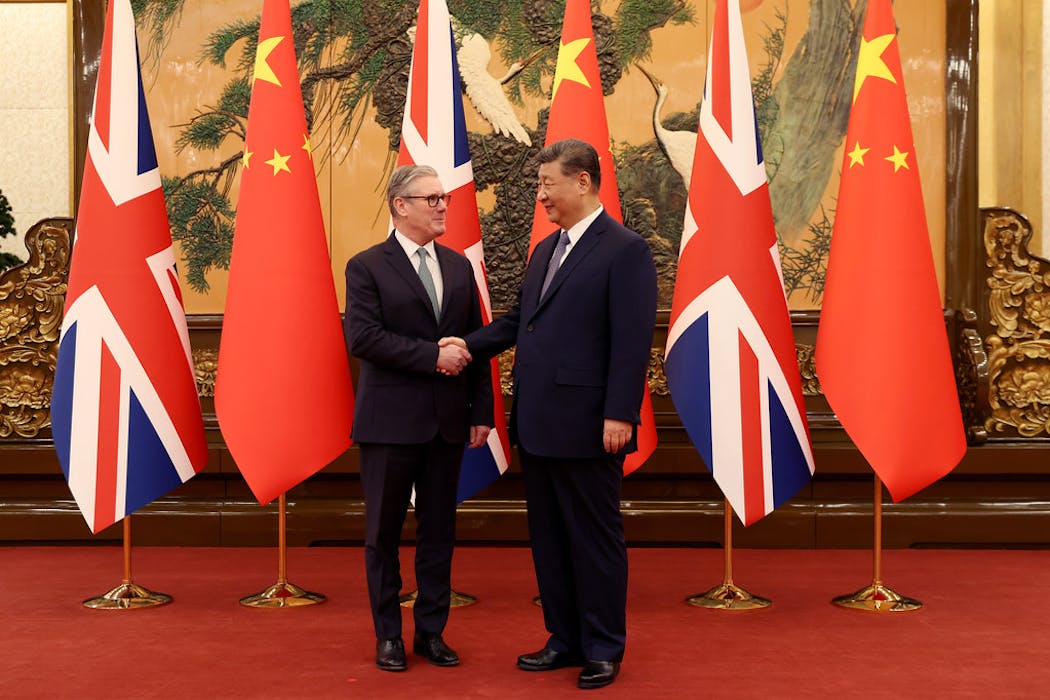
Simon Dawson/Number 10 Downing Street, CC BY-NC-SA

The UK’s prime minister, Keir Starmer, recently visited China to announce what was described as a reset in relations between London and Beijing. Among the economic and diplomatic announcements was a surprising element: a new agreement on border security.

Under the deal, the UK and China committed to closer cooperation to disrupt the supply of engines and equipment used in small boat crossings of the English Channel.

Numbers of small boat arrivals to the UK in 2025 were the second-highest on record. The prime minister is under pressure to deliver on his commitment to “smash the gangs” and reduce unauthorised arrivals.

At first glance, China might appear an unlikely partner in this regard. Chinese nationals are nowhere close to the top nationalities crossing the Channel by small boat.

But the agreement is part of the British government’s efforts to tackle people smuggling by targeting the global supply chain of small boats and engines used for crossings. The aim is to disrupt Channel crossings well before migrants reach the French coast.

Engines and dinghies recovered in the Channel often carry serial or registration numbers. These can be traced back through distributors and intermediaries to manufacturers, many of which are based in China. The UK-China agreement broadly involves sharing intelligence to identify suspect sales of engines by Chinese manufacturers.

For several years, disrupting supply chains has been a central pillar of UK countersmuggling policy. From an enforcement perspective, this approach has obvious appeal. If there are no boats, engines, life vests or fuel, crossings cannot happen.

The logic behind this strategy is to drive up the prices of crossing the Channel, making it unaffordable for migrants and refugees and hijacking the smugglers’ business model.

The deal with China builds on a growing web of agreements the UK has with countries along the migration routes leading to the Channel. In 2023, it signed a similar border security deal with Turkey, focused on sharing intelligence to allow the Turkish authorities to intercept shipments of dinghies and engines manufactured in China.

Both Conservative and Labour governments then went on to expand Project Invigor, the National Crime Agency-led international taskforce, to target organised immigration crime. Border security deals were extended with countries in the western Balkans as well as Iraq, Tunisia, Romania and Bulgaria, and France.

Last year, the Labour government also expanded its global sanctions list, allowing asset freezes, travel bans and other financial restrictions against individuals and companies involved in smuggling from abroad.

Stopping the boats

The crucial question is whether these strategies will achieve the stated goal of reducing Channel crossings. Disrupting supply chains only works if partner states are willing and able to investigate, prosecute and seize.

Research on migrant smuggling consistently shows that deterrence rarely eliminates demand. On the contrary, it increases demand for smugglers’ services. People still attempt the journeys – what changes is how they travel.

Years of independent monitoring by journalists and migrant support groups – including Alarmphone, Captain Support and Calais Migrant Solidarity – point to a clear link between the surge in British and European investment aimed at stopping unauthorised maritime crossings, and the rising number of deaths in the Channel.

Efforts to choke off equipment supplies and intensify policing might lead to reduced number of crossings, but also create the conditions in which they become more lethal: overcrowded inflatables, rushed departures, violence on beaches and a narrowing of options for those unable to pay smugglers.


Read more:
Deaths of 31 people in UK’s worst small boat disaster caused by government’s ‘systemic failure’ – the Cranston inquiry conclusions explained


Supply-chain crackdowns in the central Mediterranean, often driven by European agreements with key transit countries such as Tunisia and Libya, have coincided with shifts towards heavier, improvised and less seaworthy vessels. For example, “metal boats” used to cross the Mediterranean are often assembled by migrants themselves, and are much more prone to sinking than wooden boats.

When more than 380 people shipwrecked in the Central Mediterranean last week during cyclone Harry, political responses focused on accusing smugglers for allowing departures in dangerous weather.

Yet organisations working on the ground, as well as migrants themselves, point out that setting off during rough weather conditions has increasingly become a strategy to evade coastal patrols and pushbacks from Tunisian or Libyan police. Similarly, migrants have reported crossing mountainous borders during winter blizzards to avoid detection on the Turkey-Iranian border.

In the Channel, this pattern is already evident. As boats and engines become harder to obtain, supply tightens while demand remains. The result has been chronic overcrowding, deteriorating equipment quality, and increasingly chaotic launch conditions. Fewer boats do not mean fewer people attempting to cross – they mean more people per boat.

From the government’s perspective, cooperating with China fits neatly into its “smash the gangs” approach to people smugglers. But supply-chain disruption is not a neutral technical fix. In practice, it is likely to make those attempting to cross borders turn to more dangerous methods.

If the UK wants to reduce irregular arrivals and deaths in the Channel, supply chain crackdowns and enforcement will not be enough. The visa schemes for Hong Kong residents, and Ukrainian and Afghan refugees suggest that when lawful pathways are available, irregular journeys like small boat crossings lose their appeal.

Expanding safe and legal routes for the main nationalities seeking asylum to the UK should be tested to see if this holds true.

The Conversation

David L. Suber receives research funding from the Leverhulme Trust and from the John Fell Fund at the University of Oxford.

ref. Why the UK has announced a border security deal with China – and what it could mean for small boat crossings – https://theconversation.com/why-the-uk-has-announced-a-border-security-deal-with-china-and-what-it-could-mean-for-small-boat-crossings-275590

A history of pancake recipes – from Elizabethan ale to the invention of self-raising flour

Source: The Conversation – UK – By Sara Read, Lecturer in English, Loughborough University

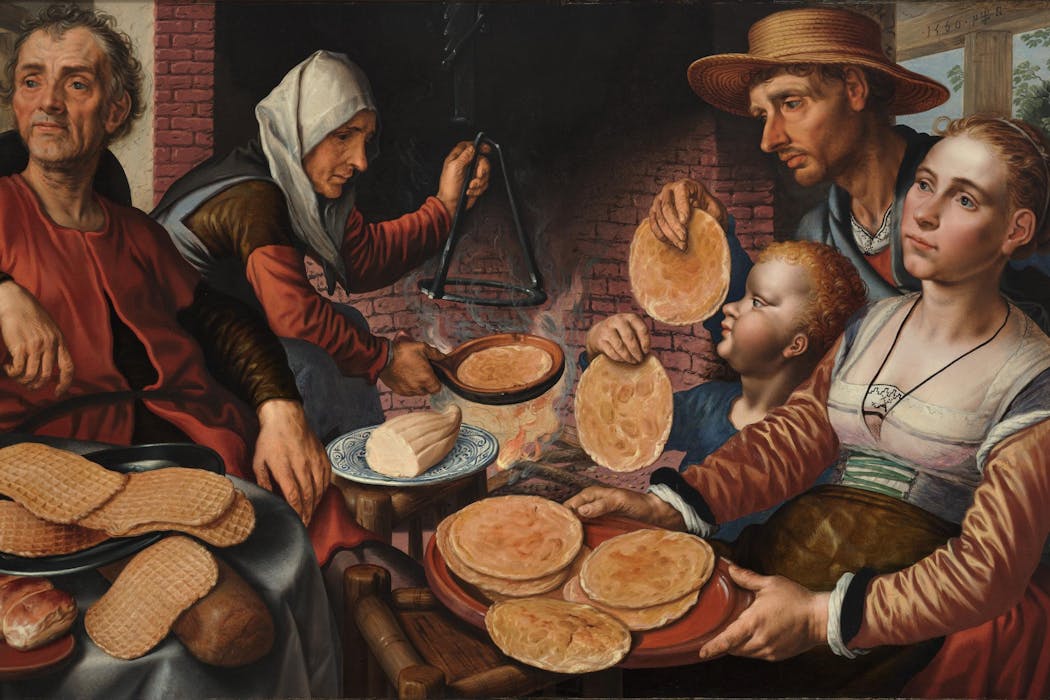
Pieter Aertsen’s The Pancake Bakery (1560). Wikimedia

With Pancake Day fast approaching, let’s go back in time to look at the history of the humble dish.

Recipes from the first published cookbooks show that in England, pancakes were made very thinly – hence the phrase “flat as a pancake” – from lots of wet ingredients that were forbidden during the impending pre-Easter Lenten Fast. Eggs, cream, butter and animal fats are all products from which people were meant to abstain, alongside all other meats.

It makes sense, then, that the dish, generally eaten year-round, became associated with Shrovetide – the days before Lent – when cooks wanted to clear out their pantries to avoid temptation in the long fast before Easter.

Early pancakes were cooked until crispy and served warm with butter and sprinkled with sugar.

It’s common to see a recipe in old cookbooks that used ale, much like the coating of beer-battered fish we’re familiar with today. One recipe from a book published in the reign of Elizabeth I is a rich affair which mixes:

A pint of thick cream
4 or 5 egg yolks
A handful of flour
2 or 3 spoonfuls of ale

This is seasoned with “a good handful of sugar, a spoonful of cinnamon, and a touch of ginger”.

The batter is set aside while the cook takes a knob of butter “as big as your thumb” in a frying pan and heats it until it is “molten brown”. Now tip the fat out and ladle the batter into the tilted pan as thinly as possible over a low heat. Flip when one side is “baked” and cook the other until the pancake is as dry (crispy) as possible, but not burned.

English poet and writer Gervais Markham’s bestselling book of household management The English Housewife, which ran to at least nine editions from its first publication in 1615, has a recipe for “the best pancakes”.

In this dish, there are two or three beaten eggs to which you mix in “a pretty quantity of fair running water”. The eggy mixture is seasoned with salt, cloves, mace, cinnamon and nutmeg, and thickened with “fine Wheate-flower”. You then fry a thin layer of batter in sweetened butter or seam (pig lard) and serve sprinkled with sugar.

The frontis page of The English Housewife

Wikimedia, CC BY-SA

Markham recommends using water over milk or cream because dairy “makes them tough, cloying and not crisp, pleasant and savoury as running water”.

Fritters or pancakes?

On Shrove Tuesday in 1661, which fell on February 26, diarist Samuel Pepys paid a visit to his cousin Jane Turner’s house, where he found her mixing pancake batter with her daughters Theophila and Joyce. After leaving them to their preparations, he later returned to dine “very merry and the best fritters that ever I eat in my life”.

In the 16th and 17th centuries, the names pancake and fritter were often used interchangeably, although fritters (like the modern incarnation) were cooked with fruit in them.

One of the reasons Pepys enjoyed his pancakes so much might be found in a contemporary recipe book, The Gentlewoman’s Cabinet Unlocked (1675), which boasts in its title that it will provide “directions for the best way of making pancakes, fritters, tansies, puddings, custards, cheesecakes; and such like fine knacks and other delicate dishes, which are most frequently used in gentlemen’s houses”.

The author doesn’t include a specific pancake recipe, since there is one for fritters. A glance through the ingredients listed shows why these were more likely to end up on the table of a gentleman than a that of a labourer:

Take nine eggs, yolks and whites, beat them very well, then take half a pint of sack [Spanish wine], a pint of ale, some ale yest. Put these to the eggs and beat them all together, put in some spice and salt, and fine flower. Then shred in your apples and let them be well tempered, and fry them with beef-suet, or half beef and half higs-suet dried out of the leaf.

While earlier recipes mention topping pancakes with sugar and sometimes things like rose water, it isn’t until the 19th century that the combination of lemon juice and sugar appears in print. But lemon juice had probably been used for a long time before then.

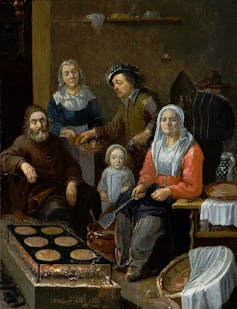
A 1600s painting of a family making pancakes.
A 17th-century painting of a family making pancakes, by Adriaen Rombouts.
Wikimedia

Elizabeth Hammond’s Modern Domestic Cookery (1819) includes this pancake recipe: “Take eggs, flour and milk, with which make a light batter. Add nutmeg, ginger and salt, fry them in plenty of hot lard. Serve with lemon juice and powdered loaf sugar.”

A modern cook might be surprised to see Hammond recommending substituting “snow” for eggs during the winter, “when they are generally very dear”. This is a tip for making eggs go further by using just the whites beaten until fluffy, leaving you free to use the yolks in another dish.

While Markham and many other cookbooks recommend it, refined wheat flour was the most expensive of grains and largely something that more affluent families ate regularly. It only gradually became the ubiquitous ingredient it is today.

In 1923, the flour brand Be-Ro (founded in 1880 in the north-east of England) began giving away a recipe book to encourage sales of the relatively novel self-raising flour. This small cookbook ran to over 40 editions and is still available.

Like many northern homes, my family still have our copy, which is the 16th edition from 1953. While pancakes aren’t normally made with a raising agent, Be-Ro still offered a recipe for them.

5oz Be-Ro flour
Quarter teaspoonful salt
One egg
Half a pint of milk

The very thin batter was cooked on a “fairly brisk fire” in lard which had been heated to smoking point, and served with sugar or syrup and lemon or orange.

We can see from this how modern recipes became much more precise with their measurements. The pamphlet ends with a warning that all its recipes are especially designed for Be-Ro self-raising flour: “Ladies are warned that unless Be-Ro is used, satisfactory results may not be obtained.”

Whether you’re planning to have a rather austere Be-Ro style pancake or are tempted to switch things up with something a little boozier, perhaps the key takeaway from history is that there is no reason to reserve pancakes just for Shrove Tuesday.


Looking for something good? Cut through the noise with a carefully curated selection of the latest releases, live events and exhibitions, straight to your inbox every fortnight, on Fridays. Sign up here.


The Conversation

Sara Read does not work for, consult, own shares in or receive funding from any company or organisation that would benefit from this article, and has disclosed no relevant affiliations beyond their academic appointment.

ref. A history of pancake recipes – from Elizabethan ale to the invention of self-raising flour – https://theconversation.com/a-history-of-pancake-recipes-from-elizabethan-ale-to-the-invention-of-self-raising-flour-275708

Does the cold really ‘seep into your bones’?

Source: The Conversation – UK – By Adam Taylor, Professor of Anatomy, Lancaster University

Mix and Match Studio/Shutterstock

Another cold snap is approaching. Some people deal with it by taking an invigorating walk outside, while others hibernate with a cozy blanket and biscuits.

But one thing seems to be common when temperatures drop: we like talking about how cold it feels. Comments such as “I am so cold, I can feel it in my bones” are a common greeting in wintertime.

So, is there any truth to this particular complaint?

In the UK, the relatively high humidity even in cold temperatures means moisture in the air moves the warm air next to our bodies away quite quickly. It also sees moisture absorbed into our clothes, which then conducts heat away from the body. Water has an almost 70-fold higher rate of heat transfer than air.

The body is most efficient at approximately 37°C, but our extremities can be up to 6°C cooler. And there are variations around this body temperature dependant on sex, age and health status. Older people tend to feel the cold more, and women are more sensitive to the cold than men.

How cold affects our bones

Our bones don’t actually feel the cold as we sense it. They lack the same temperature-sensitive receptors that we have in our skin. There is a good reason for this, given our major bones are buried under layers of muscles, connective tissue and skin, so temperature sensing isn’t really key for them.

However, just because bones don’t “feel” the cold, it doesn’t mean the cold doesn’t have an affect on them. They can sense temperature change, particularly cooling, from nerves in the outermost lining of bone, known as the periosteum. This layer has what many scientists view as a net of neurons (cells that transmit signals) arranged in a fishnet-like pattern that senses distortion or injury of the underlying layers of bone.

Although short-term exposure of the body to the cold isn’t a problem for bones, prolonged exposure over a number of weeks can shorten their length, reduce their thickness, and decrease bone mineral density.

Other musculoskeletal tissues are much more susceptible to the changes in temperature and pressure. Synovial fluid, the lubricant of most major joints, becomes thicker when temperatures decline. This makes it harder and more uncomfortable for joints to move normally, which is exacerbated in people with underlying joint conditions such as rheumatoid or osteoarthritis.

The cold also causes contraction of tissues, making things tighter and stiffer. Tendons, which connect muscles to bone, increase in stiffness. Ligaments, which attach different bones around joints, also become stiffer.

Both of these changes make it harder for muscles to exert their action to move bones, requiring more force and decreasing their range of motion. This is exacerbated with humidity, which is common in the UK all year round.

Woman sits with pink mug and feet against radiator
Don’t even try getting through the cold snap without plenty of hot drinks.
AstroStar/Shutterstock

These effects happen in tandem with reduced blood flow to our extremities. This protective mechanism is designed to ensure our core, where all our critical major organs are, doesn’t drop from the optimum operating temperature of 37°C. Reduced blood in these tissues also contributes to the tissue contraction, as less blood is entering them.

All of these changes result in an increase in mechanical strain or pressure upon receptor cells in the bones and surrounding tissues. This can trigger pain receptors, which may be perceived as cold.

The brain also plays a role. In the UK, grey skies often accompany the cold and damp. London averages 3.4 hours of sunshine in December, for example, while the US state of Colorado averages around eight hours of sunlight in the same month.

These dark winter months in the northern hemisphere mean many of us don’t get sufficient sunlight to synthesise enough vitamin D. You may know vitamin D deficiency is associated with poor bone health and conditions such as rickets (in children) and osteomalacia (adults). But it also has other implications in how cold feels.

Research suggests that people with low vitamin D levels have increased sensitivity to pain, particularly musculoskeletal pain.

This isn’t the only nervous-system effect that vitamin D has on cold perception. It is also linked with increased anxiety and depression symptoms. People with these conditions have altered tolerance when it comes to temperature.

Sunlight exposes the skin to the Sun’s radiation and visible light, both of which have a natural warming effect. So sunny and dry cold feels very different to damp, grey cold.

The good news is that taking on extra calories can help you ride out the latest cold snap. Wearing lots of layers and moving around as much as possible will also help keep you warm, by generating and trapping as much heat as possible against the body.

The Conversation

Adam Taylor does not work for, consult, own shares in or receive funding from any company or organisation that would benefit from this article, and has disclosed no relevant affiliations beyond their academic appointment.

ref. Does the cold really ‘seep into your bones’? – https://theconversation.com/does-the-cold-really-seep-into-your-bones-275870