Sudan: how warring factions gained influence in the country’s food system – and what it means for the current conflict

Source: The Conversation – Africa (2) – By Danielle Resnick, Senior Research Fellow, International Food Policy Research Institute (IFPRI)

Militaries play a major role in the politics of many countries. They determine whether elections can occur and who can compete. From Egypt to Pakistan and Myanmar to Uganda, the military is often the most important powerholder.

In parallel, violent non-state actors – including criminal networks, terrorist groups and paramilitaries – have proliferated over the last two decades.

To maintain their influence and finance their operations, militaries and violent non-state actors often become heavily involved in both legal and illicit business activities. Studies of their economic activities often focus on their role in extracting natural resources like gold, oil and timber.

Their involvement in agricultural and food systems is less well understood.

This is important to study since many of the world’s most fragile countries are highly dependent on agriculture for economic growth. We drew on our multidisciplinary expertise in food systems and agriculture to help fill this gap. Our recently published article looked at the role of the military and paramilitary in Sudan’s agrifood system just prior to the outbreak of the current war.

The two main belligerents in the country’s devastating conflict – the Sudanese Armed Forces and the paramilitary Rapid Support Forces (RSF) – have built extensive empires. They have investments in land, food processing and agricultural trade.

Our study mapped the companies that the army and RSF have in the agrifood system. It also analysed the different strategies they have used to gain profit in different agricultural sectors, especially livestock, wheat, gum arabic and horticulture.

We found that the army and RSF used a range of strategies. For example, they dominated in low-complexity value chains with limited private sector activity, such as livestock trade or raw gum arabic trade.

In these sectors, both forces focused on extracting profits to fund their operations without investing in upgrading.

We also found that they were less active in more technically complex sectors, like gum arabic spray drying, cotton ginning, dairy or finished sesame.

Economic competition between the Sudanese army and the paramilitary RSF was a major factor in the outbreak of the April 2023 war. Identifying these strategies expands insights into the political and economic roots of large-scale conflict.

The study

Our study drew on interviews with over 50 Sudanese key informants with extensive experience in major agro-food companies, the agricultural and livestock sectors, the previous civilian-led government, and within transparency and governance non-governmental organisations.

We brought together two strands of research that are rarely combined. These are studies on agricultural value chain upgrading – which refers to improving the quality, efficiency and value of agricultural products – and military commercialism.

The value chains literature highlights that more sophisticated products – such as speciality coffee and cocoa, wine, cheeses, edible oils, meats and poultry, and horticulture – need higher levels of expertise and equipment. This in turn requires larger outlays of investment.

Military commercialism studies underscore that armed actors have short time horizons because they seek off-budget profits to purchase weapons and machinery, and to retain the support of rank-and-file soldiers.

We therefore argue that the value chains in which armed actors engage – and the degree to which they invest in them – is based on how quickly profits can be extracted. This decision depends on two factors:

  1. the level of technical complexity to generate profits from the agricultural product

  2. the extent of existing private sector involvement in the value chain.

The strategies

We identified four distinct strategies armed actors use in agrifood value chains in Sudan.

1. Exclusive capture and rent extraction. This is most clearly illustrated by the livestock trade. This is one of Sudan’s biggest export earners after gold. However, some countries, such as Saudi Arabia, have declared import bans on Sudanese livestock due to non-compliance with sanitary and phytosanitary standards, and vaccination protocols. These require investments in traceability systems and quarantine practices. Despite such restrictions, the Sudanese army and RSF capture significant profit from the trade. The army, for instance, benefits from demand from the Egyptian military. The RSF leverages demand from Gulf countries and close cultural ties with pastoralist communities in Darfur and Kordofan where a significant share of livestock trade originates.

2. Biased competition through licensing and quota allocations. A case in point is the processing of wheat into flour for Sudan’s most important staple good, bread. Flour processing in Sudan has had several prominent private sector operators since the mid-1990s when wheat milling was liberalised. Almost two decades later, Sudan’s intelligence services began operating Seen Milling Company. This was transferred to the army after the 2019 ouster of Omar Al-Bashir. Seen Milling Company benefited from several sets of distortions that skewed the playing field against the private sector. These include preferential exchange rates and import subsidies that almost put the private sector out of business.

3. Concede to private competitors when value addition is too complex. Gum arabic from Sudan accounts for approximately 70% of global trade. The product is most profitable when it is transformed through a highly complex technique known as spray drying. It is then used in the pharmaceutical industry, textiles and in food and beverages. Traditionally two French companies spray dried most of Sudan’s raw gum arabic. But in 2017 one of Sudan’s largest private sector agro-processing firms, DAL, established its own spray drying facility and began exporting all over the world. While the army attempted to mimic this approach via one of its companies, Green Zone, it lacked the technology and technical skills. The army ultimately abandoned the venture.

4. Innovation when profit potential is high and the private sector is absent. This is best illustrated in the horticultural sector. The army’s Zadna corporation, which is currently sanctioned by the US and the European Union, became a leader in horticulture research and development. The horticultural sector offers large opportunities for domestic growth and export potential. However, it has previously been hindered by underinvestment and minimal private sector involvement. Zadna entered the sector by establishing a major tissue culture lab and large nursery for preparing high-quality seedlings for many horticulture products. It also conducted research on new seed varieties, fruit and vegetable drying, and waste management.

Why the findings matter

By showing the diverse strategies that armed actors might employ, we hope to advance discussions about the political economy of food system transformations, with a focus on fragile contexts.

We show that armed actors’ strategies are sometimes very extractive (for instance, livestock) and sometimes more progressive (for instance, horticulture).

For private sector companies operating in such contexts, one of the main findings from our study is that shifting to more complex upgrading that requires greater technical skills can often mitigate the loss of market access to armed actors. We found this in dairy and gum arabic spray drying, for instance.

Our research underscores the importance of understanding the political economy incentives that drive large-scale conflict. Peace efforts in Sudan cannot just be about negotiations over ceasefire conditions and reconciliation processes. They also need to address who retains access to the country’s valuable resources and at what cost.

The Conversation

Danielle Resnick received funding from USAID for this work.

Hala M.E. Abushama, Khalid Siddig, and Oliver Kiptoo Kirui do not work for, consult, own shares in or receive funding from any company or organisation that would benefit from this article, and have disclosed no relevant affiliations beyond their academic appointment.

ref. Sudan: how warring factions gained influence in the country’s food system – and what it means for the current conflict – https://theconversation.com/sudan-how-warring-factions-gained-influence-in-the-countrys-food-system-and-what-it-means-for-the-current-conflict-275687

Intermittent fasting doesn’t have an edge for weight loss, but might still work for some

Source: The Conversation – Global Perspectives – By Evelyn Parr, Research Fellow in Exercise Metabolism and Nutrition, Mary MacKillop Institute for Health Research, Australian Catholic University

fcafotodigital/Getty Images

Intermittent fasting has become a buzzword in nutrition circles, with many people looking to it as a way to lose weight or improve their health.

But new research from the Cochrane Collaboration shows intermittent fasting is no more effective for weight loss than receiving traditional dietary advice or even doing nothing at all.

In this international review, researchers assessed 22 studies involving 1,995 adults who were classified as overweight (with a body mass index of 25–29.9 kg/m²) or obese (with a BMI of 30 kg/m² or above) to assess the effectiveness of intermittent fasting for up to 12 months.

The authors found, when compared to energy restricted dieting, intermittent fasting doesn’t seem to work for people who are overweight or obese and are trying to lose weight. However they note intermittent fasting may still be a reasonable option for some people.

Remind me, what’s intermittent fasting?

Intermittent fasting is a tool for weight management, which includes three main strategies:

  • alternate day fasting, where every second day is reduced to low or no energy intake

  • periodic fasting or the 5:2 diet, where one or two days of the week are spent with low or no energy intake

  • time-restricted eating or the 16:8 diet, where daily energy intake is reduced to a shorter window, usually between eight and ten waking hours.

What did previous research show?

Previous reviews have found differences between types of intermittent fasting.

Alternate day fasting, for example, resulted in more weight loss when compared to time-restricted eating.

This is because participants who fasted every second day consumed about 20% less energy than those following time-restricted eating.

What did the Cochrane review find?

Cochrane review use gold-standard techniques to give an objective overview of the evidence. This review looked at 22 individual randomised controlled trials published between 2016 and 2024 from North America, Europe, China, Australia and South America.

The trials compared the outcomes of almost 2,000 adults who were classified as being overweight or obese. These participants either:

  • received standard dietary advice, such as restricting calories or eating different types of foods

  • practised intermittent fasting

  • received either regular dietary advice, no intervention or were on a wait list.

The authors found:

1. Intermittent fasting was no better than getting dietary advice

The researchers found intermittent fasting and receiving dietary advice to restrict energy intake led to similar levels of weight loss.

This finding was based on 21 studies involving 1,713 people, with the researchers measuring the change from the participants’ starting weight.

Dietary advice (from registered dietitians or trained researchers) could include an eating plan focused on fruit, vegetables, whole grains and seafood, restricting calories, or any specific dietary advice for weight loss.

The amount of weight the participants lost ranged from a 10% loss to a 1% gain, with either intermittent fasting or dietary advice.

These findings are similar to several recent meta-analyses which found intermittent fasting is no better than dieting.

Previous research has found most of the alternate day fasting and periodic diet studies leads to about 6% to 7% weight loss. This is compared to very low energy “shake” diets (about 10%), GLP-1 medications (15% to 20%) and surgery (above 20%).

The review also found intermittent fasting likely makes little difference to a person’s quality of life, based on only three studies.

2. Intermittent fasting was no better than doing nothing

The researchers found intermittent fasting and no intervention led to similar levels of weight loss. This finding was based on six studies involving 448 people.

In the intermittent fasting studies, participants experienced about 5% weight loss. The “no intervention” or control group lost about 2% of their original weight.

In research, a 3% difference in weight loss is not considered clinically meaningful. That’s why the authors of this review concluded intermittent fasting is no more effective for weight loss than doing nothing at all.

However, the result for the “no intervention” condition could be due to the Hawthorne effect: the tendency for people to behave differently because they know they are being watched, such as in a clinical trial.

What are the review’s limitations?

There were few large, high-quality randomised controlled trials to draw on.

Only six studies were included in the part of the review which compared intermittent fasting and doing nothing. Two of these focused on time-restricted eating, which is arguably the least effective weight-loss strategy. One looked at the effects of fasting for one day per week. The other three were intermittent fasting studies, each with varying control groups, where some received guidance and others did not.

Also, the review only looked at studies where the interventions lasted between six and 12 months. It’s possible intermittent fasting strategies could be a long-term tool for weight maintenance. So we need to do more research, and ideally studies of longer duration.

What about the other health benefits of fasting?

Studies have found intermittent fasting can lower blood pressure, improve fertility, and reduce the incidence of metabolic syndrome which refers to a group of conditions that increase the risk of cardiovascular disease.

In one 2024 study, researchers found intermittent fasting may lead to changes in metabolism and the gut that restrict how cancer develops. Another study from 2025 found intermittent fasting could improve the metabolic health of shift workers.

So if you’re practising or considering intermittent fasting, the current evidence suggests it can be a safe and effective way to manage your weight.

But for any weight loss strategy to work, it needs to align with your personal preferences. And it’s best to consult a health-care professional before starting any new diet, especially if you have any underlying health conditions.

The Conversation

Evelyn Parr received funding from the Australian government’s Medical Research Future Fund and the Diabetes Australia Research Program for work on time-restricted eating.

ref. Intermittent fasting doesn’t have an edge for weight loss, but might still work for some – https://theconversation.com/intermittent-fasting-doesnt-have-an-edge-for-weight-loss-but-might-still-work-for-some-276057

How Bad Bunny’s power pole dance spotlighted the colonial legacy of energy poverty

Source: The Conversation – Global Perspectives – By Jenna Imad Harb, Research Fellow, Australian National University

When Bad Bunny and his dancers scaled power poles during his Super Bowl performance, he wasn’t just entertaining millions. He was spotlighting how Puerto Rico’s chronic power outages are a legacy of its colonisation.

Puerto Rico is far from alone in this struggle – colonialism and geopolitical power imbalances have shaped access to electricity worldwide.

Puerto Rico has long suffered rolling blackouts lasting days and sometimes months. This leaves residents – especially vulnerable populations – without refrigeration, medical equipment, or air conditioning.

This isn’t just poor infrastructure management, though that is certainly an issue. It’s the ongoing legacy of colonial control over energy systems.

Colonial powers built energy systems designed to extract resources and profits for distant corporations and governments, not to serve local communities. As a result, local communities pay high costs for inadequate power. Similar patterns exist globally, from the Caribbean to the Middle East.

Colonial abandonment, not poor management

Puerto Rico’s chronic blackouts stem from what scholars call “energy colonialism”, where powerful countries and companies control the energy resources of less powerful countries or regions.

Puerto Rico became a US territory in 1898 but does not have voting representation in Congress. While under US responsibility, Puerto Ricans are denied the federal support granted to other US states.

After Hurricane Maria hit Puerto Rico in 2017, it took 11 months to restore the grid – the longest blackout in US history. Yet federal aid was drastically lower than for US states hit by hurricanes around the same period and “tens of billions short of the US$94.4 billion that disaster experts estimated is needed for a full recovery”. As Cecilio Ortiz García, co-founder of the University of Puerto Rico’s National Institute of Energy and Island Sustainability, explains:

the grid has become the poster child of the decay of the colonial system, its institutions and a very vulnerable population. This is colonial abandonment, not poor management.

Unreliable energy feeds hopelessness

Energy colonisation may manifest differently in different colonial contexts. Our research in Lebanon shows several ways colonial dynamics affect energy insecurity.

In Lebanon, energy access has been undermined by Israel’s deliberate targeting of electricity infrastructure in its strikes in southern Lebanon following its invasion of Gaza. It is also undermined by political corruption rooted in colonial governance structures, such as politicians maintaining ties to private diesel generator companies that profit when the public electricity grid fails.

When France colonised Lebanon in the early 1900s, it deliberately designed a political system that divided power along religious lines, a structure still in place today. This system was created to keep Lebanon weak and dependent.

It has fostered political gridlock and corruption, with politicians profiting from failing energy systems rather than fixing them. The state’s dependence on international donors – and donors’ hesitation to subsidise energy infrastructure – has also reinforced energy poverty for residents.

Reliable energy is essential for survival

Colonial energy development dynamics are exemplified by Pacific struggles to access climate finance. Pacific countries divert significant resources to become accredited to key climate funds, in the hope of directly accessing finance. However, both the practice of mobilising finance through intermediaries, and prioritising debt finance – further indebting poor regions – ultimately channels vital resources away from Pacific nations.

As climate disasters intensify, and reliable energy becomes ever more essential for survival, recognising the colonial roots of global energy systems is key. A critical site for recognition, as argued by Puerto Rican energy advocate Juan Rosario is ownership: “the most important thing in this energy revolution is who owns it and who rules”.

Energy justice – grounded in ownership, self‑determination, and equality — must be more nuanced. We need to ask: Who gets to own the energy systems? Who makes the decisions? Who gets the money? Right now, big corporations and governments control energy. Real energy justice means communities run their own power systems and keep the benefits for themselves. Thus, energy justice cannot focus solely on technical fixes. It must also confront the structures of power that shape who benefits from energy systems and who is left vulnerable.

Our research in Lebanon shows how these experiences of energy colonialism are felt – in the wellbeing of communities, and in individual emotions and bodies. In the humanitarian community in Lebanon, people are unable to escape extreme temperature during energy insecurity and blackouts. Feelings of hopelessness and frustration come from persistent energy poverty.

Recognising joy and strength

There are no easy solutions, but we can still take a key lesson from Bad Bunny’s performance. It is vital to call out the structures of power his performance made visible. Bad Bunny’s performance also demonstrated the joy that can be found, even momentarily, from shifting focus from colonial conditions to the strength and resilience of marginalised communities.

Our research showed this strength should be supported and not taken for granted. One participant in Lebanon said:

“Do people have the choice not to be resilient? Like, is there a counterfactual Lebanon where people are not resilient and they suffer more than what they’re suffering now? How do you determine what resilience is versus wanting to live your life? It’s just you waking up and having to find a way.”

The Conversation

Jenna Imad Harb works on a project funded by the Rio Tinto Centre for Future Materials.

Kirsty Anantharajah does not work for, consult, own shares in or receive funding from any company or organisation that would benefit from this article, and has disclosed no relevant affiliations beyond their academic appointment.

ref. How Bad Bunny’s power pole dance spotlighted the colonial legacy of energy poverty – https://theconversation.com/how-bad-bunnys-power-pole-dance-spotlighted-the-colonial-legacy-of-energy-poverty-275794

Does exercise really work for osteoarthritis?

Source: The Conversation – Global Perspectives – By Hunter Bennett, Lecturer in Exercise Science, Adelaide University

FG Trade/Getty Images

Osteoarthritis is a common degenerative joint disease that causes pain, stiffness and swelling, and reduces your range of motion. It often affects the knees, hips and hands, although it can also occur in other joints throughout the body.

If you’ve been diagnosed with osteoarthritis, your doctor has probably recommended exercise. This has become standard treatment advice in recent years.

However, a new review suggests exercise might not be as beneficial as first thought.

But when you take a closer look at the study, there are reasons to be cautious. So it shouldn’t prompt you to ditch your exercise regimen.

What the review did

The research team conducted an “umbrella review” – an overview of systematic reviews, which collate and analyse the findings from individual studies to answer a specific question. Reviewing previously published systematic reviews provides an even bigger snapshot of a given research topic.

After searching thousands of studies, they included five major systematic reviews (comprised of 100 individual studies, with 8,631 patients) before adding another 28 recent trials (involving another 4,360 patients).

Using this data, they looked at the effect of exercise on knee, hip and hand osteoarthritis, and compared it to several alternatives, including doing nothing, placebo (fake) treatments, education, manual therapy, painkillers, injections and surgery.


Read more:
What’s the difference between osteoarthritis and rheumatoid arthritis?


What did they find?

Compared to doing nothing and placebos, they found that exercise resulted in small reductions in pain in the hip, knee and hand: between 6 and 12 points on a 100-point scale.

However, exercise did not seem to improve function any more than either of these comparisons.

For knee and hip osteoarthritis, there was evidence that exercise was just as effective at reducing pain and improving function as medicines such as ibuprofen and corticosteroids, which are injected into the joint to reduce inflammation. These also reduced pain by around 5–10%.

The researchers concluded exercise was less effective at improving pain and function than a total joint replacement in people with knee and hip osteoarthritis.

What were the limitations?

First, the authors lumped all types of exercise together. This means strength training, aerobic exercise, stretching, aquatic exercise and tai chi were all considered to be the same.

This is crucial, because we know not all exercise is created equal. Previous reviews have shown, for example, that aerobic exercise might be best for reducing pain and function in people with knee osteoarthritis, while stretching was least effective.

Similarly, the authors didn’t consider the clinical status of the patients. Evidence has shown people with more severe pain and worse function at the start of an intervention see better responses to exercise than those with less pain and good function.

Second, the review treated both supervised and unsupervised exercise the same.

However, research shows supervised training results in much better outcomes than unsupervised – likely because a trainer is there to help push the patient along.

Third, the authors didn’t account for the duration of the exercise, and most study periods were quite short: around 12 weeks.

It’s likely that sticking to an exercise regime over the long term will have better results, leading to a larger scope for improvement than if you just did something for a few weeks.

As such, the results of this review may not accurately reflect the benefits of exercise in people with osteoarthritis who commit to consistent exercise as an ongoing part of their weekly routine (which is often recommended).

Finally, the review didn’t account for the dose of exercise the studies used. Improvements in pain and function seem to increase with total weekly exercise in people with osteoarthritis. One review, for example, found the optimal benefits occurred at around 150 minutes of moderate intensity exercise per week.

These limitations suggest this new review likely undersells the benefits of exercise for osteoarthritis.

Less pain and better physical and mental health

Putting aside the limitations of the review, the small reductions in pain the review reports might still have a positive impact on someone’s life. A 10% reduction in pain could make a meaningful difference to your ability to move around, work, socialise and care for others.

The review also found exercise can reduce pain to the same extent as non-steriodal anti-inflammatory medications and corticosteroids – without the side-effects or the costs.

Exercise can also improve heart health, enhance your mood, help with weight management and reduce the risk of chronic diseases, such as cancer and diabetes.

These factors can have a huge impact on your health and happiness.

What should you do now?

Based on the findings of this new review, you should be confident that any type of exercise will lead to some degree of pain relief.

However, based on prior evidence, it’s likely you can get even greater overall health benefits from exercising if you stick with it.

The best type of exercise is the one that gets done. If you enjoy being outdoors and walking, then this is going to be a great choice as it will improve all aspects of your health as well as reduce pain.

And if pain permits, don’t be afraid to occasionally challenge yourself by upping the intensity to the point where holding a conversation starts to become difficult.

If going to the gym is more your thing, lifting weights will also bring significant overall health benefits – especially if you stick to it long term.

The Conversation

The authors do not work for, consult, own shares in or receive funding from any company or organisation that would benefit from this article, and have disclosed no relevant affiliations beyond their academic appointment.

ref. Does exercise really work for osteoarthritis? – https://theconversation.com/does-exercise-really-work-for-osteoarthritis-276058

Part star, part supporting actor, Robert Duvall lit up 1970s American cinema – and kept going

Source: The Conversation – Global Perspectives – By Ben McCann, Associate Professor of French Studies, Adelaide University

Robert Duvall, who has died at the age of 95, will be remembered for a glittering career that saw him appear in two of American cinema’s most iconic films. But let’s not forget the other hundred or so more across a career spanning six decades.

Duvall was as comfortable in disposable fare like Gone in Sixty Seconds (2000) as he was in thoughtful dramas such as True Confessions (1983).

In 1990 alone, he played Tom Cruise’s mentor in the NASCAR epic Days of Thunder followed by The Commander in Volker Schlöndorff’s adaptation of The Handmaid’s Tale.

Acting is listening

Born in 1931 in San Diego, Duvall was expected to follow in his father’s footsteps and enlist in the US Navy. But his love of acting led him to theatre and television in New York. There, he learned his trade – he once remarked the most important aspect of acting was talking and listening.

He made his film debut in 1962, playing Boo Radley in To Kill a Mockingbird. Duvall dyed his hair blonde and avoided sunlight for six weeks to capture the character’s gaunt, fragile look. From then on, he was rarely off the screen, appearing in classic genre films Bullitt (1968), True Grit (1969) and M*A*S*H (1970).

Film historian David Thomson wrote Duvall was “neither beautiful nor forceful enough to carry a big film”. Yet he was nominated for an Academy Award seven times, winning once in 1984. His most recent nomination was in 2015 for The Judge, where he played Robert Downey Jr’s crankily dominating father accused of murder.

He was often drawn to authoritative historical figures, portraying iconic outlaw Jesse James in The Great Northfield, Minnesota Raid (1972), as well as Adolf Eichmann, Dwight Eisenhower and the confederate general Robert E. Lee.

Working with Coppola

Like so many of his contemporaries, Duvall idolised Marlon Brando.

It was fitting, then, that Duvall’s breakthrough role came in 1972, and his role as Tom Hagen, consigliere to Brando’s mob boss, in Francis Ford Coppola’s The Godfather (1972) and its sequel, The Godfather Part II (1974).

His performance as clean-cut Hagen is majestic – all quiet menace and uneasy conviviality.

Coppola cast Duvall again in Apocalypse Now (1979), as Kilgore, the surfing-loving, Stetson-wearing, Wagner-listening colonel who, despite the bloodshed of the Vietnam War, is helplessly addicted to its carnage.

It’s a deeply unsettling cameo (Duvall was on-screen for only ten minutes of the three-hour running time), but his calm and complete control in the middle of The Ride of the Valkyries scene is one of contemporary cinema’s most indelible moments. His speech steals the show.

Seeking stardom

The followup was Tender Mercies (1983), in which he played Mac Sledge, a washed-up country music singer struggling with alcoholism. Sledge’s attempts to rebuild his life and find redemption after hitting rock bottom is a world away from the bombast of Kilgore.

Duvall beautifully captures Sledge’s laconic, introspective nature and promptly won the Best Actor Oscar.

Yet true stardom would prove elusive.

Unlike his counterparts Al Pacino, Robert de Niro and Jack Nicholson, or Gene Hackman and Dustin Hoffman (with whom he shared an apartment in the 1950s), Duvall remained “an actor’s actor” – talented, versatile, happy to play a supporting role, pivoting between paycheck film and passion project.

If the hallmark of a great actor is how effortlessly they deliver their lines and how plausible they are, then Duvall’s relaxed professionalism ensured he remained Hollywood’s most sought-after supporting actor.

Look again at this scene in Network (1976). As TV executive Frank Hackett, Duvall plays anger, vulnerability and humour all at once as he faces off against William Holden. Look at how his hands move and how he dabs his brow as he raises his voice.

Highly accomplished actors always make bold choices in terms of body language, posture and vocal delivery – Duvall’s work here is exemplary.

Throughout the 1990s, Duvall continued to deliver outstanding performances across various genres. He admitted his favourite role was as Stalin in the 1992 HBO movie, in part because of the challenge of portraying monstrous, morally compromised characters and finding a glimmer of vulnerability.

A late bloomer

He then wrote, directed and starred in the wonderful The Apostle (1997). As Sonny Dewey, the charismatic and passionate Pentecostal preacher from Texas who goes on the run and starts a new life in a small Louisiana town, Duvall received another Oscar nomination in this startling tale about the quest for forgiveness.

One critic called it a “sublime exploration of what it is to be a human being, struggling somewhere between good and evil, sin and redemption”. The Apostle was a labour of love for Duvall (he invested US$4 million of his own money to ensure it got made). It’s one of his best films.

He continued to appear in quirky work that surprised his loyal fanbase. He was quietly marvellous in Assassination Tango (2002), playing John J, a hitman who travels to Argentina for a job. When the hit is postponed, John J explores the world of tango clubs (the dance became an obsession for Duvall, and he spent much of his later life in Buenos Aires).

The film’s leisurely pace recalls earlier Duvall films, in which he worked with such slow-burning directors as Philip Kaufman, Sam Peckinpah and Sidney Lumet.

When asked to explain how he was able to tap into the darkness within his characters, Duvall described his approach as “all about percentages – perhaps 80% negative personal qualities and 20% positive on one day, and the next day, you reverse it.”

For an actor incapable of a false moment, this equation sums up Duvall’s entire career – authentic, unpredictable and ego-free.

The Conversation

Ben McCann does not work for, consult, own shares in or receive funding from any company or organisation that would benefit from this article, and has disclosed no relevant affiliations beyond their academic appointment.

ref. Part star, part supporting actor, Robert Duvall lit up 1970s American cinema – and kept going – https://theconversation.com/part-star-part-supporting-actor-robert-duvall-lit-up-1970s-american-cinema-and-kept-going-227370

After ‘code brown’, how long before the pool is safe again? Water quality experts explain

Source: The Conversation – Global Perspectives – By Ian A. Wright, Associate Professor in Environmental Science, Western Sydney University

dole777/Unsplash

There’s little worse as a pool lifeguard than hearing the words “code brown” come through your radio. For swimmers on a hot day, there’s also little worse than being told to immediately get out of the water because there’s poo floating in the pool.

During hot summers, public pools in Australia are often crowded with families and children. The risk of “code brown” incidents at your local pool is probably substantial.

So how is a public pool cleaned after poo or vomit accidentally ends up in the water – and how long before it’s safe to get back in?

The short answer is: it depends. Let’s dive in.

The dangers of poo in the pool

Contaminated swimming pools are hazardous for swimmers. They have been linked to outbreaks of “crypto”, short for cryptosporidiosis. It’s a highly contagious gastric illness and has unpleasant symptoms including diarrhoea, stomach cramps, fever, nausea and vomiting.

New crypto cases are monitored as it’s a notifiable disease in Australia. If multiple cases are traced to a swimming pool, the pool will be closed for extra cleaning and chlorine treatment.

There are other pathogens, such as viruses, that can infect swimmers using pools exposed to poo or vomit incidents. For example, one study in the United States found rapid onset vomiting and diarrhoea (acute gastroenteritis) affect 28% of swimmers who’d used a norovirus-contaminated swimming pool.

Dealing with an ‘aquatic incident’

Responses for a code brown or vomit follow the official health guidelines for public swimming pools under state or territory public health laws.

However, the specific protocol for the staff will also differ depending on the age of the pool, the type of filtration system, chemicals used for disinfecting the water, and … the type of the poo.

Broadly speaking, if a solid stool or vomit is found, the pool is closed and the poo or vomit must be scooped out using a pool scoop or bucket. Then, it should be discarded down the sewer.

When all the particulates have been removed, a pool vacuum is placed in the water for additional cleaning, and the chlorine concentration is raised for an extended period to disinfect the entire pool.

A pool can be reopened once all of the water has been through the pool’s filtration system. This is known as pool “turnover”. How long this takes depends on the age of the pool and its filtration system. Older pools may take eight hours or longer, but newer pools can be as quick as 25 minutes.

Generally, when staff have followed all the proper guidelines, you can assume the water is safe to swim again when the pool is reopened.

Sometimes, you need superchlorination

The protocol changes for loose stool or diarrhoea. The pool is still closed to the public and the particles are scooped out as best as possible.

Then, the chlorine levels are raised and kept at a higher-than-normal level for a bit over a day. This is called shock superchlorination. After this the chlorine levels fall back to safe swimming levels, the other pool chemicals are rebalanced, and the pool reopened.

Chlorine is one of the most common types of disinfectants used in public swimming pools. You might hear lifeguards talk about free chlorine and total chlorine when referring to pool water quality.

Free chlorine is the “active” part of chlorine. Once it makes contact and kills potentially harmful germs (such as bacteria, protozoa or virus), the chlorine is “inactivated” upon reacting with various compounds, and turns into combined chlorine.

In fact, that strong chlorine smell around swimming pools comes from combined chlorine products called chloramines. These are produced when free chlorine reacts with substances such as urine or perspiration in the water.

Lifeguards also monitor pool water quality throughout the day, performing manual checks and keeping an eye on automatic measurements.

On busy days chlorine might be checked every three hours to ensure levels are maintained within specific ranges to maintain optimal pool water quality. This is known as “balancing the water”.

Don’t go to the pool when sick

It’s important to take precautions when visiting a pool to ensure that you and everyone around you stays healthy during and after your visit.

The best way to do this is to not visit the pool if you’re feeling unwell or have had diarrhoea in the past two weeks, or if you have been diagnosed with cryptosporidiosis or infections such as E. coli, shigella or viruses.

Swimming can be fun and exciting for kids who might forget about a bathroom break. Parents should take their babies and toddlers to the toilet every 20–30 minutes to prevent accidents from occurring.

For babies and toddlers, swim nappies are encouraged to prevent accidental code browns. However, the disposable option are usually not effective at containing urine or poo. Reusable swim nappies are a far better option, designed to provide a snug fit.

If you see a poo or vomit at the pool, get out of the water and tell a lifeguard or staff member immediately. Then, follow all directions given by staff members and seek medical attention if you feel unwell in the days following the incident.

The Conversation

Ian A. Wright receives research and consulting funding from industry, local and state government bodies.

Katherine Warwick receives funding from industry, local and state government bodies. Katherine is also a former lifeguard and learn to swim teacher and has personally responded to numerous “code browns” during her time in the industry.

ref. After ‘code brown’, how long before the pool is safe again? Water quality experts explain – https://theconversation.com/after-code-brown-how-long-before-the-pool-is-safe-again-water-quality-experts-explain-274856

Brain injury is almost 10 times more common in unhoused people. Addressing it is key to reducing homelessness

Source: The Conversation – Canada – By Mauricio A. Garcia-Barrera, Professor of Psychology, University of Victoria

On any given night, 60,000 people in Canada will go to sleep homeless. Research estimates that more than half of them have had a brain injury at one point in their lives, most of them being injured before becoming homeless. An estimated 22.5 per cent live with moderate or severe brain injuries, a rate nearly 10 times higher than the general population.

Several avenues can lead a person to experience homelessness, including abuse, criminality and other adverse life events, all of which can be interrelated with brain injury. For example, experiencing a brain injury can lead to the onset of a mental health or substance use disorder, impulsivity and aggression, which can, in turn, lead to unemployment, family breakdown or other known causes of homelessness.

“Acquired brain injury” refers to brain damage after birth, either from external physical force (called traumatic brain injury) or internal problems like stroke or infection (non-traumatic). The more severe the brain injury, the greater the impairment, with cognitive abilities often being the most affected.

Cognitive impairment and homelessness

At the CORTEX Lab at the University of Victoria, one of our research interests is the impact of brain injury.

Brain injury often leads to a wide range of cognitive challenges, including mental fog, fatigue, difficulty concentrating and memory problems that disrupt learning and daily functioning. Executive functioning, including decision-making and problem-solving processes, can be particularly affected.

When these impairments go undiagnosed and unsupported, the consequences ripple across every aspect of life: work and school performance decline, relationships suffer and healthy coping mechanisms erode.

Sustaining employment, education and family responsibilities becomes overwhelming. Remembering medications, appointments, and effectively completing tasks such as filling out a form can feel nearly impossible. Financial strain, interpersonal loss and chronic stress compound these difficulties.

Without adequate recovery supports, these factors converge, increasing vulnerability to homelessness and perpetuating a cycle where further brain injuries become more likely.

Systemic gaps in supports

Our research identified several systemic barriers that make it difficult for people living with brain injuries to break the cycle of housing instability and homelessness.

Stigma is pervasive and can undermine the quality of care people receive. People may be discouraged from seeking help when they need it because their trust in systems and service providers is broken.

Health-care and housing systems operate in silos. Long wait-lists, complex application processes and limited communication between organizations make the available services difficult to navigate, especially for people with brain injuries who may require additional support to complete paperwork, attend appointments and advocate for their needs.

Many people with brain injuries rely on income assistance. There is growing concern about the discrepancy between these supplements and the rising cost of living. In today’s rental market, “affordable” housing is financially inaccessible for those relying on income assistance. When housing is obtained, individuals are left with minimal resources to meet their basic needs after rent is paid. This, coupled with under-investment in existing supportive and transitional housing, further limits the availability of appropriate shelter options.

What can we do? Top five solutions

Our community partners’ insights yielded the following recommendations for improving the health and well-being of people experiencing homelessness and brain injury, listed below in order of priority:

1. Provide accessible and affordable housing

People with a brain injury need affordable, accessible housing with special support, including alternative transportation, age-appropriate settings and flexible living options. A housing-first approach with adequate financial help provides the stability needed for successful community living.

2. Enhance resources for service providers

Specialized training for health-care and public service workers who commonly interact with people experiencing homelessness, such as community outreach workers and police, can help to improve the quality of care. The expansion of brain injury health-care services into homeless communities is also key, with particular emphasis on screening and diagnostic services as the first step to connecting people to specialized care.

3. Design needs-based services

Health-care services must consider basic needs that are often overlooked. For example, providers should offer storage, even without ID, so that unhoused patients can safely store their belongings while attending appointments, which can be plentiful following a brain injury.

4. Improve collaboration and adopt a long-term integrated approach

Improving communication between health authorities and housing service providers may facilitate a smoother transition from hospital (post-brain injury) to housing, in turn preventing people from being discharged to the streets. The idea of “care with distinction” is critical, as a team of multidisciplinary health-care professionals are needed to understand needs specific to brain injury, psychiatric or physical conditions, and how these challenges interact in people experiencing homelessness. Continuity of care is also crucial, as brain injury can require lifelong support.

5. Reduce stigma through public health education

Public health education campaigns arose as a promising means for promoting awareness and reducing stigma. By fostering greater awareness for the interconnections between brain injury and homelessness, greater compassion might be promoted.

Supporting a national strategy: Bill C-206

The high burden of brain injury among people experiencing homelessness is undeniable. Bill C-206, an Act to establish a national strategy on brain injuries, represents a critical step toward addressing brain injury in Canada and, as an outcome, addressing homelessness.

The legislation aims to improve prevention, treatment and recovery support for the millions of Canadians affected by brain injury. The bill emphasizes collaboration, public education, and comprehensive care for individuals and families navigating life after a brain injury. A national strategy will have a visible impact not only on affected individuals but on our communities at large.

The Conversation

Mauricio A. Garcia-Barrera receives research funding associated with the work referred in this article from the (former) BC Ministry of Mental Health and Addictions, the Vancouver Foundation, Michael Smith Health Research BC, and Mitacs.

Cole J. Kennedy receives funding for the research referenced in this article from the BC Ministry of Mental Health and Addictions, Vancouver Foundation, Michael Smith Health Research BC, Mitacs and the BC Brain Injury Association. He is also supported by Island Health and the Canadian Institutes of Health Research.

Grace C. Warren receives funding from the Social Sciences and Humanities Research Council Canada Graduate Scholarship – Master’s award.

ref. Brain injury is almost 10 times more common in unhoused people. Addressing it is key to reducing homelessness – https://theconversation.com/brain-injury-is-almost-10-times-more-common-in-unhoused-people-addressing-it-is-key-to-reducing-homelessness-270162

Air pollution may directly contribute to Alzheimer’s disease – new study

Source: The Conversation – UK – By Eef Hogervorst, Professor of Biological Psychology, Loughborough University

Angel Gruber/Shutterstock

Air pollution has long been linked to heart and lung disease. But a large US study suggests it may also raise the risk of Alzheimer’s disease – the most common form of dementia.

Researchers tracked nearly 28 million older adults over six years nationwide. They found that those exposed to higher levels of fine particulate air pollution were more likely to develop Alzheimer’s.

These fine particles come mainly from burning fossil fuels, wildfires, deliberate field burning for agricultural clearing and industry. Known as PM2.5, they are smaller than 2.5 micrometres and small enough to penetrate deep into the lungs and enter the bloodstream.

The US study used Medicare insurance claims to confirm Alzheimer’s diagnoses and area data by postcode for fine particle pollution levels. It also looked at other factors that could explain the link, such as the proportion of smokers or overweight people living in more or less polluted areas.

But using postcode data has limitations. It doesn’t account for how close individual homes are to motorways, industry or forests. It also doesn’t capture indoor pollution from things like cleaning products, wood burners or candles – all of which can vary hugely from house to house.

Postcodes also don’t always identify poverty accurately. Poverty is linked to many Alzheimer’s risk factors – lower educational attainment, poorer access to good food and healthcare, and living in more polluted areas.

In this study poverty and deprivation was taken into account by looking at Medicaid eligibility (which was the case for 26% of the group investigated). This type of insurance is for people over 65 who have low incomes or significant disability, or both.

The findings are particularly concerning because pollution levels in the areas studied were, on average, about twice as high as the limit set by the World Health Organization (WHO). The WHO advises that annual levels of PM2.5 should not exceed five micrograms per cubic metre of air.

The researchers found that the increased Alzheimer’s risk in polluted areas remained even after taking high blood pressure, stroke and depression into account. These conditions were linked both to air pollution and to Alzheimer’s, but they didn’t fully explain the relationship between the two.

There are biological reasons why this link makes sense. Air pollution with fine particles may harm the brain by increasing inflammation and promoting oxidative stress, which causes brain cells to malfunction. The polluting particles are small enough to enter the bloodstream, and they can block bloodflow to the brain.

Elderly man doing a puzzle shaped like a human head.
The air we breathe is shaping our brains in later life.
LightField Studios/Shutterstock.com

This study is alarming, but it isn’t the first to find a link between air pollution and dementia. When researchers combined data from 20 studies across America, Europe and Asia, they found a clear pattern: the more PM2.5 particles in the air, the higher the risk of dementia.

For every extra ten micrograms of PM2.5 per cubic metre of air, the risk of dementia rose by around 40%. The risk of Alzheimer’s disease went up by about 47%, and the risk of vascular dementia – a type caused by reduced blood flow to the brain – doubled entirely. Taken together, the evidence is hard to ignore.

The global picture

PM2.5 pollution is especially high in some countries in Africa, India and China. Dementia risk is also increasing at alarming rates in these regions.

Indonesia has areas with very high pollution levels. Research suggests it may have double – or possibly even triple – the percentage of people over 65 with suspected dementia compared to the EU. And China faces very high costs from its growing number of people with dementia. Initially, policy changes in China were able to reduce fine particle emissions. But in more recent years, this seemed less effective.

With the US increasing what was considered a safe fine particulate limit, there’s an urgency to act. These and other countries need to reduce pollution sooner rather than later to prevent the current and future human and economic costs of dementia.

The Conversation

Eef Hogervorst receives funding from ISPF to investigate pollution in Indonesian neonates and stunted growth, a risk factor for later life dementia

ref. Air pollution may directly contribute to Alzheimer’s disease – new study – https://theconversation.com/air-pollution-may-directly-contribute-to-alzheimers-disease-new-study-275873

Iran-US nuclear talks may fail due to both nations’ red lines – but that doesn’t make them futile

Source: The Conversation – Global Perspectives – By Nina Srinivasan Rathbun, Professor of International Relations, Munk School of Global Affairs & Public Policy, University of Toronto; USC Dornsife College of Letters, Arts and Sciences

The latest rounds of nuclear talks between the U.S. and Iran are going well enough for now, according to the steady drip of public statements from the main parties involved.

“I think they want to make a deal,” said U.S. President Donald Trump on the eve of the latest round of discussions held in Geneva on Feb. 17, 2026. Iran’s foreign minister, Abbas Araghchi, noted progress over the “guiding principles” of the talks.

Such optimism was similarly on display during initial talks in Oman earlier in the month.

But as someone who has researched nonproliferation and U.S. national security for two decades and was involved in State Department nuclear diplomacy, I know we have been here before.

Optimism also existed in spring 2025, during five rounds of indirect talks that preceded the United States bombing of Iran’s nuclear infrastructure as part of a broader Israeli attack. Pointedly, Iran noted in February that a climate of mistrust created by that attack hangs over the efforts for a negotiated deal now.

And underpinning any pessimism over a deal now is the fact that talks are taking place with a backdrop of U.S. military buildup in the Persian Gulf region and counteraction from Iran, including the closure of the Strait of Hormuz for a live-fire drill.

Red lines

But it is more than mistrust that will need to be overcome. The positions of both the U.S. government and Iran have ossified since May 8, 2018 – the date when the first Trump administration withdrew the United States from the Obama-era Iran nuclear deal.

Iran continues to be unwilling to even discuss its ballistic missile program. This is a red line for them.

Yet the United States continues to demand limits to Iran’s ballistic missiles and the ending of Iran’s support of proxy fighters in the region be included in the nuclear talks, in addition to having Iran fully abandon enriching uranium – including at the low civilian-use level agreed on under the 2015 nuclear deal.

The talks are taking place amid a wider trend toward the end of what can be called the “arms control era.” The expiration of New START – which until Feb. 5, 2026, limited both the size and status of U.S. and Russian nuclear weapons and maintained robust verification mechanisms – together with the increasing willingness to engage in military actions to achieve political goals heightens the challenges for diplomacy.

Military brinkmanship

So why the apparent public optimism from the U.S. government?

Trump believes that Iran is in a weaker position than during his first term, following the largely successful Israeli attacks on Iran’s regional proxies as well as on Iran itself. The strategic capabilities of Tehran’s two main sponsored groups, Hamas and Hezbollah, are clearly diminished as a result of Israeli action.

The U.S. may also still feel it has the upper hand following the June 2025 Operation Rising Lion, in which Iran’s nuclear infrastructure was attacked in response to an International Atomic Energy Agency’s report that Iran’s stockpile of near-weapons grade enriched uranium surged by over 50% in the spring.

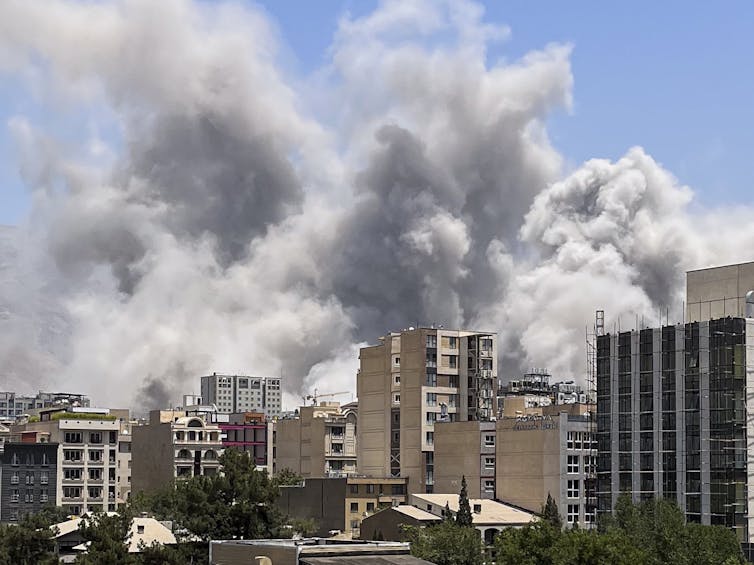
Plumes of smoke are seen above buildings
The aftermath of an Israeli strike in Tehran on June 23, 2025.
Elyas/Middle East Images/AFP via Getty Images

The reopening of talks now also comes in the immediate aftermath of Iran’s bloody crackdown on anti-government protests, leaving thousands of protesters dead.

The USS Abraham Lincoln carrier group was deployed near Iranian waters in January as a signal to the protesters of U.S support. U.S. Secretary of State Marco Rubio has said that successful talks must include topics beyond Iran’s nuclear program, including the “treatment of (its) own people.”

Trump continues to consider military options against Iran, warning that “if they don’t make a deal, the consequences are very steep.”

Yet there is a danger that Washington may be overestimating its position.

While the United States maintains that Iranian nuclear sites were “obliterated” in the June attack, satellite imagery indicates that Iran is working to restore its nuclear program. And while Tehran’s proxies in Gaza and Lebanon are severely degraded, Iranian-supported militias in Iraq, including the Kataib Hezbollah, have renewed urgent preparations for war – potentially against the U.S. – and the Houthi rebels have threatened to withdraw from a ceasefire deal with the United States.

Moreover, Iran’s commitment to its ballistic missile program is stronger than ever before, with much of the infrastructure already rebuilt from Operation Rising Lion.

No returning to the 2015 deal

Iran maintains that the talks must be confined only to guarantees about the civilian purpose of its nuclear program, not its missile program, its support of regional proxy groups or its own human rights abuses.

And that is incompatible with the U.S.’s long-held position.

This disagreement ultimately prevented the U.S. and Iran from renewing the now-defunct 2015 political deal during the Biden administration. Signed by China, France, Germany, Russia, the U.K., the United States and Iran, the Joint Comprehensive Plan of Action (JCPOA) halted Iran’s development of nuclear technology and stockpiling of nuclear material in exchange for lifting multiple international economic sanctions placed on Iran. Ballistic missile technology and Iran’s proxy support for regional militias were not included in the original agreement due to Iran’s unwillingness to include those measures.

The parties to the Iran deal ultimately decided that a nuclear deal was better than the alternative of no deal at all.

There was a window for such a deal to be resumed in between the two Trump administrations. And the Biden administration publicly pledged to strengthen and renew the Obama-era nuclear deal in 2021.

But by then, Iran had significantly increased its nuclear technical capability during the four years that has passed since the JCPOA collapsed.

That increased the difficulty: Just to return to the previous deal would have required Iran to give up the new technical capability it had achieved for no new benefits.

The window closed in 2022 after Iran removed all of the International Atomic Energy Agency’s surveillance and monitoring under the deal and started enriching uranium to near weapons levels and stockpiling sufficient amounts for several nuclear weapons.

The IAEA, the U.N’s nuclear watchdog, currently maintains only normal safeguards Iran had agreed to before the JCPOA.

Even with the 2025 U.S. strikes, Iran currently has the ability to produce enough fissile material for a nuclear bomb within weeks to several months. This is up from over a year under the 2015 deal.

LArge ships are seen at sea
The aircraft carrier USS Abraham Lincoln and other vessels sail in formation in the Arabian Sea on Feb. 6, 2026.
Jesse Monford/U.S. Navy via Getty Images

US and Iran talks today

Although most analysts doubt that Iran has developed the weaponization knowledge necessary to build a nuclear bomb – estimates vary from several months to about two years due to the lack of access to and evidence on Iran’s weaponization research – Iran’s technical advances reduce the value for the U.S. government of returning to the 2015 deal. Iran’s knowledge cannot be put back into Pandora’s box.

But talks do not necessarily need an end point – in the shape of a deal – for them to have purpose.

With the increased military brinkmanship, talks could help the U.S. and Iran step back from the edge, build trust and perhaps develop better political relations. Both sides would benefit from this stabilization: Iran economically, from being reintegrated into the international system, and the U.S. from a verifiable lengthening of the time it would take Iran to break out.

None of this is guaranteed.

When I worked in multilateral nuclear diplomacy for the U.S. State Department, we saw talks fail in 2009 regarding North Korea’s nuclear weapons program, after six years of on-and-off progress. The consequence of that failure is a more unstable East Asia and renewed interest by South Korea in developing nuclear weapons.

Unfortunately, the same dynamic appears here. The shape of a potential new deal is unclear. As time passes with no deal, both sides harden their negotiating starting points, making a deal less likely.

Military escalations may lead to a new willingness to compromise on the part of Iran or precipitate its decision to build nuclear weapons.

But even should the talks prove a failure, the effort to dampen the confrontational responses and heightening tensions would still be valuable in reducing the possibility of regional conflict.

The Conversation

Nina Srinivasan Rathbun does not work for, consult, own shares in or receive funding from any company or organization that would benefit from this article, and has disclosed no relevant affiliations beyond their academic appointment.

ref. Iran-US nuclear talks may fail due to both nations’ red lines – but that doesn’t make them futile – https://theconversation.com/iran-us-nuclear-talks-may-fail-due-to-both-nations-red-lines-but-that-doesnt-make-them-futile-275530

The Peace-Athabasca Delta is at risk. Here’s what we can do to evaluate the threats

Source: The Conversation – Canada – By Laura Neary, Postdoctoral Researcher, University of Waterloo

River deltas are among the most complex and productive environments on Earth. Yet, they face serious threats from upstream industrialization and climate change, which alter supplies of water, sediment and contaminants. Even deltas distant from densely populated and industrialized areas are not immune to these stressors.

Nestled in a remote area of northeastern Alberta is the world’s largest freshwater boreal delta. Spanning 6,000 km², the Peace-Athabasca Delta is the traditional territory of Indigenous nations and a haven for biodiversity. The Delta is recognized internationally as a Ramsar Wetland of International Importance. It also contributes to Wood Buffalo National Park’s designation as a UNESCO World Heritage Site.

Despite these recognitions, concerns have persisted for decades that hydroelectric dams on the Peace River, oilsands mines along the Athabasca River and climate change are degrading the Delta by reducing freshwater availability and increasing contaminants.

In 2014, the Mikisew Cree First Nation highlighted these concerns and petitioned UNESCO to include the park on UNESCO’s list of world heritage sites in danger.

This designation would be a first for Canada.

This has renewed calls to establish a lake monitoring program to track environmental changes and their causes. Yet, the Delta’s vast size, remoteness and hydrological complexity pose challenges that are difficult to overcome.

Freshwater availability

During our 25 years of research in the delta, we also recognized the need for lake monitoring to track environmental changes caused by the threats. After engaging with stakeholders and rightsholders, we launched an intensive, multi-faceted seven-year research program in 2015. The research demonstrates methods for ongoing monitoring of freshwater availability and contaminants across the Peace-Athabasca Delta.

Our research highlights that water isotope tracers are effective for tracking freshwater availability across space and time. This method measures ratios of naturally occurring stable isotopes of hydrogen and oxygen in water molecules. It can identify the roles of snowmelt, rainfall, river flooding and evaporation on lake water balance.

Using water isotope tracers, freshwater availability can be expressed as evaporation-to-inflow (E/I) ratios. This metric compares how much water flows into a lake versus how much water leaves by evaporation.

Maps of E/I ratios reveal where lakes are prone to drying from evaporation (areas in orange and red). It also reveals where lakes receive large inputs of river floodwater and precipitation (blue areas).

Time-series graphs reveal a strong influence of climate on freshwater availability. They demonstrate that E/I ratios at 60 lakes across the Delta correspond with a climate index. Departures from this correspondence would potentially signal that freshwater availability is being altered by other human activities.

Industrial contaminants

In 2010, freshwater scientist David Schindler drew attention to the inability of existing monitoring programs to determine “the extent to which mining has increased concentrations of contaminants in the [Athabasca] river over natural background levels.” A key missing piece was that natural background levels, before mining began, remained unknown.

Following subsequent recommendations of a federal Oilsands Advisory Panel report in 2010, we determined the natural (baseline) concentrations of contaminants in lake sediment deposited before oilsands mining began. We then compared this to concentrations in sediment deposited afterwards to assess for pollution.

As shown in the above graph, we applied this method to measurements of vanadium, a metal abundant in bitumen and mine wastes. Results show enrichment at a lake near the mines due to emissions from the mines, but no enrichment at lakes in the Delta. In other words, mining has not increased vanadium concentrations in the lakes of the Delta.

Monitoring is needed to inform policy

Continued use of these approaches is critical for tracking freshwater availability, detecting pollution and determining causes of change. Such information is needed to inform upstream land-use and water-use decisions and policies, and to evaluate their effectiveness.

Water releases from the W.A.C. Bennett Dam on the Peace River are being considered as a strategy to increase freshwater availability in the Delta. Also under consideration is the release of treated oilsands mine wastewater into the Athabasca River to enable landscape remediation.

These decisions come with costs and risks, and their effectiveness must be evaluated if implemented.

Evaluating strategic water releases could be done by measuring water isotope tracers and depth variation at lakes across the Delta before and after each release. These measurements have been adopted for lake monitoring elsewhere in Northern Canada. Their benefit is that these measurements allow us to determine the impact of river floodwaters versus snowmelt on the amount of freshwater in a lake.

New legislation may allow the release of treated mine wastewater into the Athabasca River. If so, robust baselines generated from lake sediment deposited before oilsands development can be used to detect pollution in recently deposited surface sediment.

More than 50 years ago, the Peace-Athabasca Delta Project Group identified the need for long-term monitoring in the Delta. Many years later, UNESCO’s first fact-finding mission recommended expanding monitoring and project assessments to include possible individual and cumulative impacts of industrial developments on Wood Buffalo and the Peace-Athabasca Delta.

This year, UNESCO will conduct another fact-finding mission to decide on Wood Buffalo National Park’s World Heritage status. The approaches we have developed for monitoring directly address long-standing recommendations from UNESCO and many other governance bodies. They also provide stakeholders with tools to safeguard this world-renowned Delta now and in the future.

The Conversation

Laura Kendall Neary received funding from Polar Knowledge Canada’s Northern Scientific Training Program for fieldwork in the Peace-Athabasca Delta and doctoral scholarships from NSERC and Weston Family Foundation.

Brent Wolfe received funding for the research from the NSERC Collaborative Research and Development program (contributing contracts from BC Hydro, Canadian Natural Resources Ltd., Suncor Energy, and the Alberta Environmental Monitoring Evaluation & Reporting Agency (now Alberta Environment and Protected Areas)), NSERC Discovery and Northern Research Supplement programs, Canada Foundation for Innovation, Polar Continental Shelf Program of Natural Resources Canada, Northern Water Futures program of Global Water Futures and Parks Canada Agency.

Roland Hall received funding for the research from the NSERC Collaborative Research and Development program (contributing contracts from BC Hydro, Canadian Natural Resources Ltd., Suncor Energy, and the Alberta Environmental Monitoring Evaluation & Reporting Agency (now Alberta Environment and Protected Areas)), NSERC Discovery and Northern Research Supplement programs, Canada Foundation for Innovation, Polar Continental Shelf Program of Natural Resources Canada, Northern Water Futures program of Global Water Futures and Parks Canada Agency.

ref. The Peace-Athabasca Delta is at risk. Here’s what we can do to evaluate the threats – https://theconversation.com/the-peace-athabasca-delta-is-at-risk-heres-what-we-can-do-to-evaluate-the-threats-272495