CEOs who experience natural disasters are more likely to lead safer workplaces

Source: The Conversation – Canada – By Michel Magnan, Professeur et Titulaire de la Chaire de Gouvernance S.A. Jarislowsky, Concordia University

Every year, millions of workers are injured or die on the job, imposing enormous human and economic costs. The socio-economic impact of workplace safety is hard to avoid and presents governments and organizations with a major challenge.

In the United States alone, more than 2.6 million work-related injuries occurred in 2023. These incidents resulted in an estimated economic cost of US$176 billion and a loss of around 103 million workdays, according to national data.

In Canada, a recent report estimates the economic costs of workplace injuries at $29.4 billion, which is even higher than in the U.S. once population size is taken into account.

A large body of research shows that external pressures shape workplace safety, with finances, regulatory enforcement and corporate governance being key drivers. However, emerging evidence points to the influence of corporate leadership itself — particularly the “tone at the top” set by chief executive officers (CEOs).

Previous studies suggest that certain executive traits can undermine safety. Overconfidence, equity-based pay incentives and regulatory compliance can impact safety policies, often negatively. What remains less explored is the role of a CEO’s personal traits and backgrounds. Our recent study sought to fill that gap.

Early adversity and executive decision-making

Our study examined whether CEOs’ formative experiences help explain differences in workplace safety outcomes.

Our analysis focused on more than 500 CEOs of large U.S. corporations between 2002 and 2011. We identified where each CEO lived between the ages of five and 15, and matched this information to county-level evidence of natural disasters that caused significant economic damage.

CEOs in the top decile of disaster-related economic damage were classified as having experienced an early traumatic experience.

We then assessed whether such exposure translated into better workplace safety performance. We measured this using government injury and illness data, scaled by the total number of hours worked by employees.

After accounting for firm and CEO attributes, we found that firms led by CEOs who grew up amid severe disasters — such as floods, hurricanes or earthquakes — reported significantly fewer workplace injuries than comparable firms (about 24 per cent less, on average).

Further tests revealed that such results were not an outcome of CEO risk aversion preferences. Instead, the differences appeared to reflect distinct managerial choices.

When character counts the most

One plausible explanation for our findings lies in how early adversity shapes values. Experiencing a disaster during childhood may foster empathy and a sense of responsibility toward others.

In a corporate setting, such prosocial tendencies may motivate CEOs to translate their empathy into concrete organizational actions that prioritize employee welfare. These include improving safety standards, investing in employee safety training or adopting technologies designed to mitigate workplace hazards.

Importantly, these effects were nuanced. The relationship between early-life disaster exposure and workplace safety was strongest where CEOs had more power relative to their boards, faced intense pressure to meet earnings targets or operated in industries with weaker union representation.

In such environments, a CEO’s personal values and character may matter more. Leaders who experienced disasters earlier in life appear to be more willing to protect workers, even when it is costly or inconvenient.

Consistent with this interpretation, we also found that firms led by these CEOs were more likely to make concrete operational changes linked to safer workplaces, including investing in health and safety programs and easing excessive employee workloads — practices that are typically linked to lower injury rates.

Implications for governance and policy

Early adversity does not automatically produce better leaders, nor should personal history replace regulation, enforcement or collective bargaining. That said, our findings suggest that leadership is shaped not only by training and incentives, but by life itself.

The findings are noteworthy from governance, leadership and societal perspectives, as they suggest there are some corporate leaders who are willing to confront short-term financial constraints and corporate resistance to making workplaces safer.

For boards, investors and policymakers, understanding leaders’ formative experiences may offer new insight into who is most likely to truly put human safety first.

In an era in which corporate responsibility is increasingly scrutinized, who leads firms can have tangible consequences for millions of workers.

The Conversation

Yu Wang receives funding from National Natural Science Foundation of China (Project-ID:
72302033).

Michel Magnan and Yetaotao Qiu do not work for, consult, own shares in or receive funding from any company or organisation that would benefit from this article, and have disclosed no relevant affiliations beyond their academic appointment.

ref. CEOs who experience natural disasters are more likely to lead safer workplaces – https://theconversation.com/ceos-who-experience-natural-disasters-are-more-likely-to-lead-safer-workplaces-275061

Why mass shootings can’t be reduced to a mental illness diagnosis

Source: The Conversation – Canada – By Samuel Freeze, PhD Student in Clinical Forensic Psychology, Simon Fraser University

In the aftermath of violent tragedies like the recent mass shooting in Tumbler Ridge, B.C., a common panic-fueled and grief-stricken reaction is to rush to simple, tidy explanations. Mental illness, for example, is often used to make sense of what appears to be senseless.

The explanation is appealing because mass shootings feel shocking and sudden, and mental illness offers a way to wrestle with them and try to understand. But the reality is that although mental illness sometimes plays a role in violence, it’s rarely the most important factor.

Regardless, politicians proceed to call for improvements to the mental health-care system, sidestepping more difficult conversations about violence prevention. Framing mass shootings as a mental illness problem misrepresents the evidence, and redirects our attention away from the other psychological, social and structural conditions that increase the risk of violence.

Why mental illness is a poor predictor of violence

Most people living with a mental illness are never violent, and most people who are violent are not living with a mental illness. One estimate suggests that even if all mental illnesses were somehow eliminated, about 95 per cent of violent acts would still need to be explained.

In fact, people living with mental illness are themselves more likely to be victims of violence. And mental illness is much more strongly associated with suicide than violence, especially when guns are involved.

It shouldn’t be treated as a single explanation — it’s a broad label covering hundreds of conditions. Some symptoms of mental illness, like psychosis, are associated with a slightly higher risk of violence. But the vast majority of people experiencing these symptoms will never be violent.

The appeal of mental illness as an explanation is driven in part by stigma. It resonates with people because there’s a commonly held belief that those with mental illness are dangerous, despite evidence to the contrary.

In most cases, other risk factors play a much larger role in explaining violent acts.

Violence risk is about probability, not prediction

Research on violence shows that it rarely emerges from a single cause, but from the interaction and accumulation of multiple risk factors over time in particular contexts and situations.

Professionals who assess the potential for violence focus on specific risk factors — personal, situational and contextual characteristics identified through research — that help to understand someone’s likelihood for future violence.

Even those risk factors simply point to the probability of violence, not certainty.

Substance misuse and intoxication, antisocial traits and attitudes that support violence, experiencing victimization or past trauma, negative peer influence and access to lethal means like firearms are examples of risk factors other than mental health problems that are statistically associated with violence.

These factors often interact with each other and build up over time, potentially shaping motivation, lowering inhibitions and destabilizing decision-making.

Psychiatrists and psychologists involved in the investigation of the 1999 Columbine High School massacre in Colorado described perpetrators Eric Harris as a psychopath and Dylan Klebold as an “angry depressive.” They noted that Klebold likely would not have carried out the attack on his own. What proved important for attempting to explain his involvement was not depression, but the interaction between anger, grievance, negative peer influence and access to firearms.

This case illustrates how diagnosis alone explains little without paying attention to other factors like social dynamics and access to weapons.

The common pathways behind mass shootings

Mass shootings only make up about one per cent of gun deaths in the U.S., yet they tend to shape the overall discussion about gun violence. The risk factors and motivations involved in mass shootings vary by context (workplace, school) and differ somewhat from those involved in more typical violence.

The definitive role of mental illness in mass shootings isn’t clear, given how complex, unique and statistically rare these tragedies are.

Part of the challenge is that mental illness is defined differently across studies. Overall, severe mental illness appears overrepresented among mass shooters, and having a history of mental health problems, more broadly, is also common. However, rejection, despair, grudges and rage appear to be far more important in explaining why these attacks occur.

Mass shooters tend to be young white men who are socially isolated, struggling at work or in school, and experiencing a sense of alienation. Many report histories of childhood trauma, bullying and social rejection, or at least perceive themselves to have been repeatedly wronged.

Perpetrators may fixate on and ruminate about negative experiences, which can harden into grievances directed at groups or institutions that they feel wronged by. Violence, in this context, then seems justified and can offer a sense of power, revenge or recognition.

Some mass shootings are also tied to extremist ideologies and are intended to garner attention, communicate a message or assert identity within a movement. This may increase a perpetrator’s sense of belonging or purpose. Online environments can act as echo chambers that promote and accelerate radicalization, particularly when someone feels they have been rejected elsewhere.

Many mass shooters also develop an intense interest in weapons and “leak” their plans or grievances to others before an attack.

Recognizing these warning signs can help create opportunities for intervention. At the same time, many people who fit these descriptions will never be violent, highlighting the uncertainty involved in risk assessment.

The future of violence risk assessment

The uncomfortable truth is that we just don’t know for sure what leads to a mass shooting. But focusing on a single risk factor distracts from the many others that research shows are important to pay attention to before they lead to violence.

Preventing future tragedies requires a clearer understanding of how risk develops along a pathway to violence and early intervention to handle warning behaviours.

Viewing violence as a complex process is essential. Reducing it to cursory labels like “mentally ill” makes it harder to address.

The Conversation

Samuel Freeze does not work for, consult, own shares in or receive funding from any company or organisation that would benefit from this article, and has disclosed no relevant affiliations beyond their academic appointment.

ref. Why mass shootings can’t be reduced to a mental illness diagnosis – https://theconversation.com/why-mass-shootings-cant-be-reduced-to-a-mental-illness-diagnosis-275920

Big feelings: 5 ways parents can help kids learn to regulate their emotions

Source: The Conversation – Canada – By Marissa Nivison, Postdoctoral Research Fellow, Department of Psychology, University of Calgary

Parenting can be hard and can feel especially overwhelming when children have strong emotions, such as anger, frustration or excitement, that they are not always able to regulate on their own.

Although children may struggle to manage strong emotions, parents play a critical role in helping them navigate them.

Drawing on our work with children and families, we share practical tips and resources to help parents support their children through emotional ups and downsbig feelings.

The development of processing emotions

Children are not born knowing how to regulate their feelings — it’s a skill they learn as they grow. The ability to process emotions is often learned from modelling, including watching how their parents deal with their own emotions.

In infancy, we see that babies’ cries are a form of emotional communication. For example, this is how babies let their parents know that they are in distress, such as being hungry or needing a diaper change.


Read more:
How children’s secure attachment sets the stage for positive well-being


As toddlers, children often experience new and more complex emotions that they cannot always identify. For example, a two-year-old may feel anger and jealously when introduced to their new baby sibling because their parent’s attention is suddenly focused on the baby instead of them. With limited understanding of their big emotion, they may act out by directing anger toward their baby sibling or parent.


Read more:
Expecting again? Tips for helping your first-born child thrive with a new sibling


As children grow older, they gradually develop their own skills to manage big feelings. Parents can help to build up their child’s “emotional tool kit” through modelling good emotion regulation strategies as well as explicitly teaching children these skills.

Big feelings aren’t necessarily negative. Children often have difficulty regulating big, positive emotions as well, such as excitement or joy.

How parents can help

There are several ways that parents can help children learn how to manage big feelings.

Stay calm. Children are sensitive to the emotions of the adults around them. When possible, approaching your child’s big feelings with a calm presence can help them feel safe and supported. Of course, staying calm is not always easy, especially in the middle of a stressful moment. Many caregivers find that strong emotions can feel contagious or overwhelming.

If you notice this in yourself, it can help to take a short pause. Taking slow, deep breaths, leaving the room momentarily (if possible) or turning away from your child to give yourself time to collect your own emotions can be a valuable reset.

The good news is that there are several resources — many of which are free — that can help strengthen a parent’s ability to regulate their own emotions and promote emotion processing in their children.

Praise positive behaviour. Noticing, recognizing and reinforcing positive behaviours is incredibly important. While it’s natural to react to negative challenging behaviours, it’s just as (if not more) important to acknowledge when your child is handling their emotions well. Reinforcing these positive behaviours has been shown to reduce the number and intensity of negative outbursts over time.

Identify and validate emotions. After a child has settled down from an intense emotional reaction, it can help if the parent explicitly identifies what the child was feeling — for example, “I know you are angry and sad because you cannot have a cookie before dinner.” By identifying the feelings, children are slowly learning to how to recognize their own emotions. This is an important first step in knowing which skills to use to help calm themselves down.

For example, when a child recognizes they are angry, they may know that taking deep breaths makes them feel better. This can also help children to feel that they are in a comfortable environment where they can actually express how they are feeling. Using an emotions wheel or chart that names and illustrates facial expressions of a range of feelings can help parents and children identify and validate emotions.

Practice. Take the opportunity to teach your children about emotions outside of their own feelings. For example, identifying emotions can be turned into a game by making different faces and asking your child what emotions they think you are feeling. Parents can also pause during reading books and ask their child what the characters may be feeling. The Center for Early Childhood Mental Health Consolation at Georgetown University has put together an extensive list of activities that can help you teach your child emotions in everyday life.

Finally, know when to seek additional help. Temper tantrums, outbursts and emotional displays are very common in the toddler and preschool years. Young children are still developing the brain systems that support self-regulation. However, if a child’s outbursts are unusually intense, frequent or prolonged, additional supports may be helpful, such as from a family doctor or pediatrician.

The Conversation

Marissa Nivison receives funding from The Social Sciences and Humanities Research Council of Canada.

Gizem Keskin receives funding from the Social Sciences and Humanities Research Council of Canada.

Sheri Madigan receives funding from the Social Sciences and Humanities Research Council of Canada, the Canadian Institutes of Health Research, the Alberta Children’s Hospital Foundation, the Calgary Health Foundation, and the Canada Research Chairs program.

ref. Big feelings: 5 ways parents can help kids learn to regulate their emotions – https://theconversation.com/big-feelings-5-ways-parents-can-help-kids-learn-to-regulate-their-emotions-275173

For thousands of years, solar eclipses have been associated with the fate of rulers

Source: The Conversation – UK – By Michelle Pfeffer, Research Fellow in Early Modern History, University of Oxford

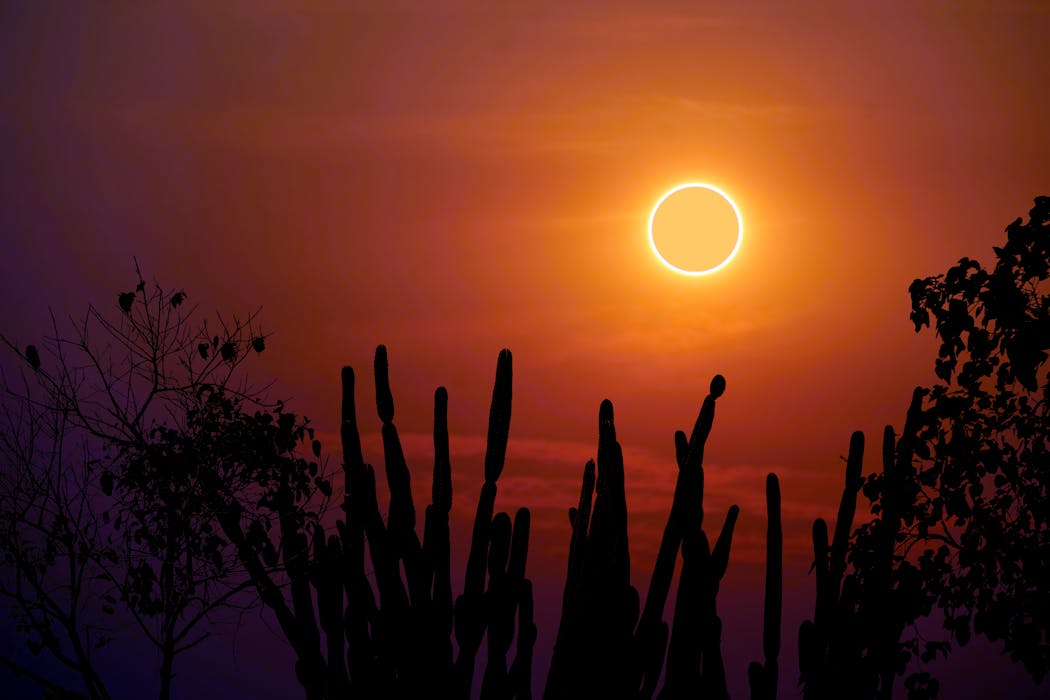
An annular solar eclipse, also known as a ‘ring of fire’ eclipse, occured on February 17. Darkfoxelixir / Shutterstock

The Moon crossed the Sun’s path on February 17, causing what is known as an annular solar eclipse. The Sun was not covered completely, but the Moon blocked enough of its light to leave a fiery ring. Unless you’re deep in the southern hemisphere, you won’t have noticed.

However, astrologically speaking, eclipses have effects regardless of who is watching. In astrology, an ancient tradition that lacks scientific grounding, eclipses are regarded as being powerful and politically significant celestial events. They are traditionally associated with the destiny of rulers – and some astrologers think Donald Trump is no exception.

Astrologers interpret the meaning of eclipses through horoscopes, celestial maps that locate the Sun, Moon and planets within the 12 signs of the Zodiac that encircle our solar system. During the eclipse, the Sun and Moon were at the edges of the sign Aquarius, a position astrologers associate with endings and shakeups.

This, alongside various other factors including Trump being born during a lunar eclipse in 1946, has led some astrologers to suggest that the eclipse could mark the start of a severe crisis for the US president – even his death.

Predictions like this come around fairly often, and Trump has outlasted many of them before. But these extreme forecasts follow a very old script. For thousands of years, eclipses have been treated as political events, read as omens about kingdoms and their rulers.

Bad omens

Eclipses have been connected with the fate of rulers since at least ancient Mesopotamia, around 4,000 years ago. Keen observers there, in what is now modern-day Iraq, kept lists of phenomena they believed were linked to specific outcomes.

“If a lizard gives birth in the walkway of a house, the household will fall” and “if a white partridge is seen in the city, commercial activity will diminish” are two examples. But one omen has long outlived the others: “if there is an eclipse, the king will die”.

With such high stakes, ancient astronomers invested in systematic observation, record-keeping and calculation to predict eclipses with ever-greater accuracy. This enabled the so-called “substitute king” ritual, where royals tried to avoid their fate by temporarily making someone else king until an eclipse passed.

The link between eclipses and the death of kings spread widely in the ancient world. Egyptian papyri show evidence of this belief, and Greek and Roman history is full of stories connecting eclipses with prominent deaths.

Roman historian Cassius Dio recorded a solar eclipse around the death of the first Roman emperor, Augustus, in AD14, during which “most of the sky seemed to be on fire”. In the gospels of Matthew, Mark and Luke, the death of Jesus is also marked by darkened Sun.

In the medieval period, when Arabic chroniclers recorded eclipses, they usually noted concurrent deaths of rulers. And in Europe, a solar eclipse in 1133 was so closely associated with the 1135 death of King Henry I of England that it became known as “King Henry’s Eclipse”.

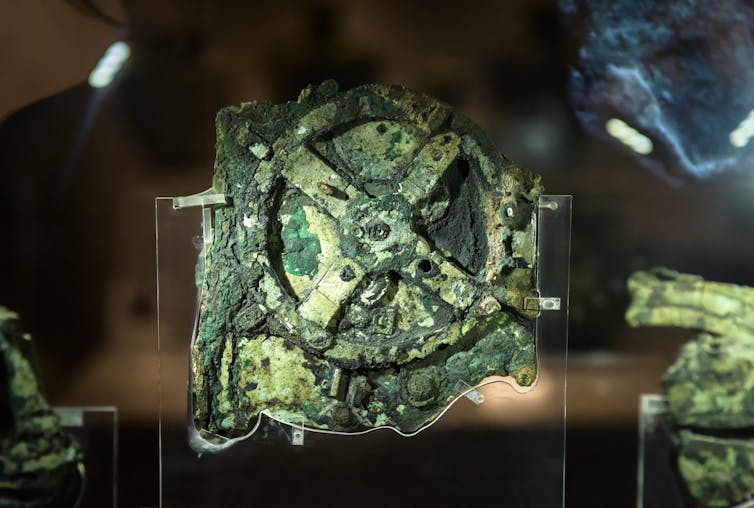
The Antikythera mechanism, which ancient Greeks used to calculate solar eclipses.
The Antikythera mechanism used rotating concentric rings to calculate eclipses in ancient Greece.
Viacheslav Lopatin / Shutterstock

Premodern rulers often hired astrologers to interpret their birth charts – the horoscope cast for the moment they were born. Ideally, the astrologer would pick out an aspect of the chart they could say justified the ruler’s leadership and foretold a long and prosperous reign. This was useful astrological propaganda.

But rulers were less happy when astrologers did this without authorisation – especially if they forecast illness or death. Astrologers were expelled from ancient Rome on numerous occasions for doing just that.

In his book, Lives of the Caesars, Roman historian Suetonius recounted the fate of an astrologer called Ascletarion (or Ascletario). Ascletarion’s predictions of the Emperor Domitian’s imminent downfall in the first century AD prompted the angry emperor to order his execution.

More than 1,400 years later, an astrologer in Oxford was executed for predicting the death of the reigning English monarch, Edward IV. And in 1581, Queen Elizabeth I of England made it a felony to use horoscopes to predict her death or her successor.

Similarly in France, royal pronouncements in 1560, 1579 and 1628 prohibited astrological predictions about princes, states and public affairs. Around the same time, astrologers in Italy got into serious trouble for predicting the deaths of popes.

This was not just a matter of anxiety on the part of rulers. It was also a question of maintaining public order and political stability. State powers were concerned with the ability of astrological predictions to cause general chaos and even prompt protests and rebellions.

They were right to worry. In a time when astrology was taken very seriously, predictions could cause collective panic. During the so-called wars of the three kingdoms, a series of conflicts fought between 1639 and 1653 in England, Scotland and Ireland, astrologers’ radical political predictions about the fate of the English monarchy fed revolutionary sentiment.

One of these astrologers, Nicholas Culpeper, published predictions of the downfall of all European monarchies on the basis of a solar eclipse in 1652.

Nicholas Culpeper's Catastrophe Magnatum.
Nicholas Culpeper’s Catastrophe Magnatum, an astrological pamphlet written in 1652 about the so-called ‘Black Monday’ solar eclipse that year.
Nicholas Culpeper / Catastrophe Magnatum (1652)

Astrology left the world of universities and political courts in the 17th century, but astrologers did not stop making political predictions. In 1790s London, an astrologer called William Gilbert predicted the death of King Gustav III of Sweden. His prophecy was fulfilled a few months later.

And after his attempted assassination in 1981, the then-US president, Ronald Reagan, asked astrologer Joan Quigley whether she could have predicted it. She said yes. Quigley worked for the Reagans for many years, and claimed that she provided advice not just on personal affairs but also on matters of the state, including the best timing to make political announcements.

Although astrology is no longer counted as a science, it remains a player in contemporary politics. Whether or not eclipse predictions come to pass is almost besides the point. Historically, what made eclipses politically dangerous was the speculation often attached to them.

The Conversation

Michelle Pfeffer does not work for, consult, own shares in or receive funding from any company or organisation that would benefit from this article, and has disclosed no relevant affiliations beyond their academic appointment.

ref. For thousands of years, solar eclipses have been associated with the fate of rulers – https://theconversation.com/for-thousands-of-years-solar-eclipses-have-been-associated-with-the-fate-of-rulers-275515

Species on east-west coastlines are more likely to go extinct than those on north-south shores – new study

Source: The Conversation – UK – By Cooper Malanoski, Postdoctoral research associate, University of Oxford

MarcelClemens / shutterstock

As the Atlantic warms, many fish along the east coast of North America have moved northwards to keep within their preferred temperature range. Black sea bass, for instance, have shifted hundreds of miles up the coast.

In the Mediterranean, the picture is very different. Without an easy escape route towards the poles, many species are effectively trapped in a sea that is warming rapidly. Some native fish are even being replaced by more heat-tolerant species that have slipped in through the Suez Canal.

It’s a process affecting coastal species around the world: without a continuous pathway to cooler waters, many are in trouble. Escape becomes difficult where coastlines run east–west or are broken into enclosed basins and islands. In these settings, species have to move huge distances just to gain a few degrees of latitude – the so-called “latitudinal trap”.

It’s also a process that has repeated throughout history. When we analysed 540 million years of fossil data for a recent study published in the journal Science, we found that species along east-west coastlines were more likely to go extinct than those with easier movement north-south.

Diagram of coastlines showing why north-south coasts have less extinction risk

Malanoski et al (2026) / Science

We hypothesised that the shape and orientation of coastlines could help species escape – or trap them. If coastlines provide direct, continuous pathways to move north or south, species should be able to better track shifting climates. But, where species have to travel a long way for minimal latitude gain, their extinction risk is raised during episodes of environmental change.

Coastlines themselves are not fixed. Over millions of years, plate tectonics rearrange continents, sometimes producing long north-south coasts, like those of the Americas today, and at other times sprawling east-west seaways such as during the Ordovician a bit over 400 million years ago.

This means climate shocks can produce very different extinction outcomes depending on the layout of continents at the time.

To test this hypothesis, we analysed fossil data for about 13,000 groups of related shallow-marine invertebrate species, such as clams, snails, sponges and starfish, spanning the last 540 million years. We then paired these records with reconstructions of ancient geography.

For each fossil, we estimated how difficult it would have been for that species to shift its latitude along shallow coastlines. We measured this as the shortest number of steps to travel 5°, 10°, or 15° latitude north or south. (For context, Great Britain covers about 9° from top to bottom). Short distances imply a relatively direct escape; long distances imply a long or maybe impossible escape route.

Annotated maps of various coastline shapes
A 5° shift in latitude can be reached quickly along a simple north–south coastline (A), but requires much longer routes—or cannot be reached at all—along convoluted east–west margins (B), interior seaways (C), and islands (D).
Malanoski et al (2026) / Science

We found that, over the last 540 million years, extinction risk was consistently higher for marine animals with long escape routes.

Geography amplifies catastrophe

This pattern intensified during Earth’s five mass extinction events. In our models, species with longer distances showed increases in extinction risk of up to 400% during mass extinctions, compared with about 60% during other intervals, highlighting that geography becomes far more consequential when climate change intensifies.

Although our analyses focused on geologic timescales, our results help us understand how shallow marine species may respond to climate change today. Species living in the Mediterranean or the Gulf of Mexico or other regions with semi-enclosed geography, or around the margins of islands, may have more difficulty as the ocean warms.

Coastline geometry may matter less for species that are good at dispersing themselves, however, especially those that have a long planktonic larvae phase where they drift around the ocean before becoming fixed in place. The survival of those species depends more on factors like ocean currents than coastline orientation.

Estimating whether a species is at risk of extinction is typically done with reference to attributes such as body size or geographic range size. But our work shows that extinction risk also depends on geography. Survival during climate upheaval depends not only on a species’ biology – but on whether the map itself offers an escape.

The Conversation

Erin Saupe receives funding from the UK Natural Environment Research Council (NERC) and the Leverhulme Trust.

Cooper Malanoski does not work for, consult, own shares in or receive funding from any company or organisation that would benefit from this article, and has disclosed no relevant affiliations beyond their academic appointment.

ref. Species on east-west coastlines are more likely to go extinct than those on north-south shores – new study – https://theconversation.com/species-on-east-west-coastlines-are-more-likely-to-go-extinct-than-those-on-north-south-shores-new-study-275280

Moon sighting is a key part of Muslim life – how the lunar cycle determines the start of Ramadan and Eid

Source: The Conversation – UK – By Imad Ahmed, PhD Candidate, Faculty of Divinity, University of Cambridge

Each year as Ramadan approaches, more than 2 billion Muslims around the world prepare for a month of fasting, prayer and communality. But Ramadan does not begin on the same day everywhere in the world.

This year, some countries will commence the month of fasting on Thursday, February 19, whereas other countries may begin it a day earlier. Similarly, at the end of Ramadan, different communities will celebrate Eid on different dates.

The reason for this lies in the nature of the lunar visibility calendar – the new crescent Moon is not always visible everywhere on the same date. The prophet Muhammad is reported to have said: “Observe fast on sighting it [the crescent] and break fast on sighting it [the next crescent] – but if the sky is cloudy for you, then complete the number [30 days].”

In modern times, some countries such as Turkey have implemented calendar reforms, removing the act of monthly visual sightings of the crescent. They rely instead on pre-determined calculations.

Nevertheless, the visual sighting of the Moon to determine the start of the month remains the majority practice of Muslims across the world. Most believe this has to be done with the naked eye.

Cloud cover can therefore affect when the month begins in different locations, making it an unpredictable calendar. This imbues Moon sighting occasions with a sense of communal wonder – but it can also make the issue surprisingly contentious.

A very British problem

When Muslim migrants arriving in the UK in the middle of the 20th century tried to sight the new crescent Moon, they would often struggle – in part due to a very British problem: the cloudy weather.

As a result, various mosques and communities would outsource their Moon sightings to different countries. Some followed Morocco, others Turkey or Saudi Arabia. As each country might confirm a first sighting on different days, it meant UK mosques could end up with divided dates for Ramadan and Eid.

This has been a source of pain for some people in the British Muslim community. For me (Imad) growing up in London, it meant my school friends might start celebrating Eid on a different date to me and my family. This felt pretty sad – but I just assumed it had to be like this.

That changed when I witnessed the communal practice of Moon sighting during a family holiday to Cape Town in South Africa. When I saw thousands of Muslims gathering on the beach to celebrate seeing the new crescent Moon, I asked myself: “Why can’t we do this in the UK?”

When I returned from Cape Town, I founded a Muslim calendar lunar observation astronomy club called the New Crescent Society. Our aim is to find a way of celebrating Moon sighting communally throughout the UK – and to develop a viable lunar Islamic calendar here, like they have in other parts of the world.

Sometimes you can see the Moon in Cardiff but not in Cambridge. Sometimes the sky is clear in London but cloudy in Manchester. Our UK-wide astronomy education programme, Moonsighters Academy, now supports Muslims to lead their own lunar observation groups in their communities.

Composite image of the first nine days of the lunar cycle.
The first nine days of the lunar cycle.
Emma Alexander, CC BY-SA

The astronomy of lunar visibility

Every month, the Moon goes from a thin crescent, waxing each night to become gibbous (more than half full) and then full, before waning back down to a crescent and disappearing again. This cycle occurs due to the Moon’s orbit around the Earth, and takes 29 and a half days.

The Moon does not create its own light. What we see is reflected sunlight – and the same side of the Moon is always facing towards us. It rotates on its axis at the same rate it orbits the Earth, a phenomenon called tidal locking.

The precise moment at which some amount of lunar illumination is first visible from Earth each month depends on geometrical physics. At this point, the crescent is so thin that even cameras struggle to determine it.

But as the Moon moves further away from the Sun in the sky, the crescent slowly becomes thicker as the angle of separation increases. There is now a longer “lag” between sunset and moonset, which also makes the new crescent more visible. The best time to view a young crescent is approximately halfway between sunset and moonset, balancing sky brightness with lunar altitude.

Astronomers relish the challenge of spotting a very thin crescent Moon when it is less than 24 hours old. But just how young a Moon can people see with the naked eye? One established landmark of 15 hours 32 minutes was set by the astronomer Stephen James O’Meara, who is also known for first spotting Halley’s comet on its return in 1985.

When you introduce optical aids like binoculars, even younger and thinner crescents can be seen. With the right conditions and technology, you can even image the Moon at the moment of conjunction, with an age of exactly zero hours. This was first achieved by astrophotographer Thierry Legault in July 2013, using an infrared filter on a telescope that had been “baffled” to block out the precariously nearby Sun.

When will Ramadan and Eid start?

This depends on where you are in the world. On February 17, the Moon will only be around three hours old at the time of sunset in Saudi Arabia, and moonset is only a few minutes after sunset at this point in the lunar cycle. So the Moon will be too close to the Sun in the sky for it to be astronomically visible.

Nonetheless, if the Saudi Supreme Court receives a report that someone has seen the Moon, it is likely to accept this, leading to a first day of fasting in Saudi Arabia (and all mosques around the world that follow its calendar) on Wednesday, February 18.

In the UK, Europe and North Africa, we are likely to have positive sightings the day after and commence fasting on Thursday, February 19. Countries further east, such as Australia, will probably see the Moon a day later still, and thus have their first fast on Friday, 20 February.

In March, on Thursday, 19, the Moon will be between 17 and 18 hours old at sunset, so difficult – but not impossible – to see in the UK, Europe and North Africa. So we expect communities following these sightings to start celebrating Eid on Saturday, March 21. Mosques following Saudi Arabia are likely to celebrate Eid a day earlier.

However, this is not just a story about calendars. When people gather to search the horizon for the new crescent Moon, they are participating in a practice that links them to the most ancient of human practices: observing and connecting with the natural world around them. In Britain, we hope our work can help make this an even more unified celebration.

The Conversation

The Moonsighters Academy was funded by a Science and Technology Facilities Council Spark award.

Emma L Alexander receives funding from the Science and Technology Facilities Counci for her research at the University of Leeds.

ref. Moon sighting is a key part of Muslim life – how the lunar cycle determines the start of Ramadan and Eid – https://theconversation.com/moon-sighting-is-a-key-part-of-muslim-life-how-the-lunar-cycle-determines-the-start-of-ramadan-and-eid-276195

Species on east-west coasts have greater extinction risk than those on north-south shores – here’s why

Source: The Conversation – UK – By Cooper Malanoski, Postdoctoral research associate, University of Oxford

MarcelClemens / shutterstock

As the Atlantic warms, many fish along the east coast of North America have moved northwards to keep within their preferred temperature range. Black sea bass, for instance, have shifted hundreds of miles up the coast.

In the Mediterranean, the picture is very different. Without an easy escape route towards the poles, many species are effectively trapped in a sea that is warming rapidly. Some native fish are even being replaced by more heat-tolerant species that have slipped in through the Suez Canal.

It’s a process affecting coastal species around the world: without a continuous pathway to cooler waters, many are in trouble. Escape becomes difficult where coastlines run east–west or are broken into enclosed basins and islands. In these settings, species have to move huge distances just to gain a few degrees of latitude – the so-called “latitudinal trap”.

It’s also a process that has repeated throughout history. When we analysed 540 million years of fossil data for a recent study published in the journal Science, we found that species along east-west coastlines were more likely to go extinct than those with easier movement north-south.

Diagram of coastlines showing why north-south coasts have less extinction risk

Malanoski et al (2026) / Science

We hypothesised that the shape and orientation of coastlines could help species escape – or trap them. If coastlines provide direct, continuous pathways to move north or south, species should be able to better track shifting climates. But, where species have to travel a long way for minimal latitude gain, their extinction risk is raised during episodes of environmental change.

Coastlines themselves are not fixed. Over millions of years, plate tectonics rearrange continents, sometimes producing long north-south coasts, like those of the Americas today, and at other times sprawling east-west seaways such as during the Ordovician a bit over 400 million years ago.

This means climate shocks can produce very different extinction outcomes depending on the layout of continents at the time.

To test this hypothesis, we analysed fossil data for about 13,000 groups of related shallow-marine invertebrate species, such as clams, snails, sponges and starfish, spanning the last 540 million years. We then paired these records with reconstructions of ancient geography.

For each fossil, we estimated how difficult it would have been for that species to shift its latitude along shallow coastlines. We measured this as the shortest number of steps to travel 5°, 10°, or 15° latitude north or south. (For context, Great Britain covers about 9° from top to bottom). Short distances imply a relatively direct escape; long distances imply a long or maybe impossible escape route.

Annotated maps of various coastline shapes
A 5° shift in latitude can be reached quickly along a simple north–south coastline (A), but requires much longer routes—or cannot be reached at all—along convoluted east–west margins (B), interior seaways (C), and islands (D).
Malanoski et al (2026) / Science

We found that, over the last 540 million years, extinction risk was consistently higher for marine animals with long escape routes.

Geography amplifies catastrophe

This pattern intensified during Earth’s five mass extinction events. In our models, species with longer distances showed increases in extinction risk of up to 400% during mass extinctions, compared with about 60% during other intervals, highlighting that geography becomes far more consequential when climate change intensifies.

Although our analyses focused on geologic timescales, our results help us understand how shallow marine species may respond to climate change today. Species living in the Mediterranean or the Gulf of Mexico or other regions with semi-enclosed geography, or around the margins of islands, may have more difficulty as the ocean warms.

Coastline geometry may matter less for species that are good at dispersing themselves, however, especially those that have a long planktonic larvae phase where they drift around the ocean before becoming fixed in place. The survival of those species depends more on factors like ocean currents than coastline orientation.

Estimating whether a species is at risk of extinction is typically done with reference to attributes such as body size or geographic range size. But our work shows that extinction risk also depends on geography. Survival during climate upheaval depends not only on a species’ biology – but on whether the map itself offers an escape.

The Conversation

Erin Saupe receives funding from the UK Natural Environment Research Council (NERC) and the Leverhulme Trust.

Cooper Malanoski does not work for, consult, own shares in or receive funding from any company or organisation that would benefit from this article, and has disclosed no relevant affiliations beyond their academic appointment.

ref. Species on east-west coasts have greater extinction risk than those on north-south shores – here’s why – https://theconversation.com/species-on-east-west-coasts-have-greater-extinction-risk-than-those-on-north-south-shores-heres-why-275280

How shaming unethical brands makes companies improve their behaviour

Source: The Conversation – UK – By Janet Godsell, Dean and Professor of Operations and Supply Chain Strategy, Loughborough Business School, Loughborough University

Alive Color Stock/Shutterstock

Recent investigations have uncovered forced labour in agricultural supply chains, illegal fishing feeding supermarket freezers, deforestation embedded in everyday food products, and unsafe conditions in factories producing “sustainable” fashion. These harms were not visible on labels. They surfaced only when journalists, whistleblowers or activists exposed them.

And when they did, something predictable happened. Consumers felt uneasy. Brands issued statements. Promises were made. The point is that the force that set change in motion was not regulation. It was consumers.

Discovering that an ordinary purchase may be tied to exploitation or environmental damage creates a jolt of personal responsibility. In our research,
we found that when environmental consequences are clearly linked to people’s own buying choices, many are willing to switch products — especially when credible alternatives exist.

But guilt is private. It nudges personal behaviour. It does not automatically reshape systems. The shift happens when private discomfort becomes public voice.

Consumers are often also the first to make hidden environmental harms visible. They post evidence on social media. They question corporate claims. They compare sustainability promises with independent reporting. They organise petitions, boycotts and review campaigns. By shining a spotlight on the truth, the scrutiny shifts from shoppers to brands.

That shift matters because modern brands depend on trust. Reputation is an asset. When sustainability claims are publicly challenged, credibility is at risk. Research in organisational behaviour
shows that firms respond quickly to threats to legitimacy. Reputational damage affects customer loyalty, investor confidence and regulatory attention.

In many high-profile cases, supply chain reforms have followed intense public scrutiny rather than quiet compliance checks. Leaders may not act out of moral awakening — but they do act when inaction becomes costly to their reputation.

Consumers can trigger the emotional chain reaction. They feel guilt. They seek information. They speak collectively. That collective voice generates corporate shame.

woman shopper with trolley checking two bottles
Consumers have the power to demand more transparency from brands.
Stokkete/Shutterstock

Sustainability professor Mike Berners-Lee argues in his book A Climate of Truth that demanding honesty is one of the most powerful climate actions available to citizens. Raising standards of truthfulness in business and media changes incentives. When the gap between what companies say and what they do becomes visible, maintaining that gap becomes harder.

Our research explores how that visibility can be strengthened. The findings were clear. When environmental and social consequences are personalised and traceable, sustainability feels less distant. People see both their own role and the role of particular firms. That dual awareness encourages two responses: behavioural change driven by guilt and corporate accountability driven by shame.

Shame works because it is social. Brands care about how they are seen. When the negative environmental and social effects of supply chains can be publicly connected to named products, corporate narratives become contestable in real time.

Making supply chains socially visible

The technology to improve transparency already exists. Companies track goods through logistics systems, supplier databases and digital product-tagging that collect detailed information about sourcing and production. The barrier is not data collection. It is disclosure.

Environmental indicators — carbon emissions, water use, land conversion risk, labour standards compliance — can be linked to products through QR codes or retail apps. Comparable reporting standards would ensure consistency. Simple digital interfaces would make information accessible. Social sharing tools would allow consumers to compare and discuss findings publicly.

Social media is crucial. It already enables workers, communities and campaigners to challenge corporate messaging. Integrating verified supply chain data into these spaces would shift transparency from crisis response to everyday expectation.

This strategy, with its behaviour change directive, could work more effectively than rules or green marketing campaigns alone.

Regulation is essential but often slow and uneven across borders. Marketing campaigns can highlight selective improvements while leaving deeper practices untouched. Transparency activated by collective consumer voice operates differently. It aligns emotional motivation with reputational consequence.

Consumers are not passive recipients of information. They are catalysts. By feeling the first twinge of guilt, asking harder questions and speaking together, they create the conditions under which companies experience shame. When shame threatens trust and market position, change becomes rational and inevitable.

Shame is uncomfortable. But when directed at opaque systems rather than consumers, it can be powerful. By demanding truth and making supply chains socially visible, consumers can push businesses towards greater transparency — and, ultimately, towards more sustainable practice.


Don’t have time to read about climate change as much as you’d like?

Get a weekly roundup in your inbox instead. Every Wednesday, The Conversation’s environment editor writes Imagine, a short email that goes a little deeper into just one climate issue. Join the 47,000+ readers who’ve subscribed so far.


The Conversation

Janet Godsell receives funding for the Interact Network+ from the Innovate UK Made Smarter Innovation Programme via the ESRC. She is affiliated with the World Economic Forum (WEF) Advanced Future Council for Advanced Manufacturing and Global Value Chains.

Nikolai Kazantsev receives funding from UKRI funded project “Resilience in Agrifood Systems Supply Chain Configuration Analytics Lab (Project ID: R1650GFS). He is a fellow of Clare Hall College, Cambridge.

ref. How shaming unethical brands makes companies improve their behaviour – https://theconversation.com/how-shaming-unethical-brands-makes-companies-improve-their-behaviour-273062

Extra/Ordinary Women exhibition explores the women in Charles Dickens’s life and writing

Source: The Conversation – UK – By Oliver Bray, Dean of Leeds School of Arts, Leeds Beckett University

Walking through the doors of London’s Charles Dickens Museum is always a special moment. This handsome, tall London townhouse – middle class by Victorian standards but practically palatial to visitors today – was the crucible in which a young, ascending Charles Dickens wrote himself into international superstardom.

It is here that The Pickwick Papers, Oliver Twist and Nicholas Nickleby spilled from his pen. And it is here, as the new exhibition Extra/Ordinary Women compellingly demonstrates, that Dickens lived in constant proximity to the intelligent and talented women who shaped his imagination, his domestic life and his enduring theatricality.

The Extra/Ordinary Women exhibition offers insights to many of these women. His wife, Catherine Dickens, who also wrote within these walls. His sister, Mary Hogarth, whose sudden death here devastated him. His sister-in-law, housekeeper and adviser Georgina Hogarth, who remained his rock for the rest of his life.

Victorian culture, which was suspicious of women who moved in theatrical, artistic or public spheres, left deep traces on Dickens’s portrayals of women. In his writing, Dickens either sanitised his female characters, like the “saintly” Little Nell in The Old Curiosity Shop (1841) or the “innocent” Rose Maylie in Oliver Twist (1838); or he reformed them, like the “fallen” women, Martha Endell and Little Em’ly in David Copperfield (1850). He gave these characters emotional clarity and symbolic weight that belies the more complex real-world inspirations.

The exhibition shows that Mary Hogarth, for instance, is scattered through Dickens’s fiction in the form of saintly young women whose deaths confer moral meaning. Dickens’s close friend Angela Burdett‑Coutts – a philanthropist and powerful progressive – was softened into Agnes Wickfield, a gentle moral influence in David Copperfield.

Dickens the performer

Looking around the exhibition, I found myself thinking about performance. Not just the performances of the women around him, but Dickens’s own lifelong, desperate theatricality.

It has always seemed obvious to me, as a performer of Dickens’s work, that he wrote with an actor’s mind. My own performed reading of A Christmas Carol taught me that his prose demands embodiment: the regretful cadences of Scrooge’s former fiancée Belle, the anguish of Bob Cratchit, the vocal changes that illustrate the transformative journey of Scrooge himself. These characters were not merely written to be read, they were written to be heard.

The deputy director of the museum, Emma Harper, informed me that while writing, Dickens would break from his desk to perform the characters he was developing in the mirror. He also performed domestic dramas for his children, founded amateur dramatic troupes and he threw himself into public readings so intensely that doctors monitored his pulse before and after each performance. He made himself physically ill with the sheer force of his acting. This is not a writer who happened also to perform. This is a performer who happened also to write.

And the women around him were, in many ways, part of that theatrical and artistic world. His daughters are good examples. Mamie Dickens loved performing, and Katey Perugini, an artist of real talent, appears in the exhibition through in a newly displayed painting that mimics her own painting style. The exhibition also reminds us that Ellen Ternan – Dickens’s longtime mistress – came from a theatrical family.

All of this becomes shockingly vivid with the exhibition’s centrepiece: the newly revealed, previously unpublished letter to the French opera singer Pauline Viardot. It is, in many ways, a perfect artefact, because it shows Dickens in full, contradictory colour.

Pauline Viardot in a black and white photo
Pauline Viardot in 1860.
Musée Carnavalet

Here is the great novelist, in Paris for his triumphant theatrical readings, writing with unabashed admiration to a woman whose artistry moved him to tears. But here is also Dickens the flirt – offering her an invitation to dine and promising tickets to his next reading.

Dickens wrote the letter while en route to see his mistress, Ternan, in Geneva. “I am going to Geneva tomorrow night, but will be back in seven days,” he says breezily, attempting to schedule dinner with Viardot for the following week.

The exhibition also includes a letter from Viardot to Dickens’s biographer, where she recalls Dickens “raining tears” during her performance of Orphée. And it reveals something about Dickens that the exhibition continually circles back to: he existed in a self-made world of performance, admiration, emotional excess and artistic intoxication. He was drawn to women who were brilliant, expressive and creative, because they belonged to that same world of heightened feeling and dramatic possibility.

This is what makes Extra/Ordinary Women so compelling: it reframes Dickens not only through the women he knew, but through the theatrical culture they collectively inhabited. Stepping outside, I felt his familiar voice linger, now joined by the sense that the women behind the scenes were finally stepping into the light – something the dramatist in Dickens might have appreciated.

Extra/Ordinary Women is at the Charles Dickens Museum in London until September 6


Looking for something good? Cut through the noise with a carefully curated selection of the latest releases, live events and exhibitions, straight to your inbox every fortnight, on Fridays. Sign up here.


This article features references to books that have been included for editorial reasons, and may contain links to bookshop.org. If you click on one of the links and go on to buy something from bookshop.org The Conversation UK may earn a commission.

The Conversation

Oliver Bray does not work for, consult, own shares in or receive funding from any company or organisation that would benefit from this article, and has disclosed no relevant affiliations beyond their academic appointment.

ref. Extra/Ordinary Women exhibition explores the women in Charles Dickens’s life and writing – https://theconversation.com/extra-ordinary-women-exhibition-explores-the-women-in-charles-dickenss-life-and-writing-275861

Why coping with heavy rain in Scotland’s whisky country shows how to save water for the summer

Source: The Conversation – UK – By Josie Geris, Reader in Hydrology, University of Aberdeen

After weeks of relentless rain and flooding, and even more forecast, 2025’s droughts and hosepipe bans feel like ancient history. But they shouldn’t.

The UK is increasingly caught between these wetter winters and warmer, drier summers. What if this year’s summer brings water shortages again? The seemingly endless rainfall causing flooding across the UK right now could help solve future summer drought problems – if we capture it right.

The stakes are high in Speyside, home to around half of Scotland’s malt whisky distilleries. They had to cope with 2025 being the UK’s warmest and sunniest on record, where prolonged dry conditions led to widespread restrictions on water abstraction. Multiple distilleries were forced into temporary closures, costing the industry millions of pounds and highlighting just how vulnerable even Scotland’s famously wet regions are to water scarcity.

Whisky production represents one of the UK’s biggest industrial water users. Large quantities of water are required for the distilling process and the product itself, so understanding water conservation is both extremely important for the industry, and can also help others recognise the benefits.

If it was possible to retain this winter’s rainfall and release it gradually when it was needed, the nation could become more resilient to both floods and droughts without building expensive new reservoirs.

Managing droughts with floods

Across Speyside, they’re testing ways to slow, store and steadily release water by working with the landscape rather than against it. Distillers have invested in leaky dams (small barriers built across temporary upland streams) to slow the flow of water during heavy rain and allow the rainwater to soak into soil and recharge groundwater.

Leaky dams hold the water at surface level as well helping it store underground. Water in the soil and deeper groundwater move through the subsurface much more slowly than over land – taking weeks or months rather than hours or days – which is why rivers still flow even after long dry spells.

An overhead view of the Tromie river.
Tromie river in Speyside.
Ondrej Zeleznik/Shutterstock

There are other examples of useful interventions. Peatland restoration, wetland creation and tree planting all work by increasing temporary storage in the landscape and slowing the movement of water into rivers.


Read more:
Environment issues have never been so fiercely debated in a Welsh election campaign as they will be in 2026


Research across upland catchment areas in Cumbria and West Yorkshire shows how the principles being tested in Speyside could translate to elsewhere. A large academic review of natural flood management evidence concluded that measures increasing water storage, slowing the flow of water over the land or enhancing soil structure can consistently reduce the peak level of a flood.

This growing body of evidence supports a simple but powerful idea: the UK and other countries could be more resilient to droughts and floods by redesigning landscapes to keep water around for longer.

Three lessons for the rest of the UK

1. Design and location matter

Local factors and hydrology (the study of the movement and management of water) can determine what works best where. For example, planting trees “somewhere” delivers far less benefit than planting them in the right places, especially near rivers, near the source of the river, or where soil can absorb water.

2. Benefits must stack up or they won’t be adopted

Leaky dams and other projects, such as tree planting, are relatively inexpensive, compared with traditionally engineered flood defences or having to deal with flood and drought consequences. They can deliver benefits at a fraction of the cost, while potentially also increasing biodiversity, soil health, carbon capture and improving water quality.

But there are trade-offs, which need to be assessed early. For example, in some cases, large-scale tree planting can also reduce summer water availability in already stressed catchment areas. Tree canopies can temporarily store water on the leaves, but if this water evaporates it doesn’t return to the soil. Tree roots improve the soil so it absorbs and stores more water, but trees can also use more water. The net effects depend on factors such as climate, soil type and tree species.

3. Good governance will unlock funding

When water security has clear economic benefits, businesses are willing to engage. However, investment is not always private, and a recent review showed public funding is often fragmented, with inconsistent planning rules. Strengthening overall governance of these kind of schemes is essential, because farmers, businesses and landowners are far more likely to participate if they benefit.

Managing our landscapes appropriately won’t stop all floods or prevent every drought, but it can make both less severe, while restoring habitats, supporting farming, and protecting industries that rely on dependable water supplies.

Every river carrying floodwater to the sea represents water that could be stored for drier months. Thinking ahead for what happens during heavy rains can be part of forward planning for more extreme weather in years to come.

The Conversation

Josie Geris receives funding from the Natural Environment Research Council, Royal Society, the Scottish Government via CREW (Scotland’s Centre of Expertise for Waters), and Chivas Brothers.

Megan Klaar receives funding from the Natural Environment Research Council, The Leverhulme Trust and National Trust.

ref. Why coping with heavy rain in Scotland’s whisky country shows how to save water for the summer – https://theconversation.com/why-coping-with-heavy-rain-in-scotlands-whisky-country-shows-how-to-save-water-for-the-summer-275762