Florida’s immigrant entrepreneurs are creating jobs and prosperity in their communities

Source: The Conversation – USA (2) – By Paula de la Cruz-Fernández, Cultural Digital Collections Manager, University of Florida
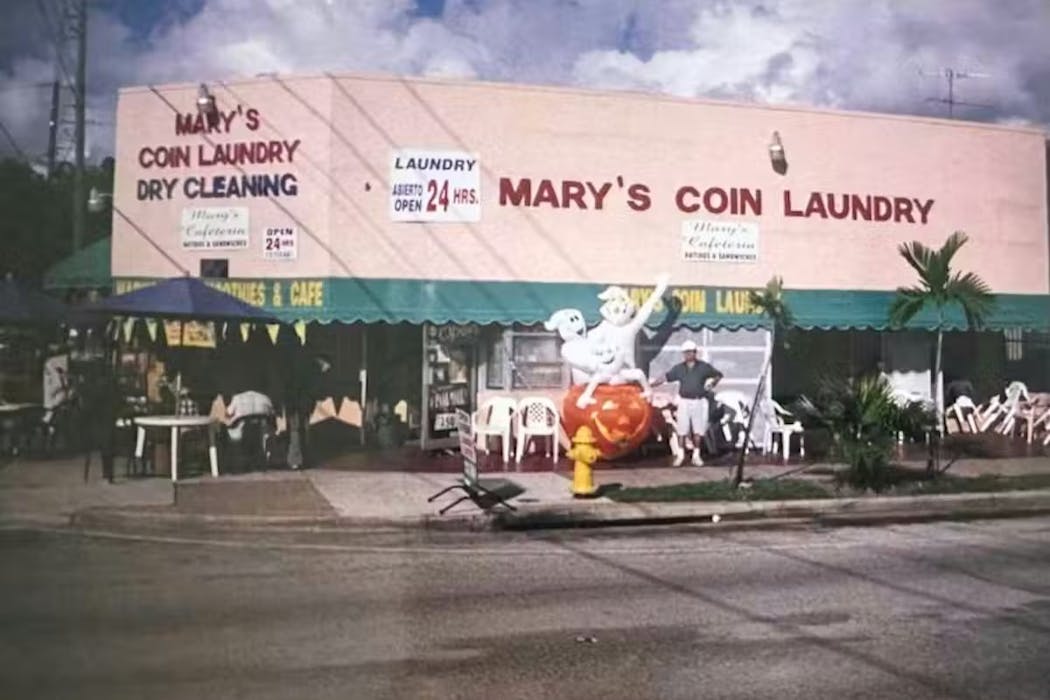
Founded in 1988, Mary’s Cafe & Coin Laundry in Miami, Fla., has been owned by three generations of one family that immigrated to the U.S. from Cuba. Photo courtesy of the owners of Mary’s Cafe in Miami, Fla., CC BY-NC-ND

Immigration to the U.S. is often framed as a problem to be managed, controlled or punished. Immigrants are often derided for crossing the border without authorization or “taking jobs” from U.S. citizens.

This rhetoric has intensified when Donald Trump has been in the White House. Trump and officials in his administrations have repeatedly characterized immigrants as a drain on national resources.

But research on immigrants tells a different story.

I’m a historian of business and culture who examines how enterprises shape and are shaped by the societies and historical contexts in which they operate. Since 2021 I have led the Gainesville Business History Project, a research initiative at the University of Florida that studies the long-term patterns of the town’s business history.

Nearby history

Our project takes a nearby history approach that recognizes that businesses around us, even small ones, are part of the historical record that we consumers also actively shape. Our team of 10 researchers has conducted in-depth interviews with more than 40 business owners and entrepreneurs in Florida.

About 22% to 23% of the state’s residents – roughly 5 million people – are foreign born. This is much higher than the nationwide average of 14%.

In 2023, foreign-born Florida residents made up almost 50% of the workforce employed in pillars of the state’s economy, including agriculture, tourism and construction.

In 2025, one study found that 267,700 of these Florida immigrants – about 5% – were entrepreneurs.

Our interviews uncovered many stories that show how immigrant-founded businesses can grow into familiar institutions that define a place’s identity. These stories illustrate some of the ways immigrants contribute to their communities.

La Aurora Latin Market

The story of La Aurora, a Latin grocery store that has operated for nearly 25 years in Gainesville, demonstrates how businesses are culturally embedded within the community and how immigrant-owned businesses often are tied to long-term local networks.

Aurora Ynigo crossed the Mexico-U.S. border in the early 1990s. She went straight to Miami, where she met her husband, Peter. In the late 1990s they moved from Miami to Gainesville for Peter’s job. At the time there was limited access to Hispanic products in the university town with about 180,000 residents. So in 1999 the family decided to open a Latin store that Aurora would manage.

For years the couple and their parents would create a weekly shopping list, which included many items requested by clients and friends who had immigrated to Gainesville from Peru, Cuba or Colombia. Then they would drive 400 miles to Miami, where they would look for the items all over the city, especially in supermarkets there such as Sedano’s and Presidente. They would then drive back to Gainesville with fresh food in big coolers to fill the racks at their location on University Avenue.

After 27 years in business, La Aurora Latin Market on University Avenue has its own butcher counter, fresh produce and other items from across Latin America and the Caribbean. It also makes fresh-baked Latin American breads, pastries and cakes. And it has become a place where the Spanish-speaking community – a demographic that has grown considerably in the past 10 years – can reliably find familiar products.

Mary’s Cafe & Coin Laundry

For more than four decades, Mary’s Café and Laundry has operated along Miami’s now-central and busy 27th Avenue.

The business has remained in the same family across three generations. It traces back to Eumelia Morales Fernández, who immigrated to Miami from the town of Santa Clara, Cuba, in 1970. Like many immigrant women, she first worked as a seamstress. She then got a job in a shoe factory before buying a small supermarket with her husband on 32nd Avenue in Miami in 1988.

After purchasing the building where the cafe and laundromat still stand, they installed washing machines and dryers and opened a small cafeteria alongside the laundromat. They named the business Mary’s Cafe, after Eumelia’s daughter, who later ran the business before passing it on to her own daughter, Vicky, who currently manages it.

Mary's Cafe Miami menu
The current menu at Mary’s Cafe.
Photo by the author, taken in 2025, CC BY-NC-ND

Mary created the menu, which has changed little since the cafe first opened. The cafe has its own kitchen for tostadas and pastelitos, serving coladas and cortaditos daily at this central Miami location. Everything continues to be made in-house.

The building also houses another small retail space, which is currently a watch repair business run by another member of the family. Before that, the space was home to a Chinese takeout owned by another Cuban family.

I was able to interview both Eumelia and Vicky. Vicky told me she has not changed much in the way she coordinates work and supplies at Mary’s. The biggest change she’s had to make is learning to use social media to promote the business.

16th Avenue Diner

Gilberto Argoytia Miranda owns the 16th Avenue Diner. The diner is an icon of Gainesville’s southern cuisine and has been in operation for more than 50 years.

Argoytia Miranda is the diner’s eighth owner – he purchased it in 2021. He had experience in the sector from when he lived in Mexico City, where he had operated food trucks since 2010.

He knew he wanted to be in the restaurant industry, but he didn’t immediately open a Mexican restaurant, despite the limited number of them in Gainesville. Instead, he studied the local market by working for various restaurants, including delivering food via DoorDash. This experience allowed him and his family to gain a deeper understanding of the Gainesville food scene.

The diner had to maintain its soul, as Argoytia Miranda calls it, for the regular clientele to keep coming. He and his family didn’t want to replace an eatery that carried local meaning and tradition. In fact, he recognizes this continuity as an asset, because the place remains recognizable.

Interior of 16th Ave Diner in Gainesville, Florida
The 16th Avenue Diner in Gainesville, Fla., has been a fixture in the town, even as ownership has changed hands over the years.
Photo by the author, taken in November 2025, CC BY-NC-ND

Argoytia Miranda rarely changes the menu, because he understands that’s what people have liked for years. He does not see the need to reinvent the core of the restaurant, its Southern-style cooking and the Americana atmosphere.

Little by little, he told me in 2025, he intends to experiment with adding more Latino flavor to the menu. But new dishes will become part of the official offering only if customers enjoy them.

The Conversation

Paula de la Cruz-Fernández does not work for, consult, own shares in or receive funding from any company or organization that would benefit from this article, and has disclosed no relevant affiliations beyond their academic appointment.

ref. Florida’s immigrant entrepreneurs are creating jobs and prosperity in their communities – https://theconversation.com/floridas-immigrant-entrepreneurs-are-creating-jobs-and-prosperity-in-their-communities-273183
When ICE sweeps a community, public health pays a price – and recovery will likely take years

Source: The Conversation – USA (3) – By Nicole L. Novak, Research Assistant Professor of Community and Behavioral Health, University of Iowa

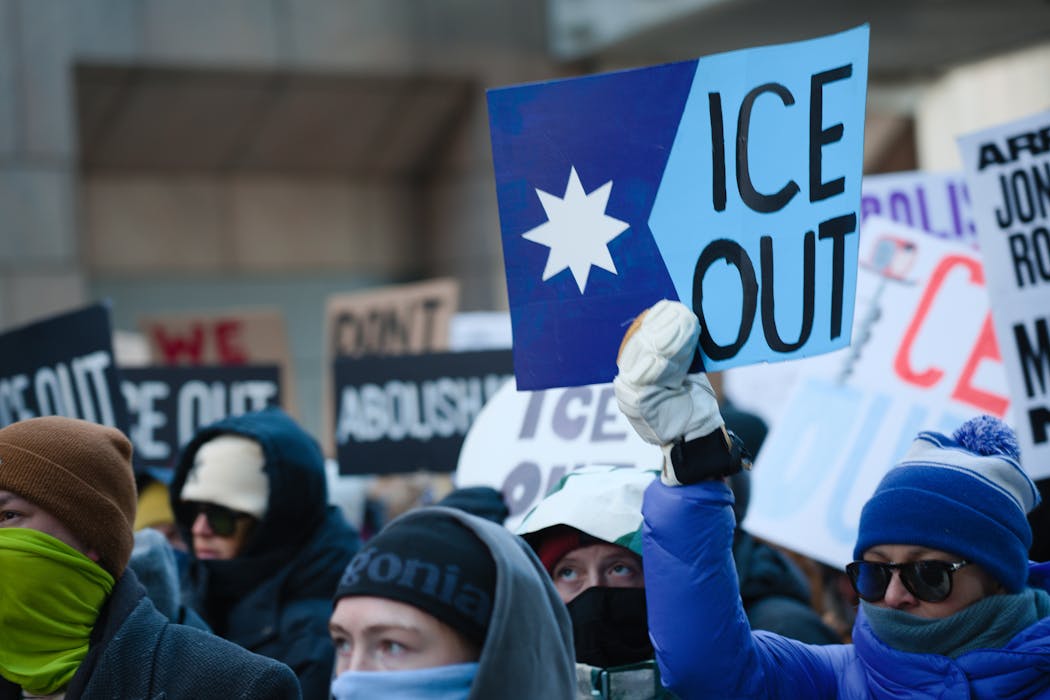
Minneapolis residents mobilized to protest against ICE and to support immigrant members of their community. Fibonacci Blue/Flickr via Wikimedia Commons, CC BY

The Trump administration announced on Feb. 12, 2026, that it is ending Operation Metro Surge, its deployment of more than 3,000 federal immigration enforcement agents in Minneapolis, St. Paul and the surrounding metro area. Federal officials say some agents will remain in the area and have vowed that similar immigration sweeps are coming soon to other U.S. cities.

As public health researchers who have been documenting the health impacts of immigration enforcement for over 10 years, we see these immigration sweeps as public health emergencies.

Even before the Trump administration’s recent expansion of immigration enforcement, research has long shown that intensive immigration enforcement operations affect people’s use of health care, ability to access resources to stay healthy, and their mental health and social relationships. Notably, these findings all come from before the Trump administration’s most recent expansion of immigration enforcement. It is fair to assume that the impacts of these current operations will be even greater.

To some extent – particularly in Minneapolis, where mutual aid networks are especially strong – community response can mitigate some of these impacts. One of us (Nicole), as a resident of Minneapolis, witnessed both the unfolding crisis and a powerful community-driven public health response.

But these public health harms will take months or years to reverse, and they provide a troubling preview of what could happen in other cities.

Accessing health care

One of the most immediate public health impacts of intensive immigration enforcement is that it makes people hesitant to seek health care, especially if they belong to a nationality or racial group that is being targeted for immigration arrests. For example, studies of Hispanic adults have shown that they are less likely to get an annual checkup or visit their doctor – even if they are U.S. citizens – if they live in a region with more intensive immigration enforcement.

Research has also shown that Medicaid enrollment declines when federal immigration enforcement rises, even among qualifying U.S. citizens.

There is no question that Operation Metro Surge has deterred immigrant patients and their families in Minnesota from seeking medical care. According to one family medicine doctor, primary care visits are down more than 50%. Doctors and health care workers are reporting that patients are delaying needed care, potentially worsening chronic conditions, such as diabetes. Others report that pregnant women are missing prenatal visits and are requesting home births, even in cases where their health conditions would typically require a hospital birth.

Intense ICE activity in Minneapolis has made people hesitant to seek medical care.

Accessing food and housing

Immigration crackdowns also affect public health by restricting people’s access to the resources they need to stay healthy.

For example, income and employment are major predictors of health. But research suggests that overall employment and hourly wages fall in counties that begin collaborating with federal immigration enforcement – partly because people spend less money at stores, restaurants and other local businesses.

This phenomenon is playing out in Minneapolis and St. Paul, where thousands of immigrant families are staying home to avoid encounters with immigration enforcement. In January 2026, immigrant-owned businesses reported reduced traffic, with as many as 80% temporarily closing in some neighborhoods.

Many of public health’s most cost-effective, hard-won programs, such as the Supplemental Nutrition Assistance Program, or SNAP, and the Women, Infants and Children nutrition program, are designed to preserve people’s health even in times of economic scarcity. But enrollment in these programs drops when fear of immigration enforcement intensifies. The same is true for housing, another foundation of public health. Research shows that evictions, missed rent or mortgage payments, and foreclosure rates increase when immigration crackdowns expand.

It is too soon to know the impact on evictions in Minneapolis, but early reports from tenant advocacy organizations indicate that they have seen an 82% increase in requests for help compared to early 2025.

Stress, hypervigilance and mental health

Among the most harmful and enduring impacts of immigration enforcement are the effects on mental health. Our research and that of others shows that people who encounter or have to protect themselves from immigration officials – staying inside to avoid immigration officials, seeing immigration officials in their neighborhood, knowing someone who was deported or being deported themselves – are at higher risk of psychological distress or poor overall health.

Especially for children who witnessed or experienced the arrest, detention or deportation of a family member, these effects can be severe, including separation anxiety and behavioral issues in the short term, as well as long-term risks of anxiety and depression.

Perhaps most painfully, experiencing family separations, missing work or avoiding public space leaves people socially isolated, resulting in fewer emotional resources to cope with these stresses as well as risks to health.

In Minnesota, many immigrant families are not only experiencing the social isolation of staying home from school and work but are also avoiding spaces that may have provided solace and support, such as places of worship. Church attendance has reportedly dropped by half in some congregations, and mosque attendance may be down too.

People packing food in donation boxes
Immigration crackdowns limit people’s access to the resources they need to stay healthy.
PhotoLife94/E+ via Getty Images

How communities are responding

Amid these challenges, everyday Minnesotans – health care workers, neighbors, faith communities – have taken steps to bridge these gaps.

Trusted neighbors and community organizations ensure that people have rides to doctor visits. Some health care providers are expanding telehealth and home visits to make sure patients receive necessary care. Health care staff and unions are putting pressure on hospitals and health systems to implement policies that limit ICE’s access to patient areas.

Meanwhile, community members are delivering food and necessities to those who are sheltering in place or have lost income. Mutual aid campaigns are raising money to help with rent, organizers successfully campaigned for the city of Minneapolis to expand rental assistance, and more than 60 local organizations are petitioning the governor to enact a statewide eviction moratorium.

Mental health stressors and social isolation are more challenging to address, but some local mental health providers are expanding their reach, while teachers, neighbors and people of faith try to maintain connections with those who are sheltering at home.

This far-reaching response echoes what we have observed in our own research with other communities that have experienced immigration raids: ordinary people, with immigrant families at the forefront, essentially launching an informal disaster response, providing sanctuary and resources.

Public health research has long shown that connected communities are healthy communities, and these ties play a critical role in long-term recovery from public health crises.

But immigration court cases drag on for months and years, as do long-term mental health impacts. Ruptured trust with government takes time to rebuild. That means that as ICE expands its presence across the U.S., the fallout may last for a long time to come.

The Conversation

Nicole L. Novak has received research funding from the National Institutes of Health, the National Science Foundation, the Robert Wood Johnson Foundation, and the Mid-Iowa Health Foundation. She is a volunteer with the Prairielands Freedom Fund and UNIDOS MN.

William D. Lopez does not work for, consult, own shares in or receive funding from any company or organization that would benefit from this article, and has disclosed no relevant affiliations beyond their academic appointment.

ref. When ICE sweeps a community, public health pays a price – and recovery will likely take years – https://theconversation.com/when-ice-sweeps-a-community-public-health-pays-a-price-and-recovery-will-likely-take-years-274810

From Minneapolis to Toronto and Bogotá, cities showcase new ways to address crises

Source: The Conversation – Canada – By Luisa Sotomayor, Associate professor, Department of Geography and Planning, University of Toronto

Crises seem to be everywhere. We live through a moment of generalized crisis — called poly– or perma-crisis by some. In this context, the nation-state often appears as the default institution and ideological framework for addressing challenges. But the nation-state is not always the best placed entity to respond to crises.

Recent events suggest that local, urban and municipal intervention can be effective in the face of crisis. In the United States, various crises have recently been responded to by municipal action.

The election of New York City mayor Zohran Mamdani in November 2025 signalled a switch in attention that foregrounded civic alternatives to national overreach.

Minneapolis has seen unprecedented rallying by civic and grassroots forces who mobilized to protect persecuted neighbours and co-workers. This response to a crisis represents a politics of care and solidarity. It has also recognized an urban form of “non-status citizenship” beyond legal status, grounded in proximity and moral obligation to neighbours and migrants.

Cities are where many crises are lived, governed and collectively handled most directly. Daily social and economic life in cities encourages practical and creative responses to overlapping crises.

In our current project about multi-level crisis management in Canada and the United Kingdom, we want to better understand the potential of local, urban and community-based solutions to the overlapping crises people currently experience.

Crisis urbanism

We start from the assumption that the urban way of life is central to societies both inside and outside city regions. Cities aren’t just places where multiple crises may collide. They’re also places where people develop ways to navigate them. They do so through shared learning and, in some cases, organized forms of resistance and alternative responses to state strategies.

A study conducted by one of our research partners, urban and suburban studies professor Roger Keil, called this phenomenon crisis urbanism. The research, which is also at the basis of this article, argues that crises have to be seen more as ongoing processes that are part of everyday urban life, rather than singular events.

Cities can create opportunities that national governments might overlook or fail to provide. For example, communities can establish processes for democratic dialogue to confront the crises they face. These efforts go beyond reacting to failure, helping to build alternative institutional capacities.

The COVID-19 pandemic offers a strong example of how local entities stepped in when traditional modes of governance failed in their crisis response. In Toronto’s suburban Peel Region, for example, conventional government public health responses were lacking. In this situation, a community-based network of social service organizations was critical to the delivery of an ultimately successful crisis response.

A 2025 study found that the same network under the name Metamorphosis rallied more than 100 member organizations in response to the province of Ontario’s decision in 2023 — later abandoned — to dissolve Peel Region, the network’s territorial base and functional context of action. Metamorphosis’s “social service regionalism” can be viewed as an example of care and repair politics made visible by seeing crises like a city.

Hundreds of people lined up along a sidewalk waiting for vaccinations
Hundreds of residents of Toronto’s M3N postal code, a hotspot for COVID-19 infections, line up at a pop-up vaccine clinic in April 2021.
THE CANADIAN PRESS/Cole Burston

Enduring examples of local strength

An example of how crisis is not an event but a process comes from Scotland. Local organizations there — crucial in organizing a pandemic response from the bottom up — continued their activity even in an unfavourable national political landscape.

Local governments can also respond to crises by changing how they operate. A clear example is Bogotá’s neighbourhood-based Care Blocks, created during the COVID-19 pandemic to address a growing care crisis. The program turned long-standing feminist groups’ demands into public policy by recognizing unpaid care work as a shared social responsibility, not just a private burden.

Through Manzanas del Cuidado (Care Blocks), the city provides free domestic, social, educational, legal and psychological services to unpaid caregivers. By placing these services within walking distance of homes, the program reduces time pressures — especially for women, who do most care work. Rather than offering only short-term relief, Bogotá redesigned local institutions to embed care into their functioning.

As hubs of care, repair and resistance, cities play a vital role in crisis response, bringing together communities and civil society who, with local governments and agencies, can mobilize positive change.

Returning to Minneapolis, Rock icon Bruce Springsteen put it into poetic terms:

“A city aflame fought fire and ice …

Citizens stood for justice

Their voices ringin’ through the night …

Our city’s heart and soul persists

Through broken glass and bloody tears

On the streets of Minneapolis.

The Conversation

Luisa Sotomayor receives funding from the Social Sciences and Humanities Research Council of Canada.

Ewan Kerr’s role is funded by the Leverhulme Trust and Social Sciences and Humanities
Research Council of Canada-Economic and Social Research Council..

Maryam Lashkari’s role is funded by the Social Sciences and Humanities Research Council of Canada.

Ross Beveridge received funding from the Economic and Social Research Council, UK.

ref. From Minneapolis to Toronto and Bogotá, cities showcase new ways to address crises – https://theconversation.com/from-minneapolis-to-toronto-and-bogota-cities-showcase-new-ways-to-address-crises-275262

Bangladesh’s election represents politics as usual, and some hope for change

Source: The Conversation – Canada – By Humayun Kabir, Assistant Teaching Professor, Dept. of Environment, Culture, & Society, Thompson Rivers University

The Bangladesh Nationalist Party (BNP) has returned to power after winning a landslide victory in the country’s recent parliamentary elections last week.

The BNP, led by the new prime minister Tarique Rahman, declared victory in the elections after unofficial results showed the party winning two-thirds of the vote. Rahman is the son of former Bangladeshi prime minister and former BNP leader Khaleda Zia, who died in December 2025, and Ziaur Rahman, the sixth president of Bangladesh.

The election also sees the religious party, Jamaat-e-Islami, become the main opposition party for the first time after winning the second-highest vote share.

This election is the first following the 2024 July uprising that led to the ouster of the country’s longest-serving prime minister, Sheikh Hasina.

During a recent research trip to Bangladesh, two months before the recent election, I observed a palpable sense of uncertainty among people. Whether in roadside tea stalls — where people gather over tea, biscuits and betel leaf — or in upscale coffee shops, conversations consistently revolved around the country’s uncertain democratic future and the growing resurgence of religious political forces.

A prevailing sentiment was that the hope and dream for a new Bangladesh after the July uprising appeared to be fading.

Continuity and a rupture

There are valid reasons for such uncertainty. The present interim government, led by Nobel Laureate Muhammad Yunus and formed following Hasina’s ouster, is deeply tumultuous.

Incidents of mob violence, the killing of a prominent leader of the uprising, arson attacks on newspaper offices, violent persecution of Hindu minorities and attacks on Sufi shrines, among others, have left many Bangladeshis worried about the country’s future.

In the absence of Hasina’s Bangladesh Awami League, the party that ruled the country for more than 15 years, the landslide victory of the BNP-led alliance was predictable. The Awami League was banned by the interim government in May 2025.

What is surprising is the rise of the Jamaat-e-Islami, which secured 68 seats in parliament (77 with its alliance). Their success in the election moves them from the political margins to the forefront.

Now, the question is: What trajectory does this election set for Bangladesh’s democratic future? In many ways, the election represents both continuity and rupture — distinct in certain respects, yet familiar in others.

What makes this election different?

First, this election is significant because, for the first time in more than a decade, people were able to cast their ballots in a relatively free and fair environment. The elections held in 2014, 2018 and 2024 during the Awami League’s rule were widely seen as neither free nor fair, and marked by widespread irregularities and intimidation.

Both the BNP and opposition parties also claimed there were irregularities with the recent election.

The 2026 election was also significant because it was a referendum on the July National Charter. Aimed at incorporating the spirit of the July uprising, the charter adopted 84 proposals based on various reform commissions’ recommendations.

Despite concerns about the complexity of these proposals, and arguments that they might be difficult for ordinary citizens to fully comprehend, an overwhelming majority of voters supported the charter. Estimates suggest that more than 62 per cent voted in favour, compared to 29 per cent who voted against it.

The proposed reforms enshrined in the charter include introducing a bicameral parliamentary system, the establishment of a caretaker government to oversee free and fair elections, term-limits for the prime minister, expanding presidential powers and citizens’ fundamental rights, and measures to safeguard judicial independence, among others. As people voted in favour of the charter, the new government is required to implement the reform measures.

Second, the election empowers the Jamaat-e-Islami by expanding their base of supporters and representation in parliament. The political landscape of Islamic religious parties in Bangladesh is broadly streamed in three different fronts: the Jamaat-e-Islami, Sufi Islamic parties and Deobandi madrasa-centric Islamic parties, whose electoral success has never been significant.

For the first time in the country’s history, Jamaat-e-Islami — the dominant Islamic party whose support base largely consists of educated populations in both urban and rural areas — could assume the role of the main opposition.

Historically, however, Jamaat-e-Islami and other religious parties have often acted as kingmakers rather than dominant electoral forces and have struggled to secure significant vote shares independently. Now, as the main opposition party, Jamaat-e-Islami is likely to advocate more strongly for more religion-based policy making. The party may push for policies and institutional measures aimed at expanding the role of Islam in governance and public life.

Third, the July uprising gave rise to a new cohort of Gen Z and youth leaders who played a central role in orchestrating resistance against the authoritarian regime. Some of these leading figures later joined the interim government; however, they subsequently resigned from their positions when their newly formed political party, the National Citizen Party (NCP), chose to contest the election. However, their electoral success remained limited.

This was largely due to their alliance with the Jamaat-e-Islami and internal divisions among the party’s leadership over this strategic decision. Consequently, NCP candidates secured only six seats under the broader Jamaat-e-Islami-led alliance.

While Jamaat-e-Islami succeeded in shifting from the political margins to a more prominent position, the NCP and its leadership experienced the opposite trajectory — moving from front-line political figures to the margins.

The road to democracy: Hopes & challenges

Notably, Tarique Rahman, who returned to Bangladesh after 17 years of self-exile in the United Kingdom, has long faced allegations related to corruption and involvement in a 2004 grenade attack on an Awami League rally that killed two dozen people and wounded about 300 others.

Although he was acquitted of these charges, it will be challenging for him to reform internal practices and distance the party from its legacy of corruption and extortion.

The political landscape in Bangladesh is often shaped by majoritarian ideological narratives, within which Islamic political forces have regained influence by resisting elements of secular-liberal ideals. The shift from secularism to pluralism has been interpreted by some observers as a way of appeasing religious political parties. For the new government, ensuring genuine pluralism and inclusivity will therefore be a significant challenge.

The 2026 election has helped to pacify some uncertainties surrounding the country’s political future. If the July Charter is implemented by the new BNP government, it could lay the foundations for a stable and functional democratic system.

However, the election has also reinstated an entrenched political leadership whose past governance record has been marked by cronyism, kleptocracy, corruption and extortion.

The Conversation

Humayun Kabir does not work for, consult, own shares in or receive funding from any company or organisation that would benefit from this article, and has disclosed no relevant affiliations beyond their academic appointment.

ref. Bangladesh’s election represents politics as usual, and some hope for change – https://theconversation.com/bangladeshs-election-represents-politics-as-usual-and-some-hope-for-change-276001

Five everyday over-the-counter medicines with potential dangers

Source: The Conversation – UK – By Dipa Kamdar, Senior Lecturer in Pharmacy Practice, Kingston University

Pixel-Shot/Shutterstock

Many people assume that medicines sold over the counter are inherently safe. After all, if you can buy something in a supermarket or high street pharmacy, how dangerous can it really be?

The reality is more complicated. Several commonly used over-the-counter medicines carry a real risk of dependence, misuse or harm when taken in higher than recommended doses, for longer than needed, or for the wrong reasons. Here are five medicines it is worth knowing about.

1. Codeine-based painkillers

Codeine is an opioid medicine used to treat mild to moderate pain and, in some formulations, to suppress coughing. Over the counter, it is usually combined with either ibuprofen or paracetamol. Once swallowed, the body converts codeine into morphine, which produces its pain-relieving effects.

Common side effects include drowsiness, constipation, nausea and dizziness. At higher doses, codeine can slow breathing and impair coordination. Some people are particularly vulnerable. Ultra-rapid metabolisers carry a genetic variant that causes them to convert codeine into morphine much faster than usual. This trait is more common in people of North African, Middle Eastern and Oceanian backgrounds and can lead to dangerous side effects even at standard doses.

With repeated use, the body can also become tolerant to codeine, meaning the same dose no longer provides the same relief. This process, known as tolerance, occurs as the brain’s opioid receptors adapt to the drug. People may then increase their dose, raising the risk of physical dependence. Stopping suddenly can cause withdrawal symptoms such as anxiety, restlessness, sweating and sleep problems.

To reduce these risks, codeine should be used for the shortest time possible. In the UK, the Medicines and Healthcare products Regulatory Agency limits pack sizes to 32 tablets and advises non-prescription products should be used for no more than three days.

2. Decongestants

Decongestants are available as tablets containing pseudoephedrine or as nasal sprays and drops such as xylometazoline and oxymetazoline. Both work by narrowing blood vessels in the nasal passages, reducing swelling and mucus.

Overusing nasal sprays can lead to rebound congestion, known medically as rhinitis medicamentosa. Over time, the medication becomes less effective, a phenomenon called tachyphylaxis. This can trap people in a cycle of increasing use, worsening congestion and dependence.

Long-term overuse can damage the lining of the nose, causing dryness, nosebleeds and, in severe cases, perforation of the nasal septum. Many users also develop a psychological dependence on the spray. Most guidance recommends limiting use to three to five days.

Pseudoephedrine also has mild stimulant effects. Although evidence for improved athletic performance is mixed, its stimulant properties mean it appears on the list of substances banned in competition. It is also used illicitly to make methamphetamine, which is why strict sales controls remain in place following a 2016 review.

3. Sleeping tablets

Promethazine and diphenhydramine are sedating antihistamines sold as short-term sleep aids. Recent research has linked sedating antihistamines to rising numbers of deaths, prompting calls for a review of how they are supplied.

Promethazine can quickly lead to tolerance, meaning higher doses are needed to achieve the same effect. Some long-term users report severe rebound insomnia when they try to stop.

It is also used recreationally in “purple drank”, a mixture of cough syrup that contains promethazine and soft drinks. This combination can cause extreme sedation, slowed breathing and serious harm.

4. Cough syrups

Dextromethorphan (DXM) is a common cough suppressant. A 2021 review found it was the most frequently misused over-the-counter medicine studied. At high doses, it blocks NMDA receptors in the brain, which can cause dissociative effects similar to ketamine. While safe at recommended doses, its psychoactive effects have raised concerns about misuse.

5. Laxatives

Stimulant laxatives trigger the gut muscles to move stool along. They are often misused by people with eating disorders, athletes in weight-restricted sports, or those who believe daily bowel movements are essential. In reality, constipation is usually defined as fewer than three bowel movements a week.

Research shows stimulant laxatives do not prevent calorie absorption, despite common myths. Instead, misuse can cause dehydration, electrolyte imbalance and long-term damage to the gut, with serious effects on the heart and kidneys in severe cases. In 2020, the MHRA introduced new rules on pack sizes and warnings.

The common thread linking these medicines is not that they are inherently dangerous, but that their risks are often underestimated. Over-the-counter availability can create a false sense of security, particularly when medicines are bought online without professional advice. While regulators have taken steps, research suggests misuse persists. Over the counter does not always mean risk free, and better awareness could help keep these medicines useful rather than harmful.

The Conversation

Dipa Kamdar does not work for, consult, own shares in or receive funding from any company or organisation that would benefit from this article, and has disclosed no relevant affiliations beyond their academic appointment.

ref. Five everyday over-the-counter medicines with potential dangers – https://theconversation.com/five-everyday-over-the-counter-medicines-with-potential-dangers-271664

ICE arrest shines light on undocumented Irish population in Trump’s America

Source: The Conversation – UK – By Liam Kennedy, Professor of American Studies, University College Dublin

The case of Seamus Culleton – who was detained by US immigration agents in Boston in September 2025 – is proving a diplomatic headache for the Irish government ahead of a visit to the White House on St Patrick’s Day.

Culleton arrived in the US in 2009, overstaying his visa. He married a US citizen last year and obtained a valid work permit, and was in the process of applying for permanent residency when he was apprehended by Immigration and Customs Enforcement (ICE) officers and detained. He has remained in detention in Texas since. A US court has now issued a temporary order staying his deportation.

Culleton’s case shines a rare light on the “undocumented” Irish in the US, a group that is rarely mentioned in US discussions around illegal immigration. The very idea of being undocumented in the US is associated with people from Mexico and Central and South America, not white people of European descent.

That perception reflects the racial exceptionalism that has long shadowed the Irish push for immigration reform in the US.

This history largely began in 1965, when the Immigration Reform and Nationality Act, also known as the Hart-Celler Act, radically changed conditions of immigration into the US. One effect was to reduce the numbers of Irish able to legally settle in the US.

Since the late 1960s, there have been efforts by successive groups to push for immigration reform that would advantage Irish immigration. While this work led to some successes, there was ultimate failure to secure comprehensive immigration reform.

Since the 1980s, advocacy has been primarily driven by Irish-born immigrants. At that time, the US saw an influx of immigrants leaving an economically impoverished Ireland. Many overstayed their tourist or student visas, and became undocumented – having no legal status in the US. It is estimated that there are 10,000 undocumented Irish living in the US today.

During research I was involved with in Chicago in 2017, a number of undocumented Irish consented to be interviewed anonymously. They were notably uneasy due to the recent election of President Trump and his avowedly anti-immigrant stance, expressing a sense of increased fear and uncertainty.

Equally, they were conscious that their race made them less visible to the authorities than the large numbers of undocumented people of Hispanic heritage. One interviewee commented: “People don’t think that we would be undocumented. I’m white, I can speak English, I’m Irish … that is not what the Americans are thinking of.”

The majority of our interviewees and survey respondents favoured immigration reform for undocumented Irish. But several observed that there can be opposition to such reform within the Irish community. A first generation Irish priest who had close relations with Irish communities, including the undocumented, commented: “Those who have legal status in the Irish community are not supportive, and sometimes opposed to the undocumented Irish. There’s pushback more so than in the Latino community … the Irish are quite divided.”

This schism between settled and sojourner Irish in the US is rarely mentioned, yet significant. The undocumented Irish take on a symbolic resonance, disrupting the common success narrative of how the Irish “made it” in the US.

In the past, the law was applied leniently to overstays who were building a life in the US, giving them opportunity to regularise their status. But in the second Trump administration, as ICE more rigidly and aggressively apprehends people who are deportable, the unease of undocumented Irish is even more heightened.

A St. Patrick’s Day dilemma

Irish Taoiseach Micheál Martin is in a difficult position as his visit to Washington approaches. According to a statement by Martin, there are “five to six” cases of Irish citizens currently detained by ICE. There is little clarity on how many have already been deported or how many have elected to quietly return to Ireland.

Irish opposition politicians and others in Ireland have taken up Culleton’s case to berate Martin for not doing enough to stand up to Trump. Some have demanded he pull out of the visit, which would be diplomatically awkward – Martin does not want to pull out of the scheduled meeting with Trump and all it entails for Ireland-US relations.

This is a volatile period in those relations. Trump is deeply unpopular in Ireland. Underneath this is a growing Irish disconnect with the US, including a notably conservative Irish America.

View from behind of an ICE agent's vest that reads POLICE ICE
Immigration and customs enforcement agents have targeted undocumented immigrants as well as many US citizens.
Copyright Lawrey/Shutterstock

Martin can’t admit any of that, of course. His job is to steer a safe and prosperous course, making his visit to the White House without causing headlines. On the Culleton case, he is adamant that a softly-softly diplomatic approach is best, saying: “Let’s not do anything that could make that even more difficult. This cannot be resolved in the public domain.”

That approach appears to have been made more challenging by Culleton’s decision to speak out about his case and about conditions in the Texas detention centre. He described it to national Irish broadcaster RTE as “a modern-day concentration camp” and said he feared for his life.

The discovery that Culleton was facing drug charges in Ireland at the time he moved to the US may further complicate the story, perhaps diminishing popular Irish support. It is also likely to harden the determination of US homeland security officials to deport him.

The story also has resonance due to the fact that Culleton is white. The last year has seen much debate about whether ICE’s actions have been targeting people of colour. Some conservative commentators are pressing for Culleton’s deportation to signify that ICE is colour-blind – “Yes, Even White, Irish Illegal Immigrants Must Be Deported” runs the headline of a Fox News opinion piece.

Whatever the outcome of Culleton’s case, it has already turned a spotlight on the fraught racial politics around being Irish and undocumented in America.

The Conversation

Liam Kennedy does not work for, consult, own shares in or receive funding from any company or organisation that would benefit from this article, and has disclosed no relevant affiliations beyond their academic appointment.

ref. ICE arrest shines light on undocumented Irish population in Trump’s America – https://theconversation.com/ice-arrest-shines-light-on-undocumented-irish-population-in-trumps-america-276139

The Bafta film awards are going greener – but some climate problems are hiding off camera

Source: The Conversation – UK – By Jack Shelbourn, Senior Lecturer and Director of Photography, University of Lincoln

The Bafta film awards are brilliant at making film feel like it matters. The clothes, the cameras, the applause, the shared cultural moment. That spectacle is the point.

But it also has a climate shadow. Not just from the night itself, but from the behaviour it effectively rewards and normalises in the weeks around it.

Here’s the awkward truth: the biggest carbon impact in film and TV isn’t the red carpet. It’s travel. And awards season is, in effect, a celebration of travel.

Industry data backs this up. Bafta Albert is the film and TV industry’s sustainability organisation which supports productions to measure and reduce their environmental impact.

It highlights that productions that report their emissions find that around 65% come from travel and transport, with flights alone accounting for roughly 30% of the total. Energy use – mainly from studios and on-location generators – makes up about a fifth, while materials and waste account for the rest. In short: the carbon is mostly off camera.

So what about the Bafta film awards themselves?

Bafta has made visible efforts to reduce the negative environmental effects of the ceremony. This year, organisers are using diesel-free generators at the venue and green electricity tariffs at Royal Festival Hall in London, plus reusing existing sets and props. Red meat won’t feature on the menu and guests are encouraged to rewear or hire an outfit for the occasion.

A spokesperson for Bafta and Bafta Albert explained that the carbon emissions and the footprint of the awards have been measured and reduced using Bafta Albert resources and guidance. “Proactive steps taken this year include the use of [hydrotreated vegetable oil] HVO generators, hosting the awards at a venue also dedicated to reducing its own carbon emissions, encouraging sustainable travel, banning single use plastics, sustainable menus and minimising waste,” they said.

Previous awards have been described as carbon neutral, with changes such as removing nominee goody bags and introducing vegan menu options. More recently, sustainability messaging has extended to catering and packaging choices.

These changes aren’t meaningless. They’re also the easiest things to photograph.

The problem is scale. If flights dominate emissions, then the biggest wins won’t come from menus or outfits. They’ll come from changing how people get there in the first place.

I research sustainability in film production, including how cinematography and production practices can reduce environmental impact, and one thing is clear: framing sustainability as removal or punishment rarely works. People resist. They dig in. Or they swing hard in the opposite direction.

At the same time, the glamour of awards season is precisely why people watch and pay attention. Strip that away entirely and the cultural power goes with it. The real challenge is finding a balance: keeping the spectacle while changing the behaviour it endorses.

One practical way to do this is to stop treating awards travel as an unfortunate side-effect and instead make it part of the event itself.


Read more:
The hidden carbon cost of reality TV shows like The Traitors


Rather than dozens of individual long-haul flights – and, yes, sometimes private jets – designated flights from major hubs could be coordinated from places like Los Angeles, New York, Paris or Amsterdam. If you’re attending, you take the shared flight. If you can’t, you accept your award remotely, as people have done perfectly well in the past.

This wouldn’t eliminate flying. But it would reduce per-person emissions, remove the prestige of flying separately and turn collective travel into something visible and intentional.

I’ve experienced this kind of shared travel firsthand. Years ago, flying back from a film shoot in Budapest, Hungary, I found myself on a completely ordinary commercial flight that happened to be carrying athletes travelling to London ahead of the 2012 Olympic Games.

There was press at the airport, excitement in the cabin and a palpable sense of shared purpose. These were people at the top of their fields, travelling together, not separately, on the same flight as everyone else. It didn’t feel like a compromise. It felt anticipatory, slightly chaotic, yet collective.

This is not an unprecedented idea. Sport already does this. Politics does this. Even music tours do this. Film just pretends it can’t.

During COVID, awards ceremonies and press circuits moved online or became hybrid events. It wasn’t perfect, but it worked. Research comparing in-person and virtual international events shows that moving online can cut carbon footprints by around 94%, largely by removing travel. Awards aren’t conferences, but the lesson is clear: if travel is the biggest source of emissions, reducing travel is the biggest lever.

Greenwash v real change

A simple test helps separate meaningful sustainability from greenwash. Does an action reduce high-emissions activities – flights, fuel, power, logistics – or does it mainly change how things look?

Carbon offsetting, for example, is often used to claim climate neutrality without changing underlying behaviour. But many offset schemes have been criticised as ineffective or misleading. The EU has moved to restrict environmental claims based on offsetting alone.

airplane window, hand holding glass of champagne
Flights are a big contributor to the environmental footprint of film awards.
Yusei/Shutterstock

That doesn’t mean nothing is happening. Bafta Albert’s Accelerate 2025 roadmap is a UK-wide plan developed with broadcasters and streamers to cut film and TV emissions.

It focuses on cutting flights and encouraging train travel, cleaning up on-set power and changing production norms. This is being echoed by trade coverage calling for practical, immediate action to cut carbon emissions across the film and TV sector.

A spokesperson for Bafta and Bafta Albert stated: “There is a clear dedication to continually increasing the sustainability of the awards, behind the scenes, at the event itself and on screen.”

Awards culture still matters. The Baftas don’t produce most of the industry’s emissions. But they help define what success looks like. If success looks like frantic long-haul travel and personal convenience, that becomes the aspiration. If it looks like coordinated travel, cleaner power and credible data, that becomes the norm.

So keep the glamour. Keep the ceremony. But redesign the signals. If we can make the journey part of the story, we might finally start shrinking the part of film’s footprint that nobody sees – until the planet sends the bill.


Don’t have time to read about climate change as much as you’d like?

Get a weekly roundup in your inbox instead. Every Wednesday, The Conversation’s environment editor writes Imagine, a short email that goes a little deeper into just one climate issue. Join the 47,000+ readers who’ve subscribed so far.


The Conversation

Jack Shelbourn is a member of the Green Party of England and Wales.

ref. The Bafta film awards are going greener – but some climate problems are hiding off camera – https://theconversation.com/the-bafta-film-awards-are-going-greener-but-some-climate-problems-are-hiding-off-camera-273121

Deep sea landscapes are a new frontier of human exploration – here’s what we may find

Source: The Conversation – UK – By Jessica Irving, Associate Professor in Global Seismology, University of Bristol

Lillac/Shutterstock

When we dream of landscapes, we might imagine rolling valleys or rugged mountains. But there is a whole landscape hidden from human view: the secret world of the seafloor.

Half of Earth’s oceans are more than 3.2km deep. Beneath them lie cavernous plains untouched by sunlight, vast gaping trenches made by Earth’s tectonic plates shifting, and ranges of underwater mountains on which no human has ever set foot.

We have better maps of the surface of the Moon than of these secret landscapes of the seafloor. However, the international 2030 seafloor project has an ambitious aim: to create a definitive map of our oceans.

To date, despite huge efforts, less than a third of our oceans have been fully mapped. But one unexpected way to help understand what’s beneath the surface may come from a project one of us (Jessica) works on called Mermaid – a mission that was originally designed to detect earthquakes.

Earth’s deepest region, the Marianas Trench, plunges 2km deeper than
Mount Everest is high. But along the ocean floors, there are also tens of thousands of mountains which rise upwards: seamounts. Traditionally mapped by ships, modern satellite missions are revealing more information about these – indeed, it’s estimated that the number of known seamounts may double thanks to these space-based observations.

What’s on the seafloor?

The seafloor is, typically, geologically much younger than the continents that make up Earth’s dry land. New rock is formed at mid-ocean ridges that snake across the Earth’s major oceans. These host hydrothermal vents where conditions are so different to the surface that astrobiologists compare them to other planets.

While the major mid-ocean ridges were being mapped 70 years ago, other underwater mountains dotted across the oceans are much less well known. These seamounts are often of volcanic origin and can grow so large that their summits escape the ocean, becoming islands. From its summit to its base at the floor of the Pacific Ocean, for example, Hawaii’s dormant volcano Mauna Kea is taller than Everest.

Many seamounts are topped with coral reefs which have drowned as they sank too far below the ocean surface. But these drowned reefs remain important hotspots of biological diversity in our oceans, hosting both bottom-dwelling and swimming lifeforms.

A small number of seamounts are currently growing – some of which will eventually become Earth’s newest islands. For example, if Vailuluʻu seamount keeps growing, it will become the newest island in the Samoan Archipelago.

New seamounts are still being discovered. It may seem odd to miss a mountain when you’re making a map of a landscape, but they can be hard to find below the ocean.

How are scientists trying to map the seafloor?

Traditional methods of mapping the seafloor involve using ships to estimate the ocean’s depth. New advances involve autonomous underwater vehicles, which can estimate seafloor depth, and satellite missions, which can “feel” the changes in gravity caused by seamounts.

Another indirect approach comes from EarthScope-Oceans, the consortium which operates Mermaid – a project sending small robots deep below the ocean surface to detect earthquakes.

Mermaid robots float at depths of about 1.5km, where the water pressure is 150 times that at the surface. These robots listen for pressure waves generated by signals from distant earthquakes in Earth’s solid interior. Since 2018, one fleet of Mermaid sensors, deployed in the South Pacific Ocean, has recorded thousands of waves associated with earthquakes.

Light illuminating sea cave
There is so much of the oceans left to explore.
divedog/Shutterstock

But in 2022, scientists realised that Mermaid robots had recorded something else: waves travelling through the ocean from a volcano. The violent underwater eruption of Hunga Tonga-Hunga Ha’apai, a South Pacific underwater volcano, was the biggest in nearly 150 years. As well as causing volcanic lightning and sending plumes of ash tens of kilometres into the sky, the eruptions sent pressure waves into the waters of the Pacific.

Mermaid sensors heard these waves thousands of kilometres away from the volcano. At some of these sensors – scattered across the ocean over vast distances – the sounds were virtually identical. But where the sounds were different, recent research has revealed that seamounts were often to blame.

Seamounts block energy travelling through the ocean. This opens the prospect of using pressure waves from underwater explosions and eruptions to listen for “acoustic shadows” caused by unknown seamounts. In other words, finding seamounts by listening to the pressure waves they interrupt.

The future of deep ocean landscapes

As we explore the seafloor, human impact on it will become more apparent. While some researchers are discovering exotic lifeforms such as deep-sea snailfish in the oceans’ deep trenches, others are detecting signs of microplastic waste in trench-dwellers such as deep sea scavenging amphipods (which look a bit like shrimp).

The seafloor is rich in mineral deposits, many of which are elusive on land – including minerals critical for battery construction. For example, polymetallic nodules rich in rare earth elements litter the ocean floor.

Areas of elevated seafloor like seamounts are especially likely to host cobalt-rich deposits – one of many critical minerals needed for the green energy transition and to meet UN sustainability goals.

However, exploration and active mining in the delicate ecosystems that surround these hidden worlds is controversial, because of the harm it can cause.

If we want to know where resources lie – and where the ocean floor most needs our protection – it is vital we understand the landscapes of the seafloor.

The Conversation

Jessica Irving has received funding from the National Science Foundation to work with MERMAID. She is a member of the Earthscope Oceans Science Committee and was involved in the research study described in this article. Dr Irving acknowledges useful input from Dr Joel Simon of Bathymetrix, who led the MERMAID research into the Hunga Tonga Hunga Ha’apai eruption.

Elizabeth Day is part of the Membership Committee of the Royal Astronomical Society and also sits on the Royal Astronomical Society’s Education and Outreach grants panel.

ref. Deep sea landscapes are a new frontier of human exploration – here’s what we may find – https://theconversation.com/deep-sea-landscapes-are-a-new-frontier-of-human-exploration-heres-what-we-may-find-275046

The 2026 Winter Olympics are the most geographically dispersed ever —— here’s why that could be a good thing

Source: The Conversation – UK – By Karin Book, Associate Professor, Department of Sports Sciences, Malmö University

Mount Faloria rises above Cortina d’Ampezzo, one of the host towns for the 2026 Winter Olympics. kallerna / Wikimedia, CC BY

Italy’s 2026 Winter Olympics have been described as the most regionally distributed Winter Games ever staged. Events are spread across more than 22,000 km², taking in Milan, as well as the towns of Cortina d’Ampezzo, Valtellina, Val di Fiemme and Livigno in the Alps.

Geographical dispersion is not entirely new. In 1956, the equestrian events of the Melbourne summer Olympics were actually held 15,500 km away, in Stockholm, Sweden, five months before the rest of the games. This was due to Australia’s quarantine rules. More recently, surfing during Paris 2024 was done in Tahiti, 15,727km from the French capital. The competition was duly labelled “most distant Olympic event ever”.

As a sports management specialist with a human geography background, my research looks at how new spatial solutions and distribution of sport activities and events across a territory increases their sustainability and long-term viability. What distinguishes Milano–Cortina is the way it has been organised across the regions of Lombardy, Veneto and the autonomous provinces of Trento and Bolzano. This represents a strategic shift towards what geographers would term a “dispersed, multinodal model”. More than 90% of the venues being used already existed or are temporary. The goal is to reduce construction, minimise environmental impact and reduce any long-term maintenance burdens. In other words, the games have adapted to the territory rather than reshaping it.

Learning from past Games

The approach adopted for this year’s games indicates that national organising committees, and the International Olympic Committee (IOC), are willing to adapt. Research shows such a shift is long overdue.

Olympic planning has long involved sustainability rhetoric. Recent reforms emphasise reduced environmental footprints and the use of existing facilities. Yet, events including the Paris 2024 summer games, have been accused of greenwashing.

Italy’s own experience, during the Torino 2006 winter games, highlighted the risks of overbuilding in fragile mountain environments. Many of those purpose-built facilities faced long-term operational and ecological challenges.

Organisers are getting much better at designing flexible venues that can be adapted by the host city for use after the event. In Paris, 95% of the venues were either pre-existing or temporary. The games notably transformed the river Seine into a venue for the opening ceremony and aquatic events. It was expensive to pull off, but as a demonstration of public space reuse and long-term urban ecological investment, it was symbolically powerful. The Place de la Concorde was also converted into a temporary street-sport hub. This showcased how urban environments can host dynamic youth events that blend competition with city life.

Winter games, of course, face different constraints. Where summer hosts can absorb scale, winter hosts rely on natural landscapes that are already under severe climatic pressure. This increases both the stakes and the complexity of sustainable design.

On one hand, spreading events across regions makes them more accessible to multiple communities. It involves more municipalities and regional bodies in planning, implementation, and legacy building, which in turn can foster stronger local engagement and a more distributed sense of ownership.

On the other hand, the model requires robust coordination between diverse actors. It also poses the risk of a fragmented Olympic identity. And it makes media coverage more complex. While this drives innovation in terms of hybrid reporting tools and local storytelling, it can lead to platforms prioritising some events over others.

The transport challenge

The most significant sustainability challenge remains transport. A dispersed model inherently requires athletes, officials, media and spectators to travel more between places. According to the IOC, Milano–Cortina 2026 relies heavily on trains and shuttle systems to minimise private car use, with the goal of reducing car use by 20%, compared to Torino 2006.

Overall travel demand is, however, more complex. A 2022 study on preparations for Milan–Cortina, showed that the larger the host territory, the more complex its mobility planning. Participants still have to get to events and the people who live there, meanwhile, “still expect to inherit benefits from any investments made”. Infrastructure upgrades, from rail modernisation to enhanced alpine transit, are duly central to the 2026 games’ legacy strategy.

Long-distance spectator travel, in particular, remains a huge factor in the games’ carbon footprint, whether the event is geographically concentrated or dispersed. Research published by the French government showed that international travel accounted for almost 50% of the Paris 2024 summer games’s carbon footprint.

In sum, from a resource, climate and environmental perspective, Olympic winter games are not justifiable. They inevitably intrude into the natural landscape and despite all sustainability-led reforms, implementation on the ground is spotty. Milano–Cortina 2026 has included some infrastructure projects which reportedly lack environmental assessments or long‑term utility. To what extent this will be offset by the benefits of its geographical dispersion model remains to be determined.

But the public loves them. The Milano–Cortina 2026 approach signals a vital willingness to adapt. As snowpacks retreat, temperatures rise and young people scrutinise what leaders are doing to the environment with ever greater acuity, this might well be the only thing keeping this event alive.

The Conversation

Karin Book does not work for, consult, own shares in or receive funding from any company or organisation that would benefit from this article, and has disclosed no relevant affiliations beyond their academic appointment.

ref. The 2026 Winter Olympics are the most geographically dispersed ever —— here’s why that could be a good thing – https://theconversation.com/the-2026-winter-olympics-are-the-most-geographically-dispersed-ever-heres-why-that-could-be-a-good-thing-276092

Palestine Action: why the High Court ruled against the government, and what it means for the future of protest

Source: The Conversation – UK – By David Mead, Professor of UK Human Rights Law, University of East Anglia

The High Court has ruled that the UK government’s proscription of the group Palestine Action was unlawful. This is a welcome decision for advocates of free speech and the right to protest, but it is not the end of this story.

Organisations can be proscribed (banned) if the home secretary believes they are “concerned in terrorism” under the definition in the Terrorism Act 2000. But the home secretary’s power to do this has restrictions – chiefly, that such a ban must be “proportionate”.

The court decided Yvette Cooper, home secretary when the ban was introduced, was inconsistent with her own policy on this front, including by unlawfully considering that proscribing the group would offer “significant disruptive benefits” to the police.

The court also found that the proscription unlawfully interfered with the right to freedom of expression and freedom of assembly. A decision to proscribe is subject to human rights law. The home secretary cannot make a decision that disproportionately restricts the free speech rights of the group or, critically, others who might incidentally get caught up in the ban.

Journalists, academics and other campaigning groups presented evidence they felt “chilled”, deciding not to act or to speak when it would have been perfectly lawful to do so.

Furthermore, the court found Palestine Action’s activities had not yet reached the level, scale and persistence that would justify proscription, and the extra criminal law measures that follow. Proscribing a group makes it a crime publicly to show support for that group. Thousands of people were arrested following the proscription – most for holding placards saying “I support Palestine Action”.

How we got here

Cooper announced plans to proscribe Palestine Action in June last year, following the group taking direct disruptive action aimed at halting arms exports to Israel. The proscription came into force on July 5 2025 in secondary legislation passed by Parliament.

Palestine Action has focused its activity on Elbit Systems – what it termed “corporate enablers of the Israeli military-industrial complex”. But it was their break-in at RAF Brize Norton and spraypainting of two Voyager planes that prompted Cooper to act.


Read more:
Palestine Action: what it means to proscribe a group, and what the effects could be


Cooper argued Palestine Action had “orchestrated a nationwide campaign of direct criminal action against businesses and institutions, including key national infrastructure and defence”, with methods becoming more aggressive and its members demonstrating a willingness to use violence.

This was the first time the power to proscribe had been used against a domestic protest group that had been involved in non-violent direct action – actions aimed at causing serious damage to (certain) property – and whose use of occasional violence was not a strategy or tool.

In the words of the defence counsel for six Palestine Action members activists accused of aggravated burglary at a 2024 break-in, their use of violence in that case was “clearly unplanned”, a panicked response to being confronted unexpectedly by security guards. The accused were cleared of aggravated burglary, but now face a retrial over alleged criminal damage and violence.

What next for protest rights?

Despite the court’s ruling, the ban remains in place for now, with Palestine Action remaining on the proscription list. The Met has announced they would monitor potential offences related to support for Palestine Action, and gather evidence rather than arrest.

The current home secretary, Shabana Mahmood, announced her immediate intention to appeal the ruling. At a further hearing later this month, her lawyers will have to persuade the court not to quash the proscription order – as it has indicated it is minded to – but instead to suspend it pending the outcome of that appeal. The future of the criminal cases against the thousands arrested is uncertain and messy.

This is an important ruling with implications for the future of protest rights in the UK, which have been eroded in recent years. It stands in stark contrast to the recent slew of measures designed to quell political discontent, such as the last Conservative government’s sentencing and public order laws. These have been followed by various planned extensions under the current Labour government’s crime and policing bill.

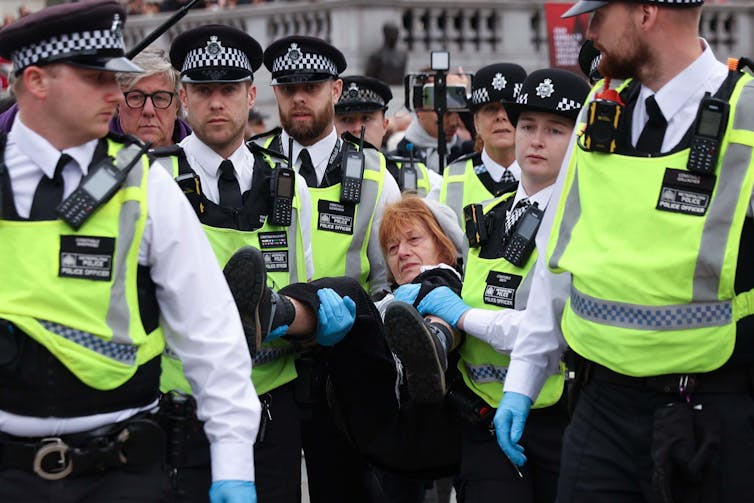
A group of Met Police carrying an older female protester in an arrest
Police arrested hundreds of people for supporting Palestine Action after the group was proscribed.
Zeynep Demir Aslim/Shutterstock

No one would sensibly suggest the state should not be using its enormous weight to keep its citizens safe, alive and well. But there remain legitimate questions about the scope of its coercive power to defend national security further upfield – several steps away from the obvious and horrific harms of loss of life or limb.

Allowing a government minister to place a group outside the protection of the ordinary criminal law by categorising them as “terrorists”, bringing greatly increased detention times and reverse burdens of proof, is a momentous step for any democracy to permit.

The clear thrust of the court decision is that the state should have dealt with Palestine Action through the ordinary criminal law: charges for criminal damage, entering a prohibited place or assault. Only if there were a significant ramping up – in scale, impact and frequency – might the home secretary start to wonder about proscribing.

If that stands true for Palestine Action, it must do so even more for Extinction Rebellion, Just Stop Oil, anti-abortion protesters and anti-fracking groups. This judgment remains, for now, a welcome reclaiming of the civic space where contentious politics does, and sometimes must, play out.

The decision has prompted some to claim that ministers should be able to ban groups dedicated to criminal sabotage, without having to label them as terrorists. Such a proposal fails to explain why the ordinary criminal law is not up to the task, and ignores likely overreach.

The price of human rights in a democracy is not simply eternal vigilance, nor even “eternal dirt”, as George Orwell added. It is eternal mutual solidarity lest there be “no one left to speak out for me”.

The Conversation

David Mead is affiliated with the Labour Party, UCU and Netpol Lawyers’ Group. He gave evidence on behalf of Palestine Action in its JR, testifying to the impact on academic freedom – research and teaching – and drew on his own research on the history of UK direct action protests

ref. Palestine Action: why the High Court ruled against the government, and what it means for the future of protest – https://theconversation.com/palestine-action-why-the-high-court-ruled-against-the-government-and-what-it-means-for-the-future-of-protest-275976