How European colonisation has created more animal hybrids

Source: The Conversation – UK – By Lachie Scarsbrook, Postdoctoral Research Fellow, Genetics, School of Archaeology, University of Oxford

Pawel Papis/Shutterstock

Humans have moved plants and animals well beyond their native ranges, across barriers that normally prevent dispersal. As a result, people have increased the rates of hybridisation between populations that were once isolated for thousands, or even millions, of years.

Animal hybrids are a controversial issue among scientists, as they often suffer from health issues.

But our new study of Australian dingoes, published in the journal PNAS, found that hybridisation with introduced European dogs might have had evolutionary benefits.

New species can evolve when a subset of the population becomes separated, often by physical barriers like mountains or oceans. Over time, these isolated populations accumulate unique genetic mutations, some of which become fixed. If these populations spend long enough apart, they become so different they can no longer interbreed.

Although they were once domestic, dingoes became isolated from other dogs around 3,500 years ago and evolved into free-living apex predators. Some scientists argue that the dingoes’ distinct appearance and behaviour warrant their recognition as a new species. Others claim that hybridisation with domestic dogs, which were brought to the continent by Europeans from the late-18th century onwards, has blurred this boundary.

Dingoes were translocated to K’gari (Fraser Island) by the Butchulla people before the arrival of Europeans.
CC BY

Humans have been moving animals around for millennia. When farmers spread from the Near East into Europe around 8,500 years ago, for example, the domestic pigs that accompanied them came into contact and mated with European wild boar. In some cases where there were no closely related native populations, however, such as the import of exotic animals during the Roman period, escapees formed feral populations. Dingoes fit into this second category.

Species translocations and hybridisation accelerated during the colonial period, which reshaped local ecosystems. Hybrid offspring can lose the unique traits that allowed their parent populations to thrive in their specific habitats. Other effects are invisible, and can only be teased out of genetic studies.

For instance, across Asia, diversity in wild red jungle fowl populations is being lost through interbreeding with domestic chickens. In the Americas, almost all traces of Indigenous dog diversity was wiped out through hybridisation with introduced European dogs.

Charging Thunder (George Edward Williams), who was born into the Oglala Lakota tribe of the Sioux Nation, with a shepherd-type dog brought to the Americas by Europeans. Cultural practices involving Indigenous dogs were actively persecuted.
CC BY

Hybridisation can also be beneficial. The acquisition of alleles (a different version of a gene) from another population may improve an animal’s survival in new environments, or make them resistant to new diseases.

The ancestors of modern human populations on the Tibetan Plateau, for example, inherited an allele of the EPAS1 gene from Denisovans (a closely related human species) that improved their ability to live at high altitudes.


Read more:
How breeding with an ancient human species gave Tibetans their head for heights


The dingo debate

Since dingoes were only isolated from other dog populations for a few thousand years, it is not a surprise that they can readily interbreed. The “purity” of dingoes is therefore a great source of conflict between conservationists, farmers and policy makers, and is used by both sides to justify policies to either protect or persecute dingoes.

White dingo with brown markings.
An unusually coloured dingo spotted in Kosciuszko national park, New South Wales.
Michelle J Photography, Cooma NSW Australia, CC BY-NC-ND

Some genetic studies have suggested that dingo-dog hybridisation has not taken place, while others indicate most dingo populations have some level of European dog ancestry. A fundamental issue with these studies is that they require comparison against a “pure” reference population. Given centuries of overlap between dingoes and dogs, it is almost impossible to be sure that modern populations do not have mixed ancestry.

To circumvent this issue, our study sequenced genomes from ancient dingo bones recovered from caves on the Nullarbor Plain in southern Australia. Crucially, this included dingoes that lived and died prior to the arrival of the First Fleet in 1788. Establishing a precolonial baseline of ancestry for dingoes allowed us to to pinpoint the degree of European dog ancestry in dingo populations across Australia today.

Our genetic analysis showed that most dingoes living in the northwest of Australia did not have any detectable European dog ancestry. The opposite was true in the southeast, where almost a quarter of the genome of some dingoes came from European dogs.

Further investigation found that the European ancestry was in fact broken up into small chunks throughout the genome of dingoes, indicating that interbreeding took place at least ten generations (or 30 years) ago.

Aerial baiting with 1080 poison is used to kill introduced mammalian species across Australia and New Zealand.
CC BY-SA

In fact, most of the hybrid mating coincided with the outset of aerial baiting programs in the mid-20th century, when poisoned meat was dropped from helicopters to kill dingoes en masse. This reinforces similar findings in Scottish wildcats, which shows local populations were resistant to interbreeding with invasive (domestic cat) populations until their own numbers declined to the point where finding a suitable mate (another wildcat) became too difficult.

Diversity is the key to success

Superficially, gene flow between dingoes and European dogs sounds like a negative outcome. Our research, however, suggests that dingoes have actually benefited. Hybridisation has led to an increase in genetic diversity in dingoes across southeast Australia, potentially offsetting the negative effects of inbreeding.

We also found evidence that a few alleles, which were transmitted from dogs to dingoes via interbreeding, may provide better protection against infectious diseases brought to the continent by European dogs.

Despite being an introduced species, dingoes are now adapted to Australia’s varied ecosystems. Based on our results, we suggest that instead of prioritising “purity”, future conservation efforts should focus on maintaining large enough populations for natural selection to operate effectively, so that dingoes can maintain their position as Australia’s apex predator.

Hybrids are becoming increasingly common as humans and their domesticates continue to encroach into wild habitats, from Scottish salmon to Andean alpacas. In order to understand the impacts, both positive and negative, of this hybridisation, our results suggest we must first look to the past.

The Conversation

Laurent Frantz receives funding from the European Research Council, and the Deutsche Forschungsgemeinschaft

Greger Larson and Lachie Scarsbrook do not work for, consult, own shares in or receive funding from any company or organisation that would benefit from this article, and have disclosed no relevant affiliations beyond their academic appointment.

ref. How European colonisation has created more animal hybrids – https://theconversation.com/how-european-colonisation-has-created-more-animal-hybrids-264624

Wicked: what lies beneath correcting the way people speak?

Source: The Conversation – UK – By Emma Humphries, Research Fellow, School of Arts, English and Languages, Queen’s University Belfast

“Pink goes good with green.” This is a lesson we learned from Glinda (Ariana Grande) in Wicked part one. But do you remember the line that comes after that?
“Goes well with green.”

A small, easily missed comment from the green-skinned outsider Elphaba (Cynthia Erivo), but one that reveals something important about language and common usage. Hierarchies of “correct” and “incorrect” language are not just found in grammar books and classrooms, but in popular culture too.

From “holding space” to “sex cardigans”, Wicked continues to dominate popular culture, but one thing that has been overlooked is Elphaba’s insistence on correct language.

In the first film, we see Elphaba ostracised and eventually positioned as public enemy number one by the Oz propaganda machine. From the film’s very opening, a flashforward to citizens celebrating Elphaba’s death, her unpopularity is made clear in the song No One Mourns The Wicked.

One way in which the filmmakers signal Elphaba’s unlikeability is through her often awkward, borderline rude social encounters, including when she first meets her frenemy, Glinda. It’s safe to say that the two characters don’t hit it off and Elphaba’s correction seems to upset Glinda.

Glinda: I could care less what others think.

Elphaba: Couldn’t.

Glinda: What?

Elphaba: You couldn’t care less what other people think. Though, I … I doubt that.

In the land of Oz, where people “pronuncify” and “rejocify”, are “disgusticified” and “moodified”, Elphaba’s comments demonstrate the idea that there is only one correct way to use language and that incorrect language should be corrected.

From stage to cinema

Elphaba’s corrections are not in the original stage musical. They were added to the film. The adaptation of a stage show for film offers an opportunity to modernise and change parts of the story that have been controversial or become outdated.

One excellent example of this in Wicked is its improvement of the stage show’s depiction of disability. The addition of language policing, however, is more disappointing. Because when we correct someone’s language, it’s about much more than the words themselves.

Correcting language is not neutral. When we place value on using language correctly, those who fall short often find themselves judged and discriminated against.

The policing of correct language can be seen as a gatekeeping tool, deciding who belongs and who is excluded. This has inevitable consequences for diversity. The way we speak, write and sign can reflect many aspects of our identities: where and how we grew up, our gender, age and race.

Rules and rebellion

With the run time of the films almost doubling that of the stage show, there is much more time devoted to character development in the films. Elphaba’s language pedantry has been added to demonstrate how she can rub people up the wrong way. However, it also suggests an adherence to authority and to socially constructed rules that stands in contrast to her character more broadly.

Elphaba is an outsider who starts the film wanting to be “degreenified”, but by the end of Wicked part one and as a main storyline in Wicked: For Good, she is willing to sacrifice her safety and reputation to do what is morally right, rather than what is socially acceptable.

Adherence to the strict rules of correct language suggests the opposite: a tendency to want to be accepted and to uphold the societal status quo. Elphaba resists social norms in every other respect, yet the film makes her a standard grammar enforcer.

Given that this trait is absent from part two, rather than undermining her personality as a resister, perhaps this further signals Elphaba’s journey from wishing to fit in to fully embracing her outsider status. Indeed, Elphaba’s insistence on correctness speaks to a broader challenge facing anyone positioned as an outsider: having to work that much harder to be accepted.

Glinda’s (famous) need to be popular and her interests in social climbing align with traits of a language enforcer, yet her behaviour tells a different story. She corrects language only once and it concerns her original name, Galinda. When Dr Dillamond, a professor at Shiz University – who also happens to be a goat – struggles to pronounce the “gah” in Galinda, Glinda corrects his pronunciation and berates him.

This moment, present in both the stage musical and the film, does not reflect a desire to uphold the prescriptive rules of the language, but rather a personal motivation. Glinda’s name is central to her self-image and public persona, and protecting that matters to her.

Beyond Oz

In an era when equality, diversity and inclusion initiatives are being rolled back, and languages other than English face renewed marginalisation, Wicked offers a case study in how linguistic hierarchies operate under the radar of popular culture. But there are plenty other examples. Think about Ross in Friends, Ted in How I Met Your Mother and Sheldon in The Big Bang Theory – all notorious language correctors.

Elphaba’s corrections are more than just a shorthand to signal an abrasive character. They reflect the linguistic hierarchies and gatekeeping that exist beyond Oz. Using language “correctly” is a marker of belonging and shows adherence to societal norms.

Across the two films, Elphaba moves from wanting to conform and erase a stigmatised part of her identity, her skin colour, towards rebellion against convention. It’s clear she questions blind adherence to political power, but perhaps this extends further to questioning the rules we construct around language.


Looking for something good? Cut through the noise with a carefully curated selection of the latest releases, live events and exhibitions, straight to your inbox every fortnight, on Fridays. Sign up here.


The Conversation

Emma Humphries receives funding from The Leverhulme Trust and is currently employed by Queen’s University Belfast.

ref. Wicked: what lies beneath correcting the way people speak? – https://theconversation.com/wicked-what-lies-beneath-correcting-the-way-people-speak-270639

‘A united left? It’s been tanked’ – what I heard when I went to Your Party’s first conference

Source: The Conversation – UK – By Parveen Akhtar, Senior Lecturer: Politics, History and International Relations, Aston University

The launch of Your Party, a new leftwing offering for British voters, was meant to embody a different kind of politics. It was to be collective and collaborative – a political movement built from the grassroots up.

At a time when trust in politicians is low and cynicism high, the idea of a new movement on the left captured imagination. Almost immediately after it was announced, 80,000 people expressed their interest in joining.

Yet the collective has, from the start, been beset with problems. Former Labour MP Zarah Sultana announced the party’s launch apparently before Jeremy Corbyn, her partner in the endeavour, was ready. A debacle over who was holding on to some £800,000 in donations led to a very public spat between the two even before the party could get on its feet.

Amid this confusion, between launching in July and holding its inaugural conference in November, Your Party has already shrunk. Those original 80,000 potential members have become 55,000 signed-up members.

Of these, 2,500 people were selected through a lottery system to attend the party conference. And as they congregated in Liverpool, it quickly became clear that it would not be plain sailing. Delegates were caught between idealism and infighting – between a genuine and urgent desire to create something new and the old factionalism that has long preoccupied the British left.

The tension was visible even before the conference began. On the eve of the event, Corbyn appeared at a poetry and music evening where he was interrupted by hecklers demanding he denounce Zionism.

For a man who has spent his political life campaigning for Palestinian rights, the moment was indicative of a key issue the party must confront: a puritanical one-upmanship. This was fringe politics, where nothing you do is quite sufficient. For all the talk of solidarity and comradeship, the left remains a space where interrogation around ideological purity is never far away.

Opening the event, councillor Lucy Williams attempted to confront the tensions head on. Everyone knew there had been loud disagreement, she said, “but I like to see our leaders fighting. I’d rather be in a movement where people care enough to argue than in a party where everyone nods along while the country collapses around them. Unity isn’t pretending that we all agree; unity is disagreeing honestly and then cracking on with it. We’re not perfect, but we’re real – and people will trust real.”

Her defence of the messiness of democracy was forceful. But for some delegates, her apparent defence of washing dirty laundry in public was read not as authenticity but as testimony that the endeavour was in descent. “Being real” in this incarnation was not an election winner.

Committed, diverse and hopeful

Attendees were young and old. Many were former Labour members. Others had never been involved in politics before. The conference was full of people deeply committed to a socialist cause: equality, equity and social justice.

But ideas about what these buzzwords meant were deeply divided. Divisions were not just about personalities and internal factions but about ingrained beliefs.

The promise of unity was quickly met with the realities of ideology. From revolutionary communists to conservative Muslims to trans-rights activists, there are uneasy alliances in Your Party’s broad church, many wanting change on their own terms. Compromise is too often viewed as weakness and a lack of commitment to the cause.

And yet, there was also hope, one young man who had left the UK after Brexit to live on the continent said he had to come back for the conference, “when your home country does something like this you just have to”.

Sultana was conspicuous by her absence during Corbyn’s opening speech. She had announced she was boycotting her own conference over what she called a “witch hunt” against members of other socialist organisations, especially those associated with the Socialist Workers Party.

Some had reportedly been barred because dual party membership was not allowed – until a vote at the conference changed the rules.

By day two, anticipation was building about whether Sultana would show. The name of the party was formally recognised and a collective leadership model agreed. Corbyn had wanted a single leader model, Sultana, who had originally wanted to be joint co-leader, had favoured a collective model (knowing a contest between her and Corbyn would be difficult to win).

And then the waiting was over, Sultana’s arrival saw delegates pack the hall. There was almost a sigh of relief. She started by calling out the party leadership, for bullying, pointing to underhand tactics “straight from the Labour right handbook”. She set out her vision for a new approach – radical, impatient and angry. This would be a united left – all socialists fighting together. She was received rapturously. Her speech ended with chants of “Oh, Zarah Sultana.”

Yet this was not a unifying moment. Corbyn was present too, extending the courtesy she did not afford him when he first spoke to conference. The two did not appear together.

His supporters were disillusioned by her public dressing down of the unelected faceless bureaucrats (or the adults in the room, as they saw themselves). The votes may have been for maximum member democracy, but Sultana was really setting out the blueprint for Sultanaism. “This isn’t going to go anywhere. Any hope I had of an alternative to what we have now, of a united left, well it’s been tanked,” one disillusioned Corbyn supporter told me.

Before leaving Liverpool, the party had at least achieved some of its formal aims. It has a name, a leadership structure and some key constitutional provisions. The broader picture, however, remains harder to read.

The excitement of participatory politics was still there, but this was a hall full, mainly, of the converted. Those who wanted a more moderate or what they see as “electable” party, were left out in the cold. They will now be hoping that the chill does not kill any potential green shoots. Or it will be the Green party who will ultimately benefit, come elections in the spring.

The Conversation

Parveen Akhtar has previously received funding from the ESRC and the British Academy.

ref. ‘A united left? It’s been tanked’ – what I heard when I went to Your Party’s first conference – https://theconversation.com/a-united-left-its-been-tanked-what-i-heard-when-i-went-to-your-partys-first-conference-271162

Could electric vehicle battery waste fix concrete’s carbon problem?

Source: The Conversation – UK – By Mehdi Chougan, Research and Innovation Associate at the School of Engineering, Cardiff University

Concrete is the most widely used man-made material on Earth. Parilov/Shutterstock

Imagine waking up in 2040 to unusually quiet streets. By then, an estimated 60% of vehicles worldwide could be electric, cutting air pollution and noise in cities. But the shift to cleaner transport comes with a lesser-known problem – a huge rise in mining waste.

Lithium, a vital ingredient in electric vehicle batteries, leaves behind extraordinary amounts of waste. In 2023 alone, the global battery industry generated 1.8 million tonnes of lithium-related waste, almost all of it sent to landfill.

At the same time, the construction sector faces its own environmental crisis. Concrete is the most widely used man-made material on Earth. We produce enough of it each year to build a wall around the planet twice over.

Its main ingredient, Portland cement, is responsible for nearly 8% of global carbon emissions. As demand rises, the industry is running out of cleaner alternatives.

These two challenges – booming lithium production and the carbon cost of cement – may seem unrelated. But the solution to both could be the same: turning lithium mining waste into a new kind of low-carbon cement.

A waste problem hiding in plain sight

Lithium-ion batteries have reshaped the global energy landscape since they were invented in the 1970s. Their value is expected to soar to more than US$400 billion (£302 billion) as electric vehicle sales continue to increase.

But lithium does not appear in nature as a pure metal. It must be extracted from minerals or salty brines. Most of them are in the “lithium triangle” of Chile, Argentina and Bolivia, which together hold more than 60% of the world’s reserves.

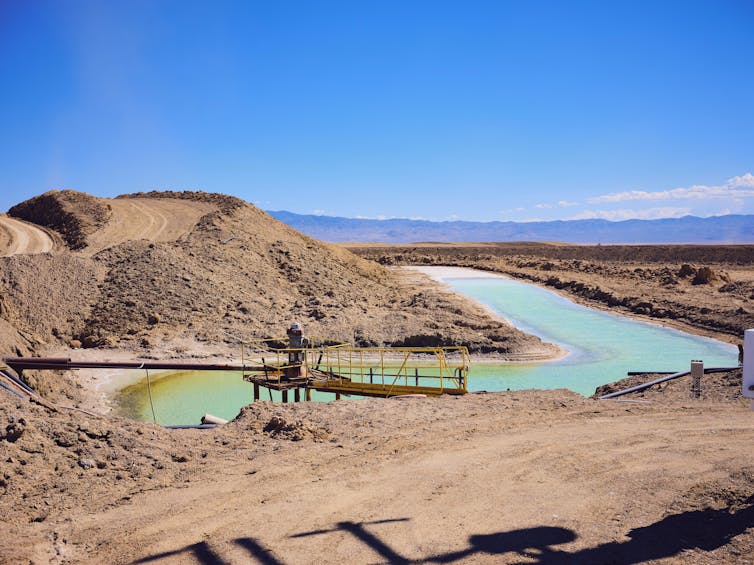
A view of green coloured pools among a desolate landscape.
Brine pools for lithium mining.
Cavan-Images/Shutterstock

Extracting lithium is a messy business. For every tonne of battery-grade lithium carbonate produced, around nine to ten tonnes of waste are created. As countries race to meet climate targets, demand for lithium is expected to triple by 2030.

The UK government plans to develop new extraction sites in Cornwall and the northeast of England.


Read more:
As mining returns to Cornwall, lithium ambitions tussle with local heritage


But this growing waste stream contains something valuable. Chemically, lithium mining waste is rich in the same compounds (silicates, alumina and calcium oxides) that help cement harden and gain strength. In other words, the waste from one green technology could help clean up another.

Our team is testing whether UK lithium mining waste can be used to replace cement in concrete.

The idea is simple. If this waste can act as a supplementary binding material, it could cut the amount of traditional cement needed. This could reduce carbon emissions by up to 50%. But proving this requires detailed scientific work.

Work is underway to analyse the microstructure, chemical behaviour and long-term durability of lithium waste-based concretes, from early lab tests to full-scale trials in real conditions. If successful, “lithicrete” could provide the UK with a way of using waste from the country’s emerging lithium industry to build low-carbon infrastructure.

For years, the concrete industry has tried to reduce its reliance on Portland cement by blending it with industrial byproducts such as fly ash and blast furnace slag. But these materials are becoming scarce as coal power plants shut down and heavy industry changes. In fact, there could be an imminent shortfall in traditional cement alternatives, threatening progress on decarbonisation.

This makes the search for new materials urgent. Lithium mining waste, available in large volumes and chemically compatible with cement, offers a promising option just as the sector faces a bottleneck.

Why this matters

The environmental stakes are high. Concrete underpins almost everything we build, from homes to hospitals, schools and bridges. Demand is only growing. Cutting emissions from clinker (the core component of cement) and using alternative binders could deliver 20% of the reductions needed for the sector to reach net zero by 2050.

If lithium mining waste could replace part of the cement used in concrete, it would help slash emissions, reduce landfill and strengthen the UK’s resilience as it moves away from imported industrial by-products. It would also mean the transition to green transport like electric cars doesn’t simply shift environmental burdens elsewhere.

We argue that the transition to cleaner technology must also be circular. Rather than allowing one part of the green transition to create problems for another, materials should be reused and designed to stay in the system for as long as possible.

The Conversation

Riccardo Maddalena receives funding from UKRI EPSRC.

Mehdi Chougan does not work for, consult, own shares in or receive funding from any company or organisation that would benefit from this article, and has disclosed no relevant affiliations beyond their academic appointment.

ref. Could electric vehicle battery waste fix concrete’s carbon problem? – https://theconversation.com/could-electric-vehicle-battery-waste-fix-concretes-carbon-problem-268609

Why the future of psychedelic medicine might not be psychedelic at all

Source: The Conversation – UK – By Sandy Brian Hager, Senior Lecturer in International Political Economy, City St George’s, University of London

Blackday/Shutterstock.com

Psychedelic medicine has regained momentum in 2025. Investors are coming back, regulatory attitudes are softening, trial results are improving and major pharmaceutical firms that kept their distance are starting to pay attention.

This is quite a turnaround for a sector whose share prices collapsed and whose funding dried up when weak trial results combined with rising interest rates in 2022. But enthusiasm should be tempered.

Psychedelic drugs are hard to turn into profitable medicines. Some of the strategies companies are using to overcome these obstacles could ultimately remove the elements that many people believe make them effective in mental health treatment.

My research points to three features of psychedelics that make commercial development unusually complicated.

The first challenge is intellectual property. Developing a new medicine is expensive, and investors only commit money if they think a company can recover those costs later. Patents make that possible: they grant a temporary monopoly, allowing firms to raise prices once a drug is approved.

But psychedelic compounds don’t fit comfortably with this model. Psilocybin and mescaline are natural, so companies cannot claim them as inventions.

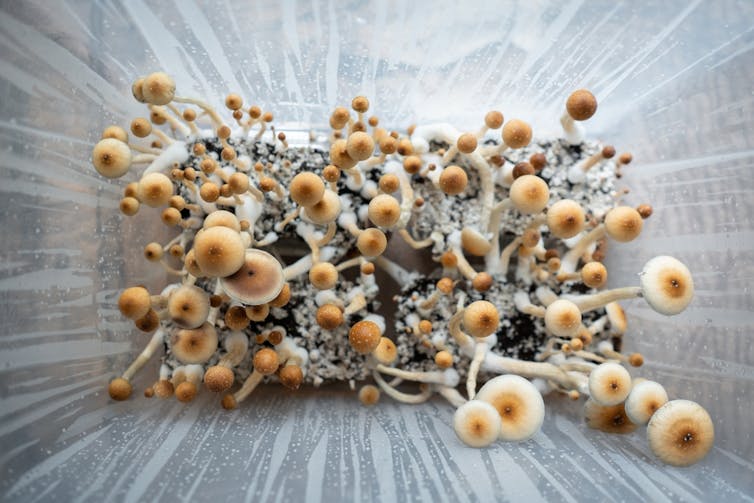
Magic mushrooms growing on a substrate.
Many psychedelics are natural and so cannot be patented.
Goami/Shutterstock.com

Synthetic drugs such as LSD were created decades ago, and their original patents have expired. Many of these substances also have well-documented histories of use in Indigenous healing traditions, which makes it harder to argue that therapies based on them are genuinely new.

Firms can still patent delivery methods, formulations or small chemical tweaks. But these protections are narrow and fairly easy to challenge, so they don’t provide the kind of security investors look for.

The second challenge is practical. A psychedelic session isn’t like taking an antidepressant at home. A psychedelic trip can last six to 15 hours, so patients are prepared in advance of the session, supervised throughout and supported afterwards to help them process the experience. This requires trained staff, clinical space and time.

Health systems and insurers have not yet agreed on how to pay for this type of care, and companies have no clear model for delivering psychedelic therapy at scale. The economics of a treatment that occupies a clinic room and several professionals for most of a working day bear little resemblance to standard antidepressants.

The third challenge concerns clinical testing. Most medicines are evaluated in trials where neither participants nor researchers know who has received the real drug and who has received a placebo. With psychedelics, this becomes obvious as soon as the effects begin. Participants know when they are tripping, and researchers know too.

Some trials experiment with low doses or active placebos that cause mild sensations. But it is unclear whether regulators will treat these designs as equivalent to the gold-standard trials used for conventional medicines. This uncertainty makes it harder for investors to see a clear path to regulatory approval.

Two directions

In response to these challenges, the field is developing in two directions. One route is to develop short-duration compounds like 5-MeO-DMT, which produce a very intense altered state that lasts minutes rather than hours.

A session of that length is easier to supervise, demands fewer clinical resources and does not tie up a treatment room for most of the day. Companies pursuing this strategy have encouraging early results and have attracted renewed investment.

But safety remains an issue: delivering such a powerful psychedelic can be overwhelming, especially when therapeutic support is limited. As one researcher warned, “you don’t want to advance the world’s most powerful psychedelic experience on the timescale of a dental cleaning”.

The other route goes further. Instead of compressing the trip, some companies are trying to remove it altogether with so-called neuroplastogens. These molecules are designed to trigger the brain changes associated with classic psychedelics without the trip.

Because these compounds are new, they offer the intellectual property protection investors look for. They also avoid the unpredictable experiences that make psychedelic sessions difficult to deliver in clinics and are more compatible with the insurance and regulatory systems of conventional medicines.

However, the science behind them is still young, and it is not yet clear whether drugs without the trip can provide the same benefits that drew attention to these compounds in the first place.

Both approaches seek to make psychedelics easier to administer, insure and patent, but they also push the experience itself to the margins.

Many patients credit the psychedelic trip with their progress in therapy. Biotech companies see it as an obstacle to profitability. If that patient view is right, commercialised psychedelic medicine may never become the mental health revolution that companies and their investors expect.

The Conversation

Sandy Brian Hager does not work for, consult, own shares in or receive funding from any company or organisation that would benefit from this article, and has disclosed no relevant affiliations beyond their academic appointment.

ref. Why the future of psychedelic medicine might not be psychedelic at all – https://theconversation.com/why-the-future-of-psychedelic-medicine-might-not-be-psychedelic-at-all-270605

Sri Lanka’s latest climate-driven floods expose flaws in disaster preparations – here’s what needs to change

Source: The Conversation – UK – By Ravindra Jayaratne, Reader in Coastal Engineering, University of East London

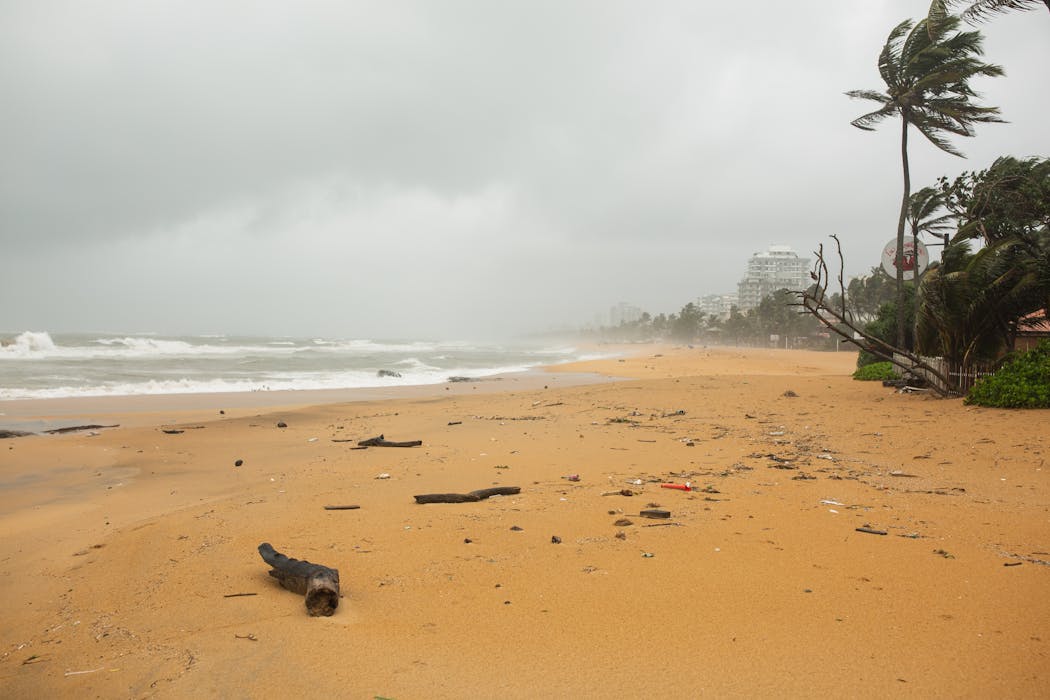
Cyclone Ditwah hit Sri Lanka on November 28 2025. Alina Polat/Shutterstock

When Cyclone Ditwah made landfall on November 28 2025, Sri Lanka experienced one of its deadliest environmental disasters in modern history.

President Anura Kumara Dissanayake declared it the “largest and most challenging natural disaster in our history”. Torrential rains triggered widespread floods and landslides, leading to more than 350 confirmed deaths, hundreds missing and over 1.4 million people affected nationwide.

Major road and rail systems were cut off, hydropower stations and water treatment plants failed, and thousands of families were forced into emergency shelters. Reservoirs overflowed, riverbanks collapsed and communities near the Mahaweli, Kelani, Malwathu Oya and Mundeni Aru river basins were inundated within hours.

These were not random failures. They were systemic. Many of the regions that flooded were vulnerable areas adjacent to coastal lagoons and low-lying river plains. Cyclone Ditwah was not an anomaly. It exposed the underlying fragilities of Sri Lanka’s existing flood-management and drainage infrastructure.

This follows on from the devastating tropical cyclone in 1978 and the Boxing Day 2004 tsunami disaster. Fifty years ago, flood infrastructure was not in a good state. Significant improvements haven’t been made since then, mainly due to poor urban planning.

Between 2018 and 2022, I worked with a global team of coastal engineers, social scientists and policy makers from academia and government organisations in the UK, Australia and Sri Lanka. Our research project focused on producing a new generation of compound flood hazard maps, based on computer modelling that considers all the storm surge components (surge, tide and sea level rise) and the rainfall effect.

I led the hydrological modelling efforts for Sri Lanka – focusing on how tropical-cyclone rainfall and storm surge combine to generate destructive flooding patterns for three vulnerable cities: Batticaloa, Mullaitivu and Mannar. The team worked with Sri Lanka’s Coast Conservation and Coastal Resource Management Department (CCD) to address a critical question: How do storm surges from tropical cyclones interact with rainfall to produce extreme inland and coastal floods?

Through analysis of historic cyclone tracks, we showed that Sri Lanka lies at the convergence of multiple storm pathways in the Bay of Bengal. This is why the country repeatedly suffers not only from rainfall-driven inundation but also from saltwater intrusion driven deep inland through lagoons and estuaries.

My team and I developed the hydrologic model for Batticaloa, using the Mundeni Aru river basin as a pilot case. We combined rainfall data, digital terrain maps (that indicate trees, buildings, roads and bare land) and river-flow simulations to identify the most vulnerable communities depending on the topography. Low-lying settlements adjacent to the Batticaloa and Valachchenai lagoons were particularly vulnerable to tropical cyclone-induced flooding.

flooded street in sri lanka after cyclone ditwah
Streets flooded as Ditwah Cyclone hit Sri Lanka (November 30 2025).
Thamara Perera/Shutterstock

Similar modelling work was proposed for Mullaitivu and Mannar, both historic cyclone-landfall regions. However, COVID disrupted much of the planned in-country engagement, in-depth modelling and translation of findings into policy tools, creating a serious lag between scientific insights and what planning authorities are currently referencing.

Ditwah’s aftermath – breached embankments, power failures, displaced families, submerged neighbourhoods – corresponds almost exactly to the worst-case compound-flood scenarios shown by our data. These are not purely meteorological phenomena. They depend on the flow of water and land-based infrastructure.

Drainage networks still rely on outdated historical rainfall records. Coastal defences are built for storm surges of previous decades. Urban development continues to occupy natural flood buffers such as wetlands and lagoon edges. Vulnerability has become physically engineered into the landscape.

Proactive planning

Working with government agencies including the CCD, the Met Office and the Disaster Management Centre, Sri Lanka can proactively integrate compound-flood science into planning and disaster risk-reduction strategies.

This includes producing updated flood maps that capture rainfall, river flow, storm surge and sea-level-rise dynamics. Hydrological models can be translated into operational tools for national and municipal planning authorities.

Drainage and river-management systems (such as seasonal removal of sand and debris) can be redesigned with the future (not historical) rainfall intensities in mind. Improving early-warning systems involves incorporating multiple hazards and long-range scenario modelling can be embedded into disaster-preparedness and land-use planning.


Read more:
Boxing Day tsunami: here’s what we have learned in the 20 years since the deadliest natural disaster in modern history


These measures enable policymakers, engineers and local administrations to make evidence-based decisions that reflect accelerating climate-driven risks rather than obsolete assumptions.

Cyclone Ditwah should mark a turning point. With the right integration of science, planning and governance, disasters of this magnitude need not become inevitable hallmarks of Sri Lanka’s future. And by aligning infrastructure and policy with the real hydrological dynamics of our changing climate, governments can better protect people, environment and economy from the storms yet to come.


Don’t have time to read about climate change as much as you’d like?

Get a weekly roundup in your inbox instead. Every Wednesday, The Conversation’s environment editor writes Imagine, a short email that goes a little deeper into just one climate issue. Join the 47,000+ readers who’ve subscribed so far.


The Conversation

Ravindra Jayaratne receives funding from the Natural Environment Research Council (NERC), UK.

ref. Sri Lanka’s latest climate-driven floods expose flaws in disaster preparations – here’s what needs to change – https://theconversation.com/sri-lankas-latest-climate-driven-floods-expose-flaws-in-disaster-preparations-heres-what-needs-to-change-271181

Kimchi may boost immune function, recent study shows

Source: The Conversation – UK – By Rachel Woods, Senior Lecturer in Physiology, University of Lincoln

Eating kimchi daily may help fine-tune the immune system. krein1/ Shutterstock

Kimchi has been enjoyed for centuries in Korea. But the spicy fermented cabbage dish has recently gained popularity in other parts of the world not only because of its delicious taste, but because of its potential to positively influence the many thousands of important microbes living in our gut as well as our overall health.

A recent study suggests that kimchi may also help support the immune system.

The study looked at 13 overweight adults over a 12-week period. Participants were randomly assigned to three groups. One group received a placebo, while the other two groups received two different types of kimchi powder (kimchi that had been freeze dried and put into a capsule).

The first type of kimchi powder was naturally fermented using microbes already in the environment. The second type was fermented with a chosen bacterial culture instead of relying on natural microbes. The amount of kimchi powder participants were given daily was roughly equivalent to eating 30 grams of fresh kimchi.

Blood samples were taken before and after the study and analysed using a technique that shows what each immune cell is doing instead of giving an overall average. This gives a detailed view of how the immune system responded.

The study found that kimchi affected the immune system in a targeted way. It increased the activity of antigen-presenting cells (APCs). These are immune cells that ingest pathogens, process them and show pieces of those pathogens on their surface so the body’s helper T cells (which coordinate overall immune response) know to mount a response against those specific pathogens.

Kimchi also increased the activity of certain genes that act like switches, helping these immune cells send clearer signals to T cells.

There were also genetic changes in helper T cells that made them react more quickly to anything that triggers an immune response. Since helper T cells coordinate immune responses, these changes mean they’re better equipped to help other immune cells fight infections effectively.

Most other immune cells stayed the same, meaning kimchi targeted helper T cells rather than activating the entire immune system. Maintaining this balance is important because the immune system must be able to respond to infections effectively while avoiding excessive inflammation that can damage tissues.

Kimchi piled on top of a bowl of rice.
Even a small portion of kimchi each day may have immune benefits.
beauty-box/ Shutterstock

Overall, the results suggest that kimchi helps the immune system respond to threats more effectively without causing too much inflammation. Both types of kimchi produced these effects – though starter-culture kimchi showed a slightly stronger effect. Those taking the placebo saw no immune changes.

These findings point to potential benefits for defence against viruses, responsiveness to vaccines and regulation of inflammation – although further research is needed.

Immune cell function

It’s worth mentioning that this study was small and focused on changes in immune cells, not actual health outcomes. So we don’t yet know if eating kimchi in this way would reduce infections or inflammation in daily life.

However, the study does provide a plausible molecular explanation for how fermented foods can influence immune function. This tells us more than we can learn from studies that only observe people’s habits. It links a common fermented food to measurable effects on immune cells – supporting the idea that fermented foods may be used strategically to enhance immune regulation and overall immune balance.

Kimchi isn’t the only fermented food that may have immune benefits. Other foods such as yogurt, kefir, sauerkraut, miso and kombucha contain live microbes and metabolites that have a positive effect on the microbiome and may influence immune function.

Some studies have also shown that fermented dairy products can increase beneficial gut bacteria and modulate immune responses, including T cell and antibody activity.

The exact effects of fermented foods will depend on many variables, including the microbes present, the fermentation method and an individual’s unique gut microbiome.

Different fermented foods may also have different effects due to the microbes they contain. This is why including a variety of fermented foods may be more beneficial than relying on a single type.

There’s no established recommendation for how much fermented food to eat. In this study, participants consumed the equivalent of 30 grams of kimchi per day, an amount that is feasible for most people.

While research is still unfolding, including a variety of fermented foods in your diet is an easy and enjoyable way to explore the potential benefits for your gut and immune system.

Try new options to discover what you like best, keep a few favourites ready in the fridge, and find simple ways to add them to everyday meals. Over time, these small, regular habits could help support your gut and immune health.

The Conversation

Rachel Woods does not work for, consult, own shares in or receive funding from any company or organisation that would benefit from this article, and has disclosed no relevant affiliations beyond their academic appointment.

ref. Kimchi may boost immune function, recent study shows – https://theconversation.com/kimchi-may-boost-immune-function-recent-study-shows-270747

AI promises efficiency, but it’s also amplifying labour inequality

Source: The Conversation – Canada – By Mehnaz Rafi, PhD Candidate, Haskayne School of Business, University of Calgary

As artificial intelligence (AI) becomes more integrated into workplace systems and operations, it’s reshaping both how work tasks are completed and the very experience of work itself.

For many employees, AI is stress-testing their tolerance for uncertainty and job insecurity. Some positions are being automated entirely. Others are becoming redundant. In many cases, full-time roles are being reduced to part-time or contract work.

These changes have been very visible in this year’s news headlines. UPS, for example, announced 20,000 layoffs in April while expressing interest in deploying humanoid robots from Figure AI to take over warehouse tasks.

Recently, this disruption has moved beyond front-line roles. Amazon has revealed plans to cut 14,000 corporate jobs to reorganize around AI-enhanced efficiency. Microsoft laid off roughly 6,000 employees — most of them software engineers and programmers — as AI systems now generate up to 30 per cent of new code on its projects.

Employees do not stand on equal footing in the face of these changes, nor do they experience the same level of vulnerability. The capacity to respond to AI-related job threats varies sharply based on income, education, race and digital access.

These disparities ultimately shape who can adapt and leverage new technological opportunities, and who becomes excluded from them and left behind.

AI’s uneven impact on the workforce

Employees face unequal vulnerability to AI-related job threats largely because automation disproportionately targets entry-level and front-line positions. These are typically lower-wage roles, often held by people from lower socioeconomic backgrounds and marginalized communities.

Such positions typically involve routine or repetitive tasks in sectors like customer service, retail, administration, warehousing and food service. Reports show these jobs are up to 14 times more likely to be displaced than higher-wage positions. Women are 1.5 times more likely than men to be pushed into new occupations as a result.

People in these roles also face greater barriers in accessing employment and advancement opportunities, which perpetuates cycles of economic insecurity among groups that are already vulnerable.

In contrast, AI is significantly boosting efficiency and productivity for knowledge workers in higher-wage positions. Surveys show 75 per cent of knowledge workers now use AI tools and report a 66 per cent average increase in productivity.

These employees are far better positioned to integrate AI into their workflow. For example, national data shows that Canadian employees benefit most from AI when their jobs involve “complementary” tasks. These are tasks that AI can augment or enhance.

This complementarity is strongly tied to education. It is highest among employees with graduate degrees and steadily declines as education levels drop. As a result, the benefits associated with AI flow disproportionately to higher-educated, high-income professional workers, enabling them to manage larger workloads and complete tasks faster. Some workers save up to one-third of their work hours.

AI can also improve the quality of their work. Research shows consultants who use AI produce work that is more than 40 per cent higher in quality than those who don’t use AI. These advantages can accelerate career progression and income growth for people already in privileged socioeconomic positions.

These patterns reinforce existing class inequities by expanding opportunities for those in high-income, professional roles while deepening precarity for those in low-income, entry-level and front-line roles.

Uneven access to skills training

Upskilling and reskilling are often presented as solutions to AI-related job threats, but access to these opportunities is unevenly distributed across social groups.

Upskilling refers to developing more advanced skills within a current role, while reskilling involves learning entirely new skills to transition into a different job. High-income, highly educated professionals receive far more institutional support to upskill or reskill, such as employer-funded training, paid time to learn new tools and access to advanced digital tools.

In contrast, workers from lower socioeconomic backgrounds and low-income jobs often lack the financial means, time and organizational support needed to develop new skills.

These structural gaps are reflected in participation rates: a survey by Gallup and Amazon shows that 75 per cent of workers in computer-related occupations engage in upskilling, compared with less than one-third of workers in office administration, food service, production and transportation roles.

As a result, workers in precarious and vulnerable positions are further disadvantaged by the barriers they face in accessing opportunities to respond to technological threats.

Digital access shapes who benefits

Differences in digital access and literacy create another layer of inequality in how different groups experience AI.

The digital divide is tied to disparities in digital and AI literacy across income, geography, age, education and occupation.

People in high-income, white-collar roles, urban areas and well-resourced institutions typically have reliable internet, AI tools and access to digital skills training. They also develop AI literacy through formal education and job training, which gives them more opportunities to experiment with AI and integrate it into their work.

However, those in manual jobs, rural areas, low-income households, marginalized communities and older age groups often lack stable connectivity, updated technology and access to formal training, making AI adoption more difficult for them.

This leaves them more vulnerable to AI-related job threats. These gaps in access and skills reinforce existing socioeconomic inequalities by concentrating the benefits of AI among advantaged groups while heightening the risks for those with fewer resources.

AI holds great potential to positively impact employees, organizations and the workplace. However, without equitable access to upskilling, reskilling, training, digital resources and AI literacy, the technology can deepen the disparities between different social groups. Closing these gaps and creating fair opportunities for adaptation is essential if AI is to benefit our society more broadly and equitably.

The Conversation

Mehnaz Rafi does not work for, consult, own shares in or receive funding from any company or organisation that would benefit from this article, and has disclosed no relevant affiliations beyond their academic appointment.

ref. AI promises efficiency, but it’s also amplifying labour inequality – https://theconversation.com/ai-promises-efficiency-but-its-also-amplifying-labour-inequality-258772

Will New Zealand follow the ‘ugly shoe’ summer?

Source: Radio New Zealand

It’s been a great year for feet, particularly toes.

If you followed the fashion of the Northern Hemisphere summer, a predictor for what might be cool for New Zealand’s summer, you likely saw shoes that might typically be categorised as offensive to the eye.

I’m talking about styles such as the Vibram FiveFingers shoe (think of a glove but for your feet) or the split-toe shoe, where the big toe is singled out from the others with its own compartment. There were a lot of clunky, wilderness-style shoes that are a continuation of Gorpcore, where you mix sports or outdoor wear with something not sporty or outdoorsy (think floral dress with hiking boots).

MIAMI, FL - MAY 12: In this photo illustration, a Vibram FiveFinger shoe is seen on May 12, 2014 in Miami, Florida. Vibram FiveFinger announced it would offer refunds to buyers to settle a class action lawsuit that said its health benefit claims went too far. (Photo Illustration by Joe Raedle/Getty Images/AFP (Photo by JOE RAEDLE / GETTY IMAGES NORTH AMERICA / Getty Images via AFP)

FiveFingers running shoes from Vibram.

JOE RAEDLE

– Published by EveningReport.nz and AsiaPacificReport.nz, see: MIL OSI in partnership with Radio New Zealand

Coastal regions and climate change: how better risk assessment can help protect infrastructure and livelihoods

Source: The Conversation – France – By Anthony Schrapffer, PhD, EDHEC Climate Institute Scientific Director, EDHEC Business School

Coastal regions, where dense clusters of critical infrastructure are found, are facing the sharpest edge of climate change. The threats include paralysed transport networks and disrupted supply chains. To stay ahead, we need a clearer picture of these vulnerabilities that lets us anticipate the fallout before it comes. But right now, patchy data, inconsistent approaches, and the absence of a unified framework make it tough to grasp the scale of the risk.

In late October, the Caribbean was ravaged by Hurricane Melissa, a type of storm whose likelihood has been quadrupled by climate change, according to research from Imperial College London’s Grantham Institute. With a death toll exceeding 40 and damages initially estimated at around $50 billion, the hurricane has laid bare the acute exposure of coastal regions to such disasters.

Coastal areas host a disproportionate share of the world’s major cities, ports, industrial hubs, and essential infrastructure. Some 40% of the global population resides within 100 kilometres of the coast, while 11% live in low-lying coastal zones (areas less than 10 metres above sea level). This coastal concentration stems from the strategic advantages of maritime trade, access to natural resources such as water and fisheries, and the economic draw of tourism.

As sea levels rise and storms grow more intense, this concentration of assets along the coastlines places them squarely in the crosshairs of climate change. Measuring assets’ vulnerabilities is essential for anticipating economic, environmental, and social impacts and, above all, preventing disruptions.

But without a unified framework for evaluating risk, how can we accurately forecast and prepare for the impact of climate change on coastal infrastructure?

The increasing cost of climate disasters

Climate change is driving rising sea levels and accelerating coastal erosion, rendering shorelines increasingly fragile. As a result, storms, cyclones, and coastal flooding are growing in both frequency and intensity. Coastal infrastructure, already highly exposed, faces mounting human and economic tolls from these extreme events.

In 2005, Hurricane Katrina submerged 80% of New Orleans, claiming over 1,800 lives and causing $125 billion in damage. The storm devastated hundreds of oil and gas platforms and more than 500 pipelines. Fourteen years later, Cyclone Idai struck Mozambique, killing 1,200 people, causing $2 billion in damages and crippling the port of Beira. Then in 2021, catastrophic flooding in Germany, Belgium, and the Netherlands, triggered by torrential rains, submerged towns and farmland, severed roads, demolished railways, disrupted water networks, and paralysed transport for weeks.

Beyond the destruction they cause, these disasters disrupt essential services and shrink the window for reconstruction as their recurrence accelerates. The cascading effects across interconnected sectors are even more concerning. A localised failure can trigger a chain reaction of vulnerabilities, turning an isolated incident into a full-blown crisis. A flooded coastal road or a power grid failure, for instance, can send shockwaves through global supply chains. Without decisive action, damages from coastal flooding could surge 150-fold by 2080.

The urgency is clear: we must assess the fragility of coastal infrastructure with consistency, rigor and transparency. The goal? To fortify critical economic zones against the escalating impacts of climate change.

Toward a common language for measuring risks

Estimating potential failure points in coastal infrastructure presents significant challenges. Data gaps, inconsistent methodologies, varying criteria, and the absence of a unified framework complicate risk assessment, thereby hindering informed decision-making and delaying targeted investments.

One approach to establishing a common reference framework is to evaluate risks based on their financial materiality, ie quantifying direct losses, repair costs, and business interruptions.

The Scientific Climate Ratings (SCR) agency applies this methodology at scale, incorporating asset-specific climate risks. Developed in collaboration with the EDHEC Climate Institute, this framework serves as a scientific reference point for assessing infrastructure exposure, as well as for comparing, prioritising and managing investments in climate risk adaptation.

This standardised approach underpins the Climate Exposure Rating (CER) system, developed by SCR. The system uses a grading scale from A (minimal risk) to G (highest risk) to compare the exposure of coastal and inland assets.

Comparison of potential climate exposure ratings between coastal assets and all assets considered in the Scientific Climate Ratings agency’s assessment.
Anthony Schrapffer, SCR, Fourni par l’auteur

The findings reveal that coastal assets have a higher concentration of higher-risk ratings (F, G) and fewer lower-risk ratings (A, B), indicating that their climate exposure is greater than that of inland infrastructure. This underscores the need for tailored risk management strategies to address the heightened vulnerability of coastal systems.

From risk assessment to informed decision-making

The method developed by the EDHEC Climate Institute for quantifying physical risk involves cross-referencing the probability of a hazard with its expected intensity. Damage functions then correlate each climate scenario with potential losses, accounting for asset type and location. For instance, a 100-year flood – an event with a 1% annual occurrence probability – might correspond to a two-meter flood depth, capable of destroying over 50% of the value of a residential property in Europe.

By translating physical risks into economic terms, these indicators provide a clear basis for public policy and private investment decisions. Should infrastructure be built, reinforced, or adapted? Which projects should take priority?

The analysis also incorporates transition risks, including the impact of evolving regulations, carbon pricing, and technological shifts. A gas terminal, for example, could become a stranded asset if demand declines or regulations tighten. Conversely, proactive adaptation strategies can enhance the financial resilience and long-term value of climate-exposed infrastructure. This approach ensures that decisions are not only reactive but also strategically aligned with future risks and opportunities.

Adaptation in action: the case of Brisbane Airport

Resilience in infrastructure refers to the capacity to absorb shocks, reorganise, and maintain essential functions – in other words, effectively returning to operational normality after a disruption. The ClimaTech Project aims to evaluate resilience, decarbonisation, and adaptation measures based on their risk-reduction effectiveness and cost-efficiency. This approach helps limit greenwashing by ensuring that only impactful actions – those that improve an asset’s rating on an objective, comparable scale – are recognised. The more effective the measures, the better the rating.

The case of Brisbane Airport, situated between the ocean and a river, offers a good example. By implementing flood barriers and elevating runways, the airport reduced its vulnerability to 100-year floods by 80%. As a result, it advanced two categories on the SCR rating scale, an improvement that enhances its appeal to investors and stakeholders.

Brisbane Airport is particularly exposed to climate risks.
Nate Cull/WikiCommons, CC BY-SA

The Brisbane case demonstrates that investing in coastal infrastructure resilience is not only feasible but also financially sound. This adaptation model, which preemptively addresses climate-related damage, could be replicated more broadly, provided that decision-makers rely on robust, consistent, and transparent risk assessments, such as the framework proposed here.

Coastal infrastructure stands at a critical juncture in the face of climate change. Positioned on the front lines, it faces economic, social, and environmental challenges of unprecedented scale. Protecting it demands a risk assessment that integrates financial materiality and climate projections. Such an approach empowers public and private players to make informed decisions, invest strategically, and highlight concrete actions. Making risk visible is already a step forward.


A weekly e-mail in English featuring expertise from scholars and researchers. It provides an introduction to the diversity of research coming out of the continent and considers some of the key issues facing European countries. Get the newsletter!


The Conversation

Anthony Schrapffer, PhD ne travaille pas, ne conseille pas, ne possède pas de parts, ne reçoit pas de fonds d’une organisation qui pourrait tirer profit de cet article, et n’a déclaré aucune autre affiliation que son organisme de recherche.

ref. Coastal regions and climate change: how better risk assessment can help protect infrastructure and livelihoods – https://theconversation.com/coastal-regions-and-climate-change-how-better-risk-assessment-can-help-protect-infrastructure-and-livelihoods-269441