Climate change is fast shrinking the world’s largest inland sea

Source: The Conversation – UK – By Simon Goodman, Lecturer in Evolutionary Biology, University of Leeds

The Caspian Sea is roughly the size of Germany or Japan, but is shrinking fast. Nasa

Once a haven for flamingos, sturgeon and thousands of seals, fast-receding waters are turning the northern coast of the Caspian Sea into barren stretches of dry sand. In some places, the sea has retreated more than 50km. Wetlands are becoming deserts, fishing ports are being left high and dry, and oil companies are dredging ever-longer channels to reach their offshore installations.

Climate change is driving this dramatic decline in the world’s largest landlocked sea. Found at the boundary between Europe and central Asia, the Caspian Sea is surrounded by Azerbaijan, Iran, Kazakhstan, Russia, and Turkmenistan, and sustains around 15 million people.

The Caspian is a hub for fishing, shipping, and oil and gas production, and is of rising geopolitical importance as it sits where the interests of global superpowers meet. As the sea shallows, governments face the critical challenge of maintaining industries and livelihoods, while also protecting the unique ecosystems that sustains them.

I’ve been visiting the Caspian for more than 20 years, working with local researchers to study the unique and endangered Caspian seal, and support its conservation. Back in the 2000s, the far north-eastern corner of the sea was a mosaic of reed beds, mudflats and shallow channels that teemed with life, providing habitats for spawning fish, migrating birds, and tens of thousands of seals that gathered there to moult in the spring.

Now these remote wild places we visited to catch seals for satellite tracking studies are dry land, transitioning to desert as the sea retreats, and the same story is playing out for other wetlands around the sea. This experience parallels that of coastal communities, who year by year are seeing the water recede away from their towns, fishing wharves and ports, leaving infrastructure stranded on newly-dry land, and the people fearful for the future.

Seals and satellite maps
Top: Caspian seals among reed beds in Komsomol Bay (shaded orange in satellite images), April 2011. Bottom: The extent of coastal recession in the north east Caspian Sea 2001-2024, satellite imagery from Nasa Worldview.
(Seal photo: © Simon Goodman, University of Leeds; satellite imagery from NASA Worldview

A sea in retreat

The level of Caspian Sea has always fluctuated, but the scale of recent change is unprecedented. Since the turn of the current century, water levels have declined by around 6cm per year, with drops of up to 30cm per year since 2020. In July 2025, Russian scientists announced the sea had dropped below the previous minimum level recorded during the era of instrumental measurements.

During the 20th century, variations were due to a combination of natural factors and humans diverting water to use for agriculture and industry, but now global warming is the main driver of decline. It might seem inconceivable that a body of water as large as the Caspian could be at risk, but in the hotter climate the rate of water entering the sea from rivers and rainfall is reducing, and is now being outstripped by increased evaporation from the sea surface.

Even if global warming is limited to the Paris agreement target of 2°C, water levels are predicted to fall up to ten metres compared to the 2010 coastline. With the current global trajectory of greenhouse gas emissions, the decline could reach 18 metres, which is about the height of a six-storey building.

Because the northern Caspian is shallow – much of it only around five metres deep – small decreases in depth mean huge losses of area. In recent research, colleagues and I showed that even an optimistic ten-metre decline would uncover 112,000 square kilometres of seabed – an area larger than Iceland.

What’s at stake

The ecological consequences would be dramatic. Four out of ten ecosystem types unique to the Caspian Sea would disappear completely. The endangered Caspian seal could lose up to 81% of its current breeding habitat, and Caspian sturgeon would lose access to critical spawning habitat.

Cute babe seal + maps
Top: Caspian seal pup sheltering by ice ridge; Bottom: Potential reduction in Caspian seal breeding habitat under different water level decline scenarios. Under a five-metre decline, the loss could as much as 81%.
Seal: © Central-Asian Institute of Environmental Research; Maps: Court et al. 2025

As in the Aral Sea disaster, where another massive lake in central Asia almost entirely disappeared, toxic dust from exposed seabed would be released, with serious health risks.

Millions of people are at risk of displacement as the sea recedes, or face highly degraded living conditions. The sea’s only link to the global shipping network is through the delta of the Volga River (which flows into the Caspian) and then via an upstream canal to the Don River for connections to the Black Sea, Mediterranean and other river systems. But the Volga is already struggling with reduced water depth.

Ports like Aktau in Kazakhstan and Baku in Azerbaijan need dredging just to keep operating. Similarly oil and gas companies are having to dredge long channels to their offshore facilities in the north Caspian.

Already the costs of protecting human interests are in the billions of dollars and are only set to grow further. The Caspian is central to the “middle corridor”, a trade route linking China to Europe. As water levels fall, shipping loads must be reduced, costs rise, and settlements and infrastructure risk being stranded tens or even hundreds of kilometres from the sea.

A race against time

Countries around the Caspian are having to adapt, relocating ports, and dredging new shipping lanes. But these measures risk conflicting with conservation goals.

For instance, there are plans to dredge a major new shipping channel across the “Ural saddle” of the north Caspian. But this is an important area for seal breeding, migration and feeding, and will be a vital area for the adaptation of ecosystems as the sea recedes.

Since the rate of change is so rapid, traditional fixed boundary protected areas risk becoming obsolete. What’s needed is an integrated, forward-looking approach to planning across the whole region. If the areas ecosystems will need to adapt to climate change are mapped and protected now, planners and policy makers will be better able to ensure future infrastructure projects avoid or minimise further damage.

To do this Caspian countries will have to invest in biodiversity monitoring and planning expertise, all while coordinating action across five different countries with different priorities.

Caspian countries are already recognising the existential risks, and have begun to form intergovernmental agreements to address the crisis. But the rate of decline may outstrip the pace of political cooperation.

The ecological, climatic and geopolitical importance of the Caspian Sea means its fate ultimately matters far beyond its receding shores. It provides a key case study in how climate change is transforming major inland water bodies across the world, from Lake Titicaca to Lake Chad. The question is whether governments can act fast enough to protect both the people and nature of this rapidly changing sea.

The Conversation

Simon Goodman has provided advice to the United Nations Environment Programme (UNEP) on Caspian seal conservation, and in the past has conducted research and advised oil and gas companies in the Caspian on how to minimise their impact on seals. His recent work was not funded by or linked to industry. He is co-chair of the International Union for Conservation of Nature (IUCN) pinniped specialist group.

ref. Climate change is fast shrinking the world’s largest inland sea – https://theconversation.com/climate-change-is-fast-shrinking-the-worlds-largest-inland-sea-265239

Big-spending Premier League needs to spread more of its wealth to poorer clubs or everyone loses

Source: The Conversation – UK – By Robert Simmons, Professor of Economics, Lancaster University

The 2025 summer football transfer window was a record for the English Premier League with teams spending £3.9 billion on transfer fees for new players. That’s more than the top divisions of France, Germany, Italy and Spain combined.

The most expensive transfer was Alexander Isak’s drawn out switch from Newcastle United to Liverpool, who forked out £125 million for the forward and will also pay him a salary of around £13 million a year (plus bonuses).

So there is plenty of money being spent at the top end of English football. But it’s a very different story in the tiers below, where the likes of Morecambe FC and Sheffield Wednesday have spent the summer in crisis over financial issues.

In fact, all three divisions below the Premier League (Championship, League One and League Two) make a financial loss every year. The economic chasm between the teams at the top and those at the bottom is only getting wider and there is an ever-increasing chance that some clubs will soon become insolvent.

And though the economic strife affecting teams in the lower leagues might not seem like such a big problem for the Premier League giants and their fans – any fans of any team, in fact – it should be.

The four divisions (92 clubs) of English league football are linked every season by promotion and relegation. Such is the fluidity of this system that Brighton and Hove Albion and Bournemouth are now enjoying life in the Premier League having gradually clawed their way up from the fourth tier.

In the other direction, Luton Town has been relegated twice in the past two years from the Premier League to League One. The jeopardy attached to the hope and dread of going up or going down is part of what makes English football so captivating – and attractive to broadcasters and sponsors.

If clubs are weak financially, and unable to afford to develop or bring in fresh talent, the whole system risks becoming static. In recent years, even promoted sides struggle (all the teams promoted to the Premier League in the last two seasons have been immediately relegated again), often resulting in unappealing fixtures where weaker teams are thrashed by stronger ones. This kind of competitive imbalance could undermine the value of future broadcast rights fees.

Those fees are important part of the football economy, although again, it is the teams at the top of the tree which benefit the most.

Championship, League One and League Two clubs received negligible fee income from broadcast rights until recently, after a new broadcast deal with Sky TV started in 2024 which is worth £935 million over five years. (The current domestic Premier League deal is worth £6.7 billion over four years.)

Sharing is caring

So lower division clubs now have games accessible to viewers and a new income stream that should help offset financial losses. But the real financial win comes from getting as far up the football pyramid as possible

For the lower leagues then, promotion is always the biggest goal. The new celebrity-backed owners of Birmingham City and Wrexham have the explicit ambition of reaching the Premier League. The end of season playoff final between two Championship teams fighting for promotion to the Premier Leagues is estimated to be worth around £200 million, given the increased broadcast incomes that would follow.

For its part, the Premier League has often restated a commitment to keeping the 92-team hierarchical structure of English football intact, and currently supports teams in the lower leagues through a mechanism of “solidarity payments”.

As of the 2024-25 season, these payments were £5.5 million per club for Championship teams (apart from those relegated from EPL which receive much larger “parachute payments” instead), £1 million per club for League One and £0.75 million per club for League Two.

Nevertheless, many EFL clubs still rely on loans and capital injections, often by their owners, to get by. And the gap in economic power remains vast.

In 2023-24, Liverpool’s total revenue was £614 million while Morecambe’s was £4.57 million.

If the EPL is serious about sustaining the 92-team hierarchical structure in England then there is scope for dramatically increasing these solidarity payments – which could be made conditional on sound financial practices by receiving clubs. Like a wealth tax for football, more generous payments would essentially help to reduce economic inequality across English football as a whole, and make for a financially much healthier sport.

The Conversation

Robert Simmons does not work for, consult, own shares in or receive funding from any company or organisation that would benefit from this article, and has disclosed no relevant affiliations beyond their academic appointment.

ref. Big-spending Premier League needs to spread more of its wealth to poorer clubs or everyone loses – https://theconversation.com/big-spending-premier-league-needs-to-spread-more-of-its-wealth-to-poorer-clubs-or-everyone-loses-263750


The 17th-century woman who wrote about surviving domestic abuse

Source: The Conversation – UK – By Naomi Baker, Senior Lecturer in English Renaissance Literature, Manchester University

A Woman Asleep Over a Book by Jan de Bray (1660). British Museum

Women have been describing their experiences of male abuse for centuries – we just haven’t always been ready to listen to them.

In the 17th century, Anne Wentworth (1630-c.1693) spoke out against her abusive husband and the religious institution that protected him. She knew it was risky to reveal the shocking truth about an outwardly charming man who was regarded as a pillar of the community. Yet she felt compelled to tell her story.

Not only was her own life – and that of her daughter – on the line, but William Wentworth’s abusive behaviour was evidence of corruption within the Baptist church of which they were both members. Wentworth believed herself to be on a divinely appointed mission. God was using her as his “battleaxe”, she claimed, the instrument with which he would excise the rottenness at the heart of this religious community.

The remarkable Wentworth, who published accounts of her experience of spousal abuse, is one of a dozen dissenting 17th-century women whose incredible stories I tell in my book, Voices of Thunder: Radical Religious Women of the Seventeenth Century.

Like the other women in the book, Anne prioritised her sense of God’s voice speaking in her conscience above all else – a stance that empowered her to stand up to institutional forms of power and oppression. William and his powerful Baptist allies did everything they could to silence and to discredit her. But no amount of intimidation could divert her from her quest to bring the truth about her husband to light.

Originally from Lincolnshire, Anne married William, probably a glove dealer, in around 1652. They lived in London, where they were members of a “Particular” (or Calvinist) Baptist congregation. For almost 20 years, William “grossly abused” Anne both mentally and physically, being such a “scourge and lash” to her that she “lived in misery”.

By the time she was 40 years old, she was physically and emotionally spent. After so many years of suffering “great oppression and sorrow of heart”, Anne collapsed with a “hectic fever”. Narrowly escaping death, she believed that God had spared her life for a reason. No longer willing to live a lie, she decided that it was time not only to leave her husband but to declare her “testimony” to “the world”.

For years she had suffered in silence but now the truth poured out of her. In just four years she published four searing accounts of her experiences, including A True Account of Anne Wentworth’s Being Cruelly, Unjustly, and Unchristianly Dealt With by Some of Those People Called Anabaptists (1676) and A Vindication of Anne Wentworth (1677).

‘Mad’ women

Anne knew that publishing her story would enrage her husband and would alienate her from the church community that “could not bear the truth to be spoke” about him.

Her story was met with hostility, as she knew it would be. In the eyes of the Baptists, she wrote, she was a “proud, passionate, revengeful, discontented, and mad woman”, one who had “unduly published things to the prejudice and scandal of [her] husband” and had “wickedly left him”. She had given an account of decades of abuse, but it was Anne rather than William who was hauled before the leaders of their church, charged with “rejecting and neglecting their church” and with “dissatisfying” her husband.

Soon afterwards, Anne’s husband locked her out of her home. And then on September 25 1677 he committed what to Anne’s mind was his worst crime to date. Determined to suppress her testimony, William ran off with all her manuscripts, destroying six-years’ worth of writing. So “cruel” and “unchristian” had he become that by the following month Anne and her daughter were in hiding, having been forced to run for their lives. Her only so-called crime, she pointed out, was her writing: “Oh, injustice!”

It was Anne’s spiritual convictions that inspired her to speak out against oppression and injustice. She believed that God had spoken to her personally, calling her to fight not simply against her husband or the Baptist church but against wider forces of evil and oppression. Like many in her era, she believed herself to be living in the end times, when the battle against Antichrist spoken of in the biblical book of Revelation would reach its climax.

As a religious hypocrite, William in Anne’s view embodied the spirit of Antichrist, meaning that her crusade to expose the truth about him became to her mind nothing short of an apocalyptic struggle. It was this sense of the cosmic significance of her “testimony” that empowered her to tell her story.

Anne’s account of her experiences ends on a happy note. A year after being locked out of her home, she managed to regain entry, immediately changing the locks so that her husband no longer had the “power to come and put her out”. Supported by her remaining friends, she was back in the home where she had first put pen to paper, risking her reputation, home and community for the sake of speaking the truth.

Anne faced severe repercussions for telling the unvarnished truth about her life, but her determination to do so means that her story remains available to us today. It stands as testimony to one 17th-century woman’s refusal to be silenced.


Looking for something good? Cut through the noise with a carefully curated selection of the latest releases, live events and exhibitions, straight to your inbox every fortnight, on Fridays. Sign up here.


This article features references to books that have been included for editorial reasons, and may contain links to bookshop.org, so if you click on one of the links and go on to buy something, The Conversation UK may earn a commission.

The Conversation

Naomi Baker does not work for, consult, own shares in or receive funding from any company or organisation that would benefit from this article, and has disclosed no relevant affiliations beyond their academic appointment.

ref. The 17th-century woman who wrote about surviving domestic abuse – https://theconversation.com/the-17th-century-woman-who-wrote-about-surviving-domestic-abuse-260128

Donald Trump’s second state visit to the UK: the pageantry, politics and pitfalls

Source: The Conversation – UK – By David Hastings Dunn, Professor of International Politics in the Department of Political Science and International Studies, University of Birmingham

Donald Trump’s second state visit to the UK provides an opportunity to compare and contrast the visit he made six years ago, while Elizabeth II was on the throne.

Although it’s unprecedented for a head of state to visit twice, Trump’s second visit, from September 16 to 18, is consistent with royal protocol. This dictates that a head of state can make one visit to the UK per monarch, so given that Charles III is now the UK’s head of state, the protocol allows for Trump to make a second visit.

Much has changed in the world and in the US president’s approach in the years since Trump’s first visit. From a British perspective the aim will be to gloss over the differences between the two leaders and stress continuity in UK-US relations.

This means underlining the historic relationship between the UK and the US, their common heritage, cultural and political traditions, and their shared values and international outlook. State visits are a pictorial narrative of symbolic connectivity, both cultural and political, a visible link to past visits and relationships.

To achieve this, the Trumps will visit St George’s Chapel at Windsor, inspect the guard of honour and be taken on a tour of the Royal collection in Green Drawing Room of Windsor Castle, where they will be shown objects which relate to British and American shared history.

A joint flypast of British and American air force F-35 aircraft will symbolise both industrial and military collaboration as the embodiment of the “special relationship”. As with last time, the programme has been choreographed to keep Trump a safe distance from protesters and politics.

This – as last time – will be the “heritage and high life” version of Britain. This visit represents a high point in Trump’s journey from the outer boroughs of New York to the heart of what he regards as elite society.

Symbolically, it seems to complete his mother’s journey, after fleeing poverty in Scotland in the 1930s, for her son to now be hosted and feted by the British monarch. Trump’s love of the royal family is well documented; their global fame, celebrity and high regard are aspects of performative public life that he aspires to emulate.

Potential pitfalls

Trump’s visit comes as the UK grapples with a number of issues in which the US has a significant interest. First is the removal of Peter Mandelson as the UK’s ambassador to the US.

Mandelson is known to have developed a friendly relationship with the US president, so the subject of his dismissal and its circumstances – over a friendship with Jeffrey Epstein – may be at the front of Trump’s mind as his opponents at home press to discover more about the nature of his own relationship with the disgraced financier.

Another issue is the UK government’s pledge to recognise Palestinian statehood alongside other G7 allies such as France and Canada.

The official US position, repeated recently by the American ambassador to Israel, Mike Huckabee, is that recognition of the state of Palestine would be “disastrous” and “rewards Hamas’s monstrous terrorism”. And you’d imagine the UK government will be keen for Trump to avoid references to recent anti-immigration marches.

For Keir Starmer, the UK’s prime minister, the hope must be that Trump and his team will be on their best behaviour during the visit for fear of spoiling the celebratory mood. Perhaps repeatedly stressing the “special relationship” will help insulate the UK from Trumpian criticism.

The real test of this will be after all the royal pageantry of honour guards, flypasts and state banquets, when Trump is due to meet Starmer at Chequers on September 18. Starmer will want the narrative to focus on a new “landmark” deal on building nuclear reactors between the two countries. He will be hoping to negotiate a more favourable tariff regime on UK steel exports.

It’s unlikely, though, that Mandelson’s sacking and Palestinian statehood will not be raised. The potential for the US president to air his views in public is one which must be worrying the UK prime minister and his advisers.

The US president has demonstrated his tendency to try to dominate every news cycle by provocative acts and statements – what’s known as “flooding the zone”. On his first state visit to the UK, he preceded the trip with an interview in The Sun newspaper, in which he intervened in the leadership contest underway in the Conservative party.

He endorsed Boris Johnson, saying he would make an excellent new premier. On Trump’s arrival he immediately engaged in a Twitter exchange with London Major Sadiq Khan, who had opposed his visit, calling him “a stone cold loser”.

A very different president

In his first term of office, Trump’s presidency was largely managed by the so-called “adults in the room”. He was surrounded by establishment advisers who protected the novice president and the wider world from some of his more erratic impulses and wilder instincts.

His second term, however, represents a very different version of Trump in power. Surrounded by loyalists and enablers, Trump has set about dismantling the traditional idea of what American power represents, at home and abroad. From the domestic turmoil as his policies repeatedly challenge US constitutional norms to his erratic and often dangerous trade and foreign policies, the contrast is striking.

Part of the way in which this manifests in foreign policy is a willingness to leverage American power to advance US national interests, apparently without concessions to America’s allies. Trump’s willingness to demand support for the fossil fuel industry, to press for a tougher approach to China, and his championing of an absolutist approach to free speech are all features of this second-term strategy – and may well be on the agenda when he meets Starmer.

With a US president who appears willing to change his foreign policy approach based on how he may feel on any given day, it’s a visit fraught with potential pitfalls.

The Conversation

David Hastings Dunn has previously received funding from the ESRC, the Gerda Henkel Foundation, the Open Democracy Foundation and has previously been both a NATO and a Fulbright Fellow.

ref. Donald Trump’s second state visit to the UK: the pageantry, politics and pitfalls – https://theconversation.com/donald-trumps-second-state-visit-to-the-uk-the-pageantry-politics-and-pitfalls-265295

Businesses have a moral responsibility to stand up to autocrats

Source: The Conversation – Canada – By David Silver, Chair in Business and Professional Ethics, University of British Columbia

Aspiring autocrats are increasingly pressuring businesses to co-operate with their quest for wealth and power, such as by demanding they direct corporate funds towards their personal enrichment or fire personnel who are critical of them.

Autocrats undermine democratic societies by rejecting the rule of law, the separation of powers, free and fair elections and the rights of vulnerable groups. They also threaten free markets by tying business success to political co-operation and obedience rather than to skill in the marketplace.

On this International Day of Democracy, these threats remind us that the business community is a critical part of democratic society and it shares responsibility for protecting it.

Public reaction often splits when companies are regarded as having capitulated to autocratic demands, as when Paramount settled a lawsuit with U.S. President Donald Trump over editorial decisions in the production of a CBS interview.


Read more:
ABC’s and CBS’s settlements with Trump are a dangerous step toward the commander in chief becoming the editor-in-chief


In such cases, some direct their anger towards the companies, arguing they have an obligation to resist. Others argue that such moral anger is misplaced because these businesses are simply acting in a rational manner to protect their interests.

These two reactions mirror a longstanding division over the moral agency of businesses and the responsibilities they hold in society.

Finances versus morals

While business ethicists see corporations as governed by a range of moral duties, many others see them as pure profit-maximizers who cannot be held to any moral standard. Legal scholar Joel Bakan, for instance, argued in his 2004 book that if a corporation were a real person, it would be a psychopath.

According to this “psychopathic” view, society can positively shape the behaviour of corporations through regulation and enforcement. Businesses can also claim that it’s good for their bottom line to align their actions with the interests of their stakeholders and the rest of society.

Book cover of Corporations and Persons: A Theory of the Firm in Democratic Society by David Silver
‘Corporations and Persons: A Theory of the Firm in Democratic Society’ by David Silver.
(Oxford Academic)

However, whether it’s in a company’s best financial interest to adhere to any moral standard is ultimately an empirical question. Doing the “right” thing does not necessarily guarantee the highest profit.

The moral case for businesses to resist autocratic demands is more straightforward. As a scholar in business ethics, I recently wrote about this in Corporations and Persons: A Theory of the Firm in Democratic Society.

The book uses philosophical methods to argue that, despite metaphysical, economic and legal arguments to the contrary, corporations are fully morally accountable for their actions and they have a number of moral duties relating to the democratic governance of society.

Defending liberal democracy

Liberal democratic states like Canada share a fundamental commitment to the freedom and equality of all their citizens, and it’s the shared responsibility of everyone in society to help uphold these commitments when they’re threatened.

The idea that even businesses have a duty to help protect liberal democracy is not new. Consider American economist Milton Friedman, a conservative icon who famously argued that the primary social duty of firms is to make profits for shareholders.

Writing against the backdrop of the Cold War, he decried how the business leaders of his time were channelling society into an oppressive form of socialism through a misguided sense of “social responsibility,” and urged them to resist participating in this march towards “unfreedom.”

A similar call is appropriate as business leaders respond to the demands of today’s autocrats. When these leaders capitulate, it further consolidates autocratic power and makes it harder for other institutions — such as law firms and universities — to resist. Each act of capitulation is thereby another step away from a free society.

The moral responsibility of businesses

When acts of resistance are completely futile, we may excuse businesses that capitulate to authoritarian demands. But these excuses don’t hold up for powerful companies whose public resistance can help stem the rising tide of authoritarianism.

Those who believe that companies bear no moral responsibility will argue that their responses to autocratic demands are driven solely by self-interest.

From this view, business leaders must weigh the risk of retaliation for acts of resistance against the dangers of ceding power to authoritarians — who may, in turn, make increasingly costly demands or personal threats. They must also weigh the long-term reputational damage their firms might incur for capitulating.

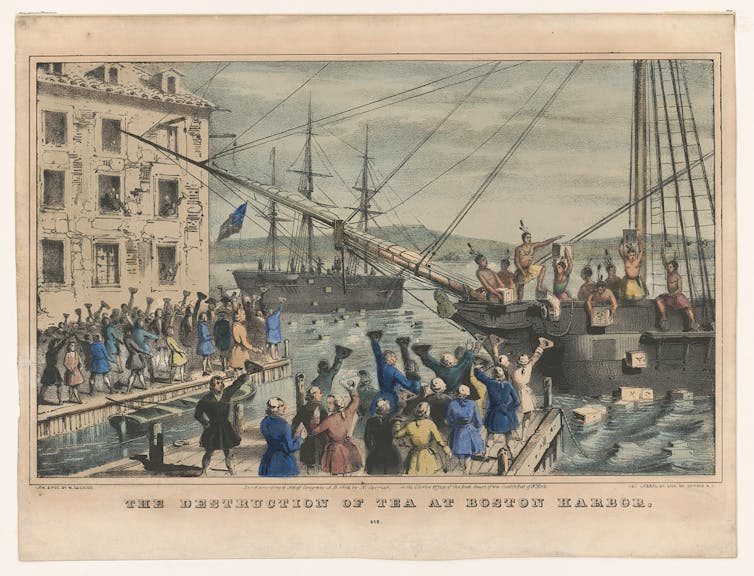
An illustration of colonists boarding ships in a harbour and dumping chests of tea into the water
The Destruction of Tea at Boston Harbor lithographed and published by Nathaniel Currier, 1846. Depicting American colonists dumping chests of East India Company tea into Boston Harbor to protest a tax placed upon tea, it’s one of the earliest acts of protest against corporate and imperial power.
(The Library of Congress)

However, as I argue in my book, this amoral view of the firm doesn’t stand up to scrutiny. One common argument is that businesses cannot be expected to act morally because market competition will discipline those that voluntarily forgo profits.

But this line of thinking is flawed, and ignores the fact that we demand competitors in all sorts of arenas — including in sports and war — to adhere to moral standards.

While corporations face several kinds of pressures that can make it difficult for them to live up to their moral obligations, they are nonetheless still morally accountable for what they do. Similarly, the moral agency of businesses is not erased by their being threatened by autocrats with the abusive use of state power.

What can companies do?

Businesses have tools that can help them manage their risks while honouring their duty to resist autocratic demands. These include standing together in solidarity, and relying on courts and other parts of society still committed to liberal democratic values to help protect their interests.

It’s therefore not up to the business community alone to defend liberal democratic society against autocracy.

However, as I argue in the book, the successful defence of liberal democracy against authoritarianism calls for an all-of-society effort that critically includes morally responsible leadership from within the business community.

The Conversation

David Silver does not work for, consult, own shares in or receive funding from any company or organisation that would benefit from this article, and has disclosed no relevant affiliations beyond their academic appointment.

ref. Businesses have a moral responsibility to stand up to autocrats – https://theconversation.com/businesses-have-a-moral-responsibility-to-stand-up-to-autocrats-263170

Information collected by the world’s largest radio telescope will be stored and processed by global data centres

Source: The Conversation – Canada – By Simon Blouin, Postdoctoral Fellow, Astronomy, University of Victoria

An artist’s impression of the Square Kilometre Array telescope in South Africa.
(SKAO)

When the Square Kilometre Array (SKA) Observatory goes online later this decade, it will create one of science’s biggest data challenges. The SKA Observatory is a global radio telescope project built in the Southern Hemisphere. There, views of our Milky Way are clearest and the SKA’s remote sites limit human-made radio interference.

The project spans two sites: approximately 131,000 Christmas-tree-shaped antennas in western Australia and 200 large dish antennas in the Karoo region of South Africa. As part of this international collaboration, Canada has established a data-processing centre at the University of Victoria.


Read more:
Canada’s participation in the world’s largest radio telescope means new opportunities in research and innovation


The SKA Observatory will produce around 600 petabytes of data each year. That amount would take 200 years to download using an at-home internet connection of 100 megabytes per second.

This data volume exceeds by a significant margin even what is produced by the Large Hadron Collider, often considered to be the world’s premier big data science project.

Research aims

Among its many science goals, the SKA detects faint radio signals emitted during the Cosmic Dawn, roughly 50 million to one billion years after the Big Bang, when the very first stars and galaxies lit up the universe.

The SKA will also test Albert Einstein’s theory of general relativity by timing signals from pulsars (rapidly spinning neutron stars) with high accuracy.

Another goal is understanding fast radio bursts – brief, intense radio pulses from distant sources. The SKA is expected to detect fast radio bursts far more frequently than current instruments, providing a large dataset to help determine their cause, building on work done by facilities like Canada’s CHIME telescope.

Initial data from the SKA is expected in 2027, with the start of major science operations in 2029 as the array is built and commissioned in phases.

an image of outer space showing the moon in the top right and dots of light throughout
The first image from an early working version of the SKA Observatory’s SKA-Low telescope, which is currently under construction in western Australia.
(SKAO), CC BY

Canada’s role

Handling the large volume and complexity of SKA data requires a global network of specialized computing facilities, collectively known as SKA Regional Centres (SRCs).

Canada became a member of the SKA Observatory research project in 2024. Shortly after joining, Canada committed to establishing one such centre.

The Canadian SRC (CanSRC) will be the sole SRC in the Americas, serving as an important node for processing, storing and providing streamlined access to SKA data. It will allow researchers to focus on scientific analysis rather than data management hurdles.

Big Astronomy

The SKA is part of astronomy’s ongoing evolution toward “Big Science,” where international collaboration becomes essential for scientific breakthroughs. This large-scale approach not only changes how science is funded, but also how it is conducted.

While the SKA will still accommodate traditional investigator-led proposals — where individual scientists or small teams request specific telescope time and computational resources for more focused projects — most of its observing power will target ambitious, multi-year projects designed by large international teams.

Canadian researchers participate in all of the SKA Science Working Groups and have co-chaired four of them in recent years. Canada is recognized as a world leader in studies of pulsars, cosmic magnetism and transients, as well as in low-frequency cosmology, areas where the SKA will make some of its most transformative discoveries.

a red blotch against a grey background
The centre of our Milky Way galaxy as seen by MeerKAT, a South African radio telescope that will become part of the SKA.
(South African Radio Astronomy Observatory), CC BY

Astronomical data management

Building, developing and managing CanSRC requires collaboration among the National Research Council’s Canadian Astronomy Data Centre, with four decades of experience in astronomical data management; the Digital Research Alliance of Canada, offering high-performance computing resources; CANARIE, operating the high-speed research network for data transfer; and the University of Victoria’s Arbutus cloud platform, supplying the scalable infrastructure.

The project leverages expertise concentrated within the University of Victoria’s Astronomy Research Centre, which brings together researchers from the University of Victoria, the National Research Council Herzberg Astronomy and Astrophysics Research Centre and TRIUMF, Canada’s national particle accelerator centre.

Importantly, CanSRC ensures that researchers have access to SKA data. The capabilities developed through CanSRC will strengthen Canada’s digital ecosystem for the future.

Digital discovery

CanSRC will serve as a gateway for developing and expanding the use of advanced data methods and algorithms, helping scientists from research and industry sectors harness massive datasets.

Applications of these techniques extend far beyond astronomy, with potential uses in medical imaging, remote sensing and artificial intelligence.

The Conversation

Falk Herwig receives funding from the National Research Council of Canada and the Natural Science and Engineering Research Council of Canada.

JJ Kavelaars receives funding from the National Research Council of Canada and the Natural Science and Engineering Research Council of Canada.

Sébastien Fabbro receives funding from the National Research Council of Canada and the Natural Science and Engineering Research Council of Canada.

Simon Blouin does not work for, consult, own shares in or receive funding from any company or organisation that would benefit from this article, and has disclosed no relevant affiliations beyond their academic appointment.

ref. Information collected by the world’s largest radio telescope will be stored and processed by global data centres – https://theconversation.com/information-collected-by-the-worlds-largest-radio-telescope-will-be-stored-and-processed-by-global-data-centres-255268

Inequality in Africa: what drives it, how to end it and what some countries are getting right

Source: The Conversation – Africa – By Imraan Valodia, Pro Vice-Chancellor, Climate, Sustainability and Inequality and Director, Southern Centre for Inequality Studies, University of the Witwatersrand

The relationship between inequality and economic growth is a complex one, especially in Africa. Inequality is the result of a host of factors, including policy choices, institutional legacies and power structures that favour elites. Professor Imraan Valodia, director of the Southern Centre for Inequality Studies spoke to Ernest Aryeetey, emeritus professor of Development Economics at the Institute of Statistical, Social and Economic Research, University of Ghana about the issues.


What policy choices have African governments made that have worsened inequality?

Firstly, structural adjustment policies. Many African countries undertook these during the late 20th century, often encouraged by international financial institutions. These policies included public sector retrenchments, the removal of subsidies, and reduced social services. They disproportionately affected the poor by weakening the state’s role in redistributing public goods, and limiting access to essential services.

The programmes also increased income inequality by choosing free markets over social protection. Later efforts to address the consequences were often “too little, too late.”

Secondly, taxation and fiscal policies. Most tax systems in Africa have relied on indirect taxes (such as VAT or consumption taxes) rather than progressive, direct taxes on income and wealth. As a result, poorer households often bear a heavier relative tax burden while the wealthiest benefit from exemptions or evasion.

Early post-independence taxation rarely did much to redistribute wealth, and efforts to tax the informal sector have been minimal or poorly designed. They have failed to capture significant resources for social spending.

Thirdly, education and healthcare investment. Policy choices have often perpetuated access gaps between urban and rural populations and among socioeconomic classes. Investments tended to favour cities and privileged groups, so that not everyone had the same opportunities. This “urban bias” in public spending reinforced existing inequalities. Rural people’s needs remained unmet.

Fourthly, weak social protection. Until the expansion of more comprehensive schemes in the 2000s, many Africans were left poor and vulnerable, without adequate safety nets.

Fifth, economic structures favour elites. African governments have often maintained or even reinforced economic structures that concentrate wealth and opportunity for just a few. Examples include policies favouring extractive industries or resource sectors controlled by politically connected groups. Land tenure, trade policies and access to state contracts and licences have frequently favoured the powerful.

Sixth, limited regional and gender inclusion. Early public policies rarely met the needs of women, youth, rural areas, or marginalised regions. Exclusion from land ownership or financial services, and limited emphasis on affirmative action, reinforced systemic inequalities. Only in recent decades have some governments begun to address these gaps, but progress remains uneven.

Are these choices linked to the capture of public policy by elites?

Yes. Privileged groups have often shaped or manipulated state policies in ways that protect their interests and reinforce inequality.

Colonial and postcolonial legacy. Policies and institutions established during and after colonialism often allocated resources and power to a narrow elite, either colonial settlers, expatriates or local collaborators. Today’s elites inherited and sustained many of these structures. They still control wealth, land, and market opportunities.

Economic structure and resource control. Many African economies remain oriented around extractive industries and primary commodities such as oil and minerals. Policies around resource extraction, trade and land tenure have often favoured elites through preferential access, tax exemptions and regulatory loopholes.

Policy design and fiscal choices. The design of tax systems has typically favoured indirect taxes (like VAT). These do not affect elite wealth. Efforts to tax high incomes, property or capital gains are underdeveloped or easily evaded.


Read more:
Tax season in South Africa: the system is designed to tackle inequality – how it falls short


Social protection and service delivery. Safety nets and public goods (like quality education, healthcare, or infrastructure) often target formal sector workers or urban residents (where elites reside). They neglect the informal sector, rural poor and marginalised groups.

Political patronage and governance. State resources, positions and contracts go to loyalists, family members, or ethnic/regional networks.

What have been the 3 biggest inequality drivers?

Firstly, regressive fiscal policies. These include broad based taxes such as transaction levies and VAT. They take a larger share of low income earners’ cash flows. Wealthier groups benefit from exemptions or low tax rates.

Secondly, rapid, elite led privatisation and market liberalisation. Selling state assets or opening key sectors (energy, telecoms and transport) to politically connected investors concentrates profits and market power. Informal workers and small firms are left with reduced earnings.

Patronage, corruption and political capture keep things that way.

Thirdly, under-investment in universal social services. Cuts to health, education and social safety nets limit upward mobility for the poor and maintain regional and gender gaps.

Lastly, resource dependence and economic structure. Many African economies focus on industries like oil, minerals and cash crops. These benefit political and business elites but don’t diversify industries or create jobs. The benefits of growth go mostly to the already privileged. Most citizens and entire regions are excluded.

Which countries have managed best to change this?

Rwanda has a progressive income tax structure. Low value mobile money transactions are exempt from tax. Key utilities such as electricity and water remain largely public, which has reduced the impact of taxes on the poor.

Rwanda has also made efforts towards inclusive governance. Examples include quotas for women, investments in health and education, and a focus on rural inclusion.

Botswana has pursued a cautious privatisation agenda. The state retains majority ownership in diamonds, telecoms and banking. Revenues were channelled into universal primary education and health.

Despite its dependence on diamonds, it does well at channelling resource wealth into national savings, infrastructure and public services. This while maintaining relatively high institutional quality and political stability.

Ethiopia, pre 2020 reforms which saw the role of the private sector being broadened.

Before then, the country had focused on massive public investment in primary education, health extension services and rural road networks. At the same time it avoided large scale privatisation of basic utilities. This limited the social service gap.

In addition, it has invested in manufacturing and export-led growth. This has generated jobs and gradually shifted the economy away from depending on primary commodities. Inequality has reduced compared to resource-dependent peers.

Have technology advances affected inequality differently on the continent?

Yes.

Technology has the potential to reduce inequality by expanding access to markets, services, information and financial inclusion. But gaps in digital infrastructure, affordability and skills have caused technology to sometimes reinforce, rather than alleviate, disparities in African countries.

  • Digital divide and urban-rural gaps. Access to digital technologies is highly uneven. Rural areas, the poor, women and less-educated groups are less likely to use the internet or benefit from digital services. This divide is much starker in Africa than in advanced economies, where technology adoption is nearly universal. As a result, new technologies can benefit urban, educated and higher-income groups the most. This widens inequalities if not accompanied by robust, inclusive policies.

  • Mobile leapfrogging, but patchy inclusion. Africa’s rapid leap to mobile phone use has often skipped fixed-line infrastructure. This has brought financial inclusion and new markets to millions, such as M-Pesa in Kenya. Still, large parts of the continent remain excluded due to affordability, lack of electricity, limited digital skills and language barriers.

  • Economic structure and global value chains. Limited integration into global value chains and a small high-tech sector mean most jobs on the continent remain in low-productivity informal work.

Why do the effects differ?

Firstly, late, unequal adoption. The industrial revolution and subsequent technological advances arrived late and unevenly. Colonial and postcolonial legacies left Africa behind in both education and infrastructure. This made it harder for broad segments of the population to benefit from new technologies.

Infrastructure scarcity forces societies to adopt mobile solutions directly, bypassing legacy banking but also making them vulnerable to policy shocks.

Secondly, policy and market failures. Inadequate regulation, weak competition and high costs of devices and data are brakes on digital transformation. Digital public goods, such as e-government and online education, reach only connected groups. And digital skills gaps further entrench the social digital divide.

The Conversation

Imraan Valodia receives funding from a number of foundations and institutions that support independent academic research.

ref. Inequality in Africa: what drives it, how to end it and what some countries are getting right – https://theconversation.com/inequality-in-africa-what-drives-it-how-to-end-it-and-what-some-countries-are-getting-right-265265

Ansaru terror leaders’ arrest is a strategic change for Nigeria: what could happen next

Source: The Conversation – Africa (2) – By Saheed Babajide Owonikoko, Researcher, Centre for Peace and Security Studies, Modibbo Adama University of Technology

Attacks by non-state armed groups are a security challenge in the Sahel, including Nigeria.

In northern Nigeria, the activities of Jama’at Ahl al-Sunna li al-Da’wa wa al-Jihad (also known as Boko Haram), Islamic State West Africa Province (ISWAP) and Jama’atu Ansarul Muslimina fi Biladis Sudan (Ansaru) contribute to the instability of the Nigerian state.

On 16 August 2025, Nuhu Ribadu, Nigeria’s national security adviser, announced the arrest of two leaders of Ansaru: Mahmud Muhammad Usman and Mahmud al-Nigeri.

They appeared before the Federal High Court in Abuja on 11 September. Usman pleaded guilty to the charge of illegal mining activities and was sentenced to 15 years’ imprisonment. They are currently facing a 32-count charge including engagement in acts of terrorism, and other violent crimes.

As a scholar of security studies, I can offer some thoughts about the importance of the arrest, possible responses from Ansaru and how Nigeria should respond.

Who are the two men arrested?

Mahmud Muhammed Usman and Mahmud al-Nigeri are two key leaders of Ansaru, a terrorist organisation that formed as a breakaway faction of Boko Haram in 2012 in Kano state. Boko Haram is a Salafi Jihadist militant group operating in north-east Nigeria and the Lake Chad region. It’s known for its efforts since 2010 to establish an Islamic state governed by Islamic law.

Ansaru functioned until 2013 before it appeared to fizzle out. Its operations included a prison break in November 2012, an attack on a Nigerian military convoy heading to Mali in January 2013 and the kidnapping of seven expatriates working with Setraco Construction Company in Bauchi in February 2013.

Since 2013, not much has been heard about the group. Some linked its silence to the death of its leader Abubakar Adam Kambar in 2012. Others said it had been forced back into mainstream Boko Haram by that group’s then leader Abubakar Shekau.

But Ansaru revived between 2018 and 2020 and has been recruiting and involved in rising banditry and kidnapping in North West and North Central.

The arrested leaders are prominent figures in Ansaru. An official statement revealed that Mahmud Muhammad Usman is the amir (leader) and Mahmud al-Nigeri serves as the deputy and chief of staff.

Both have undergone extensive training from al-Qaeda in the Maghreb region. Al-Qaeda is a pan-Islamic militant group leading a global Islamist revolution aimed at uniting the Muslim world. It was established by Osama Bin Laden in 1988 and he remained its leader until 2011, when he was killed.

Strategic significance of the arrest

Arresting leaders is known in counterterrorism as “leadership decapitation” or “snakehead strategy”. This involves capturing or killing the leaders or high-ranking commanders of terrorist organisations.

Not all policymakers and academics agree about the effectiveness of that tactic. States facing terrorism challenges, such as Israel, the United States and Russia, often use it, but most research shows it is not that effective.

It may temporarily incapacitate the group, but the group may bounce back even more brutally.

The targeted killing of Osama Bin Laden decimated al-Qaeda but paved the way for the rise of the Islamic State as a global caliphate. Islamic State has been lethal in its operations, particularly in the Sahel.

And the 2009 killing of Muhammed Yusuf, the former leader of Boko Haram, led to the emergence of Abubakar Shekau. Under him, Boko Haram became more formidable until he died in 2021.

The case of the Ansaru leaders is different, however. It is target arrest and incarceration.

This strategy has advantages for Nigeria and the broader Sahel region.

Incarceration of the two leaders means Ansaru won’t be able to take key decisions for some time. And it will deny the group some key technical know-how. Terrorist organisations seldom get new leaders while others are still alive.

Al-Nigeri is not only deputy and chief of staff, he is an expert in planning and implementing attacks and kidnapping in Nigeria and Niger. He underwent training in the Maghreb in handling weapons and making explosive devices.

It’s possible that lack of access to their expertise and authority will drastically reduce the activities of Ansaru.

Shortly after their arrest, Abduraham Yusuf, son of the Boko Haram founder, who is also a leader of one of ISWAP cells in the region, was arrested in Chad. Similarly, Boko Haram leader Ibrahim Mahamadu, also known as Bakura, was reportedly killed in Niger Republic on 20 August.

I believe these two incidents may be related to intelligence obtained following the arrest of the two Ansaru leaders.

Likely responses from the group

Considering the importance of the two leaders to Ansaru, there are two likely responses from the group.

  • breaking them out of prison – the group carried out prison breaks in 2012 and 2022

  • high-profile kidnapping and hostage taking, a trademark of Ansaru.

The March 28 2022 Abuja-Kaduna train bombing incident was believed to have been carried out by Ansaru with the support of some bandits as a retaliation for the Nigerian Police raid of Ansaru Camp in Kaduna State in which two commanders of the group were killed.

Even the parent group, Boko Haram, possibly executed the Chibok kidnapping in 2014 in retaliation for some of its commanders under incarceration of Nigerian government. Given these antecedents, the arrest of their prize leaders may trigger retaliation from the group.

Although the group’s ability to retaliate largely depends on whether it can still function effectively without the inputs of its two leaders in incarceration, the current cordial relationship between Ansaru and some bandits operating in the North West may make this possible.

Responses from the state

The Nigerian government and security forces must brace for likely retaliation from Ansaru. I expect that these two leaders should not be kept together in the same prison facility, and there is a need to adequately fortify prison facilities where they are kept to fend off any possible attack.

Furthermore, security needs to be provided for key places, especially schools, communities, and other vulnerable people that Ansaru may attack in the North West and North Central regions.

The Conversation

Saheed Babajide Owonikoko does not work for, consult, own shares in or receive funding from any company or organisation that would benefit from this article, and has disclosed no relevant affiliations beyond their academic appointment.

ref. Ansaru terror leaders’ arrest is a strategic change for Nigeria: what could happen next – https://theconversation.com/ansaru-terror-leaders-arrest-is-a-strategic-change-for-nigeria-what-could-happen-next-264921

Autism is not a scare story: What parents need to know about medications in pregnancy, genetic risk and misleading headlines

Source: The Conversation – Canada – By Sura Alwan, Clinical Instructor in Medical Genetics (Teratology & Birth Defects Epidemiology); Co-Director, TERIS (The Teratogen Information System), University of British Columbia

Over the past couple of months, headlines have warned expectant parents that something as ordinary as a pain reliever or an antidepressant taken during pregnancy could “cause autism.”

The stories have focused on acetaminophen (also known as paracetamol or the brand name Tylenol) and selective serotonin reuptake inhibitors (SSRIs), such as Prozac (fluoxetine) and Zoloft (sertraline).

But here is what the headlines leave out: acetaminophen is commonly used during pregnancy to manage fever, pain or stress, all of which can themselves affect fetal development. Similarly, SSRIs are prescribed for depression or anxiety, conditions that also influence pregnancy outcomes. In many cases, it may well be the illness, not the treatment, that shapes child development.

Both classes of medications have been studied extensively for decades. Yet despite what the headlines suggest, the evidence that acetaminophen or SSRIs cause autism is weak, inconsistent and easily misinterpreted.

With a background in genetics and clinical teratology — the scientific study of birth defects — my research examines how maternal exposures in pregnancy interact with genetic and environmental factors to influence child development. From this perspective, I want to explain why the research on acetaminophen and SSRIs is often misunderstood, and why reducing complex science to alarming headlines does more harm than good.

With the recent U.S. Food and Drug Administration (FDA) panel on SSRIs in pregnancy, and the public claims made by United States Secretary of Health and Human Services Robert F. Kennedy Jr. regarding acetaminophen and autism, there is a need for evidence-based information. While my focus will be on autism, the same issues apply to media coverage linking pregnancy exposures to attention deficit/hyperactivity disorder (ADHD).

Association is not causation

Much of the research behind these headlines is observational. Such studies can spot associations but cannot prove cause and effect. The associations they identify are usually small to modest, and other factors are often responsible.

Confounding is a good example. Pregnant women may take acetaminophen because they have a fever, but fever itself has been linked to higher risks of neurodevelopmental outcomes such as neural tube defects. Similarly, someone prescribed SSRIs may be experiencing depression or anxiety, which on their own are associated with differences in pregnancy outcomes and child development. Here, the medication may appear to be the cause, when in reality it is the condition being treated.

Another problem is misclassification. Most studies rely on mothers recalling how often they used acetaminophen during pregnancy. Memory is imperfect: some under-report, others over-report, and details about dose or timing are often missing.

With SSRIs, misclassification can arise when prescriptions are used as a proxy for exposure. A woman may fill a prescription in early pregnancy but stop taking the medication later, while records still count her as continuously exposed. Both scenarios distort results.

Even the outcomes themselves are not always measured consistently. Diagnoses like autism spectrum disorder vary across countries and over time. Some studies use parental questionnaires instead of medical diagnoses, which can be subjective. Two children with the same traits might be classified differently depending on who reports them.

When researchers adjust for these kinds of factors, the apparent risks often shrink or even disappear.

Research shortcomings and media spin

Beyond these challenges, research in this area has other limitations: timing and dose are often recorded crudely; use of other medications taken at the same time is not systematically assessed; results are inconsistently replicated; and while biobank and biomarker studies — which analyze measurable biological signals, such as blood levels of a substance, to indicate exposure — hold promise, they are uncommon and usually capture exposure only once.

Furthermore, studies that report positive associations are more likely to be published, and once they are, news outlets are far more likely to amplify findings that sound alarming than ones that reassure. “Everyday painkiller linked to autism” makes a clickable headline; while a more balanced one that might read something like “Evidence inconsistent, no strong effect found” does not.

This cycle amplifies fear, leaving parents confused and anxious.

The real dangers of untreated conditions

It also matters what happens when pain, fever, depression or anxiety go untreated.

High fever in pregnancy is known to increase the risk of neural tube defects and other complications. Untreated maternal depression and anxiety can lead to poor prenatal care, substance use, preeclampsia, premature birth, impaired bonding and even suicide — one of the leading causes of maternal death.

In these cases, acetaminophen and SSRIs are not just helpful. They can be lifesaving.

Understanding autism

Autism is not caused by a single medication or choice. It is a complex neurodevelopmental difference with a strong genetic basis. Heritability estimates are around 70–80 per cent, meaning much of the variation in risk is tied to parental traits and shared family environments.

Autism also clearly runs in families: siblings of autistic individuals are 10 to 20 times more likely to be diagnosed, and many parents or relatives show autistic traits even without formal diagnoses. This familial pattern reinforces that genetics and shared environment play a major role.

Sibling studies add weight by comparing siblings where one was exposed to a medication in pregnancy, and the other was not.

If the medication were truly causing autism, clear differences would appear. But often they shrink or disappear, pointing instead to shared genetics and environment.

Of course, environmental factors can still play a role. But to suggest that a common medication like acetaminophen “causes” autism oversimplifies the picture and risks stigmatizing families, while fuelling guilt among mothers who already face intense scrutiny during pregnancy.

Communicating risk responsibly

One of the greatest challenges is not the research itself, but how its results are communicated. Studies often report risks using relative measures. For example, a study might report that acetaminophen use is associated with a 30 per cent increase in autism risk. That sounds alarming. But in absolute terms, the difference is much smaller.

Autism affects about three in every 100 children. Even taking the highest reported increase in studies — a 30 per cent relative rise — that number only goes up to about four in 100. In other words, instead of 97 children without autism, you’d have 96. So while the increase is real, the absolute change in risk remains small.

Therefore, balanced communication matters. When parents hear only the alarming side, some may stop taking needed medications abruptly, which can be dangerous. Others may endure untreated illness out of fear. Clinicians and researchers should emphasize absolute risks, acknowledge limits, and aim to inform, not frighten.

Informed, not alarmed

The lesson isn’t that acetaminophen or SSRIs are risk-free. No medication is. But decades of research show that, when clinically indicated, they are generally safe in pregnancy. The risks of untreated illness are often greater.

Autism is a condition caused by many factors, including genetics, not something to blame on common medications — or mothers.

Expectant parents deserve clear, compassionate, evidence-based information, not fear-driven headlines. Association is not causation, absolute risks are small, and informed choice should never be replaced by alarm.

The Conversation

Sura Alwan is the founder and executive director of PEAR-Net Society, a Canadian nonprofit that advocates for maternal fetal health and safety of medications and other environmental exposures during pregnancy.

ref. Autism is not a scare story: What parents need to know about medications in pregnancy, genetic risk and misleading headlines – https://theconversation.com/autism-is-not-a-scare-story-what-parents-need-to-know-about-medications-in-pregnancy-genetic-risk-and-misleading-headlines-264964

What Native-held lands in California can teach about resilience and the future of wildfire

Source: The Conversation – USA (2) – By Nina Fontana, Researcher in Native American Studies, University of California, Davis

Blue oak woodlands in California offer beauty and opportunities to sustain traditional knowledge and ecological resilience. Nina Fontana, CC BY-NC-ND

It took decades, stacks of legal paperwork and countless phone calls, but, in the spring of 2025, a California Chuckchansi Native American woman and her daughter walked onto a 5-acre parcel of land, shaded by oaks and pines, for the first time.

This land near the foothills of the Sierra National Forest is part of an unusual category of land that has been largely left alone for more than a century. The parcel, like roughly 400 other parcels across the state totaling 16,000 acres in area, is held in trust by the federal government for the benefit of specific Indigenous people – such as a family member of the woman visiting the land with her daughter.

Largely inaccessible for more than a century, and therefore so far of little actual benefit to those it is meant for, this land provides an opportunity for Indigenous people to not only have recognized land rights but also to care for their land in traditional ways that could help reduce the threat of intensifying wildfires as part of a changing climate.

In collaboration with families who have long been connected to this land, our research team at the University of California, Davis is working to clarify ownership records, document ecological conditions and share information to help allottees access and use their allotments.

California’s unique historical situation

As European nations colonized the area that became the United States, they entered into treaties with Native nations. These treaties established tribal reservations and secured some Indigenous rights to resources and land.

Just after California became a state in 1850, the federal government negotiated 18 treaties with 134 tribes, reserving about 7.5 million acres, roughly 7.5% of the state, for tribes’ exclusive use.

However, land speculators and early state politicians considered the land too valuable to give away, so the U.S. Senate refused to ratify the treaties – while allowing the tribes to think they were valid and legally binding. As a result, most California Native Americans were left landless and subject to violent, state-sanctioned removals by incoming miners and settlers.

Then, in 1887, Congress passed the Dawes Act, which allowed Native people across the U.S. to be assigned or apply for land individually. Though it called the seized land – their former tribal homelands – the “public domain,” the Dawes Act presented a significant opportunity for the landless Native people in California to secure land rights that would be recognized by the government.

These land parcels, called allotments, are not private land, public land or reservation land – rather, they are individual parcels held in trust by the federal government for the benefit of allottees and their descendants.

A map of California showing different habitat regions and marking allotments with black dots, next to a chart showing how many acres of allotments are in each type of habitat.
Allotments are in a wide range of ecosystems, though more are in blue oak woodlands than any other single type of habitat.
Images created by James Thorne, Ryan Boynton, Allan Hollander and Dave Waetjan.

Many of these allotments were remote – ecologically rich, yet hard to access. They were carved out of ancestral territories but often lacked access to infrastructure like roads, water or electricity. In some cases, allotments were separated from traditional village sites, ceremonial areas or vital water resources, cutting them off from broader ecosystems and community networks.

Federal officials often drew rough or incorrect maps and even lost track of which parcels had been allotted and to whom, especially as original allottees passed away. As a result, many allotments were claimed and occupied by others, coming into private hands without the full knowledge or consent of the Native families they were held in trust for.

There were once 2,522 public domain allotments in California totaling 336,409 acres. In 2025, approximately 400 of these allotments remain, encompassing just over 16,000 acres. They are some of the only remaining, legally recognized tracts of land where California Native American families can maintain ties to place, which make them uniquely significant for cultural survival, sovereignty and ecological stewardship.

The allotments today

Because of their remoteness, many of these lands remained relatively undisturbed by human activity and are home to diverse habitats, native plants and traditional gathering places. And because they are held in trust for Native people, they present an opportunity to exercise Indigenous practices of land and resource management, which have sustained people and ecosystems through millennia of climate shifts.

We and our UC Davis research team partner with allottee families; legal advocates including California Indian Legal Services, a Native-led legal nonprofit; and California Public Domain Allottee Association, an allottee-led nonprofit that supports allottees to access and care for their lands. Together, we are studying various aspects of the remaining allotments, including seeking to understand how vulnerable they are to wildfire and drought, and identifying options for managing the land to reduce those vulnerabilities.

A map of California showing different fire risk regions and marking allotments with black dots, alongside a chart showing how many acres of allotments are in different categories of fire risk.
Allotments have a range of fire risk, though many are in very-high-risk areas.
Images created by James Thorne, Ryan Boynton, Allan Hollander and Dave Waetjan.

An opportunity for learning

So far, our surveys of the vegetation on these lands suggest that they could serve as places that sustain both flora and fauna as the climate changes.

Many of these parcels are located in remote, less-developed foothills or steep terrain where they have remained relatively intact, retaining more native species and diverse habitats than surrounding lands. Many of these parcels have elements like oak woodlands, meadows, brooks and rivers that create cooler, wetter areas that help plants and animals endure wildfires or periods of extreme heat or drought.

Allotment lands also offer the potential for the return of stewardship methods that – before European colonization – sustained and improved these lands for generations. For example, Indigenous communities have long used fire to tend plants, reduce overgrowth, restore water tables and generally keep ecosystems healthy.

Guided by Indigenous knowledge and rooted in the specific cultures and ecologies of place, this practice, often called cultural burning, reduces dry materials that could fuel future wildfires, making landscapes more fire-resilient and lowering both ecological and economic damage when wildfires occur. At the same time, it brings back plants for food, medicine, fiber and basketry for California Native communities.

Challenges on allotments

The Chuckchansi family who reached their land for the first time in the spring of 2025 would like to move onto the land. However, the parcel is surrounded by private property, and they need to seek permission from neighboring landowners to even walk onto their own parcel.

In addition, a small number of employees at the Bureau of Indian Affairs are responsible for allotments, and they must also deal with issues on larger reservations and other tribal lands.

Further, because the lands are held in federal trust, allottees’ ability to engage in traditional management practices like cultural burning often face more stringent federal permitting processes than state or private landowners – including restrictions under the Clean Air Act and the National Environmental Policy Act.

To our knowledge, no fire management plans have been approved by the Bureau of Indian Affairs on California Native American public domain allotments. Nonetheless, many families are interested in following traditional practices to manage their land. These efforts were a key topic at the most recent California Public Domain Allottees Conference, which included about 100 participants, including many allottee families.

A group of people are assembled in a meeting room.
People gather at the second annual California Public Domain Allottees Conference in May 2025.
Nina Fontana, CC BY-NC-ND

Why it matters

As California searches for ideas to help its people adapt to climate change, the allotment lands offer what we believe is a meaningful opportunity to elevate Indigenous leadership in climate adaptation. Indigenous land stewardship strategies have shown they can reduce wildfire risk, restoring ecosystems and sustaining culturally important plants and foods. Though the parcels are small, the practices applied there – such as cultural burning, selective gathering and water stewardship – are often low-cost, community-based and potentially adaptable to larger parcels elsewhere around the state.

One option could be to shift some of the regulatory authority from the Bureau of Indian Affairs to the allottees themselves. Shifting authority to Indigenous peoples has improved forest health elsewhere, as found in a collaborative study between University of California Extension foresters and Hoopa Tribal Forestry. That research found that when the Hoopa Tribe gained control of forestry on their reservation along the Klamath River basin in northern California, tribal members moved away from large-scale clear-cutting. They decreased allowable logging amounts, created buffers around streams and protected species that were culturally important, while still reducing the buildup of downed or dead wood that can fuel wildfires.

At a time when California faces record-breaking wildfires and intensifying climate extremes, allotments offer rare pockets of intact habitat with the potential to be managed with cultural knowledge and ecological care. They show that adapting to change is not just about infrastructure or technology, but also about relationships – between people and place, culture and ecology, past and future.

Kristin Ruppel from Montana State University, author of “Unearthing Indian Land, and Jay Petersen from California Indian Legal Services also contributed to the drafting of this article.

The Conversation

This research was funded by the California Climate Action Seed Grant (#R02CP7261: Planning Landscape Resilience for California Indian Allotment Lands) and the United States Geological Survey (G22AC00076-00, Indigenous-Led Climate Adaptation Strategies: Integrating Landscape Condition, Monitoring, and Cultural Fire with the North Fork Mono Tribe, and G23AC00682-00, Future of Fire Phase II: Learning by Doing with Cultural Fire Practitioners).

This research was funded by the Climate Action Grant (California Climate Action Seed Grant #R02CP7261: Planning Landscape Resilience for California Indian Allotment Lands) and the United States Geological Survey (G22AC00076-00, Indigenous-Led Climate Adaptation Strategies: Integrating Landscape Condition, Monitoring, and Cultural Fire with the North Fork Mono Tribe, and G23AC00682-00, Future of Fire Phase II: Learning by Doing with Cultural Fire Practitioners).

ref. What Native-held lands in California can teach about resilience and the future of wildfire – https://theconversation.com/what-native-held-lands-in-california-can-teach-about-resilience-and-the-future-of-wildfire-260859