Everything everywhere all at once: How Zohran Mamdani campaigned both online and with a ground game

Source: The Conversation – USA – By Stuart Soroka, Professor, Communications and Political Science, University of California, Los Angeles
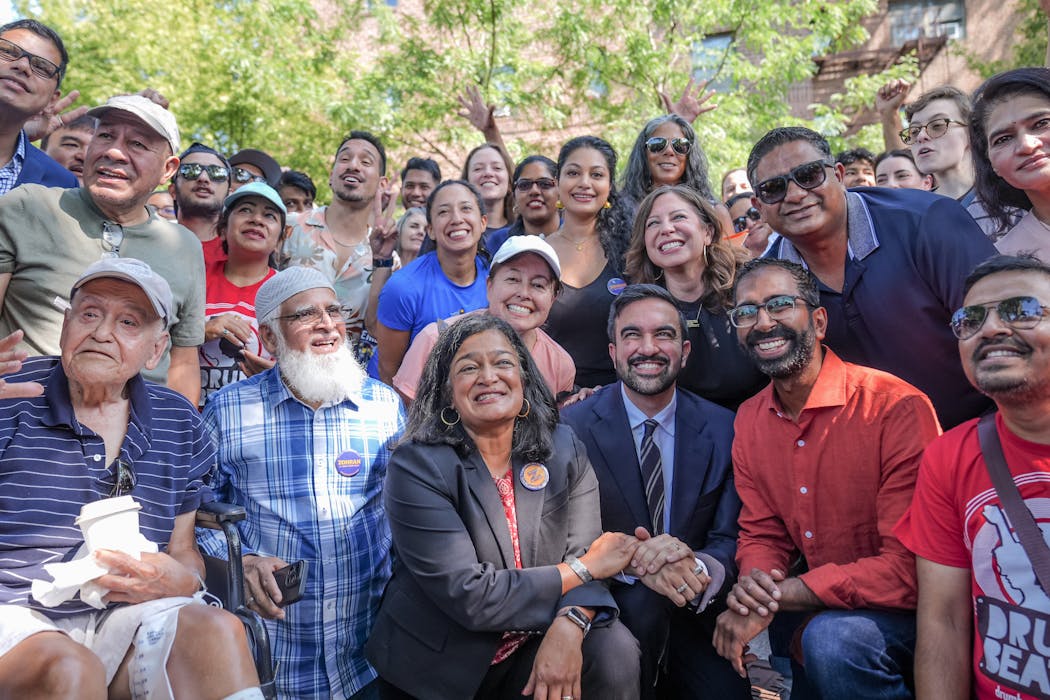
New York mayoral candidate Zohran Mamdani and U.S. Rep. Pramila Jayapal meet voters to go door-knocking in Jackson Heights on Sept. 14, 2025. Selcuk Acar/Anadolu via Getty Images

Accounts of Zohran Mamdani’s campaign for New York City mayor have highlighted both his online presence and his ground game.

Mamdani won the general election with 50.4% of the vote, a larger share than was predicted by most polls, and his get-out-the-vote campaign has received some of the credit. Mamdani claims that his campaign had over 100,000 volunteers knocking on doors across New York City.

This focus on on-the-ground mobilization stands out given the increasing attention devoted to online campaigning over the past 15 years.

Particularly during that time period, online platforms have been a major focus of political campaigns and campaign research. Targeted advertising and new media strategies are increasingly viewed as central to campaign success. So is coverage of the campaign by legacy and social media more generally.

Moreover, solid empirical evidence of the effectiveness of door-to-door canvassing is limited. Recent work finds very few effects of in-person canvassing, except in very specific circumstances. One recent paper suggests that door-to-door canvassing by the candidate can make a difference to election outcomes. But in a race in New York City, it is not likely that Mamdani himself was able to reach enough voters to make a difference.

How much did Mamdani’s ground game contribute to his victory? As a political communication scholar, I know that assessing the impact of different methods used by political campaigns is difficult – in part because political campaigns include multiple lines of communication.

‘Hybrid’ campaigns

No campaign exists in isolation — nearly every candidate’s campaign occurs alongside opposing candidates’ campaigns. The effects of one campaign are often masked by the countering effects of the other.

The size of a campaign on one platform also tends to be correlated with the size of that candidate’s campaign on other platforms. When television advertising increases alongside social media advertising and door-to-door canvassing, identifying the effects of any single platform can be difficult.

Clever research designs are in some instances able to identify effects. These generally find that the impact of not just door-knocking but also ads and online advertising can be relatively limited.

In the modern technological environment, the impact of any single aspect of a campaign may be especially difficult to assess. Campaigning increasingly occurs in what researchers have called a “hybrid media” environment. Campaigns are waged in person, on the news and across multiple social media.

Each of these platforms comes with different advantages and disadvantages. Each also prioritizes different kinds of information.

Plainly stating your policy platform may work for coverage of a campaign stop on the evening news. But if you want that policy to go viral on TikTok, then you may need to add a dance – or an influencer.

Find volunteers online, send them knocking

Candidates have increasingly recognized the need to tailor messages for different communication platforms, such as television ads, Facebook posts and TikToks, building hybrid campaigns that attempt to spread a message across multiple, different spaces.

This interactivity across platforms has been especially evident in postelection assessments of the Mamdani campaign. His social media campaign was adept at producing the kinds of content that attract attention online. That campaign also appears to have been able to convert online engagement into real-world activism, including door-to-door canvassing.

There have been growing concerns among academics and campaign organizers about “slacktivism” — activism that amounts to one or two clicks online but nothing more. One worry is that a quick online endorsement may in some instances give people a sense that they have done their share and limit more active forms of engagement. The Mamdani campaign appears to have overcome this problem, at least in part.

But 100,000 people knocking on doors probably does not happen without the success of an online campaign. Finding and mobilizing campaigners was one important focus of Mamdani’s engagement online, after all.

Do it yourself − then repeat on socials

In-person campaigning by Mamdani, on the street and in the taxi line, is almost certainly made more effective through circulation on Instagram and TikTok.

Using mass media to broadcast campaign stops is not new, of course.

The construction of campaign stops that produce good social media content is becoming more common, however. The ways in which campaigns unfold in person are increasingly intertwined with the way they unfold online.

In this way, the Mamdani campaign may have been a textbook example of a modern hybrid campaign and an illustration of the coevolution of digital and on-the-ground campaigning.

To be clear, the success of the Mamdani campaign is probably not about his online presence or his ground game, but both at the same time.

The Conversation

Stuart Soroka research has been funded from the National Science Foundation and the Social Sciences and Humanities Research Council of Canada.

ref. Everything everywhere all at once: How Zohran Mamdani campaigned both online and with a ground game – https://theconversation.com/everything-everywhere-all-at-once-how-zohran-mamdani-campaigned-both-online-and-with-a-ground-game-269693

Down-ranking polarizing content lowers emotional temperature on social media – new research

Source: The Conversation – USA – By Tiziano Piccardi, Assistant Professor of Computer Science, Johns Hopkins University

Social media posts that stoke division don’t have to top your feed. Gama5/iStock via Getty Images

Reducing the visibility of polarizing content in social media feeds can measurably lower partisan animosity. To come up with this finding, my colleagues and I developed a method that let us alter the ranking of people’s feeds, previously something only the social media companies could do.

Reranking social media feeds to reduce exposure to posts expressing anti-democratic attitudes and partisan animosity affected people’s emotions and their views of people with opposing political views.

I’m a computer scientist who studies social computing, artificial intelligence and the web. Because only social media platforms can modify their algorithms, we developed and released an open-source web tool that allowed us to rerank the feeds of consenting participants on X, formerly Twitter, in real time.

Drawing on social science theory, we used a large language model to identify posts likely to polarize people, such as those advocating political violence or calling for the imprisonment of members of the opposing party. These posts were not removed; they were simply ranked lower, requiring users to scroll further to see them. This reduced the number of those posts users saw.

We ran this experiment for 10 days in the weeks before the 2024 U.S. presidential election. We found that reducing exposure to polarizing content measurably improved participants’ feelings toward people from the opposing party and reduced their negative emotions while scrolling their feed. Importantly, these effects were similar across political affiliations, suggesting that the intervention benefits users regardless of their political party.

This ‘60 Minutes’ segment covers how divisive social media posts get more traction than neutral posts.

Why it matters

A common misconception is that people must choose between two extremes: engagement-based algorithms or purely chronological feeds. In reality, there is a wide spectrum of intermediate approaches depending on what they are optimized to do.

Feed algorithms are typically optimized to capture your attention, and as a result, they have a significant impact on your attitudes, moods and perceptions of others. For this reason, there is an urgent need for frameworks that enable independent researchers to test new approaches under realistic conditions.

Our work offers a path forward, showing how researchers can study and prototype alternative algorithms at scale, and it demonstrates that, thanks to large language models, platforms finally have the technical means to detect polarizing content that can affect their users’ democratic attitudes.

What other research is being done in this field

Testing the impact of alternative feed algorithms on live platforms is difficult, and such studies have only recently increased in number.

For instance, a recent collaboration between academics and Meta found that changing the algorithmic feed to a chronological one was not sufficient to show an impact on polarization. A related effort, the Prosocial Ranking Challenge led by researchers at the University of California, Berkeley, explores ranking alternatives across multiple platforms to promote beneficial social outcomes.

At the same time, the progress in large language model development enables richer ways to model how people think, feel and interact with others. We are seeing growing interest in giving users more control, allowing people to decide what principles should guide what they see in their feeds – for example the Alexandria library of pluralistic values and the Bonsai feed reranking system. Social media platforms, including Bluesky and X, are heading this way, as well.

What’s next

This study represents our first step toward designing algorithms that are aware of their potential social impact. Many questions remain open.

We plan to investigate the long-term effects of these interventions and test new ranking objectives to address other risks to online well-being, such as mental health and life satisfaction. Future work will explore how to balance multiple goals, such as cultural context, personal values and user control, to create online spaces that better support healthy social and civic interaction.

The Research Brief is a short take on interesting academic work.

The Conversation

This research was partially supported by a Hoffman-Yee grant from the Stanford Institute for Human-Centered Artificial Intelligence.

ref. Down-ranking polarizing content lowers emotional temperature on social media – new research – https://theconversation.com/down-ranking-polarizing-content-lowers-emotional-temperature-on-social-media-new-research-271071

Outdoor swimming is becoming a sanctuary for female swimmers in the UK

Source: The Conversation – UK – By Abi Lafbery, PhD Candidate, Sociology, Lancaster University

Wild swimmers in Burry Port, Wales. jax10289/Shutterstock

Centuries after the upper class flocked to the coast for therapeutic sea bathing, outdoor swimming is having a renaissance. Swimmers enter cold water for the many physical and mental health benefits it offers.

Despite the dangers – hypothermia, cardiac-related death and drowning – for many women, outdoor swimming feels like a safe space. My PhD research, which explored outdoor swimming in north-west England, found that some women experience their swimming as a form of liberation, from what they see as a male-centric culture, the male gaze and social convention.

Despite recent gains in women’s sport, men are still participating in higher numbers, especially in outdoor activities. However, approximately two-thirds of outdoor swimmers are women.

In this environment, stripping off at the water’s edge can feel like stripping back notions of how female swimmers feel they “ought to” look or behave.

This is particularly relevant in a context where more than half of women feel that the UK has become more dangerous in the past five years, and reports of violence against women are increasing.

While men are loved and valued members, founders of and advocates for outdoor swimming communities across the UK, female swimmers comment on enjoying a female-majority atmosphere. Compared to perceived male-dominated environments such as the city, where women may feel that they need to take precautions to ensure their safety, or change how and where they exercise during darker winter months, one woman described outdoor swimming as, “a sense of freedom that I don’t think I would necessarily have elsewhere”.

Outdoor spaces are widely perceived to be a male domain. The outdoors is where tropes of masculinity, including stoicism and the conquering of nature, are performed.

Through the practice of outdoor swimming, female swimmers are rewriting outdated ideas of how women might be, do and what they look like in the outdoors.

As late as the Victorian era, many outdoor sports were imagined to threaten a woman’s femininity and fertility. Recent research has shown that mainstream media often portrays women as passive or requiring male assistance during outdoor activities.

Outdoor swimming is a sport in which female physiology provides a significant edge, and women can feel athletic and empowered, no matter their body type.

Many of the swimmers in my research are between their 30s and 60s, and several are experiencing the menopause or ageing bodies. In each other’s company and in the water, patriarchal and capitalist ideals of a “good body” (slim, able-bodied and cisgender), are felt to wash away.

Female swimmers laugh heartily about their “bioprene”, a beloved euphemism for the body fat that allows them to outlast their husbands in cold water. As one swimmer in my study said:

When you’re swimming outdoors, there’s no glamour … it’s a levelling thing and I think in a world where we’re just bombarded with what we should be doing and what we should look like, it’s the way that people can just be themselves.

The outdoor swimming movement is known for its self-proclaimed non-conformist and subversive roots. For some female swimmers, their personal practice is a way to be unconventional. One swimmer commented:

I’ve got this concern about convention and what I ought to be doing, what people expect me to do, but I’ve got more concerned with what I need to do to find pleasure and peace.

For this swimmer, letting go of social norms is a way to find peace within herself.

Finding community

A sense of peace also comes in the form of the friendships that are forged in the water. Previous research has indicated that the social and communal elements of outdoor swimming are an important factor in the sense of wellbeing associated with the practice.

My research indicates that the femininity of some swimming circles can be a harbour for emotional intimacy.

One swimmer described how she and her fellow swimmers have had beautiful exchanges while immersed in the waves, including singing together:

That lovely little moment, which, had it been a male-dominated environment, we perhaps wouldn’t have felt comfortable to be like that. Lots of women around you, you just feel freer… it was spontaneous, it was beautiful.“

The rivers, lakes and seas of the UK offer energising and emboldening spaces where many women feel safe to be fully and unapologetically themselves. As outdoor swimming grows in popularity, and grassroots organisations such as Mental Health Swims have closed due to a lack of funding, nurturing female communities in the outdoors is increasingly important, such that more women may find safety, joy and more of themselves in the outdoors.

The Conversation

Abi Lafbery received funding from the Economic and Social Research Council, North West Social Science Doctoral Training Partnership, ES/P000665/1.

ref. Outdoor swimming is becoming a sanctuary for female swimmers in the UK – https://theconversation.com/outdoor-swimming-is-becoming-a-sanctuary-for-female-swimmers-in-the-uk-268009

The UK’s food supply is more fragile than you might think – here’s why it should be a national priority

Source: The Conversation – UK – By Sven Batke, Associate Head of Research and Knowledge Exchange – Reader in Plant Science, Edge Hill University

Ink Drop/Shutterstock

If you walked into a supermarket during a supply hiccup, storm, fuel protest, or even the early days of the COVID pandemic, you will remember the sight of empty shelves. For most people in the UK, these moments are surprising, even unsettling, precisely because they are rare. We are a generation largely spared the rationing, shortages and hunger our grandparents and great-grandparents once endured.

But that rarity is exactly why we must not become complacent. Food security (the reliable availability, access and affordability of food) should be recognised as a major national concern. That means placing it firmly on the UK’s national risk register.

The national risk register is the UK government’s openly available list of the most serious risks that could affect the country in the short to medium term. These risks range from flooding and heatwaves to threats such as cyberattacks and energy shortages.

Being listed on the register does not mean the event is likely to happen tomorrow (but it could). It means the government has assessed it as significant enough, based on impact and probability, to require planning and mitigation measures.

Think of the national risk register as the country’s official “what could really go wrong?” list. If a threat is on the register, policymakers, emergency planners and critical industries take it seriously and plan accordingly. If it is not, the risk can drift into the background (even when it should not).

For all its importance, food security occupies a limited and somewhat indirect presence in the risk register. It only appears within broader categories such as supply-chain disruption, fuel shortages and animal disease. It’s not mentioned as a clearly defined risk in its own right.

Placing food security on the national risk register as its own defined category would send a clear signal that safeguarding stable, affordable food is a national priority – on par with energy, health and security. My team’s recent white paper for the government highlights this urgency.

Our modern food system is more complex, interconnected and vulnerable than many people realise. The UK imports around half of its food.

Some categories, such as fruit and vegetables, depend on imports for as much as 80–95% of supply. We rely on long, intricate supply chains involving overseas farming conditions, global shipping routes, international labour markets and constantly changing energy prices. When any of these are disrupted, our food system feels the shock.

In 2023, extremely bad weather in Spain and Morocco reduced crop yields, leaving UK supermarkets rationing tomatoes and peppers. The war in Ukraine has caused spikes in grain and sunflower oil prices. And the COVID pandemic and subsequent labour shortages have exposed how reliant farming and food distribution are on migrant workers.

An uncomfortable truth lies behind each of these disruptions: we are more dependent on global systems than the public think. Those systems are under pressure from climate change, geopolitical instability and resource competition.

Food systems also operate with tight margins. Fresh produce is harvested, shipped and sold quickly. Livestock feed supply needs to be constant. Fertiliser production depends heavily on natural gas for providing both the hydrogen feedstock and the energy required to make ammonia, the key ingredient in most nitrogen fertilisers. All of these dependencies create points of vulnerability. When several of those break at once, shortages can cascade.


Read more:
How unsustainable global supply chains exacerbate food insecurity


For many households, even small disturbances lead to real consequences: higher prices, reduced choice and increased stress about meeting weekly food bills. Families on tight budgets feel these effects most sharply.

While we are nowhere near the wartime rationing experienced by earlier generations, food banks across the UK are already serving record numbers, and food-price inflation has recently reached levels not seen in decades. Food insecurity is not a hypothetical risk for millions, it is a reality.

An expert explains the meaning of climate resilience.

Lessons from the past

Historically, Britain has faced food insecurity before. During the second world war, German U-boats targeted supply ships, leading to rationing that lasted until 1954. Earlier still, crop failures and poor harvests in the 19th century caused widespread hardship. Today we benefit from refrigeration, global trade, advanced agriculture and data-driven logistics, but those advantages can create an illusion of invulnerability that our supply chains are robust.

Food security, even in the UK, is more fragile than it might seem. Our shelves look full until suddenly they do not. A combination of climate-driven harvest failures, rising energy prices and trade disruptions could create national shortages or unaffordable prices much more quickly than many people may expect.

Including food security on the national risk register would prompt government departments to plan coordinated responses. It would drive investment in resilient agriculture, storage and domestic production while encouraging diversification of food imports to avoid overreliance on just a few regions.

Better risk planning would also support households through better safety nets and targeted interventions such as emergency rations and direct support to vulnerable households. Raising public awareness that food security is a shared national responsibility does not suggest panic – it means preparation.


Don’t have time to read about climate change as much as you’d like?

Get a weekly roundup in your inbox instead. Every Wednesday, The Conversation’s environment editor writes Imagine, a short email that goes a little deeper into just one climate issue. Join the 47,000+ readers who’ve subscribed so far.


The Conversation

Sven Batke is affiliated with the Greenhouse Innovation Consortium.

ref. The UK’s food supply is more fragile than you might think – here’s why it should be a national priority – https://theconversation.com/the-uks-food-supply-is-more-fragile-than-you-might-think-heres-why-it-should-be-a-national-priority-270709

Good sleep starts in the gut

Source: The Conversation – UK – By Manal Mohammed, Senior Lecturer, Medical Microbiology, University of Westminster

Zhur_Sa/Shutterstock

You might think good sleep happens in your brain, but restorative sleep actually begins much lower in the body: in the gut.

The community of trillions of microbes living in your digestive tract, known as the gut microbiome, plays a powerful role in regulating sleep quality, mood and overall wellbeing. When the gut microbiome is balanced and healthy, sleep tends to follow. When it is disrupted, insomnia, restless nights and poor sleep cycles often appear.

Gut and brain communicate constantly through the gut-brain axis. This communication network involves nerves, hormones and immune signals.

The best known part of this system is the vagus nerve, which acts like a two-way communication line carrying information between gut and brain. Researchers are still studying how important the vagus nerve is for sleep, but evidence suggests that stronger vagal activity supports calmer nervous system states, steadier heart rhythms and smoother transitions into rest.

Because of this intimate connection, changes in the gut influence how the brain regulates stress, mood and sleep.

So, how does the gut actually communicate these signals to the brain?

Gut microbes do more than digest food. They produce neurotransmitters and metabolites that influence sleep-related hormones. Metabolites are small chemical by-products created when microbes break down food or interact with each other. Many of these compounds can influence inflammation, hormone production and the body’s internal clock. When the gut is in balance, these substances send steady, calming signals that support regular sleep. When the microbiome becomes imbalanced, a condition known as dysbiosis, this messaging system becomes unreliable.

The gut also produces several key sleep-related chemicals. Serotonin, for example, regulates mood and helps set the sleep-wake cycle. Most of the body’s serotonin is produced in the gut, and healthy bacteria help keep its production stable. Melatonin, which makes you feel sleepy at night, is made not only in the pineal gland but also throughout the digestive tract. The gut helps convert serotonin into melatonin, so its condition directly shapes how efficiently this happens.

The gut also supports the production of Gaba (gamma-aminobutyric acid), a calming neurotransmitter made by certain beneficial microbes. Gaba quiets the nervous system and signals that the body is safe enough to relax. Together, these chemicals form part of the body’s circadian rhythm, the internal 24-hour cycle that regulates sleep, appetite, hormones and temperature. When harmful bacteria dominate, that rhythm becomes less stable, which can contribute to insomnia, anxiety at bedtime and fragmented sleep.

Another major route linking gut and sleep is inflammation. A healthy gut maintains a balanced immune response. It does this by protecting the gut lining, hosting microbes that regulate immune activity and producing compounds that calm inflammatory reactions. If dysbiosis develops or a poor diet irritates the gut lining, gaps can form between the cells of the intestinal wall. This allows inflammatory molecules to escape into the bloodstream, creating chronic, low-grade inflammation.

Inflammation is known to interfere with sleep regulation. It disrupts the brain’s ability to coordinate smooth transitions between the stages of sleep because inflammatory chemicals influence the same brain regions that control alertness and rest. People with inflammatory gut conditions often experience this in very practical ways.

Irritable bowel syndrome, food sensitivities or increased intestinal permeability, often called leaky gut, all involve irritation or loosening of the gut lining. This allows immune-triggering substances to enter the bloodstream more easily, which increases inflammation and interferes with sleep. Inflammation also raises levels of the stress hormone cortisol, which makes the body feel primed for action rather than rest.

Stress, sleep and gut health continually reinforce each other. Stress alters the gut microbiome by reducing beneficial microbes and increasing inflammatory compounds. A disrupted gut then sends distress signals to the brain, which heightens anxiety and disrupts sleep. Poor sleep raises cortisol further, which worsens gut imbalance. This creates a cycle that can be difficult to break unless the gut is supported.

Strengthening the gut can make sleep noticeably better, and the changes do not need to be complicated. Eating prebiotic and probiotic foods, particularly fermented foods, supports beneficial microbes because fermentation creates live cultures that help repopulate the gut. Reducing sugar and ultra-processed foods lowers inflammation and prevents dysbiosis because these foods tend to feed bacteria that promote irritation or produce inflammatory by-products.

Keeping consistent meal times helps the gut maintain a steady daily rhythm because the digestive system has its own internal clock. Managing stress makes a difference. Staying well hydrated helps the gut microbiome because fluid supports digestion, nutrient transport and the mucus layer that protects the gut lining. Together, these changes create a more stable gut environment that supports deeper and more restorative sleep.

Good sleep does not begin the moment you climb into bed. It begins long before that, shaped by the health of the gut and the messages it sends to the brain throughout the day. When the gut is supported and balanced, the body is better able to settle, recover and shift into the rhythms that allow sleep to improve naturally.

The Conversation

Manal Mohammed does not work for, consult, own shares in or receive funding from any company or organisation that would benefit from this article, and has disclosed no relevant affiliations beyond their academic appointment.

ref. Good sleep starts in the gut – https://theconversation.com/good-sleep-starts-in-the-gut-270487

Why our physical bodies may be a core part of conscious experience – new research

Source: The Conversation – UK – By Renzo Lanfranco, Principal Researcher, Department of Clinical Neuroscience, Karolinska Institutet

Inna_Kandybka/Shutterstock

Most of us go through the day without thinking much about our bodies – until something goes wrong. Yet beneath that apparent simplicity lies a remarkable achievement: the brain must constantly knit together sights, touches and signals from muscles and joints into a coherent sense of “this body is mine”.

Psychologists and neuroscientists call this body ownership. It is a key part of self-consciousness: the feeling of being a self located in a particular body, separate from the world around you. It’s partly what makes us different to AI.

For decades, theories have proposed that a lot of this bodily processing happens outside awareness. It’s a kind of unconscious process that quietly guides our movements while consciousness focuses on other things. Now our new study challenges this idea – giving interesting insights into theories of consciousness.

Most experiments on consciousness have used flashes of light or sounds, asking when and how these external stimuli reach awareness. Surprisingly, very little work has directly tested how conscious awareness relates to the bodily self.

Rubber hand experiments

To investigate this, we used a modern version of the famous rubber hand illusion. In this illusion, a participant’s real hand is hidden from view while a lifelike rubber hand is placed in front of them. If both hands are stroked in synchrony, most people begin to feel that the rubber hand is, strangely, part of their own body.

We built a robotic set-up that allowed us to control this illusion with millisecond precision. In our main experiment, 32 participants saw two rubber hands side by side, while a robot tapped their real, hidden hand.

On every trial, one rubber hand was tapped in perfect synchrony with the real hand and the other was tapped with a slight delay – from 18 to 150 milliseconds. After a short sequence of taps, people had to choose which rubber hand felt more like their own. Then they rated how clear that feeling was.

This gave us two things to compare. One was objective performance – how accurately people’s feeling of hand ownership could tell which hand matched their real hand’s timing. The second was subjective awareness – how clearly they reported feeling that sense of ownership.

If a lot of body ownership processing happens unconsciously, we might expect people to be more likely to pick the correct rubber hand, even when they report only a vague or unclear feeling of ownership.

Illustration of the rubber hand illusion
The rubber hand illusion with two rubber hands presented simultaneously.
Illustration by Mattias Karlén, CC BY

That is not what we found. As we increased the lack of synchrony between the real and fake hands, people became better at picking the “correct” hand. Crucially, their awareness ratings improved in lockstep.

Both objective performance and reported clarity started to rise at around 30 milliseconds of mismatch. Below that, people were essentially guessing; above that, they both chose more accurately and reported clearer feelings of ownership.

In other words, as soon as the brain started to reliably tell the difference between “my hand” and “not my hand”, people’s conscious experience reflected that difference. We did not see the common pattern reported in visual studies, where unconscious processing can occur before stimuli reach awareness.

Body ownership vs timing

To test whether this was really about body ownership – rather than simply noticing timing – we ran two control experiments. When we rotated the rubber hands into an anatomically impossible position, the illusion disappeared and people mostly reported no clear feeling of ownership, regardless of timing.

And when we replaced the hands with wooden blocks and asked people to judge simultaneity instead of ownership, their awareness no longer tracked their performance as tightly. This suggests that strong conscious access is specific to body ownership, not just to any kind of multisensory integration.

In further experiments, we asked whether the same close relationship holds when body ownership builds up gradually. In one study, we varied how many taps people received before making their choice. More taps meant more sensory evidence. As expected, their ability to discriminate ownership improved with more touches. But again, their awareness ratings improved proportionally.

Taken together, our findings point to a simple but powerful conclusion: for body ownership, consciousness seems to have continuous, privileged access to the relevant information.

This contrasts with many studies of vision and hearing, where stimuli can be processed and influence behaviour without ever entering awareness. It suggests that the bodily self may occupy a special place in our conscious lives.

One reason may be that body ownership is intrinsically self-related: it anchors a first-person perspective in space and underpins almost everything else we experience. Another is that it depends on complex integration across many senses, which may require the kind of widespread brain activation associated with conscious experience.

Implications for mental health

Understanding how body ownership and awareness are linked is not just a philosophical exercise. Distortions of bodily self-perception are common in conditions such as schizophrenia, eating disorders, borderline personality disorder and autism spectrum disorders, where people may feel alienated from their bodies or misperceive their size, shape or boundaries. Our work offers new tools to study how finely tuned the system is.

The findings also resonate with rapidly developing technologies in virtual reality and prosthetics. Many applications aim to “embody” a user in a digital or artificial body. Knowing that body ownership is tightly tied to awareness suggests that successful embodiment will depend on keeping multisensory signals aligned in a way that sustains a clear, conscious sense of “this is me”.

Finally, our results speak to big-picture theories of consciousness. If information about our own body is almost always admitted into awareness, this supports the idea that maintaining a stable, embodied self may be one of the core functions of conscious experience. This perspective ultimately highlights a key gap between humans and current artificial systems, challenging the idea that AI – at least in its current forms – could resemble human consciousness.

The Conversation

Renzo Lanfranco receives funding from the Swedish Research Council (Vetenskapsrådet) and the Strategic Research Area Neuroscience (StratNeuro).

ref. Why our physical bodies may be a core part of conscious experience – new research – https://theconversation.com/why-our-physical-bodies-may-be-a-core-part-of-conscious-experience-new-research-270836

How the UK’s dependency on cars slows down the economy

Source: The Conversation – UK – By Renaud Foucart, Senior Lecturer in Economics, Lancaster University Management School, Lancaster University

Jarek Kilian/Shutterstock

The UK government makes a lot of money from cars. It taxes car ownership, it taxes the fuel, and it is about to charge drivers of electric vehicles by the distance they travel.

But Britons’ reliance on their 34 million cars also comes at great expense to the economy. Heavy traffic and congestion costs £7.5 billion a year in wasted time. An estimated £17 billion is needed to fix the worn out road network.

In the last 30 years, as the UK population has grown by 19%, the number of cars has exploded by 56%. Outside of London, 81% of British households own at least one car.

Fitting all of these vehicles into a fairly small country means that driving has clear priority over other forms of transport. In Germany, 90% of people living in large cities have access to a tramway or underground train system. In France, it’s 80%.

In the UK, the figure is less than 20%, a similar level to the US.

But the US has vast amounts of space, where brand new roads are regularly built to ease congestion. And so the UK has to deal with a population density comparable to the Netherlands (at least for England) and the urban transport choices of Texas.

This lack of decent public transport is expensive to sustain for all sorts of reasons – like the councils forking out £2.3 billion a year transporting 470,000 children to school, mostly in taxis. Or the cost of subsidising 800,000 motability vehicles, which accounted for one in every five new cars sold in 2024.

While the government should absolutely support the travel needs of people with disabilities and help children get to school, in a strange case of state-provided individualism, the UK has become a country where only cars can deliver these vital public services.

Designated drivers

Yet urban design is ultimately a choice. While the UK has a system which allows for 560 cars per 1,000 people, other places have taken a different route.

In Singapore, there are 146 cars per 1,000 people. This came about after the government implemented a quota system to release a limited number of (expensive) car-ownership licenses to limit congestion and finance public transport.

A ten-year “certificate of entitlement” to own a car in Singapore now costs more than US$100,000 (£76,000) on top of an additional congestion tax.

Red locomotive on rails.
Public transport in Singapore.
Tupungato/Shutterstock

The result? Singapore’s public transport is cheap, fast, reliable and efficient.

People without cars are fine, because the number of overall cars is so small that buses and taxis don’t get stuck in traffic. People with cars subsidise the buses and trains, while enjoying smooth traffic.

The Netherlands used a different strategy. In the 1970s, Dutch streets were dominated by cars and had become dangerous for pedestrians and cyclists. Protests led to a reorganisation of cities to become far less car friendly.

My research with a fellow economist demonstrated that if you decrease the space given to cars, they go slower, public transit goes faster, and walking and cycling become safer.

Then, as more people turn to public transport, the higher uptake makes it a faster and more reliable form of transit. It gets to a point where people who would never have taken public transport end up using it and getting to their destination much more quickly than when the car was dominant.

So for the UK to be more like Singapore, the government needs to make motorists pay much more for their car use. To be more like the Netherlands, it must take away their space.

The UK, and especially England, which invented the railway and used to be full of electric tramways, has the population density to make a dramatic switch away from cars actually work. In fact, it’s hard to think of a country better suited to public transport, or where it is more needed. It just hasn’t been built.

Or at least, it has not been built outside of London, the only place in the UK where most households don’t own a car.

So London is rich, well connected and people don’t need cars. Elsewhere, people park on pavements in derelict high streets and drive to supermarkets and places of work.

With stretched public finances, doing nothing about this state of affairs is a risky option. The UK has been described by the Local Government Association as a “country in a jam”, where productivity is held back by car traffic, with no hope for improvement. Lost time on roads is set to increase by 27% in the coming decades.

Moving to a situation where cars are not considered the fastest and most convenient mode of transportation will take ambition and imagination. But the alternative is a very expensive dependency, which clogs up the UK economy.

The Conversation

Renaud Foucart does not work for, consult, own shares in or receive funding from any company or organisation that would benefit from this article, and has disclosed no relevant affiliations beyond their academic appointment.

ref. How the UK’s dependency on cars slows down the economy – https://theconversation.com/how-the-uks-dependency-on-cars-slows-down-the-economy-270393

China massing military ships across region in show of maritime force, sources say

Source: Radio New Zealand

By Yimou Lee and Ben Blanchard, Reuters

China Navy Ship (NS) Gaoyouhu taking part during the multinational naval exercise AMAN-25 in the Arabian Sea near Pakistan's port city of Karachi on February 10, 2025.

China Navy Ship (NS) Gaoyouhu taking part during the multinational naval exercise AMAN-25 in the Arabian Sea near Pakistan’s port city of Karachi on February 10, 2025. Photo: AFP/SUPPLIED

China is deploying a large number of naval and coast guard vessels across East Asian waters, at one point more than 100, in the largest maritime show of force to date, according to four sources and intelligence reports reviewed by Reuters.

China is in the middle of what is traditionally a busy season for military exercises, though the People’s Liberation Army has not made any announcements of large-scale officially named drills.

Still, the rise in activity is happening as China and Japan are in a diplomatic crisis after Japanese Prime Minister Sanae Takaichi said last month that a hypothetical Chinese attack on democratically-ruled Taiwan could trigger a military response from Tokyo.

Beijing has also been angered by an announcement last month by Taiwan President Lai Ching-te of an extra $40 billion in defence spending to counter China, which views the island as its own territory.

The Chinese ships have massed in waters stretching from the southern part of the Yellow Sea through the East China Sea and down into the contested South China Sea, as well as into the Pacific, according to four security officials in the region.

Their accounts were corroborated by intelligence reports from a country in the region, which detailed the deployment. Reuters reviewed the reports on condition it did not name the country.

As of Thursday morning, there are more than 90 Chinese ships operating in the region, coming down from more than 100 at one point earlier this week, the documents showed.

The operations exceed China’s mass naval deployment in December last year that prompted Taiwan to raise its alert level, the sources said.

Tsai Ming-yen, director-general of Taiwan’s National Security Bureau, said on Wednesday that China is now in what is generally the most active season for its military drills.

As of Wednesday morning, China has four naval formations operating in the western Pacific, and Taiwan is keeping tabs on them, Tsai said, without giving details.

“So we must anticipate the enemy as broadly as possible and continue to watch closely for any changes in related activities,” he said, when asked if China could stage any new Taiwan-specific drills before the end of the year.

China’s defence and foreign ministries, as well as its Taiwan Affairs Office, did not respond to requests for comment.

Taiwan has a full and real-time grasp of the security situation in the Taiwan Strait and the broader region and “can ensure there are no concerns for national security”, Presidential Office spokesperson Karen Kuo said in a statement.

Taiwan will continue working closely with international partners to deter any unilateral actions that could threaten regional stability, she added.

‘Creating risk’

One of the officials, who like the others spoke on condition of anonymity given the sensitivity of the situation, said Beijing had begun dispatching a higher than usual number of ships to the region after November 14, when it summoned Japan’s ambassador to protest Takaichi’s comments on Taiwan.

“This goes far beyond China’s national defence needs and creates risks for all sides,” said the official briefed on the matter, adding Beijing was testing the responses in regional capitals with the “unprecedented” deployment.

Japan’s Self-Defense Forces declined to comment specifically about Chinese military movements, but said it did not assess that there had been a “sharp” increase in activities since November 14.

“Notwithstanding that point, it is believed that the Chinese military is seeking to enhance its ability to conduct operations in more distant maritime and air spaces through the strengthening of its naval power,” it said in a statement.

Together with warplanes, some of the Chinese vessels in the area have carried out mock attacks on foreign ships. They have also practised access-denial operations aimed at preventing outside forces from sending reinforcements in the event of a conflict, the source said.

Two other sources said countries in the region are tracking the development closely, but added they so far do not think the deployment carries significant risks.

“There’s a big outing,” one of those sources said. “But apparently just routine exercises.”

The number of Chinese ships near Taiwan, however, did not rise significantly, according to the first official and the intelligence reports.

-Reuters

– Published by EveningReport.nz and AsiaPacificReport.nz, see: MIL OSI in partnership with Radio New Zealand

Sumatra’s flood crisis: How deforestation turned a cyclonic storm into a likely recurring tragedy

Source: The Conversation – Indonesia – By Dian Fiantis, Professor of Soil Science, Universitas Andalas

Cyclone Senyar hit South and Southeast Asian countries in late November. In Indonesia, the island of Sumatra, especially its northern parts, took the worst hit.

The storm set off flash floods and landslides that tore through towns, killed hundreds of people, and pushed thousands of families out of their homes. Many houses were submerged to their rooftops or swept away entirely, while rivers turned into sudden, violent torrents.

But this wasn’t just a natural disaster brought on by intense rain. Weather was only part of the story. The real damage occured when extreme rainfall collided with an already weakened ecosystem.

The result was a deadly catastrophe.

When forests are cleared and the land is degraded, the ecosystem loses its natural ability to act as a “sponge.” Rainwater that once slowly seeped into the forest floor now rushes over the land, turning into torrential runoff that crashes into people’s homes.

This is why the recent floods in Sumatra must be understood not only as a hydrometeorological phenomenon, but as a sign of ecosystem collapse: the soil–forest–water cycle is degrading, exacerbated by decades of deforestation and land-use change.

Healthy soil: A silent water absorber

Healthy soil works like a sponge. It is rich in organic matter and full of pores and channels created by roots and soil organisms. Well-maintained soil can absorb remarkably large volumes of water.

A forest is not only a collection of trees. It is a hydrological system whose functions extend from underground to the atmosphere. Plant roots create pathways for water to seep into the soil, the canopy slows the fall of rain, and leaf litter protects the surface from erosion. Trees absorb water from the soil and release it through transpiration, helping regulate humidity and rainfall patterns.

When forests are cleared for plantations, mining, or agricultural expansion, the soil’s capacity to absorb water collapses. The roots that once bound the soil decay. The soil loses its protection. Leaf litter disappears. Organic matter declines, the soil becomes compacted, eroded, and damaged.

As a result, the landscape loses its ability to absorb water, runoff increases, and slopes in hilly and mountainous regions become unstable. Meanwhile, rivers receive large amounts of water in a short time. When they cannot contain it, they overflow, triggering deadly floods.


Baca juga:
Death and devastation: why a rare equatorial cyclone and other storms have hit southern Asia so hard


The case of Sumatra

In North Sumatra, the Batang Toru, a major river in the Tapanuli Selatan highlands, flows through one of the most biodiverse mountain ranges.

Its watershed provides water for irrigation, household use, fisheries, and micro-hydropower.

The surrounding tropical rainforest is the last primary forest block in this region, serving as home for a huge biodoversity and acting as a natural buffer against floods and landslides.

But this resilience is rapidly disappearing. The northern zone of Batang Toru, at 300–400 metres elevation, has been opened up for mining since 2010. Forest clearing for oil palm plantations continued until 2024.

Our latest satellite analysis shows that approximately 1,550 hectares of the forests in the area have lost their vegetation cover, leaving bare soil highly susceptible to erosion in the Batang Toru watershed.

Degraded slopes like these can no longer absorb rainfall or stabilise the watershed. Communities downstream become increasingly vulnerable when extreme storms hit.

In West Sumatra, a week earlier, relentless rainfall soaked Padang City. Rainfall intensity rose sharply: daily totals increased from 37 mm on 19 November to 145 mm on 27 November 2025, with total accumulation exceeding 770 mm. The soil finally gave way, unable to hold any more water in its pore network.

An estimated 152 hectares of forest have been lost in the upstream areas of the Batang Kuranji and Batang Aie Dingin rivers in Padang City. As a result, the entire water cycle has been disrupted. Groundwater recharge declined, surface runoff increased, and rivers turned “ferocious,” with surging discharge volumes that triggered flooding.

When rain falls, the water is clear. But during floods, it turns brownish-yellow or even black — a sign that eroded soil has been carried away by the flow.

Four days after the flash floods, the Batang Kuranji (19.68 km) and Batang Aie Dingin (14.27 km) rivers in Padang remained brownish-yellow, flowing rapidly towards Padang Beach.

Communities suffer the consequences, while coastal ecosystems become increasingly choked by sediment.

The four rivers in Padang originate in the Bukit Barisan Mountains, where their exposed soil surfaces easily wash away during heavy rain.

Ecosystem-based disaster adaptation

We often see deforestation and soil degradation as local issues. But the scale of the impacts shows that these problems carry national consequences.

As extreme rainfall becomes more frequent, every damaged watershed becomes a risk multiplier.

In areas with healthy soils and intact forests, storms can still cause damage, but the ecosystem absorbs part of the impact. In critically degraded areas, the same storm can escalate into a major disaster.

Taking the lesson from Sumatra, this shows that a climate resilience strategy cannot rely solely on levees, dams, or emergency responses. We must rebuild the ecological infrastructure that regulates water flow.

Maintaining the soil–forest–water relationship is essential for our safety — now and in the future.

Thus, we must protect remaining forests, especially headwater catchments and peatlands; restore degraded soils by increasing organic matter, expanding agroforestry, and promoting sustainable farming practices; and include soil-health and land-cover indicators in flood-risk planning.

Ecosystem-based adaptation, from reforestation to planting vegetation along riverbanks, must go hand in hand with engineered solutions.

If we only react to disasters without restoring the ecological buffers that prevent them, future floods will be even bigger and more deadly.

Extreme weather will always come. But we can reduce the impacts by restoring forests and improving the condition of the soils beneath our feet so that the next storm does not have to become the next tragedy.

The Conversation

Para penulis tidak bekerja, menjadi konsultan, memiliki saham atau menerima dana dari perusahaan atau organisasi mana pun yang akan mengambil untung dari artikel ini, dan telah mengungkapkan bahwa ia tidak memiliki afiliasi di luar afiliasi akademis yang telah disebut di atas.

ref. Sumatra’s flood crisis: How deforestation turned a cyclonic storm into a likely recurring tragedy – https://theconversation.com/sumatras-flood-crisis-how-deforestation-turned-a-cyclonic-storm-into-a-likely-recurring-tragedy-271302

Becoming human in southern Africa: what ancient hunter-gatherer genomes reveal

Source: The Conversation – Africa (2) – By Marlize Lombard, Professor with Research Focus in Stone Age Archaeology, Palaeo-Research Institute, University of Johannesburg

New genetic research is shedding light on some of the earliest chapters of our human history. In one of the largest studies of its kind, scientists analysed DNA from 28 individuals who lived in southern Africa between 10,200 and a few hundred years ago. The study provides more evidence that hunter-gatherers from southern Africa were some of the earliest modern human groups, with a genetic ancestry tracing back to about 300,000 years ago. Marlize Lombard, an archaeologist whose research focuses on the development of the human mind, breaks down the key findings.

Why did you study the DNA of ancient hunter-gatherers in southern Africa?

According to the genetic, palaeo-anthropological and archaeological evidence, modern humans – Homo sapiens – originated in Africa hundreds of thousands of years ago and then spread around the world. But the evolutionary process of exactly how, where and when this happened is debated.

Africa has the greatest human genetic diversity and the hunter-gatherers of southern Africa represent some of the oldest known genetic lineages. They can therefore reveal more about where and when we originated as a species.

After thousands of years of migration, modern African populations have a mixed genetic heritage. So their genomes are not very helpful for understanding our deep evolutionary history. For that, we need to look at genetic variation among individuals living before large-scale population movements on the continent.

In southern Africa, it means going back to before about 1,400-2,000 years ago. It also means that such rare ancient hunter-gatherer DNA can provide valuable information, not available in the DNA of living people.

What we specifically wanted to learn from the ancient southern African DNA was to which extent the biological and behavioural patterns we observe in the fossil and archaeological records were continuous and particular to the region.

For example, at a South African fossil-bearing site called Florisbad, we have a human skull dating to about 260,000 years ago that shows a possible transition from Homo heidelbergensis into Homo sapiens. And from about 100,000 years ago there was a rapid increase in technological innovations such as paint-making, glue-making and long-range weapon use.

We sequenced the DNA of 28 ancient individuals from what is now South Africa, all dating to the Holocene epoch that started about 11,700 years ago. DNA sequencing “reads” the order of the chemical base-pairs that make up an individual’s DNA. This helps us to reconstruct a person’s genome, or their complete set of genetic information. Among other things, it can tell us something about the individual’s biological and behavioural characteristics.

Eight of the individuals used to live near the coast at Matjes River, in today’s Western Cape province. Several others lived at inland sites across South Africa. We dated their remains with radiocarbon dating, finding that the oldest died about 10,200 years ago at Matjes River and the most recent died just 280 years ago in the Free State. (All DNA from archaeological contexts is scientifically known as ancient DNA.)

What did the DNA reveal?

Our study shows that the genetic makeup of the southern African hunter-gatherer population didn’t change much for 9,000 years across the whole of South Africa, not only in the southern Cape, even though their technologies and lifeways may have changed or differed during this time.

All ancient southern Africans dated to more than 1,400 years ago had some unique Homo sapiens genetic variations. The ancient DNA had genes associated with UV-light protection, skin diseases, and skin pigmentation. These could have been essential to life on southern Africa’s grasslands and fynbos. Among the genetic variants that were common to ancient and modern humans were genes related to kidney function (potentially connected to improved water-retention) and immune-system related genes.

About 40% of the ancient southern African genes are associated with neurons, brain growth and the way that human brains process information today. Some of these gene variants may have been involved in the evolution of how humans pay attention today. Attention is a cognitive or mental trait that seems to have evolved differently in African Homo sapiens compared to the now extinct Neanderthals and Denisovans from Eurasia. It may have played a role in the successful spread of Homo sapiens out of Africa after about 60,000 years ago.

What does this tell us about human evolution and population migration?

Our work shows that some biological adaptations for becoming modern humans were unique to southern African hunter-gatherers who lived in a relatively large, stable population for many thousands of years south of the Limpopo River.

Co-author and geneticist from Uppsala University in Sweden, Carina Schlebusch, commented that

Because we now have more unadmixed ancient genomes from southern Africa, we are gaining better population-level insights, and a much clearer foundation for understanding how modern humans evolved across Africa.

Our findings contrast with linguistic, archaeological and some early genetic studies pointing to a shared ancestry or long-term interaction between different regions of Africa. Instead, it seems that southern Africa may have offered humans a climate and landscape refuge where hunter-gatherers thrived, adapting to a place rich in plant and animal resources for 200,000 years or more. During this time, we see no genetic evidence for incoming populations. Instead, sometime after about 100,000-70,000 years ago, small groups of southern African hunter-gatherers may have wandered northwards, carrying with them some of their genetic and technological characteristics.

According to population geneticist Mattias Jakobsson at Uppsala University,

these ancient genomes tell us that southern Africa played a key role in the human journey, perhaps ‘the’ key role.

Up to now, humans seemed to have developed their modern anatomical (physical) form before they developed modern behaviour and thinking. Learning more about ancient genes could help to close this gap, especially once more becomes known from genetic studies of other ancient African forager groups, and indigenous peoples elsewhere on the globe.

The Conversation

Marlize Lombard works for the University of Johannesburg. She received funding from the National Research Foundation of South Africa.

ref. Becoming human in southern Africa: what ancient hunter-gatherer genomes reveal – https://theconversation.com/becoming-human-in-southern-africa-what-ancient-hunter-gatherer-genomes-reveal-270378