Public defender shortage is leading to hundreds of criminal cases being dismissed

Source: The Conversation – USA – By Georges Naufal, Associate Research Scientist, Public Policy Research Institute, Texas A&M University
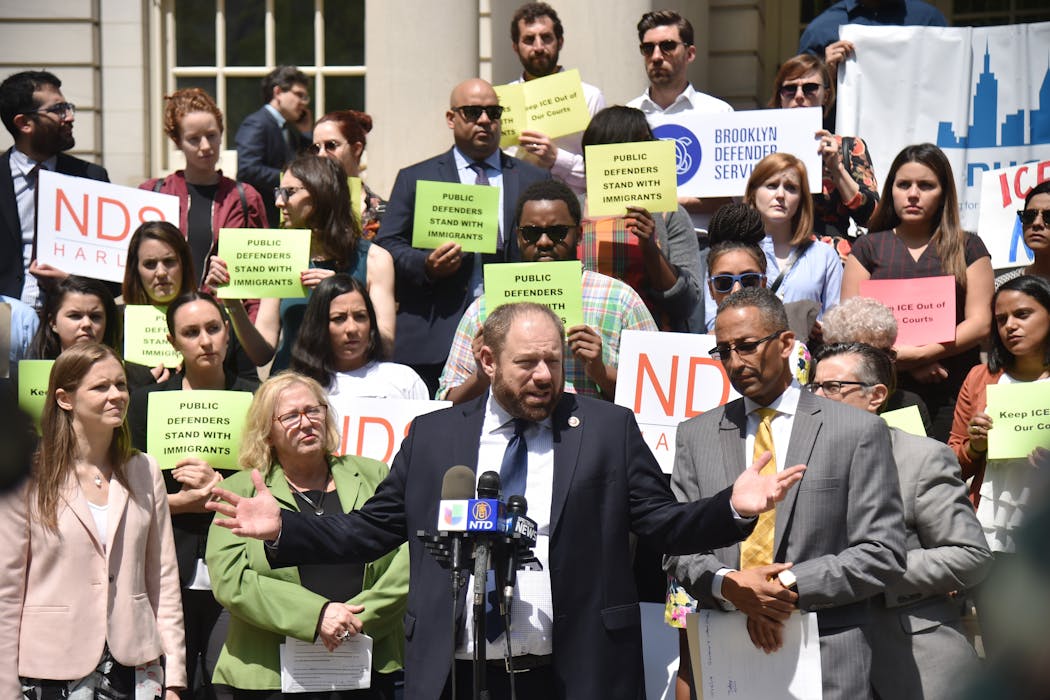
New York City Council member Rory Lancman is surrounded by public defenders at a 2018 press conference, where he demanded the prohibition of ICE arrests in all courthouses except when authorized by a judicial warrant. Hector Retamal/AFP via Getty Images

The Oregon Supreme Court on Feb. 5, 2026, issued a ruling that will have a wide impact. More than 1,400 criminal cases had to be dismissed, the justices ruled, due to lack of adequate counsel available for defendants.

Like other states, Oregon must provide defendants with legal representation if they cannot afford attorneys on their own. But Oregon has less than one-third of the attorneys it needs to provide adequate defense for indigents, or people who can’t afford counsel on their own.

Shortages of this scope are common around the country. Pennsylvania faces a similar shortage of about 30% of the public defenders it needs, with insufficient numbers of attorneys in nearly every county. New Mexico needs 67% more attorneys to provide effective counsel. Kansas needs 277 more public defenders, or roughly triple its current number.

As public policy researchers who study legal defense issues, we believe it’s clear that such shortages have repercussions throughout the criminal justice system.

Without enough lawyers providing indigent defense, defendants sit in jail longer, plead without guidance and risk wrongful convictions. Prosecutors face delays in clearing their cases. Court dockets slow, costs rise and public trust declines.

In other words, indigent defense shortages harm not only defendants but the justice system as a whole.

Rights to an attorney

The Sixth Amendment guarantees individuals facing criminal charges the right to defense counsel, at government expense if required. This right was clarified by a landmark Supreme Court case in 1963, Gideon v. Wainwright. The court ruled that states are required to provide attorneys to defendants who cannot afford an attorney.

About 80% to 90% of state defendants and more than 90% of federal defendants cannot afford a lawyer. The exact rate varies by state, year and type of charge, but it generally falls well above 50% of all criminal cases.

A woman wags her finger while addressing a man at close range.
Public defender Gordon Weekes, right, represented Nikolas Cruz, who was convicted in 2022 for a mass shooting in Parkland, Fla., four years earlier.
South Florida Sun Sentinel/Amy Beth Bennett via AP

Fulfilling the promise made in Gideon often falls to public defenders and private lawyers appointed by courts. Sixty-three years after the decision, the pool of lawyers willing to fulfill this promise is rapidly shrinking, aging and is overburdened, with lawyers sometimes working without pay.

Texas reflects this national problem. There are too few lawyers handling too many cases, putting the whole criminal justice system at risk. In a research report for the Texas Indigent Defense Commission, our team at Texas A&M University found that the state lost 1,345 attorneys who had been handling indigent defense cases between 2014 and 2023, or about one-fourth of all such attorneys. That decline happened even as the total number of lawyers in Texas grew by more than 25,000.

The problem is worse in rural areas, where judges cannot find enough attorneys to appoint, slowing court operations. In Texas, 27% of attorneys in rural counties are already overburdened and exceeding recommended caseload guidelines.

“I understand the irony of a prosecutor advocating for money for a public defender office, but at the end of the day it would help the county carry out its constitutional obligation,” Val Verde County prosecutor David Martinez told the Texas Tribune. “It would save the county hundreds of thousands of dollars in the long run.”

Fewer attorneys available

This problem is not new. A 2004 report from the American Bar Association outlined funding shortages that hampered hiring of defense counsel, leading to inexperienced and sometimes incompetent lawyers handling excessive caseloads.

But the problem has accelerated since the COVID-19 pandemic and its disruption of the labor market.

Our research shows that attorneys who take indigent defense cases often do so out of a strong sense of civic duty and commitment to public service. Attorneys are asked to do far more than just apply the law. They regularly help clients navigate housing, transportation, substance use and mental health needs. Without a strong sense of calling, many attorneys choose other areas of practice instead of public defense.

Some attorneys with a sense of motivation are still unable to join public service. Citing the cost of repaying law school loans, they enter private practice instead.

No simple solutions

The shortage of attorneys willing to take indigent defense cases is a serious policy problem. Solving it requires expanding the pool of attorneys who are available to take these cases – both the attorneys who are practicing today and the attorneys who will enter the profession in the future.

In a courtroom, a tattooed man sits while his attorney stands beside him.
Nick Reiner appears with deputy public defender Kimberly Greene during his arraignment in Los Angeles on Feb. 23, 2026. The son of U.S. movie director Rob Reiner pleaded not guilty to the fatal stabbing of his parents.
AFP/Chris Torres via Getty Images

Policymakers have mainly focused on expanding the pool of existing attorneys. The most common tools include increasing appointment fees, offering additional financial incentives and creating or expanding public defender offices.

These approaches can help in the short term, but their effects are limited. Raising fees rarely brings new attorneys into indigent defense; instead, it often lures attorneys from neighboring jurisdictions that already face shortages.

Raising fees for private lawyers also fails to address public defender offices, where attorneys are salaried and often paid less than prosecutors. Loan forgiveness programs can help recruitment and retention; research shows they matter for public service careers, but these programs are uneven across states and uncertain over time.

Financial incentives alone will not solve a workforce problem rooted in supply. A sustainable solution requires expanding the pool of prospective attorneys. We believe it would help for recruitment to begin much earlier, at the high school level, especially in rural areas, and continue through college and law school.

Current efforts tend to focus only on law students who are already committed to legal careers. Partnerships between counties, state agencies, bar associations, universities and community organizations could help build pipelines leading to public defense careers. They might offer, for example, internships and mentoring, or reduce barriers for students who want to serve their communities.

Expanding the pool of attorneys will require years of coordinated investment across states, counties, courts, law schools and the legal profession. Short-term incentives can prop up overburdened systems, but long-term recruitment will be needed to keep courts functioning and fully protect the constitutional right to counsel.

The Conversation

Georges Naufal has received funding from the Texas Indigent Defense Commission.

Emily Naiser has received funding from the Texas Indigent Defense Commission.

ref. Public defender shortage is leading to hundreds of criminal cases being dismissed – https://theconversation.com/public-defender-shortage-is-leading-to-hundreds-of-criminal-cases-being-dismissed-275534

Stressed out by politics? You’re not imagining it, and research shows that social media is largely to blame

Source: The Conversation – USA – By Stephen Neely, Associate Professor of Public Affairs, University of South Florida

Around 17% of American adults – roughly 44 million people – reported losing sleep over politics in 2024. MDV Edwards/iStock via Getty Images Plus

Does politics stress you out? Did the last election cause you to lose sleep, lose your temper or lose a friend? If so, you weren’t alone.

For the better part of two decades, the American Psychological Association has documented a steady increase in the phenomenon of “political stress” among American voters. However, research and reporting during that same period have focused primarily on the political consequences of increasing polarization and division rather than the psychological consequences of the modern political climate.

As a political scientist studying how the public engages with politics and media, I wondered: What does it mean to live in a political environment that is highly confrontational, emotionally charged and difficult to escape? And how does that environment affect people over time?

During the 2024 presidential election, I teamed up with three colleagues to answer those questions. Our book, The Anxious State: Stress Polarization, and Elections in America, published in January 2026, summarizes what we learned.

While several features of the modern political landscape contribute to political stress, one culprit in particular is alarmingly efficient at converting politics into chronic stress – social media.

Social media algorithms are designed to feed you content that provokes strong emotional reactions in order to keep you scrolling, clicking, commenting and sharing.

Political stress builds fast

We conducted four large, nationally representative surveys tracking Americans’ political attitudes and well-being, one every three months over the course of 2024. Across our election year surveys, roughly 4 in 10 American adults consistently reported that politics had caused them to experience at least one significant stress reaction in the past month. These included nontrivial conflicts with friends and family, sleep disruptions, lost tempers and being unable to mentally or emotionally disengage from politics.

In a country of roughly 260 million adults, that amounts to well over 100 million people experiencing measurable political stress in any given month.

In just one example, at each point in 2024, around 17% of American adults reported losing sleep over politics. This translates to roughly 44 million people nationwide. Sleep loss is not a trivial inconvenience. Extensive research shows that insufficient sleep is associated with impaired cognitive function, chronic health problems, diminished productivity and an increase in traffic accidents, just to name a few.

Our findings point to similar trends from the effects of lost tempers, fractured social networks and excessive political rumination. And while some degree of political stress might be expected in the lead-up to a highly consequential election, what surprised us most was how little these numbers changed over time. Despite a year filled with dramatic political events, reported levels of political stress rarely budged.

This stability suggests that political stress is no longer driven primarily by isolated moments of breaking news or electoral upheaval. Instead, it appears to be sustained by the environment in which people now encounter politics – and that environment is increasingly shaped by social media.

Why social media is different

Social media differs from earlier forms of political communication in a crucial way: Content is not presented chronologically or editorially; it is presented algorithmically. Platforms such as Facebook, X and TikTok are designed to maximize attention and engagement, which means they privilege content that provokes strong emotional reactions.

In other words, content that causes outrage, fear, moral condemnation and conflict is simply more likely to keep users scrolling, clicking, commenting and sharing.

As a result, political information on social media is more likely to reach people through a sensationalized and emotionally charged lens than information encountered through traditional news sources. And given the architecture of social networks, this content tends to reach users whether they seek it out or not.

Time spent online is stressful, but engagement makes it worse

Our findings show that even passive exposure to political content on social media is linked to elevated political stress. But active engagement – such as likes, reposts and comments – makes the problem substantially worse.

People who reported frequently encountering, commenting on or sharing political content online consistently exhibited the highest overall levels of political stress in our survey. Compared with those who primarily consumed political information passively and without engaging, active participants were far more likely to report losing sleep, losing their temper and feeling unable to disengage from politics.

In other words, the more that social media turns users from observers into participants in political conflict, the greater the psychological toll appears to be.

A generational divide

These effects, while substantial, were not distributed evenly across the population.

Younger Americans, particularly members of Gen Z, reported higher levels of political stress associated with social media use than older cohorts. This is not especially surprising. Younger adults are more likely to rely on social media as a primary source of political information.

For a generation that has never known a political environment without algorithmically curated feeds, the boundary between politics and everyday life is especially thin. Politics does not arrive at scheduled times, through discrete channels. Rather, it is interspersed with expressions of social identity, entertainment and peer interaction. And this constant exposure comes with a psychological cost.

Social media alone certainly isn’t to blame for the anxious and divisive state of America’s political climate. In our research, we identified a number of factors that contribute to Americans’ current levels of exhaustion with politics, including sharp increases in partisan hostility and negative – often uncivil – campaign tactics.

But social media nonetheless stands out for how efficiently it amplifies this stress – and that is unlikely to change unless and until voters become more aware that their emotions and well-being are being negatively influenced by the very platforms they turn to for information and connection.

The Conversation

I don’t own or “work for” the publisher selling our recent book, but the exposure for these data would presumably benefit both they and me.

ref. Stressed out by politics? You’re not imagining it, and research shows that social media is largely to blame – https://theconversation.com/stressed-out-by-politics-youre-not-imagining-it-and-research-shows-that-social-media-is-largely-to-blame-274849

Hay fever season is coming – here’s how to get ahead of symptoms

Source: The Conversation – UK – By Christine Loscher, Professor of Immunology, Dublin City University

Hayfever season typically runs from March to October. PeopleImages/ Shutterstock

Spring is just around the corner. While many look forward to the warmer weather after the long winter months, others may be filled with dread as spring marks the start of hay fever season. If this is you, the good news is there are plenty of things you can do ahead of hay fever season to make symptoms more manageable.

Hay fever affects roughly one in four UK adults. Symptoms are caused by three different types of pollen: tree, grass and weed pollen. As hay fever season typically runs from March to September, this means that specific types of pollen are responsible for symptoms at different times.

The early part of the season is dominated by tree pollen. Mid-season, symptoms are caused by grass pollen and by late season it’s weed pollen. But regardless of the type of pollen, the hay fever symptoms they cause are the same.

In people who suffer from hay fever, the immune system wrongly interprets the presence of pollen to be dangerous and so it mounts an immune response. This involves the generation of antibodies – specialised proteins produced by the immune system to target pollen.

The specific antibody the immune system creates in response to pollen is called immunoglobulin E (IgE). These antibodies specifically activate specialised immune cells called mast cells, which release histamine – the substance that causes all the pesky hay fever symptoms. Those symptoms can range from mild to debilitating and so can really affect the quality of life for lots of people.

Preventing hayfever symptoms

The most common hay fever treatment are antihistamines, which are available over the counter. These work by neutralising the effects of the histamine that is released by the mast cells.

While most people only take antihistamines as soon as symptoms start, it’s actually a good idea to begin using them as soon as pollen counts begin to increase – even before you have full-blown symptoms. You should also begin using them everyday, regardless of the pollen count or your symptoms.

The main reason for this is because while antihistamines can block the effects of the histamine being released, they cannot prevent its release. In other words, antihistamines only treat the symptoms and not the allergic reaction. As long as the exposure to pollen remains, your immune system is still driving the production of histamine.

But research shows that taking antihistamines before pollen exposure can decrease the expression of the histamine receptor. As histamine works by binding to this histamine receptor, blocking the receptor’s expression can effectively decrease hay fever symptoms.

While antihistamines are the most effective way of treating hay fever symptoms, steroid nasal sprays can also be very effective in minimising symptoms.

Steroids block inflammation. Given hay fever is an allergic response which drives inflammation, these sprays suppress that inflammation – thereby decreasing symptoms.

A man sitting in a grassy field uses a nasal spray.
Daily use of steroid nasal sprays may also help reduce symptoms.
Altrendo Images/ Shutterstock

Using a steroid nasal spray daily for a few weeks before the season starts is a useful way to prepare. Research even shows that using a nasal spray before pollen exposure can reduce allergy symptoms.

Reducing symptoms

A key factor in how bad your hay fever gets is your exposure to pollen. While it’s almost impossible to avoid pollen when going outdoors during hay fever season, it’s possible to minimise your exposure. This can lessen your symptoms and make hay fever more manageable.

This involves making changes to your environment, such as installing pollen filters in your car and air filters in your home.

Washing bedding and soft furnishing more often can be effective too, as pollen can easily attach to these surfaces. You can also try using anti-allergy pillows and duvets. These use tightly-woven fabrics and often chemical treatments to create a physical barrier, preventing pollen from settling inside the pillow and causing nighttime allergic reactions.

Avoid opening windows on days when the pollen count is high to prevent pollen coming into your home. It may also be worthwhile to avoid bringing outside clothes into your bedroom to help minimise nighttime exposure to pollen.

Allergies can be worse at nighttime for several reasons – including the fact that daytime pollen has transferred to bedding from your skin and hair. Lying down also increases congestion and causes mucus to pool in the sinuses. Lastly, the body produces more histamine at night, worsening the symptoms.

When outdoors, wearing wraparound sunglasses may help prevent pollen from triggering symptoms. Tying your hair up when outdoors may also help prevent some pollen being tracked back into your home. It’s also worth avoiding areas with high pollen trees and plants when the pollen count is particularly high. Birch, oak and cedar trees are particularly high in pollen, as well as daisies and sunflowers.

Unfortunately, it’s impossible to completely avoid pollen during the dreaded hay fever season. But it is possible to get ahead of hay fever symptoms by starting treatment before the season begins.

The Conversation

Christine Loscher does not work for, consult, own shares in or receive funding from any company or organisation that would benefit from this article, and has disclosed no relevant affiliations beyond their academic appointment.

ref. Hay fever season is coming – here’s how to get ahead of symptoms – https://theconversation.com/hay-fever-season-is-coming-heres-how-to-get-ahead-of-symptoms-275478

From kneecap necklaces to umbilical cord keepsakes: the risks of keeping and consuming human tissue

Source: The Conversation – UK – By Adam Taylor, Professor of Anatomy, Lancaster University

Some parents keep their baby’s umbilical cord as a sentimental keepsake after birth pu_kibun/Shutterstock

Celebrity outfits and endorsements often dominate social media, but Elton John recently drew attention for a very different reason. The musician has been spotted wearing jewellery made from his own kneecaps.

After a double knee replacement in 2024, he asked his surgeon if he could keep his patellae, the bones at the front of the knee, and later worked with jeweller Theo Fennell to turn them into wearable pieces.

While jewellery made from kneecaps is unusual, it raises a broader question: what happens to tissue once it leaves the body, and why do some people want to keep it?

Elton is not alone in wanting to hold on to parts of the body. Many people keep baby teeth or their children’s first lost tooth as sentimental objects. Social media is also full of stories about people preserving removed tonsils, adenoids, an appendix, or a newborn’s umbilical stump. Some of these are biologically inert keepsakes. Others carry medical and safety considerations.

In most cases, tissue removed during surgery is handled very differently. It is usually sent to a laboratory for testing, known as pathology, to confirm a diagnosis or check for disease. After that, it must be disposed of safely as clinical waste because it can carry biological risks. It is now relatively uncommon for patients to keep surgically removed tissue.

Handling human tissue can pose risks, especially for professionals working in operating theatres or pathology labs with unfixed tissue. “Unfixed” means the tissue has not been treated with chemicals to preserve it and kill microbes. Healthcare staff who use needles or sharp instruments are particularly vulnerable to exposure to blood-borne viruses such as hepatitis or HIV. Depending on the source, other pathogens may also be present, for example respiratory microbes in lung tissue.

Some keepsakes fall somewhere between harmless and medically relevant. Parents sometimes keep the umbilical stump after a baby is born. This small piece of tissue dries up and falls off naturally, usually within the first couple of weeks. If it is not kept clean and dry, it can become infected with a condition called omphalitis, meaning inflammation and infection of the stump.

Placenta

The most debated example of keeping human tissue comes after childbirth. Following delivery of the baby, the placenta is also delivered. This temporary organ connects the developing foetus to the uterus and acts as an interface for exchange of oxygen, nutrients and waste products between mother and baby, while keeping their blood supplies separate to prevent immune rejection and blood incompatibility.

Some people choose not only to keep the placenta but to consume it, a practice known as placentophagy. The idea comes from the belief that because the placenta nourishes the foetus during pregnancy, it must contain nutrients that can help the mother recover after birth. During pregnancy, nutrients such as calcium are transferred to the developing baby, and mothers can lose close to 4% of their bone mineral density. However, most nutrients stored in the placenta have already been passed to the foetus before birth.

Claims about the benefits of placentophagy are not strongly supported by scientific evidence. The nutrients present in placental tissue can generally be obtained through a balanced meal. Research in animal models has shown some positive effects, and similar findings have been reported in those studies, but these results have not been reproduced in humans.

People consume the placenta in various ways. It may be blended raw into smoothies, cooked into foods such as lasagne, steeped in high-strength alcohol to create a tincture, or dried and made into capsules, which is the most common approach, known as encapsulation.

Health risks

But there are also potential health risks. The placenta contains elevated levels of oestrogen, and high concentrations of this hormone in the bloodstream can increase the risk of thromboembolism, a condition in which blood clots form and travel through the circulation.

The placenta also acts as a filter during pregnancy, limiting the transfer of certain substances to the baby. Studies show that some heavy metals and other ions can accumulate in placental tissue, meaning levels may be higher in the placenta than elsewhere in the body.

In 2017, the CDC reported a case in which a baby developed repeated infections with group B Streptococcus agalactiae, a bacterium commonly found in the gut or vagina. Investigators traced the source of the infection to the mother consuming placenta capsules contaminated with the same bacterium. The process used to produce capsules reduces bacterial levels but does not completely remove them in all cases. Eating the placenta raw carries even greater risks, including exposure to bacteria such as E.coli.

Many animals eat their placentas after giving birth, largely to remove evidence that could attract predators and to reclaim nutrients. For humans, those same nutrients are easily obtained from a normal diet, and the medical benefits remain uncertain. At present, more robust studies are needed to determine whether placentophagy offers any genuine health advantages.

Whether transformed into jewellery, kept in a memory box or blended into a smoothie, once tissue leaves the body it moves from the personal and sentimental into the medical and biological. The meanings people attach to it vary widely, but the scientific questions about safety, benefit and risk remain the same.

The Conversation

Adam Taylor does not work for, consult, own shares in or receive funding from any company or organisation that would benefit from this article, and has disclosed no relevant affiliations beyond their academic appointment.

ref. From kneecap necklaces to umbilical cord keepsakes: the risks of keeping and consuming human tissue – https://theconversation.com/from-kneecap-necklaces-to-umbilical-cord-keepsakes-the-risks-of-keeping-and-consuming-human-tissue-276470

What oil, stocks and bonds are telling us about the Iran conflict and how long it might last

Source: The Conversation – UK – By Daniele D’Alvia, Lecturer in Banking and Finance Law, Queen Mary University of London

When a conflict escalates, financial markets respond within minutes. That reaction is not just panic or speculation – it is a kind of collective judgement about what might happen next.

Tensions involving the US, Israel and Iran triggered a sharp jump in oil prices when Asian markets opened on Monday (rising by as much as 13% amid fears of supply disruption). Major Gulf indices fell steeply, and in some cases trading was suspended amid volatility.

At the same time, investors moved into so-called “safe-haven” assets. Gold prices rose, and demand increased for traditionally defensive currencies such as the US dollar and Swiss franc.

This may sound like distant noise or random financial moves. In reality though, it is one of the clearest signals we have about how serious investors think the situation with Iran could become.

Markets are forward-looking. They do not only react to what has happened – they try to price what they expect will happen. Here’s how to read the signals.

Oil: the first warning light

Oil is usually the first market to move during Middle East tensions. That is because the region plays a crucial role in the global supply of energy. A particular point of concern is the strait of Hormuz, a narrow shipping route through which roughly a fifth of the world’s oil exports pass.

When oil prices jump, it does not mean supply has already stopped. It means traders believe there is a higher risk that supply could be disrupted.

Think of it like insurance. If the risk of damage rises, the price of insurance goes up immediately – even if no damage has yet occurred. Oil markets work in a similar way. Prices reflect the probability of trouble.

Why does this matter? Because oil affects almost everything. Higher oil prices push up fuel costs. Fuel affects transport. Transport affects food prices and goods on supermarket shelves. If oil remains expensive for weeks or months, it can push inflation higher.

So when oil spikes, markets are signalling that they see real economic risk – not just political drama.

At present, the scale of the oil move suggests markets are seriously reassessing the probability of disruption. The crucial question is persistence. If prices stabilise quickly, investors may believe escalation will be contained. If they remain elevated, markets are signalling expectations of prolonged instability.

Bonds: investors looking for safety

The second place to look is the bond market. A bond is essentially a loan. When you buy a government bond, you are lending money to a government in exchange for interest. US government bonds (Treasuries) are widely seen as one of the safest investments in the world.

In times of uncertainty, investors often move their money into these safer assets. This is known as “flight to safety”. When many people buy bonds at once, bond prices go up and their yields (the interest rate that is paid) go down.

You don’t need to follow bond charts every day to understand the message. If investors are accepting lower returns just to keep their money safe, it tells us they are worried.

If oil prices are rising while investors are piling into safe government bonds, markets may be signalling two concerns at the same time: higher short-term prices and weaker economic growth ahead. That is a difficult combination for any economy. Bond markets, in other words, are measuring anxiety.

Stock markets: how long will this last?

Stock markets reflect confidence in companies and economic growth. When shares fall sharply, it often means investors expect profits to be squeezed or business conditions to worsen. But the key issue is duration.

If stock markets fall briefly and then stabilise, investors may believe the conflict will be contained. If losses spread and persist, it suggests markets expect a longer or more disruptive episode.

Markets are not predicting headlines. They are estimating how long uncertainty might last and how deeply it might affect trade, energy supplies and consumer confidence.

Modern financial markets are highly interconnected. A shock in one region can ripple quickly across continents because supply chains, investment funds and large companies operate globally. That is why even a regional conflict can affect pension funds and savings accounts elsewhere.

Equity markets are not judging politics. They are estimating economic consequences.

What this means for markets – and for the conflict

Taken together, oil, bonds and equities provide a temperature check of expectations. Right now, markets are clearly pricing higher geopolitical risk. The sharp initial oil move shows concern about supply. The shift towards safer assets signals caution. Equity volatility reflects uncertainty about the duration of the conflict.

However, markets are not yet behaving as though they expect a systemic global crisis. We are seeing repricing – not collapse. That distinction matters.

As a finance expert, I believe markets are acting as early warning systems. If escalation of the conflict threatens to cause sustained disruption to energy infrastructure or shipping routes, we would expect the oil price to stay elevated, continued safe-haven flows and broader equity declines.

That would tighten financial conditions globally because higher energy prices push up inflation, falling stock markets reduce household wealth and confidence, and increased demand for safe assets raises borrowing costs for business and governments. In other words, credit becomes more expensive, investment decisions are delayed and consumers become cautious. This could slow economic growth.

If, however, tensions stabilise or de-escalate, markets may reverse quickly. Financial systems adjust rapidly when perceptions of risk change.

The broader implication is that modern conflicts transmit economic effects almost instantly through markets. Even before physical supply chains are interrupted, expectations alone can influence inflation, investment and policy decisions.

Markets do not determine the course of a conflict. But they shape the economic environment in which political decisions are made. For now, they are signalling caution – not panic. Whether that caution turns into something more severe will depend less on today’s headlines and more on whether disruption proves temporary or structural. That is what investors are watching. And it is what we should be watching too.

The Conversation

Daniele D’Alvia does not work for, consult, own shares in or receive funding from any company or organisation that would benefit from this article, and has disclosed no relevant affiliations beyond their academic appointment.

ref. What oil, stocks and bonds are telling us about the Iran conflict and how long it might last – https://theconversation.com/what-oil-stocks-and-bonds-are-telling-us-about-the-iran-conflict-and-how-long-it-might-last-277326

Why science GCSEs matter more than we think in a post-truth age

Source: The Conversation – UK – By Sophie Bartlett, Research Associate in Administrative Data Research Wales, Cardiff University

Concerns about living in a “post-truth” society – where evidence struggles to compete with misinformation, ideology and emotion – are now familiar. From vaccine hesitancy to climate change denial, public debates increasingly hinge not on a lack of information, but on how people judge evidence, expertise and uncertainty.

These concerns are often framed as a problem of facts. But a deeper issue may be at play – whether people have the skills to weigh competing claims, understand uncertainty and decide what counts as good evidence. Our new research suggests that science education could play a far bigger role in shaping those skills than is usually recognised.

Many philosophers and educationalists have argued that education plays a central role in preparing citizens to navigate an uncertain world. Today, organisations such as Unesco, the UN body for education, science and culture, are grappling with how schools and universities can respond to rising misinformation and declining trust in expertise. Higher education institutions and academics are attempting to find practical solutions to this challenge. Public concern often focuses on people rejecting scientific conclusions outright.

But the deeper challenge is epistemic: difficulty judging what counts as good evidence, how confident we should be in claims and when disagreement is legitimate rather than conspiratorial.

Our findings suggest science education – even for students who go on to study non-science subjects – may be crucial in shaping these abilities.

Using linked administrative data from more than 8,000 pupils in the UK, we examined achievement in GCSE science at age 15. We then looked at how this related to outcomes in the six most popular post-16 subjects: maths, biology, history, chemistry, English literature and physics.

Some results were expected. Students who achieved the equivalent of an A or A* in GCSE science were significantly more likely to go on to gain strong grades in science A-levels. But what surprised us was how far this effect extended beyond science.


Read more:
Post-truth politics and why the antidote isn’t simply ‘fact-checking’ and truth


High-achieving GCSE science students were more likely to achieve higher grades in every one of the six subjects we studied, including humanities. Even more strikingly, GCSE science turned out to be a stronger predictor of later success in history and English literature than GCSE maths. It was also a stronger predictor of success in history than GCSE English language (or Welsh language in Wales).

That matters because GCSE English language and maths are routinely used as determinants for post-16 education. Science rarely is. For decades, maths and English have been treated as the foundations of academic progress and employability. Science, by contrast, has often been justified mainly in economic terms – as a way to produce future scientists and fuel innovation.

Our findings suggest something broader is going on.

What is science education really doing?

Science education appears to be doing more than teaching just subject knowledge. It seems to help develop transferable ways of thinking that support learning across disciplines.

Educational researchers have long argued that science classrooms cultivate skills such as evaluating evidence, reasoning about cause and effect, handling uncertainty and distinguishing claims from data. In a world shaped by science and technology, these abilities increasingly matter in almost every career, and in everyday civic life.

Success in science at age 15 seems to signal – or help build – forms of reasoning that support later achievement. These skills matter in subjects like history and English, where students must weigh sources, construct arguments and interpret complex information.

This fits with wider research showing that scientific reasoning is linked to better judgement of misinformation. It is also associated with a stronger grasp of risk and probability, and a more nuanced engagement with expert disagreement. In a post-truth context, these skills may be just as important as subject-specific knowledge.

Implications for a post-truth society

This has implications for how science is taught and defended. If science education really does foster transferable ways of reasoning, curricula that prioritise experimentation, argumentation and uncertainty may matter more.

So too does teaching the nature of scientific knowledge, rather than relying on rote learning. Reducing science to memorisation risks stripping away precisely the features that seem to deliver long-term benefits.

Our findings also raise broader questions. How explicitly are these forms of reasoning made visible to students? Are assessments capturing them? And could non-science subjects draw more directly on the epistemic practices that science helps to cultivate?

Science education may need to do more to articulate its connections to other disciplines. History, English and other subjects may benefit from making shared ways of thinking more explicit.

In an increasingly polarised, misinformation-rich public sphere, the value of science education should not be judged solely by how many future scientists it produces. Our research suggests its influence is wider and longer-lasting: helping young people develop tools for thinking that support learning and judgement across many areas of life.

If we are serious about addressing the challenges of a post-truth society, science classrooms may be one of our most important – and underappreciated – starting points.

The Conversation

Sophie Bartlett receives funding from the Economic and Social Research Council (ESRC), grant reference: ES/W012227/1, and is part of Administrative Data Research (ADR) Wales.

Chris Taylor receives funding from ESRC (Grant number ES/W012227/1) and Welsh Government.

ref. Why science GCSEs matter more than we think in a post-truth age – https://theconversation.com/why-science-gcses-matter-more-than-we-think-in-a-post-truth-age-276306

Can flashing light alter your mind? The science of stroboscopic stimulation

Source: The Conversation – UK – By Katie Edwards, Commissioning Editor, Health + Medicine and Host of Strange Health podcast, The Conversation

Sergiy Katyshkin/Shutterstock

Light therapy sounds wholesome. Clean. Almost pastoral. Sit in front of a lamp. Feel better.

In our latest episode of the Strange Health podcast, we discovered that it can also mean strapping on a flashing mask and watching your own brain generate kaleidoscopic hallucinations behind closed eyelids.

The spark for this episode was a stroboscopic light device called the Lumenate Nova, promoted on social media by celebrities including Jennifer Aniston and Rosamund Pike, who serves as the brand’s creative director and is also an investor. The device claims to use carefully timed pulses of light to guide users into altered, meditative states, described by the company as “sober tripping”.

I was sceptical but gave it a go. “Sober tripping” sounded like a level of experimentation I could live with.

After watching what looked like brightly coloured fireworks, I eventually felt as if I were surrounded by a mountainscape, basking in a warm ray of sunshine coming from the left side of my vision. I had to remind myself I was on my sofa in Doncaster at 7pm. There was no sun.

The visions quietened my usually chatterbox brain. For 15 minutes, that alone felt like relief.

So what is actually happening? Stroboscopic light delivers rhythmic pulses that pass through the eyelids and stimulate the retina. When those flashes align with rhythms the visual system naturally oscillates at, including alpha-range activity, signals in the visual cortex begin to synchronise with the pattern. The result can be surprisingly vivid: spirals, tunnels, lattices, shifting colours and, for some people, more complex scenes with recognisable shapes and places.

The brain is constantly predicting what it expects to see. It breaks visual input into edges, colour and movement, then rebuilds it into the seamless scene we experience. When rhythmic light disrupts those patterns, the brain tries to make sense of the signals. Sometimes that means geometry. Sometimes it feels like landscapes.

We spoke to David Schwartzman, a research fellow at the Sussex Centre for Consciousness Science at the University of Sussex, who has been studying these effects for more than a decade. He describes stroboscopic hallucinations as a controllable way to explore how the brain constructs visual experience. They offer a glimpse of the underlying machinery of perception rather than a treatment in themselves.

Interest in stroboscopic light is not new. In 1819, the Czech anatomist Jan Purkyně described geometric patterns seen when moving his fingers in front of a candle with eyes closed. In the 1960s, artists Brion Gysin and Ian Sommerville built the “Dreamachine”, a spinning cylinder designed to induce altered states without drugs.

More recently, a large public installation called Dreamachine toured the UK in 2022, allowing tens of thousands of people to lie inside a purpose-built structure and experience synchronised light and sound. Participants reported everything from gentle patterning to overwhelming geometric worlds.

But what about the health claims? The phrase “light therapy” now covers very different technologies. Some regulate sleep and mood. Others aim to alter perception itself. Bright light therapy is well established for seasonal affective disorder (SAD). Used correctly, typically in the morning at prescribed intensities, it can help regulate circadian rhythms and improve mood in some people. That is different from stroboscopic stimulation, which targets visual perception rather than sleep-wake cycles.


Read more:
How light can shift your mood and mental health


Research into strobe-based interventions for depression is ongoing. Early studies are exploring safety, tolerability and whether the immersive experience might influence mood in ways researchers are beginning to compare with psychedelic-assisted therapy. It is promising, but not yet a standard treatment.

There are also experimental trials using 40 hertz flickering light in Alzheimer’s disease, based on the idea that synchronising brain rhythms could influence disease processes. This approach remains in clinical testing and is not an established therapy.

There are risks. Flashing lights can trigger seizures in people with photosensitive epilepsy, although only a small proportion of people with epilepsy are photosensitive. Even in people without epilepsy, intense exposure can cause discomfort, headaches or nausea. Dose, brightness and individual sensitivity matter. People with epilepsy or migraine disorders may be advised to avoid stroboscopic devices.

Light can be therapeutic. It can also overwhelm. From SAD lamps to UV treatment for psoriasis and neonatal jaundice, light is powerful biology, but it is not automatically benign.

Strange Health is hosted by Katie Edwards and Dan Baumgardt. The executive producer is Gemma Ware, with video and sound editing for this episode by Anouk Millet. Artwork by Alice Mason.

Listen to Strange Health via any of the apps listed above, download it directly via our RSS feed or find out how else to listen here. A transcript is available via the Apple Podcasts or Spotify apps.

The Conversation

David Schwartzman receives funding from the Medical Research Council (UKRI083) and was partly supported by a grant from the UK Government for his participation in the Dreamachine Programme, as part of Unboxed2022. Katie Edwards received a Lumenate Nova device as a PR sample for editorial use in this episode.

Dan Baumgardt does not work for, consult, own shares in or receive funding from any company or organisation that would benefit from this article, and has disclosed no relevant affiliations beyond their academic appointment.

ref. Can flashing light alter your mind? The science of stroboscopic stimulation – https://theconversation.com/can-flashing-light-alter-your-mind-the-science-of-stroboscopic-stimulation-276034

Too close to Trump: How Indonesian President Prabowo gambles sovereignty, humanity for US’ approval

Source: The Conversation – Indonesia – By Karina Utami Dewi, Dosen Jurusan Hubungan Internasional, Universitas Islam Indonesia (UII) Yogyakarta

Indonesian President Prabowo Subianto and US President AS Donald Trump at a conference room at the International Congress Centre, Sharm El-Sheikh, Egypt on Oct. 13, 2025. Muchlis Jr/Biro Pers Sekretariat Presiden, CC BY

The Indonesian public has grown increasingly uneasy with President Prabowo Subianto’s foreign policy pivot toward the United States. From Indonesia’s decision to join the Board of Peace (BoP) initiated by Donald Trump to the signing of the Agreement on Reciprocal Trade (ART) on February 19, 2026, the trajectory is clear: Jakarta is tilting towards Washington at a cost many fear will be borne by ordinary Indonesians.

Prabowo once framed his diplomacy as rooted in resilience, autonomy, and national interests. However, in practice, his recent manoeuvres suggest a readiness to align closely with Trump’s agenda, even if it means diluting Indonesia’s bargaining position.

Prabowo’s efforts to draw Indonesia closer to the US under the Trump’s administration raise serious doubts about his underlying motives. Rather than clearly advancing long-term national interests, these efforts appear driven by transactional calculations and short-term gains.

Rehabilitating personal image at the public expense

Prabowo was barred from entering the US for a decade over alleged human rights violations tied to 1998. The ban was lifted in 2020 when he served as Indonesian Defence Minister during which Trump first served his tenure.

The lifting of the ban drew harsh criticism from human rights groups such as Amnesty International for providing impunity over the violations he was accused of. It was also condemned by prominent US lawmakers like Senator Patrick Leahy, author of the US human rights legislation known as the Leahy Law, who stated Prabowo was legally ineligible to enter the country.

Indonesia's foreign policy appears to be repurposed as a vehicle to polish Prabowo's international standing.
President Prabowo Subianto and President Donald Trump at the conference hall at the International Congress Centre in Sharm El-Sheikh, Egypt, on Monday, 13 October 2025.
Muchlis Jr/Biro Pers Sekretariat Presiden, CC BY

Today, his closeness to Trump signals more than diplomacy. Rather, it also suggests a personal redemption arc playing out on the global stage – from a figure who was once rejected by Washington to one who now stands shoulder to shoulder with the White House.

Trump’s public praise of Prabowo as a “tough” leader at the BoP Summit was symbolically powerful.

What is unfolding looks less like statecraft and more like image management. Indonesia’s foreign policy appears to be repurposed as a vehicle to polish Prabowo’s international standing.

Trump and Prabowo: transactional power over principles

Trump’s foreign policy stance is defined by transactional deals and loyalty politics, moving far from human rights issues or democratic values, which were previously the main guidelines for his predecessors in conducting foreign policy. Prabowo’s leadership style appears strikingly compatible.

Trade agreement which reduces Indonesia's export tariffs to the US from 32% to 19% could be framed as a quick win for Prabowo
President Prabowo Subianto and President Donald Trump sign a trade agreement on reciprocal tariff in Washington.
Ministry of State Secretary of the Republic of Indonesia, CC BY

In international relations, transactionalism or transactional diplomacy refers to a strategy that prioritises short-term gains and treats statecraft much like a business deal. It favours bilateral over multilateral agreements, with a tendency towards a zero-sum world view, disregarding value-based policy-making and longer-term strategic diplomatic goals.

Eric Jones writes in The Jakarta Post that Prabowo-Trump relationship reflects a “strongman’s mirror” – a psychological and political alignment between two leaders who view power as something personalised, not institutional. Trump relies on loyalty and patronage, while Prabowo appears comfortable with similar transactional logic. Both project a performative, personality-driven style of leadership.

This model could work to Prabowo’s advantage. Under Trump, lingering human rights concerns regarding Prabowo are no longer a diplomatic obstacle. The recent trade agreement, which reduces Indonesia’s export tariffs to the US from 32% to 19%, could even be framed as a quick diplomatic win for Prabowo, in line with transactional diplomacy’s emphasis on tangible, immediate outcomes.

The compatibility between Trump’s and Prabowo’s leadership styles could therefore produce smoother, more flexible ties than if the US were led by an administration that prioritises institutional norms and liberal values.

A risky departure from Indonesia’s free-and-active tradition

Indonesia’s long-standing “free-and-active” (bebas-aktif) foreign policy has defined its identity since independence and emphasised strategic autonomy amid great-power rivalry. For many Indonesians, Prabowo’s alignment with Trump’s transactional approach has drawn criticism and anger, as it signals a shift away from that principle and may erode diplomatic independence.

The decision to join the Board of Peace has also sparked concerns over potentially weakening Indonesia’s position as one of the first countries to support Palestinian independence.

No deals at the cost of sovereignty

Closer ties with the US under Trump’s controversial leadership do not automatically betray Indonesia’s national interest. However, overreliance on transactionalism, at the expense of enduring principles, risks making the relationship volatile. The recent pushback by the US Supreme Court against Trump’s tariff policy shows how quickly US policy can change.

Indonesia’s real strength lies not in personal ties to certain leaders, but in its consistency in maintaining autonomy and balance. Its free-and-active politics is a strategic asset, not a slogan to be traded for short-term legitimacy at the cost of credibility and sovereignty.

The Conversation

Karina Utami Dewi tidak bekerja, menjadi konsultan, memiliki saham, atau menerima dana dari perusahaan atau organisasi mana pun yang akan mengambil untung dari artikel ini, dan telah mengungkapkan bahwa ia tidak memiliki afiliasi selain yang telah disebut di atas.

ref. Too close to Trump: How Indonesian President Prabowo gambles sovereignty, humanity for US’ approval – https://theconversation.com/too-close-to-trump-how-indonesian-president-prabowo-gambles-sovereignty-humanity-for-us-approval-276636

South Africa’s economy is picking up, but hasn’t reached a turning point yet – economist

Source: The Conversation – Africa – By Andrew Robert Donaldson, Senior Research Associate, Southern Africa Labour and Development Research Unit, University of Cape Town

In presenting the 2026 national budget to South Africa’s parliament on 25 February, finance minister Enoch Godongwana characterised this as the turning point in South Africa’s public finances – heralding improved confidence, increased growth and rising infrastructure investment.

For over a decade, the size of the deficit and the rise in public debt have been central themes in the annual budget.

This year, analysts have welcomed the apparent turnaround in the budgetary outlook. Debt has peaked at just under 80% of GDP. And for the first time in a decade, the Treasury projects that interest on debt will increase more slowly than spending on education or health.

This is a transition that goes back to May 2025, when the rand began to strengthen against the US dollar in the turbulence that followed US president Donald Trump’s April tariff announcements. The South African Reserve Bank’s commitment to lower inflation and Parliament’s opposition to value added tax increases reinforced market sentiment that inflation would be kept in check. Around this time, the 10-year government bond yield began an extraordinary decline from its 11% peak to around 8% today.

These are the financial trends that account for the national treasury’s projected decline in debt service costs as a percentage of GDP. It expects these to fall from 5.4% this year to 5.2% in 2028/29.

But for the economic outlook to improve decisively, growth must rise. It is projected to increase, but not by much: 1.4% in 2025 and 1.6% in 2026, and then 2% by 2028. The recovery is still very fragile – gross fixed-capital formation, which should be upwards of 25% of GDP, is just 14%. Unemployment is still above 30% of the labour force. And the budget deficit for the year ahead (the difference between expenditure and revenue) is still uncomfortably high at 4% of GDP.

As an economist, I would argue that, if growth is the metric that counts, this is not yet the turning point that will deliver rising living standards and jobs for all.

Growth depends, in the Treasury’s analysis, on continued implementation of structural reforms, several of which form part of the Presidency’s Operation Vulindlela programme, launched in 2020. These include:

  • electricity sector restructuring

  • modernisation of state transport utility Transnet and logistics networks

  • investment in digital infrastructure and an e-visa system

  • boosting export competitiveness.

The Budget Review presents a summary of progress: 62% implementation of electricity reforms, 33% in transport, 11% in the water sector, 67% in telecommunications, 75% in reform of the visa system.

These initiatives will take time to shift the economic growth outlook.

What still needs to be done

Operation Vulindlela recognises that improvements in state capability are priorities of phase 2 of the presidency’s programme. There is a renewed focus on local government. This includes a proposed shift to a “utility model” for water and electricity services in which these functions will be run “like businesses”, to ensure proper infrastructure maintenance and accountability to the public.

Deterioration in local infrastructure is increasingly evident in water supply, roads and local services in many municipalities.

The Treasury also hopes that the implementation of the Public Service Amendment Bill will lead to improvements in professional standards in government, and particularly in municipalities.


Read more:
South African politicians, not bureaucrats, stand in the way of a professional civil service


Is state capability perhaps the key turnaround needed for an improved growth outlook?

The 2026 Budget Review signals a more robust, interventionist approach of the National Treasury to dysfunctional provincial departments and municipalities.

This will include centralised control of payroll and headcounts, enforcement of financial recovery plans, and stricter conditions attached to financial flows to provinces and municipalities.


Read more:
South Africa’s municipalities aren’t fixing roads, supplying clean water or keeping the lights on: new study explains why


It also includes technological reforms, such as the “smart meters grant programme”. Its aim is to improve billing accuracy and address leaks and illegal electricity connections.

But substantial improvements in state capability will not be achieved by top-down interventions and technology projects alone. Substantial reallocations of state resources are also needed. Simply put, resources must be redirected from unproductive to productive activities.

This is where the Treasury’s “targeted and responsible savings” initiative comes into play. Expenditure reviews have been under discussion for several years; in the 2025 medium term budget policy statement the savings programme was introduced to give this practical effect. The 2026 budget includes R4 billion (US$250 million) a year in identified savings.

That is not enough. It is less than 0.1% of GDP, and just 1.1% of the gap between government expenditure and revenue.

It’s not just that savings must be found if tax increases are to be avoided while lowering the budget deficit. The targeted and responsible savings initiative is also about shifting resources towards the investment, infrastructure maintenance, housing, police and court services that need to be strengthened. A bolder approach is needed. The goal should be R100 billion (US$6.3 billion) a year.

This means a targeted reconsideration of the “architecture” of the state.

What needs to be fixed

Here are some of the dysfunctionalities that must be addressed:

Two-tier local government: District municipalities serve no discernible democratic purpose. Where they provide cross-boundary services, these can be organised as utilities owned by and accountable to their component local municipalities.

Sector Education and Training Authorities (Setas) and the National Skills Fund: Once again, the Treasury has signalled its intent to “review” the skills funding system. Setas should be liquidated and the levy paid to them by employers abandoned. They are costly and inefficient intermediaries. The levy relief would be a benefit to businesses, allowing them to finance training as needed, not subject to one-size-fits-all rules and bureaucratic processes.

The Road Accident Fund: It is more than 20 years since reform proposals were set out for the Road Accident Fund. It has an unfunded liability of around R400 billion (US$25 billion) arising from road accident compensation claims that have yet to be settled. It should be restructured as a capped benefit scheme, with the balance of cover left to insurance providers.

Unemployment Insurance Fund expansion of mandate: The fund is planning to expand its administrative staff from 3,424 in 2024/25 to 11,424 next year. It also intends to expand its activities from payment of unemployment benefits to provision of skills audits, employment subsidies, and enterprise support. Its reported expenditure increased from R26.0 billion in 2024/25 to R48.8 billion in 2025/26. The Treasury should simply say No. It is absurd that public health and education programmes are subject to strict spending controls while a fund administered by the Department of Employment and Labour is allowed free rein.

Southern African Customs Union transfers: Review of the customs union agreement is long overdue. Its formula-based distribution of over R78 billion (US$4.9 billion) to neighbouring countries next year no longer rests on a defensible rationale from either a trade or regional development perspective.

More broadly, the budget reform that is needed is to extend Treasury’s expenditure planning and control systems to cover the 196 public entities that perform statutory functions and rely on fiscal revenue but fall outside the expenditure control limits of the budget process. Public entity boards and executive staff are often paid more than senior departmental officials, their programmes are not subject to Treasury review, and in many cases they hold funds that should properly be controlled by the Treasury.

Tighter expenditure control can in part be done through existing provisions of the Public Finance Management Act. More complete implementation might require fiscal responsibility legislation.


Read more:
South Africa’s debt has skyrocketed – new rules are needed to manage it


The Treasury’s plan for fiscal sustainability is to introduce a principles-based “fiscal anchor” that will require each new administration to table a medium-term plan to ensure that debt service costs do not erode service delivery capability. If the expenditure planning system is not extended to include public entities, this will be a toothless tiger.

A version of this article first appeared on the Southern Africa Labour and Development Research Unit (Saldru) website.

The Conversation

Andrew Robert Donaldson is a former National Treasury official.

ref. South Africa’s economy is picking up, but hasn’t reached a turning point yet – economist – https://theconversation.com/south-africas-economy-is-picking-up-but-hasnt-reached-a-turning-point-yet-economist-277263

Reinterpreting ‘awe’: why cross-cultural emotional intelligence needs to be handled with care

Source: The Conversation – France – By Craig L. Anderson, Professor, HEC Paris Business School

Awe has become a kind of emotional currency in Western wellness circles – revered for its ability to boost mental and physical health and even social interactions. There are findings linking awe to increased prosocial behaviour, curiosity, humility, wellbeing, lower post-traumatic stress disorder (PTSD), and more adaptive physiological profiles. And yet across cultures, awe can provoke veneration and wonder or it can stimulate feelings of dread. What if awe does not travel?

That’s the question posed by a new set of cross-cultural studies that I co-authored with researchers from a wide range of academic institutions. The research offers direct evidence of how awe may not be a universal feel-good emotion.

Using daily emotion diaries and physiological data, we found evidence that while awe may be typically experienced as a positive emotion by people in the US in western contexts, in China, it can be experienced with some fear and tension by people in China.

Our findings challenge the assumption that awe always leads to connection or improved wellbeing – and raises big questions about how awe is used in mental health programmes, leadership training, and marketing around the world.

Awe can feel different across cultures

Psychologists and pioneers in the study of awe, Dacher Keltner and Jonathan Haidt define awe as:

“The feeling of being in the presence of something vast that transcends your current understanding of the world.”

Awe is an emotion we experience when we’re faced with something vast and mind-stretching. But this research shows that while the spark may be the same, how we actually feel can be very different depending on culture.

In two studies, we found awe took on a different emotional flavour, depending on where – and how – it was experienced. In the US, awe was more often accompanied by appreciation and amusement. In China, it came with more fear and signs of emotional pressure.

What is ‘awesome’ among student populations?

The first study was based on more than 2,500 diary entries recording moments of awe or joy among 166 university students in China and the US over a two-week period.

The pattern was clear: Chinese-born students studying in Beijing reported feeling more fear during moments of awe than students born and raised in the US.

But that difference did not show up for experiences of joy, suggesting this mixed emotional response was specific to awe.

Looking at the diary entries, we found that the US students felt more awe in response to nature, monuments, or architecture – 18% of the time, than students in China – just 10%. Chinese participants, on the other hand, were more likely to describe awe linked to other people, making up 59% of their entries versus 50% in the US.

Cultural psychology suggests that compared to the US, China’s culture tends to be more collective and more hierarchical. It is possible that feeling awe toward someone powerful may more often come with a feeling of being smaller or less in control, which could explain the higher number of diary entries relating threat-based awe among Chinese students.

Even shared experiences of awe trigger diverging reactions

To examine if these differences persisted in controlled laboratory settings, in a second laboratory-based study we showed American and Chinese participants the same nature video. The clip, taken from the film Planet Earth featured giant waterfalls and sweeping aerial shots of mountain ranges, all set to orchestral music with no narration. The Chinese students reported more fear than the US students – even though both found the video awe-inspiring. The US students, on the other hand, reported feeling more of the good stuff: appreciation, even a bit of amusement.

The physiological data we collected during the viewing backed up what the students reported. Both groups showed similar signs – such as sweating, which signals emotional arousal and steady breathing patterns. But heart rate told a different story: the US students’ heart rate showed a drop, a sign of calm, while the Chinese students’ heart rate showed a slight rise, suggesting tension or alertness.

Why awe’s emotional impact isn’t one-size-fits-all

These findings carry weighty implications. Awe is being used everywhere – in therapy, schools, and even marketing. From nature retreats to big-brand ads, there’s a whole industry built on the idea that awe makes us feel good. But if awe brings fear for some, its effects – on mental health, creativity, or team connection – might not be so straightforward.

An earlier study I co-authored in 2018 with fellow experts Maria Monroy, and Dacher Keltner, shows how awe can help ease post-traumatic stress disorder, especially for military veterans spending time in nature. But if the sense of awe comes with fear, the benefits could fade, or even flip.

This matters for business, too. Companies are using awe in ads, travel and brand events to wow people and build loyalty. But if awe feels unsettling in some cultures, those big emotional plays could fall flat or even push people away.

Our research is not saying awe doesn’t work – just that it does not feel the same for everyone. Culture shapes how we feel, even with emotions we may think are hardwired. The view of awe as purely uplifting might be the exception, not the norm. Knowing that is crucial for creating experiences that can actually work across cultures.


A weekly e-mail in English featuring expertise from scholars and researchers. It provides an introduction to the diversity of research coming out of the continent and considers some of the key issues facing European countries. Get the newsletter!


The Conversation

Craig L. Anderson ne travaille pas, ne conseille pas, ne possède pas de parts, ne reçoit pas de fonds d’une organisation qui pourrait tirer profit de cet article, et n’a déclaré aucune autre affiliation que son organisme de recherche.

ref. Reinterpreting ‘awe’: why cross-cultural emotional intelligence needs to be handled with care – https://theconversation.com/reinterpreting-awe-why-cross-cultural-emotional-intelligence-needs-to-be-handled-with-care-274151