Vaccine committee votes to scrap universal hepatitis B shots for newborns despite outcry from children’s health experts

Source: The Conversation – USA (3) – By David Higgins, Assistant Professor of Pediatrics, University of Colorado Anschutz Medical Campus
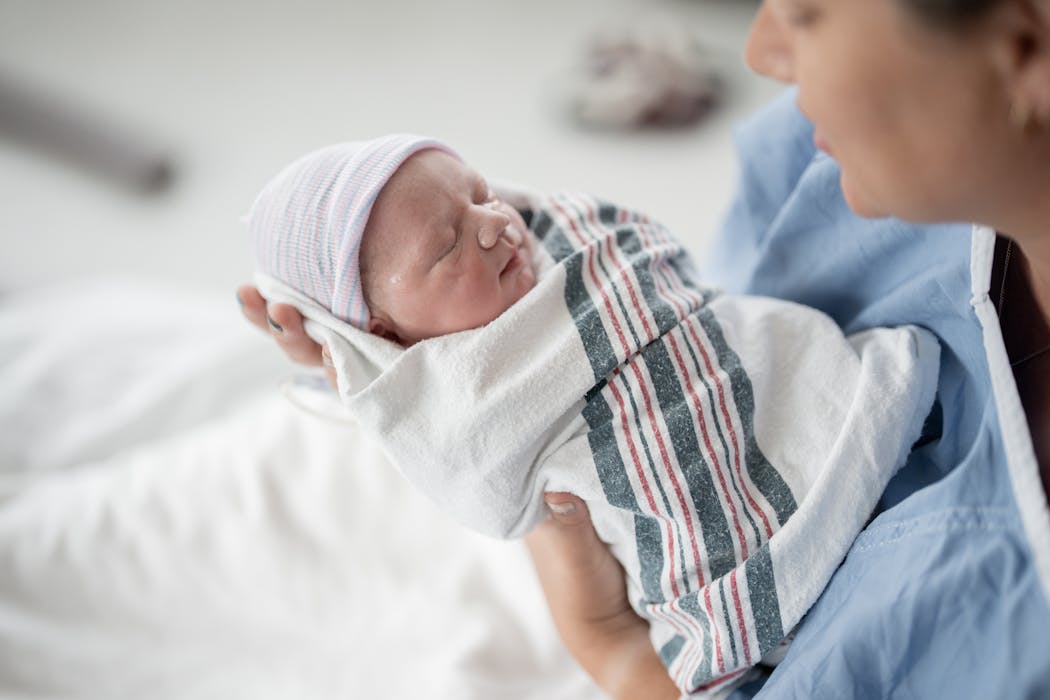
For the past 34 years, the Centers for Disease Control and Prevention has recommended that all babies receive their first hepatitis B vaccine at birth. FatCamera/E+ via Getty Images

The committee advising the Centers for Disease Control and Prevention on vaccine policy voted on Dec. 5, 2025, to stop recommending that all newborns be routinely vaccinated against the hepatitis B virus – undoing a 34-year prevention strategy that has nearly eliminated early childhood hepatitis B infections in the United States.

Before the U.S. began vaccinating all infants at birth with the hepatitis B vaccine in 1991, around 18,000 children every year contracted the virus before their 10th birthday – about half of them at birth. About 90% of that subset developed a chronic infection.

In the U.S., 1 in 4 children chronically infected with hepatitis B will die prematurely from cirrhosis or liver cancer.

Today, fewer than 1,000 American children or adolescents contract the virus every year – a 95% drop. Fewer than 20 babies each year are reported infected at birth.

I am a pediatrician and preventive medicine specialist who studies vaccine delivery and policy. Vaccinating babies for hepatitis B at birth remains one of the clearest, most evidence-based ways to keep American children free of this lifelong, deadly infection.

What spurred the change?

In September 2025, the Advisory Committee on Immunization Practices, or ACIP, an independent panel of experts that advises the CDC, debated changing the recommendation for a dose of the hepatitis B vaccine at birth, but ultimately delayed the vote.

This committee regularly reviews vaccine guidance. However, since Secretary of Health and Human Services Robert F. Kennedy Jr. disbanded the entire committee and handpicked new members, its activity has drastically departed from business as usual. The committee has long-standing procedures for evaluating evidence on the risks and benefits of vaccines, but these procedures were not followed in the September meeting and were not followed for this most recent decision.

The committee’s new recommendation keeps the hepatitis B vaccine at birth for infants whose mothers test positive for the virus. But the committee now advises that infants whose mothers test negative should consult with their health care provider. Parents and health care providers are instructed to weigh vaccine benefits, vaccine risks and infection risks using “individual-based decision-making” or “shared clinical decision-making.”

The hepatitis B vaccine has an outstanding safety record and has been administered to billions of infants at birth.

On the surface, this sounds reasonable. But while parents have always been free to discuss benefits and risks with their health care providers to make a decision on what’s best for their child, this change is not based on any new evidence, and it introduces uncertainty into a recommendation that has long been clear.

As a doctor, I am already seeing this uncertainty play out in the clinic. I recently had new parents ask to postpone the hepatitis B vaccine until adolescence because they believed federal health leaders had evidence that people only become infected through sexual activity or contaminated needle use.

After a brief conversation, they came to understand that this was inaccurate — children can be infected not only at birth but also through routine household or child care exposures, including shared toothbrushes or even a bite that breaks the skin. In the end, they chose to vaccinate, but this experience highlights how easily well-intentioned parents can be misled when guidance is not clear and consistent.

Why the CDC adopted universal hepatitis B shots

Hepatitis B is a virus that infects liver cells, causing inflammation and damage. It is spread through blood and bodily fluids and is easily transmitted from mother to baby during delivery.

The hepatitis B vaccine has been available since the early 1980s. Before 1991, public health guidance recommended giving newborns the hepatitis B vaccine only if they were at high risk of being infected – for example, if they were born to a mother infected with hepatitis B.

That targeted plan failed. Tens of thousands of infants were still infected each year.

Some newborns were exposed when their mothers weren’t screened; others were exposed after their mothers were infected late in pregnancy, after their initial screening. And like any lab test, the screening can have false negative results, be misinterpreted or not be communicated properly to the baby’s care team.

Recognizing these gaps, in 1991 the CDC recommended hepatitis B vaccination for every child starting at birth, regardless of maternal risk.

The U.S. adopted a policy of vaccinating all babies from birth because the number of people with hepatitis B infections was, and remains, relatively high, and because many mothers do not receive prenatal care, so their infections go undetected.

Meanwhile, in some European countries, like Denmark, only babies with certain risk factors receive the vaccine at birth. That’s because in those countries, hepatitis B infections are much less prevalent and pregnant mothers are more widely tested due to universal health care. Due to these differences, that approach is not effective in the United States. In fact, most World Health Organization member countries do recommend a universal birth dose.

Vaccinating at birth

The greatest danger for infants contracting hepatitis B is at birth, when contact with a mother’s blood can transmit the virus. Without preventive treatment or vaccination, 70% to 90% of infants born to infected mothers will become infected themselves, and 90% of those infections will become chronic. The infection in these children silently damages their liver, potentially leading to liver cancer and death.

Newborn lying on exam table touching doctor's stethoscope
Children are most likely to get infected by hepatitis B at birth, when contact with their mother’s blood can transmit the virus.
Ekkasit Jokthong/iStock via Getty Images Plus

About 80% of parents choose to vaccinate their babies at birth. If parents choose to delay vaccination due to this new recommendation, it will leave babies unprotected during this most vulnerable window, when infection is most likely to lead to chronic infection and silently damage the liver.

A research article published on Dec. 3, 2025, estimates that if only infants born to mothers infected with hepatitis B received the vaccine, an additional 476 perinatal hepatitis B infections would occur each year.

The hepatitis B vaccines used in the U.S. have an outstanding safety record. The only confirmed risk is an allergic reaction called anaphylaxis that occurs in roughly 1 in 600,000 doses, and no child has died from such a reaction. Extensive studies show no link to other serious conditions.

How children get exposed to hepatitis B

Infants and children continue to be vulnerable to hepatitis B long after birth.

Children can become infected through household contacts or in child care settings by exposures as ordinary as shared toothbrushes or a bite that breaks the skin. Because hepatitis B can survive for a week on household surfaces, and many carriers are unaware they are infected, even babies and toddlers of uninfected mothers remained at risk.

Full protection against hepatitis B requires a three-dose vaccine series, given at specific intervals in infancy. Anything short of the full series leaves children vulnerable for life.

In addition to changing the birth dose recommendation, the committee is now advising parents to consult with their health care provider about checking children’s antibody levels after one or two doses of the vaccine to determine whether additional doses are needed. While such testing is sometimes recommended for people in high-risk groups after they get all three doses to confirm their immune system properly responded to the vaccine, it is not a substitute for completing the series.

The recommendation for all babies to receive the vaccine at birth and for infants to complete the full vaccine series is designed to protect every child, including those who slip through gaps in maternal screening or encounter the virus in everyday life. A reversion to the less effective risk-based approach threatens to erode this critical safety net.

Portions of this article originally appeared in a previous article published on Sept. 9, 2025.

The Conversation

Dr. Higgins is affiliated with the American Academy of Pediatrics, Immunize Colorado, and Colorado Chooses Vaccines. These are volunteer roles.

ref. Vaccine committee votes to scrap universal hepatitis B shots for newborns despite outcry from children’s health experts – https://theconversation.com/vaccine-committee-votes-to-scrap-universal-hepatitis-b-shots-for-newborns-despite-outcry-from-childrens-health-experts-271202

Why we created a phone-sized device to take blood diagnostics out of the lab into the real world

Source: The Conversation – Global Perspectives – By Parth Shinde, Researcher, Birla Institute of Technology and Science

When your doctor thinks you might have an infection or an allergy, a simple blood test should give answers within hours. But for much of the world, that test can take days – or never happen at all. The problem is not usually the test itself, but an overlooked step between taking your blood and performing the diagnosis.

In most hospitals in high-income countries, separating plasma from blood is so routine that most people never think about it. A nurse takes your blood, sends it to the lab, and a machine called a centrifuge spins it at high speed to separate the liquid plasma from the cells. Lab staff then look for signs of infection, immune responses or bacteria, and your doctor uses those results to decide on treatment.

But centrifuges need electricity, regular checks and trained staff. When these things are not available or the lab is overwhelmed, testing slows down.

This doesn’t just affect rural clinics or refugee camps. This can also happen during busy winter months in emergency departments in wealthy countries. If plasma cannot be separated quickly with a consistent, high-grade quality, care is delayed even when fast tests are ready to use.

The scale of the issue became clear when my colleagues and I watched how doctors work day to day. A common pattern emerged as people with long-running, allergy-type symptoms were often told something like: “For now, try antihistamines, and if things get worse, we can arrange a test.” Tests were not avoided because they didn’t exist, but because they were too slow, too costly, or too far away.

A quiet bottleneck

This raised a basic question about healthcare: if diagnosis is the first step towards treatment, then why is it held back by cost, infrastructure and geography? The answer lies in sample preparation and testing – the quiet bottleneck at the centre of the process.

It was now clear the first biggest barrier to point-of-care testing was dependence on specialised equipment. The challenge became obvious: remove that dependency and testing could happen in the clinic or anywhere.

The problem appears in different ways in different countries, but the underlying pattern stays the same. In India, where I am based, many people can reach a doctor but avoid testing due to its delayed results and high costs. So, treatment is often based on symptoms.

During dengue surges in Brazil and Indonesia, tuberculosis care in rural South Africa, and COVID or RSV waves in the US and UK, care slowed not because tests were missing, but because samples relied on busy, centralised labs that patients or hospitals could not easily access.

In many field clinics and emergency health camps, teams have to depend heavily on equipment. A team might plan to run thousands of tests in a day, but they end up doing far fewer because someone has to separate plasma from every sample of blood before the test can even start.

A potential solution came from an unexpected place: paper towel. If you’ve ever dipped the end of a piece of paper towel in water, you will have noticed that the water “climbs” up the paper. My colleagues and I developed a device we call HemoSift that uses this principle (called “capillary action”) to separate red blood cells from the straw-coloured plasma (the part of blood needed for testing).

HemoSift uses capillary action to pull blood through tiny channels, and along the way something simple happens: plasma moves ahead while the red blood cells fall behind, the way faster and slower traffic sort themselves into different lanes. In under five minutes, it produces cell-free plasma with no pumps, no power and no moving parts.

A photo of the HemoSift device.
The HemoSift device.
Parth Shinde, CC BY

HemoSift has passed benchtop testing with blood-like fluids at the nanofabrication and microfluidics facility at IIT Bombay and has moved into early testing using donated patient blood samples. More samples are now being tested to build strong and reliable data.

HemoSift encourages us to rethink where diagnosis takes place. Instead of asking how to push more laboratory services into more locations, it asks why diagnosis needs to rely on a lab at all.

By removing the infrastructure barrier, rapid testing could reach places where it was previously impossible: rural health posts, mobile clinics, refugee camps, or overstretched emergency departments during outbreaks.

The aim of our device – which my colleagues and I are now developing at our startup, Tvashtr Biotech – is not to replace laboratories, but to widen the places where diagnosis can happen. With a simple plastic device, a healthcare worker could give a patient not only attention, but an answer – wherever they meet.

This article was commissioned in conjunction with Prototypes for Humanity, a global initiative that showcases and accelerates academic innovation to solve social and environmental challenges. The Conversation is the media partner of Prototypes for Humanity 2025.

The Conversation

This article was commissioned in conjunction with Prototypes for Humanity, a global initiative that showcases and accelerates academic innovation to solve social and environmental challenges. The Conversation is the media partner of Prototypes for Humanity 2025.

Parth Shinde is the Founder and owns shares at Tvashtr Biotech.

ref. Why we created a phone-sized device to take blood diagnostics out of the lab into the real world – https://theconversation.com/why-we-created-a-phone-sized-device-to-take-blood-diagnostics-out-of-the-lab-into-the-real-world-271437

Your Party: if the name sounds terrible, there’s a good reason for it

Source: The Conversation – UK – By Nicholas Dickinson, Lecturer in Politics, University of Exeter

When independent MPs Jeremy Corbyn and Zarah Sultana launched their new political venture in July 2025, they did so under a name that seemed almost deliberately empty: “Your Party”. Initially dismissed as a placeholder, the name is now official, having been narrowly confirmed by members at the party’s inaugural conference in November.

The name won just 37% of the vote against alternatives including “For the Many”, “Popular Alliance” and “Our Party”. The contested nature of this choice, and the peculiar blandness of the winning option, reflects a deeper crisis in how the far left names itself in the contemporary era.

Ten years ago, my research into 20th-century British Marxist groups revealed that these organisations once operated within what I characterise as a coherent naming culture. Terms like “communist”, “workers” and “socialist” were commonly used and carried substantial symbolic weight. Throughout the 20th century, British Leninist groups used these terms not merely as brands but mechanisms to articulate their identity, legitimacy and relationship to the revolutionary tradition.

The patterns were remarkably consistent within each tradition. Orthodox communist groups emerging from the Communist Party of Great Britain (CPGB), which was founded in 1920, showed complete conformity – every single one retained “Communist party” in its name, even decades after splitting from the CPGB.

Anti-revisionist groups, influenced by Maoism, displayed a different pattern. Of the 11 groups I studied, nine used “communist”. More significantly, seven appended “Marxist-Leninist” to their names – an attempt to reconnect some of the smallest and most peripheral groups, often with only a handful of members, back to a grander tradition of messianic leaders.

Most revealing were the Trotskyist groups. Of 13 major organisations, only five used “communist” at any point. Of the remainder, six instead opted for “socialist” in their name and six included the word “revolutionary”. The word “workers” featured in four names. This diversity masked fundamental instability in leftist politics. Most Trotskyist groups changed their names at least twice.

The left’s endless internecine disputes on nomenclature were infamously satirised in Monty Python’s riff on the idea of the Judean People’s Front. It’s hard not to detect some of these dynamics also at play in Your Party’s troubled launch.

Do you want to join The People’s Front of Judea or the Judean People’s Front?

When Lenin rebranded “social democracy” as “communism” in 1917, he was not simply changing a label but investing enormous symbolic capital in a term that would shape leftwing politics for seven decades. The Communist Party of Great Britain, founded in 1920, became the anchor of this naming culture in Britain, with splinter groups and rivals forced to negotiate their position relative to these established terms.

This naming system became increasingly dysfunctional over time. By the 1970s, even terms like “party” had become almost impossible to define coherently within the Leninist tradition. Was a “party” the revolutionary vanguard waiting for its moment in history, or a conventional electoral organisation competing for votes?

When the Socialist Workers Party emerged in 1977 from its predecessor International Socialist, it attempted to embody both definitions simultaneously, presenting itself as both a mass political party and a disciplined Leninist cadre. This contradiction contributed to rapid, often confusing shifts in strategy that alienated members and observers alike.

Whose party?

Your Party emerges from the wreckage of this collapsed naming system. The term “communist” was largely unusable in British politics by 1991. “Marxist-Leninist” had become a punchline even within the far left. “Workers” sounded antiquated in a deindustrialised Britain. Even “socialist” carries decades of baggage. What remained? A name so generic it barely qualified as one at all.

The genius and the problem of the name Your Party are inseparable. The name refuses to make the traditional ideological commitments that far-left names once signalled. It does not claim to be the vanguard party, does not invoke workers or socialism, and does not even claim ownership of itself through terms like “our party” – which, tellingly, came last in the naming vote. Instead, it performs a nominal sleight-of-hand, suggesting both maximal democracy (“it’s yours!”) and minimal commitment.

This vagueness might appear strategically savvy in an age of widespread distrust of traditional party structures. But the chaotic conference that ratified the name suggests otherwise. The bitter disputes over collective versus individual leadership, the expulsions of members, and Sultana’s boycott of the first day all point to unresolved issues. When 20th-century Trotskyist groups battled over whether to call themselves a “league”, “tendency” or “party”, those were not merely semantic disputes but arguments about organisational structure and democratic accountability, encoded in nomenclature.

Your Party attempts to avoid these arguments by adopting a name that articulates no clear position. But the politics of naming cannot be escaped so easily. What does “Your” signify when members cannot agree on basic questions of leadership or membership rules? Whose party is it, ultimately?

The polling data tells a sobering story. Support for Your Party fell from 18% in July 2025 to just 12% by November, while the Green party, with its clear brand identity, experienced a membership surge. Perhaps voters and activists sense the same problem that plagued late 20th-century Leninist groups – when you cannot articulate what your name signifies, you cannot sustain a coherent political project.

The collapse of Leninist naming culture reflected the exhaustion of a symbolic system where words like communist and workers had been stretched to accommodate too many contradictions. Your Party represents an attempt to build something new without that vocabulary. But in trying to avoid the old mistakes, it may have created a new one – a name so empty that it cannot provide the symbolic foundation a political organisation requires.

The Conversation

Nicholas Dickinson does not work for, consult, own shares in or receive funding from any company or organisation that would benefit from this article, and has disclosed no relevant affiliations beyond their academic appointment.

ref. Your Party: if the name sounds terrible, there’s a good reason for it – https://theconversation.com/your-party-if-the-name-sounds-terrible-theres-a-good-reason-for-it-271419

Jurors aren’t impartial – that’s exactly why they are so important to justice

Source: The Conversation – UK – By Elaine Jackson, PhD Candidate, University of Glasgow; University of the West of Scotland

On the surface, the rationale for the UK government’s proposals to limit the use of jury trials in England and Wales is pragmatic. Over 78,000 crown court cases remain unresolved, creating years-long delays for victims and defendants alike.

But among those of us who research jury behaviour and decision-making, these proposals raise a deeper debate. Some argue that juries are too biased, too unreliable to deliver justice.

Their hope is that if we could replace them with trained legal professionals, we might finally reduce the role that bias plays in the courtroom. But is this even possible?

All observation is “theory-laden”. Scientists, politicians, judges and jurors are not immune to their biases and worldviews influencing their decision-making.

Both judges and juries bring biases to the courtroom. The critical difference is that juries are more diverse than a single judge. Today, 89% of judges are white, 61% are men, and around a third attended private school. Fewer than 10% come from lower socioeconomic backgrounds.

This class and educational homogeneity matters profoundly. Judges who attended private school and Russell Group universities share not just demographic characteristics but formative experiences. Their relationships with authority, economic security, educational advantage and professional networks are likely to be less diverse than those of a jury.

Different social positions provide access to different knowledge. Someone who attended private school, joined chambers and rose through the judiciary simply hasn’t lived through experiences that would provide insight into many people’s lives.

For example, this might include how economic precarity affects people’s decisions, how working-class communities relate to police authority, or how educational disadvantages affect your ability to navigate bureaucratic systems.

These aren’t biases in the sense of prejudice. They are inevitable limitations of a single perspective.


Read more:
Limiting jury trials will harm minority ethnic victims and defendants, research shows


When judges assess whether behaviour was “reasonable” or a complainant’s response was “credible”, they are making ethical evaluations that mix facts with values. A judge evaluating whether a working-class defendant’s actions were reasonable brings their own class experience to that judgment, whether they recognise it or not.

Twelve randomly selected citizens bring 12 different life experiences. Through deliberation, they must make those experiences visible and justify their interpretation to each other.

If a judge makes a decision on their own, only their own biases will influence the verdict. In a jury, consensus needs to be reached. Different opinions and perspectives will shape the outlooks of others. This makes the verdict more informed by community beliefs, rather than from specific sections of the community.

The human “bias” we worry about in juries is actually the diversity of experience and judgment that may improve group decision-making. Homogeneity masquerades as objectivity. Trials should be decided by the people – and the various human experiences they bring to the courtroom.

A jury drawn from the electoral register might include someone who left school at 16, someone who has experienced unemployment or housing insecurity, someone who’s worked in manual labour, or someone from a community where police relations are fraught. These aren’t just different backgrounds, they are different forms of knowledge about how society works for many people.

This diversity is important for both defendants and victims. Evidence shows that judges may be more likely to convict defendants compared with juries.

Any changes towards judge-only trials may disadvantage future defendants when compared with the current system, where a defendant can choose the option of a jury trial for certain types of offence.

How jury deliberation reduces bias

Our research – part of Elaine Jackson’s PhD – investigated Scottish jury deliberations in rape cases, revealing what kinds of bias jurors bring to them by staging a series of mock trials.

The research shows the influence of rape myths – stereotypes and false assumptions about how rape victims and perpetrators behave – in the courtroom, and how juries can both perpetuate and mitigate their influence.

Across 90 jurors in one mock trial, we identified 180 instances of rape myths. These included victim blaming, demanding impossible proof, framing assault as “heat of the moment”, and using “real rape” stereotypes such as expecting severe injuries and immediate reporting. These myths were pervasive across juror populations, not simply held by a few outliers.

But we also observed that jury deliberation could challenge these assumptions. Both guilty verdicts occurred when a strong foreperson (the jury’s spokesperson) voiced immediate challenges to these myths, or trauma-informed jurors countered these frameworks. For example, when one juror suggested that the accused offering wine to the victim meant sexual invitation, another challenged them, asking: “According to what logic?”

We believe it’s positive that the UK government’s proposals will retain jury trials in cases of rape and murder. In serious crimes, we need diversity of thought and opinion in our decision-making.

This collective scrutiny, 12 different perspectives negotiating with each other, is something an individual judge cannot replicate.

While judges may consult colleagues, at trial stage they ultimately decide alone – without a formal deliberation requiring them to defend their interpretations to others who have equal decision-making authority. A diverse jury has this built-in corrective mechanism, which is why it must remain a part of the UK’s legal system.


Want more politics coverage from academic experts? Every week, we bring you informed analysis of developments in government and fact check the claims being made.

Sign up for our weekly politics newsletter, delivered every Friday.


The Conversation

The authors do not work for, consult, own shares in or receive funding from any company or organisation that would benefit from this article, and have disclosed no relevant affiliations beyond their academic appointment.

ref. Jurors aren’t impartial – that’s exactly why they are so important to justice – https://theconversation.com/jurors-arent-impartial-thats-exactly-why-they-are-so-important-to-justice-271322

Reform’s £9m gift and the rise of the political mega-donor

Source: The Conversation – UK – By Sam Power, Lecturer in Politics, University of Bristol

When the latest figures on donations to political parties were released, it was revealed that businessman Christopher Harborne had donated £9 million to Reform. Harborne, who lives in Thailand, made his fortune on aviation and cryptocurrency. Reform leader Nigel Farage insists he wants nothing in return for the money and that the two speak once a month or every six weeks.

Harborne’s is the biggest one-off donation by a living individual in British history. But he’s far from alone in giving massive amounts to parties. Financier Stuart Wheeler gave £5 million to the Conservatives in 2001 which is actually £9.5 million in today’s money. Frank Hester donated £15 million to the Tories just before the 2024 election but broke it up a little bit so nobody seems to care or remember.

Harborne’s gift amounts to a quite significant boost to Reform’s coffers. For context, Reform received £1.3 million in the reporting period directly prior to this one, and just £70,000 in the same period a year ago (donations figures that aggregate to over £11,180 are released quarterly).

But as I have shown elsewhere, political donations are cyclical and the receipt of them tends to ratchet up in advance of elections. Next May – with elections in Scotland, Wales and a seemingly bruising set of locals set for Labour – is seen to be a time where Reform can lay a marker as the “true” opposition party. So it’s less surprising to see such big figures this far out of a general election.

Who is Christopher Harborne?

The fact that Harborne has donated to the Conservatives in the past, as well as to Boris Johnson’s private office when he was prime minister, has been taken by some as indicative of a donor exodus from the Tories to Farage’s outfit. But that’s premature, we’ve seen some small movement to Reform in the figures since the 2024 election, and several stories about Reform-curious Tory donors but no real sea change in this respect.

The research is also fairly settled that donors tend to give money to parties for three reasons: they agree with them (they are ideological), they like the access it provides (they are intimates) or they want something in return (they are investors).

There is a long history of donors as pragmatic investors, thinking long and hard about how their money can be best spent to achieve their aims and effectively spreading their bets (though that is much more common in systems of proportional representation).

As one donor said during the 2024 election, when it became increasingly apparent Rishi Sunak was failing to bring in significant amounts of money: “Any self-respecting businessperson conducts due diligence before an investment decision. Time will tell whether smart money will back Mr Sunak”. Reader, it didn’t.

So, while donors do tend to be ideologues in the UK, there is some precedent for them changing lanes. The aforementioned Wheeler ended up as Ukip treasurer, for example. And given that British politics is increasingly characterised by fragmentation, it would be little surprise if donors started following the voters in shopping around.

Rise of the mega donor

What this donation also speaks to, though, is an increasingly worrying trend in British politics, which is the rise of the mega-donor. The very rich have always made up the vast majority of the donor class but there are signs this has become supercharged in recent years.

As investigative journalist Peter Geoghegan points out, 75% of all donations to Reform and its predecessor the Brexit Party since 2019 have come from three men: Harborne, deputy leader Richard Tice and businessman Jeremy Hosking.

Hester’s donations to the Conservatives in the run up to the 2024 election, meanwhile, equated to about 63% of the party’s entire spend on the campaign.

When almost exactly a year ago Elon Musk mooted a £70 million donation to Reform, which never materialised, it felt like a canary in the coalmine. That, if something wasn’t done, the UK was moving towards an increasingly Americanised system of glorified oligarchy.

In the US, remember, it’s no longer even a case of the 1% having all the power. Across the pond, the top 0.01% of donors accounted for 50% of all funds raised in 2024.

There is currently no upper limit on political donations. Parties have debated bringing one in for 25 years but can never agree to actually doing so – despite the fact the public (including Reform voters) backs the idea.

This is because any significant cap set at, say, £10,000 a year (as suggested by the Committee on Standards in Public Life and Transparency International) or £100,000 (which is think-tank the IPPR’s preference) would mean injecting more state funding into the system. Which the public hates just about as much (if not more) than the idea of mega-donors.

This leaves everyone in a “damned-if-you-do, damned-if-you-don’t” system of inertia and paralysis. It’s the kind of frustrating state of affairs which causes me to write book chapters with titles like “What do you do when the voters are wrong?” (which is reason #51 that I could never be an MP) and a similarly frustrated political scientist to remark: “parties need money: but not mine, not from my taxes, and not from interest groups”.

My solution, when faced with this, is that doing something is better than nothing. It’s why I think there’s utility in what I call a “democracy backstop” cap of £1 million.

It would do little to allay public fears that the very rich have outsize influence on politics, but I’m not sure there’s a limit low enough that can, and I do (literally) have a PhD’s worth of research to back me up on that. It would, though, put the brakes on just a little bit.

Let’s not forget that Labour has said it will introduce an elections bill in this parliament. That means it is not quite too late, but the time to act is very much now.

The Conversation

Sam Power has received funding from the Economic and Social Research Council and the Engineering and Physical Sciences Research Council.

ref. Reform’s £9m gift and the rise of the political mega-donor – https://theconversation.com/reforms-9m-gift-and-the-rise-of-the-political-mega-donor-271428

Low-tax or high-welfare? The UK must decide what type of country it wants to be

Source: The Conversation – UK – By Christopher Adam, Professor of Development Economics, University of Oxford

Perceptions of a high-tax UK are wide of the mark. Steve Travelguide/Shutterstock

Headlines about tax in the UK being at an all-time high abounded after the autumn budget. The current overall tax take, at 35% of GDP, is indeed a historic high for the country. And the measures announced in the budget will take it to 38% by the end of the parliament.

Yet, contrary to what some might have you believe, it is only high by British standards.

If the UK wants a decent welfare system in the coming years, it’s time to start doing things differently. But this can’t just mean raising taxes to meet the growing demands of an ageing society.

The structure of the UK’s tax system must be fixed before politicians even think about further rises, since its complexity and distortions hold back investment, productivity and long-term growth.

In 2023, the tax take as a percentage of GDP was 35.3%, slightly above the overall average for the 38 countries in the Organisation for Economic Cooperation and Development (OECD). This placed the UK 18th on the list and almost two percentage points lower than the average of other European members.

But even the new figure of 38% does not take the UK anywhere near the top. It matches Germany, but remains significantly lower than the tax take in France, Italy, Belgium and the Nordic countries, where the tax share exceeds 40% of GDP.

The UK has a deep productivity problem. Real wage growth has collapsed from being third best among OECD countries before 2008 to 16th afterwards. Without a recovery, the country will not be able to maintain levels of public provision, let alone reboot the health and public support systems.

The welfare system certainly needs a reboot, as our latest research shows. In health, the NHS is grappling with some of the longest waiting lists on record as well as delivering comparatively poor results. At the same time, thousands of people are stuck in hospital due to the lack of affordable social care.

Social housing is increasingly out of reach for those who need it: the gains of the right to buy policy of the 1980s have been confined to those who bought their council houses, while the costs of that mass sell-off are borne by the state and today’s poor in the form of housing shortages and high rents.

Perhaps most damning of all, child poverty has risen steadily since 2010 and is now among the highest in the OECD.

grandmother reading to a little boy sitting on her knee.
Pressures on health and social care spending will only grow in future.
PeopleImages/Shutterstock

The pressures on the system will only grow. The ageing population is dramatically increasing pension costs and the demand for social care. Advances in healthcare, while holding out the prospect of longer and higher-quality lives, are also extending the years that people can live with chronic conditions. This is particularly true among lower-income groups who often lack the means to maintain their health.

The health and social care sector is one where the real cost of delivery is rising, so the UK will need to increase the resources flowing into it just to stand still.

The pension triple lock is continuing to exacerbate the pressure on public finances. Meanwhile, precarious and low-paid employment means millions of people still rely on in-work benefits. And the post-COVID surge in health and disability-related personal independence payments (Pip) shows no signs of abating.

What kind of country does the UK want to be?

We see two feasible paths forward to fix the distortions in the tax system while ensuring that those who need the welfare state don’t fall through the widening cracks. But here’s the rub. Both would be extremely difficult politically.

First, the UK could accept that a universal welfare state is not affordable, and radically reshape and target it. The question is whether the public would tolerate deeper means-testing, for instance, which might represent a genuine reshaping of the welfare state.

The founder of the welfare state, William Beveridge, understood that his system required not only technical solutions but a compelling narrative about social solidarity where all citizens bought into its core principles.

Second, the country could engage in a genuinely open debate on the cost of and willingness to pay for welfare services. It could then fix the tax system to fund comprehensive welfare provision, moving toward European-style social insurance systems.

The UK spends just over 11% of GDP on welfare, placing it near the OECD average and well below Nordic countries and France. The fact that overall tax take of 35% rising to 38% is a historic high makes any conversation about taxation hard – perhaps impossible.

But UK outcomes compared to those of its neighbours who spend more should be food for thought. The answer cannot be in stealth taxes.

The budget mainly just walked a path of continuation from a long period of piecemeal reforms that may not achieve what they are intended to. It raised revenue primarily through fiscal drag (the freezing of tax thresholds so that rising pay pushes more people into higher brackets).

It did remove the regressive limit on universal credit or tax credits for larger families, but in the main it continues to follow a path of least political resistance. This is likely to result in the gradual emergence of a two-tier system where those who can afford it increasingly opt for private healthcare, private housing and private education.

Given how much resistance the government is facing even now, perhaps the path of least resistance is the only option available. But perhaps a braver conversation is possible – one that spells out the human tragedy of under-investing in welfare and the economic problems of continuing with the current UK tax structure.

What won’t work is pretending these choices don’t exist. The UK has neither the benefits of low taxes nor the welfare outcomes of its higher-tax neighbours. It’s time to redesign the tax and welfare system for the century we’re in.

The Conversation

The authors do not work for, consult, own shares in or receive funding from any company or organisation that would benefit from this article, and have disclosed no relevant affiliations beyond their academic appointment.

ref. Low-tax or high-welfare? The UK must decide what type of country it wants to be – https://theconversation.com/low-tax-or-high-welfare-the-uk-must-decide-what-type-of-country-it-wants-to-be-271231

Why Vladimir Putin’s in no hurry for peace

Source: The Conversation – UK – By Jonathan Este, Senior International Affairs Editor, Associate Editor, The Conversation

This newsletter was first published in The Conversation UK’s World Affairs Briefing email. Sign up to receive weekly analysis of the latest developments in international relations, direct to your inbox.


The US secretary of state, Marco Rubio, believes that Russia’s strategy is to outlast Ukraine and its allies in a war of attrition. Rubio told Fox News host Sean Hannity this week that the Russian president, Vladimir Putin, had made it clear that he is determined to achieve his war aims even though it may “cost more and take longer” than Russia wants it to.

Rubio’s words appear to be borne out by the most recent negotiations in the Kremlin this week. Rubio wasn’t there this time. Instead the US president sent special envoy Steve Witkoff and Jared Kushner (Trump’s son-in-law). As Alexandros Koutsoukis of the University of Lancaster notes, replacing diplomats with dealmakers has been a feature of the way the US has approached this peace process.


Read more:
Ukraine’s peace talks reveal the risks of replacing diplomats with dealmakers


A detailed account of their meeting with the Russian president and his aides has yet to be published, but the takeaway from that meeting was that Putin was not in the mood for compromise. While acknowledging the talks had been “useful, constructive and meaningful”, Putin’s aide, Yuri Ushakov, concluded that: “We are no closer to resolving the crisis in Ukraine.”

But it’s well worth noting a comment of Putin’s, delivered shortly before the meeting, which may shed some valuable light on what appears to be Russia’s long game, something becoming clearer as the conflict gets closer to its fourth anniversary. Putin accused Kyiv’s European allies of trying to scupper a peace deal with “absolutely unacceptable” demands. Ushakov meanwhile commented that “some American proposals appear more or less acceptable”.

This, writes Intigam Mamedov – an expert in conflict and security at Leiden University – appears to be a direct reference to the draft deal developed jointly between Russia and the US over a few days in Miami in late November. That 28-point proposal was viewed by Ukraine and its European allies as a non-starter, hanging as it did on Kyiv giving up the whole of the Donetsk and Luhansk regions, including territory that Russia has not been able to take by force. It also called for Ukraine to give up all hope of ever joining Nato and accept a limit on the size of its armed forces.

Mamedov sees a longer-term project here. Whatever Putin hopes to gain from the war in Ukraine itself, the more protracted and bloody the war in Ukraine becomes, the bigger a wedge it drives between the US and Europe. Hence all the talk of US proposals being constructive and Europe’s being unacceptable.

The conflict is also exposing deep divisions within Europe over the plan to raise €90 billion (£78 billion) to help Ukraine sustain its resistance, either by leveraging frozen Russian assets or by borrowing on the international markets. Belgium is very unhappy about the former plan, as the bulk of Russia’s frozen assets are held there potentially exposing it to liability if the loan is not repaid.

Meanwhile Hungary and Slovakia oppose funding Ukrainian defence and are also planning a legal challenge to an EU plan to halt imports of Russian liquefied natural gas (LNG) by the end of 2026 and shut off pipeline supplies by the end of the following year.


Read more:
Impasse at the Kremlin: here’s what we know after the latest US-Russia talks


Whatever the outcome of talks, writes Roman Birke, it’s appearing increasingly likely that Ukraine will be forced to give up territory in return for peace. This is a denial of core principles of international law and the United Nations charter, which forbids “the threat or use of force against the territorial integrity or political independence of any state”.

Birke, an expert in modern European history at Dublin City University, believes rewarding Russian aggression with territory will “confirm that, in the 21st century, European borders can be redrawn by military force once more”. Birke recalls the work of Hugo Grotius, a Dutch lawyer born in 1583, who was one of the most influential thinkers of his time on the laws of warfare.

Grotius put forward the idea that only just wars where a state is defending itself against aggression or to enforce its legitimate property rights, should be legal. But eventually, disillusioned, by the violent world around him, he concluded that all states making war would simply claim theirs was a just war (a little like Putin is doing now in Ukraine) and that this risked other countries feeling obliged to back the side they believed was right. In that way, wars can quickly spread, be concluded.

Birke is concerned that rewarding Russia for its aggression by handing over bits of Ukraine would return the world to a Grotian state, in which less powerful states can be attacked with impunity. Might would become right, in other words.


Read more:
Ukraine peace talks reveal a world slipping back into an acceptance of war


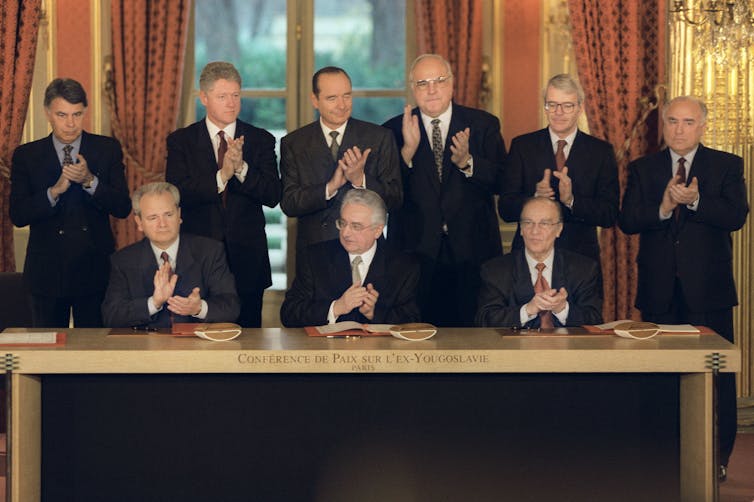
We recently marked the 30th anniversary of the signing, in an air force base in Ohio, of a treaty to bring an end to the appalling conflict in the former Yugoslavia. The Dayton accords was signed on November 21 1995 and again, in a public ceremony in Paris on December 14, by the presidents of Bosnia and Herzegovina, Croatia, and Serbia, bringing to an end three years of bloodshed and ethnic cleansing.

Two rows of men in suits clapping, including Bill Clinton and John Major
The Dayton accords, signed in December 1995, ended three years of bitter conflict in the Balkans.

International security experts Stefan Wolff of the University of Birmingham and Argyro Kartsonaki of the University of Hamburg see some useful parallels between the peace process in the Balkans and the attempts to bring an end to the war in Ukraine. The first, and arguably most vital, factor at play there was US leadership in Nato, which intervened with bombing missions to force Serbia to the table. There were robust security guarantees put in place and the treaty was a detailed (if imperfect) plan which aimed to ensure hostilities would not resume.

Thirty years on peace has largely held, although it remains tentative and the increasing confidence of Serbian separatists could still cause Bosnia and Herzegovina to disintegrate into its constituent parts, which possible horrific consequences.

But, as Wolff and Kartsonaki conclude, for all Dayton’s imperfections, “even an imperfect agreement may be preferable to an unending, and likely unwinnable, war”.


Read more:
Thirty years after the Balkans peace deal, a different US leadership is fumbling the war in Ukraine


Death in the Caribbean

To Washington, where the focus is on the sequence of events leading up to the first of the US attacks on so-called Venezuelan drug boats in the Caribbean. It was recently alleged in the Washington Post that the US secretary of war, Pete Hegseth, had given an order that there were to be no survivors of the attack on September 2, which killed 11 people – nine in the initial strike on the boat and, we’re told, the remaining two, reportedly as they clung on to the boat radioing for assistance.

The full details of the incident have yet to emerge and, as Hegseth himself has claimed, there is always a lot of confusion in “the fog of war”. That said, the secretary of war has been quick to pass responsibility for the second strike on to the ranking military officer present in the situation room, Admiral Frank M. (Mitch) Bradley.

But in a political climate in which high-ranking former US officers such as Mark Kelly, a former US navy officer and astronaut who is now a Democrat senator, could face prosecution for urging members of the US military not to obey orders that are clearly illegal, this episode is a potential flashpoint.

But in the end this incident should not obscure an arguably more important issue with the US strikes on these Venezuelan boats: international law forbids extrajudicial killing. Andrew Bell and Thomas Gift explain the issues at stake.


Read more:
US accused of killing Venezuelan drug boat survivors – Trump’s military agenda is based on impunity


Sign up to receive our weekly World Affairs Briefing newsletter from The Conversation UK. Every Thursday we’ll bring you expert analysis of the big stories in international relations.


The Conversation

ref. Why Vladimir Putin’s in no hurry for peace – https://theconversation.com/why-vladimir-putins-in-no-hurry-for-peace-271350

3 states are challenging precedent against posting the Ten Commandments in public schools – cases that could land back at the Supreme Court

Source: The Conversation – USA (3) – By Charles J. Russo, Joseph Panzer Chair in Education and Research Professor of Law, University of Dayton

Students work under posters of the Ten Commandments and the Bill of Rights in a high school classroom in Kyle, Texas, on Oct. 16, 2025. AP Photo/Eric Gay

As disputes rage on over religion’s place in public schools, the Ten Commandments have become a focal point. At least a dozen states have considered proposals that would require the posting of the Ten Commandments in classrooms, with Texas, Louisiana and Arkansas mandating their display in 2024 or 2025.

Challenges led to all three laws being at least partially blocked. Most recently, on Dec. 2, 2025, families in Texas filed a class-action lawsuit seeking to take down displays across the state. Federal trial court judges have already temporarily blocked the law in around two dozen districts. Ongoing appeals from the bills’ supporters, though, seem aimed at overturning a 45-year-old U.S. Supreme Court precedent prohibiting such displays.

As religion and education law researchers, we believe this situation is especially noteworthy because of its timing. In 2022, the Supreme Court adopted a new standard to assess religious freedom cases, which may come into play – and its judgments on religion’s role in public education are perhaps the most religion-friendly they have ever been.

The Ten Commandments and the courts

Controversy over the commandments is not new. In more than a dozen early cases, courts generally upheld laws and policies mandating their recitation in schools. These enactments survived because the Supreme Court did not extend the First Amendment to state laws until 1940.

Litigation over posting the Ten Commandments in schools first reached the Supreme Court in 1980. In Stone v. Graham, the justices invalidated a Kentucky statute requiring displays of the commandments in classrooms. The court reasoned that the law violated the First Amendment’s establishment clause: “Congress shall make no law respecting an establishment of religion.”

At the time, the court applied the first of the three criteria it has since abandoned, known as the “Lemon test,” to evaluate whether governmental action violates the establishment clause. Under this test – which developed from a 1971 Supreme Court decision – governmental actions must have a secular legislative purpose, and their main effect may neither advance nor inhibit religion. In addition, they must avoid excessive entanglement with religion.

In Stone, the justices rejected Kentucky’s argument that the displays served a secular educational purpose. The court disagreed that a small notation on posters describing the Ten Commandments as the “fundamental legal code of Western Civilization and the Common Law of the United States” was sufficient, noting that the posters were “plainly religious in nature.”

Twenty-five years later, in 2005, litigation over public displays of the Ten Commandments returned to the Supreme Court. This time, neither display was in a school.

The first dispute arose in Kentucky, where officials in two counties had erected courthouse displays including the Ten Commandments, the Magna Carta and the Declaration of Independence. The justices limited their order to one dispute, in McCreary County, invalidating the display for violating the establishment clause – largely because it lacked a secular legislative purpose.

On the same day, the Supreme Court reached the opposite result in another case, Van Orden v. Perry. The court permitted a display including the Ten Commandments to remain on the grounds of the Texas Capitol in Austin, where it was one of 17 monuments and 21 historical markers.

Two women walk by an ornately carved stone monument, with a building with a large rotunda in the background.
A Ten Commandments monument on the grounds of the Texas Capitol in Austin.
AP Photo/Eric Gay

Unlike the fairly new displays in Kentucky, the long-standing one in Texas, with the first monument erected in 1891, was built using private funds. The court left the Ten Commandments monument in place because it was a more passive display. The Capitol grounds are spread out over 22 acres, meaning the Ten Commandments were not as readily apparent as if they had been posted in classrooms.

‘Follow God’s law’

More recent controversy started in 2024. Louisiana mandated that the Ten Commandments be posted in public schools, and a federal trial court soon blocked the law. Undeterred, Arkansas and Texas passed similar legislation the following year.

Arkansas Act 573, signed into law in April 2025, obligated officials to display a “durable poster or framed copy” of the Ten Commandments in all state and local government buildings, including public school and college classrooms.

Republican Rep. Alyssa Brown, one of the Arkansas bill’s sponsors, described it as an effort to educate students on how the United States was founded and how the founders framed the Constitution.

“We’re not telling every student they have to believe in this God,” she told a legislative committee, “but we are upholding what those historical documents mean and that historical national motto.”

A large room, seen from above, with rows of desks encircling a central podium.
Arkansas representatives convene in the House chamber at the state Capitol in Little Rock on June 17, 2024.
AP Photo/Andrew DeMillo

Texas, meanwhile, adopted a similar law in June 2025.

“It is incumbent on all of us to follow God’s law, and I think we would all be better off if we did,” the bill’s sponsor in the Texas House, Republican Rep. Candy Noble, said during debate.

Shift at SCOTUS

Supporters of these laws argue that they are constitutional because of an important shift at the Supreme Court. In 2022, the court adopted a new “history and tradition test” to assess religion in public places, including classrooms.

The “history and tradition test” originated in 2022’s Kennedy v. Bremerton School District, a case about a public high school football coach who prayed on the field at the end of games. The court ruled that school officials could not prevent the coach from praying because it was a personal religious observance protected by the First Amendment’s other religion clause: that the government shall not prohibit the “free exercise” of religion.

The Kennedy case charted a new course on religion’s place in public life. Acknowledging that it “long ago abandoned Lemon and its endorsement test offshoot,” the justices explained that “the Establishment Clause must be interpreted by ‘reference to historical practices and understandings.‘” It remains to be seen how this standard plays out.

Blocked – for now

In August 2025, a federal trial court temporarily barred officials in four school districts from enforcing Arkansas’ law. The court found that the required display would have “forced [students] to engage with” the Ten Commandments, and “perhaps to venerate and obey” them. The court also applied the new historical practices and understandings test, holding that there was no evidence of a tradition to display the Ten Commandments in public schools permanently.

The same judge later prohibited two more Arkansas school boards from posting displays.

In Louisiana, too, a federal trial court blocked a state statute. The 5th U.S Circuit Court of Appeals initially affirmed that order. However, an en banc panel of the 5th Circuit – meaning all the circuit’s active judges – will rehear the case on Jan. 20, 2026.

The Texas statute’s future is also up in the air. In August 2025, a federal trial court enjoined the law, temporarily stopping it from going into effect in 11 districts. Acknowledging the cases from Arkansas and Louisiana, the judge held that Texas’ law likely violated the First Amendment. The full 5th Circuit will hear oral arguments in January, alongside the Louisiana case.

On Nov. 18, a second federal trial court judge enjoined the Texas law in around a dozen new districts.

Religion’s role

Controversy over the Ten Commandments continues to raise larger questions over the role of religion in public education, if any.

Supporters of such bills seemingly fail to recognize that they cannot impose their religious values in the public sphere. At the same time, some opponents – including Jewish, Christian, Unitarian Universalist, Hindu and nonreligious plaintiffs – do not necessarily wish to remove religion entirely from educational institutions.

These critics want to uphold the principle that, as the Supreme Court has affirmed, the government must demonstrate “neutrality between religion and religion, and between religion and nonreligion.” In other words, critics do not want one religion or religion generally to dominate.

Today’s challenge is to find the balance in public life. We believe the courts and legislatures must avoid sending the message that religion has no place in a free and open society – just as they must not permit one set of values to dominate, as the bills in Arkansas, Louisiana and Texas seem to aspire to do.

How the courts and legislatures balance the rights of the majority and minority in these disputes over the place of the Ten Commandments in public life may go a long way toward shaping the future of religious freedom in American public education.

This is an updated version of an article originally published on Sept. 5, 2025.

The Conversation

The authors do not work for, consult, own shares in or receive funding from any company or organization that would benefit from this article, and have disclosed no relevant affiliations beyond their academic appointment.

ref. 3 states are challenging precedent against posting the Ten Commandments in public schools – cases that could land back at the Supreme Court – https://theconversation.com/3-states-are-challenging-precedent-against-posting-the-ten-commandments-in-public-schools-cases-that-could-land-back-at-the-supreme-court-271287

How the ‘hypnagogic state’ of drowsiness could enhance your creativity

Source: The Conversation – UK – By Steve Taylor, Senior Lecturer in Psychology, Leeds Beckett University

Orawan Pattarawimonchai/Shutterstock

The Beatles’ song Yesterday was written in what psychologists refer to as the “hypnagogic state”. This is the twilight zone between sleep and wakefulness, when we drowsily linger in a semi-conscious state, experiencing vivid mental images and sounds.

Waking up one morning in early 1965, Paul McCartney became aware of a long complex melody playing inside his head. He jumped straight out of bed, sat down at his piano and picked out the melody on the keys. He quickly found the chords to go with the melody and created some holding phrases (as songwriters call them, before they write proper lyrics) to fit the melody.

Finding it difficult to believe that such a beautiful melody could emerge
spontaneously, McCartney suspected that he was subconsciously plagiarising another composition. As he recalled: “For about a month I went round to people in the music business and asked them whether they had ever heard it before … I thought if no one claimed after a few weeks, then I could have it.” But it turned out to be original.

Many great discoveries and inventions have emerged from the hypnagogic state. The physicist Niels Bohr effectively won the Noble prize while semi-conscious. Drifting off to sleep, he dreamt he saw the nucleus of the atom, with the electrons spinning around it, just like the solar system with the sun and planets – and in this way he “discovered” the structure of the atom.

The sweet spot

Research has shown that the hypnagogic state is a creative “sweet spot.” For example, in a 2021 study, participants in a hypnagogic state were three times more likely to discover the “hidden rule” that could solve a mathematical problem.

Psychologists associate creativity with qualities such as openness to experience and cognitive flexibility. Others have suggested that creativity arises from co-ordination between the cognitive control network of the brain (which deals with planning and problem solving) and the default mode network (which is associated with daydreaming and mind-wandering).

However, in my view, one of the most important theories of creativity is one of the oldest, put forward by the early British psychologist Frederic Myers in 1881. According to Myers, ideas and insights come as a sudden “uprush” from a subliminal mind.

As Myers saw it, our conscious mind is just a small segment of our overall mind, including not only what Sigmund Freud called the unconscious, but also wider and higher levels of consciousness. Ideas may gestate unconsciously for a long time before they emerge into conscious awareness.

Woman making a square with her fingers
Creativity often comes from beyond consciousness.
oneinchpunch/Shutterstock

This is why it often feels as if ideas come from beyond the mind, as if they are gifted to us. They can come from beyond our conscious mind.

The importance of relaxation

The hypnagogic state is so creative because, as we hover between sleep and wakefulness, the conscious mind is barely active. For a brief period, our mental boundaries are permeable, and there is a chance creative insights and ideas will flow through from the subliminal mind.

In a more general sense, this is why creativity is often associated with relaxation and idleness. When we relax, our conscious minds are usually less active. Often, when we are busy, our minds are full of chattering thoughts, so there is no space for creative insights to flow through.

This is also why meditation is strongly associated with creativity. Research shows that meditation promotes general creative qualities such as openness to experience and cognitive flexibility.

But perhaps even more importantly, meditation quietens and softens the conscious mind, so that we’re more liable to receive inspiration from beyond it. As I point out in my book The Leap, this is why there is a strong connection between spiritual awakening and creativity.

Nurturing the hypnogogic state

Research has found that around 80% of people have experienced the hypnagogic state, and that around a quarter of the population experience it regularly. It is slightly more common in women than men.

It is most likely to occur at the onset of sleep, but can also occur on waking up, or during the day if we become drowsy and zone out of normal consciousness.

Can we use the hypnagogic state to enhance our creativity? It’s certainly possible to linger in the hypnagogic state, as you probably know from Sunday morning lie-ins.

However, one of the difficulties is capturing the ideas that arise. In our drowsiness, we may not feel the impulse to record of our ideas. It’s tempting to tell ourselves before falling back to sleep, “This is such a good idea that it will definitely stick in my mind.” But when we wake up some time later, the idea is gone forever.

However, through mental training, there is no reason why we can’t build up a habit of recording our hypnagogic ideas. The best practice is to keep a pen and paper right on a bedside table. Or for a more contemporary variant, keep your phone beside the bed, with the recording app open.

In fact, this is a practice that Paul McCartney has always followed. He even trained himself to write in the dark for this purpose.

We can also use a technique of “conscious napping” to generate ideas. Whenever the great inventor Thomas Edison was stuck for a solution or new idea, he would allow himself to drift into unconsciousness, while holding a metal ball. As he fell asleep, the ball would clatter to the ground and wake him, when he would often find that a new insight had emerged.

More generally, we should use idleness as a way of cultivating creativity. Don’t think of napping or relaxing as a waste of time. Far from being unproductive, they may lead to the most inspired ideas and insights of our lives.

This article features references to books that have been included for editorial reasons, and may contain links to bookshop.org. If you click on one of the links and go on to buy something from bookshop.org The Conversation UK may earn a commission.

The Conversation

Steve Taylor does not work for, consult, own shares in or receive funding from any company or organisation that would benefit from this article, and has disclosed no relevant affiliations beyond their academic appointment.

ref. How the ‘hypnagogic state’ of drowsiness could enhance your creativity – https://theconversation.com/how-the-hypnagogic-state-of-drowsiness-could-enhance-your-creativity-269724

Is the dominance of the US dollar unravelling under Trump?

Source: The Conversation – UK – By Fabian Pape, Leverhulme Early Career Research Fellow in the School of Social and Political Science, University of Edinburgh

The dominant global financial position of the US and its currency, the dollar, is wobbling under the second Trump administration. AURA88 / Shutterstock

The US has long sat at the centre of the global financial system, with the US dollar serving as the backbone of the world economy. Private investors rely on the dollar as a store of value in times of uncertainty.

Governments and central banks hold dollars to manage the value of their own currencies and as a form of insurance against economic shocks. Key commodities such as oil are also priced in dollars.

This dominant position, which has given the US enormous privileges including the capacity to borrow money cheaply and the ability to use the global financial system as a tool of statecraft, is often explained through the size and stability of US markets and the strength of its institutions. But beneath these economic fundamentals lies something more intangible: trust.

Countries and private financial institutions hold dollars, trade in dollars and borrow in dollars because they trust the US to maintain an open, rules-based international order. They also trust the US to honour contracts, protect property rights and manage the world’s financial plumbing responsibly by acting as an international lender of last resort during periods of crisis.

The dollar system has long had its critics. In the aftermath of the global financial crisis, which occurred between 2007 and 2009, emerging economies faced severe spillovers from US monetary policy and growing exposure to dollar-denominated debt. They also witnessed the increasing use of financial sanctions as a tool of US foreign policy.

China, Russia, India and other countries outside the west began constructing alternative financial infrastructures – new payment systems, currency swap lines and efforts to internationalise their own currencies. What began as a gradual search for some form of protection from US financial power quietly created cracks at the margins of the dollar-based system.

However, nothing has been as disorienting to the global role of the dollar as the second Trump administration’s overt attacks on the liberal international economic order. The imposition of sweeping trade tariffs, as well as efforts to undermine international and domestic institutions, represent a fundamental break with the promise of responsible American financial leadership.

Previous predictions of the dollar’s decline have proved premature. But as we argue in a recently published paper, the erosion of trust in the US as the steward of the liberal international order should be taken seriously. What we are seeing is not the immediate collapse of US financial power, but the beginning of a slow transition towards a fragmented, multipolar – and less predictable – global monetary system.

Rupture of trust

Three developments stand out. First, Washington’s commitment to the liberal economic order under the leadership of Donald Trump is being widely questioned. Rather than acting as the guarantor of open markets, Trump has reframed global trade as a transactional system where countries must “buy down” US tariffs. This means other countries must essentially now buy American Treasuries and other securities in exchange for access to the US market.

Second, surging US debt is increasing doubts about US fiscal stability. The Trump administration’s major tax cuts and spending plans are projected to create persistent deficits of around 6% of GDP, and US government debt has ballooned to record levels. This has prompted foreign central banks to reduce their dollar holdings.

Third, the Trump administration is openly attacking and undermining US government agencies and the country’s central bank, the Federal Reserve. Trump has repeatedly threatened to replace the current Fed chair, Jerome Powell, and dismiss other central bank officials since returning to the White House in January.

Central bank independence is considered a hallmark of credible monetary governance and undermining it raises doubts about whether the US remains a reliable anchor for the global financial system. According to Reuters, European officials are now openly questioning whether the Fed will continue to supply dollars to overseas central banks at times of financial strife.

Taken together, these actions are striking at the core foundation of dollar dominance: the assumption that the US will behave predictably, responsibly and with institutional restraint.

Despite the turbulence, no single currency is ready to replace the dollar. China’s renminbi still lacks open capital markets and strong legal protections, while the euro lacks a unified fiscal authority. New digital currency platforms remain experimental or speculative.

Still, the world is moving towards a more fragmented monetary landscape. Countries are diversifying their reserves into gold and other non-dollar assets. At the same time, regional payment systems are proliferating and dollar-denominated lending to emerging economies is declining.

Commodities are also priced increasingly in currencies other than the dollar. And no longer are only countries like China retreating from the dollar system, even US allies in Europe are encouraging banks to reduce their reliance on dollar funding.

The global economy is entering a financial interregnum – a period in which the old order is fading but the new one is not yet born. The dollar’s dominance will not vanish overnight as too many institutions and networks still rely on it. But its uncontested supremacy is coming to an end.

A fragmented financial system will reduce US leverage, while also making the global economy more complex and, possibly, more crisis-prone. The dollar is not dead. But the world is slowly preparing for life beyond dollar hegemony, and the second Trump administration may be the catalyst that turns long-running dissatisfaction into systemic change.

The Conversation

Fabian Pape receives funding from the Leverhulme Trust (ECF-2024-367).

Johannes Petry receives funding from German Research Foundation (446618653)

Tobias Pforr received funding from the European Research Council (grant agreement No 884910).

ref. Is the dominance of the US dollar unravelling under Trump? – https://theconversation.com/is-the-dominance-of-the-us-dollar-unravelling-under-trump-270600