Concrete with a human touch: Can we make infrastructure that repairs itself?

Source: The Conversation – Canada – By Mouna Reda, Post doctorate fellow, Department of Civil Engineering, McMaster University

As winter approaches, Canada’s roads, bridges, sidewalks and buildings are facing a familiar problem: cracks caused by large temperature swings. These cracks weaken infrastructure and cost millions to repair every year.

But what if concrete could heal itself like human skin, keeping our structures, roads and bridges strong and saving millions of dollars?

Concrete is the most widely used construction material, known for its durability and low maintenance. Yet it’s still susceptible to cracking.


Read more:
Aging bridges are crumbling. Here’s how new technologies can help detect danger earlier


Concrete is made by mixing cement, water, aggregate and other chemicals used to enhance its properties. As cement reacts with water, it forms a paste that binds everything together.

During this process, changes in volume, improper placement and finishing, and later environmental factors can create cracks. These cracks allow water, other liquids, gases and harmful chemicals to penetrate the concrete, compromising its strength over time.

This challenge has led researchers to eagerly explore what can be done to heal these cracks. In our research, we are researching how self-healing concrete can make infrastructure more durable.

Self-healing concrete

a cracked concrete slab on pillars below an elevated roadway
Cracked concrete under the Spadina Avenue exit ramp on Toronto’s Gardiner Expressway.
(Sylvia Mihaljevic)

When our skin is cut, it’s able to heal on its own. Inspired by this, researchers started re-imagining concrete with similar abilities.

Traditional concrete is able to mend small cracks when water triggers leftover cement in a process known as autogenous healing. This process, however, is very slow and limited to narrow cracks. Since concrete is man-made, it has limited ability to “self-heal” without a little extra help. This led researchers to develop what is called autonomous healing.

Autonomous healing mimics nature by adding special materials like minerals, polymers, micro-organisms or other healing agents into concrete. These materials react chemically or physically with concrete to fill the cracks.

The first modern concept of self-healing concrete was introduced by American researcher Carolyn M. Dry in the early 1990s. In 2006, Dutch microbiologist Hendrik M. Jonkers developed a special concrete that uses bacteria to heal cracks.

Later, Jonkers and civil engineer Erik Schlangen gained attention with “bio-concrete” that incorporates bacteria in spore form. When moisture enters a crack, the spores activate and produce calcium carbonate, one of the most suitable fillers for concrete.

This process, called microbiologically induced calcite precipitation, can heal cracks up to one millimetre wide. The process, however, is very slow and depends on the presence of calcium and moisture in concrete, which makes applying it on a large scale challenging.

Beyond bacteria

The limitations of bacteria-based self-healing led researchers to explore chemical-based mechanisms. These healing agents will react with water, air, cement or curing agent to fill in cracks quickly.

Healing agents can work in two ways: some use a single material, like sodium silicate. Others, like dicyclopentadiene, need two materials. For a two-component type, a substance must be added to start the reaction, and both materials must be released at the same time to repair cracks.

This chemical method can repair larger cracks and works faster than the bacteria-based approaches but comes with its own challenges. The biggest question is: How can we ensure the healing agent survives concrete mixing and is only released when a crack forms?

To address this, researchers store the healing agent in protective mediums — either a special network (called a vascular network) or tiny capsules. These storage mediums protect the healing material until a crack forms. When that happens, the capsules or network rupture to release the healing agent and fill the crack.

Vascular networks require an external reservoir to supply the healing agent, which makes them difficult to cast, vulnerable to damage during casting and susceptible to leaks. Because of this, encapsulation has emerged as a promising approach.


Read more:
Thin, bacteria-coated fibers could lead to self-healing concrete that fills in its own cracks


Encapsulation as a potential solution

Encapsulation involves coating the active agent with polymeric shells to create micro-capsules. Despite its promise, this technique still faces hurdles. Researchers use different methods to make and test the capsules, and there is no standardized way to compare results or test efficacy. The bond between the capsule and the surrounding concrete poses additional challenges and needs more investigation.

In our lab at McMaster University, we are researching the optimum geometrical and mechanical properties of capsules that are compatible with the surrounding concrete. The capsules should survive concrete harsh mixing conditions, while still rupture upon cracking.

We’re also developing a standarized test method to evaluate the survival capsule rate during mixing, and another test to evaluate the efficiency of the self-healing concrete system. And we’re investigating the feasibility of incorporating both bacteria- and chemical-based capsules for short- and long-term self-healing.

More research is needed to determine which self-healing method works best —bio-concrete, chemical-based concrete or perhaps a combination of both.

Ultimately, finding ways to integrate these solutions into infrastructure will benefit communities around the world. Cracks in concrete don’t just look bad; they lead to deterioration over time and costly repairs. That is why developing concrete that resists cracking or heals itself is so important.

The Conversation

Mouna Reda receives funding from Natural Sciences and Engineering Research Council of Canada.

Samir Chidiac receives funding from Natural Sciences and Engineering Research Council of Canada.

ref. Concrete with a human touch: Can we make infrastructure that repairs itself? – https://theconversation.com/concrete-with-a-human-touch-can-we-make-infrastructure-that-repairs-itself-271462

Health insurance premiums rose nearly 3x the rate of worker earnings over the past 25 years

Source: The Conversation – USA (3) – By Vivian Ho, Professor and Chair of Health Economics, Rice University

Patients and employers are feeling the pain of increased health premiums. wildpixel/iStock via Getty Images Plus

Health insurance premiums in the U.S. significantly increased between 1999 and 2024, outpacing the rate of worker earnings by three times, according to our newly published research in the journal JAMA Network Open.

Premiums can rise if the costs of the medical services they cover increase. Using consumer price indices for the main components of medical care – such as services provided in clinics and hospitals as well as administrative expenses – based on federal data and data from the Kaiser Family Foundation, we found that the cost of hospital services increased the most, while the cost of physician services and prescription drugs rose more slowly.

Some of the premium increases can be attributed to an increase in hospital outpatient visits and coverage of GLP-1 drugs. But research, including our own, suggests that premiums have rapidly escalated mostly because health system consolidation – when hospitals and other health care entities merge – has led hospitals to raise prices well above their costs.

Hospital CEOs prioritize profit

Hospitals are aggressively raising their prices because hospital CEOs have incentives to do so.

One study found that for nonprofit health systems, the greatest pay increases between 2012 and 2019 went to hospital CEOs who grew the profits and size of their organizations the most. However, the financial reward of delivering above-average quality of care declined. Increased charity care – free or discounted health services nonprofit hospitals must provide some of their patients who cannot afford medical care – was not significantly tied to CEO compensation.

Board members set performance criteria that determine the base salary and bonus payments for CEOs. Over half of board members at top U.S. hospitals have professional backgrounds in finance or business. As a result, researchers and advocates have raised concerns that financial success is the dominant priority at these institutions.

Close-up of medical bill and credit cards
Health care is getting more expensive for everyone.
DNY59/iStock via Getty Images Plus

One way to help ensure that nonprofit hospitals make the health of their local communities a top priority is to require their boards to disclose their executive compensation guidelines for salary and bonuses, similar to the information that for-profit health care companies disclose to their stockholders. The general public could pressure companies to put greater weight on affordability and quality of care when setting performance targets for nonprofit hospital executives.

Some economists suggest that hospital prices be regulated. This approach involves capping prices for health care services at the most expensive hospitals and restricting price growth for all hospitals. Regulators would also focus on flexible but service-specific oversight to quickly respond to unintended market disruptions.

What employers can do

Costs for health insurance coverage provided by employers are expected to surge by 9.5% in 2026.

Employers, who bear the bulk of premium increases when purchasing insurance for their workers, could include more price sensitivity when designing benefits for their employees to help keep insurance affordable for workers.

One study found that a health insurance plan that introduced three copayment levels corresponding to three hospital tiers of low, medium and high prices achieved savings of 8% per hospital stay after three years, with no evidence of a reduction in quality.

Roughly one-third of large employers are offering nontraditional health plans in 2026. For example, a variable copay plan has no or low deductibles and sets higher copayments for services at providers charging higher fees.

Holding hospitals to account

The mission statements of the largest nonprofit health care systems in the U.S. often express a desire to improve the health of the communities they serve, especially the most vulnerable.

Restraining price growth among nonprofit hospitals would introduce greater price competition to the health care market, likely forcing for-profit providers to lower their prices as well.

The Conversation

Vivian Ho has received grant funding from HCSC Affordability Cures Initiative and ArnoldVentures. She is a Fellow at Rice University’s Baker Institute for Public Policy

Salpy Kanimian does not work for, consult, own shares in or receive funding from any company or organization that would benefit from this article, and has disclosed no relevant affiliations beyond their academic appointment.

ref. Health insurance premiums rose nearly 3x the rate of worker earnings over the past 25 years – https://theconversation.com/health-insurance-premiums-rose-nearly-3x-the-rate-of-worker-earnings-over-the-past-25-years-271450

Struggling to find a job? Three reasons why the UK labour market is stuck right now

Source: The Conversation – UK – By Paul Allan, Associate Head of Academic Operations and Quality, Sheffield Hallam University

Irene Miller/Shutterstok

Britain’s jobs market appears to have entered a “low-hire, low-fire” freeze, creating stagnation that could affect everyone from school-leavers to professionals. But unlike recessions characterised by mass layoffs, this scenario represents a market in which workers cling to their jobs while newcomers find the door shut.

The number of job vacancies paints a stark picture. For 39 quarters in a row, they have fallen, with just 717,000 open roles by mid-2025. This is well below pre-pandemic levels. According to one survey, only 11% of British businesses plan to hire staff – compared to 28% last year.

Chancellor Rachel Reeves’ budget in November attempted to address the UK’s fiscal challenges. But it risks deepening the weakness in vacancies through measures that increase the tax burden on both workers and businesses.

Three factors help to explain why the UK jobs market is gridlocked, and how recent policy changes have left employers with tough choices.

1. Growing employment costs

There has been a fundamental shift in the economics of hiring. April’s national insurance increase for employers added £25 billion a year in costs. This changes the cost-benefit calculation that businesses must make when considering new recruits. Combined with higher minimum wages and other rising expenses, businesses have suddenly felt pressure to limit hiring.

The 2025 budget compounded this by putting extra pressure on wage negotiations. Freezing income tax thresholds until 2031 – extending what is known as fiscal drag – means many workers face declining real take-home pay even as it appears their wages are rising. With 780,000 extra people at the basic rate of income tax, 920,000 at the higher rate and 4,000 at the additional rate by 2029-30, employees will demand larger gross salary increases to maintain living standards.

At the same time, the £2,000 cap on salary-sacrifice pension schemes from 2029, raising £4.7 billion per year for the government, removes another avenue for workers to reduce their tax bills. Businesses now face a dilemma – absorb higher wage demands and erode margins, or resist pay claims and lose talent.

Even before the budget, the proportion of private sector businesses planning to hire had fallen from 65% in 2024 to just 57% by mid-2025. As the cost of making a recruiting mistake rises, businesses become more risk-averse.

2. The rise of the ‘job hugger’

There has been a shift in how organisations view their workforce. After the “great resignation” of the pandemic years, more workers are now “job hugging”.

With tighter household budgets as fiscal drag erodes purchasing power, workers have less financial cushion. This makes changing jobs riskier, as probation periods, loss of flexible arrangements or pension resets could leave them worse off.

This reflects more than fear, however. It also demonstrates the value that employers place on the knowledge and experience that builds up in an organisation. Businesses are reluctant to lose workers with valuable tacit knowledge – the unwritten expertise about how things actually get done. This knowledge cannot be simply replaced by employing someone with comparable skills.

So businesses are taking longer to make hiring decisions and offering smaller salary increases, while candidates fret about job security and losing flexibility. This creates “a matching problem” – workers and jobs that might be better suited to each other cannot connect because neither party wants to move first.

3. Tech is reshaping entry-level hiring

Automation and AI are transforming business operations, particularly in relation to entry-level jobs. Businesses are rapidly replacing routine tasks once performed by junior staff, changing the traditional path to professional employment.

Entry-level vacancies have dropped dramatically in 2025. Even the IT sector saw a significant drop in the number of job adverts.

The government’s response, £820 million over three years for a “youth guarantee” programme, provides young people with guaranteed placements in college, apprenticeships or personalised job support. Yet at roughly £273 million per year, this cannot counteract the powerful economic incentives for automation.

Business hiring had already been declining over recent years, with recent drops spurred by higher labour costs and economic uncertainty. Meanwhile, rising unemployment is creating a buyer’s market where employers can be selective. Rather than investing in training and development internally, businesses increasingly seek fully formed talent from competitors. Yet when everyone pursues this strategy simultaneously, the pipeline of talent development breaks down.

A vicious cycle

These factors interact – as employment costs rise, businesses become more cautious about hiring. Workers are less likely to leave when there are fewer vacancies, and reduced staff turnover implies fewer entry-level positions, which gives businesses an additional reason to automate instead of recruiting.

laptop on a desk with a chatbot conversation showing on the screen.
AI can be a cheaper alternative to entry-level human labour.
Chay_Tee/Shutterstock

The budget’s approach reveals a fundamental tension. By increasing taxes by £26 billion by 2029-30, Reeves created a tax-heavy consolidation that reinforces each element of the gridlock. Squeezed household incomes lower workers’ desire to change jobs, while businesses with tight margins become even more cautious about hiring.

This situation represents a stable state that no one chose but from which nobody can escape. Each business making rational decisions in its own interest contributes to an outcome that leaves everyone worse off. This prevents movement to a better equilibrium.

Breaking this gridlock requires an understanding that job markets are more than just transactions and price signals. Addressing employment costs alone will not suffice if workers’ fears remain and entry-level positions stay blocked. Costs need to be recalibrated in a way that encourages hiring without sacrificing workers’ protections. Entry pathways must be preserved even as automation advances – and this requires interventions on a far larger scale than is planned.

Without this coordination, there is a risk that these temporary shocks create permanent scarring. Workers locked out now may never catch up and skills that deteriorate during prolonged unemployment may never recover.

In essence, the UK’s job market freeze is a coordination failure where rational individual choices add up to a collective problem. Breaking free demands active intervention – before temporary paralysis becomes permanent damage.

The Conversation

The authors do not work for, consult, own shares in or receive funding from any company or organisation that would benefit from this article, and have disclosed no relevant affiliations beyond their academic appointment.

ref. Struggling to find a job? Three reasons why the UK labour market is stuck right now – https://theconversation.com/struggling-to-find-a-job-three-reasons-why-the-uk-labour-market-is-stuck-right-now-269152

Immigrant women PSWs keep Ontario’s home care afloat under exploitative conditions

Source: The Conversation – Canada – By Naomi Lightman, Associate Professor of Sociology, Toronto Metropolitan University

Despite recent provincial investments, Ontario’s home-care system is still in crisis. Underfunding, rationed care and ideological preferences for privatization of services undermine dignified aging and care for those in need of support at home.

At the same time, home-care providers, who are disproportionately racialized immigrant women, experience precarious, exploitative and sometimes dangerous working conditions.

My newly released research report, entitled “Caring about Care Workers: Centring Immigrant Women Personal Support Workers in Toronto’s Home Care Sector,” is a collaboration with Social Planning Toronto(SPT), a non-profit, community-based agency. In it, we highlight the concerns and preferences of these undervalued workers.

Our report presents data from interviews with 25 immigrant women working as personal support workers (PSWs) in home care in the City of Toronto. Our conversations, conducted between 2023 and 2025, focused on employment conditions and workplace safety, the critical need for systems change and the possibilities for building PSW collective power.

A vital service held together by precarious labour

Home care provides crucial supports to seniors who want to live in their own homes longer, facilitates the autonomy of people with disabilities and aids in the recovery of individuals following a hospital stay.

Their work both supports widespread client preferences to “age in place” and reduces pressure on hospitals and emergency departments. Yet it is routinely neglected and chronically under-resourced.

PSWs provide the majority of home care services. In 2022, an estimated 28,854 individuals were employed as PSWs in the home-care sector in Ontario. Home-care PSWs collectively provided 36.7 million hours of care to Ontario residents in 2023-24 through the provincially funded system.

Immigrant and racialized women comprise the majority of home care PSWs in the Greater Toronto Area. Home-care PSW labour is characterized by low wages, lack of employment benefits, health and safety risks and unique challenges associated with working alone in private homes.

Among PSWs in Ontario, those working in the home and community care sector have the lowest average wage, making about 21 per cent less on average than PSWs working in hospitals and 17 per cent less than those in long-term care. Inadequate provincial funding and inequitable and restrictive funding arrangements are the primary drivers that create and exacerbate these unacceptable conditions.

PSWs are absorbing the real cost of care

Our research participants explained how the normal costs associated with providing home care are offloaded onto them in several ways.

First, most PSWs in home care provide personal care to multiple clients each day. Travel between client homes is a requirement of their work. Yet participants shared that they either receive low pay or no pay for travel time between client homes.

One of our participants, Kemi, explained how travel time works in her agency:

“The travel time that we are paid is one hour. If I’m working five hours, that’s six hours I’ll be paid. But the thing is that the travel time amount is not the same as your regular wage… travel time is paid some amount less.”

If it takes more than an hour a day to travel between client homes, Kemi does not receive any compensation for that additional time. Yet this is a reality for her on a regular basis.

Joy, another participant, noted that PSWs in her agency personally pay more than half of their transit costs:

“They give us $1.60 per travel, but the payment we give the TTC is $3.50. I requested the company to make it the same, or at least a free TTC pass for the month. But the employer said it wasn’t appropriate.”

At the same time, many PSWs have long gaps of unpaid time between client visits during their workday. These gaps in their workday result in a full-time shift but only part-time compensation, with many getting paid for only a few hours each day. The result is full time work for a part-time wage.

In addition, participants noted that PSWs can have their work hours and income reduced if their caseload is reduced. This occurs when a client dies, moves, enters hospital or long-term care, switches home care providers or no longer requires services.

Ann-Marie described the precariousness of working in home care:

“You know why the hours are not guaranteed? For instance, I have eight clients, and out of eight clients, I have three clients that passed away. That’s all my hours reduced until they able to find another client to fit into my schedule.”

Reform must start with fair working conditions

Our report provides detailed policy recommendations targeted to both levels of government, home-care service provider organizations, unions and the community sector.

In particular, we advocate for the creation of a comprehensive public non-profit home-care system where home care workers, Ontario residents receiving care and their families play a central role. Rather than continuing with a fee-for-service model, we recommend adopting a grant-based funding model to better support the full cost of care provision.

We also advocate for developing employment standards for home care PSWs and improvement of public transparency and accountability in home care through data collection and analysis, along with regular public reporting and independent research. And, finally, rather than continuing to allow large home-care companies to extract millions in profit, we want every public dollar to support high-quality care and good working conditions for home care workers.

For the good of everyone in Ontario, it’s essential that the provincial government take bold action to reform the home-care system. The very least we can do for these essential and valuable workers is to ensure fair compensation, guaranteed work hours and good working conditions.

The Conversation

Naomi Lightman receives funding from the Social Science and Humanities Research Counsel of Canada (Insight Grant number 435-2021-0486).

ref. Immigrant women PSWs keep Ontario’s home care afloat under exploitative conditions – https://theconversation.com/immigrant-women-psws-keep-ontarios-home-care-afloat-under-exploitative-conditions-270007

From stress to stroke: what can cause ‘holes’ and low-activity regions in the brain

Source: The Conversation – UK – By Adam Taylor, Professor of Anatomy, Lancaster University

create jobs 51/Shutterstock

If you watched Kim Kardashian’s latest health update and felt a jolt at the phrase “holes on the brain”, you were not alone. It is a term that sounds catastrophic. Yet on the type of scan she had, a hole does not mean missing tissue. It signals a region working at a lower level because it is receiving less blood and oxygen, often due to age, stress or other long-term influences. That distinction matters. True holes look very different and usually arise from severe disease.

In footage from her reality show The Kardashians, her doctor points out “holes” on a brain scan, describing them as areas of “low activity”. These were found on a single-photon emission tomography, or Spect, scan, which uses a small dose of radioactive tracer and a specialised camera to show how well different parts of the brain are functioning. Around the same time she was also diagnosed with a brain aneurysm, discovered during an MRI scan. The aneurysm is a structural weakness in a blood vessel and is unrelated to the low-activity patches seen on Spect.

These “holes” or “dents” are actually a normal part of brain ageing and can appear in people in their early forties. They do not appear in everyone, but they are a common feature of midlife scans and reflect reduced blood flow in small, localised areas. In typical ageing the brain loses about five percent of its volume each decade, even without any disease.

Lower activity on Spect can arise for many reasons. Chronic stress, for example, has been shown to cause macroscopic changes in the brain, including changes in the connections between neurons. Although there is no evidence or suggestion that drug use plays any role in Kardashian’s results, recreational drugs can also affect brain function. Cocaine dependency has been shown to accelerate tissue loss at almost twice the rate of normal ageing, and opioids, marijuana, methamphetamine, heroin and ketamine have each been linked to measurable structural changes.

True brain holes

True holes involve actual tissue loss, and the causes are far more serious. Fortunately, many are extremely rare. Some infections destroy local brain tissue, including Creutzfeldt-Jakob disease, where a misfolded protein triggers widespread cell death, creating a sponge-like appearance. Bacterial infections such as staphylococcus and streptococcus can form abscesses that leave visible cavities. These infections usually spread from the ears, teeth or sinuses and are medical emergencies.

Another rare cause is taenia solium, a pork tapeworm whose larvae can lodge in the brain and deprive tissue of nutrients. The parasite drew attention after Robert F. Kennedy Jr, now the US health secretary, revealed that he had experienced brain fog and memory problems due to an infection.


Read more:
Did a worm really eat part of Robert F. Kennedy Jr.’s brain?


More common causes include stroke, which affects 12 million people globally each year. In both ischaemic and haemorrhagic stroke, blood supply is disrupted and tissue can die, leaving holes or areas of atrophy on scans. Atrophy means tissue has shrunk because cells have died or stopped functioning.

Conditions that disrupt fluid balance can also damage tissue. In hydrocephalus, cerebrospinal fluid builds up inside the brain’s cavities, compressing and sometimes killing surrounding tissue if untreated. The fluid normally carries nutrients and removes waste, so blocked flow can be devastating.

Aggressive brain tumours such as glioblastoma can produce cavities by crowding out healthy tissue and diverting nearby blood supply towards tumour cells. Treatments such as radiation therapy can also damage healthy neurons because radiation is toxic to brain cells.


Read more:
Glioblastoma: why immunotherapy may offer hope for brain cancer patients


These conditions often produce swelling called oedema, including vasogenic oedema, where leaking fluid increases pressure on surrounding tissue. Traumatic brain injury is another cause of progressive tissue loss. Repeated head impacts can lead to chronic traumatic encephalopathy, seen in some athletes involved in American football, rugby and boxing as well as mixed martial arts. Recent research shows one in three American football players believe they have symptoms linked to CTE.


Read more:
I’ve seen the brain damage contact sports can cause – we all need to take concussion and CTE more seriously


These conditions differ sharply from the findings on Kardashian’s Spect scan. True holes reflect actual tissue loss and usually come with clear neurological symptoms. Treatment cannot always reverse the damage, but early medical assessment can manage symptoms and slow further decline. Anyone experiencing memory loss, difficulty concentrating or problems with movement should seek medical advice.

The low-activity patches seen on Kardashian’s scan fall into a different category. They do not reflect missing tissue and are not expected to cause symptoms. Instead, they are typically associated with ageing, stress or long-term lifestyle factors rather than disease.

The Conversation

Adam Taylor does not work for, consult, own shares in or receive funding from any company or organisation that would benefit from this article, and has disclosed no relevant affiliations beyond their academic appointment.

ref. From stress to stroke: what can cause ‘holes’ and low-activity regions in the brain – https://theconversation.com/from-stress-to-stroke-what-can-cause-holes-and-low-activity-regions-in-the-brain-271283

Can you wear the same pair of socks more than once?

Source: The Conversation – UK – By Primrose Freestone, Senior Lecturer in Clinical Microbiology, University of Leicester

The microbes that make socks smelly can survive on unwashed fabric for months. SZ Photos/ Shutterstock

It’s pretty normal to wear the same pair of jeans, a jumper or even a t-shirt more than once. But what about your socks?

If you knew what really lived in your socks after even one day of wearing, you might just think twice about doing it.

Our feet are home to a microscopic rainforest of bacteria and fungi – typically containing up to 1,000 different bacterial and fungal species. The foot also has a more diverse range of fungi living on it than any other region of the human body.

The foot skin also contains one of the highest amount of sweat glands in the human body.

Most foot bacteria and fungi prefer to live in the warm, moist areas between your toes where they dine on the nutrients within your sweat and dead skin cells. The waste products produced by these microbes are the reason why feet, socks and shoes can become smelly.

For instance, the bacteria Staphylococcal hominis produces an alcohol from the sweat it consumes that makes a rotten onion smell. Staphylococcus epidermis, on the other hand, produces a compound that has a cheese smell. Corynebacterium, another member of the foot microbiome, creates an acid which is described as having a goat-like smell.

The more our feet sweat, the more nutrients available for the foot’s bacteria to eat and the stronger the odour will be. As socks can trap sweat in, this creates an even more optimal environment for odour-producing bacteria. And, these bacteria can survive on fabric for months. For instance, bacteria can survive on cotton for up to 90 days. So if you re-wear unwashed socks, you’re only allowing more bacteria to grow and thrive.

The types of microbes resident in your socks don’t just include those that normally call the foot microbiome home. They also include microbes that come from the surrounding environment – such as your floors at home or in the gym or even the ground outside.

In a study which looked at the microbial content of clothing which had only been worn once, socks had the highest microbial count compared to other types of clothing. Socks had between 8-9 million bacteria per sample, while t-shirts only had around 83,000 bacteria per sample.

Species profiling of socks shows they harbour both harmless skin bacteria, as well as potential pathogens such as Aspergillus, Candida and Cryptococcus which can cause respiratory and gut infections.

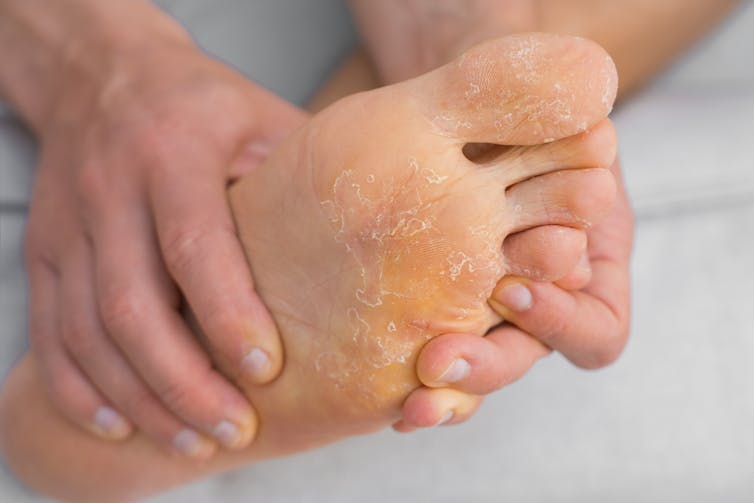
The microbes living in your socks can also transfer to any surface they come in contact with – including your shoes, bed, couch or floor. This means dirty socks could spread the fungus which causes Athlete’s foot, a contagious infection that affects the skin on and around the toes.

This is why it’s especially key that those with Athlete’s foot don’t share socks or shoes with other people, and avoid walking in just their socks or barefoot in gym locker rooms or bathrooms.

A person with Athlete's foot holds their foot in their hands.
Dirty socks could harbour the fungus which causes Athlete’s foot.
Kulkova Daria/ Shutterstock

What’s living in your socks also colonises your shoes. This is why you might not want to wear the same pair of shoes for too many days in a row, so any sweat has time to fully dry between wears and to prevent further bacterial growth and odours.

Foot hygiene

To cut down on smelly feet and reduce the number of bacteria growing on your feet and in your socks, it’s a good idea to avoid wearing socks or shoes that make the feet sweat.

Washing your feet twice daily may help reduce foot odour by inhibiting bacterial growth. Foot antiperspirants can also help, as these stop the sweat – thereby inhibiting bacterial growth.

It’s also possible to buy socks which are directly antimicrobial to the foot bacteria. Antimicrobial socks, which contain heavy metals such as silver or zinc, can kill the bacteria which cause foot odour. Bamboo socks allow more air flow, which means sweat more readily evaporates – making the environment less hospitable for odour-producing bacteria.

Antimicrobial socks might therefore be exempt from the single-use rule depending on their capacity to kill bacteria and fungi and prevent sweat accumulation.

But for those who wear socks that are made out of cotton, wool or synthetic fibres, it’s best to only wear them once to prevent smelly feet and avoid foot infections.

It’s also important to make sure you’re washing your socks properly between uses. If your feet aren’t unusually smelly, it’s fine to wash them in warm water that’s between 30-40°C with a mild detergent.

However, not all bacteria and fungi will be killed using this method. So to thoroughly sanitise socks, use an enzyme-containing detergent and wash at a temperature of 60°C. The enzymes help to detach microbes from the socks while the high temperature kills them.

If a low temperature wash is unavoidable then ironing the socks with a hot steam iron (which can reach temperatures of up to 180–220°C) is more than enough kill any residual bacteria and inactivate the spores of any fungi – including the one that causes Athlete’s foot.

Drying the socks outdoors is also a good idea as the UV radiation in sunlight is antimicrobial to most sock bacteria and fungi.

While socks might be a commonly re-worn clothing item, as a microbiologist I’d say it’s best you change your socks daily to keep feet fresh and clean.

The Conversation

Primrose Freestone does not work for, consult, own shares in or receive funding from any company or organisation that would benefit from this article, and has disclosed no relevant affiliations beyond their academic appointment.

ref. Can you wear the same pair of socks more than once? – https://theconversation.com/can-you-wear-the-same-pair-of-socks-more-than-once-270615

Social media, not gaming, tied to rising attention problems in teens, new study finds

Source: The Conversation – Global Perspectives – By Torkel Klingberg, Professor of Cognitive Neuroscience, Karolinska Institutet

The digital revolution has become a vast, unplanned experiment – and children are its most exposed participants. As ADHD diagnoses rise around the world, a key question has emerged: could the growing use of digital devices be playing a role?

To explore this, we studied more than 8,000 children, from when they were around ten until they were 14 years of age. We asked them about their digital habits and grouped them into three categories: gaming, TV/video (YouTube, say) and social media.

The latter included apps such as TikTok, Instagram, Snapchat, X, Messenger and Facebook. We then analysed whether usage was associated with long-term change in the two core symptoms of ADHD: inattentiveness and hyperactivity.

Our main finding was that social media use was associated with a gradual increase in inattentiveness. Gaming or watching videos was not. These patterns remained the same even after accounting for children’s genetic risk for ADHD and their families’ income.

We also tested whether inattentiveness might cause children to use more social media instead. It didn’t. The direction ran one way: social media use predicted later inattentiveness.

The mechanisms of how digital media affects attention are unknown. But the lack of negative effect of other screen activities means we can rule out any general, negative effect of screens as well as the popular notion that all digital media produces “dopamine hits”, which then mess with children’s attention.

As cognitive neuroscientists, we could make an educated guess about the mechanisms. Social media introduces constant distractions, preventing sustained attention to any task.

If it is not the messages themselves that distract, the mere thought of whether a message has arrived can act as a mental distraction. These distractions impair focus in the moment, and when they persist for months or years, they may also have long-term effects.

Gaming, on the other hand, takes place during limited sessions, not throughout the day, and involves a constant focus on one task at a time.

A boy playing a video game.
Not all screens are equal.
Kleber Cordeiro/Shutterstock.com

The effect of social media, using statistical measures, was not large. It was not enough to push a person with normal attention into ADHD territory. But if the entire population becomes more inattentive, many will cross the diagnostic border.

Theoretically, an increase of one hour of social media use in the entire population would increase the diagnoses by about 30%. This is admittedly a simplification, since diagnoses depend on many factors, but it illustrates how even an effect that is small at the individual level can have a significant effect when it affects an entire population.

A lot of data suggests that we have seen at least one hour more per day of social media during the last decade or two. Twenty years ago, social media barely existed. Now, teenagers are online for about five hours per day, mostly with social media.

The percentage of teenagers who claim to be “constantly online” has increased from 24% in 2015 to 46% 2023. Given that social media use has risen from essentially zero to around five hours per day, it may explain a substantial part of the increase in ADHD diagnoses during the past 15 years.

The attention gap

Some argue that the rise in the number of ADHD diagnoses reflects greater awareness and reduced stigma. That may be part of the story, but it doesn’t rule out a genuine increase in inattention.

Also, some studies that claim that the symptoms of inattention have not increased have often studied children who were probably too young to own a smartphone, or a period of years that mostly predates the avalanche in scrolling.

Social media probably increases inattention, and social media use has rocketed. What now? The US requires children to be at least 13 to create an account on most social platforms, but these restrictions are easy to outsmart.

Australia is currently going the furthest. From December 10 2025, media companies will be required to ensure that users are 16 years or above, with high penalties for the companies that do not adhere. Let’s see what effect that legislation will have. Perhaps the rest of the world should follow the Australians.

The Conversation

Torkel Klingberg receives funding from the Swedish Medical Research Foundation.

Samson Nivins receives funding from Stiftelsen Frimurare Barnhuset

ref. Social media, not gaming, tied to rising attention problems in teens, new study finds – https://theconversation.com/social-media-not-gaming-tied-to-rising-attention-problems-in-teens-new-study-finds-271144

Why can’t I wiggle my toes one at a time, like my fingers?

Source: The Conversation – USA – By Steven Lautzenheiser, Assistant Professor of Biological Anthropology, University of Tennessee

A baby chimp can grab a stick equally well with its fingers and its toes. Anup Shah/Stone via Getty Images

Curious Kids is a series for children of all ages. If you have a question you’d like an expert to answer, send it to curiouskidsus@theconversation.com.


Why can’t I wiggle my toes individually, like I can with my fingers? – Vincent, age 15, Arlington, Virginia


One of my favorite activities is going to the zoo where I live in Knoxville when it first opens and the animals are most active. On one recent weekend, I headed to the chimpanzees first.

Their breakfast was still scattered around their enclosure for them to find. Ripley, one of the male chimpanzees, quickly gathered up some fruits and vegetables, sometimes using his feet almost like hands. After he ate, he used his feet to grab the fire hoses hanging around the enclosure and even held pieces of straw and other toys in his toes.

I found myself feeling a bit envious. Why can’t people use our feet like this, quickly and easily grasping things with our toes just as easily as we do with our fingers?

I’m a biological anthropologist who studies the biomechanics of the modern human foot and ankle, using mechanical principles of movement to understand how forces affect the shape of our bodies and how humans have changed over time. Your muscles, brain and how human feet evolved all play a part in why you can’t wiggle individual toes one by one.

young chimp running on all fours
Chimpanzee hands and feet do similar jobs.
Manoj Shah/Stone via Getty Images

Comparing humans to a close relative

Humans are primates, which means we belong to the same group of animals that includes apes like Riley the chimp. In fact, chimpanzees are our closest genetic relatives, sharing almost 98.8% of our DNA.

Evolution is part of the answer to why chimpanzees have such dexterous toes while ours seem much more clumsy.

Our very ancient ancestors probably moved around the way chimpanzees do, using both their arms and legs. But over time our lineage started walking on two legs. Human feet needed to change to help us stay balanced and to support our bodies as we walk upright. It became less important for our toes to move individually than to keep us from toppling over as we moved through the world in this new way.

bare feet walking across sandy surface toward camera
Feet adapted so we could walk and balance on just two legs.
Karina Mansfield/Moment via Getty Images

Human hands became more important for things such as using tools, one of the hallmark skills of human beings. Over time, our fingers became better at moving on their own. People use their hands to do lots of things, such as drawing, texting or playing a musical instrument. Even typing this article is possible only because my fingers can make small, careful and controlled movements.

People’s feet and hands evolved for different purposes.

Muscles that move your fingers or toes

Evolution brought these differences about by physically adapting our muscles, bones and tendons to better support walking and balance. Hands and feet have similar anatomy; both have five fingers or toes that are moved by muscles and tendons. The human foot contains 29 muscles that all work to help you walk and stay balanced when you stand. In comparison, a hand has 34 muscles.

Most of the muscles of your foot let you point your toes down, like when you stand on tiptoes, or lift them up, like when you walk on your heels. These muscles also help feet roll slightly inward or outward, which lets you keep your balance on uneven ground. All these movements work together to help you walk and run safely.

The big toe on each foot is special because it helps push your body forward when you walk and has extra muscles just for its movement. The other four toes don’t have their own separate muscles. A few main muscles in the bottom of your foot and in your calf move all four toes at once. Because they share muscles, those toes can wiggle, but not very independently like your fingers can. The calf muscles also have long tendons that reach into the foot; they’re better at keeping you steady and helping you walk than at making tiny, precise movements.

a pen and ink drawing of the interior anatomy of a human hand
Your hand is capable of delicate movements thanks to the muscles and ligaments that control its bones.
Henry Gray, ‘Anatomy of the Human Body’/Wikimedia Commons, CC BY

In contrast, six main muscle groups help move each finger. The fingers share these muscles, which sit mostly in the forearm and connect to the fingers by tendons. The thumb and pinky have extra muscles that let you grip and hold objects more easily. All of these muscles are specialized to allow careful, controlled movements, such as writing.

So, yes, I have more muscles dedicated to moving my fingers, but that is not the only reason I can’t wiggle my toes one by one.

Divvying up brain power

You also need to look inside your brain to understand why toes and fingers work differently. Part of your brain called the motor cortex tells your body how to move. It’s made of cells called neurons that act like tiny messengers, sending signals to the rest of your body.

Your motor cortex devotes many more neurons to controlling your fingers than your toes, so it can send much more detailed instructions to your fingers. Because of the way your motor cortex is organized, it takes more “brain power,” meaning more signals and more activity, to move your fingers than your toes.

illustration of a brain looking down at the top of the head with one section highlighted orange
The motor cortex of your brain sends orders to move parts of your body.
Kateryna Kon/Science Photo Library via Getty Images

Even though you can’t grab things with your feet like Ripley the chimp can, you can understand why.


Hello, curious kids! Do you have a question you’d like an expert to answer? Ask an adult to send your question to CuriousKidsUS@theconversation.com. Please tell us your name, age and the city where you live.

And since curiosity has no age limit – adults, let us know what you’re wondering, too. We won’t be able to answer every question, but we will do our best.

The Conversation

Steven Lautzenheiser does not work for, consult, own shares in or receive funding from any company or organization that would benefit from this article, and has disclosed no relevant affiliations beyond their academic appointment.

ref. Why can’t I wiggle my toes one at a time, like my fingers? – https://theconversation.com/why-cant-i-wiggle-my-toes-one-at-a-time-like-my-fingers-256281

Florida’s new reporting system is shining a light on human trafficking in the Sunshine State

Source: The Conversation – USA – By Shelly M. Wagers, Associate Professor of Criminology, University of South Florida

Human trafficking can be hard to track because it is a crime that hides in plain sight. Mireya Acierto/Photodisc via Getty Images

Most Americans imagine human trafficking as a violent kidnapping or a “stranger danger” crime – someone abducted from a parking lot or trapped in a shipping container brought in from another country.

In fact, trafficking rarely takes this form.

In most cases, traffickers spend months or even years building trust and creating emotional and economic bonds with their victims. They use a variety of coercion and control techniques such as emotional abuse, forced criminality, financial abuse, and physical and sexual abuse to entrap their victims.

Meanwhile, the perpetrators are making money off their victims’ unpaid labor, including unwanted sex work. Human trafficking is estimated to be a US$172 billion industry.

The story of Jeffrey Epstein is just one example of how traffickers use a combination of manipulation, economic dependency and coercion – rather than physical captivity – to entrap vulnerable people and slowly erode their autonomy. Many victims don’t even realize they’re being exploited due to the manipulations of their traffickers.

Epstein’s crimes have attracted the national spotlight due to the fame and power of his clientele. His case demonstrates the harsh reality that human trafficking is far more common and complex than most people imagine.

We are criminologists who research human trafficking. In 2020, we founded the University of South Florida’s Trafficking in Persons Risk to Resilience Lab, known as the TIP lab, to study human trafficking in the state of Florida.

We know that labor and sex trafficking hide in plain sight, embedded in ordinary settings such as hotels, restaurants, farms, massage businesses and private homes.

Most victims are trafficked by someone they know or trust – a family member, intimate partner or employer. Many continue to go to school or work while being exploited.

Misconceptions about what trafficking looks like have made it harder to see and harder to measure. The available data on this crime and its victims has long been fragmented, incomplete and inconsistent. Law enforcement, government organizations such as health departments, and nonprofits that provide advocacy and victim services collect information differently. The same case could be counted multiple times by different agencies, while other victims go entirely uncounted, making it nearly impossible to understand the true scope of trafficking and effectively fight it.

Florida steps up

To address this problem, Florida in 2023 passed Senate Bill 7064, a law requiring all state and local government agencies and nongovernmental organizations that receive federal or state funding to send their human trafficking data to the USF TIP lab.

We developed TIPSTR, Florida’s statewide repository for anonymous human trafficking data. This single, consistent database is the most comprehensive data resource on human trafficking in any state in the U.S.

Our team compiled anonymous data from more than 30 state agencies and nonprofit organizations, including the Florida Department of Children and Families, the Florida Department of Law Enforcement and the Crisis Center of Tampa Bay.

We also conducted a self-report survey in 2024 to learn more about trafficking victims living in Florida. The survey was administered by YouGov using a representative sample of 2,500 Florida residents. And we established BRIGHT – Bridging Resources and Information Gaps in Human Trafficking – which connects survivors directly with services such as housing, mental health counseling, transportation and more, helping them move from crisis to stability. Besides serving as a resource for trafficking victims, BRIGHT allows us to measure and track the availability of victim services relative to the need for them.

Since starting TIPSTR in 2023, we’ve been putting all of the data together to create a picture of the complexities, depth and breadth of trafficking, as well as the resources that address the problem, both statewide and in each of Florida’s 67 counties.

man carries a bucket of tomatoes on his shoulders
Florida’s agricultural industry attracts many migrant workers, who are vulnerable to being exploited.
Wayne Eastep/The Image Bank via Getty Images

Why Florida faces higher risk

Florida’s economy and geography create a mix of risk factors for trafficking that are distinct from most other states.

With its large tourism, agriculture, construction and entertainment industries, the state depends heavily on temporary and mobile workforces. Its international airports and seaports connect it to global markets. Large sporting events and other entertainment bring in visitors looking for “fun in the sun” from all over the U.S. and the world.

All of these features make Florida economically vibrant – but they also create vulnerabilities. Transient labor markets, seasonal employment and high migration make it easier for traffickers to exploit workers and harder for authorities to detect exploitation. Often, buyers travel into Florida as tourists with the idea that “what happens in Florida stays in Florida,” creating a market for sex trafficking.

What we’ve found so far

2024 was the first full year for which we collected data, and we published our findings in July 2025 in the 2024 TIPSTR Report. The report demonstrates both the scale of the problem and the importance of reliable data.

The report also analyzes Florida counties with populations above 500,000, evaluating each county’s risk, resilience and response capacity on a scale from low to high.

Our self-report survey found that an estimated 500,000 current Florida residents were exploited or trafficked at work, and an estimated 200,000 were trafficked for sex. Minors made up half of those trafficked for sex and a quarter of those exploited at work. Although many of these survivors were exploited outside of Florida, these people need services locally to help get their lives on track.

Of those reporting human trafficking, only 9% to 12% reported this crime to law enforcement, confirming our concerns that it remains largely hidden from view. This is why it’s critical that TIPSTR doesn’t solely rely on law enforcement data.

Our analysis of the available data revealed wide variation across Florida counties in both the level of risk and the robustness of response systems. Some regions show strong resilience due to coordinated task forces and survivor services, while others struggle with underreporting and limited resources.

Translating data into action

At the same time, there are encouraging signs. The TIPSTR data shows prosecutions are increasing, and coordination among law enforcement, service providers and community organizations has strengthened.

Going forward, we hope our analysis of the data collected by TIPSTR will help the reporting agencies find new ways to respond. And tracking trends can allow policymakers to measure the effectiveness of programs run by different groups.

In fact, this is already happening. One sheriff’s office shared with us that when it saw how many illicit massage businesses were in its county, it started investigating them. In another instance, a nonprofit told us it had used the report to show why it needs more funding to expand its programs.

Seeing where trafficking is most concentrated and where services are missing is already helping the Florida Legislative Working Group on Human Trafficking identify potential policy changes.

Law enforcement can now use TIPSTR’s cross-agency data to connect cases. Service providers can coordinate care across counties, reducing duplication and ensuring continuity for survivors.

We hope that the report will also be used to develop broader awareness campaigns and better victim identification practices.

The importance of a long-term database

The system we’ve created will allow us to track the data for years to come. From a research perspective, this is critical, because it means our team can assess whether new policies and prevention strategies are making a measurable impact over time.

As criminologists, we believe that what Florida has built through TIPSTR can serve as a model for other states. Data alone cannot end human trafficking, but without it, we are fighting a hidden problem we cannot fully see.

Read more stories from The Conversation about Florida.

The Conversation

Shelly M. Wagers receives funding from National Institute of Justice and Mel Greene Foundation.

Joan A. Reid receives funding from National Institute of Justice and Mel Greene Foundation.

ref. Florida’s new reporting system is shining a light on human trafficking in the Sunshine State – https://theconversation.com/floridas-new-reporting-system-is-shining-a-light-on-human-trafficking-in-the-sunshine-state-265935

What does it mean to be a new national park? Ocmulgee Mounds in Georgia may soon find out

Source: The Conversation – USA (2) – By Seth T. Kannarr, Ph.D. Candidate in Geography, University of Tennessee

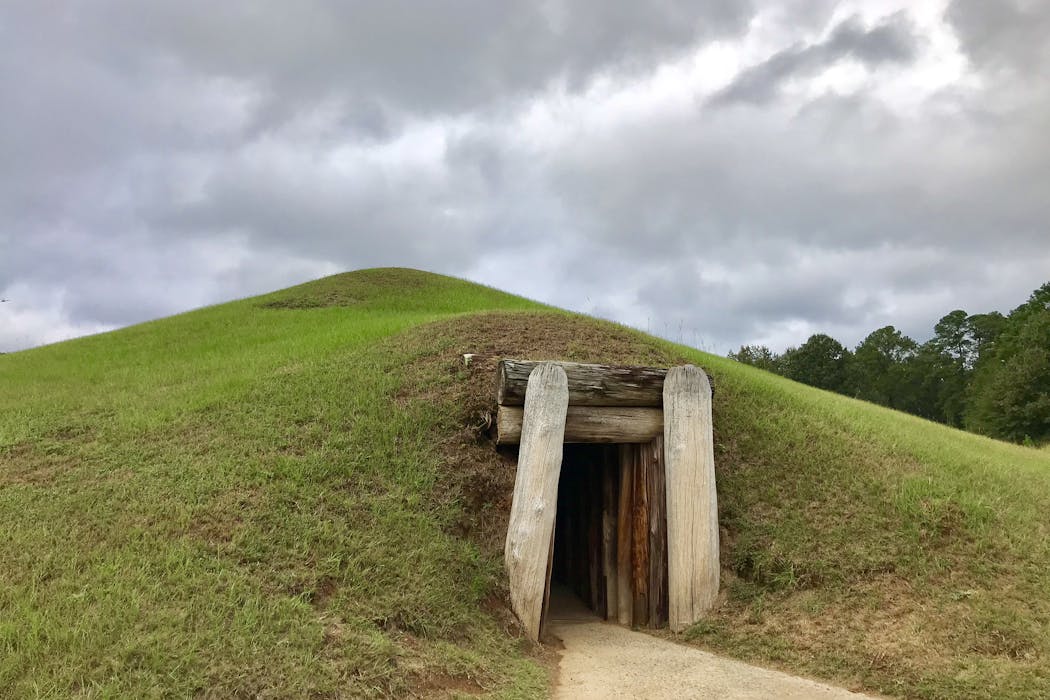
Earth Lodge at Ocmulgee Mounds shows an example of earthworks that are over 1,000 years old. Skhamse1 via Wikimedia Commons, CC BY-SA

Ocmulgee Mounds, a site in central Georgia with 12,000 years of Indigenous history, may be on the verge of becoming the newest U.S. national park. This is the flagship designation of the National Park Service system, which includes many types of properties in addition to formally designated national parks.

Although this redesignation may not include much change for the site itself, it could mean quite a lot to visitors, supporters and locals alike.

The 3,000-acre park protects land and features important to the Mississippian culture, which built the mounds there starting roughly 3,000 years ago, and the Muscogee (Creek) Nation, for which the site is an ancestral homeland.

The site includes seven enormous ceremonial and burial mounds made of earth, the largest of which is 55 feet (15 meters) tall and covers about 2 acres, as well as a museum containing millions of cultural artifacts, including pottery, stone tools, jewelry and bells.

The National Park Service has managed the site since the 1930s, first as a national monument and since 2019, as a national historical park. There are no legal or practical differences in protection between these redesignations, though the branding and marketing of the site may change.

As a geographer who studies parks and the naming of places, I have seen that when a National Park Service unit is redesignated as a national park, as a pending bill in Congress currently proposes for Ocmulgee Mounds, it does not typically change the funding available to run the site. That’s especially true at a time when National Park Service funding and personnel are being cut. However, a park redesignation does serve political purposes and affects how visitors perceive that park.

How parks are designated

The National Park Service manages 433 units with 19 different designations, such as “national battlefields,” “national lakeshores” and “national scenic trails.” Only 63 of these units carry the formal title or designation of “national park.”

All but one of these categories can be bestowed only by Congress. National monuments, however, can be created by the president directly, under the provisions of the Antiquities Act of 1906.

For example, the Antiquities Act allowed President Barack Obama to designate 1.3 million acres in Utah as Bears Ears National Monument in a December 2016 proclamation. That same act allowed President Donald Trump to shrink the protected area to 200,000 acres in 2017 – and President Joe Biden to re-expand it to 1.3 million acres in 2021.

Other examples of redesignation

In rare cases, a community, group or other organization proposes adding an area that is not currently managed by the National Park Service to the system, but this takes a lot of time and is different from the more common process of changing the formal designation of a property already within the system.

For instance, Indiana Dunes National Lakeshore became Indiana Dunes National Park in 2019. That same year, White Sands National Monument in New Mexico became White Sands National Park. And in 2020, New River Gorge National River in West Virginia became New River Gorge National Park and Preserve.

A large metal arch towers above a river with buildings in the background.
The Gateway Arch in St. Louis is the defining attraction of the smallest official national park in the U.S.
Soeren Stache/picture alliance via Getty Images

Why redesignations make a difference

My analysis of the contentious redesignation of the Jefferson National Expansion Memorial in St. Louis to Gateway Arch National Park in 2018 found that it was not done to offer additional protection to this site of national importance. Rather, the move was meant to take advantage of the public significance of the “national park” label and thereby attract more tourists and tourism revenue to the local economy.

The effort to make it a national park was part of a local campaign to renovate the underground visitor center, revitalize the park grounds and increase tourism. But the law that formalized the change included no additional funding, resources or protections for the Gateway Arch.

Changing the designation contradicted the park service’s own declaration that the term “national park” should be used for an area that “contains a variety of resources and encompasses large land or water areas to help provide adequate protection of the resources.”

During congressional hearings, the deputy director of the National Park Service, Robert Vogel, recommended the site not be labeled a national park but rather a national monument, because the site “is too small and limited in the range of resources the site protects and interprets to be called a national park.”

Gateway Arch National Park is now the smallest-area park in the U.S., at less than 200 acres, and is home to a large steel arch, an open lawn area, a museum and a single historic building – a courthouse where one of the Dred Scott trials was heard, along with other civil rights cases. It does not have the wildlife viewing, spectacular geologic features, outdoor recreation opportunities and sense of wilderness that the public has come to expect from national parks.

The park’s website admits “it is unusual for a national park to have no natural plant life” and describes the park as adjacent to the “concrete jungle of downtown St. Louis.”

What actually would change for Ocmulgee Mounds?

The redesignation effort for Ocmulgee Mounds has two primary aspects. First, it would declare the area a national park.

Second, it would add additional land to this protected area, designating that portion as a national preserve. The distinction matters: Public hunting, including traditional Indigenous hunting, is not allowed in national parks, but it is allowed in national preserves. And while national parks are managed by the National Park Service under the Department of Interior, national preserves can be managed in collaborative partnership with other groups, including local Indigenous people with cultural ties to the land.

The changes for Ocmulgee Mounds are supported by members of both political parties in both houses of Congress. And the redesignation does not appear to have triggered opposition from local communities, who in other places have objected for several reasons, including fear of increased tourism and desire to preserve any long-standing uses of the land that would be banned if it were to become a national park.

There are redesignation efforts underway seeking to make national parks in other locations as well, including the Delaware Water Gap National Recreation Area in New Jersey and Pennsylvania, Chiricahua National Monument in Arizona, Buffalo National River in Arkansas, and Apostle Islands National Lakeshore in Wisconsin.

The only real changes in these places, though, would be in marketing – the signs, brochures and merchandise sold in gift shops. But these changes would have an important effect: The tagline of “new national park” markets well and is believed to help attract more visitors to the site. But it won’t actually protect these landscapes any better than they already are under the stewardship of the National Park Service.

The Conversation

Seth T. Kannarr does not work for, consult, own shares in or receive funding from any company or organization that would benefit from this article, and has disclosed no relevant affiliations beyond their academic appointment.

ref. What does it mean to be a new national park? Ocmulgee Mounds in Georgia may soon find out – https://theconversation.com/what-does-it-mean-to-be-a-new-national-park-ocmulgee-mounds-in-georgia-may-soon-find-out-268474