Benin’s failed coup: three factors behind the takeover attempt

Source: The Conversation – Africa (2) – By John Joseph Chin, Assistant Teaching Professor of Strategy and Technology, Carnegie Mellon University

Military elements attempted to topple Benin’s government in early December 2025. However, unlike other coups across the Sahel and west Africa since 2020, this bid triggered a military response from Benin’s neighbours.

Benin is a west African state of 14.8 million people bordered by Togo, Burkina Faso, Niger and Nigeria.

Responding to two requests for assistance from the government of President Patrice Talon, Nigeria deployed fighter jets and the Economic Community of West African States (Ecowas) deployed elements of its standby force to target and dislodge the pro-coup forces.

Ecowas intervention likely played an important role in undermining the coup’s momentum and restoring order. The dozen or so putschists scored early tactical successes. They captured and broadcast from the national television station, occupied a military camp, and even took the two senior-most army officers hostage. But once Ecowas intervened militarily, any fence-sitters concluded that loyalists would prevail. Rather than a broad-based uprising, only 14 were arrested with a few plotters still at large.

I’m a scholar who maintains the Colpus dataset of coups and I have documented the history of post-second world war coups. As part of this work, I have sought to document the complex causes and effects of Africa’s post-2020 “epidemic of coups”, now entering its fifth year.

Though details remain scant on the motives of the coup plotters led by Lt. Col. Pascal Tigri, three structural factors likely contributed to the latest coup attempt:

From democratic backsliding to democratic u-turn?

Benin does not have a history of recent coups. It had not suffered a bona fide coup attempt since January 1975.

In the first 15 years after independence from France in 1960, Dahomey (as the country was then called) experienced nine coup attempts, making it one of the most coup-prone countries in sub-Saharan Africa during the early Cold War period.

However, political instability through the early 1970s gave way to the stable and durable personalist regime of Mathieu Kérékou (1972-1990). This was followed by electoral democracy after the Cold War.

Until recently, Benin had been heralded as one of Africa’s “democratic outliers” and success cases of democratic survival despite challenging conditions. Though poor, Benin has seen decades of improving average living standards. Economic growth in 2025 was 7.5%; the latest unrest cannot be blamed on poverty or an economic crisis.

However, data on three key dimensions of democracy shows that although electoral contestation and participation have endured, constraints on the executive (and thus liberal democracy overall) have declined in Benin since Talon’s election as president in 2016.

According to autocratic regime data from US political scientists Barbara Geddes, Joe Wright and Erica Frantz as well as the Varieties of Democracy (V-Dem) project (which surveys experts about democracy worldwide), Benin slipped back into an electoral autocracy in 2019. That is when opposition candidates were prevented from competing in parliamentary elections. The polls were marred by repression of mass protests and an internet shutdown.

In 2021, an electoral boycott led to Talon’s easy re-election.

V-Dem data show a very partial and incomplete democratic rebound since 2022. The opposition was allowed to compete in the January 2023 parliamentary elections. And earlier this year Talon confirmed that he would not seek an unconstitutional third term.

The potential for a coup, however, was foreshadowed last fall when the regime alleged that it had uncovered a coup plot involving a presidential hopeful in 2026. Last month, parliament’s vote to create a Senate was condemned by the opposition as allowing Talon a means to influence affairs after he steps down.

With the main opposition party barred from running in next year’s presidential election, Talon is expected to hand off power to his ally and finance minister, Romuald Wadagni.

Though the political leanings of Tigri and coup plotters remain unclear, Tigri claimed to seek to “free the people from dictatorship”.

The coupmakers also presumably sought to block the upcoming 2026 parliamentary and presidential elections.

A growing jihadist threat

Among the coup leaders’ key complaints was Talon’s mismanagement of the country. In particular, they cited “continuing deterioration of the security situation in northern Benin and “the ignorance and neglect of the situation of our brothers in arms who have fallen at the front” due to worsening jihadist violence.

A number of coups in nearby countries since 2020 have been preceded by rising levels of political violence and deepening insecurity born of jihadist insurgencies. That was certainly the case in Mali, Burkina Faso and to a lesser extent Niger.

Since last year, it has been clear that the jihadist violence was spilling over from Sahel neighbours such as Burkina Faso and Niger into the borderlands of west Africa. This included Benin’s north. ACLED data show a major increase in political violence events since 2022. And a spike in political fatalities in 2024:

Much of this increased violence is attributable to the advance of operations by the al-Qaida affiliated group Jama’at Nusrat al-Islam wal-Muslimin (JNIM). The group also managed to launch its first fatal attack in Nigeria at the end of October.


Read more:
Nigeria’s new terror threat: JNIM is spreading but it’s not too late to act


Russia has become the primary security partner for the Sahel Alliance. The defence pact was signed in 2023 by post-coup juntas of Burkina Faso, Mali and Niger to defeat jihadists and maintain power.

Nevertheless, Benin has continued to rely on western security partners to aid its counter-insurgency efforts and bolster border security. Notably, Benin continues to welcome military cooperation with France. Since 2022 Paris has pledged greater military aid to combat terrorism.

In September, US Africa Command commander General Dagvin Anderson visited Benin to underscore cooperation to oppose terrorism.

During the coup attempt, Tigri reportedly warned against French intervention and railed against “imperialism”. The speech reportedly ended with the phrase “The Republic or Death”, which echoes the new motto of Burkina Faso’s junta.

This suggests that the coup makers may have been inspired by others in the Sahel.

Risk of the coup belt expanding

The Benin events mark the third coup attempt and first failed coup this year in the Sahel region. There have been 17 coup attempts in Africa since 2020, including 11 successful coups. This makes the African coup belt stretching across the Sahel and west Africa the global epicentre of coups.


Read more:
Africa’s power grabs are rising – the AU’s mixed response is making things worse


West Africa’s latest “copycat” coup attempt was condemned by the African Union, European Union and Ecowas. Yet it was praised by pro-Russian social media accounts, reflecting a growing cleavage between the Russia-aligned juntas of the Sahel Alliance and the remaining Ecowas-aligned civilian regimes of west Africa.


Read more:
Coups in west Africa have five things in common: knowing what they are is key to defending democracy


Although Nigeria-led Ecowas threatened military intervention after the coup in Niger in July 2023, the regional body only actually militarily intervened to defeat the coup attempt in Benin. Nigeria, it appears, has drawn a line in the sand to retain a buffer from further instability – including JNIM operations. On the same day of the coup attempt in Benin, it was reported that Nigeria was seeking greater aid from France to combat insecurity.

The Conversation

John Joseph Chin does not work for, consult, own shares in or receive funding from any company or organisation that would benefit from this article, and has disclosed no relevant affiliations beyond their academic appointment.

ref. Benin’s failed coup: three factors behind the takeover attempt – https://theconversation.com/benins-failed-coup-three-factors-behind-the-takeover-attempt-271540

PFAS in pregnant women’s drinking water puts their babies at higher risk, study finds

Source: The Conversation – USA (2) – By Derek Lemoine, Professor of Economics, University of Arizona

Studies show PFAS can be harmful to human health, including pregnant women and their fetuses. Olga Rolenko/Moment via Getty Images

When pregnant women drink water that comes from wells downstream of sites contaminated with PFAS, known as “forever chemicals,” the risks to their babies’ health substantially increase, a new study found. These risks include the chance of low birth weight, preterm birth and infant mortality.

Even more troubling, our team of economic researchers and hydrologists found that PFAS exposure increases the likelihood of extremely low-weight and extremely preterm births, which are strongly associated with lifelong health challenges.

What wells showed us about PFAS risks

PFAS, or perfluoroalkyl and polyfluoroalkyl substances, have captured the attention of the public and regulators in recent years for good reason. These man-made compounds persist in the environment, accumulate in human bodies and may cause harm even at extremely low concentrations.

Most current knowledge about the reproductive effects of PFAS comes from laboratory studies on animals such as rats, or from correlations between PFAS levels in human blood and health outcomes.

Both approaches have important limitations. Rats and humans have different bodies, exposures and living conditions. And independent factors, such as kidney functioning, may in some cases be the true drivers of health problems.

We wanted to learn about the effects of PFAS on real-world human lives in a way that comes as close as possible to a randomized experiment. Intentionally exposing people to PFAS would be unethical, but the environment gave us a natural experiment of its own.

We looked at the locations of wells that supply New Hampshire residents with drinking water and how those locations related to birth outcomes.

We collected data on all births in the state from 2010 to 2019 and zoomed in on the 11,539 births that occurred within 3.1 miles (5 kilometers) of a site known to be contaminated with PFAS and where the mothers were served by public water systems. Some contamination came from industries, other from landfills or firefighting activities.

A conceptual illustration shows how PFAS can enter the soil and eventually reach groundwater, which flows downhill. Industries and airports are common sources of PFAS. The homes show upstream (left) and downstream (right) wells.
Melina Lew

PFAS from contaminated sites slowly migrate down through soil into groundwater, where they move downstream with the groundwater’s flow. This created a simple but powerful contrast: pregnant women whose homes received water from wells that were downstream, in groundwater terms, from the PFAS source were likely to have been exposed to PFAS from the contaminated site, but those who received water from wells that were upstream of those sites should not have been exposed.

Using outside data on PFAS testing, we confirmed that PFAS levels were indeed greater in “downstream” wells than in “upstream” wells.

The locations of utilities’ drinking water wells are sensitive data that are not publicly available, so the women likely would not have known whether they were exposed. Prior to the state beginning to test for PFAS in 2016, they may not have even known the nearby site had PFAS.

PFAS connections to the riskiest births

We found what we believe is clear evidence of harm from PFAS exposure.

Women who received water from wells downstream of PFAS-contaminated sites had on average a 43% greater chance of having a low-weight baby, defined as under 5.5 pounds (2,500 grams) at birth, than those receiving water from upstream wells with no other PFAS sources nearby. Those downstream had a 20% greater chance of a preterm birth, defined as before 37 weeks, and a 191% greater chance of the infant not surviving its first year.

Per 100,000 births, this works out to 2,639 additional low-weight births, 1,475 additional preterm births and 611 additional deaths in the first year of life.

Looking at the cases with the lowest birth weights and earliest preterm births, we found that the women receiving water from wells downstream from PFAS sources had a 180% greater chance of a birth under 2.2 pounds (1,000 grams) and a 168% greater chance of a birth before 28 weeks than those with upstream wells. Per 100,000 births, that’s about 607 additional extremely low-weight births and 466 additional extremely preterm births.

PFAS contamination is costly

When considering regulations to control PFAS, it helps to express the benefits of PFAS cleanup in monetary terms to compare them to the costs of cleanup.

Researchers use various methods to put a dollar value on the cost of low-weight and preterm births based on their higher medical bills, lower subsequent health and decreased lifetime earnings.

We used the New Hampshire data and locations of PFAS-contaminated sites in 11 other states with detailed PFAS testing to estimate costs from PFAS exposure nationwide related to low birth weight, preterm births and infant mortality.

The results are eye-opening. We estimate that the effects of PFAS on each year’s low-weight births cost society about US$7.8 billion over the lifetimes of those babies, with more babies born every year.

We found the effects of PFAS on preterm births and infant mortality cost the U.S. about $5.6 billion over the lifetimes of those babies born each year, with some of these costs overlapping with the costs associated with low-weight births.

An analysis produced for the American Water Works Association estimated that removing PFAS from drinking water to meet the EPA’s PFAS limits would cost utilities alone $3.8 billion on an annual basis. These costs could ultimately fall on water customers, but the broader public also bears much of the cost of harm to fetuses.

We believe that just the reproductive health benefits of protecting water systems from PFAS contamination could justify the EPA’s rule.

Treating PFAS

There is still much to learn about the risks from PFAS and how to avoid harm.

We studied the health effects of PFOA and PFOS, two “long-chain” species of PFAS that were the most widely used types in the U.S. They are no longer produced in the U.S., but they are still present in soil and groundwater. Future work could focus on newer, “short-chain” PFAS, which may have different health impacts.

A woman holding a small child fills a glass with water.
If the water utility isn’t filtering for PFAS, or if that information isn’t known, people can purchase home water system filters to remove PFAS before it reaches the faucet.
Compassionate Eye Foundation/David Oxberry via Getty Images

PFAS are in many types of products, and there are many routes for exposure, including through food. Effective treatment to remove PFAS from water is an area of ongoing research, but the long-chain PFAS we studied can be removed from water with activated carbon filters, either at the utility level or inside one’s home.

Our results indicate that pregnant women have special reason to be concerned about exposure to long-chain PFAS through drinking water. If pregnant women suspect their drinking water may contain PFAS, we believe they should strongly consider installing water filters that can remove PFAS and then replacing those filters on a regular schedule.

The Conversation

Ashley Langer receives funding from the National Science Foundation.

Bo Guo and Derek Lemoine do not work for, consult, own shares in or receive funding from any company or organization that would benefit from this article, and have disclosed no relevant affiliations beyond their academic appointment.

ref. PFAS in pregnant women’s drinking water puts their babies at higher risk, study finds – https://theconversation.com/pfas-in-pregnant-womens-drinking-water-puts-their-babies-at-higher-risk-study-finds-270051

Gen Z is burning out at work more than any other generation — here’s why and what can be done

Source: The Conversation – Canada – By Nitin Deckha, Lecturer in Justice Studies, Early Childhood Studies, Community and Social Services and Electives, University of Guelph-Humber

Gen Z workers are reporting some of the highest burnout levels ever recorded, with new research suggesting they are buckling under unprecedented levels of stress.

While people of all age levels report burnout, Gen Z and millennials are reporting “peak burnout” at earlier ages. In the United States, a poll of 2,000 adults found that a quarter of Americans are burnt out before they’re 30 years old.

Similarly, a British study measured burnout over an 18-month period after the COVID-19 pandemic and found Gen Z members were reporting burnout levels of 80 per cent. Higher levels of burnout among the Gen Z cohort were also reported by the BBC a few years ago.

Globally, a survey covering 11 countries and more than 13,000 front-line employees and managers reported that Gen Z workers were more likely to feel burnt out (83 per cent) than other employees (75 per cent).

Another international well-being study found that nearly one-quarter of 18- to 24-year-olds were experiencing “unmanageable stress,” with 98 per cent reporting at least one symptom of burnout.

And in Canada, a Canadian Business survey found that 51 per cent of Gen Z respondents felt burnt out — lower than millennials at 55 per cent, but higher than boomers at 29 per cent and Gen X, at 32 per cent.

As a longstanding university educator of Gen Z students, and a father of two of this generation, the levels of Gen Z burnout in today’s workplace are astounding. Rather than dismissing young workers as distracted or too demanding of work-life balance, we might consider that they’re sounding the alarm of what’s broken at work and how we can fix it.


No one’s 20s and 30s look the same. You might be saving for a mortgage or just struggling to pay rent. You could be swiping dating apps, or trying to understand childcare. No matter your current challenges, our Quarter Life series has articles to share in the group chat, or just to remind you that you’re not alone.

Read more from Quarter Life:


What burnout really is

Burnout can vary from person to person and across occupations, but researchers generally agree on its core features. It occurs when there is conflict between what a worker expects from their job and what the job actually demands.

That mismatch can take many forms: ambiguous job tasks, an overload of tasks or not having enough resources or the skills needed to respond to a role’s demands.

In short, burnout is more likely to occur when there’s a growing mismatch between one’s expectations of work and its actual realities. Younger workers, women and employees with less seniority are consistently at higher risk of burnout.

Burnout typically progresses across three dimensions. While fatigue is often the first noticeable symptom of burnout, the second is cynicism or depersonalization, which leads to alienation and detachment to one’s work. This detachment leads to the third dimension of burnout: a declining sense of personal accomplishment or self-efficacy.

Why Gen Z is especially vulnerable to burnout

Several forces converge to make Gen Z particularly susceptible to burnout. First, many Gen Z entered the workforce during and after the COVID-19 pandemic.

It was a time of profound upheaval, social isolation and changing work protocols and demands. These conditions disrupted the informal learning that typically happens through everyday interactions with colleagues that were hard to replicate in a remote workforce.

Second, broader economic pressures have intensified. As American economist Pavlina Tcherneva argues, the “death of the social contract and the enshittification of jobs” — the expectation that a university education would result in a well-paying job — have left many young people navigating a far more precarious landscape.

The intensification of economic disruption, widening inequality, increasing costs of housing and living and the rise of precarious employment have put greater financial pressures on this generation.

A third factor is the restructuring of work that is taking place under artificial intelligence. As workplace strategist Ann Kowal Smith wrote in a recent Forbes article, Gen Z is the first generation to enter a labour market defined by a “new architecture of work: hybrid schedules that fragment connection, automation that strips away context and leaders too busy to model judgment.”

What can be done?

If you’re reading this and feeling burnt out, the first thing to know is that you’re not overreacting and you’re not alone. The good news is, there are ways to recover.

One of burnout’s most overlooked antidotes is combating the alienation and isolation it produces. The best way to do this is by building connection and relation to others, starting with work colleagues. This could be as simple as checking in with a teammate after a meeting or setting up a weekly coffee with a colleague.

In addition, it’s important to give up on the idea that excessive work is better work. Set boundaries at work by blocking out time in your calendar and clearly signalling your availability to colleagues.


Read more:
Managers can help their Gen Z employees unlock the power of meaningful work − here’s how


But individual coping strategies can only go so far. The more fundamental solutions must come from workplaces themselves. Employers need to offer more flexible work arrangements, including wellness and mental health supports. Leaders and managers should communicate job expectations clearly, and workplaces should have policies to proactively review and redistribute excessive workloads.

Kowal Smith has also suggested building a new “architecture of learning” in the workplace that includes mentorship, provides feedback loops and rewards curiosity and agility.

Taken together, these workplace transformation efforts could humanize the workplace, lessen burnout and improve engagement, even at a time of encroaching AI. A workplace that works better for Gen Z ultimately works better for all of us.

The Conversation

Nitin Deckha is a member of the Institute for Performance and Learning and the Canadian Community of Corporate Educators.

ref. Gen Z is burning out at work more than any other generation — here’s why and what can be done – https://theconversation.com/gen-z-is-burning-out-at-work-more-than-any-other-generation-heres-why-and-what-can-be-done-270237

From concrete walls to living edges, here’s how riverside habitats are being restored along the Thames

Source: The Conversation – UK – By Wanda Bodnar, PhD Candidate, Marine and Estuarine Science, UCL

The Thames estuary in southeast England — the tidal stretch of the river — once supported extensive saltmarshes, seagrass meadows and oyster beds. These shallow areas, which flood and drain with the tides, provided vital feeding and nursery grounds for fish. But centuries of urban development have replaced them with concrete walls, docks and flood defences.

Much of this change happened in the Victorian era. The Thames embankment straightened and hardened the river’s edge, severing the natural connection between land and water. Today, barely 1% of those original intertidal habitats — the shallow zones between the low and high tide mark — remain. But while the physical landscape has continued to shrink, the condition of the water has taken a very different path.

Since the 1960s, water quality has improved dramatically, and more than 125 fish species have been recorded in the Thames river system. Some even spawn in the Thames. With stable oxygen levels and declining pollution, the river has made an impressive biological recovery — but not a physical one. Fish have returned, but the habitats they depend on have not. With so few natural areas left today, young fish have far fewer places to feed and grow than they once did.

Restoring life at the edge

To counter this loss, new aquatic habitats have been created across London over the past 25 years. The Estuary Edges project — led by the Thames Estuary Partnership with the Environment Agency and the Port of London Authority — shows how to soften hard riverbanks and make space for wildlife.

These created or “engineered” habitats come in many shapes and forms. Some are “setbacks”, where parts of the river wall are opened or moved back to allow tides to flood naturally. Others are gently sloping vegetated terraces. These are sections of hard wall or steep bank that have been reshaped and planted with aquatic and saltmarsh plants to recreate a more natural edge.

Even vertical walls can be improved by adding ledges and textured surfaces. These features give aquatic wildlife places to cling, feed and shelter.

Between 2017 and 2023, nine “estuary edges” sites were surveyed, from Barking Creek to Wandsworth in London. Using specialised nets, more than 1,000 fish were recorded — including gobies, seabass and the critically endangered European eel. Almost all were juveniles, showing that even small, vegetated areas can shelter young fish in the heart of London. The surveys also showed that design and time matter. Habitats with gentle slopes, channels and good water flow supported more fish. Sites with barriers or poor drainage often trapped water — and fish — on the falling tide.

At Greenwich Millennium Terraces, an area of the peninsula that was redeveloped in 1997, a natural drainage channel formed over the years. By 2023, the site supported mullet, flounder and many eels. At Barking Creek, a tidal channel that reformed after reed overgrowth restored fish access and increased diversity. The neighbouring setback site, built in 2011, kept water flowing throughout the tide and consistently supported gobies, seabass, flounder and eels.

These examples show that habitat creation works — but they also highlight significant knowledge gaps. Compared with decades of research on water quality, studies on habitat function remain limited, especially across different habitat types and levels of human impact.

Further downstream, the Transforming the Thames project is now scaling up restoration. Led by the Zoological Society of London, it focuses on the outer estuary, where there is more space to restore and reconnect habitats.

Together, Estuary Edges and Transforming the Thames offer complementary approaches to habitat recovery: creating new habitats along the urban river edge while restoring those lost across the broader estuary.

This connection underpins my PhD research. I study how fish use natural, degraded, created and restored habitats across the Thames. By combining environmental DNA with net surveys, diet analysis, and stable isotope techniques, I explore how fish feed, move and interact with different habitat types. This helps reveal how these habitats support fish — and how fish respond as restoration progresses.

Creating and restoring habitats is not only about helping fish and other wildlife. Shallow, plant-rich edges stabilise sediments, absorb waves, improve water quality and strengthen climate resilience. They also create peaceful “blue havens”: places where people can reconnect with the river.

Once declared “biologically dead”, the Thames has made a remarkable comeback. Its revival story, however, is still being written.


Don’t have time to read about climate change as much as you’d like?

Get a weekly roundup in your inbox instead. Every Wednesday, The Conversation’s environment editor writes Imagine, a short email that goes a little deeper into just one climate issue. Join the 47,000+ readers who’ve subscribed so far.


The Conversation

This article draws on decades of research and collaboration across the Thames Estuary, made possible by the work of many individuals and organisations. I am especially grateful to Steve Colclough, whose long-standing work continue to influence restoration efforts across the region. I worked full-time at the Thames Estuary Partnership between 2018 and 2024, and I am now undertaking a NERC-funded PhD jointly hosted by Queen Mary University of London, the Institute of Zoology and University College London.

ref. From concrete walls to living edges, here’s how riverside habitats are being restored along the Thames – https://theconversation.com/from-concrete-walls-to-living-edges-heres-how-riverside-habitats-are-being-restored-along-the-thames-269420

Parental child abduction: why extending criminalisation is not the answer

Source: The Conversation – UK – By Allison Wolfreys, Lecturer in Law, The Open University

PrasitRodphan/Shutterstock

The government is proposing a change in the law on parental child abduction. The crime and policing bill, under consideration in parliament, would make it a crime for a parent to take their child on holiday and then not return them at the end of the agreed holiday period. This would be punishable by up to seven years’ imprisonment.

The government is attempting to remedy what could be seen as a gap in the law. But this approach fails to take into account what we know about the situations in which this kind of parental child abduction occurs. In many cases, it involves a mother fleeing domestic abuse with her children.

Parental child abduction happens when a child is taken to another country without the other parent’s knowledge or consent, or when one parent takes the children abroad for a holiday and keeps them overseas beyond the agreed holiday period. Currently, the recourse for parents left behind is contained in the 1980 Hague Convention on the Civil Aspects of Child Abduction.

This was created with the objective of minimising harm to children. It enables the left-behind parent to apply to the court in the country the children were taken to for their prompt return. The Convention remains the primary legal instrument of response, with 103 signatory member states.

The crime and policing bill currently before Parliament will leave the 1980 Convention untouched but bolster criminal sanctions against parents who take children by amending the Child Abduction Act 1984, which applies to England and Wales.

The 1984 Act made it an offence for a parent to take or send a child out of the jurisdiction without the other parent’s consent. The parent who took the children is sanctioned only if police pursue a complaint made by the left-behind parent, which is then subject to a decision by the Crown Prosecution Service to prosecute.

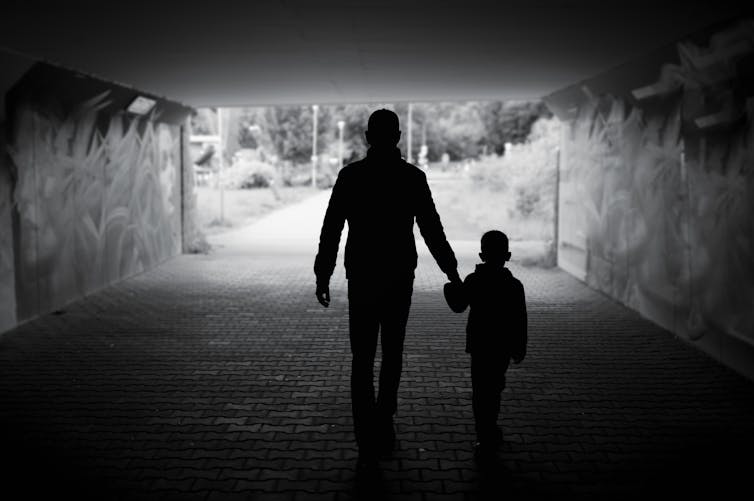
Silhouetted man and child
The key focus in existing legislation is the return of children.
KieferPix/Shutterstock

Now, the government seeks to strengthen criminal sanctions against parents who fail to return children. But the proposed seven years’ imprisonment does not align with what research and practice tells us about parental child abduction in 2025.

Profile of the abductor

There was little hard statistical data available on parental child abduction when the Hague Convention was created. However, the abduction of children was primarily seen as something done by fathers who were not the primary carer of their children.

The picture is now very different. Research conducted in 2015 found that 73% of taking parents were mothers, an increase from earlier years, and of these 91% are primary carers. My research and that of other scholars has found that domestic abuse features heavily in these cases. Essentially, these mothers are taking their children and attempting to escape an abusive situation. Research suggests that domestic abuse may be present in approximately 70% of child abduction cases.

If this amendment proceeds, then mothers who have fled overseas with their children to escape an abusive relationship may refuse to return for fear of prosecution. But through the mechanism set up under the Hague Convention, the children can still be ordered to go back. This proposed change in law takes no account of the impact on children of criminalising the parent who will most often be their primary carer. The potential criminalisation of primary carers will inevitably compound the trauma for children at the centre of these cases.

The reasons for parental child abduction are multifaceted and complex. The forum for resolving family law disputes is the family court, and punitive criminal sanctions are likely to cause harm to children. Furthermore, the potential criminalisation of mothers in the context of domestic abuse flies in the face of current government policy to support victims of abuse. It also fails to prioritise the individual needs of children caught up in parental conflict.

It is disappointing to note that the House of Commons has to date given scant attention to this proposed change to the law. It was not debated at report stage (when MPs have an opportunity to consider amendments to a bill).

Currently there are several members of the House of Lords with expertise in family law. Now that the bill has reached committee stage – a detailed examination of each line – in the House of Lords, I hope that they will draw attention to this issue and persuade others that the change in law should be abandoned. These complex cases should be left to the family court where they properly belong.

The Conversation

Allison Wolfreys does not work for, consult, own shares in or receive funding from any company or organisation that would benefit from this article, and has disclosed no relevant affiliations beyond their academic appointment.

ref. Parental child abduction: why extending criminalisation is not the answer – https://theconversation.com/parental-child-abduction-why-extending-criminalisation-is-not-the-answer-271019

Warm oceans seem to be turning even ‘weak’ cyclones into deadly rainmakers

Source: The Conversation – UK – By Ligin Joseph, PhD Candidate, Oceanography, University of Southampton

The final week of November was devastating for several South Asian countries. Communities in Sri Lanka, Indonesia and Thailand were inundated as Cyclones Ditwah and Senyar unleashed days of relentless rain. Millions were affected, more than 1,500 people lost their lives, hundreds are still missing, and damages ran into multiple millions of US dollars. Sri Lanka’s president even described it as the most challenging natural disaster the island has ever seen.

When disasters like this happen, the blame often falls on a failure in early warnings or poor preparedness. This was the case with major floods in Kerala, south India, in 2018, which devastated my hometown.

But this time, the forecasts were largely accurate; the authorities knew the storms were coming, yet the devastation was still immense.

So, if the forecasts were good enough, why were the impacts still so severe?

Weak winds, extreme rain

One emerging explanation is that these storms were not dangerous because of their winds, but because they produced unusually intense rainfall.

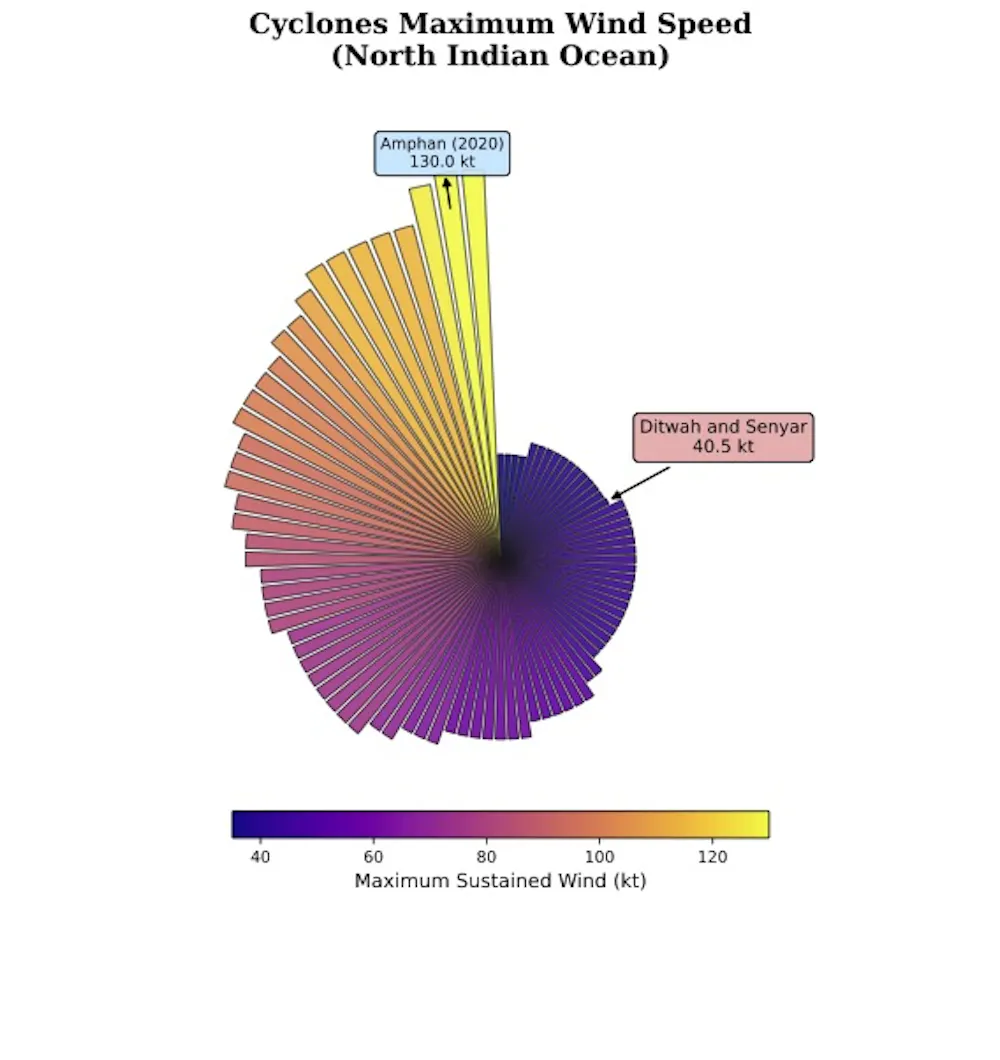
Graph of wind speeds
This graph of all cyclonic storms over the north Indian Ocean since 2001 shows Ditwah and Senyar weren’t particularly windy. (Wind speed measured in knots. 1 knot is about 1.15 mph or 1.85 kph)
Ligin Joseph (data: IBTrACS), CC BY-SA

Consider Cyclone Ditwah. Its peak winds were around 75 km/h (47 mph). That’s windy, but nothing special. In the UK, it would be classified merely as a “gale” rather than a “storm”. It was far weaker than the 220 km/h winds of the powerful 1978 cyclone that also struck Sri Lanka. Yet Ditwah still caused massive devastation.

What explains this apparent contradiction? It’s too early to say definitively, but climate change is likely a part of the story. Even when storms are not especially strong in wind terms, the amount of rain they carry is increasing.

A warmer atmosphere holds more water

A well established meteorological rule helps explain why. For every degree of global warming, the atmosphere can hold about 7% more moisture.

As the planet warms, the air above us becomes a larger reservoir, waiting to dump more water on us. When storms form, they can tap into this expanded supply, often in extremely short bursts. Even if wind speeds are modest, the rainfall alone can be catastrophic.

The oceans matter even more

Warming oceans play an even more powerful role, as cyclones draw their energy from warm ocean waters. Satellite data from late November shows just how warm the eastern Indian Ocean was, with large areas more than 1°C above normal during Ditwah and Senyar.

Coloured map of Indian Ocean and SE Asian seas
In the days before the cyclones formed (20–24 November), the oceans were even warmer than usual, creating conditions that could have fuelled and intensified the rainfall.
Ligin Joseph (Data: OISST; track positions are approximate), CC BY-SA

Such warm anomalies are no longer unusual. The oceans have absorbed more than 90% of the excess heat trapped by greenhouse gases, and long-term observations show a clear upward trend in ocean temperatures.

That doesn’t necessarily mean cyclones are becoming more frequent – their formation still depends on other ingredients, such as low wind shear (small differences in wind speed and direction with height) and the right atmospheric structure.

What warmer oceans do change, however, is the amount of energy available to any storm that does manage to form. When the ocean is warmer, cyclones have more fuel and evaporation increases, loading the atmosphere with moisture that can fall as intense rain once a storm develops. Even weak cyclones can therefore hold exceptional amounts of rain.

Coloured map of Indian Ocean and SE Asian seas
Evaporation averaged for 26–27 November. Ditwah especially travelled over warm waters supplying large amounts of moisture to the atmosphere.
Ligin Joseph (Data: ERA5), CC BY-SA

The winds near the surface help this process along. As they move across the ocean, they sweep away the moisture-filled air just above the water and replace it with drier air, allowing evaporation to continue. Put together, warmer oceans, higher evaporation, and an atmosphere that can store more moisture, these factors can significantly intensify the rainfall associated with cyclones.

Coastline hugging makes flooding worse

Local geography amplified these effects. Both Ditwah and Senyar formed unusually close to land and travelled along the coastline for an extended period. This meant they stayed over warm waters long enough to continuously draw moisture, but remained close enough to land to dump that moisture as intense rainfall almost immediately.

Cyclone Ditwah, in particular, moved slowly as it approached Sri Lanka. Slow-moving storms can be especially dangerous as they repeatedly dump rain over the same area. Even if winds are weak, this combination of warm seas, coastal proximity and slow forward speed can be devastating.

A new threat

These storms suggest that climate change – especially ocean warming – is reshaping the risks posed by cyclones. The most dangerous storms may no longer simply be the ones with the strongest winds, but also the ones with the most moisture.

Forecasting systems, including new AI-powered weather models, are getting better at predicting cyclone tracks and wind speeds. Yet rainfall-driven flooding remains far harder to forecast. As oceans continue to warm, governments and disaster agencies will need to prepare for storms that may be weak in wind but extreme in rain.

These insights are based on preliminary analysis and emerging scientific understanding. More detailed peer-reviewed studies will be needed to pinpoint exactly why Ditwah and Senyar produced such extreme rainfall. But the pattern that is emerging – weak cyclones delivering outsized floods in a warming world – must not be ignored.

The Conversation

Ligin Joseph receives funding from the UK’s Natural Environment Research Council (NERC).

ref. Warm oceans seem to be turning even ‘weak’ cyclones into deadly rainmakers – https://theconversation.com/warm-oceans-seem-to-be-turning-even-weak-cyclones-into-deadly-rainmakers-271550

Nigel Farage accused of breaking election spending laws – the situation explained

Source: The Conversation – UK – By Sam Power, Lecturer in Politics, University of Bristol

Nigel Farage has found himself in hot water over accusations that he failed to report that his 2024 election campaign in Clacton went over the spending limit of £20,660.72. Richard Everett, a former Reform councillor (who has since left the party – or been expelled, depending what you read), has submitted documents to the police.

Election spending in the UK is beyond complex. It is so hard to understand that it has been compared to a “Jane Austen-style intricate dance … all sorts of daring and dicey moves are permissible, provided you know precisely where to step and when, and how not to upset the crowds”.

Nowhere is this truer than when it comes to spending limits. There are, in fact, two spending limits for general elections (well, there’s actually more than two but let’s not go there). Each party has a certain amount to spend at the national level and each candidate has a spending limit for their constituency campaign. Candidate spending is money spent to promote their individual candidacy (or criticise a local opponent), party spending is more general material that promotes a party.

This is largely thanks to a historical quirk. Candidate spending has been limited since the Corrupt and Illegal Practices (Prevention) Act of 1883. And because national campaigning didn’t really exist back then, that was largely that. Things changed in 2000 when – alongside other reforms – limits were placed on national-level party spending, which by then was, by then, very much a thing.

Both spending limits vary, but the 20k limit for Clacton is a reasonable rule of thumb to extrapolate across other constituencies. Party spending limits, again as a rule of thumb, are £34.1 million (if a party stands across England, Scotland and Wales). So, quite a difference.

As you’d imagine, parties make all kinds of daring moves to get what looks an awful lot like candidate spending into their much larger national budgets. You might, for example, target national messages (so party spending) at target constituencies – and, as long as you don’t mention the candidate, that’s party spend.

You can still end up in hot water, though. Just ask the 30 or so Conservative MPs (and their staff) who were embroiled in an election expenses episode following the 2015 general election. In this instance the Tories drove a battle bus packed with activists drove around 33 target constituencies and reported most of their spending as party, rather than constituency, spending.

How bad is this for Farage?

With the police looking into the claim, there’s only so much one can say, but there are several reasons to think the Clacton spend is not going to be too much of a problem for team Farage. Firstly, there’s a very basic matter of the statute of limitations on cases of this kind. You only have a year to report suspected offences and we’re already more than a year out from the election.

While prosecutors can have that limit waived in certain circumstances, a further complication of electoral law is that candidate offences (for now) are managed by the police and party offences by the Electoral Commission. The police are very reluctant to get involved in party politics so it would be surprising if they actively pursued the case against Farage.

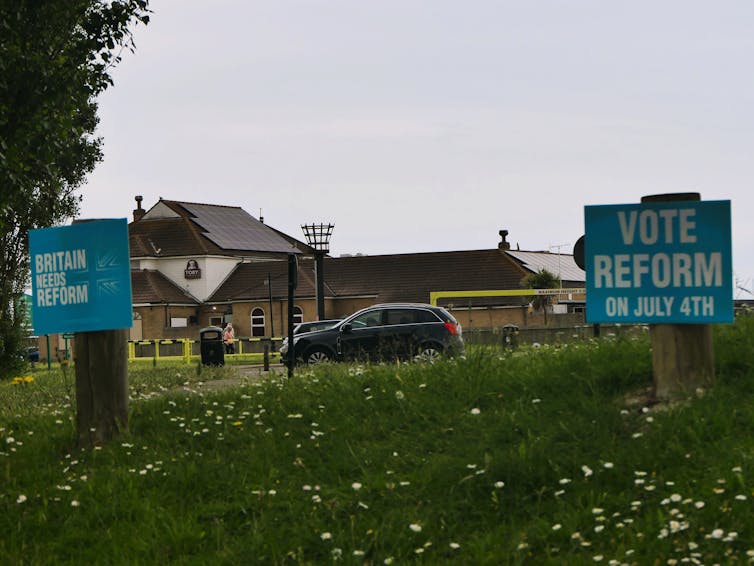
Signs reading 'vote Reform' planted on a roadside bank.
Reform campaign signs in Clacton in 2024.
Shutterstock/GregSawyer

We also don’t know how much more than his £20k limit Farage is accused of spending. If it’s a small amount, the Crown Prosecution Service (CPS) may not feel it in the public interest to pursue a case.

The burden of proof is also incredibly high. I suspect that the offence the CPS will be investigating is the same as the Tory battle bus affair, so 82(6) of the Representation of the People Act 1983. This states that “if a candidate or election agent knowingly makes the declaration required by this section falsely, he shall be guilty of a corrupt practice”. So, the CPS does not just have to show the overspend, it has to show that the candidate knew they were overspending.

There’s also the complicating factor that this is Farage’s constituency, and he effectively is the Reform party. Given that he is the face of all Reform campaigning, we have to wonder, truly, in this instance where candidate spending begins and party spending ends. Or, put differently, considering how easy it would be in theory to disguise candidate spending at party spending in these particular (and peculiar) circumstances you’d. Election law is a complicated dance after all, but this is little more than a two-step.

These headlines come at a tricky moment for Farage as he has faced over a week of allegations that he made racist comments during his school days. That said, I doubt there’ll be any great panic in Reform HQ. For one, even Everett has suggested that Farage was “blissfully unaware” of the omissions. If charges are brought, it will likely not be against him and therefore easily blamed on his local agent or other administrators.

Also, as I suggested way back in 2016, accounting just isn’t very sexy. Again, the battle bus saga is instructive here as it was genuinely big news at the time. Some even thought it had the potential to become the new expenses scandal. But it didn’t. One person was convicted, while everyone else was acquitted and moved on.

Attacking electoral law is also fertile ground for Farage. He has already turned a defence over racism allegations into an attack on his opponents, there’s very little to suggest he won’t do the same here. He and his supporters generally relish the prospect of a skirmish with the establishment.

This would be, put lightly, a shame. Election law is hard to understand and mistakes happen, but that doesn’t mean those enforcing it are pen pushers looking for wrongdoing to punish. We may well live in the age of the politics of grievance and hot air, but just this once it would be nice to let the process play out.

The Conversation

Sam Power has received funding from the Engineering and Physical Sciences Research Council and the Economic and Social Research Council.

ref. Nigel Farage accused of breaking election spending laws – the situation explained – https://theconversation.com/nigel-farage-accused-of-breaking-election-spending-laws-the-situation-explained-271546

What the US national security strategy tells us about how Trump views the world

Source: The Conversation – UK – By Andrew Gawthorpe, Lecturer in History and International Studies, Leiden University

Russia has called US president Donald Trump’s new national security strategy ‘largely consistent’ with Moscow’s vision. Photo Agency / Shutterstock

The White House has released its national security strategy, a document put out by every US presidential administration in order to spell out its foreign policy priorities. These documents are legally required to be released by Congress and are typically written by a committee. Still, they bear the president’s signature and usually serve as a distillation of how the current commander in chief views the world.

This latest document is no exception. But perhaps even more so than any previous national security strategy, it reflects a focus on the views and activities of the current president. It touts supposed achievements of the Trump administration in a way that would be more appropriate in a campaign speech. And at numerous points, it lavishes praise on Donald Trump for upending conventional wisdom and setting US foreign policy on a new course.

So what can we learn from this document about how Trump views the world? Three themes stand out. The first is that, contrary to some claims, Trump is not an isolationist. He doesn’t want to pull the US back from foreign entanglements completely. If he did, it would hardly make sense to boast of having brokered eight peace deals or of having damaged Iran’s nuclear programme.

Like more traditional national security strategy documents, the latest one still portrays the US as having a responsibility for global peace and prosperity. But within that broad remit, it has a new set of priorities.

The most striking is the focus on the western hemisphere. Whereas recent administrations have identified the containment of China as their key priority, Trump vows he will “restore American preeminence in the western hemisphere”. Yet the only concrete “threats” the document identifies as originating in the region are drug cartels and flows of irregular migrants.

Viewed from the standpoint of previous administrations, this makes little sense. US foreign policy has usually been concerned mainly with grave security threats, particularly from Russia and China. Drugs and migrants were less important than nuclear weapons and aircraft carriers.

Trump views things differently. From his perspective, dangerous narcotics and migrants who he has previously said are “poisoning the blood” of the US are much more direct threats to the American people. Putting “America First”, to use Trump’s favourite phrase for describing his own foreign policy, means focusing on them.

But this does not mean Trump is isolationist. Protecting the American people, even in the way Trump understands it, means having an active foreign policy.

The second key theme of the document is its attitude towards “civilisation”. In it, Trump has returned to a central aspect of his political rhetoric – that “western civilisation” is under attack from a combination of hostile migrants, spineless liberals and cultural degeneracy. Just as Trump appears to see himself as leading the fightback against these forces in the US, he wants others to do the same.

In passages that have sent shockwaves through Europe’s political establishment, the national security strategy lambasts European governments for allegedly welcoming too many migrants, persecuting far-right political parties and betraying the west’s civilisational heritage.

Again, these are not the words of an isolationist. They are the words of someone who, as I have concluded in my own research, views themselves as the protector of a racially and culturally defined civilisation that covers both the US and Europe.

The particularism here is striking. Whereas past US national security strategies spelled out a desire for Washington to spread liberal democracy throughout the world, Trump’s document says this is an unachievable goal. Instead, he seems to be interested primarily in the destiny of white Europeans – and in shaping their democracy and values to conform with his own.

The national security strategy warned that several countries risk becoming “non-European” due to migration, adding that if “present trends continue, the continent will be unrecognisable in 20 years or less”. This is a stance that some observers say echoes the racist “great replacement theory”, a comparison the White House has branded as “total nonsense”.

The third and final theme that stands out from the document is its intensely economic focus. The most detailed parts of the document relate to economic statecraft – how to reshore industries to the US, reshape the global trading system and enlist US allies in the mission of containing the economic rise of China.

Regional security matters, by contrast, receive much less attention. Russia’s ambitions in Europe are barely mentioned as a problem for the US, and Taiwan merits only a paragraph. Indeed, the Kremlin has said the new strategy is “largely consistent” with its vision.

Rarely has a US national security strategy been so transactional. In its discussion of why the US will support Taiwan, the document only invokes the island’s semiconductor industry and strategic position as reasons. Not a word is said about the intrinsic worth of Taiwanese democracy or the principle of non-aggression in international law.

The impression this leaves is that, in foreign policy, Trump prioritises economics over values. He views leaders such as China’s Xi Jinping and Russia’s Vladimir Putin not as implacable dictators hell-bent on regional domination, but as possible business partners. He seems to believe the focus of foreign policy ought to be to maximise profits.

For US allies in Europe and Asia, this raises an uncomfortable question: what if the profitable thing to do turns out to be to abandon them and strike a grand bargain with Russia or China? Based on this document, they have little reason to think Trump will do anything else.

The Conversation

Andrew Gawthorpe is affiliated with the Foreign Policy Centre in London.

ref. What the US national security strategy tells us about how Trump views the world – https://theconversation.com/what-the-us-national-security-strategy-tells-us-about-how-trump-views-the-world-271438

Ovid’s Metamorphoses is all about mothers

Source: The Conversation – UK – By Frances Myatt, College Teaching Associate (Peterhouse), University of Cambridge

Cornelia, Mother of the Gracchi, Pointing to Her Children as Her Treasures by Angelica Kauffman (1785). Virginia Museum of Fine Arts, Richmond

Even if you haven’t heard of Ovid, you almost certainly know some of his stories. His most famous work, the Metamorphoses, is a Latin epic poem composed of hundreds of tales of mythical transformations, many of which are still being told and retold today.

Take Ovid’s story of the sculptor Pygmalion, who crafted an impossibly beautiful woman from ivory. After falling in love with his own creation, he prayed to the goddess Venus and she brought the statue to life. You can trace the echoes of this story through the centuries – from George Bernard Shaw’s play Pygmalion (1913), which recast the sculptor as a speech therapist and became the musical My Fair Lady (1956), to Spike Jonze’s film Her (2013), which reimagines the tale for the AI generation.

The Pygmalion story was also recently retold from the statue’s perspective by Madeline Miller in her novella Galatea (2013), the name given to Pygmalion’s statue by later writers. With its unflinching descriptions of sexual abuse, Miller’s novella brings the darker aspects of Ovid’s tale into sharp focus.

Indeed, the Metamorphoses as a whole has had its own #MeToo moment in recent years. In 2015, Columbia undergraduates even argued that the book should have trigger warnings due to its many brutal rape scenes. However, while authors, journalists and academics are now all reckoning with Ovid’s disturbing fondness for scenes of rape, there is another, striking aspect of the Metamorphoses that we’re still overlooking – Ovid’s fascination with motherhood.


This article is part of Rethinking the Classics. The stories in this series offer insightful new ways to think about and interpret classic books and artworks. This is the canon – with a twist.


Mothers don’t normally belong in Latin epics, which were meant to be devoted to warriors and warfare. When mothers do pop up in epic poems, they’re immediately pushed away.

In Virgil’s Aeneid, for instance, Aeneas escapes from the ruins of Troy with his father and son – but tells his wife to follow behind, where she is lost and killed. Later, a grieving mother is hidden away in her tent, in case her tears dishearten the soldiers. But in the Metamorphoses, mothers are everywhere, even in the most epic of myths.

The 12 labours of Hercules is one of the most famous legends of the classical world – but Ovid spends far longer recounting the labours of Hercules’ mother, Alcmene. What is more, Alcmene narrates her labours herself, to her daughter-in-law Iole.

Latin literature expert Mairéad McAuley argues that this unusual first-person account of pregnancy and birth reimagines the epic tradition as an intimate exchange of knowledge between women, and it plays with both the idea of epic heroism and the question of what kinds of stories properly belong in the epic canon.

On an even more fundamental level, the world of the Metamorphoses is rooted in motherhood. After a great flood, the human race is renewed from “the bones of our great mother” – the stones of our mother earth. She then “gave birth” to all other animals, which grew in warm, wet mud “as though in the womb of a mother”.

Later, Mother Earth herself appears as a character in the poem, when the world is burning and she begs the king of the gods to save the earth from the devouring flames. It’s a passage that perhaps has even more resonance for us now than in Ovid’s time.

The transformation of motherhood

Motherhood is also present in the Metamorphoses in more subtle ways. =Alison Sharrock, a professor of Latin, has pointed out that Ovid uses the vocabulary of fertility and childbirth to describe Pygmalion crafting his statue. The story then ends with the newly alive statue giving birth to a daughter, Paphos, who gave her name to the Greek island.

Painting of a woman rising from the sea, with cherubs shooting arrows at her from above and a battle being fought around her.
The Triumph of Galatea by Raphael (c. 1512).
Villa Farnesina museum, Rome

Miller picks up on this in her novella, where Pygmalion creepily insists that he is Galatea’s “mother”, as well as “husband, and father”. However, Pygmalion can neither understand nor control Galatea’s true maternal love for her daughter. It is this love that drives her to escape, so that her daughter might be free from Pygmalion’s abusive power.

While Ovid gives a surprising amount of space to mothers, that doesn’t mean he was some sort of proto-feminist. His mothers are certainly powerful, complex characters – but they are also often figures of violence and destruction.

Medea, infamous killer of her own children, was one of Ovid’s favourite characters, and the star of the only play he ever wrote. While this play has unfortunately been lost over the millennia, he devotes half a book of the Metamorphoses to her – and Medea is far from the only murderous mother of the poem.

After Procne’s husband rapes her sister and tears out her tongue, she kills their son and serves the meat to her husband at the dinner table – a gruesome plot that inspired Shakespeare’s Titus Andronicus (1588).

In the final book of the poem, Ovid equates birth and metamorphosis, when the Greek philosopher Pythagoras preaches a doctrine of reincarnation, claiming that “what is called being born, is just beginning to be something else”.

This speech of Pythagoras looks back to the very beginning of the poem, when Ovid says that he will tell of “bodies changed into new forms”. And what change is more dramatic than pregnancy and childbirth, when the mother’s body metamorphoses, and one body becomes two?

Beyond the canon

As part of the Rethinking the Classics series, we’re asking our experts to recommend a book or artwork that tackles similar themes to the canonical work in question, but isn’t (yet) considered a classic itself. Here is Frances Myatt’s suggestion:

The stand-out modern poet of motherhood and metamorphosis is unquestionably Fiona Benson. Her collection Vertigo & Ghost was awarded both the Forward Prize and the Roehampton Prize in 2019.

The first half of the collection explicitly reworks tales from Ovid’s Metamorphoses. Here, motherhood offers moments of loving care and affection amid the sickening brutality of Ovid’s repeated rapes, reimagined in modern settings.

Fiona Benson reads Transformation, from Vertigo & Ghost.

While the second half of the collection doesn’t overtly rewrite Ovidian myths, it is nonetheless equally Ovidian in character. Benson glides seamlessly between the human and animal worlds, with childbirth acting as a key thread that links the poems together.

In Wildebeest, particularly, motherhood is unambiguously portrayed as a form of metamorphosis. Benson describes how “I became beest” while giving birth, slipping between human, animal, water, metal and star, in a glorious profusion of transformation, as dramatic and poetic as any Ovidian metamorphosis.


Looking for something good? Cut through the noise with a carefully curated selection of the latest releases, live events and exhibitions, straight to your inbox every fortnight, on Fridays. Sign up here.


The Conversation

Frances Myatt has received research funding from the University of Cambridge and the Caroline Fitzmaurice Trust.

ref. Ovid’s Metamorphoses is all about mothers – https://theconversation.com/ovids-metamorphoses-is-all-about-mothers-266383

Immigrant women care workers keep Ontario’s home care afloat under exploitative conditions

Source: The Conversation – Canada – By Naomi Lightman, Associate Professor of Sociology, Toronto Metropolitan University

Despite recent provincial investments, Ontario’s home-care system is still in crisis. Underfunding, rationed care and ideological preferences for privatization of services undermine dignified aging and care for those in need of support at home.

At the same time, home-care providers, who are disproportionately racialized immigrant women, experience precarious, exploitative and sometimes dangerous working conditions.

My newly released research report, entitled “Caring about Care Workers: Centring Immigrant Women Personal Support Workers in Toronto’s Home Care Sector,” is a collaboration with Social Planning Toronto(SPT), a non-profit, community-based agency. In it, we highlight the concerns and preferences of these undervalued workers.

Our report presents data from interviews with 25 immigrant women working as personal support workers (PSWs) in home care in the City of Toronto. Our conversations, conducted between 2023 and 2025, focused on employment conditions and workplace safety, the critical need for systems change and the possibilities for building PSW collective power.

A vital service held together by precarious labour

Home care provides crucial supports to seniors who want to live in their own homes longer, facilitates the autonomy of people with disabilities and aids in the recovery of individuals following a hospital stay.

Their work both supports widespread client preferences to “age in place” and reduces pressure on hospitals and emergency departments. Yet it is routinely neglected and chronically under-resourced.

PSWs provide the majority of home care services. In 2022, an estimated 28,854 individuals were employed as PSWs in the home-care sector in Ontario. Home-care PSWs collectively provided 36.7 million hours of care to Ontario residents in 2023-24 through the provincially funded system.

Immigrant and racialized women comprise the majority of home care PSWs in the Greater Toronto Area. Home-care PSW labour is characterized by low wages, lack of employment benefits, health and safety risks and unique challenges associated with working alone in private homes.

Among PSWs in Ontario, those working in the home and community care sector have the lowest average wage, making about 21 per cent less on average than PSWs working in hospitals and 17 per cent less than those in long-term care. Inadequate provincial funding and inequitable and restrictive funding arrangements are the primary drivers that create and exacerbate these unacceptable conditions.

PSWs are absorbing the real cost of care

Our research participants explained how the normal costs associated with providing home care are offloaded onto them in several ways.

First, most PSWs in home care provide personal care to multiple clients each day. Travel between client homes is a requirement of their work. Yet participants shared that they either receive low pay or no pay for travel time between client homes.

One of our participants, Kemi, explained how travel time works in her agency:

“The travel time that we are paid is one hour. If I’m working five hours, that’s six hours I’ll be paid. But the thing is that the travel time amount is not the same as your regular wage… travel time is paid some amount less.”

If it takes more than an hour a day to travel between client homes, Kemi does not receive any compensation for that additional time. Yet this is a reality for her on a regular basis.

Joy, another participant, noted that PSWs in her agency personally pay more than half of their transit costs:

“They give us $1.60 per travel, but the payment we give the TTC is $3.50. I requested the company to make it the same, or at least a free TTC pass for the month. But the employer said it wasn’t appropriate.”

At the same time, many PSWs have long gaps of unpaid time between client visits during their workday. These gaps in their workday result in a full-time shift but only part-time compensation, with many getting paid for only a few hours each day. The result is full time work for a part-time wage.

In addition, participants noted that PSWs can have their work hours and income reduced if their caseload is reduced. This occurs when a client dies, moves, enters hospital or long-term care, switches home care providers or no longer requires services.

Ann-Marie described the precariousness of working in home care:

“You know why the hours are not guaranteed? For instance, I have eight clients, and out of eight clients, I have three clients that passed away. That’s all my hours reduced until they able to find another client to fit into my schedule.”

Reform must start with fair working conditions

Our report provides detailed policy recommendations targeted to both levels of government, home-care service provider organizations, unions and the community sector.

In particular, we advocate for the creation of a comprehensive public non-profit home-care system where home care workers, Ontario residents receiving care and their families play a central role. Rather than continuing with a fee-for-service model, we recommend adopting a grant-based funding model to better support the full cost of care provision.

We also advocate for developing employment standards for home care PSWs and improvement of public transparency and accountability in home care through data collection and analysis, along with regular public reporting and independent research. And, finally, rather than continuing to allow large home-care companies to extract millions in profit, we want every public dollar to support high-quality care and good working conditions for home care workers.

For the good of everyone in Ontario, it’s essential that the provincial government take bold action to reform the home-care system. The very least we can do for these essential and valuable workers is to ensure fair compensation, guaranteed work hours and good working conditions.

The Conversation

Naomi Lightman receives funding from the Social Science and Humanities Research Counsel of Canada (Insight Grant number 435-2021-0486).

ref. Immigrant women care workers keep Ontario’s home care afloat under exploitative conditions – https://theconversation.com/immigrant-women-care-workers-keep-ontarios-home-care-afloat-under-exploitative-conditions-270007