Six female film directors celebrating Spain’s linguistic diversity on screen

Source: The Conversation – UK – By Catherine Barbour, Assistant Professor in Hispanic Studies, Trinity College Dublin

The Spanish film industry has historically been dominated by men and, perhaps unsurprisingly, by the Spanish language. The country doesn’t have a great track record for valuing minority languages, or the cultural outputs made in them.

Pioneering female directors including Icíar Bollaín and Isabel Coixet have paved the way for a new generation of female film-makers. Thanks to the influence of organisations such as CIMA (the Association of Women Filmmakers and Audiovisual Media in Spain), there is now increased support for women working across the industry.

In 2025, for the first time in the history of the Malaga Film Festival, there were more female than male directors nominated in the Official Selection. And many are bringing feminist themes and linguistic diversity to the big screen.

In building on the rich cinematic traditions of their homelands, these women have made some of the most exciting films in recent years in Basque, Catalan and Galician. Despite challenges such as limited financial support for cinema in non-state languages, their productions have achieved commercial and critical success.

International Women’s Day in Spain is known as 8M, in reference to the date of March 8, when many Spanish women take to the streets in purple, on strike from work and domestic labour. In the spirit of that defiant collective stance, here are five female film directors whose work is pushing boundaries.

Carla Simón

The Catalan film director Carla Simón is one of the most well-known film-makers working in Spain today – a leading light of what pundits have dubbed Catalonia’s New Wave. She has earned worldwide acclaim for her trilogy filmed mostly in Catalan. Estiu 1993 (Summer 1993), in 2017, was about a young girl orphaned by Aids. Alcarràs, in 2022, told the story of a family of peach farmers losing their traditional way of life. And in 2025, Simón released Romería, about a young Barcelona woman’s visit to her late father’s family in Vigo.

Simón’s auto-fictional works are characterised by strong female characters, intimate camerawork filmed as though through the eyes of a child, and non-professional actors bringing authenticity to the exploration of complex social issues.

Jaione Camborda

A director of Basque origin, Jaione Camborda has lived in Galicia for many years. She belongs to the wave of Novo Cinema Galego (New Galician Cinema), a group of film-makers creating experimental film that is rooted in the characteristic Atlantic landscape of Spain’s most north-westerly region.

Camborda’s second feature O Corno (The Rye Horn, released in 2023) was filmed in the Galician language with some dialogue in Portuguese. It tackles the timely issue of reproductive justice, following a healer’s clandestine journey to escape her tightknit community on the Galician island of Arousa after she is exposed for engaging in the local practice of using ergot (a fungus that grows on rye) to induce abortions.

With O Corno, Camborda was the first female Spanish director in the history of the San Sebastián Film Festival to win the festival’s top prize, the Golden Shell for Best Film.

Sonia Méndez

In her first feature film, a 2024 thriller titled As Neves, Vigo-born director Sonia Méndez worked with non-professional actors, shooting entirely in the Galician language. Set in a remote village engulfed in a snowstorm, the film is a frank exposé of the potentially disastrous effects of social media on young people, as a group of teenagers try to come to terms with the disappearance of their friend after an intimate video of her circulated online.

A key player in Galician cinema, Méndez’s is a varied filmography. A poeta analfabeta, released in 2020, is a docu-film about the emblematic Galician poet and activist Luz Fandiño. Méndez has directed several short films, including Perversa Lola from 2007 and Conversa cunha muller morta from 2012.

Mar Coll

A graduate of Catalonia’s prestigious film school ESCAC, Mar Coll broke new ground in 2009 with the Catalan-language family drama, Tres dies amb la família (Three Days With the Family), which won her Goya and Gaudí Awards. She delved into a woman’s journey to self-realisation following a car accident in the 2013 feature, Tots volem el millor per a ella (We All Want What’s Best for Her). Coll’s latest feature, Salve Maria, was released in 2024. It is a complex exploration of motherhood based on a Basque-language novel by Katixa Agirre.

Sara Fantova

The youngest of the lot, Sara Fantova, born in Bilbao, is a rising star with a number of productions to her name. Her debut feature film, Jone, batzuetan (Jone, Sometimes), which was released in 2025, only secured funding after shooting was completed. Set in the director’s hometown during its iconic summer festival, it is an evocative coming-of-age queer romance in Basque and Spanish. It tells the story of Jone, a young woman who is navigating the impact of her father’s rapidly deteriorating health when she falls in love with Olga.

Elena Martín

Barcelona-born director Elena Martín Gimeno also shoots primarily in the Catalan language. She is also an actor and screenwriter who has starred in her own films. Júlia Ist (from 2017) is a semi-autobiographical production about the experiences of a student from Barcelona who embarks on a journey of self-discovery while studying abroad in Berlin.

This was followed by Creatura (in 2023), which won multiple accolades: Best European Film at Directors’ Fortnight, three nominations for the Goya Awards and six Gaudí Awards. It documents a woman’s reckoning with her upbringing marked by sexual repression.

Martín has spoken about the strong sense of community she has felt among her peers: “I am so close to so many directors who were coming on to the scene around the same time as I was,” she told journalist Rafa Sales Ross in 2025. “Isabel Coixet and Icíar Bollaín might have a different view of this and maybe they have felt alone when they were starting, but I hope they feel less lonely now with all of us here.”

The Conversation

Catherine Barbour does not work for, consult, own shares in or receive funding from any company or organisation that would benefit from this article, and has disclosed no relevant affiliations beyond their academic appointment.

ref. Six female film directors celebrating Spain’s linguistic diversity on screen – https://theconversation.com/six-female-film-directors-celebrating-spains-linguistic-diversity-on-screen-276434
What the UK’s ‘day of reflection’ reveals about COVID memory

Source: The Conversation – UK – By David Tollerton, Associate Professor, Memory Studies, University of Exeter

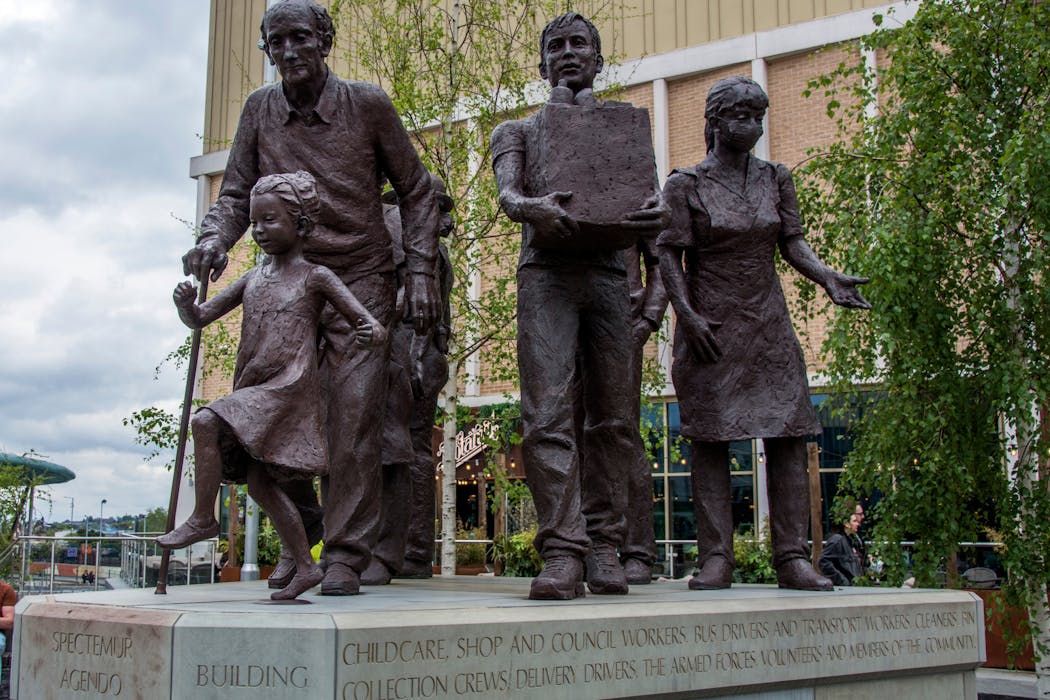
The Glass Works, Barnsley, South Yorkshire, UK: memorial statue tribute to the victims and key workers of the COVID pandemic Steve Travelguide/Shutterstock

A couple of years ago I dug up an artefact buried under soil, grass and leaves in a park close to my home in Exeter. It was not some ancient object but rather a granite memorial plaque laid down by the local city council only three years before. Dedicated to regional victims of the COVID pandemic, it had been created, forgotten and swallowed by the ground in swift succession.

This illustrates our conflicted relationship with remembering the pandemic in Britain. The urge to memorialise sits awkwardly alongside forces of forgetting and indifference. COVID killed over 230,000 people in the UK and had profound effects on health, wellbeing, child development and economic stability. Yet many people treat it with the ambivalence of waking from a strange dream.

Following its official response to the UK Commission on Covid Commemoration late last year, the British government is now formally stepping into this slippery space of remembering and forgetting. March 8 has been designated as a day of reflection on the pandemic, with the Department for Culture, Media and Sport taking the lead.

And yet how much difference will this day make? What media coverage will it receive? How much public appetite is there for it? In my own work on British remembering and forgetting of the pandemic, I have found much evidence of uncertainty about what should be remembered, who should be centred and when commemoration ought to begin.

Despite the death toll and social consequences, public memory of the COVID pandemic has been marked by hesitancy about what should be remembered, when commemoration should happen, who it should involve and how it should be enacted.

A key challenge is the absence of a unified narrative. Pandemic experiences ranged from bereavement, illness and profound suffering in lockdown to mild inconvenience or even a welcome respite from normal life. Depending on luck and the situation with which you entered into the pandemic, it was anything from deeply traumatic to something people are quietly nostalgic about.

When I asked for short public recollections of the period, I received stories of loss, disrupted lives and exhausted health workers, but was also inundated with descriptions of birdsong and country walks. The responses were later compiled into an online audiobook. Public memory of the pandemic has to find a way of holding these incongruities together.

The day of reflection also has a disorientating relationship with time. COVID had no neat end point, no convenient armistice day around which to orient ourselves. The question of when public remembrance should begin was therefore unclear. Some informal memorials were created not long after the pandemic started, but when the government launched the UK Commission on Covid Commemoration in 2022, it was criticised for being too soon. In reality there is probably no perfect moment for public memorialisation, with the time always feeling either too early or too late for different people.

The question of who should organise remembrance is equally fraught. The state’s slow response to recommendations from the UK Commission on Covid Commemoration has been shaped in part by an awareness that this is politically sensitive terrain. Perhaps remembrance should not be led by the state at all. The grassroots activist group COVID-19 Bereaved Families for Justice UK created the National Covid Memorial Wall in London, and the bereavement charity Marie Curie oversaw earlier versions of the day of reflection.

Focusing collective recollection solely around loss of life nonetheless leaves major gaps in terms of the variety of people’s experiences. But there are also risks in wholly levelling the playing field. The loss of a loved one is not equivalent to Zoom quizzes and sourdough baking. Nor should collective memory erase the extent to which the pandemic’s impacts were systemically uneven, with higher mortality rates in some ethnic minority communities.

Remembering through the lens of war

The day of reflection also sits awkwardly alongside existing patterns of how British people remember. These habits are most prominently shaped by rituals of war memory. The various memorial spaces associated with fundraiser and veteran Captain Sir Tom Moore emerged partly because he so neatly fused thoughts of COVID and the second world war.

But the pandemic was not much like a military conflict. While there were praiseworthy instances of public service, most deaths did not fit a narrative of heroic sacrifice, the virus was not an ideological or national enemy, and comparisons between prime ministers Boris Johnson and Winston Churchill have not endured.

Despite the difficulties of what is remembered, when it should happen, who should lead it and what form it should take, there has been an abundance of memorial creation since 2020.

When researching a book on the topic, I visited one built high up a Welsh mountain. I saw one constructed elaborately from wood and later ceremonially set ablaze. Another was framed as a defiant celebration of working-class heroism. One depicts exhausted medical staff cast in bronze. There were many others. Their narratives, forms and origins vary considerably, but what they share is a tenuous grasp on public consciousness. Generally they are little known and, in some cases, their long-term survival is uncertain, dependent on funding, maintenance or continued public interest.

The March 8 day of reflection will not settle the question of how Britain remembers or forgets COVID, but it will reveal how willing we are to try. Any national act of remembrance will only feel meaningful if it can hold together grief, inequality and ambivalence without pretending they are the same.

The Conversation

During 2021-2022 David Tollerton received funding from the Arts and Humanities Research Council to research this topic.

ref. What the UK’s ‘day of reflection’ reveals about COVID memory – https://theconversation.com/what-the-uks-day-of-reflection-reveals-about-covid-memory-276918

Why your gut microbiome and heart are closer than you think

Source: The Conversation – UK – By Fiona Newberry, Postdodctoral Research Associate, Department of Cardiovascular Sciences, University of Leicester

The gut microbiome has an important role in many aspects of health. Fotogrin/Shutterstock

The gut microbiome plays an important role in many aspects of health, from digestion and immune function to metabolic balance and neurological processes.

Several diseases have even been associated with changes in the microbiome’s composition, including inflammatory bowel disease, colorectal cancer, obesity and mental health disorders. As links between gut microbes and disease grow stronger, scientists are now looking at the emerging connection between the gut and the heart.

Heart disease remains the leading cause of death globally. Factors such as smoking, high blood pressure, obesity and diabetes are known to be risk factors. But researchers are increasingly finding that the balance of microbes in our gut may shape how these risks develop, and how heart disease progresses.

This newly recognised association, termed the “gut-heart axis”, has gained traction in recent years. It may help explain why diet and heart disease are so closely intertwined.

Large studies show that people with cardiovascular disease have distinct gut microbiome profiles compared with healthy people.

While no single “heart disease microbe” has been discovered, cardiovascular disease is consistently associated with a few key factors. These include reduced microbial diversity, loss of beneficial bacteria and an overgrowth of microbes linked to inflammation.

Microbial diversity refers to the variety and balance of different microbes living within the gut. Growing evidence suggests that a reduction in microbial diversity reflects deteriorating microbiome health, and may signal the onset of disease.

One recent paper examined the results from 67 studies that explored the gut microbiome in several cardiovascular diseases, comparing over 6,000 patients with acute coronary syndrome, atrial fibrillation, coronary artery disease, heart failure or stroke with healthy people. It showed that people with cardiovascular disease consistently had lower levels of the beneficial fibre-fermenting bacteria Faecalibacterium.

A digital mock-up of Faecalibacterium in the gut.
People with cardiovascular disease have lower levels of the beneficial gut bacteria Faecalibacterium.
PRB Arts/ Shutterstock

Microbial fingerprints of heart disease

Your gut microbes act as miniature factories that break down food components. In doing so, they produce hundreds of small molecules called metabolites, which can be taken up by other microbes or absorbed through the intestine into the blood stream. While some of these metabolites are beneficial to the body, others can be harmful in excess.

So, alongside studying what microbes are present in patients with cardiovascular disease, scientists are also looking at metabolites to understand what effect these can have on health.

One of the strongest links between the gut microbiome and heart disease involves a metabolite called TMAO (trimethylamine N-oxide). Certain gut bacteria convert nutrients found in red meat, eggs and dairy into a metabolite called trimethylamine (TMA). The metabolite is then processed by the liver and turned into TMAO.

High levels of TMAO in the blood have been associated with increased risk of heart attack, stroke and death from cardiovascular disease. Importantly, TMAO production varies between people depending on the type of microbe. This means two people can eat the same food but produce different amounts of this potentially harmful compound.

But not all gut-derived metabolites are harmful. Some may actually protect the heart.

A growing body of research is investigating indoles – compounds made when gut bacteria break down tryptophan. Tryptophan is an essential amino acid found in protein-rich foods such as poultry, eggs, dairy and nuts. It plays an important role in mood, sleep patterns and appetite.

The majority of tryptophan is absorbed by the body. But a small fraction of this amino acid is also broken down by gut bacteria and transformed into indole-derivatives. While some of these can contribute to inflammation under certain conditions, others appear to have powerful cardioprotective benefits.

One of the most promising is indole-3-propionate (IPA), which is thought to be produced mainly by the bacteria Clostridium sporogenes. Several studies have shown that people with higher blood levels of IPA have lower rates of type 2 diabetes and cardiovascular disease.

IPA also strengthens the gut barrier. This prevents harmful microbial products from leaking into the bloodstream. Research is ongoing to fully understand how and why tryptophan is broken down into beneficial or harmful metabolites.

Prevention and treatment

The discovery that our gut microbes help shape cardiovascular risk is transforming how scientists think about prevention and treatment. Researchers are now exploring how microbial “fingerprints” could one day be used in combination with known risk factors to identify people at risk, long before symptoms appear.

In the future, beneficial gut microbes (probiotics) could be used therapeutically to slow cardiovascular disease progression or eliminate microbes known to contribute to disease onset.

While this science is still emerging, it’s clear that the gut microbiome should be viewed as part of the whole body system that shapes our overall health. It points towards a powerful idea: caring for your heart may start not just with what you eat, but with how your gut microbes process it.

The Conversation

Fiona Newberry receives funding from British Heart Foundation.

ref. Why your gut microbiome and heart are closer than you think – https://theconversation.com/why-your-gut-microbiome-and-heart-are-closer-than-you-think-276293

Can we design sports shoes that don’t squeak? Here’s what the science says

Source: The Conversation – UK – By Gabriele Albertini, Assistant Professor in Structural Engineering, Department of Civil Engineering, University of Nottingham

The unofficial soundtrack of every basketball, squash or hard-court tennis match is the constant high-pitched squeak or shreak of the players’ shoes. But can this squeak be designed out of them while retaining the grip?

That’s the question an international team of engineers and applied physicists, including me, have been investigating. It sounds like a small design tweak. In fact, it cuts to a deep physics problem: how a soft body slides against a rigid one.

Perhaps surprisingly, the mechanism that produces sound when a soft solid slides against a stiffer one has long been the subject of scientific debate. Most theories are linked to the concept of “stick-slip”: when, instead of sliding smoothly, the sliding object rapidly alternates between sticking and slipping.

While it sticks, the soft body (such as a rubber sole) deforms and stores elastic energy. Then it suddenly slips, turning much of that energy into heat through friction – while also releasing rapid vibrations that radiate out as sound.

But this is not exactly what we observed in our experiments.

After Leonardo da Vinci

Our recently published study took inspiration from the simple-but-effective setup used by Leonardo da Vinci in his studies of friction from the late 15th century.

Leonardo da Vinci's sketches of his pioneering friction experiments.
Leonardo da Vinci’s sketches of his pioneering friction experiments.
Codex Arundel, British Library (41r), 1500-05.

Leonardo used a wooden block resting on a flat surface. The block was subjected to two forces: a normal force (its own weight) and a tangential force which was applied using an additional weight attached to a cable.

By stacking and combining multiple blocks, Leonardo discovered the two fundamental laws of friction: that friction is proportional with how hard the surfaces are pressed together, and largely independent of the size of the contact area.

But Leonardo never published these findings, which were finally rediscovered and made public in the 19th century in notebooks scattered throughout Europe. In the meantime, the laws of friction had only been formally enunciated by French physicist Guillaume Amontons in 1699 – two centuries after Leonardo’s studies.

Furthermore, these laws are empirical rather than fundamental, and in extreme cases they break down. This led us to the question of what makes a shoe squeak.


Read more:
Leonardo da Vinci’s early work on friction founded the modern science of tribology


A surprising result

One of the biggest difficulties in friction studies is that the interface being tested (where a shoe sole meets a hardwood floor, for example) is hard to get at, and comes under a lot of pressure while slipping at high speed. Placing sensors at the interface is almost impossible – and even if it were, this would probably alter the frictional response.

Our solution was to use an optical trick: we replaced the hardwood floor with a transparent acrylic plate and mounted an array of LED lights along its sides. When each test object – including multiple rubber blocks – made contact with the plate, light would leak into the contact region, brightening up this area alone. That allowed us to visualise exactly which parts of the soft-rigid interface were in contact.

We used a high-speed camera, capable of capturing up to 1 million frames per second, to film how the contact patches evolved while the “sole” was skidding, and recorded the sounds being emitted with a microphone.

We found that at the point of contact, tiny wrinkles in the surface of the rubber block – known as “opening slip pulses” – were created, which then raced along the interface at nearly 100 metres per second. While most of the block remained stuck in place, these rapidly moving wrinkles created the sound in each friction test.

Surprisingly, even tiny geometrical features at the frictional interface had profound effects on the sound generated. When it was perfectly flat and smooth, the pulses were messy and generated a scratch-like noise of many different frequencies – closer to the sound of peeling adhesive tape than a clean squeak.

But when ridges were present, like those on the soles of sport shoes, the pulses were confined by the width of these ridges, making them very regular (not messy any more). This turned the sound into a more musical tone akin to the squeaks heard on a basketball court.

We were also able to determine what decides the precise pitch of a shoe squeak. In each test, it was largely unaffected by either the speed of sliding or magnitude of the force applied (which relates to the weight of a player).

Rather, the clearest link was with the height of the rubber block – or the thickness of a shoe’s sole. Using this knowledge, we created a series of blocks of different heights in order to play a familiar melody, as shown in this video.

Video: Nature.

Our research lays the groundwork for controlling or suppressing squeaking in many mechanical systems involving soft-on-rigid friction. These range from brakes and tyres to hip and knee replacements, where polymer liners slide against polished metal or ceramic heads.

And yes, it could even lead to the development of squeakless sneakers. Designing intricate patterns that keep plenty of rubber in contact (so the grip stays high) but break the sliding into lots of tiny, out-of-sync microevents could kill the clean note of the squeak, and leave only a soft hush.

Table-top earthquakes

Beyond the realm of sports, this work also relates to much larger geophysical questions. Similar experimental approaches to ours have served as table-top models for studying earthquakes, during which ruptures and slip pulses spread along tectonic faults at extremely high speed.

If we can reproduce earthquake-like slip pulses in the lab, the next challenge is scaling – working out how those centimetre-scale measurements translate to what happens inside real faults in the Earth.

Achieving this could help interpret seismic signals more confidently: using waves recorded far from a fault to infer what has actually happened at the source. Better physics-based models could improve seismic hazard estimates and lead to more reliable hazard maps.

Meanwhile, we’ll keep thinking about squeakless sneakers too.

The Conversation

Gabriele Albertini received funding from the Swiss National Science Foundation (SNSF), the Engineering and Physical Sciences Research Council (EPSRC), and the University of Nottingham.

ref. Can we design sports shoes that don’t squeak? Here’s what the science says – https://theconversation.com/can-we-design-sports-shoes-that-dont-squeak-heres-what-the-science-says-277518

How does Iran go about selecting a new supreme leader? And who is in the running?

Source: The Conversation – USA (3) – By Eric Lob, Associate Professor of Politics and International Relations, Florida International University

The killing of Ayatollah Ali Khamenei on Feb. 28, 2026, set off the process of selecting a new supreme leader. It is only the second such transition in the Islamic Republic’s 47-year history and the first since the ailing Ayatollah Ruhollah Khomeini transferred power to Khamenei in June 1989.

As stipulated in Article 111 of the Iranian Constitution, a three-person Interim Leadership Council was created on March 1, 2026. It consists of President Masoud Pezeshkian, Chief Justice Gholam-Hossein Mohseni-Eje’i and Ayatollah Alireza Arafi, who is also a candidate for supreme leader.

The council has temporarily assumed the duties of the supreme leader until a new one is appointed by the Assembly of Experts – an elected body of 88 clerics. The assembly is expected to swiftly elect the next supreme leader, especially with Iran being in a state of war.

A group of clerics wearing traditional head coverings and long beards sit on seats arranged in concentric rows.
Members of Iran’s Assembly of Experts attend a session of the assembly in Tehran on Sept. 4, 2007.
AP Photo/Vahid Salemi

Assuming it can be carried out, a swift succession is meant to signal to domestic dissidents and external enemies alike that the regime – or ruling system, nezam – remains in place. During the assembly’s first meeting to select a new supreme leader on March 3, Israel bombed its building in the city of Qom. The building was evacuated before the strike, and no casualties were reported.

Some media reports have portrayed Khamenei’s son, Mojtaba, as a top contender, even though he lacks the status of a senior cleric. Although his is just one of a number of names that has been talked of as a potential successor.

Israel’s defense minister, Israel Katz, said that Israel would kill any successor to Khamenei that is selected. Nevertheless, the Assembly of Experts appears determined to carry out its constitutional duty and appoint a new supreme leader.

As a scholar of Iranian politics, I argue that the succession process, irrespective of its outcome, has never been free or transparent.

The history of succession

The Iranian supreme leader serves for life and is the highest religious and political authority in the Islamic Republic.

He is the commander in chief of the armed forces and oversees other key institutions, such as the judicial branch and state media.

He also supervises the Guardian Council, which has the power to vet electoral candidates and veto parliamentary legislation.

In this capacity, the supreme leader has the final say on foreign policy and different areas of domestic policy.

The first leader of the Islamic Republic – Khomeini – ruled between 1979 and 1989. In addition to being a revolutionary and charismatic figure, Khomeini was a grand ayatollah and a “source of emulation,” or marja’ al-taqlid.

A grand ayatollah and source of emulation is among a select few of the highest-ranking clerics. He is considered a “sign of God” in Twelver Shiism, the largest branch of Shiism and the state religion of Iran. A grand ayatollah and source of emulation has the authority to make legal decisions for his lay followers and for lower-ranking clerics in Iran and the wider Shiite world.

There are several dozen grand ayatollahs and sources of emulation in the world. Most of them reside and run seminaries in the holy cities of Qom in Iran and Najaf in Iraq. Shiites can choose which one they want to follow as a senior figure of the faith, making the institution decentralized.

The electoral facade

The members of the Assembly of Experts serve eight-year terms and are authorized to elect, supervise and, if necessary, dismiss the supreme leader. Article 111 of the Iranian Constitution grants the assembly the authority to remove the supreme leader if he is deemed incapable or unqualified politically and religiously. However, it is unlikely to do so given that its members are first vetted by the Guardian Council before being elected by a popular vote of Iranian men and women ages 18 and older.

It should be noted that the members of the Guardian Council are appointed by the supreme leader and the chief justice, or head of the judiciary, who is also appointed by the supreme leader.

Therefore, through the council, the supreme leader approves the candidates. They are potentially elected to a body that oversees him, making the process far from free and fair.

In the last election for the Assembly of Experts in March 2024, which had a historically low voter turnout of about 40%, the Guardian Council disqualified many candidates.

This was particularly the case with moderates and reformists, who tended to oppose the supreme leader on various issues. For this reason, the assembly has not been known to seriously supervise or challenge the supreme leader, and its proceedings have remained strictly confidential or closed to the public.

The 1989 succession

As Khomeini approached the end of his life in 1989, the constitution was amended so that a lower-ranking cleric like Khamenei could assume the position.

A bearded man wearing a black turban and a long robe speaks on microphones while holding white flowers in one hand. On the wall next to him are photographs of two men, also wearing black turbans.
The leader of the Islamic Republic of Iran, Ayatollah Ali Khamenei, speaks at Friday prayers in Tehran on Oct. 30, 1998. Beside him is a picture of his predecessor, Khomeini.
AP Photo/Mohammad Sayyad

As a seminary student of Khomeini who was more interested in politics than religion, Khamenei ranked below an ayatollah. Within the Shiite clerical hierarchy, and like other Islamic scholars who studied under an ayatollah, he earned the title Hojjat al-Eslam, or “proof of Islam.” He possessed the foundational knowledge of Islam without the advanced and independent reasoning – ijtihad – required for an ayatollah.

After being appointed to succeed Khomeini, Khamenei’s rank was elevated overnight to a grand ayatollah. The reason for the appointment was that Khamenei was a longtime loyalist and regime insider, even though he lacked the charismatic and religious authority of Khomeini.

Until 1989, Grand Ayatollah Hussein-Ali Montazeri – a prominent theologian and revolutionary leader – was expected to take over as the supreme leader. That year, however, he was ultimately passed over by Khomeini and detained by the Revolutionary Guard.

Montazeri succumbed to this fate because he had questioned Khamenei’s qualifications as supreme leader and condemned the regime for its repression, especially the execution of thousands of political prisoners in 1988 by a committee of four prosecutors. After continuing to criticize Khamenei in 1997, Montazeri was placed under house arrest under the pretext of protecting him from hard-liners. In 2003 he was released by the reformist president Mohammad Khatami, who had received pressure from parliamentarians to do so.

The situation with succession today

For years, rumors circulated that Mojtaba Khamenei, the son of the recently slain supreme leader, could be named the next one. However, such a scenario seemed unlikely during the lifetime of Ayatollah Ali Khamenei, who openly opposed it.

He did so to avoid antagonizing parts of the political and religious establishment that categorically reject hereditary or dynastic succession. After all, the concept is considered antithetical or anathema to the Iranian Revolution, which deposed the monarchy led by the shah, Mohammad Reza Pahlavi, in 1979.

From a political perspective, Mojtaba has never held public office. By contrast, his father served as Iran’s third president between 1981 and 1989.

Several men surround a bearded, spectacled man wearing a black headdress.
Mojtaba Khamenei, center, attends the annual Quds Day, or Jerusalem Day, rally in Tehran on May 31, 2019.
AP Photo/Vahid Salemi, File

Religiously speaking, Mojtaba – like his father before he became the supreme leader – is only a midranking cleric, though he teaches theology at the renowned Qom Seminary. As with his father, and for political purposes, the Assembly of Experts would have to elevate Mojtaba’s status to a grand ayatollah, even without the requisite religious credentials.

It is worth mentioning that Mojtaba is being considered for supreme leader alongside some seniors clerics whose credentials come closer to that of a grand ayatollah. Alireza Arafi, whose name has also come up as a potential successor, attained the rank of an ayatollah, or mujtahid, after publishing over 20 books and articles on Islamic jurisprudence and philosophy.

That said, in 2022 his religious qualifications were called into question. That year he joined the Assembly of Experts without taking the required written exam administered by the Guardian Council, even though he had been a member of it since 2019. Instead, he was appointed to the assembly by Khamenei through a legal loophole and without being elected. This incident indicated that Arafi was favored by Khamenei and may have an advantage as a candidate for supreme leader.

Another candidate, Ayatollah Mohammad Mehdi Mirbagheri, is an Islamic philosopher and theoretician. In this capacity, he serves as the head of the Qom Academy of Islamic Sciences and has been a member of the Assembly of Experts since 2016.

Yet another contender is Ayatollah Hashem Hosseini Bushehri. He was educated in the Qom Seminary and became the Friday prayer leader of the city. Alongside Arafi, Bushehri serves as a deputy chairman of the Assembly of Experts.
As the current conflict continues, and even with the Interim Leadership Council in place, the Assembly of Experts is under immense pressure to rapidly rule on succession to preserve the system.

Mojtaba Khamenei’s election, as I see it, would continue the trend of prioritizing political preferences over religious principles that started in 1989.

This piece includes material from an earlier one published on May 23, 2024.

The Conversation

Eric Lob is affiliated with the Carnegie Endowment for International Peace.

ref. How does Iran go about selecting a new supreme leader? And who is in the running? – https://theconversation.com/how-does-iran-go-about-selecting-a-new-supreme-leader-and-who-is-in-the-running-277249

International Women’s Day: Why is Mark Carney rejecting gender equity efforts?

Source: The Conversation – Canada – By Jeanette Ashe, Visiting Senior Research Fellow, Women’s Leadership, King’s College London

The past year marked the 30th anniversary of the United Nations Beijing Declaration and Platform for Action, the world’s most comprehensive plan to achieve the equal rights of women and girls.

Adopted in 1995, it called on governments to fight for gender equality, to protect women’s rights and to rebalance power structures so that everyone has an equitable chance in the world.

Thirty years later, Canada is still falling short. One of Beijing’s core commitments was for governments to create permanent, well-resourced institutions dedicated to advancing gender equality. Yet across Canada, some provinces still lack full, stand-alone ministries of Women and Gender Equality (WAGE), and the federal ministry of WAGE has been deprioritized.

A fragile federal commitment

Prime Minister Mark Carney initially dropped the Women and Gender Equality (WAGE) portfolio from his first cabinet, reinstating it only after pushback from women’s and social justice organizations.

More recently, reports of deep budget cuts to WAGE have renewed concern that gender equality remains politically expendable. Without sustained funding, programs vital to women’s safety and economic security could be decimated at a time when a number of urgent issues demand gender expertise.

As a recent UN Women media advisory reports, “the spread of digital misogyny poses a direct and urgent threat to progress on gender equality.” While much of this activity results in various forms of cyberbullying and harassment, the impact of these networks goes far beyond the digital world and shows up in real life spaces like our public schools.


Read more:
‘Quiet, piggy’ and other slurs: Powerful men fuel online abuse against women in politics and media


Wavering commitment

Yet, Canadian governments have done little to respond, as exemplified by AI Minister Evan Solomon’s decision against banning Elon Musk’s X or his AI chatbot Grok despite the growing problems of “nudification” and personalized pornography .

This wavering commitment echoes global patterns of institutional gender rollback, with the UN warning of a “post-feminist retrenchment.”

These trends are part of an international shift against equity and inclusion exemplified by recent court cases and policy changes in the United States — a shift glaringly evident as the Donald Trump administration blames gangs of “wine moms” for ICE protests and violence, including the killing of 37-year-old Renee Good in Minneapolis. Good’s death was described by Vice President JD Vance as a “tragedy of her own making.”

While this anti-equity rhetoric is circulating in Canada, a recent report reveals that “most Canadians view EDI measures in the workplace positively, with strong support among equity deserving groups, younger workers and those with positive job experiences.”


Read more:
Blaming ‘wine moms’ for ICE protest violence is another baseless, misogynist myth


A provincial patchwork

Six provinces currently maintain full, stand-alone ministries dedicated to women and gender equality:

By contrast, four provinces still lack a dedicated ministry:

Opaque and easily cut

When gender equality has a ministry of its own, citizens can see its budget, monitor its priorities and hold governments accountable. Where it does not, gender programs are buried inside larger departments; invisible in financial statements and easily cut.

Even federally, where WAGE exists, proposed cuts and decreased funding show how vulnerable these portfolios remain.

Carney’s mandate letter to cabinet clearly indicated a shift from his predecessor’s feminist brand. There is no reference at all to feminism or gender equality. In fact, Carney’s cuts to WAGE seem to reflect a larger rejection of feminist policies, including foreign policy.

But while governments stall, the public is ahead. Recent Abacus Data polling found that 86 per cent of Canadians support equal numbers of women and men in politics and 58 per cent support requiring political parties to nominate a minimum number of women candidates — up four points from last year.

This data shows Canadians are ready for legislated gender quotas and for the institutions needed to help deliver them. Fully funded ministries for Women and Gender Equality are one such institution.

Why now matters

The Beijing anniversary arrived amid a global gender backlash, from the rollback of reproductive rights in the U.S. to rising online abuse of women in politics. At precisely this moment, governments should be strengthening equality initiatives rather than weakening them.


Read more:
Growing threats faced by women candidates undermine our democracy


If gender equality is a priority, it’s simply not enough to celebrate the growing number of women in our legislatures. Real progress demands institutional power and stable funding of gender equality mandates. As UN Women recently reported, “achieving gender parity could cumulatively add US$342 trillion to the global economy by 2050.”

Repositioning Canada in the global hierarchy does not mean leaving 50 per cent of the population behind. Now, more than ever before, it’s critical to double down on the commitment to equity. In troubled times, leaders need to embrace equity wholesale, and taking leadership on equity must be a cornerstone of Carney’s supposed “values-based” pragmatism.

The Conversation

The authors do not work for, consult, own shares in or receive funding from any company or organisation that would benefit from this article, and have disclosed no relevant affiliations beyond their academic appointment.

ref. International Women’s Day: Why is Mark Carney rejecting gender equity efforts? – https://theconversation.com/international-womens-day-why-is-mark-carney-rejecting-gender-equity-efforts-273677

Male teachers can challenge misogyny in schools every day, not just on International Women’s Day

Source: The Conversation – Canada – By Troy Potter, Senior Lecturer, Faculty of Education, The University of Melbourne

International Women’s Day is an important day for everyone, regardless of gender, to raise awareness about gender inequality. This includes naming harms, celebrating gains and recommitting to societal and institutional change.

But we should be doing this every day. Schools play a fundamental role in challenging gender inequality because they’re one of the few places where adults have regular, ongoing contact and relationships with young people. Classroom and schoolyard interactions provide an opportunity for teachers and students to develop these relationships in respectful ways.

While all teachers can contribute to this work, male teachers can play a significant role in disrupting patriarchal and misogynistic behaviours.

In a national study, Michael Kehler, one of the authors of this story, is currently hearing from male teachers from across Canada who promote gender and social justice while disrupting patriarchal masculinities in their classrooms. These teachers are reporting that, in varying degrees, they are challenging misogyny and homophobia, and disrupting damaging forms of masculinity in their classrooms and schools.

In partnership with a parallel project with Australian male teachers (led by the first author of this story, Troy Potter), our research offers emerging insights into how all teachers can challenge and respond to misogyny, sexism and homophobia in schools.

Enacting masculinity in schools

Boys often learn how to be particular kinds of boys by negotiating complex power dynamics. Bullying and harassment are used against other boys, as well as girls, to assert dominance and police traditional gender norms. Homophobic language and sexting are two examples of this.

Recent research shows that boys’ use of misogynistic language, hostility and harassment is on the rise, and is often fuelled by online “manosphere” content. Increasingly, schools are less safe for women teachers — a growing concern, especially when school leadership denies or minimizes women teachers’ experiences of sexual harassment.


Read more:
‘Adolescence’ pulls in audiences with its dramatic critique of teenage masculinity


Off-hand remarks like “that’s just boys” serve to excuse boys’ violence and aggression. At the same time, such responses also maintain the cultural conditions that continue to reproduce violence while ignoring the choices boys make to accept norms of masculinity.

Rather than turning a blind eye to boys’ problematic behaviour, drawing attention to it can encourage everyone to reflect on whether such behaviour is appropriate or beneficial.

Research in Australia has shown that boys are moving away from restrictive views of masculinity, believe in gender equality and are rejecting sexist behaviour. This change in boys’ attitudes can be further supported by addressing misogyny and sexism in schools at both the policy and classroom level.

Why male teachers matter

While gender justice work is often seen as women’s work, there’s a growing emphasis on the need to engage men to redress gender inequities.

The use of male role models, though, can often promote gender norms rather than changing them. Additionally, some calls for more male teachers have been based on a perceived need to re-masculinize schools and the assumption that male teachers are better disciplinarians.

And although women make up the majority of the teaching workforce in Canada, men are over-represented in school leadership positions. This is also the case for the United Kingdom, Australia and the United States. Male leaders can play a significant role in shaping equitable school cultures.

Within classrooms, it can also be dangerous for women teachers to call out misogyny. In some cases, women teachers may be labelled as “crazy” or “overreacting,” while in others, male students may use teachers’ objection as catalysts to increase harassment. Their relationships with male students may enable them to have more influence over what is seen to as appropriate masculine behaviours.

This isn’t to suggest male teachers operate from a neutral position. Male teachers live multifaceted identities, shaped by factors including gender, race, culture, ability and class. Male teachers navigate their own narratives and abilities to disrupt traditional masculinity.

But when men promote gender equality and challenge harmful forms of masculinity, they show boys that this is what men can, and should, do. They show boys that fighting for gender equality is not only women’s responsibility.

Micro‑moments matter

In Canadian schools, and those in many other countries, respectful relationships programs, such as Respectful Futures, are delivered to support students’ understanding of respectful, equal and non-violent relationships.

To be effective, however, respectful relationships programs — like all gender justice work — must move beyond isolated programs and be embedded into whole-school approaches.

In the ongoing Canadian study, (Re)defining Masculinities,, 20 teachers across four provinces have provided their insights and reflections. And while we are still inviting teacher participation across Canada, our preliminary findings indicate teachers are:

  • Calling out sexist jokes and asking students to explain why they’re funny

  • Challenging offhand remarks, such as “You’re such a girl!”

  • Unpacking power dynamics wherever they appear, whether in boys’ behaviour or in texts students view or read

  • Providing boys with a language to express emotions and vulnerability.

Misogyny stems not only from explicit acts, but also from inaction. When male teachers choose not to interrupt derogatory talk, sexist jokes or sexual harassment, those attitudes and behaviours become normal.

By contrast, when male teachers speak up, they help change what other boys think is OK and provide opportunities for boys to learn alternative ways of being young men.

Our research will learn more about the various ways male teachers are already disrupting harmful masculinities to reduce misogyny. This will allow us to better support other male teachers to become change agents for gender equality.

Gender justice benefits everyone

The 2026 International Women’s Day theme #BalanceTheScales emphasizes that all women and girls deserve to be safe, respected and free to shape their own lives, just like men and boys.

Creating gender equality is about expanding boys’ awareness and consideration of others, to support them to express care and empathy and to reject dominant and violent behaviour. It is about seeing girls and women, and other boys and men, as worthy of respect, rather than as threats.

Disrupting and interrupting misogyny not only benefits girls and women, but boys and men, too. When gender equality advances, we create more fair and just families, schools, communities and societies. How can that not benefit everyone?

The Conversation

Troy Potter receives funding from the Faculty of Education, The University of Melbourne, for his research project, Challenging masculinities: Male-identifying teachers’ gender-just pedagogical practices in Australia.

Michael Kehler receives funding from the Social Science and Humanities Research Council for a national study-Redefining Masculinities: Male Identifying Teachers Engaging Boys as Change Agents.

ref. Male teachers can challenge misogyny in schools every day, not just on International Women’s Day – https://theconversation.com/male-teachers-can-challenge-misogyny-in-schools-every-day-not-just-on-international-womens-day-277358

Respecting international law depends on who breaks it: Why Canada backed the war against Iran

Source: The Conversation – Canada – By Jeremy Wildeman, Adjunct assistant professor, Carleton University; L’Université d’Ottawa/University of Ottawa

When Canadian Prime Minister Mark Carney recently warned at the World at the Economic Forum in Davos that “middle powers must act together because if we’re not at the table, we’re on the menu,” many saw this as a defence of international law and the multilateral order. That earned him global accolades.

At the time, Canada and Denmark were under pressure from the Donald Trump administration to surrender territory to the United States: Greenland from Denmark, and either the entirety or parts of Canada.

Trump’s demands came as a shock to a western leaders who maintain a deeply optimistic interpretation of American intentions and the immutability of their relationships. It also caused significant alarm among U.S. allies in the West, who have spent decades under the American security umbrella.

It’s likely because western countries were in disarray and unable to push back forcefully against Trump’s bullying that Carney’s speech was so well-received.

He appeared to put words into immediate action, rebuilding Canada’s fraught relationships with key Global South powers such as China and India while providing leadership on a major trade alliance among Canada, the European Union (EU) and the Trans-Pacific Partnership states to mitigate the impact of Trump’s aggressive use of tariffs.


Read more:
Mark Carney’s visit to India hits the reset button on the Canada–India relationship


Many observers thought Canada was turning to a principled foreign policy, championing universal liberal values such as democracy, justice, human rights and the rule of law. It seemed as though Canada was coming to the defence of a rules-based order, and this was helping it regain significant international prestige.

So it came as a shock when Carney offered immediate support to an illegal U.S.-Israel war of aggression against Iran on Feb. 28.

The liberal and rules-based orders

Within days Carney was equivocating about the war and his initial statement of support. He seemed to be attempting to balance his stated support for international law with being an American ally. He has said that he supports the U.S. and Israeli war “with regret” and that Canada will stand by its allies “when it makes sense.”

What seems like hypocrisy by Carney is in fact consistent with contemporary Canadian foreign policy and its interpretation of international law.

This can be understood by exploring Canada’s participation in two international systems established by the U.S. after the Second World War: the liberal international order and the rules-based order.

The liberal international order expresses some of the highest principles of liberal internationalism: anti-racism, democracy and the right to self-governance, free trade and economic interdependence, multilateral co-operation and respect for international law.

While the rules-based order draws on the liberal international order’s rules and norms, it selectively interprets them for U.S. and western interests. Whereas international law is a set of rules that govern relations between states and are enforced by institutions such as the International Court of Justice, the rules-based order is a deliberately opaque concept. Its rules are vague and ill-defined, and it is unclear who has the right to define or generate them.

Crucially, the post-war international order was meant to prohibit or restrict war, as laid out in the United Nations Charter. Article 2, paragraph 4, of the charter has been a cornerstone of international law and the liberal international order, which the U.S. helped establish after the Second World War. It explicitly prohibits states from threatening or using force against the territorial integrity or political independence of any other state.


Read more:
The U.S.-Israel war with Iran could shatter the United Nations-led global order


Selective enforcement of international law

The U.S. appears to invoke these rules primarily when confronting geopolitical rivals such as Russia or China, or when imposing its will on the rest of the world.

The U.S. and other western powers began shifting their rhetorical support from the liberal toward the rules-based order in the 2000s in response to the rise of Global South powers like China. In many ways, the rules-based order is an inequitable, colour-coded system that reinforces western power, and Canada has been a strong supporter of it.

Carney acknowledged this in Davos by saying the rules-based order was never fair because the strongest would exempt themselves when convenient, trade rules were enforced asymmetrically and international law applied with varying rigour depending on the identity of the accused or the victim.

This is on vivid display when comparing Canada’s strong response against Russia’s illegal 2022 invasion of Ukraine compared to its support for the U.S.-Israel illegal 2026 war against Iran, its reluctance in early January to condemn the U.S. government’s illegal abduction of Venezuelan President Nicolás Maduro and its de facto support for Israel’s illegal occupation and war crimes in Palestine.

Trump and the unraveling of the western order

What changed in 2025 is the Trump government’s hostility to the rules-based order, which it considers a costly obstacle to consolidating power around the world.

Its strategic approach has included an explicit disavowal of liberal internationalism’s values, including multilateralism and international law. It has threatened to seize western allied territory and resources while imposing tariffs on them and pressuring them to substantially increase U.S. arms purchases.

Carney noted that western states had been fine with the inequities of the rules-based order so long as they benefited from it at the expense of the rest of the world. Their problem was when the U.S. started to treat them like it treats the Global South, through a neo-imperialism built on principles that “might makes right” and the strong should dominate the weak.


Read more:
U.S.-Israeli strikes against Iran may succeed on a military basis, but at what cost?


Another important factor that may have encouraged some in western capitals to accept the U.S. war against Iran was Secretary of State Marco Rubio’s recent Munich Security Conference speech. He lauded Europe’s colonial past and encouraged them to join the U.S. in a renewed global domination, plundering the rest of the world like they did in the past.

Canada’s decision to back the war with Iran was likely also based on the Carney government’s courting of Jewish and Iranian diasporic constituencies and a longstanding institutional reliance on U.S. leadership. But Rubio’s speech created conditions favourable for Carney to support the war under the logic of the rules-based order.

At the same time, Canada will have weakened its moral standing if the U.S. turns to territorial expansion in the Americas. The war is also deeply unpopular among Liberal voters, and support for it undermined the prestige Carney gained from Davos, causing him to begin equivocating on his initial position.

The Conversation

Jeremy Wildeman does not work for, consult, own shares in or receive funding from any company or organisation that would benefit from this article, and has disclosed no relevant affiliations beyond their academic appointment.

ref. Respecting international law depends on who breaks it: Why Canada backed the war against Iran – https://theconversation.com/respecting-international-law-depends-on-who-breaks-it-why-canada-backed-the-war-against-iran-277684

The U.S.-Israel war with Iran could shatter the United Nations-led global order

Source: The Conversation – Canada – By Kawser Ahmed, Adjunct Professor, Natural Resource Institute (NRI), University of Manitoba

Even as American and Iranian officials were participating in Omani-mediated talks aimed at preventing further escalation between the two nations, the United States, alongside Israel, launched military strikes on Iran on Feb. 28.

The mediation had raised cautious hopes of de-escalating long-running hostility between Iran and the U.S. Instead, this use of force reflects a familiar post-1945 pattern of major powers acting unilaterally rather than through multilateral institutions like the United Nations.

Since the end of the Second World War, international conflicts have been addressed one of two ways: collectively — through the UN Security Council — or unilaterally, often via so-called “coalitions of the willing.”

During the Cold War and beyond, global superpowers like the U.S. and Russia have often pursued methods that serve their national interests for regime change or geopolitical balances of power.

It’s against this backdrop that supposed U.S. “just war” objectives in Iran should be scrutinized. According to an official announcement, the U.S. has five primary aims. But how well do these stated objectives align with international law?

From the League of Nations to the UN charter

When rules are broken, there are consequences, whether at a personal, national or global level. Rules are made to bring order to chaos, and humans societies have long sought to craft and formalize them.

After the devastation of the First World War, the League of Nations was founded in 1920. Its preamble pledged:

“By the firm establishment of the understandings of international law as the actual rule of conduct among Governments, and by the maintenance of justice and a scrupulous respect for all treaty obligations.”

Without meaningful enforcement power, however, the organization failed to prevent aggression in the 1930s and ultimately set the stage for the outbreak of the Second World War.

The United Nations was founded in 1945 in the aftermath of that war. Its founding document, the Charter of the United Nations, placed particular emphasis on the territorial integrity and political independence of states.

These widely agreed principles are meant to prevent war, especially wars of choice. But the unequal nature of the Security Council, persistence of proxy wars and violent conflict shows how enforcement of international law remains uneven, especially when powerful states act outside collective mechanisms.

Scrutinizing U.S. objectives

When examined critically, significant inconsistencies emerge between Washington’s objectives for Iran and the actual legal realities undermining the rules-based international order laid out in the UN charter.

The first stated aim, according to the official joint statement by the U.S. and Israel, is to “stand united in defense of our citizens, sovereignty and territory.” This frames the attacks as protective and reactive. Yet at the outset of the war, there was no verified report of Iran posing an imminent threat to U.S. territory or allies. Instead, the objective closely aligns with Israel’s priorities in the region.

Second, the war has been framed as necessary to counter Iranian escalation. The joint statement describes Iranian missile and drone launches as “indiscriminate and reckless.” But those strikes only came after U.S. and Israeli strikes killed Iran’s top leadership and caused enormous civilian casualties. Framing Iran’s actions purely as escalation omits the fact that Iran’s regional strikes were responsive, not pre-emptive.

The third justification is to maintain “regional stability” and security. This claim sits uneasily alongside widening instability, including friendly fire incidents, cross-border missile exchanges and mounting casualties in Lebanon, Bahrain, Israel and the United Arab Emirates.


Read more:
Does international law still matter? The strike on the girls’ school in Iran shows why we need it


Fourth, the invasion has been defended as necessary to uphold sovereignty norms. The joint statement accuses Iran’s attacks of violating the sovereignty of regional states. Yet prior to the joint offensive, there was no evidence of such a breach.

In contrast, U.S. and Israeli airstrikes penetrated deep into Iranian territory, breaching Iran’s sovereignty under Article 2(4) of the UN charter. Sovereignty appears to be invoked selectively.

Lastly, the war has been framed as an exercise of collective self-defence. However, Article 51 of the UN charter permits self-defence only if an armed attack occurs. As reported, the initial attack was conducted by the U.S. and Israel against Iran.

This raises a deeper legitimacy question: are some states claiming a right to pre-emptive or preventive war under the guise of self-defence while denying that right to others?

Regime change and historical lessons

None of this denies Iran’s long record of supporting regional proxies such as Hezbollah in Lebanon, Hamas in Gaza and the Houthis in Yemen. However, the U.S. nevertheless moved, de facto, into a war that looks a lot like regime change by other means — particularly in light of targeted strikes against senior Iranian leadership.

The apparent calculation was that ordinary Iranians would quickly rise up, the Islamic Revolutionary Guard Corps would surrender and a U.S.-friendly government would emerge. That optimism was reverberated in U.S. President Donald Trump’s social media rhetoric, if not part of comprehensive U.S. strategy.

If history teaches anything, it’s this: bombing can change a ruler, but not the lives of the ruled. Another regime arrives, flags and ideologies shift and everyday people still carry the burden — just ask the people of Iraq, Afghanistan or Libya.

The growing trend of unilateral interventions severely erodes the aspiration of collective security founded in the UN system. It also sets a dangerous precedence that larger powers can usurp smaller ones should they chose to do so.

Russia had already invaded Ukraine in 2021 and though under-reported, Saudi Arabia intervened in Yemen and Bahrain; Turkey in Syria, Iraq and Libya; and the UAE in Libya, Yemen.

The economic consequences of the current war are also great. Oil prices have increased and natural gas prices have spiked almost 70 per cent in Europe. Some countries, like Myanmar, are already preparing to ration oil and gas supplies.

In addition, hundreds of thousands of migrant workers in Gulf nations are stranded and unable to return to their home countries, and people are being displaced from Lebanon again — on top of the millions already suffering in Gaza.

Rich countries may be able to cope with such shocks, but poor ones in the Global South won’t. Unless this chaos stops, households won’t be able to keep the lights on or their engines running.

For the rule of law to prevail, states — especially powerful ones — must respect international norms consistently, rather than invoking them selectively. Without that restraint, the international system risks descending into a jungle where only the strongest survive.

The Conversation

Kawser Ahmed is affiliated with Conflict and Resilience Research Institute Canada (CRRIC)

ref. The U.S.-Israel war with Iran could shatter the United Nations-led global order – https://theconversation.com/the-u-s-israel-war-with-iran-could-shatter-the-united-nations-led-global-order-277441

The ousting of Peru’s president points to a deeper crisis

Source: The Conversation – Canada – By Étienne Sinotte, PhD Student in Political Science, McGill University

Peru’s interim president José Jerí was censured and removed by the country’s congress in February after just four months on the job. He was ousted for ethical failures following several scandals and replaced by current interim president José María Balcázar.

Jerí was the latest in a list of Peruvian presidents to be removed from office before completing their terms. His ouster occurred less than two months before the upcoming general elections, scheduled for April 12.

The elections are notable for the record number of competing parties and candidates for the presidency. No fewer than 36 candidates are competing for the country’s highest office, with none polling higher than 10 per cent.

These two elements — Jerí’s removal and the record number of presidential hopefuls — are not coincidental. Rather, they are symptoms of a profound institutional crisis.

Over the past decade, instability has come to define Peru’s political landscape, as successive congresses and presidents have become locked in a struggle for power.

How can this persistent tug-of-war be explained? And is there hope for a reversal?

A complex crisis

Jerí was the third president not to finish their mandate since Peru’s last elections in 2021. His predecessor, Dina Boluarte, was ousted by congress in October 2025 amid corruption allegations and criticism over her handling of rising insecurity. Before her, Pedro Castillo, elected in 2021, was removed from office and jailed after attempting a self-coup.


Read more:
What is a self-coup? South Korea president’s attempt ended in failure − a notable exception in a growing global trend


This pattern of rapid presidential turnover is not unprecedented: during the 2011–16 period, four presidents also held office in quick succession. The long-running instability is primarily caused by three core mechanisms: social fragmentation, political fragmentation and the normalization of extraordinary measures.

Peruvian society has lost many of the shared narratives — the stories through which we understand society — that once helped organize political conflict and representation. Class-based identities and the left-right divide, which previously structured social relations and electoral choices, have steadily eroded.

In their place, a fragmented landscape of competing identities has emerged — regional, gendered, ethnic and occupational. None of these is strong enough to form a basis for national politics on its own.

This social fragmentation is mirrored by political fragmentation. Peru’s party system has all but disappeared, making way for personalistic parties, high turnover among politicians and weak ties between representatives and voters.

The way politics works has been changed because of more opportunistic behaviour by members of congress who know they’ll have short careers due to their weak relationships with constituents.

In the last decade, congress has increasingly relied on tools such as censure. As a result, political conflict is no longer resolved through negotiation or electoral cycles, but through institutional breakdown.

A democracy under stress

These elements result in a particular form of democratic backsliding, a concept which means the weakening of the institutions which make democracy work. We tend to think of struggling democracies as countries where leaders become increasingly autocratic and seek to increase their power.

U.S. President Donald Trump is a good example of this. Since the beginning of his second term, he has weaponized various government institutions to attack political opponents, launch immigration crackdowns and impose tariffs. However, backsliding in current-day Peru works differently.

Due to political fragmentation and the normalization of extreme measures like censure, Peru is not suffering from the concentration of power in the hands of one person. Rather, the country is experiencing the dilution of power into the hands of politicians attached to parties which have mostly ceased to represent the interests of the people and who are acting in their short-term interests alone.

Democracy is eroding not because of a tyrant, but because its support beams are being hollowed out from within.

It is highly unlikely that we will see much change to this situation in the near future. Many elements commonly needed to reverse democratic backsliding are not present in Peru today.

For instance, we are unlikely to see the election of a strong and unified pro-democracy coalition backed by a resourceful civil society. The upcoming elections are shaping up to be the most divided in history, with a record number of candidates for the presidency and a highly divided electorate.

In addition, the Peruvian state is facing crisis of legitimacy: most citizens distrust the government, believing it prioritizes political and economic elites rather than the public interest.

Another election and another president are not likely to solve Peru’s central issue: the erosion of the institutions that once connected citizens, parties and the state. Without rebuilding mechanisms of representation and accountability, elections alone are more likely to reproduce instability rather than resolve it.

The Conversation

Étienne Sinotte receives funding from the Social Sciences and Humanities Research Council of Canada.

ref. The ousting of Peru’s president points to a deeper crisis – https://theconversation.com/the-ousting-of-perus-president-points-to-a-deeper-crisis-276847