Telehealth is widely used by older adults insured by Medicare, new research shows

Source: The Conversation – USA (3) – By Terrence Liu, Assistant Professor, University of Utah

During the COVID-19 pandemic, the federal government expanded access to telehealth for older adults insured by Medicare. FatCamera/E+ via Getty Images

Americans age 65 and older who are insured by Medicare logged about 60 million telehealth visits annually between 2021 and 2023 – about 31 million for mental health and 29 million for other health issues. That’s the key finding in a new study I co-authored in the journal Annals of Internal Medicine.

We also found that people with Medicare coverage who used telehealth services were generally in poorer health and faced more physical and functional limitations in their daily life, compared with their counterparts who only had medical appointments in person.

To get at these numbers, we analyzed a national survey called the Medical Expenditures Panel Survey, which provides a nationally representative snapshot of how different groups of Americans use and receive health care. Based on our analysis, we generated national estimates of telehealth visits that reflect care patterns for everyone insured through Medicare, a federal health insurance program primarily for people age 65 and older as well as some younger people with disabilities.

Why it matters

In just a few years, telehealth has become a central part of how health care is delivered in the United States – and it is likely to continue to play an important role in the health care system.

Before 2020, patients rarely got their health care virtually. About 1.7% of Medicare patients – 910,490 people – used telehealth for medical appointments in 2019. These were mostly patients in rural areas, and only certain clinics were authorized to offer it.

But during the COVID-19 pandemic, the federal government expanded telehealth coverage for people insured by Medicare to make it easier for patients to maintain access to health care. Many insurance companies did, too. The number of Medicare patients using telehealth services jumped to 53% in 2021, corresponding to nearly 28.3 million telehealth users at the peak of the pandemic.

Telehealth has become widely used by all age groups for medical services since the COVID-19 pandemic.

While telehealth appointments overall – not just for people with Medicare coverage – have dropped since the height of the pandemic, they remain much higher than pre-pandemic levels, according to data from Epic, the largest electronic medical record company in the U.S.

Legislation passed in 2021 made Medicare’s coverage of telehealth permanent for mental health services. But coverage for accessing care via telehealth for other types of health conditions, such as respiratory infections or diabetes, is set to expire in 2027 – and policymakers are still deciding whether to continue it.

Our findings underscore the important role that telehealth has come to serve in enabling older adults to access health care for all types of acute and chronic medical conditions. Emerging research suggests it can help them see their providers more consistently without compromising the quality of care compared to in-person visits.

Limiting access to telehealth services could reverse recent gains in access for older adults – particularly for patients who have geographical or health limitations that can make getting to in-person appointments challenging.

What still isn’t known

While our study sheds light on who used telehealth and for what medical conditions, several important questions remain.

First, we did not explicitly examine quality of care. More research is needed to pin down whether telehealth visits are comparable to in-person visits for treating different conditions. My colleagues and I plan to explore this issue for specific conditions, such as diabetes.

Second, our analysis focused on people who have Medicare coverage. Patterns may differ for younger patients or those with other kinds of health insurance.

However, our study aligns with others that have examined telehealth use since the pandemic.

While no single study or report is perfect, the overall evidence suggests that telehealth can help improve access to care and appears to be a reasonable alternative – either by itself or as a complement to in-person care for certain medical conditions.

The Conversation

Terrence Liu does not work for, consult, own shares in or receive funding from any company or organization that would benefit from this article, and has disclosed no relevant affiliations beyond their academic appointment.

ref. Telehealth is widely used by older adults insured by Medicare, new research shows – https://theconversation.com/telehealth-is-widely-used-by-older-adults-insured-by-medicare-new-research-shows-276566

Public health needs steady budgets – and federal funding uncertainty cause real harms, even if the money is later restored

Source: The Conversation – USA (3) – By Max Crowley, Professor of Human Development, Family Studies and Public Policy, Penn State

Communities rely on vaccination clinics, restaurant inspections and disease surveillance systems run by local and state public health departments. Sean Rayford/Stringer via Getty Images

Since early 2025, several large federal health grants to states have been suspended and then restored after legal challenges. On Feb. 13, 2026, for example, the federal government moved to suspend about US$600 million in public health grants to four states before a federal court temporarily blocked the action. Hundreds of millions of dollars that had already been allocated by Congress were briefly put on hold before the court intervened.

From the outside, these episodes may look like routine disputes between states and the federal government, as such cancellations do happen. But inside state agencies and in communities, they create something more consequential: uncertainty that interrupts crucial public health programs – even if states ultimately get the money.

As a scholar who studies how to build infrastructure for preventing human suffering, I’ve seen how instability – even when temporary – changes how agencies and the communities they serve plan, hire and invest.

Even when funding is eventually restored, repeated cycles in which funding is frozen and then temporarily reinstated, pending lawsuits, can disrupt how public health systems operate. This, in turn, erodes the public health infrastructure that federal funding helps build and maintain.

That infrastructure includes vaccination clinics, restaurant sanitation inspections, opioid response teams, school violence prevention, maternal health programs and disease surveillance systems, to name a few. Programs like this play a critical role in public health, but because they focus on preventing problems before they occur, many people aren’t away of the critical need for them until something goes wrong.

Most disruptions never make headlines, but they affect services communities rely on.

Public health depends on continuity

Despite the heavy media focus on emergency response during crises such as the COVID-19 pandemic, most public health work is long-term planning built around multiyear prevention strategies.

Federal grants support epidemiologists, prevention specialists, behavioral health providers and data analysts. They fund disease surveillance systems, maternal and child health initiatives, substance use prevention programs and partnerships with community organizations. These efforts operate on multiyear timelines. Each one requires hiring staff, bringing on outside contractors and service providers, and setting up systems to track outcomes.

Senior public health doctor talking to patient at temporary free outdoor clinic
Public health is less about emergency response and more about long-term planning and multiyear prevention strategies.
SDI Productions/E+ via Getty Images

When funding is suddenly paused or regulatory environments change, agencies cannot simply wait for clarity. Hiring slows. Leaders draft contingency plans in case the suspension becomes permanent. Many state and local employees begin exploring more stable employment opportunities.

National workforce surveys show that roughly 1 in 4 state public health employees report considering leaving their job within a year. In 2023, local health departments lost an average of 19% of their staff, reflecting how the COVID-19 pandemic strained the public health workforce. In a small county health department, where the entire staff may consist of only four to seven people, losing even a single nurse or disease investigator can significantly disrupt services.

If funding is later restored, as has occurred in several cases in 2025 and early 2026, agencies must reverse course. They reissue guidance, renegotiate contracts and reassure partners. But the disruption has already consumed time and public resources.

Some projects and communities may not fully recover. Volatility creates costs even when the money returns.

The financial and administrative cost of legal battles

Suing the federal government over funding suspensions is expensive. When states challenge federal decisions, state attorneys general devote staff time and legal resources. Health departments must coordinate with lawyers, compile documentation and model alternative budget scenarios. Senior leaders shift attention from program oversight to legal and fiscal risk management.

Those administrative hours are funded by taxpayers. They represent real expenditures, though they rarely appear in public debate. And while litigation proceeds – often for months – agencies must prepare for multiple possible outcomes.

The uncertainty itself shapes planning. Agencies may hesitate to launch new initiatives if funding could disappear midstream. They may shorten contracts, delay hiring or scale back expansion plans to reduce exposure. Over time, that caution can slow implementation and limit innovation.

The federal government in February 2026 moved to pull back $600 million in public health funding to four states, which quickly sued to get the money reinstated.

Instability extends beyond grant dollars

Suspended funding is not the only source of instability. The federal government has also announced structural changes within some health agencies, starting with a major reorganization of the Department of Health and Human Services in March 2025. These changes, too, inject uncertainty into how public health systems operate.

For example, federal health officials recently indicated they plan to significantly scale back the Office of Planning, Research and Evaluation within the Administration for Children and Families.

Since 1995, that office has studied the impact of programs serving families and children, including Head Start, the foster care system and Temporary Assistance for Needy Families. Independent research and policy organizations, including the Data Foundation and Results for America, warn that interrupting those studies could undermine states’ ability to assess and improve these programs.

Similarly, recent grant terminations and restructuring within the Substance Abuse and Mental Health Services Administration, which administers major behavioral health grants to states, have introduced uncertainty. When staff supported by grants are cut or funding terms shift abruptly, payments can be delayed, reporting guidance becomes unclear, and local treatment providers may struggle to plan. For communities trying to prevent opioid overdoses or rising mental health needs, even short-term disruption can be a matter of life or death.

Pausing or reorganizing such studies midstream disrupts the ability to understand what works and what doesn’t. Experienced staff may leave. Rebuilding that expertise can take years.

Prevention is especially vulnerable

Almost by definition, people take prevention for granted. If programs focused on vaccination, substance use treatment and youth mental health are effective, many people never experience the crises that might have occurred without them.

But prevention depends on continuity: sustained staffing, stable partnerships and consistent data collection. The effects of disruption are difficult to measure in a single budget cycle, but they influence how confidently agencies invest in long-term strategies. In that sense, funding instability can become a public health issue of its own.

Policy priorities will always evolve. Courts review executive actions. Congress revisits allocations. Change is part of governance. But if policymakers want stronger, more resilient public health infrastructure, stability is not simply administrative convenience. It is part of the foundation that makes prevention and preparedness possible.

The Conversation

Max Crowley does not work for, consult, own shares in or receive funding from any company or organization that would benefit from this article, and has disclosed no relevant affiliations beyond their academic appointment.

ref. Public health needs steady budgets – and federal funding uncertainty cause real harms, even if the money is later restored – https://theconversation.com/public-health-needs-steady-budgets-and-federal-funding-uncertainty-cause-real-harms-even-if-the-money-is-later-restored-276500

How Instagram addictiveness lawsuit could reshape social media – platform design meets product liability

Source: The Conversation – USA – By Carolina Rossini, Professor of Practice and Director for Program, Public Interest Technology Initiative, UMass Amherst

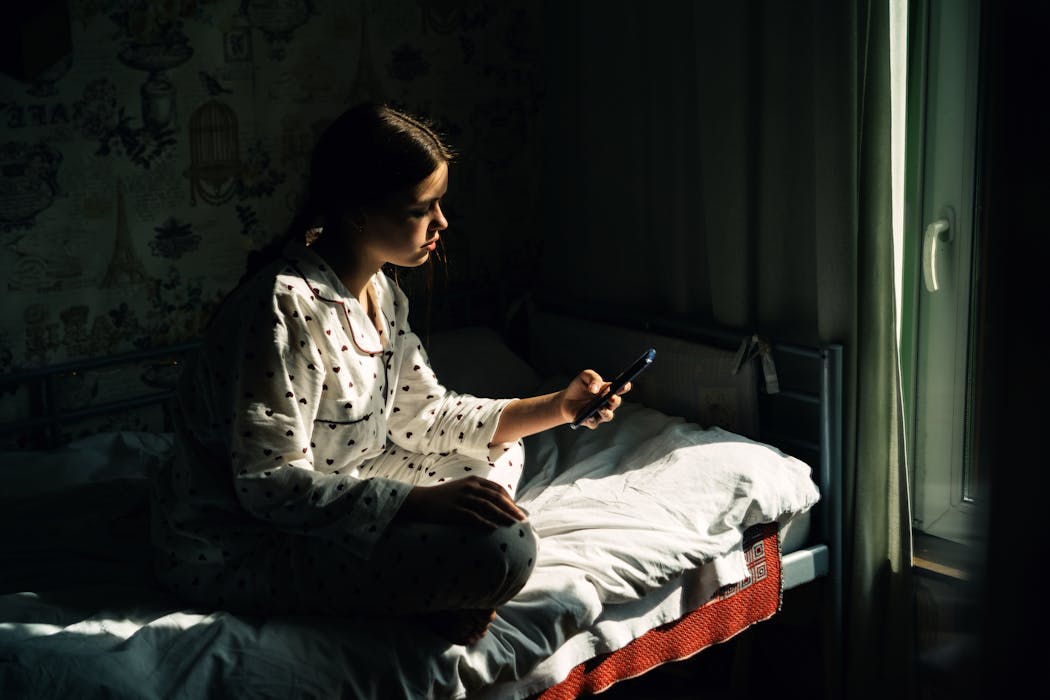
Is the social media platform she’s using, rather than the content she’s viewing, a threat to her well-being? Fiordaliso/Moment via Getty Images

A Los Angeles courtroom is hosting what may become the most consequential legal challenge Big Tech has ever faced.

This is an inflection point in the global debate over Big Tech liability: For the first time, an American jury is being asked to decide whether platform design itself can give rise to product liability – not because of what users post on them, but because of how they were built.

As a technology policy and law scholar, I believe that the decision, whatever the outcome, will likely generate a powerful domino effect in the United States and across jurisdictions worldwide.

The case

The plaintiff is a 20-year-old California woman identified by her initials, K.G.M. She said she began using YouTube around age 6 and created an Instagram account at age 9. Her lawsuit and testimony allege that the platforms’ design features, which include likes, algorithmic recommendation engines, infinite scroll, autoplay and deliberately unpredictable rewards, got her addicted. The suit alleges that her addiction fueled depression, anxiety, body dysmorphia – when someone see themselves as ugly or disfigured when they aren’t – and suicidal thoughts.

TikTok and Snapchat settled with K.G.M. before trial for undisclosed sums, leaving Meta and Google as the remaining defendants. Meta CEO Mark Zuckerberg testified before the jury on Feb. 18, 2026.

Meta CEO Mark Zuckerberg testified in court in a lawsuit alleging that Instagram is addictive by design.

The stakes extend far beyond one plaintiff. K.G.M.’s case is a bellwether trial, meaning the court chose it as a representative test case to help determine verdicts across all connected cases. Those cases involve approximately 1,600 plaintiffs, including more than 350 families and over 250 school districts. Their claims have been consolidated in a California Judicial Council Coordination Proceeding, No. 5255.

The California proceeding shares legal teams and evidence pool, including internal Meta documents, with a federal multidistrict litigation that is scheduled to advance in court later this year, bringing together thousands of federal lawsuits.

Legal innovation: Design as defect

For decades, Section 230 of the Communications Decency Act shielded technology companies from liability for content that their users post. Whenever people sued over harms linked to social media, companies invoked Section 230, and the cases typically died early.

The K.G.M. litigation uses a different legal strategy: negligence-based product liability. The plaintiffs argue that the harm arises not from third-party content but from the platforms’ own engineering and design decisions, the “informational architecture” and features that shape users’ experience of content. Infinite scrolling, autoplay, notifications calibrated to heighten anxiety and variable-reward systems operate on the same behavioral principles as slot machines.

These are conscious product design choices, and the plaintiffs contend they should be subject to the same safety obligations as any other manufactured product, thereby holding their makers accountable for negligence, strict liability or breach of warranty of fitness.

Judge Carolyn Kuhl of the California Superior Court agreed that these claims warranted a jury trial. In her Nov. 5, 2025, ruling denying Meta’s motion for summary judgment, she distinguished between features related to content publishing, which Section 230 might protect, and features like notification timing, engagement loops and the absence of meaningful parental controls, which it might not.

Here, Kuhl established that the conduct-versus-content distinction – treating algorithmic design choices as the company’s own conduct rather than as the protected publication of third-party speech – was a viable legal theory for a jury to evaluate. This fine-grained approach, evaluating each design feature individually and recognizing the increased complexities of technology products’ design, represents a potential road map for courts nationwide.

What the companies knew

The product liability theory depends partly on what companies knew about the risks of their designs. The 2021 leak of internal Meta documents, widely known as the “Facebook Papers,” revealed that the company’s own researchers had flagged concerns about Instagram’s effects on adolescent body image and mental health.

Internal communications disclosed in the K.G.M. proceedings have included exchanges among Meta employees comparing the platform’s effects to pushing drugs and gambling. Whether this internal awareness constitutes the kind of corporate knowledge that supports liability is a central factual question for the jury to decide.

black-and-white photo of eight men in business suits standing behind a table with their right hands raised
Tobacco companies were eventually held to account because what they knew – and hid – about the addictiveness of their products came to light.
Ray Lustig/The Washington Post via Getty Images

There is a clear analogy to tobacco litigation. In the 1990s, plaintiffs succeeded against tobacco companies by proving they had concealed evidence about the addictive and deadly nature of their products. In K.G.M., the plaintiffs here are making the same core argument: Where there is corporate knowledge, deliberate targeting and public denial, liability follows.

K.G.M.’s lead trial attorney, Mark Lanier, is the same lawyer who won multibillion-dollar verdicts in the Johnson & Johnson baby powder litigation, signaling the scale of accountability they are pursuing.

The science: Contested but consequential

The scientific evidence on social media and youth mental health is real but genuinely complex. The Diagnostic and Statistical Manual of Mental Disorders (DSM-5) does not classify social media use as an addictive disorder. Researchers like Amy Orben have found that large-scale studies show small average associations between social media use and reduced well-being.

Yet Orben herself has cautioned that these averages might mask severe harms experienced by a subset of vulnerable young users, particularly girls ages 12 to 15. The legal question under the negligence theory is not whether social media harms everyone equally, but whether platform designers had an obligation to account for foreseeable interactions between their design features and the vulnerabilities of developing minds, especially when internal evidence suggested they were aware of the risks.

First, a manufacturer has a duty to exercise reasonable care in designing its product, and that duty extends to harms that are reasonably foreseeable. Second, the plaintiff must show that the type of injury suffered was a foreseeable consequence of the design choice. The manufacturer doesn’t need to have foreseen the exact injury to the exact plaintiff, but the general category of harm must have been within the range of what a reasonable designer would anticipate.

This is why the Facebook Papers and internal Meta research are so legally significant in K.G.M.’s case: They go directly to establishing that the company’s own researchers identified the specific categories of harm – depression, body dysmorphia, compulsive use patterns among adolescent girls – that the plaintiff alleges she suffered. If the company’s own data flagged these risks and leadership continued on the same design trajectory, that would considerably strengthen the foreseeability element.

Why it matters

Even if the science is unsettled, the legal and policy landscape is shifting fast. In 2025 alone, 20 states in the U.S. enacted new laws governing children’s social media use. And this wave is not only in the U.S.; countries such as the U.K., Australia, Denmark, France and Brazil are also moving forward with specific legislation, including mandates banning social media for those under 16.

The K.G.M. trial represents something more fundamental: the proposition that algorithmic design decisions are product decisions, carrying real obligations of safety and accountability. If this framework takes hold, every platform will need to reconsider not just what content appears, but why and how it is delivered.

The Conversation

I was staff at organizations including the Electronic Frontier Foundation, Public Knowledge, and the Harvard Berkman Klein Center, which were funded by various foundations and companies. Refer to their websites for disclosures. I was a staff member in the connectivity policy team at Facebook (2016-2018). I am an advisory board member of non-profits, including Internet Lab (Brazil) and Derechos Digitales (Chile). I am a senior advisor (without any honorarium) at the Datasphere Initiative and Portulans Institute. More details at https://www.carolinarossini.net/bio

ref. How Instagram addictiveness lawsuit could reshape social media – platform design meets product liability – https://theconversation.com/how-instagram-addictiveness-lawsuit-could-reshape-social-media-platform-design-meets-product-liability-277066

When Washington and the states are in conflict, the ultimate winner is not always certain

Source: The Conversation – USA – By Kenneth Michael White, Associate Professor of Political Science & Criminal Justice, Kennesaw State University

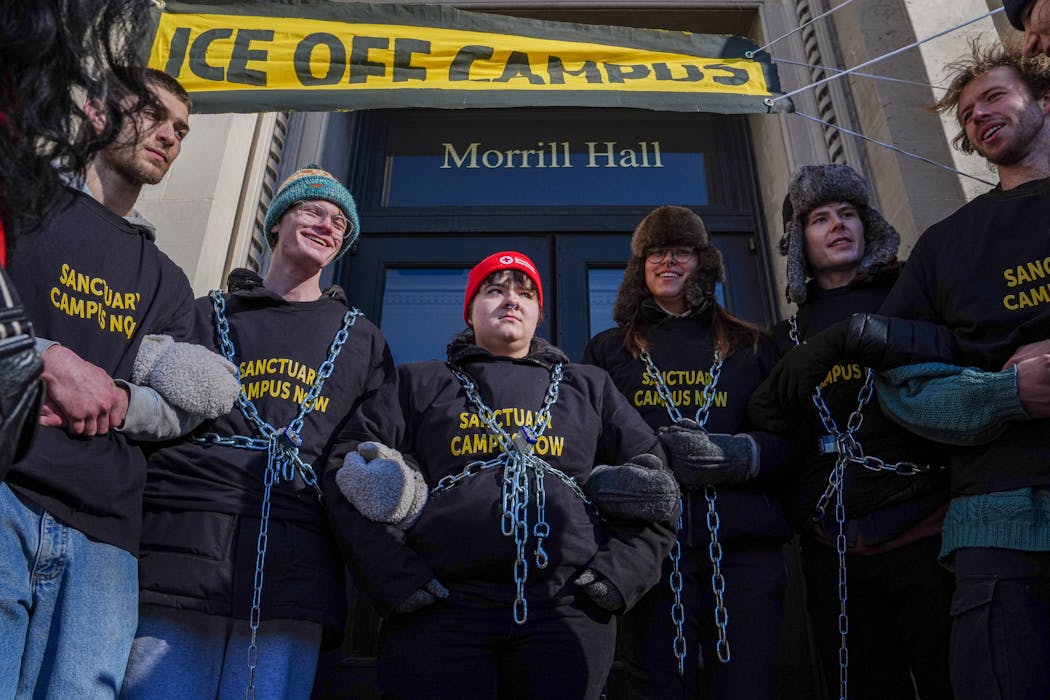
Trump administration immigration policies have received pushback from leaders of sanctuary jurisdictions, as well as protesters. AP Photo/Ryan Murphy

The Trump administration’s aggressive policies on immigration are receiving pushback not just on Capitol Hill but across the country. Democratic leaders in multiple states are refusing to cooperate with immigration arrests.

In response, the federal government is refusing to share evidence with state investigators in the deaths of Renee Good and Alex Pretti, who were killed by federal officers while protesting immigration enforcement in Minneapolis.

Throughout U.S. history, there have been many moments of conflict between the federal and state governments, such as on slavery, racial segregation, school testing requirements, health care, abortion and climate change. Conversely, there has also been a long history of cooperation between the different levels of government in matters such as disaster relief, law enforcement and antiterrorism efforts.

But what happens when the various states and the federal government see the same legal issue differently? Which side wins in a dispute? This is an ongoing and open question, as evidenced by the frequent lawsuits being filed against Trump administration policies by state attorneys general.

As a legal scholar, I study issues related to constitutional law, including federalism, or the division of power between the various levels of government in the U.S. system. Ultimately, the question of who prevails when there’s a dispute depends on whether the issue is more national or local in scope. It may also matter whether the issue affects fundamental rights, which no government may justly infringe.

Layers of authority

The framers of the Constitution saw the division of power between the states and federal government as part of the U.S. system of checks and balances. Just as the judicial, executive and legislative branches check each other, so do the different levels of government. “The true barriers of our liberty in this country are our state governments,” Thomas Jefferson wrote in 1811.

Still, it’s easy to assume that the federal government has greater power. The U.S. Constitution states that federal laws are “the supreme Law of the Land.” This is a model known as vertical federalism – in essence, putting the federal government above the states and localities.

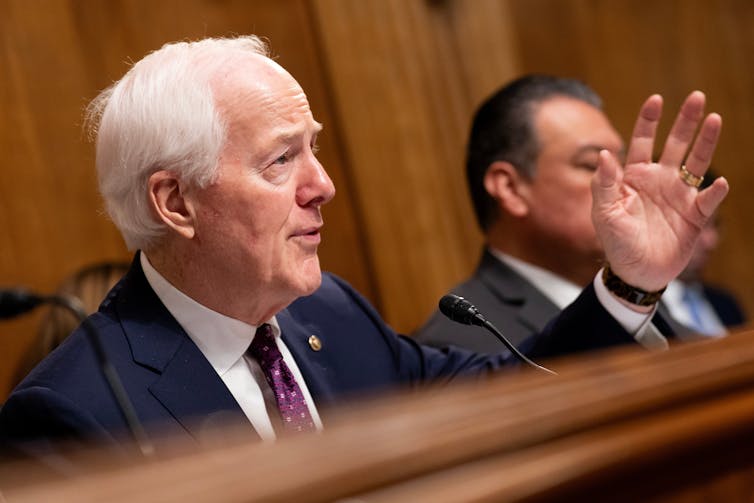
Texas Sen. John Cornyn gestures with his left hand while speaking at a committee hearing.
U.S. Sen. John Cornyn, a Texas Republican, speaks at a Senate hearing investigating fraud in the Medicaid program in Minnesota. Medicaid is a joint federal-state program.
AP Photo/Nathan Howard

There are areas of law where that framework clearly prevails. For example, immigration is an issue that the Constitution places squarely under the authority of the federal government. States cannot nullify, or invalidate, federal law. That is vertical federalism.

But the 10th Amendment says “powers not delegated to the United States … are reserved to the States respectively.” There are areas where states retain authority and the relationship between the levels of government is more horizontal, or flat or equal.

Consider cannabis. In 1996, California voters approved a ballot initiative making their state the first to allow the medical use of marijuana since prohibition started in the early 1900s. This was despite the fact that federal law viewed all cannabis as contraband. But California determines its own criminal code.

Californians could not stop the federal government from enforcing a valid federal law in their state, but that did not mean that California – or the vast majority of other states that have since passed their own medical or recreational marijuana measures – have to participate in a federal policy choice.

Federal agencies have continued occasional cannabis raids in California. But for state law enforcement officials, failing to punish a person for the medical use of cannabis is not a federal crime. In 1997, the Supreme Court ruled that the federal government cannot force a state “to enact or enforce a federal regulatory program.” That is horizontal federalism.

Constraints on all governments

The federal government is limited to its enumerated powers – which is to say, the powers spelled out directly by the U.S. Constitution. But states possess “police powers,” which is a broader authority to regulate health, safety and morality.

The federal government is responsible for foreign policy and regulating interstate commerce. But states and localities regulate vaccine mandates, police and fire services, and operate or oversee water and sewer systems, as well as taking stances on moral issues, including alcohol and gambling, due to their potential to cause harm.

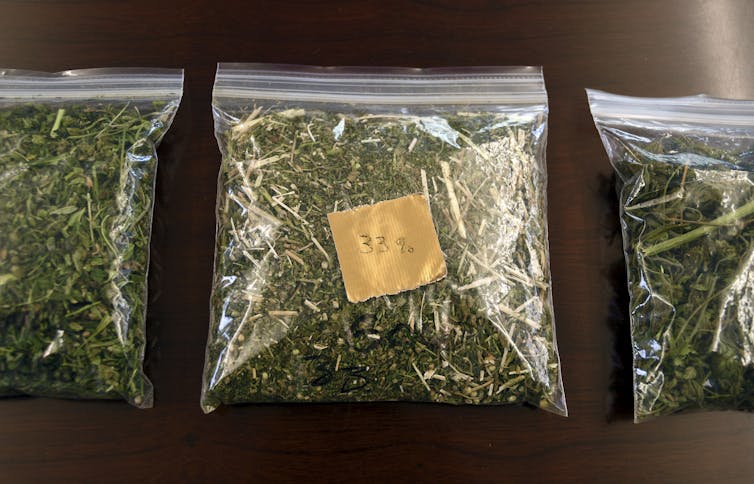
Three bags of cannabis, seized by law enforcement, are on display on a table.
Most states have passed laws legalizing marijuana for recreational or medical use, but the drug remains illegal under federal law.
AP Photo/Thomas Peipert

But both the federal government and the states are limited by the Constitution. Neither can justly violate the freedom of the press, for example, under the First Amendment.

And the reality is that, at least at this point in history, there is no neat division between federal and state authority on a broad range of issues. The federal government, for example, pays for the bulk of interstate highway construction. But those roads are actually paved by states.

When the federal government is paying a share of the cost of carrying out its policies, the Supreme Court has ruled that it can, in fact, tell states what to do, such as enforcing a legal drinking age of 21 or risk a share of federal highway funds. But it has also found that federal demands on states can be unconstitutionally excessive or “coercive,” as with a mandate under the Affordable Care Act to expand Medicaid, which the court struck down, even though Washington was paying most of the bill.

Federalism and the question of which level of government has the ultimate say is often complex and messy. But for that reason, as the framers foresaw, it remains an important safeguard of liberty, preventing too much power from residing in one place.

The Conversation

Kenneth Michael White does not work for, consult, own shares in or receive funding from any company or organization that would benefit from this article, and has disclosed no relevant affiliations beyond their academic appointment.

ref. When Washington and the states are in conflict, the ultimate winner is not always certain – https://theconversation.com/when-washington-and-the-states-are-in-conflict-the-ultimate-winner-is-not-always-certain-276485

Why women have to queue for the toilet – and what it says about how cities are designed

Source: The Conversation – UK – By Belen Martinez, Research Fellow, Centre for Regional Economic and Social Research, Sheffield Hallam University

Marcel Derweduwen/Shutterstock

Do you remember the last time you had to queue for a toilet? If several examples spring to mind, the chances are you were standing in the women’s line. Whether at theatres, airports, shopping centres or festivals, the pattern is the same: men breeze in and out with barely a wait, while women stand in line.

In most public buildings, toilet space is divided by floor area, giving men and women roughly equal space. While this might appear fair, research on gender and toilet design has shown that equal floor area does not result in equal access. It assumes that men and women use toilets in the same way and for the same length of time, an assumption built directly into most public toilet designs.

Men’s toilets usually combine cubicles with urinals, which take up less space and can be used more quickly. Women’s toilets rely entirely on cubicles, so even when both sides occupy the same area, men’s facilities can serve more users.

Time matters too. Women generally take longer because they need to sit rather than stand, often wear more complex clothing, and are more likely to be menstruating, pregnant or managing conditions such as incontinence or urinary tract infections.

Many design standards are still based on a “default male body”, assuming a fast pace, standing and minimal time spent in the toilet. When spaces are organised around men’s bodies and routines, delays are easily blamed on women’s behaviour – that women “take too long” – rather than on how toilets are designed.

The most visible consequence of these design standards is the queue outside the women’s toilets. But, as my research shows, there can also be economic and health consequences. For mobile workers like taxi drivers, time spent standing in line is time not spent earning.

The cost of toilet disparity

And it’s not just about the queue – availability of toilets at all is a design decision that affects women more than men, who are more likely to be able to go wherever they’d like.

For most women, queuing for the toilet is a minor irritation that they absorb into the day without much thought. Yet the more serious costs of toilet disparity became clear to me while researching women who work as taxi drivers in Spain.

When I asked about the frustrations of the job, their first answer was rarely traffic, difficult passengers or long shifts, but toilets. Finding a toilet while on shift often required careful planning and long waits, leading to lost income. Their male colleagues, meanwhile, seemed to come and go in minutes.

Rosario, a 26-year-old Uber driver, described needing the toilet while working as “the drama of the job!” Like many other drivers who participated in my research, she explained that she planned her route around known toilet facilities. Others reported avoiding drinking water so they would not need to stop “all the time”, while some linked recurrent urinary infections to “holding it for too long”.

These strategies become redundant when menstruating. As Juana explained: “You have to get organised and force yourself to stop. So after a service, you don’t just go to the nearby taxi rank to get a new client. Instead, you have to drive to a petrol station so you can go to the toilet first.”

An all-gender restroom sign
Gender-neutral restrooms and other designs can make public toilets more equitable.
Heidi Besen/Shutterstock

Research has long shown that public toilets are not neutral pieces of infrastructure, but reflect deeper assumptions about whose bodies and behaviours are taken as the norm. In particular, norms of modesty and privacy mean that women are expected to use enclosed cubicles, while men’s facilities prioritise speed and efficiency through open urinals.

It is also anatomically easier – and often socially accepted – for men to urinate at the side of a road or elsewhere when there are no public toilets available.

Women’s privacy is carefully designed for, but their time is not. Research on “toilet parity” shows that increasing the number of cubicles or creating gender neutral cubicles can significantly cut women’s queues with little impact on men. Experiments at large events, such as the use of urinals for women, show how rethinking capacity can virtually eliminate waiting.

For the women in my research, the frustrating quest for a toilet is not just about waiting, but about dignity and the right to occupy the city on equal terms. Toilets, in this sense, become a quiet but powerful indicator of who public space is really designed for, and whose bodies are still expected to adapt.

The Conversation

Belen Martinez receives funding from Economic and Social Research Council (ES/P00072X/1).

ref. Why women have to queue for the toilet – and what it says about how cities are designed – https://theconversation.com/why-women-have-to-queue-for-the-toilet-and-what-it-says-about-how-cities-are-designed-273536

The Capture season three: experts in facial recognition and AI decipher the fact from the fiction

Source: The Conversation – UK – By Eilidh Noyes, Lecturer in Cognitive Psychology, University of Leeds

The BBC’s conspiracy thriller drama The Capture is back for a third season. The first two series had viewers hooked with a story that intertwined police investigations, facial recognition and deepfake AI technology.

As experts in facial recognition and AI, we’re separating the fact from the fiction ahead of the new season.

Fans of The Capture will be familiar with scenes of investigators using facial recognition software to identify the people they are tracking around London – the soldier Shaun Emery (Callum Turner) in season one and the Russian mercenary Nikolai Mirsky (Jack Sandle) in season two.

Real facial recognition

Real facial recognition work involves several steps. An operator first uploads an image into facial recognition software, which searches for the presence of a face. Features are then extracted from each detected face and compared against the features of faces from a stored database. Features are things that the algorithm has identified as important for recognition decisions and are probably not describable attributes of a face as we know it (such as eyes, nose, mouth).

It is not feasible, nor indeed ethical, to run a facial recognition system against all images on the internet. Not least because of the technical limitations of searching for, storing and processing such a staggering amount of data. In police or intelligence settings faces are searched against specific databases and a human almost always reviews the output because algorithms are not perfect. It is crucial that human operators are trained on the strengths and limitations of these systems and have the necessary skills to review the output.

In season two of The Capture, the fictional facial recognition software company “Xanda” claims their system can “recognise a face with up to 100% accuracy … from every corner of the world with equal precision”. But they are opposed to independent testing.

The trailer for season three of The Capture.

The best facial recognition systems are now extremely accurate, under increasingly difficult image scenarios. However, accuracy and demographic differences vary widely across different systems and testing parameters. Racial bias is a genuine concern and independent testing is of paramount importance.

In season two, Xanda’s technology claims it can literally “unmask” a face. In reality, some algorithms compare masked to unmasked faces with high accuracy, but they cannot recover information from underneath the mask. Attempting to do so would produce inaccurate and dangerous results.

In the show, patrolling officers receive images of targets, and eyewitnesses perform identifications. This reflects a genuine use of human facial recognition in forensic operations. Most humans make errors on facial comparison tasks involving unfamiliar faces. Super-recognisers (people with a naturally high recognition ability) and trained forensic examiners are more accurate. Familiar humans (people who know the target) often make accurate identifications even in low-quality photos.

Real deepfakes

Deepfakes are digitally manipulated videos, images or voices created with AI to make it appear that someone did something that they didn’t. This technology already exists. Real examples of misuse include fake political videos, non-consensual intimate imagery, child exploitation images and fraud.

Characters in The Capture frequently mistake deepfakes as genuine sources of information. In season one, manipulated video footage causes chaos for Emery, and in season two politician Isaac Turner (Paapa Essiedu) is the subject of a rampage of manipulated footage which the public believes is real.

When asked how Turner sounded in a faked call, a character replied “like Isaac Turner”. This acceptance of deepfakes is realistic. Human detection accuracy is around a coin flip: a 50% chance of a correct detection in scientific studies.

Turner’s wife (Charlie Murphy) was confused by the content of her husband’s deepfake speech, but complimented the way he spoke: “You did good though … Not what you said but the way you said it. You sounded … authoritative.” Cloned voices are typically rated positively and as more dominant than real recordings. Though in practice, deepfake videos tend not to be effective for the types of political activity depicted in the show, and manipulated imagery is not a new problem, as it suggests.

Depictions of deepfakes in The Capture involve almost instantaneous video manipulation and live broadcast. This is far from the current state-of-the-art. While the technology has improved, it is prone to producing obviously fake videos. Creating a high quality video requires a large and diverse collection of photos for the target person, along with iterative tweaks to the output. This is time consuming, and impossible to do in real-time.

Moreover, a capability that can hijack any CCTV or live TV feed and instantly play any content does not yet exist. Camera networks exist over a variety of different technical protocols, ownership arrangements, and access models. That complexity is a roadblock for the kind of point-and-click hijacking depicted in the show.

What next?

In season three, detective Rachel Carey (Holliday Grainger) will encounter further deceptive footage. How can she trust what she sees?

Real strategies to detect deepfakes include training humans to detect artifice, familiarity with the person depicted, and liveness checks that measure natural human responses to various changes in the scene.

In season two, Carey recognised genuine footage of Turner because he held the cross on the necklace around his neck, which his deepfake never did – idiosyncratic mannerisms may be missing in a deepfake.

Detection algorithms developed by the media forensics community and digital watermarks (“invisible” codes in imagery detectable by algorithms) are technological countermeasures that also help.

There are new AI techniques, such as the creation of realistic fake faces and agentic AI, where autonomous software systems perform tasks independently of human control. Will we see the face of an identity that does not exist to throw off the investigators? Could AI get out of hand and create deepfakes for its own purposes, providing a dilemma for both the good guys and the bad guys in the show?

These are the challenges we’d like to see Carey tackle, because they’re ones society will probably face in the near future.

The Conversation

The authors do not work for, consult, own shares in or receive funding from any company or organisation that would benefit from this article, and have disclosed no relevant affiliations beyond their academic appointment.

ref. The Capture season three: experts in facial recognition and AI decipher the fact from the fiction – https://theconversation.com/the-capture-season-three-experts-in-facial-recognition-and-ai-decipher-the-fact-from-the-fiction-277292

The US sank an Iranian warship and didn’t rescue the survivors. Is this legal in war?

Source: The Conversation – Global Perspectives – By Jennifer Parker, Adjunct Professor, Defence and Security Institute, The University of Western Australia; UNSW Sydney

News that a United States submarine had torpedoed and sunk the Iranian warship IRIS Dena about 40 nautical miles off Sri Lanka this week took many observers by surprise. An attack like this so far from the Persian Gulf – and in a key trade route connecting China to the Middle East – suggests the arena of this war may be widening.

But the incident also highlights something rarely well understood outside military and legal circles: the law of naval warfare.

Many have wondered: was this attack lawful? And who was under an obligation to rescue survivors?

When does the law of naval warfare apply?

The law of naval warfare is a subset of the law of armed conflict.

The law of naval warfare sets out permissions and protections for combatants, civilians and neutral actors engaged in conflict at sea.

Importantly, it applies regardless of whether the resort to force was lawful.

In other words, you’re supposed to follow the law of the sea even if your whole justification for war in the first place isn’t legal under international law.

What’s more, the conduct of operations at sea is regulated by the law of naval warfare whether or not war has been formally declared.

The law of naval warfare also takes precedence over the United Nations Convention on the Law of the Sea (where the two come into tension).

This reflects the principle of lex specialis in international law, meaning the more specific body of law applies.

These rules have developed over centuries as states sought to regulate the conduct of conflict at sea while still allowing navies to operate effectively.

So, was it legal for the US to sink the Iranian warship?

Yes, it was a lawful target.

Under the law of naval warfare, warships belonging to a state engaged in an international armed conflict are military objectives by nature. The rules say they may be lawfully targeted.

Such attacks may occur on the high seas or within the 12 nautical mile territorial waters of the states that are party to the international armed conflict (the belligerents). This means, effectively, that such an attack could happen anywhere outside the 12 nautical mile territorial waters of neutral states.

If the Iranian warship was within Sri Lankan waters (that is, within 12 nautical miles of the Sri Lankan coast) at the time, the attack wouldn’t have been lawful.

But in this case, IRIS Dena was reportedly operating outside Sri Lanka’s territorial waters and therefore constitutes a lawful military target.

What does the law say about rescue of survivors?

The law of naval warfare also sets out obligations regarding the rescue of survivors.

Under the Second Geneva Convention of 1949, parties to a conflict must – after each engagement – take all possible measures to search for and collect the shipwrecked, wounded and sick.

These rules apply to naval warfare and require belligerents, so far as military circumstances permit, to assist survivors at sea.

In practice, however, submarines face particular challenges in fulfilling this obligation. Surfacing to rescue survivors may expose them to significant risk. You also can’t usually fit a large number of survivors on a submarine.

If a submarine cannot safely surface to rescue survivors, it may instead facilitate rescue by reporting their location to other vessels or authorities.

This practice has been noted in some key legal commentary on submarine warfare.

The swift response of the Sri Lankan navy, which rescued 32 sailors from IRIS Dena, suggests authorities were informed quickly of the incident. (Sri Lankan officials say 87 bodies were also retrieved).

How Sri Lankan authorities were informed is not yet clear, but it seems likely the US navy transmitted the location of the survivors.

Given the damage suffered by IRIS Dena and the reported casualties, the ship’s crew was unlikely to have been able to transmit their location themselves.

This may also explain why early reports suggested a submarine had sunk the vessel, before the US confirmed its involvement.

It is also unlikely the crew of IRIS Dena would have immediately known they had been struck by a submarine-launched torpedo. Such a torpedo would typically be fired from very far away, beyond the detection range of a ship’s hull-mounted sonar.

A lawful military target

While debate continues over the legal justification for the United States entering the conflict with Iran, the conduct of hostilities at sea is nonetheless governed by the law of naval warfare.

Under that framework, IRIS Dena therefore constitutes a lawful military target, and efforts to facilitate the rescue of survivors are consistent with those obligations.

The Conversation

Jennifer Parker does not work for, consult, own shares in or receive funding from any company or organisation that would benefit from this article, and has disclosed no relevant affiliations beyond their academic appointment.

ref. The US sank an Iranian warship and didn’t rescue the survivors. Is this legal in war? – https://theconversation.com/the-us-sank-an-iranian-warship-and-didnt-rescue-the-survivors-is-this-legal-in-war-277606

Who is Mojtaba Khamenei, Iran’s presumed next supreme leader? And would he bring change – or more brutal suppression?

Source: The Conversation – Global Perspectives – By Mehmet Ozalp, Professor of Islamic Studies, Head of School, The Centre for Islamic Studies and Civilisation, Charles Sturt University

Morteza Nikoubazl/NurPhoto via Getty Images

The death of Iran’s supreme leader, Ali Khamenei, during the holy month of Ramadan marks one of the most consequential turning points in the history of the Islamic Republic of Iran.

His successor, widely expected to be his son Mojtaba Khamenei, represents both continuity and contradiction in the revolutionary system established after the Iranian Revolution in 1979.

At stake is not only who leads Iran, but what the Islamic Republic has become, nearly half a century after the revolution that promised an end to dynastic rule.

Who is Mojtaba Khamenei?

Mojtaba Khamenei is a cleric who has spent most of his career outside public office but close to power, working within the Office of the Supreme Leader. He was often seen as a gatekeeper and powerbroker rather than a public political figure with a formal portfolio.

At 17, he briefly served in the Iran–Iraq war. He only began attracting public attention in the late 1990s, by which time his father’s authority as supreme leader was firmly established.

Over time, his reputation has centred on two key features. The first is a close relationship with Iran’s security establishment, particularly the Islamic Revolutionary Guard Corps (IRGC), and its hardline networks.

The second is a strong opposition to reformist politics and Western engagement.

Critics have linked him to the suppression of protests following the disputed 2009 presidential election. He is also believed to have wielded influence over Iran’s state broadcasting organisation, giving him indirect control over parts of the country’s information landscape and state narrative.

In 2019, the first Trump administration sanctioned Mojtaba, accusing him of acting in an official capacity on behalf of the supreme leader despite holding no formal government position.

Mojtaba’s legitimacy as leader

Iran’s constitution dictates that the Assembly of Experts (an 88-member clerical body) selects the supreme leader.

The assembly lists the religious, political and leadership qualifications of possible candidates. But in practice, it is not a neutral electoral body. Candidates for the assembly itself are vetted through institutions ultimately shaped by the supreme leader’s orbit, and its deliberations are opaque.

This creates a familiar Iranian scenario – the constitution supplies the choreography, while the security-clerical establishment supplies the music.

That matters when assessing why Mojtaba is seen as a viable supreme leader amid critiques he lacks the senior religious standing traditionally associated with the office.

A mid-ranking cleric, he was only given the title ayatollah in 2022. The title is necessary to become supreme leader, so the promotion signalled he was being groomed to take over from his ageing and ill father.

The revolution’s founding myth was clearly anti-dynastic. After toppling the shah, the revolution’s leaders rejected hereditary rule.

To many Iranians, a son following his father as supreme leader looks like an ideological backslide. The regime appears more like a theocratic monarchy, less the famous “guardianship of the jurist”.

Yet, it is also important to be precise. Mojtaba cannot inherit the position by bloodline alone. The assembly must select him.

Still, political systems can become dynastic without rewriting constitutions. Dynastic outcomes emerge when informal power networks, such as family ties, political patronage, security ties, and control over the media, can make one candidate appear more natural, safe or inevitable.

That has essentially been the Mojtaba story in Iran for years: a man who built influence not by winning elections, but by managing the gate to the most powerful office in the country.

The circumstances of Ali Khamenei’s death add another layer of significance and, ironically, legitimacy to Mojtaba’s ascension.

For many Shi’a Muslims, being killed during Ramadan carries deep symbolic resonance. The first imam of Shi’ism, Ali ibn Abi Talib, was assassinated during the dawn prayer in Ramadan in 661 CE, an event still commemorated each year by Shi’ite Muslims.

Shi’ite historical memory places strong emphasis on martyrdom. In particular, the death of Husayn ibn Ali, a grandson of the Prophet Muhammad, at Karbala in 680 CE, symbolises the struggle between justice and oppression.

Because of this tradition, violent deaths of leaders in the past and today are framed within a broader narrative of sacrifice and resistance.

Iran’s revolutionary ideology has long drawn on these themes. If the state presents Khamenei’s death in this light, it could strengthen a narrative of martyrdom and defiance.

This, in turn, gives his son Mojtaba an aura of religious legitimacy that is very strong in the Shi’ite Muslim psyche.

How different would he be from his father?

This is the most consequential question for Iran. The answer is likely less different than many might expect.

Ali Khamenei was a figure of the revolutionary generation. His authority rested on ideological legitimacy, decades spent amassing and consolidating power, and his ability to arbitrate between competing factions. Over time, he became the system’s final referee.

Mojtaba Khamenei, by contrast, is often portrayed as a product of the security establishment, rather than a public theologian or statesman. He is known less for speeches or religious authority than for his influence and the networks he has built behind-the-scenes coordination.

If that assessment is correct, the shift would be from a leader who balanced institutions to one who may lean more heavily on the might of the IRGC. This would deepen an existing trend toward the securitisation of Iranian politics.

In a period of war and instability, regimes typically prioritise continuity and control. Mojtaba’s appeal to the establishment, therefore, appears to rest on several factors:

  • his close ties to the IRGC and intelligence networks
  • his long experience inside the supreme leader’s office
  • his ideological alignment with hardline positions sceptical of reform and Western engagement.

A figure trusted by the most powerful security institutions also reduces the chance of power struggles or fragmentation at the top.

What might this mean for the war?

A new supreme leader rarely produces an abrupt ideological shift, especially during a military conflict. Continuity is the more likely outcome.

Mojtaba Khamenei’s profile suggests a more security-centred style of leadership with three possible ways forward.

First, domestic control may harden. Given Mojtaba’s reported ties to the security establishment, unrest is more likely to be met with swift repression rather than political accommodation.

Second, the IRGC could expand its influence in regional affairs, given how closely aligned Mojtaba is with the guards.

Third, any negotiations with the West would likely be tactical rather than transformative. They would be framed as a strategic necessity rather than an ideological shift.

And given the fact his father was killed in US-Israeli airstrikes, this will only reinforce a more hardline posture toward both countries.

In short, Iran under Mojtaba Khamenei would likely remain confrontational in rhetoric, but pragmatic when regime survival is at stake.

The Conversation

Mehmet Ozalp is the Executive Director of ISRA Academy

ref. Who is Mojtaba Khamenei, Iran’s presumed next supreme leader? And would he bring change – or more brutal suppression? – https://theconversation.com/who-is-mojtaba-khamenei-irans-presumed-next-supreme-leader-and-would-he-bring-change-or-more-brutal-suppression-277483

40% of teenage boys believe women lie about domestic and sexual violence: new research

Source: The Conversation – Global Perspectives – By Sara Meger, Senior Lecturer in International Relations, The University of Melbourne

On International Women’s Day, March 8, we often commemorate the progress women have made across the centuries. Rightly so, as there’s much to celebrate.

But what if the more urgent story is about backlash?

We are researching a troublingly common pathway: how everyday misogyny becomes violent extremism. We’re trying to better understand how gender attitudes influence radicalisation and how we can best prevent it.

Drawing from our soon-to-be-published survey of more than 2,300 adults and 1,100 young people (aged 13–17), our findings suggest misogyny is not a side issue. It may be a driver of extremism.

While public debate often frames extremism through race, religion or nationalism, our research suggests that gender politics may be just as – if not more – central.

Finding the common threads

Though vastly different, extremist movements, such as far-right ethno-nationalists, religious fundamentalists and online “incel” communities, have something in common. The ideological language may differ, but the underlying insistence on women’s “rightful place” in society binds these movements together.

Around the world, there is a growing sentiment that “feminism has gone too far” or that men are now discriminated against. In Australia and other Western countries, this sentiment has risen steadily since 2021.

Online, it’s amplified through what’s been called the “manosphere”: a network of influencers and communities that frame gender equality as a threat.

We are interested in whether this growing sentiment is generating anti-feminist and misogynistic attitudes in Australia, and whether these attitudes form a pathway into violent extremist views.

Our research

In our recent national survey of Australian adults and adolescents, we examined general misogynistic attitudes and support for violent extremism.

We asked whether it is legitimate to use violence to resist feminism. More than 17% of all Australians agree feminism should be resisted with violence. It was the second most supported form of extremist attitude.

Our study included a representative sample of 13–17-year-olds across Australia. The findings are even more confronting among these participants.

We were surprised to learn that 25–30% of boys in this age group expressed agreement with various forms of violent extremism. More than a third (36%) agreed with misogynistic attitudes.

Support for violence to resist feminism was highest among adolescent boys (28%), followed closely by adolescent girls (21%).

Perhaps most alarming: roughly 40% of boys aged 13 to 17 agreed that women lie about domestic and sexual violence.

These results raise crucial questions going forward. We don’t yet know how these views have changed over time, whether they are on the rise and what the links are between violent extremism and the negative treatment of women.

A generation under strain?

Another avenue of enquiry our team is investigating is how the perception of threat to masculine status and lack of belonging can play a role.

Social research has shown boys and men increasingly feel alienated, humiliated or uncertain about their place in the world.


Read more:
How boys get sucked into the manosphere


Narratives that reassert male dominance can become psychologically attractive and are being pushed online – often for profit. They blame the plight of men on feminism, immigrants and women at large.

In our research, we differentiate between interpersonal experiences, anchored in close relationships, and intergroup conflict that has generated a sense of “us” versus “them”: men versus women. We then examine how this intergroup social conflict is driving radicalisation.

Online communities validate men and boys’ grievances and offer an “outgroup” to scapegoat and blame – women. At the same time a new “ingroup” is being crafted, coalescing around misogyny, and shaped and led by key figures online.

This new social identity that defines men and boys (and allies) as an ingroup in need of defending may be operating as a gateway to violent extremist ideologies.

The public and the private

One of our study’s most nuanced insights concerns how young people conceptualise violence against women. We found two distinct clusters of attitudes.

Some respondents justified violence in the private sphere. If a woman disobeys in the home, a man should be able to control her with violence.

Others supported abstract restrictions in the public sphere, such as limiting women’s reproductive rights. Some agreed with the sentiment that “sometimes a woman just pushes a man too far”, forcing him to commit acts of violence.

Different types of extremism appeared to align with different clusters. This suggests misogyny is not all the same. It’s expressed in many ways, from intimate coercion to political control.

The intergroup conflict comes to the fore in social and political debates about men and women’s rights and freedoms, and the perception that advances in women’s rights has come at the expense of men’s.

Understanding these distinctions is vital for understanding misogyny and violent extremism in Australia and beyond. Misogyny is not just a “social issue”, but a potential national security concern.

Interrupting the pathway to extremism

By identifying misogyny as a pathway rather than an endpoint, we can think about prevention.

Researchers at the Faculty of Education at the University of Melbourne have developed Resilience, Rights and Respectful Relationships teaching resources.

The approach is guided by research that shows curriculum that promotes social and emotional skills and positive gender norms leads to improved mental and social health, and reduces involvement in bullying and the perpetration of gender-based violence. Such approaches have already had measurable success in Australia.

One question still being investigated by the researchers is what more needs to be done in schools and to support teachers. Given the expansion of online influences, how are programs like this meant to “compete” and how can these efforts be enhanced?

So while International Women’s Day often centres visibility and empowerment, the initial findings from this research alert us to another truth alongside that celebration: progress can provoke backlash.

But the pathway from misogyny to extremism is not inevitable. It’s shaped by social norms, institutional responses and all of us taking action for inclusion, respect, equality and safety.

We can interrupt this pathway. Successfully doing so will help protect and further gender equality into the future.

The Conversation

Sara Meger is the recipient of an Office of National Intelligence National Intelligence Postdoctoral Grant (project number NIPG202412) and funded by the Australian Government.

Kate Reynolds has oversight of projects funded by the National Intelligence Postdoctoral Grant Scheme Round 4 2024: Misogyny, Radicalisation and Young Australians.

ref. 40% of teenage boys believe women lie about domestic and sexual violence: new research – https://theconversation.com/40-of-teenage-boys-believe-women-lie-about-domestic-and-sexual-violence-new-research-276978

Epstein files reveal the power – and peril – of online sleuths doing the government’s work

Source: The Conversation – Global Perspectives – By Oliver Alfred Guidetti, Post Doctoral Researcher, Cybersecurity and Psychology, University of Wollongong

A large release of important documents once meant teams of journalists staying back, working through piles of records late into the night.

Today, it triggers something closer to a public audit. The January 30 publication of more than three million documents related to convicted child sex offender Jeffrey Epstein has mobilised thousands of online users into doing their own digging. They range from massively popular political livestreamers such as Hasan Piker and Dean Withers, to crowdsourced intelligence communities on Reddit.

These netizens are combing through documents, comparing excerpts and trying to piece together what the archive does (and does not) reveal.

Part of the scrutiny comes from the legal framework behind the release. The Epstein Files Transparency Act largely focuses on protecting victims’ identities. However, the US Department of Justice says it also excluded duplicate records, privileged material and other categories during its review.

Whether those additional filters align with the law’s intended limits has itself become part of the story. So people are examining not only the documents that were published, but the gaps around them.

By pooling their time and expertise, online communities can reveal patterns and contradictions that may otherwise go unreported. The same mechanism, however, can flip into something darker.

A file release becomes a public investigation

Massive, legally mandated document releases – such as the millions of pages declassified under the 1992 John F Kennedy Assassination Records Collection Act – are routinely heavily redacted to protect intelligence sources or privacy.

But rather than settling public doubts, visible gaps often act as a catalyst for further suspicion and distrust. This creates the feeling that the public must audit for itself.

When thousands of people scan the same archive, patterns emerge quickly. Duplicate records surface. Chronologies begin to form. And inconsistencies are noticed that might otherwise remain buried.

A prime example was when open-source intelligence communities successfully cross-referenced early releases of the Epstein flight logs with public charity and event schedules. In doing so, they reliably mapped out passenger associations and timelines days before official media could verify them.

But this capacity has limits. The crowd is often better at saying “look here” than “this proves that”. And when victims’ privacy and other people’s reputations are at risk, incorrect inferences can cause lasting harm.

Moreover, our desire for closure in conditions of uncertainty makes us more susceptible to “apophenia” – the tendency to perceive connections between unrelated data points.

From WikiLeaks to the platform era

The Epstein file dump stands in stark contrast to the document releases of the early WikiLeaks era, beginning in 2006.

At that time, interpretation was slower and more journalist-mediated. For massive drops such as the 2010 Cablegate release, WikiLeaks initially partnered with media outlets such The Guardian, The New York Times and Der Spiegel to process the data. (Although they did later publish the full unredacted archive, putting thousands of named individuals at risk).

Journalists reviewed hundreds of thousands of diplomatic cables, redacting sensitive names to protect sources, and providing extensive editorial framing before the public saw the findings.

The infrastructure of the internet operates differently today. Social media algorithms reward outrage, and information travels as screenshots, fragments and threads. Context is easily lost as content moves further away from its source.

Artificial intelligence tools further complicate things by introducing synthetic “evidence” into the public record. A number of AI-generated images, video and audio clips have been debunked since the Epstein files release. One of the most prominent is a viral AI image that claims to show Epstein alive in Israel.

These conditions create risks

Large archives often contain partial names, common names or ambiguous references. When those fragments circulate online, innocent people can become attached to viral claims through little more than coincidence.

For instance, ordinary IT professionals and random citizens whose photos appeared in old FBI photo lineups included in the archive have been falsely accused by online mobs and politicians who assumed anyone listed in the vicinity of the dump was a co-conspirator.

Narrative lock-in is another risk. Once a particular explanation gains momentum, later corrections or clarifications often struggle to travel as far as the original claim.

In one example, a spreadsheet summarising public calls to an FBI tip line went viral, with the false claim that it was Epstein’s official “client list”. Even after journalists clarified the document’s true nature, the initial framing had locked in across social media.

A related phenomenon is information laundering. A claim may begin as speculation in a forum or social media post, but then reappear as something “people are saying” and, over time, can be framed as having been verified.

One example involves “redaction matching”, wherein online sleuths are baselessly asserting that the length of black censor bars on the files perfectly match the character counts of specific politicians’ names.

The Epstein case has also highlighted a different risk: technical mistakes within the release itself. A number of key failures in how the DOJ redacted data has led to victims’ names and details being found out.

A closing lesson

None of this means people should stop asking questions. Public scrutiny is the bedrock of accountability. But scrutiny works best when it follows clear standards. Viral interpretations of files should be treated as starting points for inquiry – not conclusions.

The deeper lesson from the Epstein files is about institutional trust. When institutions fail to resolve serious allegations, judgement does not disappear; it moves outward into the public sphere.

And a public that feels compelled to investigate its own institutions is not merely asking questions about a set of documents. It is signalling that confidence in the official process has eroded.

The Conversation

Oliver Alfred Guidetti does not work for, consult, own shares in or receive funding from any company or organisation that would benefit from this article, and has disclosed no relevant affiliations beyond their academic appointment.

ref. Epstein files reveal the power – and peril – of online sleuths doing the government’s work – https://theconversation.com/epstein-files-reveal-the-power-and-peril-of-online-sleuths-doing-the-governments-work-276752