Gazing into the mind’s eye with mice – how neuroscientists are seeing human vision more clearly

Source: The Conversation – USA – By Bilal Haider, Associate Professor of Biomedical Engineering, Georgia Institute of Technology

Mice have complex visual systems that can clarify how vision works in people. Westend61/Getty Images

Despite the nursery rhyme about three blind mice, mouse eyesight is surprisingly sensitive. Studying how mice see has helped researchers discover unprecedented details about how individual brain cells communicate and work together to create a mental picture of the visual world.

I am a neuroscientist who studies how brain cells drive visual perception and how these processes can fail in conditions such as autism. My lab “listens” to the electrical activity of neurons in the outermost part of the brain called the cerebral cortex, a large portion of which processes visual information. Injuries to the visual cortex can lead to blindness and other visual deficits, even when the eyes themselves are unhurt.

Understanding the activity of individual neurons – and how they work together while the brain is actively using and processing information – is a long-standing goal of neuroscience. Researchers have moved much closer to achieving this goal thanks to new technologies aimed at the mouse visual system. And these findings will help scientists better see how the visual systems of people work.

The mind in the blink of an eye

Researchers long thought that vision in mice appeared sluggish with low clarity. But it turns out visual cortex neurons in mice – just like those in humans, monkeys, cats and ferrets – require specific visual features to trigger activity and are particularly selective in alert and awake conditions.

My colleagues and I and others have found that mice are especially sensitive to visual stimuli directly in front of them. This is surprising, because mouse eyes face outward rather than forward. Forward-facing eyes, like those of cats and primates, naturally have a larger area of focus straight ahead compared to outward-facing eyes.

Microscopy image of stacks of neurons
This image shows neurons in the mouse retina: cone photoreceptors (red), bipolar neurons (magenta), and a subtype of bipolar neuron (green).
Brian Liu and Melanie Samuel/Baylor College of Medicine/NIH via Flickr

This finding suggests that the specialization of the visual system to highlight the frontal visual field appears to be shared between mice and humans. For mice, a visual focus on what’s straight ahead may help them be more responsive to shadows or edges in front of them, helping them avoid looming predators or better hunt and capture insects for food.

Importantly, the center of view is most affected in aging and many visual diseases in people. Since mice also rely heavily on this part of the visual field, they may be particularly useful models to study and treat visual impairment.

A thousand voices drive complicated choices

Advances in technology have greatly accelerated scientific understanding of vision and the brain. Researchers can now routinely record the activity of thousands of neurons at the same time and pair this data with real-time video of a mouse’s face, pupil and body movements. This method can show how behavior interacts with brain activity.

It’s like spending years listening to a grainy recording of a symphony with one featured soloist, but now you have a pristine recording where you can hear every single musician with a note-by-note readout of every single finger movement.

Using these improved methods, researchers like me are studying how specific types of neurons work together during complex visual behaviors. This involves analyzing how factors such as movement, alertness and the environment influence visual activity in the brain.

For example, my lab and I found that the speed of visual signaling is highly sensitive to what actions are possible in the physical environment. If a mouse rests on a disc that permits running, visual signals travel to the cortex faster than if the mouse views the same images while resting in a stationary tube – even when the mouse is totally still in both conditions.

In order to connect electrical activity to visual perception, researchers also have to ask a mouse what it thinks it sees. How have we done this?

The last decade has seen researchers debunking long-standing myths about mouse learning and behavior. Like other rodents, mice are also surprisingly clever and can learn how to “tell” researchers about the visual events they perceive through their behavior.

For example, mice can learn to release a lever to indicate they have detected that a pattern has brightened or tilted. They can rotate a Lego wheel left or right to move a visual stimulus to the center of a screen like a video game, and they can stop running on a wheel and lick a water spout when they detect the visual scene has suddenly changed.

Mouse drinking from a metal water spout
Mice can be trained to drink water as a way to ‘tell’ researchers they see something.
felixmizioznikov/iStock via Getty Images Plus

Mice can also use visual cues to focus their visual processing to specific parts of the visual field. As a result, they can more quickly and accurately respond to visual stimuli that appear in those regions. For example, my team and I found that a faint visual image in the peripheral visual field is difficult for mice to detect. But once they do notice it – and tell us by licking a water spout – their subsequent responses are faster and more accurate.

These improvements come at a cost: If the image unexpectedly appears in a different location, the mice are slower and less likely to respond to it. These findings resemble those found in studies on spatial attention in people.

My lab has also found that particular types of inhibitory neurons – brain cells that prevent activity from spreading – strongly control the strength of visual signals. When we activated certain inhibitory neurons in the visual cortex of mice, we could effectively “erase” their perception of an image.

These kinds of experiments are also revealing that the boundaries between perception and action in the brain are much less separate than once thought. This means that visual neurons will respond differently to the same image in ways that depend on behavioral circumstances – for example, visual responses differ if the image will be successfully detected, if it appears while the mouse is moving, or if it appears when the mouse is thirsty or hydrated.

Understanding how different factors shape how cortical neurons rapidly respond to visual images will require advances in computational tools that can separate the contribution of these behavioral signals from the visual ones. Researchers also need technologies that can isolate how specific types of brain cells carry and communicate these signals.

Data clouds encircling the globe

This surge of research on the mouse visual system has led to a significant increase in the amount of data that scientists can not only gather in a single experiment but also publicly share among each other.

Major national and international research centers focused on unraveling the circuitry of the mouse visual system have been leading the charge in ushering in new optical, electrical and biological tools to measure large numbers of visual neurons in action. Moreover, they make all the data publicly available, inspiring similar efforts around the globe. This collaboration accelerates the ability of researchers to analyze data, replicate findings and make new discoveries.

Technological advances in data collection and sharing can make the culture of scientific discovery more efficient and transparent – a major data informatics goal of neuroscience in the years ahead.

If the past 10 years are anything to go by, I believe such discoveries are just the tip of the iceberg, and the mighty and not-so-blind mouse will play a leading role in the continuing quest to understand the mysteries of the human brain.

The Conversation

Bilal Haider receives funding from NIH and the Simons Foundation.

ref. Gazing into the mind’s eye with mice – how neuroscientists are seeing human vision more clearly – https://theconversation.com/gazing-into-the-minds-eye-with-mice-how-neuroscientists-are-seeing-human-vision-more-clearly-268334

The next frontier in space is closer than you think – welcome to the world of very low Earth orbit satellites

Source: The Conversation – USA – By Sven Bilén, Professor of Engineering Design, Electrical Engineering and Aerospace Engineering, Penn State

The closer a satellite − like this telecommunications one − orbits to Earth, the more atmospheric drag it faces. janiecbros/iStock via Getty Images Plus

There are about 15,000 satellites orbiting the Earth. Most of them, like the International Space Station and the Hubble Telescope, reside in low Earth orbit, or LEO, which tops out at about 1,200 miles (2,000 kilometers) above the Earth’s surface.

But as more and more satellites are launched into LEO – SpaceX’s Starlink internet constellation alone will eventually send many thousands more there – the region’s getting a bit crowded.

Which is why it’s fortunate there’s another orbit, even closer to Earth, that promises to help alleviate the crowding. It’s called VLEO, or very low Earth orbit, and is only 60 to 250 miles (100 to 400 kilometers) above the Earth’s surface.

As an engineer and professor who is developing technologies to extend the human presence beyond Earth, I can tell you that satellites in very low Earth orbit, or VLEO, offer advantages over higher altitude satellites. Among other benefits, VLEO satellites can provide higher-resolution images, faster communications and better atmospheric science. Full disclosure: I’m also a co-founder and co-owner of Victoria Defense, which seeks to commercialize VLEO and other space directed-energy technologies.

Advantages of VLEO

The images from very low Earth orbit satellites are sharper because they simply see Earth more clearly than satellites that are higher up, sort of like how getting closer to a painting helps you see it better. This translates to higher resolution pictures for agriculture, climate science, disaster response and military surveillance purposes.

End-to-end communication is faster, which is ideal for real-time communications, like phone and internet service. Although the signals still travel the same speed, they don’t have as far to go, so latency decreases and conversations happen more smoothly.

Much weather forecasting relies on images of clouds above the Earth, so taking those pictures closer means higher resolution and more data to forecast with.

Because of these benefits, government agencies and industry are working to develop very low Earth orbit satellites.

The holdup: Atmospheric drag

You may be wondering why this region of space, so far, has been avoided for sustained satellite operations. It’s for one major reason: atmospheric drag.

Space is often thought of as a vacuum. So where exactly does space actually start? Although about 62 miles up (100 kilometers) – known as the the von Kármán line – is widely considered the starting point, there’s no hard transition where space suddenly begins. Instead, as you move away from Earth, the atmosphere thins out.

Where space begins is relatively arbitrary, but most consider it to be about 62 miles (100 kilometers) high.

In and below very low Earth orbit, the Earth’s atmosphere is still thick enough to slow down satellites, causing those at the lowest altitudes to deorbit in weeks or even days, essentially burning up as they fall back to Earth. To counteract this atmospheric drag and to stay in orbit, the satellite must constantly propel itself forward – like how riding a bike into the wind requires continuous pedaling.

For in-space propulsion, satellites use various types of thrusters, which provide the push needed to keep from slowing down. But in VLEO, thrusters need to be on all, or nearly all, of the time. As such, conventional thrusters would quickly run out of fuel.

Fortunately, the Earth’s atmosphere in VLEO is still thick enough that atmosphere itself can be used as a fuel.

Innovative thruster technologies

That’s where my research comes in. At Penn State, in collaboration with Georgia Tech and funded by the U.S. Department of Defense, our team is developing a new propulsion system designed to work at 43 to 55 miles up (70 to 90 kilometers). Technically, these altitudes are even below very low Earth orbit – making the challenge to overcome drag even more difficult.

Our approach collects the atmosphere using a scoop, like opening your mouth wide as you pedal a bike, then uses high-power microwaves to heat the collected atmosphere. The heated gas is then expelled through a nozzle, which pushes the satellite forward. Our team calls this concept the air-breathing microwave plasma thruster. We’ve been able to demonstrate a prototype thruster in the lab inside a vacuum chamber that simulates the atmospheric pressure found at 50 miles (80 km) high.

This approach is relatively simple, but it holds potential, especially at lower altitudes where the atmosphere is thicker. Higher up, where the atmosphere is thinner, spacecraft could use different types of VLEO thrusters that others are developing to cover large altitude ranges.

Our team isn’t the only one working on thruster technology. Just one example: The U.S. Department of Defense has partnered with defense contractor Red Wire to develop Otter, a VLEO satellite with its version of atmosphere-breathing thruster technology.

Another option to keep a satellite in VLEO, which leverages a technology I’ve worked on throughout my career, is to tie a lower-orbiting satellite to a higher-orbiting satellite with a long tether. Although NASA has never flown such a system, the proposed follow-on mission to the tether satellite system missions flown in the 1990s was to drop a satellite into much lower orbit from the space shuttle, connected with a very long tether. We are currently revisiting that system to see whether it could work for VLEO in a modified form.

Other complications

Overcoming drag, though the most difficult, is not the only challenge. Very low Earth orbit satellites are exposed to very high levels of atomic oxygen, which is a highly reactive form of oxygen that quickly corrodes most substances, even plastics.

The satellite’s materials also must withstand extremely high temperatures, above 2,732 degrees Fahrenheit (1,500 degrees Celsius), because friction heats it up as it moves through the atmosphere, a phenomenon that occurs when all spacecraft reenter the atmosphere from orbit.

The potential of these satellites is driving research and investment, and proposed missions have become reality. Juniper research estimates that $220 billion will be invested in just the next three years. Soon, your internet, weather forecasts and security could be even better, fed by VLEO satellites.

The Conversation

Sven Bilén founder and co-owner of Victoria Defense, which seeks to commercialize VLEO and other space technologies. He receives funding from DARPA and NASA related to VLEO technologies.

ref. The next frontier in space is closer than you think – welcome to the world of very low Earth orbit satellites – https://theconversation.com/the-next-frontier-in-space-is-closer-than-you-think-welcome-to-the-world-of-very-low-earth-orbit-satellites-258252

If tried by court-martial, senator accused of ‘seditious behavior’ would be deprived of several constitutional rights

Source: The Conversation – USA – By Joshua Kastenberg, Professor of Law, University of New Mexico

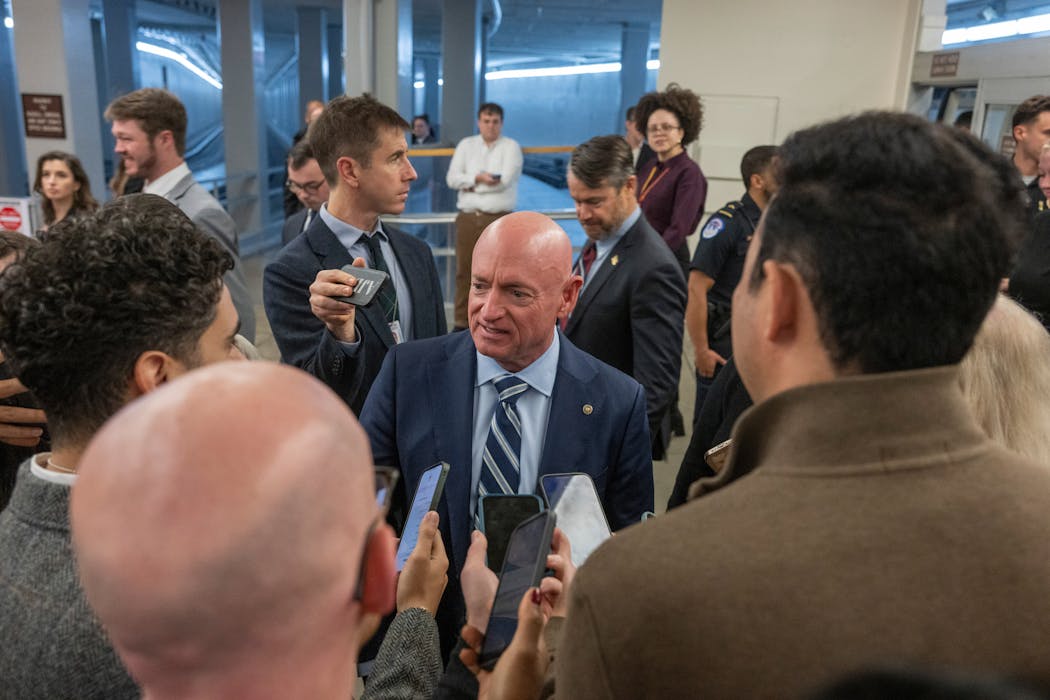
U.S. Sen. Mark Kelly, D-Ariz., speaks to reporters in Washington, D.C. on Dec. 4, 2025. AP Photo/Kevin Wolf

The Department of Defense in late November 2025 announced that it would investigate U.S. Sen. Mark Kelly, a retired Navy captain and NASA astronaut, for what Secretary of Defense Pete Hegseth has called seditious behavior. The threat of investigation came after Kelly and five other Democrats, all with military backgrounds, released a video reminding U.S. service members they can disobey illegal orders issued by the Trump administration.

“No one has to carry out orders that violate the law, or our Constitution,” the lawmakers said, without specifying the orders the U.S. service members may have received. “Know that we have your back … don’t give up the ship.”

In response to the video, President Donald Trump accused the lawmakers of “seditious behavior” that could be “punishable by death.”

Sedition is a federal crime, but as a military law scholar who served as a judge in the U.S. Air Force, I believe the Democratic lawmakers articulated a correct view of military law. That is, service members subject to the Uniform Code of Military Justice have a duty to not obey unlawful orders.

There are several unique features to military law that have no analog to civilian criminal law, and if Kelly were court-martialed he would be deprived of several fundamental constitutional rights.

Military justice

In a civilian criminal trial the government normally has the burden of proof on all matters. But in a court-martial, a service member who argues that an order is unlawful has the burden of proving its unlawfulness. And the Supreme Court, in its 1827 opinion in Martin v. Mott, gave this view some credence, arguing that the president, as commander in chief, should not be questioned during a national emergency.

Second, ordinary citizens are protected by a constitutional requirement that the prosecution must convince all jurors of the defendant’s guilt beyond a reasonable doubt. A court-martial has only a two-thirds threshold to establish guilt. And the jurors – called members – are not the accused service member’s peers.

Indeed, the court-martial members are military personnel who outrank the accused service member and are picked to serve by senior commanding officers. Military judges are also uniformed officers and, like the rest of the military, are subject to the chain of command.

At times, senior officers have inserted themselves into the military justice system and tried to direct a court-martial to convict an accused service member. This has created the problem of unlawful command influence, the improper use of superior authority to interfere with the court-martial process.

A man speaks to another man wearing a white cap.
Defense Secretary Pete Hegseth has asked the Navy secretary to review Kelly’s comments to troops for ‘potentially unlawful conduct.’
AP Photo/Daniel Kucin Jr.

Kelly is still theoretically subject to the Uniform Code of Military Justice and could be court-martialed because he is a military retiree. This concept of a lifetime military jurisdiction did not exist when the Constitution was instituted in 1789. It came into existence during an emergency session of Congress in 1861.

The Supreme Court has never held that lifetime jurisdiction is constitutional. But in 2022 the U.S. Court of Appeals for the District of Columbia did, in a 2-1 decision.

It reasoned that if the Constitution’s creators had thought such a jurisdiction were a threat to the republic, they would have prohibited it. The dissenting judge in that case pointed out the frightening possibility of a president using the Uniform Code of Military Justice to curb free speech.

Lines of defense

Kelly is different than an ordinary retiree, and this case is bigger than a single senator. That’s because it goes to the heart of what the Constitution’s framers intended by preserving liberty through a republican form of government.

In 1648, Oliver Cromwell, who had become a military dictator over England, used the army to curb the Magna Carta – a revolutionary basic rights document dating to 1215 – and the ability of Parliament to debate matters and pass laws. The Constitution is designed to prevent anything coming close to such an occurrence.

So, what would Kelly’s defense likely be, other than that he exercised free speech and gave a correct recitation of the law?

Kelly’s first defense might be that under the Constitution, the president, as commander in chief, has no power to court-martial or otherwise administratively penalize him. Doing so would diminish Congress’ authority.

In 1974, the Supreme Court determined in Schlesinger v. Reservists Committee that although the Constitution prohibits a member of Congress from holding a position in the executive branch, citizens had no standing to sue in the federal courts to prevent this from occurring. Taken literally, the clause means that no member of Congress could hold a military commission and be beholden to the commander in chief, since this would erode Congress’ independence and authority.

Kelly’s second defense could be that after the Constitution and statutory law, the military law is governed by tradition, or the military’s own past practices, which used to be referred to as “lex non scripta.”

American history is replete with retired officers criticizing presidents or even joining in hate groups that accused a president of being beholden to subversive interests. Past presidents have ignored these men.

They include George Van Horn Moseley, who sided with pro-Nazi groups and accused President Franklin Roosevelt of being a communist. Retired generals Albert Coady Wedemeyer and Bonner Fellers formed organizations that undermined Presidents Harry Truman and Dwight Eisenhower.

A black and white photo shows Chinese and American military leaders.
Maj. Gen. Albert C. Wedemeyer greets Chinese miltary leaders in southwest China, on Jan. 18, 1945.
AP Photo

None of these men were court-martialed or administratively penalized.

Finally, Kelly could argue in federal court that the military has no jurisdiction over him because of the issue of unlawful command influence. One only needs to look at Hegseth’s statements in the case to see the specter of this problem in regard to Kelly.

When Congress formulated the Uniform Code of Military Justice, it criminalized unlawful command influence. But as military law scholar Rachel VanLandingham has pointed out, no person has ever been prosecuted for violating the prohibition.

Kelly could argue that there are no safeguards in his case to ensure a fair hearing and that the case should move from military courts to federal courts. The federal judge assigned the case can then ponder whether siding with the administration’s claims is a step toward establishing a Cromwellian future and away from the Constitution’s protection of a republican form of government.

Of course, Congress could put a stop to any persecution of Kelly by informing the president that he is acting contrary to the Constitution and explaining to do so is a high crime or misdemeanor.

During the Vietnam War, scholar Robert Sherrill said that “military justice is to justice what military music is to music.” In the past, military justice has been able to accomplish fair trials of military members, but it is dangerously open to influence by military leaders, all the way up to the commander in chief.

If there is to be an exercise in accountability for Kelly, it could more fairly be administered through a real constitutional analysis conducted by the independent federal judicial branch – or through a congressional intervention. Without either occurring, we may as a nation find ourselves a closer step toward a Cromwellian future.

The Conversation

Joshua Kastenberg does not work for, consult, own shares in or receive funding from any company or organization that would benefit from this article, and has disclosed no relevant affiliations beyond their academic appointment.

ref. If tried by court-martial, senator accused of ‘seditious behavior’ would be deprived of several constitutional rights – https://theconversation.com/if-tried-by-court-martial-senator-accused-of-seditious-behavior-would-be-deprived-of-several-constitutional-rights-271990

The North Pole keeps moving – here’s how that affects Santa’s holiday travel and yours

Source: The Conversation – USA (2) – By Scott Brame, Research Assistant Professor of Earth Science, Clemson University

Could this be the next Blitzen? Feeding a reindeer in Lapland, Finland, north of the Arctic Circle. Roberto Moiola/Sysaworld/Moment via Getty Images

When Santa is done delivering presents on Christmas Eve, he must get back home to the North Pole, even if it’s snowing so hard that the reindeer can’t see the way.

He could use a compass, but then he has a challenge: He has to be able to find the right North Pole.

There are actually two North Poles – the geographic North Pole you see on maps and the magnetic North Pole that the compass relies on. They aren’t the same.

The two North Poles

The geographic North Pole, also called true north, is the point at one end of the Earth’s axis of rotation.

Try taking a tennis ball in your right hand, putting your thumb on the bottom and your middle finger on the top, and rotating the ball with the fingers of your left hand. The place where the thumb and middle finger of your right hand contact the tennis ball as it spins define the axis of rotation. The axis extends from the south pole to the north pole as it passes through the center of the ball.

A compass with S, E, N, W and other markings
Compasses use a magnetized needle to align with Earth’s magnetic field. To find true north, a compass must be adjusted for the declination of its location, meaning the angle difference between true north and magnetic north for that spot.
Tim Reckmann/Wikimedia Commons, CC BY

Earth’s magnetic North Pole is different.

Over 1,000 years ago, explorers began using compasses, typically made with a floating cork or piece of wood with a magnetized needle in it, to find their way. The Earth has a magnetic field that acts like a giant magnet, and the compass needle aligns with it.

The magnetic North Pole is used by devices such as smartphones for navigation – and that pole moves around over time.

Why the magnetic north pole moves around

The movement of the magnetic North Pole is the result of the Earth having an active core. The inner core, starting about 3,200 miles below your feet, is solid and under such immense pressure that it cannot melt. But the outer core is molten, consisting of melted iron and nickel.

Heat from the inner core makes the molten iron and nickel in the outer core move around, much like soup in a pot on a hot stove. The movement of the iron-rich liquid induces a magnetic field that covers the entire Earth.

As the molten iron in the outer core moves around, the magnetic North Pole wanders.

Lines show how the magnetic pole has moved
The magnetic North Pole has wandered since the late 1500s, picking up speed in the recent century. The dates reflect observations from expeditions. The others are based on models, with data from NOAA. The map shows northern Canada’s islands. The edge of Greenland is visible to the far right side.
Cavit/Wikimedia Commons, CC BY

For most of the past 600 years, the pole has been wandering around over northern Canada. It was moving relatively slowly, around 6 to 9 miles per year, until around 1990, when its speed increased dramatically, up to 34 miles per year.

It started moving in the general direction of the geographic North Pole about a century ago. Earth scientists cannot say exactly why other than that it reflects a change in flow within the outer core.

Getting Santa home

So, if Santa’s home is the geographic North Pole – which, incidentally, is in the ice-covered middle of the Arctic Ocean – how does he correct his compass bearing if the two North Poles are in different locations?

No matter what device he might be using – compass or smartphone – both rely on magnetic north as a reference to determine the direction he needs to move.

While modern GPS systems can tell you precisely where you are as you make your way to grandma’s house, they cannot accurately tell which direction to go without your device knowing the direction of magnetic north.

Lorenz King/Wikimedia Commons
Scientists work at a temporary research station near the Geographic North Pole in 1990.
Lorenz.King@geogr.uni-giessen.de/Wikimedia Commons, CC BY

If Santa is using an old-fashioned compass, he’ll need to adjust it for the difference between true north and magnetic north. To do that, he needs to know the declination at his location – the angle between true north and magnetic north – and make the correction to his compass. The National Oceanic and Atmospheric Administration has an online calculator that can help.

If you are using a smartphone, your phone has a built-in magnetometer that does the work for you. It measures the Earth’s magnetic field at your location and then uses the World Magnetic Model to correct for precise navigation.

Whatever method Santa uses, he may be relying on magnetic north to find his way to your house and back home again. Or maybe the reindeer just know the way.

The Conversation

Scott Brame does not work for, consult, own shares in or receive funding from any company or organization that would benefit from this article, and has disclosed no relevant affiliations beyond their academic appointment.

ref. The North Pole keeps moving – here’s how that affects Santa’s holiday travel and yours – https://theconversation.com/the-north-pole-keeps-moving-heres-how-that-affects-santas-holiday-travel-and-yours-271488

2 superpowers, 1 playbook: Why Chinese and US bureaucrats think and act alike

Source: The Conversation – Global Perspectives – By Daniel E. Esser, Associate Professor of International Studies, American University

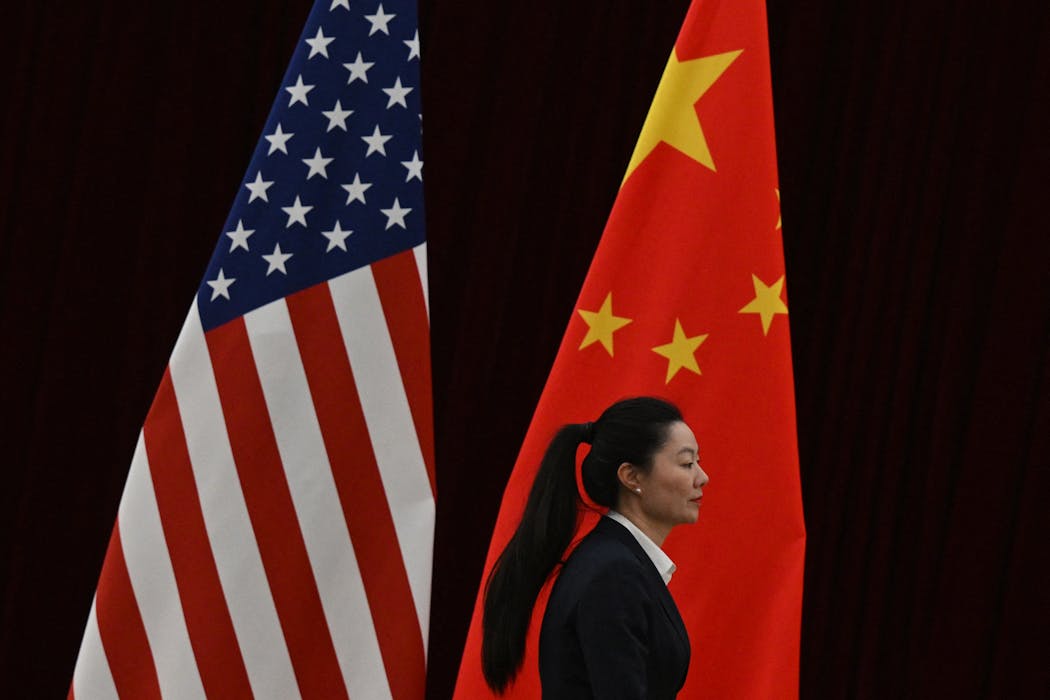
An official walks past the U.S. and Chinese national flags on April 6, 2024. Pedro Pardo/AFP via Getty Images

The year 2025 has not been a great one for U.S.-Chinese relations. Tit-for-tat tariffs and the scramble over rare earth elements has dampened economic relations between the world’s two leading economies. Meanwhile, territorial disputes between China and American allies in the Indo-Pacific region have further deepened the intensifying military rivalry.

This rift has often been portrayed as a clash of opposing ideological systems: democracy versus autocracy; economic liberalism versus state-led growth; and individualism versus collectivism.

But such framing relies on a top-down look at the two countries premised on statements and claims of powerful leaders. What it obscures is that both superpowers are administered by the same kind of professionals: career bureaucrats.

We are an international team of researchers investigating bureaucratic preferences and behavior. Earlier this year, we hosted a two-day workshop with participants from China, the United States and other countries to compare bureaucratic agencies’ responses to global challenges.

Our research and that of others shows that, despite the ideological standoff at the leadership level, officials in China and the U.S. are shaped by comparable incentives and dynamics that lead them to act in surprisingly similar ways. In other words, when it comes to the women and men who carry out the actual work of government – from drafting regulation to enforcing compliance – China and the U.S. aren’t really that different.

Separated by politics, not practice

That’s not to suggest there aren’t differences in aspects of China’s and the U.S.’s bureaucratic base.

China’s system is more centralized, with a larger civil service of around 8 million employees as of 2024. The U.S. bureaucracy is more decentralized across federal, state and local levels and employs fewer bureaucrats, with around 3 million federal employees in 2024.

Still, comparative research on bureaucracies around the world shows that civil servants act similarly when confronted with complex problems, regardless of political system or policy field.

Whether they are municipal bureaucrats in Brazil, foreign aid officials in Germany, Norway and South Korea, or international civil servants at the United Nations, they all operate within the constraints of politically embedded organizations while pursuing their individual careers. In other words, they want to get ahead in their jobs while navigating constantly changing political winds.

Bureaucrats in the U.S. and China also navigate changing demands from their political leaders while seeking to gain expertise and progress in their careers.

Managing public expectations

Foreign aid, environmental management and pandemic governance in the U.S. and China provide telling examples of these parallels.

At first glance, the approaches of China and the U.S. to the use of foreign aid may appear as complete opposites. The former established the China International Development Cooperation Agency in 2018. Since then it has expanded and evolved its engagement abroad.

By contrast, the U.S. abolished USAID earlier in 2025, slashed its foreign aid budget, and moved remaining staff members into the State Department.

It would therefore seem that the U.S. and China are on opposing trajectories. Yet, the current moment obscures similarities between foreign aid bureaucrats in the two countries. Their tasks entail satisfying political objectives, overseeing taxpayer-funded projects abroad, and managing domestic public expectations.

The expertise required of these bureaucrats is to increase their country’s “soft power” while avoiding the appearance of wasting scarce funds abroad amid looming domestic needs.

With foreign aid admonished by the Trump administration as wasteful politics, officials in Washington are under unprecedented pressure to pursue financial diplomacy that recognizably serves U.S. interests while supporting foreign leaders whom the president considers allies. This agenda shift moves the U.S. closer to the Chinese foreign aid principle of seeking mutual benefits.

Meanwhile, Chinese aid officials are pivoting away from prioritizing large-scale infrastructure projects and toward a purported “small but beautiful projects” approach that centers on the well-being of beneficiaries. This pivot aligns their thinking with “softer” topics emblematic of U.S. foreign aid until 2024.

A sign saying USAID is seen behind glass.
Foreign aid practices in Washington and Beijing are converging.
Pete Kiehart for The Washington Post via Getty Images

The logic of blame avoidance

The case of bureaucratic responses to environmental pollution scandals is equally instructive. Again, one might expect bureaucrats in the U.S. and China, operating within different governance systems, to approach the problem differently.

In practice, however, bureaucrats in both countries are often motivated by an urge to avoid blame.

Rather than building on policy success stories, they tend to seek to deflect criticism for policy failures onto others. The underlying reason is so-called asymmetric payoffs: Success stories may lead to short-term public acclaim; policy failures jeopardize entire careers.

In China, the anti-air pollution measures introduced in Hebei province, which borders the capital Beijing, provide a prime example of the logic of blame avoidance. When the central government in 2017 urged provincial officials to reduce air pollution by banning coal heating, the officials’ overzealous implementation was motivated by a desire to shield themselves from potential blame from national leadership.

As a result, the needs of Hebei residents were ignored, with schoolchildren shivering in unheated classrooms. Rather than assuming the blame, both national and local officials shifted the focus onto middle-class Beijing residents, who were pilloried in the media for prioritizing clean air over the well-being of others.

Meanwhile in the U.S., the city of Flint, Michigan, had been reeling from decades of industrial decay and financial distress. The state government appointed an emergency manager who implemented cost-cutting measures, including switching the city’s water source from Lake Huron to the Flint River. This change resulted in lead contamination and widespread health impacts, escalating into a national scandal. As in Hebei, all parties – from state regulators to local officials and environmental agencies – blamed each other in an attempt to avoid responsibility.

Careerism as constraint

Parallel bureaucratic behaviors also became apparent during the COVID-19 pandemic. In China and the U.S. alike, public officials worked at the forefront of implementing public health guidelines. The Chinese response was said to benefit from an “authoritarian advantage,” allowing its authorities to impose drastic measures rapidly and comprehensively.

However, evidence-based policymaking was constrained by political preferences and bureaucratic careerism – the drive of officials to prioritize actions that help them get promoted.

It produced similar dynamics to those observed in the more decentralized U.S. setting. In both China and the U.S., bureaucrats were risk averse and anxious not to fall out with supervisors and political leaders.

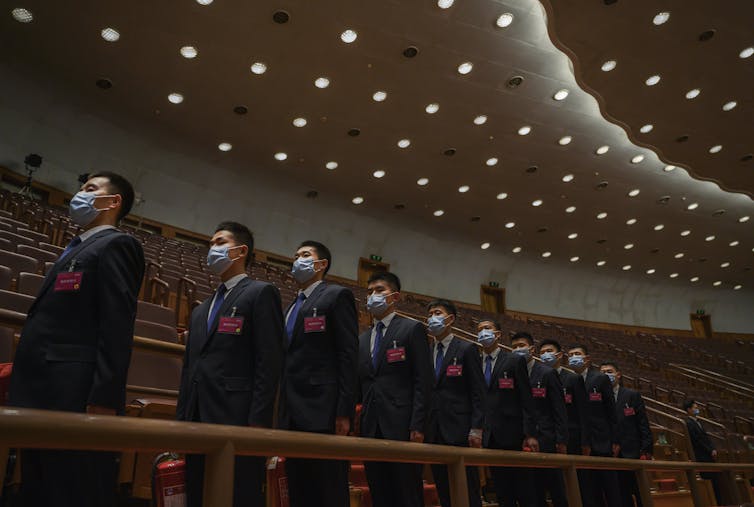
A line of men in suits with masks on.
Chinese bureaucrats faced the same constraints as their U.S. counterparts during the COVID-19 pandemic.
Frayer/Getty Images

The Chinese approach resulted in a decrease in public trust, a phenomenon that has also been unfolding in the U.S.

And much like their American counterparts, Chinese bureaucrats initially scrambled together information from a cacophony of political and expert voices. This indecision blunted their response to the viral outbreak in the decisive early days of the pandemic, even though it was eventually replaced by an official narrative emphasizing efficiency and success. In both systems, bureaucratic delays had detrimental consequences for public health.

An anchor of stability

Amid the heightened geopolitical tensions between Beijing and Washington, it is important to remember that all powers rely on capable administrations to implement political directives. Politics set the tone, but bureaucrats shape reality.

And the modus operandi of Chinese and American bureaucrats has remained strikingly stable over the years – driven primarily by incentives rather than ideology. This similarity is increasingly being reflected by converging leadership styles at the top of each political system.

U.S. President Donald Trump resembles Chinese President Xi Jinping in his campaign-style politics and the cult of personality that many political observers see developing around him.

There is a definite upside to similar bureaucratic behavior. It renders the two superpowers more predictable in periods of increasingly heated political rhetoric.

For national leaders’ proclamations to have any effect, large bureaucratic organizations need to translate political content into national and international action. Not only does this take time and resources, but erratic announcements are dissipated by bureaucratic routines.

And that provides an anchor of stability in volatile times.

The Conversation

While working for the German Institute of Development and Sustainability, Daniel E. Esser received funding from the Federal Ministry for Economic Cooperation and Development.

Heiner Janus works for the German Institute of Development and Sustainability (IDOS), which receives funding from the German Federal Ministry for Economic Cooperation and Development.

Mark Theisen works for the German Institute of Development and Sustainability (IDOS), which receives funding from the German Federal Ministry for Economic Cooperation and Development.

Tim Röthel works for the German Institute of Development and Sustainability (IDOS), which receives funding from the German Federal Ministry for Economic Cooperation and Development.

ref. 2 superpowers, 1 playbook: Why Chinese and US bureaucrats think and act alike – https://theconversation.com/2-superpowers-1-playbook-why-chinese-and-us-bureaucrats-think-and-act-alike-266305

How rogue nations are capitalizing on gaps in crypto regulation to finance weapons programs

Source: The Conversation – Global Perspectives – By Nolan Fahrenkopf, Research Fellow at Project on International Security, Commerce and Economic Statecraft, University at Albany, State University of New York

Two years after Hamas attacked Israel on Oct. 7, 2023, families of the victims filed suit against Binance, a major cryptocurrency platform that has been plagued by scandals.

In a Nov. 24, 2025, filing by representatives of more than 300 victims and family members, Binance and its former CEO – recently pardoned Changpeng Zhao – were accused of willfully ignoring anti-money-laundering and so-called “know your customer” controls that require financial institutions to identify who is engaging in transactions.

In so doing, the suit alleged that Binance and Zhao – who in 2023 pleaded guilty to money laundering violations – allowed U.S.-designated terrorist entities such as Hamas and Hezbollah to launder US$1 billion. Binance has declined to comment on the case but issued a statement saying it complies “fully with internationally recognized sanctions laws.”

The problem the Binance lawsuit touches upon goes beyond U.S.-designated terrorist groups.

As an expert in countering the proliferation of weapons technology, I believe the Binance-Hamas allegations could represent the tip of the iceberg in how cryptocurrency is being leveraged to undermine global security and, in some instances, U.S. national security.

Cryptocurrency is aiding countries such as North Korea, Iran and Russia, and various terror- and drug-related groups in funding and purchasing billions of dollars worth of technology for illicit weapons programs.

Though some enforcement actions continue, I believe the Trump administration’s embrace of cryptocurrency might compromise the U.S.’s ability to counter the illicit financing of military technology.

In fact, experts such as professor Yesha Yadav, professor Hilary J. Allen and Graham Steele, anti-corruption advocacy group Transparency International and even the U.S. Treasury itself warn it and other legislative loopholes could further risk American national security.

A tool to evade sanctions

For the past 13 years, the Project on International Security, Commerce, and Economic Statecraft, where I serve as a research fellow, has conducted research and led industry and government outreach to help countries counter the proliferation of dangerous weapons technology, including the use of cryptocurrency in weapons fundraising and money laundering.

Over that time, we have seen an increase in cryptocurrency being used to launder and raise funds for weapons programs and as an innovative tool to evade sanctions.

Efforts by state actors in Iran, North Korea and Russia rely on enforcement gaps, loopholes and the nebulous nature of cryptocurrency to launder and raise money for purchasing weapons technology. For example, in 2024 it was thought that around 50% of North Korea’s foreign currency came from crypto raised in cyberattacks.

Two men in hoods sit in front of computer screens.
Modern-day bank robbers?
iStock/Getty Images Plus

A digital bank heist

In February 2025, North Korea stole over $1.5 billion worth of cryptocurrency from Bybit, a cryptocurrency exchange based in the United Arab Emirates. Such attacks can be thought of as a form of digital bank heist. Bybit was executing regular transfers of cryptocurrency from cold offline wallets – like a safe in your home – to “warm wallets” that are online but require human verification for transactions.

North Korean agents duped a developer working at a service used by Bybit to install malware that granted them access to bypass the multifactor authentication. This allowed North Korea to reroute the crypto transfers to itself. The funds were moved to North Korean-controlled wallets but then washed repeatedly through mixers and multiple other crypto currencies and wallets that serve to hide the origin and end location of the funds.

While some funds have been recovered, many have disappeared.

The FBI eventually linked the attack to the North Korean cyber group TraderTraitor, one of many intelligence and cyber units engaging in cyberattacks.

Lagging behind on security

Cryptocurrency is attractive because of the ease with which it can be acquired and transferred between accounts and various digital and government-issued currencies, with little to no requirements to identify oneself.

And as countries such as Russia, Iran and North Korea have become constricted by international sanctions, they have turned to cryptocurrency to both raise funds and purchase materials for weapons programs.

Even stablecoins, promoted by the Trump administration as safer and backed by hard currency such as the U.S. dollar, suffer from extensive misuse linked to funding illicit weapons programs and other activities.

Traditional financial networks, while not immune from money laundering, have well-established safeguards to help prevent money being used to fund illicit weapons programs.

But recent analysis shows that despite enforcement efforts, the cryptocurrency industry continues to lag behind when it comes to enforcing anti-money-laundering safeguards. In at least some cases this is willful, as some crypto firms may attempt to circumvent controls for profit motives, ideological reasons or policy disputes over whether platforms can be held accountable for the actions of individual users.

It isn’t only the raising of these funds by rogue nations and terrorist groups that poses a threat, though that is often what makes headlines. A more pressing concern is the ability to quietly launder funds between front companies. This helps actors avoid the scrutiny of traditional financial networks as they seek to move funds from other fundraising efforts or firms they use to purchase equipment and technology.

The incredible number of crypto transactions, the large number of centralized and decentralized exchanges and brokers, and limited regulatory efforts have made crypto incredibly useful for laundering funds for weapons programs.

This process benefits from a lack of safeguards and “know your customer” controls that banks are required to follow to prevent financial crimes. These should, I believe, and often do apply to entities large and small that help move, store or transfer cryptocurrency known as virtual asset service providers, or VASPs. However, enforcement has proven difficult as there are an incredibly large number of VASPs across numerous jurisdictions. And jurisdictions have fluctuating capacity or willingness to implement controls.

The cryptocurrency industry, though supposedly subject to many of these safeguards, often fails to implement the rules, or it evades detection due to its decentralized nature.

Digital funds, real risk

The rewards for rogue nations and organizations such as North Korea can be great.

Ever the savvy sanctions evader, North Korea has benefited the most from its early vision on the promise of crypto. The reclusive country has established an extensive cyber program to evade sanctions that relies heavily on cryptocurrency. It is not known how much money North Korea has raised or laundered in total for its weapons program using crypto, but in the past 21 months it has stolen at least $2.8 billion in crypto.

Iran has also begun relying on cryptocurrency to aid in the sale of oil linked to weapons programs – both for itself and proxy forces such as the Houthis and Hezbollah. These efforts are fueled in part by Iran’s own crypto exchange, Nobitex.

Russia has been documented going beyond the use of crypto as a fundraising and laundering tool and has begun using its own crypto to purchase weapons material and technology that fuel its war against Ukraine.

A threat to national security

Despite these serious and escalating risks, the U.S. government is pulling back enforcement.

The controversial pardon of Binance founder Changpeng Zhao raised eyebrows for the signal it sends regarding U.S. commitment to enforcing sanctions related to the cryptocurrency industry. Other actions such as deregulating the banking industry’s use of crypto and shuttering the Department of Justice’s crypto fraud unit have done serious damage to the U.S.’s ability to interdict and prevent efforts to utilize cryptocurrencies to fund weapons programs.

The U.S. has also committed to ending “regulation by prosecution” and has withdrawn numerous investigations related to failing to enforce regulations meant to prevent tactics used by entities such as North Korea. This includes abandoning an admittedly complicated legal case regarding sanctions against a “mixer” allegedly used by North Korea.

These actions, I believe, send the wrong message. At this very moment, cryptocurrency is being illicitly used to fund weapons programs that threaten American security. It’s a real problem that deserves to be taken seriously.

And while some enforcement actions do continue, failing to implement and enforce safeguards up front means that crypto will continue to be used to fund weapons programs. Cryptocurrency has legitimate uses, but ignoring the laundering and sanctions-evasion risks will damage American national interests and global security.

The Conversation

Nolan Fahrenkopf is a research fellow at the Center for Policy Research at the University at Albany, which receives grants related to nonproliferation from the U.S. Department of State and Department of Energy.

ref. How rogue nations are capitalizing on gaps in crypto regulation to finance weapons programs – https://theconversation.com/how-rogue-nations-are-capitalizing-on-gaps-in-crypto-regulation-to-finance-weapons-programs-269060

With UK unemployment rising, will the goverment’s plan for young people pay off? An economist’s view

Source: The Conversation – UK – By Rachel Scarfe, Lecturer in Economics, University of Stirling

Monkey Business Images/Shutterstock

There are nearly one million young people in the UK who are not in employment, education or training (so-called Neets). After falling in number during the 2010s before the pandemic, this cohort of 16 to 24-year-olds has grown from 750,000 only six years ago. This is a worrying shift, for several reasons.

Research shows that a spell of unemployment at a young age can have outsized negative effects on the young person. Workers who were unemployed for even a short time at a young age have to contend with lower wages and poorer mental health even years later. In the three months to October, unemployment in the UK climbed to 5.1%, with young people particularly badly affected.

To address these challenges, the UK’s autumn budget introduced a package of measures intended to help young people move into stable work. The announcements include more apprenticeships, employment support and a guaranteed work placement for long-term unemployed young people.

There were also policies aimed at young people already in work. The government previously promised to abolish the “discriminatory” lower minimum wage for 18 to 20-year-olds. As a step towards that, the minimum wage for this age group will increase by 85p per hour in April 2026, from £10 to £10.85. This compares to an increase of 50p per hour, from £12.21 to £12.71, for workers aged 21 or over.

To make sure employers play by the rules, the government also announced stricter enforcement of employment regulations, including the minimum wage, by the new Fair Work Agency.

Together, these policies have a range of implications for young workers. The minimum wage increase means that full-time workers aged over 21 will earn around £900 more per year. And those aged 18 to 20 will receive about £1,500 more.

Stronger enforcement should reduce the risk of young people being underpaid. This year, more than 40,000 workers won compensation for earning less than the minimum wage. But of course, these are only employees of firms that have been caught – the actual number of underpaid workers is likely to be higher. More effective enforcement should boost workers’ pay and living standards.

The guaranteed jobs scheme is expected to create around 55,000 jobs – and research indicates that programmes of this kind can help young people remain in employment even after the placement ends. More funding for apprenticeships also opens up opportunities for young people to enter skilled careers.

The other side of the coin

But there are also downsides. Although the minimum wage has increased substantially over the past few years from a maximum of £8.91 in 2022 to £12.71 from April, living costs have been rising as well. As the table below shows, increases in other costs have absorbed much of the rise. In particular, average monthly rents have been rising nearly as fast as the minimum wage over the last few years.

Not only that, but employers may respond to higher minimum wages by reducing new hires or relying more heavily on flexible arrangements, such as zero-hours contracts. Evidence shows that as the minimum wage has risen, employers have moved towards flexible, temporary and hourly-paid jobs.

This is concerning for full-time workers, but also for young people relying on part-time work in sectors such as hospitality or retail while studying.

For businesses, the debate has centred on rising costs, but the picture is actually more nuanced. Higher minimum wages do increase labour and administration costs. And employing young workers can be riskier – they have less experience and it is not easy for firms to know how productive they might be compared to more seasoned workers. As a result, higher minimum wages for young workers can encourage firms to substitute towards hiring older, and possibly less risky, workers.

A more cautious approach might have been for the government to address the challenges for young people sequentially, first expanding employment opportunities, and then later raising their minimum wage.

Yet the measures in the budget could create opportunities. Evidence has consistently shown that higher minimum wages can reduce staff turnover by encouraging workers to stay in their jobs, which are now worth more to them. This is particularly true for younger workers, who tend to move jobs more often. This can lower recruitment costs and reduce interruptions for businesses, especially when they have invested in training staff.

Small and medium-sized firms will benefit directly from government-funded apprenticeships. They will no longer have to pay 5% of the training costs, making employing an apprentice more cost effective. And more flexible rules around apprenticeships give businesses greater freedom to tailor training to their needs, helping them build a workforce with relevant skills at a time of increasing technological change.

Today’s young people face significant uncertainty – nobody knows what the labour market will look like in five years’ time. But these changes represent a modest step towards supporting them.

But by increasing the minimum wage at the same time, the government is taking a gamble. On the one hand, higher wages alongside policies aimed at reducing the number of Neets could help young people into work and encourage them to stay there. But on the other, the wage increase could undermine these efforts if firms begin hiring fewer young workers. In that case, even well-designed employment schemes would struggle to offset the loss of opportunities.

The Conversation

Rachel Scarfe is a member of the Labour Party.

ref. With UK unemployment rising, will the goverment’s plan for young people pay off? An economist’s view – https://theconversation.com/with-uk-unemployment-rising-will-the-goverments-plan-for-young-people-pay-off-an-economists-view-271993

How cranberries can be a Christmas cracker for health this festive season

Source: The Conversation – UK – By Dipa Kamdar, Senior Lecturer in Pharmacy Practice, Kingston University

Media_Photos/Shutterstock

From festive sauces to brightly coloured juices, cranberries have long been part of our diets. Beyond their tart flavour and seasonal appeal, these red berries are often described as a superfood with several potential health benefits.

Cranberry supplements are promoted as a convenient way to get these benefits without the sugar or sharp taste of the juice. So what does the science actually say about cranberries, and are supplements as effective as eating the fruit?

Cranberries are best known for their role in helping prevent urinary tract infections (UTIs). The fruit contains compounds called proanthocyanidins. These compounds appear to stop bacteria such as E. coli from sticking to the lining of the urinary tract, which is one of the first steps in developing an infection. This explains why cranberry products may help prevent UTIs, although they do not treat infections once bacteria have already attached and multiplied. Research supports cranberry’s preventive role in women who experience recurrent infections and in children, although results vary between studies. One study found both cranberry juice and tablets reduced UTI rates in women, but tablets worked slightly better and were more cost-effective. Both forms reduced antibiotic use compared with placebo.

Hand pouring cranberry juice into a glass with ice cubes. A bowl of fresh cranberries is nearby.
Some research suggests cranberry juice can help reduce urinary tract infections in women and children.
Pixel-Shot/Shutterstock

Cranberries have also been investigated for their effects on heart health. They are rich in antioxidants such as anthocyanins, proanthocyanidins and quercetin. Antioxidants help protect cells from damage caused by unstable molecules called free radicals. Research shows that cranberry juice or extracts can improve several risk factors for heart disease.

These include raising levels of HDL cholesterol, often called good cholesterol because it helps remove excess cholesterol from the bloodstream, and lowering LDL cholesterol in people with diabetes. LDL is sometimes described as bad cholesterol because high levels can build up in artery walls, and it becomes even more harmful when it is oxidised. Oxidised LDL is more likely to stick to artery walls and fuel inflammation, which contributes to plaque formation. Cranberries’ antioxidants may help slow this process. They may also improve flexibility in blood vessels, reduce blood pressure and lower homocysteine, an amino acid linked to inflammation at high levels. However, not all studies report the same findings, so the evidence remains mixed.

Researchers are also studying cranberries for their possible role in cancer prevention. Lab and animal studies show that cranberry compounds, including ursolic acid, may slow the growth of tumour cells. Some compounds have anti-inflammatory effects, which is important because chronic inflammation can contribute to the development of cancer. A clinical trial found that cranberry juice may help reduce the risk of stomach cancer by blocking H. pylori, a bacterium strongly linked to this form of cancer, from attaching to the stomach lining. Adults who drank about two glasses of cranberry juice had lower infection rates. Lab and animal studies point to other possible anti-cancer effects, and upcoming research will determine whether these laboratory findings translate to humans.

The antioxidant and anti-inflammatory properties of cranberries may also support brain health. A 2022 study found that adults who consumed freeze-dried cranberry powder each day, which is equivalent to about 100 grams of fresh cranberries, showed better memory for daily tasks and improved blood flow to brain regions involved in learning. They also had reduced LDL cholesterol. High LDL can contribute to hardened arteries, which affects circulation.

Cranberries may also support the immune system. Studies suggest their natural compounds can make it less likely to catch colds or flu. Cranberries are a source of vitamin C, vitamin E, carotenoids and iron, all of which contribute to normal immune function.

Supplements, juice and whole fruits

Cranberry supplements are often promoted as an easier alternative to juice or fresh fruit. They deliver concentrated extracts of dried, powdered cranberries, usually standardised to contain a set amount of proanthocyanidins. This allows people to obtain active compounds without the sugars found in many commercial cranberry juices. However, whole fresh or frozen cranberries provide fibre and a wider range of nutrients that may be missing in supplements. Eating fruit also encourages healthier overall habits, while capsules can tempt people to treat them as a shortcut.

Wooden spoon with cranberry supplements and fresh cranberries in a bowl berries
Supplements provide concentrated extracts of dried, powdered cranberries but the whole fruit provides fibre and a wider range of nutrients too.
Pixel-Shot/Shutterstock

For most people, cranberries are safe to consume in moderation. Large amounts of juice or supplements can cause stomach upset or diarrhoea. Cranberries contain oxalates, natural chemicals that may contribute to kidney stones in people who are prone to them. Sweetened cranberry juices can also undermine potential health benefits by raising sugar intake.

The most important safety concern is the potential interaction between cranberries and certain medicines. Some case reports suggest cranberry juice may enhance the blood thinning effect of warfarin, which increases the risk of bleeding. Evidence is inconsistent, but people taking warfarin are usually advised to avoid large quantities of cranberry products. There may also be interactions with other drugs processed by the liver, although these effects are not well established.

Cranberries, then, whether eaten whole or taken as supplements, offer real health benefits, especially in reducing the risk of recurrent urinary tract infections. They may also support heart health, reduce inflammation and provide some protection against certain cancers, although the evidence for these effects is less clear. Supplements cannot replace a balanced diet, and whole cranberries provide additional nutrients and fibre that extracts cannot match. Some people should exercise caution, particularly those at risk of kidney stones or those taking specific medications.

Cranberries are not a magic solution, but they can be a valuable addition to the table, whether in a festive sauce, a handful of fruit or an occasional supplement. Enjoy them for their flavour and colour, and consider any health benefits a welcome bonus.

The Conversation

Dipa Kamdar does not work for, consult, own shares in or receive funding from any company or organisation that would benefit from this article, and has disclosed no relevant affiliations beyond their academic appointment.

ref. How cranberries can be a Christmas cracker for health this festive season – https://theconversation.com/how-cranberries-can-be-a-christmas-cracker-for-health-this-festive-season-269522

Doubts about women in combat don’t stand up to history

Source: The Conversation – UK – By Ashleigh Percival-Borley, PhD Candidate in the Department of History, Durham University

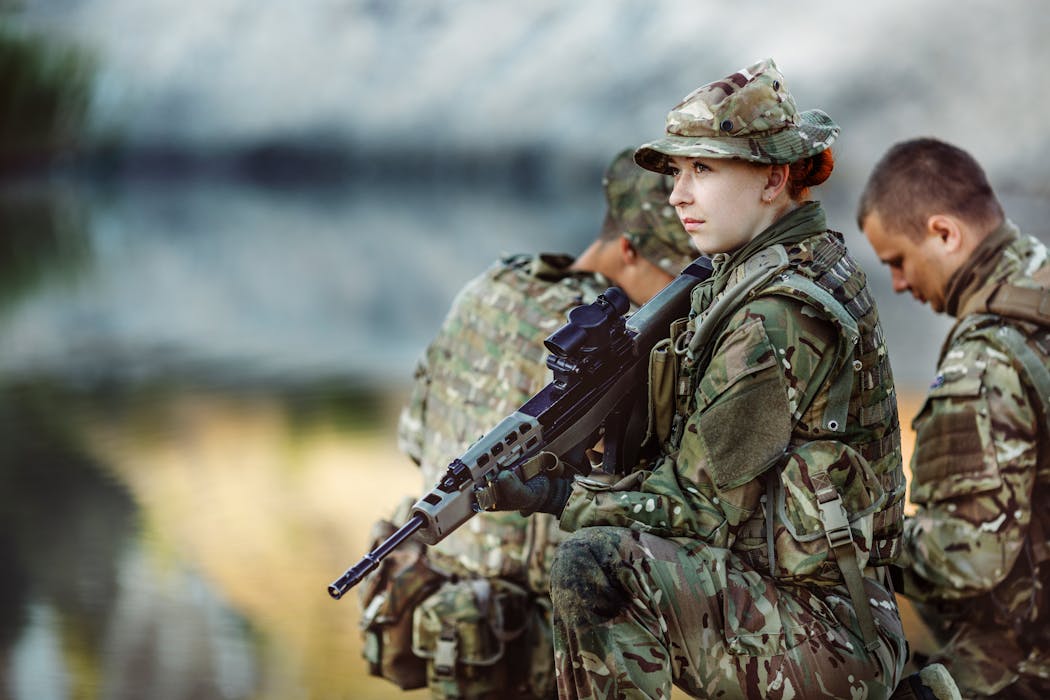
British special forces soldiers take part in a training exercise. PRESSLAB / Shutterstock

Germany has unveiled plans to introduce voluntary military service. From January 2026, all 18-year-old men will be required to complete a questionnaire asking if they are interested and willing to join the armed forces. Women will not be required to fill out this form.

Across Europe, the pattern is similar. In countries where military service is compulsory such as Austria, Cyprus, Estonia, Finland, Greece, Latvia, Lithuania, Switzerland and Ukraine, women’s enlistment remains voluntary.

The German government’s move, which has sparked a debate within the country about the role of women in the armed forces, comes months after the US defence secretary, Pete Hegseth, said in a speech to a hall of generals that if “no women qualify for some combat jobs, then so be it”.

As a former British Army combat medic who served in Afghanistan, what I recognise here is an age-old myth that war is, and always has been, a man’s world.

During my military service, I learned the different sounds made by bullets whizzing past my ears or pinging overhead. I also became familiar with the unmistakable ringing after an IED explosion. I know from experience that competence, professionalism, teamwork and a certain amount of luck all matter on the battlefield. A person’s gender does not.

History agrees with this sentiment. From the Scythian warriors of the ancient steppes – the inspiration for the Amazons’ race of women warriors in Greek mythology – and Viking shieldmaidens, to the Japanese samurai and women fighting in the crusades, evidence reveals women not only participating in battle but leading it.

The modern era has been no different. Women like Harriet Tubman guided raids during the American civil war in the 19th century.

Polish women performed crucial roles in the Warsaw uprising against German forces in 1944. And Britain’s female agents in the Special Operations Executive (SOE) assassinated, sabotaged and led resistance forces in the second world war.

A portrait image of Odette Hallowes.
Odette Hallowes joined the Special Operations Executive in 1942 and was sent to occupied France to work with the French resistance.
Imperial War Museums / Wikimedia Commons

Yet these women are largely remembered as exceptions, having performed extraordinary roles due to wartime necessity, rather than as proof of a long tradition of competence and ability under fire. Their stories remain at odds with the wider war narrative in a culture that is uncomfortable seeing women as combatants.

This was evident in Britain following the second world war, which saw the largest mobilisation of women for war work in history. Women were called upon to carry out a variety of war roles, including pilots and anti-aircraft gunners. Some women even parachuted into occupied territories as secret soldiers.

These roles allowed women to bypass the combat taboo. Yet they were still regarded as temporary, effectively excluding them from the broader war story. After the war ended, there was a strong push in Britain for women to return to traditional roles as housewives and mothers.

This was not new. Following the first world war, the 1919 Restoration of Pre-War Practices Act forced women out of the jobs they had taken during the war so that returning soldiers could be reinstated. There was no similar law following the second world war, but the government and media still encouraged women to leave working roles and focus on home life.

Magazines promoted the idea of the perfect homemaker, with Christian Dior’s 1947 “new look” fashion collection reinforcing a nostalgic vision of femininity that symbolised the broader cultural return to pre-war gender norms.

Some women welcomed this return to gendered ideals, others resisted. Pearl Witherington, an SOE agent who commanded 3,500 Maquis resistance fighters in France, was recommended for a Military Cross medal following the war. But, as a woman, she was not allowed to receive it.

Witherington refused a civil MBE honour when offered it instead, writing in a letter to Vera Atkins, an intelligence officer in the SOE: “The work which I undertook was of a purely military nature in enemy occupied country … The men have received military decorations, why this discrimination with women when they put the best of themselves into the accomplishment of their duties?”

Witherington became so important in Nazi-occupied France that the Germans put up posters offering one million francs for her capture. The reluctance to recognise her achievements shows how women’s military service was quietly stripped of its combat significance in the post-war years.

Excluding women no more

Modern conflicts have made the exclusion of women’s presence in war increasingly untenable. Insurgencies, as well as cyber and drone warfare, mean the boundaries between combatants and non-combatants have become much more blurred. Many wars nowadays no longer have clear frontlines, making it harder to distinguish between those who fight and those who don’t.

The increasing complexity of modern battlefields has demanded broader thinking and adaptability beyond traditional combat practices. This shift has contributed to the adoption of gender-neutral military standards and the more widespread inclusion of women in combat roles in many armies.

A female soldier in the Ukrainian army with a Ukraine flag wrapped around her.
Women are serving on the frontlines in Ukraine.
Dmytro Sheremeta / Shutterstock

The British Army has employed gender-neutral physical standards for combat roles since 2019. Male and female recruits must pass a 4km march carrying 40kg of equipment in less than 40 minutes, followed by a 2km march carrying 25kg of equipment in under 15 minutes.

The Australian Defence Force has adopted similar standards since 2017, while the Canadian military has been employing women in combat roles for 25 years. As a former combat medic, I support this approach.

War has always been a test of human skill and courage, not of gender. A bullet doesn’t care which body it shatters and nor should history.

The Conversation

Ashleigh Percival-Borley does not work for, consult, own shares in or receive funding from any company or organisation that would benefit from this article, and has disclosed no relevant affiliations beyond their academic appointment.

ref. Doubts about women in combat don’t stand up to history – https://theconversation.com/doubts-about-women-in-combat-dont-stand-up-to-history-268589

Teenagers are preparing for the jobs of 25 years ago – and schools are missing the AI revolution

Source: The Conversation – UK – By Irina Rets, Research Fellow, Institute of Educational Technology, The Open University

Matej Kastelic/Shutterstock

The government has recently released its national youth strategy, which promises better career advice for young people in England. It’s sorely needed: for teenagers today, the future of work probably feels more like a moving target than a destination. Barely three years after ChatGPT went mainstream, the labour market has already shifted under young people’s feet.

In the US, job postings for roles requiring no degree have dropped by 18% since 2022, and roles requiring no prior experience by 20%. Administrative and professional service jobs – once key entry points for school-leavers – are down by as much as 40%.

While headlines often warn of looming mass job losses due to GenAI, the reality is more complex. Jobs are not simply disappearing but transforming, and new kinds of jobs are appearing.

Research has projected that the adoption of new technologies will displace around two million jobs in the UK by 2035. However, this loss is expected to be offset by the creation of approximately 2.6 million new roles, particularly in higher-skilled occupations and healthcare roles.

Despite a transformed job market, OECD data from 80 countries shows that most young people still aim for traditional roles – as architects, vets and designers as well as doctors, teachers and lawyers – even as demand rises in digital, green and technical sectors. One-third of students in the OECD survey said school has not taught them anything useful for a job.

Students from more disadvantaged backgrounds are hit hardest. They engage less in career development activities, have less access to online career information and are less likely to recognise the value of education for future transitions.

Meanwhile, the very skills young people say they lack – digital skills and being informed, followed by drive, creativity and reflection – are the ones the labour market now demands.

The workforce challenge is, fundamentally, an education challenge. But schools aren’t keeping up with the world students are entering. Despite unprecedented labour-market change, teenagers’ career aspirations have not shifted in 25 years.

While older students and graduates often have networks or some workplace experience to fall back on, school-leavers do not. Yet they need to prepare for a future in which the labour market is changing faster than ever.

Future-proof skills

Young people are told they need “skills for the future”. But the evidence about which skills matter is messy, uneven and often contradictory.

A few things are clear, though. One is that digital and AI-related skills now carry significant premiums. Workers with AI or machine-learning skills earn more, and early evidence suggests that GenAI literacy can boost wages in non-technical roles by up to 36%.

Cognitive skill requirements have also surged. Critical thinking, prompt engineering – the ability to ask the right questions and provide clear, context-rich instructions to AI tools to obtain relevant results – and evaluating AI outputs are increasingly valued.

Boy with laptop looking stressed
School leavers are likely to need AI skills in the job market.
MAYA LAB/Shutterstock

However, not everything can be outsourced to AI – especially numbers. While large language models (LLMs) excel at text, they do not perform as well on quantitative tasks that involve pattern detection or numerical reasoning, although this may change with new LLM models. This makes strong numeracy a growing advantage for humans, not a declining one.

Creativity and empathy also matter – even though AI is everywhere. The future paradox is clear: young people are expected to adapt to AI systems while also offering the human qualities that machines cannot. They must be data-savvy and emotionally intelligent, digitally fluent and genuinely collaborative.

It doesn’t help that even employers are confused. Many organisations, especially small and medium-sized businesses, may not fully understand which AI-related skills they need or how to identify them. This confusion shows up in job ads, which shape who applies and who is excluded.

My research with colleagues shows, for example, that language describing jobs influences the gender and racial makeup of applicants. Ads emphasising flexibility and caring qualities tend to attract more women, reinforcing workforce segregation. If employers do not know what skills they need, or what signals they are sending, it is unreasonable to expect schools to fill the gap alone.

Identifying demand

The UK lacks a coordinated national labour market information system that could help schools, policymakers and employers see – in real time – where demand is emerging.

Preparing teenagers for the future cannot be left to a single careers lesson or a one-off talk from a visiting employer. Nor can it rely solely on career advisers operating in isolation.

A whole-school approach, supported by the wider employment and labour-market ecosystem, would make a significant difference. This means linking every subject to real-world skills and careers, and every student routinely encountering employers, workplaces and skills-building opportunities. Teenagers need up-to-date information and advice about higher education and careers, and support that challenges stereotypes and barriers.

This is not about telling students there is a “right” job or a single future path. It is about giving them tools to navigate uncertainty with confidence.

Young people need schools that understand the world they are entering, and employers who understand what they are asking for. Most of all, they need systems that recognise the future of work has changed – and help them change with it.

The Conversation

Irina Rets does not work for, consult, own shares in or receive funding from any company or organisation that would benefit from this article, and has disclosed no relevant affiliations beyond their academic appointment.

ref. Teenagers are preparing for the jobs of 25 years ago – and schools are missing the AI revolution – https://theconversation.com/teenagers-are-preparing-for-the-jobs-of-25-years-ago-and-schools-are-missing-the-ai-revolution-270630