Large trunks discovered in a basement offer a window into the lives and struggles of early Filipino migrants

Source: The Conversation – USA (2) – By Sam Vong, Curator of Asian Pacific American History, Smithsonian Institution
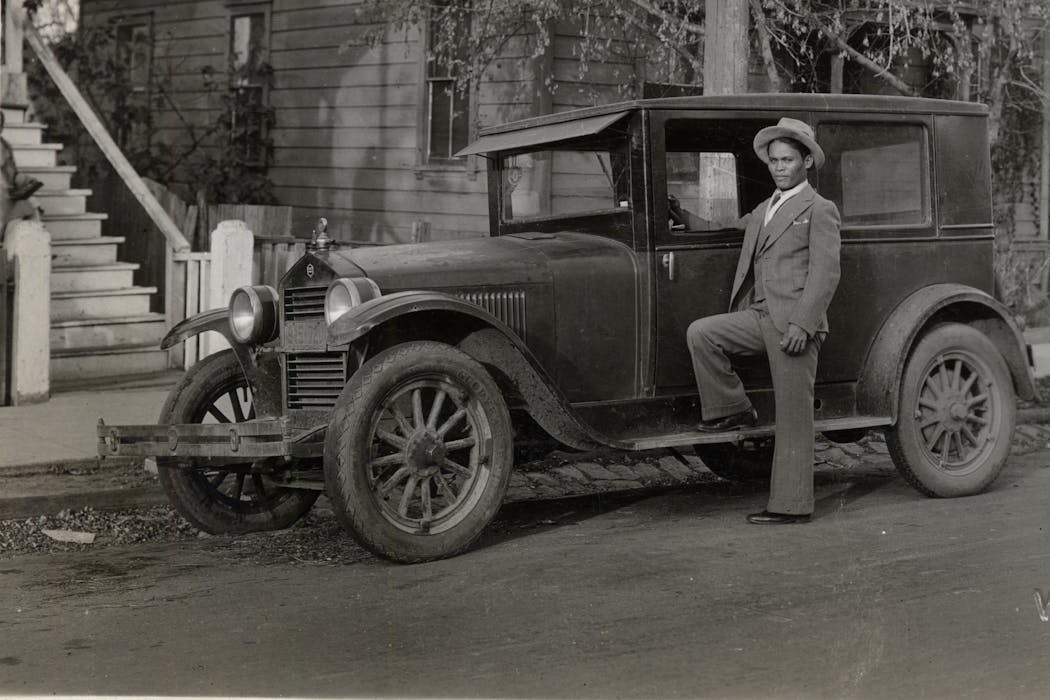
A Filipino man poses next to a Ford Model A in the 1930s. Filipino Agricultural Workers Collection, Archives Center, National Museum of American History

In 2005, Antonio Somera, a Filipino American member of the Legionarios del Trabajo, a Masonic fraternal order, stumbled across a trove of mysterious-looking containers while he was cleaning out the basement of the Daguhoy Lodge in Stockton, California.

The containers, which had been abandoned for decades, included more than a dozen steamer trunks – large luggage chests designed for long-distance travel – and a handful of suitcases dating to the 1910s.

They belonged to former Legionarios del Trabajo members who at some point lived in the lodge but had passed away. Fraternal brothers packed their personal belongings to memorialize the deceased and hoped that surviving family members would later reclaim the objects.

These unusual time capsules and their contents tell a largely forgotten history of the men and women who had left the Philippines in the 1910s to work in Hawaii’s sugar industry and later settled in California’s San Joaquin Valley. Affectionately dubbed “Little Manila,” south Stockton became an important hub for one of the largest communities of Filipinos outside the Philippines.

Along with my curatorial assistant, Ethan Johanson, we studied the fascinating objects and photographs found in the trunks to tell the story of this largely forgotten cohort of migrants.

Here are five objects that capture the breadth and depth of life and work in California, Hawaii and other states for Filipino migrants. They’re among those featured in an exhibition created by the Smithsonian Asian Pacific American Center on display at the Smithsonian’s National Museum of American History. Titled, “How Can You Forget Me: Filipino American Stories,” the exhibition explores the making of the Filipino American community in Stockton between the 1910s and 1970s.

1. The steamer trunk
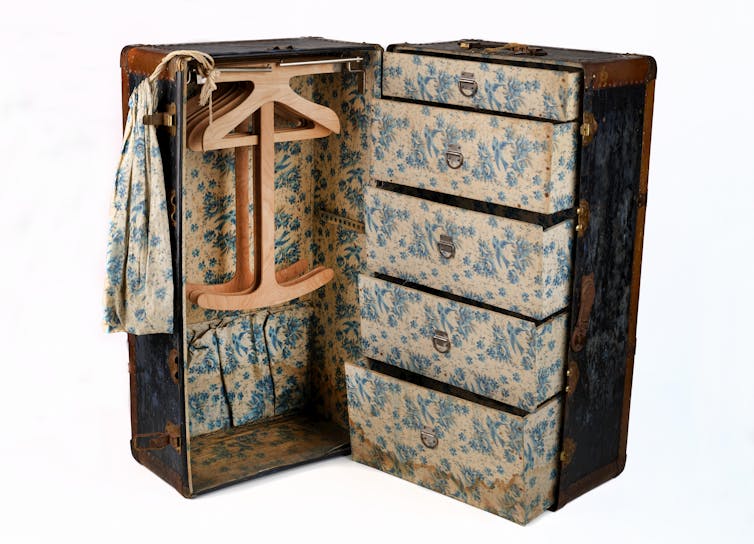
An old steamer trunk featuring clothes hangers and drawers.
A wardrobe trunk that held the personal belongings of Anastacio Atig Omandam, who left the Philippines in 1916 to work in Hawaii and later settled in Stockton, Calif., where he passed away in 1966.
National Museum of American History

This steamer trunk formerly belonged to Anastacio Atig Omandam, a worker who arrived in Honolulu from the Philippine province Negros Oriental in January 1916.

In his twenties, Omandam embarked on a two- to three-week voyage across the Pacific Ocean, leaving his rural and impoverished hometown to earn money to send home.

Omandam was part of a group of mostly young, single men who were recruited by sugar plantation companies as early as 1906 to work in Hawaii’s booming sugar industry. Between 1906 and 1935, thousands of men – and later women – left their hometowns in the Ilocos and Visayas regions of the Philippines for Hawaii, toiling on plantations alongside other immigrant workers.

After the United States defeated Spain in the 1898 Spanish-American War, the Philippines was under U.S. colonial rule until 1935.

Filipinos living under American rule and in U.S. territories were designated as U.S. nationals, an ambiguous legal status. It allowed Filipinos to migrate relatively freely within U.S. territories, but they lacked constitutional protections and privileges like citizenship and voting.

Omandam’s steamer trunk is emblematic of the trunks discovered by Somera in 2005. Omandam likely bought the trunk secondhand in the Philippines or Hawaii. While the origins of the trunk remain a mystery, it traveled with Omandam from job to job, reflecting the life of a migrant worker continuously on the move. Many of these trunks – Omandam’s included – contained handwritten correspondence written in beautiful cursive, photographs, postcards, work tools, garments and paystubs.

They were, in essence, time capsules of each of these men’s lives.

2. An asparagus knife
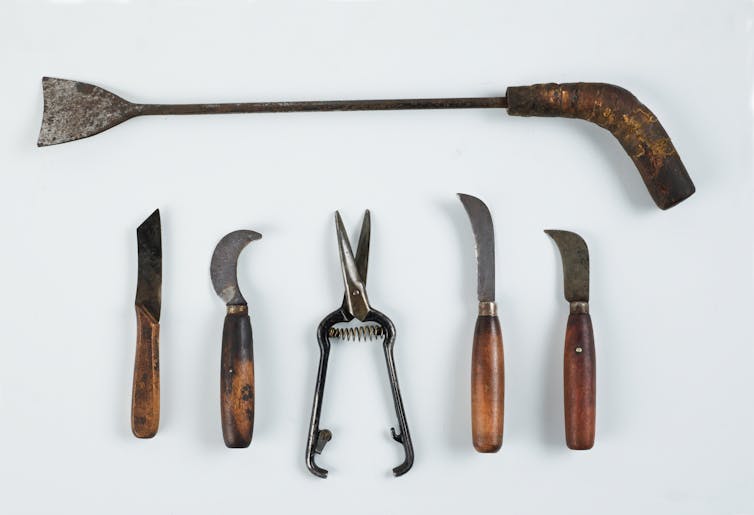
A collection of old, metal tools and knives laid out against a white backdrop.
An asparagus knife appears above various tools, all of which were found inside the trunks.
National Museum of American History

The large, unusual-looking metal instrument found in one trunk is a knife that farmworkers used to harvest asparagus.

During the harvesting season, typically between February and June, workers wielded this knife, using the sharp edge of the forked blade to pierce approximately six inches (15 centimeters) below the soil to cut the root of the asparagus.

Harvesting asparagus demanded dexterity and speed. Workers needed to constantly bend over to cut and collect the produce as they moved up and down the rows. This repetitive and backbreaking motion earned Filipino farmworkers the derogatory label “stoop labor.”

After a series of restrictive immigration laws barred Chinese, Japanese and other immigrant groups between the 1870s and 1920s, growers and agribusiness turned to hiring Filipinos and Mexicans to harvest seasonal crops such as lettuce, grapes and asparagus, among others.

When the harvesting season was over, Filipino farmworkers migrated to other West Coast states to harvest apples, hops and grapes. Others went to Alaska to can salmon.

The asparagus knife was found among the containers in the basement, alongside other grafting and pruning knives. These tools – still carrying the soil from which they were tilled – represent the work of the immigrant farm workers of all backgrounds who helped build California’s agriculture industry, which continues to feed the nation today.

3. Three-piece suits

Three-piece suits were found in nearly all the steamer trunks, along with Stetson hats, bow-ties and other fashionable accessories from the 1920s and 1930s.

A black, pinstriped, three-piece suit and Stetson hat displayed on a mannequin.
This tailored three-piece suit with matching Stetson hat was worn by Anastacio Omandam.
National Museum of American History

Despite earning meager wages, most Filipino farmworkers saved their hard-earned money to purchase at least one tailored three-piece suit. Men donned these stylish garments to attend Sunday mass, dinners and taxi dance halls – where they could pay a small fee to dance with a professional dancer – or merely to strut their stuff down the streets of Stockton’s Little Manila.

Because Americans often looked down upon agricultural workers as uncultured and illiterate – “little brown monkeys” was a common slur – Filipinos resisted these negative characterizations by presenting themselves like the Hollywood movie stars they saw at the cinema. They understood the power of self-presentation: By embracing popular American styles, they sought to command respect and dignity.

They also wore these suits to pose for fancy photographs that were sent back home to the Philippines as a way to display affluence and social mobility – and to entice their compatriots to join them in the U.S.

Not everyone was enchanted. Some white Americans viewed these slick, handsomely dressed Filipino men as a sexual threat that could “steal” their women.

4. A pageant dress

This sequined dress belonged to Barbara Nambatac, a longtime resident of Livingston, Calif., who grew up among the “manongs,” a kinship title meaning older brother often used when referring to this early generation of Filipino migrants.

A white sequined dress displayed on a headless mannequin.
Barbara Nambatac wore this white dress when she was crowned Queen of Little Manila in a 1971 beauty pageant.
Photo by Phillip R. Lee

Her Filipino father was a cook who served food to Filipino and Mexican field hands on farms throughout California’s Central Valley, where he later met Nambatac’s Mexican mother.

In the 19th century and into the 20th century, California’s anti-miscegenation laws prohibited whites from marrying outside their race. At the same time, the shared experiences of Mexican and Filipino farmworkers often led to relationships between members of the two migrant groups.

When she was 21, Nambatac’s father, who was a member of the Legionarios del Trabajo in Stockton, saved his modest salary to buy the dress from the Philippines and registered her in a beauty pageant that helped raise funds for the lodge. She ultimately won first place.

In Stockton’s Little Manila, pageants reinforced the importance of women in the community. Since women were discouraged from migrating, there was a gender imbalance in Filipino American communities that persisted for decades.

Filipinas who were able to migrate to the United States were important pillars in Stockton’s Filipino American community and assumed multiple roles. Women labored tirelessly alongside men in the fields, performed domestic work in households, advised young men to save money and go to school, and built and maintained networks that sustained local communities and transpacific ties back home in the Philippines.

Although the gender disparity was stark in Little Manila before the 1960s, the presence of women and girls ensured the survival of Filipino American families.

5. A pillowcase

A white pillowcase with embroidery depicting a bow, green plants and the text 'How Can You Forget Me.'
One of three pillowcases found in the steamer trunks. These were mementos that Filipino migrants kept to remember their loved ones back in the Philippines.
National Museum of American History

This pillowcase was one of three found in Anastacio Omandam’s steamer trunk.

It’s embroidered with floral patterns and a poignant message – “How Can You Forget Me” – which inspired the exhibition’s title. The pillowcases – along with letters and photographs – evoke the sentimental messages that connected friends, families and lovers separated by a vast ocean.

In the case of Omandam, a loved one from the Philippines likely sent him the pillowcase. The lack of punctuation is interesting: It serves as neither a question nor a declaration, but nonetheless urges Omandam to never let go of his memories of home.

In the same way, I hope the exhibition will implore visitors to never forget this generation of men and women who paved a path for other Filipino immigrants. More than 4.4 million Americans identify as having Philippine ancestry, according to the 2020 U.S. Census.

These objects reflect the stories of ordinary people who were resourceful, creative, resilient and filled with hope in the face of discrimination, racism and legal exclusion.

The odds were constantly stacked against them. And yet they persevered – each strike into the soil, each coin saved to save up for a new suit, each lodge meeting and each beauty pageant taking them one step closer to forging a place for themselves in the American story.

The Conversation

Sam Vong does not work for, consult, own shares in or receive funding from any company or organization that would benefit from this article, and has disclosed no relevant affiliations beyond their academic appointment.

ref. Large trunks discovered in a basement offer a window into the lives and struggles of early Filipino migrants – https://theconversation.com/large-trunks-discovered-in-a-basement-offer-a-window-into-the-lives-and-struggles-of-early-filipino-migrants-265654


Tennis is set for a ‘Battle of the Sexes’ sequel – with no movement behind it

Source: The Conversation – USA (2) – By Jaime Schultz, Professor of Kinesiology, Penn State

Nick Kyrgios’ showdown with Aryna Sabalenka may be entertaining. But for women’s sports, it seems like a lose-lose. Tim Clayton/Corbis via Getty Images

In an event billed as tennis’s latest “Battle of the Sexes,” Aryna Sabalenka, the No. 1-ranked women’s tennis player in the world, will take on Nick Kyrgios, who’s currently ranked No. 673 on the men’s tour, on Dec. 28, 2025, in Dubai.

“This is about respect, rivalry and reimagining what equality in sport can look like,” explained Stuart Duguid, who, along with tennis great Naomi Osaka, co-founded Evolve, the sports agency putting on the event.

“I’ll try my best to kick his ass,” Sabalenka said during a September 2025 press conference.

“She’s not going to beat me,” Kyrgios responded. “Do you really think I have to try 100%?”

Evolve has promoted the Dubai event as a sequel to the iconic 1973 “Battle of the Sexes,” in which Billie Jean King beat Bobby Riggs.

But as critical scholars of sport, we see important differences between the two contests. For one, there are the rules: different court dimensions, service restrictions and scoring systems. What’s more, the two events’ political and cultural contexts set them even further apart. While King’s victory is viewed as a feminist triumph over entrenched sexism, neither Sabalenka nor Kyrgios seem to be playing for anything beyond the court.

It makes us wonder whether women – and women’s sports more specifically – have anything to gain from this latest battle.

Putting ‘women’s lib’ on the map

The feminist movement of the early 1970s saw American women fight for better rights, opportunities, rewards, reproductive freedoms and bodily autonomy. They also sought access to and equality in sports. Women’s tennis led the way, as King and others bravely formed their own tour, unionized and negotiated for equal pay at the U.S. Open.

Riggs – a 55-year-old ex-champion and self-proclaimed “male chauvinist pig” – was a noisy antagonist. He maintained that better pay should go to men like him on the senior tour, not to women. To prove it – and to bully his way back into the limelight – Riggs pestered the 29-year-old King to play him.

Man wearing glasses holds a yellow sign reading 'Sugar Daddy.'
Bobby Riggs was carried to the court by a group of young women ahead of his tennis match against Billie Jean King at the Houston Astrodome on Sep. 20, 1973.
Bettmann/Getty Images

“You not only cannot beat a top male player,” he needled, “you can’t beat me, a tired old man.”

King refused.

“We didn’t need him; we were making it on our own merits,” she later explained

Young woman raises her hands in celebration on a tennis court before a large crowd.
Billie Jean King throws her racket in the air after defeating retired pro Bobby Riggs at the Houston Astrodome on Sep. 20, 1973.
UPI/Bettmann Archive via Getty Images

But when Riggs trounced the No. 1 women’s player, Margaret Court, in May 1973, King, then ranked No. 2, felt she had no choice.

“Marge blew it,” she told reporters. “I’m going to put women’s lib where it should be.”

King rose to the occasion. Before 30,000 spectators at the Houston Astrodome and another 90 million television viewers, she walloped Riggs in three straight sets. Her victory took on an even larger significance, becoming a symbol of what women can accomplish when given the chance.

“It wasn’t about tennis,” King later assessed. “It was about social change.”

The apolitical star vs. the ‘bad boy’

So what, then, is the new “battle” about?

King has yet to comment on the 2025 event, but she is a fan of Sabalenka’s game.

“What I love about you is that when you come out to play, you bring all of yourself,” King told the four-time Grand Slam champion after her 2024 U.S. Open victory.

Off the court, however, the two women seem to have little in common.

King has always maintained that sports are political; Sabalenka has distanced herself from that position. When asked about Russia’s war in Ukraine, for example, the Belarusian explained, “I don’t want sport to be involved in politics, because I’m just a 25-year-old tennis player.”

King never argued that women were better players than the men. But “from a show-biz standpoint,” she clarified in her 1974 autobiography, “I felt we put on as good a performance as the men – sometimes better – and that that’s what people paid to see.”

Sabalenka, in contrast, once told a reporter that she prefers watching men’s tennis because “it’s more interesting” than the women’s game.

Comments like Sabalenka’s throw sand into the gears of the ongoing struggle for gender equity, to which King remains committed. Although all four Grand Slam events now offer equal prize money, disparities persist at lower-level tournaments.

At the 2024 Italian Open, for instance, men competed for a prize pool of US$8.5 million. The women’s equivalent was $5.5 million. That same year, women’s prize money at the Canadian Open totaled $2.5 million, while the men split $5.9 million. Men still receive better scheduling and court assignments, more media coverage and more lucrative sponsorships. As former No-2-ranked women’s tennis player Ons Jabeur put it, it’s not “just a question of money, but also respect.”

Meanwhile, Kyrgios, like Riggs more than half a century ago, has spoken out against equal pay for women players.

In fact, some might say Kyrgios’ sexism makes Riggs’ seem almost quaint. In 2015, he was fined $10,000 after making vulgar comments about his opponent’s girlfriend during a match. In 2021, he pleaded guilty to assaulting his ex-girlfriend after pushing her during an argument.

Kyrgios has “gone to all lengths” to distance himself from overtly misogynist influencers Andrew and Tristan Tate, who have been criminally charged with human trafficking, rape and assault. But this was only after Kyrgios faced significant backlash for expressing “low-key” love for the brothers and reposting Andrew on social platform X for “speaking facts as usual.”

Young man smiling while holding a tennis racket and a tennis ball, wearing a green basketball jersey and a backward white cap.
Nick Kyrgios has earned a reputation as the ‘bad boy of tennis.’
Daniel Pockett/Getty Images

Kyrgios – again, like Riggs – is also struggling to remain relevant.

By all accounts, he is a tremendously talented player who has yet to live up to his potential. Plagued with wrist and knee injuries, Kyrgios has competed in only six tour-level matches in the past three years: winning one, losing four and retiring in another. Consequently, the 2022 Wimbledon finalist, once ranked in the top 20, is better known as a “bad boy of tennis” who smashes rackets, makes lewd comments and gestures, tanks matches and verbally abuses umpires.

A lose-lose for women’s sports?

Kyrgios’ showdown with Sabalenka may be entertaining. But for women’s sports, it seems like a lose-lose.

If Sabalenka wins, critics will likely claim it’s because she had every advantage. Evolve has modified the rules to make her side of the court 9% smaller than Kyrgios’ in both length and width. The dimensions are based on Evolve’s calculation that the top women players move 9% slower than their male counterparts, although there is no published data to support the claim.

To further mitigate Kyrgios’ reported “power and speed advantage,” both players will be limited to just one serve. Unlike King and Riggs’ best-of-five sets, Sabalenka and Kyrgios will play best-of-three. Split sets between the two competitors will result in a 10-point tiebreaker.

A Kyrgios victory will only bolster arguments that the best woman cannot compete with the 673rd-ranked man, even when the rules are bent to her favor. We could see those arguments being weaponized against women’s sports more generally, which remain underresourced and undervalued.

There’s also the question of the venue.

The 2025 event will take place in the United Arab Emirates. The UAE government has been accused of egregious human rights abuses, which include gender discrimination, the criminalization of same-sex relations, and clamping down on freedom of speech and the media. Hosting high-profile sporting events distracts from these issues while cleansing the UAE’s public image in what’s known as “sportswashing.”

What does it mean to host a tennis “Battle of the Sexes” in a country where women are battling for basic human rights?

The 2017 Hollywood film “Battle of the Sexes” reaffirmed the importance of the King-Riggs contest.

Barring some surprise twist, no one will make a movie about the Sabalenka-Kyrgios duel in Dubai. We see it as nothing more than a publicity stunt and cash grab for Sabalenka, Kyrgios and, above all, Evolve. If this is “reimagining what equality in sport can look like,” as the organizers claim, then it is equality without substance.

And that is no battle at all.

The Conversation

The authors do not work for, consult, own shares in or receive funding from any company or organization that would benefit from this article, and have disclosed no relevant affiliations beyond their academic appointment.

ref. Tennis is set for a ‘Battle of the Sexes’ sequel – with no movement behind it – https://theconversation.com/tennis-is-set-for-a-battle-of-the-sexes-sequel-with-no-movement-behind-it-269590

Rest is essential during the holidays, but it may mean getting active, not crashing on the couch

Source: The Conversation – USA (3) – By Stacy Shaw, Assistant Professor of Social Science & Policy Studies, Worcester Polytechnic Institute

Active leisure experiences, like going for a walk outdoors, can help reduce stress and restore energy during the holidays. Chris Griffiths/Moment via Getty Images

The holiday season is often painted as an idyllic vision of rest, conjuring images of warm beverages and bountiful time with loved ones. But many people have trouble unwinding at this time of year. Why do the December holidays offer the promise of respite but never seem to deliver? And is more restorative rest possible during this busy season?

I am a psychologist who studies how rest supports learning, creativity and well-being. Sleep is often the first thing that many people associate with rest, but humans also require restorative downtime when awake. These active rest periods include physical, social and creative experiences that can occur throughout the day – not just while mindlessly scrolling on the couch.

When holiday stresses begin to snowball, rest periods replenish depleted psychological resources, reduce stress and promote well-being. But reaping the full benefits of rest and leisure requires more than a slow morning or a mug of hot cocoa. It’s also about intentionally scheduling active recovery periods that energize us and leave us feeling restored.

That’s because good rest needs to be anticipated, planned and refined.

Holiday stress

The winter holiday season can take a toll on well-being. Financial stress increases, and daily routines are disrupted. Add the stress of travel, plus a dash of challenging family dynamics, and it’s not surprising that emotional well-being declines during the holiday season.

Quality rest and leisure periods can buffer these stressors, promoting recovery and well-being. They also can help reduce psychological strain and prolong positive emotions as people return to work.

Effective rest comes in many forms, from going outdoors for a walk to socializing, listening to music or engaging in creative hobbies. These activities may feel like distractions, but they serve important mental health functions.

For instance, research finds that walking in nature results in diminished activation in the area of the brain associated with sadness and ruminating thoughts. Walks in nature are also associated with reduced anxiety and stress.

Other studies have shown that activities such as playing the piano or doing calligraphy significantly lower cortisol, a stress hormone. In fact, some of the most promising interventions for depression involve participation in pleasant leisure activities.

Not all idle time is restorative

So why does it feel so hard to get good rest during the holidays?

One of the most robust findings from psychologists and researchers who study leisure is that the effectiveness of rest periods depends on how satisfying they feel to the individual. This might sound obvious, but people often spend their free time doing things that are not satisfying.

For example, a famous 2002 study of how people spent their time found that the most popular form of leisure was watching television. But participants also rated TV time as their least enjoyable activity. Those who watched more than four hours of TV a day rated it as even less enjoyable than those who watched less than two hours a day.

A few years ago, my colleagues and I collected data from college students and found that students reported turning to mindless distractions, such as social media, at the end of the day, but that it usually did not leave them feeling reenergized or restored. Although this study was specifically about college students, when I presented the findings to the larger research team, one of my collaborators said, “It really makes you think about yourself, doesn’t it?” There were silent nods around the room.

A stressed woman lying on a sofa, surrounded by Christmas decorations, hides her face in a pillow.
Holiday tasks and rituals can crowd out time for rest, unless it’s planned into your day.
Ilona Titova/iStock via Getty Images Plus

Planning for good rest

To combat the pitfall of poor rest cycles, science suggests planning for active rest and pleasant activities, and carrying through with those plans. A large body of research shows that designing, scheduling and engaging in enjoyable activities is effective at lowering symptoms of depression and anxiety.

For the holiday season, this might mean following an afternoon of shopping with a recovery period reading a book in a quiet place, or going for a walk after opening gifts instead of immediately shifting into cleaning mode. By following a schedule, not a mood, research suggests that people can break cycles of poor rest and inactivity and achieve greater recovery and well-being.

Wrestling with guilt

Even with perfectly planned and executed rest periods, guilt can loom. Leisure guilt is a psychological construct that encompasses feelings of distress about spending time doing things that are relaxing rather than productive. It can reduce enjoyment of leisure, undercutting one of the mechanisms that link rest with well-being.

During the holidays, this problem may become even more pronounced. The season brings changes to daily routines, daylight levels and temperature, and diets. All of these shifts can deplete people’s energy levels. High expectations during the holidays may make guilt an even bigger threat to rest.

If the answer to poor-quality rest cycles is planned active rest periods, then what is the solution to feelings of guilt?

Lower expectations, immersive rest and acceptance

Research on leisure guilt is in its infancy, but my own struggles have shown me a few ways to resist the pressure to be productive every spare minute. Here are some tips to fight back against the flawed belief that rest is just laziness in disguise, during the holidays and beyond.

First, I work to convince myself and my family members to lower expectations for our seasonal activities. Not every baked cookie needs to be individually frosted and decorated, and not every gift has to be wrapped with a perfect bow. By agreeing to lower our expectations, we eliminate extraneous work and the guilt of feeling that there is more to be done.

Cookies decorated with crooked dabs of frosting and candies
Festive doesn’t have to mean perfect.
Sally Anscombe/DigitalVision via Getty Images

Second, I’ve found that restful activities that provide a strong feeling of immersion – playing video games, going for walks and playing with my young nieces and nephews – are a lot more restorative than scrolling on my phone or watching TV on the couch. These diversions require my full attention and prevent me from thinking about things such as my overflowing email inbox or unfinished household chores.

Finally, when I do experience leisure guilt, I accept the feeling and try to move on. During high-stress situations, accepting negative emotions rather than avoiding them can reduce depressive symptoms.

Humans need restorative periods of downtime during the holidays and beyond, but this does not always come easily or naturally to everyone. Through small adjustments and intentional actions, good rest can be within reach this holiday season.

The Conversation

Stacy Shaw does not work for, consult, own shares in or receive funding from any company or organization that would benefit from this article, and has disclosed no relevant affiliations beyond their academic appointment.

ref. Rest is essential during the holidays, but it may mean getting active, not crashing on the couch – https://theconversation.com/rest-is-essential-during-the-holidays-but-it-may-mean-getting-active-not-crashing-on-the-couch-270396

The truth about ‘miracle’ heaters and wood stoves

Source: The Conversation – UK – By Will de Freitas, Environment + Energy Editor, The Conversation

Hodoimg / shutterstock

This roundup of The Conversation’s climate coverage was first published in our award-winning weekly climate action newsletter, Imagine.

Each year, as temperatures drop, the same promises resurface. A tiny heater that can warm your whole home for pennies. A simple hack using candles and flowerpots. A wood-burning stove that’s cosy, clean and cheap.

Some of these fixes are outright scams. Some are just dangerous. Others work, but with hidden costs most don’t know about.

All of them run into the realities of physics, pollution or safety.

Wood-burning stoves are becoming more popular and I can see the appeal. When visiting my in-laws in rural Dorset, I sometimes work from a shepherd’s hut in their garden, which is heated with a wood stove. I like the sense of control and the boom-and-bust cycle of warmth caused by loading firewood every hour or two.

The real fire feels dependable in a way that modern systems sometimes don’t. It feels traditional. And, increasingly, it is presented as environmentally acceptable.

But beneath the romance and the cosiness there is an uncomfortable truth. Domestic burning is now recognised as a leading source of PM2.5, one of the most harmful forms of air pollution.

The UK does regulate wood stove emissions, but under a system designed for another era, says James Heydon of the University of Nottingham.

wood burning stove
Wood burning doesn’t emit 1950s-style smog – but it does pollute the air.
Kev Gregory / shutterstock

“Smoke control areas” were created as a response to lethal smogs in the 1950s, he says, but the system has barely changed since.

“Even perfect enforcement”, he writes, “would not solve the core problem. SCAs were designed to reduce visible smoke, not invisible PM2.5. Modern ‘Defra-approved’ and ‘EcoDesign’ stoves are exempt because they emit less visible smoke.”

But those exempt stoves still emit lots of PM2.5 – more than 300 times that of a gas boiler, says Heydon. “Since 2010, more than 2,500 stove models have been exempted from SCA rules, steadily widening the loophole and gradually weakening the system’s ability to control PM2.5.”

A few months back, my father-in-law replaced the shepherd’s hut stove with an electric heater. My lungs will remain pollution-free this Christmas, but I do miss the stove.

Beware heater scams

My father-in-law appears to have bought an appropriate heater that actually works. Unfortunately, many people are being sold devices that don’t live up to expectations as social media is filled with portable heater scams this winter.

Doomscrolling through a cold snap, you may see bold claims for heaters that can supposedly warm an entire home in minutes while costing pennies to run. It can often feel like true cosiness is only a click away.

These products rely on a powerful idea, that fancy new designs have unlocked a step-change in efficiency. But language, not technology, is doing the heavy lifting.

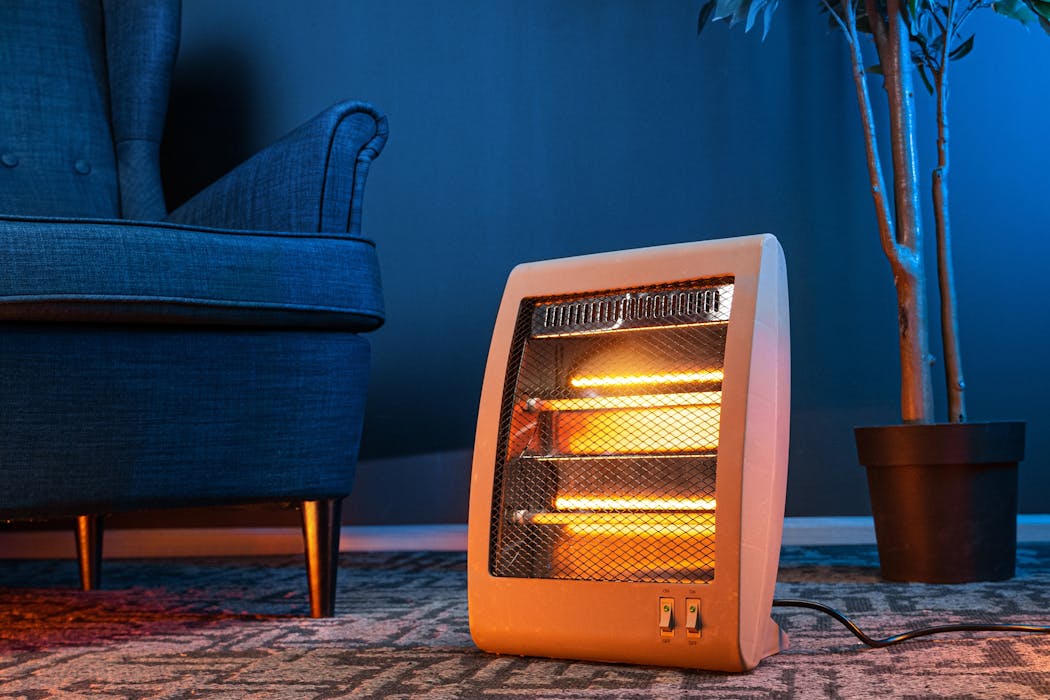
In reality, says Dylan Ryan of Edinburgh Napier University, almost all electric heaters are already close to 100% efficient. That means all the electricity is turned into heat, not “lost” as light or noise. The more electricity you put into the heater, the more it will warm your home, and vice versa.

This is why engineers like Ryan stress there is no clever design or secret hack that can make one plug-in heater significantly more efficient than another. “When a product claims to heat more while using less electricity”, he writes, “alarm bells should ring.”

Some adverts promise to warm a home in minutes. But the numbers don’t work.

Here’s Ryan again:

Heating a typical home means warming hundreds of cubic metres of air, as well as countering heat losses to the outside. That takes lots of energy. To do it quickly would require tens of kilowatts of power – far more than can be drawn safely from a standard household plug socket.

In practice, the wattage of most portable heaters is deliberately limited to avoid overheated wiring and reduce fire risk. The allowed wattage is enough to warm a small room, says Ryan, but is “nowhere near enough to rapidly heat a whole house”.

When neither tradition nor technology has the answer, people sometimes look elsewhere for answers.

This is where “heating hacks” flourish. Social media is filled with improvised fixes: bricks heated in ovens, tea lights beneath flower pots, makeshift indoor fires.

I get the appeal of feeling like an energy efficient MacGyver, keeping warm on the cheap using unexpected household goods. Unfortunately, these set ups still run into basic physics: they deliver warmth at a far higher cost per unit of energy than electricity or gas.

In a helpful piece on how to keep warm on a budget during very cold weather, Mari Martiskainen of the University of Sussex points out candles and similar heating hacks are also a major fire risk.

Smoky stoves, scam heaters and viral hacks are all responses to the same problems: energy is expensive, homes are leaky, and people are cold. But as Ryan points out, the real solutions are slower and more boring: better insulation, more efficient heating, and reforms to lower the cost of energy itself.


To contact The Conversation’s environment team, please email imagine@theconversation.com. We’d love to hear your feedback, ideas and suggestions and we read every email, thank you.


Don’t have time to read about climate change as much as you’d like?

Get a weekly roundup in your inbox instead. Every Wednesday, The Conversation’s environment editor writes Imagine, a short email that goes a little deeper into just one climate issue. Join the 45,000+ readers who’ve subscribed so far.


The Conversation

ref. The truth about ‘miracle’ heaters and wood stoves – https://theconversation.com/the-truth-about-miracle-heaters-and-wood-stoves-272303

How Venezuela has been preparing for a US invasion for more than two decades

Source: The Conversation – UK – By Gemma Ware, Host, The Conversation Weekly Podcast, The Conversation

In the latest escalation of tensions between the US and Venezuela, on December 17 US President Donald Trump ordered a “complete blockade” of sanctioned oil tankers going into and out of Venezuela. His Venezuelan counterpart, Nicolás Maduro, called the move “warmongering threats”, and accused the US of trying to steal its resources.

Since September, US military operations in the Caribbean have killed at least 95 people in 25 strikes. The Trump administration says it is targeting drug traffickers, but US lawmakers are now investigating some of the strikes amid mounting criticism of their scope and intent.

Meanwhile, Trump has placed a US$50 million bounty on the head of Maduro, and authorised the CIA to conduct covert lethal operations inside Venezuela.

In this episode of The Conversation Weekly podcast, we speak to Pablo Uchoa, a PhD candidate researching Venezuela’s military scenario planning, on how Venezuela has long been preparing for this moment.

He traces that planning back to 2002 and an unsuccessful coup attempt against former Venezuelan leader, Hugo Chávez. Uchoa explains that two important influences on Chavez’s thinking at the time were Vietnam and Iraq:

Obviously the Vietnamese army expelled the Americans just by making it so hard for the Americans to stay in – and the same thing with Iraq, in different ways. The basic idea here is that the fight is not just army against army. This is … people against an army.

Listen to the interview with Pablo Uchoa about the Venezuelan military scenario planning on The Conversation Weekly podcast.

This episode was written and produced by Mend Mariwany and Gemma Ware with production assistance from Katie Flood. Mixing by Michelle Macklem and theme music by Neeta Sarl.

Newsclips in this episode from NBC News, BBC News, Geopolitical Economy Report, Al Jazeera English, AP Archive, the Straits Times, Euronews, CBS News and Reuters.

Listen to The Conversation Weekly via any of the apps listed above, download it directly via our RSS feed or find out how else to listen here. A transcript of this episode is available via the Apple Podcasts or Spotify apps.

The Conversation

Pablo Uchoa has received UKRI funding for his research on the transformation of Venezuala’s military under Hugo Chávez.

ref. How Venezuela has been preparing for a US invasion for more than two decades – https://theconversation.com/how-venezuela-has-been-preparing-for-a-us-invasion-for-more-than-two-decades-272304

Small study finds microdoses of cannabis stalled cognitive decline in Alzheimer’s patients

Source: The Conversation – Global Perspectives – By Fabricio Pamplona, Doutor em Farmacologia, Universidade Federal de Santa Catarina (UFSC)

As the world’s population ages, the number of people living with dementias such as Alzheimer’s disease increases. Given the lack of curative treatments and the limited effectiveness of available medications, interest in new therapeutic approaches is growing. Among them are cannabinoids from the cannabis plant.

A small new Brazilian study published in the international Journal of Alzheimer’s Disease investigated the effects of microdoses of cannabis extract on patients with mild Alzheimer’s disease. The results found positive effects, without the associated “high” of cannabis.

The logic of microdoses

The study, led by professor Francisney Nascimento and colleagues at the Federal University of Latin American Integration (UNILA), recruited 24 elderly patients (60-80 years) diagnosed with mild Alzheimer’s. It evaluated the effects of daily use of an oil prepared from Cannabis extract containing THC and CBD in similar proportions and extremely low concentrations (0.3 mg of each cannabinoid). These sub-psychoactive doses do not cause the “high” associated with recreational use of the plant.

The extract used was donated by ABRACE, Brazil’s biggest patient association and had no contribution from cannabis companies or other funding sources.

“Microdosing” is a term usually associated with recreational use of psychedelics. Given the size of the dose, it would be easy to question whether it could have any effect at all.

Doses below 1 mg of the cannabinoid compounds are not frequently reported in the literature of clinical practice. However, the researchers’ decision to use microdosing did not come out of nowhere. In 2017, the group led by Andreas Zimmer and Andras Bilkei-Gorzo had already demonstrated that very low doses of THC restored cognition in elderly mice, reversing gene expression patterns and brain synapse density in the hippocampus to levels similar to those of young animals.

Subsequently, other studies in mice reinforced that the endocannabinoid system, which is important for neuroprotection and regulates normal brain activity (ranging from body temperature to memory), undergoes a natural decline during ageing.

Inspired by these findings, the group initially tested microdosing of cannabis extract in a single patient with Alzheimer’s disease for 22 months. They found cognitive improvement, assessed using the Adas-Cog scale, a set of tasks using things like word recall to test cognitive function. This triggered the decision to run a more robust clinical trial in human volunteers to verify the cognitive-enhancement effects observed in the volunteer. The second study was a properly controlled randomised and double-blinded clinical trial.

What we found

Several clinical scales were used to objectively measure the impact of cannabis treatment. This time, the improvement was observed in the mini-mental state exam (MMSE) scale, a widely used scale for assessing cognitive function in patients with dementia. It’s a validated set of questions that are asked to the patient, with the aid of an accompanying person (typically a family member of helper). After 24 weeks of treatment, the group receiving the cannabis extract showed stabilisation in their scores, while the placebo group showed cognitive deterioration (worsening of Alzheimer’s symptoms).

The impact was modest but relevant, patients using cannabis microdosing scored two to three points higher than their placebo counterparts (full points on the MMSE is 30). In patients with preserved or moderately impaired cognitive function, it may be unrealistic to expect major changes in a few weeks.

Cannabis extracts did not improve other non-cognitive symptoms, like depression, general health or overall quality of life. On the other hand, there was no difference in adverse side effects. This was likely due to the extremely low dose used.

This result echoes findings from my 2022 study which found a reduction in endocannabinoid signalling during ageing, meaning ageing brains are more prone to cognitive degradation without the protection of the cannabinoids. Among other mechanisms, cannabinoids seem to protect cognition by reducing drivers of inflammation in the brain.

A new paradigm: cannabis without the ‘high’

The biggest obstacle to the acceptance of cannabis as a therapeutic tool in brain ageing is perhaps not scientific, but cultural. In many countries, the fear of “getting high” deters many patients and even healthcare professionals. But studies such as this show there are ways to get around this problem by using doses so low they do not cause noticeable changes in consciousness, but which can still modulate important biological systems, such as inflammation and neuroplasticity.

Microdoses of cannabis can escape the psychoactive zone and still deliver benefits. This could open the door to new formulations focused on prevention, especially in more vulnerable populations, such as elderly people with mild cognitive impairment or a family history of dementia.

What now?

Despite its potential, the study also has important limitations: the sample size is small, and the effects were restricted to one dimension of the cognition scale. Still, the work represents an unprecedented step: it is the first clinical trial to successfully test the microdose approach in patients with Alzheimer’s disease. It is a new way of looking at this plant in the treatment of important diseases.

To move forward, new studies with a larger number of participants, longer follow-up times, and in combination with biological markers (such as neuroimaging and inflammatory biomarkers) will be necessary. Only then will it be possible to answer the fundamental question: can cannabis slow down the progression of Alzheimer’s disease? We have taken an important step towards understanding this, but for now, the question remains unanswered.

The Conversation

Fabricio Pamplona não presta consultoria, trabalha, possui ações ou recebe financiamento de qualquer empresa ou organização que poderia se beneficiar com a publicação deste artigo e não revelou nenhum vínculo relevante além de seu cargo acadêmico.

ref. Small study finds microdoses of cannabis stalled cognitive decline in Alzheimer’s patients – https://theconversation.com/small-study-finds-microdoses-of-cannabis-stalled-cognitive-decline-in-alzheimers-patients-271170

Study shows views of British empire shape voting behaviour – but in subtle ways

Source: The Conversation – UK – By Christopher Claassen, Professor of Political Behaviour, University of Glasgow

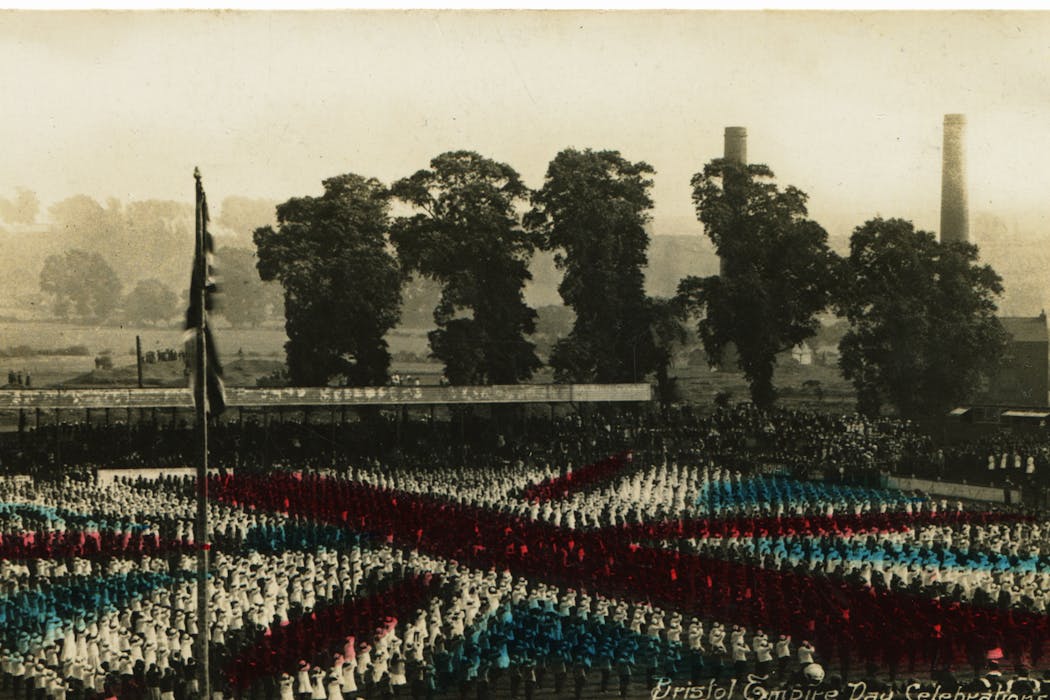
A reproduction of a postcard marking empire day celebrations in Bristol in 1912. Shutterstock/Igor Golovniov

If you wander through Glasgow Green, you’ll encounter the Doulton fountain, a gaudy terracotta tribute to empire that features “native” and colonial figures in national dress holding out the produce of their lands to the imperial centre. Like thousands of imperial monuments across Britain, the Doulton Fountain is neither widely celebrated nor widely denounced. It is part of the everyday backdrop.

That quiet coexistence says a lot about Britain’s relationship with its imperial past. Empire is everywhere – cast in stone, threaded through schoolbook stories and family lore – but rarely front-and-centre in political debate. In a new article in the British Journal of Political Science, Daniel Devine and I set out to answer two questions: what do Britons actually think about the empire, and do those views matter politically?

To answer these questions, we built a measure of imperial nostalgia using survey questions on attitudes to empire. We asked people how much they agreed with statements like “the British Empire had a great civilising effect” and “the British Empire was responsible for many atrocities”.

Across two polls in late 2023 and mid-2024, we found Britain both divided and unsure about its imperial past. Net support swings from −50 points when asked whether the empire was “responsible for many atrocities” (62% agree, 12% disagree) to +21 points on whether it had a “civilising effect” (44% agree, 23% disagree).

Between a quarter and 40% of respondents chose the “neither” or “don’t know” options, showing that there is substantial ambivalence in attitudes. Taken together, opinion about empire tilts slightly negative: more critical than celebratory, but far from a blanket rejection.

A chart showing how people responded to questions about the British empire.
Ambivalence over empire.
C Claassen, CC BY-ND

Demographically, imperial nostalgia rises with age and falls with education. It is higher among men and white British respondents, and notably lower in London and Scotland. In short, it behaves like a form of cultural conservatism. However, we find that it forms its own dimension of opinion, distinct from authoritarianism and nationalism. That distinctiveness matters, because it implies politicians may be tapping something different when they invoke empire, as when Boris Johnson recited The Road to Mandalay on a visit to Myanmar.

How imperial views relate to voting

We found that imperial nostalgia connects quite significantly with partisan politics. Supporters of Labour, the Liberal Democrats and the Greens are, on average, more critical of empire. Conservative and Reform supporters are more nostalgic about it. This is perhaps predictable but the strength of the relationship between views on empire and party preference was a surprise – it was stronger than left–right economic values, for example.

The result survives more demanding tests. Imperial nostalgia remains an important positive predictor for Conservative and Reform support, and a negative predictor of Green support, when we control for respondents’ other political attitudes and identities.

The link remains when we add a separate measure of general nostalgia (“life was better 50 years ago”), demonstrating that imperial nostalgia isn’t just another name for backward-looking mood. In fact, the two nostalgias diverge in their effects. General nostalgia negatively predicts Conservative support but positively predicts Reform support. Imperial nostalgia boosts both the Conservatives and Reform.

However, this is not to say that voters want their politicians to go on about empire. In fact, when we asked respondents to choose between hypothetical parliamentary candidates, they opted for ambivalence in their representatives. When presented with a conservative who thought empire had a “civilising effect”, a progressive who said empire was “responsible for many atrocities” and a third candidate with mixed views incorporating both, the latter was the most popular.

Detailing on the Doulton fountain showing men and women with farm animals.
The Doulton fountain in Glasgow.
Shutterstock/PJ photography

While a conservative position on empire neither helps nor hurts a candidate overall, a progressive stance actually reduces support by about five percentage points. In other words, criticism is the least popular position when it comes to politicians, even though most respondents adopted such a critical view when asked about their own opinions of empire.

The picture sharpens when we examine the results separately by respondents’ ideology and party. Conservative and culturally conservative voters punish the critical “atrocities” stance strongly, while cultural liberals offer little offsetting reward for it.

Studied silence on empire

So for political parties, openly criticising empire is not a winning strategy. It yields only minimal gains on the left while antagonising and mobilising voters on the right.

That asymmetry helps explain the studied quiet we’re currently experiencing. Steering around an issue is considered the best course of action if it divides the public and risks energising opponents more than supporters.

Our study suggests that imperial nostalgia is like a submerged current in British politics. It shapes where parties can safely sail even if they rarely talk about the tide. But we think it’s possible that the current could resurface.

Imperial nostalgia correlates strongly with support beyond the main parties: positively with Reform and negatively with the Greens. With Britain’s party system in unprecedented flux, a challenger could weaponise the issue to split opponents and mobilise a base.

And since younger Britons hold more notably critical views of empire, their entry into the electorate could make debates about the past more electorally decisive and therefore worth campaigning on. Our experiment suggests a sharp backlash from conservatives will ensue, setting the stage for a fresh culture-war divide.

Even without these two factors, it remains the case that backward-looking narratives resonate more strongly in periods of perceived national decline. So if the current stagnation persists, imperial nostalgia could surface from background mood to foreground politics.


Want more politics coverage from academic experts? Every week, we bring you informed analysis of developments in government and fact check the claims being made.

Sign up for our weekly politics newsletter, delivered every Friday.

The Conversation

Christopher Claassen has received funding from the Leverhulme Trust and NORFACE (New Opportunities for Research Funding Agency Cooperation in Europe)

ref. Study shows views of British empire shape voting behaviour – but in subtle ways – https://theconversation.com/study-shows-views-of-british-empire-shape-voting-behaviour-but-in-subtle-ways-272131

How Europe’s new carbon tax on imported goods will change global trade – and our shopping habits

Source: The Conversation – UK – By Simona Sagone, PhD Candidate, Green Finance, Lund University; University of Palermo

Image by pikisuperstar on Freepik, FAL

For people living in the EU, the price of their next car, home renovation and even local produce may soon reflect a climate policy that many have never even heard of. This new regulation, which comes fully into force on New Year’s Day, does not just target heavy industry – it affects everyday goods which now face an added carbon cost when they enter Europe.

The carbon border adjustment mechanism (CBAM) puts a carbon price on many imported goods – meaning that EU-based importers will pay for the greenhouse gases emitted during the production of certain carbon-intensive materials.

If goods come from countries with weaker climate rules, then the charge will be higher. To sell to the EU, producers will effectively need to show their goods aren’t too carbon intensive.

The goal is to prevent companies from relocating their production to places with looser regulations, ensuring fair competition between EU and non-EU companies, while incentivising global decarbonisation.

After a trial phase, full payment obligations begin on January 1 2026, when importers will need to buy CBAM certificates to cover the embedded emissions in goods such as iron and steel, aluminium, cement, fertilisers, hydrogen and (eventually) electricity.

Although it is an EU climate policy, CBAM looks set to be a gamechanger for global trade. Countries that rely on EU exports may need to make costly investments in cleaner technologies and better emissions tracking, or risk losing market share. The UK government plans to introduce its own version of CBAM in 2027 – although how this links to the EU’s is yet to be decided.

graphic of globe, two hands holding ship, money
More and more countries are introducing carbon pricing systems.
Buravleva stock/Shutterstock

A positive shift is already underway: more and more companies are now measuring and reporting their emissions accurately, responding to the growing demand for reliable carbon data. At the same time, an increasing number of countries are introducing their own carbon pricing systems to stay aligned with the EU and protect the competitiveness of their exports.

Morocco is a prominent example: its 2025 finance law gradually introduces a carbon tax from January 2026. As Moroccan firms will already pay a carbon price domestically, their exports are likely to avoid additional CBAM charges at the EU border, helping them remain competitive.


Read more:
Your essential guide to climate finance


In many countries, CBAM is also accelerating interest in renewable energy and greener industrial processes. Some see it not as a threat, but an opportunity to attract investment and position themselves as low-carbon manufacturing hubs.

However, this mechanism is still controversial. For businesses, CBAM is complex and administratively heavy. Firms need robust systems to measure embedded emissions, collect data from suppliers and produce environmental product declarations. Many will also need new renewable energy contracts to cut their carbon footprint.

Around the world, CBAM has faced strong criticism. India and China describe it as “green protectionism”, arguing that it puts unfair pressure on developing economies. At the same time, the EU has not yet created dedicated funding to help exporters in lower-income countries adapt. Without this support, the mechanism may not achieve the desired results.

What about consumers?

Although CBAM is mainly aimed at industry, its ripple effects will reach consumers in the EU. Importers are unlikely to absorb the full additional cost, meaning prices are likely to rise – particularly for goods that rely heavily on steel, aluminium or cement. This could mean Europe sees higher costs for cars, home appliances, electronics, building materials and, indirectly, food production (through fertilisers).

At the same time, CBAM may bring more transparency. Because importers must report the emissions embedded in their goods, consumers may eventually have clearer information about the climate impact of what they buy.

The mechanism will also generate EU revenues from certificate sales. These are expected to support vulnerable households in many European countries, as well as funding clean technologies and improving energy efficiency. How the funds are used will be crucial to public acceptance of Europe’s new carbon tax.

Even before full implementation, CBAM is already reshaping supply chains and influencing government policies far beyond Europe’s borders. It may trigger trade disputes, push exporters to adopt carbon pricing, and highlight the need for more climate finance to support developing countries undergoing green industrial transitions.

For many European consumers, it’s likely to mean gradual price increases – and potentially, more climate-conscious purchasing decisions. Behind the scenes, it marks a significant shift in how global trade accounts for carbon – and how climate policy reaches into people’s everyday lives.


Don’t have time to read about climate change as much as you’d like?

Get a weekly roundup in your inbox instead. Every Wednesday, The Conversation’s environment editor writes Imagine, a short email that goes a little deeper into just one climate issue. Join the 47,000+ readers who’ve subscribed so far.


The Conversation

Simona Sagone does not work for, consult, own shares in or receive funding from any company or organisation that would benefit from this article, and has disclosed no relevant affiliations beyond their academic appointment.

ref. How Europe’s new carbon tax on imported goods will change global trade – and our shopping habits – https://theconversation.com/how-europes-new-carbon-tax-on-imported-goods-will-change-global-trade-and-our-shopping-habits-270496

To feel lonely is to be human: here’s how to handle it at Christmas

Source: The Conversation – UK – By Paul Jones, Associate Dean for Education and Student Experience at Aston Business School, Aston University

Serg Grbanoff/Shutterstock

Christmas is often considered a time of connection, warmth and belonging. That’s the script, anyway. But for many people, the reality feels different; isolating, emotionally weighted and filled with comparisons that sting.

Whether you’re spending Christmas alone, navigating grief, or simply don’t feel “festive,” it can feel like you’ve slipped out of sync with the rest of the world. However, that feeling isn’t the same as being alone. Loneliness, isn’t about the number of people around you. It’s about connection, and the absence of it.

This time of year intensifies emotional experience. Rituals such as decorating a tree or watching a favourite film may bring up memories. These could be of people, or they could be of former versions of ourselves.

We measure time differently in December, a phenomenon psychologists refer to as “temporal anchoring”. The season acts as a golden thread spanning our lives, pulling us back to the past. We often use it to reflect on what we’ve lost, who we’ve become, and what didn’t happen. It can cut deeply.

It is a sharp counterpoint to the cultural messaging: people coming together, the push to be joyful and the idea that gratitude must prevail. It’s not just tinsel that is expected to sparkle. We are, too.

Some people are more vulnerable at this time of year, particularly those in flux or transitioning. A recent breakup, moving house, a medical diagnosis or redundancy can often lead to feeling emotionally unanchored. Others carry complex feelings about family, grief or past trauma, which make forced joy or cheerfulness jarring.

Personality plays a role too. People high in traits such as neuroticism or socially prescribed perfectionism can be more vulnerable to distress and loneliness when life does not live up to their expectations.

Your brain on loneliness

Studies have shown that chronic loneliness can increase stress hormones such as cortisol, impair immune function and even affect cardiovascular health. Social neuroscientist John Cacioppo described loneliness as “a biological warning system” that our need for connection isn’t being met.

Loneliness, though, is a normal human response. It is a reaction to a mismatch between our desired social experience and our reality. Self-discrepancy theory helps explain why this mismatch causes emotional pain. When there’s a gap between who we are and who we feel we should be, whether it is socially, emotionally or even seasonally, discomfort follows. Christmas, with all its trimmings, amplifies that gap.

Close up of person sitting on floor with mug of tea surrounded by Christmas-y things.
Do Christmas your own way.
Bogdan Sonjachnyj/Shutterstock

Solitude isn’t the enemy

That said, being alone at Christmas doesn’t automatically mean something’s wrong.
In fact, it might be exactly what you need.

For many, this time can be a rare opportunity for space, stillness and healing. It
might be the only time of year when you get the space to hear your own thoughts, reflect or reset. Choosing solitude purposefully can be deeply restorative.

Connecting with yourself can be just as important as connecting with others.
Research into self-determination theory also highlights autonomy, competence and relatedness as core psychological needs.

Autonomy, in particular, means honouring your own choices, not other people’s expectations. For example, choosing to spend the day quietly reading, cooking for yourself, or creating a personal ritual supports both autonomy and competence. These acts reinforce your ability to care for yourself and reduce the pressure to seek validation from others.

Philosophers such as 19th-century Danish thinker Søren Kierkegaard and ancient stoic Epictetus emphasised the importance of tuning into your own inner life rather than being governed by external forces. They remind us that authenticity doesn’t come from performing joy for others, but from noticing what we need and choosing to honour it.

The key is alignment. Do what nourishes you, not what performs well on
Instagram, and let the societal pressures wash over you rather than be driven by
them.

So what can help?

Trying to “fix” loneliness with a to-do list isn’t the answer. It’s about tuning into what you need. These approaches are rooted in psychological and philosophical insight. They are not quick fixes.

1. Let yourself feel it

Loneliness hurts. It’s okay to name it. Pushing it away rarely works. Accepting and sitting with it can be the first step toward softening its grip.

2. Create micro-rituals

Small routines bring meaning and structure. Brew a
particular tea. Rewatch a film that resonates. Light a candle for someone you miss. Rituals connect you to something larger but also connect you to yourself.

3. Reframe connection

Closeness doesn’t have to mean crowds. It might mean sending a message, joining a quiet online space or simply being present with yourself. Journaling, voice notes or reflective walks can all be forms of inward connection.

4. Celebrate your uniqueness

You are not a statistic. You don’t need to aim for the “average” mental health baseline. Your emotional life is yours alone. A little variation, a little eccentricity, these are signs of being alive.

5. Find what works for you

There’s no one right way to do Christmas. Whether it’s a solo walk, a day in pyjamas, or calling one person you trust, the point is to honour your individuality.

If you’re feeling out of step this Christmas, that doesn’t make you broken. It makes you aware. You’re noticing what’s missing; you are listening. That’s not weakness, it’s one of the greatest sources of wisdom.

In The Book of Disquiet, Portuguese poet and philosopher Fernando Pessoa wrote: “To feel today what one felt yesterday isn’t to feel – it’s to remember today what was felt yesterday, to be today’s living corpse of what yesterday was lived and lost.”

It’s a stark image, but a truthful one. At Christmas, we often try to summon old
feelings, those of joy, warmth, and belonging, as if they can be reactivated on
command. But what if we didn’t force it? Christmas doesn’t have to be remembered joy. It can be present truth.

Loneliness isn’t something to be solved or suppressed. It’s a companion on the
journey inward.

And sometimes, the most meaningful connection we can make is with ourselves.

This article features references to books that have been included for editorial reasons, and may contain links to bookshop.org. If you click on one of the links and go on to buy something from bookshop.org The Conversation UK may earn a commission.

The Conversation

Paul Jones does not work for, consult, own shares in or receive funding from any company or organisation that would benefit from this article, and has disclosed no relevant affiliations beyond their academic appointment.

ref. To feel lonely is to be human: here’s how to handle it at Christmas – https://theconversation.com/to-feel-lonely-is-to-be-human-heres-how-to-handle-it-at-christmas-271652

Earth’s frozen regions are sending a clear warning about climate change – but politicians are ignoring it

Source: The Conversation – UK – By Chris Stokes, Professor in the Department of Geography, Durham University

muratart/Shutterstock

“We cannot negotiate with the melting point of ice.” That’s the message from more than 50 leading scientists who study the Earth’s frozen regions, published in the latest annual State of the Cryosphere report.

In the past year alone, the vast polar ice sheets in Greenland and Antarctica are likely to have shed around 370 billion tonnes of ice, with a further 270 billion tonnes from the 270,000 mountain glaciers around the world, some of which are disappearing altogether.

In February 2025, global sea ice extent reached a new all-time minimum in the 47-year satellite record. Elsewhere, perennially frozen ground (called permafrost) continues to thaw, releasing additional greenhouse gas emissions each year that are roughly equivalent to the world’s eighth-highest-emitting country.

The warning lights from the cryosphere have been flashing red for several years, and governments ignore this at their peril.

Melting ice is driving an acceleration in the rate of sea-level rise, which has doubled to 4.5mm per year over the last three decades. If this acceleration continues, sea-level rise will reach around 1cm per year by the end of this century – a rate so high that many island and coastal communities will be forced to move.

The loss of mountain glaciers will affect billions of people who rely on their meltwater for agriculture, hydropower and other human activities; and the damage caused to infrastructure by Arctic permafrost thaw has been estimated to cost US$182 billion (£137 billion) by 2050 under our current emissions trajectory.

Negotiations based on ‘best available’ science

In an effort to reduce the risks and effects of climate change, including those from the cryosphere described above, the Paris climate agreement was adopted by 195 countries at the annual UN climate summit in 2015, with the aim of limiting “the increase in global average temperature to well below 2°C above pre-industrial levels” and pursue efforts “to limit the temperature increase to 1.5°C”.

Its implementation should be based on and guided by the “best available science”. That includes evidence provided by the Intergovernmental Panel on Climate Change (IPCC), a group created by the UN to provide governments with regular assessments of the scientific basis of climate change, its impacts and options for adaptation and mitigation.

This guiding principle was strengthened by the International Court of Justice in July 2025, which reaffirmed 1.5°C as the primary legally binding target for climate policies under the Paris climate agreement.

Yet recent climate negotiations, including at the UN climate summit in Brazil in November 2025 (Cop30), have seen some countries – largely fossil fuel producers – push back on previously standard language endorsing the IPCC as a source of the “best available science”.

As cryosphere scientists who regularly attend the UN’s climate summits, we have noticed recent efforts to downplay, confuse and dilute some of the latest scientific findings, especially from the cryosphere. We find this alarming.

At Cop30, observations about the complete loss of glaciers in two countries (Slovenia and Venezuela) were removed from the final draft text. Other shocking scientific findings about “irreversible changes to the cryosphere” were diluted to a rather vague “need to enhance observations and address gaps in the monitoring of the hydrosphere and the cryosphere”.

This tactic to obfuscate the science is not new, but has been increasingly used over recent years, during which the indicators of climate change and its consequences on the cryosphere have become increasingly obvious to scientists.

At Cop30, climate negotiators from several countries expressed disappointment and concern that the role of the IPCC as the best available science was not highlighted alongside some of the more alarming scientific findings, with an intervention from the UK capturing this frustration.

While the final overarching summary text from Cop30 – the Mutirão decision – references the IPCC as the source of the best available science, and contains some strong language around the need to limit warming to 1.5°C, rather than 2°C, these look like empty words when the same document fails to even mention “fossil fuels”. Emissions from fossil fuels will result in 2.6°C of warming by 2100, without urgent action.

Indeed, the final text from Cop30 is the first to explicitly reference a temperature “overshoot”, reiterating the need “to limit both the magnitude and the duration of any temperature overshoot”. Most scientists agree that overshoot is now inevitable, but that 1.5°C increase remains the legal and ethical imperative for a long-term global temperature target.

However, some scientists – including ourselves – would argue that even this is too high, committing us to losing around half of the world’s mountain glaciers and several metres of sea-level rise from the polar ice sheets.

Among the dire warnings, a recent study offers hope that it is still possible to curtail warming in the next 15 to 20 years, peaking at an increase of around 1.7°C in the 2040s before declining to an increase of 1.5°C and then 1.2°C by the end of the century. But that requires rapid and deep cuts in emissions from now on.

Climate negotiations may move at a glacial pace, but the irony is that the pace of glacier change is rapidly overtaking our ability to adapt to it and protect the most vulnerable people. The science is clear. But the perils of ignoring it are even clearer.


Don’t have time to read about climate change as much as you’d like?

Get a weekly roundup in your inbox instead. Every Wednesday, The Conversation’s environment editor writes Imagine, a short email that goes a little deeper into just one climate issue. Join the 47,000+ readers who’ve subscribed so far.


The Conversation

Chris Stokes receives funding from the the Natural Environment Research
Council (NE/R000824/1).

Florence Colleoni has previously received some funding from national Italian Programma Nazionale sulle Ricerche in Antartide (PNRA) and currently receives funding from the High-Computing Performance-TRES programme from the Italian Ministry of Research. She is affiliated with the Scientific Committee on Antarctic Research for which she serves as co-chief officer of the science research programme INSTANT.

James Kirkham has previously received funding from the Natural Environment Research Council. He is currently affiliated with the International Cryosphere Climate Initiative (ICCI) and regularly works with countries in the context of the UNFCCC.

ref. Earth’s frozen regions are sending a clear warning about climate change – but politicians are ignoring it – https://theconversation.com/earths-frozen-regions-are-sending-a-clear-warning-about-climate-change-but-politicians-are-ignoring-it-270604