Fat cells burn energy to make heat – making them the next frontier of weight loss therapies

Source: The Conversation – USA – By Claudio Villanueva, Professor of Integrative Biology and Physiology, University of California, Los Angeles

There is more to fat than meets the eye. Thom Leach/Science Photo Library via Getty Images

Over the past few years, a new class of medications has transformed the treatment of obesity. Drugs like Ozempic, Wegovy and Mounjaro work primarily by reducing appetite, helping people eat less and feel full sooner. Their success has demonstrated something important: Body weight is biologically regulated, and targeting the right biological pathways can lead to meaningful weight loss that can help transform lives.

But appetite is only half of the equation. Your weight reflects a balance between the calories you consume through your diet and the energy you expend through movement, exercise and maintaining basic cellular function. While recent therapies have focused on controlling energy intake, scientists are increasingly turning their attention to the other side of the ledger: the tissues that burn energy.

At the center of this conversation is an organ most people misunderstand: fat. For decades, fat – also known as adipose tissue – was thought of as passive storage: a biological pantry for excess calories. Scientists now know this view is incomplete.

Fat is not just storage

White adipose tissue, the most abundant type of fat in adults, does store energy in the form of triglycerides. But it also has several other functions.

For one, white fat is a powerful endocrine organ, releasing hormones like leptin that reduce appetite, as well as adiponectin, which regulates insulin and blood sugar levels. It also cushions organs, insulates against heat loss and acts as a metabolic buffer, safely storing excess lipids that would otherwise accumulate in the liver or muscle.

Microscopy image of oval-shaped white blobs packed together
White adipose cells provide several essential bodily functions.
Ed Reschke/Stone via Getty Images

When white adipose cells expand in a healthy, flexible way, they protect the body. When they become inflamed or dysfunctional, they contribute to insulin resistance, fatty liver disease and cardiovascular risk. Obesity arises from both the expansion of white adipose cells and an increase in their number.

In other words, fat is not inherently harmful. Its health impact depends on the size of adipose cells, and when they become too large, they are unable to function optimally. Increasing the number of new fat cells can sometimes improve metabolic function.

Moreover, there are additional types of fat, and they behave in different ways.

Brown fat: The cellular furnace

Unlike white fat, brown fat is specialized to burn energy. Brown adipose cells are packed with mitochondria – the tiny power plants inside cells – and contain a protein called UCP1 that allows them to convert chemical energy directly into heat. Instead of storing calories, brown fat dissipates them.

In infants, brown fat helps maintain body temperature. For years, scientists believed it largely disappeared in adulthood. But imaging studies in the late 2000s revealed that many adults retain metabolically active brown fat, particularly in the neck and upper chest.

Exposure to cold temperatures naturally triggers the brain to stimulate brown fat cells and generate heat. As energy use rises for this process, so does calorie-burning.

If activating brown fat increases energy expenditure, could it be harnessed to treat obesity?

The challenge is that human metabolism is tightly regulated. When energy expenditure increases, the body often compensates by stimulating hunger. Studies in animals – and observations in humans – show that cold exposure not only activates brown fat but also increases appetite. The brain detects the higher energy demand and signals for greater food intake.

From an evolutionary perspective, this makes sense. For our human ancestors, cold environments meant survival required more fuel. A system that failed to replace calories burned to keep you warm would have been dangerous. This homeostatic defense of body weight is powerful. It is one reason why weight loss is difficult to sustain and why increasing energy expenditure alone may not be sufficient to lose weight.

But when coupled with GLP-1 drugs that suppress appetite, promoting energy expenditure could lead to therapies that are even more powerful at promoting weight loss.

Diagram of white, beige and brown fat cells, progressively showing smaller amounts of lipids and larger numbers of mitochondria
As white fat cells turn brown, they acquire more mitochondria (blue ovals) and store fewer lipids (yellow spheres)
Vitalii Dumma/iStock via Getty Images Plus

Beige fat and metabolic plasticity

Adding further complexity to fat’s role in weight loss are beige fat cells. These cells arise within white fat depots under certain conditions – such as cold exposure or specific hormonal signals – and acquires some of the heat-producing properties of brown fat. This process, often called browning, reveals that adipose tissue is remarkably flexible.

Fat is not a static mass. It contains stem and progenitor cells capable of generating new adipocytes with distinct properties. That flexibility opens intriguing therapeutic possibilities: Instead of merely shrinking fat, could researchers reprogram it to become something else?

Researchers like me are exploring ways to safely enhance the heat-generating capacity of fat cells, potentially increasing energy expenditure without relying solely on environmental cold. Brown and beige fat are compelling targets because they are purpose-built for heat production, which is why my lab is focusing on harnessing them to treat metabolic disease.

But fat is not the only tissue in the body that consumes energy or can generate heat in the cold. Skeletal muscle accounts for a substantial portion of daily energy expenditure, particularly during activity. The liver continuously engages in metabolically expensive processes. Even subtle futile cycles – processes in which molecules are repeatedly built and broken down – consume energy and generate heat.

The future of metabolic therapeutics for weight loss may involve carefully increasing energy flux across multiple tissues. The challenge is doing so without triggering compensatory hunger or unintended side effects. Any intervention that dramatically raises metabolic demand risks being interpreted by the brain as a threat to survival.

Close-up of legs of three people running
Increasing energy expenditure can also increase appetite.
ljubaphoto/E+ via Getty Images

A two-sided strategy to maximize weight loss

The success of GLP-1–based medications has demonstrated that targeting appetite pathways can overcome some of the body’s resistance to weight loss. The next generation of therapies may build on that foundation.

One possibility is combining medications that modulate appetite with interventions that enhance energy expenditure. By influencing both sides of the energy balance equation – intake and output – it might be possible to achieve more durable metabolic improvements.

Equally important is shifting the public narrative. Fat is not merely an enemy to eliminate. It is a dynamic, multifunctional organ that protects, communicates, adapts and, under the right conditions, burns energy.

Understanding that complexity moves society beyond simplistic views of weight regulation. It also points toward a future in which therapies are not just about eating less, but about strategically harnessing the body’s own metabolic machinery.

The era of appetite control has begun. I believe the era of precision energy expenditure will be next.

The Conversation

Claudio Villanueva receives funding from National Institutes of Health.

ref. Fat cells burn energy to make heat – making them the next frontier of weight loss therapies – https://theconversation.com/fat-cells-burn-energy-to-make-heat-making-them-the-next-frontier-of-weight-loss-therapies-277596

US military leans into AI for attack on Iran, but the tech doesn’t lessen the need for human judgment in war

Source: The Conversation – USA – By Jon R. Lindsay, Associate Professor of Cybersecurity and Privacy and of International Affairs, Georgia Institute of Technology

AI is helping U.S. forces find and choose targets in Iran, like this airfield. U.S. Central Command via AP

The U.S. military was able “to strike a blistering 1,000 targets in the first 24 hours of its attack on Iran” thanks in part to its use of artificial intelligence, according to The Washington Post. The military has used Claude, the AI tool from Anthropic, combined with Palantir’s Maven system, for real-time targeting and target prioritization in support of combat operations in Iran and Venezuela.

While Claude is only a few years old, the U.S. military’s ability to use it, or any other AI, did not emerge overnight. The effective use of automated systems depends on extensive infrastructure and skilled personnel. It is only thanks to many decades of investment and experience that the U.S. can use AI in war today.

In my experience as an international relations scholar studying strategic technology at Georgia Tech, and previously as an intelligence officer in the U.S. Navy, I find that digital systems are only as good as the organizations that use them. Some organizations squander the potential of advanced technologies, while others can compensate for technological weaknesses.

Myth and reality in military AI

Science fiction tales of military AI are often misleading. Popular ideas of killer robots and drone swarms tend to overstate the autonomy of AI systems and understate the role of human beings. Success, or failure, in war usually depends not on machines but the people who use them.

In the real world, military AI refers to a huge collection of different systems and tasks. The two main categories are automated weapons and decision support systems. Automated weapon systems have some ability to select or engage targets by themselves. These weapons are more often the subject of science fiction and the focus of considerable debate.

Decision support systems, in contrast, are now at the heart of most modern militaries. These are software applications that provide intelligence and planning information to human personnel. Many military applications of AI, including in current and recent wars in the Middle East, are for decision support systems rather than weapons. Modern combat organizations rely on countless digital applications for intelligence analysis, campaign planning, battle management, communications, logistics, administration and cybersecurity.

Claude is an example of a decision support system, not a weapon. Claude is embedded in the Maven Smart System, used widely by military, intelligence and law enforcement organizations. Maven uses AI algorithms to identify potential targets from satellite and other intelligence data, and Claude helps military planners sort the information and decide on targets and priorities.

The Israeli Lavender and Gospel systems used in the Gaza war and elsewhere are also decision support systems. These AI applications provide analytical and planning support, but human beings ultimately make the decisions.

Researcher Craig Jones explains how the U.S. military is using artificial intelligence in its attack on Iran, and some of the issues that arise from its use.

The long history of military AI

Weapons with some degree of autonomy have been used in war for well over a century. Nineteenth-century naval mines exploded on contact. German buzz bombs in World War II were gyroscopically guided. Homing torpedoes and heat-seeking missiles alter their trajectory to intercept maneuvering targets. Many air defense systems, such as Israel’s Iron Dome and the U.S. Patriot system, have long offered fully automatic modes.

Robotic drones became prevalent in the wars of the 21st century. Uncrewed systems now perform a variety of “dull, dirty and dangerous” tasks on land, at sea, in the air and in orbit. Remotely piloted vehicles like the U.S. MQ-9 Reaper or Israeli Hermes 900, which can loiter autonomously for many hours, provide a platform for reconnaissance and strikes. Combatants in the Russia-Ukraine war have pioneered the use of first-person view drones as kamikaze munitions. Some drones rely on AI to acquire targets because electronic jamming precludes remote control by human operators.

But systems that automate reconnaissance and strikes are merely the most visible parts of the automation revolution. The ability to see farther and hit faster dramatically increases the information processing burden on military organizations. This is where decision support systems come in. If automated weapons improve the eyes and arms of a military, decision support systems augment the brain.

Cold War era command and control systems anticipated modern decision support systems such as Israel’s AI-enabled Tzayad for battle management. Automation research projects like the United States’ Semi-Automatic Ground Environment, or SAGE, in the 1950s produced important innovations in computer memory and interfaces. In the U.S. war in Vietnam, Igloo White gathered intelligence data into a centralized computer for coordinating U.S. airstrikes on North Vietnamese supply lines. The U.S. Defense Advanced Research Projects Agency’s strategic computing program in the 1980s spurred advances in semiconductors and expert systems. Indeed, defense funding originally enabled the rise of AI.

Organizations enable automated warfare

Automated weapons and decision support systems rely on complementary organizational innovation. From the Electronic Battlefield of Vietnam to the AirLand Battle doctrine of the late Cold War and later concepts of network-centric warfare, the U.S. military has developed new ideas and organizational concepts.

Particularly noteworthy is the emergence of a new style of special operations during the U.S. global war on terrorism. AI-enabled decision support systems became invaluable for finding terrorist operatives, planning raids to kill or capture them, and analyzing intelligence collected in the process. Systems like Maven became essential for this style of counterterrorism.

The impressive American way of war on display in Venezuela and Iran is the fruition of decades of trial and error. The U.S. military has honed complex processes for gathering intelligence from many sources, analyzing target systems, evaluating options for attacking them, coordinating joint operations and assessing bomb damage. The only reason AI can be used throughout the targeting cycle is that countless human personnel everywhere work to keep it running.

AI gives rise to important concerns about automation bias, or the tendency for people to give excessive weight to automated decisions, in military targeting. But these are not new concerns. Igloo White was often misled by Vietnamese decoys. A state-of-the-art U.S. Aegis cruiser accidentally shot down an Iranian airliner in 1988. Intelligence mistakes led U.S. stealth bombers to accidentally strike the Chinese embassy in Belgrade, Serbia, in 1999.

Many Iraqi and Afghan civilians died due to analytical mistakes and cultural biases within the U.S. military. Most recently, evidence suggests that a Tomahawk cruise missile struck a girls school adjacent to an Iranian naval base, killing about 175 people, mostly students. This targeting could have resulted from a U.S. intelligence failure.

Automated prediction needs human judgment

The successes and failures of decision support systems in war are due more to organizational factors than technology. AI can help organizations improve their efficiency, but AI can also amplify organizational biases. While it may be tempting to blame Lavender for excessive civilian deaths in the Gaza Strip, lax Israeli rules of engagement likely matter more than automation bias.

As the name implies, decision support systems support human decision-making; AI does not replace people. Human personnel still play important roles in designing, managing, interpreting, validating, evaluating, repairing and protecting their systems and data flows. Commanders still command.

In economic terms, AI improves prediction, which means generating new data based on existing data. But prediction is only one part of decision-making. People ultimately make the judgments that matter about what to predict and how to use predictions. People have preferences, values and commitments regarding real-world outcomes, but AI systems intrinsically do not.

In my view, this means that increasing military use of AI is actually making humans more important in war, not less.

The Conversation

Jon R. Lindsay does not work for, consult, own shares in or receive funding from any company or organization that would benefit from this article, and has disclosed no relevant affiliations beyond their academic appointment.

ref. US military leans into AI for attack on Iran, but the tech doesn’t lessen the need for human judgment in war – https://theconversation.com/us-military-leans-into-ai-for-attack-on-iran-but-the-tech-doesnt-lessen-the-need-for-human-judgment-in-war-277831

Oil isn’t just fuel: Iran conflict could disrupt markets for everything from plastics to fertilizers

Source: The Conversation – USA – By André O. Hudson, Dean of the College of Science, Professor of Biochemistry, Rochester Institute of Technology

Disruptions to crude oil transport could affect more than fuel supply chains. AP Photo/Hasan Jamali, File

Tensions in the Middle East often trigger concerns about rising gasoline prices. But disruptions to oil supplies could affect much more than the cost of filling up a car. That’s because crude oil is not only burned as fuel. It is also the raw material for thousands of products that modern societies depend on, including plastics, fertilizers, clothing fibers, medicines and electronics.

As a biochemist, I’m interested in how certain chemicals can shape society, and oil is a prime example.

The stakes become clearer when looking at the Strait of Hormuz, a narrow waterway between Iran and Oman. About one-fifth of the world’s petroleum liquids consumption passes through the strait each day, making it one of the most important oil shipping routes on Earth. If conflict significantly disrupts traffic there, the effects could ripple far beyond energy markets.

A map of the Strait of Hormuz, which is a narrow body of water between Iran and Oman.
The Strait of Hormuz.
Goran_tek-en/Wikimedia Commons, CC BY-SA

Oil is a chemical starting point

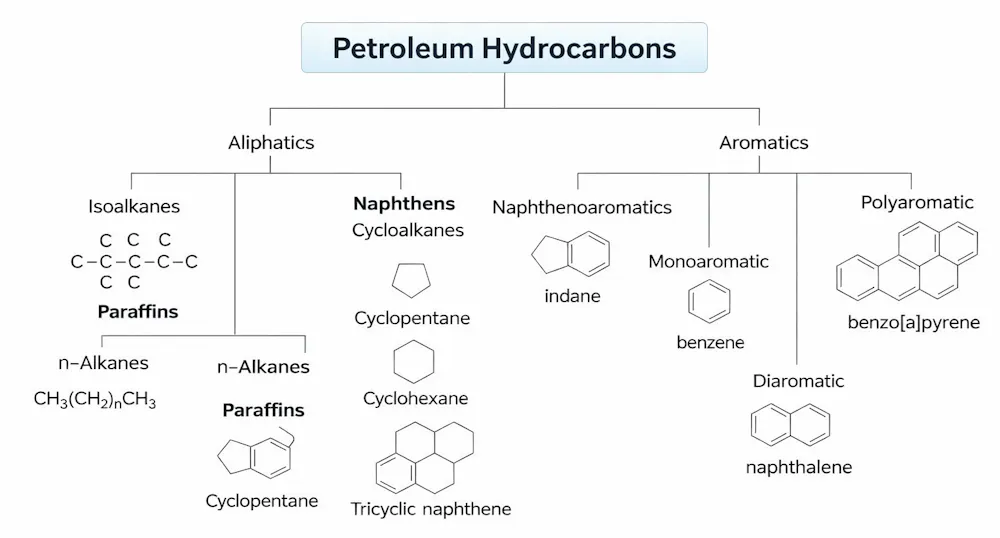
Crude oil is a complex mixture of hydrocarbons – molecules made mainly of carbon and hydrogen. Refineries and chemical plants separate and transform these molecules into smaller chemical building blocks known as petrochemicals.

Some of the most important petrochemical building blocks include chemicals such as ethylene, propylene and benzene. Manufacturers can then convert these building blocks into more complex forms, which make up plastics, solvents, synthetic rubber and other industrial materials.

While fuel is a well-known product, fuels actually represents only a portion of what is produced from crude oil. The refining process generates a wide range of petroleum-based materials used to manufacture everyday items, such as plastics, medicines, electronics, cosmetics, clothing fibers and household goods.

A diagram showing a bunch of different types of hydrocarbon molecules derived from petroleum
Hydrocarbons are molecules made predominantly from hydrogen and carbon. Different forms, derived from crude oil, are used in many types of manufacturing.
André O. Hudson/Patel & Shah, 2013

Plastics that shape modern life

One of the most visible uses of oil is the production of plastics. Scientists can link individual petrochemical molecules to form polymers, which are long chains of repeating units that create materials such as polyethylene, polypropylene and polystyrene.

Because plastics are lightweight, durable and relatively inexpensive, they have become essential to global manufacturing.

These plastics appear in countless products, including food packaging and water bottles; medical equipment, such as syringes and IV bags; electronics casings and appliances; automotive parts; and construction materials, such as pipes and insulation.

Even technologies designed to reduce carbon emissions depend on them. Wind turbines, solar panels and electric vehicles all contain plastic components derived from petrochemicals.

Fertilizer that feeds billions

Oil and natural gas also play a critical role in agriculture. Modern fertilizers rely on nitrogen compounds, such as ammonia. Ammonia is produced through the Haber-Bosch process, which uses hydrogen typically derived from natural gas or other fossil fuels.

These fertilizers replenish nutrients in soil and dramatically increase crop yields. Without them, global food production would be far lower. Petrochemicals are also used to produce pesticides, herbicides and plastics used in irrigation systems and agricultural equipment.

Clothing, cosmetics and medicines

Petrochemicals also appear in many everyday consumer goods. Synthetic fabrics, such as polyester, nylon and acrylic, are made from petrochemical feedstocks. These feedstocks are the basic chemicals, made from crude oil or natural gas, that serve as the starting ingredients for products widely used in clothing, carpets and furniture.

Petroleum-derived ingredients are also common in cosmetics and personal care products. Certain lotions, shampoos and lipsticks rely on these compounds because they help stabilize formulas and extend shelf life.

Petrochemicals are also important in medicine. Petroleum-derived chemical intermediates − compounds made during the process of turning raw materials into a final product − are used to manufacture pharmaceuticals, medical tubing, sterile packaging and disposable gloves.

These materials help hospitals maintain sterility and safety in health care environments.

Crude oil is far more than just a source of gasoline.

Why the Strait of Hormuz matters

Because oil and petrochemical feedstocks move through global shipping routes, disruptions in one region will affect supply chains worldwide. The Strait of Hormuz is particularly important. If conflict or political tensions continue to interrupt shipping through the Strait, oil prices will rise quickly. Energy analysts have long warned that disruptions to the strait could send shock waves through global markets. The impact would not be limited to transportation fuels.

Petrochemical industries depend on steady supplies of crude oil and natural gas liquids as raw materials. If those supplies become more expensive or harder to obtain, manufacturers could face higher production costs.

The proportion of crude oil used for petrochemical feedstocks to create plastics, fertilizers and other materials represents around 10% to 20% of oil consumption. Most crude oil is refined for fuel production, including gasoline, diesel and jet fuel, so these fuel supply chains would likely be the first to take a hit. But over time, disruptions could affect the availability and price of products ranging from plastics and packaging to fertilizers, synthetic clothing fibers and even food.

A hidden foundation of modern economies

Because petrochemicals are often used behind the scenes as ingredients rather than finished products, the connection many agricultural, medical and consumer goods have to oil is easy to overlook. Yet, petrochemicals form a hidden foundation for modern economies. They enable large-scale agriculture, advanced health care systems and global manufacturing supply chains.

At the same time, concerns about climate change and plastic pollution are driving research into alternatives. Scientists are developing bio-based plastics made from plant materials, improving recycling technologies and exploring new ways to produce fertilizers with lower carbon emissions.

For now, the modern world remains deeply dependent on oil, not only for energy but also for the materials that shape everyday life. When news headlines focus on disruptions to oil supply, the consequences may extend far beyond the gas pump, affecting the products that underpin modern society.

The Conversation

André O. Hudson receives funding from the National Science Foundation and the National Institutes of Health

ref. Oil isn’t just fuel: Iran conflict could disrupt markets for everything from plastics to fertilizers – https://theconversation.com/oil-isnt-just-fuel-iran-conflict-could-disrupt-markets-for-everything-from-plastics-to-fertilizers-277946

AI doesn’t ‘see’ the way that you do, and that could be a problem when it categorizes objects and scenes

Source: The Conversation – USA – By Arryn Robbins, Assistant Professor of Psychology, University of Richmond

An AI and a human might classify this mammal with gray, wrinkled skin as very different animals. Richard Bailey/Corbis via Getty Images

Even with no fur in frame, you can easily see that a photo of a hairless Sphynx cat depicts a cat. You wouldn’t mistake it for an elephant.

But many artificial intelligence vision systems would. Why? Because when AI systems learn to categorize objects, they often rely on visual cues – like surface texture or simple patterns in pixels. This tendency makes them vulnerable to getting confused by small changes that have little effect on human perception.

A vision system aligned more closely with human perception – one that perhaps emphasizes shape, for instance – might still confuse the cat for another similarly shaped mammal, like a tiger; but it is unlikely to indicate an elephant.

The kinds of mistakes an AI makes reveal how it organizes visual information, with potential limitations that become concerning in higher-stakes settings.

red stop sign with stickers and graffiti
Stickers and graffiti on a stop sign could serve as an adversarial attack, confusing AI in autonomous vehicles.
rick/Flickr, CC BY

Imagine an autonomous vehicle approaching a vandalized stop sign. While a human driver recognizes the sign from its shape and context, an AI that relies on pixel patterns may misclassify it, pushing the altered sign out of the category “sign” altogether and into a different group of images that it identifies as similar, such as a billboard, advertisement or other roadside object.

Together, these problems point to a misalignment between how humans perceive the visual world and how AI represents it.

We are experts in visual perception, and we work at the intersection of human and machine perception. People organize visual input into objects, meaning and relationships shaped by experience and context. AI models don’t organize visual information the same way. This key difference explains why AI sometimes fails in surprising ways.

Seeing objects, not features

Imagine that in front of you is a small, opaque object with both straight and curved edges. But you don’t see those features; you just see your coffee mug.

Vision isn’t a camera, passively recording the world. Instead, your brain rapidly turns the light your eyes absorb into objects you recognize and understand, organizing experience into structured mental representations.

Researchers can understand how these representations are structured by examining how people judge similarity. Your coffee mug is not like your computer, but it’s similar to a glass of water despite differences in appearance. That judgment reflects how the mug is mentally represented: not just in terms of appearance, but also what the mug is used for and how it fits into everyday activities.

clear glass of water next to white ceramic mug in saucer on table
Very alike in how you use them; less similar in looks.
Oscar Wong/Moment via Getty Images

Importantly, the mental organization of representations is flexible. Which aspects of an object stand out change with context and goals. If packing a moving box, shape and size matter most, so your mug might be placed anywhere it fits. But when putting it away in a cupboard, it goes next to other drinkware. The mug hasn’t changed, only the way it is organized in your mind.

Human visual perception is adaptive, driven by meaning and tied to how we interact with the world.

Aligning AI with humans

AI systems, however, organize visual input in fundamentally different ways than people – not because they are machines, but because of how narrowly they are trained. When an AI is trained to categorize a cat or an elephant, it only needs to learn which visual patterns lead to the correct label, not how those animals relate to each other or fit into the broader world.

In contrast, humans learn within a broader context. When we learn what an elephant is, we weave that representation into the tapestry of everything else we have learned: animals, size, habitats and more. Because AI is graded only on label accuracy, it can rely on shortcuts that work in training but sometimes fail in the real world.

The issue of representational alignment refers to whether AI organizes information in ways that resemble how people do. It’s not to be confused with value alignment, which refers to the challenge of making sure AI systems pursue outcomes and goals that humans intend.

Because human learning embeds new information into a web of prior knowledge, the relationships between new and existing concepts can be studied and measured. This means that representational alignment may be a solvable problem and a step toward addressing broader alignment challenges.

One approach to representational alignment focuses on building AI systems that behave like humans on psychological tasks, allowing researchers to compare representations directly. For example, if people judge a cat as more similar to a dog than to an elephant, the goal is to build AI models that arrive at those same judgments.

One promising technique involves training AI on human similarity judgments collected in the lab. In these studies, human participants might be shown three images and asked which two objects are more similar; for example, whether a mug is more like a glass or a bowl. Including this data during training encourages AI systems to learn how objects relate to one another, producing representations that better reflect how people understand the world.

view from behind of man looking at X-rays of chest and other body parts
Health care providers want AI systems that flag real issues, without a lot of misses or false positives.
REB Images/Connect Images via Getty Images

Alignment beyond vision

Representational alignment matters beyond vision systems, and AI researchers are taking notice. As AI increasingly supports high-stakes decisions, differences between how machines and humans represent the world will have real consequences, even when an AI system appears highly accurate. For example, if an AI analyzing medical images learns to associate the source of an image or repeated image artifacts with disease rather than the real visual signs of the disease itself, that is obviously problematic.

AI doesn’t necessarily need to process information exactly the way people think, but training AI using principles drawn from human perception and cognition – such as similarity, context and relational structure – can lead to safer, more accurate and more ethical systems.

The Conversation

Eben W. Daggett receives funding from the NMSU Institute for Applied Practice in AI and Machine Learning (IAAM). He is currently employed by Medtronic PLC.

Michael Hout has received funding from the New Mexico State University Institute for Applied Practice in Artificial Intelligence and Machine Learning.

Arryn Robbins does not work for, consult, own shares in or receive funding from any company or organization that would benefit from this article, and has disclosed no relevant affiliations beyond their academic appointment.

ref. AI doesn’t ‘see’ the way that you do, and that could be a problem when it categorizes objects and scenes – https://theconversation.com/ai-doesnt-see-the-way-that-you-do-and-that-could-be-a-problem-when-it-categorizes-objects-and-scenes-271481

Why do mountaintops stay snowy even when it’s dry at the base?

Source: The Conversation – USA (2) – By Allie Mazurek, Engagement Climatologist and Researcher, Colorado Climate Center, Colorado State University

Curious Kids is a series for children of all ages. If you have a question you’d like an expert to answer, send it to CuriousKidsUS@theconversation.com.


Why do we see snow on mountaintops that are closer to the Sun but not near the ground? – Ms. Drews’ third grade class, Beechview Elementary School, Farmington Hills, Michigan


There’s not much better than a bluebird day in the mountains – a crisp, sunny day accompanied by a fresh blanket of snow. But why doesn’t the Sun quickly melt all that high altitude snow away?

It all boils down to our atmosphere, which is what I research as a scientist in Colorado. Let’s dive in!

Our atmosphere: Earth’s armor

Earth’s atmosphere begins right at its surface and extends to outer space, and it is filled with a mixture of many different gases. Gases in the atmosphere include the oxygen we breathe and the water vapor that makes it rain and snow. They are essential to supporting life on Earth in several ways.

One of the most important jobs those gases have is to protect us from harmful things in space, including our closest star: the Sun.

The Sun’s radiation provides heat to our planet, but too much of it can be a problem. If you’ve ever gotten a sunburn, then you’re already familiar with this idea.

Illustration shows how the greenhouse effect warms the Earth by trapping some gases close to the surface.
Gases in the atmosphere warm the Earth by trapping heat close to the planet’s surface. Too much of those greenhouse gases can cause global temperatures to rise beyond normal and stay high.
Climate Central, CC BY

Some of our atmospheric gases limit the amount of radiation from the Sun that can reach the Earth’s surface by absorbing some of it, which prevents temperatures from being way too warm in the daytime. At night, certain atmospheric gases also trap some of the heat that the Earth’s surface releases as it cools down, protecting us from unsurvivable cold.

The way the atmosphere regulates Earth’s temperatures is known as the greenhouse effect. You’ll often hear this term used alongside climate change or global warming. That is because global warming is caused by enhancing the greenhouse effect: As people burn fossil fuels in cars and factories, the amount of greenhouse gases in the atmosphere increases. These extra gases allow the Earth’s atmosphere to trap more heat, causing an increase in temperatures.

The atmosphere likes to stay grounded

If you were to compare the Earth’s atmosphere along a Caribbean beach to that surrounding the top of Mount Everest, it would look quite different.

That is because as you go higher up in the atmosphere, it gets “thinner,” meaning that there are less gases present at higher elevations and altitudes.

There are more atmospheric gas molecules present at lower altitudes, closer to sea level. But as you go higher in the mountains, atmospheric pressure and the density of air molecules decrease. It’s why climbers on Mount Everest need oxygen tanks.

Why? Blame it on gravity.

In the same way that gravity keeps people and objects from flying away to outer space, Earth’s gravitational force pulls on the gases in our atmosphere, trying to keep them as close to Earth as possible.

As a result, there are fewer gas molecules in the atmosphere as you go higher up in altitude, making the air thinner, or less dense. Humans can sometimes experience altitude sickness at high elevations because there is less oxygen present in the air as a result of this phenomenon.

Closer to the Sun, but still cold and snowy?

Our high-elevation mountains protrude into higher altitudes of the atmosphere, where the air has fewer gas molecules. While this thinner air allows more of the Sun’s radiation to pass through compared with the atmosphere at sea level, thinner air tends to be colder for two reasons:

First, collisions between gas molecules generate heat, and if you have fewer molecules available to run into each other, that heat generation is lower.

Second, a thinner atmosphere is less effective at maintaining heat because there are fewer molecules available to trap and hold on to heat.

Colder temperatures can create more opportunities for precipitation to fall in the form of snow rather than rain, which is why some mountains can be so snowy.

And if the ground is habitually covered in snow, as is the case in many mountain ranges, it can be even easier to maintain cooler temperatures. That’s because snow-covered surfaces are very reflective, making them highly effective at causing the Sun’s incoming rays to bounce back toward space instead of getting absorbed by the ground.

So if you visit the mountains to have fun in the snow, be sure to pack your jacket, but don’t forget that sunscreen too.

The Conversation

Allie Mazurek does not work for, consult, own shares in or receive funding from any company or organization that would benefit from this article, and has disclosed no relevant affiliations beyond their academic appointment.

ref. Why do mountaintops stay snowy even when it’s dry at the base? – https://theconversation.com/why-do-mountaintops-stay-snowy-even-when-its-dry-at-the-base-277560

Canada’s three main federal political parties are working together to fight voter privacy rights

Source: The Conversation – Canada – By Sara Bannerman, Professor and Canada Research Chair in Communication Policy and Governance, McMaster University

Federal political parties are in the process of exempting themselves, retroactively, from a law that would require them to be governed by the same privacy principles as other organizations.

Their efforts come in the wake of a 2024 British Columbia Supreme Court ruling that found the province’s Personal Information Protection Act — unlike federal privacy laws — applies to federal political parties.

The Liberal government’s Bill C-4, currently in the final stages of passing through Parliament, would change that.

Collecting voter data

Political parties and campaigns collect sensitive information about Canadian voters without their knowledge or consent — often working with a range of data and tech companies to do so.

Parties may make political inferences and use the data to decide who to target with ads, who to exclude, whose doors to knock on and which ones to walk by.

The B.C. ruling is critical because no federal law requires federal parties to comply with the privacy principles that businesses and governments must follow. Federal parties have been in a years-long court battle to keep it that way.

B.C. Supreme Court Justice Gary Weatherill’s ruling that federal political parties are subject to the B.C. law was centred on three provincial residents who filed complaints in 2019. They accused three federal parties — the Liberals, New Democrats and Conservatives — of refusing to disclose or inadequately disclosing how they collected and used their personal data.

The parties argued the provincial law did not apply to federal political parties. They lost, and the case is under appeal.

Citing the constitutional principle of co-operative federalism, Weatherill ruled that both federal and provincial privacy laws could apply to federal political parties. Federal law did not override provincial law, the decision said, and the parties’ privacy policies could comply with both regimes at the same time without undermining the purpose of either.

With the prospect of further losing this court battle on appeal, the federal parties have banded together in an effort to retroactively change the law.

Exempting themselves

Bill C-4 would prevent provincial and territorial privacy laws from applying to federal parties and would apply retroactively all the way back to the year 2000. If successful, federal political parties wouldn’t be subject to either the basic privacy principles or third-party oversight that governments and businesses, big and small, are subject to.

Under C-4, federal political parties would not “be required to comply” with provincial or territorial privacy laws. B.C. and Québec laws do, at the moment, apply to political parties. They provide some of the only privacy protections applying to political parties in all of Canada.

Imagine if all people and organizations had time machines that allowed them to go back in time to exempt themselves from laws that held them accountable? That’s essentially what the three federal parties are proposing.

If Canadians want privacy rights to apply to federal political parties, there is almost nobody to vote for who will support those rights. The federal parties and virtually all MPs are acting as a united front against Canadian voters’ privacy rights — fighting against those rights together in the courts and almost unanimously passing C-4 in third reading (with the exception of Green leader Elizabeth May).

If there has ever been a moment for the Senate to act as a check on political parties using their majority to legislate in their own self-interest — exempting themselves from laws that apply to everyone else — this was it.

To its credit, the Senate (unlike MPs) studied the bill carefully and heard from expert witnesses, including myself. It also added a sunset clause to the legislation.

Sunset clause provisions

The sunset clause would reverse C-4’s privacy exemption measures, potentially making federal parties once again subject to provincial privacy laws in three years.

Senators failed to go further to insist that the privacy exemptions for federal parties in Bill C-4 be entirely removed. Doing so would have allowed the provincial laws that provide virtually the only privacy protection Canadians currently have against federal political parties to continue to apply.

It would have also allowed the B.C. complainants’ court case to proceed — likely all the way to the Supreme Court, where Canadians’ privacy rights might have been upheld and the case might have shed light on the data federal parties collect.

It remains to be seen whether the House will retain the sunset clause amendment proposed by the Senate. Regardless, C-4 will likely undermine the 2024 B.C. decision and kill the appeal process since the laws at the root of that case would be deemed inapplicable to federal parties.

If the sunset clause is retained, it means at least three more years of political parties working with data companies, harvesting and using unknown troves of personal data with no real accountability.

Sen. Pierre Dalphond’s stated purpose regarding the sunset clause was to put the onus on the government and the three political parties to come up with a meaningful privacy regime for federal political parties within a fixed time frame.

Anyone who’s optimistic that will happen has not been watching the parties fight tooth and nail to collect, keep and hide our data.

The Conversation

Sara Bannerman receives funding from the Canada Research Chairs program, the Social Sciences and Humanities Research Council, and McMaster University. She has previously received funding from the Office of the Privacy Commissioner’s Contributions Program and the Digital Ecosystem Research Challenge.

ref. Canada’s three main federal political parties are working together to fight voter privacy rights – https://theconversation.com/canadas-three-main-federal-political-parties-are-working-together-to-fight-voter-privacy-rights-277725

Is AI replacing the work of skilled radiologists? They give us their thoughts

Source: The Conversation – UK – By Yuxuan Wu, PhD Candidate, University of Birmingham

Radiology team analysing a scan. Do they think AI could do better? DC Studio /Shutterstock

Since the 2010s, breakthroughs in AI have prompted discussion about their implications for work, including a possible “workless” future. Those forecasted to face replacement are no longer only the lower-skilled, but also professionals, once viewed as impervious to technological automation.

Across all job sectors, from accountants, to journalists and lawyers, it’s argued that current professional working practices may no longer be needed or wanted.

There is no better example than medical imaging, one of the fastest-growing domains by demand in healthcare. Extensive research has reported AI models that can diagnose with an accuracy equivalent to healthcare professionals.

The commercialisation of imaging AI models is also fierce: between 1995 and 2024, 950 AI products were authorised by the US Food and Drug Administration, among which 723 were imaging-related. Of these 723, 690 were authorised between 2016 and 2024, compared with only 33 over 20 years from 1995 to 2015.


AI has long been discussed as a threat to jobs and livelihoods. But what’s the reality? In this new series, we explore the impact it is already having on different occupations – and how people really feel about their AI assistants.


The pace of innovation has provoked intense debates about the impact on healthcare professionals, particularly radiologists – doctors specialised in medical imaging. In 2016, Nobel laureate Geoffrey Hinton argued that people should stop training radiologists altogether as AI would outperform them by 2021. This hasn’t happened as yet. Others see AI functioning as an autopilot, deployed to help alongside radiologists.

I wanted to understand how and why AI products are developed, adopted, and used, and what the implications are for professionals. It led me to investigate two use cases in the NHS and to hear directly from radiologists and related health professionals.

Detecting breast and brain abnormalities

The AI products I looked at are designed to detect abnormalities such as tumours or vessel blockages on breast X-rays and brain CT scans, which are crucial indications for breast cancer and stroke.

Although the breast X-rays AI is intended to automate image analysis, in reality, both are only used to support decisions made by consultant-level professionals. This is partly because current UK regulations block automation due to a lack of high-quality evidence supporting its effectiveness.

When using AI, professionals are not so impressed with its performance either. While hospital auditing can suggest AI accuracy might be better than professionals’ perceptions, AI results often contradict judgements they believe to be correct. Without further analysis of which represents the “reality” better, we can only say that AI’s analysis can differ from that of a human.

The AI is theoretically useful, but actually in practice … I found it not as accurate as, or doesn’t necessarily correlate with, what my analysis would be (Dr A, consultant neuroradiologist).

[An image]… comes through, where [AI] has clearly interpreted bone, which is white on CT, as being blood, which is also white on CT (Dr D, consultant stroke physician).

Professionals can tell when AI is making mistakes in most cases, but they can also be biased – not only against but in favour of AI, regardless of whose analysis is better. Being selective about AI outcomes is becoming a crucial new skill in itself for professionals.

… it’s very easy to look at that [the pictures] face value and say, ‘OK, this is what it’s telling me, and therefore this is correct’.

… but you need to be able to selectively choose what is relevant, and that is a skill in itself – not to get overwhelmed by the information that you’re given and to know what is relevant (Dr A, consultant neuroradiologist).

As decision-supporting tools, AI doesn’t currently replace any tasks that professionals have been doing, though it does augment practices in certain ways.

When it [AI] picks up any abnormalities, it makes us think twice, basically to make sure that that area is either abnormal or not abnormal (Dr S, consultant stroke physician).

Sometimes I have missed very small areas, for example, and the AI has picked it up (Dr J, consultant stroke physician).

Yuxuan Wu presents her work at University of Birmingham 2025 Three Minute Thesis competition.

Reducing the workload

Considering the pace of AI improvement and an increasing number of trials, automation is possible, but mostly likely to be at a task-level, which can reduce the workload of image analysis for radiologists. Given a current workforce shortage, this would ease training and recruitment pressure, rather than creating redundancies.

We’re so grossly understaffed in the UK for radiology that, I don’t think we need a reduction [of radiologists]. We probably don’t need a huge amount more [radiologists], because the diagnostic work will slowly drop off (Dr D, consultant stroke physician).

The potential automation of image analysis could also be beneficial for interventional radiology, which uses real-time imaging techniques to guide live procedures such as tumour removal and emergency treatments such as blood clot removal during stroke.

[AI] is very useful for streamlining the workload for stroke intervention, and also for aneurysm work (Dr L, consultant interventional neuroradiologist).

However, by altering the type and number of images professionals analyse annually, task-level automation could pose challenges for professionals in acquiring and retaining skills, which are still needed for more complex tasks.

That’s a big worry … If AI does all the easy stuff, you don’t know what normal looks like anymore, and that becomes difficult, because you should be trained on what’s normal, or a combination of both [normal and abnormal] .

If AI automates half the analysis, you become less good at assessing, because you’re not seeing so many and not so familiar with the bigger range (Dr J, consultant breast radiologist).

The intertwining, non-linear relationship between medical imaging work and AI observed in my research mirrors situations in other sectors. Early findings from sectors such as accounting, finance and manufacturing show that, instead of mass replacement, the structure and practices of work are changing with AI at a pace and intensity that is much gentler than many predicted. Not only is there a lack of evidence supporting a net job loss due to AI, but benefits such as efficiencies or perceived workload reductions, were also found to be strongest with moderate AI use, than non-or-excessive use, in this pre-print study.

If automation intensifies, there might be more dramatic implications. However, this is not inevitable. Some organisations have pulled back from automation, for example, the drop of Grab-and-Go technology in Amazon grocery stores, due to cost and integration issues.

More research is needed to fully understand the future of work, but for now, apocalyptic predictions about professions in an AI era seem to be still some way off.

Yuxuan Wu is the Editor’s Choice award winner in Vitae’s 2025 Three Minute Thesis competition sponsored by The Conversation UK.

The Conversation

Yuxuan Wu does not work for, consult, own shares in or receive funding from any company or organisation that would benefit from this article, and has disclosed no relevant affiliations beyond their academic appointment.

ref. Is AI replacing the work of skilled radiologists? They give us their thoughts – https://theconversation.com/is-ai-replacing-the-work-of-skilled-radiologists-they-give-us-their-thoughts-268918

Pregnancy changes the brain – and we are only beginning to understand how and why

Source: The Conversation – UK – By Birgit Derntl, Full Professor, Women’s Mental Health and Brain Function, University of Tübingen

Rawpixel.com/Shutterstock.com

Millions of women go through pregnancy every year, yet science has only just begun to look at what it does to the brain – the organ undergoing perhaps the most remarkable transformation. Over the past decade, a small group of scientists in Spain and the Netherlands has been mapping those changes in unprecedented detail.

The researchers scanned the brains of 127 first-time mothers five times: once before conception, twice during pregnancy, and again at one and six months after giving birth. It is the largest study of its kind ever conducted.

Brain imaging studies that follow the same people across pregnancy – with scans before conception and after birth – are extraordinarily difficult to run. Researchers must identify women planning to conceive, begin scanning before pregnancy begins, and then track them across months of physiological upheaval.

When a landmark 2017 study published in Nature Neuroscience first showed that pregnancy changes the brain’s structure, it included 25 first-time mothers. The new study has more than five times that number. This is a substantial leap.

What these 127 women’s brains showed was consistent and striking. Grey matter – the part of the brain densely packed with nerve cells – decreased by nearly 5% in several regions involved in emotion, empathy and social perception during pregnancy, reaching its lowest point in the final weeks before birth.

“I like to use the metaphor of pruning a tree,” Professor Susana Carmona, co-lead author of the study, recently told the BBC. “Some of the branches are cut to make it grow more efficiently.”

After delivery, it began to regain volume, around 3.4% by six months after giving birth. This pattern of change appeared across almost the entire surface of the brain, and it was seen in all women in the study without exception.

Crucially, this pattern did not appear in women who became parents during the study period without going through pregnancy themselves – for example, same-sex partners who were co-parenting a newborn but had not carried the baby. This suggests the observed brain changes are driven by the biology of pregnancy itself, rather than simply by the anticipation of becoming a parent.

The researchers also measured hormone levels and found that two forms of oestrogen tracked the brain changes closely, rising as grey matter volume fell and then declining sharply after birth when the placenta is delivered.

This connection between hormones and brain structure bridges decades of research in mice, where increased hormone levels during pregnancy have long been known to rewire the maternal brain and switch on caring behaviour.

Does the grey matter volume ever fully return?

In their most recently published study, the researchers found that at six months, some grey matter recovery continued. An earlier study from the same research group that followed mothers for six years after giving birth found that the brain changes were still detectable and still predicted how warmly mothers related to their children.

That study was able to correctly identify which women had been pregnant, based on brain scans alone, with more than 90% accuracy, even six years after birth. Far from being a temporary disruption, pregnancy appears to leave a lasting mark.

A Dutch study published in 2026 extended these findings, examining women during a second pregnancy. The brain changes recurred, but with a different pattern.

The regions most dramatically reshaped in a first pregnancy, those involved in self-awareness and reading others’ emotions, showed rather modest changes the second time around, as though the initial transformation had already been made. Instead, areas involved in attention and responsiveness to the outside world were more strongly affected, perhaps reflecting the additional demands of caring for a first child while pregnant.

Scans of human brains.
At six months, grey matter recovery continued.
Elif Bayraktar/Shutterstock.com

The most consistent theme across all this research is that the regions most transformed are those involved in understanding other people: tracking intentions, feeling empathy and recognising signals. An imaging study published in Nature Neuroscience in 2024 scanned a single woman 26 times from before conception to two years after giving birth, providing an unprecedented map of the changes unfolding inside one brain across pregnancy – a resource now freely available to other researchers.

Comparison with teenage brains

A comparison with adolescent brains threads through all of this work. When the researchers directly compared the brain changes of pregnancy with those of adolescence – another life stage defined by surging sex hormones and profound behavioural shift – the patterns of change were almost identical. The same thinning of the cortex, the same flattening of the grooves on the brain surface, the same rate of brain volume change each month.

If adolescence reshapes the brain to prepare it for adult social life, the evidence now suggests that pregnancy reshapes it again – more specifically, more deeply – to prepare it for something even more demanding: caring for an infant.

What remains to be understood is what these changes mean at the level of cells and circuits, how they relate to almost one in five women who experience depression around the time of birth, and whether deviations from the typical pattern leave women more vulnerable or more resilient. The tools to begin answering those questions now exist. For the first time, there is a map.

The Conversation

Birgit Derntl receives funding from the German Research Foundation (DFG, International Research Training Group IRTG 2804), Hans und Ria Messer Stiftung as well as EU (MSCA doctoral network MenoBrain).

Ann-Christin S. Kimmig receives funding from the German Research Foundation (DFG, International Research Training Group IRTG 2804) and the German Academic Exchange Service (DAAD).

Franziska Weinmar receives funding from the German Research Foundation (DFG) as part of the International Research Training Group “Women’s Mental Health Across the Reproductive Years” (DFG, IRTG2804) and from the Hans und Ria Messer Stiftung.

ref. Pregnancy changes the brain – and we are only beginning to understand how and why – https://theconversation.com/pregnancy-changes-the-brain-and-we-are-only-beginning-to-understand-how-and-why-277565

Abuse, loneliness and financial strain in later life linked to poorer health

Source: The Conversation – UK – By Kat Ford, Research Fellow in the Public Health Collaborating Unit, Bangor University

Bricolage/Shutterstock

Experiencing abuse at any age can have devastating consequences for physical and mental health.

But our new report suggests that what may happen to people in later life – including abuse, poverty and social isolation – plays a far bigger role in shaping health and wellbeing than is often recognised.

Understanding what can affect our health in later life is vital as we see increasing ageing populations. Globally, however, there is a lack of data on the number of older people who experience hardships such as physical, sexual or emotional abuse, and the effects they have. Abuse is also only one of a range of adversities that people can experience in later life.

To help address this, between February and May 2025, we surveyed 1,085 people aged 60 and over in their homes across Wales. We asked participants about their adverse experiences since turning 60. This included hardships such as exposure to abuse, feeling lonely or socially isolated, struggling financially, difficulties accessing health or social care, and feeling overwhelmed by caregiving responsibilities.

We also asked them about their general physical health, mental health, life satisfaction and behaviour such as smoking and alcohol use. For the first time in Wales, our survey also measured exposure to ageism using a new tool developed by the World Health Organization.

What emerged was a striking picture of how common later-life adversity is. Half of those surveyed reported experiencing at least one of the five adversities above. Many faced more than one at the same time.

More than one in ten people said they had experienced abuse since turning 60. Verbal abuse was the most commonly reported, followed by physical abuse and financial abuse. Around one in five of the people we surveyed reported having struggled financially or having felt lonely or socially isolated.

These experiences were closely tied to poorer health. People who had experienced abuse were more than twice as likely to smoke and more than four times more likely to report suicidal thoughts or self-harm. Those who had felt lonely or socially isolated were nearly three times as likely to report low life satisfaction, and more than four times more likely to have poor mental wellbeing.

An unhappy senior woman deep in thought.
Adverse experiences were closely tied to poorer health.
PeopleImages/Shutterstock

Abuse and loneliness also increased the likelihood of experiencing ageism. For example, people who had experienced abuse were twice as likely to report ageist treatment. While older respondents were more likely to report ageism than younger ones within the sample, there were no differences between men and women.

Taken together, our findings demonstrate how deeply social experiences in later life shape health. Protecting wellbeing as people age is not just about medical care, it also depends on feeling safe, connected and financially secure.

Why this is important

This matters for society as a whole. Older people make an essential contribution to society, and with an ageing population there is increasing reliance on older adults to be well and economically active. Supporting people to live well for longer benefits everyone. Preventing abuse and addressing loneliness and hardship could reduce pressure on health services while improving quality of life for older adults.

In Wales, initiatives such as the Age Friendly Wales government-led strategy aim to help older people remain independent at home, stay connected to their communities and participate fully in society. Our findings reinforce the importance of this approach and the need to identify and support those facing adversity earlier.


Read more:
Stirling prize 2025: Appleby Blue pioneers affordable social housing tackling elderly loneliness


There are also important gaps. Our survey included only people living in their own homes, meaning those in residential care were not represented. People with cognitive impairment were also excluded. Both groups may be at greater risk of abuse, underlining the need for further research.

We also need a better understanding of where abuse happens and who is responsible. Without this, prevention efforts will always fall short.

Later life should not be a time of hidden harm. By recognising abuse, loneliness and financial strain as public health issues – not just private problems – we can take meaningful steps toward ensuring people are able to age with dignity, security and good health.

The Conversation

This research was part funded by the ACE Hub Wales (hosted by Public Health Wales and funded by the Welsh Government). Part funding for the work was also provided by Liverpool John Moores University. Kat Ford receives funding from Public Health Wales NHS Trust. She is affiliated with Bangor University and Public Health Wales NHS Trust.

Karen Hughes is fully employed by Public Health Wales NHS Trust and is an Honorary Professor at Bangor University.

ref. Abuse, loneliness and financial strain in later life linked to poorer health – https://theconversation.com/abuse-loneliness-and-financial-strain-in-later-life-linked-to-poorer-health-276110

Catherine Opie: To Be Seen at The National Portrait Gallery – a reminder of why we go to exhibitions in the first place

Source: The Conversation – UK – By Alice Mercier, PhD Candidate, Visual Culture, University of Westminster

American photographer Catherine Opie’s new show at the National Portrait Gallery begins – or ends, depending on which order you explore it in – with her “interventions”. These photographic portraits are installed between the gallery’s paintings of Victorian leaders, captains, artists and politicians. They sit alongside them as though somewhat familiar.

This familiarity is, in part, down to the formal qualities of Opie’s portraits. It is also due to the depth of the prints, and to the ways in which the National Portrait Gallery appears to acquaint everyone on its walls with everyone else.

Most of Opie’s photos, however, are on display in another space that resembles a miniaturised version of the gallery. Prints hang in rooms and along constructed corridors that are reminiscent of both a domestic space and a museum. As well as portraits, there are cinematic images of American football fields; players standing during a break in play, or seen in practice. Also on show is a portrait of the ocean, the horizon almost indistinct from the grey-blue sky. Five small figures float in the middle distance, sitting on surfboards.

From Opie’s Walls, Windows and Blood series (2023), an image of the Vatican is on display, as are several of her documentary style photos. If Opie’s portrait studio photograph manages to momentarily exclude the outside world, then these images bring the outside world back in.

The idea of private space made public, and of inclusion and exclusion, underpins many of the works that feature in the show, which spans several decades of Opie’s life and career. Close attention is consistently paid to what is really involved in being represented. By extension, there’s a focus on what it means to have been misrepresented, projected onto and positioned politically.

Sitter and photographer

Some of Opie’s best-known images are her self-portraits. These include Self-Portrait/Cutting (1993) and Self-Portrait/Nursing (2004), which reflect, respectively, the desire for and arrival of family. But Opie’s portraits of other people also share something with the self portraits. Not only because many of the sitters are Opie’s friends and family, but also because the act of portraiture itself forms some hard-to-define connection between sitter and photographer.

Portrait photography is interesting this way. A portrait photograph seems to invite the imagination of an interaction that was both contained in, and extended beyond, the time of the exposure. It also suggests what was beyond the frame and behind the camera – including the photographer.

I imagine, looking at Opie’s portraits, how the sitter was directed, positioned and repositioned, the conversations that did or didn’t take place, the adjustments made to the lighting or backdrop. The portrait studio is a constructed space, but the formal portrait photograph does not pretend otherwise. It is a construction that is presented as such. This is the space in which photographer and sitter meet. Although this meeting is for the purpose of making the portrait, the portrait cannot quite show the extent of the exchange that takes place; it is necessarily a kind of reduction.

In Opie’s photographs, the constraints and limitations of the portrait are part of its potential. Its spatial and temporal boundaries allow for precision; the tilt of the head, the direction of the gaze, the colour of the light can all be controlled. The curation of this space, which is designed with the camera in mind, also frames an uncommon exchange between sitter and photographer. And the long history of the genre lays out a set of representational rules, long afforded to sitters with status, but which can be extended to people and communities that the society’s predominant visual culture has excluded.

Opie’s photographs extend the formality and visibility of classical portraiture to queer communities, as well as to friends, family and groups formed through sports, politics or shared passions. They also engage with broader ideas of identity, family, the body and politics. By working with – rather than against – the genre’s formality, Opie creates the possibility for many different interactions between her portraits and those that came before them.

This exhibition reminded me that the National Portrait Gallery was one of the first galleries I remember enjoying at 15 or 16. I loved it because there were faces everywhere. The faces on the walls began to change how I saw the faces of the visitors in the gallery.

As Opie has said of the gallery’s collection: “Everybody’s looking at everybody.” Perhaps everyone is also imagining everyone – not only in the moment their portrait was made, but also who they were when they left the studio and headed back into the world outside.

Catherine Opie: To Be Seen is at The National Portrait Gallery until May 31 2026

The Conversation

Alice Mercier is an AHRC-funded PhD student

ref. Catherine Opie: To Be Seen at The National Portrait Gallery – a reminder of why we go to exhibitions in the first place – https://theconversation.com/catherine-opie-to-be-seen-at-the-national-portrait-gallery-a-reminder-of-why-we-go-to-exhibitions-in-the-first-place-277810