Six years ago, as countries around the world went into COVID lockdowns, the air got cleaner. Factories slowed down, roads emptied and aeroplanes were grounded. As people stayed home, the world burned fewer fossil fuels and so carbon dioxide emissions dropped – by around 7% in 2020.
But something else was also happening in the atmosphere. Levels of methane – an extremely potent greenhouse gas that warms the planet even faster than CO₂ – rose faster in 2020 than at any point since records began in the 1980s. And methane levels kept on rising during 2021 and 2022.
Ever since, scientists have been trying to piece together what caused this sudden mysterious increase in methane. Now, they think they have the answer, and it was partly due to COVID lockdowns.
In this episode of The Conversation Weekly podcast, we speak to Philippe Ciais, a researcher at the Laboratory for Climate and Environmental Sciences at Université Paris-Saclay in France, and one of the authors of a new study in the journal Science about the spike in methane levels, who explains how they solved the mystery.
The atmosphere contains a special type of cleaning agent called hydroxyl radical (OH) which is capable of breaking down methane. Ciais calls it the “pacman of the atmosphere”. The production of these OH particles is facilitated by pollution, including nitric oxide and nitrogen dioxide (known collectively as NOx) from combustion processes.
“ In the chain of complex chemical reactions in the atmosphere that leads to the formation of NOx, OH is generated,” says Ciais. “When you have a reduced emission of NOx, as it was the case during the COVID, you have a weakening of OH … less concentration of this cleaning agent, and as a result, methane increasing faster in the atmosphere”.
The study found that around 80% of the spike in methane was caused by a reduction in OH, but increases in methane from wetlands and from agriculture also played a role.
Ciais says understanding where the growth in methane came from doesn’t mean the world should go on polluting. Rather, it’s a wake-up call. “ It’s not by continuing to drive more that we will reduce methane. It’s by reducing [methane] emissions,” he said. “That’s the ultimate way we have to prevent methane from increasing and amplify the warming of the climate.”
Listen to the interview with Philippe Ciais on The Conversation Weekly podcast. This episode was written and produced by Mend Mariwany, Katie Flood and Gemma Ware. Mixing by Eleanor Brezzi and theme music by Neeta Sarl.
Listen to The Conversation Weekly via any of the apps listed above, download it directly via our RSS feed or find out how else to listen here. A transcript of this episode is available via the Apple Podcasts or Spotify apps.
Philippe Ciais a reçu des financements de la Fondation BNP Paribas (don philanthropique pour le Global Carbon Altas), du projet financé par 4C EU Horizon2020 et du projet Climate Change Initiative de l’Agence spatiale européenne.
Source: The Conversation – UK – By Bamo Nouri, Honorary Research Fellow, Department of International Politics, City St George’s, University of London
Now well into its second week, the US-Israeli war against Iran has gone beyond the “combat operation” the US president, Donald Trump, announced when it began on February 28. Civilians and infrastructure have been struck across the region from Lebanon, to the UAE, Saudi Arabia and Iraq. The conflict has spread rapidly across the Middle East. Now, with the strait of Hormuz effectively closed, oil prices have risen sharply threatening global economic chaos.
This is not an abstract strategic contest. It is unfolding in a region shaped by decades of conflict driven both by external intervention and by regional actors themselves. Israel’s overwhelming use of military force in recent years in Gaza, Lebanon and now against Iran has been a central factor in the current escalation, while Iran and allied armed movements such as Hezbollah, Hamas and the Houthis have pursued their own strategies of deterrence and retaliation.
The latest US-Israeli strikes and Tehran’s response therefore add another layer to an already volatile landscape in which multiple actors pursue security, influence or survival through force. The human cost is mounting. Meanwhile, the legal principles meant to constrain the use of force under the UN Charter have increasingly been overshadowed by power politics.
In this context, the meaning of the “America first” slogan on which Donald Trump campaigned in 2024 demands urgent reassessment. So does the manner in which American power operates.
US involvement in and response to the conflicts in Ukraine and the Middle East show a pattern of Washington enlisting regional partners to help realise its foreign policy aims. It is letting Europe bear the main burden in economic terms in the Ukraine conflict while in the Middle East, it has partnered with Israel. Meanwhile, it is happy to directly manage affairs in the Americas – in the Venezuela raid in January, for example, or the Cuba blockade.
When Barack Obama called it “leading from behind”, there was a furore on the American right. But now, this approach is central to maintaining America’s dominant global position.
One of this article’s authors, Inderjeet Parmar, has highlighted elsewhere how US policy seeks to combine realist power projection with liberal ideological framing, using the language of universal values such as human rights. This enables it to legitimise interventions, alliances and proxy arrangements that distribute burdens to partners and sustain America’s global position while helping avoid overextension. Washington’s approach masks self-interested expansionism as consensual leadership rather than the naked unilateralism it actually represents.
This approach reduces the risk of domestic backlash from costly direct engagements. It avoids the pitfalls of imperial overstretch that were seen in cases such as Iraq, while retaining ultimate control and benefits.
In his analysis of US actions, this article’s other author, Bamo Nouri, suggests that US foreign policy often serves corporate and elite interests under such guises as the promotion of democracy. Nouri portrays how Washington’s use of partners in foreign policy arenas in recent years has been a calculated tactic that sustains empire efficiently. But it risks partner fatigue, escalation, or blow-back when partners falter, fail to achieve their goals or where it leads to wider regional escalation.
But ultimately it underscores a consistent US strategy: using its networked power to get its way. In other words, leading from behind.
‘America first’ interrogated
The “America first” slogan that Trump has adopted (a 19th-century phrase used by nativists. It gained prominence in the US after the first world war when it became associated with the Ku Klux Klan and other far-right organisations) was framed by the president as a decisive break from the post-cold war bipartisan foreign policy consensus. Trump denounced regime change, criticised the Iraq war’s architects, and promised to end “forever wars”. That resonated with a weary American public lamenting costly interventions that destabilised the Middle East while achieving little.
America first was presented as a strategic correction: abandoning liberal interventionism, rejecting ideological crusades and restoring prudence to US statecraft. Intellectually, it appeared to prioritise realist recognition of limits, restraint and national interests over moral grandstanding.
Yet Trump 2.0 actions – with the raid on Venezuela, threats against Greenland and Canada and now the full-scale war against Iran – have cast serious doubts on that claim. Evidence suggests continuity in the pursuit of American primacy, but expressed now in more nationalist and unapologetic language. The rhetoric has shifted, but the structure of power and the willingness to employ force remain strikingly familiar.
US president, Donald Trump, with his chief of staff Susie Wiles, secretary of state Marco Rubio and other senior advisers in the White House situation room, March 2 2026. White House
To Trump’s base, the appeal of America first was partly due to its critique of liberal internationalism. For decades, both Republican and Democratic administrations justified US primacy through the language of promoting democracy, humanitarian intervention and multilateral order-building. Trump argued that these ventures drained American resources while delivering little tangible benefit. Indeed, both parties’ presidential candidates in 2020 stood on a platform of ending “forever wars”. But ultimately, America first was largely a branding exercise led by influential thinktanks.
The Washington-based conservative thinktank, the Heritage Foundation, played an important role in developing policy frameworks and identifying personnel for Trump’s second administration.
Heritage had historically championed a robust national defence and assertive US leadership. Under Trump, newer networks explicitly branded under the banner of America First Policy Institute emerged to provide intellectual support for the movement. These institutions promoted the idea that Trumpism represented a decisive shift toward state-centred realism, as opposed to liberal nation-building.
But realism, properly understood, is not simply a rhetoric of strength, but a doctrine of prudence. Classical realists, from the German-born scholar Hans Morgenthau onwards, have always stressed the dangers of ideological crusading, the unpredictability of military escalation and the limits of power. War was to be a last resort, not a way to demonstrate power and resolve.
But America first has not dismantled the core architecture of US global primacy. The US continues to rely on military superiority, sanctions regimes and alliance systems to maintain its position of global primacy. The difference lies in presentation. Liberal internationalists justified primacy through universalist ideals. America first recasts it in nationalist terms: sovereignty, strength, deterrence. But the underlying strategic objective remains constant – preventing the emergence of challengers and preserving US dominance.
The escalation with Iran underscores this continuity. It signals that when confronted with perceived threats to its authority or credibility, Washington will often consider the use of coercion, whether economic or other means, including force. In this sense, America first may represent not a rejection of primacy but its simplification, stripped of multilateral vocabulary and reframed as unapologetic power politics.
The costs of abandoning restraint
The consequences are profound. Domestically, America first promised a renewed focus on national reconstruction. But the gap between promise and practice risks deepening public cynicism about foreign policy and political leadership alike.
If Trump’s foreign policy “art of the deal” culminates in airstrikes, region-wide escalation and blowback, the claim that it represents a realist recalibration of US foreign policy becomes difficult to sustain. Rather than ending liberal interventionism, America first appears to have refashioned American primacy in starker, less apologetic terms, without the veneer of restraint.
The recent strikes are therefore more than tactical decisions for the Trump administration. They reveal how deeply embedded primacy politics remains in Washington, regardless of who is doing it. The rhetoric has shifted. The structural impulse to defend US dominance through force has not.
The authors do not work for, consult, own shares in or receive funding from any company or organisation that would benefit from this article, and have disclosed no relevant affiliations beyond their academic appointment.
Following joint attacks by the United States and Israel on Iran on February 28, the country has come under repeated strikes. These attacks, which were ostensibly supposed to target Iran’s nuclear and missile capabilities, have also caused civilian casualties and damage to cultural sites.
Airstrikes near historic districts in Tehran and Isfahan have damaged monuments that have survived for centuries. The losses highlight how war can endanger not only lives but also the historical memory embedded in cities and landscapes. As an Iranian art historian, watching these events unfold in my country is deeply and doubly painful.
Iran contains one of the world’s richest concentrations of historic architecture and urban heritage. The country has 29 Unesco world heritage sites, spanning more than two millennia, from ancient imperial capitals to Islamic urban ensembles and desert cities. Yet monuments that have survived centuries of invasions, political upheaval and regime change remain vulnerable in modern conflict. Even when heritage sites are not deliberately targeted, nearby explosions, fires and shockwaves can damage fragile masonry, glazed tiles and decorative interiors.
Cultural sites affected
In the capital, Tehran, airstrikes have damaged two important historic sites: Golestan Palace and the Grand Bazaar.
Golestan Palace, a Unesco world heritage site, served as the ceremonial residence of the Qajar dynasty in the 19th century. Its halls feature elaborate mirror mosaics, painted tiles and an architectural style blending Persian traditions with European influences, reflecting a moment when Iran was engaging more directly with global artistic currents.
The Tehran bazaar, meanwhile, is far more than a commercial district. Like many historic bazaars across the Middle East, it functions as a living urban organism linking trade, religious institutions and social life. Historically it has also played an important role in Iran’s political movements (being influential in the Iranian Revolution of 1978/79 with the support of the bazaar merchants for the eventual leader of the Islamic Republic, Ayatollah Ruhollah Khomeini) and economic networks.
Damage to such spaces therefore affects not only historic architecture but also the social and urban structures that shape everyday life.
Strikes have also affected Isfahan, one of Iran’s most important historic cities and the Safavid capital during a golden age of art, architecture and trade. Under Shah Abbas I, the city was transformed into an imperial centre of culture and urban planning, anchored by Naqsh-e Jahan Square, the monumental complex of mosques, palaces and bazaars that earned the nickname Nesf-e Jahan – “half the world”.
According to cultural heritage officials, blast waves affected several historic buildings including Timuri Hall, the Jebe-Khaneh building, the Rakib-Khaneh (Isfahan Museum of Decorative Arts), Ashraf Hall and the Chehel Sotoun palace complex. Damage reportedly included collapsed ceilings, broken doors and windows, and shattered glass at nearby monuments such as Ali Qapu Palace.
The damage in Isfahan is especially concerning because the city occupies a central place in Iran’s architectural and cultural history. The city flourished as the Safavid capital in the 17th century and remains one of the most important historic cities in the Islamic world. Even limited damage in this historic city raises serious concerns. Decorative elements such as tile work, murals and mirror mosaics are among the most fragile components of Safavid architecture and are extremely difficult to restore once lost.
International heritage organisations have also expressed alarm. The US committee of Blue Shield, an international NGO that works to protect cultural heritage during war and disasters, warned that disregarding international conventions protecting cultural property in wartime could lead to violations of international law. Blue Shield also referred to recent damage at sites including Chehel Sotoun Palace in Isfahan and Golestan Palace in Tehran.
The vulnerability of Isfahan also highlights broader risks facing Iran’s cultural heritage. Sites such as Persepolis, the Achaemenid ceremonial capital; Pasargadae, home to the tomb of Cyrus the Great and the historic desert city of Yazd represent different layers of Iranian civilisation, from ancient imperial history to Islamic urban culture.
Why cultural heritage matters to Iranians
Iran’s historic monuments are not simply archaeological sites or tourist attractions. They form part of a cultural identity shaped by thousands of years of artistic, literary and architectural traditions. Cities such as Shiraz, Isfahan and Yazd are closely intertwined with the poetry of figures such as Hafez and Ferdowsi. Their works continue to shape Iranian cultural life today.
For many Iranians, historic monuments symbolise a sense of continuity linking the ancient Persian past, the Islamic period and the modern nation.
At the same time, concern for damaged monuments has provoked strong reactions online. On social media, posts lamenting the destruction of historic sites often draw angry responses arguing that human lives are more important than buildings. For many Iranians, already angered by war and years of internal repression – including the killing of protesters during waves of unrest – this contrast raises difficult questions about whose losses receive attention.
Some have also asked why the international community showed little concern when Iran’s ecosystems were being damaged over many years through environmental mismanagement. Lake Urmia, for example, which was once one of the world’s largest salt lakes, has lost most of its surface area due to dam construction and agricultural water diversion.
For many Iranians, these overlapping crises – environmental degradation, political repression and war – form part of a broader landscape of loss affecting both people and cultural memory.
When war damages historic monuments, more than architecture is lost. Fragments of cultural memory that have endured for centuries disappear with them.
Many of Iran’s historic sites have survived invasions, revolutions and political upheaval, yet today’s conflicts pose new risks when historic cities lie close to strategic targets. Once destroyed, these monuments cannot truly be replaced.
Protecting cultural heritage in times of conflict is therefore not only about preserving buildings, but about safeguarding the memories and histories that connect societies across generations.
Katayoun Shahandeh does not work for, consult, own shares in or receive funding from any company or organisation that would benefit from this article, and has disclosed no relevant affiliations beyond their academic appointment.
Source: The Conversation – UK – By Richard Whitman, Member of the Conflict Analysis Research Centre, University of Kent; Royal United Services Institute
As the US-Israel war against Iran is well into its second week, with no sign of ending, it is having ever wider global ripple effects. Beyond severe consequences for the world economy, the political and diplomatic fallout has also had a significant impact on Europe.
Europe is being forced to address the consequences of two wars of choice that are not of its making: the Trump-Netanyahu war against Iran and Vladimir Putin’s war on Ukraine. The European Union is increasingly straining to maintain unity as its institutions and member states struggle to align their interests confronted by such an unprecedented situation.
Divisions at the top of the EU institutions are increasingly playing out in the open. The EU is drawn between trying to maintain at least a minimum of transatlantic cohesion to keep the US on side in its confrontation with Russia, and its defence of an equally minimal pretence that international law still matters.
The result is mixed messaging on the US-Israeli war against Iran. Commission president Ursula von der Leyen was first clearly at odds with the EU’s foreign policy chief Kaja Kallas, before being contradicted by the commission’s executive vice-president Teresa Ribera and EU council president António Costa.
Such public spats between top EU officials are highly unusual. In fact, one of the least expected and most remarkable developments over the past four years since the beginning of Russia’s full-scale invasion of Ukraine in February 2022 has been the extent to which the European Union has changed and yet remained broadly united.
The EU’s response to Russia’s aggression was – uncharacteristically – one of breaking several taboos and at high speed. First, Brussels provided EU funds to non-member Ukraine for military equipment and training its armed forces. Over the past four years, the EU has risen to become Ukraine’s most important supporter. Second, and as significantly, the EU embarked on the process of making the development of Europe’s military capabilities a core future priority for Brussels. For a bloc whose core philosophy is focused peace through economic integration, this, too, was unheard of before Russia’s invasion of Ukraine.
These changes would not have been possible without the support of key member states, many of whom have abandoned longstanding and often highly cherished traditions as well.
Critically, this has been led by Germany and France, the EU’s two largest powers. In Germany, the then-chancellor Olaf Scholz’s Zeitenwende (turning point) speech just days after the war started triggered a fundamental rethink about the country’s relationship with Russia which had undeniably turned from a potential partner to an openly hostile adversary. This paved the way, among other things, for the sanctions imposed on Russia by the EU.
Scholz’s succcessor, Friedrich Merz, completed Germany’s geopolitical repositioning with his commitment to a European defence identity that will ultimately be independent from the US. This reflects an acknowledgement that the transatlantic pillar of US security for Europe has become too fragile under Donald Trump to continue to provide a dependable safety net for the continent.
The French embrace of European strategic autonomy may have been less surprising than in the German case. However, Paris recently announced concrete steps to expand its nuclear weapons arsenal and extend the French nuclear umbrella to eight European allies. This is a significant shift in doctrine. It will see nuclear-capable planes of the French air force stationed abroad for the first time.
Berlin’s participation in this scheme breaks another major taboo in Germany, while British participation is a clear indication that EU defence thinking has become more flexible. The idea of a “coalition of the willing” that includes members of both the EU and of Nato breaks with the traditional division of labour between them. It has the potential of providing a new anchor of European security that could overcome the rigidity of EU and Nato structures, including their dependence on consensus decisions.
All of these, and other, shifts in the EU’s geopolitical awakening have come at a cost, however.
European disunion
A longstanding row between Hungary and Slovakia, on the one hand, and Ukraine, on the other, over Russian oil deliveries via the Soviet-era Druzhba pipeline has significantly escalated. Budapest has vetoed the delivery of an agreed €90 billion (£77 billion) loan to Kyiv and threatened to block new sanctions against Russia.
There is now also an open debate in Brussels – principally between some member states and the European Commission – on at least the timing, if not the broader prospects, of Ukrainian accession to the EU.
None of these challenges will quickly disappear, nor are there easy answers to them. The idea of the heart of the European project – that economic integration and investment in a rules-based liberal international order would make the continent safe – turned out to be naive.
First, Moscow’s willingness to disrupt the international relations of Europe by force dealt a serious blow to the idea that the EU’s combined power could sufficiently constrain a revisionist and expansionist Russia. Second, and perhaps even more sobering, Washington’s willingness to stake a claim for the acquisition of Greenland, initially not ruling out the use of force, threatened the territory of Denmark, a European Nato ally and EU member. This at once cast the dependability of the transatlantic alliance into a whole new, and unwelcome, light.
The EU’s age of innocence is now over. Trump and Putin have delivered major shocks to the political psyche of European leaders. While this continues to be a painful process, Europe as a whole cannot afford a breakdown in the hard-won consensus over the need to support Ukraine and invest in its own defences. This would have serious negative consequences for the continent’s ability to survive in a world in which once-established rules of state conduct are rapidly dismantled.
After four years of war and more than a year of Trump 2.0, the EU has shaken off the conception of being a “civilian power”. But reshaping the current chaos into a new order that is once again conducive to the European project will require hard work for Europeans to be seen as being geopolitically relevant.
Richard Whitman receives funding from the Economic and Research Council of the UK as a Senior Fellow of the UK in a Changing Europe initiative. He is a past recipient of grant funding from the British Academy of the UK, EU Erasmus+ and Jean Monnet Programme. He is a Senior Associate Fellow at the Royal United Services Institute (RUSI), and an Academic Fellow of the European Policy Centre in Brussels. He is a past Associate Fellow and Head of the Europe Programme of the Royal Institute of International Affairs (Chatham House).
Stefan Wolff is a past recipient of grant funding from the Natural Environment Research Council of the UK, the United States Institute of Peace, the Economic and Social Research Council of the UK, the British Academy, the NATO Science for Peace Programme, the EU Framework Programmes 6 and 7 and Horizon 2020, as well as the EU’s Jean Monnet Programme. He is a Trustee and Honorary Treasurer of the Political Studies Association of the UK and a Senior Research Fellow at the Foreign Policy Centre in London.
Source: The Conversation – UK – By Pablo Martinez Mirave, Postdoctoral Researcher in Theoretical High-Energy, Astroparticle and Gravitational Physics, University of Copenhagen
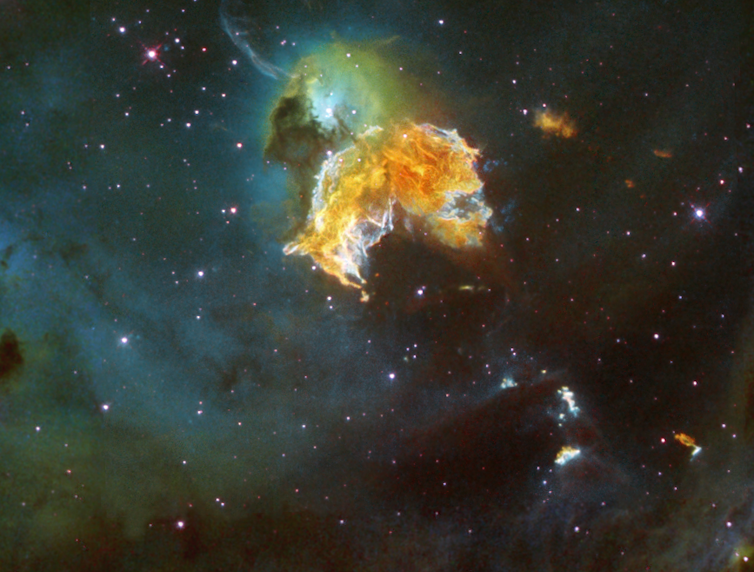
Imagine looking up at the night sky and seeing a star suddenly burst into a blaze of light brighter than anything nearby. A flash so bright that it briefly outshines an entire galaxy before fading forever.
This violent fate is rare: fewer than about 1% of stars are big enough to end their lives this way. Indeed, these dramatic explosions only occur in so-called “massive stars”. These are stars with a mass roughly eight times or more that of the Sun.
But these cosmic explosions, known as supernovae, have naturally fascinated astronomers for centuries. In 1572, for instance, Danish astronomer Tycho Brahe observed a supernova explosion so bright that it could be seen with the naked eye for two years.
Yet what we can see with our eyes, or even with powerful telescopes, when these stars die, is only a tiny fraction of the story. Because most of the energy from a supernova is carried away by neutrinos, these are nearly invisible particles often called “ghost particles” because they pass through almost everything in their path.
Scientists are now finally on the verge of seeing these ghostly messengers. With the help of an extremely powerful telescope buried deep underground in Japan, astronomers may be able to catch a glimpse of these stellar “ghosts” – and with it the remnants of explosions from stars that died as long as 10 billion years ago.
Particles from before time
And there’s a really good chance that scientists might be able to finally see these ghost particles this year. This is largely due to Japan’s Super-Kamiokande telescope receiving an upgrade, which significantly enhances its ability to detect supernova neutrinos.
For me, as a particle astrophysicist, this would probably be one of the most exciting scientific achievements in my lifetime. Indeed, it would mean we could see particles that were produced even before the Earth itself existed, as the telescope is now sensitive enough to catch the faint “glow” of all the exploding stars in the universe.
This is all possible because neutrinos almost never interact with anything. They have no electric charge. So they can travel through space – and even through entire planets – without being absorbed or scattered, so almost nothing can stop them.
In fact, billions of these ghostly particles are passing through your body every second – and you don’t even notice – and some of them have been travelling for more than 10 billion years to get here.
When a star dies
Big ideas lead to big questions, and one such question astrophysicists are trying to figure out is what remains after the explosion of such a star.
Does the collapsing core become a black hole? Or does it form a different type of star known as a neutron star, which then slowly cools over time? A neutron star is an incredibly dense object, only about 20 kilometres (12 miles) across, roughly the size of a large city or about the length of Manhattan.
If scientists are able to detect the combined signal from all the supernovae that have ever occurred, it would bring us closer to being able to answer these questions. It would also allow us to study the deaths of stars across the entire history of the universe, using particles that have been travelling toward us for billions of years without ever stopping.
Supernovae are rare in our galaxy, happening only once every few decades. But across the universe, a massive star explodes in a supernova roughly once every second. When they explode, they release enormous energy: only about 1% is visible light, while 99% escapes as neutrinos.
Even though these neutrinos are almost invisible, they carry the story of every star that has ever exploded – and now, for the first time, we may be able to catch them.
So if 2026 does bring the first clear detection, it will mark a new era in astronomy. For the first time, we won’t just observe the brilliant explosions of nearby stars, but the collective story of all the massive stars that have ever lived and died.
And it all starts with a telescope buried deep underground in Japan, patiently watching for the faint, ghostly glow of the universe’s oldest explosions.
This article was commissioned as part of a partnership betweenVidenskab.dk and The Conversation. You can read the article in Danish.
Pablo Martinez Mirave does not work for, consult, own shares in or receive funding from any company or organisation that would benefit from this article, and has disclosed no relevant affiliations beyond their academic appointment.
Source: The Conversation – UK – By Kevin Olsen, UKSA Mars Science Fellow, Department of Physics, University of Oxford
A US Senate committee has directed Nasa to begin work on a Moon base “as soon as is practicable”. Under legislation advanced by the Senate lawmakers, the outpost would serve as a science laboratory and proving ground, where astronauts would develop the capabilities to live and work beyond Earth’s orbit.
Since 2017, Artemis has been the Nasa-led programme working towards a sustained human presence on the Moon. This year, it will send astronauts around the Moon for the first time in more than half a century. And following a shake-up of Artemis announced in late February, the space agency plans to greatly increase the frequency of Artemis missions and return humans to the lunar surface in 2028.
A vote will now decide whether Senate legislation, known as the Nasa Authorization Act of 2026, is passed to Congress, where a second bill is also circulating. The bills, which both break down this year’s funding for specific Nasa programmes, will be reconciled and voted on in both houses to become law.
Underlying some of the announced changes is a deepening concern in Congress and the current administration about the challenge rival powers pose to US leadership in space. A Chinese-Russian led Moon outpost known as the International Lunar Research Station is under development.
A one page summary accompanying the Senate bill calls for a US base “so we can get there before the Chinese” and to “dominate the Moon, control strategic terrain in space, and write the rules of the 21st century.”
Site selection
The American habitat will be located at the Moon’s south pole, a strategically important location which harbours valuable resources such as water ice. The water could support habitation systems at a lunar outpost and be turned into rocket propellant for onward exploration.
Where exactly the base is located will depend on the terrain, how much sunlight the site receives, how extreme the temperatures are, how easily astronauts can communicate with Earth and their access to resources such as water. The rim of a 21km-wide depression known as Shackleton Crater (which may hold abundant ice deposits) and a flat-topped mountain called Mons Mouton are among the leading candidates. The leading locations combine several favourable factors.
At high latitudes, such as the lunar poles, elevated crater rims can receive near-constant solar illumination. This makes them more thermally favourable than many sites at the equator, providing a consistent supply of solar power. However, the strategic value of these sites lies in what are called permanently shadowed regions (PSRs). These impact craters, untouched by sunlight for billions of years, are believed to contain the water-ice deposits.
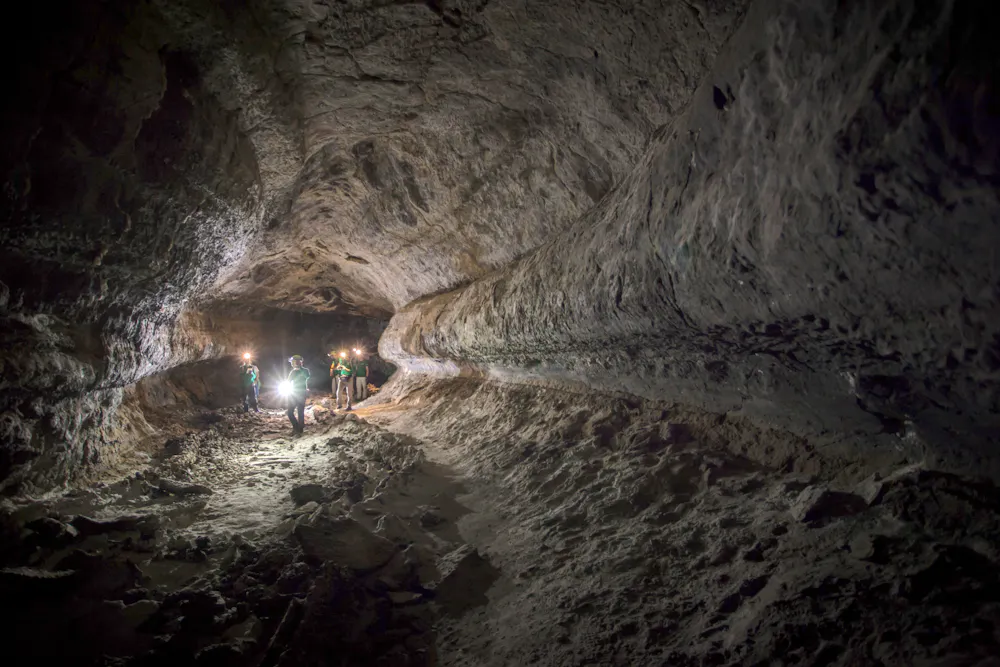
While the south pole remains a primary focus in upcoming missions, other targets near the equator, such as Marius Hills and Mare Tranquillitatis, offer alternative advantages. These regions feature massive underground lava tubes formed by ancient volcanic activity that can act as natural shields against solar radiation and micrometeorite bombardments. They could insulate human outposts against extreme swings in temperature: from 127°C to -173°C.
The interiors of lunar lava tubes are estimated to remain at about 17°C year-round, making them ideal sites for human bases. However, unlike at the lunar poles, water in these regions is typically trapped as molecules within volcanic glass beads or minerals. Extracting this water to sustain human activities would require intensive heating and significant technological development.
European astronauts explore a lava tube in the Canary Islands. Huge lava tubes on the Moon could protect human habitats from radiation and micrometeoroids. Esa–L. Ricci
Powering an outpost
The Moon’s day-night cycle means that a given point on the lunar surface sees roughly 14 Earth days of continuous daylight followed by 14 days of darkness. While solar power is a viable entry point, it cannot sustain a permanent human presence through the freezing lunar night. To achieve the 2030 mandate for a “sustained presence” Nasa and the Department of Energy are developing nuclear fission reactors as a potential source of energy.
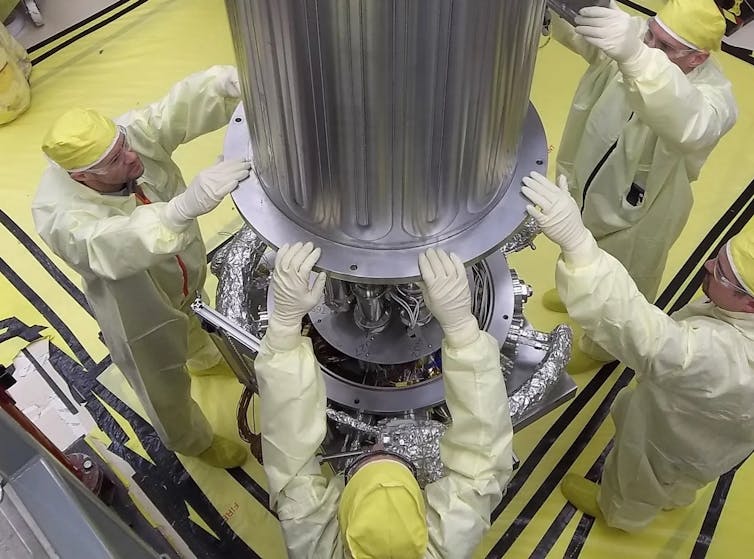
They have been working on 40-kilowatt-class reactors that are designed to be launched from Earth in an inert state and activated upon arrival. To protect the crew from radiation, the reactors will likely be placed at a distance or buried within the lunar regolith (soil), which serves as a natural radiation shield.
Engineers from Nasa and the National Nuclear Security Administration lower the wall of the vacuum chamber around a demonstration fission reactor. Los Alamos National Laboratory
The deployment of lunar fission reactors raises practical governance questions
under existing international space law. The US-led set of rules for operating in space, known as the Artemis Accords, establishes a framework for peaceful cooperation.
It calls for transparency about space agencies’ activities on the surface and proposes safety zones around nuclear infrastructure. However, this approach conflicts with the Outer Space Treaty of 1967, which guarantees the right of all nations to have unrestricted access to all areas of celestial bodies.
Given that energy security is a strong prerequisite for successful habitation systems, there is a clear need for the governance of the storage and disposal of the materials used for nuclear fission on the lunar surface.
Initial assembly
A lunar base would likely be built up in stages. Early missions would use satellites and autonomous rovers to study the lunar surface, identify areas rich in resources and confirm the presence of water. Under a 2030s timeline, robotic missions could be sent ahead to prepare landing sites by levelling the ground and melting the dusty surface into harder landing pads. This would help reduce the damage caused by highly abrasive lunar dust kicked up during landings.
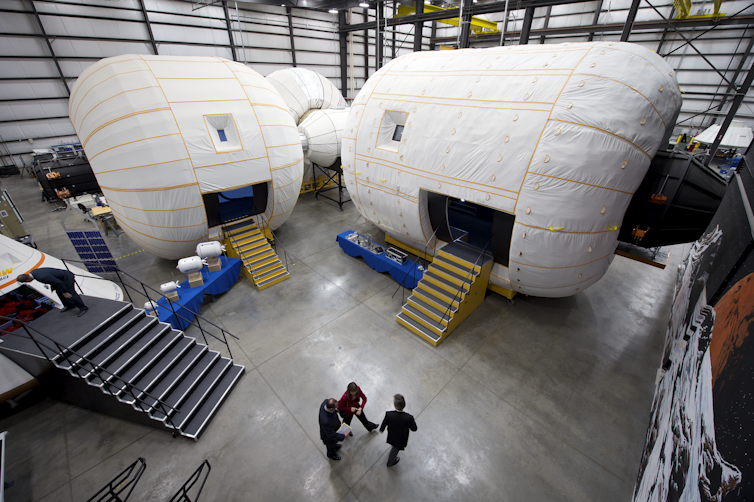
The habitats themselves would probably be built by connecting different modules – a bit like the International Space Station. Current designs favour modules that can be reduced in size for transportation and then expanded after landing. One way to do this is with inflatable structures.
Expandable habitats could be deployed on the Moon before more permanent structures. Nasa / Bill Ingalls
Later, more permanent architectures may use microwaves or lasers to sinter or melt the lunar regolith into solid structures. This would create protective shells around base modules to protect them against micrometeorites and cosmic radiation.
The Moon serves as a testbed for the life-support, power and robotic systems required to support human missions on Mars and other destinations in deep space.
The fiscal implications of sustained operations on the lunar surface also require a more realistic assessment of funding. With Nasa’s topline budget remaining largely flat, the higher cadence (frequency) of lunar missions outlined in Nasa’s changes to Artemis would increase pressure on agency resources.
This may intensify competition with existing science and Earth observation priorities, but it also strengthens the case for greater commercial participation and international cost-sharing. If these financial pressures can be managed effectively, the long-term legacy of sustained lunar surface operations could be a more durable framework for funding space exploration.
The coming decade will test not only our ability to operate through the lunar night, but also our capacity to build the logistical, legal, and cooperative frameworks needed for a durable human presence beyond Earth.
The authors do not work for, consult, own shares in or receive funding from any company or organisation that would benefit from this article, and have disclosed no relevant affiliations beyond their academic appointment.
A new study in mice suggests psychedelics make the brain more likely to “see” images from memory rather than what’s actually in front of it.
Long before modern laboratory testing, indigenous cultures used these substances to
treat psychological and physical ailments. The Aztecs used psilocybin mushrooms as medicine, while Andean cults consumed mescaline-rich San Pedro cacti thousands of years ago. Archaeologists have found a ritual bundle thousands of years old in a Bolivian cave that contains traces of DMT (a potent hallucinogenic found in plants). They also found 5,000-year-old peyote buttons from Texas.
The modern journey began when Swiss chemist Albert Hofmann synthesised LSD in 1938.
In the 1970s and 80s, researchers found that these drugs attach to a specific brain receptor (called 5-HT2A) that can trigger hallucinations. This receptor is part of the serotonin system, which affects mood and can influence anxiety and depression.
Fast-forwarding to today, scientists debate whether the psychedelic trip itself (the mystical experience) is necessary for treating conditions like depression and anxiety. Some scientists think the real benefit of psychedelics comes from their ability to help brain cells rewire and communicate in new ways – a process called “neuroplasticity”. It’s possible the hallucinations are just a side-effect of their therapeutic effect.
It is therefore critical to understand exactly how these substances alter people’s perception. Trends in modern pharmacology are shifting towards drug designs that aim to trigger the therapeutic “trip” of hallucinogens without the side-effects.
In the new study, scientists used mice engineered so certain brain cells would glow when active. The brighter the glow, the more active the cells were.
Technologies developed by one of the study’s lead researchers, Thomas Knöpfel, allowed the researchers to record both increases and decreases in voltage across the surface of the brain. These changes in voltage depend on which cells are being activated for specific tasks.
During the experiment, the mice were shown visual stimuli, such as moving black and white bar patterns, as well as simple blank screens. This allowed the researchers to measure brain activity during both stimulus viewing and resting states.
Halfway through the experiment, the researchers injected the mice with a powerful chemical that activates the same 5-HT2A serotonin receptor as LSD and psilocybin, but in a more selective and controlled way.
The researchers compared the brain’s voltage patterns before and after the drug took effect, which helped them pinpoint the neural circuits affected by the psychedelic. They focused on the brain’s primary visual cortex and on slow rhythmic oscillations (known as theta rhythm) linked to attention, memory consolidation and stimulus familiarity. The high-resolution recordings revealed a fascinating shift in brain communication.
Before the drug, the visual cortex produced 5-Hz brain oscillations. After the psychedelic was administered, theta rhythm oscillations intensified significantly, increasing in both power and duration.
More importantly, these low frequency waves in the brain’s visual processing areas synchronised with the retrosplenial cortex, which has been implicated in the encoding, storing and retrieving memories. This synchronisation had a delay of about 18 milliseconds, consistent with a travelling wave of activity connecting the two regions.
The psychedelic acted like a switch: it dampened the brain’s response to what the eyes were seeing, while boosting connections with memory areas, letting the brain “fill in” missing visuals from its own memory.
Instead of relying on what was actually in front of the eyes, the brain began inserting fragments from its own internal memory banks. This finding provides an explanation for how visual hallucinations may work.
The lead researcher, Dirk Jancke, described this state as being remarkably similar to partial dreaming. Under the influence of the drug, the brain’s internal imagery overrides external reality, creating a vivid, self-generated world.
Despite these insights, the study has limitations. As acknowledged by the authors, some of the findings might reflect the mice getting distracted from the repetitive images. Mice and humans share several fundamental features of brain organisation, but it is unclear whether the phenomena can be mapped onto human hallucinogenic experiences.
Ultimately, though, the study could mark a crucial step towards developing non-hallucinogenic drugs that increase the patient’s neuroplasticity, and hopefully, decrease their mental health symptoms.
Andrea Benucci does not work for, consult, own shares in or receive funding from any company or organisation that would benefit from this article, and has disclosed no relevant affiliations beyond their academic appointment.
His name is Khabane Lame, but he is known worldwide as Khaby Lame. Born in Dakar, Senegal, he is the most followed content creator on TikTok.
He became famous for video clips in which he reacts to absurd “life hack” videos with a blank, slightly annoyed face, showing the hack wasn’t needed.
At the time of writing he has over 160 million followers: a world record achieved without uttering a single word. In January he sold his brand rights for nearly US$1 billion.
But there’s another dimension to his story that the western media rarely mention: Khaby Lame is a practising Muslim and a hafiz, a Muslim devotee who has memorised the entire Quran. This after being sent to a Quranic school near Dakar at the age of 14.
The tension between the sacred body of the hafiz and the commercialisation of the influencer’s digital life makes his journey a rich case study.
For me, as a researcher of digital identity, his online career also raises questions about turning personal data into digital assets.
From the suburbs of Turin to the top of the global stage
Khaby Lame’s story reads like a modern-day myth. Not because it’s hard to believe, but because it mirrors the core narratives of digital modernity. It starts with hardship, goes through a period of creative isolation and ends with global recognition.
This is what the French thinker Roland Barthes called “mythical speech”, a story that seems natural and simple, but is actually shaped by deeper forces and structures.
In 2020, at the beginning of the COVID-19 pandemic, Khaby Lame lost his job as a factory worker. He was stuck at home and locked down in social housing in the suburbs of Turin, Italy, where his parents had moved when he was a baby.
Out of this hardship he made a simple decision: he started filming short videos. Just 17 months later, he reached more than 100 million followers on TikTok. He was the first content creator based in Europe to reach that milestone.
His story reflects the promise often promoted by TikTok that the platform can lift anyone up. All you need, it suggests, is a mobile phone, and talent will quickly be rewarded with global fame.
This should be celebrated. But the myth of instant success also needs a closer look. Behind every viral rise lie smart decisions, hard work, and the powerful, and often unpredictable, role of the platfom’s algorithm.
Comic tradition
What sets Khaby Lame apart from almost all the creators before him is the semiotic system (of signs and symbols) he invented – or rather reactivated. He brought back an old comic tradition.
Many compare him to British comedy actor Charlie Chaplin. Others see echoes of US comedian Buster Keaton. Both were masters of Hollywood’s silent slapstick comedy.
Charlie Chaplin in “The Kid – Fight Scene.”
Khaby Lame revives the codes of 1930s Hollywood silent comedy cinema: mime, meaningful glances, no dialogue, and burlesque sketches (short theatrical scenes) that convey messages. But the Chaplin connection ends there, as the two men inhabit their bodies in radically different ways.
Chaplin’s films carry emotional weight, driven by social and political themes. His character, the tramp, is a poor wanderer pushing back against an unfair industrial world.
Khaby Lame’s style is closer to Keaton’s. He says nothing. He simply shows how unnecessary and complicated these internet quick fixes are. His absolute impassivity in the face of the absurd is what Keaton perfected with his famous “great stone face”.
Buster Keaton ‘The Art of the Gag’.
But while the comic structure is similar, their relationship to their bodies is not. Throughout his life, Keaton remained completely indifferent to religion or metaphysics in any form.
Khaby Lame is the opposite. He is a hafiz. The separation of his digital identity from his physical person is notable.
Wordless humour allowed him to build a global audience because there are no language barriers, just as silent film stars like Charlie Chaplin became global icons a century ago.
TikTok’s algorithm favours content that anyone can understand instantly. Chaplin needed a movie theatre, Khaby Lame needs only a phone and an algorithm. The mechanics are similar. The way it spreads has completely changed.
Digital identity
In January 2026, Khaby Lame’s carefully crafted expressive persona took on a new status. It became a financial asset. He sold his company, Step Distinctive Limited, for US$975 million to Rich Sparkle, a publicly traded company based in Hong Kong. The agreement includes the transfer of rights to use his image, voice and behavioural models to create an artificial intelligence-powered digital twin.
This digital twin will produce multilingual content, including material for advertising and promotions. Companies will be able to run commercials in several countries without Khaby being physically present. According to Rich Sparkle, this could help generate over US$4 billion in annual sales, especially through livestream e-commerce (a format already dominant in Asia), broadcast simultaneously around the world.
This transaction marks a turning point. Digital identity no longer merely represents a person. It becomes an asset that can be separated from the individual who created it. Now, a creator is no longer a brand ambassador, but a brand in its own right. In theory, Khaby Lame’s digital being is now legally separate from Khaby Lame himself.
The digital twin is, in this sense, the Buster Keaton body that digital platform capitalism has always dreamed of – impassive, reproducible, available across all time zones.
Signature gesture
Khaby Lame’s signature gesture is to place both palms open and turned upward. This seems simple and easy to understand, a light and humorous sign of of disbelief. But the gesture carries deeper meanings.
In Islamic tradition, as in many African cultures, this same gesture is linked to dua, the act of raising one’s hand in supplication to God. What millions of viewers read as a comic signature is also a spiritual practice.
Yet Khaby Lame’s digital double is not simply an image. It can act in his name. It can speak with his voice. It can repeat his familiar gestures. This is no longer simple representation. It is a form of transferring his way of expressing himself onto a digital system.
The same open hands, the same expressive gaze, the same voice that once recited the suras of the Quran in a school in Dakar are now the attributes of a commercial transaction valued at nearly a billion dollars.
There is an ethical question in handing over his active identity to financial markets.
An ethical question
For many young Africans, especially in Senegal, Khaby Lame embodies the possibility that digital spaces are territories where Africans can succeed, where the hierarchies inherited from colonial history can, at least symbolically, be overturned.
But the deal raises a difficult question: what does it mean to sell your digital self in a world where Black and African bodies have been used and profited from for centuries without consent and fair compensation?
Is this a win or a new form of exploitation? Can the financial benefits balance the transfer of his identity?
More African creators are building global audiences every year. That means these questions will become harder to ignore. Who owns a creator’s digital twin once it’s sold? Who set the rules for its use?
Khaby Lame is not just a social media success story. He is a revelation of the future and, perhaps unwittingly, a pioneer.
Fanny Georges does not work for, consult, own shares in or receive funding from any company or organisation that would benefit from this article, and has disclosed no relevant affiliations beyond their academic appointment.
Source: The Conversation – Africa – By Suleman Lazarus, Visiting Fellow, Mannheim Centre for Criminology, London School of Economics and Political Science
The moment became a striking illustration of something my research keeps returning to: how music can carry the moral codes of cybercrime far beyond their origins, laundering them in rhythm, recognition and prestige.
Afrobeats is the broad label often used for contemporary Nigerian and west African popular music that has come to dominate global streaming culture in the 2010s and 2020s. Driven by artists such as Burna Boy, Wizkid, Davido, Tems and Asake, it has grown from a regional sound into a global cultural force, filling arenas, winning major awards and shaping youth culture far beyond Africa.
Yet some of what travels with Afrobeats is more ambivalent. In the Nigerian context, the cybercrime most often referenced in music is linked to Yahoo Boys, a popular term for online fraudsters involved in scams such as romance fraud and advance fee fraud. In some lyrics, these figures are framed not simply as offenders but as resourceful hustlers or icons of success.
The songs in our study all contain explicit references to online fraud. All were performed by male artists. And all were globally available on platforms like Spotify, Apple Music and YouTube. What we found goes well beyond glorification. Afrobeats, we argue, is functioning as a moral text – one that actively rationalises, spiritualises and normalises cybercrime for millions of listeners worldwide.
In other words, some of this music is doing more than making crime sound cool. It is helping listeners make sense of online fraud as acceptable, even justified. It wraps criminal behaviour in the language of hustle, survival and divine favour, making it feel not just normal, but earned. And because Afrobeats is now heard everywhere, these ideas are travelling with it.
More than just ‘hustle culture’
It is tempting to dismiss fraud themed lyrics as bravado. They can seem like a form of performative edginess, not unlike gangsta rap. Gangsta rap is a branch of hip hop in which hustling, toughness and street survival became both narrative material and cultural style.
But that reading misses the depth of what’s happening. Our analysis shows that these songs use subtle rhetorical moves to present fraud as something other than wrongdoing.
One of the most pervasive techniques is what researchers call euphemistic labelling. Fraud is rarely called fraud in Afrobeats songs. It becomes “hustle”, “grind” or “blessing”. Lyrics frame scamming as honest work blessed by God, stripping away its moral weight. In one track, the phrase “work and pray for the payday” wraps a reference to cybercrime in the language of religious devotion and diligence.
Victims fare even worse. In these songs, they are rarely granted humanity. They become “maga” or “mgbada”, terms linked to the Igbo word for antelope, casting the fraudster as hunter and the victim as prey. In this language, victims are no longer people to be harmed, but targets to be chased: “clients”, “profiles”, even “cash cows”. We argue that this dehumanisation is not incidental. It makes exploitation feel rational, even honourable.
God, juju, and the spiritual economy of fraud
Perhaps the most striking finding in our research is the pervasiveness of what we call cyber-spiritualism. Across multiple tracks, success in online fraud is framed not as a product of skill or cunning but as a matter of divine favour and ritual protection.
This aligns with a broader phenomenon scholars have documented in Nigeria known as “Yahoo Plus” or cyber spiritualism, a variant of internet fraud in which digital scamming is combined with spiritual practices such as juju rituals, charms and incantations. The idea is that metaphysical forces can be mobilised to manipulate victims, attract luck and protect perpetrators.
What is striking is how openly some of these beliefs appear in music. One track includes lyrics invoking Aje – a Yoruba deity associated with wealth – while another frames a ritual object (“soap”) as essential spiritual insurance for a fraudster. Another song merges Islamic thanksgiving phrases with references to successful scam transactions, as if divine gratitude and financial crime can occupy the same moral space. Fraud, in this framing, is not a choice. It is destiny.
Why this matters beyond Nigeria
The genre now circulates across continents, through algorithms and playlists, reaching audiences who may know little about Nigeria’s specific struggles. These include a high unemployment rate, elite corruption, and the longer afterlives of British colonial rule. In some of these lyrical worlds, fraud is not framed simply as greed but as a way of taking back from a global order understood to have first taken from them. Similar justifications also appeared in interviews with active scammers in Ghana.
The fraud narratives in these songs emerge from real and painful structural conditions: blocked opportunities, absent institutions, the pressure on young men to provide for their families. Understanding those conditions is essential. But as these lyrics travel globally, they become detached from their context. For diasporic or international listeners, “maga don pay”, meaning “the senseless animal has paid”, stops being a commentary on poverty and starts sounding like a lifestyle aesthetic, a marker of ingenuity, cosmopolitan hustle and transgressive cool.
Our research also reveals a telling career dynamic. Emerging artists lean heavily on fraud references to establish credibility and street authenticity. More established artists tend to drop them as their careers develop. Fraud talk, in other words, is a currency for those still trying to break through. This makes it all the more concentrated among the youngest, most influential voices in the genre.
What should be done?
I want to be clear: this research is not a moral panic about Afrobeats. The genre is not responsible for cybercrime, and reducing it to a crime soundtrack would be both inaccurate and deeply unfair to its richness and complexity.
But music is never politically or morally neutral. When lyrics consistently dehumanise fraud victims, frame exploitation as a divine blessing and circulate these ideas to hundreds of millions of people, the cultural consequences are real. My previous study on scammers and their allies reports on that.
Streaming platforms must take seriously their role in amplifying these narratives. Policymakers, educators and the music industry itself need to understand the moral ecosystems in which cybercrime thrives.
Dr Suleman Lazarus is affiliated with the Police Foundation. This article was written in an independent academic capacity and does not represent the views of the author’s institutional affiliation.
Source: The Conversation – Canada – By Pauline McDonagh Hull, PhD Candidate, Department of Community Health Sciences, Cumming School of Medicine, University of Calgary
An estimated 64 per cent of adults in Canada report experiencing at least one potentially psychologically traumatic event during their lifetime, and in the United States, research suggests the figure may be closer to 90 per cent.
Trauma-informed care (TIC) is a holistic approach to health care that acknowledges the potential impact of patients’ experiences of trauma and actively aims to prevent exacerbating or causing new trauma in the medical setting.
However, TIC is not yet standardized in pelvic medicine in Canada or the U.S., and practice varies significantly by profession. This is why my co-authors Lauren Walker, an adjunct associate professor in the departments of oncology and psychology at the University of Calgary, and Krystyna Holland, a pelvic floor physical therapist operating out of Denver, Colorado, are developing a new clinical practice tool to bring TIC into pelvic health care.
They first assembled a multidisciplinary team representing obstetrics and gynecology, urology, urogynecology, midwifery, labour and delivery, pelvic floor physical therapy, oncology, family medicine and sexual assault response practitioners to advise on clinical recommendations.
Through patient interviews, they identified examples of positive and negative pelvic health care experiences. Positive experiences ranged from, “…they didn’t make me feel bad for needing that help,” to “…it made me feel better…to have power in my decision making.” Negative comments included things like, “I was in excruciating, excruciating pain,” and “I felt like a specimen.”
Evidence suggests the widespread adoption of TIC practices could potentially improve access to care and quality of care for all patients. Therefore, the project’s main goal is to ensure all pelvic health-care practitioners consider the vulnerabilities associated with trauma experiences and minimize harm.
Medical trauma and pelvic health
According to the International Society for Traumatic Stress Studies (ISTSS), medical trauma is defined as a set of psychological and physiological responses to pain, injury, serious illness, medical procedures and frightening treatment experiences. The organization estimates that 20 to 80 per cent of children and adults may even experience post-traumatic stress disorder (PTSD) following medical events and procedures.
Often described as being “stored in the body,” trauma responses can be triggered through medical examinations. This can be through pelvic exams, which may be experienced as invasive because of their intimate nature, but also even in more mild contexts, such as disrobing.
Certain specialties within health care that are at an increased risk of retraumatizing patients with trauma histories include gyne-oncology care (diagnosing and treating cancers of the female reproductive system), peri- and postnatal care (before and after pregnancy), obstetrics and midwifery, urogynecology and pelvic floor physical therapy.
TIC is a guiding framework designed to reduce re-traumatization and promote shared decision-making and collaboration. The U.S. Substance Abuse and Mental Health Services Administration (SAMHSA) has established a guiding document on TIC, outlining six key principles:
Safety, trustworthiness and transparency;
Peer support;
Collaboration and mutuality;
Empowerment, voice and choice; and
Cultural, historical and gender issues.
It also offers a simple method for practitioners to remember TIC:
The four Rs.
Realize there may be trauma (past and present);
Recognize the signs (look and listen) and impact of trauma;
Respond (in a sensitive and accommodating manner); and
Based on these TIC principles, organizations like the Society of Obstetricians and Gynaecologists of Canada heavily emphasize informed consent for exams and procedures. However, the aims of TIC extend well beyond this into areas such as physical environment, documentation and practitioner self-reflection.
While most practitioners would agree in principle that empowering patients through autonomy, consent, safety and trust can be a positive step to improve health-care experiences, this does not always translate into action. In practice, barriers to TIC include a lack of training, time constraints, competing demands in clinics, and viewing TIC as irrelevant to their specialty area or patient population.
Understandably, some practitioners also express concerns that querying patients’ trauma histories could “open a can of worms” they don’t feel equipped to address. Such feared consequences include feeling responsible to directly treat the trauma or experiencing personal discomfort, particularly when disclosures trigger re-traumatization from their own lived experiences.
Making TIC the norm in pelvic health care
In an effort to overcome these challenges, the clinical practice tool being specifically developed by Dr. Walker and Dr. Holland for pelvic health is based on the SAMHSA recommendations. From the outset of the tool’s design, they have engaged with health-care practitioners and invited input to assess feasibility, perceived importance and any barriers to implementation.
This consultation process is ongoing, so input is still welcome from health providers and patients. The team plans to launch the pelvic health tool in late 2026 and then disseminate it more broadly to health-care practitioners of all backgrounds, with the goal of making TIC the standard of care in Canada.
The authors do not work for, consult, own shares in or receive funding from any company or organisation that would benefit from this article, and have disclosed no relevant affiliations beyond their academic appointment.