The war on DEI reflects the quiet normalization of white nationalism — in the U.S. and beyond

Source: The Conversation – Canada – By Henry Giroux, Chaired professor for Scholarship in the Public Interest in the Department of English and Cultural Studies, McMaster University

Political theorist Hannah Arendt warned that authoritarian politics rarely begin with spectacles of repression. More often, authoritarianism advances through routine administrative decisions that appear technical or neutral but gradually reshape public life — a kind of bureaucratic normalization of injustice she later described as the banality of evil.

Over time, these measures alter what can be discussed, remembered or taught. They also redefine who counts as belonging within the political community.

The backlash against diversity, equity and inclusion initiatives (DEI) reflects a deeper political transformation. Public debate often treats DEI as a dispute over university offices or workplace training programs, but the conflict runs far deeper. Under Donald Trump’s administration in the United States and its allies, diversity itself has been recast as a threat.

Campus protests, for example, are frequently invoked as proof that equity initiatives foster antisemitism, turning demands for justice into evidence of alleged institutional decay.


Read more:
Why the term ‘DEI’ is being weaponized as a racist dog whistle


False claims about equity measures

American feminist philosopher Judith Butler argues the attack on DEI is a “shameless display of hatred, the contempt for rights, [and] the willingness to strip people of their rights to equality and freedom.”

In the U.S., federal directives have dismantled diversity programs across government agencies as political leaders pressure universities to eliminate initiatives addressing systemic racism. Presented as restoring merit and neutrality, these measures define structural inequality as a threat and place citizenship itself at stake.

This reversal reflects a political narrative that treats demands for racial justice as grievance politics and portrays multicultural democracy as national decline. Within this narrative, equality appears as loss for historically dominant groups. Immigration, demographic change and racial justice movements are framed as dangers to “western civilization,” while policies expanding opportunity are depicted as attacks on merit.

Under the Trump administration, DEI has been transformed into a political weapon. It is cast not as an effort to confront historical injustice but as a threat to the nation itself, a supposed assault on merit, tradition and order.

These types of arguments echo the ideological logic of contemporary white nationalism, which presents social hierarchies as natural and treats efforts to confront inequality as illegitimate.

Once politics is framed in these terms, dismantling diversity initiatives can be cast as a defence of fairness rather than a retreat from civil rights. Government actions targeting DEI programs, restricting how racism is discussed in classrooms and pressuring universities to abandon race- and gender-conscious research are justified as restoring neutrality. Yet such measures narrow the intellectual and moral spaces where democratic debate takes place.


Read more:
How universities can move beyond a ‘diversity crisis’ mode of equity planning


Not improvement, but elimination

Similar tensions are emerging beyond the U.S. In Canada, the Alberta government has advanced proposals promoting “institutional neutrality” in universities. Critics say these policies could weaken or suspend equity initiatives addressing barriers facing racialized and Indigenous scholars.

Critics on the political left, including political activist and philosopher Angela Davis, have long noted that many DEI initiatives are limited in their ability to address deeper structures of power. Workshops and diversity statements cannot dismantle economic systems marked by racial inequality or institutions shaped by centuries of exclusion.


Read more:
Why DEI needs depth, not death


Yet the current political campaign against DEI isn’t aimed at improving these programs. It seeks to eliminate even the limited institutional recognition that systemic inequality exists.

Arendt’s work helps illuminate why this moment is politically consequential. In her writings on authoritarianism, she argued that the greatest danger arises when institutions cease to question the assumptions guiding their actions. Political choices appear technical, administrative procedures replace ethical judgment and thinking is displaced by routine compliance.

The backlash against diversity and inclusion initiatives operates within this dynamic. By portraying historical analysis as ideological bias and structural critiques of inequality as threats to social cohesion, it encourages institutions to treat questions of justice as matters best avoided.

Refusing cruelty

When societies stop examining the histories that produced inequality, public memory narrows and democratic debate contracts. Social hierarchies begin to appear natural while demands for justice are reframed as sources of division.

But remaining alert to these erosions of rights is urgent at a moment when the capacity to think historically and judge morally is being deliberately eroded under the Trump administration and other emerging authoritarian movements. What is being normalized is precisely the condition Arendt warned about: a political culture in which thoughtlessness allows cruelty to appear ordinary and injustice to operate as a routine function of governance.

That is the banality that some western societies are now being asked to accept.

The challenge is to refuse it and expose the systems that produce it while rebuilding the civic capacities democracy requires. In the face of accelerating authoritarianism, the struggle to build a future grounded in equality, shared prosperity and the radical promise of collective freedom has become not only necessary, but essential.

The Conversation

Henry Giroux does not work for, consult, own shares in or receive funding from any company or organisation that would benefit from this article, and has disclosed no relevant affiliations beyond their academic appointment.

ref. The war on DEI reflects the quiet normalization of white nationalism — in the U.S. and beyond – https://theconversation.com/the-war-on-dei-reflects-the-quiet-normalization-of-white-nationalism-in-the-u-s-and-beyond-278234

How do women entrepreneurs survive in Ghana’s informal economy? We went to a local market to ask them

Source: The Conversation – Africa – By Nadia Zahoor, Associate Professor, Queen Mary University of London

The informal economy is the basis of everyday economic life across sub-Saharan Africa. In Ghana, as in many low- and middle-income contexts, a lot of retail trade, food distribution, artisanal production and service provision happens outside formal regulatory frameworks.

Women occupy a prominent position in this world. They trade in open-air markets, process and sell foodstuffs, produce garments, provide hairdressing services and manage micro-enterprises that sustain households and anchor local economies.

Many do this work because they haven’t been able to get an education, a formal job or formal finance.

The informal economy is easier to enter – but also less secure. Enterprises tend to work without firm tenure, enforceable contractual protections or social insurance mechanisms. Income streams are volatile, exposure to risk is routine and it’s difficult to expand the business.

Despite these challenges, women’s informal enterprises play an important developmental role. They generate income where few alternatives exist, finance children’s education and contribute to local supply chains.

Public debates often portray them as vulnerable victims of poverty or as heroic symbols of resilience.

Both pictures oversimplify a far more complex reality.

We are researchers specialising in gendered entrepreneurship and informal economies. We conducted a study to explore how women in Ghana with low or no formal education sustain businesses where they are at a disadvantage, and how they deal with being portrayed as “weaker vessels”.

The research sheds light on what entrepreneurship looks like when resources are scarce, institutions are fragile and gender norms remain powerful. Our findings show resilience, as well as the hidden costs of survival in an economy where formal support systems are largely absent.

Our findings suggest that by supporting women in Ghana’s informal economy, policymakers can strengthen local markets, reduce economic precarity and enhance inclusive economic growth. Informal enterprises are deeply embedded in broader supply chains and community networks. Recognising and supporting them can increase productivity, stabilise livelihoods and create spillover benefits for the wider economy.

Life on the ground

We interviewed 21 women in southern Ghana and observed market spaces. The women were invited to share stories of actions they believed had enabled their businesses to survive despite limited resources.

These conversations highlighted the advantages associated with formal education, like access to networks, skilled labour and government programmes.

We also learned how informal women entrepreneurs kept ventures going without that kind of support. The findings pointed to informal-formal collaboration as an important, if often overlooked, linkage.

Participants described an environment marked by pervasive uncertainty:

  • threats of eviction

  • fluctuating input costs such as wholesale food prices, transport overheads and cooking fuel

  • ad hoc levies imposed by local market associations, informal gatekeepers and neighbourhood officials

  • harassment by municipal authorities.

This instability shaped how they operated.

As one trader explained:

Today you are selling peacefully. Tomorrow they can tell you to move.

The women also said they couldn’t get conventional bank finance because they didn’t have collateral, formal documentation or credit histories. Instead, they relied on rotating savings and credit associations (locally known as susu), kin-based financial support and reinvestment of modest profits.

The bank will ask for papers I don’t have. So we depend on our susu (rotating savings system).

Risk diversification was a key survival strategy. Some managed multiple activities. For example, they combined food vending with petty trading or seasonal commodity sales.

If one business is slow, the other one helps.

Equally critical were dense social networks. Fellow traders provided short-term loans, shared information about changes in prices and regulations, and offered psychosocial support.

Informal subcontracting relationships with formal enterprises sometimes provided extra income streams. This showed that informal entrepreneurship is embedded within broader economic circuits.

Participants also had to deal with people’s ideas about women as inherently fragile or dependent. Yet women’s survival depends on physical endurance, negotiation skills and financial acumen. One market trader put it this way:

If you are weak in this market, you cannot survive.

Rather than openly rejecting what people expected of women, some used those ideas to their advantage. They framed entrepreneurial activity as caregiving. This made income-generating work look more socially and morally acceptable.

I tell them I am doing this for my family. Then people accept it.

The women also spoke of the physical and psychological strains they worked under. They managed multiple income streams, absorbed market shocks and fulfilled unpaid care responsibilities.

Implications

Several recommendations emerge from our study.

First, informal women entrepreneurs should be formally recognised and supported. Simplified registration processes and flexible regulatory frameworks can help reduce barriers to formalisation. They can also give access to legal protection, institutional support and market opportunities.

With legitimised informal businesses, women would be able to operate more securely and plan for sustainable growth.

Second, access to context-sensitive finance is essential. This could include microfinance schemes, low-barrier credit products and support for community-based savings mechanisms.

Third, targeted capacity-building and social support programmes would help. This could include:

  • literacy and context-sensitive training in business management, financial literacy and digital skills

  • social protection measures like affordable childcare and healthcare access

  • time-saving interventions such as improved water and energy infrastructure.

Finally, links between informal and formal sectors need to be strengthened. Policies that encourage collaboration through subcontracting, supply chains or networking platforms can improve income stability, access to resources, and long-term business sustainability.

These measures can create an enabling environment where women’s informal enterprises don’t just survive, they thrive, and contribute to economic development.

The Conversation

Nadia Zahoor does not work for, consult, own shares in or receive funding from any company or organisation that would benefit from this article, and has disclosed no relevant affiliations beyond their academic appointment.

ref. How do women entrepreneurs survive in Ghana’s informal economy? We went to a local market to ask them – https://theconversation.com/how-do-women-entrepreneurs-survive-in-ghanas-informal-economy-we-went-to-a-local-market-to-ask-them-277634

The UN is turning refugees into carbon offset workers

Source: The Conversation – UK – By Nicholas Beuret, Lecturer in Management and Ecological Sustainability, University of Essex

Climate change and related disasters are driving millions from their homes. Now, a new UN initiative aims to put these very refugees to work offsetting the emissions of the world’s biggest producers.

Facing a US$7 billion (£5 billion) funding shortfall, the UN’s refugees agency has launched its Refugee Environmental Protection (REP) fund. The plan? To plant trees and install sustainable cooking stoves in camps, generating carbon credits to sell on the global market.

It sounds like a win for everyone: money for camps, jobs for refugees, and trees for the planet. But our research, carried out with our colleague David Harvie, suggests a darker reality. This is a system that generates questionable climate benefits, while locking refugees into low-wage labour to service the same economies that displaced them.

How the fund works

The fund aims to plant tens of millions of trees to offset carbon emissions elsewhere, while simultaneously providing employment for refugees and funding for UN refugee camps.

It uses donor funding to invest in tree-planting and clean cooking-stove programmes in and around refugee camps. (These cookstoves use electricity or burn liquefied petroleum gas rather than firewood – the cleanness refers to the fact that they’re considered safer for users because there’s less indoor air pollution, not because they are fossil-free).

The claimed carbon savings from these projects are then verified and registered as carbon credits to be sold to people or organisations who want to “offset” their own emissions. Revenues are used to replenish the fund, to improve the camp and finance new projects. Advocates also claim that clean cooking stoves will better protect women against gender-based violence, as they will have a reduced need to collect firewood.

The fund remains at a relatively early stage of development. Following pilots in Uganda and Rwanda, the UN plans to expand it to Brazil, Bangladesh, Kenya, Mozambique, Cameroon and Chad.

The impact on emissions

While the claims sound good, there are significant issues that mean the fund may well fail to reduce carbon emissions – and could possibly even increase them.

Many of the problems with schemes like these are now well known. The carbon credits industry’s self-regulation, combined with its lack of shared methodologies, undermines the credibility of its claims to reduce emissions. Key actors such as the multinationals that buy the credits or the landowners who generate them are also incentivised to overstate the climate benefits.

In addition, carbon credits rely on counterfactual estimates of what would have happened without the project. This is riddled with uncertainty, especially as climate change or reforestation can themselves alter how much carbon is saved.

These issues affect all carbon credits, even including the most rigorously verified – so-called gold standard-certified projects – which is the certification the UN’s fund will use.

The problem with planting trees

Most tree-planting schemes have very high failure rates, often seeing almost half the trees die in the first five years, while some can have mortality rates as high as 90%.

Poorly designed projects can also degrade soils, harm biodiversity and exacerbate water shortages. And as climate change increases the risk of wildfires, stored carbon could be released back into the atmosphere.

These problems have led many researchers to declare carbon offsets as false climate solutions that allow major emitters to continue polluting without any meaningful reductions. Indeed, much research has established that lots of carbon credits are effectively worthless.

The UN’s refugees agency has stated the fund “manages project risks according to high climate standards” and prioritises “measurable improvements in fuel efficiency and emission reductions.” It maintains that revenue is “transparently reinvested in community-driven projects”.

Who gets the carbon credit?

Refugees are paid to plant trees and assemble cookstoves, but the wages are extremely low. Comparable projects in Rwanda and Uganda suggest official wages range from around US$1.30 to US$5 per day, and are often less in practice.

By contrast, gold standard-certified reforestation credits typically sell for US$20–27 per tonne of carbon dioxide equivalent, 2025 prices. Using conservative estimates, the fund’s planned 20,000 hectares of reforestation could generate around US$3.2 million per year, or US$64 million over 20 years.

The UN frames the fund as a way to secure finance for refugee camps, but our analysis of the pilot projects shows a huge disparity between the value of the carbon credits and the money reaching the camps. For the 388,000 people across the three pilot sites, we estimate the US$3.2 million generated annually would contribute roughly 14% of current (insufficient) funding – and less than 5% what is required to provide adequate services.

While the money raised is a fraction of what’s needed to run the camps, the “value” created by refugees doing low- or unwaged labour goes beyond the direct dollar amounts. These credits have enormous strategic value for the buyers. By purchasing gold standard offsets generated by displaced people, major polluters gain a powerful social and environmental license to continue business as usual. That’s why much of the value appears to go not to the refugee workers, but to the companies buying the credits, and to the intermediaries who manage the transactions.

Much of the work involved in generating credits also comes from the use of clean cooking stoves. This labour is entirely unwaged, and is done primarily by women. Where gas is involved as a fuel for these stoves, the companies who provide it also benefit by securing a small but important market for their fuel. That’s one reason why exporting countries such as the US support clean cooking initiatives, even while opposing other climate measures.

The UN’s refugee agency rejects the characterisation of the fund as exploitative, framing it instead as a necessary “innovative financing” mechanism to plug a funding gap.

Ultimately, we worry the fund risks creating a form of climate maladaptation, where something seeks to respond to climate impacts but unintentionally increases vulnerability.

Similar to many aspects of the emerging green economy, the UN’s Refugee Environmental Protection fund risks making climate change worse while exploiting refugee labour. This perversely locks refugees into a green Sisyphean task: producing carbon credits that enable continued emissions, thereby worsening the very conditions that helped displace them in the first place.


Don’t have time to read about climate change as much as you’d like?

Get a weekly roundup in your inbox instead. Every Wednesday, The Conversation’s environment editor writes Imagine, a short email that goes a little deeper into just one climate issue. Join the 47,000+ readers who’ve subscribed so far.


The Conversation

The authors do not work for, consult, own shares in or receive funding from any company or organisation that would benefit from this article, and have disclosed no relevant affiliations beyond their academic appointment.

ref. The UN is turning refugees into carbon offset workers – https://theconversation.com/the-un-is-turning-refugees-into-carbon-offset-workers-273724

Thirty years after Dunblane school shooting, the UK’s gun laws can still be improved

Source: The Conversation – UK – By Peter Squires, Professor of Criminology & Public Policy, University of Brighton

On March 13 1996, a man walked into a primary school in Dunblane, Scotland, armed with four handguns and several hundred rounds of ammunition. In the school gymnasium, he killed 16 young children and their teacher, and injured many others. This horrific tragedy prompted significant gun control reforms, including a ban on civilian possession of most handguns.

But 30 years later, the UK’s gun safety issues have not been fully solved. Two mass shootings in subsequent years, in Cumbria and Plymouth, add to the evidence that gun law reform in Britain has largely been event-driven. Changes only happened following tragedies – preventing future tragedies has been overlooked.


Read more:
After the Plymouth attack, British gun laws under scrutiny


Shotgun regulation has been a particular problem. Shotguns are far more frequently criminally misused than other types of licensed firearm. In the year ending March 2025, 346 shotguns were criminally misused, compared to just 76 rifles. Shotguns are also far more frequently lost or stolen, thereby contributing to illegal firearm supply.

Over the last two decades, there have been 68 domestic firearms deaths, murders and murder/suicides. The perpetrator is almost always a male gun owner, with victims disproportionately female, and most likely to be shot using a licensed firearm.

At the root of these problems are gaps in the process by which police grant firearms certificates. All of Britain’s mass shootings have been perpetrated using licensed, legally owned firearms.

Since Dunblane, police firearm licensing has attracted increasing scrutiny from many quarters. There are concerns about the diligence shown by police firearm licensing units when assessing the suitability of applicants or renewals. Until 2021, very few gun licences were revoked. However, in recent years the number of revoked certificates has increased.

Police have failed to identify disqualifying factors, or overlooked falsehoods made on gun licence applications. And in a number of recent domestic shooting tragedies, police have carelessly returned confiscated firearms to unsuitable people.

Different licensing standards

Many of these challenges are rooted in the complexity of the 1968 Firearms Act, which creates different licensing standards for rifles and shotguns. Rifles were originally thought to be “more lethal” because of their power and range. But of course, this means nothing in close domestic settings.

Meanwhile, the recent statutory safety guidance to police makes it absolutely clear that no-one denied a rifle certificate on safety and suitability grounds should ever be permitted a shotgun. A single licensing standard could significantly simplify matters.

A man in posh hunting clothing shooting a shotgun into the air
Different licensing standards for shotguns and rifles complicate the gun regulation picture.
William Barton/Shutterstock

After the Plymouth shooting in 2021, the coroner identified a “catastrophic failure” in shotgun licensing, and made a number of recommendations. These included improving nationally-accredited training for firearms enquiry officers, better resourcing of licensing departments, improved information sharing between police and health authorities and tighter statutory guidance. Importantly, it also included subjecting both shotguns and rifles to the same rigorous safety standards.

Following a shooting incident in Euston in 2023, the prime minister, Keir Starmer, suggested that the rules for the licensing of shotguns should be aligned with the more rigorous standards applied to rifles.

These proposals were broadly endorsed by the Independent Office for Police Conduct and the Scottish Affairs Select Committee. The College of Policing began a major overhaul of firearm licensing procedures and the training of firearms enquiry officers. That programme is currently being rolled out. In August 2025, the Home Office announced additional proposals to tighten the licensing process, but promised to consult on the changes.

Shooting representatives have objected to many of the proposals, voicing concerns about increased costs and further inconvenience to gun owners. They have longstanding complaints about delays and alleged inefficiencies in the licensing process. The All-Party Parliamentary Group on Shooting and Conservation, effectively parliament’s own gun lobby, organised a petition and debate to resist the proposal to combine the licensing standards.

Firearms controls fit for the future

There is unlikely to be any single quick fix for the deeply-rooted problems facing firearm licensing in the UK. The key legislation is outdated and exhibits “labyrinthine complexity”.

The law has been substantially amended at least nine times and supplemented by new case law and guidance. Yet it still contains major gaps, contradictions and ambiguities. It has been outpaced by new firearm trends and technologies such as 3D-printing, online marketing and new weapons trafficking practices.

Another area of concern involves the country’s forensic science capacity, which a recent House of Lords committee report described as “dysfunctional” and barely fit for purpose.

Recent research has also exposed important information gaps undermining the capability of the National Firearms Licensing Management System. And the National Ballistics Intelligence Service, which coordinates the country’s hitherto successful national intelligence-led approach to gun crime since 2008, is not fully utilised by all police forces. This significantly affects its ability to develop a thorough intelligence-led assessment of illegal firearms in the country and reduce gun crime.

Successful firearm safety depends on many factors: clear national policies, precise laws, vigilant policing, scrupulous licensing processes and effective intelligence capabilities. In the case of Dunblane and Plymouth, tragedy energised political will and overcame opposition to firearm safety reforms. We must continue to work for public safety today, we cannot wait for another tragedy.

The Conversation

Peter Squires (Emeritus Professor) has previously received funding from the Arts & Humanities Research Council. He is affiliated with the University of Brighton, but took voluntary severance in 2019. He has been a member of the UK Gun Control Network since around 2000. He is a member of the National Crime Agency Criminal use of Firearms Board, and a member of the HMICFRS ‘Academic Group’.

Rachel Bolton-King receives funding from the Economic and Social Research Council and National Police Chiefs’ Council. She has previously received funding from The Churchill Fellowship and The Lady Hind Trust. She is affiliated with the University of Staffordshire, Staffordshire Police and the Staffordshire Forensic Partnership. She is a member of two Forensic Science Regulator Working Groups; Firearms and Interpretation.

ref. Thirty years after Dunblane school shooting, the UK’s gun laws can still be improved – https://theconversation.com/thirty-years-after-dunblane-school-shooting-the-uks-gun-laws-can-still-be-improved-277805

Oil price escalation could help China grasp more green global leadership

Source: The Conversation – UK – By Chee Meng Tan, Assistant Professor of Business Economics, University of Nottingham

Prices are rising at the pumps due to the Iran war. Leka Sergeeva/Shutterstock

With crude oil prices incredibly volatile as the war in Iran continues, some countries are already warning they may run out of oil.

Pakistan and Bangladesh are both introducing emergency measures as petrol and diesel reserves come under pressure. Both countries are already closing down public buildings to reduce energy use and putting restrictions on fuel use. In Bangladesh the military are guarding oil depots and there are queues building up at petrol stations in Vietnam, Pakistan and the Philippines as prices escalate.

The case for diversifying energy supplies and having more power plants in your home country potentially means being less vulnerable to what happens in conflicts in other parts of the world. And that argument might well push a change in energy strategy for countries that are struggling with supplies right now.

China is already the world’s leading green‑tech manufacturing hub in solar panels, windmills and electric vehicles, and produces more than 70% of the world’s clean tech. So Beijing is in an ideal position to benefit from any growth in the green economy.

As Washington walks away from its climate commitments and continues to act unilaterally on the world stage, Beijing has an opportunity to step in and also enhance its reputation with other nations.

Oil prices are volatile.

China can do this by continuing to export affordable green technologies, and finance low‑carbon projects. Over time, it could even share its expertise with nations abroad. The goodwill that these initiatives generate could help enhance its reputation and alliances with other countries.

Yet China’s leadership in green technology brings its own challenges. Strong state backing has fuelled rapid expansion in sectors such as solar panels, electric vehicles and batteries, creating significant overcapacity and even losses.


Read more:
Who profits from war with Iran? Understanding that will be key to resolving the conflict


And many Chinese manufacturers now depend on overseas sales to stay afloat, which has led to accusations of unfair competition and market flooding. China needs to address these issues, otherwise it risks turning a potential soft-power asset into a source of friction even as the US cedes its role as a global climate leader.

Greenhouse gas emissions

To be an international green economic leader, China may also need to continue to work on its own environmental practises. China remains the world’s largest emitter of greenhouse gases, and was once called the “air pollution capital of the world”.

From 2014 however, China has made strides in reducing air pollution.

There are some indications that China’s carbon dioxide emission have been falling since 2024, and its large-scale tree planting and forest reparation program has reduced sandstorms and land degradation across the country.


Read more:
How would the Iran crisis play out in a world powered by renewables not fossil fuels?


Since the mid-1990s, China’s armed forces have rapidly modernised into a highly capable force. And its economy has been ranked as the world’s second largest since 2010. Yet, China’s willingness to use its growing trade and military influence to achieve its objectives has alarmed western governments and its regional neighbours.

China’s current strength lies in its hard power, which is the ability to get what it wants through economic and military might. But therein lies the problem. For a country that insists its rise is “peaceful”, this sort of aggression sends mixed signals. If China wishes other countries to see its ascent as benign and not threatening, it will need to rely less on coercion and more on attraction (soft power) to raise its image and limit the push back it receives, and enhancing its green image could be part of that.

But beyond its iconic panda diplomacy, which is the practice of sending giant pandas on long‑term loan to foreign zoos, China’s other notable soft-power tools have produced mixed results. Confucius Institutes, focusing on educational partnerships with foreign institutions, have faced political backlash in some countries, while China’s flagship economic initiative, the Belt and Road, has attracted both praise and criticism.

How Beijing responds to the growing oil crisis and its ability to grow green economic partnerships may give an indication of how it wants the rest of the world to see it in the future.

The Conversation

Chee Meng Tan does not work for, consult, own shares in or receive funding from any company or organisation that would benefit from this article, and has disclosed no relevant affiliations beyond their academic appointment.

ref. Oil price escalation could help China grasp more green global leadership – https://theconversation.com/oil-price-escalation-could-help-china-grasp-more-green-global-leadership-276569

Why the rise of multi-party politics is good for democracy

Source: The Conversation – UK – By Ronja Heymann, Fixed-Term Lecturer, Essex Pathways Department, University of Essex

If a general election were held today, many British voters would notice something that has been quietly changing for years. They have more choice on the ballot than they used to. The dominance of Labour and the Conservatives is being eroded by multi-party politics. The recent Gorton and Denton byelection clearly showed that the Green Party and Reform UK are emerging as serious forces. Elsewhere, Your Party is preparing to enter the race.

These changes have already fuelled renewed calls for electoral reform, particularly for the introduction of proportional representation. But the significance of a shift towards multiparty politics goes beyond the rules of the electoral system. It also has the potential to change the democratic role of political competition in the UK.

In any healthy democracy, it is essential that diverging opinions and different views about society and public policy can compete openly. Political parties express and organise this democratic competition. Yet in a two-party system, it is limited to a select few. Multiparty competition offers the possibility of a more open and inclusive political arena.

Many people in the UK today feel disconnected from politics. Trust in elected representatives is low, and it is not uncommon to hear that politicians are “all the same” or “only in it for themselves”. These sentiments are often treated as symptoms of the current political moment. But the sense of distance between “ordinary citizens” and professional politics has deeper roots. In fact, it is closely tied to a political system dominated by two parties.

Democratic theorists who prefer two-party systems typically argue that democratic politics works best if professional politicians compete over ideas and policies. Ordinary citizens only participate at the ballot box. In other words, the job of shaping political visions is left to the experts; the rest of us should stick to voting.

For them, democracy does not depend on ordinary citizens actively shaping policy. Instead, it is sufficient for political parties to compete for power. It is this competition that ensures that governments respond to voters’ preferences. After all, parties will only be elected (and governments re-elected) if their policies appeal to voters. In a system dominated by two parties, the theory goes, citizens need only vote, while parties adjust their policies to win elections.

But the widespread dissatisfaction with both Labour and the Conservatives, along with the rise of other political parties, shows that theory does not always match reality. Clearly, two-party competition does not automatically produce the kind of policies voters want.

Options are emerging

The fact that parties beyond Labour and the Conservatives now have a chance of winning power could shake things up. A wider range of parties does not just give voters more choices; it can also create new opportunities for people to get involved in politics themselves. New or growing parties have reason to set themselves apart from established elites. One way to do that is to be, or at least appear to be, more accessible and responsive to ordinary citizens. That might include inviting greater participation from ordinary people.

Your Party has clearly understood there is opportunity here and is experimenting with a collective leadership model and a system of random selection to attend its party conference.

Of course, there is no guarantee that new parties will enhance participation and replace old elites. From the start, the democratic experimentation of Your Party has been overshadowed by the tension between its founders, Jeremy Corbyn and Zarah Sultana, who made their political names in the Labour Party. Even more strikingly, recent defections of prominent Conservative politicians to Reform cast doubt on the party’s proclaimed anti-establishment orientation.


Read more:
Survey shows support for electoral reform now at 60% – so could it happen?


Given the UK’s first-past-the-post system, it is also unclear whether today’s multiparty competition will last or whether politics will eventually settle back into a battle between two major parties.

The rise of new parties alone does not guarantee a more democratic Britain. Still, the current political moment holds hope: it points to the possibility of a democratic future in which the competition between different political visions for Britain offers more options to the public.

The Conversation

Ronja Heymann does not work for, consult, own shares in or receive funding from any company or organisation that would benefit from this article, and has disclosed no relevant affiliations beyond their academic appointment.

ref. Why the rise of multi-party politics is good for democracy – https://theconversation.com/why-the-rise-of-multi-party-politics-is-good-for-democracy-273963

Skin mites explained: harmless passengers or health problem?

Source: The Conversation – UK – By Alejandra Perotti, Associate Professor in Invertebrate Biology, University of Reading

_Demodex follicolorum_ collected on human nose. Pasotteo/Shutterstock

Almost everyone carries microscopic mites on their skin. They live inside pores and hair follicles, feeding on skin oils and dead cells.

When people first hear this, the reaction is often disgust or alarm. It is easy to imagine infestation, poor hygiene or something going wrong.

In reality, these tiny organisms are a normal, lifelong part of being human and part of the natural balance of the skin.

Nearly all mammals host follicular mites that live inside the pores of the skin. They are absent only in monotremes, egg-laying mammals such as the platypus and echidna, which have different skin and mammary structures. In humans, mites inhabit hair follicles and sebaceous glands, feeding on skin oils and dead cells. Healthy skin can host large numbers without any symptoms.

These organisms exist in a symbiotic relationship with us. We provide a protected environment and nutrients, while their presence forms part of the wider community of microorganisms that helps the skin function normally.

We acquire our mites from our mothers through early close contact, including birth, breastfeeding and skin-to-skin care. Babies begin life with very small populations. Numbers increase through adolescence and adulthood, and by later life almost everyone carries them.

Creatures of the night

Humans carry two main species of follicular mite: Demodex folliculorum and Demodex brevis. Both are tiny, around 0.2 millimetres long, roughly a third to half the width of a typical human hair, and invisible to the naked eye. D. folliculorum tends to cluster near the openings of hair follicles, while D. brevis lives deeper within sebaceous glands. Both remain inside pores and are most active at night.


Read more:
You are covered in mites – and most of the time that’s completely normal


At night, when levels of melatonin (the hormone that helps regulate sleep and circadian rhythms) rise, demodex mites move between pores and reproduce. This activity is microscopic and cannot be felt. Males and females mate at the openings of hair follicles, and several mites can share a single follicle without causing any symptoms.

Mites are not the cause of most skin problems. Evidence suggests they are opportunistic rather than causal. When inflammation or changes in the skin’s microbial balance occur, mite populations may increase because the conditions favour them.

Only in certain circumstances do demodex mites become linked with disease. In people who are immunocompromised, mite populations can increase dramatically and contribute to irritation and inflammation. Even then, they are usually part of a broader shift in the skin environment rather than the sole cause.

Rosacea sits in a similar grey area. People with rosacea often have higher numbers of demodex mites on affected skin, and some research suggests they may help sustain inflammation. But they are unlikely to be the original trigger. Rosacea appears to involve interactions between the immune system, the skin barrier, microbes such as bacteria and fungi, and environmental factors such as ultraviolet exposure, temperature extremes and stress, with mites sometimes contributing to that wider process.

Online forums are full of claims of “infestations” and advice on eliminating mites. Many of these claims are not grounded in science. Some people become convinced they can feel mites crawling on their skin. In certain cases this can be linked to delusional parasitosis, a mental health condition involving persistent sensations of infestation despite no medical evidence. The distress can lead to excessive scratching and skin damage.

Beyond the skin, humans interact with many other mites. House dust mites live in bedding, carpets and clothing, especially in warm and humid environments. They feed on shed skin cells and microscopic fungi. Some people develop allergies to proteins in dust mite waste. This reaction is caused by immune sensitivity rather than the mites attacking the body.

There are also mites that genuinely cause disease. Scabies mites burrow into the skin, causing intense itching and spreading through close physical contact. These infections are more likely where people are vulnerable, such as in overcrowded living conditions, limited access to healthcare or weakened immunity. Scabies is a medical condition, not a sign of poor hygiene or personal failure.

Understanding the difference between symbiotic mites and parasitic ones is important. Most mites that live with us are part of a natural system and do not need to be eliminated. Attempts to remove them aggressively with harsh chemicals or excessive cleansing can damage the skin barrier, leading to dryness, irritation and flare-ups of conditions such as eczema or acne.

In everyday life, simple hygiene is enough. Washing with water or mild products supports healthy skin without disrupting its ecosystem. Heavy use of strong cleansers or cosmetics may reduce mite numbers temporarily but does not necessarily improve skin health.


Read more:
Your ‘skin barrier’ protects your skin and keeps it hydrated – here’s how to look after it


There is one condition directly linked to high numbers of demodex mites called demodicosis. This occurs when populations become unusually dense and contribute to redness, scaling and rough patches. It is uncommon and usually associated with weakened immunity or existing skin disorders. Treatment focuses on restoring skin health and, when needed, using targeted medications rather than trying to sterilise the skin.

Our skin is not sterile. It is a living habitat that supports bacteria, fungi and microscopic animals. This community helps regulate inflammation, maintain balance and protect the skin.

Within that ecosystem, mites are not invaders but long-standing companions in a shared biological environment. In most cases, their presence simply reflects healthy, functioning skin.

Strange Health is hosted by Katie Edwards and Dan Baumgardt. The executive producer is Gemma Ware, with video and sound editing for this episode by Sikander Khan. Artwork by Alice Mason.

In this episode, Dan and Katie talk about a social media clip via TikTok from prettyspatricia.

Listen to Strange Health via any of the apps listed above, download it directly via our RSS feed or find out how else to listen here. A transcript is available via the Apple Podcasts or Spotify apps.

The Conversation

Alejandra Perotti receives funding from UKRI and EU-Commission.

ref. Skin mites explained: harmless passengers or health problem? – https://theconversation.com/skin-mites-explained-harmless-passengers-or-health-problem-276027

Ali Khamenei’s killing continues long US tradition of letting others pull the trigger

Source: The Conversation – UK – By Luca Trenta, Associate Professor in International Relations, Swansea University

The US and Israel assassinated Iran’s supreme leader, Ayatollah Ali Khamenei, in a joint operation in late February. In a post on social media, Donald Trump boasted that Khamenei was “unable to avoid our Intelligence and Highly Sophisticated Tracking Systems”. Trump added that “there was not a thing he, or the other leaders that have been killed along with him, could do”.

The US helped plan the operation, provided key intelligence to identify Khamenei’s location and destroyed Iranian defences to pave a path for his executioners. But the US did not pull the trigger. Israeli warplanes launched the strikes that ultimately killed Khamenei.

While the rationale for this division of labour is unclear, it is not unusual for US assassination plots. Declassified documents, some of which we have published ourselves at the National Security Archive, a research institute at George Washington University, reveal striking details about the long history of the US seeking allies and proxies willing to cooperate to kill.

However, these previous operations offer a clear warning. More often than not, they made matters worse – prolonging wars, fuelling local chaos, straining US relations with the targeted state and creating the conditions for future violence.

Cold war assassinations

During the cold war, the US relied on Cuban exiles and the American mafia in its many assassination attempts against Fidel Castro of Cuba. The failed attempts between 1960 and 1962 contributed to moving Castro closer to the Soviet Union and paved the way for the 1962 Cuban missile crisis, which is widely considered the cold war’s most dangerous episode.

Around the same time, the Eisenhower administration entered into confrontation with Patrice Lumumba, the first elected prime minister of Congo. President Dwight Eisenhower and the then-CIA director, Allen Dulles, came to see Lumumba as unable at best and a communist stooge at worst.

While the US started working on a coup with Belgium, an ally and the former colonial power in Congo, assassination emerged as a policy option. US intelligence officials created the poison that was supposed to kill Lumumba, which was to be injected into his food or toothpaste by a local ally.

When that plot fizzled out, the US government contributed to the manhunt that delivered Lumumba to a firing squad of his domestic enemies in 1961. CIA officials later admitted that, while they were squeamish regarding the use of poison, they had no problem in delivering Lumumba to his enemies – even if this entailed a certainty of his killing.

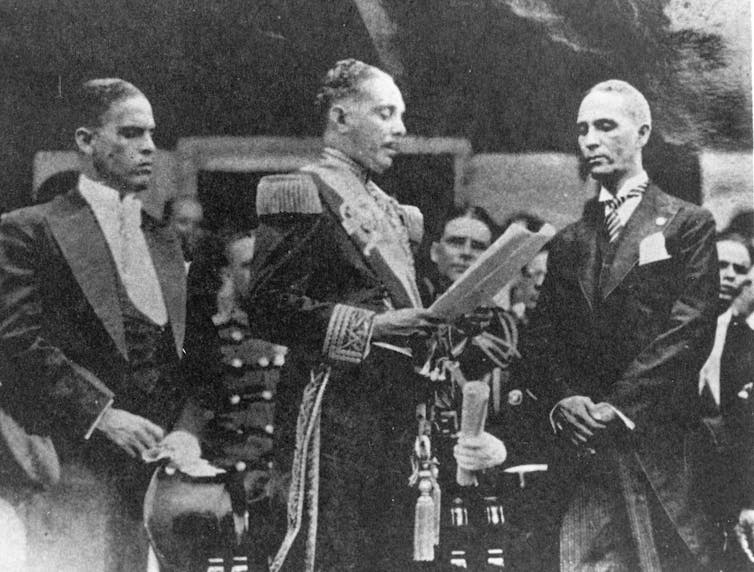
Also in 1961, the CIA armed and supported local proxies – including by reviewing their plans – for the assassination of the Dominican dictator, Rafael Trujillo. Chaos ensued in the following years, contributing to a full-scale US invasion in 1965.

Rafael Trujillo being sworn in as Panamanian president.
Rafael Trujillo (centre) being sworn in as Panamanian president for the first time in 1930.
Archivo General de la Nación / Wikimedia Commons

Setting the conditions for a military coup that was likely to lead to assassination was also at the centre of the 1963 killing of South Vietnamese president Ngô Đình Diệm. Henry Cabot Lodge Jr, the US ambassador to South Vietnam at the time, told President John F. Kennedy that the US had planted the seed for the coup and created a fertile ground where it could flourish.

While top CIA officials were initially reluctant to support a military coup, the agency had an operative, Lucien Conein, in close contact with South Vietnamese generals as the events took place. Kennedy was apparently shocked in learning that Diệm had been brutally murdered. To this, his chairman of the joint chiefs of staff, Maxwell Taylor, remarked: “What did he expect?”

Starting in the 1980s, the US government turned its attention to the Libyan and Iraqi leaders, Muammar Gaddafi and Saddam Hussein. The Reagan administration supported the National Front for the Liberation of Libya in its ultimately unsuccessful efforts to overthrow and kill Gaddafi.

And in its confrontation with Hussein, the Bush Sr administration often called for a “palace coup” that could lead to the elimination of the Iraqi leader – although not necessarily of his regime. This confrontation spilled over into Bill Clinton’s presidency in the 1990s.

The US government supported Kurdish forces – something the Trump administration is considering in Iran – and members of the Iraqi opposition in a series of efforts to mount a coup. Many of these plots were deeply infiltrated and some were dismantled before they could start. A plot against Hussein involving the Kurds in 1996 was marred by betrayals. They all ended in disaster.

‘War on terror’

The “war on terror” after the 9/11 terrorist attacks and the opportunities that new technologies such as armed drones had created meant the US became engaged more directly in the assassination of terrorist leaders. And yet, even at the height of the war on terror, the US at times showed an unwillingness to pull the trigger itself.

Israeli investigative journalist Ronen Bergman has reported that the Bush Jr administration agreed to cooperate with Israel to kill Hezbollah commander Imad Mughniyeh in 2008. But they agreed to do so on three clear conditions: the strike should be kept secret, Mughniyeh alone would be killed and Americans would not do the killing. Mughniyeh was killed by a car bomb placed in his SUV by Mossad agents with key American assistance.

Trump has shown a proclivity for assassinations with what appears to be little concern for the implications of his actions. In his first term, again in collaboration with Israel, the US did pull the trigger in the assassination of Iranian general Qasem Soleimani. This act escalated matters with Iran and made it more likely that a war would materialise in the future.

With Khamenei, the US preferred to let Israel do the actual killing. The assassination is likely to make Khamenei a martyr and provides the Iranian regime an avenue for cohesion when its internal legitimacy was under severe strain. Collaborating to kill can lead to tactical success, but the costs are often grim.

The Conversation

Luca Trenta’s research on assassination was partially funded by the British Academy.

Arturo Jimenez-Bacardi does not work for, consult, own shares in or receive funding from any company or organisation that would benefit from this article, and has disclosed no relevant affiliations beyond their academic appointment.

ref. Ali Khamenei’s killing continues long US tradition of letting others pull the trigger – https://theconversation.com/ali-khameneis-killing-continues-long-us-tradition-of-letting-others-pull-the-trigger-277784

Five paintings that capture the complexity of motherhood – chosen by art historians

Source: The Conversation – UK – By Marius Kwint, Reader in Visual Culture, University of Portsmouth

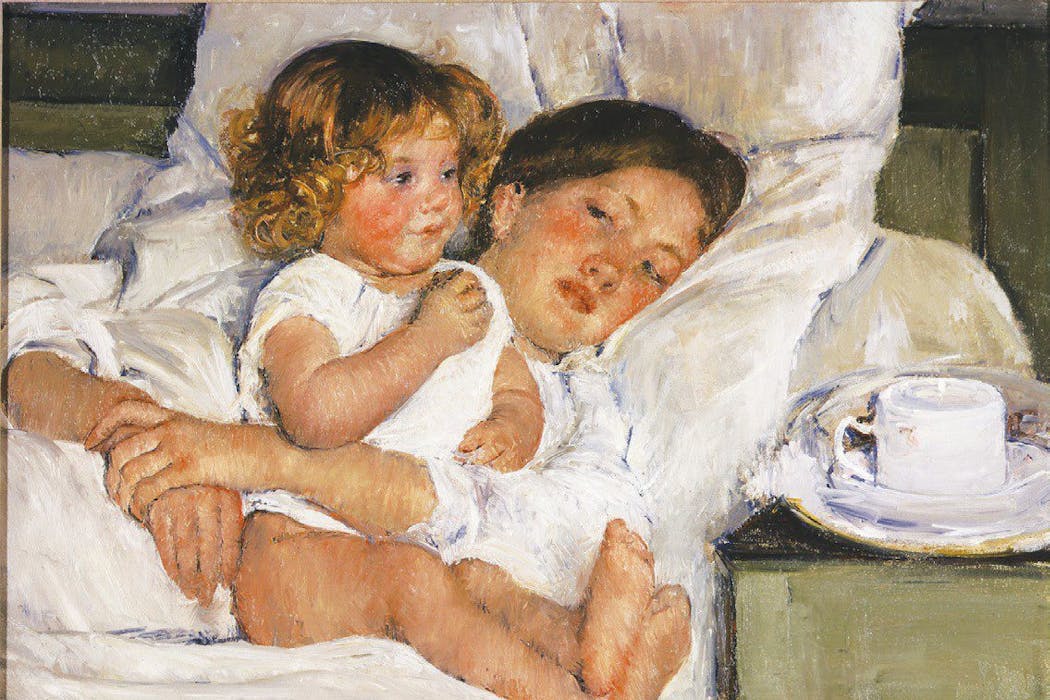
Breakfast in Bed by Mary Cassatt (1897). Huntington Library

The complex relationship between mother and child is no easy thing to capture on canvas. For Mother’s Day, we asked five experts to share their favourite painting of a mother or maternal figure.

1. Hunting for Lice by Gerard ter Borch (1652)

This small painting, displayed in the Mauritshuis in The Hague, is of a scene that might be familiar to any carer for nursery- or school-aged children today. Gerard ter Borch captures the look of concentrated maternal resolve and patient resignation by the child, who is probably a boy, judging by his smock and the ball in his hand.

Painting of a mother combing her son's hair for lice
Hunting for Lice by Gerard ter Borch (1652).
Mauritshuis in The Hague

He has paused his play and leans into the stout frame of his seated and respectably dressed mother. Typical of Dutch genre painting, it carries a moral message and finds spirituality in the humblest acts. The fine-toothed comb was an artistic and poetic symbol for purging the soul as well as the body, so this mother is not only caring for the physical health of her son but also looking to his eventual salvation. But we can also just enjoy her slight smile of pleasure and gratification in this moment of purposeful closeness with her dear child.

Marius Kwint is a reader in visual culture

2. Madonna of the Pilgrims by Michelangelo Merisi da Caravaggio (1603-5)

Caravaggio’s altarpiece, the Madonna of the Pilgrims, offers a beguiling mixture of the ordinary and the extraordinary. The setting is minimal, plain and achingly mundane: a doorframe with chipped masonry; some exposed bricks; a stone doorstep. A young mother – beautiful, but a little down-at-heel – supports a weighty infant on her hip.

Painting showing two grubby men kneeling at the feet of the Virgin Mary, who holds Christ on her hip
Madonna of the Pilgrims by Michelangelo Merisi da Caravaggio (1571–1610).
Basilica of Saint Augustine in Campo Marzio

The bond between mother and child is tangible, believable and thoroughly human. Their faint halos, though, confirm that these figures are far from ordinary. The gloomy doorway where they stand is, apparently, the entrance to the shrine of the Holy House of Loreto, the Virgin Mary’s home.

The humble, kneeling pilgrims at the Virgin’s door are not only shabbily dressed but actually grubby – the dirty feet of one made this painting notorious. Yet their piety is rewarded as the holy figures gaze on them sympathetically and Christ seems to extend his small hand in a gesture of blessing.

Alice E. Sanger is an honorary associate and associate lecturer in art history

3. Interior, Mother and Sister of the Artist by Édouard Vuillard (1893)

Most western painting romanticises mothers, highlighting blissful, tender intimacy. In these paintings, mothers are usually young, with babies or small children. But where are the complex realities of mother-child difficulty, separation and resentment – and of motherhood as tribulation and endurance (think adolescent and boomerang kids)?

Painting of a mother and daughter
Interior, Mother and Sister of the Artist by Édouard Vuillard (1893).
Moma

Édouard Vuillard’s Interior, Mother and Sister of the Artist (1893) portrays a psychologically intense mother-daughter adult relationship. Vuillard painted his mother more than 500 times and lived with her till she died (when he was 60). He said: “Ma maman, c’est ma muse” – my mother is my muse.

In the crowded space of Interior, a mature Madame Vuillard dominates: legs akimbo, elbows jutting like a seated boxer’s, her solid black body a vortex pulling in the room, its furniture and her daughter. The daughter is consumed by the oppressive domesticity (as shown by the wallpaper) and simultaneously repelled by and drawn – bowing – towards her mother. The power is starkly asymmetrical, and intimacy disturbing. Mother-child relations are sometimes unsavoury. In Interior, Vuillard boldly acknowledges this truth.

Jen Harvie is a professor of contemporary theatre and performance

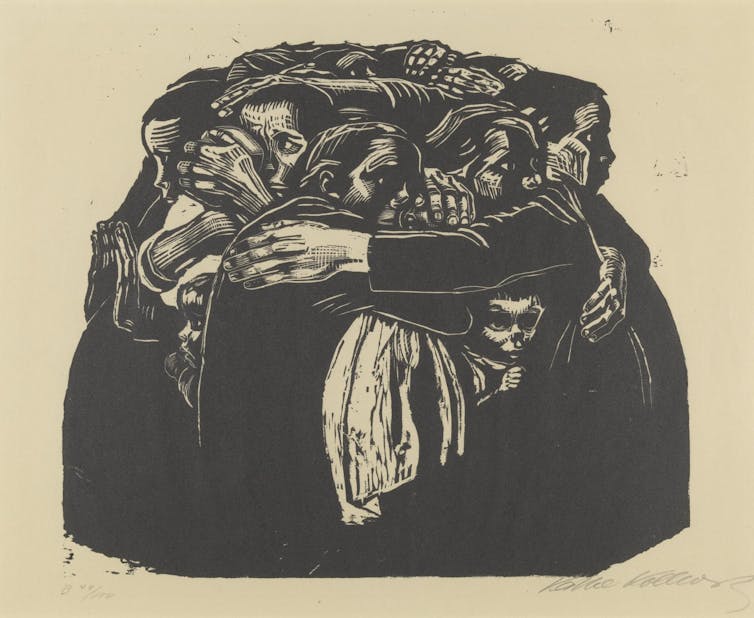
4. The Mothers by Käthe Kollwitz (1921-1922)

Mothers huddled together in unimaginable pain and grief. I just can’t get past this image right now. This woodcut by Käthe Kollwitz is the second last of her war portfolio. Her personal experience informed the print. Her son, Peter, was killed on the front in 1914.

Woodcutting showing women huddled together
The Mothers by Käthe Kollwitz (1921-22).
Tate

The mothers in Kollwitz’s image form almost a sculptural mass, a community bound together by throbbing heartache. This highly emotive image shows the irretrievable consequences of war, the children that these mothers have lost, and are afraid of losing.

Wars might be won and lost in the air, or on the front, or in a control room somewhere far away, but I believe it is the women and children on the ground who suffer the most. And it is the mothers who have to carry the weight of the loss of a generation.

Pragya Agarwal is a visiting professor of social inequities and injustice

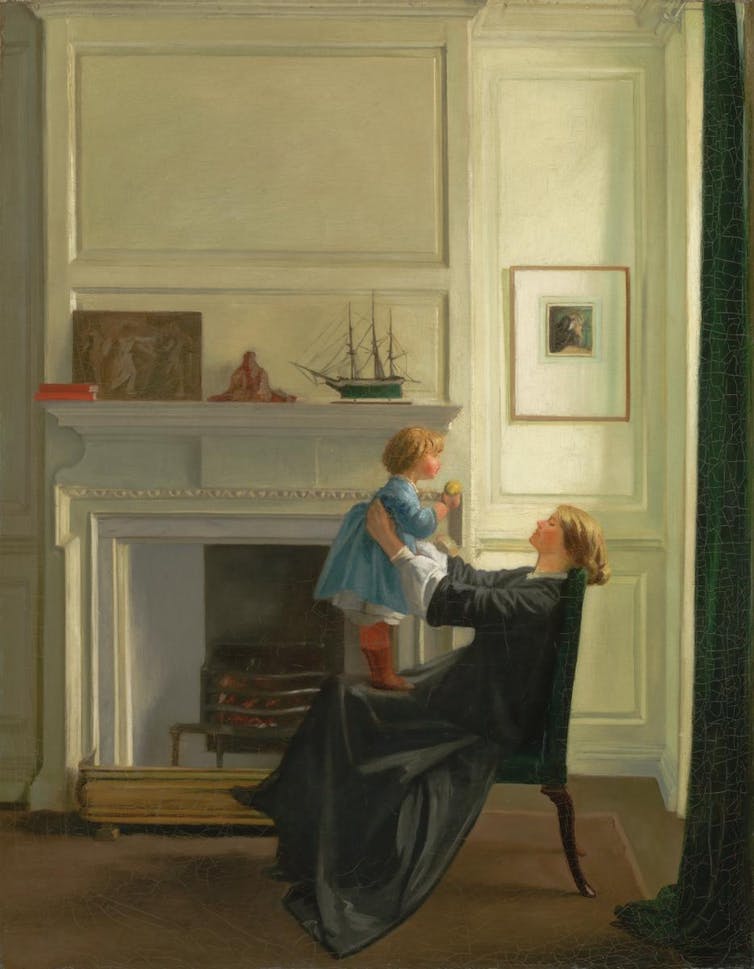
5. Mother and Child by William Rothenstein (1903)

In the 1900s William Rothenstein completed a series of paintings depicting his wife – the actor Alice Knewstub – posed in various interiors. The paintings chart the early years of their marriage and the growth of their family. Mother and Child, which falls somewhere in the middle of this series, represents Alice holding their oldest child John (who would go on to become director of the Tate).

A mother holding her child in front of her
Mother and Child by William Rothenstein (1903).
Tate

Rothenstein’s representations of the mother and child relationship differ across the paintings. What I think he captures especially well in this one is the way in which parents support their children to stand up, knowing that one day those legs may take them far away. Alice’s attention is on John, but John’s attention is on whatever is going on outside the window. The positioning of the model ship just above his head extends the theme of wanting to hold onto something that cannot be held forever.

I’ve always wondered whether this painting was well known to one of Rothenstein’s later students, a young sculptor called Henry Moore, who was similarly (and more famously) drawn to the subject of the mother holding a child. It seems very likely.

Samuel Shaw is a senior lecturer in art history

What is your favourite painting of a mother or maternal figure? Let us know in the comments below.

Our senior arts and culture editor Anna Walker’s favourite is Breakfast in Bed by Mary Cassatt (1897). So much can be read in the mother’s face – exhaustion, love, fear, protectiveness. Through her painting, Cassatt immortalises an intimate moment from the fleeting period of a child’s infancy.

The Conversation

The authors do not work for, consult, own shares in or receive funding from any company or organisation that would benefit from this article, and have disclosed no relevant affiliations beyond their academic appointment.

ref. Five paintings that capture the complexity of motherhood – chosen by art historians – https://theconversation.com/five-paintings-that-capture-the-complexity-of-motherhood-chosen-by-art-historians-275359

Arco blends Studio Ghibli-inspired wonder with a distinctly French surreal imagination

Source: The Conversation – UK – By Malcolm Cook, Associate Professor in Film Studies, University of Southampton

French animation has a rich history. But it has yet to achieve the same widespread recognition as American, British or Japanese animation. Arco could change that. The film’s accessible Studio Ghibli-esque story, unique visual imagination and surreal tone marks it out from run of the mill family fare.

Arco is a 2D hand-drawn time travel fantasy film set in 2075 and 2932. The eponymous hero is ten-year-old boy who steals a cape and gemstone that enable him to travel back in time. Arriving in 2075, Arco meets Iris, an inquisitive girl whose primary caregiver is a robot. It’s a substitute for her parents who work away from home and are only present through holograms. Having lost the gemstone, Arco and Iris try to find a way for him to return home.

As this plot description might already suggest, Arco displays admiration for the Studio Ghibli films of Hayao Miyazaki from the first frame. With its pre-teen protagonists, collision of fantasy with reality, environmental themes and bumbling comedic supporting characters, viewers will be reminded of Laputa: Castle in the Sky (1986), Porco Rosso (1992), Spirited Away (2001) and Ponyo (2008) among others.

The trailer for Arco.

Arco’s depiction of wide-open blue skies accompanied by delicate piano music and later apocalyptic scenes of climate disruption also share an audio-visual heritage with Ghibli films. But far from a mere imitation, the film also offers a distinctly French take on animation.

French animation legacy

France can lay claim to one of the earliest innovators of animation – cartoonist Émile Cohl’s 1908 short Fantasmagorie was the longest and most elaborate animated cartoon to date. In 1973 the surreal sci-fi Fantastic Planet captured the trippy psychedelia of its time, and remains a cult favourite today. More recently, internationally acclaimed and financially successful French animated feature films have included The Triplets of Belleville (2003), Persepolis (2007) and My Life as a Courgette (2016).

These films are all very different. But what unites French animation is not a consistent style or thematic concern. Rather, it has a quirky sensibility that embraces the capacity of animation to look at the world from new perspectives and explore outlandish stories that couldn’t be made any other way.


Read more:
Studio Ghibli’s layering of Japanese and western storytelling is key to their success


An important part of the success of Arco is in balancing that distinctive French sensibility with commercial appeal. Like Studio Ghibli films, that includes using big star names for the English-language dub. This is essential to reach family audiences who might be unable or unwilling to read subtitles.

One of the film’s producers is actor Natalie Portman, lending the production Oscar-winning credibility and contacts. Portman herself voices Iris’ mother, joined by Mark Ruffalo as Iris’ father, America Ferrera as Arco’s mother, and a triple-act comedic turn from Will Ferrell, Andy Samberg and Flea as eccentric cultists.

Future thinking

Despite Arco’s fantastical story elements, its most significant achievement is in tackling timely contemporary environmental themes. Where most cli-fi cinema (science fiction that depicts climate change) often dwells on apocalyptic gloom, Arco’s take is both incisive and uplifting.

The time-travel themes allow for a subtle consideration of the need for long-term “future generations” thinking, while reinforcing the need for human, rather than technological, solutions.

The makers of Arco will no doubt be hoping for a reprise of last year’s surprise animated feature film Oscar, when the low budget Latvian computer animation Flow beat out the usual suspects of Disney, Pixar and DreamWorks. It signalled a new openness of academy voters to international and creatively adventurous animated films.

A win would be well deserved. Just as Arco’s colourful rainbow styling underpins its hopeful vision for the future of humanity, the film’s present day success signals a bright future for animation production in Europe and beyond.


Looking for something good? Cut through the noise with a carefully curated selection of the latest releases, live events and exhibitions, straight to your inbox every fortnight, on Fridays. Sign up here.


The Conversation

Malcolm Cook does not work for, consult, own shares in or receive funding from any company or organisation that would benefit from this article, and has disclosed no relevant affiliations beyond their academic appointment.

ref. Arco blends Studio Ghibli-inspired wonder with a distinctly French surreal imagination – https://theconversation.com/arco-blends-studio-ghibli-inspired-wonder-with-a-distinctly-french-surreal-imagination-276807