During the COVID-19 pandemic, disinfectants became our shield. Hand sanitizers, disinfectant wipes and antimicrobial sprays became part of daily life. They made us feel safe. Today, they are still everywhere: in homes, hospitals and public spaces.
But there’s a hidden cost. The chemicals we trust to protect us may also inadvertently help microbes evolve resistance and protect themselves against antibiotics.
QACs: The chemicals in most disinfectants
Among the most common active ingredients in disinfectants are quaternary ammonium compounds (QACs). They are found not only in the wipes, sprays and liquids we use to clean surfaces at home and in hospitals, but also in everyday products like fabric softeners and personal care products.
Once QACs enter the environment, they meet microbial communities, networks of bacteria, archaea and fungi that recycle nutrients, purify water and support food webs.
Given that QACs are designed to kill microbes, it is no surprise that they can affect environmental ones. Yet microbial communities are remarkably adaptable; some die, but others survive and evolve resistance.
The paradox of protection
Unlike antibiotics, which target specific cellular processes, QACs attack microbes and viruses in many ways, damaging cell walls, proteins and lipids. This broad attack makes QACs powerful disinfectants.
However, microbes are resourceful. Faced with these chemicals, some strengthen their cell membranes, pump toxins out or form protective biofilms. These adaptations don’t just help them survive QACs, but increasing evidence shows they can also boost antibiotic resistance.
At the genetic level, QAC resistance genes are often carried on mobile DNA, segments of genetic material that can move between different bacteria. When these elements carry both QAC and antibiotic resistance genes, the resistances travel together and can spread across bacterial communities, a phenomenon called co-resistance.
In other cases, a single defence mechanism protects against both QACs and antibiotics, a process known as cross-resistance. The widespread and increasing use of QACs amplifies these mechanisms, creating more opportunities for resistance to spread. This, in turn, establishes pathways through which antimicrobial resistance can reach human pathogens, contributing to the global rise of antibiotic-resistant infections.
According to a new World Health Organization (WHO) report, antimicrobial resistance is “critically high and rising” globally: In 2023, one in six laboratory-confirmed bacterial infections responsible for common illnesses worldwide were resistant to antibiotic treatment. Between 2018 and 2023, resistance increased in more than 40 per cent of the pathogen-antibiotic combinations that are monitored, with an average annual rise of five to 15 per cent.
The WHO estimates that in 2019, bacterial antimicrobial resistance directly caused 1.27 million deaths and contributed to nearly five million more worldwide. What begins as a household cleaning choice can ripple outward, connecting our everyday habits to one of the most pressing public health challenges of our time.
Antimicrobial resistance is often seen as a clinical problem caused by antibiotic misuse, but it begins much earlier, in households, wastewater, rivers, lakes and soils. These are battlegrounds where microbes share resistance traits and adapt to human-made chemical pressures. Once resistance arises, it can make its way back to us.
At its core, the disinfectant dilemma is a feedback loop: we disinfect to prevent disease, but the chemicals we rely on may quietly make microbes harder to control.
Rethinking clean
This doesn’t mean we should stop disinfecting. Disinfectants play an essential role in infection control, especially in hospitals and high-risk settings where their benefits far outweigh their risks. The issue lies in their overuse in everyday life, where “clean” is often equated with “microbe-free”, regardless of necessity or consequence.
What we rarely consider is that cleaning doesn’t end when the surface looks hygienic. Some disinfectants remain active long after use, continuing to shape microbial communities well beyond their intended moment of control. QACs are a clear example: they persist in the environment, exposing microbes to low, chronic selective pressures that can favour the development of resistance.
Other disinfectants, such as alcohol and bleach, may carry different, but still meaningful environmental risks, underscoring the need for risk assessments that more explicitly integrate long-term ecological consequences.
Ultimately, the disinfectant dilemma reminds us that managing microbes is as much about ecology as it is about chemistry. To clean responsibly, we need to think beyond what kills microbes today and consider how our choices shape the microbial world we will face tomorrow.
Milena Esser does not work for, consult, own shares in or receive funding from any company or organisation that would benefit from this article, and has disclosed no relevant affiliations beyond their academic appointment.
When you walk around the Groupama Stadium in Lyon (France), you can’t miss them. Four majestic lions in the colours of Olympique Lyonnais stand proudly in front of the stadium, symbols of the influence of a club that dominated French football in the early 2000s. The lion is everywhere in the club’s branding: on the logo, on social media, and even on the chests of some fans who live and breathe for their team. These are the ones who rise as one when Lyou, the mascot, runs through the stands every time the team scores a goal. Yet while it roars in the Lyon stadium, in the savannah, the lion is dying out.
On the ninth day of Ligue 1 (whose matches took place from October 24 to 26, 2025), there were twice as many people in the stadium for the Lyon-Strasbourg match (just over 49,000 spectators) as there are lions in the wild on the planet (around 25,000). Lion populations in Africa and India fell by 25% between 2006 and 2018, like many other species on the planet, according to the International Union for Conservation of Nature (IUCN).
One of the lions that stand guard in front of the Groupama Stadium in Lyon (France). Zakarie Faibis, CC BY-SA
This is a striking paradox: while the sports sector is booming – often capitalising on animal imagery to develop brands and logos and unite crowds around shared values – those same species face numerous threats in the wild, weakening ecosystems without fans or clubs being truly aware of it.
This paradox between the omnipresence of animal representations in sport and the global biodiversity crisis was the starting point of a study published in BioScience. The study quantified the diversity of species represented in the largest team sports clubs in each region of the world, on the one hand, and assessed their conservation status, on the other. This made it possible to identify trends between regions of the world and team sports (both women’s and men’s).
The goal was to explore possible links between professional sport and biodiversity conservation. Sport brings together millions of enthusiasts, while clubs’ identities are based on species that are both charismatic and, in most cases, endangered. The result is a unique opportunity to promote biodiversity conservation in a positive, unifying, and rewarding context.
Nature on jerseys: The diversity of species represented in team sports
This research, based on 43 countries across five continents, reveals several key insights – chief among them, the importance and sheer scale of wildlife represented in sports emblems. A full 25% of professional sports organisations use a wild animal in their name, logo, or nickname. This amounts to more than 700 men’s and women’s teams across ten major team sports: football (soccer), basketball, American football, baseball, rugby union and league, volleyball, handball, cricket, and ice hockey.
Bears (here, a polar bear for the Orlando hockey team in the United States) are among the animals most commonly used as mascots by the team sports listed in the study. Vector Portal/Creative Commons, CC BY
Unsurprisingly, the most represented species are, in order: lions (Panthera leo), tigers (Panthera tigris), wolves (Canis lupus), leopards (Panthera pardus), and brown bears (Ursus arctos).
While large mammals dominate this ranking, there is in fact remarkable taxonomic diversity overall: more than 160 different types of animals. Squid, crabs, frogs, and hornets sit alongside crocodiles, cobras, and pelicans – a rich sporting bestiary reflecting very specific socio-ecological contexts. We have listed them on an interactive map interactive map available online.
Animal imagery is often associated with major US leagues, such as the NFL, NBA, or NHL, featuring clubs like the Miami Dolphins (NFL), the Memphis Grizzlies (NBA), or the Pittsburgh Penguins (NHL). Yet other countries also display diverse fauna, with over 20 species represented across more than 45 professional clubs in France for instance.
Cultural, aesthetic, or identity-based motivations behind animal emblems
Club emblems often echo the cultural heritage of a region, as in the Quetzales Sajoma basketball club in Mexico that uses the quetzal (Tragonidaespp.), an emblematic bird from the Maya and Aztec cultures. Animal symbols also communicate club values such as unity or solidarity – for example, the supporter group of LOU Rugby is called “La Meute” (“The Pack”). Nicknames can also highlight a club’s colours, as with the “Zebras,” nickname of Juventus FC, whose jerseys are famously black and white.
Logo of the Lyon Olympique Universitaire rugby team. LOU Rugby
Finally, many emblems directly reference the local environment – such as the Parramatta Eels, named after the Sydney suburb, whose Aboriginal name means “place where eels live”.
The Wild League: Sports clubs as allies to wildlife
The sports sector has grown increasingly aware of climate-related issues, both those related to sports practice and sporting events. Biodiversity has not yet received the same attention. The study also shows that 27% of the animal species used in sports identities face risks of extinction in the near or medium term. This concerns 59% of professional teams. Six species are endangered or critically endangered, according to the IUCN: the black rhinoceros (Diceros bicornis), blue whale (Balaenoptera musculus), African elephant (Loxodonta africana), Asian elephant (Elephas maximus), tiger, and Puerto Rican blackbird (Agelaius xanthomus). Lions and leopards – two of the most represented species – are classified as vulnerable.
Moreover, 64% of teams have an emblem featuring a species whose wild population is declining, and 18 teams use species for which no population trend is known. If this seems surprising, think again: the polar bear (Ursus maritimus), orca (Orcinus orca), and European wildcat (Felis silvestris) are among these poorly understood species.
Under these circumstances, can sport help promote biodiversity conservation in an inspiring way? Indeed, iconic clubs and athletes, whose identities are based on often charismatic but endangered species, bring together millions of enthusiasts.
Another study by the same research team presents a model aligning the interests of clubs, commercial partners, supporter communities, and biodiversity advocates around the central figure of animal sports emblems.
Playing as a team for a common goal: Protecting biodiversity
The Wild League project, which builds upon these recent scientific publications, aims to implement this model with the support of clubs (professional and amateur) and their communities, in order to involve as many stakeholders as possible (teams, partners, supporters) in supporting ecological research and biodiversity conservation.
These commitments are win-win: for clubs, it is an opportunity to reach new audiences and mobilise supporters around strong values. Sponsors, for their part, can associate their brands with a universal cause. By scaling up, a professional league, if it mobilised all its teams, could play a key role in raising awareness of biodiversity.
Many mechanisms could help implement such a model, involving teams, partners, and supporters in changes to individual and institutional behaviour. Teams from different sports that share the same emblem could pool resources to create coalitions for the protection of the species and its ecosystem.
Conversely, an entire professional league with numerous teams represented by different animals could raise awareness by embracing biodiversity as a collective theme. For example, Germany’s top ice hockey league (DEL) includes 15 teams, 13 of which feature highly charismatic animals: every week, panthers face polar bears, penguins battle tigers, and sharks challenge grizzlies! These emblems provide a unique opportunity to raise awareness of the Earth’s biological diversity.
Some well known but taxonomically vague nicknames – such as “Crabs,” “Bats,” or “Bees” – conceal immense species diversity: more than 1,400 species of freshwater crabs, as many bat species (representing one in five mammal species), and over 20,000 species of bees exist worldwide.
Finally, more than 80 professional teams have a unique one-to-one association with a species. The Auckland Tuatara basketball team, for instance, is the only one to feature the Tuatara (Sphenodon punctatus), a reptile found only in New Zealand. These exclusive connections create ideal opportunities to foster a sense of responsibility between a species and its team.
Sport is above all an entertainment industry, offering powerful emotional experiences rooted in strong values. The animal emblems of sports clubs can help reignite a passion for the natural world and engage sporting communities in its protection and in broader biodiversity conservation – so that the roar of lions does not become a distant memory, and so that the statues proudly standing before our stadiums regain their colour and meaning.
Ugo Arbieu is the founder of The Wild League, an international project aimed at promoting the integration of biodiversity protection issues into professional sports organisations.
Franck Courchamp ne travaille pas, ne conseille pas, ne possède pas de parts, ne reçoit pas de fonds d’une organisation qui pourrait tirer profit de cet article, et n’a déclaré aucune autre affiliation que son organisme de recherche.
Michele Singer Reiner and Rob Reiner pose with their children, Jake, Romy and Nick, far right, at a 2014 gala.Michael Loccisano/Getty Images
The fatal stabbings of filmmaker and actor Rob Reiner and his wife, the photographer and producer Michele Singer Reiner, have sparked widespread grieving. This tragedy, discovered on Dec. 14, 2025, is also increasing the public’s interest in what happens when killers could inherit wealth from their victims. That’s because Nick Reiner, their son, was charged with two counts of first-degree murder four days after the couple’s deaths at their Los Angeles home.
What’s the ‘slayer rule’?
All states have some form of a slayer rule that prevents killers from inheriting from their victims. While the rules differ slightly from state to state, they always bar murderers from profiting from their own crimes.
Simply put, if you’re found guilty of killing someone or plead guilty to their murder, you can’t inherit anything from your victim’s estate.
In some states, this might go beyond inheritance and apply to jointly held property, insurance policies and other kinds of accounts.
Most of these slayer rules, including California’s, apply only to “felonious and intentional” killings, meaning that they don’t apply if you accidentally kill someone. Although there doesn’t have to be a guilty verdict by a judge or a jury, or a guilty plea from the accused, there must be some finding by a criminal or civil court of an intentional and felonious killing.
These rules, known as slayer rules, have a long history in the United States. They became more prominent following an 1889 murder case in New York state, in which a 16-year-old boy poisoned his grandfather to get an inheritance that was written into his grandfather’s will.
How often are slayer rules invoked?
It’s hard to say for sure. As far as we know, nobody’s tried to keep track.
Slayer rules come into play whenever someone who would otherwise inherit assets from an estate is convicted of or found liable for murder, and the slayer is entitled to inherit from the victim.
These tragic cases almost always involve murders committed by relatives. Many of the high-profile ones have been tied to murders that occurred in California.
Famous disinherited murderers include Lyle and Erik Menendez, the Californians known as the Menendez brothers. In 1996, a jury found them guilty of the first-degree murder of their parents, José and Mary Louise “Kitty” Menendez. The Menendez brothers’ parents, who were killed in 1989, had a fortune that today would be worth more than $35 million.
The brothers, who became eligible for parole but were denied it in 2025, have been in prison ever since.
Once there has been a finding of an intentional and felonious killing, even if the slayer is later released on parole – or even if they serve no prison time at all – they would still not inherit anything.
In practical terms, that means if one or both of the Menendez brothers were to win parole in the future, they would still be ineligible to inherit any of their parents’ wealth upon their release from prison.
Erik Menendez, left, and Lyle Menendez, seen standing trial for their parents’ murders, in 1994. They were convicted in 1996. Ted Soqui/Sygma via Getty Images
What can block its application?
In the absence of a murder conviction, the slayer rule may not apply. For example, a conviction for a lesser criminal offense, such as manslaughter, might allow the accused – or their lawyers – to argue that the killing was unintentional.
This exception could be relevant to the prosecution of the Reiners’ murders if it were to turn out that Nick Reiner’s defense can show that substance abuseor schizophrenia rendered him insane when he allegedly killed his parents at their Los Angeles home.
On the other hand, under California law, even if there is no conviction the probate court administering the murder victim’s estate could still separately find that the killing was intentional and felonious. That civil finding would bar the slayer from inheriting without a criminal conviction.
Rob Reiner and his son Nick, seen in 2016 speaking about ‘Being Charlie,’ the movie about a young man’s struggle with substance use that they made together. Laura Cavanaugh/FilmMagic via Getty Images
Does this only apply to families with big fortunes?
Slayer rules apply to anyone who kills one or more of their relatives, whether their victims were rich, poor or in between.
When large amounts of money are at stake, cases tend to garner more attention due to media coverage during the criminal trial and subsequent inheritance litigation.
Who will inherit Rob Reiner’s and Michele Singer Reiner’s wealth?
It’s too soon for both the public and the family to know who will inherit ultimately from the Reiners.
Wills are typically public documents, although the Reiners may have also engaged in other types of estate planning, such as trusts, that do not typically become public records. And celebrities with valuable intellectual property rights, such as copyrights from the Reiners’ many film and television properties, tend to establish trusts.
Assuming that, like many parents, the Reiners left most of their fortune – which reportedly was worth some US$200 million – to their children, including Nick, then California’s slayer statute may come into play. The couple had two other children together, Romy and Jake.
Rob Reiner also had another daughter, Tracy Reiner, whom he adopted after his marriage to his first wife, the actor and filmmaker Penny Marshall.
It’s also likely that the Reiners included charitable bequests in their estate plans. They were strong supporters of many causes, including early childhood development.
Might the slayer rule apply to Nick Reiner?
It’s much too soon to know.
It is important to emphasize that the wills and other estate planning documents of Rob Reiner and Michele Singer Reiner have not yet been made public. That means what Nick Reiner might stand to inherit, if the slayer rule were to prove irrelevant in this case, is unknown.
Nor, with the investigation of the couple’s deaths still underway, can anyone make any assumptions about Nick’s innocence or guilt.
And, as of mid-December 2025, an unnamed source was telling entertainment reporters that Nick Reiner’s legal bills were being paid for by the Reiner family.
The authors do not work for, consult, own shares in or receive funding from any company or organization that would benefit from this article, and have disclosed no relevant affiliations beyond their academic appointment.
Source: The Conversation – USA (3) – By Christian Goodwillie, Director and Curator of Special Collections and Archives, Hamilton College
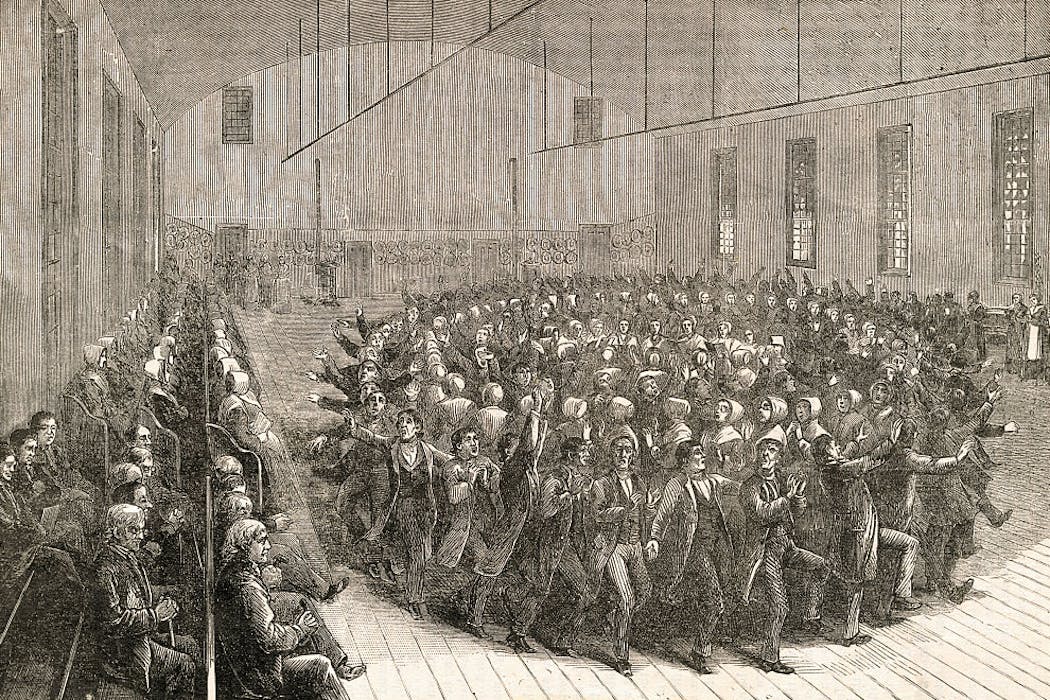
In the Shakers’ early years, dance was one of the most distinct aspects of the Christian group’s worship.Bettmann via Getty Images
Director Mona Fastvold’s new film, “The Testament of Ann Lee,” features actor Amanda Seyfried in the titular role: the English spiritual seeker who brought the Shaker movement to America. The trailer literally writhes with snakes intercut amid scenes of emotional turmoil, religious ecstasy, orderly and disorderly dancing – and sex. Intense and sometimes menacing music underpins it all: the sounds of the enraptured, singing their way to a fantastic and unimaginable ceremony.
The trailer is riveting and unsettling – just as the celibate Shakers were to the average observer during their American emergence in the 1780s.
I sit on the Board of Trustees of Hancock Shaker Village in Massachusetts, where some of the film was shot, though I have not seen the film, which is due to be released on Christmas Day. I was the curator at Hancock from 2001 to 2009 and have studied the Shakers for more than 25 years, publishing numerous booksand articles on the sect.
Mona Fastvold’s film depicts the group’s early years in North America.
Many characteristics of Shaker life and belief set them apart from other Protestant Christians, but their name derives from one of the most obvious. Early Shakers manifested the holy spirit that they believed dwelled within them by shaking violently in worship. While they called themselves “Believers,” observers dubbed them “Shakers.” Members eventually adopted the name, although officially they are the United Society of Believers in Christ’s Second Appearing.
The Shakers developed unique worship practices in both music and dance that expressed their faith. Until the 1870s, Shaker music was monophonic, with a single melodic line sung in unison and without instrumental accompaniment. Many of their melodies, Shakers said, were given to them by spirits. Some of these charmed and haunting strains have permeated through broader American musical culture.
New form of family
The Shakers first began to organize in Manchester, England, in 1747. By 1770, they came to believe that the spirit of Christ had returned through their leader, “Mother” Ann Lee. However, “Mother Ann was not Christ, nor did she claim to be,” the Shakers state. “She was simply the first of many Believers wholly embued by His spirit, wholly consumed by His love.”
In 1774, Lee led eight followers to North America, settling near what is now Albany, New York. As is still true today, Shakers held their property in common, following the model of the earliest Christians that is recorded in the Bible’s Book of Acts. At its height, the movement had 19 major communities.
Shakers work out their salvation each day by physical and spiritual labor. They do not subscribe to the common Christian doctrine that Jesus’ death atoned for the sins of mankind. And Shakers are celibate – one of the practices that most startled their neighbors in 18th- and 19th-century America. Lee taught that humanity could not follow Christ in the work of spiritual regeneration, or salvation, “while living in the works of natural generation, and wallowing in their lusts.” For Shakers, celibacy is one way people can reunite their spirits with God, who they believe is dually male and female.
Almost every Shaker, therefore, joined the faith as a convert, or the child of converts. Families who joined their communities were effectively dissolved: Husbands and wives became brothers and sisters; parents and children the same. Early accounts report that, in extreme instances, children publicly denounced their parents and pummeled their genitals in an effort to subdue the flesh and its earthly ties.
Shaking with the spirit
The Shakers of Lee’s day – now seen as American as apple pie – were regarded as a fundamental threat to society. In part, that stemmed from their perceived dissolution of families. But many outsiders were also alarmed by their ritual dances, whose intensity and emotion demonstrated a physicality seemingly incongruous with their celibacy.
In the early years, Shaker worship was an unbridled individual expression of spiritual enthusiasm. Eventually, it transformed into highly choreographed dances. At first, these were agonizingly slow and laborious series of movements designed to mortify the flesh – to help the spiritual overcome the physical – and instill discipline and union among the members.
Historians and reenactors have recreated some Shaker dances.
What kind of music accompanied such striking movements? The earliest Shaker songs, including ones attributed to Lee, have no intelligible language. Rather, they were sung using vocalized syllables or “vocables,” such as lo-de-lo or la-la-la or vi-vo-vum. Shakers invented a new form of notation to record their songs, using letters adorned with a variety of hashmarks to denote pitch and rhythm.
They begin by sitting down and shaking their heads in a violent manner, … one will begin to sing some odd tune, without words or rule; after a while another will strike in; … after a while they all fall in and make a strange charm … The mother, so called, minds to strike such notes as makes a concord, and so form the charm.
The Shakers were meticulous recordkeepers regarding every aspect of community life. Music was no exception. More than 1,000 volumes of Shaker music survive in manuscript: tens of thousands of songs dating from Lee’s day to the mid-20th century.
Scholars, musicians and researchers have extracted treasures from this repertoire. Most notably, composer Aaron Copland adapted Elder Joseph Brackett’s famous 1848 tune “Simple Gifts” for “Appalachian Spring”: the ballet that won Copland a Pulitzer in 1945. Hidden gems must still abound in the remaining unplumbed depths of Shaker manuscript songbooks.
In contrast, the Shakers left few detailed instructions for their dance. But eyewitness accounts abound, and scholars have made careful and respectful reconstructions.
Living faith
Fastvold’s film evokes the chaotic, violent world of the first Shakers in America, who converted farm families along the New York-Massachusetts border during the Revolutionary War. Some outsiders regarded the sect as an English plot to neutralize the populace with religious fervor, opening the way for a British reconquest of New England.
The director’s vision, incarnated by Seyfried’s bewitching presence and voice, invokes the uncanny atmosphere of early Shakerism. However, Shakerism is a living, ever-changing faith, whose presence in America is older than the country itself. The fact is, Shakers have not regularly danced in worship since the 1880s – or less than half of the total time the sect has endured.
Outsiders judged and named the Shakers in reaction to their external qualities in worship. The movement’s endurance and core, however, lies in its spiritual teachings. As the Believers asserted in their 1813 hymn “The Shakers,” “Shaking is no foolish play.”
Christian Goodwillie is the Director and Curator of Special Collections and Archives at Hamilton College in Clinton, NY. He was Curator of Collections at Hancock Shaker Village from 2001-2009, where he now sits on the Board of Trustees and is a paid consultant. Three songs from his 2002 book Shaker Songs, co-authored with Joel Cohen, were used as sources for music in the The Testament of Ann Lee. Portions of the Testament of Ann Lee were filmed at Hancock Shaker Village.
Source: The Conversation – UK – By Tessa Whitehouse, Reader in 18th-century Literature and Director of Queen Mary Centre for Religion and Literature, Queen Mary University of London
Reading is very subjective, but one thing most book lovers can agree on is that 2025 was a notable year for fresh, inventive, affecting storytelling. Books translated from their original language are proving increasingly popular as readers seek out global perspectives beyond their own, as evidenced in this year’s International Booker win, Heart Lamp by Banu Mushtaq, which is included here.
We also bring you five other novels our academic experts have chosen as their favourites this year. From a Mrs Dalloway for the service economy, to a dreamlike encounter between people across time, place and mortality, do our academic picks chime with yours?
Pick A Colour by Souvankham Thammavongsa
This slender little novel is both a reverie and a dash of icy water to the face that will make you think twice about tuning out from your surroundings next time you get a mani-pedi. We follow the owner of a low-price nail bar through a workday from turning on the fluorescent lights to pulling down the metal shutter.
In this Mrs Dalloway for the service economy, the painful intersections of the personal and the political are inescapable for the “Susans” (the name each employee must adopt), but as invisible as the workers themselves to many of their customers.
Slight in length, light in touch, full of humour, and closely observed, Pick A Colour can be read in a single, intense afternoon. But the troubling thoughts it raises through its memorable characters linger long after your Christmas nail polish has all chipped away.
Tessa Whitehouse is reader in English and director of Queen Mary Centre for Religion and Literature
Perfection by Vincenzo Latronico
Perfection is a curious sort of novel. There is no dialogue and almost no conflict between the two central characters, Anna and Tom, digital nomads who spend their days in Berlin designing websites and always appear together, almost like a single entity.
In a sequence of beautifully written, perfectly observed chapters, Latronico itemises and describes their apartment, their social media habits, their limited perspective on Berlin, their sex life, their futile attempts at meaningful political activism, their growing disillusionment and desire for relocation – the repetitive consumption and socially structured habits of a globalised lifestyle built around image and taste.
The result is a remarkably astute and compelling novel – social realism at its sharpest – as Latronico nails the manners of the millennial generation and that brief period of optimism, from 2006 to 2016, when we felt digital media might make a positive difference and lifestyle choices seemed imbued with an optimistic ethical resonance – soon shown to be hollow.
James Miller is a senior lecturer in creative writing and English literature
Old Soul by Susan Barker
At first, Barker’s novel seems a gorgeously written adaptation of one of my favourite gothic tropes: the vampire. The story opens with two strangers, Jake and Mariko, who meet at Osaka airport. They have both lost loved ones in strange and brutal circumstances but in common, each of the deceased encountered a mysterious, dark-haired woman just before their deaths. A woman who came looking for Mariko, and then disappeared.
As the plot advances, Barker takes familiar tropes and themes in unexpected directions, turning this novel into an unforgettable tale of cosmic horror. There is the terrifying lore of “the Tyrant”, different timelines and settings from Wales to New Mexico, not to mention a cast of unreliable narrators who become more vibrant, twisted and compelling as the novel advances. Ultimately, this is a story about our societal obsession with becoming famous and being seen – Barker’s novel goes a step further and asks: who gets to witness? Who gets to record? And for what purpose?
Inés Gregori Labarta is a lecturer in creative writing
Big Kiss, Bye-Bye by Claire-Louise Bennett
There is no shortage of contemporary novels with first-person narrators who are women, often writers, struggling to keep themselves together in the face of late capitalism, the internet and the patriarchy. Claire-Louise Bennett’s Big Kiss, Bye-Bye is narrated by a woman, a writer, but beyond that, all similarities to other works in this category disappear.
The narrator’s interior world is made up of thoughts about and responses to others – her friend and ex-lover Xavier, her old schoolteacher with whom she had a relationship as a teenager, and another old schoolteacher who has recently emailed her.
It is a novel of extraordinary noticing, but it is a noticing that has such rhythm and intensity that it enters your very bones as you read. It is as unrepeatable as a dream, and like a dream stays with you way beyond the ability of words to account for it.
Leigh Wilson is a professor of English literature
We Do Not Part by Han Kang
The English translation of We Do Not Part followed Han Kang’s 2024 Nobel Prize in Literature. Her earlier Greek Lessons (2011, translated into English 2023) considered loss of sight and speech through the arresting metaphor of burial in snow.
We Do Not Part reconsiders this metaphor, employing the destructive and creative force of a snowstorm to convey the danger of lost histories. Kyungha reluctantly agrees to house sit and look after the much-loved pet bird of her sick friend, Inseon, and travels in snow and darkness to reach her rural cabin.
The novel is at once a dreamlike encounter between people across time, place, and mortality; a recollection of the women’s friendship and childhoods; a personal history of the impact of the 1948-49 Jeju massacre (an intense period of anti-communist violence and suppression that resulted in thousands of deaths); and a portrait of the rural South Korean landscape in bleak winter. The prose is crisp and poetic, the dialogue sparse, and the protagonist introspective and self-questioning. An intelligent, graceful, bruising novel and an encounter with the rural and the local.
Jenni Ramone is an associate professor of postcolonial and global literatures
Heart Lamp by Banu Mushtaq
Delicately woven over a period of 33 years, this collection of 12 short stories comes from the heart of the Muslim community in southern India. Rendered nearly invisible in the nation’s literary imagination despite its substantial presence, Heart Lamp offers a necessary intervention into the silences of Indian Muslim women’s interior lives.
It maps the emotional landscapes and the intricate layers of marginalisation through caste, class and gender expectations embracing the politics of location. Mushtaq, an activist, inevitably represents Karnataka’s “Bandaya Sahitya” (Rebel Literature) movement, rooted in anti-caste, feminist and secular traditions.
The stories juxtapose modern India’s patriarchal structures with the obscured lives of women through literal and metaphorical veils where pain, suffering, injustice are critiqued through razor sharp realism mingled with sentimentality and humour. Deepa Bhasthi’s translation performs its own quiet rebellion, refusing to italicise Kannada words or append footnotes.
Prathiksha Betala is a PhD researcher in contemporary feminist dystopian fiction
Looking for something good? Cut through the noise with a carefully curated selection of the latest releases, live events and exhibitions, straight to your inbox every fortnight, on Fridays. Sign up here.
The authors do not work for, consult, own shares in or receive funding from any company or organisation that would benefit from this article, and have disclosed no relevant affiliations beyond their academic appointment.
When a doctor can’t find an interpreter, many now reach for Google Translate. It seems like a practical fix to a pressing problem. But a new study warns this quick solution may be putting refugee and migrant patients at serious risk – exposing them to translation errors that could lead to misdiagnosis, wrong treatment or worse.
The study, led by an interdisciplinary team of researchers at the University of Limerick – of which we were part – examined how artificial intelligence (AI) is being used to bridge language gaps between doctors and patients. The findings reveal a troubling pattern: AI translation tools are increasingly replacing human interpreters in GP surgeries, even though none of these apps have been tested for patient safety.
Anyone who has tried to explain themselves across a language barrier knows how easily meaning can slip away. In everyday situations – from the nail salon to the car mechanic – we often manage with gestures, guesses and good humour. But healthcare is different.
Clear communication between a patient and their doctor must be accurate and safe. It is the cornerstone of good medical care, especially when symptoms, risks or treatment decisions are involved, and it allows patients to feel heard and to participate meaningfully in decisions about their own health.
When a patient and doctor do not speak the same language and rely instead on an AI translation app such as Google Translate, communication becomes less certain and more problematic. What appears to be a convenient solution may obscure important details at precisely the moment when clarity matters most.
The recognised standard for cross-cultural communication in healthcare is access to a trained interpreter. The role of an interpreter is to provide impartial support to both the patient and the doctor. However, interpreters are often inaccessible in practice, due to availability, time pressures and limited resources in general practice.
Consequently, doctors report that they increasingly turn to the device in their pocket – their phone – as a quick, improvised solution to bridge communication gaps during consultations. Google Translate is now being used as an interpreter substitute, despite not being designed for medical communication.
My colleagues and I examined international studies from 2017 to 2024 and found no evidence that an AI-powered tool can safely support the live, back-and-forth medical conversations needed in clinical consultations.
In all the studies we reviewed, doctors relied on Google Translate, and they consistently raised concerns about its limitations. These included inaccurate translations, failure to recognise medical terminology and the inability to handle conversations that unfold over multiple turns.
The studies reported translation errors that risk misdiagnosis, inappropriate treatment and, in some cases, serious harm. Worryingly, the research found no evidence that Google Translate has ever been tested for patient safety in general practice.
In other studies, Google Translate was shown to misinterpret key medical words and phrases. Terms such as congestion, drinking, feeding, gestation, vagina and other reproductive organs were sometimes mistranslated in certain languages.
It also misinterpreted pronouns, numbers and gender, and struggled with dialects or accents, leading to confusing or inaccurate substitutions. Alarmingly, researchers also reported “hallucinations” – where the app produced fluent-sounding but entirely fabricated text.
Relying on Google Translate to support doctor-patient communication carries the risk of displacing human interpreters and creating an overdependence on AI tools that were not designed for medical interpretation. It also normalises the use of AI apps that have not undergone the safety testing expected of healthcare technologies.
It is difficult to imagine any other area of medical practice where such an untested approach would be considered acceptable.
The study found that refugee and migrant advocates prefer human interpreters, particularly in maternal healthcare and mental health. Patients also raised concerns about consenting to the use of AI and about where their personal information might be stored and how it might be used.
To deliver safe healthcare to refugees and migrants, doctors should ensure that patients have access to trained interpreters, whether in person, by video, or by phone. Clear instructions for accessing these interpreters must be available in every healthcare setting so that staff can arrange support quickly and confidently.
The evidence shows that AI tools not specifically designed and tested for medical interpreting should no longer be used, as they cannot yet provide safe or reliable communication in clinical situations.
The Conversation asked Google to comment on the issues raised by this article but received no reply.
Anthony Kelly receives funding from Innovation Fund Denmark.
Anne Cronin does not work for, consult, own shares in or receive funding from any company or organisation that would benefit from this article, and has disclosed no relevant affiliations beyond their academic appointment.
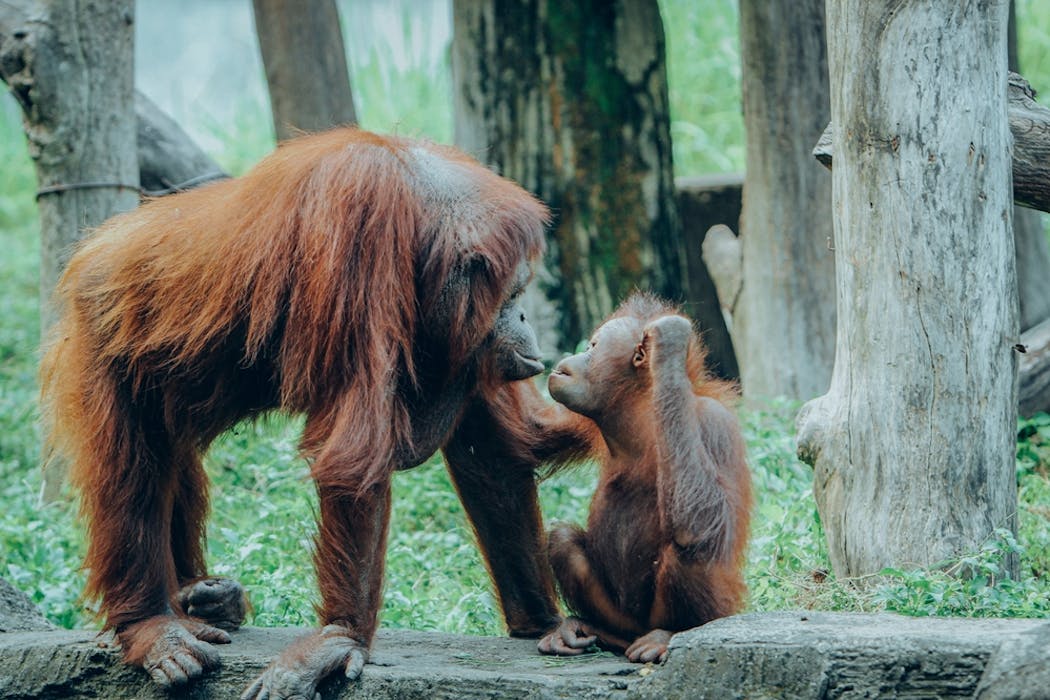
Great apes are humans’ closest relatives in the animal kingdom. As much as 98.8% of their DNA is shared, but while the number of humans living on the planet is increasing fast, other great apes are in decline. Five out of the seven species are now critically endangered.
The UN has estimated that about 22,000 great apes disappeared from their natural habitats between 2005 and 2011. Adults are mostly killed, their meat and body parts sold for bushmeat, traditional medicine or, in some cases, traditional ceremonies.
Babies and juvenile apes, on the other hand, command a much higher price alive. They are also easier to smuggle across borders. Seizures and confiscations of illegal animal trades are rare and often poorly documented.
Through the decades, great apes have remained an acquisition target for some zoos and animal attractions, sometimes by dodging the rules. The desire to keep “exotic” animals as pets also remains a key driver of the illegal global wildlife trade.
Social media has made the illegal trade in great apes much more efficient: sellers and buyers can use online platforms to exchange messages about prices and transport.
The convention was formed 50 years ago to create rules for a legal trade in wildlife and to stem the decline in wild animal populations. Under Cites, commercial trade in great apes is effectively banned. But it has been long known that the complex, paper-based permit system can be avoided or ignored.
Jane Goodall warned of the threats to great apes for years.
So why are governments not doing more? First, the organisation meant to provide oversight and monitoring of wildlife trade – the Cites secretariat – is underfunded. While the legal global wildlife trade market is valued at US$220 billion (£164 billion) a year, the secretariat has an annual budget of about US$20 million. And like most international treaties, it is reliant on the collaboration of its 185 state members, with all the complexities of international politics.
State governments also don’t treat the illegal wildlife trade as high a priority as illegal drugs, weapons or human trafficking – despite the well-known connections between these. And many still operate an outdated permit system developed in the 1970s, instead of the proposed electronic version which would provide much better protection against fraudulent permits, faster and transparent reporting, and increased collaboration with customs officials.
Moving apes around
There are, however, legitimate reasons to transfer great apes internationally. Moving second-generation, captive-bred animals from one registered zoo to another would be a typical example. Getting an export permit showing the animal as captive-born is one of the easiest ways to transport great apes internationally.
But this can also be used as a loophole. In the late 2000s, some 150 chimpanzees, bonobos and gorillas were reportedly exported from Guinea to China, although there is no known facility in Guinea breeding either species. In this case, high-level corruption was a key factor: in 2015, Ansoumane Doumbouya, then head of the Cites management authority in Guinea, was arrested and sentenced to 18 months in prison for selling fraudulent export permits. He was later pardoned by the president of Guinea.
In September 2025, Cites officials visited one of the largest private animal collections in the world. Vantara, India’s wildlife sanctuary turned mega-zoo, was hailed by some as an amazing story of love and care for wildlife. But the Wildlife Animal Protection Forum of South Africa, a national network of 30 South African organisations, has been increasingly concerned about the fast-paced imports of over 2,000 wild animal species from all over the world. Vantara now reportedly keeps close to 150,000 animals, more than any other well-known zoo.
In a recent investigation, the Indian Supreme Court absolved Vantara from any wrongdoing in relation to animal imports. But after this ruling, the Cites secretariat also visited the zoo. Its recent report raised significant concerns about several issues relating to animal transportation involving Vantara.
Vantara has claimed that Cites gave “a clean chit” to the facility, and that it had noted that all animal transfers to the facility were “fully legitimate and transparent, in accordance with Indian law”.
The Cites report said chimpanzees were imported from the Democratic Republic of Congo and also Middle Eastern countries (via the United Arab Emirates) as captive animals. As far as the author is aware, none of these countries are known to breed chimpanzees in zoos or other captive facilities.
Even more worryingly, a bonobo from Iraq, a mountain gorilla from Haiti, and a Tapanuli orangutan from Indonesia were also acquired. There are few recognised zoos globally which breed bonobos, and none breeding either mountain gorillas or Tapanuli orangutans. There is only a single male Tapanuli orangutan kept in an Indonesian zoo. Based on the Zoological Information Management System, the global zoo database, there is currently no mountain gorilla in zoos worldwide.
More generally, Cites has called on member countries affected by the great ape trade – both as a source and destination – to implement additional measures to prevent any illegal transfers. The International Union for Conservation of Nature, the world’s largest conservation alliance, has also called for “international action to protect wild great apes in their natural habitats, with a focus on addressing poaching and illegal trade”.
Introducing a modern electronic permit system and carrying out more enforcement would be important first steps to tackling these crimes. Otherwise, these species that are so close to humans will disappear in front of our eyes.
Prof Matyas Liptovszky is a director of Wilder International, and in a voluntary capacity affiliated with the European Association of Zoos and Aquariums.
Source: The Conversation – UK – By Sally Christine Reynolds, Associate Professor in Hominin Palaeoecology, Bournemouth University
Dinosaur tracks at the Carreras Pampas tracksite in Torotoro National Park.Plos One
Scientists have discovered the single largest dinosaur track site in the world in Carreras Pampa, Torotoro National Park, Bolivia. The tracks were made around 70 million years ago, in the late Cretaceous Period, by theropods – bipedal three-toed dinosaurs – with bird tracks also present in this ancient beach scene.
Over 16,600 footprints and swim traces cover the ancient trackway surface, all heading in the same direction. Swim traces form when floating or swimming animals briefly touch the bottom, often with just their toes making contact. The researchers suggest the traces were made parallel to an ancient shoreline, which preserves beautiful ripple marks.
Modern studies of animals at African water holes and lake margins suggest that herbivores tend to move perpendicular to a shore, moving quickly across the open areas close to a lake. In contrast, carnivores tend to travel parallel to the shore, since this gives them the best chance of intersecting prey.
There are no hard and fast rules here, just general principles, which may or may not apply in this case. Although it is likely that at least some of the traces were made by carnivorous dinosaurs.
Tricky identification
The research was announced in a Plos One paper, which documents 1,321 trackways plus 289 isolated tracks, totalling 16,600 theropod (three-toed) tracks.
They also record 280 “swim” trackways (1,378 swim tracks) and multiple tail traces, with some bird tracks occurring locally alongside the theropod tracks.
These traces can often resemble scratches and are different from the tracks the same animal might make on land. They tell a story of behaviour that is rich in detail.
The site preserves at least a dozen distinct track morphologies (shapes or forms), implying multiple kinds of animals, but the study doesn’t translate those into a specific number of species.
Identifying the species of the trackmakers is difficult for two reasons. First, a single animal can make footprints with different shapes and forms depending on the motion of the foot and the consistency of the underlying ground.
Second, fossil bones are not always found at footprint sites, because the conditions needed for fossil bones to be retained are often different from those needed to preserve footprints.
This makes it harder to identify specific groups or species of dinosaur. The researchers overcome this in the paper by defining “morphotypes”, or put another way, recurring footprints of different types, or forms.
When looking at a track site like this, the number of tracks – and there are lots at this site – does not necessarily equate to the number of animals. One animal moving back and forth across a surface can make lots of tracks. Equally, lots of animals moving once across a surface can leave the same number of tracks.
The find is significant because it captures a range of behaviour from a variety of species. This provides researchers with a window into ancient behaviour, like whether these dinosaurs moved in groups and, potentially, how they foraged and travelled along the stretch of beach.
For example, there is evidence of individual dinosaurs moving in the same direction, which can be due to dinosaurs moving in social groups, performing tasks such as hunting or migrating. However, this phenomenon can also arise because of other factors, such as geographical barriers.
Importantly, the study of the footprints allows researchers to document species that would have occurred together in the landscape during the short time interval when the tracks were forming. This makes the site an archive of an ancient ecosystem, rather than just a single species. Further analysis to yield fascinating insights into the daily lives of the creatures passing along this stretch of shore.
The longest prehistoric trackway made by people, in White Sands National Park (New Mexico), helped us appreciate that one trackmaker on a single journey can make a variety of different types of track based on what they were doing. There could be parallels here with the dinosaur trackway in Bolivia.
Something to ponder as you next walk on a well-trodden beach.
Sally Christine Reynolds does not work for, consult, own shares in or receive funding from any company or organisation that would benefit from this article, and has disclosed no relevant affiliations beyond their academic appointment.
With Something Good, the arts and culture newsletter from The Conversation, we aim to cut through the noise and recommend the very best in new releases every fortnight. And what a soundtrack this year’s newsletters have had. From Lily Allen’s devastating breakup album West End Girl to Rosalía’s genre-defying LUX, these are the best albums of 2025 according to our academic experts.
1. Teal Dreams by Yazmin Lacey
Yazmin Lacey’s second album, Teal Dreams, builds on her well-received multi-genre debut, Voice Notes (2023). Featuring a more confident and developed sound, this album is a rich blending of roots and soul. The Londoner’s vocal delivery spans a range of emotional registers, exploring themes of growth and renewal throughout.
There are beautiful, melodic moments aplenty. From the slow-burn build of Grace to the sassy swagger of Crutch, all reward repeated listening.
Ain’t I Good For You by Yazmin Lacey.
On Ribbons, Lacey addresses personal loss, expressing feelings of change and longing, declaring she’s “not the same Yazmin”, “misses your big ideas” and wants “to talk about love and fear”.
Meanwhile her 2024 collaboration with Ezra Collective, God Gave Me Feet For Dancing, continues with the grooviness of Ain’t I Good For You. The song and album serve as an open invitation to dive in and enjoy the reflective beauty Lacey offers.
Hussein Boon is chair of the Black Music Research Unit
2. The Dreaming Prince in Ecstasy by Lamp of Murmuur
The Dreaming Prince in Ecstasy is one of 2025’s most striking extreme-metal releases. Not just because it blends black metal with psychedelic tones reminiscent of David Bowie, but because it plays with the genre’s emotional architecture in unusually vulnerable ways.
Under the swirling tremolo and gothic theatrics sits an affective register closer to yearning than nihilism. The album leans into a kind of decadent, romantic masculinity, accentuated by the complete anonymity of the band’s members, and refusal to confirm to normative maleness in the genre.
The Dreaming Prince in Ecstasy by Lamp of Murmuur.
For researchers like me who study men and masculinities, it’s a compelling artifact: a reminder that subcultural performance is never just noise, but a way of working through desire, fantasy and the uneasy labour of feeling.
In a music scene often caricatured as hostile or hypermasculine, The Dreaming Prince in Ecstasy offers a glimpse of what happens when intensity becomes a mode of introspection rather than domination.
Chris Waugh is a lecturer in Criminology & Sociology
3. LUX by Rosalía
For anyone unfamiliar with Rosalía’s journey from flamenco experimentalist to global pop innovator, LUX might seem like a bold leap – yet its seeds were always there. A heartfelt offering of avant-garde classical pop, sung across 13 languages, this record feels both operatic and immediate, expansive yet relatable.
Berghain by Rosalía.
What’s most impressive is the album’s sheer conceptual depth, weaving together romance, divinity and gender without ever feeling academic or inaccessible. Drawing on historic figures such as the German Benedictine abbess and philosopher Hildegard von Bingen (1089-1179) and Taoist master Sun Bu’er (1119-1182), the record situates contemporary pop within a lineage of female mysticism and intellectual devotion. Yet songs like La Perla bring the album back to earth with cutting lyricism that feels instantly resonant.
It’s rare to hear pop music this conceptually daring become such a commercial and critical force, but this success feels wholly earned.
Eva Dieteren is a PhD researcher in gender and popular music
From the dual tin whistle strains of Welcome To My Mountain, the opening song from Junior Brother’s startling third album The End, you quickly realise that this is a greeting of a different kind.
There are musical references; a touch of Richard Thompson here, a flash of Kate Bush there, but Kealy is more closely aligned with the singular songwriting styles of John Spillane, Jinx Lennon, Lisa O’ Neill and Seamus Fogarty.
This is an astonishing record. It demands the attention of the listener, and rewards with each repeated listen.
Stephen Ryan is course director for the MA in songwriting
5. Rainy Sunday Afternoon by The Divine Comedy
The Divine Comedy’s mastermind Neil Hannon brings his unique blend of upbeat poppy tunes and romantic melancholia to the band’s 13th studio album, Rainy Sunday Afternoon. And it reminds us that he really is one of the great songwriters, with a range so impressive that he can turn effortlessly from the achingly beautiful (Achilles and I Want You) to scathing, witty satire (Mar-a-Lago by the Sea) via the sparkling Christmas song All the Pretty Lights.
Achilles by The Divine Comedy.
No, Hannon may never again see the commercial heights of National Express, a song The Guardian describes as his “worst song and greatest hit”, and nor may he wish to. After three decades in the business, Hannon is doing something much more valuable: writing emotive, catchy songs which continue to connect with people.
Glenn Fosbraey is an associate dean of humanities and social sciences
6. You Are Safe From God Here by The Acacia Strain
With the 13th album of their career, The Acacia Strain have released one of their most dense and uncompromising records to date. You Are Safe From God Here combines riff and drum brutality and crushing lyrical passages.
Most of the tracks are around two minutes long, giving the album a relentless, all-killer-no-filler directness. This is then contrasted by the colossal closing song Eucharis II: Blood Loss, which spans 14 minutes. It’s a hypnotic and bleak descent and unforgettable album closer.
A Call Beyond by The Acacia Strain.
Lyrically, the album dives into themes of isolation, depression and a “dark fantasy” of visions of an uncaring and predatory god. The album performance feels venomous and emotionally exposed – channelling both rage and despair. The result is an album that is not only sonically devastating but also emotionally overwhelming.
While less accessible to its predecessors, You Are Safe From God Here is more atmospheric and brutal. A harrowing, standout chapter in The Acacia Strain’s evolution as a band and rightly a top contender for album of the year in the metal scene. Ultimately, the album lives up to its name: in the depths that The Acacia Strain explore on this record, you really are safe from god.
Douglas Schulz is a lecturer in sociology and criminology
7. West End Girl by Lily Allen
Lily Allen returned to making music after seven years in October – and redefined the breakup album in the process. Written and recorded over just ten days, West End Girl is a concept album that fictionalises Allen’s journey from her casting in the play 2:22 – A Ghost Story, through to her eventual break up with her ex-husband, American actor David Harbour.
West End Girl by Lily Allen.
Lyrical rawness is the essence of this album, with Allen refusing to hold anything back in articulating her feelings towards an ex and their alleged secret lover, referred to on the album as “Madeline”. In this fictionalisation of events Allen calls the ex a sex addict and shares her discomfort with his alleged request for an open relationship with brutal honesty.
Musically Allen reasserts herself, reminding us of her influence on younger artists such as PinkPantheress and Charli XCX through her vocal and musical delivery, and by packing her lyrics full of contemporary and relatable cultural references.
In the space of four years, PinkPantheress has gone from producing songs on GarageBand in her university halls of residence to an award-winning international artist. Not bad for a 24-year-old from Bath who became a viral TikTok sensation after posting faceless snippets of her songs.
Stateside by PinkPantheress.
Her latest album, Fancy That is ridiculously brief, but filled with bubble gum earworms and sweetly sung bops. PinkPantheress’s breathy falsetto combines with her lullaby lyrics about gen-Z life to showcase her as an extremely gifted songwriter and producer. More disco babe than Brat, Fancy That is the soundtrack to a party where everyone is invited.
Like Jim Legxacy’s mixtape Black British Music (also released this year), there is a sense of anemoia – a yearning for a time that you did not experience – that comes with Fancy That. The deep rolling 80s electronic bass of Stateside. The electronic chords of Illegal. The rave-like Girl Like Me. This trademark gen-Z hybridity should produce a sound that is cacophonic; however, the genres of drum and bass, house, garage, jungle and electronic pop coalesce to produce something that sounds fresh and new.
Julia Toppin is a senior lecturer in music enterprise and entrepreneurship
9. Let God Sort Em Out by Clipse (July)
Advances in music technology have allowed artists such as Billie Eilish and Lil Nas X to create huge hits outside of conventional studios, using DIY home recording set-ups. But Clipse’s new album — the first in 16 years from brothers Gene “Malice” and Terrence “Pusha T” Thornton — must be the first to be recorded within the headquarters of a fashion mega-brand.
Chains & Whips by Clipse and Kendrick Lamar.
Producer Pharrell Williams oversaw Let God Sort Em Out while serving as Louis Vuitton’s creative director, using a custom-built studio in their Paris headquarters. The luxurious setting seems to influence the sound: the hard-hitting percussive edge of earlier Clipse recordings gives way to woozier, synth-laden beats, exemplified by the hypnotically off-kilter P.O.V.
Clipse are pioneers of “coke rap”, and there are still plenty of bars here that engagingly recount their triumphs and near-misses in the drug trade. Now in their 50s, though, their lyrics also explore broader themes: The Birds Don’t Sing honours their recently deceased parents, while closing track By The Grace of God reflects on the improbable longevity of their careers.
Ellis Jones is a lecturer in music and management
10. Non Fiction: Piano Concerto in Four Movements by Hania Rani
Polish neo-minimalist composer and singer Hania Rani has collaborated with the Manchester Collective and improvisers Valentina Magaletti and Jack Wyllie to record her most ambitious work yet, Non Fiction.
IV. Semplice by Hania Rani, Manchester Collective, Jack Wyllie and Hugh Tieppo-Brunt.
The album was inspired by the work of Jewish child prodigy Josimah Feldschuh. Feldschuh made her concert debut in the Warsaw Ghetto just before the second world war at the age of 11. There, she also began to write her own music. She died of tuberculosis just outside of Warsaw at the age of 13, having fled the ghetto with her family. Only 17 of Feldschuh’s compositions survived.
Inspired, Rani set about writing and recording Non Fiction. However, the project’s focus was soon unsettled by more recent horrors: Russia’s full-scale invasion of Ukraine in 2022, and Israel’s invasion of Gaza after the October 7 attacks. Rani perceived similarities between images of Gaza’s destruction shared online, and photographs of Warsaw’s destruction during the second world war.
The result is an instrumental album of scope and depth. Non Fiction stands as a reflection on war and brutality that allows just enough grace, tenderness and humanity to keep us hopeful.
Andrew Green is a lecturer in the anthropology of music
What was your favourite album of 2025? Let us know in the comments below.
Looking for something good? Cut through the noise with a carefully curated selection of the latest releases, live events and exhibitions, straight to your inbox every fortnight, on Fridays. Sign up here.
Samuel Murray is affiliated with the Musicians’ Union and a writer member of PRS for Music.
Andrew J. Green, Chris Waugh, Douglas Schulz, Ellis Jones, Eva Dieteren, Glenn Fosbraey, Hussein Boon, Julia Toppin, and Stephen Ryan do not work for, consult, own shares in or receive funding from any company or organisation that would benefit from this article, and have disclosed no relevant affiliations beyond their academic appointment.
In no particular order, here are The Conversation’s top five films of 2025 as reviewed by our experts.
1. One Battle After Another
The latest film from director Paul Thomas Anderson follows Bob (Leonardo DiCaprio), an ageing hippie hero and a relic of a fictional noughties brigade, the French 75. Led by his lover Perfidia Beverley Hills (Teyana Taylor), they robbed banks, bombed buildings and liberated detention centres in the name of their ideology of “free borders, free choices, free from fear”.
Left to bring up their daughter, Willa (Chase Infiniti), Bob spends his days off-grid unshaven, smoking weed. All is (somewhat) well until the brutal army veteran, Colonel Lockjaw (Sean Penn), who believes himself to be Willa’s real father, barrels back into their lives in pursuit of his “daughter”.
It is at heart a family melodrama, drawing on the classic tropes of bad versus good father and conflicted mother, questioning the legitimacy of the family unit. On to these narratives bones, Anderson grafts a vision of a post-Obama America in thrall to shadowy corporate interests, a legacy of rounding up and deporting immigrants, and an old white male order hell-bent on its own agenda of personal revenge.
After the lights have gone up, it may well be that what stays with you most is its terrifying imagery of detention centres and the horror of immigrant round-ups. It is this certainly that led Steven Spielberg to acclaim “this insane movie” as more relevant than Anderson could ever have imagined.
Ruth Barton, Fellow Emeritus in Film Studies at Trinity College Dublin
2. Sinners
Sinners is set in Jim Crow-era Mississippi, a time of harsh segregation and racial injustice. It follows Sammie (Miles Caton), a young Black guitar player, who gets his big break when his cousins, the gangster twins Smoke and Stack (both played by Michael B. Jordan), return to open a juke joint in their hometown. This new venture brings money, music and a sort of freedom but also danger to their door.
On the juke joint’s opening night, Sammie’s blues music draws the Irishman Remmick (Jack O’Connell) to the bar. But Remmick is no average man, he’s a vampire.
Remmick uses his own song, The Rocky Road to Dublin to invite the Black patrons to join him and the others he has turned into vampires, offering them the chance to escape Jim Crow Mississippi. The song he chooses, although catchy, is a story of exchanging one form of suffering (life in Ireland during the height of English oppression) for another – life on the English mainland where the ballad tells of victimisation and violence. This is one of many moment where the real stories of Irish and Indigenous Choctaw oppression are used in the film to draw connection between oppressed people and the stories they tell and were told.
Such nuance within the film meant that I watched it several times and gained more insight and enjoyment with each viewing.
By Rachel Stuart, Senior Lecturer in Criminology and Deviant Identities at Brunel
3. A Real Pain
We are constantly confronted by history. The history of our cultures and traditions. Of our families. Of our own personal relationships. Can we – or should we seek to – ever escape the tightly woven net of our preoccupation with our past?
Jesse Eisenberg explores these questions with curiosity, humour and insight in the lightly plotted, semi-road movie, A Real Pain.
David (Eisenberg) and Benji (Kieran Culkin) are 40-something cousins, who are reunited for a trip to Poland in memory of their recently deceased grandmother, a Holocaust survivor with whom both, especially Benji, were very close.
The tourist group perform their Jewishness within unstated yet acknowledged limits to their engagement– with Poland, with Jewish history, with each other and indeed with themselves. Within this muted, routinised remembrance culture, Benji’s unpredictable behaviour starts to detonate small outbreaks of “real pain”, which are annoying and upsetting in equal measure.
What “pain” should take precedence? That of the violently amputated cultural history to which its inheritors feel a moral duty of remembrance? Or the ongoing needs and demands of the present, which cannot linger indefinitely in history’s dark shadow. The great strength of Eisenberg’s subtle, understated film is to pose such questions without suggesting, let alone imposing, facile answers.
By Barry Langford, Professor of Film Studies at Royal Holloway, University of London
4. Sorry, Baby
Sorry, Baby is the directorial debut of its writer and star, Eva Victor. The film follows Agnes (Victor), an English professor at a small American college, in the aftermath of a sexual assault by one of her teachers when she was a student there.
The story, based on Victor’s own experience of trauma, is structured in non-linear chapters encompassing the time after, before and during the assault. The result is a raw and unflinching, yet nuanced, depiction of trauma’s aftermath, which presents Agnes as a fully rounded and complex character.
Sorry, Baby resists the idea that trauma must define a character’s identity. Instead, the film explores how people live with, around and beyond painful experiences. Agnes carries trauma with her, but moves forward with hurt, joy, and desire – alive with humour and contradiction.
This debut marks Victor as a distinctive voice in contemporary cinema, one who trusts her characters and her audience alike. With Sorry, Baby, Victor shows us a new way to tell stories about trauma, healing, and the small, vital moments in between. This is a filmmaker to watch.
Laura O’Flanagan, PhD Candidate in the School of English at Dublin City University
5. Weapons
The film opens with the chilling premise of 17 children from the same classroom vanishing without a trace, leaving behind only grainy security footage of them running with their arms outstretched, like little planes. However, the true horror unfolds as the community of Maybrook – a small town in Pennsylvania – spirals into chaos instead of unity.
Parents accuse teachers, neighbours distrust one another and innocent lives are upended in the search for a culprit. This breakdown is grounded in psychological research, showcasing how human behaviour can deteriorate under pressure.
Social identity theory is a scientific concept that theorises that your brain is wired to compartmentalise the world into “us” (those we consider good) and “them” (those perceived as threats). This process intensifies when people face fear or stress.
In Weapons, we see this theory in action as the community dismantles itself. Teacher Justine Gandy (Julia Garner) becomes an easy target, not due to concrete evidence, but because she fits neatly into the role of the other – “them”. The parents of the missing children seek someone to vilify, and she becomes the scapegoat of their fears.
Weapons succeeds as horror because it doesn’t rely on supernatural monsters or gore. Instead, it shows us the real monsters – the ones we become when our psychology works exactly the way evolution has led it to.
Edward White, PhD Candidate in Psychology at Kingston University
Looking for something good? Cut through the noise with a carefully curated selection of the latest releases, live events and exhibitions, straight to your inbox every fortnight, on Fridays. Sign up here.
The authors do not work for, consult, own shares in or receive funding from any company or organisation that would benefit from this article, and have disclosed no relevant affiliations beyond their academic appointment.