Good news: cancer death rates in the UK have fallen to their lowest level on record.
According to the latest statistics from Cancer Research UK, between 2022 and 2024 around 247 people per 100,000 died from cancer each year in the UK. This is down from a peak of 355 deaths per 100,000 in 1989 – a decline of nearly 29%. Researchers say the long-term drop reflects decades of investment in cancer research, prevention and treatment.
Much of this progress comes from major improvements in several common cancers. Over the past ten years, deaths from stomach cancer have fallen by 34%, while lung cancer deaths have dropped by 22%. Ovarian cancer deaths declined by 19%, breast cancer by 14% and prostate cancer by 11%.
These gains reflect several factors working together. Advances in cancer screening, a growing range of new and effective treatments, and earlier diagnosis have all played a role in improving survival.
In prostate cancer, for example, breakthroughs in hormone-based therapies have helped slow tumour growth. Perhaps the most dramatic improvement has been in cervical cancer, where deaths have fallen by 75% since the 1970s. This is largely due to national screening programmes and the introduction of the HPV vaccine.
A major driver of falling cancer deaths has been screening. The NHS cervical screening programme has been particularly effective, detecting cancers at very early stages, and often identifying pre-cancerous changes before cancer develops.
The success of the HPV vaccine, introduced in 2008 and now given to millions of people, has strengthened this progress by preventing infections that can trigger the cellular mutations leading to cervical cancer.
Screening has also improved outcomes in other cancers. Programmes for breast and colorectal cancer help detect disease earlier, when treatment is more likely to succeed. Similarly, the introduction of PSA testing has improved detection of prostate cancer.
At the same time, advances in cancer research have transformed treatment options. Targeted therapies and personalised medicine are increasingly common, allowing doctors to tailor treatment to the biology of an individual patient’s tumour. Hormone therapies that block testosterone, for instance, have significantly improved outcomes in prostate cancer.
Immunotherapy is also advancing rapidly. Researchers are exploring preventive vaccines for cancers such as lung and ovarian cancer, raising the possibility that some cancers could eventually be prevented before they even develop.
Public health measures have also played a role. Policies such as smoking bans, alongside greater awareness of cancer risk factors, have contributed to falling death rates for several major cancers.
However, it is worth noting that while cancer death rates are falling, the total number of people dying from cancer is still rising. This is largely because the UK population is growing and people are living longer.
As we age, mutations and cellular damage accumulate, increasing the risk of cancer. The rise in deaths from some cancer types is now prompting researchers to focus more attention on these diseases. Many are linked to late-stage diagnosis, because symptoms often appear only once the disease is advanced. Expanding research and clinical trials in these areas could make a significant difference.
The cancers bucking the trend
Some cancers have actually seen deaths rise over the past decade. Deaths from skin, intestinal, bone, gallbladder and eye cancers have increased by 46%, 48%, 24%, 29% and 26%, respectively. Liver cancer deaths have risen by 14%, while kidney cancer deaths are up by 5%.
There are probably several reasons for these increases. Some cancers are harder to detect early, while others have fewer effective treatments. Lifestyle factors may also be contributing, including greater use of tanning beds and diets high in ultra-processed food. Meanwhile, mortality rates for cancers such as thyroid and pancreatic cancer, as well as some skin cancers, have remained largely unchanged.
Even so, the overall trend remains encouraging. Experts believe that with continued investment in research, clinical trials and NHS capacity, cancer mortality could fall further. Current projections suggest a decrease in death rates of around 6% between 2024-26 and 2038-40 within the next two decades.
While challenges remain, the latest figures highlight what sustained investment in research, prevention and treatment can achieve. As screening improves, therapies advance and prevention expands, further progress against cancer may be within reach.
The authors do not work for, consult, own shares in or receive funding from any company or organisation that would benefit from this article, and have disclosed no relevant affiliations beyond their academic appointment.
Director Silvio Soldini’s wartime drama The Tasters is a gripping and deeply affecting film. Inspired by the testimony of Margot Wölk, who claimed in 2012 that she had been forced to taste Adolf Hitler’s food during the second world war, the film examines survival and moral compromise among those caught inside the machinery of the Nazi regime.
At its centre is Rosa Sauer (Elisa Schlott), a young woman who leaves Berlin in 1943 to live with her parents-in-law in rural East Prussia while her husband fights on the Russian front. Hoping to escape the bombing of the capital, she quickly finds herself facing a different danger when Nazi soldiers arrive and force her into a van with several other women from the village.
They are taken to the nearby Wolf’s Lair, Hitler’s secret headquarters, where the women are ordered to taste every meal prepared for the Führer to confirm that the food has not been poisoned. They sit together under guard to eat dishes prepared by the kitchen staff and then wait under supervision to see whether anyone falls ill.
The film unfolds within a muted visual palette that reflects the bleakness of its rural wartime setting. The countryside is drained of colour and the interiors appear subdued. This restraint extends to Hitler himself, whose presence is constantly acknowledged but never shown. The unseen dictator hangs over the film and shapes the lives of the women without ever appearing to them.
Elisa Schlott delivers a quietly commanding central performance. Her Rosa is observant and uneasy, a woman trying to understand a situation imposed on her without explanation. Schlott conveys the character’s anxiety through small gestures and careful silences, creating a performance with steady emotional weight which anchors the film.
The ensemble surrounding Schlott is equally impressive. The other women gradually come into focus, each drawn carefully with her own complexities. Emma Falck gives a strong performance as the wide-eyed and optimistic Leni, while Alma Hasun is compelling as the guarded Elfriede. Their shared circumstances create moments of closeness as well as distrust, so that survival becomes a matter of constant adjustment.
Rivalries emerge and alliances shift as the women spend long hours together under surveillance. Bonds form through conversation and secret gestures of care, and even within a system that treats them as expendable, the women continue to recognise one another as individuals.
The Nazi soldiers are a constant threatening presence. Their authority over the women is absolute and the violence behind it surfaces in sudden moments. One lieutenant (Max Riemelt) begins to single out Rosa and the two enter a clandestine sexual relationship that offers brief escape for them both before the reality of their situation, and their own role in the horror of war intrudes.
Soldini’s patient, understated direction allows the story to unfold through confined interiors and careful observation. Composer Mauro Pagani’s impressive score carries an insistence beneath the action, evoking the war beyond the boundaries of the film. The conflict remains outside the frame, while the score intrudes at key moments and unsettles the fragile calm of the women’s routines.
In the crowded field of second world war films, The Tasters is a rare story that places women at its centre. These women continue their lives as best they can within the constraints of their reality. They talk and confide in one another, and small acts of kindness carry enormous weight in an environment shaped by control and fear.
Exploring the fragile humanity which persists within an oppressive system, The Tasters is a thought-provoking, compelling and quietly powerful film that will devastate you softly.
This article features references to books that have been included for editorial reasons, and may contain links to bookshop.org; if you click on one of the links and go on to buy something, The Conversation UK may earn a commission.
Laura O’Flanagan does not work for, consult, own shares in or receive funding from any company or organisation that would benefit from this article, and has disclosed no relevant affiliations beyond their academic appointment.
For Mother’s Day, we asked ten of our academic experts to tell us who they think is the worst mother in literature. From serious villains to children’s book baddies, these mothers subvert every maternal instinct.
1. Mummy, Eleanor Oliphant is Completely Fine by Gail Honeyman (2017)
Isolated, broken and wedded to routine, 30-year-old Eleanor avoids mirrors, not due to the physical scars she bears, but because she sees “too much of Mummy’s face there”.
Readers meet “Mummy” only through her weekly conversations with Eleanor, but as a critical voice she is unsurpassed: “You’re not smart, Eleanor. You’re someone who lets people down. Someone who can’t be trusted. Someone who failed.” We soon learn there are no depths to which this mother hasn’t sunk.
The novel serves as a stark reminder that a mother’s reach goes far beyond childhood. “The two of us are linked forever, you see – same blood in my veins that’s running through yours. You grew inside me, your teeth and your tongue and your cervix are all made from my cells, my genes.”
The novel’s message – that recovering from an experience so embodied is possible – offers hope to all those with less than ideal mothers.
Alison Taft is a senior lecturer in creative writing
2. Edith Stoner, Stoner by John Williams (1965)
Stoner was the first novel that gave me a book hangover with its devastating family dynamics and tragic ending. Edith is a chilling example of maternal dysfunction. I only realised in later readings that her emotionally repressed upbringing and potential abuse result in her perpetuating familial dysfunction.
Edith is initially indifferent and cold towards her daughter Grace, but her interest awakens when a bond develops between Grace and her husband. Grace then becomes a weapon: Edith systematically isolates the girl from her father by controlling her time and manipulating her affections. Over time, she manages to place a wedge between them.
Grace eventually grows into a struggling young woman. She’s an alcoholic and escapes her troubled home when she accidentally falls pregnant and marries. She becomes a distant, unavailable mother herself. The novel’s engagement with trauma cycles left me feeling heartbroken for days.
Christina Hennemann is a PhD candidate in English
3. Arabella Don, Jude the Obscure by Thomas Hardy (1895)
The conniving Arabella Donn from Thomas Hardy’s Jude the Obscure illustrates the uncomfortable truth that being a bad mother can sometimes be essential for self preservation.
Hardy shows Arabella bathed in blood as she cheerfully slaughters a long-suffering pig, signalling her pragmatic refusal of feminine sentimentality. She approaches marriage, pregnancy and motherhood with similarly callous logic; as strategies for survival in a world offering women woefully little security. Arabella initially fakes pregnancy to trap Jude, and then blithely abandons her son when he proves inconvenient.
By conventional standards, Arabella’s maternity appears monstrous. Yet Hardy’s portrayal reflects a far more monstrous reality; selfless maternity is a dangerous liability in a society that neither protects women nor meaningfully supports motherhood. Arabella survives precisely because she is an appalling mother. Yet if we were to cast blame for her maternal failures, it lies less with Arabella than with the social conditions that make motherhood such a profoundly vulnerable predicament.
Angela Dunstan is a reader in English literature and visual culture
4. Samira, The Beginning and the End by Naguib Mahfouz (1949)
Egyptian Nobel laureate Naguib Mahfouz’s novel The Beginning and the End presents widowed mother Samira as a figure often praised for her strength and virtue. After losing her husband, she takes on the challenge of holding together a family reduced to poverty. She is strict and disciplined and expects her four children to sacrifice for one another.
For me, however, she is a deeply flawed mother. Like other neglectful maternal figures in Mahfouz’s work, she cloaks her selfishness and emotional blindness in the language of duty and sacrifice.
Nefisa, the plain member of the family, is pushed into making sacrifices for her brothers. Samira directs all her concern and ambition toward her sons, while remaining blind to her daughter’s needs.
Nefisa becomes a seamstress, starved of love and deprived of any prospect of marriage. Left unprotected, she encounters unsavoury characters on her way to and from work, and eventually becomes a sex worker.
Samira may seem a paragon of virtue, but her rigid morality and refusal to see her daughter’s suffering make her complicit in Nefisa’s tragic end.
Wen-chin Ouyang is a professor of Arabic and comparative literature
5. Mrs Wormwood, Matilda by Roald Dahl (1988)
Before “phubbing” – snubbing your child in favour of interacting with your phone – there was Mrs Wormwood, the mother of Roald Dahl’s Matilda.
Wormwood is in thrall to TV shows and TV dinners, looks not books. She is uninterested in her preschooler’s safety, let alone pastimes. While she plays bingo on weekday afternoons, four-year-old Matilda walks across town to the public library.
Mrs Phelps, a kindly librarian, is the first of two substitute mothers. She watches over Matilda while she reads, with concern but without interference, guiding her reading only when asked. Miss Honey – a mild, quiet and exceptionally empathetic teacher – stretches her clever little charge, while teaching the rest of the juniors to read.
When Matilda’s equally awful father gives her half-an-hour to pack for a permanent move to Spain, she arranges to be adopted by Miss Honey – with her mother’s blessing: “It’ll be one less to look after.”
Sarah Olive is a senior lecturer in English literature
6. Adora Crellin, Sharp Objects by Gillian Flynn (2006)
The struggle for maternal perfection turns monstrous in Gillian Flynn’s novel Sharp Objects.
Adora, matriarch of the Crellin family, has Munchausen by Proxy Syndrome, a psychological disorder where, as the book explains: “The caregiver, usually the mother, almost always the mother, makes her child ill to get attention for herself.”
Adora is monstrous because she takes the cultural ideal of the devoted mother too far. She harms her children so that they must blindly accept her medicines and perverse care, telling them it is only then that she will love them forever. For rejecting Adora’s toxic remedies, her daughter Camille is emotionally neglected.
Both girls act out against this suffocating mothering through risky sexual behaviour, self-harm and crime. Flynn’s portrayal of Adora as the “perfect mother” undercuts the ideal that motherhood is a natural role for all women.
Ailish Brassil is a PhD candidate in English literature
7. The ‘new’ Bobbie, The Stepford Wives by Ira Levin (1972)
In the suburb of Stepford, Connecticut, local women’s husbands conspire to murder their wives and replace them with compliant robot duplicates. Bobbie Markowe becomes one such replaced woman.
The “new” Bobbie’s children appear happy with their changed mother who “doesn’t shout any more” and “makes hot breakfasts”. But the Stepford wives are not built for the complex demands of motherhood. These wife replacement robots are designed by their husbands to please and appease them, and this treatment is extended by Bobbie to her sons.
Although not as obviously harmful as physical or verbal abuse, this dynamic of constant indulgence warps the children’s understanding of mothers and of women in general. And despite her supposed gentleness, in “new” Bobbie’s garden the family dogs have been chained up – an ominous warning to any dependants who become too messy or inconvenient.
Faye Lynch is a PhD candidate in English literature
8. Rose, On Earth We’re Briefly Gorgeous by Ocean Vuong (2019)
As Ocean Vuong opens his semi-autobiographical novel, readers are introduced to a mother who appears volatile and abusive. Yet as the story develops, Vuong decodes the layered identity of this seemingly monstrous mother, revealing a woman whose life has been profoundly shaped by forces beyond her control.
As a Vietnamese refugee in America, Rose’s experiences of violence and poverty – as well as the way her limited English marks her as an outsider – showcase how trauma and displacement can distort expressions of love.
Through his letters, fragmented memories and poetic reflections, Vuong illustrates how his mother’s violence is embroiled with sacrifice, fearsome resilience and an unspoken wish to protect her son in a world that has caused her so much pain. The result is a maternal figure who represents a nuanced portrayal of motherhood under duress.
Vuong frames Rose as a cubist figure, presenting her from several angles at once, revealing complex and contradictory sides of her personality. Her maternal identity is inseparable from her experience of displacement, and its enduring psychological toll.
Clodagh Guerin is a PhD candidate in refugee world literature
9. Tamora, Titus Andronicus by William Shakespeare (circa 1558)
There are few mothers in Shakespeare’s dramas, but Tamora in Titus Andronicus is one of the most memorable – for all the wrong reasons.
Tamora seeks revenge for the death of her eldest son at the hands of Titus. She is cunning and ruthless, scheming to wreak bloody havoc on Titus and his family. But this is Shakespeare’s take on ancient Rome, where might and masculinity rule, so violence breeds violence and the war hero Titus gets the last word.
In retaliation for Tamora’s crimes, Titus kills her wicked sons and, in the tragedy’s spectacular finale, serves them up to her baked in a pie. After this, Rome’s new emperor symbolically marks the regime change by expelling Tamora’s corpse from the city. Though Tamora has some maternal virtues – she is fiercely loyal at least – her vindictiveness, power and lust mean that she is destined for an unforgettable Shakespearean death.
Edel Semple is a senior lecturer in Shakespeare studies
10. Undine Spragg, The Custom of the Country by Edith Wharton (1913)
Undine Spragg is a strong candidate for the worst mother in literature. Ruthless, ignorant and narcissistic, this anti-heroine marries four times in a self-absorbed project of social climbing and celebrity seeking.
When her son Paul is born, Undine’s reaction is so unimportant that it is missing from the novel. When he’s a toddler, she forgets about his birthday because she is at a party (although Paul’s father also fails to turn up on time).
The final chapter of the novel opens on a description of the timid and tender nine-year-old Paul wandering alone through her latest residence. Undine’s lack of maternal feeling stands as an example of ultra-rich folly that has long thrilled and horrified Wharton’s largely middle-class readership.
Stephanie Palmer is a senior lecturer in English literature
Who do you think is the worst mother in literature? Let us know in the comments below.
This article features references to books that have been included for editorial reasons, and may contain links to bookshop.org. If you click on one of the links and go on to buy something from bookshop.org The Conversation UK may earn a commission.
The authors do not work for, consult, own shares in or receive funding from any company or organisation that would benefit from this article, and have disclosed no relevant affiliations beyond their academic appointment.
Source: The Conversation – UK – By Jen Harvie, Professor of Contemporary Theatre and Performance, Queen Mary University of London
Earlier this month, former English National Opera artistic director John Berry said opera in the UK needed to “attract good writers and tell better stories” that could tap into the zeitgeist, making the art form more contemporary and accessible. But is this kind of approach enough to capture the attention of new and younger audiences? In the same week, actor Timothée Chalamet caused a furore when he dismissed ballet and opera as art forms that younger people “did not care about”.
Often regarded as an “elite” art form, opera undoubtedly has an image problem in that it is seen as the preserve of rich older white people, which risks alienating those who feel it excludes and is not for them. At the same time – like much of the arts – opera is under attack from funding cuts and needs to attract new and more diverse audiences if it is to survive long term. So what is the position of opera in the UK and what does it need to do to secure its future? We asked four experts in the field.
Embrace a greater range of influences
Jen Harvie, Professor of Contemporary Theatre and Performance, Queen Mary University of London
John Berry’s comment raises crucial questions: more generally, what should the arts do? And for opera: what should a traditionally “elitist” art form do? My answer: publicly subsidised arts have an ethical duty to reach as wide an audience as possible.
This doesn’t mean the arts should dumb down – a horrible, patronising phrase. It means traditionally elite arts like opera must adapt to broaden their appeal. I am not alone in my view. Research commissioned by Arts Council England on opera in 2024 says the same thing: that opera’s audiences are usually white, older and richer than England’s general population.
To expand audiences, opera must embrace a greater range of influences, from musicals to concept albums and music videos. It should commission new English-language librettos and mixed spoken/sung operettas. It should commission stories that resonate with audiences across all ages, classes and ethnicities. At the same time, opera’s funders must support both formal innovation and arts education, to facilitate access to opera.
Opera is full of extraordinary performance, music, song, storytelling, stagecraft, costume and design. It faces an ethical responsibility – and an opportunity – to share these riches with more of us.
Popular Spanish singer-songwriter Rosalia’s latest album embraces all kinds of musical forms.
Transform the operatic ecosystem
Edward Venn, Professor of Music at the University of Leeds
Beneath its attention-grabbing provocations, Berry’s call for the evolution of opera contains a deceptively simple question: how are we going to
encourage writers? Clearly, opera benefits from showcasing authentic creative
voices that speak to a wide audience.
But the answer does not lie in enticing the latest Netflix sensation to pen a libretto. Rather, evolution requires the whole operatic ecosystem to transform so that those performing, directing and creating operatic stories better reflect our society.
This article is part of our State of the Arts series. These articles tackle the challenges of the arts and heritage industry – and celebrate the wins, too.
The industry tends towards creative reworkings of canonic repertoire rather than financially more risky new commissions. This means opportunities for composers and writers to produce new work that speaks to contemporary issues become vanishingly rare.
Sustainable evolution comes from nurturing a diverse, rich talent pool; such diversity can in turn result in a wealth of authentic, compelling operatic stories. But this requires creative risk-taking at a time when opera companies can ill afford to do so.
Itch by Alasdair Middleton and Jonathan Dove.
Develop new writers, composers and audiences
Jennifer Daniel, Senior Lecturer in Musical Theatre at Edge Hill University
To “own the zeitgeist in the performing arts”, as Berry suggests, opera does need to develop its form, its artists – and crucially, its audiences. Is that really about drawing big names into the writing process? Opera librettists are distinctive – they create musically, often in established partnerships with composers (such as Alasdair Middleton with Jonathan Dove).
They take on dramaturgical responsibility for musical storytelling, often finding ways to write less. Writing an opera can take years, is seldom profitable, and skills most often developed for the love of it rather than acclaim or financial reward. Opera writers really want to write opera. And companies such as Opera North have made the case that the publicly funded opera company has the public responsibility to develop those distinct artists in developing the form.
Just as important, audiences also have to be developed in readiness to receive. In the best cases, companies’ outreach and education work extends our understanding and enhances our reception of opera, including the challenging and the new.
Such initiatives are applied across an incredibly broad social and age spectrum by companies such as Opera North, ENO, Royal Opera and the rest. The balance of cost and popularity means that relatively few full-scale new operas are produced. Small, agile productions can be hugely innovative and accessible if we can tear ourselves away from the grandeur of the mainstage auditorium.
But concurrent and equally important to the development of new work is the development of a wide audience. There must be a commitment to ensuring that each generation anew is culturally primed and able to access an art form – from the 1700s right up to the present moment – that is live, spectacular, unmediated and essentially human. If “opera if wants to own the zeitgeist” in an age of AI, technology and unprecedented mediation, this is, perhaps, where we should place our attention.
Invest in well-conceived outreach programmes
Kiera Vaclavik, Professor of Children’s Literature & Childhood Culture and Director of the Centre for Childhood Cultures at Queen Mary University of London
When I was a teenager my class got on a coach to London to take part in a workshop with Glyndebourne Opera, where I sang and found out about Dvořák and his gripping mermaid story, Rusalka (1901). In the evening, we went to see that story performed. I was not much of a singer and there was no way I would have seen an opera otherwise. Nor would I have been able to make much sense of it without the workshop. The entire trip cost £5 and I’ve never forgotten it.
Opera companies don’t need TV writers as much as they need well-funded and well-conceived outreach programmes. They need to be operating within a culture where, from birth, children have opportunities to experience the sheer wonder of sound that a voice can produce. Fortunately, companies like HurlyBurly in shows like You Are The Sun are already offering this with great skill and care. We need children to be regularly singing, shouting and using their voices.
Young audiences can’t tell what they like or don’t like unless they get to experience it for themselves. Invest in outreach. And as the massive success of an artist like Rosalía suggests, don’t underestimate their eclecticism and openness.
Edward Venn has received funding from the AHRC.
Jennifer Daniel has received funding from the AHRC, Opera North Futures, and the Fund for Women Graduates.
Kiera Vaclavik has received funding from the AHRC Follow-on Impact Fund.
Jen Harvie does not work for, consult, own shares in or receive funding from any company or organisation that would benefit from this article, and has disclosed no relevant affiliations beyond their academic appointment.
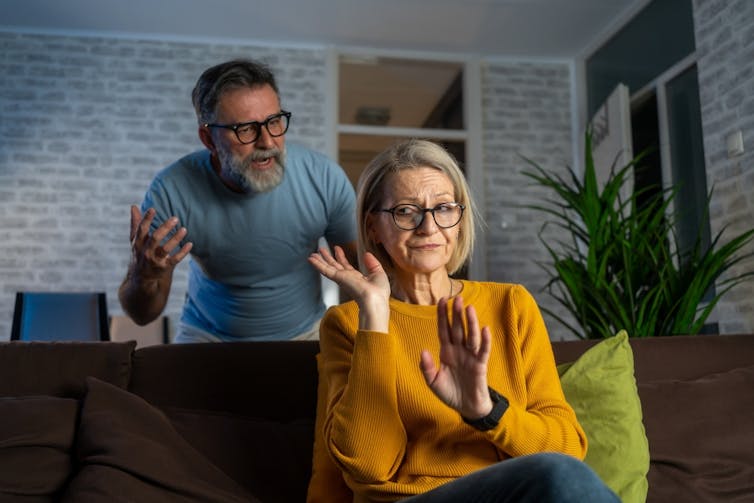
Our relationships shape our health in many ways. Friends and family can provide support during difficult times and encourage healthy habits. But not all relationships are positive – some can be a persistent source of stress.
A new study published in the journal PNAS asked what happens when the stress in our lives comes from the people around us. The researchers focused on difficult ties in people’s social networks – individuals they called “hasslers”.
The researchers wondered whether difficult relationships might affect ageing in the same way as other chronic stressors.
Participants were asked to name people they spent time with, talked to about personal or health matters, or who influenced their health habits. Crucially, participants were also asked whether there were people in their network who often caused them stress or made life difficult – the hasslers.
Only those reported as often causing stress were classified as hasslers. People who only occasionally caused stress were not considered hasslers. Importantly, the same person could be nominated in multiple categories, meaning that a single relationship could serve several social roles.
People taking part also provided saliva samples to calculate two complementary measures of biological ageing. The first measures your biological age relative to your age in years. In other words, is your body older or younger than your numerical age? The second measures how quickly you are ageing right now.
Almost 30% of participants had at least one hassler in their social network, with about 10% reporting at least two hasslers, confirming that hasslers are reasonably common and “negative” ties are part of our social worlds.
This is certainly worth noting since negative ties and their effects are understudied in comparison to positive or neutral ties. Each additional hassler was associated with roughly nine months higher biological age, and with a slightly faster pace of biological ageing (1.5% faster).
Since the saliva samples were only measured once, we can’t be sure how this builds up over time, but if the pace of ageing is faster for the rest of your life, it certainly feels worth reflecting on.
This effect was strongest when the difficult relationship was between family members, rather than between friends or acquaintances. This might reflect the challenges in extricating oneself from family relationships.
Family ties are the hardest to cut
It’s a lot easier to slowly distance oneself from an acquaintance than to discard a relationship that may have existed for your entire lifetime and which is embedded in other close relationships. Besides, most relationships aren’t purely positive or negative. Even the most stressful family relationships can have some positive aspects – and vice versa.
Only 3.5% of friendships were classified as hasslers, compared with almost 10% of parents and of children, supporting the notion that hasslers are more difficult to discard when they are part of our families.
Interestingly, negative relationships with spouses and partners did not show the same association with accelerated ageing. One possible explanation is that occasional conflict or stress within these partnerships happens alongside substantial support, which could mitigate the physiological consequences of these negative interactions.
Also, hasslers were less likely to appear across multiple domains of interaction – such as both a confidant and a companion. In contrast, supportive relationships often spanned several domains of social life.
Once relationships become difficult, people might gradually reduce the number of ways they interact. Or, high-conflict relationships may be less likely to develop into deeply embedded ties that we engage with in multiple ways.
Nonetheless, it’s worth considering alternative explanations before we ditch our hassler ties. Experiencing accelerated ageing could make people feel more poorly, and perhaps more irritable.
Irritable people might more easily interpret interactions as “hassling”, meaning that accelerated ageing could be contributing to perceptions of hasslers, rather than the other way around.
Similarly, depression can both accelerate the ageing process and contribute to generally negative evaluations of different aspects of life, including relationships. Not all of us are equally likely to have hasslers in our networks. Women, smokers and those with greater histories of life stress in childhood tended to report more hasslers.
Extra hasslers were also associated with poorer evaluations of one’s own health, more anxiety and depression symptoms, more long-term health conditions and higher body weight, suggesting that difficult ties are relevant across several aspects of health.
Negative social ties might act similarly to other chronic stressors in our lives, influencing health and wellbeing, with accelerated ageing as one potential pathway identified in this study.
Although it’s important to nurture our social connections, these findings suggest we should also reflect on those connections that often bring “hassle” to our daily lives.
The authors do not work for, consult, own shares in or receive funding from any company or organisation that would benefit from this article, and have disclosed no relevant affiliations beyond their academic appointment.
More than 7.5 million people immerse themselves in lakes, rivers, seas and lidos every year in the UK.
But getting in the water means getting in pollution too for most outdoor swimmers. Raw sewage was discharged into UK waters for 4.7 million hours during 2024. But sewage is only part of the water pollution problem. Rain washing into rivers and streams contains fertilisers, pesticides and animal waste from farmlands, forever chemicals from car tyres, plus drugs from our own bodies. Industry deregulation and privatisation have produced a water crisis.
Through our research, and in our own swimming, we have explored how outdoor swimming is not simply a recreational hazard to be avoided. Within outdoor swimming communities, negotiating risk, responsibility and vulnerability has always been central to this activity.
As one swimmer shared with us: “I have followed [the environmental charity] Surfers Against Sewage for many years. My first glimpse of a condom was as a child, swimming near a sewage outlet.” Through these experiences, swimmers learn to read the water around them, developing skills and knowledge that help them to keep swimming through it all.
Feminist philosopher and social theorist Donna Haraway writes about “staying with the trouble”: sitting with difficulty rather than looking away from it. For the swimmers we spoke to and swam with, this is exactly what getting in the water means. The swimmer’s body becomes a site where ecological crisis is felt directly.
One swimmer described how his understanding shifted: “My awareness of pollution massively increased as I started to swim. You realise [Lake] Windermere is polluted, Grasmere is polluted. Your eyes open to it. Your nose opens to it.”
Writing about surfing in the UK, cultural theorist Clifton Evers and health and wellbeing professor Cassandra Phoenix describe the sport as “polluted leisure”. Swimmers encounter this contradiction directly. They feel pollution in the water against their skin, in the smells of their swim spots and in the residues left on their bodies, kit and memories.
To swim with the trouble of polluted waters is not to accept their degradation. Our research has consistently shown that outdoor swimmers refuse to look away. To continue swimming alongside pollution, swimmers draw on situated, embodied knowledge of their swim spots. They monitor sewage outflow maps, keep their heads above water or decide to stay on shore if the water smells wrong.
Through navigating pollution, outdoor swimmers are reminded that the health and wellbeing of our bodies is bound to the quality of our waters and is folded into wider relations of cause and consequence. Swimmers, like everyone in modern society, are implicated in the agricultural systems, consumer habits and infrastructural demands that contribute to polluted waters.
When we swim alongside microbial life, fish, algae, our waste and agricultural runoff, we experience what Haraway calls “response-ability”: not just the capacity to respond, but the obligation to do so. Indeed, as feminist cultural studies researcher Rebecca Olive has argued, taking care of our waters must move beyond aspiration: it must be about action.
As a result, bathing water designations are increasing. These are locations protected in law for swimming, and the only sites where investment in water quality has historically been approved and monitored. There are currently around 600 designated sites in the UK. Thirteen new sites were proposed in February 2026.
We often see the processes that bring about these changes led by outdoor swimming communities and others with a deep love for the water. For one swimmer we spoke to, London’s first potential bathing water designation was a “legacy”, an opportunity to care for a river that has given her joy, solace and rejuvenation.
Dirty Business is a demand for systemic change in the water industry, change that swimmers are fighting for. As writer and outdoor swimmer Ella Foote has explained, this crisis must not force us to sit on the shore. To accept that is to accept that shared waters are a sacrifice zone that has been degraded by private interests, abandoned by regulators and made inaccessible to the public.
To swim with the trouble of pollution is to immerse yourself in the relationship between human and ecological health – to feel it on your skin, to carry it home with you and to refuse to look away.
Swimming, sailing, even just building a sandcastle – the ocean benefits our physical and mental wellbeing. Curious about how a strong coastal connection helps drive marine conservation, scientists are diving in to investigate the power of blue health.
This article is part of a series, Vitamin Sea, exploring how the ocean can be enhanced by our interaction with it.
Safia Bailey receives funding from ESRC for her PhD research.
Kate Moles does not work for, consult, own shares in or receive funding from any company or organisation that would benefit from this article, and has disclosed no relevant affiliations beyond their academic appointment.
Millions of people recently watched a video posted by the White House showing US strikes against Iranian targets. The clip didn’t just resemble Call of Duty: it mixed real strike footage with footage from the game itself, complete with “killstreak” animations designed to reward performance and simulate achievement.
Governments are increasingly communicating war using the visual language of video games and internet memes. In doing so, they don’t just trivialise violence – they make it harder to grieve the victims of the violence, by anaesthetising our responses to the suffering.
It’s a tactic that shapes how we interpret violence, and which quietly determines whose deaths register as deaths at all.
War as memes and viral content
United States Defence Secretary Pete Hegseth has publicly celebrated the strikes and wider military campaign, dubbed Operation Epic Fury – collapsing the distance between military spokesperson and combat enthusiast.
The White House video is not an isolated case. Across social media, videos with military footage are circulating as gaming clips or memes: drone strikes with cross-hair graphics, explosions set to pulse-pounding music. One Department of Homeland Security video of ICE raids was set to the Pokémon theme song.
But the same features that make the content go viral also flatten the reality behind the footage. Important context often disappears. Who was targeted? Were civilians harmed? Was the strike legal? These questions are rarely addressed in a 20-second clip.
War’s visual language is never innocent. It carries instructions about how to feel. A huge problem arises when governments deliberately adopt the visual language of gaming to present real military operations. What this language doesn’t carry is consequence.
Meme culture compounds this. Irony and humour are structurally anti-grief. They create distance as their primary function. When violence circulates as a joke or a highlight reel, the emotional reality of it becomes difficult to access.
War is still seen, but it is no longer felt in the same way.
From CNN to Call of Duty
The so-called “CNN effect”, associated with television coverage of conflicts from Vietnam to Somalia, was premised on proximity. Footage of suffering brought distant wars into living rooms and generated moral pressure on governments.
While imperfect and selective, the underlying logic was that “seeing” produced “feeling”, and feeling produced accountability. The camera lingered. The correspondent named the dead. Viewers were given time to register what they were witnessing.
That model was already fracturing before social media. The 1991 Gulf War introduced a new aesthetic: precision strikes filmed from above, in which targets were rendered as abstract geometries on green-tinged screens.
The human body disappeared from the frame, replaced by the seductive promise of technological accuracy: the “smart” bomb or the “surgical” strike. American critic Susan Sontag noted how this outcome trained audiences to see military technology rather than military consequences.
The ungrievable
The philosopher Judith Butler has written about “grievability” as the condition that makes some lives recognisable as worth mourning. Not all deaths are grieved equally. Some bodies are rendered, by culture and politics, outside the frame of moral concern.
The visual grammar being used by the White House frames people as game avatars. And game avatars, by definition, are not grievable. They are targets – kills to be celebrated.
On February 28, more than 160 girls, most under 12, were killed by a US air strike at the Shajareh Tayyebeh elementary school in Minab. They did not appear in the White House’s content at all.
When pressed, President Trump suggested Iran may have struck the school itself using a Tomahawk missile and then said: “I just don’t know enough about it. Whatever the report shows, I’m willing to live with that”.
Hegseth, meanwhile, has already dissolved the Pentagon’s civilian protection mission and fired the military’s lawyers responsible for keeping operations within international law, describing them as “roadblocks”.
Democratic scrutiny of war depends not just on information but on moral response: the capacity to feel that what is happening matters.
What can be done?
Memes will continue to circulate. Governments will continue to compete for attention in crowded digital spaces.
But the starting point is recognising what is actually at stake. The problem is not simply that viral clips lack context (although they do). It is that the visual grammar they deploy actively forecloses the emotional responses that serious public debate requires.
Wes J. Bryant, a former US special operations targeting specialist (who worked on civilian harm prevention) puts it plainly:
We’re departing from the rules and norms that we’ve tried to establish as a global community since at least World War II. There’s zero accountability.
Audiences, too, can learn to pause. Not just to ask what happened, but what the format in front of them is preventing them from feeling, and about whom. That question, taken seriously, is the beginning of accountability.
War is not experienced as a highlight reel. It is experienced as loss, uncertainty, grief and irreversible destruction. Restoring that understanding is not a media literacy problem. It is a moral one.
Daniel Baldino does not work for, consult, own shares in or receive funding from any company or organisation that would benefit from this article, and has disclosed no relevant affiliations beyond their academic appointment.
Does the world need another biography of Rupert Murdoch? It depends what it has to say and who has written it.
Bonfire of the Murdochs, by journalist Gabriel Sherman, looks promising. He made his name with an exhaustively researched biography of long-running Fox News head and serial sexual harasser, Roger Ailes. The Loudest Voice in the Room (2014) has 98 pages of endnotes and a team of three fact-checkers. It was made into a series starring Russell Crowe as Ailes. Sherman was also the screenwriter of Donald Trump biopic, The Apprentice, which Trump fought hard to prevent being screened.
Promising credentials, yes, but what does Sherman add to the eight Murdoch biographies already published?
Review: Bonfire of the Murdochs by Gabriel Sherman (Simon & Schuster).
The first was Simon Regan’s business-oriented biography published in 1976. It has been forgotten, but not so George Munster’s A Paper Prince (1985), which laid out Murdoch’s deal-making modus operandi, nor William Shawcross’ 1992 semi-authorised work, which charted Murdoch’s creation of the first global media empire.
Michael Wolff’s The Man Who Owns the News (2008) painted the most vivid portrait of the Australian born media mogul. Flushed with the success of buying The Wall Street Journal, Murdoch agreed to more than 50 hours of interviews with Wolff and opened the doors of his notoriously secretive media empire to the Vanity Fair media columnist.
Wolff did report the Wall Street Journal takeover in detail, but he also retailed a breathtaking amount of industry and family gossip.
One example among many. He writes that Prudence, Murdoch’s daughter from his first marriage, gave him exasperated grooming advice after Murdoch botched a DIY makeover as he tried keeping up with Wendi Deng, his third wife who was the same age as his children.
“Dad, I understand about dyeing the hair and the age thing. Just go somewhere proper. What you need is very light highlights.” But he insists on doing it over
the sink because he doesn’t want anybody to know. Well, hello! Look in the mirror.
Look at the pictures in the paper. It’s such a hatchet job.
Murdoch’s response? He told her she needed a face lift.
Murdoch’s response to Wolff’s biography was that it needed more than a face lift – it should not have been published with the errors it had. He did not sue for defamation, however. Wolff has since become an even more controversial figure: he is embroiled in suit and counter-suit with Donald and Melania Trump over Wolff’s claims about Trump’s relationship with convicted sex offender Jeffrey Epstein.
The long-running struggle for succession in the Murdoch family famously inspired the brilliantly coruscating fictional television series Succession (2018–2023). Sherman’s is the first biography to deal with its resolution, which happened only last September, when Rupert Murdoch and his eldest son, Lachlan, succeeded in changing the terms of an apparently irrevocable family trust.
The trust had been created when Rupert and his second wife, Anna, separated in 1998. (She died on February 17 this year.) It was her attempt to put a brake on Murdoch’s continual pitting of his children, especially his sons, against each other in the quest to succeed him as head of News Corporation.
It didn’t work. Rupert’s plan for Lachlan to lead the company, continuing its hard right position led by Fox News, eventually succeeded. To a greater or lesser degree, the other children from his first two marriages – Prudence, Elisabeth and James – loathed what Fox News had become and, reportedly led by James, were prepared to use their votes in the family trust to oust Lachlan after Rupert died.
In the end, though, they agreed to sell their shares in the family trust for US$1.1 billion each. Grace and Chloe, the two children from Murdoch’s third marriage, are part of a newly drawn family trust with their own shares in News.
The machinations behind this episode were reported last year in two extraordinary pieces of journalism, by Jonathan Mahler and Jim Rutenberg of The New York Times, who were leaked 3,000 pages of court documents about the case, and by McKay Coppins in The Atlantic magazine. He secured a long, revealing interview with James Murdoch, who was labelled in Rupert and Lachlan’s legal materials the “troublesome beneficiary”.
For those without subscriptions to these publications, my colleague, Andrew Dodd, and I discussed the case in The Conversation here and here.
An outstanding journalist
Sherman, another outstanding journalist, has been reporting on the Murdochs since 2008. Ailes threatened him with legal action and engineered a smear campaign over The Loudest Voice in the Room, as Sherman calmly detailed in “A Note on Sources” at the end of the book. It was Sherman who in 2016 broke the news about Fox News presenter Gretchen Carlson’s sexual harassment suit against Ailes that led to his ousting from the network.
In 2018, he revealed Murdoch came close to death after a fall on Lachlan’s maxi-yacht while sailing in the Caribbean.
Sherman also had the inside scoop on the end of Murdoch’s fourth marriage in 2022. The then 91-year-old mogul not only broke up by text with his wife, supermodel and actor Jerry Hall, but included in the divorce terms a demand she not give story ideas to the scriptwriters of Succession!
Hall later realised the marriage had ended, in Murdoch’s eyes, some time before, when he met Ann Lesley Smith, a 65-year-old former dental hygienist turned conservative radio host and follower of QAnon-style conspiracy theories. At a dinner at Murdoch’s ranch in Carmel, Smith gushed that Murdoch and Fox News were the saviours of democracy, and offered to clean his teeth for him.
Murdoch proposed to Smith in early 2023, but he soon called off the wedding after another dinner, where she told then Fox News host Tucker Carlson he was a messenger from God. Hall felt humiliated by Murdoch’s treatment of her but told friends she took satisfaction in making an effigy of him, tying dental floss around its neck and burning it on the barbecue.
All these disclosures, and gossip, are included in Bonfire of the Murdochs. Indeed, Sherman’s reporting, for New York and Vanity Fair magazines, forms a good deal of the book. If you have already read his lengthy articles, there is not much new here. But if you haven’t, or if you are confused by the countless deals and complex financial/political transactions of Murdoch’s seven-decades-plus career in media, this biography is well worth reading.
‘Destroyed everything he loved’
At 241 pages, it has the virtue, as well as the shortcoming, of being the shortest of the Murdoch biographies. Sherman has a gift for succinctly summarising key themes.
The first is that more than most, Murdoch’s media empire is secretive. Remember, his plan to change the family trust was supposed to be heard behind closed doors. We only know about it because The New York Times was leaked the court records, which revealed Murdoch’s testimony. As Sherman puts it: “Rupert crafted narratives in the shadows, but the courtroom would require him to do it in the open.”
Initially, it did not go well for Murdoch. Under cross-examination, his determination to get his way no matter what and his sexism towards his daughters was revealed.
The second theme is the extent to which Murdoch will ignore the stated mission of his media outlets – report what is happening accurately – if it aligns with his commercial goals. During the global pandemic, while Fox News hosts fulminated about lockdowns and advocated dubious treatments like hydroxychloroquine, Murdoch followed the science and, Sherman reports, was one of the first in the world to be vaccinated, in December 2020.
“He was scared for himself and was very careful,” a person who spoke to Murdoch at the time recalled for Sherman. Questioned about the disconnect between his network’s coverage and his own behaviour, Murdoch would deflect responsibility for the presenters’ commentary, even though this seeming passivity contrasted sharply with his history of editorial interference.
As Sherman comments: “The hypocrisy revealed something essential about Rupert’s worldview: he had always been able to separate his personal beliefs from his business interests.” He adds that Murdoch thought then president, Donald Trump, grievously mishandled the pandemic but refused to use his position as head of Fox to pressure the president to treat it seriously.
Nor did Murdoch take any responsibility when a friend told him the channel was killing its elderly audience. According to one of Sherman’s sources, he replied: “They’re dying from old age and other illnesses, but COVID was being blamed.”
The biographer quotes other sources who say the quid pro quo was that Murdoch had successfully lobbied Trump in his first term to take action against Facebook and Google, who were winning advertising revenue from News (along with other legacy media companies) and to open up land for fracking, which was to boost the value of Murdoch’s fossil fuel investments.
The third theme is that Murdoch built the world’s first global media empire but has always run his companies as a family business, with him as the first and ultimate decision-maker. Nimbleness is the advantage of this approach. As with any autocratically run organisation, though, there are disadvantages. Among them is that no one has a perfect strike rate for success.
Along the way, talented executives such as Barry Diller, former chief executive at Twentieth Century Fox or Chase Carey, former top executive at 21st Century Fox, knew – or found out – that their path to the top was blocked not only by the company’s head, but by Murdoch’s desire to advance or protect family members. Murdoch once told shareholders complaining about nepotism: “If you don’t like it, sell your shares.”
From the 1950s, when Murdoch was the “boy publisher” of the afternoon newspaper he inherited from his father, the Adelaide News, he behaved, Sherman writes, as though “promises were like inconvenient facts: fungible when they got in the way of profit.” The newspaper’s editor, Rohan Rivett, was the first among several, alongside numerous politicians, who learnt this to their cost.
The fourth theme is that Murdoch has always wanted his children involved in his business, but only on his terms. “Growing up,” Sherman writes, “the children’s relationship to their father was expressed through the business, making them equate paternal love with corporate advancement.”
Where earlier writers have drawn parallels with Shakespeare’s King Lear, Sherman thinks King Midas is a more appropriate comparison.
Like the mythical monarch whose touch turned everything to gold, Rupert built a $17 billion fortune but destroyed everything he loved in the process. His media outlets stoked hatred and division on an industrial scale, and amassing that wealth
required him to damage virtually anything he touched: the environment, women’s
rights, the Republican Party, truth, decency – even his own family.
The weakest part
These are potent themes that resonate with those of us living in the country of Murdoch’s origin, which brings us to the book’s shortcoming. Australia features early on, but this is the weakest part of the book. Murdoch’s early years are well covered in Munster and Shawcross’s biographies and more recently have been given detailed attention in Walter Marsh’s Young Rupert (2023).
There are basic errors: The Daily Mirror in Sydney, which Murdoch bought in 1960, is misnamed The Mirror, while the Herald and Weekly Times Ltd., which he bought in 1987, becomes the Herald Times Group. Nor does it help that on the book’s final page, Sherman writes “Rupert was with his fourth wife while his children were scattered across the globe” – when Murdoch had discarded Jerry Hall in 2022 and was now married a fifth time, to Elena Zhukova.
Fourth, fifth? It’s easy to lose count. More seriously, in buying the HWT, Murdoch became the dominant newspaper owner in Australia, but his control did not account for 75% of the market, as Sherman writes. It is more like 60% to 65%, depending on whether you use circulation or number of newspapers as a measure.
Murdoch’s early years in Australia are briskly dealt with in chapter one, before he moves on in his relentless quest to acquire more media properties in the United Kingdom and the US. This is true as far as it goes, but once Murdoch does head north, his biographer loses almost all interest in how Australia is faring – even, or especially actually, after Murdoch acquires the HWT.
The same is true to a lesser extent with Sherman’s treatment of the UK. The phone hacking scandal is covered, of course, but not much else is once Murdoch arrives in New York in the mid-seventies.
What is lost, then, in Sherman’s compression, is context for events. Such as: where did the phone hacking culture come from? What lengths did News go to in denying the practice went beyond two “rogue reporters” or in obstructing official inquiries? Why have they since paid so much money settling with phone hacking victims, rather than going to court?
Missing, too, is any sense of the connections between Murdoch’s media outlets in the three main countries in which News operates. Has the hostile coverage of trans people been imported from Fox News to Sky News Australia? What affect has his media outlets’ campaigning against action on climate change had across these three countries?
These, and others, are relevant questions to ask about a global media empire. Rupert Murdoch may have handed over the company to Lachlan in 2023, but he led it for 70 years, he created its culture and he still wields influence. In case it passed you by, it was Rupert Murdoch – not Lachlan, according to the reports – who in February had a private dinner at the White House with US president Donald Trump.
Matthew Ricketson is the co-author, with Andrew Dodd, of Getting Murdoched: How Murdoch’s Media Wields Power and Punishment, to be published by Hardie Grant in mid-2026.
As the US–Israel war on Iran escalates, so too does the global oil crisis.
The effective closure of the Strait of Hormuz, through which roughly 20% of the world’s oil and natural gas flows, and the targeting of oil production facilities in the Middle East have lifted the oil price by 34%.
The price of Brent crude – the global benchmark – now sits at more than US$100 a barrel.
This means the cost of the many products derived from crude oil, such as petrol or gasoline, has also surged.
But how does crude oil become the fuel you pump into your car?
Like simmering a pasta sauce
Most consumers are transfixed when the oil price exceeds US$100 per barrel. But the economic reality is both more complex and longer-term.
That’s because the content of the barrel itself is not directly usable.
Rather, it must be broken (or “fractionated”) into the chemicals used to produce more than 6,000 everyday products.
These household items include the textiles and clothing dyes on our literal backs, electronics in our hands, flooring beneath our feet, and pharmaceuticals regulating our bodies.
Some of these products can be replaced with non-petroleum alternatives. But doing so can increase consumer prices by an order of magnitude.
The process of transforming a barrel of oil into these products is managed in the discipline of chemical engineering, through which high-temperature vessels (called “columns”) allow fluids to be split (or “fractionated”) into less- and more-dense products.
The experience is similar to simmering a pasta sauce, where the chef uses a precise temperature to boil off water (the less dense product) and concentrate the chemistry that makes tomatoes enjoyable.
Splitting in sequences
Unlike the hundreds of chemicals in the humble tomato, the tens of thousands of individual chemicals in a barrel of oil mean that between five and ten of these fractionation columns must be placed in sequence, each producing a more precise product than the last.
Most consumers would be familiar with the products of the first few columns, in which natural gas is the least dense (or “lightest”) product that typically powers the above-mentioned chef’s stove.
The next-densest product is gasoline, which accounts for around half of the volume of a traditional barrel of oil.
With additional heat and cost, the heavier products can be split into kerosene (“jet fuel”) and, with yet more heat, the diesel fuel that constitutes around one quarter of an average barrel.
Separating out the remaining products requires extremely high temperatures. This results in chemicals used to manufacture modern roads, rubbers, synthetic fabrics, plastics and cosmetics, among many others.
The final complication emerges from the geological processes that themselves “manufacture” crude oil.
Over millions of years, high pressures and temperatures degrade and liquefy (or “cook”) volumes of dead plants and animals, often deep under the ground.
As the plants, animals and geology of each biome are unique, so too is the crude oil formed under ground. This reality means that one barrel of oil cannot simply be traded for another and used in the refinery columns described above. The collection of columns requires months to reach stable operation, and they are heavily dependent on the type and properties of the oil at the inlet.
Crucially, the time lag between producing one barrel of oil and finding its chemistry in the hands of an eager shopper is typically between one and three months, depending on the complexity of the consumer product.
Gasoline prices may feel an impact within a few weeks, while consumer plastics (such as food storage containers) may require multiple quarters to demonstrate an impact.
Alongside countries heavily dependent on crude oil imports, those with limited crude oil reserves or refining capacity are further exposed, as they must also import the crude oil “products” described above.
The conflict itself involves Western and Middle Eastern forces. But it is ironically those Pacific nations that carry the greatest near- and mid-term inflationary risk as this crucial shipping lane is put in jeopardy.
Zach Aman has consulted with multiple oil and gas companies, including Woodside, Chevron, Shell, and INPEX. He has received funding from oil and gas companies as well as the Australian Research Council. He is an Affiliate Faculty at the Colorado School of Mines.
In the first two weeks of March, two young Indonesian women died alone in a hospital in Phnom Penh, Cambodia.
The first, who Indonesian officials have identified as 22-year-old Susi Yanti Br. Sinaga died following a critical illness, despite having no prior health conditions.
Her family said Susi left Indonesia in December 2025 with her boyfriend and a promise of a job in Malaysia. She ended up being trafficked into a scam compound in Cambodia. Within three months, she was dead.
The other woman, a 20-year-old shopkeeper from Pekanbaru, Riau province, arrived in Cambodia under similar circumstances and died only a few days after Susi. According to multiple NGO sources who assisted her in her final days, her death was linked to the physical and sexual abuse she suffered in the compound.
These women are among the thousands of young people who have found themselves stranded in Cambodia in recent months after leaving scam compounds that had opened their doors in anticipation of rumoured police raids.
Many who have made their way to the Cambodian capital are Indonesian. They began lining up outside the Indonesian embassy in Phnom Penh in mid-January, seeking help to return home.
By March 9, the embassy said it had received more than 5,400 requests for assistance from Indonesian citizens in less than three months. Over 1,800 have so far been repatriated with the embassy’s assistance. Most of the others are now hosted in a dedicated facility, where they wait for their turn to leave.
These numbers represent a sharp increase from 2025. They highlight the scale of trafficking of young Indonesians into “scam factories” across Southeast Asia, mostly in Cambodia, Laos, Myanmar and the Philippines.
Clearly, what is happening to these Indonesians is a complex structural problem, shaped by regional labour precarity and weak regulation.
Yet, Indonesia is largely overlooked in existing media coverage of the issue. Relatively little is known about how Indonesians are entrenched in the industry as victims, operators and stakeholders.
Why young Indonesians are in the industry
In March last year, the Indonesian government reported that, with the assistance of the Thai government, it had rescued and repatriated 569 of its citizens from online scam compounds in Myanmar.
This drew national attention to the issue, raising urgent questions about why and how so many young people are being lured into this work.
Spurred by limited employment opportunities, low wages and political discontent, Indonesian youths have been leaving the country in droves.
Some of these young people enter the scam economy willingly. Others go voluntarily but find themselves trapped once inside. Many more are deceived from the outset, lured into becoming so-called “cyber slaves”.
Among rescued trafficking victims, familiar stories emerge. Most are recruited through friend referrals or fake job offers on social media. Once at their destination, however, they are abducted and trafficked into scam compounds. Their passports are confiscated. They are told they owe large fees for flights, visas, accommodation or training, and must work to repay this debt.
Some of these victims eventually rise through the ranks to become scam operators, supervisors or even recruiters who lure other Indonesians, often friends or family, into the industry.
As NGOs have highlighted, however, progression in the industry often involves coercion and debt bondage. Many are compelled to recruit others as a condition for repaying imposed debts, avoiding punishment or securing improvements in their living conditions.
This contributes to the criminalisation of trafficked individuals. They should instead be recognised and protected as victims of modern slavery.
Escaped from slavery, greeted as suspects
In Indonesia, public discourse tends to frame those who end up in scam compounds either as criminals or gullible youths who fell for false promises.
Following the mass repatriation of Indonesian nationals from Myanmar scam centres last year, returnees were detained and questioned before being released.
They were processed primarily through law enforcement procedures rather than victim support mechanisms.
Indonesian police have also noted some citizens returning from Myanmar’s scam centres refused to be repatriated because of the money they were earning as scammers.
Those who have recently emerged from scam compounds in Cambodia are even more likely to be perceived as willing perpetrators. Cambodia’s growing reputation as a regional hub for cybercrime has fostered a widespread assumption that Indonesians who travel there already know what kind of work awaits them.
Recent news coverage highlighting the large number of Indonesians working in Cambodia’s online industries has further entrenched this narrative, casting them as complicit actors deliberately scamming fellow citizens.
In the wake of the reports of the recent Cambodian raids, some government officials have called for returnees to face criminal prosecution under Indonesian law.
On social media, some popular commentators have argued Indonesian scam workers should not be repatriated. Some have even called for them to be stripped of their citizenship.
Who benefits from blaming trafficked workers?
Framing returnees as potential criminals is politically convenient but counterproductive. It discourages victims from seeking help from authorities.
It also makes it more difficult for civil society organisations, already strapped for funding, to mobilise support for these young Indonesians.
This ultimately benefits traffickers and industry operators.
This narrative also obscures how Indonesians are now involved at all levels of the scam industry, from recruiters and transnational operational staff to elites with financial stakes in the businesses.
The persistent focus on criminalising trafficked workers diverts attention from the deeper structures of deception and exploitation underpinning the industry.
With youth unemployment still high in Indonesia, this issue is not going away. Until trafficked workers are treated as victims rather than criminals, and the structures that feed this industry are addressed, the cost will continue to be borne by vulnerable young people like Susi and the young woman from Pekanbaru who died alone in Phnom Penh.
Charlotte Setijadi has previously received research funding from Singapore’s Ministry of Education and the Singapore Social Science Research Council. She is currently one of the co-convenors of the University of Melbourne’s Indonesia Forum.
In 2024, Ivan Franceschini co-founded EOS Collective, a non-profit organisation dedicated to investigating the dynamics of the online scam industry and the criminal networks behind it, and supporting survivors of forced criminality in these operations.