Heritage railway volunteers show how deep friendships can be formed without discussing emotions

Source: The Conversation – UK – By Tom Yarrow, Professor of Anthropology, Durham University

“Let’s face it, we’re just not that into emotions,” Brian tells me with a smile talking with other volunteers at a heritage steam railway in northern England. They are discussing a popular TV restoration show. Allan grimaces, parodying the presenter: “He’s always jumping around, shoving the microphone in their faces, like, ‘How do you feel?’ ‘Does this make you sad?’ You can almost see his glee when people actually cry!”

This parody of emotional disclosure captures something important about the values of a group of men I’ve spent years working alongside.

In public discourse and mental health campaigns, emotional expression is often viewed as essential to mental health. This weighs particularly heavily on discussions of older men. Research routinely links male emotional “repression” to “traditional” and even “toxic” forms of masculinity, connecting an inability to talk about feelings to social isolation and self-alienation.

My research suggests that this narrative misses something crucial about how connection actually works. To research this subject, I spent over four years working closely with volunteers at a heritage railway, observing their everyday interactions, and talking to them about their friendships.

The volunteers – mostly retired men from former industrial towns in north-east England – explicitly reject the modern emphasis on emotional disclosure. Through the work of restoring railways, they are preserving a form of friendship which is elsewhere increasingly rare – one characterised by the more “old-fashioned” value of taciturnity, where the discussion of emotions is not expected or required.

Rather than dismiss their approach as “repression”, I argue in a forthcoming paper that we need to appreciate how people can develop intimate and caring relationships, without naming emotions.

Feeling without emotion

Among the men I came to know, I was initially struck by the lack of talk about their personal lives. Even when facing difficult circumstances including health problems and bereavement, they rarely spoke about their feelings. Instead, they talked about shared interests in railways, and the work that they engaged in. It took me a long time to realise that this did not reflect a lack of care.

Working together on restoration projects creates what they call “camaraderie”, a form of friendship that is grounded in doing things together, rather than in the reflection on interior feelings that has become an increasing expectation of modern intimacy.

Restoring and repairing railway infrastructure involves physically demanding manual labour. They work alongside one another in close proximity for long periods of time.

As we struggled with a particularly stubborn toilet seat installation in a cramped coach cubicle, one volunteer wryly observed in a bantering tone that is common: “There’s more than one way of killing a pig and stuffing its arse with butter!” He later explained: “If the job’s too hard, there’s a simpler way of doing it.” Friendships are forged through the process of facing and overcoming these practical problems. Shared tasks create a sense of shared purpose.

Over the decades, this creates a distinctive form of intimacy. Closeness is brought about through shared activities and interests, not personal revelation.

Paradoxically, the more intimate these relationships are, the harsher the “banter” can be. And the closer their friendships, the more they feel comfortable in sharing silence. It may seem that this is uncaring, but in fact the reverse is true.

Connecting through silence

Ron was a taciturn former merchant navy worker in his 70s. As a regular volunteer for over a decade, concern quickly grew among the group when he stopped appearing. When he finally returned several weeks later, he was visibly breathless and struggled to walk. Nobody asked directly what was wrong. Instead, they offered tea and made jokes.

After he left, discussion made it clear that this was deliberate. His friends had observed him carefully and were worried. Their silence was a thoughtful response to his own: a way of giving him the “normality” that he seemed to want.

I observed these patterns of interaction in many other situations. What might look like emotional inarticulacy is actually a deliberate ethic of care. These men aren’t unable to discuss feelings. But often they choose not to, viewing these silences as a way to respect the autonomy and privacy of others. In this respect, my research builds on ethnographic accounts, for example of firefighters and male hospital porters that draw attention to forms of intimacy and connection that do not depend on the discussion of personal feelings and emotions.

Though men at the railway rarely discuss feelings, these are understood by other means. The way someone looks, or the manner in which they work can be telling. In response, they show care through deeds: checking in via phone calls, offering practical help, creating space for silent companionship without pressure to explain or disclose – “just being there”, as they sometimes say.

Mental health services and support initiatives increasingly target men with messages about “opening up”. Indeed, my research doesn’t suggest emotional expression is wrong or unhelpful. However, either/or framings, which view connection in opposition to repression miss important aspects of the many ways people sustain intimacy and support.

My work with railway enthusiasts shows how it is possible to create meaningful support networks that offer genuine intimacy and connection, without explicit discussion of emotions. Connection and care take multiple forms. For some, silence shared between friends isn’t an absence of feeling, just a different way of sharing it.

The Conversation

Tom Yarrow does not work for, consult, own shares in or receive funding from any company or organisation that would benefit from this article, and has disclosed no relevant affiliations beyond their academic appointment.

ref. Heritage railway volunteers show how deep friendships can be formed without discussing emotions – https://theconversation.com/heritage-railway-volunteers-show-how-deep-friendships-can-be-formed-without-discussing-emotions-266435


What to do if you fail at your new year resolution

Source: The Conversation – UK – By Janina Steinmetz, Professor in Marketing, Bayes Business School, City St George’s, University of London

Krakenimages.com/Shutterstock

Every year, many of us bravely announce our resolutions for the new year. A glass of champagne on New Year’s Eve might add to our confidence in our ability to do better in the coming year and save more, spend less, eat better, work out more, or binge-watch less.

But most of our resolutions fail. Even within the first weeks after New Year’s Eve, the majority of people have given up on them. Yet, not all tales of failure are the same, because the way you talk about the failure matters for your own motivation and other people’s confidence in your ability to try again.

So what can we do after we’ve given up on our resolution? We’ve announced our
good intentions to friends and family and now must admit failure. Research has shown the way you word your failed resolution can affect how people view it. And understanding the reasons most resolutions don’t work out can help us see it through in the future. Indeed, you can talk about your resolutions in a way that will make your failure more understandable and will sustain your motivation to keep going.

A constructive way to discuss your failed resolution is to focus on the controllability of the failure. Research shows that most resolutions will require some investment of time and of money. For example, getting in shape takes time for exercise and also normally requires money for a gym membership or for workout equipment. Because both of these resources are essential for pursuing our goals, many failed resolutions are due to the lack of either time or money, or both.

When talking about a failed resolution in the past, I’ve showed in my own research
that we should focus on how lack of money contributed to this failure, rather than
lack of time. In my 2024 study, people read about fictional as well as real panel participants who failed either due to lack of money or lack of time. Most participants felt the person whose failure was caused by lack of money would have more self-control going forward and was going to be more reliable at pursuing their goals.

This effect occurred because lack of money is seen as something that cannot be controlled very easily, so if this caused the failure, there wasn’t very much the person who failed could have done about it.

In this research, most of the failed resolutions were related to weight loss, better eating, or working out in the gym. Participants felt the same whether the person who failed was a man or a woman, presumably because it’s plausible that everyone needs some time and some money to pursue various goals regardless of gender or the specific resolution.

The role of controllability takes a different form when it comes to thinking about how we can do better next time.

The role of time

Research also shows the way we view time matters when it comes to failure. For the past, it’s better to think about things outside of our control that can help to take the negativity out of failure and bolster the belief that we can do better. This can mean, for example, to consider how our failure was due to lack of money or other resources outside of our control.

For the future, however, take an active perspective on time. Look at your schedule and make active decisions how to allocate time to your goal pursuit, by scheduling gym sessions or blocking time to prepare healthy meals. This can help to give us the motivation to try again because we’re not victims of our busy schedules.

Woman flopped over an exercise ball in living room.
Definitely not the only one.
Lopolo/Shutterstock

A study published in October 2025 that focused on how a lack of time contributed to failures showed that people can get back a sense of control by talking about “making time”, instead of “having time”. People who discussed their failures as an issue of not having made the time felt like they could do things differently in the future, and were more motivated to do so.

This is because “making time” suggests active control over one’s time and schedule, instead of “having time” that leaves us passive. For example, if you say you didn’t make the time to work out, that means you can make the time in the future if you choose to do so. In contrast, if you say you didn’t have time to work out, it feels like this lack of time is outside of your control and could happen again, preventing you from pursuing your exercise goals.

Find the joy

Another reason so many people struggle to keep to their new year resolution may be because they were too ambitious, or they neglected that joy and pleasure keep us going.

We need not only to have a goal in mind. Finding joy in the journey and belief in the ability to change is also important. For example, someone might want to get in better shape and work out more, but when they actually try to go to the gym, they lack the confidence to sign up for a class. Without some fun, it’s hard to follow through on a resolution even if we really want to pursue the goal. So, try to think of ways you can make the goal more enjoyable to work on and remind yourself you are capable.

The trend for new year resolutions isn’t a bad thing in itself. Although it might seem a bit paradoxical to start virtuous habits right after a big night with alcohol and overeating, research shows that we can indeed benefit from the “fresh-start” effect in which a new beginning in the calendar can provide a clean slate to start better habits.

But we don’t have to wait for the calendar to give us a fresh start. We can choose to make our own resolution (maybe a Valentine’s or Easter resolution?) to boost the motivation to pursue our goals.

The Conversation

Janina Steinmetz does not work for, consult, own shares in or receive funding from any company or organisation that would benefit from this article, and has disclosed no relevant affiliations beyond their academic appointment.

ref. What to do if you fail at your new year resolution – https://theconversation.com/what-to-do-if-you-fail-at-your-new-year-resolution-271050

Inside Uganda’s video halls, ‘video jokers’ transform Hollywood blockbusters into local entertainment

Source: The Conversation – UK – By Damien Pollard, Assistant Professor in Film, Northumbria University, Northumbria University, Newcastle

If you walk into a video hall in Uganda your attention will probably go straight to a person sitting at the front of the audience. Speaking rapidly into a microphone, they comment loudly and continuously, often drowning out the sound of the film itself. You may well ask who this person is, and why they keep interfering with the film that people have come to watch.

I’ve been conducting research into Uganda’s film landscape for the last couple of years and I’ve been privileged to visit several different venues where movies are screened. Uganda has few cinemas – there are only three in the capital city, Kampala, with a total of ten screens. Instead, the country has an extensive network of video halls, known locally as bibandas.

Video halls are found throughout the country, particularly in outlying urban areas and entrance is relatively cheap; typically around 1,000 Ugandan shillings, or 21 British pence (a cinema ticket, meanwhile, usually costs around 20,000 shillings or a little over £4). Inside a video hall, benches or seats are laid out in front of televisions and films are screened throughout the day. These are often pirated works from the US, India, Nigeria, Korea, China and elsewhere. Some of the film industry players that I have met during my research estimate that there could be as many as 3,000 video halls in Uganda.

Video hall owners have always had a problem, though. Despite Uganda’s history as a British colony, English is not spoken fluently by everyone. Neither are Hindi, Mandarin, Cantonese or Korean. In the 1980s, the “video joker” (VJ) emerged as a solution and soon became a key feature of the video hall.

The VJ sits at the front of the audience with a microphone and a sound mixer. Talking over the film, they explain its plot and paraphrase the dialogue in the Ugandan language appropriate to the location in which they are working (in Kampala this would generally be Luganda).

Importantly, the VJ’s version of what characters are saying and what is happening in the film may diverge significantly from the original version. They are known to give characters and locations Ugandan names, for example, and most interject hyperbole, jokes and social or moral commentary into their performances.

One of my interviewees told me of a VJ he had seen performing over Christopher Nolan’s 2023 film Oppenheimer, who frequently claimed: “This bomb is big enough to destroy the whole of Africa!” He was amping up the jeopardy (unnecessarily, perhaps) and bringing the film home by using a local frame of reference. The VJ, in other words, can only very loosely be considered a translator. Many of my interviewees likened them more to an MC or a sports commentator – someone who “spices” up a film by adding their own performance to it and keeping the audience “hyped”.

Many VJs are celebrities in Uganda and possess loyal fans who regularly turn out to watch them perform. In fact, the VJ is often more of a draw for audiences than the film they are voicing over. Celebrity VJs have sought to capitalise on their success by selling pirated films on DVD or via streaming platforms with their voice-over tracks baked in, so that their fans can enjoy their work at home.

Even Ugandan televisions stations have experimented with broadcasting foreign content overlaid with VJ tracks. Furthermore, the Kampala-based micro-studio known as Wakaliwood (after Wakaliga, the village where it is based) has raised the profile of the video joker outside of east Africa. It has released two films — Who Killed Captain Alex and Bad Black — on YouTube with an absurdly comic, English-language voice over performed by one of my interviewees, VJ Emmie. Wakaliwood have garnered a global cult following and their work has been screened at festivals and midnight-movie events around the world (sometimes with Emmie performing live).

VJ controversies

Back in Uganda, VJs remain very popular but they’re not without controversy. Their work raises significant issues around intellectual property protection since it relies on the pirating of films. The fact that VJs’ and video halls’ contravention of IP law often goes unpunished in Uganda has been a major stumbling block on the country’s path toward developing a sustainable domestic film production industry.

It’s hard for Ugandan producers to compete with VJs who get their films for free and face few overheads when selling their DVDs to the public. Many Ugandan filmmakers also take issue with the tradition of video joking on aesthetic grounds, arguing that it ruins the integrity of a film and trivialises the audience experience.

Trailer for Once Upon a Time in Uganda! da Wakaliwood Documentary.

The debates around video joking in Uganda won’t be settled soon but the tradition helps us to appreciate two important facts about the exhibition of films. First, what is considered a “normal” way to watch a film varies enormously around the world and is connected to a location’s specific social, cultural and economic context. The way of watching films which is most common in mainstream cinemas in Europe or North America for example, where viewers sit silently in the dark, is only one way of “doing cinema”.

Second, when it comes to our experience of a film, the film itself is only the starting point. Anyone who has ever dressed up and attended a screening of The Rocky Horror Picture Show or The Room will know this too. What those films mean to us has as much to do with the interpersonal experience of watching them as the movie itself. This is perhaps even true when we hold film nights at home, joking with friends as we watch.

So although the VJ is a Ugandan tradition, it has things to tells the rest of the world about the universal experience of watching films.


Looking for something good? Cut through the noise with a carefully curated selection of the latest releases, live events and exhibitions, straight to your inbox every fortnight, on Fridays. Sign up here.


The Conversation

The research presented in this article was supported by a British Academy/Leverhulme Trust Small Research Grant, awarded to Damien Pollard. Award number: SRG24241338.

ref. Inside Uganda’s video halls, ‘video jokers’ transform Hollywood blockbusters into local entertainment – https://theconversation.com/inside-ugandas-video-halls-video-jokers-transform-hollywood-blockbusters-into-local-entertainment-270126

I grew up in the world’s coldest city without central heating. Here’s what the world can learn from us

Source: The Conversation – UK – By Yangang Xing, Associate Professor, School of Architecture Design and the Built Environment, Nottingham Trent University

On winter mornings in Harbin, where the air outside could freeze your eyelashes, I would wake up on a bed of warm earth.

Harbin, where I grew up, is in northeast China. Winter temperatures regularly dip to -30°C and in January even the warmest days rarely go above -10°C. With about 6 million residents today, Harbin is easily the largest city in the world to experience such consistent cold.

Keeping warm in such temperatures is something I’ve thought about all my life. Long before electric air conditioning and district heating, people in the region survived harsh winters using methods entirely different from the radiators and gas boilers that dominate European homes today.

Now, as a researcher in architecture and construction at a British university, I’m struck by how much we can learn from those traditional systems in the UK. Energy bills are still too high, and millions are struggling to heat their homes, while climate change is expected to make winters more volatile. We need efficient, low-energy ways to stay warm that don’t rely on heating an entire home with fossil fuels.

Some of the answers may lie in the methods I grew up with.

A warm bed made of earth

My earliest memories of winter involve waking up on a “kang” – a heated platform-bed made of earth bricks that has been used in northern China for at least 2,000 years. The kang is less a piece of furniture and more a part of the building itself: a thick, raised slab connected to the family stove in the kitchen. When the stove is lit for cooking, hot air travels through passages running beneath the kang, warming its entire mass.

A traditional Chinese kang bed-stove.
Google Gemini, CC BY-SA

To a child, the kang felt magical: a warm, radiant surface that stayed hot all night long. But as an adult – and now an academic expert – I can appreciate what a remarkably efficient piece of engineering it is.

Unlike central heating, which works by warming the air in every room, only the kang (that is, the bed surface) is heated. The room itself may be cold, but people warm themselves by laying or sitting on the platform with thick blankets. Once warmed, its hundreds of kilograms of compacted earth slowly release heat over many hours. There are no radiators, no need for any pumps, and no unnecessary heating of empty rooms. And since much of the initial heat was generated by fires we’d need for cooking anyway, we saved on fuel.

Maintaining the kang was a family undertaking. My father – a secondary school Chinese literature teacher, not an engineer – became an expert at constructing the kang. Carefully building layers of coal around the fire to keep it alive over the night would be my mum’s job. Looking back, I realise how much skill and labour was involved, and how much trust families placed in a system that required good ventilation to avoid carbon monoxide risks.

But for all its drawbacks, the kang delivered something modern heating systems still struggle to deliver: long-lasting warmth with very little fuel.

Similar approaches across East Asia

Across East Asia, approaches to keeping warm in cold weather evolved around similar principles: keep heat close to the body, and heat only the spaces that matter.

In Korea, the ancient ondol system also channels warm air beneath thick floors, turning the entire floor into a heated surface. Japan developed the kotatsu, a low table covered by a heavy blanket with a small heater underneath to keep your legs warm. They can be a bit costly, but they’re one of the most popular items in Japanese homes.

Clothing was also very important. Each winter my mum would make me a brand new thick padded coat, stuffing it with newly fluffed cotton. It’s one of my loveliest memories.

Europe had similar ideas – then forgot them

Europe once had similar approaches to heating. Ancient Romans heated buildings using hypocausts, for instance, which circulated hot air under floors. Medieval households hung heavy tapestries on walls to reduce drafts, and many cultures used soft cushions, heated rugs or enclosed sleeping areas to conserve warmth.

The spread of modern central heating in the 20th century replaced these approaches with a more energy-intensive pattern: heating entire buildings to a uniform temperature, even when only one person is home. When energy was cheap, this model worked, even despite most European homes (especially those in the UK) being poorly insulated by global standards.

But now that energy is expensive again, tens of millions of Europeans are unable to keep their homes adequately warm. New technologies like heat pumps and renewable energy will help – but they work best when the buildings they heat are already efficient, allowing for lower set point for heating, and higher set points for cooling.

This highlights why traditional approaches to warming homes still have something to teach us. The kang and similar systems show that comfort doesn’t always come from consuming more energy – but from designing warmth more intelligently.

The Conversation

Yangang Xing does not work for, consult, own shares in or receive funding from any company or organisation that would benefit from this article, and has disclosed no relevant affiliations beyond their academic appointment.

ref. I grew up in the world’s coldest city without central heating. Here’s what the world can learn from us – https://theconversation.com/i-grew-up-in-the-worlds-coldest-city-without-central-heating-heres-what-the-world-can-learn-from-us-271657

LA fires showed how much neighborliness matters for wildfire safety – schools can do much more to teach it

Source: The Conversation – USA (2) – By Elizabeth A. Logan, Associate Director of the Huntington-USC Institute on California and The West, USC Dornsife College of Letters, Arts and Sciences

Eaton fire survivors gather in Altadena, Calif., to talk about recovery six months after the LA fires. Sarah Reingewirtz/MediaNews Group/Los Angeles Daily News via Getty Images

On Jan. 7, 2025, people across the Los Angeles area watched in horror as powerful winds began spreading wildfires through neighborhood after neighborhood. Over three weeks, the fires destroyed more than 16,000 homes and businesses. At least 31 people died, and studies suggest the smoke and stress likely contributed to hundreds more deaths.

For many of us who lived through the fires, it was a traumatic experience that also brought neighborhoods closer together. Neighbors scrambled to help each other as burning embers started spot fires that threatened homes. They helped elderly and disabled residents evacuate.

A man turns a hose on a burning house while another runs.
Samuel Girma runs to get another hose as he and others try to stop the Eaton fire from spreading to more homes in Altadena, Calif. Girma was in the area on a construction job. The other man lives nearby.
Robert Gauthier/Los Angeles Times via Getty Images

As the LA region rebuilds a year later, many people are calling for improvements to zoning regulations, building codes, insurance and emergency communications systems. Conversations are underway about whether rebuilding in some locations makes sense at all.

But managing fire risk is about more than construction practices, regulations and rules. It is also about people and neighborliness – the ethos and practice of caring for those in your community, including making choices and taking steps on your own property to help keep the people around you safe.

Three men, one an older man, stand in the still-smoky ruins of what was once a home, with fire damage all around them.
Neighbors who lost their homes to a fire in Altadena, Calif., on Jan. 9, 2025, talk amid the ruins.
Zoë Meyers/AFP via Getty Images

As LA-area residents and historians who witnessed the fires’ destruction and have been following the recovery closely, we believe building a safer future for fire-risk communities includes increasing neighborliness and building shared knowledge of the past. Much of that starts in the schools.

Neighborliness matters in community fire safety

Being neighborly means recognizing the connectedness of life and addressing the common good, beyond just the individual and family network.

It includes community-wide fire mitigation strategies that can help prevent fires from spreading.

During the Southern California fires, houses, fences, sheds, roofs and dry vegetation served as the fuel for wind-blown fires racing through neighborhoods miles away from forested land. Being neighborly means taking steps to reduce risks on your own property that could put your neighbors at risk. Following fire officials’ recommendations can mean clearing defensible space around homes, replacing fire-prone plants and limiting or removing burnable material, such as wood fencing and sheds.

A woman closes her eyes as she hugs her cat.
Denise Johnson holds her cat Ramsey after the Eaton Fire. Her home was one of the few in her immediate neighborhood that survived, but recovery will take time for everyone.
AP Photo/Jae C. Hong

Neighborliness also recognizes the varying mental health impacts of significant wildfire events on the people who experience them. Being neighborly means listening to survivors and reaching out, particularly to neighbors who may be struggling or need help with recovery, and building community bonds.

Neighbors are often the first people who can help in an emergency before local, state and federal responders arrive. A fast neighborhood response, whether helping put out spot fires on a lawn or ensuring elderly residents or those without vehicles are able to evacuate, can save lives and property in natural disasters.

Fire awareness, neighborliness start in school

Community-based K-12 schools are the perfect places for learning and practicing neighborliness and providing transformative fire education.

Learning about the local history of wildfires, from the ecological impact of beneficial fire to fire disasters and how communities responded, can transform how children and their families think about fires and fire readiness.

However, in our view, fire history and safety is not currently taught nearly enough, even in fire-prone California.

A man pushes an older woman in a shopping cart along a pathway with apartments on one side and sand on the other, and thick smoke behind them.
Jerome Krausse pushes his mother-in-law in a shopping cart on a path along the beach as they evacuate amid fires in Pacific Palisades on Jan. 7, 2025.
AP Photo/Richard Vogel

California’s Department of Education Framework and Content Standards for K-12 education offer several opportunities to engage students with innovative lessons about wildfire causes, preparedness and resilience. For example, fourth grade history and social science standards include understanding “how physical environments (e.g., water, landforms, vegetation, climate) affect human activity.” Middle school science standards include mapping the history of natural hazards, though they only mention forest fires when discussing technology.

Schools could, and we believe should, include more fire history, ecological knowledge and understanding of the interconnectedness of neighborhoods and neighbors when it comes to fire safety in those and other classes.

Elementary schools in many states bring in firefighters to talk about fire safety, often through programs run by groups like the California Fire Prevention Organization. These efforts could spend more time looking beyond house fires to discuss how and where wildfires start, how they spread and how to make your own home and neighborhood much safer.

Models such as the U.S. Fire Administration’s collaboration with Sesame Workshop on the Sesame Street Fire Safety Program for preschool kids offer examples, blending catchy phrases with safety and science lessons.

The National Fire Protection Association’s Sparky the Fire Dog shares some simple steps that kids can do with their parents and friends to help keep their neighborhood safer from wildfire.

Including knowledge from Indigenous tribal elders, fire management professionals and other community members can provide more robust fire education and understanding of the roles people play in fire risk and risk reduction. Introducing students to future career pathways in fire safety and response can also help students see their roles in fire safety.

As LA recovers from the 2025 fires, fire-prone states can prepare for future fires by expanding education about fire and neighborliness, and helping students take that knowledge home to their families.

Remembering, because it will happen again

Neighborliness also demands a pivot from the reflexive amnesia regarding natural and unnatural disasters to knowing that it will happen here again.

There’s a dangerous, stubborn forgetfulness in the vaunted Land of Sunshine. It is all part of the myth that helped make Southern California such a juggernaut of growth from the late 19th century forward.

The region was, boosters and public officials insisted, special: a civilization growing in the benign embrace of the environment. Anything grew here, the endless Los Angeles Basin could absorb everyone, and if there wasn’t enough water to slake the thirst of metropolitan ambitions, engineers and taxpayers would see to it that water from far away – even very far away – would be brought here.

The Southland is beautiful, but a place can be both beautiful and precarious, particularly in the grip of climate change. These are lessons we believe should be taught in K-12 classrooms as an important step toward lowering disaster risk. Living with fire means remembering and understanding the past. That knowledge, and developing more neighborly behavior, can save your life and the lives of your neighbors.

The Conversation

Elizabeth A. Logan receives funding from the Sierra Nevada Conservancy and the WHH Foundation.

William Deverell receives funding from the Sierra Nevada Conservancy and the WHH Foundation.

ref. LA fires showed how much neighborliness matters for wildfire safety – schools can do much more to teach it – https://theconversation.com/la-fires-showed-how-much-neighborliness-matters-for-wildfire-safety-schools-can-do-much-more-to-teach-it-272505

West Coast levee failures show growing risks from America’s aging flood defenses

Source: The Conversation – USA (2) – By Farshid Vahedifard, Professor of Civil and Environmental Engineering, Tufts University

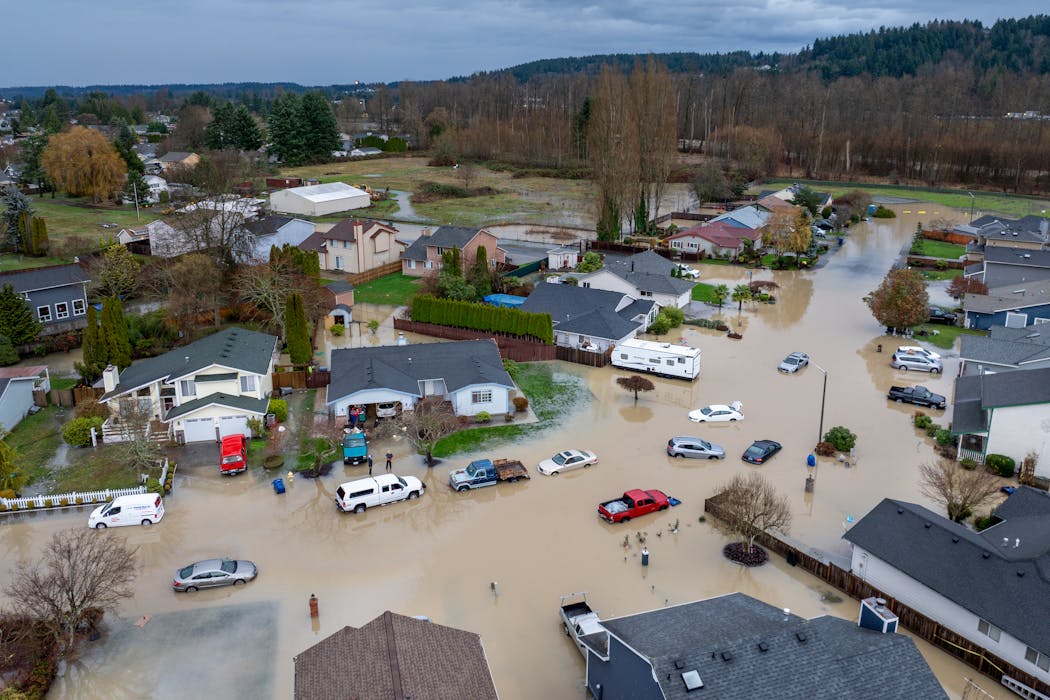
Days of heavy rain caused a levee on the White River to breach, sending water into Pacific, Wash., on Dec. 16, 2025. Brandon Bell/Getty Images

In recent weeks, powerful atmospheric river storms have swept across Washington, Oregon and California, unloading enormous amounts of rain. As rivers surged, they overtopped or breached multiple levees – those long, often unnoticed barriers holding floodwaters back from homes and towns.

Most of the time, levees don’t demand attention. They quietly do their job, year after year. But when storms intensify, levees suddenly matter in a very personal way. They can determine whether a neighborhood stays dry or ends up underwater.

The damage in the West reflects a nationwide problem that has been building for decades. Across the U.S., levees are getting older while weather is getting more extreme. Many of these structures were never designed for the enormous responsibility they now carry.

A paved bicycling path atop a levee is broken and slabs of asphalt pavement are tilted into a breach where water poured through.
Crews inspect damage to a Green River levee in the Seattle suburbs on Dec. 15, 2025. Thousands of people were urged to evacuate during a series of atmospheric river storms, and the National Guard was sent to monitor and reinforce several levees considered at risk.
AP Photo/Manuel Valdes

As a civil engineer at Tufts University, I study water infrastructure, including the vulnerability of levees and strategies for making them more resilient. My research also shows that when levees fail, the consequences don’t fall evenly on the population.

Levees became critical infrastructure almost by accident

Many people assume levees were built as part of modern, carefully engineered flood-control systems. In reality, many of the levees still in use today began much more humbly.

Decades ago, farmers built simple earthen embankments to protect their fields and livestock from seasonal flooding. These early levees were practical solutions, shaped by experience rather than formal engineering. They were not constructed using rigorous design standards, and they did not follow consistent construction or maintenance guidelines.

Over time, the landscape around these levees changed. Farmland gave way to neighborhoods. Roads, railways, factories and ports expanded into floodplains. Populations grew. What were once modest, local structures protecting farms gradually became the first line of defense for millions of people in homes and workplaces.

During the Great Mississippi Flood of 1927, the river poured over and broke through levees, flooding thousands of square miles of land. Both overtopping and a breach are visible in this photo.
National Weather Service Archival Photography by Steve Nicklas, NOS, NGS

Without much public debate or planning, these semi-engineered levees took on a critical and unintended role. The question that still lingers is whether they were ever prepared for it.

Vast, aging levee system now protecting millions

Today, the National Levee Database counts more than 24,000 miles (38,600 kilometers) of levees in the U.S., with an average age of about 61 years and many of them much older. Together, they protect over 23 million people, around 7 million buildings and nearly US$2 trillion in property value.

That’s an extraordinary level of responsibility for a system that is unevenly maintained with varying oversight. Some levees are inspected regularly. Others are owned by small local agencies or private entities with limited funding. In some cases, responsibility is unclear or fragmented.

One levee that was breached along the Green River in Washington state during storms in mid-December 2025 had been due for repairs for several years, but disagreements among governments had recently held up needed work, The Seattle Times reported. The breach forced thousands of people to evacuate

A map shows many breaches in the Midwest, as well as in Washington state and the Northeast.
Many states have at-risk levees. The map shows all levees in the U.S. National Levee Database (in red) and 478 levee segments where overtopping is known to have occurred in the previous 15 years (in blue).
S. Flynn, et al., 2025

The American Society of Civil Engineers’ 2025 Report Card for American Infrastructure, which I contributed to, gave the nation’s levees a D-plus grade, citing aging infrastructure, inconsistent monitoring and long-term underinvestment. A new dataset that colleagues and I created of levee damage includes 487 cases where rivers poured over levees, known as overtopping, in the past 15 years. That doesn’t mean levees are failing everywhere; it means that many are operating with little margin for error.

How levees fail

Levee failures are rarely sudden collapses. More often, they start quietly.

The most common reason levees fail is overtopping, when water from a river, stream or lake behind the levee flows over the top. Once that happens, erosion can begin on the landward side, weakening the structure from behind. What starts as a slow trickle can quickly grow into a breach, creating a large gap in the levee where water can pour in.

Two illustrations. One of overtopping points out that age, height and the materials used can weaken the levee, leading to a breach, which cuts into the levee allowing a faster, deeper steam of water to pour through.
An illustration shows the difference between overtopping and a breach, and some of the reasons a levee can fail.
S. Flynn et al., 2025

Atmospheric river storms make the risk of overtopping and breaches much higher. These storms deliver enormous amounts of rainfall across wide areas in a matter of hours, often combined with snowmelt. Rivers rise faster and stay high longer. Many levees were never designed for that kind of sustained pressure.

When a levee breaches, flooding can be rapid and deep, leaving little time for evacuation and causing damage that spreads far beyond the floodplain.

Who relies on levees today?

Millions of Americans live and work in area protected by levees, often without realizing it. Homes, schools, highways, rail corridors, ports and power facilities depend on the integrity of these structures.

A recent national study found that across the contiguous U.S., urban expansion into floodplains occurred more than twice as fast after levee construction as it did in surrounding counties, highlighting how levees can affect communities’ perception of danger.

In fact, when levees fail, flooding can be worse than in areas without levees, because water rushes in quickly and drains slowly.

The risks are also uneven, shaped by history, economics and policy decisions.

That reality became painfully clear during an atmospheric river storm in March 2023 when a levee along California’s Pajaro River failed, flooding the town of Pajaro. Pajaro is home to many low-income farmworkers. Floodwaters forced hundreds of residents to evacuate, and some people were trapped as water levels rose.

How the Pajaro Valley flooded after intense rainfall from an atmospheric river in March 2023, breaching a levee protecting a small California town.

What made the disaster especially troubling was what emerged afterward. Officials and engineers had known for decades that the Pajaro River levee was vulnerable. Reports documented its weaknesses, but repairs were repeatedly delayed.

Interviews by The Los Angeles Times and public records showed that part of the reason was financial. Decision-makers did not prioritize investing in a levee system protecting the low-income community. The risk was known, but the protection was deferred.

Pajaro is not an isolated case. Across the country, disadvantaged communities and communities of color are more likely to rely on older levees or levees that are not part of major federal programs. Rural towns often depend on agricultural levees. Urban neighborhoods may rely on structures built for a much smaller population.

When levees fail, the impacts cascade, closing roads, knocking out power, contaminating water supplies and disrupting lives for years.

A map shows highest disparities in Idaho, Utah, Colorado, Iowa, Ohio, Tennessee, Georgia, North Carolina, Virginia, Maine, Massachusetts and Vermont.
Disparity refers to the percentage of each state’s residents protected by levees who are considered disadvantaged, based on the U.S. Council on Environmental Quality’s Climate and Economic Justice Screening Tool. All levees in the National Levee Database are counted.
F. Vahedifard et al., 2023

Why this moment matters

Advances in engineering, monitoring and risk assessment have improved how levees are evaluated and designed.

Hurricane Katrina marked a turning point in 2005 when its storm surge broke through levees protecting New Orleans. Hundreds of people died in the flooding. The disaster exposed the consequences of neglect and fragmented responsibility for levee upkeep.

At the same time, there has been real progress. Over the past two decades, significant federal investments have strengthened the condition and management of many of the nation’s levees, particularly through the work of federal agencies such as the U.S. Army Corps of Engineers.

Still, the legacy of decisions made decades ago remains, and climate change is raising the risks. Heavier rainfall, fast snowmelt and rising seas are pushing water control systems beyond what many levees were designed to handle. Events once considered rare are becoming more frequent.

As atmospheric rivers test levees in the West and flood risks grow nationwide, the challenge is no longer just technical. It’s about how society values protection, communicates risk and decides whose safety is prioritized.

Levees will continue to play a vital role in protecting communities. Understanding their history, and their limits, is essential as the storms of the future arrive.

The Conversation

Farshid Vahedifard received funding from the National Science Foundation (NSF) and the National Oceanic and Atmospheric Administration (NOAA). He is affiliated with the United Nations University Institute for Water, Environment and Health (UNU-INWEH).

ref. West Coast levee failures show growing risks from America’s aging flood defenses – https://theconversation.com/west-coast-levee-failures-show-growing-risks-from-americas-aging-flood-defenses-272556

What loving-kindness meditation is and how to practice it in the new year

Source: The Conversation – USA (3) – By Jeremy David Engels, Liberal Arts Endowed Professor of Communication, Penn State

Loving-kindness, the feeling cultivated in metta meditation, is very different from romantic love. Anna Sunderland Engels

A popular New Year’s resolution is to take up meditation – specifically mindfulness meditation. This is a healthy choice.

Regular mindfulness practice has been linked to many positive health benefits, including reduced stress and anxiety, better sleep and quicker healing after injury and illness. Mindfulness can help us to be present in a distracted world and to feel more at home in our bodies, and in our lives.

There are many different types of meditation. Some mindfulness practices ask meditators simply to sit with whatever thoughts, sensations or emotions arise without immediately reacting to them. Such meditations cultivate focus, while granting more freedom in how we respond to whatever events life throws at us.

Other meditations ask practitioners to deliberately focus on one emotion – for example, gratitude or love – to deepen the experience of that emotion. The purpose behind this type of meditation is to bring more gratitude, or more love, into one’s life. The more people meditate on love, the easier it is to experience this emotion even when not meditating.

One such meditation is known as “metta,” or loving-kindness. As a scholar of communication and mindfulness, as well as a longtime meditation teacher, I have both studied and practiced metta. Here is what loving-kindness means and how to try it out for yourself:

Unbounded, universal love

Loving-kindness, or metta, is the type of love which is practiced by Buddhists around the world. Like many forms of meditation today, there are both secular and religious forms of the practice. One does not need to be a Buddhist to practice loving-kindness. It is for anyone and everyone who wants to live more lovingly.

Loving-kindness, the feeling cultivated in metta meditation, is very different from romantic love. In the ancient Pali language, the word “metta” has two root meanings: The first is “gentle,” in the sense of a gentle spring rain that falls on young plants, nourishing them without discrimination. The second is “friend.”

Metta is limitless and unbounded love; it is gentle presence and universal friendliness. Metta practice is meant to grow people’s ability to be present for themselves and others without fail.

A guided loving-kindness meditation practice.

Metta is not reciprocal or conditional. It does not discriminate between us and them, rich and poor, educated and uneducated, popular or unpopular, worthy and unworthy. To practice metta is to give what I describe in my research as “the rarest and most precious gift” – a gift of love offered without any expectation of it being returned.

How to practice loving-kindness meditation

In the fifth century, a Sri Lankan monk, Buddhaghosa, composed an influential meditation text called the “Visuddhimagga,” or “The Path of Purification.” In this text, Buddhaghosa provides instructions for how to practice loving-kindness meditation. Contemporary teachers tend to adapt and modify his instructions.

The practice of loving-kindness often involves quietly reciting to oneself several traditional phrases designed to evoke metta, and visualizing the beings who will receive that loving-kindness.

Traditionally, the practice begins by sending loving kindness to ourselves. It is typical during this meditation to say:

May I be filled by loving-kindness

May I be safe from inner and outer dangers
May I be well in body and mind

May I be at ease and happy

After speaking these phrases, and feeling the emotions they evoke, next it’s common to direct loving-kindness toward someone – or something – else: It can be a beloved person, a dear friend, a pet, an animal, a favorite tree. The phrases become:

May you be filled by loving-kindness

May you be safe from inner and outer dangers

May you be well in body and mind

May you be at ease and happy

Next, this loving-kindness is directed to a wider circle of friends and loved ones: “May they …”

The final step is to gradually expand the circle of well wishes: including the people in our community and town, people everywhere, animals and all living beings, and the whole Earth. This last round of recitation begins: “May we …”

In this way, loving-kindness meditation practice opens the heart further and further into life, beginning with the meditator themselves.

Loving-kindness and mindful democracy

Clinical research shows that loving-kindness meditation has a positive effect on mental health, including lessening anxiety and depression, increasing life satisfaction and improving self-acceptance while reducing self-criticism. There is also evidence that loving-kindness meditation increases a sense of connection with other people.

The benefits of loving-kindness meditation are not just for the individual. In my research, I show that there are also tremendous benefits for society as a whole. Indeed, the practice of democracy requires us to work together with friends, strangers and even purported “opponents.” This is difficult to do if our hearts are full of hatred and resentment.

Each time meditators open their hearts in metta meditation, they prepare themselves to live more loving lives: for their own selves, and for all living beings.

The Conversation

Jeremy David Engels does not work for, consult, own shares in or receive funding from any company or organization that would benefit from this article, and has disclosed no relevant affiliations beyond their academic appointment.

ref. What loving-kindness meditation is and how to practice it in the new year – https://theconversation.com/what-loving-kindness-meditation-is-and-how-to-practice-it-in-the-new-year-270984

AI agents arrived in 2025 – here’s what happened and the challenges ahead in 2026

Source: The Conversation – USA – By Thomas Şerban von Davier, Affiliated Faculty Member, Carnegie Mellon Institute for Strategy and Technology, Carnegie Mellon University

AI agents have emerged from the lab, bringing promise and peril. tadamichi/iStock via Getty Images

In artificial intelligence, 2025 marked a decisive shift. Systems once confined to research labs and prototypes began to appear as everyday tools. At the center of this transition was the rise of AI agents – AI systems that can use other software tools and act on their own.

While researchers have studied AI for more than 60 years, and the term “agent” has long been part of the field’s vocabulary, 2025 was the year the concept became concrete for developers and consumers alike.

AI agents moved from theory to infrastructure, reshaping how people interact with large language models, the systems that power chatbots like ChatGPT.

In 2025, the definition of AI agent shifted from the academic framing of systems that perceive, reason and act to AI company Anthropic’s description of large language models that are capable of using software tools and taking autonomous action. While large language models have long excelled at text-based responses, the recent change is their expanding capacity to act, using tools, calling APIs, coordinating with other systems and completing tasks independently.

This shift did not happen overnight. A key inflection point came in late 2024, when Anthropic released the Model Context Protocol. The protocol allowed developers to connect large language models to external tools in a standardized way, effectively giving models the ability to act beyond generating text. With that, the stage was set for 2025 to become the year of AI agents.

AI agents are a whole new ballgame compared with generative AI.

The milestones that defined 2025

The momentum accelerated quickly. In January, the release of Chinese model DeepSeek-R1 as an open-weight model disrupted assumptions about who could build high-performing large language models, briefly rattling markets and intensifying global competition. An open-weight model is an AI model whose training, reflected in values called weights, is publicly available. Throughout 2025, major U.S. labs such as OpenAI, Anthropic, Google and xAI released larger, high-performance models, while Chinese tech companies including Alibaba, Tencent, and DeepSeek expanded the open-model ecosystem to the point where the Chinese models have been downloaded more than American models.

Another turning point came in April, when Google introduced its Agent2Agent protocol. While Anthropic’s Model Context Protocol focused on how agents use tools, Agent2Agent addressed how agents communicate with each other. Crucially, the two protocols were designed to work together. Later in the year, both Anthropic and Google donated their protocols to the open-source software nonprofit Linux Foundation, cementing them as open standards rather than proprietary experiments.

These developments quickly found their way into consumer products. By mid-2025, “agentic browsers” began to appear. Tools such as Perplexity’s Comet, Browser Company’s Dia, OpenAI’s GPT Atlas, Copilot in Microsoft’s Edge, ASI X Inc.’s Fellou, MainFunc.ai’s Genspark, Opera’s Opera Neon and others reframed the browser as an active participant rather than a passive interface. For example, rather than helping you search for vacation details, it plays a part in booking the vacation.

At the same time, workflow builders like n8n and Google’s Antigravity lowered the technical barrier for creating custom agent systems beyond what has already happened with coding agents like Cursor and GitHub Copilot.

New power, new risks

As agents became more capable, their risks became harder to ignore. In November, Anthropic disclosed how its Claude Code agent had been misused to automate parts of a cyberattack. The incident illustrated a broader concern: By automating repetitive, technical work, AI agents can also lower the barrier for malicious activity.

This tension defined much of 2025. AI agents expanded what individuals and organizations could do, but they also amplified existing vulnerabilities. Systems that were once isolated text generators became interconnected, tool-using actors operating with little human oversight.

The business community is gearing up for multiagent systems.

What to watch for in 2026

Looking ahead, several open questions are likely to shape the next phase of AI agents.

One is benchmarks. Traditional benchmarks, which are like a structured exam with a series of questions and standardized scoring, work well for single models, but agents are composite systems made up of models, tools, memory and decision logic. Researchers increasingly want to evaluate not just outcomes, but processes. This would be like asking students to show their work, not just provide an answer.

Progress here will be critical for improving reliability and trust, and ensuring that an AI agent will perform the task at hand. One method is establishing clear definitions around AI agents and AI workflows. Organizations will need to map out exactly where AI will integrate into workflows or introduce new ones.

Another development to watch is governance. In late 2025, the Linux Foundation announced the creation of the Agentic AI Foundation, signaling an effort to establish shared standards and best practices. If successful, it could play a role like the World Wide Web Consortium in shaping an open, interoperable agent ecosystem.

There is also a growing debate over model size. While large, general-purpose models dominate headlines, smaller and more specialized models are often better suited to specific tasks. As agents become configurable consumer and business tools, whether through browsers or workflow management software, the power to choose the right model increasingly shifts to users rather than labs or corporations.

The challenges ahead

Despite the optimism, significant socio-technical challenges remain. Expanding data center infrastructure strains energy grids and affects local communities. In workplaces, agents raise concerns about automation, job displacement and surveillance.

From a security perspective, connecting models to tools and stacking agents together multiplies risks that are already unresolved in standalone large language models. Specifically, AI practitioners are addressing the dangers of indirect prompt injections, where prompts are hidden in open web spaces that are readable by AI agents and result in harmful or unintended actions.

Regulation is another unresolved issue. Compared with Europe and China, the United States has relatively limited oversight of algorithmic systems. As AI agents become embedded across digital life, questions about access, accountability and limits remain largely unanswered.

Meeting these challenges will require more than technical breakthroughs. It demands rigorous engineering practices, careful design and clear documentation of how systems work and fail. Only by treating AI agents as socio-technical systems rather than mere software components, I believe, can we build an AI ecosystem that is both innovative and safe.

The Conversation

Thomas Şerban von Davier does not work for, consult, own shares in or receive funding from any company or organization that would benefit from this article, and has disclosed no relevant affiliations beyond their academic appointment.

ref. AI agents arrived in 2025 – here’s what happened and the challenges ahead in 2026 – https://theconversation.com/ai-agents-arrived-in-2025-heres-what-happened-and-the-challenges-ahead-in-2026-272325

The ‘sacred’ pledge that will power the relaunch of far-right militia Oath Keepers

Source: The Conversation – USA – By Alexander Lowie, Postdoctoral associate in Classical and Civic Education, University of Florida

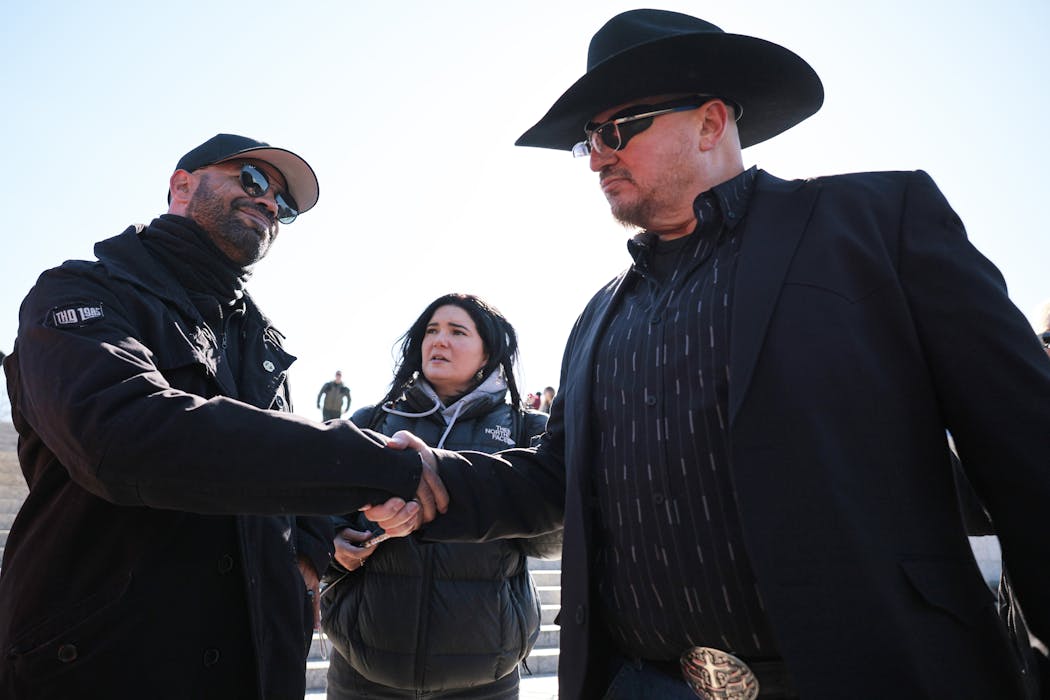
Enrique Tarrio, left, former leader of the far-right group the Proud Boys, shakes hands with Oath Keepers founder Stewart Rhodes in Washington on Feb. 21, 2025. Chip Somodevilla/Getty Images

Stewart Rhodes, the founder of the Oath Keepers, a far-right militia, announced in November 2025 that he will relaunch the group after it disbanded following his prison sentence in 2023.

Rhodes was sentenced to 18 years in prison for seditious conspiracy and other crimes committed during the U.S. Capitol riot on Jan. 6, 2021.

In January 2025, President Donald Trump granted clemency to the over 1,500 defendants convicted of crimes connected to the storming of the Capitol.

Trump did not pardon Rhodes – or some others found guilty of the most serious crimes on Jan. 6. He instead commuted Rhodes’ sentence to time served. Commutation only reduces the punishment for a crime, whereas a full pardon erases a conviction.

As a political anthropologist I study the Patriot movement, a collection of anti-government right-wing groups that include the Proud Boys, Oath Keepers and Moms for Liberty. I specialize in alt-right beliefs, and I have interviewed people active in groups that participated in the Capitol riot.

Rhodes’ plans to relaunch the Oath Keepers, largely composed of current and former military veterans and law enforcement officers, is important because it will serve as an outlet for those who have felt lost since his imprisonment. The group claimed it had over 40,000 dues-paying members at the height of its membership during Barack Obama’s presidency. I believe that many of these people will return to the group, empowered by the lack of any substantial punishment resulting from the pardons for crimes committed on Jan. 6.

In my interviews, I’ve found that military veterans are treated as privileged members of the Patriot movement. They are honored for their service and military training. And that’s why I believe many former Oath Keepers will rejoin the group – they are considered integral members.

Their oaths to serving the Constitution and the people of the United States are treated as sacred, binding members to an ideology that leads to action. This action includes supporting people in conflicts against federal agencies, organizing citizen-led disaster relief efforts, and protesting election results like on Jan. 6. The members’ strength results from their shared oath and the reverence they feel toward keeping it.

Who are the Oath Keepers?

Rhodes joined the Army after high school and served for three years before being honorably discharged after a parachuting accident in 1986. He then attended the University of Nevada and later graduated from Yale Law School in 2004. He founded the Oath Keepers in 2009.

Oath Keepers takes its name from the U.S military Oath of Enlistment, which states:

“I, , do solemnly swear (or affirm) that I will support and defend the Constitution of the United States against all enemies, foreign and domestic; that I will bear true faith and allegiance to the same; and that I will obey the orders of the President of the United States …”

Several men wearing hats cheer in front of a federal building.
From left, Stewart Rhodes, leader of the Oath Keepers, and Enrique Tarrio, Joe Biggs and Zach Rehl, members of the far-right group the Proud Boys, rally outside the U.S. Capitol on Feb. 21, 2025.
Chip Somodevilla/Getty Images

Informed by his law background, Rhodes places a particular emphasis on the part of the oath that states they will defend the Constitution against all enemies, foreign and domestic.

He developed a legal theory that justifies ignoring what he refers to as “unlawful orders” after witnessing the aftermath of Hurricane Katrina. Following the natural disaster, local law enforcement was assigned the task of confiscating guns, many of which officers say were stolen or found in abandoned homes.

Rhodes was alarmed, believing that the Second Amendment rights of citizens were being violated. Because of this, he argued that people who had military or law enforcement backgrounds had a legal duty to refuse what the group considers unlawful orders, including any that violated constitutionally protected rights, such as the right to bear arms.

In the Oath Keepers’ philosophy, anyone who violates these rights are domestic enemies to the Constitution. And if you follow the orders, you’ve violated your oath.

Explaining the origin of the group on the right-wing website “The Gateway Pundit” in November 2025, Rhodes said: “… we were attacked out of the gate, labeled anti-government, which is absurd because we’re defending the Constitution that established the federal government. We were labeled anti-government extremists, all kinds of nonsense because the elites want blind obedience in the police and military.”

Rebuilding and restructuring

In 2022, the nonprofit whistleblower site Distributed Denial of Secrets leaked more than 38,000 names on the Oath Keepers’ membership list.

The Anti-Defamation League estimated that nearly 400 of the names were active law enforcement officers, and that over 100 were serving in the military. Some of these members were investigated by their workplaces but never disciplined for their involvement with the group.

Some members who were not military or law enforcement did lose their jobs over their affiliation. But they held government-related positions, such as a Wisconsin alderman who resigned after he was identified as a member.

This breach of privacy, paired with the dissolution of the organization after Rhodes’ sentencing, will help shape the group going forward.

In his interview with “The Gateway Pundit,” where he announced the group’s relaunch, Rhodes said: “I want to make it clear, like I said, my goal would be to make it more cancel-proof than before. We’ll have resilient, redundant IT that makes it really difficult to take down. … And I want to make sure I get – put people in charge and leadership everywhere in the country so that, you know, down the road, if I’m taken out again, that it can still live on under good leadership without me being there.”

There was a similar shift in organizational structure with the Proud Boys in 2018. That’s when their founder, Gavin McInnes, stepped away from the organization. His departure came after a group of Proud Boys members were involved in a fight with anti-fascists in New York.

Several men dressed in military gear stand in front of a federal building.
Members of the Oath Keepers stand on the East Front of the U.S. Capitol on Jan. 6, 2021.
AP Photo/Manuel Balce Ceneta, File

Prosecutors wanted to try the group as a gang. McInnes, therefore, distanced himself to support their defense that they weren’t in a gang or criminal organization. Ultimately, two of the members were sentenced to four years in prison for attempted gang assault charges.

Some Proud Boys members have told me they have since focused on creating local chapters, with in-person recruitment, that communicate on private messaging apps. They aim to protect themselves from legal classification as a gang. It also makes it harder for investigators or activist journalists to monitor them.

This is referred to as a cell style of organization, which is popular with insurgency groups. These groups are organized to rebel against authority and overthrow government structures. The cell organizational style does not have a robust hierarchy but instead produces smaller groups. They all adhere to the same ideology but may not be directly associated.

They may have a leader, but it’s often acknowledged that they are merely a figurehead, not someone giving direct orders. For the Proud Boys, this would be former leader Enrique Tarrio. Proud Boys members I’ve spoken to have referred to him as a “mascot” and not their leader.

Looking ahead

So what does the Rhodes interview indicate about the future of Oath Keepers?

Members will continue supporting Trump while also recruiting more retired military and law enforcement officers. They will create an organizational structure designed to outlive Rhodes. And based on my interactions with the far-right, I believe it’s likely they will create an organizational structure similar to that of the cell style for organizing.

Beyond that, they are going to try to own their IT, which includes hosting their websites and also using trusted online revenue generators.

This will likely provide added security, protecting their membership rolls while making it more difficult for law enforcement agencies to investigate them in the future.

The Conversation

Alexander Lowie does not work for, consult, own shares in or receive funding from any company or organization that would benefit from this article, and has disclosed no relevant affiliations beyond their academic appointment.

ref. The ‘sacred’ pledge that will power the relaunch of far-right militia Oath Keepers – https://theconversation.com/the-sacred-pledge-that-will-power-the-relaunch-of-far-right-militia-oath-keepers-269775

Has the Fed fixed the economy yet? And other burning economic questions for 2026

Source: The Conversation – USA (2) – By D. Brian Blank, Associate Professor of Finance, Mississippi State University

The U.S. economy heads into 2026 in an unusual place: Inflation is down from its peak in mid-2022, growth has held up better than many expected, and yet American households say that things still feel shaky. Uncertainty is the watchword, especially with a major Supreme Court ruling on tariffs on the horizon.

To find out what’s coming next, The Conversation U.S. checked in with finance professors Brian Blank and Brandy Hadley, who study how businesses make decisions amid uncertainty. Their forecasts for 2025 and 2024 held up notably well. Here’s what they’re expecting from 2026 – and what that could mean for households, workers, investors and the Federal Reserve:

What’s next for the Federal Reserve?

The Fed closed out 2025 by slashing its benchmark interest rate by a quarter of a percentage point – the third cut in a year. The move reopened a familiar debate: Is the Fed’s easing cycle coming to an end, or does the cooling labor market signal a long-anticipated recession on the horizon?

While unemployment remains relatively low by historical standards, it has crept up modestly since 2023, and entry-level workers are starting to feel more pressure. What’s more, history reminds us that when unemployment rises, it can do so quickly. So economists are continuing to watch closely for signs of trouble.

So far, the broader labor market offers little evidence of widespread worsening, and the most recent employment report may even be more favorable than the top-line numbers made it appear. Layoffs remain low relative to the size of the workforce – though this isn’t uncommon – and more importantly, wage growth continues to hold up. That’s in spite of the economy adding fewer jobs than most periods outside of recessions.

Gross domestic product has been surprisingly resilient; it’s expected to continue growing faster than the pre-pandemic norm and on par with recent years. That said, the recent shutdown has prevented the government from collecting important economic data that Federal Reserve policymakers use to make their decisions. Does that raise the risk of a policy miscue and potential downturn? Probably. Still, we aren’t concerned yet.

And we aren’t alone, with many economists noting that low unemployment is more important than slow job growth. Other economists continue to signal caution without alarm.

Consumers, the largest driver of economic growth, continue spendingperhaps unsustainably – with strength becoming increasingly uneven. Delinquency rates – the share of borrowers who are behind on required loan payments in housing, autos and elsewherehave risen from historic lows, while savings balances have declined from unusually high post-pandemic levels. A more pronounced K-shaped pattern in household financial health has emerged, with older higher-income households benefiting from labor markets and already seeming past the worst financial hardship.

Still, other households are stretched, even as gas prices fall. This contributes to a continuing “vibecession,” a term popularized by Kyla Scanlon to describe the disconnect between strong aggregate economic data and weaker lived experiences amid economic growth. As lower-income households feel the pinch of tariffs, wealthier households continue to drive consumer spending.

For the Fed, that’s the puzzle: solid top-line numbers, growing pockets of stress and noisier data – all at once. With this unevenness and weakness in some sectors, the next big question is what could tip the balance toward a slowdown or another year of growth. And increasingly, all eyes are on AI.

Is artificial intelligence a bubble?

The dreaded “B-word” is popping up in AI market coverage more often, and comparisons to everything from the railroad boom to the dot-com era are increasingly common.

Stock prices in some technology firms undoubtedly look expensive as they rise faster than earnings. This may be because markets expect more rate cuts coming from the Fed soon, and it is also why companies are talking more about going public. In some ways, this looks similar to bubbles of the past. At the risk of repeating the four most dangerous words in investing: Is this time different?

Comparisons are always imperfect, so we won’t linger on the differences between this time and two decades ago when the dot-com bubble burst. Let’s instead focus on what we know about bubbles.

Economists often categorize bubbles into two types. Inflection bubbles are driven by genuine technological breakthroughs and ultimately transform the economy, even if they involve excess along the way. Think the internet or transcontinental railroad. Mean-reversion bubbles, by contrast, are fads that inflate and collapse without transforming the underlying industry. Some examples include the subprime mortgage crisis of 2008 and The South Sea Company collapse of 1720.

If AI represents a true technological inflection – and early productivity gains and rapid cost declines suggest it may – then the more important questions center on how this investment is being financed.

Debt is best suited for predictable, cash-generating investments, while equity is more appropriate for highly uncertain innovations. Private credit is riskier still and often signals that traditional financing is unavailable. So we’re watching bond markets and the capital structure of AI investment closely. This is particularly important given the growing reliance on debt financing in some large-scale infrastructure projects, especially at firms like Oracle and CoreWeave, which already seem overextended.

For now, caution, not panic, is warranted. Concentrated bets on single firms with limited revenues remain risky. At the same time, it may be premature to lose sleep over “technology companies” broadly defined or even investments in data centers. Innovation is diffusing across the economy, and these tech firms are all quite different. And, as always, if it helps you sleep better, changing your investments to safer bonds and cash is rarely a risky decision.

A quiet but meaningful shift is also underway beneath the surface. Market gains are beginning to broaden beyond mega-cap technology firms, the largest and most heavily weighted companies in major stock indexes. Financials, consumer discretionary companies and some industrials are benefiting from improving sentiment, cost efficiencies and the prospect of greater policy clarity ahead. Still, policy challenges remain ahead for AI and housing with midterms looming.

Will things ever feel affordable again?

Policymakers, economists and investors have increasingly shifted their focus from “inflation” to “affordability,” with housing remaining one of the largest pressure points for many Americans, particularly first-time buyers.

In some cases, housing costs have doubled as a share of income over the past decade, forcing households to delay purchases, take more risk or even give up on hopes of homeownership entirely. That pressure matters not only for housing itself, but for sentiment and consumption more broadly.

Still, there are early signs of relief: Rents have begun to decline in many markets, especially where new supply is coming online, like in Las Vegas, Atlanta and Austin, Texas. Local conditions such as zoning rules, housing supply, population growth and job markets continue to dominate, but even modest improvements in affordability can meaningfully affect household balance sheets and confidence.

Looking beyond the housing market, inflation has fallen considerably since 2021, but certain types of services, such as insurance, remain sticky. Immigration policy also plays an important role here, and changes to labor supply could influence wage pressures and inflation dynamics going forward.

There are real challenges ahead: high housing costs, uneven consumer health, fiscal pressures amid aging demographics and persistent geopolitical risks.

But there are also meaningful offsets: tentative rent declines, broadening equity market participation, falling AI costs and productivity gains that may help cool inflation without breaking the labor market.

Encouragingly, greater clarity on taxes, tariffs, regulation and monetary policy may arrive in the coming year. When it does, it could help unlock delayed business investment across multiple sectors, an outcome the Federal Reserve itself appears to be anticipating.

If there is one lesson worth emphasizing, it’s this: Uncertainty is always greater than anyone expects. As the oft-quoted baseball sage Yogi Berra memorably put it, “It’s tough to make predictions, especially about the future.”

Still, these forces may converge in a way that keeps the expansion intact long enough for sentiment to catch up with the data. Perhaps 2026 will be even better than 2025, as attention shifts from markets and macroeconomics toward things that money can’t buy.

The Conversation

The authors do not work for, consult, own shares in or receive funding from any company or organization that would benefit from this article, and have disclosed no relevant affiliations beyond their academic appointment.

ref. Has the Fed fixed the economy yet? And other burning economic questions for 2026 – https://theconversation.com/has-the-fed-fixed-the-economy-yet-and-other-burning-economic-questions-for-2026-272127