How big data is transforming what we know about the universe

Source: The Conversation – UK – By Muiris MacCarthaigh, Professor of Politics and Public Policy, Queen’s University Belfast
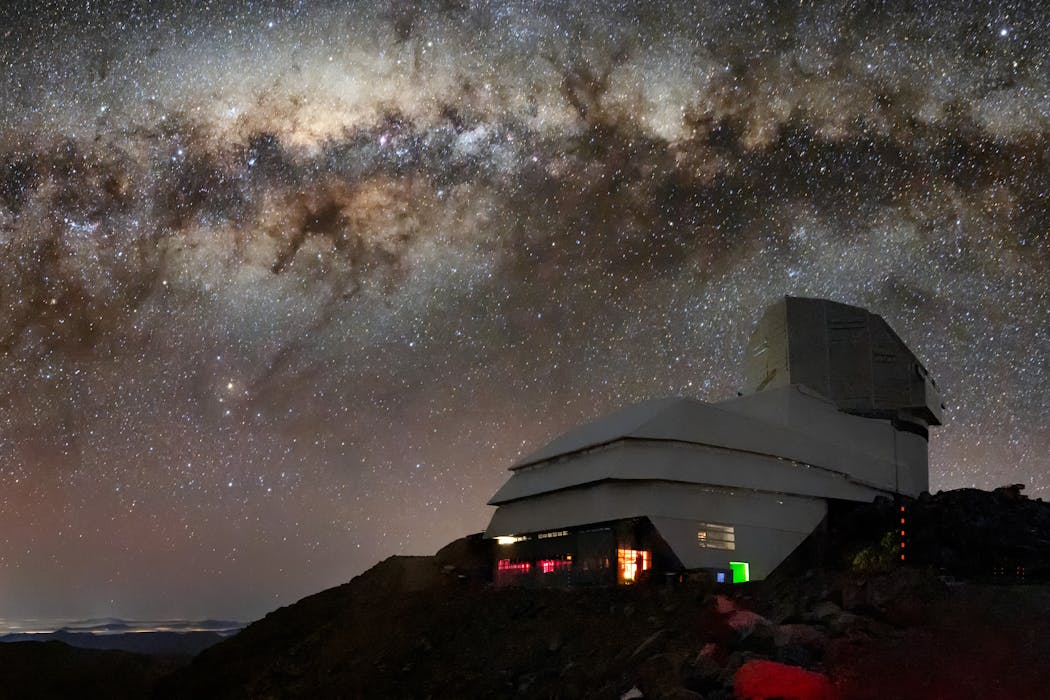
NSF-DOE Rubin Observatory/AURA/B. Quint

Science in the modern era is increasingly reliant on enormous datasets and automated analysis. In astronomy, the Vera C. Rubin Observatory’s Legacy Survey of Space and Time (LSST) – a ten-year survey covering the entire southern sky almost a thousand times over the next decade – will test the limits of this reliance.

The Rubin observatory, located on a mountaintop called Cerro Pachón in Chile, is expected to catalogue the night sky in exquisite detail. The observatory aims to answer a number of questions about the universe by studying different phenomena in the sky, including supernovae (exploding stars), asteroids, dark matter and the properties of our own galaxy.

What it will also answer is a question dominating all areas of science in the 21st century: how is discovery viewed in the age of big data?

Although primarily funded by the US Department of Energy and National Science Foundation (NSF), the Rubin telescope is the product of a collaborative effort by astronomers spanning six continents and over a dozen countries.

Assistance in setting up its data processing systems was provided by the UK, France, Spain, Italy, Japan, Brazil, Australia, South Africa and Canada, among others. These in-kind contributions provide researchers from these countries with data rights for the LSST.

Alerts providing scientific data are forwarded to seven “brokers” scattered around the world. The brokers are websites or software that astronomers use to access the data from LSST.

The alerts provide information on a new astronomical object, such as its likelihood of being real, its type, the galaxy it belongs to and how its brightness has changed over time. With this data, astronomers are able to select the best candidates for follow-up research.

However, even with the efforts of the software teams and brokers, there is still too much transient data for any research team to sift through. The final stage of data processing from the Rubin telescope will involve scientists using machine learning and AI techniques to identify the best data.

These techniques may be for identifying real cosmic objects among the terabytes of false alerts received, or for classifying the ones most interesting to scientists.

Noir Lab Computer Room
The Rubin observatory will generate huge amounts of data, requiring large numbers of personnel to analyse it.
NOIRLab/NSF/AURA/T. Slovinský

Astronomy is increasingly code-heavy and focused on in-house development. Given the huge amounts of data generated with every night of telescope observations, it is, unsurprisingly, one of the first sciences to turn to machine learning as a solution.

LSST’s Informatics and Statistics Science Collaboration (ISSC), for example, is a group of over 150 data scientists who work on developing tools for astronomy, focusing on the survey’s data science goals.

Astronomy has led the charge in regard to big data, with funding provided by companies such as Amazon and Microsoft for a number of major projects. Indeed, the namesake of the 8.4-metre Simonyi Survey Telescope at the Rubin observatory, Charles Simonyi, is known for software development in the early days of Microsoft, as well as his philanthropic work.

The volume of data produced by the observatory will not only produce opportunities for scientists, software developers and tech workers, but also for volunteers with an interest in astronomy via citizen science projects.

LSST’s partnership with the citizen science platform Zooniverse will ask volunteers to look through data and provide additional context to what they’re shown – identifying interesting objects, discarding garbage data and classifying various types of phenomena.

Future lessons

What does the Rubin observatory tell us about modern astronomy? The 20th century saw a greater push for international collaboration in exploring the skies. The increased sophistication of the resulting observatories means that more and more astronomers are working in the service of enabling science, rather than making discoveries themselves.

The huge amounts of data generated by the survey, and the huge number of personnel required to analyse it, is not novel to Rubin. Other contemporary surveys such as Euclid and the Ligo-Virgo-Kagra collaboration, as well as the next decade’s even larger Square Kilometer Array, each consist of thousands of collaborators worldwide leveraging huge amounts of data.

What is clear is that AI will dominate the scientific discovery space of the Rubin observatory to meet these big data challenges. With more funding from industry to develop AI tools to analyse astronomy data, astronomy is becoming deeply embedded within the tech-sphere that dominates modern life.

Rubin will produce 10 terabytes of data every night, with the aim of a final database size of 15 petabytes at the end of its ten-year survey. With the majority of the 10 million alerts produced each night expected to be false, advanced machine learning and AI tools are required to filter out all but the most promising candidates for follow-up.

By reducing the amount of time spent by astronomers reviewing this data, more time can be spent carrying out new and exciting astrophysics research.

Ownership of both the tools of discovery and the discovery itself is now disseminated among scientists, big tech and the citizens who label data. The unresolved question is whether the cosmos will remain a shared public frontier, or become a domain shaped by the priorities of Silicon Valley.

The Conversation

The authors do not work for, consult, own shares in or receive funding from any company or organisation that would benefit from this article, and have disclosed no relevant affiliations beyond their academic appointment.

ref. How big data is transforming what we know about the universe – https://theconversation.com/how-big-data-is-transforming-what-we-know-about-the-universe-278115

Two people have died from bacterial meningitis in the UK. An expert answers your questions

Source: The Conversation – UK – By Rebecca A. Drummond, Professor, Immunology and Immunotherapy, University of Birmingham

Tunatura/Shutterstock.com

An outbreak of invasive bacterial meningitis at the University of Kent has left two people dead and 11 seriously ill in hospital, prompting the UK Health Security Agency to distribute antibiotics to students in the Canterbury area. Here’s what you need to know about the disease and how to protect yourself.

What is meningitis?

Meningitis is an inflammation of the tissue lining that surrounds your brain and spinal cord (the meninges). Any type of harmful microbe, including viruses, bacteria, fungi and parasites, can invade the meninges and cause an infection. (The current outbreak at the University of Kent is caused by bacteria.) This can be very dangerous since the meninges function as a protective layer around your brain. When it becomes damaged, your brain and spinal cord become at risk too.

What is invasive meningococcal disease, and why is it so dangerous?

The bacteria that cause meningitis are called Neisseria meningitidis, and the disease can quickly spread from person to person if they have close contact. The bacteria invade blood vessels in the meninges, damaging them, and this causes immune cells to enter the meninges and produce molecules that trigger inflammation. When the meninges become inflamed like this, the brain can stop functioning properly, leading to serious illness and brain damage.

Neisseria meningitidis bacteria.
Neisseria meningitidis bacteria (orange).
Nemes Laszlo/Shutterstock.com

What are the symptoms, and how do I know if it’s meningitis rather than flu or a hangover?

Meningitis can look different in different people. Symptoms typically include a high fever (but with cold hands and feet), vomiting, headache, joint pain, a stiff neck and feeling unusually sleepy. Some people may become confused or distressed by bright lights and sounds. Some people may also develop a rash that won’t disappear when you press a glass against it. Babies may develop an unusual cry.

If you suspect you have meningitis, particularly if your symptoms are not typical when compared to previous hangovers or flu-like illnesses, then go to your nearest hospital or call for help. It’s better to get checked out than wait and see, as meningitis tends to progress very quickly.

Who is most at risk?

Anyone can get meningitis, but the risk is higher for very young babies and older people. Immune-compromised people – such as those undergoing chemotherapy – are also at higher risk for the infections that can cause meningitis. Outbreaks in younger adult populations, like we are seeing at the University of Kent, tend to happen because of the increased exposure and spread of the bacteria that can cause meningitis.

How does the infection spread?

The bacteria that cause meningitis can spread by close contact, such as kissing and sharing drinks, or through coughing and sneezing. Large events that bring lots of people together can therefore be associated with outbreaks of meningitis, because of the increased likelihood that people become exposed to the bacteria. This is one of the reasons why university students can be at increased risk for meningitis, because there is a lot of social mixing in this group.

A graphic showing where the bacteria infect in bacterial meningitis.
Where the bacteria are found in bacterial meningitis.
logika600/Shutterstock.com

Why are healthy students at the University of Kent being given antibiotics?

This is a precautionary measure to ensure that anyone who has been exposed to the bacteria, but perhaps hasn’t developed symptoms yet, is protected. The antibiotics will help kill the bacteria, hopefully before it has a chance to establish an infection or invade the meninges and brain.

Is there a vaccine against meningitis and should I get one?

Several vaccines are available to protect against the most common causes of bacterial meningitis. These are effective and safe medicines that prevent you from getting seriously ill if you do become exposed to meningitis-causing bacteria. The MenB, MMR and pneumococcal vaccines are all recommended for babies in the UK because they protect against bacteria that cause meningitis infections in young children in particular.

How is bacterial meningitis treated, and what happens if it’s caught late?

Antibiotics are the main course of treatment for bacterial meningitis. The earlier these drugs are given, the more likely the infection will be stopped in time before any serious damage occurs.

However, some bacteria can become resistant to antibiotic treatment. When this happens, antibiotics are no longer effective at preventing meningitis. This is why vaccines are very important for protecting yourself against these infections as they can work to protect you even against antibiotic-resistant bacteria.

What should I do if I think I or someone I know has meningitis?

Meningitis symptoms typically come on rapidly. If you suspect meningitis, act quickly. The faster that antibiotic treatment is started, the better the outcome is likely to be.

The Conversation

Rebecca A. Drummond receives funding from the Medical Research Council, the Wellcome Trust and the Lister Institute for Preventative Medicine.

ref. Two people have died from bacterial meningitis in the UK. An expert answers your questions – https://theconversation.com/two-people-have-died-from-bacterial-meningitis-in-the-uk-an-expert-answers-your-questions-278434

Saint Patrick’s Day and the mystery of the second Patrick

Source: The Conversation – UK – By Chris Doyle, Lecturer in Ancient and Medieval History, University of Galway

Celebrated every year with swathes of green and pints of Guinness, Saint Patrick is the most famous of Ireland’s trio of patron saints (the others are Brigid and Colm Cille, aka Columba).

Saint Patrick’s story is well known. Not just because of the annual global phenomenon his feast day has become, but also thanks to a considerable body of original written evidence. Chief among this are his personal writings – the Confession and Letter to the Soldiers of Coroticus. But there are also many others – annals, biographies, hymns, poems – written centuries after his lifetime.

The standard story of Patrick goes like this. At some undetermined date in the 5th century AD, while the western Roman Empire collapsed politically, the teenage Patrick was kidnapped from his home in Britain, or possibly Gaul, by Irish raiders. He was then sold into slavery for six years where he tended sheep somewhere in Ireland until, with divine help, he escaped home to his family. Eventually, he felt compelled to return to Ireland and proselytise the Christian faith there. The rest is history, so some say.

But a lesser known story exists concerning not one, but two 5th century characters named (or assumed to be named) Patricius, or Patrick. According to one tradition, both men knew one another closely and were each involved in promulgating Christianity in Ireland.

The two Patricks

One of the earliest references to two Patricks is Saint Fiacc’s Hymn on the Life of Patrick. It was written in the 5th or 6th century but survives in an 8th-century manuscript. Fiacc, a professional royal poet turned bishop, wrote: “When Patrick departed [died], he went to visit the other Patrick and together they ascended to Jesus Son of Mary.”

Painting of an elderly man pointing to the sky
St Patrick by William Orpen (1905).
The Potteries Museum & Art Gallery

The Martyrology of Tallaght, an 8th or 9th century calendar of saints’ feast days, gives August 24 as the commemorative date for “Old Patrick … beloved foster father/mentor”. The Annals of Ulster, meanwhile, records the “repose of the elder Patrick, as some books state” in 457.

There are also Irish and continental references to an official papal mission to Ireland in AD431, led by a man named Palladius. But, to further complicate matters, another annular entry, albeit retrospectively added, says that Patrick came to Ireland in AD432, the year after Palladius.

Researchers have tentatively investigated whether this Palladius was either surnamed Patricius, or had had his life and work conflated with the later Patricius.

An even later entry in the 9th century Book of Armagh states that Palladius was “Patrick by another name”.

This small sample of evidence for another Patrick is by no means conclusive. But it makes a good case for two original Patricks operating in Ireland about the same time – a father figure mentoring his younger charge perhaps.

Such relationships were common in early Ireland. Long before Christianity’s arrival on Irish shores, fosterage had been an integral and widespread social institution. The early Irish church adapted the custom to its own organisation, thereby allowing senior clerics, men and women, to assume parental roles for their novices.

Even the Latin name Patricius, with its paternal connotations, suggests this. However, there are other meanings for such a name, including a predecessor. In the Roman world, though, Patricius could be a personal name or an honorific title indicating senior political or military rank. Any of these definitions of the name go some way to understanding the interchangeability of Patricius and Palladius in the early written record.

Why do we only celebrate one Patrick?

So, if there is evidence for two distinct Patricks, each with their own cult following and feast day, how did they merge into one singular tradition? The transition really begins in late 7th century Armagh, a powerful Christian establishment in the north of Ireland.

Armagh’s ecclesiastic authorities sought control over all the Irish churches. Arguing for the legitimacy of its claim, Armagh propagandists, like Muirchú, enhanced its Patrician connections by incorporating all Patrician traditions into one cohesive story. Essentially, enter the official Patrick, with a March 17 feast day, ready to banish snakes.

Historically, scholarly opinion over the two Patricks’ story has been mixed. In 1942, Thomas F. O’Rahilly revived a much earlier theory arguing coherently for the existence of two Patricks. His thesis, while attracting supporters, ignited a controversy that descended into rancour and farce, culminating in a libel case taken against a popular journalist who poked fun at the debate. To some extent, the argument over an original dual Patrician tradition has still not gone away.

Today, however, there is a general openness among modern scholars to at least the possibility of two Patricks. Though, sadly, it probably won’t give the world an extra Saint Patrick’s Day every year.

The Conversation

Chris Doyle does not work for, consult, own shares in or receive funding from any company or organisation that would benefit from this article, and has disclosed no relevant affiliations beyond their academic appointment.

ref. Saint Patrick’s Day and the mystery of the second Patrick – https://theconversation.com/saint-patricks-day-and-the-mystery-of-the-second-patrick-277404

Eight tips for introverts who want to get ahead at work

Source: The Conversation – UK – By Maura McAdam, Professor of Management, Dublin City University

Nicoleta Ionescu/Shutterstock

Networking is so often presented as a kind of performance – confident handshakes and quick conversations in crowded rooms. But for many people, particularly introverts, these situations feel more draining than energising.

Building contacts and generating opportunities in this way may sound like something that extroverts are naturally better at. But this assumption, and the idea that introverts must therefore be at a disadvantage, is misleading.

Networking does not have to mean being the most visible person in the room. It can simply be about building relationships in a way that feels genuine and sustainable. In my research on women entrepreneurs, including interviews for my new book, Permission Granted, I have seen introverts thrive when they lean into their natural strengths rather than trying to put on an outgoing persona.

Of course men can be introverts too, and face the same misconceptions. Whoever you are, and wherever you are on your career ladder, here are my top tips for succeeding at work as an introvert.

1. Understand your introverted strengths

Introversion is not shyness or a lack of confidence. It is about how you process energy and information. Many introverts are deep thinkers, strong listeners and thoughtful communicators; qualities that can help to build meaningful professional relationships.

You do not need to work the room. Focusing on one or two deeper conversations is often more powerful than spreading your energy too thinly. When introverts approach networking with curiosity rather than performance, it often becomes more natural and far more effective.

2. Understand why networking feels harder for introverts

Across my research and developed further in my book, I emphasise that networking is work. It uses cognitive and emotional energy, after all. Busy rooms can be overstimulating and small talk can be draining. And the expectation to perform socially can create pressure long before an event even begins.

3. Redefine what networking is

At its core, networking is about connection. When you think of it as an opportunity to learn from others rather than to impress them, the pressure lifts. A single sincere exchange might be remembered far longer than a flurry of rushed introductions. People respond to warmth, attentiveness and genuine interest.

4. Prepare in ways that suit your temperament

Preparation is one of the great advantages introverts bring to networking. Being clear about why you are attending an event can help shape the experience and reduce the sense of overwhelm. Identifying a couple of people you would like to meet can help you feel more anchored. And having a few conversation-openers ready (perhaps about the topic of the event or shared interests) can create a sense of ease. A simple, one-sentence introduction is often all you need to start a conversation without forcing anything.

group of four young professionals having a breakfast meeting over coffees.
Smaller, more structured work events can feel more comfortable for introverts.
PeopleImages/Shutterstock

5. Choose environments that work for you

Not every setting suits every temperament. Introverts often thrive in more structured or intimate settings: roundtables, smaller workshops, breakfast events or even one-to-one coffee chats. Large, unstructured rooms can feel overwhelming, and choosing alternatives is not avoidance, it is strategy.

6. Follow up in your own way

Introverts often shine in the quiet, reflective stage of relationship-building: the follow-up. A personalised LinkedIn note or a brief invitation to continue the conversation can go a long way. This deliberate, thoughtful style of nurturing professional relationships is something introverts often do better than they realise.

7. Protect your energy

Networking uses real energy. Feeling drained afterwards is not a flaw; it is biology. Planning downtime before and after events, limiting the number of events per week, and taking breaks during busy sessions helps to maintain balance. Introverts need energy management. Building in recovery time, protecting your quiet and giving yourself permission to rest is essential for maintaining any kind of sustainable networking practice.

8. Depth over volume

Professional culture often celebrates the loudest voice in the room. But long-term relationships grow from listening, curiosity and your presence – all qualities that introverts naturally bring. That is a core theme I return to in my research: you do not need to dominate a room to make meaningful connections. You just need to network in a way that works for you.

Start small. Protect your energy. Trust your quieter strengths. Depth, not volume, is where introverts shine.

The Conversation

Maura McAdam does not work for, consult, own shares in or receive funding from any company or organisation that would benefit from this article, and has disclosed no relevant affiliations beyond their academic appointment.

ref. Eight tips for introverts who want to get ahead at work – https://theconversation.com/eight-tips-for-introverts-who-want-to-get-ahead-at-work-277677

Failing to succeed: Why post-secondary students need more room to mess up

Source: The Conversation – Canada – By Melissa Gallina, Research Co-ordinator, Housing and Conference Services, McMaster University

University students today face a confusing mix of messages about failure. They hear from a variety of sources, sometimes including educational institutions, that it’s a normal part of learning, yet they move through systems where even small mistakes can have serious consequences.

Institutions may encourage reflection after setbacks, but the structural message is clear: failure is risky. A single low grade in first year can affect access to competitive programs, co‑op placements, scholarships and graduate school.

Our recent scholarship draws on interviews with university administrators and previous scholarship about dealing with experiences of failure to examine how students are caught between messages that celebrate failure as growth and systems that punish it. Navigating this contradiction leaves many feeling stuck.

When messages that failure is part of life collide with its sometimes costly consequences, students are often left to interpret failure on their own.

Many arrive at university with strong academic records, so their first disappointing grade can feel devastating. Administrators commonly shared that students are “terrified of failing” and “do not quite know how to cope with it.”

Students fear failing

Fear of failure exists for a reason. Universities sort, rank and evaluate students in ways that carry long-term consequences.

For students receiving scholarships or financial aid, even one challenging term can put essential funding at risk. Research also shows that students who fail a course are more than four times more likely to withdraw from it or leave university entirely.

Despite this, students hear that failure is central to learning. The 12 university administrators we interviewed in our study echoed this belief. Each was from a mid-sized, research-intensive institution located in southern Ontario.

One described making mistakes as “the most important lesson of higher education… messing up is the whole point… and learning [from it].”

Across other interviews, administrators similarly stressed that students should value failure as growth. At the same time, they acknowledged that students and instructors have to navigate the confines of current university structures, including grading and other merit-based opportunities.

Nobody teaches you how to fail well

Administrators also noted that many students enter university without the academic and executive functioning skills they need.

Time management, note-taking, independent learning and critical thinking take time to develop. When students who are still building these skills receive a low grade, they often interpret it as a reflection of ability rather than a signal to adjust strategies.


Read more:
Teaching university students how to learn matters for retaining them


Without guidance, this can spiral into self-doubt, anxiety and procrastination. Many first-year students hesitate to seek help because doing so feels like revealing weakness. It is common for students to look for “bird courses” — easier courses with lighter workloads.

This illustrates how some choose safer paths and avoid intellectual risk, limiting learning at the exact moment when support is most important.

Some students bounce back more easily

The consequences of failure are not felt equally. Administrators stressed that today’s students are increasingly diverse, and many balance course work with paid work, caregiving, commuting and financial responsibilities.

What used to be considered traditional student life is becoming less common. For students who work full time or care for family, a repeated course or reduced course load doesn’t just delay graduation. It can mean lost wages, extra child-care costs or increased debt.


Read more:
How universities relate with students changed in the past century, but a duty of care remains


Students from marginalized communities may face additional barriers. These students often encounter services that do not reflect their needs or require navigating complex systems, all of which can make asking for help feel harder than failing quietly.

As one administrator put it, institutions must ask whether students “see themselves reflected in your services.” When the answer is no, students are less likely to reach out, which compounds the impact of any setbacks.

Making room for mistakes

Many instructors already try to make failure a constructive learning experience. Practical strategies include offering low-stakes assessments early in the term, allowing revision and resubmission and building in reflection activities that help students understand mistakes.

Sharing personal stories of academic struggle can also help. One administrator described showing students their own first-year transcript to demonstrate that academic journeys are rarely perfect.

These practices reduce stigma and build trust. Students take more intellectual risks when they believe their environment is supportive. However, instructors work within wider systems that reward performance and ranking. Large class sizes limit feedback, students with disabilities face bureaucratic hurdles that make seeking help difficult and heavy workloads reduce time for check-ins. Without broader structural changes, even thoughtful instructors face limits.

How universities can fix the problem

Messages from some universities cannot continue encouraging students to embrace failure while universities maintain systems that punish it.

To resolve this contradiction, institutions should:

  • Rethink assessment and progression rules so that small setbacks do not have lasting effects. Expand low-stakes assessments and early feedback, especially in large introductory courses.

  • Co-ordinate support services so students can find timely help without navigating complex bureaucracies.

  • Consider how race, gender, disability, family responsibilities and financial pressures shape who can afford to fail.

  • Create outside-the-classroom learning opportunities that support the academic curriculum where students can mess up safely, without an impact on their grades. For example, Living Learning Communities provide space for like-minded students in residence to experience discipline-specific programming or activities without the in-classroom risks of failure.

  • Make spaces that support learning accessible through family-friendly scheduling and child care.

  • Give students more agency through flexible pathways, reflective practices and opportunities to revise and improve.

Failure will always be part of higher education. It can be a powerful teacher, but only when students have the support, time and agency to process it.

With thoughtful design, institutions can help students fail in ways that build confidence rather than fear and ensure that mistakes lead to learning instead of lost opportunity. Mistakes happen. Learning from them should be a requirement for students, not a privilege.

The Conversation

The authors do not work for, consult, own shares in or receive funding from any company or organisation that would benefit from this article, and have disclosed no relevant affiliations beyond their academic appointment.

ref. Failing to succeed: Why post-secondary students need more room to mess up – https://theconversation.com/failing-to-succeed-why-post-secondary-students-need-more-room-to-mess-up-275657

Beyond the ‘Spain is Different’ slogan: putting an end to tourist clichés about Spain

Source: The Conversation – France – By Jorge Villaverde, Historien, CRIMIC/Sorbonne Université, Institut catholique de Lille (ICL); European University Institute

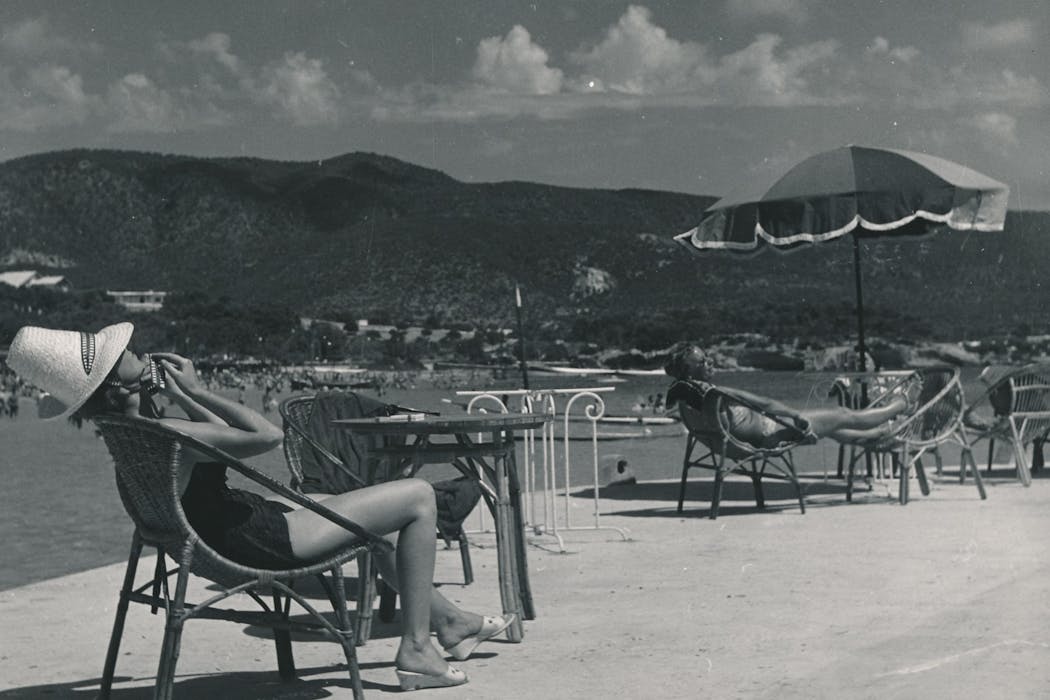
Palma Nova beach – a popular European holiday destination in the Spanish Balearic island of Majorca, 1960. Antonio Verdugo, Legacy Luis Fernández Fuster, University of Zaragoza, Huesca. , CC BY

Spain’s image abroad and how it has evolved over the centuries was the focus of a recent episode of Karambolage, a TV show on Franco-German European culture channel Arte. It traced the evolution of the “Black Legend” from the 16th century to the tourist slogan “Spain is Different”, popularised in the 1960s, suggesting an almost natural continuity between older historical stereotypes and tourism marketing associated with the Franco regime.

In the programme’s account, Spain is today associated with sunshine and flamenco, after having long been burdened with a negative reputation. From the 16th century onwards, at the height of its colonial empire, Protestant rivals spread hostile propaganda that helped shape the so-called Black Legend, portraying Spaniards as brutal and backward. This view persisted, particularly in 19th-century France, where the doubly racist expression “Africa begins at the Pyrenees” placed the country on the margins of a supposedly more civilised Europe.

The episode presents the following sequence: the civil war, followed by the Franco dictatorship, reinforced the country’s international isolation. In the 1960s, the regime then opened Spain to tourism. Under the leadership of Minister Manuel Fraga Iribarne, an ambitious campaign centred on tradition was launched under the slogan “Spain is Different,” which is presented as the trigger for Spain’s tourism boom.

The problem with this narrative lies in the way it simplifies a much more complex process. Moving from the Black Legend to the ironic reappropriation of a Francoist slogan may appear coherent. This interpretation echoes recent research on the role of tourism in the construction of Spanish identity and its international image.

But by joining up the dots in this way, the TV programme revives historical clichés that recent scholarship has significantly nuanced.

A seductive but peripheral difference

While the video evokes the frustration of some Spaniards with the distorted images associated with their country, it nevertheless tends to reinforce the idea of a Spain defined by the external gaze. This stems from the processes of eroticisation and exoticisation developed in the 19th century by the hegemonic powers of France and Britain towards their former imperial rival.

These representations are neither simple contempt nor a linear continuity between anti-imperial propaganda and later forms of condescension. They place Spain within an ambivalent form of otherness that relegates the former empire to the margins of a modernity defined elsewhere. Described as peripheral, the peninsula is simultaneously invested as a romantic space and a source of political and artistic inspiration. Even if visitor numbers remained far lower than in France, Switzerland or Italy, Spain occupied a central place in the European imagination.


À lire aussi :
Tourisme culturel et mondialisation : l’Espagne, entre fiction et réalité


The 1900 world’s fair – Andalusia under Moorish rule. Alexandre Lunois.
Bibliothèque nationale de France, CC BY

Contempt and exaltation stem from the same dynamic. These clichés combine hierarchy and attraction, aestheticisation and distance. Admiration itself participates in a symbolic reclassification that assigns Spain a seductive but peripheral difference.

It is therefore not enough simply to complicate the French gaze. It is also necessary to avoid reducing Spain to the object of an external symbolic construction. Such a reading obscures the country’s own internal dynamics. Spain is not only shaped by foreign projections. It is also a space of internal debate and intellectual circulation that extends beyond its borders.

From the early modern period, Spanish thinkers questioned the legitimacy of conquest and fully participated in European intellectual exchanges. In the 19th century, Spanish exiles and travellers encountered the industrialisation of wealthier countries and the prominence of world fairs. These experiences fuelled fundamental debates about Spain’s place in modernity.

Presenting the country as trapped in a negative reputation passively endured amounts to overlooking these internal debates and transnational exchanges, which helped define its place in European history.

An ambivalent slogan

But the main blind spot of this narrative appears when we examine the history of the slogan itself. It is true that a widely shared memory attributes “Spain is Different” to the Francoist Minister Manuel Fraga. Yet research shows that the formula emerged as early as the republican years, circulated widely in the 1940s and 1950s, and that the campaign launched under Fraga was more its culmination than its invention.

“Spain is Different” appeared as early as 1932–1933 in a series of photographic posters produced under the direction of Rafael Calleja, a conservative senior civil servant who remained in office from the Primo de Rivera dictatorship to the Republic. The slogan notably accompanied the image of an alcaldesa of Zamarramala, a female figure symbolically invested with authority during the annual festival.

SPAIN – Spain is Different PNT/OTC. Photo Francisco Andrada, 1932-1933.
Arxiu Històric de la Ciutat de Barcelona AHCB4-205/C05

The choice is already singular and came at a time when the Republic was expanding women’s civic participation and profoundly transforming the political and social order.

During the civil war, the formula was quickly reappropriated. On the back cover of the magazine L’Esquella de la Torratxa, a family of English tourists contemplates a striking version of the poster. The “alcaldesa” is replaced by Franco, whose pose was meant to appear effeminate – a way of undermining him in the political culture of the time. Surrounded by a bishop, a colonial soldier and Nazi and Fascist officers, the motif of “difference” becomes political satire. It no longer refers to national particularities but to the spectacle offered to hesitant European democracies of the alliance between the putschists and the Fascist powers and their use of colonial troops.

International tourist propaganda – Visit Spain! David Santsalvador, La Esquella de la torratxa 13/11/1936.
Biblioteca Virtual de Prensa Histórica, CC BY-NC-ND

In the English-speaking press, the slogan also served as a key to interpreting the conflict. It often appeared in accounts marked by imperial condescension that presented a “different” Spain as an unstable anomaly within civilised Europe. This longstanding trope helped naturalise violence, presenting it as the supposed expression of an inherent otherness rather than as part of a broader European breakdown of order.

Neither the slogan nor its main promoter disappeared after the war. The formula was revived in the 1940s and 1950s, notably in the volumes Apologías Turísticas de España, directed by Rafael Calleja (1943, 1957), as well as in several photographic poster campaigns featuring the slogans “Spain is Beautiful and Different” and “Spain is Beautiful and Different: Visit Sunny Spain.”

In the post–civil war period, the emphasis on Spain’s singularity accompanied the regime’s efforts to break its international isolation and integrate into the Western order dominated by the United States. Tourism promotion was now primarily aimed at the North American public, while this singularity became a diplomatic resource intended to present the country as an acceptable partner within the Western bloc.

Franco and Eisenhower met in Madrid, December 22, 1959.
WikiCommons, CC BY

When Manuel Fraga relaunched a major campaign in 1962 under the slogan “Spain is Different,” the country was no longer isolated. The agreements concluded with the Holy See and the United States in 1953, Spain’s entry into the UN in 1955 and the Stabilisation Plan of 1959 marked its integration into the Western order and ushered in a period of very rapid growth. In the context of the post-war economic boom, tourism became one of the drivers of economic and social transformation. Spain was already welcoming nearly seven million visitors a year at the beginning of the decade and became part of an international leisure market alongside Italy and Greece.

The regime certainly sought to attract foreign exchange and improve its image. But reducing this policy to simple folkloric instrumentalisation oversimplifies a society undergoing rapid change. Administrators, entrepreneurs, artists and municipalities all participated in the construction of this new image. In an increasingly competitive tourism market, “difference” became a tool of differentiation. The rise of Spanish tourism is better explained by structural dynamics in post-war Europe than by the isolated action of a supposed providential figure.

Finally, implicitly contrasting a supposedly “backward” Spain with a “modern” Europe reproduces an old pattern that historiography has largely deconstructed. Spanish history should not be read as a trajectory lagging behind a supposedly normative European centre. Formulated in a prestigious cultural media outlet from wealthier countries, this opposition inadvertently revives older logics of cultural hierarchy.

From propaganda to reappropriation: when the slogan escapes the state

This same linear reading appears in the way the programme connects the Black Legend to the contemporary use of “Spain is Different,” as if these clichés had ultimately been internalised. Yet the slogan has had a long and contested history. From its earliest uses, it served to dispute the definition of the nation: in the conservative reaction to republican reforms, in antifascist satire during the civil war, in Anglo-Saxon narratives marked by imperial condescension, and later in a Franco regime first seeking US protection and then concerned with attracting foreign exchange and European recognition.

The Spanish example shows that ironic appropriation can constitute a form of critical distance. In the terms proposed by British sociologist Stuart Hall, this corresponds to an oppositional reading, in which a message produced by those in power is taken up and turned against them. The problem lies not in the irony itself but in the linear framework in which this history is placed.

It was not the last time. In 2012, the creation of “Marca España” by the Popular Party government – a party founded by Manuel Fraga at the end of Francoism – formed part of the neoliberal logic of nation branding. The organisation aimed to improve the country’s image abroad and among Spaniards themselves. Very quickly, the name became an object of sarcasm. At the slightest train delay, after a sporting defeat or a corruption scandal, a simple shrug was enough to prompt an ironic, “Marca España.”

Spanish distinctiveness has never constituted a stable essence. It has been a stake, a site of projection and conflict. Presenting it as a continuous thread linking longstanding stereotypes and Francoist marketing erases what matters most: Spanish “difference” has always been an object of dispute.


A weekly e-mail in English featuring expertise from scholars and researchers. It provides an introduction to the diversity of research coming out of the continent and considers some of the key issues facing European countries. Get the newsletter!


The Conversation

Jorge Villaverde ne travaille pas, ne conseille pas, ne possède pas de parts, ne reçoit pas de fonds d’une organisation qui pourrait tirer profit de cet article, et n’a déclaré aucune autre affiliation que son organisme de recherche.

ref. Beyond the ‘Spain is Different’ slogan: putting an end to tourist clichés about Spain – https://theconversation.com/beyond-the-spain-is-different-slogan-putting-an-end-to-tourist-cliches-about-spain-277706

Sea levels around Africa are rising faster than the global average: what’s behind this alarming trend

Source: The Conversation – Africa – By Franck Ghomsi, Postdoctoral Fellow, Nansen Tutu Centre, University of Cape Town

For over three decades, satellites orbiting Earth have measured the height of the ocean surface with remarkable precision. These measurements are crucial because changes in ocean height are one of the clearest indicators of how our planet is responding to climate change. Rising ocean surfaces signal warming temperatures, melting ice and shifting ocean currents.

These all directly affect coastal communities through flooding, erosion and habitat loss. Even a small rise in the baseline sea level means that normal tidal cycles and storm surges reach further inland. This can turn high tides into damaging flood events.

Many people assume ocean levels are uniform, like water sitting flat in a bathtub. In reality, the ocean surface is surprisingly uneven. Winds push water in certain directions. Ocean currents redistribute heat. Temperature differences cause water to expand or contract. Even variations in Earth’s gravity field create bumps and dips in the sea surface. All these factors combine so that sea level can vary by tens of centimetres from one region to another.

When we say sea level has risen, we’re comparing it to a stable reference level, the distance between the satellite and the ocean surface.

I’m an oceanographer and geophysicist who specialises in these measurements. My research team and I analysed ocean height measurements collected by radar instruments on orbiting satellites from 1993 to 2024, for all waters surrounding Africa.

Our analysis revealed that African seas have risen by approximately 11.26cm since 1993. This process is driven by warming waters and melting ice.

African sea levels are rising by approximately 3.54 millimetres each year, which exceeds the global average of 3.45 mm/yr. Perhaps more troubling is that the pace of rise is speeding up, especially in African waters. This acceleration is a long-term trend driven by ongoing ocean warming and ice sheet melting, and it persists regardless of whether any individual year features an El Niño or a La Niña. The ocean continues to absorb heat and receive meltwater from ice sheets year after year, and it is this relentless accumulation, not any single climate cycle, that drives the long-term acceleration.

Africa’s 38 coastal nations are home to over 200 million people living near the shore. Rising seas threaten these communities with flooding, coastal erosion, and saltwater contamination of drinking water and farmland. Rising and warming seas also disrupt fisheries that millions of Africans depend upon for food and livelihoods.

Dramatic changes

We analysed 32 years of records and isolated the long-term trends from short-term influences like the El Niño weather pattern. We also examined ocean temperature and salinity data from the surface down to 300 metres depth to determine how much of the sea level change was caused by the ocean warming and expanding versus gaining additional water mass.

Our study revealed something remarkable about the 2023 to 2024 period. The El Niño event, which every so often spreads warm water across parts of the Pacific Ocean and alters weather patterns around the world, combined with other climate phenomena. Together, they created the largest sea level spike ever recorded in African waters, reaching an anomaly of 27mm.

The most dramatic changes are occurring in specific regions. The ocean does not respond to warming and climate variability uniformly. Local factors, including the strength and direction of ocean currents, the depth of warm surface layers, the influence of nearby climate patterns like the Indian Ocean Dipole, and the shape of the coastline and seafloor, all combine to make certain areas far more sensitive to change than others.

The Western Indian Ocean, including waters around Mozambique, Madagascar and the Comoros Islands, shows the highest acceleration of sea level rise at 0.16 mm/yr² with a trend of 3.88 mm/yr.

The Eastern Central Atlantic, encompassing the Gulf of Guinea and waters off west African nations like Senegal, Ghana, Nigeria and Cameroon, follows closely at 3.90 mm/yr. These regions are experiencing both the fastest rise and the sharpest acceleration, making them priority areas for monitoring and adaptation.

Impact of El Niño

The western Indian Ocean and the tropical Atlantic were already abnormally warm in 2023-2024, with sea surface temperatures well above their long-term averages. This created a higher baseline from which El Niño could push up temperatures, and therefore sea levels.

Unusual wind patterns suppressed the normal process of upwelling. This is when winds push surface water aside, allowing colder, nutrient-rich water from the deep ocean to rise to the surface. The result was that heat was trapped at the surface instead of being mixed downward and replaced by cooler water. The ocean layers did not mix well.

The result was striking. Thermal expansion alone (warmer water) accounted for over 70% of the exceptional sea level rise during this event, reaching nearly 30mm across the African marine domain. Ocean heat content quadrupled compared to the 2015-2016 El Niño.

The 2023-2024 period contributed 2.34cm of rise, representing 19% of the total increase since 1993 in just two years.

Because sea levels have been steadily climbing for decades, the starting point before each new extreme event is already higher than it used to be. The Western Indian Ocean surged by 3.87cm in one year alone – nearly one third of its total rise since 1993.

What drives rising sea levels

Two main factors drive sea level rise globally. First, as ocean water warms, it expands. Second, melting glaciers and ice sheets in Greenland and Antarctica add water mass to the oceans. Both are consequences of human caused climate change.

This rise is not a natural cycle. While sea levels have fluctuated throughout Earth’s history, the current rate of rise is far faster than anything seen in thousands of years, driven by the burning of fossil fuels and the resulting buildup of greenhouse gases in the atmosphere.

The human cost of rising seas

Major cities face mounting dangers. Lagos, with over 20 million residents, sits on low lying land increasingly vulnerable to flooding. Dar es Salaam in Tanzania faces similar risks. Small island developing states like the Comoros and Seychelles are particularly exposed.

The “normal” water level today is centimetres higher than it was 30 years ago. Each new event builds on an ocean that is already swollen from decades of warming.

And when upwelling doesn’t happen, fish populations decline and the communities that depend on them lose food and income.

What needs to happen next

Addressing this crisis requires action on multiple fronts. Most fundamentally, global carbon emissions must be drastically reduced to slow ocean warming. Without achieving carbon neutrality by mid century, Africa risks exceeding 2°C of warming by 2100.

Adaptation is equally urgent. African nations need expanded ocean monitoring networks to track changes and provide early warnings. Coasts need protection through sea walls, restored mangroves and improved drainage.

The West Africa Coastal Areas Management Program, a World Bank supported regional effort, is a promising model. It aims to help countries manage erosion, flooding and pollution through investments in infrastructure, nature based solutions, and policy coordination.

Protecting Africa’s coasts requires combining oceanographic science with community level planning to build resilience against an uncertain ocean future.

The Conversation

Franck Ghomsi is a researcher at the Nansen-Tutu Centre for Marine Environmental Research in the Department of Oceanography at the University of Cape Town, South Africa. He is also affiliated with the Centre for Earth Observation Science at the University of Manitoba in Winnipeg, Canada, and the Geodesy Research Laboratory at the National Institute of Cartography in Yaoundé, Cameroon. He receives funding from Schmidt Sciences, LLC, and support from Canada’s C150 Research Program (Grant No. 50296).

ref. Sea levels around Africa are rising faster than the global average: what’s behind this alarming trend – https://theconversation.com/sea-levels-around-africa-are-rising-faster-than-the-global-average-whats-behind-this-alarming-trend-276888

Do dads of disabled children do enough? Kenya study points to misunderstood ways of caring

Source: The Conversation – Africa – By Amani Karisa, Associate Research Scientist, African Population and Health Research Center

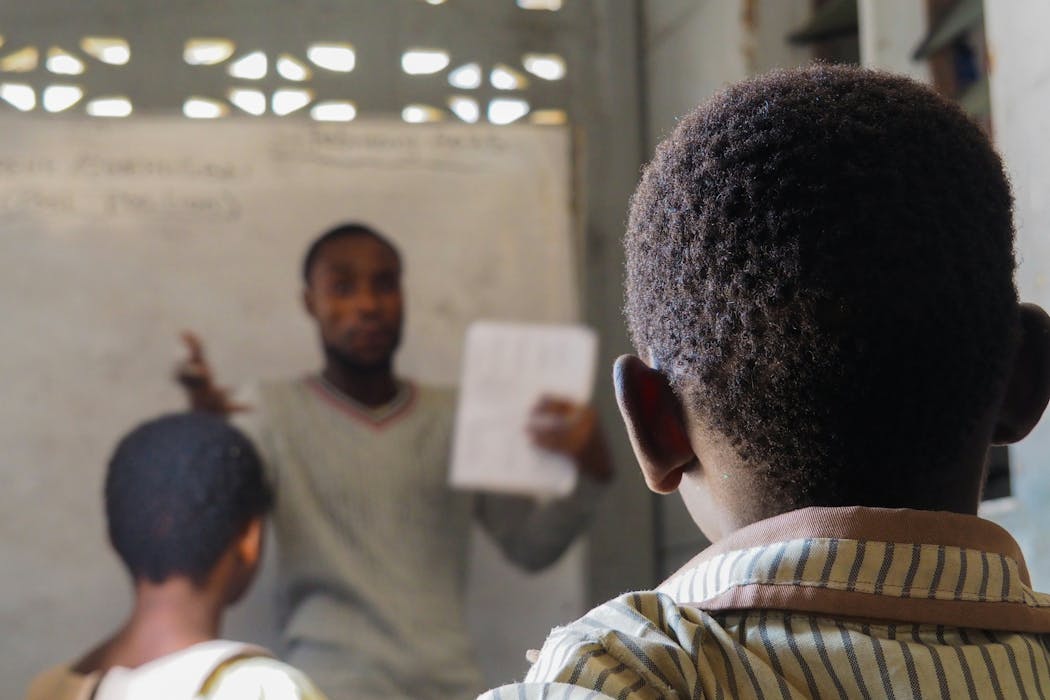
Fathers have a strong influence over whether and how children access schooling. David Geneugelijk/unsplash, CC BY

A child’s success at school doesn’t depend only on teachers and classrooms. Studies show that when parents engage with schools – by attending meetings, supporting learning at home and working with teachers – children tend to do better academically and socially.

In many African countries, fathers hold decision-making and financial authority within families. This gives them strong influence over children’s schooling.

But when a child has a disability – such as Down syndrome, epilepsy, autism or other conditions that significantly affect learning and daily functioning – a father’s involvement often shifts in complex ways.

Research from Kenya and other African settings shows that children with disabilities already face barriers to school access, continuity and support.

What is less well understood is how fathers engage with their education, and how ideas about masculinity, responsibility and disability shape that involvement.

Much of the existing research on parental involvement focuses mainly on mothers or treats parents as a single category. Fathers’ roles are often assumed rather than examined directly.

Our research set out to address this gap. My colleagues and I are education and disability researchers based in Kenya and South Africa. We looked at how a father’s involvement in the education of school-aged children with intellectual disabilities is constructed and negotiated in Kenya.

We studied a public special school at the coast that serves children and adolescents with intellectual disabilities. Like many such schools, it functions as a place of learning and a support hub for many low-income families navigating stigma, poverty and limited services.

We wanted to find out how fathers, mothers, teachers and learners themselves describe fathers’ roles, and what counts as involvement from their point of view.

The goal was to identify practical patterns: what a father’s involvement looks like in reality, what limits it and where opportunities exist to strengthen it. We found that many fathers see their main role in their child’s education as financial provision, such as paying school fees, rather than attending school meetings or events.

Social expectations also shape fathers’ visibility at school, with some avoiding engagement in spaces associated with intellectual disability. Work pressures in low-income settings further limit participation.

Our study also found that teachers’ assumptions about fathers’ disengagement can unintentionally reinforce their absence. However, when fathers do engage, their influence is often decisive because they are decision makers in many households.

Our findings challenge the assumption that fathers are simply absent or uninterested. They show instead that involvement often takes less visible forms that are shaped by economic pressures, social norms and school practices.

Recognising these patterns can help schools and policymakers design more effective ways to engage fathers and support children with intellectual disabilities.

The research

Our core evidence comes from case study research conducted in Kenya. Participants included fathers, mothers, teachers and learners with disabilities.

We collected data through individual interviews, focus group discussions and document reviews of school records and parent meeting notes. This allowed us to identify recurring patterns, not just individual opinions.

We extended the analysis by placing these findings within the broader Kenyan social and policy context of fatherhood, education and disability.

The findings cannot be assumed to represent all families. But they do reveal consistent mechanisms that likely operate in similar settings.

What to know about a father’s involvement

1. Many fathers see their main education role as financial provision

Across participants, one pattern was consistent: fathers strongly identified with the role of provider. Paying school fees, transport costs and buying uniforms and supplies was widely viewed – by fathers, mothers and teachers – as legitimate educational involvement.

Even when fathers rarely attended school meetings or events, they were still described as “involved” if they financed schooling. In contrast, mothers were expected to handle direct school contact and daily follow-up.

This means schools that define involvement only as physical presence may misread how the role of fathers is understood.

2. Masculinity norms shape how visible fathers are at school

Many teachers we spoke to linked the low attendance of fathers at school events to masculinity pressures. They suggested that some fathers avoided being publicly associated with a child with intellectual disability because disability was seen socially as weakness or imperfection that could damage male status.

Importantly, this interpretation came mostly from teachers. Fathers themselves framed their absence more often in terms of work and provider duties.

3. ‘Work demands’ are real – but also sometimes a shield

Fathers often explained non-attendance at meetings by pointing to unstable or casual labour conditions – missing a day’s work could mean losing income or even a job. In low-income settings, this constraint is credible.

But our research also found that fathers’ attendance was still low even when meetings were scheduled with advance notice or on weekends. Some teachers and mothers saw “work” as a socially acceptable explanation for fathers to protect their masculine identity.

Both readings can be true at once: economic pressure is real, and identity protection is also operating.

4. Teachers’ expectations can unintentionally push fathers away

Another finding is more uncomfortable for schools. Some teachers held strong prior beliefs that fathers of children with disabilities are uncaring or in denial. These assumptions shaped how, and how often, they contacted fathers.

Where teachers mainly communicated through mothers, fathers became even less engaged with the school. This confirms the original expectation.

5. When fathers are engaged, their influence is high

Where fathers did engage, their impact was often decisive. Their support accelerated school placement, fee payment and follow-through on school recommendations.

Teachers reported that when fathers backed a decision, implementation at home was easier. This suggests that increasing father engagement has practical effects on children’s educational stability.

What it means

The findings suggest that father involvement should be approached differently in disability education.

  • Schools should broaden what counts as involvement. Financial provision, decision support and consent are forms of engagement, even when fathers are not physically present. But schools should also create father-inclusive contact strategies. These include direct invitations, flexible meeting formats, and communication channels that do not rely only on mothers.

  • Teachers need to examine their own gender assumptions, so as to build relationships with fathers.

  • Policy messaging that links father involvement with protection, dignity and future stability may be more effective than messages around attendance.

  • Civil society organisations and family support programmes should design father-focused engagement spaces where men can discuss disability and schooling without stigma pressure.

It is too simple to label fathers as absent or resistant. In our study, fathers’ involvement was not missing – it was different.

The Conversation

Amani Karisa receives funding from Echidna Giving, Gates Foundation and International Development Research Centre.

ref. Do dads of disabled children do enough? Kenya study points to misunderstood ways of caring – https://theconversation.com/do-dads-of-disabled-children-do-enough-kenya-study-points-to-misunderstood-ways-of-caring-274745

Paleontologists uncover a new ‘Spinosaurus’ species by following a clue from a decades-old book into the Sahara Desert

Source: The Conversation – USA – By Paul C. Sereno, Professor of Paleontology, University of Chicago

In this illustration, _Spinosaurus mirabilis_ fight over a carcass some 95 million years ago in what is now the Sahara Desert in Niger. Dani Navarro

My fixation on a small, desolate locale in the heart of the Sahara Desert started with a single line buried in a 630-page tome in French about the rocks of the central Sahara: “Dent de Carcharodontosaurus saharicus Depéret,” which translates to “tooth of Carcharodontosaurus saharicus Depéret” – “Depéret” refers to the scientist who originally named the species.

The intrepid French geologist Hugues Faure (1928-2003) had collected one saber-shaped tooth in the early 1950s at a small exposure he labeled “Akarazeras” on one of his maps, identifying the tooth as belonging to the T. rex-size predator Carcharodontosaurus. That beast was named years before based on fossils in the Western Desert of Egypt, and Faure correctly figured the tooth and outcrop in Niger might be the same age. Faure’s tooth, unfortunately, was never figured or photographed and has been lost.

In the 70 years since Faure’s account, no paleontologist had ventured back to this hyperarid, windswept landscape to attempt to relocate Akarazeras. In truth, the tooth might have been all that was there, and the site itself could easily have disappeared under drifting dunes. Yet, after reading about it early in my career as a paleontologist, Akarazeras became my fossil Shangri-La, a place I dreamed of visiting.

Akarazeras relocated

With a small exploratory team in 2019, I followed a desert trail to the remote oasis of Tanout, the closest inhabited point to Akarazeras. There we refreshed our supplies – food, water and fuel – to survive a three-day foray in the open desert in search of the locale. Besides binoculars, we had a few gadgets Faure couldn’t have imagined: GPS hand units and a drone.

Navigating using Faure’s map brought us to a flat, barren spot with nothing in sight to the horizon. We drove several kilometers to the north, climbed to the top of our vehicles and launched the drone. One of my team members spotted a low rocky outcrop at distance.

Soon after arriving at the exposure, we found several Carcharodontosaurus teeth and, a short distance away, the rim of an infilled, hand-dug well. We had found Akarazeras. By the next afternoon, we had finished packing up a few dozen fossil teeth and bones. We probed in every direction and sent the drone farther to see if there was anything else to find. Nothing but sand.

A chance encounter

That might have been the end of the story had not a tall, lanky man arrived in our Tanout campground the evening we returned. Looking like a Tuareg Marvel character, Abdoul Nasser stood next to his Honda motorbike, dressed in a full-length black overcoat, a cheche head wrap, sunglasses and a sheathed sword slung over his shoulder.

“I can take you to some large bones, farther than Akarazeras,” he said in Tamasheq, with guides translating to French. This seemed more than a boast or scam. I decided to devote our final three days to this venture.

A man wearing a dark jacket and a blue headscarf with a motorbike, standing next to a man in a cowboy hat.
Our Tuareg guide to the site of the new Spinosaurus species, Abdoul Nasser, left, with paleontologist Dan Vidal, right, en route to the fossil area Jenguebi.
Alhadji Akamaya

A day and a half later, we had spent half our fuel chasing our motorbike guide over an endless dunescape. Just as we questioned going farther, Abdoul slowed to a stop in front of the largest fossil hind leg I had ever seen, its thigh bone nearly 6 feet (2 meters) long.

As the sun set, we scurried from skeleton to skeleton – it was a veritable dinosaur graveyard. The next morning we had a half-hour at this place locals called Jenguebi before we had to leave. I and my colleague, Spanish paleontologist Dan Vidal, quickly collected large jaw pieces of what we assumed was Carcharodontosaurus.

An overhead shot of two paleontologists standing in the desert, with large dinosaur bones sticking out of the sand.
Paul Sereno, left, and paleontologist Dan Vidal, right, next to the gigantic hind limb of a long-necked dinosaur moments after arriving at Jenguebi.
Matthew Irving/Fossil lab

Epiphany in the lab and field

Back in Chicago, the cleaned and assembled jaw pieces told another story. They belonged to the giant fish-eating dinosaur called Spinosaurus, which refers to a group of semiaquatic, T. rex-size beasts known from the northern shores of Africa.

For more than two years, plans to return to Niger were scuttled by the pandemic. Finally, in 2022, I led an international, 20-person field crew with a larger guard back to Jenguebi to see whether we could turn up more of the elusive predator.

I was busy arranging the campsite an hour after arriving when Dan Vidal approached, wide-eyed.

“You won’t believe what we just found … the snout end of our skull!”

The team quickly gathered around the toothed bone jutting from the surface of the desert, some in tears, bearing witness to an extraordinary discovery. The snout end fit onto one of the jaw pieces we had collected in 2019. Hours later, Dan approached again with a curved bone in hand.

“What do you think this is?” he asked, wanting confirmation for what we both immediately recognized as a landmark discovery.

A hand holding a large curved fossil with a piece of crest attached
Expedition member Ana Lázaro holds the cranial crest of Spinosaurus mirabilis at the Jenguebi site.
Alvaro Simarro

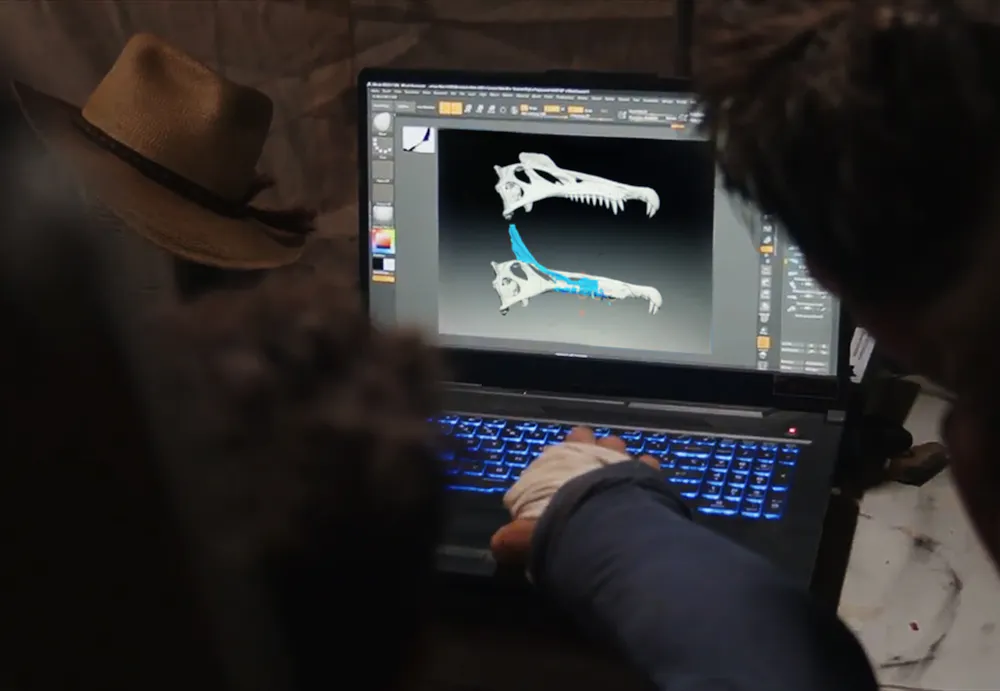
The scimitar-shaped bone he held came from the top of the skull. Unlike the low, fluted crest atop the cranium of Spinosaurus from Egypt, called Spinosaurus aegyptiacus, this bone swept upward and backward over the orbital – the space for the eyes. In the cool of the evening, the team gathering around Dan and his laptop to get a glimpse of an initial skull reconstruction, an assembly of digital versions of the bones we had discovered. In awe, we saw the Jenguebi spinosaurid for the first time, a spectacular southern variant of the sail-backed predator first described in Egypt in 1915.

Back in the lab, we coined a species name in Latin that captured our collective “astonishment” upon its discovery, Spinosaurus mirabilis.

A person typing on a laptop, which displays a rendering of a dinosaur's skull
The expedition team watches the laptop of paleontologist Dan Vidal to see the first digital reconstruction of the scimitar-crested skull of Spinosaurus mirabilis.
Expedition Impossible LLC

An organization I launched with Nigeriens, NigerHeritage, has visualized new museums in the country’s capital, Niamey, and closer to the fossil sites in Agadez that will preserve and display these and many other fossils. A secure homecoming for these remarkable finds also involves a new generation of Nigerien museologists, scholars and museums.

An inland fish-eater

Other animals at the site included two new long-necked plant-eaters, a partial skull of Carcharodontosaurus, a large skull of a freshwater fish and fossil wood. All of the fossils came from a layer of river-borne sediment less than a meter thick, indicating they lived in the same forested inland area far from a marine coastline.

In recent years, the giant fish-eater Spinosaurus has been depicted in Hollywood’s “Jurassic World Rebirth” as a swimming, diving ocean predator alongside other undoubtedly marine creatures like mosasaurs. In 2020, a team of researchers had reinterpreted Spinosaurus aegyptiacus in this way.

Dubbed the “aquatic hypothesis,” the key inspiration was the discovery that the sail on its back extended over its tail. The structure of the tail and other lines of evidence, however, led me and my research team to an alternative view of the fish-eater – as a shallow-water, wading, ambush predator with little capacity for swimming and none for diving.

Aside from its crest, S. mirabilis is very similar to its cousin S. aegyptiacus from the northern coast of Africa. Their lifestyles likely also were very similar.

An illustration of a long dinosaur with a tall crest.
A flesh model of Spinosaurus mirabilis.
Dani Navarro

Evolutionary stages

The early record of spinosaurids, known only from a few teeth, is rooted in the Jurassic, when they first gained a taste for fish. Over the past few years, researchers have found spinosaurid fossils in many locales in rocks of Early Cretaceous age in southern Europe and Asia, sites that once were near the ancient Tethys Sea. At that time, 115 to 130 million years ago, spinosaurids had split into two subgroups – baryonychines and spinosaurines – that collectively dominated the Tethyan realm as the largest predators of the day.

By the dawn of the Late Cretaceous, only spinosaurines remained as larger and more specialized and flamboyant fish-eaters on the southern side of the Tethys Sea in coastal and inland habitats.

S. mirabilis is among the last of these great predators. It is perhaps best understood as a “hell heron,” the likes of which we can only imagine when observing the more graceful, if less fearsome, herons of today.

The Conversation

Paul C. Sereno received funding from an anonymous donor for the 2022 expedition and subsequent research on the new spinosaurid.

ref. Paleontologists uncover a new ‘Spinosaurus’ species by following a clue from a decades-old book into the Sahara Desert – https://theconversation.com/paleontologists-uncover-a-new-spinosaurus-species-by-following-a-clue-from-a-decades-old-book-into-the-sahara-desert-274182

What was the very first plant in the world?

Source: The Conversation – USA – By Erin Potter, Lecturer in Geography and Ph.D. student in Earth Sciences, Binghamton University, State University of New York

Once plants really got a foothold, they transformed our planet. Albert Fertl/Moment via Getty Images

Curious Kids is a series for children of all ages. If you have a question you’d like an expert to answer, send it to CuriousKidsUS@theconversation.com.


What was the very first plant in the world? – Ivy, age 6, Phoenix


Long before dinosaurs roamed the land, Earth looked very different from the planet we know today. Around 500 million years ago, most of Earth’s surface was bare rock and dry soil. There were no trees, no grass and no flowers. Life existed almost entirely in the oceans.

Then something amazing happened: Plants began to grow on land.

This moment was one of the most important events in Earth’s history because it changed the planet forever. As a geoscientist, I am interested in changes in the diversity of flora and fauna – that’s plants and animals – over time.

Predecessors of plants lived in water

The story of plants begins in the water. The earliest plantlike organisms were simple, tiny green life-forms such as algae. You can still see algae today as seaweed along beaches or as green slime on rocks in ponds.

Magnified image of algae that look like little green blobs with two halves
Early algae were just a cell or two in size and drifted in water.
NNehring/E+ via Getty Images

Algae have lived in Earth’s oceans and lakes for over 1 billion years. They can make their own food, using sunlight, water and carbon dioxide to create sugars. This process is called photosynthesis; it releases oxygen – the gas we need to breathe – as a byproduct.

At first, Earth’s atmosphere had very little oxygen. Over millions of years, photosynthesizing organisms like algae and some bacteria slowly released oxygen into the air. This change, sometimes called the Great Oxygenation Event, made it possible for larger and more complex life to evolve. Without oxygen-producing organisms, animals, including humans, could never have existed.

Scientists believe the first true plants evolved from green algae around 470 million years ago. These early plants lived in shallow water near shorelines, where conditions changed often. Sometimes they were underwater, and sometimes they were exposed to air. This habitat helped them slowly adapt to life on land.

Getting a foothold on dry land

Moving onto land was not easy. Water plants are supported by water and can absorb nutrients easily, but land plants faced new challenges. How would they avoid drying out? How could they stand upright without floating? How would they get water and nutrients from dry ground?

To survive, early plants evolved important new features. One key adaptation was a waxy coating, called a cuticle, which helped keep water inside the plant. Plants also developed stronger cell walls that allowed them to stand upright against gravity. Simple rootlike structures, called rhizoids, helped anchor plants to the ground and absorb water and minerals from the soil.

The earliest land plants were very small and simple. They looked similar to modern mosses, liverworts and hornworts, which still grow today in damp places like forest floors and stream edges. These plants did not have true roots or stems, and they stayed close to the ground. Fossils of early land plants, such as Cooksonia, date back to about 430 million years ago and show small branching stems only an inch or two tall.

stiff-looking greenish branching stems with circular pods at the tips
An artist’s rendition of Cooksonia plants highlights their strong stems.
Nobu Tamura, CC BY-SA

Even though these plants were tiny, they had a huge impact on Earth. As plants spread across land, their roots helped break down rocks into soil, a process called weathering. This created richer soil that could support more life.

Plants also released more oxygen into the atmosphere, improving air quality and helping animals breathe. Plants created new habitats and food sources, allowing insects and other animals to move from water onto land.

Increasing complexity across millions of years

Once plants became established on land, evolution continued. Around 420 million years ago, plants evolved vascular tissue: tiny tubes that transport water and nutrients throughout the plant. This adaptation allowed plants to grow taller and stronger because water could be moved upward from the roots to the leaves. These vascular plants included early relatives of ferns and club mosses.

With vascular tissue, plant life really started to flourish. By about 360 million years ago, vast forests covered much of Earth. Giant ferns and treelike plants, some over 100 feet (30 meters) tall, dominated the landscape. Over time, dead plant material from these forests was buried and compressed, eventually forming coal, which people still use as an energy source today.

Another major step in plant evolution was the development of seeds, around 380 million years ago, found in seed ferns. Other seed plants, such as early conifers – a group that includes modern pine trees – could reproduce without needing water for fertilization. Seeds protected plant embryos and allowed plants to survive harsh conditions like drought or cold.

The most recent major plant evolution happened around 140 million years ago, when flowering plants, what scientists call angiosperms, appeared. Flowers helped plants attract animals like insects and birds, which spread pollen and seeds. Fruits developed to protect seeds and help them travel. Today, flowering plants make up most of the plants we see, including trees, grasses, fruits and vegetables.

The first plants didn’t just survive; they transformed Earth. They changed the atmosphere, built soil, and created ecosystems that allowed animals to thrive on land. Thanks to plant evolution, Earth became a green, living planet full of diverse life.


Hello, curious kids! Do you have a question you’d like an expert to answer? Ask an adult to send your question to CuriousKidsUS@theconversation.com. Please tell us your name, age and the city where you live.

And since curiosity has no age limit – adults, let us know what you’re wondering, too. We won’t be able to answer every question, but we will do our best.

The Conversation

Erin Potter does not work for, consult, own shares in or receive funding from any company or organization that would benefit from this article, and has disclosed no relevant affiliations beyond their academic appointment.

ref. What was the very first plant in the world? – https://theconversation.com/what-was-the-very-first-plant-in-the-world-271828