How plant populations keep a genetic memory of the past

Source: The Conversation – Canada – By Daniel J Schoen, W.C. Macdonald Professor of Botany, McGill University

Jewelweed is found throughout eastern parts of North America. By studying jewelweed, researchers can understand how environmental changes affect plants over time. (Liz West), CC BY

Plants are usually seen as stationary life forms, quietly supporting environments. But plant communities and populations are far from static. They are constantly being shaped by the world around them.

One way is through local extinction — the loss of a local population from a specific patch of landscape. Another is through local colonization — the spreading or returning of plants to a landscape patch. In fact, many plant species are thought to be composed of metapopulations, which are sets of local populations connected by colonization, local extinction and population growth across a landscape.

If we were able to observe a metapopulation on the landscape over a time-lapse film covering several hundred years, we might see how the metapopulation changes and evolves as the film unfolds.

Of course, no such film exists, and time machines have not yet been invented, so understanding the forces that determine the history of metapopulations remains a challenge.

So, how can researchers understand the history of plant metapopulations? To do this, my colleague Rachel Toczydlowski and I turned to DNA sequence data with the plant jewelweed, or as botanists call it, Impatiens capensis.


Read more:
Tracking wildlife using DNA: A scientific breakthrough made with an Indigenous community


What is jewelweed?

Jewelweed is found throughout eastern parts of North America, including southern Québec and Ontario, and into the midwestern United States. This annual plant can form seeds through both cross-fertilization in normal flowers and through self-fertilization via a special type of closed flower that botanists refer to as a cleistogamous flower. Self-fertilization allows a single dispersing individual plant to establish a new population because it does not require a mate.

A bee gathering nectar from a yellow flower
Plants such as jewelweed also produce a type of flower that is closed and does not require pollinators.
(Rachel H. Toczydlowski)

The plant has the ability to found new populations from one or a few individuals via self-fertilization. The theory of metapopulations predicts that jewelweed as a species should be composed of a highly dynamic metapopulation where some patches have only been recently colonized, while others have been so for longer periods.

Jewelweed is typically found today in the forest fragments left over after agricultural and urban development. This type of habitat once existed as more continuous forest cover that blanketed much of the eastern and middle parts of North America prior to European colonization. This is especially true of the area in Wisconsin where we conducted our study, which is mostly farmland today, but retains island-like patches of more natural habitat.

Our research

We analyzed DNA sequence information obtained by sequencing the genomes of individual members of the population, and focused on how the individual genomes differ from one another.

Lining up the sequences and comparing them reveals differences in the DNA sequences of a sample of plants called single nucleotide polymorphisms (SNPs). These are positions in the sequence that differ from one another by possessing different nucleotides, the individual components of the sequence.

We then looked at the site frequency spectrum of each population, which shows how many SNPs are rare, how many are common and how many fall in between. Population founding events can change how common different SNPs are.

When a new population is founded by only a few individuals, many SNPs end up occurring at moderate frequencies. If the population then grows rapidly, new SNPs appear by mutation but remain rare, which changes the overall pattern of genetic variation.

And so, the form of the site frequency spectrum provides a kind of “genetic memory” of demographic events that gave rise to the individual-component plant populations within the metapopulation that we see today.

By applying this technique to DNA sequence data, we were able to detect significant differences in the demographic histories of the populations sampled. Some populations appeared to have only recently been founded and from a few individuals, whereas others appeared to be larger and more stable.

This pattern fits what is predicted by metapopulation theory for a species whose plants are capable of self-fertilization. The younger populations also exhibited loss of genetic diversity and higher levels of inbreeding compared to the older, more stable populations, which contained more diversity and were less inbred.

The higher inbreeding in younger populations suggests that they were founded by very few individuals and have not yet had enough time or gene flow from neighbouring populations to rebuild genetic diversity.

Importance for conservation

an orange-yellowish flower with red spots
Genetic variability is the foundation of adaptation. High levels of inbreeding can lead to weak or damaging traits being passed onto new generations.
(Unsplash/Jonathan Lim)

Genetic variability is the foundation of adaptation. High levels of inbreeding can lead to weak or damaging traits being passed on to new generations, which reduces the health of populations.

From a conservation standpoint, higher levels of diversity and lower levels of inbreeding are often desirable attributes.

They can enhance the adaptability and stability of populations, something that is becoming increasingly important as the climate changes.

Complicating our understanding of metapopulations, however, is the fact that not all landscapes are created equal. Some are more prone than others to disturbance and recovery, and when it comes to colonization of landscapes, not all plant species are created equal.

For instance, plants that can self-pollinate are more capable of founding a population from a few individuals and may be especially good colonizers compared with plants that require mates for seed production.

Understanding metapopulation history provides conservation managers with an additional perspective, especially when it comes to selecting the healthiest populations to conserve.

We may not have a time machine, but by analyzing the DNA of living populations, we can uncover the echoes of the past and understand their genetic implications for conservation.

The Conversation

Daniel J Schoen receives funding from the Natural Sciences and Research Council of Canada.

ref. How plant populations keep a genetic memory of the past – https://theconversation.com/how-plant-populations-keep-a-genetic-memory-of-the-past-276748

What the 2026 Oscars revealed about the current political mood in Hollywood

Source: The Conversation – UK – By Luis Freijo, Research Associate in Film Studies, King’s College London

The 2026 Academy Awards revealed a striking contradiction. Many of the winning films grapple with urgent contemporary issues, or difficult questions of historical memory. Yet their makers avoided following up on that political character in their acceptance speeches.

This paradox is revealing of the current political mood in Hollywood: filmmakers are willing to engage with politics in their work, but reluctant to raise their own voices.

It makes for a puzzling irony that contrasts with the attitude of, for instance, the music industry in the Grammy Awards. In a year of tariffs, Epstein files, US Immigration and Customs Enforcement (Ice) shootings and military interventions in Venezuela and Iran, the show’s host, comedian Conan O’Brien, kept the political references contained to harmless jokes.

For instance, O’Brien mentioned the tighter security for the gala, appearing to reference the FBI’s warning of possible drone attacks against the US west coast. But the nod quickly revealed itself as a pun about actor Timothée Chalamet’s recent declaration that “no one cares” about ballet and opera.

Even some of the more political speeches, such as Michael B. Jordan’s mention of the Black actors that preceded him when accepting the best actor Oscar, kept to industry boundaries.

Michael B. Jordan’s acceptance speech mentioned the Black actors he felt pathed the way for him.

Only comedian Jimmy Kimmel, whose show Jimmy Kimmel Live! has become strongly critical of President Donald Trump, obliquely mentioned his looming presence when presenting the best feature documentary award.

Politics of the nominated films

This attitude is glaringly detached from what this year’s nominees communicate in their films.

Bugonia, directed by Yorgos Lanthimos, poked at conspiracy theories through its kidnapping plot. The constant ping-pong hustle of Marty Supreme returned to the foundational moment of US capitalism in the 1950s and pointed out that it was already rotten way before Reaganomics and Trump. The Secret Agent, meanwhile, set its thriller story against the historical memory of the dictatorship in Brazil.

The two main winners of the night were also the most political films. Joyfully disguised behind the vampire film conventions and musical performances of Sinners lies a condemnation of ongoing racism in the US. But the film also proposes blues music as an alternative way to experience the world and create loving and protective connections between its inhabitants.


Read more:
Sinners: how real stories of Irish and Choctaw oppression inform the film


In this sense, Delroy Lindo’s performance as ageing blues singer Delta Slim centres the political core of the film. His retelling of a friend’s murder by lynching is first a lament, then rhythm and finally blues.

Lindo competed for best supporting actor against Sean Penn, whose winning work in One Battle After Another became relevant when it started to overlap with the media presence of Greg Bovino, commander-at-large of the US Border Patrol. Under Bovino’s command two US citizens were shot by Ice in Minneapolis in January.

Paul Thomas Anderson wins best director for One Battle After Another.

One Battle After Another recaptures the political spirit of 1970s US films such as The Three Days of the Condor (1975), Network (1976) and All the President’s Men (1976). These films reacted against the consequences of the Vietnam War and President Richard Nixon’s resignation in the 1970s. One Battle After Another brings to the present their activist attitude to oppose our contemporary political challenges.

The film’s chilling depiction of state violence against its own citizens connected with the events in Minneapolis and showed how relevant cinema can be when aimed at those in power. But the film had to speak for itself: its director, writer and producer, Paul Thomas Anderson, carefully avoided any direct mention of Trump, Ice or Minneapolis in his three acceptance speeches (for best adapted screenplay, director and film). And Sean Penn, whose political activism as a friend of Hugo Chávez or in favour of Ukraine has often made Hollywood uncomfortable, chose not to attend the ceremony.

Why nominees stayed silent

The reasons for the lack of politics at the awards may be found in the current industrial climate in the US. In September 2025, the Federal Communications Commission took Jimmy Kimmel Live! off the air for a few days, and continues to threaten to do it again. The industry chatter also believes Trump to be responsible for CBS’ decision to not renew The Late Show with Stephen Colbert, another critical outlet.

The possible acquisition, meanwhile, of Warner Bros. by Paramount, presided over by Trump’s ally David Ellison, follows Amazon’s purchase of MGM and Disney buying Twentieth Century Fox. The industrial landscape is concentrating in a handful of technological tycoons. They may may not take kindly to political activism when funding future projects.

The only political voice that was pointedly raised in the Oscars this year belonged to Spanish actor Javier Bardem.

Bardem appeared on stage to present the best international picture award sporting a lapel that said: “No a la Guerra” – no to war. He had worn the same lapel over 20 years ago when the Spanish Film Academy Awards in 2003 became a loud and clear indictment to Spain’s involvement in the Iraq war.

Bardem left a clear message as he introduced the award: “No to war and Free Palestine.” While films such as this year’s extraordinary intake can and do speak for themselves, the gravity of the moment requires that those who make them join with their own voices.

Bardem’s dissonant appeal reveals where Hollywood’s politics currently lie. They are caught between making committed films and a fear of what the country’s politics will bring.

The Conversation

Luis Freijo currently receives funding from the Volkswagen Foundation. He has previously received funding from the Arts and Humanities Research Council.

ref. What the 2026 Oscars revealed about the current political mood in Hollywood – https://theconversation.com/what-the-2026-oscars-revealed-about-the-current-political-mood-in-hollywood-278495

Paul Ehrlich, often called alarmist for dire warnings about human harms to the Earth, believed scientists had a responsibility to speak out

Source: The Conversation – USA (2) – By William J. (Bill) Kovarik, Professor of Communication, Radford University

Biologist Paul R. Ehrlich in 2010. Paul R. Ehrlich/Wikipedia, CC BY

Stanford University biologist Paul Ehrlich, who died March 15, 2026, in Palo Alto, California, was a scientific crusader whose dire predictions about population growth, world hunger and environmental collapse made headlines and sparked controversy for decades.

Sometimes called a “prophet of doom” by his detractors, Ehrlich was among the most public figures of the environmental movement. He was admired and often honored for his prophetic warnings. But he was also excoriated when his worst predictions failed to come true.

Ehrlich founded Stanford’s Center for Nature and Society in 1984 and wrote more than 40 books and over 1,100 scientific articles on ecology, the environment and population dynamics. He is best known outside of academia for writing “The Population Bomb” in 1968, along with his wife, conservation biologist Anne H. Erhlich, who survives him.

A man and woman in an airport, carrying bags and papers.
Paul Ehrlich and his wife, biologist Anne Ehrlich, arrive in New Zealand for a series of talks on population on Aug. 22, 1971.
George Lipman/Fairfax Media via Getty Images.

The book became a bestseller that was reprinted more than 20 times and translated into multiple languages. It starkly predicted that population growth would exhaust Earth’s resources, leading to wars and social collapse.

Ultimately, the book both popularized and polarized the U.S. environmental movement.

As a scholar of communications and environmental history, I see Ehrlich’s difficult fight for the environment as emblematic of the vast chasm between science on one side and political culture influenced by the mass media on the other side.

And I see Ehrlich’s passing – along with others of his generation, such as Carl Sagan, E.O. Wilson and Jane Goodall – as a loss for a world that needs visionaries and public scientists now more than ever. Public understanding of science and technology is critical for political discussion, for environmental preservation and, in the words of British physical chemist C.P. Snow, for the sake of “the poor who needn’t be poor if there is intelligence in the world.”

The battle over the book

“The Population Bomb” opened with a verbal blast: “The battle to feed all of humanity is over.” And because the “stork had passed the plow,” the Ehrlichs wrote, “hundreds of millions of people are going to starve to death.” Overpopulated India was doomed, they contended, and England “will not exist in the year 2000,” following a massive social and environmental breakdown.

These stark warnings, while overstated, seemed at least plausible at the time. Older scientists, including Snow and oceanographer Roger Revelle, had also warned about population growth overtaking food production.

The Ehrlichs were influenced by books such as the 1948 bestsellers “Road to Survival,” by ecologist William Vogt, and “Our Plundered Planet,” by paleontologist Henry Fairfield Osborn. All of these thinkers owed a debt to the original Cassandra of population catastrophe, English economist Thomas Malthus, whose 1798 book “An Essay on the Principle of Population” warned that the world’s population would inevitably outstrip its food supply.

Even worse, Malthus predicted, efforts to produce more food would simply continue the cycle of famine and poverty. However, new crops and agricultural techniques forestalled Malthus’ catastrophe in the 19th century. As a result, the term “Malthusian” came to signify overly pessimistic views about complex social problems.

Paul Ehrlich appears on ‘The Tonight Show’ with host Johnny Carson on Jan. 31, 1980.

A different sort of Malthusian

Handsome and well-spoken, Ehrlich captured the public imagination through news articles, public lectures and television appearances. “The Population Bomb” launched him into the center of a raging global debate over environment and conservation. He appeared as a guest on “The Tonight Show” with Johnny Carson more than 20 times in the 1970s and early ’80s.

This wasn’t the typical public profile for a biology professor. As New York Times reporter Robert Reinhold observed in 1969, Ehrlich was “representative, perhaps, of a growing new breed of scientists who are willing to get involved in the unscientific and sometimes rough business of crusading in public against such things as DDT, highway building and population growth.”

Not all environmental advocates agreed with Ehrlich’s view that population growth was the critical threat. Another prominent biologist, Barry Commoner, saw faulty technology as the primary source of environmental problems.

In fairness, Ehrlich and his frequent collaborator, physicist John Holdren, saw technology and population as cofactors in a complex social problem, which they summarized with the equation I = P x A x T, or Impact equals Population times Affluence times Technology. Put another way, population growth, wealth and the types of technologies people chose to use all contributed to human impacts on the environment.

The debate between Ehrlich and Commoner perplexed some people, but it showed two different approaches to environmental policy. With Commoner’s approach, technological problems such as toxic waste and nuclear radiation, would be solved through cleanups and improved processes.

Ehrlich said reducing overconsumption and addressing population growth would also help ease these challenges. To slow population growth, Ehrlich called for promoting contraception and increasing access to abortions, and perhaps even resorting to coercive methods, such as forced sterilization.

By the 1970s, a focus on population growth had become widely accepted. The first United Nations Conference on the Human Environment, held in Stockholm in 1972, ranked population growth alongside pollution and underdevelopment as the top action items on the global agenda. Later that year, a prominent European think tank, the Club of Rome, echoed Ehrlich’s warnings in its widely circulated Limits to Growth report.

Scarcity or abundance?

World population continued to grow through the 1970s and ’80s, but the impacts that Ehrlich predicted did not occur. This was largely due to the Green Revolution, a broad campaign by governments and research institutes to provide high-yield varieties of wheat and rice, along with pesticides and mechanized agriculture, to developing countries. These new tools increased harvests and dramatically reduced the risk of famine.

Agricultural scientist Norman Borlaug, a leader of this effort, received the Nobel Peace Prize in 1970. Borlaug made a point of agreeing with Ehrlich in his Nobel lecture, saying the Green Revolution was a temporary reprieve and that population control was also essential in the ongoing battle against hunger.

Conservative economists and scientists weren’t persuaded. One prominent critic, academic economist Julian Simon, argued for what came to be called the cornucopian view, which held that the only limits to growth were imagination and ingenuity. Simon said the Earth had infinite capacity to provide materials and that humans would constantly innovate and find new ways to use them.

In 1980 Simon publicly bet Ehrlich that prices of five important industrial raw materials – copper, nickel, tungsten, chromium and tin – would fall rather than rise over the next decade. Ehrlich said he would have preferred some environmental measure rather than metals, but he said resources would become scarce and prices would rise.

Simon, on the other hand, argued that markets and new technologies would drive prices down. Ultimately, although prices for these five metals had risen during the preceding decades and would also rise during the 1990s, they declined between 1980 and 1990. Simon won the bet, and Ehrlich wrote him a check in 1990 for US$576.07, the difference between the 1980 and 1990 prices.

Metals prices may not have been a good proxy for the issues that Paul Ehrlich and Julian Simon sought to capture in their famous bet.

A matter of when

After the catastrophes that Ehrlich predicted in “The Population Bomb” failed to occur, many critics had a laugh at his expense. “As you may have noticed, England is still with us. So is India,” chuckled New York Times columnist Clyde Haberman in 2015.

“Paul Ehrlich is a misanthrope who’d make you apply for a government permit to have a baby if he could,” wrote Chelsea Follett of the libertarian Cato Institute in 2023.

Ehrlich and his supporters replied that while the Green Revolution might have forestalled widespread famine, human impacts were weighing ever more heavily on the planet. Taking problems such as climate change and toxic pollution into account, Ehrlich asserted in 2009 that “The Population Bomb” had been “way too optimistic.”

In his 2023 memoir, “Life,” Ehrlich expressed deep gratitude for a 70-year career in science. However, he was frustrated over what he saw as the inability of science to penetrate America’s stubbornly unscientific political culture. He was also saddened that the environmental movement was failing to effectively oppose “the forces that pose existential threats to civilization.” Throughout his career as a public scholar, Ehrlich was never afraid to look into the abyss.

The Conversation

William J. (Bill) Kovarik does not work for, consult, own shares in or receive funding from any company or organization that would benefit from this article, and has disclosed no relevant affiliations beyond their academic appointment.

ref. Paul Ehrlich, often called alarmist for dire warnings about human harms to the Earth, believed scientists had a responsibility to speak out – https://theconversation.com/paul-ehrlich-often-called-alarmist-for-dire-warnings-about-human-harms-to-the-earth-believed-scientists-had-a-responsibility-to-speak-out-178492

Can animals sense earthquakes?

Source: The Conversation – UK – By Rachel Grant, Senior Lecturer in Bioscience, London South Bank University

Roomanald/Shutterstock

For centuries, unusual animal behaviour before earthquakes has been reported worldwide. Livestock becoming restless, wildlife disappearing and snakes emerging from hibernation in the middle of winter. For a long time, scientists dismissed such observations as folklore.

In recent years, however, systematic research has begun to explore whether animals genuinely respond to environmental changes preceding major earthquakes. Although earthquakes are hard to predict even for humans, several studies suggest intriguing patterns in animal behaviour before seismic events.

As the world population increases, more people will be affected when earthquakes happen, making this research more important than ever.

My own research journey began with a serendipitous observation in Italy. I was studying the effects of moon phases on toad reproduction at San Ruffino Lake in 2009, when the toads disappeared for five days. They returned only after a magnitude 6.3 earthquake struck the city of L’Aquila, about 50 miles away.

This observation formed the basis of my 2010 study showing that 96% of common toads abandoned their breeding site five days before the 2009 L’Aquila earthquake. It was one of the first studies to quantify a shift in wild amphibian behaviour before seismic activity. Amphibians’ permeable skin makes them especially sensitive to changes in water chemistry which could make their behaviour a potential early warning of seismic activity.

I also conducted a multi-species study of Yanachaga National Park, Peru, before a major earthquake in 2011. A charity called Wildlife Insights (formerly Team Network) places cameras in many locations in national parks for conservation monitoring. I looked for parks where a large earthquake had occurred and analysed the charity’s photographs for Yanachaga National Park.

The motion-activated cameras recorded a sharp decline in animal activity in the weeks leading up to the quake. Daily counts fell from typical values of around five to 15 separate animal records per day to fewer than five, across all seven orders of vertebrates in the forest. In the final 24 hours before the quake, animal movements completely ceased.

I compared records from around the time of the earthquake to seismically quiet periods in the same season. I found that during less seismically active times, animal numbers stayed constant.

In Peru, the steep decline in activity was pronounced not only in small and medium sized rodents such as pacas and capybaras but also in bigger animals like long nosed armadillos. This “silencing” of the forest suggests that earthquake-related cues affect entire animal communities rather than just one species.

It’s not just wildlife

Research has shown that livestock around the world, particularly cows, also show signs of pre-seismic behavioural and physiological change.

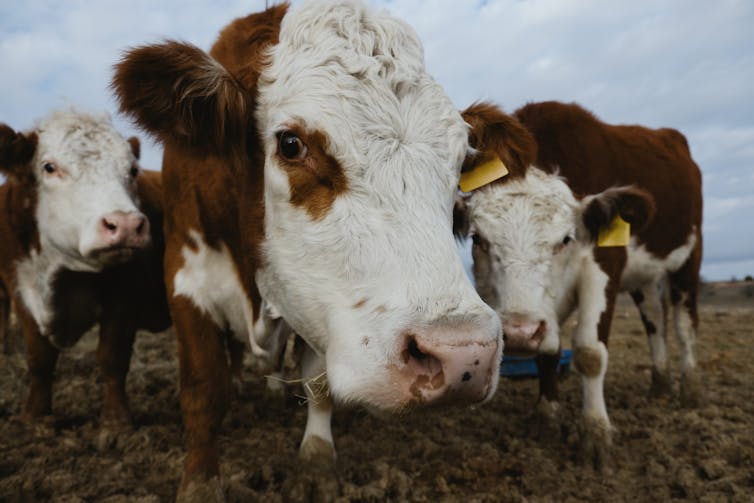
Close up of brown and white cows
Cows seem particularly prone to unusual behaviour before an earthquake.
cctm/Shutterstock

There are numerous reports of cows panicking and wandering around in areas where they would not normally be seen. For example, stories that cows converged on San Francisco’s Chinatown in 1906 prior to a large earthquake which killed 3,000 people. In 2012, a blog post circulated on the internet showing photographs of cows entering a suburb of Malaysia’s capital city, Kuala Lumpur, and feeding in gardens, two days prior to a magnitude 8.6 earthquake off the coast of Sumatra.

Several Japanese studies have monitored dairy cows using automated milking and activity systems. These studies have reported modest but statistically significant reductions in milk yield and changes in rumination or restlessness in the days preceding some local earthquakes.

Pets seem to be affected too. In 2011, a massive magnitude 9.1 earthquake struck off the northeast coast of Honshu in Japan, generating a tsunami that disabled three nuclear reactors. Post earthquake questionnaires surveyed 1,259 dog owners and 703 cat owners about their pet’s behaviour before the earthquake. About 19% of dog owners and 16% of cat owners reported unusual behaviour. Restiveness was a dominant behaviour in both species, usually within one day prior to the quake. It’s important to note though, that post-event recollections are not considered as scientifically robust as data collected in real time.

What might animals be sensing?

The key question is not whether animals behave differently, but why.

One leading hypothesis, proposed by Friedemann Freund (a scientist for NASA), focuses on environmental changes caused by stress building up in rocks as tectonic plates shift, prior to large earthquakes, releasing electrically charged particles.

These particles can alter the properties of air and soil in the area by increasing the number of positive airborne ions (electrically charged molecules) and appear to affect stress levels and behaviour in animals (including humans). More research is needed but the phenomenon may help explain the changes in animal behaviour before the Italian and Peruvian earthquakes.

However there are many other cues which could contribute to unusual animal behaviour before earthquakes. For example vibrations, disturbances to the local electromagnetic field or sounds outside of human hearing range. We still don’t know exactly which signals, or combination of cues, explains the behaviour.

Despite growing evidence that animals can sense environmental changes preceding earthquakes, the scientific community remains cautious. Several studies have found unusual animal behaviour before earthquakes could later be explained by normal seasonal activity.

Then there’s the fact that earthquakes are rare, which makes the phenomenon difficult to study. I believe animals simply move away from unpleasant or unusual environmental changes, rather than “predicting” earthquakes.

Of ants and earthquakes

There are ongoing studies that may help us learn more about animal behaviour and earthquakes. A systematic trial called Animal Alerts is underway in Lima, Peru, an area with a high level of seismic activity. Researchers have fitted dogs with smart collars which record their heart rate, movement and other parameters in real time.

A 2013 study carried out long-term observations of red wood ant mounds on active faults (cracks in the Earth’s crust that have recently moved and may cause earthquakes). The researchers reported alterations in daily activity rhythms of the ants living on these fault lines. Building on this work, my postgraduate research student, Shanza, is studying earthquake precursors for her master’s degree. She aims to identify which animal species are most likely to respond to early earthquake signals such as positive ions or magnetic field fluctuations. She then plans to simulate some of these conditions in the lab, using ants as a model species.

Animal data alone are unlikely to give reliable earthquake warnings. But the more we can combine animal data with environmental measurements, the closer we will come to reliable forecasts of earthquake hazard risk.

The Conversation

Rachel Grant does not work for, consult, own shares in or receive funding from any company or organisation that would benefit from this article, and has disclosed no relevant affiliations beyond their academic appointment.

ref. Can animals sense earthquakes? – https://theconversation.com/can-animals-sense-earthquakes-275464

Formula 1’s 2026 rules: new sustainability rules are changing the way races are won

Source: The Conversation – UK – By Paolo Aversa, Professor of Strategy, King’s College London

The first races under Formula 1’s new regulations delivered exactly what the sport’s rule-makers had hoped for: more overtaking. At the recent Australian Grand Prix in Melbourne, passes on track nearly tripled compared with the previous year. At the Chinese Grand Prix over the weekend the increase was less extreme, but still noticeable.

This revealed something unexpected about Formula 1’s new generation of cars. Many of the passes did not come from the classic ingredients of racing – a driver braking later into a corner, carrying more speed through the apex, or finding a daring line. Instead, they often happened when one car temporarily ran out of electrical power.

Under one of the most significant rule changes in the sport’s history, roughly half of a Formula 1 car’s output now comes from its electric motor. Drivers must carefully manage when their batteries deploy or regenerate energy. When the battery runs low, the car temporarily becomes vulnerable. Once the battery is recharged by recovering energy from braking, the driver can attack again. These cycles can create sudden swings in performance within a race.

This is raising questions about whether Formula 1’s push for sustainability is changing how races are won.

A greener engine era

Under the new regulations, the cars still look like Formula 1 machines. But the way they generate and deploy power is very different. The familiar turbocharged combustion engine remains, but it now shares power almost equally with the electric system.

The combustion engine also now runs on 100% sustainable fuel, designed to be carbon-neutral over its lifecycle. The cars themselves are smaller and lighter, with new active aerodynamic systems aimed at reducing air resistance on straights.

Major rule changes often trigger waves of experimentation as teams search for new advantages, and managing energy has suddenly become central to racing strategy. In a study published in Organization Science, my colleagues and I showed that Formula 1 teams face a classic strategic trade-off: incremental improvements are safe but rarely transformative, while radical innovations can produce breakthrough performance – or spectacular failure.

A new kind of racing

The Australian Grand Prix offered an early glimpse of how racing is being affected. Early in the race, Mercedes driver George Russell and Ferrari’s Charles Leclerc repeatedly overtook each other within a few laps. But the pattern was unusual: neither driver was consistently faster. Instead, their cars were alternating between phases of energy depletion and recharge. The result looked less like traditional racing and more like a strategic ebb and flow of electrical power.

In the new hybrid era, drivers may need to adjust braking points or racing lines to regenerate electricity efficiently. They may even need to lift their foot from the throttle when in past seasons the same situation would have called for flat-out acceleration.

Some drivers have already expressed concerns that the new cars could feel less instinctive if energy constraints become too restrictive. If success increasingly depends on managing software systems and electrical energy flows, some drivers may feel that the essence of their craft is shifting. After the Chinese Grand Prix, veteran racer Fernando Alonso called this the “battery world championships”, and recent champion Max Verstappen likened it to Mario Kart.

The F1 sustainability paradox

Formula 1 has long argued that it operates like a moonshot laboratory, where extreme competition accelerates development. Technologies refined in racing have later appeared elsewhere, from advanced braking and handling systems in road cars to sensor technologies now used in hospitals. Even the choreography of Formula 1 pit stops has inspired procedures used by emergency medical teams.

The new generation of engines aims to extend that tradition by demonstrating sustainable innovation through advanced hybrid systems and sustainable fuels. But there is a paradox here. Early estimates suggest Formula 1’s new synthetic, net-zero fuel could cost hundreds of dollars per litre, more than ten times the cost of conventional racing fuel – and a hundred or more times the cost of regular petrol.

While this shows what is technically possible, unless production costs fall dramatically these fuels may remain confined to racing or high-performance supercars. In other words, the sport may develop impressive sustainable technologies – but ones that remain too expensive for everyday mobility.

Racing for the future

None of this means the regulations have failed. Formula 1 has a long history of dramatic rule changes producing awkward early seasons before engineers unlock their potential. Previous technological revolutions such as ground-effect aerodynamics in the late 1970s or the hybrid power units introduced in 2009 and then in 2014 required years of refinement before teams fully mastered them. Something similar may happen this year.

The first two races of the new season offered a first hint of tension facing the sport, but whether it ultimately produces better racing remains uncertain. At times, the difference between new and old F1 resembles the contrast between choreographed WWE matches and Olympic wrestling: more visually dramatic, yet less about raw athletic contest.

What is clear is that the 2026 regulations have already begun to reshape Formula 1 in ways few expected.

The Conversation

Paolo Aversa does not work for, consult, own shares in or receive funding from any company or organisation that would benefit from this article, and has disclosed no relevant affiliations beyond their academic appointment.

ref. Formula 1’s 2026 rules: new sustainability rules are changing the way races are won – https://theconversation.com/formula-1s-2026-rules-new-sustainability-rules-are-changing-the-way-races-are-won-278342

From the strait of Hormuz to Malacca, global trade relies almost entirely on these five narrow waterways

Source: The Conversation – UK – By Gokcay Balci, Lecturer in Sustainable Freight Transport and Logistics, University of Leeds

The conflict in Iran has disrupted energy and commodity markets. Iran has effectively closed the narrow strait of Hormuz, a vital oil transit point, attacking more than a dozen ships over the past two weeks that have tried to sail through the waterway.

Donald Trump has been pressing US allies in Europe to help secure the strait, warning on March 15 that it will be “very bad for the future of Nato” if they do not support American efforts to reopen Hormuz. But Iran has vowed to keep the waterway closed.

The disruption to Gulf shipping has caused Brent crude oil prices to jump sharply from around US$70 (£53) a barrel before the crisis began to more than US$100. Global trade in a wide range of other goods – from consumer products to agricultural raw materials – is being affected too.

But the crisis has also highlighted a broader issue: that global trade depends on a surprisingly small number of narrow waterways, which are often called maritime “chokepoints”. Here is a guide to the chokepoints that matter most for global trade, and how vulnerable each one is to disruption.

1. Strait of Hormuz

Hormuz is the world’s most critical energy chokepoint. Connecting the Persian Gulf to the Arabian Sea, it carries around 39% of the seaborne crude oil trade and 19% of natural gas. Unlike most trade chokepoints, there is no viable alternative to Hormuz for Gulf states to export their energy.

Iran has periodically threatened to close the strait of Hormuz since the 1980s. But the disruption caused to shipping since late February, when the US and Israel first launched airstrikes across Iran, is the most serious escalation in decades. It has caused the largest oil supply disruption in history and soaring global oil prices.

The consequences of the current disruption to Gulf shipping extend beyond energy. The Gulf region handles over 26 million containers annually, with major fertiliser exports passing through here too. Prolonged shipping disruption will therefore have a direct effect on global food production costs.

A map of the strait of Hormuz in the Gulf region.
The strait of Hormuz, which has effectively been closed since the outbreak of the war in Iran, is the only sea passage from the Persian Gulf to the Arabian Sea.
Peter Hermes Furian / Shutterstock

2. Suez canal

The Suez canal links the Red Sea with the Mediterranean, cutting at least ten days off journey times between Asia and Europe. The waterway handles 10% of global seaborne trade, including 22% of container traffic, 20% of car shipments and 10% of crude oil.

Controlled by Egypt, it is not easily threatened directly. But the waterway is not immune to accidents, as demonstrated by the grounding of the Ever Given container ship in 2021. The vessel blocked the canal for six days, disrupting nearly US$10 billion in trade.

The bigger vulnerability of this chokepoint is the Bab el-Mandeb, the strait at the southern tip of the Red Sea. Attacks on commercial shipping by the Iran-backed Houthi group in Yemen between 2023 and 2025, which it carried out in response to Israel’s war against Hamas in Gaza, forced many operators to reroute around Africa.

This cut traffic through the Suez canal from over 26,000 vessels in 2023 to around 13,000 in 2024. Houthi leaders have recently threatened to resume attacks on commercial shipping in retaliation for the Israeli and US attacks on Iran, warning in official communications that their “fingers are on the trigger”.

3. Panama canal

Connecting the Pacific and Atlantic oceans, the Panama canal handles around 2.5% of global seaborne trade – a modest share, but concentrated in high-value and strategic cargo such as containerised goods, cars and grain. The canal carries around 40% of all US containerised shipments, valued at US$270 billion annually.

Its vulnerability stems both from the climate and geopolitics. In 2023 and 2024, severe droughts caused water levels in the canal’s freshwater reservoirs to fall sharply, forcing restrictions on vessel numbers and size. Then, in early 2025, Trump threatened to take control of the canal. He cited concerns over the operation of some of its ports by Hutchison, a Hong Kong-based company.

4. Strait of Malacca

The Malacca strait is the busiest shipping lane on Earth. It carries 24% of all global seaborne trade, including 45% of seaborne crude oil and 26% of cars. The waterway is also home to Singapore, which hosts the second-busiest container port in the world.

Malacca is the primary gateway through which China, Japan and South Korea receive their energy imports. Nearly 80% of China’s oil imports pass through here, a dependence Beijing calls the “Malacca dilemma”.

Piracy remains a persistent concern, with over 130 incidents reported in the Malacca strait in 2025. But the greater risk is geopolitical. Any escalation in tensions between China and the US or India over maritime dominance in the region could severely disrupt passage through the strait.

Malacca is also exposed to natural disasters, including tsunamis and volcanic activity. The Boxing Day tsunami in 2004, for example, caused significant damage to coastal infrastructure at the strait’s southern entrance.

A map showing the strait of Malacca between Malaysia and Indonesia.
China refers to its heavy reliance on the narrow strait of Malacca for energy imports and trade as the ‘Malacca dilemma’.
Peter Hermes Furian / Shutterstock

5. Turkish straits

The Turkish straits – the Bosphorus and Dardanelles – are the only sea route between the Black Sea and the Mediterranean. They carry 3% of global seaborne trade. While this share may appear small, it includes around 20% of global wheat exports from Ukraine, Russia and Romania.

At just 700 metres wide at its narrowest point, running through the centre of Istanbul in Turkey, navigation is complex and minor collisions are common. Under the Montreux convention, Turkey controls military access to the straits, a power Ankara has used since Russia’s 2022 invasion of Ukraine to restrict the movement of warships while keeping commercial traffic open.

Further escalation in the Black Sea area could disrupt this balance and shake global grain markets. The region’s high seismic activity adds another layer of risk.

The current crisis in the strait of Hormuz has thrown into sharp relief just how vulnerable global trade is to disruption due to its reliance on a handful of narrow waterways. But the five waterways mentioned above are not the only trade chokepoints.

There are as many as 24 maritime chokepoints in the world, including other major waterways like the Taiwan, Dover and Bering straits. Each of these waterways are exposed to their own combination of geopolitical tension, climate change, piracy, accidents or natural disasters.

The Conversation

The authors do not work for, consult, own shares in or receive funding from any company or organisation that would benefit from this article, and have disclosed no relevant affiliations beyond their academic appointment.

ref. From the strait of Hormuz to Malacca, global trade relies almost entirely on these five narrow waterways – https://theconversation.com/from-the-strait-of-hormuz-to-malacca-global-trade-relies-almost-entirely-on-these-five-narrow-waterways-278329

Why harmful content keeps reaching children online – and what advertising has to do with it

Source: The Conversation – UK – By Karen Middleton, Senior Lecturer in Marketing and Advertising, University of Portsmouth

Matryoha/Shutterstock

Children today can encounter harmful material online with alarming ease, including violent, sexual and self-harm content. While this is often treated as a moderation failure, the deeper cause is economic.

Much of the internet is built on a business model that rewards attention above all else. In simple terms, algorithms that recommend content do not meaningfully distinguish between helpful, neutral and harmful material. Described as “topic agnostic”, their primary task is to keep users watching, scrolling and clicking.

Why? Because attention drives advertising revenue.

Most online platforms appear free to use, but they are largely funded through advertising. The longer users stay online, the more adverts they see and the more valuable they become to advertisers. As a result, platform design is shaped by what scholars call the “attention economy” – a system in which human attention is the resource being bought and sold.

Harvard scholar Shoshana Zuboff describes this model as “surveillance capitalism”: platforms collect behavioural data, predict what users will do next, and optimise systems to influence behaviour in ways that generate profit.

This matters because research consistently shows that emotionally charged content – material that provokes fear, outrage, anxiety or shock – generates higher engagement. Studies of recommender systems have found that algorithmic ranking tends to amplify content that keeps users emotionally activated, regardless of its social value (or otherwise).

For adults this can distort public debate and political discourse. For children, the consequences can be more serious because their online habits and emotional responses are still developing. Young people are more sensitive to social comparison, distressing narratives and emotionally intense material. When recommendation systems detect that a young user pauses on, searches for or engages with such content, they often respond by delivering more of it.

The result is what media researchers describe as a feedback loop. Engagement signals drive recommendations; recommendations increase exposure; exposure deepens engagement. Users are rarely targeted by a person. They are targeted by optimisation.

Public debate often assumes the solution is faster removal of harmful posts. Moderation is important, but there is a deeper issue. Harmful content continues to spread because the underlying incentives remain unchanged.

If platform revenue depends on attention, systems will always prioritise content that captures it most effectively. Removing individual posts does little if the algorithmic logic promoting engagement remains intact.

This helps explain why controversies around online harms keep resurfacing despite new safety tools and policies – and why proposed social media bans are unlikely to address the root cause. Researchers in platform governance increasingly argue that safety requires addressing system design and incentives, not just individual pieces of content.

The role of advertising – and why it matters now

Advertising rarely features in public conversations about online safety, yet it sits at the centre of the ecosystem. Advertising revenue funds recommendation systems, data collection practices and engagement optimisation strategies.

This does not mean advertisers intend harm. In fact, many brands are unaware of where their adverts appear within complex programmatic advertising supply chains. But the economic reality remains: engagement – including engagement with harmful material – generates value.

Teenagers on phones
Engagement drives revenue.
Drazen Zigic/Shutterstock

Scrutiny is growing. In the UK, regulators are implementing the Online Safety Act, lawsuits concerning social media harms are emerging internationally, and researchers are gaining access to internal platform documents through litigation. Together, these developments are lifting what has long been described as a “black box” surrounding platform decision-making.

The digital environment did not evolve naturally. It was built through choices – technical, economic and political – made over decades. And because it was designed, it can be redesigned.

The conversation now moving into public view is not simply about banning phones or blaming young users. It is about incentives. What kinds of online environments do current business models reward? And what alternatives might prioritise wellbeing alongside innovation?

For people working inside advertising and technology industries, this moment may feel particularly significant. Greater public awareness means fewer opportunities to claim that online systems are too complex to understand or influence.

If safer digital spaces are the goal, the debate must move beyond individual content towards the structures that determine why that content spreads in the first place. Understanding how advertising, data and algorithms interact is not a technical detail. It is the key to building an internet that protects children rather than profiting from their attention.

The Conversation

Karen Middleton is affiliated with Conscious Advertising Network

ref. Why harmful content keeps reaching children online – and what advertising has to do with it – https://theconversation.com/why-harmful-content-keeps-reaching-children-online-and-what-advertising-has-to-do-with-it-277527

Kent meningitis outbreak: what students need to know

Source: The Conversation – UK – By Manal Mohammed, Senior Lecturer, Medical Microbiology, University of Westminster

Prostock-studio/Shutterstock

If you are a student in the UK, news of an outbreak of meningitis affecting university students in Kent may be causing you alarm.

The UK Health Security Agency has confirmed 13 cases of invasive meningococcal disease, a severe infection that can cause meningitis and septicaemia (blood poisoning), and is providing antibiotics and guidance to students and their close contacts. Two young people, a year 13 school pupil and a university student, have died. Others are seriously ill.

Why meningitis outbreaks happen at universities

Meningococcal disease is caused by Neisseria meningitidis bacteria. Although many people can carry the bacteria harmlessly in their nose or throat, very occasionally it invades the bloodstream or central nervous system and causes life-threatening illness. Meningitis is an inflammation of the membranes around the brain and spinal cord.

Meningococcal disease spreads through close contact with respiratory droplets. This could be through kissing, sharing drinks or utensils, and coughing and sneezing. This is what makes the risk higher in settings where people live, study and socialise closely together, such as university campuses.

Outbreaks such as the recent one in Kent, especially in communal settings like universities or schools, are less common than individual sporadic cases. While the overall risk remains low, the proportion of cases among young adults and students is higher than in older age groups simply because of the social mixing and living arrangements typical of school and university life.

How to reduce your risk

There is no guaranteed way to eliminate risk entirely, but several practical steps can help.

The first is vaccination. In the UK, there are routine immunisation programmes against key meningococcal strains. The MenACWY vaccine is usually offered in school to protect against four common meningococcal groups and can be given up to age 25 if missed. The MenB vaccine is given to infants. Whether older teenagers have had it varies because the risk profile and vaccine history differ. The MenB vaccine is available privately for teenagers and adults.

So check your vaccination history. You can do this by looking over your vaccination records, asking your GP practice, checking the NHS app or looking at your university or travel clinic records. If you can’t find a record of having a vaccination against meningitis, doctors may recommend vaccinating again – receiving an extra dose is generally safe.

Talk to your friends about their vaccination history, too. People can carry meningococcal bacteria without symptoms. Awareness of your own vaccination status and encouraging friends to be up to date increases community protection.

Even if someone has been vaccinated, they may still be advised to take preventive antibiotics if they were a close contact of a case of meningococcal disease.

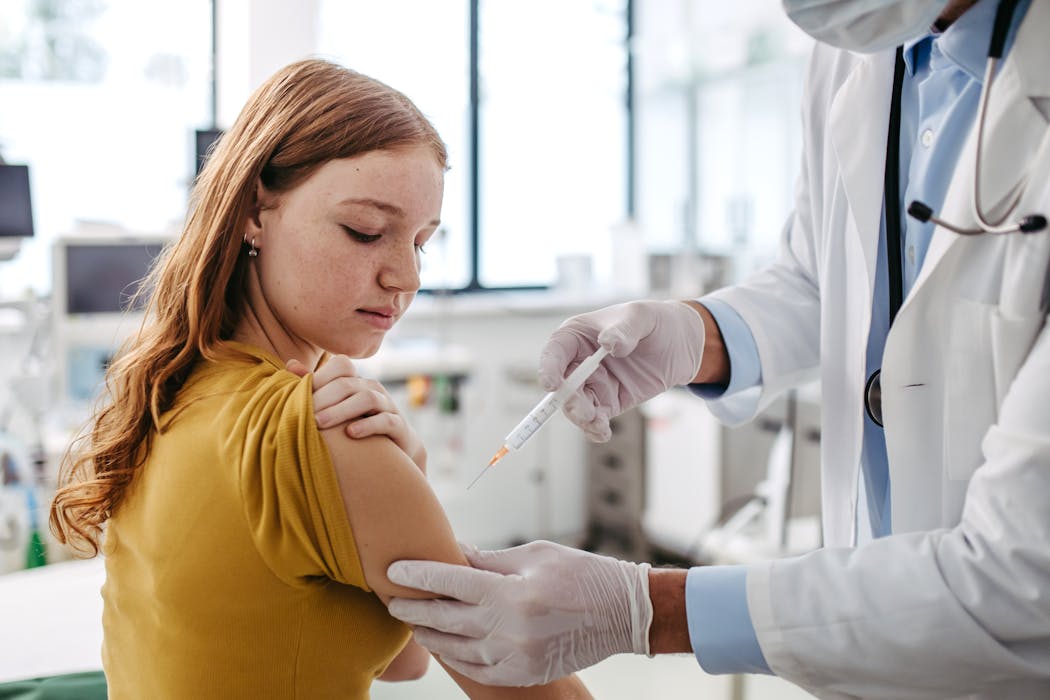
Hands in blue gloves putting plaster on woman's upper arm
It’s a good idea to check your vaccination status.
Kmpzzz/Shutterstock

Good hygiene is important. Simple measures like covering your mouth when coughing, not sharing drinks or utensils, washing hands regularly and avoiding close face to face contact when someone is ill can help reduce transmission.

What to look out for

One of the biggest challenges with meningococcal disease is that its early symptoms can look like flu or a bad cold, making it easy to overlook until it becomes severe. According to UK public health guidance, early symptoms can include fever or high temperature, a very bad headache, vomiting or nausea, muscle and joint pain, cold hands and feet, and rapid breathing. Symptoms can develop in different sequences and progress quickly.

As the disease progresses, more specific and serious “red flag” symptoms may appear. These include a stiff neck, confusion or delirium, dislike of bright lights, severe sleepiness or difficulty waking, seizures, and a rash that does not fade under pressure. This last is a key sign of septicaemia, and you can use the “glass test” to help identify it. Press a clear glass firmly against the glass. If it doesn’t fade under this pressure, contact a doctor straight away.

It’s crucial to stress that not all cases will show a rash, and no single symptom alone proves meningitis. But the combination of severe headache with fever, stiff neck, rash or rapid deterioration should prompt urgent suspicion.

If a friend shows symptoms

If you notice a friend exhibiting any concerning signs – especially rapid worsening over hours – take them seriously. Public health advice is clear: if symptoms are worrying or escalating, seek medical help immediately. In the UK, that means contacting NHS 111 for advice, or calling 999 if they are seriously unwell.

Check on your friend regularly, don’t dismiss symptoms as “just a hangover” and err on the side of urgency when in doubt. Early treatment with antibiotics can be lifesaving.

Acting quickly is vital

The Kent outbreak is a stark reminder that although meningococcal disease is uncommon, when it does occur it can progress rapidly and have devastating consequences. Students and young people, in particular, should be aware that illness can be serious even in previously healthy individuals. Early recognition and rapid medical response are vital and vaccination and awareness are primary tools for prevention.

While public health authorities work to contain outbreaks, the first line of defence is individuals and communities. Knowing the symptoms, acting quickly if someone becomes ill, and encouraging vaccination can make the difference between a contained case and a fatal outcome. In meningitis, the disease can escalate within hours. Early recognition and immediate action can save lives.

The Conversation

Manal Mohammed does not work for, consult, own shares in or receive funding from any company or organisation that would benefit from this article, and has disclosed no relevant affiliations beyond their academic appointment.

ref. Kent meningitis outbreak: what students need to know – https://theconversation.com/kent-meningitis-outbreak-what-students-need-to-know-278449

The shot that could stop cancer before it begins – and why getting it early matters

Source: The Conversation – UK – By Jiayao Lei, Assistant Professor in Epidemiology, Karolinska Institutet

Halfpoint/Shutterstock

When 12-year-olds receive a letter from the school nurse about the HPV vaccine, their reactions are often mixed. Some students worry about the needle. Others wonder why they need a vaccine for something they have never heard of.

What many of them may not realise is that this routine school vaccination protects against a virus that can cause cancer later in life. For many students, the letter is the first time they encounter a remarkable idea: that a vaccine can help prevent cancer before it even starts.

The evidence for that protection is now becoming clear. In our recent study, we analysed long-term health data from girls and young women followed for nearly two decades and found that the HPV vaccine greatly reduces the risk of cervical cancer.

This matters because cervical cancer remains one of the most common cancers affecting women worldwide, despite being largely preventable. Importantly, the protection does not appear to weaken over time.

Human papillomavirus (HPV) is one of the most common viruses in the world. Most people will get it at some point in their lives, often without knowing it. In many cases, the body clears the virus naturally. But some types of HPV can remain in the body for years and gradually damage cells. Over time, this can lead to cancer.

How the HPV vaccine prevents cancer

HPV causes almost all cervical cancers and can also lead to other cancers in both men and women, including cancers of the throat, anus, penis, vagina and vulva. Because these cancers usually develop slowly, often many years after infection, preventing the virus early is the most effective way to stop them.

That is exactly what the HPV vaccine is designed to do.

To understand how well the vaccine works in real life, we followed 926,362 girls and young women in Sweden over 18 years in a nationwide population study. Some had received the HPV vaccine, while others had not.

Over time, far fewer people who were vaccinated developed cervical cancer compared with those who were not vaccinated. This shows that the vaccine helped protect many people from getting cervical cancer.

We also found that the age at vaccination matters. Girls who received the vaccine before the age of 17 were much less likely to develop cervical cancer later in life. In fact, their risk was about four times lower than girls who had not been vaccinated. People vaccinated later still gained some protection, but the benefit was smaller.

The reason is straightforward. The vaccine prevents HPV infection, but it cannot remove an infection that has already occurred. Vaccinating earlier, ideally before exposure to the virus, allows the immune system to build protection in advance. This is why HPV vaccination is often offered to young teenagers through school vaccination programmes.

Lasting protection

A common question about vaccines is whether their protection fades over time. The results of our study are reassuring.

We followed participants for up to 18 years after vaccination and found no evidence that protection declined over time. Once the vaccine created protection, it continued working year after year. Long-lasting protection means the vaccine can guard against the virus during the years when it matters most.

Many countries now recommend HPV vaccination for both girls and boys, usually in early adolescence. Vaccinating boys protects them from HPV-related cancers and also helps reduce the spread of the virus.

For many adults today, the HPV vaccine did not exist when they were teenagers. Younger generations now have a powerful opportunity: they can prevent certain cancers before they begin.

A future where cancers caused by HPV can largely be prevented may begin with a simple vaccine given in adolescence.

The Conversation

The authors do not work for, consult, own shares in or receive funding from any company or organisation that would benefit from this article, and have disclosed no relevant affiliations beyond their academic appointment.

ref. The shot that could stop cancer before it begins – and why getting it early matters – https://theconversation.com/the-shot-that-could-stop-cancer-before-it-begins-and-why-getting-it-early-matters-277006

Canada’s immigration system is going digital, and accountability must keep pace

Source: The Conversation – Canada – By Marika Jeziorek, PhD Candidate in Global Governance, Balsillie School of International Affairs

Canada’s immigration system has long played a central role in the country’s economic and social development. Immigration accounts for most of Canada’s population growth and helps address labour market shortages across sectors. Settlement services support newcomers as they build lives and communities across the country.

As the number of people seeking to visit and immigrate to Canada grows, the way applications are handled is becoming more digital. This shift is reshaping how applicants interact with Immigration, Refugees and Citizenship Canada.

Through its Digital Platform Modernization initiative, the department has been rolling out new online client accounts, automated processing tools and digital visas as part of a broader multi-year transformation.

However, as processes become more automated, it can be harder to see how decisions are shaped or how to challenge them. The growing use of automated tools has long been linked to changes in accountability and institutional practice.

In immigration administration, these changes are becoming visible in everyday interactions with digital systems.

Operational pressures

Canada processes millions of temporary and permanent immigration applications each year, placing significant pressure on administrative systems and processing capacity.

Much of this work is currently done through the current Global Case Management System (GCMS). This system was introduced 20 years ago when immigration processing relied heavily on paper records and centralized operations.

However, the system was designed for a different era of immigration administration. When GCMS was first implemented, immigration processing still relied heavily on paper documentation and centralized administrative workflows.

Over the past two decades, both the scale and complexity of Canada’s immigration system have expanded significantly. As a result, IRCC has begun developing a new case-management platform intended to replace the GCMS as part of the department’s broader digitization initiative.

A digitized process

Immigration administration involves some of the most consequential decisions the federal government makes about a person’s legal status, mobility and protection. Today, most people applying for Canadian visas or residency begin the process online rather than through direct interaction with an immigration official.

Applicants typically interact first with online portals, automated messages and document-verification systems before their files reach a decision-maker.

These changes are institutional as well as administrative. Canadian immigration law now allows electronic systems to assist officers in processing applications and making decisions.

A woman sitting on a couch working on a laptop
As the number of people seeking to visit and immigrate to Canada grows, the way applications are handled is becoming more digital.
(Unsplash/Brooke Cagle)

Advanced data analytics help identify routine applications and speed up processing. Across the federal public service, similar technologies are increasingly used to support administrative decision-making.

Client portals also shape how applicants interact with the state by organizing how documents are submitted, how additional information is requested and how applicants receive updates about their cases.

Migration files are increasingly managed as digital case records that move across government systems. This means applications may be evaluated at several stages of processing rather than only when an officer makes the final decision.

For example, automated triage systems can classify applications as routine before an officer reviews them, while online client portals structure how applicants submit documents and receive updates throughout processing.

Automation and the applicant experience

While these reforms are designed to improve efficiency, they are also reshaping how applicants experience the immigration system.

For many migrants, immigration now involves prolonged interaction with digital systems, document verification procedures and automated communication channels. Applicants may need to repeatedly upload documents, respond to automated requests for additional information or monitor online portals for updates over months or even years.

Limited visibility into timelines or decision pathways can make it difficult to understand how cases are being assessed, resulting in prolonged uncertainty and new administrative burdens.

These experiences may appear to be technical issues, but they also reflect deeper changes in how immigration administration now operates.

The shift toward digital and automated administration also affects how immigration officers work. Automation and triage tools have been introduced to manage workload and improve productivity, while also reshaping how responsibilities are distributed across technical systems and administrative workflows.

Caseworkers are increasingly operating within infrastructures that pre-classify applications and structure decision processes. But instead of addressing the source of administrative strain, it’s simply reorganized.

Keeping automation accountable

Canada already has several oversight mechanisms in place, including algorithmic impact assessments required by directives on automated decision-making.

These measures represent meaningful progress toward responsible digital governance. However, as immigration administration becomes increasingly automated and platform-based, additional safeguards are needed to ensure accountability keeps pace.

Possible measures include expanding public documentation about automated triage systems, introducing independent review processes and ensuring clear pathways for human review. Such steps would better align digital modernization with Canada’s existing oversight frameworks for automated decision-making.

Canada’s immigration system is often described as rights-based and grounded in equity, fairness and inclusion. Maintaining public trust in that system depends on ensuring administrative decision systems remain transparent, contestable and accountable.

Automation and platform-based administration are reshaping Canada’s migration. Efficiency alone cannot sustain public trust. As Canada modernizes immigration administration, accountability must be built into digital systems as deliberately as the technologies themselves.

The Conversation

Marika Jeziorek does not work for, consult, own shares in or receive funding from any company or organisation that would benefit from this article, and has disclosed no relevant affiliations beyond their academic appointment.

ref. Canada’s immigration system is going digital, and accountability must keep pace – https://theconversation.com/canadas-immigration-system-is-going-digital-and-accountability-must-keep-pace-276741