Plant sex life is more complicated than you probably imagine

Source: The Conversation – UK – By Lila Maladesky, PhD candidate in Biology, Lund University

Jorm Sangsorn/Shutterstock

Humans like plants. We like seeing them change the colour of their leaves throughout the year. They connect us to nature even if we live in a big city. But most people don’t think that much about the lives of plants, and least of all, about their sex life.

Because plants don’t move around much, it is common to think they lead boring lives. But today I want to convince you that they can be more interesting than you give them credit for. And for that, I will focus on people’s usual favourite plants: the ones that flower.


Many people think of plants as nice-looking greens. Essential for clean air, yes, but simple organisms. A step change in research is shaking up the way scientists think about plants: they are far more complex and more like us than you might imagine. This blossoming field of science is too delightful to do it justice in one or two stories.
This article is part of a series, Plant Curious, exploring scientific studies that challenge the way you view plantlife.


About 90% of flowering plants are hermaphroditic, which means that their flowers have both male and female function. This is what we call perfect flowers. Take the tomato for example. If you open one of its flowers, you will see it has an ovary (part of the female organ) and anthers with pollen (part of the male organ).
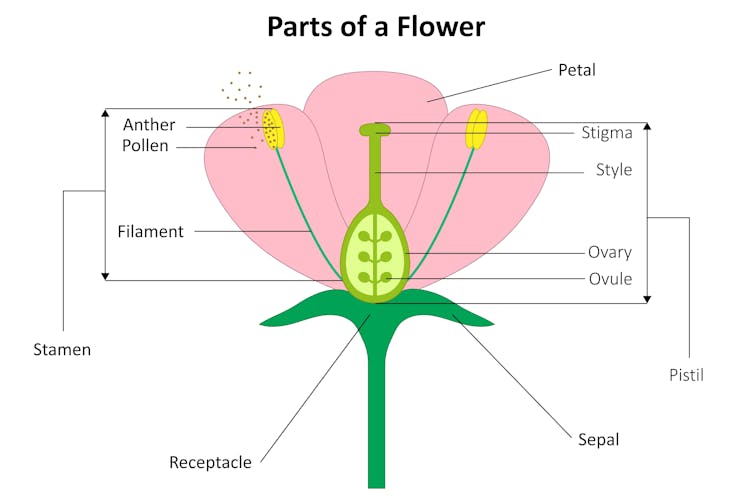
Diagram of male and female parts of a flower.
Most flowers are hermaphroditic.
MarinaSummer/Shutterstock

In tomatoes, pollen from a flower can pollinate the ovary of the same flower. This means that a tomato plant doesn’t need another tomato nearby to reproduce. Pretty convenient, especially if there are not many other plants of your species around.

Bumblebee pollinating yellow flower.
Tomato flowers are hermaphroditic.
Ferlx/Shutterstock

However, this is not the case for all hermaphroditic plants. Some of them can’t self-pollinate, like apples. In those species you do need two individual plants to produce fruit.

Things get more complicated. Scientists think that the first flowering plant to appear on earth was probably hermaphroditic. But what about this other 10% that are not hermaphroditic? What are they and where do they come from?

Let’s dive in.

The alternative to perfect flowers is unisexual flowers, which have either an ovary or anthers with pollen. In some species, male flowers and female flowers grow from the same individual. This is what we call monoecious plants. The plant has both male and female functions but separated in different flowers. Often, these flowers appear at different times of the year, which doesn’t allow the plant to pollinate itself.

There is another alternative to this, which is the total separation of sexes in different individual plants. Willows are one example. In this species, one willow tree will have only male flowers or just female flowers. So, a willow tree can be male or female, more like we are used to in animals like mammals or birds.

This separation of sexes in plants is called dioecy. One reason why dioecy may evolve is because of the negative effects that self-pollination can bring. It’s similar to how humans reproducing with relatives can give their offspring a higher chance of diseases.

White willow catkin flower on the left and yellow ones on the right
Male (left) willow and female (right) willow flowers.
Shutterstock collage

But that’s not all. A small proportion of unisexual plants have systems that seem to be in between hermaphroditism and dioecy. The system is called androdioecy when you can find hermaphroditic individuals and males within one population. An example of this is a herb native to California, US, called the Durango root. This system is rare in nature.
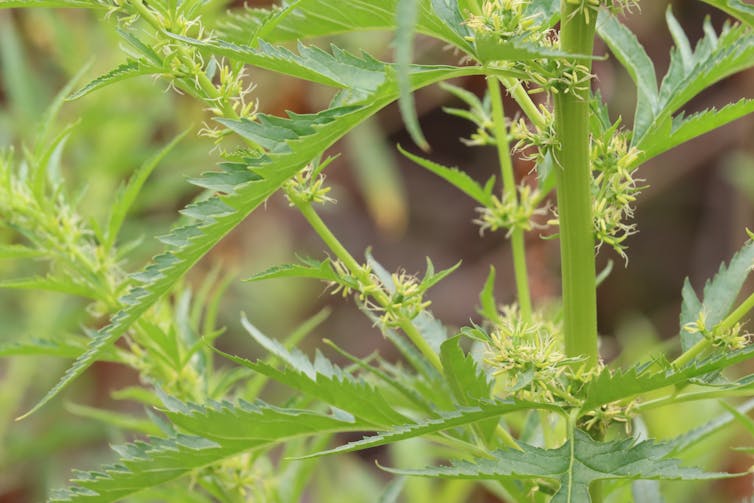
Close up of green herb with thick stem.
The Durango root belongs to a rare sex determination system.
Jared Quentin/Shutterstock

The alternative system is called gynodioecy, and it is the other way around. It is a system where females coexist with hermaphrodites. This happens in some wild strawberries.

Lastly, in some cases, male and females have been found alongside hermaphrodites. Some researchers call this trioecy (three sexes). And for this one, one example is the tasty papaya.

Exploring evolution

I mentioned earlier that hermaphroditism is probably the original sex determination system in flowering plants. So how did the other systems evolve from it?

In plants, as in many animals, sex is mostly determined by genes. This means that a seed will become a male or female plant depending on what their DNA says. Studying genetics has never been easy. But it has become easier over the last few decades, with technologies that allow us to study the genes in more detail.

Before this technological revolution, most studies were done in what we call model organisms, like mice, flies and some specific plants like thale cress (Arabidopsis thaliana). But now, studying other organisms is becoming increasingly easy. This has allowed scientists to see that in nature there is a lot of variation in sex determination. If we take dioecy as an example, scientists found examples of this system in groups of plants that are not closely related. This means that dioecy has evolved several times. And this is true for the other systems as well.

Gynodioecy, androdioecy and monoecy seem to be a link between hermaphroditism and dioecy. This means that systems can potentially go back and forth, from hermaphroditism to dioecy. And in fact, cases of changes in both directions have been found.

But what about the genes that determine these mechanisms? Scientists have found a variety of genes involved in different species. So, it turns out, there are many ways to evolve a male organism.

This variation in sex determination systems is why studying this topic in plants is interesting. In animals, many big groups, like insects, are dioecious, and they have been for millions of years. This makes it harder to study how dioecy evolved in the first place.

Flowering plants tell us a story about continuous change. The different sex determining systems are connected. If a species evolves separate sexes, hermaphroditism can still reappear in the future. But which is the best system? In nature, there is never one correct answer. It depends on the environment where the plants live and the challenges they have to face.

The Conversation

Lila Maladesky’s PhD project is funded by the European Research Council

ref. Plant sex life is more complicated than you probably imagine – https://theconversation.com/plant-sex-life-is-more-complicated-than-you-probably-imagine-269229

Reading the sky: how Irish weather lore preserved a deep understanding of the natural world

Source: The Conversation – UK – By Karol Mullaney Dignam, Associate Professor, School of History and Geography, University of Limerick

Old Dublin by Joseph Malachy Kavanagh (between 1876 and 1918). Adams

Long before meteorology and climate science, Irish people looked to the natural world to forecast the weather and make sense of their surroundings. They read the skies, the seas and the behaviour of animals for signs of change: a halo around the moon meant rain was near; swallows flying low foretold a storm.

This weather lore – known as seanchas i dtaobh na haimsire in Irish – was grounded in generations of observation and shared through memorable sayings or rhymes. One familiar example is: “Red sky at night is a shepherd’s delight; red sky in the morning is a shepherd’s warning.” But weather lore is more than folklore. It is evidence of a society attuned to subtle environmental cues – what researchers now call traditional ecological or environmental knowledge.

Weather lore forms part of Ireland’s cultural heritage (dúchas) preserved in the National Folklore Collection, one of western Europe’s largest archives of oral tradition. Established in the 1930s and now digitised, it encompasses several compilations, including the Main Manuscript Collection of field-recorded folklore and the Schools’ Collection, gathered by schoolchildren from older generations. Together, these hold millions of pages of stories, customs and beliefs, among them thousands of weather sayings in both Irish and English.

Across the archive, weather lore highlights natural indicators – moon halos, sun colour, wind direction, animal behaviour – as clues to coming weather changes. Farmers timed sowing and harvesting, fishermen watched the skies before setting out to sea. Without barometers or technologically enhanced forecasts, people relied on sensory cues in the environment – shifts in colour, movement, sound, even smell. These observations were based on practical knowledge, honed over generations and patterns repeated nationwide.

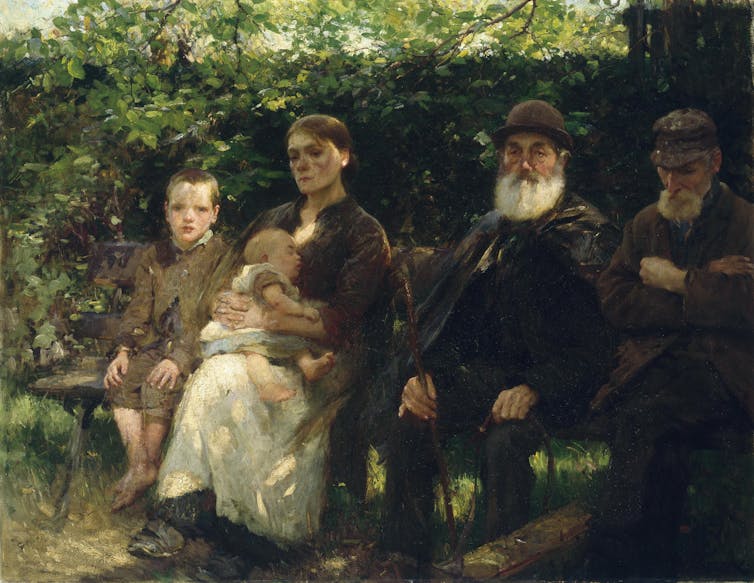
Painting of four members of different generations of one family including a baby sitting in a park
In a Dublin Park, Light and Shade by Walter Osborne (1895).
National Gallery of Ireland

Many stories of Irish weather lore have modern scientific explanations while others reflect superstition or coincidence.

Birds and animals: Cats turning their backs to the fire signalled a storm; dogs eating grass suggested rain. Swallows flying high meant fine weather, while low flight warned of rain. Seagulls coming inland foretold storm or rain. Foxes barking at night were said to herald dry weather.

Celestial clues: A “ring” around the moon was a classic sign of rain. Sunsets mattered too – red skies promised fair conditions, while coppery or yellow hues foretold rain. Twinkling stars were linked to frost or wind; shooting stars denoted dry weather (in Irish) or wind (in English). The Northern Lights were often interpreted as omens beyond weather, such as impending war.

House and hearth: The direction and behaviour of chimney smoke was also related to weather prediction. When smoke rose straight up, it signalled fine weather, but when it drifted downward or failed to ascend, rain or storm was expected. Blue flames in the fireplace meant storm or frost; falling soot signalled rain; damp hearthstones and cracking furniture were also read as warnings of unsettled weather to come.

Landscape and sound: Hills appearing “near” suggested rain, while seeming distant meant clear skies. Even sound carried meaning: when the rumble of a train or the roar of a waterfall sounded close, bad weather was expected; when distant, good weather was on the way.

Weather lore and cultural heritage

Weather shapes how we experience place, identity and memory. Weather lore carries cultural weight, being woven into everyday conversation, proverbs and poems and passed down through storytelling.

A red sunset visible through the window in a painting of the interior of a cottage
The Interior of a Cottage by William Mulready (1828).
Royal Collection

Verses helped people remember patterns. An Irish folklore variant of a familiar rhyme appears in both the Irish and English languages: “A rainbow at night is the farmer’s delight; a rainbow in the morning is the farmer’s warning.”

These rhymes also acted as calendars, helping communities anticipate seasonal changes. For example:

January brings the snow

Makes us oft our fingers blow

February brings the rain

And thaws the frozen lakes again

These sayings reinforced continuity and belonging, with evident regional differences. In the west, Irish-language sources mention marine indicators – sea colour, foam currents, seals (known as mucaí mara, sea pigs) – and use vivid metaphors like the “moon lying on its back” or “clouds like Kerry mountains”. Off-shore island communities noted tides and coastal sounds.

In contrast, English-language sources from the mainland emphasise agriculture: soil moisture, crop cycles and harvest lore. Farmers watched trees and hedgerow plants – haws and sloes – for seasonal predictions: “Ash before oak, there’s sure to be a soak; oak before ash, there’s sure to be a splash.” “March dust” was like gold because dry conditions early in spring were believed to promise a bountiful harvest.

Irish folklore has long been studied for its historical depth, linguistic richness and cultural significance. Recent studies explore how this lore connects to heritage and environmental awareness. Interpreted today, weather lore is more than folklore. Researchers are now beginning to frame this as “weather heritage”.

In an era of climate uncertainty, Irish weather lore points to something we risk losing: the habit of paying attention to what nature is telling us.


The climate crisis has a communications problem. How do we tell stories that move people – not just to fear the future, but to imagine and build a better one? This article is part of Climate Storytelling, a series exploring how arts and science can join forces to spark understanding, hope and action.


The Conversation

Karol Mullaney-Dignam has previously received external, government funding from the Irish Research Council (formerly IRCHSS, now Research Ireland) in relation to her research on musical culture and Irish country houses (Postdoctoral Research Fellowship, 2010-12, New Foundations Grant, 2016). She has also been funded around the same topic via a Royal Irish Academy Charlemont Award (2015). Additionally, she has worked as a project specific consultant and received project specific funding from the Irish Office of Public Works around the same topic.

ref. Reading the sky: how Irish weather lore preserved a deep understanding of the natural world – https://theconversation.com/reading-the-sky-how-irish-weather-lore-preserved-a-deep-understanding-of-the-natural-world-271268

A sign of Europe’s troubled times? Lithuania brings in tax reforms to boost defence spending

Source: The Conversation – UK – By Karl Matikonis, Assistant Professor, University College Dublin

proslgn/Shutterstock

Lithuania is entering 2026 with a tax shift that brings its system closer to countries like Ireland and the UK. From January 1, the long-standing flat 15% personal income-tax rate for self-employed people is being abolished for higher earners. These workers will now be integrated into the same new progressive bands that apply to employment income.

On the surface, it’s a technical adjustment. But politically, economically and symbolically it captures a moment in Europe’s history. That is to say, higher defence spending, shrinking fiscal space, EU rules that tie funding to progress on reforms and a public mood swinging towards the idea of “fairness”.

That’s why this small Baltic reform is being watched far beyond Lithuania’s capital Vilnius.

Security is now a direct fiscal driver. Lithuania, positioned on Nato’s eastern frontier, has tied parts of its tax package to defence funding. A new 10% security contribution on insurance premiums (excluding life insurance) makes that link explicit.

As budgets tighten, ageing populations, higher borrowing costs and the legacy of COVID spending leave governments with far less room to maintain tax preferences, especially those that create visible distributional gaps.

This is not only an EU dynamic. The UK’s recent budget, which pushes the overall tax burden to its highest level in decades, reflects similar constraints in the financial picture.

EU funding conditions are also prompting reform. Lithuania’s disbursements under its €3.8 billion (£3.32 billion) plan are linked to progress on income tax, property-tax changes and digital administration. The 2026 package addresses several of these milestones.

In other words, Lithuania didn’t just change taxes. It read the room.

The reasons for the generous regime

For nearly three decades, lightening the load for freelancers made sense. As my new research shows, Lithuania emerged from the Soviet system with limited administrative capacity. Most citizens had never filed a tax return, and the state needed to grow a private sector rapidly.

Flat, low-tax self-employment acted as a tool to build markets, encourage people to move out of the informal, cash-only economy and secure quasi-voluntary compliance in a state still developing its enforcement capacity.

But that era is over. Lithuania now operates one of the EU’s more digitised tax administrations. Returns are largely pre-populated, third-party reporting is extensive and the country’s tax inspectorate uses real-time and automated risk analysis. Under these conditions, the original administrative justification for maintaining a separate and significantly more generous freelancer regime has weakened.

In June 2025, Lithuania’s Seimas (parliament) approved a fiscal package to come into force on January 1 2026. The core principle is alignment: employees and the self-employed with comparable earnings now face broadly similar and more progressive income tax rates.

Until the end of 2025, freelancers paid a flat 15% income tax. But now this is replaced by a progressive regime of 20%, 25% and 32%. Lower-income sole traders are protected by a structured tax credit on the first €20,000 of income, which tapers out up to €42,500.

Above the taper threshold, employment and self-employment income will now be subject to the same income tax bands.

Several other measures are taking effect, including corporation tax increases from 16% to 17%; rising real estate tax; a new excise duty on sugary drinks and the 10% “national defence contribution” applied to non-life insurance premiums.

As the figure below (which is based on my analysis) shows, the reform narrows though does not eliminate the gap between freelancers and employees. But symbolically and structurally, it marks a clear shift.

Lithuania is confronting a challenge faced by many European states. Countries with sizeable gaps between the taxation of employees and the self-employed, including Italy, the Netherlands and Czech Republic, are grappling with the same pressures: rising defence budgets, tighter EU fiscal governance and labour markets where workers move easily between employment, contracting and the gig economy.

In these settings, systems designed in the 1990s no longer reflect how income is generated. Lithuania’s reform is one of the clearest recent examples of a broader shift towards taxing different forms of income in a more similar way.

There is also a subtler change under way. For many years, Lithuania’s flat freelancer tax was justified as a means of supporting entrepreneurship. Today, the public conversation has shifted. With digital administration lowering compliance barriers, fairness is increasingly defined as parity rather than privilege. Compliance tends to rise when taxpayers believe the system treats comparable earners even-handedly.

lithuanian flag with the message united we stand being held up alongside a ukrainian flat at a peaceful protest in vilnius
Taxation as a new form of civic participation.
Michele Ursi/Shutterstock

And in 2026’s security climate, linking part of the reform to defence spending has turned taxation into something closer to civic participation.

Lithuania’s reform is not radical; it is normalisation. But the direction of this change indicates where many European systems are heading: towards higher defence expenditure, closer EU fiscal oversight and tax structures that tolerate fewer discrepancies between different forms of work.

In that sense, this small Baltic state may simply have moved early, partly because of its geopolitical position. But others are likely to follow.

The Conversation

Karl Matikonis previously received funding from the Economic and Social Research Council for unrelated research.

ref. A sign of Europe’s troubled times? Lithuania brings in tax reforms to boost defence spending – https://theconversation.com/a-sign-of-europes-troubled-times-lithuania-brings-in-tax-reforms-to-boost-defence-spending-271275

Why do South African teachers still threaten children with a beating? A psychologist explains

Source: The Conversation – Africa – By Simangele Mayisela, Senior Lecturer, University of the Witwatersrand

Corporal punishment – usually referring to adults hitting children – was abolished in South Africa in 1997. The Constitutional Court had already ruled it incompatible with the bill of rights in 1995. In that judgement, the chief justice said that in his view, “juvenile whipping is cruel, it is inhuman and it is degrading” – as well as “unnecessary”. The South African Schools Act of 1996 also outlawed it. Anecdotal evidence suggests, however, that this practice is still common in many schools and homes. Educational psychologist Simangele Mayisela researched the subject for her 2017 doctorate, asking why some teachers and parents (and even children) believed it was an effective and harmless form of discipline.

How did you study the roots of this behaviour?

My PhD research used observations and interviews at a rural public school in a low-income area in South Africa to investigate the historical and socio-cultural origins of corporal punishment. I wanted to understand how teachers’ childhood and cultural exposure to corporal punishment had influenced their use of it, and how punishing children this way could affect their development.

There hadn’t been much research about how corporal punishment in schools could be passed on in culture from one generation to the next.

Under the oppressive apartheid regime’s system of “Bantu Education”, which aimed to keep black people subservient to white people, corporal punishment was widely used.

But even after South Africa became a democracy in 1994, this practice continued.

What did you see that suggested teachers had a deep belief about corporal punishment?

There were numerous examples.

I observed a grade 4 social science lesson on the types and functions of landmarks. The teacher used the example of Table Mountain in Cape Town as a natural landmark and the Ponte City tower in Johannesburg as a manmade landmark. One boy in the classroom raised his hand and, before he was called on to speak, said: “Sir, here in our village Ntabande (a hill) is a natural landmark and the Vilakazi tavern is a manmade landmark”. The teacher was angry because the boy had spoken without permission, and promised him a “hiding” after the lesson.

I also attended a community meeting about various issues, including scholar transport. The chief asked parents to give their children a hiding if they didn’t get to the bus on time. The message for teachers and parents was that traditional authority encouraged corporal punishment.

Study participants told me that parents supported the practice of teachers physically punishing their children.

In another sign of how people in this community thought about order, discipline, punishment and reward, I saw various kinds of sticks at the school where I did my research. They were not all used for inflicting pain; some were used for pointing to charts, for example. They had different names indicating different functions and intentions. In interviews, children referred to sticks as umqondisi (a person who makes something straight, puts things in order), uphiphizinyefu (cleaner of your mess), or “sweets”.

In the early childhood development class, children started the morning by reciting rhymes and moving their little bodies in meaningful imitative rhythm. One of the rhymes has this line:

Shaya tishela, shaya tishela, shaya tishela (hit the child, teacher).

What did teachers and children say about it?

In focus groups and interviews, generations of teachers (retired and working) said that when they were children, it was normal to be beaten at home and at school. It was hard to avoid being beaten, even if you behaved well.

It was not something to negotiate.

Yet they were grateful to their teachers for having used corporal punishment. They believed there was a direct relationship between that form of “discipline” and their academic success. It had enabled them to become teachers themselves. One teacher described it as “the very instrument that made you who you are”. And academic success was what they wanted for the children they were teaching.

Some could still recite things they had “learned” by rote as children. One mentioned how, when they were children, the teacher would walk around the classroom as learners wrote their essays, and unleash the “hookaai” (also a word for a whip used on animals) on them for spelling mistakes. The same kind of experience was described by the current generation of children in the study.

The teachers even referred to corporal punishment as “sweets” – making it sound like a reward.

In the way they spoke, the participants did not separate corporal punishment from the teaching and learning process. They seemed to think of the three – teaching, learning and beating – as one activity.

In my class there is a stick … I made sure that I leave no mark on a child.

Teachers believed that corporal punishment encouraged children to focus:

The person (child) begins to think.

All three generations of teachers in the study accepted corporal punishment as normal. They took this humiliating experience lightly, laughing about it. In psychology, this is a sign of coping and acceptance.

Several teachers spoke of it as part of their culture: “We believe that we must raise a child with a stick.”

Children had already internalised that idea. One said: “At home they say every child needs to be beaten.” And they believed they had called it upon themselves: “It’s me who has started her (the teacher)”. This created feelings of guilt: “If we start them, the teachers feel the pain”. Children also laughed when talking about punishment.

Of all the children interviewed, only one indicated that being beaten made him think about why he’d done what he did.

What are the outcomes of this disciplinary approach?

Being exposed to corporal punishment all the time made the community see it as a normal tool for raising children.

It appeared that teachers believed that corporal punishment produced desired behaviour from a child. But this was mainly from the child’s avoidance of physical pain, not from understanding what was “wrong” about their behaviour.


Read more:
Four reasons why physically punishing school children doesn’t work


In a classroom where children are motivated by avoiding pain and ridicule, there is little development of higher mental functions. Fear and anxiety interfere with thought processing, hindering development and learning. It’s likely to affect the development of psychological functions related to discipline like problem-solving, self-regulation and agency.

For instance, in this study, I observed two siblings from a child-headed family coming late for the whole week while I was at the school, and they would be beaten every day for latecoming. When I engaged with the siblings, they simply said they woke up late and their brother, in high school, also got to school late. They had not learned to solve the problem of being late for school and to regulate their sleep and waking up pattern. In line with education policy, these learners are an example of children experiencing social and economic learning barriers.

The reliance on corporal punishment as a discipline measure deprives children of a chance to discover for themselves what is true and right, and the knowledge and experience they will need in adulthood.

The Conversation

This study was funded by the National Research Fund (NRF) and Social Science Research Council (SSRC).

Simangele Mayisela is a registered Educational Psychologist, a faculty member in the Department of Psychology, University of the Witwatersrand and a Board Member of the Centre for the Study of Violence and Renciliation (CSVR).

ref. Why do South African teachers still threaten children with a beating? A psychologist explains – https://theconversation.com/why-do-south-african-teachers-still-threaten-children-with-a-beating-a-psychologist-explains-270904

Trump’s intervention in Venezuela: the 3 warnings for the world

Source: The Conversation – Global Perspectives – By Donald Rothwell, Professor of International Law, Australian National University

The January 3 US military operation in Venezuela seizing President Nicolás Maduro and his wife, Cilia Adela Flores de Maduro, was in equal measure audacious and illegal under international law.

It’s even more breathtaking that the Trump administration now says it “will run” Venezuela on an interim basis. The US will also seek to control the country’s vast oil interests.

Irrespective of its contested domestic politics and the chequered record of the Maduro regime, Venezuela remains a recognised sovereign state under international law. This includes permanent sovereignty over its natural resources. Any US seizure of Venezuelan oil would be a further violation of international law.

But the US hasn’t tried to justify its strikes with international law. Instead, the Trump administration is using domestic laws to ignore global rules entirely. It’s a new strategy, but one with no international legal basis, regardless of how you slice it.

Making the international domestic

Both the first and second Trump administrations have shown animosity towards the Maduro regime.

The US government has consistently raised two key issues: the role Venezuela has played in illegal Latin American migrants entering the US, and support for the flow of drugs into the US.

Both were major issues during the 2024 US presidential election campaign and are key planks of the Trump MAGA movement.

The legitimacy of the Maduro regime has also been called into question. There were disputed election outcomes in 2018 and 2024.

However, the legitimacy or otherwise of the Maduro regime is not a legal basis for a military intervention.

Rather, the Trump administration is relying on US domestic laws to justify its actions in Venezuela. A 2020 US grand jury indictment of Maduro and his wife for drug trafficking underpins the legal argument.

That Maduro has been paraded before television cameras in New York like any other detained prisoner further emphasises the importance of US domestic law in this matter. It’s unprecedented for a foreign head of state to be arrested in their presidential compound, detained and legally processed in the US within the space of 24 hours.

Maduro and his wife will eventually face trial on various criminal charges. That Nicolás Maduro is the Venezuelan president and therefore entitled to head of state immunity from criminal prosecution before a US court will presumably be set aside as the Trump administration does not recognise the legitimacy of his presidency.

Likewise, US courts will probably not bother themselves too much with the manner of Maduro’s arrest via US extra-territorial law enforcement in a foreign state.

In the normal course of events, once the US grand jury indictment had been released, Maduro’s extradition could have been sought via a US arrest warrant.

The Trump administration likely assumed any such extradition request would have been ignored. So, instead, it used the US military to enter Maduro’s Caracas compound to facilitate his arrest by Department of Justice officials.

Law enforcement or law breaking?

At the core of how the Trump administration has advanced its legal campaign against Venezuela and the Maduro regime has been its reliance on US law.

Starting in September, the US began targeting small boats linked to the Venezuelan drug trade through military strikes at sea.

The US justified these, in part, on the basis of extra-territorial enforcement of US laws against known cartels shipping drugs throughout the Caribbean to American entry points.


Read more:
Tracking the US build-up in the Caribbean


In December, the US Coast Guard began to pursue and seize oil tankers subject to US sanctions. This conduct was also justified on the basis of US law, with the sanctioned tankers being stopped and seized in waters off the Venezuelan coast on the high seas.

US law enforcement has now been extended to the seizure, arrest and detention of the Maduros.

By relying on the argument that the US is enforcing its own laws, the Trump administration provides itself with a domestic legal basis for its actions, no matter what international law may have to say.

This is a clear case of US exceptionalism towards international law, of which there is a long history. It reflects a US view that its own laws prevail over all other law. According to the US, international law should not unduly limit its ability to advance its national interests.

It’s also based on an assumption that any international opprobium it may encounter can be managed or safely ignored.

The 3 things to watch

There are three immediate regional and global lessons from these events.

First, the Trump administration has shown a vast capacity to sanction whomever it chooses based on domestic political whims. Individuals, entities and corporations have all been targeted through presidential executive orders, laws and force. Many will be on high alert.

Second, while the cumulative US actions against Venezuela violate the United Nations Charter, the UN will be virtually powerless to constrain the US. This is due to the veto powers held by the permanent members of its Security Council, not to mention Trump’s disdain for the UN generally.

Third, US allies and partners need to be very aware of the ramifications of this exceptional US law enforcement practice.

If, down the line, the US military encounters a more robust response than it did in Venezuela, it could trigger NATO treaty obligations for European countries and Canada, and ANZUS treaty obligations for Australia.

So, if the US continues down this road, there’s every chance the consequences of its interventionism could be felt by many around the world.

The Conversation

Donald Rothwell receives funding from Australian Research Council.

ref. Trump’s intervention in Venezuela: the 3 warnings for the world – https://theconversation.com/trumps-intervention-in-venezuela-the-3-warnings-for-the-world-272696

Before toppling Maduro, the US spent decades pressuring Venezuelan leaders over its oil wealth

Source: The Conversation – Global Perspectives – By James Trapani, Associate Lecturer of History and International Relations, Western Sydney University

After US special forces swooped into Caracas to seize Venezuelan President Nicolás Maduro and topple his government, US President Donald Trump said the United States will now “run” Venezuela, including its abundant oil resources.

US companies were poised to invest billions to upgrade Venezuela’s crumbling oil infrastructure, he said, and “start making money for the country”. Venezuela has the world’s largest oil reserves – outpacing Saudi Arabia with 303 billion barrels, or about 20% of global reserves.

If this does eventuate – and that’s a very big “if” – it would mark the end of an adversarial relationship that began nearly 30 years ago.

Yes, the Trump administration’s military action in Venezuela was in many ways unprecedented. But it was not surprising given Venezuela’s vast oil wealth and the historic relations between the US and Venezuela under former President Hugo Chávez and Maduro.


A long history of US investment

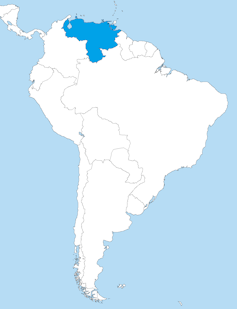
Venezuela is a republic of around 30 million people on the northern coast of South America, about twice the size of California. During much of the early 20th century, it was considered the wealthiest country in South America due to its oil reserves.

Venezuela’s location in South America.
Wikimedia Commons

Foreign companies, including those from the US, invested heavily in the growth of Venezuelan oil and played a heavy hand in its politics. In the face of US opposition, however, Venezuelan leaders began asserting more control over their main export resource. Venezuela was a key figure in the formation of the Organisation of Petroleum Exporting Countries (OPEC) in 1960, and it nationalised much of its oil industry in 1976.

This negatively impacted US companies like ExxonMobil and has fuelled the recent claims by the Trump administration that Venezuela “stole” US oil.


Economic prosperity, however, did not follow for most Venezuelans. The mismanagement of the oil industry led to a debt crisis and International Monetary Fund (IMF) intervention in 1988. Caracas erupted in protests in February 1989 and the government sent the military to crush the uprising. An estimated 300 people were killed, according to official totals, but the real figure could be 10 times higher.

In the aftermath, Venezuelan society became further split between the wealthy, who wanted to work with the US, and the working class, who sought autonomy from the US. This division has defined Venezuelan politics ever since.

Chávez’s rise to power

Hugo Chávez began his career as a military officer. In the early 1980s, he formed the socialist “Revolutionary Bolivarian Movement-200” within the army and began giving rousing lectures against the government.

Then, after the 1989 riots, Chávez’s recruitment efforts increased dramatically and he began planning the overthrow of Venezuela’s government. In February 1992, he staged a failed coup against the pro-US president, Carlos Andrés Pérez. While he was imprisoned, his group staged another coup attempt later in the year that also failed. Chavez was jailed for two years, but emerged as the leading presidential candidate in 1998 on a socialist revolutionary platform.

Chávez became a giant of both Venezuelan and Latin American politics. His revolution evoked the memory of Simón Bolívar, the great liberator of South America from Spanish colonialism. Not only was Chávez broadly popular in Venezuela for his use of oil revenue to subsidise government programs for food, health and education, he was well-regarded in like-minded regimes in the region due to his generosity.

Most notably, Chávez provided Cuba with billions of dollars worth of oil in exchange for tens of thousands of Cuban doctors working in Venezuelan health clinics.

He also set a precedent of standing up to the US and to the IMF at global forums, famously calling then-US President George W Bush “the devil” at the UN General Assembly in 2006.

US accused of fomenting a coup

Unsurprisingly, the US was no fan of Chávez.

After hundreds of thousands of opposition protesters took to the streets in April 2002, Chavez was briefly ousted in a coup by dissident military officers and opposition figures, who installed a new president, businessman Pedro Carmona. Chávez was arrested, the Bush administration promptly recognised Carmona as president, and the The New York Times editorial page celebrated the fall of a “would-be dictator”.

Chavez swept back into power just two days later, however, on the backs of legions of supporters filling the streets. And the Bush administration immediately faced intense scrutiny for its possible role in the aborted coup.

While the US denied involvement, questions lingered for years about whether the government had advance knowledge of the coup and tacitly backed his ouster. In 2004, newly classified documents showed the CIA was aware of the plot, but it was unclear how much advance warning US officials gave Chavez himself.

US pressure continues on Maduro

Maduro, a trade unionist, was elected to the National Assembly in 2000 and quickly joined Chávez’s inner circle. He rose to the office of vice president in 2012 and, following Chávez’s death the following year, won his first election by a razor-thin margin.

But Maduro is not Chávez. He did not have the same level of support among the working class, the military or across the region. Venezuela’s economic conditions worsened and inflation skyrocketed.

And successive US administrations continued to put pressure on Maduro. Venezuela was hit with sanctions in both the Obama and first Trump presidency, and the US and its allies refused to recognise Maduro’s win in the 2018 election and again in 2024.

Isolated from much of the world, Maduro’s government became dependent on selling oil to China as its sole economic outlet. Maduro also claims to have thwarted several coup and assassination attempts allegedly involving the US and domestic opposition, most notably in April 2019 and May 2020 during Trump’s first term.


US officials have denied involvement in any coup plots; reporting also found no evidence of US involvement in the 2020 failed coup.

Now, Trump has successfully removed Maduro in a much more brazen operation, with no attempts at deniability. It remains to be seen how Venezuelans and other Latin American nations will respond to the US actions, but one thing is certain: US involvement in Venezuelan politics will continue, as long as it has financial stakes in the country.

The Conversation

James Trapani does not work for, consult, own shares in or receive funding from any company or organisation that would benefit from this article, and has disclosed no relevant affiliations beyond their academic appointment.

ref. Before toppling Maduro, the US spent decades pressuring Venezuelan leaders over its oil wealth – https://theconversation.com/before-toppling-maduro-the-us-spent-decades-pressuring-venezuelan-leaders-over-its-oil-wealth-272679

Gene editing in Indonesia: can new biotechnology solve old agricultural problems?

Source: The Conversation – Indonesia – By Emily A. Buddle, Senior Research Fellow, University of Adelaide

Like other developing countries, Indonesia is facing a familiar dilemma: how to feed a growing population while protecting its extraordinary biodiversity.

Food security has become a pressing concern amidst drought, pests and climate shifts. Scientists are turning to new technologies for answers. Biotechnology — specifically gene editing (GE) — emerges as a potential solution.

However, Indonesians hold diverse views on GE. While some support the technology, others oppose it.

Scientists are enthusiastic about the opportunities to enhance staple crops like rice and improve nutritional security.

Yet many still have questions. Can GE truly support smallholder farmers and help Indonesia achieve food sovereignty? Or will it simply revive the old controversies surrounding genetically modified crops?

Our 2024 study involving Indonesian stakeholders highlights that technical fixes alone cannot solve food insecurity. For gene editing to succeed, it must address the social inequalities – such as unequal land access – that farmers face.

Gene editing vs genetic modification: what is the difference?

Both gene editing and genetic modification refer to organisms with genetic material altered by humans to introduce desirable traits, such as drought tolerance or disease resistance.

While genetic modification often involves inserting genes from one species into another, gene editing makes small, targeted changes within the organism’s own DNA. In other words, this technology improves crop quality without adding foreign genes.

Advocates argue that this makes gene editing safer, tastier and more acceptable to the public than older modification methods.

But critics warn that even with these new methods, the same old questions remain: who controls the technology? Who benefits? And who gets left behind?

Indonesia’s reliance on imports

Smallholder farmers dominate Indonesia’s agricultural landscape, where rice remains the main staple food crop.

Despite increases in rice production and several other agricultural yields, the country still needs to import key commodities like corn and soybeans from the United States to produce tempeh and tofu for daily consumption.

Similarly, livestock feed supplies still rely heavily on imports of genetically modified soybean meal from Argentina and Brazil.

Lessons from the past: old setbacks to new technologies

To reduce this dependence on imports, the government revised regulations on genetically modified crops to enable domestic production.

The first commercial cultivation of modified crops, Bt cotton, took place between 2001 and 2002. However, the project ultimately failed after the provider, Monsanto, withdrew in 2003, citing difficult regulatory hurdles and limited land for cultivation.

Between 2003 and 2021, no commercial genetically modified crops were grown, apart from sugarcane in limited government-owned areas.

Following these setbacks, the government has looked towards gene editing. Since 2021, corn, potato and sugarcane varieties have been approved for commercial cultivation. While domestic production remains limited, Indonesia is a major importer of gene-edited commodities, particularly soybeans and corn, for both human consumption and livestock feed.

Today, researchers at Indonesia’s National Research and Innovation Agency (BRIN) are developing gene-edited varieties including rice, cassava and sorghum. The government remains optimistic, presenting gene editing as a way to boost productivity and reduce reliance on food imports.

Yet, questions remain over how this technology will reach farmers – and on whose terms


Baca juga:
NZ’s gene technology reform carries benefits and risks – a truly independent regulator will be vital


Fairness beyond technical fixes

Gene editing is often promoted as a quick technical fix for complex agricultural challenges. Yet its success and public acceptance depend on far more than science. It hinges on broader social and economic systems: who has access to seeds, who controls the knowledge and who decides which genetic changes are needed.

Our study shows that many people still do not fully understand the technology. Between April and August 2024, we interviewed 11 stakeholders in Indonesia. This included farmer groups, government officials, researchers, NGOs and consumer associations.

Many participants from civil society and farmers’ unions pointed to the ‘problem of socialisation’. They refer to a lack of shared understanding about the role gene technologies should play in Indonesia’s agricultural future. They also emphasised the importance of prioritising smallholder farmers, who continue to dominate the sector.

Gene editing may yield more drought-tolerant crops. However, it cannot resolve unequal access to land, credit and markets — the main challenges for smallholders.

A representative from a consumer association highlighted risks of ‘capital bias’. They noted that farmers could end up as company ‘employees’ rather than independent producers if they are pushed to adopt new technologies without transparent information.

Participants from the Indonesian Farmers Union also raised concerns about seed patents. They warned that local farm seeds could be recreated in a laboratory, reclassified and then patented for profit.

Innovation is often treated as the domain of scientists. Meanwhile, the social and ethical implications are left for others to handle afterwards. All participants agreed that public engagement is essential, yet none were ready to lead those efforts.


Baca juga:
Plants get a GMO glow-up: Genetically modified varieties are coming out of the lab and into homes and gardens


Shaping a shared future

Gene editing could play an important role in Indonesia’s food future – but not if it follows a ‘technology first, consultation later’ approach. Genuine communication requires discussing innovations beyond the scientists’ bubble and meaningfully involving those who shape agricultural and food systems, especially women.

As providers, cooks and household decision-makers, women farmers are well-positioned to play a crucial role in engaging and mobilising their communities. Their resilience is a vital resource for regional progress. Policymakers and researchers need to invest not only in laboratories but also in building trust, fostering dialogue and developing genuine collaboration with farmers and local communities.

Biotechnology may offer powerful tools, but it is not a silver bullet. We need to understand the specific social and cultural landscape in each locale to determine if and where the technology can be truly useful.

Indonesia’s path forward will depend on recognising that scientific innovation and social inclusion must grow together. Only by bringing both into alignment can gene editing truly contribute to a fair, sustainable and culturally grounded food system.

The Conversation

Emily A. Buddle has received funding from the Department of Primary Industries and Regions South Australia, the Australian Research Council and Meat and Livestock Australia. She is currently an Innovation Fellow with the Australian Research Council Training Centre for Future Crops Development. She is also a farmer in South Australia’s mid north region

Gloria Fransisca Katharina Lawi worked as a research fellow at the Biotechnology Center of Gadjah Mada University for KONEKSI. It was funded by the governments of Australia and Indonesia to promote knowledge partnerships.

Joan Leach has received research funding from the Australian Research Council, the National Health and Medicine Research Council, the Kavli Foundation and the UN FAO. She is a chief investigator in the ARC International Training Center for Future Crops.

ref. Gene editing in Indonesia: can new biotechnology solve old agricultural problems? – https://theconversation.com/gene-editing-in-indonesia-can-new-biotechnology-solve-old-agricultural-problems-269096

Can the US ‘run’ Venezuela? Military force can topple a dictator, but it cannot create political authority or legitimacy

Source: The Conversation – USA – By Monica Duffy Toft, Professor of International Politics and Director of the Center for Strategic Studies, The Fletcher School, Tufts University

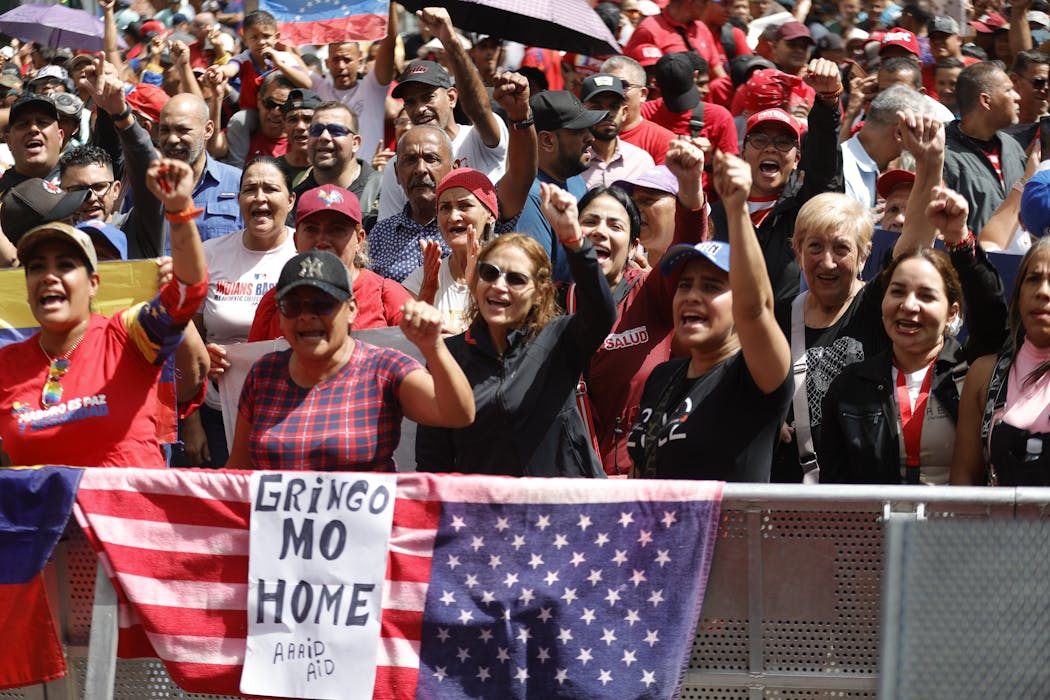
Supporters of Venezuelan President Nicolás Maduro gather during a demonstration in Caracas on Jan, 4, 2026.
Pedro Mattey/Anadolu via Getty Images

An image circulated over media the weekend of Jan. 3 and 4 was meant to convey dominance: Venezuela’s president, Nicolás Maduro, blindfolded and handcuffed aboard a U.S. naval vessel. Shortly after the operation that seized Maduro and his wife, Cilia Flores, President Donald Trump announced that the United States would now “run” Venezuela until a “safe, proper and judicious transition” could be arranged.

The Trump administration’s move is not an aberration; it reflects a broader trend in U.S. foreign policy I described here some six years ago as “America the Bully.”

Washington increasingly relies on coercion – military, economic and political – not only to deter adversaries but to compel compliance from weaker nations. This may deliver short-term obedience, but it is counterproductive as a strategy for building durable power, which depends on legitimacy and capacity. When coercion is applied to governance, it can harden resistance, narrow diplomatic options and transform local political failures into contests of national pride.

There is no dispute that Maduro’s dictatorship led to Venezuela’s catastrophic collapse. Under his rule, Venezuela’s economy imploded, democratic institutions were hollowed out, criminal networks fused with the state, and millions fled the country – many for the United States.

But removing a leader – even a brutal and incompetent one – is not the same as advancing a legitimate political order.

A man wearing sweatpants and a sweatshirt, in handcuffs and blindfolded.
An image of Venezuelan President Nicolás Maduro after his capture, posted by President Donald Trump and reposted by the White House.
White House X.com account

Force doesn’t equal legitimacy

By declaring its intent to govern Venezuela, the United States is creating a governance trap of its own making – one in which external force is mistakenly treated as a substitute for domestic legitimacy.

I write as a scholar of international security, civil wars and U.S. foreign policy, and as author of “Dying by the Sword,” which examines why states repeatedly reach for military solutions, and why such interventions rarely produce durable peace.

The core finding of that research is straightforward: Force can topple rulers, but it cannot generate political authority.

When violence and what I have described elsewhere as “kinetic diplomacy” become a substitute for full spectrum action – which includes diplomacy, economics and what the late political scientist Joseph Nye called “soft power” – it tends to deepen instability rather than resolve it.

More force, less statecraft

The Venezuela episode reflects this broader shift in how the United States uses its power. My co-author Sidita Kushi and I document this by analyzing detailed data from the new Military Intervention Project. We show that since the end of the Cold War, the United States has sharply increased the frequency of military interventions while systematically underinvesting in diplomacy and other tools of statecraft.

One striking feature of the trends we uncover is that if Americans tended to justify excessive military intervention during the Cold War between 1945–1989 due to the perception that the Soviet Union was an existential threat, what we would expect is far fewer military interventions following the Soviet Union’s 1991 collapse. That has not happened.

Even more striking, the mission profile has changed. Interventions that once aimed at short-term stabilization now routinely expand into prolonged governance and security management, as they did in both Iraq after 2003 and Afghanistan after 2001.

This pattern is reinforced by institutional imbalance. In 2026, for every single dollar the United States invests in the diplomatic “scalpel” of the State Department to prevent conflict, it allocates US$28 to the military “hammer” of the Department of Defense, effectively ensuring that force becomes a first rather than last resort.

“Kinetic diplomacy” – in the Venezuela case, regime change by force – becomes the default not because it is more effective, but because it is the only tool of statecraft immediately available. On Jan. 4, Trump told the Atlantic magazine that if Delcy Rodríguez, the acting leader of Venezuela, “doesn’t do what’s right, she is going to pay a very big price, probably bigger than Maduro.”

Lessons from Afghanistan, Iraq and Libya

The consequences of this imbalance are visible across the past quarter-century.

In Afghanistan, the U.S.-led attempt to engineer authority built on external force alone proved brittle by its very nature. The U.S. had invaded Afghanistan in 2001 to topple the Taliban regime, deemed responsible for the 9/11 terrorist attacks. But the subsequent two decades of foreign-backed state-building collapsed almost instantly once U.S. forces withdrew in 2021. No amount of reconstruction spending could compensate for the absence of a political order rooted in domestic consent.

Following the invasion by the U.S. and surrender of Iraq’s armed forces in 2003, both the U.S. Department of State and the Department of Defense proposed plans for Iraq’s transition to a stable democratic nation. President George W. Bush gave the nod to the Defense Department’s plan.

That plan, unlike the State Department’s, ignored key cultural, social and historical conditions. Instead, it proposed an approach that assumed a credible threat to use coercion, supplemented by private contractors, would prove sufficient to lead to a rapid and effective transition to a democratic Iraq. The United States became responsible not only for security, but also for electricity, water, jobs and political reconciliation – tasks no foreign power can perform without becoming, as the United States did, an object of resistance.

Libya demonstrated a different failure mode. There, intervention by a U.S.-backed NATO force in 2011 and removal of dictator Moammar Gadhafi and his regime were not followed by governance at all. The result was civil war, fragmentation, militia rule and a prolonged struggle over sovereignty and economic development that continues today.

The common thread across all three cases is hubris: the belief that American management – either limited or oppressive – could replace political legitimacy.

Venezuela’s infrastructure is already in ruins. If the United States assumes responsibility for governance, it will be blamed for every blackout, every food shortage and every bureaucratic failure. The liberator will quickly become the occupier.

Men carrying guns and celebrating, with huge black clouds behind them.
Iraqi Sunni Muslim insurgents celebrate in front of a burning U.S. convoy they attacked earlier on April 8, 2004, on the outskirts of the flashpoint town of Fallujah.
Karim Sahib, AFP/Getty Images

Costs of ‘running’ a country

Taking on governance in Venezuela would also carry broader strategic costs, even if those costs are not the primary reason the strategy would fail.

A military attack followed by foreign administration is a combination that undermines the principles of sovereignty and nonintervention that underpin the international order the United States claims to support. It complicates alliance diplomacy by forcing partners to reconcile U.S. actions with the very rules they are trying to defend elsewhere.

The United States has historically been strongest when it anchored an open sphere built on collaboration with allies, shared rules and voluntary alignment. Launching a military operation and then assuming responsibility for governance shifts Washington toward a closed, coercive model of power – one that relies on force to establish authority and is prohibitively costly to sustain over time.

These signals are read not only in Berlin, London and Paris. They are watched closely in Taipei, Tokyo and Seoul — and just as carefully in Beijing and Moscow.

When the United States attacks a sovereign state and then claims the right to administer it, it weakens its ability to contest rival arguments that force alone, rather than legitimacy, determines political authority.

Beijing needs only to point to U.S. behavior to argue that great powers rule as they please where they can – an argument that can justify the takeover of Taiwan. Moscow, likewise, can cite such precedent to justify the use of force in its near abroad and not just in Ukraine.

This matters in practice, not theory. The more the United States normalizes unilateral governance, the easier it becomes for rivals to dismiss American appeals to sovereignty as selective and self-serving, and the more difficult it becomes for allies to justify their ties to the U.S.

That erosion of credibility does not produce dramatic rupture, but it steadily narrows the space for cooperation over time and the advancement of U.S. interests and capabilities.

Force is fast. Legitimacy is slow. But legitimacy is the only currency that buys durable peace and stability – both of which remain enduring U.S. interests.

If Washington governs by force in Venezuela, it will repeat the failures of Afghanistan, Iraq and Libya: Power can topple regimes, but it cannot create political authority. Outside rule invites resistance, not stability.

The Conversation

Monica Duffy Toft does not work for, consult, own shares in or receive funding from any company or organization that would benefit from this article, and has disclosed no relevant affiliations beyond their academic appointment.

ref. Can the US ‘run’ Venezuela? Military force can topple a dictator, but it cannot create political authority or legitimacy – https://theconversation.com/can-the-us-run-venezuela-military-force-can-topple-a-dictator-but-it-cannot-create-political-authority-or-legitimacy-272683

Were the US actions in Venezuela legal under international law? An expert explains

Source: The Conversation – Global Perspectives – By Sarah Heathcote, Honorary Associate Professor in International Law, Australian National University

United States President Donald Trump has said the US will “run” Venezuela until a new government is installed, following the US military intervention in the country’s capital, Caracas.

American forces have seized Venezuela’s president, Nicolás Maduro, and his wife, and brought the pair to the US to face what Trump has described as a “narco-terrorism” trial.

This follows months of build-up of US military forces in the region.

The Russian Foreign Ministry has said the US attacks are:

an act of armed aggression against Venezuela. This is deeply concerning and condemnable. The pretexts used to justify such actions are unfounded.

So, what does international law say?

Was this an act of ‘force’ under the UN charter?

Article 2(4) of the United Nations Charter says:

All members shall refrain in their international relations from the threat or use of force against the territorial integrity or political independence of any state, or in any other manner inconsistent with the purposes of the United Nations.

Russia’s framing of the US’ Venezuela intervention as a condemnable “act of armed agression” is at least an affirmation of its own belief in the existence of international law.

Similarly, Russia appeals to international law when it claims, spuriously, that its own actions in Ukraine are justified under exceptions to the prohibition on armed aggression – or that they are mere “operations” within its own territory, and so for different legal reasons, lawful under international law.

Commentators have been quick to describe the US strikes in Venezuela as a breach of article 2(4) of the UN charter.

The US’ actions are only lawful if supported by a resolution from the UN Security Council; if the US was acting in self-defence; or – and this is often overlooked – if there was consent by the lawful government of Venezuela to the intervention.

There was no UN Security Council authorisation for the US to intervene in Venezuela, nor has the US been the victim of an ongoing or imminent act of aggression by Venezuela.

A claim of consent by the lawful Venezuelan government might have more ostensible credit because evidence suggests the 2024 presidential election was stolen from Maduro’s opponent, Edmundo González.

However, because the identity of the lawful government is contested (some countries have recognised Maduro’s win in the 2024 election) and the opposition controls no Venezuelan territory, the US can only intervene on the legal ground of consent with a Security Council resolution.

So, if you define the US’ actions in Venezuela as an act of “force” within the meaning of article 2(4) UN Charter, then yes, the US has engaged in a prohibited act, since none of the justifications apply.

What if it was just a ‘law enforcement operation’?

For its part, the Trump administration appears to be arguing the strikes on Venezuela were not a “use of force” in the first place, but rather a law enforcement operation.

In a press conference following the strikes, US Secretary of State Marco Rubio described the Venezuelan president as “a fugitive of American justice”. (Given the US Congress was not notified before the Venezuela strikes, this framing comes across as an attempt to obfuscate the need for Congressional authority to use force under US domestic law).

What, then, if the intervention was not a “use of force” as defined by the UN charter, but merely a law enforcement operation?

In making this assessment, one has to take into account the operation’s scale, target, location and the broader context.

Media reports have described 15,000 US troops amassing in the region by December, and the recent deployment of a US aircraft carrier near Venezuela.


Read more:
Tracking the US build-up in the Caribbean


The intervention in Venezuela came from the highest US authority (the president), targeted Venezuela’s acting head of state, and was executed against a background of unfriendly relations between the two states.

In this context, it is hard to see how this can be anything other than a “use of force” within the meaning of article 2(4) of the UN Charter.

It does not, in my view, constitute a law enforcement operation.

International law isn’t dead

Few will mourn the removal of Maduro, widely considered an autocrat. Democracy might even be restored to Venezuela.

Nonetheless, the US intervention in Venezuela was as brazen and unlawful as its military strike on Iran in June last year. As such, it challenges international law.

But international law is not “dead” just because the most powerful no longer respect it.

Breaches of the law are normal in any legal system. Indeed, they are expected or there would not be a need for the rule.

International law is created by all states, not just the powerful few. This makes international community reactions to breaches particularly important.

So, to preserve the rules-based international order, all states need to call out breaches of the law when they occur, including in the current instance.

The Conversation

Sarah Heathcote does not work for, consult, own shares in or receive funding from any company or organisation that would benefit from this article, and has disclosed no relevant affiliations beyond their academic appointment.

ref. Were the US actions in Venezuela legal under international law? An expert explains – https://theconversation.com/were-the-us-actions-in-venezuela-legal-under-international-law-an-expert-explains-272684

The US has invaded countries and deposed leaders before. Its military action against Venezuela feels different

Source: The Conversation – Global Perspectives – By Juan Zahir Naranjo Cáceres, PhD Candidate, Political Science, International Relations and Constitutional Law, University of the Sunshine Coast

In the early hours of Saturday morning, US special forces captured Venezuelan President Nicolás Maduro from his home in Caracas and flew him out of the country. US President Donald Trump announced that Maduro and his wife, Cilia Flores, would face federal narco-terrorism charges in New York.

For anyone familiar with the history of US interventions in Latin America and the Caribbean, the basic pattern is grimly familiar: a small state in Washington’s “backyard”, a leader deemed unacceptable, military force applied with overwhelming effect, and a government removed overnight.

Yet what makes Venezuela’s case different – and profoundly alarming – is the brazen nature of the months-long US military operations against the country based on shifting and shaky justifications, with little evidence.

This moment is also significant, with many scholars already warning that international law is in deep crisis.

A long tradition of removing ‘unacceptable’ leaders

Venezuela is not the first country in the region to see its leader overthrown or seized with direct US involvement or acquiescence.

In 1953, the British government suspended the constitution of its colony British Guiana (now Guyana) and removed the democratically elected government of Cheddi Jagan after just 133 days. The British believed Jagan’s social and economic reforms would threaten its business interests.

A decade later, the CIA conducted a sustained covert operation to destabilise Jagan’s later administration, culminating in rigged 1964 elections that ensured his rival, Forbes Burnham, would win.

In 1965, US President Lyndon Johnson sent more than 22,000 US troops to the Dominican Republic to prevent the return of former President Juan Bosch, overthrown in a 1963 coup, and another communist regime forming in the region.

Following the violent overthrow and execution of Prime Minister Maurice Bishop of Grenada in 1983, President Ronald Reagan ordered an invasion. His administration justified the action by citing the need to protect US medical students and prevent the island from becoming a “Soviet-Cuban colony”.

In December 1989, President George H.W. Bush launched a full-scale invasion of Panama involving about 24,000 US troops to remove General Manuel Noriega, who had been indicted on drug-trafficking charges (like Maduro). He was subsequently flown to the United States, tried and imprisoned.

And in 2004, Haitian President Jean-Bertrand Aristide was removed from power and flown to Africa in what he described as a US-orchestrated coup and “kidnapping”. In 2022, French and Haitian officials told The New York Times that France and the US had collaborated to remove him.

Why Maduro’s case is different

In all of these cases, Washington asserted control over what it has long considered its sphere of influence, intervening when governments threatened its interests through ideology, alliances or defiance.

But Venezuela in 2026 is not Grenada in 1983 or Panama in 1989. It is a much larger country with some 30 million people and significant armed forces, which has spent years preparing for a possible US invasion. More importantly, the operation unfolded in an entirely different global context.

During the Cold War, US interventions were often condemned but rarely threatened the legitimacy of the international order itself.

Today, by contrast, the Maduro operation has been met with swift and sharp condemnation from across the political spectrum.

Colombian President Gustavo Petro called the strikes an “assault on the sovereignty” of Latin America, while Brazilian President Luiz Inácio Lula da Silva said the attack “crossed an unacceptable line” and set an “extremely dangerous precedent”. Mexican President Claudia Sheinbaum said the strikes were in “clear violation” of the UN Charter.

Even traditional US allies expressed discomfort. France’s foreign minister said the operation contravened the “principle of non-use of force that underpins international law” and that lasting political solutions cannot be “imposed by the outside”.

And a statement from UN Secretary-General Antonio Guterres said he was “deeply alarmed” about the “dangerous precedent” the United States was setting and the rules of international law not being respected.

The UN Charter prohibits the use of force against the territorial integrity or political independence of any state under Article 2(4).

For years, scholars have warned that repeated violations of the UN Charter by the United States were steadily eroding the basic rules governing the use of force.

Venezuela may represent the moment that erosion becomes collapse. When a permanent Security Council member not only bombs another state but abducts its head of state, the precedent is indeed profound.


Read more:
A predawn op in Latin America? The US has been here before, but the seizure of Venezuela’s Maduro is still unprecedented


Regional consequences

The immediate consequences for Latin America are already being felt. Colombia has moved troops to its border with Venezuela, while neighbouring Guyana has activated its own security plans.

It’s unclear at this point if further US military operations are planned. Trump has said the US will “run” Venezuela until a “safe transition” is complete, but analysts question whether Washington has the appetite for such an open-ended commitment. Venezuela’s defence minister has also pledged to continue to fight against what he called “criminal aggression”.

The operation has also deepened divisions that already existed in Latin America over Venezuela. After Maduro’s 2024 election, the results were immediately contested: Maduro’s government claimed victory, while the opposition said it won based on voting tallies it published online.

Regional governments split over which narrative to accept, with some recognising Maduro’s government and others backing the opposition. These fault lines have made a coordinated regional response to the Trump administration’s actions impossible.

The broader risk is that Venezuela becomes a precedent not only for great powers, but for regional actors. If Washington can seize a head of state without legal sanction, what stops others from doing the same?

A dangerous new normal

Maduro’s removal may or may not bring the political change Trump desires. But the manner of his removal – brazen, unilateral, defended in the language of US exceptionalism – has already done serious damage to the fragile architecture of international law.

If sovereignty can be set aside when inconvenient, heads of state can be abducted without UN approval, and the most powerful decide which governments may exist, then we have returned to a world governed by force – not the law. And in that world, no state can consider itself truly secure.

The Conversation

Juan Zahir Naranjo Cáceres does not work for, consult, own shares in or receive funding from any company or organisation that would benefit from this article, and has disclosed no relevant affiliations beyond their academic appointment.

ref. The US has invaded countries and deposed leaders before. Its military action against Venezuela feels different – https://theconversation.com/the-us-has-invaded-countries-and-deposed-leaders-before-its-military-action-against-venezuela-feels-different-272682