Pittsburgh spends millions on juvenile detention – research points to cheaper, more effective alternatives

Source: The Conversation – USA – By Jeffrey Shook, Professor of Social Work, University of Pittsburgh

More than a third of people in state prisons have served time in a juvenile facility, according to The Sentencing Project. SAKDAWUT14/iStock via Getty Images Plus

Data released in January 2026 to Allegheny County officials offers a clear look at who is being held at Highland Detention Center – and how much it costs taxpayers. The numbers show short stays, significant racial disparities and millions spent to operate the facility. These findings raise new questions about whether detention is being used effectively in the county’s youth justice system.

In 2025, 220 young people passed through the center. The county paid nearly US$800 per day for each of the 12 beds in the facility, whether they were occupied or not.

The center operates at the site of the former Shuman Juvenile Detention Center in Allegheny County. After a documented history of child abuse, medical issues, unauthorized use of restraints and other violations, Shuman closed in September 2021 when the Pennsylvania Department of Human Services revoked its license.

Shuman opened in 1974 with an occupancy of approximately 120 beds. At the time it was closed, the daily population had dropped to 20 juveniles at an annual cost of $11 million.

As a professor of social work at the University of Pittsburgh, my research centers on law, policy and child welfare. I have spent my career studying how the juvenile justice system can shape – and also damage – the lives of young people while creating significant costs to taxpayers.

Here’s what local taxpayers in Pennsylvania are paying for juvenile detention.

A costly reinvention

Allegheny County signed a five-year, $73 million contract with nonprofit organization Adelphoi to operate a detention facility at the old Shuman site in 2023. It was renamed Highland Juvenile Detention Facility.

The county agreed to pay $650.25 per bed, per day for the first year of the contract. That rate, the contract specifies, “shall be adjusted each year.” By the end of 2025, it had already climbed to $825 per day. In total, the county paid Adelphoi nearly $7 million last year to hold kids for an average stay of 13 days.

The facility offered 12 beds in 2025. The contract calls for that number to increase to 60 beds, with the costs also rising to $19 million annually. The county has an option to renew the contract when it expires at the end of 2028.

In March 2026, there were seven juveniles being held at Highland. As of late February 2026, there were approximately 12 to 14 juveniles held in the Allegheny County Jail. They can be held in the jail for a variety of reasons but are primarily there if they are being charged as an adult.

Who’s being locked up

Statistics show a correlation between juvenile detention and adult involvement with the criminal legal system.

According to The Sentencing Project, a Washington, D.C.-based nonprofit, more than a third of people in state prisons have served time in a juvenile facility.

Black youth are more than five times more likely to be placed in juvenile facilities than white peers, and two-thirds of state prisoners experienced an arrest before age 19.

An outdoor building shot of the Allegheny County Jail.
Roughly a dozen juveniles are being held in the Allegheny County Jail.
AP Photo/Gene J. Puskar

In the juvenile system, detention is intended to be short term and is generally used prior to an adjudication, the determination of someone’s guilt or innocence.

Detention is typically used for kids who pose a threat of committing additional crimes or a risk of not appearing in court, based on a determination by a probation officer, a state risk-assessment test or a judge, typically. Dentention is not a destination but part of a continuum with a goal of moving a young person to less restrictive alternatives, such as community-based programs and services that allow youth to remain at home, in school and in their communities while receiving supervision, treatment and support. These alternatives are often more effective at reducing recidivism and less costly than secure confinement.

While kids in detention have the right to receive a free public education and should be offered physical, behavioral, mental health and recreational services, according to state law, detention is not a treatment facility.

EG: There’s usually a brief caption beneath video links like this one.

The number of kids in detention facilities in the U.S has dropped substantially over the past 20 years, from approximately 400,000 to 135,000. However, an average of 13,000 to 14,000 kids remain in detention facilities across the country daily. Youth of color are disproportionately represented, and many kids are detained for minor crimes, technical violations or status offenses, such as breaking curfew.

Based on available data and my own experience working in and with detention facilities, it is clear that youth locked in these facilities are not only those at risk of committing another crime or not appearing in court. Many have education, mental health and substance abuse needs, come from poor families or identify as LGBTQ+. In many respects, detention facilities have served as a dumping ground for youth dealing with a vast array of issues in their lives.

The juvenile justice system was built primarily around managing risk and ensuring court appearances. It does little to address the underlying needs of the children moving through it. Unstable housing, missed school and lack of supervision can trigger detention even when a child poses no real threat. In many cases, juvenile detention ends up filling a gap left by social services.

Doubling down on detention

Despite its limited capacity, the Allegheny County Highland Detention Center dashboard shows 220 youths were detained at Highland in 2025. Eighty-six percent of these kids are Black. Firearms charges are the most common offense.

More than half had an individualized education plan, a legally binding document that outlines the specific educational support and services a student with a physical or mental disability is entitled to receive in school.

Over 60% were involved with the child welfare system, 88% had family involvement in the Supplemental Nutrition Assistance Program, or SNAP, and 72% had received a crisis mental health service at some point before entering Highland.

Research shows that young people who are detained are more likely to commit additional offenses when they are released, experience educational and economic disruption, and face increased mental health challenges. Detention does not promote the social development of young people or community safety.

A variety of alternatives to detention exist that have been shown to be more effective and cost significantly less – such as mentoring programs, family therapy, cognitive behavioral therapy and restorative justice programs.

Restorative justice programs bring victims, accused youth and trustworthy adults in their lives together to discuss the harm caused by the offense. They come up with a plan to help make things “right” between the parties to avoid subsequent offenses and help the youth learn from the incident.

The dollars being spent to confine kids in Allegheny County could be reinvested in the young people themselves and in their families, schools and communities. The new advisory board was appointed to Highland in July 2025. The board was created to provide a layer of accountability over the facility and Adelphoi – but what that looks like in practice remains up in the air.

The Conversation

Jeffrey Shook does not work for, consult, own shares in or receive funding from any company or organization that would benefit from this article, and has disclosed no relevant affiliations beyond their academic appointment.

ref. Pittsburgh spends millions on juvenile detention – research points to cheaper, more effective alternatives – https://theconversation.com/pittsburgh-spends-millions-on-juvenile-detention-research-points-to-cheaper-more-effective-alternatives-275043

More and more teachers and students are using AI – even though it might do more harm than good

Source: The Conversation – USA (2) – By Tal Slemrod, Associate Professor of Special Education, California State University, Chico

An estimated 85% of K-12 public school teachers recently reported that they used AI during the 2024-2025 school year. ismagilov/iStock/Getty Images Plus

K-12 teachers and students across the country are increasingly using AI in and out of classrooms, whether it is teachers turning to AI to refine lesson plans or students asking AI to help them research a particular topic.

An estimated 85% of K-12 public school teachers recently reported that they used AI during the 2024-2025 school year – often for curriculum and content development.

In 2023, 13% of teens said they used ChatGPT to complete their schoolwork, while 26% of them said in 2025 that they were using ChatGPT for this purpose.

Similarly, 86% of K-12 students shared in 2025 that they have used AI in general. An estimated 50% of students reported that they use it for schoolwork, such as for learning more about topics outside of what was taught in class, tutoring on specific subjects, receiving help with a homework assignment or asking for college advice.

However, policies and training have not kept pace with how frequently teachers and students are using AI.

Only 35% of school district leaders reported in 2025 that they provided students with any AI training, according to the global policy think tank RAND Corporation. Additionally, 45% of principals reported school or district policies or guidance on the use of AI in schools, according to these findings.

Another challenge is that students are also using AI for potentially dangerous uses. There are recent examples of students who self-harmed or died by suicide after they used AI for mental health support. A 2025 study found that when a chatbot responded to 60 simulated scenarios that posed mental health questions, the chatbots sometimes made harmful proposals – such as cutting off all human contact for a month or dropping out of school.

So, is it safe for young students to use AI? Does using AI provide better learning outcomes for students when compared to traditional instruction? Does AI help teachers reduce their workload?

The answers to these questions are complicated. It is not yet clear how AI influences learning in K-12 settings or when and how it is best for teachers and students to use AI.

A man wearing a grey shirt and dark tie hands a piece of paper to teenagers seated at long white tables.
A high school teacher in Colorado Springs hands out lesson sheets he created with the help of AI in November 2025.
RJ Sangosti/MediaNews Group/The Denver Post via Getty Images

Some clear pros

As an associate professor of inclusive teacher education, I’m trying to answer some of these big questions about AI and K-12 education.

Some university centers that I’ve worked with, such as the Center for Innovation, Design, and Digital Learning at the University of Kansas, are conducting research on how AI can be used to support students with learning disabilities.

In 2025, 57% of special education teachers said they use AI to help develop individualized plans, often called an individualized education program, for their students with learning disabilities.

I believe there is no doubt that AI can, in some ways, reduce barriers and support students with disabilities. In my own research, for example, my co-authors and I show that AI can help students learn by adapting assignments to meet their personal learning needs and pace. It can also help teachers reduce their time spent grading or editing assignments.

There remain concerns over student privacy and whether AI systems will reinforce bias, but special education teachers are testing the benefits of generative AI.

The missing evidence

Among the broader available research and evidence on AI and K-12 education, some studies from 2019 through 2022 show that AI might help students learn and stay motivated by providing a personalized learning experience. However, the evidence appears less promising when considering how students learn after they use AI and then stop using it.

For example, Guilherme Lichand, an economics scholar at the Stanford Accelerator for Learning, found in 2026 that when students use AI and then are told they can no longer use it for their studies, students actually perform worse than those who never used AI. This shows that additional research on how AI influences students’ long-term learning and development is necessary.

The Brookings Institution also recently warned in a 2026 AI and K-12 education report that the risks of using generative AI in education overshadow its benefits. These risks include weakened relationships between students and teachers, as well as students’ safety.

A 2025 report by the nonprofit Center for Democracy and Technology also shows that an average of 71% of K-12 teachers reported that when students use AI to complete their schoolwork, it is hard for the teachers to understand whether student work is their own.

Similarly, almost two-thirds of parents of K-12 students said in 2025 that AI is weakening important academic skills that their child needs to learn, such as writing, reading comprehension and critical thinking.

Lessons from the past

AI is being introduced to K-12 classrooms faster than evidence and understanding can support. But schools have rushed to incorporate educational technologies into their classrooms before.

During the COVID-19 pandemic, for example, schools needed to quickly equip teachers and students with online platforms for remote learning.

But the rush also challenged educators to learn how to effectively teach and provide individual support for each student – and to ensure that all students, including students with disabilities, could participate in remote learning.

Similarly, not long ago, some educators thought that social media and smartphones would bring the next frontier in education, with the idea that these technologies could increase student engagement. Yet we now know the dangers that both social media and smartphones pose for children.

Slowing down how students especially are using AI in the classroom does not mean rejecting it altogether. I think it means being responsible – especially when there is a good chance children’s academic skills, behaviors or emotions are at risk.

New evidence on AI and education is coming from scholars like me and my colleagues. There is little doubt that AI and future technologies are game changers in society and education.

I think it is also critical that we slow down and follow the evidence that is available. Speed is a choice, and education deserves intention.

The Conversation

Tal Slemrod receives funding from the US Department of Education.

ref. More and more teachers and students are using AI – even though it might do more harm than good – https://theconversation.com/more-and-more-teachers-and-students-are-using-ai-even-though-it-might-do-more-harm-than-good-275650

Millions of CT scans are done every year – most leave important data behind

Source: The Conversation – USA (3) – By Peter Gunderman, Assistant Clinical Professor of Radiology and Imaging Sciences, Indiana University

CT scans hold a wealth of information about a patient’s health that often gets overlooked. Morsa Images/DigitalVision via Getty Images

Recently, a patient came to the hospital where I work with a persistent cough. Their doctor had ordered a CT scan – a type of imaging that creates detailed cross-sectional pictures of the body’s interior – to look for pneumonia or another infection.

The scan ruled that out, but it also showed something unexpected: calcium buildup in the walls of the coronary arteries. That finding had nothing to do with the cough, but it pointed toward a much more serious problem. After weighing other risk factors, the patient and their doctor decided to start medication to reduce the risk of a heart attack.

Stories like this are becoming more common, and I think about them differently than I used to. I am a cardiothoracic radiologist at Indiana University. In practice, that means I use imaging to diagnose diseases of the heart and lungs. My job is to answer the clinical question in front of me.

But every scan contains far more information than anyone requested, and most of it never gets reported. That is not a failure of any individual radiologist; it is a gap built into how medicine processes imaging data. Closing that gap could matter enormously for patients.

Data hiding in plain sight

A single chest CT produces hundreds of cross-sectional images. Within those images, a trained eye – or an increasingly capable algorithm – can see calcium accumulating in coronary arteries, assess the condition of the muscles along the spine, estimate bone density and detect early changes in the liver. None of this requires an extra scan, radiation or appointment. The information is already there.

This is the idea behind opportunistic screening: using imaging ordered for one purpose to identify other health risks at the same time.

A man lies on his back, entering a CT scanner, with two health professionals overseeing him.
Radiologists are traditionally trained to look only for answers to the question that the referring doctor requested imaging for.
Solskin/DigitalVision via Getty Images

Coronary artery calcium

Coronary artery calcium, or CAC, is probably the best demonstration of what opportunistic screening can accomplish. When calcium builds up in the walls of the coronary arteries, it reflects underlying atherosclerosis, the disease process behind most heart attacks. CAC scoring is one of the strongest predictors of future heart attacks, and it adds predictive information beyond what traditional risk calculators provide.

Dedicated cardiac CT scans can measure this calcium precisely. So can a standard lung cancer screening CT, if someone takes the time to look. Studies have found that calcium measurements from lung screening CTs agree closely with those from dedicated cardiac scans, meaning the information is there even when the scan was not designed for cardiac evaluation.

That overlap matters because roughly 19 million noncardiac chest CTs are performed each year in the United States. Every one of those scans passes through the heart. The presence of calcium is visible in the images – yet studies find that when CAC is present, radiologists report it in fewer than half of cases.

The connection runs in both directions. In research my team conducted at Indiana University studying nearly 15,000 patients undergoing dedicated cardiac calcium scans, roughly 1 in 4 were potentially eligible for lung cancer screening, yet fewer than 11% had ever been screened. Patients at risk for heart disease and those at risk for lung cancer overlap substantially, and right now, medicine is not doing enough for either group.

The scale of this missed opportunity becomes clearer when you look at the National Lung Screening Trial, a study that established low-dose CT as an effective lung cancer screening tool. Among participants in that trial, the most common cause of death was not lung cancer. It was cardiovascular disease. More people died of heart attacks than of the cancer the trial was designed to detect.

When high-risk patients are already getting these scans, the question of whether doctors should be doing more with the data becomes hard to ignore.

CT scan illustrating lung cancer.
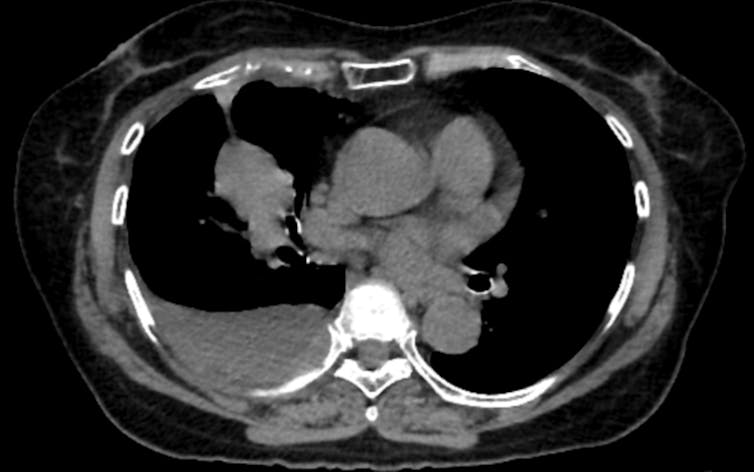
A single cross-sectional image from a chest CT shows a mass in the patient’s right lung and fluid surrounding the lung.
RAJAAISYA/Science Photo Library via Getty Images

Other findings worth looking for

Coronary calcium is the proof of concept, but it is not the only finding hiding in these images.

CT scans can measure muscle loss – a condition called sarcopenia – and patients with low muscle mass consistently face higher rates of postoperative complications and death compared with those with normal muscle mass. Bone density from CT predicts fractures related to osteoporosis, and liver fat visible on CT can flag early metabolic disease before a patient has any symptoms. Each of these findings is present in scans already being done, at essentially no added cost.

The point is not to turn every radiology report into a comprehensive evaluation of a patient’s health. It is to capture measurable findings that point toward something treatable, and to make sure that information actually reaches someone who can act on it.

Getting there is difficult. CT protocols vary across institutions, and measurement accuracy depends on how a scan was acquired. Radiology reports are often written in plain prose rather than structured data fields, which is hard to analyze systematically. And extracting data is only half the problem. Using that data in a way that actually changes care requires coordination across radiology, cardiology and primary care that most health systems have not yet built.

Artificial intelligence is beginning to help. Automated tools can now measure bone density, muscle mass, body fat and coronary calcium from routine scans with reasonable accuracy. A study published in March 2026 found that AI analysis of routine mammograms can identify calcium deposits in breast arteries that predict heart attacks and strokes in women. As these tools become more integrated into everyday radiology practice, a scan that answers the question it was asked and also catches something else worth knowing becomes less of an aspiration and more of a realistic near-term goal.

What you can do now

There are practical steps that patients can take while health systems catch up to advances in medical imaging.

If you are undergoing imaging for any reason, it is worth asking your doctor whether the scan showed anything else relevant to your overall health. That question does not always get a full answer, but asking opens a door that otherwise stays closed.

If you are between 50 and 80 with a significant smoking history, you may already qualify for annual lung cancer screening with low-dose CT. Only about 1 in 5 eligible patients are currently being screened. If you have not discussed it with your doctor, bring it up. Cancers found early are far more likely to be cured, and there is good evidence that the same scan can uncover cardiovascular risk that’s worth knowing about.

The mechanic who changes your oil and mentions that your brake pads are worn is not overstepping. He is doing what an attentive, skilled person in his position should do. Opportunistic screening asks whether radiology can be that kind of attentive – not just occasionally and by chance, but routinely and at scale. The data is already there. The only thing missing is the will to use it.

The Conversation

Peter Gunderman does not work for, consult, own shares in or receive funding from any company or organization that would benefit from this article, and has disclosed no relevant affiliations beyond their academic appointment.

ref. Millions of CT scans are done every year – most leave important data behind – https://theconversation.com/millions-of-ct-scans-are-done-every-year-most-leave-important-data-behind-264736

What’s the equivalent of a wheelchair for a person with schizophrenia? How psychiatric rehabilitation brings community into care

Source: The Conversation – USA (3) – By Adrienne Lapidos, Clinical Assistant Professor of Psychiatry, University of Michigan

Including employment support in psychiatric care can improve quality of life. Maskot/Getty Images

Imagine your dream is to get a job at the local library. You have a love for people and for books. You also have schizophrenia, a psychiatric disability that makes life in the community more challenging.

You often have extreme psychological experiences. When you leave your apartment, you hear voices that tell you it’s not safe, and you feel scared. People seem to keep their distance from you. You feel lonely sometimes.

Most of the people you spend time with are mental health staff members, who provide medications and psychological therapies to make the voices and paranoia less intense. Their treatment philosophy is based on the belief that by reducing the symptoms, working at the library might be possible for you someday.

But what if they have it backward? What if waiting for your symptoms to get better means waiting too long, or even forever?

That’s where the concept of psychiatric rehabilitation, or PSR, turns traditional mental health treatment on its head. While PSR does not minimize the significance of psychiatric symptoms, reducing those symptoms is seen as neither necessary nor sufficient for improving quality of life. Instead of asking “What are your symptoms?” and “How can we make them better?” providers instead ask, “What do you want to do?” and “What’s getting in the way?”

These questions might lead to interventions that are not traditionally considered mental health services: practicing job interviews, scheduling wake-up calls, learning unfamiliar bus routes or making environmental changes like negotiating accommodations. Irrespective of symptoms, such interventions can support people diagnosed with psychiatric disabilities like schizophrenia, major depression and bipolar disorder.

We are psychologists and researchers who have worked in these settings and who study ways to support people with psychiatric disabilities like schizophrenia. And we believe rehabilitative approaches to psychiatric disabilities can help people engage in activities they value, including work, relationships, passions and public service.

Origins of psychiatric rehabilitation

Psychiatric rehabilitation originated at a time of upheaval and hope. In 1963, President John F. Kennedy signed the Community Mental Health Act into law, establishing mental health centers in the community with the goal of decreasing the number of people living in long-term psychiatric institutions. By 1975, the number of patients in state and county mental hospitals had rapidly declined by 62%.

However, the law never really fulfilled its promise. Even when connected to outpatient care, people with psychiatric disabilities had unmet needs related to community living, including educational attainment, employment, housing and community participation, leading to a lower quality of life.

But what if building a meaningful and self-directed life in the community really was possible, if people were given the right support?

Psychiatric rehabilitation emerged during the 1970s and 1980s in part as a response to the deinstitutionalization movement, where more and more people with psychiatric disabilities lived in the community. Psychologist William Anthony, a pioneer of psychiatric rehabilitation, described the purpose and values of this approach as analogous to physical rehabilitation. Both are centered on improving patients’ ability to live within their chosen environment.

For example, in physical rehabilitation, a person with a serious mobility impairment would not only receive treatment that improves their ability to walk on their own, but also supervised practice using a wheelchair. Modifying their environment, such as adding curb cuts to public sidewalks, is also critical.

Psychiatric rehabilitation challenges mental health professionals to consider questions like “What is the equivalent of a wheelchair or curb cut for a person with schizophrenia?”

One key example of this approach is a form of supported employment called individual placement and support. In this model, employment specialists learn from patients about their goals and preferences; help them search for jobs and identify potential employers; and assist with applications, resumes and interview preparation. Staff will systematically visit businesses in the community to learn about their needs and hiring preferences. Research has shown that this model effectively increases competitive employment for people with psychiatric disabilities, and that most who become employed have a better quality of life.

In addition to gaining employment, psychiatric rehabilitation can help people with severe psychiatric disabilities reduce hospital admissions, obtain housing, improve cognitive function and reduce stigma. Each of these interventions is designed to improve a person’s functioning in the community, either by modifying their skills or their environment.

Because many of these services can be delivered by people without advanced degrees, psychiatric rehabilitation also opens careers in mental health services to a broader swath of the community.

The future of psychiatric rehabilitation

Despite its effectiveness, many factors limit access to psychiatric rehabilitation, including underfunding, lack of appropriate Medicaid reimbursement, an unprepared workforce and an overemphasis on pharmaceutical treatment.

Psychiatric rehabilitation practices could improve the extent to which they are culturally tailored and centered on serving the most vulnerable and disenfranchised populations. For example, research has found that having a low income is correlated with worse outcomes in these services, and that not enough programs consider cultural diversity.

Progress in treating mental illness has been elusive, and it’s not because researchers don’t know which treatments are effective. Rather, it’s because care quality varies greatly and the best services are often inaccessible. Psychiatric rehabilitation relies primarily on financing through state mental health agencies and Medicaid, and its future depends on sustainable financing.

Until investments match need, disparities in the health and quality of life of people living with psychiatric disabilities will continue.

Close-up of person holding hand and shoulder of another person, sitting in a group
Psychiatric rehabilitation is based on the belief that recovery is possible with the right support.
Halfpoint Images/Moment via Getty Images

In community, with support

Just like those recovering from a physical illness, we believe people recovering from psychiatric disabilities are deserving of comprehensive rehabilitation services that enable their full participation in community life.

So imagine once more that you love books, love the library and live with schizophrenia. You got confirmation from your employment specialist that she found a library in the community seeking a part-time worker. She mentioned you to them, and they’re willing to give you a chance.

You and your peer support specialist take the bus back and forth to the library one more time to make sure you’re confident about the route. To prepare for your interview, you sit in your community mental health center’s computer lab and use a virtual reality program to practice your job interview skills. Later that afternoon, you share your excitement and fears with peers in a Hearing Voices Network support group.

Tomorrow’s your interview. With your support network at your back, you believe your dream could come true.

The Conversation

Adrienne Lapidos’s research work is funded by the CareQuest Foundation, the Michigan Department of Health and Human Services, and the National Institutes of Health. She is Associate Editor of Psychiatric Rehabilitation Journal.

Elizabeth Thomas receives funding from the National Institute on Disability, Independent Living, and Rehabilitation Research and the Substance Abuse and Mental Health Services Administration. She is Associate Editor of Psychiatric Rehabilitation Journal.

Kristen Abraham has received funding from the National Institutes of Health, the Veterans Health Administration and the Michigan Disability Rights Coalition. She maintains an appointment at the Veterans Health Administration Serious Mental Illness Treatment Resource and Evaluation Center and is Editor of Psychiatric Rehabilitation Journal.

ref. What’s the equivalent of a wheelchair for a person with schizophrenia? How psychiatric rehabilitation brings community into care – https://theconversation.com/whats-the-equivalent-of-a-wheelchair-for-a-person-with-schizophrenia-how-psychiatric-rehabilitation-brings-community-into-care-274724

Power outages can threaten the lives of medical device users – knowing who is most at risk will help cities respond

Source: The Conversation – USA (3) – By Matthew D. Dean, Assistant Professor of Civil & Environmental Engineering, University of California, Irvine

Many older adults rely on electric-powered medical equipment, such as portable oxygen and nebulizers that help them breathe. Westend61 via Getty Images

When the power goes out and stays off for hours, the result can be more than just a hassle – for millions of Americans who rely on medical equipment, losing electricity can become a medical emergency.

Your neighbor might rely on an oxygen concentrator to breathe – a machine the size of a carry-on bag that hums quietly through the night. Or they might need a CPAP – continuous positive airway pressure – machine to keep them breathing safely in their sleep, or a ventilator.

Most home medical devices run on backup batteries that last only 3 to 8 hours. Yet people in over half of U.S. counties experienced at least one outage lasting more than eight hours between 2018 and 2021. Power outages are becoming more common in the U.S., too. They grew 9% more frequent and lasted 56% longer between 2014 and 2023, driven by severe weather, winter storms, hurricanes and wildfires linked to climate change.

Studies following major blackouts show an increase in disease-related deaths, including a 25% rise during a three-day blackout in New York City in August 2003. Emergency rooms can become overwhelmed with device users seeking backup power and medical care.

But not everyone with a medical device faces the same risks during a power outage. In a new study published in the journal Environmental Research: Health, we show which groups need the most help and who is slipping through the cracks in life-threatening ways.

Four very different realities

We analyzed data from more than 2,600 households reporting the use of medical devices, drawn from a nationally representative federal survey of nearly 18,500 American homes. Using statistical modeling, we identified four distinct groups, each facing a very different situation when the power goes out.

About 60% of medically dependent households are financially stable homeowners. They face outages, but they are the most likely group to have backup generators.

A second group, roughly 20%, are homeowners who struggle to pay their energy bills and sometimes skip medicine or meals to keep the lights on, but who also tend to have backup power sources. This group had the highest likelihood of experiencing dayslong power outages in the past year, but was also more likely to have a generator or access to solar power than the average American.

A third group is apartment renters who can afford their electricity bills but are typically unable to make long-term upgrades for more resilient power supplies. For example, they can’t install solar panels or add permanent backup power because those decisions belong to their landlord, not them.

A backpack-size machine with a tube to a breathing mask.
Oxygen machines can be portable, but when the power goes out for hours, users need to be able to find a place to recharge the batteries.
Chingyunsong/istock/Getty Images Plus

The fourth class is the smallest, roughly 7% of medical device households, and by far the most at risk. These are mostly low-income urban renters, and they face two compounding problems: They struggle to pay their electricity bills every month, and they have almost no backup resources when the power goes out.

Nearly 58% of these at-risk renters said they had received a disconnection notice from their utility within the previous year. One in eight had needed medical attention because their home got too hot or too cold. This group is also disproportionately Black or Hispanic.

Our findings confirm what researchers have long suspected: Energy insecurity among medical device users is deeply tied to income, housing type and race. Our study also shows the importance of understanding where people are both energy insecure and less likely to have access to backup power sources during outages.

What communities are doing today

Some communities are finding ways to tackle pieces of this problem.

Most utility companies maintain lists of households with medical devices, and they are supposed to notify customers ahead of power shutoffs and prioritize restoring power to their homes. However, studies show that these registries capture only a fraction of the people who qualify.

If medical device users were instead automatically enrolled during a doctor’s visit, or if landlords were required to notify new tenants of these registries, those steps could help reach more people.

Portable battery programs, like those run by California’s largest utilities, provide free or low-cost rechargeable batteries and a solar panel kit to homeowners and renters with medical devices who are most at risk of power shutoffs. Contractors can work with households to choose an appropriate battery to ensure it isn’t too heavy or difficult to transport if evacuating because of a wildfire or other disaster.

As climate change makes blackouts longer and more frequent – and as federal low-income energy assistance programs face cuts – providing help to residents falls increasingly on states and cities. Knowing which households face the greatest risks can make it easier to target aid to those in need.

The Conversation

The authors do not work for, consult, own shares in or receive funding from any company or organization that would benefit from this article, and have disclosed no relevant affiliations beyond their academic appointment.

ref. Power outages can threaten the lives of medical device users – knowing who is most at risk will help cities respond – https://theconversation.com/power-outages-can-threaten-the-lives-of-medical-device-users-knowing-who-is-most-at-risk-will-help-cities-respond-276501

Why Europe’s ‘open’ economy of innovation is exposed to global trade shifts

Source: The Conversation – France – By Regis Coeurderoy, Professor in Strategic Management and Innovation, ESCP Business School

Last month the European Commission unveiled its new “Made in Europe” targets, tying access to subsidies in clean technology heavy industry and carmaking to local production and stricter conditions on foreign investment.

The objective of the new Industrial Accelerator Act is to strengthen the industrial base and strategic autonomy of the European economy. But its impact on European Research & Development multinationals that have grown in overseas markets should not be underestimated. Evidence shows that Europe is hit harder by external shocks than its rivals because its firms depend more heavily on foreign markets and cross-border supply chains.

Consider, for example, Asia accounted for 41% of German carmaker Mercedes‑Benz in 2025, while UK-headquartered drugmaker AstraZeneca generated about 43% of its 2024 sales in the US.

Such exposure leaves a sizeable chunk of European multinationals particularly sensitive to shifts in trade policy: as protectionist measures proliferate, the backlash can quickly translate into weaker demand, disrupted supply chains and pressure on profits.

This has already become visible as trade tensions with China and the
United States
have intensified and governments have moved to shield strategic industries from subsidised competition, via the Made in Europe targets.

A historically overseas market-led economy

European groups are often described as global champions; many expand abroad earlier than their American or Asian peers. Part of the reason is structural: Europe’s home market remains less integrated than the US or China. It also reflects a long tradition of building businesses internationally.

American and Asian companies can often scale at home before expanding abroad. European firms rarely have that luxury. Their global reach is a strength, but in a more fragmented world it also
creates exposure.

New research I carried out on the world’s largest corporate Research & Development spenders helps explain Europe’s position.

Vying for the top tiers of the global R&D landscape

The global race for innovation is dominated by the Americas and Asia: firms headquartered in Asia-Pacific account for about 37% of the leading R&D multinationals and those in the Americas roughly 36%, compared with about 27% in Europe, the Middle East and Africa.

Bridging the R&D spending gap

The gap is even wider in spending: companies based in the Americas account for about 45% of total corporate R&D investment, compared with roughly 29% in Asia-Pacific and 26% in EMEA.

Yet European firms tend to operate more globally. The research shows only about 26% of EMEA-based firms earn most of their revenues in their home region.

Nearly a third operate globally, roughly twice the share of American or Asian companies. By contrast, about 76% of US firms and 75% of Asia-Pacific firms remain focused mainly on their domestic regions, supported by larger and more integrated home markets.

Navigating the impacts of trade uncertainty

Truly global companies remain rare. Only about 17% of these firms generate balanced sales across the Americas, Europe and Asia-Pacific. Half of them are headquartered in EMEA, compared with
roughly a quarter for each in the Americas and Asia-Pacific.

This makes European groups more exposed when trade relations sour. Illustrating this point, German carmaker BMW warned last month that tariffs imposed by the EU, the US and China could wipe around €1 billion from its profits this year, underscoring how quickly geopolitical shifts translate into financial strain for Europe’s multinationals.

If Europe wants to reduce such vulnerability, it should look beyond protectionism. For firms that already operate globally, tighter rules at home could push them to move assets abroad. That would weaken Europe’s own industrial base at the very moment policymakers are trying to strengthen it.

In other words, the end of the liberal trading era may have exposed an Achilles heel in Europe’s economic model. The continent’s multinationals are unusually dependent on markets outside Europe. In a more fragmented world, that creates two clear risks: disruption to
global value chains and the gradual relocation of investment and innovation away from Europe itself.

What’s the alternative? Not retreat, but reform

Former European Central Bank President Mario Draghi’s report in 2024 for the European Commission set out an urgent agenda to restore Europe’s competitiveness through deeper single market
integration, regulatory reform and investment. It addresses part of the challenge. But Europe must go further, strengthening its own base for research, innovation and industry. That requires action at a European level. Completing the single market is not just about harmonising rules. It is about ensuring that investment, supply chains and innovation remain anchored in Europe.

As ECB President Christine Lagarde warned last year, Europe’s growth model was built for a different world. Heavy reliance on exports once underpinned prosperity. In a more fragmented global economy, it leaves Europe exposed.

The lesson is clear: Europe’s problem is not so much globalisation, but too little regional integration. Until the efforts to create a single market truly pave the way for sound economic foundations, Europe’s multinationals will remain highly globalised and exposed. But such an ambition goes beyond economic goals: it is a political ambition that is at loggerheads with nationalist sentiments to achieve the right level of territorial growth, which would ultimately secure greater independence.


A weekly e-mail in English featuring expertise from scholars and researchers. It provides an introduction to the diversity of research coming out of the continent and considers some of the key issues facing European countries. Get the newsletter!


The Conversation

Regis Coeurderoy ne travaille pas, ne conseille pas, ne possède pas de parts, ne reçoit pas de fonds d’une organisation qui pourrait tirer profit de cet article, et n’a déclaré aucune autre affiliation que son organisme de recherche.

ref. Why Europe’s ‘open’ economy of innovation is exposed to global trade shifts – https://theconversation.com/why-europes-open-economy-of-innovation-is-exposed-to-global-trade-shifts-278327

What an ancient Chinese philosopher can teach us about Americans’ obsession with college rankings

Source: The Conversation – USA (3) – By Stephen Chen, Associate Professor of Psychology, Wellesley College

A visitor looks at calligraphy by Luo Sangui of the Daodejing, the classic Daoist text, during the Nanjing 2014 Grand Art Exhibition in Nanjing, China. Visual China Group via Getty Images

Each March, many of the country’s most selective colleges and universities release their admissions decisions, reviving debates over the roles of race, wealth and privilege – and putting Americans’ cultural obsession with rankings back in the spotlight.

Meanwhile, a more personal set of questions will emerge in many homes and schools. Who got into a “better” school, and why? And for those who didn’t, what to do with a dream school deferred? What’s missing are more fundamental questions about the costs of striving for status and how to know when to stop.

From my former life as a college counselor to my current one as a psychology professor, I’ve spent more than two decades working with Asian American families, the demographic group that often finds itself at the center of college admissions debates. I listen as they grapple with questions of race, social status and who makes it in the U.S. and why. I’ve also seen firsthand, both inside and outside of the research lab, how some students’ never-ending quest for achievement takes a toll on their mental health.

Americans’ frenzy over college admissions may be a relatively modern affliction, but striving for status is timeless and universal, and it can benefit from the wisdom of ancient texts. This is why, in my team’s research with Asian American families, we bring the Chinese philosopher Laozi into the conversation. Through the Daodejing, one of the central texts of Daoism, Laozi offers perspectives from a tumultuous period of status-striving in Chinese history – and shifts our focus from comparison and competition to contentment.

The ‘success frame’

In interviews with Asian American parents, children and teens over the past 10 years, I hear echoes of what sociologists Jennifer Lee and Min Zhou call the “Asian American success frame”: success defined by elite educational credentials, graduate degrees and select occupations. Their research shows how the success frame is endorsed by Asian Americans across different ethnic groups, generations and socioeconomic brackets.

My team’s ongoing interviews, in turn, provide a window into how that idea of success is promoted. One mother told her 11-year-old son her wish is for him not to pursue an M.D. or a Ph.D., but both. Another parent of a 16-year-old with college applications on the horizon discouraged her from applying to state schools, because she had heard that some job recruiters consider only Ivy League resumes.

A small crowd of young people in black robes and flat black hats wait under a stone archway.
Future graduates wait for the procession to begin for the 2010 commencement ceremony at Yale University in New Haven, Conn.
AP Photo/Jessica Hill

These conversations rarely mention the toll of chasing these highly specific, highly ambitious benchmarks of success. Rather, it comes to light when we talk with parents one-on-one about their own experiences. One lamented being a doctor, but not the “right kind” of doctor; another mentioned getting a Ph.D., but not from the best school; yet another described landing the job they sought when they immigrated to the U.S., only to run up against “bamboo ceilings” in their career.

Each of these comparisons involves relative or subjective social status: not how much education, wealth or prestige people actually have, but how much they think they have, relative to others. Decades of research indicate that thinking you have lower relative status takes a unique toll on mental and physical health.

I see this in my lab’s studies, as well: Parents who perceive themselves as being lower in subjective social status report more depressive symptoms, and children who perceive themselves as having low relative status report more loneliness, even when accounting for families’ actual levels of income and education.

Likewise, scholars Zhou and Lee identify similar struggles among Asian Americans shouldering the weight of these social comparisons. A woman who attended a lower-ranked college than her family members told researchers she “feels like the ‘black sheep’ of the family”; a man rejected from elite Ph.D. programs considers himself a failure for “only having a B.A.”

The unending climb of status comparisons can be a crushing load – and this is where Laozi comes into the conversation.

Dangers of desire

By some accounts, Laozi was a contemporary of Confucius in the sixth century B.C.E. – though the details of his biography are more legendary than factual.

Traditionally, he has been venerated as the author of the Daodejing, a foundational text of Daoism: a Chinese philosophical and religious tradition centered around following the “dao,” or “the way” of nature. The general consensus of modern scholarship, however, is that the Daodejing reflects the work of generations of thinkers and editors, and that even the name “Laozi” embodies ideas developed over centuries.

A faded scroll with a bit of Chinese script shows an elderly man in a robe sitting on top of an ox.
‘Laozi Riding an Ox,’ by Zhang Lu (15th-16th century).
National Palace Museum via Wikimedia Commons

Most scholars date the composition of the Daodejing to China’s Warring States period, from 475-221 B.C.E. It was a time of tremendous technological, economic and political change, when competitions for status played out on the battlefield. Given this historical context, it’s little surprise that much of the text’s musings are devoted to status-chasing and the dark side of human desire.

For example, the Daodejing criticizes the ruling class and its talent-recruitment system for dangling enticing status markers that could never be fully achieved. Dreaming of prestige could feel like a full assault on the senses, as captured in Ken Liu’s luminous translation:

A profusion of colors blinds the eye.
A cacophony of noises deafens the ear.
A flood of flavors numbs the tongue.
Rushing and chasing, the mind becomes unsettled.
Craving and desiring, the heart loses itself on crooked paths.

The Daodejing may be an ancient text, but part of its enduring appeal is its timelessness. Through Liu’s prose, we can easily imagine Laozi critiquing today’s profusion of college influencer videos, a cacaphony of Reddit threads trumpeting admissions strategies, and high school students rushing and chasing after a stacked resume.

Laozi sees plainly the Sisyphean nature of achieving: that it inevitably leads to desiring more. He offers a stark warning: “The more you desire, the more it costs. / The more you hoard, the more you’ll waste.”

Critically, as the philosopher Curie Virág argues, Laozi isn’t suggesting that people abandon desire altogether. Rather, our truest desires can only be uncovered when we’ve freed ourselves from those imposed by society. And it’s the satisfaction of these true desires that can lead to contentment.

Deeper questions

In my research team’s ongoing study with Chinese American parents and adolescents, we present a phrase encapsulating one of the core teachings of the Daodejing: that contentment – knowing or mastering satisfaction – leads to happiness. We then ask parents to explain to their child what they think it means and whether or not they agree.

Most parents are familiar with the phrase. Some endorse it, while others add caveats. Being content is different from being lazy, some emphasize; it’s not an excuse to stop striving. Many struggle to articulate the distinctions between contentment, laziness and healthy ambition – and as a psychologist, I admit that I’m right there with them.

I want Laozi to provide a clear definition for contentment, and even better, a formula for how to find it. But the Daodejing is more descriptive than prescriptive – less how-to and more what is. In Liu’s description, the text is Laozi’s invitation into a conversation, and it allows our deepest questions to come to the surface. Beneath the race for rank and status, what is it that we actually desire, and how do we find it?

These are difficult questions for any parent to answer. But if we’re willing to start the conversation, we can begin by asking them first of ourselves.

The Conversation

Preparation of this essay was supported in part by a grant from the Asian Pacific American Religions Research Initiative.

ref. What an ancient Chinese philosopher can teach us about Americans’ obsession with college rankings – https://theconversation.com/what-an-ancient-chinese-philosopher-can-teach-us-about-americans-obsession-with-college-rankings-277059

Kent’s meningitis outbreak was years in the making – here’s why

Source: The Conversation – UK – By Philip Broadbent, Wellcome Multimorbidity PhD Fellow & Public Health Registrar, University of Glasgow

Two young people are dead and 20 are receiving treatment after a meningitis outbreak at the University of Kent. The students caught up in it belong to a generation that has never been routinely vaccinated against the strain responsible.

That is not because a vaccine doesn’t exist. It does. Bexsero, which protects against meningococcal group B disease (the strain responsible for the Kent outbreak) has been available since 2013. The UK even became the first country in the world to add it to its national immunisation schedule, in September 2015.

But only for babies.

Every student at university today was born before July 2015, meaning every one of them missed the cut-off. The NHS never offered them the jab and no catch-up programme was ever provided. A decade of students has passed through higher education with no routine protection against the most common form of bacterial meningitis.

The decision not to extend the programme beyond infants reflects a genuine tension at the heart of vaccine policy. The government’s advisory body, the joint committee on vaccination and immunisation (JCVI) concluded that the benefit, real as it was, did not clear the economic threshold required to justify the cost.

With many vaccines, the benefit extends beyond the person vaccinated. Vaccinate enough people and the disease runs out of hosts, protecting even those who never received the jab – this is known as herd immunity. Bexsero does not work that way. It protects the person who receives it, but it does not reduce the amount of bacteria people carry in their throats and pass on to others.

Vaccinating a baby stops that baby getting ill; it does nothing to stop the bacteria circulating in the wider population. With no such ripple effect to factor in, the JCVI judged the benefit too narrow to justify extending the programme.

What that calculation did not fully account for was the particular danger of university life.

Meningococcal bacteria spread through close contact: kissing, sharing drinks, coughing in crowded spaces. Universities, with their halls of residence, freshers’ weeks and nightclubs, are among the most efficient environments imaginable for transmission.

A study tracking students during their first week at a UK university found that the proportion carrying the bacteria in their throats jumped from less than 7% on day one to over 23% by day four. By December of that year, in catered halls, the figure had reached 34%.

In the US, research found that first-year undergraduate students face a risk of meningococcal B disease almost 12 times higher than their non-student peers of the same age. Living in halls of residence amplified that risk further still.

None of this is new. The link between university life and meningococcal risk has been established for decades. The question that the tragic events in Kent force policymakers to consider is whether that increased risk was adequately factored into the original decision.

A box containing the Bexsero vaccine.
Bexsero has been available since 2013.
Angelina Avei/Shutterstock.com

Parents who wanted to protect their children privately could. Many of them did. A full course of Bexsero requires two doses for anyone over the age of 11. At most UK pharmacies, each dose costs around £110, making the full course £220 or more. Some private clinics charge considerably more.

As one public health expert at the London School of Hygiene and Tropical Medicine put it, the availability of private vaccination creates a situation where access depends on ability to pay. That inequality is now playing out in real time.

Following the Kent outbreak, bookings for private meningitis B vaccinations at Superdrug surged to 65 times their normal level. The families rushing to book appointments are inevitably those who can afford to. Those who cannot are left hoping the outbreak does not reach their child.

Long-term costs

Vaccine policy is genuinely difficult. Every decision involves trade-offs and the resources available to public health are not unlimited. But the economic case for keeping the programme infant-only has grown shakier since 2015.

A re-analysis published in the journal Value in Health in 2021 found that when a fuller picture of the disease’s burden is included (for example, long-term care, loss of earnings, the ripple effects on families) the cost per year of healthy life gained falls below the NHS’s standard threshold for approving treatments. The short-term saving from not vaccinating teenagers may be generating long-term costs the original calculation never captured.

There is also the cost of the outbreak itself. More than 30,000 people in the Canterbury area have been contacted by health authorities. Thousands of doses of antibiotics were distributed. A targeted vaccination campaign has been launched for students in halls of residence. Emergency responses to outbreaks are not without cost, and they cannot undo the harm already done.

Health Secretary Wes Streeting told parliament this week that he would ask the JCVI to reexamine eligibility for meningitis vaccines in light of the outbreak. That review is welcome, and overdue.

The first cohort of babies vaccinated in 2015 will not reach university age until 2033. Until then, the students arriving at freshers’ week each autumn will do so without routine protection. Unless policy changes.

The Conversation

Philip Broadbent receives funding from the Wellcome Trust Multimorbidity Doctoral Training Programme 223499/Z/21/Z

ref. Kent’s meningitis outbreak was years in the making – here’s why – https://theconversation.com/kents-meningitis-outbreak-was-years-in-the-making-heres-why-278003

What is ‘eye stroke’ and why has it been linked to weight loss injections?

Source: The Conversation – UK – By Barbara Pierscionek, Professor and Deputy Dean, Research and Innovation, Anglia Ruskin University

Cynthia A Jackson/Shutterstock.com

The phrase “eye stroke” has recently appeared in news reports about a very rare side-effect of weight-loss injections. It’s not a formal medical diagnosis, but a shorthand used to describe a condition in which reduced blood flow damages the optic nerve and causes sudden vision loss.

The phrase might be misleading. Unlike a conventional stroke – which can cause someone to lose the ability to move their limbs or speak – an eye stroke can be harder to recognise at first. Vision can be lost entirely or partially, in one or both eyes, with no numbness or paralysis.

The word “stroke” is used because, as with the more familiar condition, the underlying cause is a loss of blood supply that leads to cell death and tissue damage. The correct medical term for an eye stroke is non-arteritic anterior ischaemic optic neuropathy (Naion).

The recent connection between Naion and weight-loss treatments has made headlines following a large study examining semaglutide, the active ingredient in several popular weight-loss drugs.

Researchers analyse more than 30 million side-effects reported to the US Food and Drug Administration and found that 31,774 involved semaglutide. One drug in particular stood out: Wegovy was found to have a far stronger association with Naion than other semaglutide-based treatments.

The study suggested the risk of eye stroke from Wegovy was almost five times greater than from Ozempic, despite Wegovy being linked to fewer overall reported side-effects.

Understanding why semaglutide might reduce blood flow to the eye requires a little background. Semaglutide is a synthetic version of a naturally occurring hormone called GLP-1, which helps regulate blood sugar. It does this by stimulating insulin production, reducing the release of a sugar-raising hormone called glucagon, and slowing digestion.

Semaglutide has been used to treat type 2 diabetes, heart disease and obesity. Wegovy is administered by injection at a higher maximum dose than Ozempic, another injectable medication. Injected drugs enter the bloodstream faster and in greater concentrations than tablets – and notably, no link was found between Naion and Rybelsus, the tablet form of semaglutide.

The speed at which Wegovy causes weight loss – faster than other treatments – may itself be part of the explanation. The human body is a finely balanced system in which no single organ or process works in isolation. The autonomic nervous system, which controls involuntary functions like heart rate and digestion, relies on a careful balance of hormones to keep things in check. When an external drug significantly alters how those hormones behave, it can affect the rest of the body in unexpected ways.

The relatively high doses used with Wegovy may cause blood pressure to fluctuate beyond normal ranges. A notable drop in blood pressure reduces the rate at which blood flows through the body, and the eye is particularly vulnerable to this. The retina is served by some of the tiniest blood vessels anywhere in the body, and it depends on those small vessels for its oxygen supply. Any significant change in blood pressure can seriously disrupt this delicate circulation.

Men face a much higher risk than women

This does not, however, fully explain why a drug that is broadly beneficial for heart health and blood sugar control might have such a specific harmful effect on eyesight. Nor does it explain another surprising finding from the study: men taking these weight-loss treatments appeared to face three times the risk of vision loss compared to women.

A man having his eyes examined.
The condition is much more common in men.
Inside Creative House/Shutterstock.com

The study did not provide enough detail about the differences between male and female participants. For instance, whether more severely obese men than women were included. In addition, large-scale data of this kind does not always capture the finer details needed to fully understand cause and effect.

It is important to keep all this in perspective: while a link between semaglutide and vision loss has been identified, this side-effect remains rare.

More research is needed to establish safe dosage levels and to understand whether certain factors – such as sex, age, weight, or existing health conditions – make some people more vulnerable than others. Semaglutide is being prescribed for a growing range of conditions and increasingly to younger patients. To ensure that these treatments do not lead to life-changing sight loss, properly designed clinical trials that assess the level of risk are essential.

A spokesperson for Novo Nordisk told the Guardian: “Patient safety is our top priority, and we take any reports about adverse events from the use of our medicines very seriously. We work closely with authorities and regulatory bodies from around the world to continuously monitor the safety profile of our products.”

The EU patient leaflets for Wegovy, Ozempic and Rybelsus had been updated to include Naion, they added, but “based on the totality of evidence, we concluded that the data did not suggest a reasonable possibility of a causal relationship between semaglutide and Naion and Novo Nordisk believes that the benefit-risk profile of semaglutide remains favourable”.

The Conversation

Barbara Pierscionek does not work for, consult, own shares in or receive funding from any company or organisation that would benefit from this article, and has disclosed no relevant affiliations beyond their academic appointment.

ref. What is ‘eye stroke’ and why has it been linked to weight loss injections? – https://theconversation.com/what-is-eye-stroke-and-why-has-it-been-linked-to-weight-loss-injections-278167

Trump and Netanyahu may have jointly started the war in Iran, but ending it together will be difficult

Source: The Conversation – UK – By John Strawson, Emeritus Professor of Law, University of East London

Donald Trump told reporters on board Air Force One on March 15 that his relationship with the Israeli prime minister, Benjamin Netanyahu, is “extraordinary”. Netanyahu has been rather less effusive, saying in recent days that their relationship is one of “dialogue, shared concepts, consultation and joint work”.

These comments come as reports are circulating of rifts between the two leaders over the war in Iran, which Trump has rejected as “fake news”. The reported tensions underline not only Trump and Netanyahu’s very different war aims but also the character differences that have shaped their relationship.

Writing in the Sunday Times on March 15, the UK’s former ambassador to Israel, Matthew Gould, pointed out that both men are similar in “some respects”. Like Trump, Netanyahu is a “populist making his country more divided with crude fearmongering; a huge character who sucks oxygen from the entire political scene.”

However, there are some key differences. While Trump had five deferments to avoid serving in the Vietnam war, for example, Netanyahu distinguished himself in the Israeli armed forces. This included serving five years in the elite Sayeret Matkal unit from 1967 to 1972.

Such different backgrounds count especially as Trump and Netanyahu work together in the military confrontation with Iran. Trump has often been cavalier and brags about US military strength, whereas Netanyahu is far more measured. Trump is also regularly talking to journalists, while Netanyahu has been sparing in his interactions with the media.

At the same time, the war with Iran has a very different meaning for Israel and the US. Netanyahu has made the Iranian threat to Israel the most consistent theme of his political career. Since 2019, when it became clear that Iran was enriching uranium over the 3.5% to 5% level needed for peaceful purposes (it now has over 440 tonnes of uranium enriched to over 60%), Netanyahu has seen the threat to Israel as existential.

Trump’s grounds for launching the war have shifted, from wanting to destroy Iran’s military capabilities to toppling the regime in Tehran. But Netanyahu has consistently remained focused on removing what he sees as the threefold threat from Iran: its nuclear weapons programme, ballistic missile capacity and ability to support regional proxy groups like Hamas, Hezbollah and the Houthis.

Trump knows the war is unpopular at home and among his allies and is creating instability in the world economy. Oil prices climbed to over US$100 (£75) a barrel on March 16 after Trump said the US had “totally demolished” most of Kharg Island, Iran’s most vital oil export hub. Facing midterm elections in October, he is likely to want to see the conflict end relatively soon.

Netanyahu, on the other hand, will not want to end the war without imposing a decisive defeat on Iran that ends the country’s nuclear and ballistic missile programmes at the very least. Like Trump, he faces an election in October and will want to present himself not as the leader whose watch saw the October 7 Hamas terrorist attacks in 2023, but as the victor of the war with Iran.

Ending the war

How Trump and Netanyahu manage these differences will determine both the course of the war and its duration. We do know that while the two leaders frequently pay effusive compliments to each other in public, they have a rather more fractious personal relationship.

Six months ago, Trump strong-armed Netanyahu to accept his 20-point plan for a Gaza ceasefire. This involved Netanyahu making a humiliating phone call to the Qataris to apologise for an Israeli attack on Hamas leadership in Doha. The White House even published a picture of the US president and the Israeli prime minister making the call.

And while routinely praising Trump for his support for Israel, Netanyahu appears to be wary of their relationship. In his 2022 autobiography, Bibi: My Story, Netanyahu complained that Trump was slow to act on the Israeli government’s agenda in his first term as US president. He also described his relationship with Trump as “bumpy”.

Trump’s second term has been a rather mixed experience for Netanyahu. On the one hand, he convinced the US to bomb the Iranian nuclear sites in June 2025 and since February 2026 to collaborate in a major war against Iran. But on the other hand, he (like everyone else) is having to deal Trump’s capricious and unpredictable behaviour.

The war in Iran is now in a difficult phase. Israel and the US have an overwhelming firepower advantage over Iran and have eliminated numerous high-ranking Iranian leadership figures, most recently killing security chief and de facto leader of the country Ali Larijani. Despite these serious blows, the regime is still functioning and maintains significant military capacity.

For Israel, a new development in the war is coordinated Iranian-Hezbollah missile attacks. This demonstrates the very different pressures that the US and Israeli leaderships are under. Israelis are now in their third year of war. The US will be feeling the effects of the war in terms of higher gas prices and a spike in inflation, but the lives of Americans are not punctuated by air raid sirens and military service.

These differences will play out as Trump and Netanyahu envisage the war’s end. There are reports that the US administration is talking to Iran already about ending the conflict as the war enters its third week. Netanyahu will worry where these diplomatic moves might lead.

Trump and Netanyahu may have started a war together, but they are going to have difficulty ending it together.

The Conversation

John Strawson does not work for, consult, own shares in or receive funding from any company or organisation that would benefit from this article, and has disclosed no relevant affiliations beyond their academic appointment.

ref. Trump and Netanyahu may have jointly started the war in Iran, but ending it together will be difficult – https://theconversation.com/trump-and-netanyahu-may-have-jointly-started-the-war-in-iran-but-ending-it-together-will-be-difficult-278483