How moss could help roads cope with heavy rain and reduce air pollution

Source: The Conversation – UK – By Pedram Vousoughi, Post Doctoral Researcher in Biological Sciences, University of Limerick

Moss grows slowly and absorbs air pollution. Herzstaub/Shutterstock

Across Europe, many banks alongside motorways are planted with grass to stabilise soil and keep roadside landscapes tidy.

But there may be a better solution. Already some countries are experimenting with using moss in built-up areas to absorb air pollution. As countries search for nature-based solutions to climate and environmental challenges, roadside moss is starting to attract attention. So could mossy motorway banks work?

Moss could offer environmental benefits over grass, from trapping air pollution to slowing rainwater runoff during heavy storms.

Mosses are small plants that grow without roots or flowers. Instead of drawing nutrients from soil like most plants do, they absorb water and minerals directly from the air. They can grow in thin soils, shaded areas and exposed surfaces where grass often struggles. Once established, moss also requires very little maintenance. Unlike grass, moss grows slowly and stays low to the ground. This means roadside moss would require far less mowing, potentially reducing labour and maintenance costs along thousands of kilometres of roads.
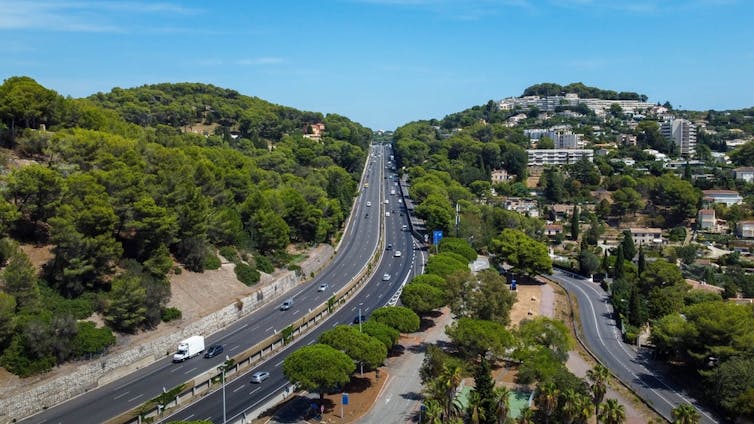
A large French road, with trees nearby.
Planting moss alongside motorways could help with air pollution.
Ponta shots/Shutterstock

Moss and air pollution

One of moss’s most fascinating features is its ability to absorb substances from the atmosphere. It can accumulate pollutants such as heavy metals.

Scientists have used moss for decades as a bioindicator – a living organism used to monitor environmental pollution. Experimental observations have shown that moss can also exhibit visible physical responses to air pollution. For example, moss exposed to highly polluted environments has been observed to change colour from fresh green to brownish.

Across Europe, the European Moss Survey uses moss samples to track air pollution levels in dozens of countries. Research shows moss can capture pollutants including nitrogen compounds and particulate matter, both of which are produced by traffic emissions. If moss grows beside busy roads, it may therefore help capture some airborne pollution before it spreads into surrounding ecosystems or nearby communities.

Another potential benefit involves water. Many moss species act like natural sponges. They can absorb several times their own weight in water and release it slowly over time. On roadside slopes, this property could help slow down rainwater runoff during heavy storms. Fast runoff from roads and embankments can overwhelm drainage systems and contribute to flash flooding. By temporarily storing water, moss could reduce the speed at which rainwater flows into roadside drains. The UK, for instance, has one of the densest road networks in Europe, and many major roads run close to towns and residential areas. Vegetation that can reduce pollution and water runoff could therefore provide environmental benefits.

Roadside vegetation can also play an important role in biodiversity. Road verges and embankments form long, connected strips of habitat that can support insects, mosses, lichens and other small organisms. In landscapes heavily shaped by agriculture or urban development, these narrow corridors can help species move between fragmented habitats. Moss-dominated banks may provide microhabitats for invertebrates and microorganisms that depend on moist, shaded environments. Although research on mossy roadside systems is still limited, increasing structural diversity along road verges could enhance ecological connectivity and contribute to wider efforts to support biodiversity in managed landscapes.


Read more:
An epic global study of moss reveals it is far more vital to Earth’s ecosystems than we knew


Moss thrives in cool, damp climates with frequent rainfall, conditions common across much of the UK, for instance. Shaded roadside slopes, especially where roads cut through hillsides or woodland, also favour moss growth. In such places, grass often struggles because soils are thin and sunlight is limited.

Moss growing on an old pipe.
Moss helps increase biodiversity along busy roads.
Maria Libov/Shutterstock

Best in shade

Despite its potential advantages, moss would not be a universal solution.

One problem is it grows slowly. Establishing a stable moss cover on new embankments could take several years.
Also, roadside environments can be harsh. Salt used for winter road de-icing can damage many moss species, and prolonged dry conditions may limit growth on exposed slopes.

Another issue is pollutant accumulation. Moss can absorb airborne pollutants, but these substances remain stored within the plant material. Over time this may require monitoring or periodic removal. Finally, moss generally prefers shaded and moist environments. On sunny or dry motorway banks, other vegetation may still be more suitable.

Road networks occupy vast areas of land, yet roadside vegetation is often managed simply to keep it short and tidy. Instead of treating roadside land as space that just needs mowing, it could be designed to capture pollution, manage water and support biodiversity.

Moss will not transform highways overnight. But small ecological changes along thousands of kilometres of roads could add up to meaningful environmental benefits. Sometimes, even plants at the edges of our motorways may help tackle pollution, flooding and climate change.

The Conversation

Pedram Vousoughi receives funding from Ireland’s Department of Climate, Energy, and the Environment for funding his current work under the FORESIGHT services contract for national agriculture and land-use modeling. He has also been granted EPS-IRC funding previously.

ref. How moss could help roads cope with heavy rain and reduce air pollution – https://theconversation.com/how-moss-could-help-roads-cope-with-heavy-rain-and-reduce-air-pollution-277686

Indigenous-led renewable energy projects offer benefits that reach far beyond reducing carbon emissions

Source: The Conversation – Canada – By Ian Munroe, Research Associate, Sinton Lab, University of Toronto

The number of renewable energy projects that are fully or partly Indigenous-owned is growing quickly in Canada, and our new research suggests that their benefits reach far beyond reducing greenhouse gas emissions.

The number of such projects on traditional Indigenous territories and reserve lands jumped by more than 300 per cent between 2009 and 2020. Nearly one-fifth of the country’s electricity-generating infrastructure involved First Nations, Métis and Inuit partners or beneficiaries as of 2022.

Yet little is known about the impacts of these renewable-energy projects within the participating communities beyond the physical footprint of the construction.

We aimed to fill this information policy gap in response to a request from two organizations that work extensively with First Nations, the Clean Energy Association of British Columbia and the New Relationship Trust, which obtained funding from Natural Resources Canada to conduct research.

Together we conducted a study to paint a more complete picture of these broader impacts, interviewing knowledge-holders in 14 First Nations in British Columbia involved with 36 planned or operational Indigenous-led renewable energy projects.

We found that these projects employ “placed-based” approaches, often with a high degree of community engagement early on, and revenues often allocated to support their own culture, governance, ecology, support services and economy.

Transformational change

a solar panel with wind turbines in the far distance with the setting sun
The world is entering a new era in which energy independence will be more important.
(Unsplash/Alexander Mils)

We found that when First Nations’ worldviews are centred and community control is enabled, broad social and cultural benefits result, providing greater self-determination.

As part of our research, we interviewed knowledge-holders from the West Moberly First Nations near Peace River, B.C. The nation has used wind-project revenues to support cultural camps and youth programs. As one knowledge-holder there told us:

“We are involved in it, and we are engaged in it. We are co-owners. And I know our Elders feel really good about hearing that. Knowing that we are not just sitting on the sidelines, while other people fill their pockets in our territory. And our community is doing that kind of stuff more and more. There is a connection there, right, because you are involved. More money is flowing to the community.”

In the Fraser Canyon region, the T’eqt’aqtn’mux (Kanaka Bar Indian Band), which has been affected by wildfires in recent years, has used proceeds from solar projects to reduce fire hazards and protect homes.

In the case of the Skidegate Band Council, we heard that revenues from a two-megawatt microgrid solar project would go toward funding Tll Yahda Energy, a partnership with the Old Massett Village Council to develop renewable energy projects in Haida Gwaii.

While these results demonstrate that a broad range of positive outcomes can flow from Indigenous-led renewable energy projects, the social and cultural impacts remain neglected in conventional energy practice.

An alternative to traditional energy planning

The Indigenous-led projects we heard about stand in contrast to typically used top-down decision-making, favoured by governments.

This approach is often characterized by public consultation that occurs after the decision of where to site the project has been made, often leading to local rejection of the project, and sometimes cancellation.

The bottom-up nature of the approaches we heard about hold important lessons that can enable widespread acceptance of energy transitions.

This is particularly relevant in B.C., where the provincial government is encouraging renewable energy projects to create economic opportunity and counter external economic shocks, including tariffs from the United States.

an aerial view of a group of solar panels
Indigenous-led approaches can support communities and aid progress toward decarbonization goals.
(Unsplash/Anders J)

This policy push extends to the province’s more than 200 First Nations, with a 2025 procurement call that requires at least 25 per cent First Nations ownership of a project.

The B.C. government must also meet its obligations under the Declaration on the Rights of Indigenous Peoples Act (DRIPA), which aims to bring provincial legislation into agreement with the United Nations Declaration on the Rights of Indigenous Peoples.

The UN treaty requires that state parties enable self-determination and obtain free, prior and informed consent from Indigenous Peoples for projects that impact their lands or resources. Indigenous-led renewable electricity projects in B.C. could help meet requirements under DRIPA to provide pathways for First Nations to improve their economic and social conditions without discrimination.

The Indigenous-led approaches we studied provide a vehicle to support Indigenous communities and make progress toward the province’s decarbonization goals. They also hold valuable lessons for developing policy in other jurisdictions like Ontario, where the provincial government has pledged to boost support for the growing number of Indigenous energy projects.

The world is entering a new era in which energy independence will be more important. Our findings about Indigenous-led projects illustrate a radically different approach to growing the Canada’s renewables industry in a way that can provide energy and facilitate transformational social and cultural change.

The Conversation

Christina E. Hoicka receives funding from the Canada Research Chair Secretariat, the Government of Canada’s New Frontiers in Research Fund, CANSTOREnergy project NFRFT-2022-00197, New Frontiers in Research Fund Global NFRFG-2020-00339, funding from Natural Resources Canada Clean Energy for Rural and Remote Communities Program, Capacity Building Stream funding program, all of which supported this research. The research was conducted in partnership with the Clean Energy Association of British Columbia and the New Relationship Trust.

Anna Berka and Ian Munroe do not work for, consult, own shares in or receive funding from any company or organisation that would benefit from this article, and have disclosed no relevant affiliations beyond their academic appointment.

ref. Indigenous-led renewable energy projects offer benefits that reach far beyond reducing carbon emissions – https://theconversation.com/indigenous-led-renewable-energy-projects-offer-benefits-that-reach-far-beyond-reducing-carbon-emissions-276612

When war looks like prophecy: How U.S. ‘end time’ narratives frame the war with Iran

Source: The Conversation – Canada – By André Gagné, Full Professor, Department of Theological Studies, Concordia University

After the United States and Israel began bombing Iran, killing some of the government’s top leaders — including its supreme leader, Ali Khamenei — some of U.S. President Donald Trump’s most loyal evangelical supporters quickly framed the war as a religious battle.

On the morning the attacks started, American evangelist Franklin Graham, president of the Billy Graham Evangelistic Association and founder of Samaritan’s Purse, posted on X: “Pray for our military in the operation against Iran, for President @realDonaldTrump, and that the people of Iran will be set free from the bondage of Islam.”

More than 1,000 civilians have been killed in Iran.

In my book, American Evangelicals for Trump. Dominion, Spiritual Warfare and the End Times, I explain how one of the contemporary interpretations of the “end times,” premillennial dispensationalism, remains widely influential among U.S. evangelicals.

Dispensations are seen as distinct periods in history, believed to be appointed by God to govern and organize the affairs of the world. Dispensationalism functions both as a method for interpreting the Bible and as a framework for understanding its history.

It teaches that Christ will return before the end times and inaugurate a thousand-year reign of peace and justice on Earth, commonly referred to as the Millennium

A systematic roadmap

Since the U.S. attack on Iran, Greg Laurie, founder and pastor of Harvest Christian Fellowship in California, has done a series of videos promoting his dispensational reading of current events. For Laurie, the next event on “God’s calendar” is known as the Rapture of the Church, when “born-again” believers are taken up to heaven.

In some readings of biblical prophecy, the Rapture is followed by the Great Tribulation, a seven-year period of turmoil. During that time, it is believed that the Jewish people will rebuild their temple in Jerusalem, divine judgments will strike the Earth and a political figure known as the Antichrist will rise to power.

The period culminates in a final confrontation between Jesus and the nations gathered by the Antichrist against Israel, called Armageddon. After that conflict, Christ is expected to establish his millennium of rule from Jerusalem, with the nations of the world ultimately brought under his authority.

Some evangelicals interpret the struggle between Iran and Israel through the same eschatological or “end times/end of history” lens.

According to their reading, Iran, known in antiquity as Persia, is identified in certain prophetic readings as one of the nations destined to play a role in a conflict described in Ezekiel 38–39, often called the battle of Gog and Magog.

The evangelical influencer Traci Coston also used a numerological twist to bolster characterizations of Trump as a new King Cyrus, a notion popularized by Lance Wallnau, an influential Pentecostal entrepreneur.

Coston wrote that Iran has been under “the oppressive Islamic regime” for 47 years and Trump is the 47th president. She likens Trump to “a pagan political leader” who God anoints “to break open gates and shift history for the sake of His people.”

Trump leveraged such views about himself and reposted on March 9 a 2007 prophecy by Kim Clement, a musician, pastor and popular prophetic figure who died in 2016, on his Truth Social account.

Spiritual warfare and an end times revival

Among some pro-Trump leaders in neo-Pentecostal and neo-Charismatic circles, the conflict with Iran is interpreted as spiritual warfare. They view global events as part of an ongoing struggle between divine and demonic forces and believe the prayers of Christians help push back what they see as evil powers.

Lou Engle, a U.S. neo-Charismatic prophet, posted one day before the attack, that in 2006, a group of 70 believers gathered in Boston for a prolonged period of prayer lasting 40 days and nights. He referenced the prophecy of Jeremiah 49:34-38, which names the judgment against Elam — an ancient region located in what is now southern Iran. Mobilizing this text, he said believers prayed “God would break the bow of Islam and set His throne in Iran.”

The Jewish feast of Purim, which was celebrated on March 2 and 3, was leveraged to explain the current conflict as spiritual warfare.

This framing is rooted in how some of these pro-Trump Pentecostal leaders see examples of cosmic battles in biblical texts, such as Daniel 10,12-21 which depicts supernatural forces at work in conflict among nations.


Read more:
What is the ‘Seven Mountains Mandate’ and how is it linked to political extremism in the US?


Citing such passages, influential proponents of this spiritual warfare way of thinking, like Wallnu, have argued that a “territorial spirit” fuels conflict. According to this view, only spiritual warfare can dislodge its influence; the reason to wage this spiritual battle is to dispel the nefarious influence of demonic forces that prevent the preaching of the gospel in closed areas.

Many of these pro-Trump neo-Pentecostal leaders adhere to a Victorious Eschatology, where the expansion of the Kingdom of God will be seen worldwide, and Christianity will rise in power, unity, maturity and glory before Christ’s return.

This framework is another end-times scenario, where some believe that a great spiritual awakening will occur, leading to massive conversions to Christianity.

Views not new

The idea of an end-times global awakening isn’t new. Early Pentecostals initially believed they lived in the end times and that the gift of tongues was given for the mission. Equipped with the supernatural capacity of speaking unlearned languages, they could now go throughout the world and preach the gospel before the return of Christ.

Later, the mid-20th century movement known as the New Order of the Latter Rain, a group that experienced a revival in 1948 in North Battleford, Sask., shared a similar outlook.

Their views ended up having a profound impact on the charismatic movement and the independent charismatic church movement globally. The New Order broke away from the classical Pentecostals in Canada, due to the “spiritual drought” they felt among Pentecostals and were now seeking a fresh spiritual experience.

‘Decisions on the basis of theology’

When U.S. Secretary of State Marco Rubio says that the Iranian regime makes “decisions on the basis of theology, their view of theology which is an apocalyptic one,” and Secretary of War Pete Hegseth states that “crazy regimes, like Iran, hell bent on prophetic Islamist delusions, cannot have nuclear weapons; it’s common sense,” the rhetoric frames Tehran as uniquely driven by religious extremism.

Yet pro-Trump Christian leaders have been welcomed into the Oval Office to lay hands on the president in prayer, while Trump has amplified prophetic messages about his rise to political power, signalling to his supporters that his presidency was divinely ordained.

The contrast is striking. When religious belief shapes the politics of rivals, it is labelled dangerous theology. Yet, when it appears in Washington, it is cast as divine providence.

The Conversation

André Gagné does not work for, consult, own shares in or receive funding from any company or organisation that would benefit from this article, and has disclosed no relevant affiliations beyond their academic appointment.

ref. When war looks like prophecy: How U.S. ‘end time’ narratives frame the war with Iran – https://theconversation.com/when-war-looks-like-prophecy-how-u-s-end-time-narratives-frame-the-war-with-iran-278292

A concerto played with trash: Barbican offers a masterclass in thought-provoking classical programming

Source: The Conversation – UK – By Jennifer Fuller, PhD Candidate in Music, University of Sheffield

The Barbican Centre’s 2025-26 concert season, Fragile Earth: Sounds of a Living Planet, brings the connection between music and nature, and its vulnerability to climate change, to the fore.

The chamber orchestra Britten Sinfonia embraced the theme with their contribution, Nature and Rapture: Recycling Concerto, which took place on March 12 and 13. The concerto was written by Gregor A. Mayrhofer for the virtuosic percussionist Vivi Vassileva. Together, the pair have collected and tuned an enormous battery of percussion from repurposed rubbish.

The stage presented a striking array of litter, including an enormous plastic bottle marimba, a wall of tuned glass bottles, discarded flower pots, cooking pans and a washing machine drum.

The first movement, The Happy Tsunami of Wealth, emerged with the crackling and rustling of plastic bags as Vassileva threw them across the stage. She then, with astonishing accuracy, used makeshift single-use beaters such as corks, plastic lids and coffee capsules, throwing them at the traditional tuned percussion and leaving them discarded on the floor. The music built to a dense sound, described by Mayrhofer as “an insurmountable pile of acoustic rubbish”.

In the second movement, Meltdown Meltup, the mood of the piece moves from joy and abandon into reflection, recycling music from the first movement. It also references the theme from Charles Ives’s The Unanswered Question as recognition that we don’t have the answers yet, but we can’t just sit back and let this assault on our planet continue.

Plastic Bottle Cadenza from the Recycling Concerto.

In the Plastic Bottle Cadenza, Vassileva performed a virtuosic cadenza with just two plastic drinking bottles that changed pitch as she released air from them. Mayrhofer and Vassileva have made something quite stunning out of rubbish. The beautiful sounds of the unique instruments provide quite the juxtaposition to the pile of used bottles, pans and pieces of non-descript metal with which they started.

In the final movement, Recycling Music, Mayrhofer continues to recycle existing themes within the composition. Several of these are taken from the advertising jingles of some of the biggest polluting corporations in the world – think soft drinks, fast food, coffee and communications companies. These themes weave into the performance like a musical naming and shaming.

The orchestra, soloist and conductor brought the performance to a peaceful close, quoting again The Unanswered Question, ankle deep in plastic bags, discarded lids and other rubbish. It was a visually and aurally striking end to a moving plea to take more care of our environment.

From the noise of pollution to the sounds of nature

The second half of the evening opened with a breathtaking performance of Einojuhani Rautavaara’s Cantus Arcticus: Concerto for Birds and Orchestra. Rautavaara combines recordings of birdsong, recorded in the Arctic Circle and the marshlands of Limnika, with the orchestra, creating an immersive experience of music and nature combined.

The first movement, The Bog, opens with two flutes calling and answering to one another. They’re soon joined by a recording of marsh birds. The movement evolves with instruments mimicking the birdsong.

I was completely absorbed by the sound-world, often unable to differentiate between true birdsong and the orchestral imitations.

Movement two, Melancholy, begins with the call of the shorelark, but transposed down two octaves, described by the composer as a “ghost bird”. This is accompanied by a chorale-like structure, first in strings only until it builds to a full orchestral sound that is almost overwhelming for a short time before quickly fading back to nothing.

The final movement, Swans Migrating, features the call of the whooper swan which builds to a cacophony of music and birdsong, fading in the final few moments of the piece. It is a beautiful expression of nature that was a striking contrast to the first half of the concert.

The concert closed with Beethoven’s Symphony No. 6 Pastoral, which is truly evocative of the environment. The five movements describe the countryside while portraying Beethoven’s emotional connection to nature.

I left the concert on a musical high, but also feeling reflective. To hear the sounds of nature as experienced by Beethoven, an early 19th-century nature enthusiast, in the same programme as the Recycling Concerto was extremely thought-provoking.

Musicians are increasingly using their craft to communicate the climate crisis. This potential to influence audiences in their attitudes to the environment is currently a subject of research, for example at the Influencing Environmental Values Through Music research group at the University of Sheffield.

In the orchestral music sphere, intentional programming to address the climate crisis is starting to become more common. Ensembles like the Orchestra for the Earth aim to inspire audiences to connect with and care for the natural world. Julie’s Bicycle is an international non-profit supporting creative organisations to take climate action in their practices, and in terms of engaging their audiences, and the Association of British Orchestras offers guidance to help orchestras operate sustainably.

If music can convey the message of environmentalism to audiences, as research suggests, then cultural organisations could be said to have a duty to take action. There is research that shows audiences for classical music are in decline and lack diversity. Further research explores the motivations of audiences attending cultural events: sustainability messaging could be a way to reach out to a new audience for whom this is an important issue.

Britten Sinfonia, with its innovative approach to programming and public engagement, is well placed to lead the way.


The climate crisis has a communications problem. How do we tell stories that move people – not just to fear the future, but to imagine and build a better one? This article is part of Climate Storytelling, a series exploring how arts and science can join forces to spark understanding, hope and action.


The Conversation

Jennifer Fuller receives funding from the Grantham Centre for Sustainable Futures.

ref. A concerto played with trash: Barbican offers a masterclass in thought-provoking classical programming – https://theconversation.com/a-concerto-played-with-trash-barbican-offers-a-masterclass-in-thought-provoking-classical-programming-278482

The Other Bennet Sister: this fresh take on Pride and Prejudice transforms the overlooked Mary

Source: The Conversation – UK – By Andrew McInnes, Reader in Romanticisms, Edge Hill University

When Lizzy Bennet, the witty sister in Jane Austen’s Pride and Prejudice (1813), asks: “What are men to rocks and mountains?” she is thinking about ways of understanding self and world through the notion of the sublime.

The sublime was one of the key 18th-century philosophical ideas of Romanticism, balancing our physical insignificance next to something majestic like a mountain, with our imaginative capacity to conceptualise it. Lizzy is trying to get over her own and her sister Jane’s heartbreak by thinking beyond herself to the wider world of nature around her.

The philosopher Sianne Ngai claims that the notion of the sublime no longer holds any force. Instead, today’s culture replaces the idea with concepts that have a weaker emotional impact on us, such as the “zany”, the “cute” and the “interesting”.

For big hits, social media demands zany personalities and cute images. And to say something is “interesting” might actually indicate that you find the topic boring. In her book Our Aesthetic Categories, Ngai basically argues that 21st-century capitalist society has no time for the ecstatic experience of the sublime.

Although the new BBC TV series The Other Bennet Sister – adapted from Janice Hadlow’s 2020 novel – is a development and continuation of Austen’s novel, the programme steers clear of the sublime and the beautiful and focuses especially on the “cute”.

The Other Bennet Sister starts where Pride and Prejudice also begins. The local grand house Netherfield Park is being let at last, causing much excitement over the identity of the new tenant and the potential opportunities for socialising they may provide.

Focusing on Mary Bennet, the mousy pedantic sister who remains unmarried at the end of Austen’s novel, the TV drama quickly dispatches with the plot of Pride and Prejudice in the first two episodes. Mary is left standing with her mother and father as the rest of her sisters get married.

But Mr Bennet (Richard E. Grant) dies and the sisters’ cousin Mr Collins (Ryan Sampson) and his wife descend on Longbourn to claim the Bennet family home as their own. So Mary is sent to London to stay with her aunt and uncle, the kindly Gardiners in Gracechurch Street.

In London, Mary begins to to enjoy herself and have her own adventures, and crucially, find out who she is – if she’s not the witty one (Lizzy), the beautiful one (Jane), the good-humoured one (Kitty), or the lively one (Lydia). In this BBC incarnation, Mary is the cute, endearing one.

A different perspective

The first episode rewrites Austen’s novel from Mary’s perspective, with her cutting a lonely and drab figure next to the pastel couples of Lizzy and Jane, and Kitty and Lydia. Ruth Jones’s Mrs Bennet is transformed from a character beset by nerves to a woman with nerves of steel. She forbids Mary a cute romance with her optician, or from flirting with Mr Collins as the formidable matriarch has set her sights on him marrying Lizzy (who, of course, will not have the pompous bore).

The Other Bennet Sister makes Mary’s sisters seem distant and shallow, and focuses on her struggles with self-esteem in response to their lack of notice. Like Hill, the Bennet servant you can tell likes Mary best, you just want to give her a hug. In a neat twist, Hill is played by Lucy Briers, who played Mary herself in the BBC’s famous 1995 Pride and Prejudice series.

In London, Mary starts to overcome her awkwardness and self-consciousness under the care of the Mr and Mrs Gardiner, played with verve by Richard Coyle and Indira Varma. She nervously begins a romance with Mr Tom Hayward (Dónal Finn) only to discover he is already engaged.

The show hints heavily that this engagement has faded in intensity like Sense and Sensibility’s Edward Ferrars with Lucy Steele, though Amy Baxter, played by Doctor Who’s Varada Sethu, is far nicer than the two-faced Lucy. By the end of the fifth episode, before she is called away to look after her ailing mother, Mary has found herself in a love triangle.

Throughout the series, Mary wonders just who she is. The audience, along with sensitive characters like Mrs Gardiner, already know: she is kind, funny, caring and thoughtful. In today’s parlance, she’s cute.

There is a sublime moment when Tom tries to cheer Mary up from one of her bouts of self-doubt. He arranges for Mr and Mrs Gardiner and Mary to enter a secret garden, where he reads Wordsworth’s poem Composed Upon Westminster Bridge:

Earth has not any thing to show more fair:

Dull would he be of soul who could pass by

A sight so touching in its majesty:

This City now doth, like a garment, wear

The beauty of the morning; silent, bare,

Ships, towers, domes, theatres, and temples lie

Open unto the fields, and to the sky;

All bright and glittering in the smokeless air.

Mary is moved to tears and it is clear to the audience, if not Mary or even Tom, that when he uses Wordsworth’s words to describe London, he is also describing Mary. Again, for the viewer, this is cute.

It’s clear The Other Bennet Sister is shaping up to be a classic reimagining of Pride and Prejudice, transforming the overlooked Mary Bennet into something and somebody else: as bright and glittering as the Thames in Wordsworth’s poem.

This article features references to books that have been included for editorial reasons, and may contain links to bookshop.org; if you click on one of the links and go on to buy something, The Conversation UK may earn a commission.

The Conversation

Andrew McInnes received funding from AHRC for the Early Career Researcher Leadership Fellow project, ‘The Romantic Ridiculous, running from 2020-2022, and thinking about the funny side of Romantic Studies.

ref. The Other Bennet Sister: this fresh take on Pride and Prejudice transforms the overlooked Mary – https://theconversation.com/the-other-bennet-sister-this-fresh-take-on-pride-and-prejudice-transforms-the-overlooked-mary-278555

British children are getting taller – and obesity may be the cause

Source: The Conversation – UK – By Andrew Moscrop, Primary Care Researcher, University of Oxford

New Africa/Shutterstock.com

British children are not getting shorter, despite claims to the contrary. In fact, they are getting taller.

But this is not good news. When my colleagues and I analysed national data on child height, we found that the trend is largely explained by rising childhood obesity and widening inequalities.

Claims that British children are becoming shorter than their European peers have circulated widely in recent years. These concerns were often linked to suggestions that poor diet and food insecurity were harming children’s growth. But when we examined the available data, we found that many of these claims relied on incomplete or misinterpreted evidence.

To understand what was really happening, we analysed height data from the child measurement programmes that operate across Britain. These programmes measure the height and weight of children in their first year of state school and again in their final year of primary education. In England alone, around 600,000 children aged four to five are measured each year. Children aged ten to 11 are also measured – another 600,000 pupils annually.

Together, these programmes create an unusually rich dataset. The annual measurement of more than a million children provides one of the most comprehensive sources of child growth data anywhere in the world. Using freedom of information requests and official releases, my colleagues and I obtained all available height data from these programmes.

The pandemic effect

When we analysed the data we found two surprising results.

First, child height increased dramatically during the COVID pandemic. At first we suspected this might be a quirk of the data. School closures disrupted measurement programmes, meaning children were often measured later than usual – and therefore at slightly older ages.

But even after correcting for the children’s ages at measurement, the increase remained. The rise in height during COVID was seen among boys and girls, across levels of deprivation and most ethnic groups and localities.

Average height of 11-year-olds in England

Why did child height increase during COVID? The answer appears to be obesity. Obesity causes hormonal changes that accelerate child growth, meaning that obese children often grow taller faster than their healthy-weight peers.

Lockdowns are already known to have led to a surge in childhood obesity. Our analysis suggests they also led to a surge in child height. Among girls aged 11 in England, average height increased from 146.6cm to 148cm between the 2019–20 and 2020–21 school years, while the proportion of overweight or obese children in this group rose from 35.2% to 40.9%.

The second surprising finding was that even before COVID, average child height in Britain had been gradually increasing. At first this appeared encouraging – particularly because the largest increases were seen among children living in deprived areas.

But again the explanation appears to be obesity.

In England’s most deprived areas, the average height of 11-year-old boys increased by 1.7cm – from 144.4cm to 146.1cm – between 2009–10 and 2023–24. Over the same period, the proportion of children who were overweight or obese increased from 37.7% to 43.3%.

Similar patterns can be seen in Scotland. Childhood obesity rates have increased in deprived areas while declining in more affluent ones, widening the health gap between them.

Height gains linked to childhood obesity do not signal better health. Obese children often enter puberty earlier and stop growing sooner, and they face increased risks of chronic diseases such as diabetes and heart disease later in life.

The role of inequality

These trends reflect deeper inequalities. While everyone’s access to outdoor spaces was restricted during the COVID lockdowns, poorer families face many other pressures that drive weight gain – and those don’t go away.

Children in deprived areas are more exposed to unhealthy food outlets and have fewer healthy food sources. They often have less access to safe outdoor spaces where they can play and exercise safely, and children’s services have been cut back – most severely in the areas that need them most.

British children may not be shrinking, but their growth is not good news.

Child height can no longer be assumed to signal good health. In Britain today, rising average height among children reflects rising childhood obesity and deepening inequality. If we want children to grow up healthy, we need to address child poverty, inequality and the environments children grow up in.

The Conversation

Andrew Moscrop does not work for, consult, own shares in or receive funding from any company or organisation that would benefit from this article, and has disclosed no relevant affiliations beyond their academic appointment.

ref. British children are getting taller – and obesity may be the cause – https://theconversation.com/british-children-are-getting-taller-and-obesity-may-be-the-cause-277917

Saturday Night Live has thrived in the US for 50 years – but a British SNL faces an uphill battle

Source: The Conversation – UK – By William Garbett, PhD Candidate in History, Lancaster University

A tall, well-built man saunters past a band and onto the stage. He is handsome and slick, the parody of an American talk show host. Magnanimously he interviews the band, only to cut off one guitarist, patronise another and upstage the saxophonist with a mimed solo. And so, Swedish actor Alexander Skarsgård opened the 1,000th episode of the American sketch show Saturday Night Live (or SNL) on January 31.

SNL is essentially a variety show, with sketches, a bit of stand-up and live music from bestselling artists. Although streaming has revolutionised how we consume television, almost as many American viewers are tuning in to SNL as they were ten years ago. The programme – which has run on the US commercial TV channel NBC since 1975 – clearly has staying power.

Clips from SNL have long been available to British audiences on YouTube, and full episodes are often available on streaming services. But on March 21, Sky will broadcast a British adaptation of the programme. The received wisdom is that British and American humour mixes poorly, and the decision to adapt SNL for the British market has been met with some derision.

The Today Show discusses the cast of SNL UK.

British comedy is sometimes judged too “acerbic” for American tastes. When adapted word-for-word for the American market, it can be disastrous (think the 2005 US Peep Show pilot, featuring Johnny Galecki, or the 2012 US adaptation of The Inbetweeners). Often, these adaptations require changes in tone to be successful. In the US version of TV comedy series The Office, Steve Carrel’s Michael Scott is much more likeable than Ricky Gervais’ David Brent.

Some American comedies are popular in Britain, and repeats of sitcoms like The Simpsons and Brooklyn Nine-Nine dominate E4’s afternoon scheduling. But, American programmes (and SNL sketches) can leave British audiences bemused, or even offended, as happened with a recent sketch making fun of the Mancunian White Lotus star Aimee Lou Wood’s teeth. In my opinion, there are no good examples of an American comedy successfully adapted for a British audience.

No laughing matter

The format of SNL – which will presumably be the format of SNL UK – isn’t the problem. It is reminiscent of the British “alternative cabaret” scene of the 1970s and 1980s (in part inspired by a Los Angeles club called the Comedy Store) that featured young, political comedians and alternative music. It launched the careers of the likes of English comedians Alexei Sayle and Dawn French.

This movement ( which is covered in depth in the book Alternative Comedy by Oliver Double) inspired a British television show much like SNL called Saturday Live (1986-88). It made comedians including Ben Elton and Harry Enfield household names.

It is the glamour and the tone of American comedy that might make the transition to British television difficult, however. In Britain, there is nothing quite like the sometimes-comfortable American relationship between entertainment, politics and satire.

Donald Trump’s opening monologue from 2015.

Many of SNL’s hosts – like Skarsgård – are celebrities rather than comedians, with Timothée Chalamet, Scarlett Johansson and Ariana Grande hosting in recent years. More intriguingly, politicians occasionally host SNL. The most notable example of this is Donald Trump, who hosted during the run-up to the Republican primaries in the autumn of 2015. But Hilary Clinton, Elizabeth Warren and Bernie Sanders have also appeared.

British comedies are less sympathetic towards those with political or cultural power. In 1997 and 2001, Chris Morris’s mockumentary, Brass Eye lured politicians and celebrities into lending their credibility to public information campaigns around fake but plausible moral panics. This resulted in the late MP David Amess earnestly raising a question about an invented drug in parliament and in football pundit Gary Lineker reading out some bizarre fake paedophile slang. In the last few years, Diane Morgan’s satirical Netlix show Philomena Cunk has confronted academics with the absurdity of their expertise.

Some British politicians appear on panel shows – it is one way to raise their profile or to humanise themselves – but it is hard to say whether this has ever translated into political success in the short term. A notable exception to the rule could be Boris Johnson, who appeared seven times on the BBC’s long-running satirical panel show Have I Got News for you between 1998 and 2006.

Last year, the leader of the Liberal Democrats Sir Ed Davey appeared on Have I Got News for You, but was taken to task over his failure to investigate the Post Office scandal while serving as minister for postal affairs in the 2010-15 coalition government.

SNL regularly attracts high-profile politicians, and Americans are used to seeing people in power on satirical television. In 2004, the progressive senator John Edwards chose to launch his (unsuccessful) presidential bid on John Stewart’s The Daily Show, while in 2008 Senator Hilary Clinton chose to appear on Stewart’s programme on the eve of the Ohio and Texas primaries (which she won – but she did not win the Democrat nomination).

American comedy is more glamorous, and while spectacle has little relationship to success, there is perhaps a little more deference for politicians on American TV. As former president Barack Obama neared the end of his second term in 2016, he appeared on The Tonight Show Starring Jimmy Fallon, delivering his thoughts on his presidency and that year’s election over a live band.

British politics is less spectacular than its American counterpart. It is difficult to imagine Keir Starmer (or even Boris Johnson) delivering an opening monologue to musical accompaniment. And, it is even more difficult to imagine British voters rewarding it, especially at a time when our politics is already saturated with viral moments and attempts at forced authenticity.

As a tried and tested format SNL UK will hopefully raise the profile of young comedians, but is it going to be able to thread the needle of American spectacle and British cynicism? We’ll have to tune in to see.

This article features references to books that have been included for editorial reasons, and may contain links to bookshop.org. If you click on one of the links and go on to buy something from bookshop.org The Conversation UK may earn a commission.

The Conversation

William Garbett does not work for, consult, own shares in or receive funding from any company or organisation that would benefit from this article, and has disclosed no relevant affiliations beyond their academic appointment.

ref. Saturday Night Live has thrived in the US for 50 years – but a British SNL faces an uphill battle – https://theconversation.com/saturday-night-live-has-thrived-in-the-us-for-50-years-but-a-british-snl-faces-an-uphill-battle-277286

Can Wales’ wellbeing law survive the pressures of the next Senedd election?

Source: The Conversation – UK – By Lowri Sian Wilkie, Postdoctoral Research Fellow in Psychology, Swansea University

jax10289/Shutterstock

With the Senedd (Welsh parliament) election due in May, Wales faces a test of whether long-term thinking can survive short-term political pressure.

In 2015, Wales made a bold move. Through the Well-being of Future Generations Act prevention was written into Welsh law, requiring public bodies to consider how today’s decisions shape the wellbeing of future generations.

It requires them to set wellbeing objectives, work across organisational boundaries and prioritise prevention over short-term reaction. Success is measured not only through economic growth but through health, equality, environmental resilience and strong communities.

Take Sian, aged 41, who lives in Swansea and was one of the participants in our recent study. She works full time, has two children, doesn’t sleep enough and had stopped exercising. After rising blood pressure and a health scare, she was introduced to a local community coordinator.

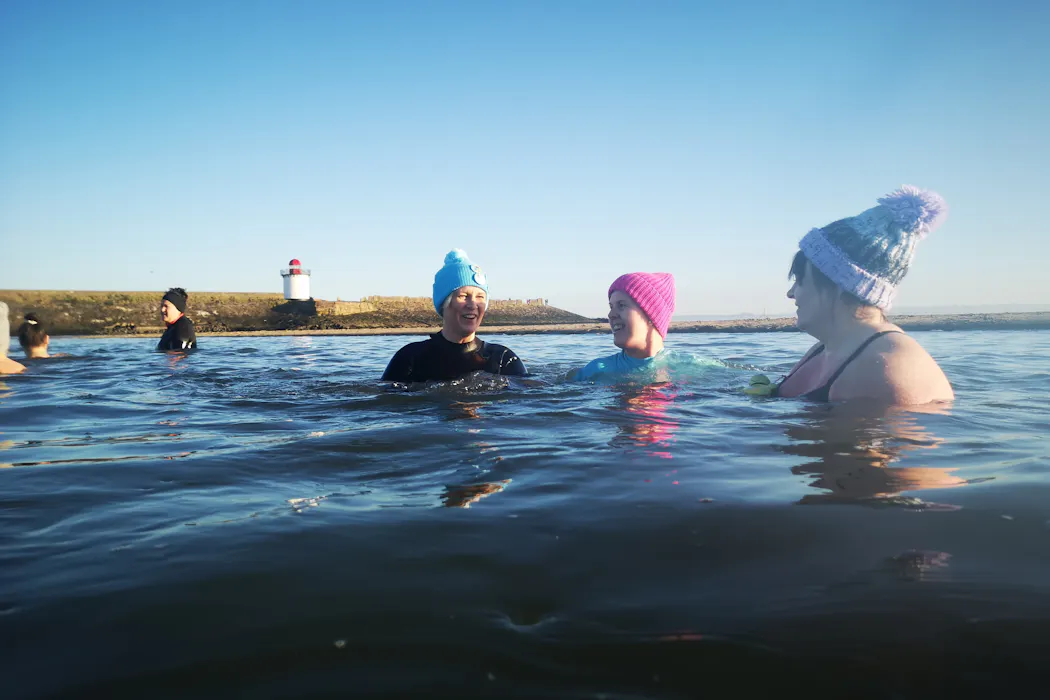
They met for coffee, then walked to a small Sunday sea swim. The first time, the coordinator went into the water with her. Sian was hooked. Through the group she met other women. She now helps organise the swims, and her children go to the beach in all weathers. What began as a referral became part of her life and community.

What shifted was not just her blood pressure, but her connection to movement, people and place. Our research on local area coordination suggests this relationship-centred support can strengthen wellbeing, confidence and social ties before problems escalate into crises.

If this type of preventive work is scaled back, crises may become more frequent and costs may rise, leading to further pressure on hospitals and social care. Health and social care already consume more than half of the Welsh government’s budget. With services stretched and more people living longer with complex needs, that path is not sustainable.

Politically fragile

Passing a law is one thing. Changing how an entire system behaves is another. Politics naturally pulls towards the immediate. Election cycles are short and budgets are set year by year. Members of the Senedd must respond to urgent concerns from voters. Visible problems demand visible progress.

Prevention, by contrast, produces quieter results that often emerge slowly and may not appear within a single parliamentary term. Implementation is also hard. Frontline services and staff are stretched. Legislation can set direction, but embedding change in strained organisations requires sustained backing, culture change and investment.

Public attention follows the same pattern. When uncertainty rises, attention narrows. Waiting lists, rising living costs and visible migration are immediate and emotionally charged. Policies designed to reduce future risk can feel abstract by comparison.

Psychological research helps explain this. Studies suggest that when people feel under threat, they look for stories that explain what is happening and who is responsible. These narratives can restore a sense of control, but they may also simplify complex problems into clear lines of blame.

For a policy built around prevention, this creates a difficult political environment. Polarised debate tends to reward immediate fixes and simple villains rather than the slower work of building the conditions that allow people to stay well.

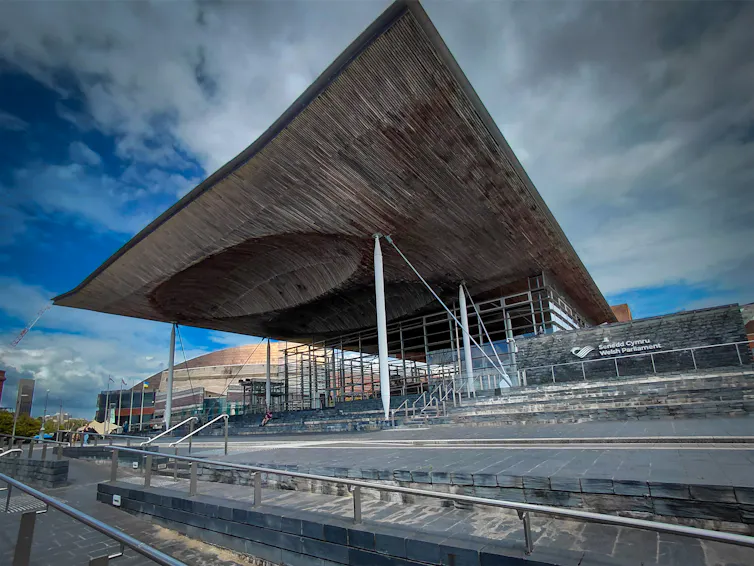
The exterior of the Senedd in Cardiff Bay.
Wales heads to the polls on May 7.
Leighton Collins/Shutterstock

The Wales the Act imagines

The wellbeing approach takes a broader view of health. Rather than seeing health solely as an individual responsibility, it recognises that wellbeing is shaped by social and environmental conditions. In other words, safe neighbourhoods, strong communities and access to nature.

International evidence suggests that investing earlier in community support can reduce pressure on crisis services. Wales is now exploring a similar redesign, but it will require leadership support and investment.

Research published in 2023 that had followed Welsh communities over a decade found better mental health in greener neighbourhoods, particularly in more deprived areas. Access to nature improves wellbeing directly and can also strengthen people’s sense of connection to the environment, which in turn encourages more sustainable behaviour.

These insights are already influencing local initiatives. Our work has embedded neurorehabilitation – support for people recovering from brain injury or neurological illness – into everyday community life through partnerships between health services and local organisations.

Ecotherapy programmes have been developed through relationships with locally valued initiatives, including community farms and a surfing charity that works with the coastline as part of recovery.

The aim is a shift from simply fixing what is “wrong” to rebuilding agency, purpose and connection. These are all factors linked to resilience and reduced demand on services over time.


Read more:
A decade on, six things the world can learn from Wales’ innovative future generations law


Our work also incorporates “biophilic” design – architecture that integrates greenery, natural light and outdoor spaces into buildings – into social housing developments. This work is re-imagining preventive health by bringing nature into our cities, offering residents an opportunity to reconnect to nature, tend to community gardens and grow their own food.

The goal is what we refer to as “sustainable wellbeing”, which means improving health while also nurturing the skills and mindsets needed for a more sustainable future.

Wales is making decisions amid overlapping crises, including widening inequality, rising chronic illness and the accelerating effects of climate change. In this context, the Well-being of Future Generations Act is either a framework for building more resilient systems, or a piece of legislation that is often praised but rarely followed.

Governments ultimately decide whether prevention is protected when finances tighten. But voters shape those choices too. A question facing this Senedd election is whether the Act continues to guide party manifestos, budgets and service design, or slips behind the pressure for immediate solutions.

On May 7, Wales will not only choose its representatives. It will also decide whether the wellbeing of people – and the planet they depend on – remains at the heart of public decision-making.

The Conversation

Lowri Wilkie is a Post-Doctoral Research Fellow in Psychology at Swansea University. She is funded by the Welsh Graduate School for the Social Sciences.

Andrew H. Kemp has previously received funding from Health and Care Research Wales and currently receives funding from the Arts and Humanities Research Council, including support for research on biophilic living, sustainable wellbeing and wellbeing policy. He is Professor of Psychology at Swansea University and holds an honorary clinical research appointment with Swansea Bay University Health Board. He is a member of the Green Party of England and Wales in a personal capacity.

Zoe Fisher has previously received funding from Health Care Research Wales. She is employed by Swansea Bay University Health board and seconded to the West Glamorgan Regional Partnership Board. She also holds an Associate Professor role at Swansea University.

ref. Can Wales’ wellbeing law survive the pressures of the next Senedd election? – https://theconversation.com/can-wales-wellbeing-law-survive-the-pressures-of-the-next-senedd-election-276121

Ethiopia’s national dialogue was meant to heal the nation, but divisions are deepening

Source: The Conversation – Africa (2) – By Dereje Melese Liyew, Lecturer, Political Science, Debre Markos University,

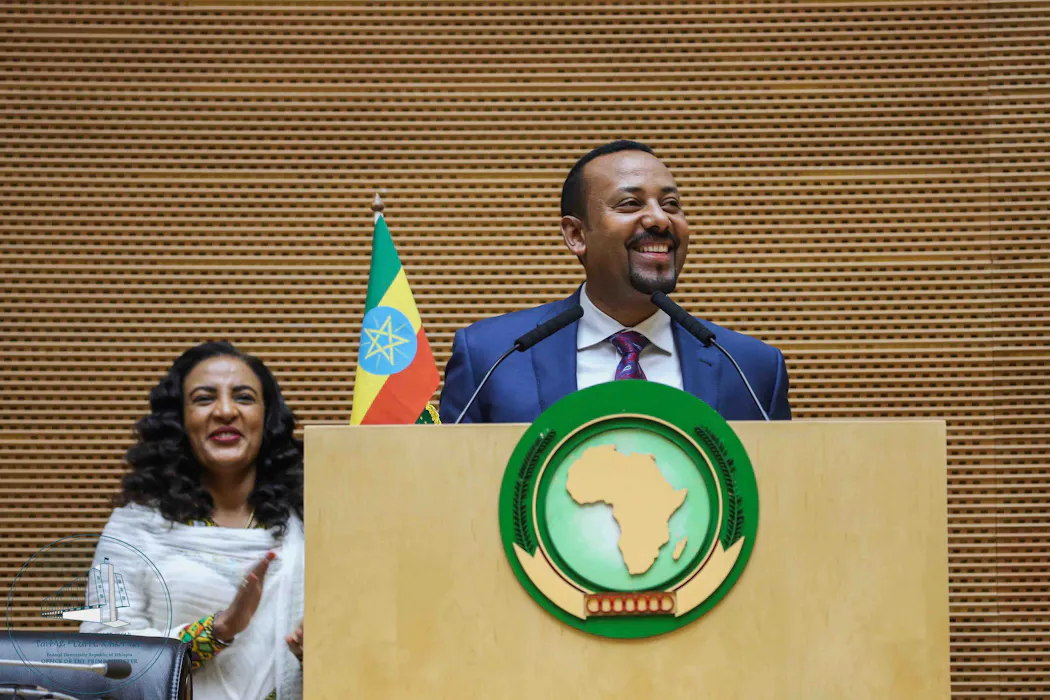
Ethiopia’s Prime Minister Abiy Ahmed at a past African Union summit. Wikimedia Commons, CC BY

Ethiopia launched a national dialogue process in 2022 to address deep political divisions and help steer the country towards stability.

In theory, such dialogues can help societies move beyond war, rebuild trust and agree on new political rules. This has happened in countries such as Kenya, Tunisia and Yemen.

Ethiopia’s process involved setting up a national dialogue commission. It stated it wanted to build national consensus, strengthen nation building and support democratic transition.

The working mandate of the Ethiopian National Dialogue Commission has been extended twice. First for six months in February 2025 and then for eight months in February 2026.

However, the dialogue is not on the right track. I have researched Ethiopia’s political landscape and peace efforts for nearly a decade, and in a recent paper, I examined why the dialogue process is facing a crisis.

I found that Ethiopia’s national dialogue is struggling due to legitimacy deficits, limited inclusion and weak process design. Four years after the process launched, it has produced limited tangible outcomes.

National dialogues are most effective when they are broadly inclusive, trusted by key actors and conducted in a relatively stable political environment.

Ethiopia’s current context raises doubts on all three fronts.

The process has excluded influential political and armed actors. Opposition groups and civil society actors have also raised concerns about the commission’s independence from the ruling party. Ongoing conflicts further undermine the conditions needed for sustained negotiation.

These issues risk undermining the dialogue before it delivers meaningful results. This matters because national dialogue was meant to resolve Ethiopia’s political disputes peacefully. If it fails, the country risks missing a chance to manage conflict without violence.

Inclusivity

Inclusiveness is a defining feature of successful national dialogues. Key political forces, including armed groups, must see the process as a legitimate forum for negotiation.

In Ethiopia, several influential actors are absent.

Armed groups such as the Oromo Liberation Army, the Tigray People’s Liberation Front and the Amhara Fano have not been part of the process. Yet these groups are central to ongoing conflicts in Oromia, Tigray and Amhara regions. Holding a national dialogue while major armed confrontations continue – and without the participation of those directly involved – raises practical and political concerns.

Some opposition parties and civil society groups have also complained of inadequate consultation during the preparatory phase.

Exclusion weakens ownership. Without ownership, implementation becomes unlikely.

Trust

A national dialogue is usually convened during political crises or transitions. Its purpose is to bring together political forces, civil societies and non-state armed groups to negotiate fundamental questions about the state.

Ethiopia’s political tensions are rooted in unresolved questions about state structure, identity, historical narratives, the constitution and the balance between unity and self-determination.

A genuine dialogue could provide a platform to address these foundational disputes. However, the way the process has been designed and implemented has generated resistance.

One of the most contested issues has been the selection of commissioners.

The 11 members of the commission were appointed by parliament. Critics argue that the ruling party, which holds a majority of seats, dominated the process. Several opposition parties questioned the way the commission was set up.

When major political actors doubt the neutrality of conveners, the credibility of the entire process suffers. In divided societies, even the perception of bias can discourage participation.

In Ethiopia’s case, some opposition leaders have described the dialogue as a government-driven project rather than a nationally owned process. That perception alone is a serious obstacle.

There is also deep societal mistrust. Public confidence in political institutions – including parliament, courts and security institutions – has declined in recent years.

Dialogue requires a minimum level of trust before it can change anything.

Instability

National dialogues can occur during fragile transitions. But they rarely succeed in the middle of active and expanding armed conflicts.

Ethiopia continues to experience violence in multiple regions. In Tigray and parts of Amhara and Oromia, insecurity limits even basic state functions. Under such conditions, it’s difficult to set an agenda and get broad participation.

Ethiopia’s position in the Horn of Africa adds another layer of complexity.

Tensions linked to its Grand Ethiopian Renaissance Dam and shifting alliances involving Egypt, Sudan, Eritrea and Somalia have heightened regional rivalries. Gulf States have also expanded their influence in the region.


Read more:
Egypt-Ethiopia hostilities are playing out in the Horn – the risk of new proxy wars is high


National dialogues are domestically driven. However, external geopolitical competition can shape internal dynamics through diplomatic pressure, economic leverage or security alignments. A fragile domestic process becomes even more vulnerable in such an environment.

Experiences with national dialogues from Sudan, South Sudan and Kenya offer mixed lessons for Ethiopia.

In Sudan, dialogue initiatives lacked genuine political openness and failed to create an environment for talks. In South Sudan, there were questions about government interference, and key opposition actors weren’t included. Kenya’s 2008 dialogue, by contrast, succeeded in halting violence and led to constitutional reform. This was largely because it included major political rivals and was supported by mediation that was accepted.

The core lesson is consistent: inclusion, neutrality and timing matter.

Is a reset necessary?

Some Ethiopian scholars and political actors argue for pausing and rethinking the dialogue.

In my view, a reset should involve:

  • re-examining how commissioners are selected to ensure the process is seen as fair

  • expanding engagement with opposition parties and civil society

  • exploring ways to include or at least negotiate with influential armed groups

  • taking parallel steps to reduce violence and build confidence.

A national dialogue is not a magic solution. It cannot, on its own, resolve deep ideological disagreements. But it can help manage them if the process is widely seen as legitimate.

If Ethiopia’s dialogue continues without addressing concerns over trust, inclusion and ongoing conflict, it risks becoming another missed opportunity in the country’s long political transition.

The stakes are high. A credible process could help stabilise the political landscape. A flawed one may deepen scepticism and polarisation.

The Conversation

Dereje Melese Liyew does not work for, consult, own shares in or receive funding from any company or organisation that would benefit from this article, and has disclosed no relevant affiliations beyond their academic appointment.

ref. Ethiopia’s national dialogue was meant to heal the nation, but divisions are deepening – https://theconversation.com/ethiopias-national-dialogue-was-meant-to-heal-the-nation-but-divisions-are-deepening-278321

Cacti may help explain a centuries-old mystery of evolution

Source: The Conversation – UK – By Jamie Thompson, Lecturer in Evolutionary Biology, University of Reading

This question of why some branches of the tree of life explode into thousands of species, while others remain small, has shaped evolutionary biology since Charles Darwin.

My colleague and I have published a new study of cactus flowers which may help explain the conundrum.

For more than a century, scientists have seen flowers that are specialised to a particular pollinator or environment as drivers of the evolution of new diversity. Our new research challenges that idea, which could change how scientists think about the forces that create biodiversity across the plant world.

The cactus family, exceptionally diverse and among the most threatened plant groups worldwide, offers a striking example of how some evolutionary lineages thrive while others struggle.

Cacti are icons of slow growth. A towering saguaro may take a decade to reach an inch tall and the psychedelic peyote takes decades to mature. Yet the cactus family is one of the fastest-evolving plant groups on Earth. Over the past 20 to 35 million years, around 1,850 cacti species have come into existence. Although this sounds slow, in geological time it is the blink of an eye. By comparison, about a quarter of the 415 other flowering plant families have five or fewer species. These plant families never branched rapidly like cacti did.

Deserts are often imagined as unchanging and unforgiving landscapes, yet they can be arenas of rapid evolutionary innovation.

Scientists have linked the large number of cactus species with pollinator specialisation, where cactus flowers adapt to particular pollinators, such as bees, moths or hummingbirds. Another idea attributes the evolutionary success of cacti to the expansion of deserts over the last 30 million years, as much of the Americas became drier and more open.

Cacti growing in the Arizona desert.
Dulcey Lima/Unsplash


Read more:
Cacti are surprisingly fragile – and five other intriguing facts about these spiky wonders


Cacti seemed to fit this idea perfectly. Their flowers vary from small, understated blooms to large, night-opening blossoms. Some are pollinated by bees, others by hummingbirds, moths or bats.

Cactus flowers are fleeting and beautiful, often lasting only days, and are eagerly anticipated by devoted “plant parents”. Shorter flowers are typically linked to bee pollination, while longer, tubular forms have evolved repeatedly for bats, hummingbirds and moths.

Orange cactus flowers.
Morgan Newnham/Unsplash

However, my 2024 study which sampled many more species than previous studies, found that neither aridity nor pollination – the two main hypotheses for cactus diversity – was a strong explanation. This challenged a long-standing idea dating back to Darwin, who suggested that specialised flowers could promote the formation of new plant species.

My colleagues and I recently published the Cactus Ecological Database (CactEcoDB), which provides trait data and family trees for cacti, to help researchers understand their origins and future. When we analysed this data in a recent article in the journal Biology Letters, we found an unexpected pattern. We compiled flower length data for more than 750 cacti species, revealing an extraordinary range, from two millimetre blooms to flowers the size of a large dinner plate. This variation reflects adaptation to very different pollinators.

When we analysed the cactus family tree, we found that the speed at which flower size evolves drives the formation of new species, across both recent and deep evolutionary timescales. Natural selection does not seem to favour any particular flower size. Nevertheless it caused repeated bursts of rapid change across the cactus evolutionary tree towards different sizes.

What this means is simple but powerful. It is not the presence of a particular flower type or pollinator that drives cactus evolution. It is the speed at which the evolution of flower types occurs, regardless of the outcome. Species with smaller and larger flowers can quickly split into new species, as long as they changed quickly throughout their evolution.

Why this matters

This insight has implications for conservation. Our study suggests that a plant’s capacity for evolutionary change, important for surviving periods of environmental change and extinctions – like the one Earth is currently experiencing – matters more than any specific adaptation.

Protecting biodiversity is not just about saving the species we see today, but also about preserving the evolutionary potential that allows new species to arise. Some species may seem stable or unremarkable now, yet hold great future potential.

Nearly a third of cactus species are threatened with extinction. This is among the highest proportions for any plant group and we risk losing entire evolutionary lineages of cacti, not just species.

Protecting cacti, and nature more widely, means protecting an ongoing evolutionary process, one that allows life to thrive in some of the harshest environments on Earth.

The Conversation

Jamie Thompson receives funding from The Leverhulme Trust.

ref. Cacti may help explain a centuries-old mystery of evolution – https://theconversation.com/cacti-may-help-explain-a-centuries-old-mystery-of-evolution-278227