Is Keir Starmer’s silence on Venezuela a mistake? What history tells us

Source: The Conversation – UK – By Martin Farr, Senior Lecturer in Contemporary British History, Newcastle University

It is unlikely that within the first few days of a great global event – one moreover triggered by its closest ally launching a coup and kidnapping a head of state – a British government has said so little. It took 16 hours for it to say anything at all, and then, not much. And it has said not much thereafter.

So little said, at such length: the prime minister, in his Sunday morning BBC TV interview; James Kariuki, chargé d’affaires in the UK Mission to the United Nations at Monday morning’s Security Council emergency session; and Yvette Cooper, foreign secretary, for over two hours in the House of Commons on Monday evening.
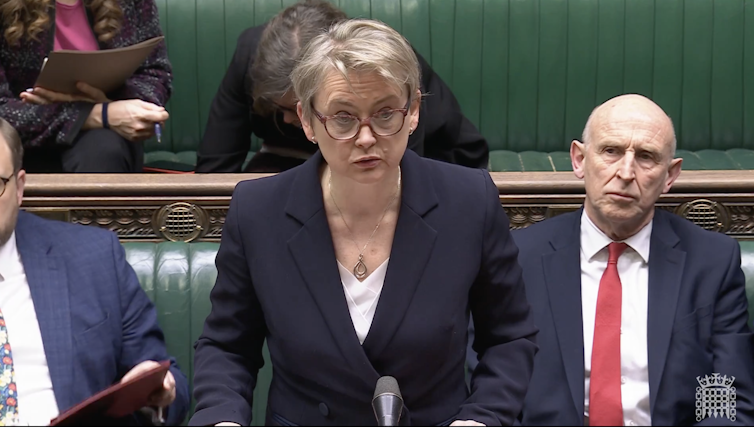
Yvette Cooper speaking in parliament.
The Foreign secretary makes a lengthy statement to the Commons on Venezuela.
Parliament TV

This is both explicable and arguable. For Britain, Venezuela is not particularly significant. There are trade interests but it is far away, of foreign tongue; absent from domestic political discourse. The last time a British prime minister and a Venezuelan president met – Tony Blair and Hugo Chavez – was in 2001.

However, other than in times of actual war (1812) the nadir in US-UK relations concerned Venezuela. A long-forgotten crisis was triggered in 1895 by a dispute over the border between it and British Guiana. The spat elicited the equally forgotten Olney corollary – a proposition from the US government which nonetheless repays reacquaintance in light of recent developments: “Today the United States is practically sovereign on this continent.”

The present crisis similarly concerns hemispheric hegemony. It evokes the better-known 1823 Monroe doctrine, as a warning to the old world to stay out of the new. It adds resource competition (oil: Venezuela has rather a lot, much of it exported to China), while challenging the post-1945 “rules-based order” (reminding us that it was only ever convention-based) and threatening to replace it with one based largely on power. And there’s the upending of the 1648 Westphalian states system, which found fulfilment 300 years later in the creation of the UN.

Hence fears as to what precedent the president has set. Outrage at the Security Council from Russia and China was purely performative given that Trump could not have done more to legitimise their plans for Ukraine and Taiwan. Moscow was almost wistful, admiring how the Americans had managed with Venezuela in an hour what they had failed to do with Ukraine in four years.

Channelling James Monroe and Richard Olney, but with Ukrainian ally Volodymyr Zelenskyy in mind much more than either, Keir Starmer would never break publicly with Trump over something in the Americas. Canada is the exception, as was made clear in the pushback against the US when Trump suggested a Commonwealth realm should become America’s “51st state”.

Silence buys influence?

Insofar as the UK government has a distinct response, it’s that there should be a transition to democracy in Venezuela, ideally by including opposition figures. Trump has said he won’t pursue so left-field an option.

The lack of contact with the president – Starmer unwisely saying publicly that he was seeking it – is embarrassing, and summoned the inevitable clichés about puppets and poodles. The hope (increasingly more than the expectation) is that silence buys influence.

If that was not a green light from the UK, there is one red line. Greenland. The clarity of the government’s response to Trump’s predations is surprising, if the reason for it is not. Denmark has long been a close UK ally, not least over Ukraine. But siding publicly with Copenhagen over Washington is something else Starmer would not ordinarily have been expecting to have to do.

But American-led international crises have upended other Labour premiers. In 1950, Clement Attlee rearmed for the Korean War, with cuts in public spending to pay for it. Labour was out of office the following year.

The next decade, Harold Wilson declined to have a public opinion over the Vietnam war, thereby infuriating both the Americans and the young he enfranchised in 1969. Labour was out of office the following year.

The best known example remains Iraq. On the back of two landslide election triumphs in 2003, Blair split his party and inflamed the public. Labour’s parliamentary majority was slashed two years later. Unquestioning support for an American president became Blair’s nemesis.

He was comfortable with that. But Trump has transgressed the only recognisable facet of what political identity Starmer actually has: adherence to the rule of law, and international law at that. Yet he can only be mute.

The apparent inconsistencies between Starmer’s past and present can be reconciled by the elemental fact that he’s prime minister. What animated the student, the activist, the lawyer, the MP, cannot in office.
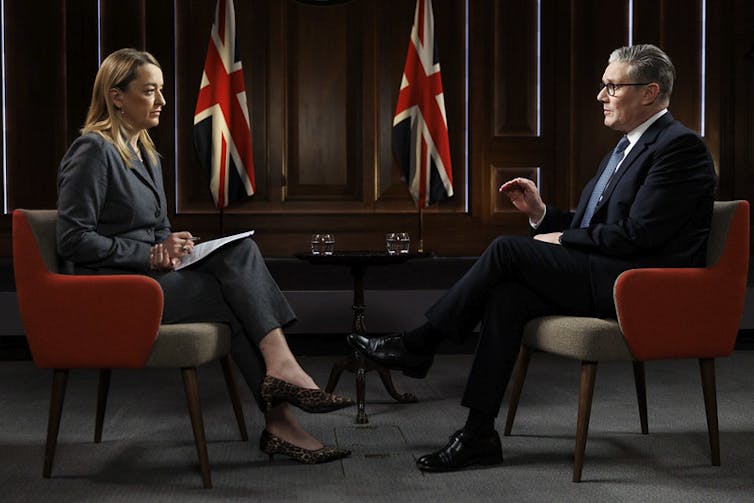
Laura Kuenssberg and Keir Starmer sitting opposite each other.
The prime minister in a New Year’s interview with the BBC.
Flickr/Number 10, CC BY-NC-ND

But it is that failure – that refusal – to opine that most exasperates MPs. Cooper’s fractious Venezuela statement highlighted fissures within Labour that are evident whenever the US, or Israel, is concerned.

Maduro was the kind of leader who gives leftwing governments a bad name, which is why only the hard left – Richard Burgon, John McDonnell – are incensed. The main threats to Starmer’s leadership come from the soft left – Angela Rayner, Andy Burnham – where such affairs have less salience, and the right – Wes Streeting, Al Carns – where they’re merely awkward.

For May’s impending local and national elections the impact may be clearer, and graver. The Liberal Democrats, Greens, Your Party, SNP and Plaid Cymru accept gratefully a gift that will go on giving on innumerable doorsteps throughout the spring.

The Conservatives happen to agree with the government’s policy, if not necessarily its delivery. Few of their voters will care about recondite international law. Fewer still, Reform UK voters. Almost unheard of, Nigel Farage, too, has been mute.

Desperate to engineer a narrative reset in 2026, Starmer, this mildest of prime ministers – politically, temperamentally – now finds himself faced with the so-called Donroe doctrine, Trump’s “update” to the Monroe doctrine.

It would be somewhat to understate to say that this was not the start to the year for which Starmer was hoping. As we gaze upon the most imperial of presidencies, he can only dream of a similar premiership.

The Conversation

Martin Farr does not work for, consult, own shares in or receive funding from any company or organisation that would benefit from this article, and has disclosed no relevant affiliations beyond their academic appointment.

ref. Is Keir Starmer’s silence on Venezuela a mistake? What history tells us – https://theconversation.com/is-keir-starmers-silence-on-venezuela-a-mistake-what-history-tells-us-272837

Should AI be allowed to resurrect the dead?

Source: The Conversation – UK – By James Muldoon, Associate Professor in Management, University of Essex

The growing industry of ‘grieftech’ enables people to interact with dead relatives. Deepbrain AI

When Roro (not her real name) lost her mother to cancer, the grief felt bottomless. In her mid-20s and working as a content creator in China, she was haunted by the unfinished nature of their relationship. Their bond had always been complicated – shaped by unspoken resentments and a childhood in which care was often followed closely by criticism.

After her mother’s death, Roro found herself unable to reconcile the messiness of their past with the silence that followed. She shared her struggles with her followers on the Chinese social media platform Xiaohongshu (meaning “Little Red Book”), hoping to help them with their own journeys of healing.

Her writing caught the attention of the operators of AI character generator Xingye, who invited her to create an AI version of her mother as a public chatbot.

“I wrote about my mother, documenting all the important events in her life and then creating a story where she was resurrected in an AI world,” Roro told me through a translator. “You write out the major life events that shape the protagonist’s personality, and you define their behavioural patterns. Once you’ve done that, the AI can generate responses on its own. After it generates outputs, you can continue adjusting it based on what you want it to be.”

During the training process, Roro began to reinterpret her past with her mother, altering elements of their story to create a more idealised figure – a gentler and more attentive version of her. This helped her to process the loss, resulting in the creation of Xia (霞), a public chatbot with which her followers could also interact.

After its release, Roro received a message from a friend saying her mum would be so proud of her. “I broke down in tears,” Roro said. “It was incredibly healing. That’s why I wanted to create something like this – not just to heal myself, but also to provide others with something that might say the words they needed to hear.”

Grief in the age of deathbots

As I recount in my new book Love Machines, Roro’s story reflects the new possibilities technology has opened for people to cope with grief through conversational AI. Large language models can be trained using personal material including emails, texts, voice notes and social media posts to mimic the conversational style of a deceased loved one.

These “deathbots” or “griefbots” are one of the more controversial use cases of AI chatbots. Some are text-based, while others also depict the person through a video avatar. US “grieftech” company You, Only Virtual, for example, creates a chatbot from conversations (both spoken and written) between the deceased and one of their living friends or relatives, producing a version of how they appeared to that particular person.

Video by The Guardian.

While some deathbots remain static representations of a person at the time of their death, others are given access to the internet and can “evolve” through conversations. You, Only Virtual’s CEO, Justin Harrison, argues it would not be an authentic version of a deceased person if their AI could not keep up with the times and respond to new information.

But this raises a host of difficult questions about whether estimating the development of a human personality is even possible with current technology, and what effect interacting with such an entity could have on a deceased person’s loved ones.

Xingye, the platform on which Roro created her late mother’s chatbot, is one of the key prompts for proposed new regulations from China’s Cyberspace Administration, the national internet content regulator and censor, which seek to reduce the potential emotional harm of “human-like interactive AI services”.

What does digital resurrection do to grief?

Deathbots fundamentally change the process of mourning because, unlike seeing old letters or photos of the deceased, interacting with generative AI can introduce new and unexpected elements into the grieving process. For Roro, creating and interacting with an AI version of her mother felt surprisingly therapeutic, allowing her to articulate feelings she never voiced and achieve a sense of closure.

But not everyone shares this experience, including London-based journalist Lottie Hayton, who lost both her parents suddenly in 2022 and wrote about her experiences recreating them with AI. She said she found the simulations uncanny and distressing: the technology wasn’t quite there, and the clumsy imitations felt as if they cheapened her real memories rather than honoured them.

Official trailer for the grieftech documentary Eternal You.

There are also important ethical questions about whose consent is required for the creation of a deathbot, where they would be allowed to be displayed and what impact they could have on other family members and friends.

Does one relative’s desire to create a symbolic companion who helps them make sense of their loss give them the right to display a deathbot publicly on their social media account, where others will see it – potentially exacerbating their grief? What happens when different relatives disagree about whether a parent or partner would have wanted to be digitally resurrected at all?

The companies creating these deathbots are not neutral grief counsellors; they are commercial platforms driven by familiar incentives around growth, engagement and data harvesting. This creates a tension between what is emotionally healthy for users and what is profitable for firms. A deathbot that people visit compulsively, or struggle to stop talking to, may be a business success but a psychological trap.

These risks don’t mean we should ban all experiments with AI-mediated grief or dismiss the genuine comfort some people, like Roro, find in them. But they do mean that decisions about “resurrecting” the dead can’t be left solely to start-ups and venture capital.

The industry needs clear rules about consent, limits on how posthumous data can be used, and design standards that prioritise psychological wellbeing over endless engagement. Ultimately, the question is not just whether AI should be allowed to resurrect the dead, but who gets to do so, on what terms, and at what cost.

This article includes a link to bookshop.org. If you click the link and go on to buy from bookshop.org, The Conversation UK may earn a commission.

The Conversation

James Muldoon does not work for, consult, own shares in or receive funding from any company or organisation that would benefit from this article, and has disclosed no relevant affiliations beyond their academic appointment. James is the author of Love Machines: How Artificial Intelligence is Transforming Our Relationships (Faber).

ref. Should AI be allowed to resurrect the dead? – https://theconversation.com/should-ai-be-allowed-to-resurrect-the-dead-272643

How to avoid an injury when exercising outdoors this winter

Source: The Conversation – UK – By Jen Wilson, Senior Exercise and Health Practitioner, Nottingham Trent University

It’s important to warm-up properly before a winter workout. DuxX/ Shutterstock

Exercising in the cold weather can be refreshing and invigorating. But it can also come with a unique set of risks – including the potential for slips, falls and injuries. This is why it’s especially important to look after your body before and after an outdoor workout in the winter.

There are a few reasons why the cold increases your risk of suffering an injury while exercising.

First, the cold can significantly affect muscle function. When the temperature of the muscles falls below the body’s core temperature of 37°C, muscle tissue becomes stiffer, less elastic and more susceptible to damage.

And for every 1°C reduction in muscle temperature, there’s a 4–6% decline in our ability to produce force and power. This is particularly relevant for dynamic activities such as running, where explosive force and rapid movement are required.

Second, cold temperatures cause the blood vessels in our arms, legs, hands and feet to narrow (known as vasoconstriction). This limits the amount of oxygenated blood that’s being circulated to the working muscles.


Read more:
Winter exercise is important for maintaining physical and mental health


This reduced blood flow may impair performance and slow metabolic processes, causing it to take longer for you to recover after a workout. In more extreme cold temperatures, you can lose coordination and experience numbness in the extremities, further elevating risk of slips, missteps and injury.

Even if the temperatures are well above freezing, you’re still at risk of injury. Prolonged exposure to cold, wet conditions can lead to microvascular damage (injury to the body’s smallest blood vessels) due to sustained reductions in blood flow. This can reduce tissue and nerve function, affecting everything from coordination and reaction time and further increasing risk of injury.

But while exercising in the cold may come with risks, there are also many things we can do before and after workouts to lower our risk of suffering an injury.

1. Warm-up thoroughly

Because colder muscles are stiffer and more vulnerable to strain, a good warm-up is essential.

Before your workout, aim to do a 20-minute warm-up. This should start with some brisk walking, jogging, light cycling – or any other activity that gets your heart rate up gradually but isn’t so intense you couldn’t still hold a conversation.

You should also perform dynamic movements such as leg swings, walking lunges and arm circles help elevate both core and muscle temperature.

Static stretching is best left for later in the session, once tissues have warmed and are more pliable.

2. Layer up

Clothing plays a significant role in regulating body temperature and protecting against cold-related stress. But it’s important not to wear clothing that’s bulky or restrictive, as this may cause overheating or limit your natural movement patterns and increase injury risk.

It’s recommended instead that you layer properly. Start with a moisture-wicking base layer made of natural fibres (such as wool, which can help prevent heat loss even if your clothes get damp), an insulating middle layer (such as a light fleece) and a breathable, wind-resistant outer layer.

Special attention should be given to the extremities, as they’re most vulnerable to heat loss. Gloves, hats and thermal socks will help preserve warmth.

Make sure to wear shoes that have good traction or even use walking sticks to reduce risk of slipping on wet or icy surfaces. If you’re working out in low-light conditions, make sure to wear a reflective outer layer for visibility.

3. Fuel for your workout

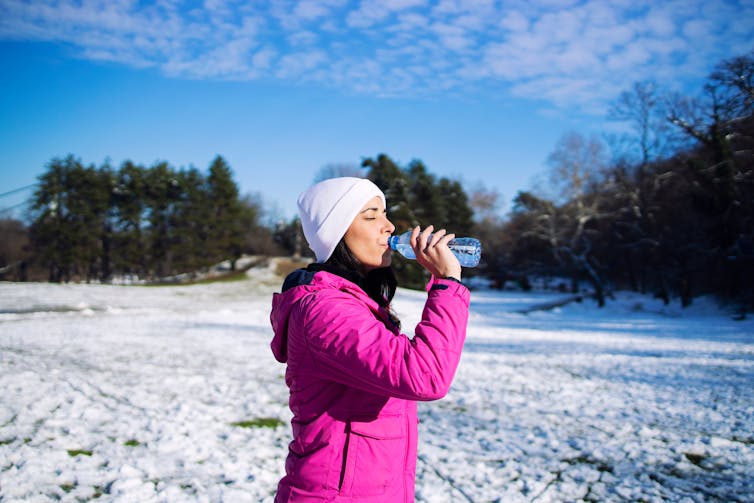
Drinking plenty of water is just as important in the cold as it is in hot weather. But the cold weather may cause people to drink less water. Cold weather may also make it appear as though we aren’t sweating as much. This may mask dehydration, making it even more important you’re hydrating properly.

A woman wearing a white hat and a bright pink jacket sips from a water bottle while standing outside on a winter's day.
Hydration is just as important in the winter.
Aleksandar Malivuk/ Shutterstock

Energy demands may also rise in cold weather. Shivering, wearing heavier clothing and increased effort when exercising in snowy or icy condition can all make us burn more calories. So make sure you’re eating enough food to maintain energy levels, preserve performance and help the body cope with the bold temperatures.

Foods rich in carbohydrates should be eaten before exercise, whereas protein and carbohydrates should be eaten within 30 minutes to 2 hours after a workout.

4. Check the weather

Before starting any cold-weather session, it’s important to check the temperature, wind chill, moisture levels and ground conditions.

If conditions are particularly severe (such as the winds are very strong, it’s very cold, icy or raining heavily), it’s best you modify the session or workout indoors instead to avoid an injury.

5. Cool down gradually

After your workout, aim to cool down gradually. Maintain circulation and prevent a sudden drop in blood flow to the extremities by doing some light aerobic activity, such as brisk walking. This is to ensure that blood is still being properly circulated back toward the heart.

Once your heart rate has decreased, aim to do some static stretching (such as holding a hamstring stretch) to help reduce muscle stiffness and aid recovery. This might also help you feel looser after exercise.

6. Change out of wet clothes immediately

Wet clothing accelerates heat loss dramatically. Wet skin also cools much faster than dry skin, increasing susceptibility to hypothermia and other cold-related injuries, such as frostbite.

Be sure to change into dry, warm layers as soon as possible after a workout to avoid injury and warm-up effectively.

7. Stay alert for signs of an injury

Persistent shivering, confusion and lethargy can be signs of hypothermia. Numbness or waxy, pale skin can be signs of frostbite. If you have any of these symptoms after your workout, it’s key you address them promptly or seek medical advice.

Cold weather exercise can be both invigorating and beneficial. Taking the right steps to mitigate risks and avoid injury can ensure training outdoors during the colder months can remain safe, productive and enjoyable.

The Conversation

The authors do not work for, consult, own shares in or receive funding from any company or organisation that would benefit from this article, and have disclosed no relevant affiliations beyond their academic appointment.

ref. How to avoid an injury when exercising outdoors this winter – https://theconversation.com/how-to-avoid-an-injury-when-exercising-outdoors-this-winter-271424

How a ferocious 19th-century hurricane helped Irish people get their British pension

Source: The Conversation – UK – By Robyn Atcheson, Open Learning Tutor in Social History, Queen’s University Belfast

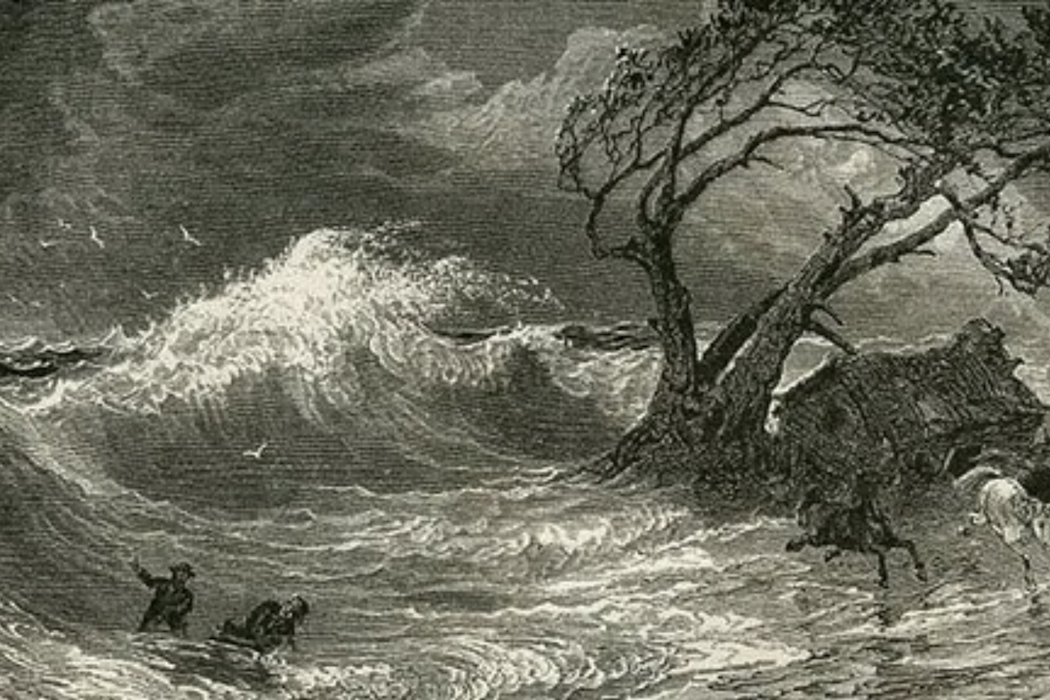
An illustration of the ‘Night of the Big Wind’ from 1839. Wikipedia, CC BY

Sunday January 6 1839 signalled the end of the festive season, the last of the 12 days of Christmas. The people of Ireland woke to light snow and many were looking forward to the evening’s celebrations.

January 6 was known as Nollaig na mBan – “women’s Christmas” when womenfolk across the country took a day off from their traditional domestic chores as a reward for all their efforts, and visited friends and family.

The temperature rose dramatically by mid-afternoon before rain started around 3pm. The Ordnance Survey had been carrying out observations at Phoenix Park in Dublin for a decade and their readings showed how quickly the atmosphere was changing during the day. As evening approached, people were aware of an approaching storm.

By 10pm Ireland was hit with the full force of a hurricane that would last at least eight hours. It had travelled over the Atlantic Ocean, gathering momentum, before crashing over the west coast. Waves even broke over the top of the Cliffs of Moher. And so the destruction began.

A perfect storm

The Enniskillen Chronicle wrote the next day: “The gale increased in violence until it became a perfect hurricane, unroofing houses, blowing down chimneys, prostrating boundary walls, and almost everything that offered resistance.”

As windows shattered and the thatch on rooftops blew away, the people of Ireland were in darkness, only able to see in the flashes of lightning and the light of an apparent aurora borealis. In recorded memories of the event, the main sensory experience was the sheer noise of the storm – “the deafening roar of a thousand pieces of artillery”, a reporter wrote on January 10.

Thousands of trees were blown down across Ireland. Fires broke out, fanned by the fierce winds. Along the Tyrone-Monaghan border there was a fire in almost every townland (the name for settlements before modern towns were established). In Dublin, the Bethesda Chapel caught on fire, burning the church, its attached school, six town houses and the House of Refuge for “reclaimed females”.

The river Liffey overflowed, there were flash floods in Strabane and all the water was reportedly blown out of a canal near Tuam. The earth was stripped alongside the river Boyne, exposing the bones of soldiers killed in battle 150 years earlier. Fish were found six miles inland while vegetation even 40 miles inland tasted of brine.

It is difficult to calculate the number of lives lost that night. Estimates put the death toll between 250 and 300 people. Many sailors died at sea, including the captain and entire crew of the Andrew Nugent, wrecked off Arranmore Island. Lord Castlemaine was fastening his bedroom window at Moydrum Castle in Athlone when the storm blew it open, hurling him across the room and killing him instantly.

Those who died in the aftermath, from injuries, pneumonia, frostbite or other related consequences of the storm, have never been counted. Stacks of hay and corn were devastated by fire. The houses that suffered the most were those of the lower classes.

Storm then famine

Some families and communities were only just recovering from the effects of the storm by 1845 when Ireland faced another national catastrophe with the first failure of the potato crop.

As they sought to make sense of the seemingly apocalyptic event they had lived through, people turned to religion and superstition. The storm was variously interpreted as a battle between English and Irish fairy folk, the devil causing havoc, and as a warning from God that the day of judgement would soon arrive. With the onslaught of the Great Hunger six years later, it is no wonder that people were afraid to name this terrible event.

By the end of the century, the “Night of the Big Wind” had become the most common name used by the poor to discuss the trauma of January 1839. It had become easier to discuss this freak occurrence than the more traumatic An Gorta Mór, the Irish term for the Great Hunger of the late 1840s.

In a strange twist, cultural memories of the night were also to become very lucrative in the next century. In 1909 the Old Age Pension Act was implemented in the United Kingdom. Old age was deemed to include those 70 years old and above.

In Ireland – still part of the UK at this point – this was a problem, as birth registration had not been made compulsory until 1864. Many old people, particularly Catholics, had no way to prove they were over the threshold. Memories and anecdotal evidence were turned to as a means of establishing whether someone was eligible.

Being able to give an account of your memory of “the Big Wind” was a sure-fire way of establishing you were over 70. Pension bureaucracy noted that quite a lot of people had the same memory and even recounted it in the same phrase: “I was able to eat a potato out of my hand on the ‘Night of the Big Wind’.”

This was an expression that was easy for people to remember, and showed the individual was old enough to feed themselves in 1839. By March 1909, 80,000 people in the United Kingdom had applied for the pension – 70,000 of them were Irish.

One such pensioner was Tim Joyce from Co. Limerick who cheerfully recounted: “I always thought I was 60. But my friends came to me and told me they were certain sure I was 70, and as there were three or four of them against me, the evidence was too strong for me. I put in for the pension and got it.”


Looking for something good? Cut through the noise with a carefully curated selection of the latest releases, live events and exhibitions, straight to your inbox every fortnight, on Fridays. Sign up here.


The Conversation

Robyn Atcheson does not work for, consult, own shares in or receive funding from any company or organisation that would benefit from this article, and has disclosed no relevant affiliations beyond their academic appointment.

ref. How a ferocious 19th-century hurricane helped Irish people get their British pension – https://theconversation.com/how-a-ferocious-19th-century-hurricane-helped-irish-people-get-their-british-pension-271653

The ‘Donroe doctrine’: Maduro is the guinea pig for Donald Trump’s new world order

Source: The Conversation – UK – By Pablo Uchoa, PhD Candidate in International Politics, Institute of the Americas, UCL

Shortly after US special forces captured and extracted Nicolás Maduro and his wife, Cilia Flores, on November 3, Donald Trump said that the US would now “run” Venezuela.

Whatever Washington’s plans for the future of Venezuelan governance, this show of US force in Latin America looks like the first manifestation of a more assertive American foreign policy outlined in the national security strategy published in November 2025. This plainly asserted the Trump administration’s intention to “reassert and enforce the Monroe doctrine to restore American pre-eminence in the Western Hemisphere”.

Rather than force regime change at this point, Trump has indicated that he is willing to work with Maduro’s vice-president, Delcy Rodriguez, who has been sworn in as president. Rodríguez has adopted a conciliatory tone, inviting the US government to “work together on a cooperative agenda”. For the US president, “cooperation” will involve giving US oil companies unfettered access to Venezuela’s oil reserves, the largest in the world.

Announcing the raid at a press conference held hours after American forces snatched Maduro, Trump appeared to issue threats of similar interventions in Colombia, which he said was run by a “sick man who likes to make cocaine and sell it to the US”. His secretary of state, Marco Rubio – the child of Cuban exiles – also hinted at US intentions towards Cuba, saying: “If I lived in Havana and I was in the government, I’d be concerned at least a little bit.”

The US secretary of defense, Pete Hegseth, was perhaps most revealing of the three, talking about the administration’s goal of “reestablishing American deterrence and dominance in the Western Hemisphere”. In a clear warning to US foes, Hegseth said that no other country could have pulled this operation off, adding: “Our adversaries remain on notice. America can project our will anywhere, anytime.”

This is worrying in terms of geopolitics for two reasons.

First, the administration has shown a remarkable lack of engagement with international law. It has chosen instead to frame the raid as a police action to apprehend Maduro as a “narco-terrorist” responsible flooding the US with drugs.

This thin veil of legality has proved successful in the past. In 1989, the administration of George H.W. Bush ordered the invasion of Panama to capture the strongman dictator Manuel Noriega. Noriega was tried in Miami and jailed for 20 years on charges of being a sponsor of illicit drug trafficking.

Despite the UN passing a resolution condemning the invasion as a “flagrant violation of international law” (vetoed by the US, UK and France) the invasion enabled the US to take control of the canal. It held the canal for a decade before handing over operations to the Panama Canal Authority on December 31 1999.

The success of Bush’s invasion could explain why the Trump administration is taking a similar approach with Venezuela. Washington’s official line been to focus on Maduro’s alleged criminality rather than any US ambition to affect regime change in Venezuela.


Read more:
How US intervention in Venezuela mirrors its actions in Panama in 1989


Hegseth also insisted that the raid was about “safety, security, freedom and prosperity for the American people”. This assertion succinctly captures how the parameters of US national security have evolved to be much broader than defence. They now appear effectively inseparable from advancing US economic interests globally.

It’s an updated version of the Monroe doctrine, which the national security strategy described as the “Trump corollary”, but which the president himself has referred to as the “Donroe doctrine”. The term, which appears to have been coined by the New York Post (but which Trump nonetheless appears to have taken a liking to – as with most things that bear his name) is a vision of geopolitics which projects US power across the Americas.

And it looks set to be used to grab whatever resources the US perceives as beneficial to its interests, from Greenland’s minerals and strategic position to the Panama canal and Venezuelan oil.

A new era of interventionism?

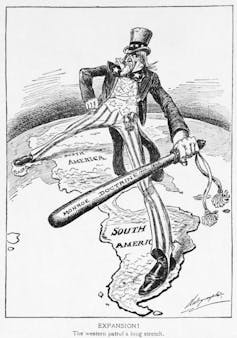
Naturally, it is in Latin America where these threats become more palpable. The 1823 Monroe doctrine – developed under the then president, James Monroe – designated the western hemisphere as an area of US influence in which the European powers of the time were explicitly warned not to interfere. Seven decades later, the 1904 “Roosevelt corollary” added the principle that the US could interfere in any Latin American countries plagued by “wrongdoing or impotence” and “requiring intervention by some civilized nation”.

Cartoon of Uncle Sam Straddling the Americas.
The Munroe doctrine.
Louis Dalrymple, Wikimedia Commons

This principle was invoked to justify direct occupation of Latin American countries contrary to US interests in the early 20th century. In this century, China’s growing links in Latin America have prompted a resurgence of references to the Monroe doctrine – particularly by Republican Congress members.

In 2026, these developments highlight the Trump administration’s willingness to enhance the capabilities of this outlook. It is not clear how the Donroe doctrine differs from its predecessors. But like them, it seems to subordinate international law to national interest.

And while it is aimed at a global audience, it also appears to entitle powerful countries with the right of having spheres of influence. Commentators have referred to this as an era of “rogue superpowers” and the “Putinisation” of US foreign policy.

The absence of conspicuous military support for Maduro from either Russia or China reinforces those arguments. China reportedly buys 76% of Venezuelan oil, while Moscow has in recent years had strong military ties with Caracas. The two countries have also cooperated closely to help each other avoid US oil sanctions.

The new US foreign policy stance as exemplified by the snatching of Maduro means the world is more dangerous – and Latin America considerably more vulnerable. But for now it’s Venezuela, which appears to be the laboratory where Trump has decided to flex America’s geopolitical muscles.

And it looks as if Maduro is the unlucky guinea pig, whose fate is designed to indicate what the world’s most powerful military can and will do to advance its economic and national security interests around the world.

The Conversation

Pablo Uchoa was funded by UKRI, through LAHP, to complete his PhD in Political Science at the UCL Institute of the Americas.

ref. The ‘Donroe doctrine’: Maduro is the guinea pig for Donald Trump’s new world order – https://theconversation.com/the-donroe-doctrine-maduro-is-the-guinea-pig-for-donald-trumps-new-world-order-272687

Five ways to make your day at work feel better

Source: The Conversation – UK – By Ioannis Kratsiotis, Lecturer in Organisational Psychology, Manchester Metropolitan University

novak.elcic/Shutterstock

Most people know what a difficult day at work feels like. It can be tiring, draining and tense, leaving you unable to switch off. But there are also days when work feels lighter and more energising.

These good days are not necessarily defined by big wins or major achievements. In fact, they tend to come from harmonious experiences in the workplace that support our psychological needs.

Research I carried out with colleagues suggests that when people feel genuinely supported by the people around them, it helps to meet three basic needs: a sense of autonomy, a sense of competency and a sense of connection.

Meeting these needs is often what makes some days feel better than others. And workers can create these better days for themselves and for the people around them with these five simple suggestions.

1. Ask for help and offer it in return

Support does not need to be formal or time consuming. A brief check in, a quick question or an offer to share advice can make a real difference.

These small interactions help people feel connected and supported, which lifts mood and motivation throughout the day. Support works best when it goes both ways, so look for opportunities to both ask for help and offer it when you can.

2. Recognise the small wins

Feeling effective is one of the strongest drivers of wellbeing, so take a moment to notice the small things that went well.

Perhaps you made progress on a task or finally completed something on your to do list that you’d been avoiding. Recognising these small wins builds a sense of competence that carries into the rest of the day and into life outside work.

3. Give people (and yourself) some space

A sense of freedom in how we approach our work plays an important role in how we feel each day. Give yourself permission to make small choices about how you complete your tasks and allow colleagues this same freedom when possible.

Showing trust in others can strengthen your relationships, while giving yourself space can help you maintain focus and motivation.

4. Reach out before the end of the day

Short moments of genuine connection can change the tone of the entire day. A simple thank you, a message of appreciation or a short conversation with a colleague can lift your mood more than you might expect.

Reaching out to someone before you finish your day can help you leave work feeling lighter and more energised. Building positive workplace relationships not only feels good but also provides a reliable support network you can draw on when needed.

5. Stay balanced

Sometimes we feel drained because one of our basic needs is not being met. Perhaps we have had too little freedom in our work, too few moments of progress or not enough human connection.

Restoring balance matters more than maximising any one need, so taking a moment to notice what feels low is the first step towards bringing back a sense of equilibrium. The next step is to do one small thing to address it.

Man looking content at workspace.
Seek balance.
SofikoS/Shutterstock

Choose the order of your upcoming tasks if you need a greater sense of autonomy, complete a manageable task if you need a sense of progress and check in with a colleague if you feel isolated. Encouraging others to do the same helps build a team climate where balance and support are shared responsibilities. When this happens, good days become more common.

Small changes, big differences

The main message of our research is simple. Good days at work do not require major changes or perfect conditions. They are created through small everyday moments of support that help us feel free, capable and connected.

When these needs are in balance, people feel better during the workday and have more energy when they get home. Work will always have its difficult moments, but we have more influence over our daily experience than we sometimes realise.

By paying attention to the small moments that shape our day, and by supporting each other in simple but meaningful ways, we can create more days that leave us feeling fulfilled at work and refreshed at home.

The Conversation

Ioannis Kratsiotis does not work for, consult, own shares in or receive funding from any company or organisation that would benefit from this article, and has disclosed no relevant affiliations beyond their academic appointment.

ref. Five ways to make your day at work feel better – https://theconversation.com/five-ways-to-make-your-day-at-work-feel-better-272217

Nigeria has a high poverty rate – what this has to do with ethnic conflicts

Source: The Conversation – Africa (2) – By Tolu Olarewaju, Economist and Lecturer in Management, Keele University; University of Lancashire

Nigeria has endured decades of violent insurgencies and ranks 6th on the 2025 Global Terrorism Index. Numerous people have been killed and millions displaced. The number of casualties from terrorist attacks in 2025 can be seen in both the Armed Conflict Location & Event Data and the Council on Foreign Relations’ Nigeria Security Tracker. Most of the casualties are in places with high poverty levels, as the Nigerian Poverty Map shows.

Tolu Olarewaju, who has researched ethnic poverty, unpacks why regions of violence and poverty overlap in Nigeria.

What is the state of poverty in Nigeria?

Poverty in Nigeria comes in various forms: a lack of income and productive resources to sustain livelihoods; hunger and malnutrition; illness and death; and limited access to education and other basic services. It includes inadequate housing and unsafe environments. It is also seen in a lack of participation in decision-making and civil, social and cultural life.

Nigeria currently has a population of 237 million people and over 133 million Nigerians are living in this kind of poverty. It is higher in rural areas, where 72% of people are poor, compared to 42% of people in urban areas. The current poverty in Nigeria is the result of two key factors:

  • history – particularly the slave trade and British colonial rule, which put the economic gain of the British Empire ahead of the development of the local population

  • corruption and poor governance practices.

My work shows that when initiatives are introduced to reduce poverty in Nigeria, they are often hijacked by corrupt individuals.

There have been numerous government efforts to combat poverty in Nigeria. The current administration launched the “Renewed Hope Conditional Cash Transfer” programme in October 2023 to cushion the effects of its fuel subsidy removal, which had raised the cost of living and caused inflation. The programme hasn’t made much impact on the level of poverty in the country.

The failures of successive Nigerian governments to reduce poverty stem from multiple factors. They include corruption, poor targeting of programmes, limited funding, weak legislative oversight, political interference, and the absence of a flexible, people-centred approach.

Meanwhile, poverty is the common thread across the places experiencing terrorism in Nigeria. Poor people are more likely to be recruited into terrorist groups, and their targets are likely to be poor people like themselves.

What is ethnic poverty?

Ethnic poverty occurs when there is systemic poverty for an ethnic group. An ethnic group is a social group that shares a common and distinctive history, culture, religion, language, or the like.

My work on ethnic poverty also shows that it can lead to conflicts that are easily labelled as ethnic, religious or tribal.

Ethnic poverty disparities, uneven development and radical ideologies will make any country susceptible to violent insurgencies. This has occurred, for example, in Rwanda, Sri Lanka, Bosnia and Herzegovina, and Ethiopia.

Ethnic poverty can increase hatred and violence, but economic growth could create a “win-win solution” if wealth can be shared equitably.

Nigeria is a multinational state where more than 250 ethnic groups live, speaking over 500 distinct languages. The three largest ethnic groups are the Hausa in the north, the Yoruba in the west, and the Igbo in the east. The country is prone to violent insurgencies where armed groups who suffer from ethnic poverty try to overthrow the government.

How does ethnic poverty play out in Nigeria?

Poverty in Nigeria is intertwined with ethnicity. Inequalities in wealth and education persist between ethnic groups and regions. For example, 65% of the poor and less educated live in the north, where the Hausa and Fulani ethnic groups are predominant. Poverty levels across states also vary. The incidence of multidimensional poverty ranges from a low of 27% in Ondo (in the south) to a high of 91% in Sokoto (in the north).

What are the solutions to ethnic poverty?

There is no single solution, but several that will mature over time. The Nigerian government should:

  • Hold transparent discussions and elections to decide if a regional system of government that focuses on local problems will be better than the current centrally planned government.

  • Devise a strategy that combats corruption and focuses on ethnic groups with higher poverty rates.

  • Expand education and vocational training to promote peace and tolerance, and employable skills linked to local markets.

  • Deliver entrepreneurship training and financial literacy programmes to foster self-reliance and community-based economic growth.

  • Offer incentives for responsible industrial development and local enterprise investment in areas of high ethnic poverty.

  • Implement policies that promote balanced urban–rural economic growth and integrate ethnic populations economically into the national story.

  • Invest in transport, digital and communication infrastructure in remote areas to improve access to education, security and markets.

  • Promote inclusive national narratives that celebrate ethnic diversity.

Together, these measures can create a more equitable social contract that gives every ethnic group a stake in national progress. By being transparent and accountable, the government can rebuild trust.

Sustained investment in people, infrastructure and local economies will help break the cycle of inter-generational ethnic poverty. Over time, these efforts can strengthen unity and share prosperity across Nigeria.

The Conversation

Tolu Olarewaju does not work for, consult, own shares in or receive funding from any company or organisation that would benefit from this article, and has disclosed no relevant affiliations beyond their academic appointment.

ref. Nigeria has a high poverty rate – what this has to do with ethnic conflicts – https://theconversation.com/nigeria-has-a-high-poverty-rate-what-this-has-to-do-with-ethnic-conflicts-270649

Americans generally like wolves − except when we’re reminded of our politics

Source: The Conversation – USA – By Alexander L. Metcalf, Associate Professor of Human Dimensions of Natural Resources, University of Montana

Wolf reintroduction is often seen as a polarizing issue. Jason Connolly/AFP via Getty Images

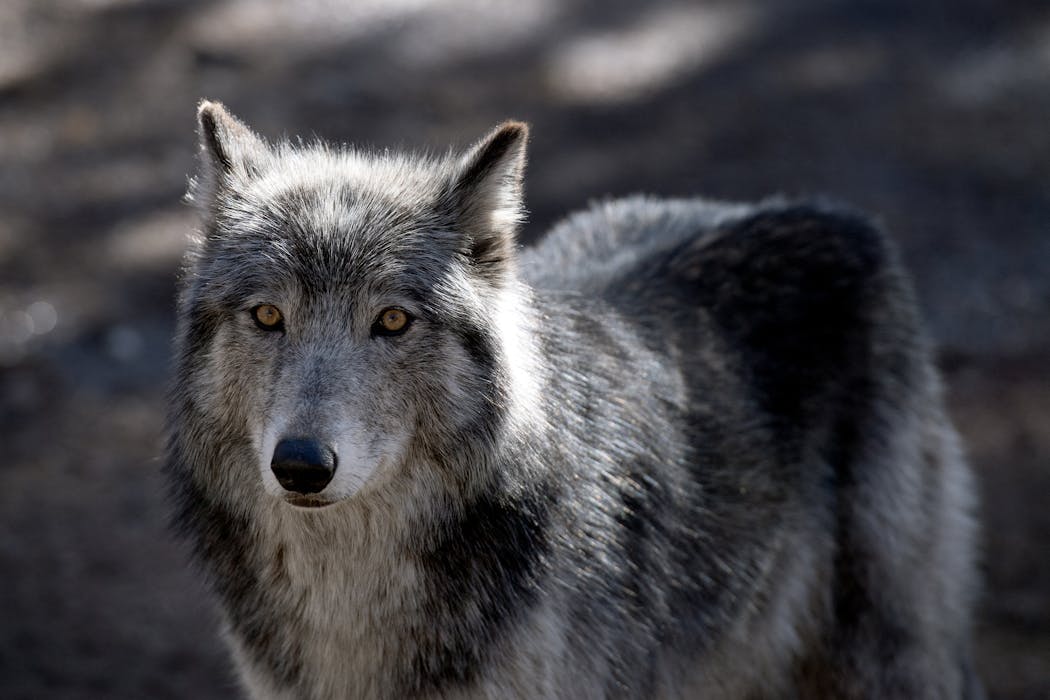
Management of gray wolves (Canis lupus) has a reputation for being one of the most contentious conservation issues in the United States. The topic often conjures stark images of supporters versus opponents: celebratory wolf reintroductions to Yellowstone National Park and Colorado contrasted with ranchers outraged over lost cattle; pro-wolf protests juxtaposed with wolf bounty hunters. These vivid scenes paint a picture of seemingly irreconcilable division.

But in contrast to these common caricatures, surveys of public opinion consistently show that most people around the world hold positive views of wolves, often overwhelmingly so. This trend holds true even in politically conservative U.S. states, often assumed to be hostile toward wolf conservation. For example, a recent study of ours in Montana found that an increasing majority of residents, 74% in 2023, are tolerant or very tolerant of wolves.

Still, the perception of deep conflict persists and is often amplified by media coverage and politicians. But what if these exaggerated portrayals, and the assumptions of division they reinforce, are themselves contributing to the very conflict they describe? In a study published Jan. 6, 2026, we explored this question.

A wolf walking through snow, with a herd of deer in the background.
A wolf roams through Yellowstone National Park. Wolves were reintroduced into Yellowstone in 1995.
William F. Campbell/Getty Images

The human side of conservation

We are social scientists who study the human dimensions of environmental issues, from wildfire to wildlife. Using tools from psychology and other social sciences, we examine how people relate to nature and to each other when it comes to environmental issues. These human relationships often matter more to conservation outcomes than the biology of the species or ecosystems in question. Conservation challenges are typically people problems.

A diagram showing how personal identity flows into social identity, which informs social categorization and leads to distinct social groups -- people then sort them into in-groups, 'us,' and out-groups, 'them.'
Social identity theory describes how many people view those with similar identities as part of their group, and those with different identities as an out-group.
w:en:Jfwang/Wikimedia Commons, CC BY

One of the most powerful yet underappreciated forces in these dynamics is social identity, the psychological force that compels people to sort themselves into groups and take those group boundaries seriously. Social identity theory, a foundational concept in psychology, shows that once people see themselves as members of a group, they are naturally inclined to favor “us” and be wary of “them.”

But strong group loyalties also come with costs: They can distort how people see and interpret the world and exacerbate conflict between groups.

When identity distorts reality

Social identity can shape how people interpret even objectively true facts. It can lead people to misjudge physical distances and sizes and assume the worst about members of different groups. When this identification runs deep, a phenomenon called identity fusion can occur, when someone’s personal identity becomes tightly linked to their group identity.

This phenomenon can lead people to act in questionable ways, even ways they might otherwise find immoral, particularly when they believe their group is under threat. For example, it’s possible these forces contribute to high-profile cover-ups of reprehensible behavior.

In our recent research, we tested how activating people’s political identities – simply reminding them of their own political party affiliations – affected their perceptions of wolves in the U.S.

Across two studies involving over 2,200 participants from nine states with wolf populations, we found a striking pattern. When we activated people’s political identity, their attitudes toward wolves became more polarized. Democrats’ affinity for wolves increased, as did Republicans’ aversion.

A graph showing attitudes toward wolves on the left, and political ideology on the right, with two lines, one showing activated political views and one not. The activated line declines more sharply, which the other stays constant and relatively high.
People’s attitudes toward wolves are relatively positive and weakly related to political ideology when political identity is inactivated, but they quickly polarize along ideological lines when political identity is activated.
Alexander L. Metcalf

On the other hand, when our particants’ political identities were not activated, they generally liked wolves, regardless of their politics. In a follow-up experiment where we had people guess their fellow and rival party members’ attitudes toward wolves, we found this identity-based polarization was driven by people’s assumptions about their in-group but not their out-group. People incorrectly assumed others in their party held extreme views about wolves, and those assumptions in turn shaped their own attitudes toward the species.

In other words, the caricatures themselves created the conflict.

This is an ironic and tragic outcome: A situation where many people actually agree became polarized not because of deep-seated differences but because of how people imagined others feel.

A wolf walking over snow, with a mountain view in the background.
A wolf from the Snake River Pack passes by a remote camera in Oregon.
Oregon Department of Fish and Wildlife via AP, File

Bridging the gap

Fortunately, the same psychological forces that divide people can also bring them together. When we showed our research participants the actual views of others, specifically that most of their fellow political party members held positive attitudes toward wolves, their own attitudes moderated.

Other strategies for uniting people involve activating “cross-cutting” identities, or shared identities that span traditional divides. For instance, someone might identify both as a rancher and a conservationist, or a hunter who is also a wildlife advocate. More broadly, our respondents are all Americans and community members who share a common humanity. Highlighting these blended and shared identities can reduce the sense of “us vs. them” and open the door to more productive conversations.

The debate over wolves may seem like an intractable clash of values. But our research suggests it doesn’t have to be. When people move beyond caricatures of conflict and recognize the common ground that already exists, we can begin to shift the conversation and maybe even find ways to live not just with wolves, but with each other.

The Conversation

The authors do not work for, consult, own shares in or receive funding from any company or organization that would benefit from this article, and have disclosed no relevant affiliations beyond their academic appointment.

ref. Americans generally like wolves − except when we’re reminded of our politics – https://theconversation.com/americans-generally-like-wolves-except-when-were-reminded-of-our-politics-267511

What the New Year’s fire at a Swiss bar tells us about fire prevention

Source: The Conversation – Canada – By Brodie Ramin, Assistant Professor, Faculty of Medicine, L’Université d’Ottawa/University of Ottawa

In the early hours of Jan. 1, 2026, a fire ripped through Le Constellation bar in Crans-Montana, Switzerland, killing 40 people and injuring 116, many of them severely.

Investigators believe the blaze began when sparklers on champagne bottles were held too close to the ceiling, igniting interior materials. The investigation is ongoing, and it is premature to draw conclusions about individual actions or responsibility. But fires do not need villains to be instructive.

What matters is not the spark itself, but the system into which that spark was introduced.

Fire safety, as history keeps reminding us, is not about eliminating ignition. We will always cook, heat, wire, decorate, celebrate and repair. Fire prevention is about ensuring that when ignition happens, as it inevitably will, it does not propagate.

My research has focused on how disasters are prevented, and how warning signs are missed when systems drift or protections are taken for granted. Fire safety is one area I have examined, and it reveals recurring patterns that are relevant to understanding this tragedy.

Fire as a contagion

For one thing, fire behaves less like an accident and more like a virus. It spreads through available fuel, follows paths of least resistance and accelerates when conditions are favourable. The historian Stephen Pyne describes fire as a “contagion of combustion.”

Like disease prevention, fire safety has never relied on a single safeguard. Instead, it depends on layers of them: materials that resist ignition, detection systems that identify problems early, compartmentalization that limits spread, suppression systems that slow or extinguish flames and trained humans who know how to respond when technology falters. When fires become destructive, it is almost always because multiple layers fail at once.

The Reason Model and fire prevention

The Reason Model, often visualized as slices of Swiss cheese, helps explain why disasters occur even in systems designed to be safe.

Each slice represents a layer of defence. Each slice also contains holes, imperfections, gaps and latent weaknesses. Most of the time, those holes do not line up, but when they do, harm passes through.

Latent conditions for fire exist everywhere: dry materials, electrical wiring, human fatigue, budget constraints, informal workarounds. These conditions are usually harmless until they align. The spark is not the cause of the disaster. It is merely the moment when all the holes line up.

Celebration and risk perception

The New Year’s fire at Le Constellation bar occurred in a celebratory setting. That matters, because celebration changes how we perceive risk.

Celebratory spaces often bring together the very conditions fire exploits: crowds, alcohol, decorations, reduced vigilance, temporary installation and informal rule-bending “just for the night.” When those conditions align with flammable materials or limited escape access, the margin for error shrinks dramatically.

Latent conditions are not evenly distributed across time. They cluster during moments of exception — holidays, renovations, special events when normal routines are suspended.

Notre-Dame: when multiple failures occur

When the Notre-Dame Cathedral nearly collapsed in a fire in April 2019, it shocked the world. The building was not neglected. It had a sophisticated fire detection system with more than 160 sensors. Fire wardens patrolled the attic three times daily. A firefighter was permanently stationed on site. The Paris Fire Brigade had trained for exactly such a scenario.

And yet, the fire still spread.

An alarm triggered at 6:18 p.m., but a misinterpreted code sent a guard to the wrong attic. A fatigued technician, covering a double shift, struggled to escalate the alert. The system detected the fire, but it did not automatically summon the fire department. By the time the correct location was identified, 30 minutes had passed. The roof timbers, made of centuries old dry oak, were already burning uncontrollably.

Notre-Dame did not burn because no one cared. It burned because multiple failures aligned: ambiguous alarm codes, human fatigue, delayed escalation and architectural features that lacked compartmentalization or sprinklers. A fire protection engineer later remarked that the only surprise was that the disaster had not happened sooner.

Rarity breeds complacency

One of the paradoxes of modern fire safety is that it works so well it becomes invisible. Between 1980 and 2024, the rate of reported fires per 1,000 people in the United States fell by more than 60 per cent, according to long-term data compiled by the National Fire Protection Association. Sprinklers, fire doors, smoke detectors, compartmentalization and education campaigns have made large fires rare.

But that rarity can breed complacency.

When a system prevents disaster hundreds of times, it becomes tempting to ignore precautions. Doors are left open. Materials are substituted. Alarms are misunderstood. Redundancies are trimmed.

The holes in the safety system widen quietly. Then, eventually, they all line up.

Learning from tragedies

The Swiss fire had its own specific causes, and those details matter. But the broader lesson is neither new nor obscure. Fires do not escalate only because people are reckless. They escalate because systems drift away from the conditions under which they were safe.

Fire safety is an engineering and organizational project. It requires constant attention to small details, especially when nothing seems wrong. It demands respect for fire and its destructive potential.

We have learned, repeatedly, how to prevent fires from spreading. Every major advance, from fire doors to sprinklers to automatic shutoff systems, came from studying failures where containment broke down.

The tragedy is not that we do not know what works. It is that, over time, we forget to be afraid.

The Conversation

Brodie Ramin does not work for, consult, own shares in or receive funding from any company or organisation that would benefit from this article, and has disclosed no relevant affiliations beyond their academic appointment.

ref. What the New Year’s fire at a Swiss bar tells us about fire prevention – https://theconversation.com/what-the-new-years-fire-at-a-swiss-bar-tells-us-about-fire-prevention-272777

Denaturalization in the Trump era: When the State questions the citizenship of millions of Americans

Source: The Conversation – France – By Ashley Mantha-Hollands, Max Weber Fellow, Max Weber Programme for Postdoctoral Studies, European University Institute

It is recognised in US law that the government may not take away a naturalized person’s citizenship except in cases of fraud or error on a naturalization application. The Supreme Court has clearly established that unless citizenship was unlawfully procured, denaturalization is unconstitutional. However, a memo issued by the Department of Justice (DoJ) in June attempts to broaden the grounds for denaturalization, potentially putting over 24.5 million naturalized US citizens at risk.

The memo states that the current US administration has directed the DoJ’s Civil Division to “advance the administration’s policy objectives”, among which is “prioritizing denaturalization”. Under this directive, the division is to investigate individuals who either “illegally procured” or “conceal[ed] a material fact” in their naturalization applications. The text outlines 10 “categories” of priority cases, which include individuals who “pose a potential danger to national security”; who “engaged in various forms of financial fraud”, including fraud associated with the Medicaid and Medicare healthcare programmes; and “any other cases referred to the Civil Division that the Division determines to be sufficiently important to pursue”.

The memo could broaden the scope of grounds previously used for denaturalization and will likely face legal challenge. Since September, the DoJ has filed denaturalization complaints against individuals for reasons such as providing false testimony and concealing identity, and for other crimes. In November, following a DoJ complaint filed in August, a US judge revoked the citizenship of a naturalized individual who had pleaded guilty to conspiracy to commit health care fraud. President Donald Trump, in a recent post on Truth Social, reaffirmed his commitment to “denaturalize migrants who undermine domestic tranquillity” and further stated, on November 30, in response to a shooting in Washington, DC, “if I have the power to do it… I would denaturalize, absolutely”.**

The DoJ memo represents a departure from 50 years of US policy between 1967 and mid-June 2017 – nearly five months into Donald Trump’s first term as president. During this period, the practice of citizenship stripping was rare and used primarily in extreme cases, such as for war criminals. In contrast, between 1906 and 1967, the US denaturalized more citizens than any other democracy. Several news and academic sources have highlighted what some see as similar motivations behind the current administration’s directive and past initiatives. It is also important to note that the DoJ memo will afford a discretion that could be much wider than in the past.

Denaturalization in the 20th Century

The original purpose of denaturalization in the US, put into force by the Naturalization Act of 1906, was to wipe out so-called “disbelievers in organized government” from society. The early cases were against political dissidents – some self-described, and some alleged socialists, anarchists and radicals – and often included journalists or labour unionists. One notable case is that of Emma Goldman, the first person to be denaturalized for her political views. Goldman was an anarchist who eventually lost her citizenship due to her activism against US involvement in the First World War. Denaturalization for political views was linked to two provisions in naturalization law: the requirement that a person have “good moral character” and that applicants be “attached to the principles of the US Constitution.”

One of the largest citizenship-stripping campaigns started in the 1940s, after the Nationality Act of 1940 gave naturalization authority to the DoJ. Once more, the primary targets were those with so-called “subversive” beliefs, particularly those with any affiliations to the Communist Party or the German American Bund. After the government denaturalized more than 22,000 people, this particular wave was halted by the Supreme Court in 1943, which declared that a person could not be denaturalized without “clear, unequivocal, and convincing evidence” that they were planning for the violent overthrow of the government. This became a standard impossible to prove, and cases of denaturalization subsided. In 1967, the Court decided that denaturalization was altogether unconstitutional except in cases of fraud or error in a naturalization application, and since, there have been only a handful of cases per year.

The DoJ memo doesn’t refer to ideological views such as “communism” or “socialism”, although the policy manual for US Citizen and Immigration Services (USCIS) states that an individual may be denaturalized “if the person becomes a member of, or affiliated with, the Communist party”. However, the first priority in the memo mentions anyone who “[poses] a potential danger to national security”, which can be broadly interpreted.

Threatening comments

In July, Trump made comments that raised questions about whether the beliefs of some naturalized individuals may put them at risk. These comments were about New York City mayor-elect Zohran Mamdani and actor Rosie O’Donnell. After US Congressman Andy Ogles threatened Mamdani, then a mayoral candidate, with a denaturalization investigation for rap lyrics Mamdani wrote in 2017 that Ogles viewed as “publicly praising” individuals convicted of supporting the militant Palestinian group Hamas, Trump said “a lot of people are saying he’s here illegally” and “we’re going to look at everything”. And the president threatened the birthright citizenship of O’Donnell, who was born in New York, saying that she “is not in the best interests of our Great Country”. Because O’Donnell is a natural-born citizen, there is no provision in US law to revoke her citizenship unless she provides her explicit consent. It’s also worth noting that Trump said he would “take a look” into the question of deporting billionaire Elon Musk, who became a naturalized citizen in 2002, after the Tesla CEO criticised the spending bill that passed into law in early July.“

Threatening denaturalization for opinions or statements, that while perhaps controversial are peaceful, reaches much further than the historical standard of believing in the “violent takeover of government” used to start a denaturalization proceeding in the past. Such threats generate a climate of fear where certain individuals and groups may be scared to voice opinions out of the threat of ending up in a denaturalization trial.

The expanded notion of ‘fraudulent acquisition’

Since 1967, fraudulent acquisition of citizenship has been the exclusive justification for denaturalization. Up until recently, this has been interpreted as a nondisclosure of information on a naturalization application that would have impacted the outcome of the application.

There has been an increasing number of investigations of fraudulent acquisition since 2008, the year that saw “Operation Janus”. This Obama-era policy targeted individuals who had been sent a deportation letter as an immigrant but had subsequently naturalized using a different name. The main driver was the digitization of records and fingerprint testing, which made it easier to identify discrepancies. In 2016, Trump expanded the operation to allow USCIS to investigate over 700,000 cases, marking the first push to “revive denaturalization”.

As scholars have argued, identifying fraud or a mistake is not always clear cut. For example, the US naturalization form asks whether a person has ever committed a crime, but does not specify what is included in its definition of a crime. It is unknown whether a crime committed in another jurisdiction that is not a crime under US law would count. This could have implications for same-sex couples or trans persons who come from countries where their status is illegal – such as in Uganda.

The June DoJ memo further expands what is considered as fraud for denaturalization to include instances of “loan fraud” or “Medicaid/Medicare fraud.” These types of fraud would likely not have previously met the standard of “willful misrepresentation” or “concealing material fact” that would have impacted the outcome of the naturalization process, since they are not related to a person’s immigration history.

Looking at denaturalization through the lens of race

While the memo does not mention race or ethnicity, some lawyers and legal scholars are concerned that, read alongside other developments in the current administration’s management of immigration, it will disproportionately affect certain minority and low-income communities.

Historically, race has been an explicit factor in immigration and denaturalization. Up until 1952, US citizenship law stated that only “white persons, persons of African nativity or descent, and descendants of races indigenous to the Western hemisphere” could be naturalized. In the 1920s, more than 50 naturalized individuals of Indian origin had their citizenship revoked after the Supreme Court decided that people from India were not “white” in “the understanding of the common man”

The DoJ memo came nearly three months after the deportation of hundreds of Venezuelan men with tenuous or non-existent ties to gangs or drug cartels, and nearly two months before a Supreme Court decision that allowed Immigration and Customs Enforcement (ICE) agents to use racial profiling in immigration raids in Los Angeles.

Some human rights groups and journalists have compared ICE immigration enforcement to how the US “War on Drugs” fuelled the mass incarceration of certain low-income and minority groups. As Sarah Tosh, a professor at Rutgers University, wrote in 2021, “these processes draw from a long history of targeted drug enforcement that has served to scapegoat, punish, and exclude immigrants and native-born racial minorities”.

Repeat of history or something bigger?

Unlike some European countries, the US previously had strong safeguards against denaturalization since the Supreme Court’s 1967 ruling. Since the end of September, the government has filed at least thirteen denaturalization actions (exact numbers are not publicly available), 11 of these actions were filed and publicly disclosed between September 30 and January 20, 2025, the beginning of Trump’s second term.

The “One Big Beautiful Bill Act” that passed in July allocated more than $3 billion in additional funds to the DoJ to exercise the administration’s immigration priorities – such as hiring immigration judges, staffing, and investigations.

The expansion of the potential grounds for denaturalization, the upcoming Supreme Court review of birthright citizenship, and even Ohio Senator Bernie Moreno’s recently proposed legislation to ban dual citizenship mark the potential for some of the most fundamental shifts in US citizenship to date. While some have rightly made the connection between present and past denaturalization initiatives, it remains to be seen how the Justice Department will make use of the memo’s criteria for denaturalization during the rest of Trump’s mandate.


The Conversation

Ashley Mantha-Hollands ne travaille pas, ne conseille pas, ne possède pas de parts, ne reçoit pas de fonds d’une organisation qui pourrait tirer profit de cet article, et n’a déclaré aucune autre affiliation que son organisme de recherche.

ref. Denaturalization in the Trump era: When the State questions the citizenship of millions of Americans – https://theconversation.com/denaturalization-in-the-trump-era-when-the-state-questions-the-citizenship-of-millions-of-americans-272130