OpenAI’s safety pledges in the wake of Tumbler Ridge aren’t AI regulation — they’re surveillance

Source: The Conversation – Canada – By Jean-Christophe Bélisle-Pipon, Assistant Professor in Health Ethics, Simon Fraser University

In a span of two days following news that the Tumbler Ridge perpetrator’s ChatGPT account had been flagged prior to the shooting, OpenAI CEO Sam Altman met with Federal AI Minister Evan Solomon and British Colombia Premier David Eby.

He secured commitments on both sides: reporting threats directly to the RCMP, retroactive review of previously flagged accounts, distress-redirect protocols, access to the company’s safety office for Canadian experts and an agreement to work with B.C. on regulatory recommendations to Ottawa.

He also agreed to apologize to the community of Tumbler Ridge, where 18-year-old Jesse Van Rootselaar killed eight people and wounded many others before dying of a self-inflicted wound. Months prior to the shooting, Van Rootselaar’s ChatGPT account had been flagged for scenarios involving gun violence. The account was banned, but not reported to law enforcement.

OpenAI’s new commitments are significant gestures. But they resolve a narrower question than the one Tumbler Ridge actually raised. As I argued earlier, the core problem was not a reporting failure. It was a governance vacuum.

What’s changed since? OpenAI has agreed to make the same type of unilateral determination it made before, but to act on it more aggressively, routing the result directly to the RCMP. That is not a fix. It is the same unaccountable architecture with a faster trigger.

The human-in-the-loop fallacy

Consider what we now know about the internal process. The shooter’s account was flagged. Human moderators reviewed the interactions. Some advocated escalating to law enforcement. Other humans, guided by the company’s own opaque thresholds, decided against it. The breakdown was not mechanical. It was institutional.

“Human in the loop” is one of the most repeated reassurances in AI safety discourse. The Tumbler Ridge case exposes its limits. Humans in the loop are only as accountable as the institutional structure around them. When that structure is a private corporation with no legally binding reporting obligations, no transparency requirements and no external oversight, the human in the loop is simply a more sympathetic face on an unaccountable system.

OpenAI has since announced that its thresholds have been updated. But updated by whom, according to what criteria, subject to what review? These remain internal decisions, invisible to the public and unreachable by Parliament.

The surveillance substitution

There is a deeper problem that receives almost no attention. The proposed settlement does not regulate AI. It regulates users.

The entire apparatus being constructed (internal threat identification, flagging, direct RCMP referral) is oriented toward monitoring what people say to AI, not toward how AI systems are designed, trained or constrained in their responses.

True AI regulation asks whether a model might facilitate or amplify harmful ideation through its interaction patterns. It asks how the system is built, what it’s tested for and what obligations attach to its deployment.

The current arrangement asks none of these questions. Instead, it builds a pipeline from private AI interactions to law enforcement, administered by a corporation, governed by proprietary policy.

I call this the surveillance substitution: a governance vacuum gets filled not with democratic regulation, but with corporate surveillance of users. It is not regulation of AI. It is regulation of the people who use AI, conducted by the AI company itself, with the police as the endpoint.

The civil liberties implications are substantial. Research on compassion-sensitive AI, including my own work on how AI systems should respond to users in vulnerable states, consistently shows that people disclose distress to chatbots precisely because the interaction feels private and non-judgmental.

If that space becomes a monitored channel where concerning disclosures trigger law enforcement referrals based on opaque corporate criteria, the most vulnerable users may stop disclosing. The chilling effect on help-seeking behaviour has not been studied, and it has not been discussed in any of the public negotiations following Tumbler Ridge.

Rational strategy, absent framework

It’s important to be precise about what OpenAI is doing. The company is not acting in bad faith. It is behaving as a rational private entity in the absence of a regulatory framework, offering the minimum viable response to political pressure while preserving as much operational autonomy as possible.

Look south and the logic becomes clearer. In the United States, the relationship between AI companies and government power is being forcibly renegotiated. The Pentagon has sought AI models with safety guardrails removed for military applications. When Anthropic resisted, OpenAI moved to fill the gap. In that context, the U.S. government commands and AI companies comply.

In Canada, the dynamic is inverted: OpenAI is not being commanded. It is volunteering concessions designed to pre-empt the kind of binding legislation that would actually constrain its operations. Support broad norms with no immediate legal force; resist specific domestic obligations that carry real consequences. This is how regulatory capture begins: not with corruption, but with convenience.

Canada has genuine leverage here: an unusual cross-party consensus that something must change, public attention that has given AI governance a human face, and a provincial government that understands the stakes.

But leverage evaporates. If the federal government accepts OpenAI’s pledges as a sufficient response, it normalizes corporate self-regulation as the baseline. Future companies will cite this arrangement as precedent. The window for legislation narrows.

What durable governance requires

The response that Tumbler Ridge demands is not more efficient surveillance of users. It is a regulatory architecture that addresses the systems themselves.

That means binding legislation with legally defined thresholds for when AI companies must refer flagged interactions to authorities: thresholds defined by Parliament, developed with mental health professionals, privacy experts and law enforcement, not inherited from a company’s terms of service.

It means an independent triage body so that flagged interactions are assessed by professionals equipped to distinguish ideation from intent, accountable to public law rather than corporate liability. And it means model-level accountability: regulatory attention that moves upstream from users to systems. How are these models designed to respond to escalating disclosures of violent ideation? What testing obligations apply? What auditing requirements exist?

These questions are absent from the current political negotiations, and their absence defines the limits of what the current pledges can achieve.

OpenAI’s commitments following Tumbler Ridge are the beginning of a conversation, not the end of one. Canada holds good cards. The question is whether it plays them, or lets the other side set the rules while the table is still being built.

The Conversation

Jean-Christophe Bélisle-Pipon does not work for, consult, own shares in or receive funding from any company or organisation that would benefit from this article, and has disclosed no relevant affiliations beyond their academic appointment.

ref. OpenAI’s safety pledges in the wake of Tumbler Ridge aren’t AI regulation — they’re surveillance – https://theconversation.com/openais-safety-pledges-in-the-wake-of-tumbler-ridge-arent-ai-regulation-theyre-surveillance-278364
Hundreds of hungry mosquitoes, a student volunteer and a mesh suit helped us figure out how these deadly insects reach their targets

Source: The Conversation – USA – By David Hu, Professor of Mechanical Engineering and Biology, Adjunct Professor of Physics, Georgia Institute of Technology

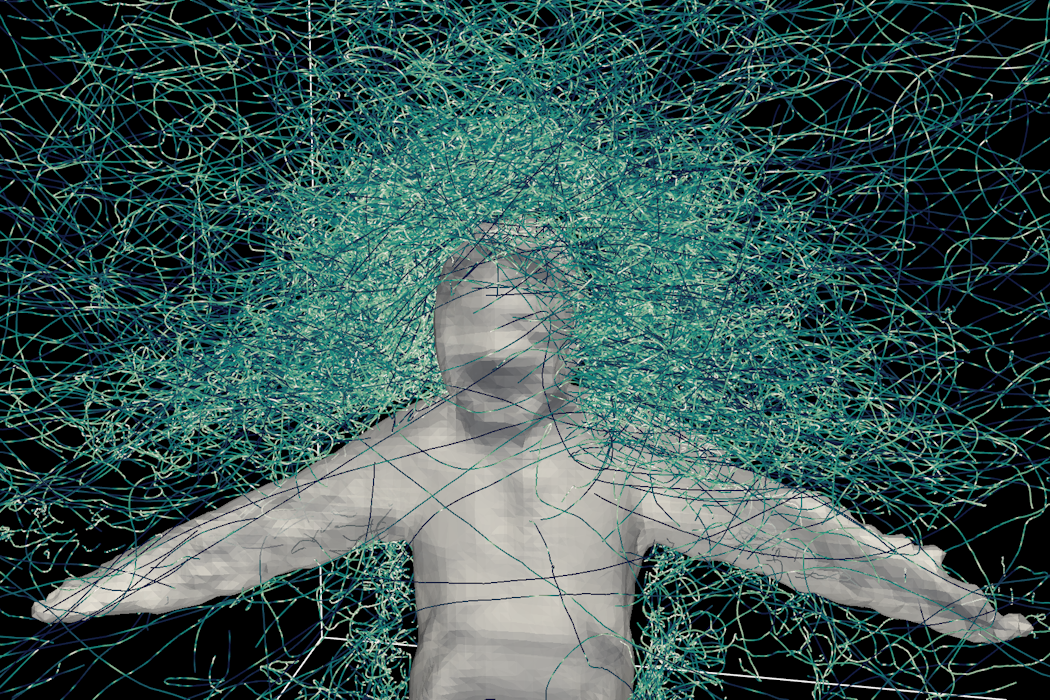
Trajectories of mosquitoes flying around a human target. David L. Hu, Georgia Tech

“Four minutes is too long.”

Man's arm with multiple pink raised welts
Some of Chris Zuo’s itchy results after his session with the mosquitoes.
David L. Hu

That’s the note undergraduate Chris Zuo sent me along with photos of countless mosquito bites on his bare skin. This full-body massacre wasn’t the result of a camping trip gone awry. He’d spent that limited amount of time in a room with 100 hungry mosquitoes while wearing nothing but a mesh suit we thought would have protected him.

Thus began our three-year journey trying to understand the behavior of a deceivingly simple insect, the mosquito. It may sound like a professor’s sadistic plan, but, really, we did everything by the book. Our university’s institutional review board approved our procedures, making sure Chris was safe and not coerced in any way. The mosquitoes were disease-free and native to our home state of Georgia. And this session resulted in the first and last bites anyone received during the study.

Besides my role as torturer of students, I am an author and professor at Georgia Tech with over 20 years of experience studying the movement of animals.

Mosquitoes are the world’s most dangerous animal. The diseases they carry, from malaria to dengue, cause over 700,000 deaths per year. More people have died from mosquitoes than wars.

The world spends US$22 billion per year on billions of liters of insecticides, millions of pounds of larvicides, and millions of insecticide-treated bed nets – all to fight a tiny insect that weighs 10 times less than a grain of rice and has only 200,000 neurons.

Yet, people are losing the war on mosquitoes. These insects are evolving to thrive in cities and spreading disease more rapidly with climate change. How can such simple animals find us so easily?

Scientists know mosquitoes have terrible eyesight and depend on chemical cues to make up for it. Knowing what attracts a mosquito, though, isn’t enough to predict its behavior. You can know a heat-seeking missile is drawn to heat, but you still won’t know how a missile works.

Enter Chris and his self-sacrifice in the mosquito room. By tracking the flight of many mosquitoes around him, we hoped to determine how they made decisions in response to his presence. Understanding how mosquitoes respond to humans is a first step to controlling them.

How mosquitoes zero in on their meal

Out of 3,500 species of mosquitoes, over 100 species are classified as anthropophilic, meaning they prefer humans for lunch. Certain species of mosquitoes will find the one person among a whole herd of cattle in order to suck human blood.

This is quite a feat considering mosquitoes are weak flyers. They stop flying in a slight 2-3 mph breeze, the same air speed generated by a horse’s swinging tail. In calmer conditions, mosquitoes use their minuscule brains to follow human heat, moisture and odors that are carried downwind.

Carbon dioxide, the byproduct of respiration of all living animals, is particularly attractive. Mosquitoes notice carbon dioxide as well as you notice the stink of a full dumpster, detecting it up to 30 feet (9 meters) away from a host, where concentrations dip to a few parts per million, like a few cups of dye in an Olympic-size pool.

Black outline of a G and T in left panel, in right panel black squiggles showing flight paths of mosquitoes around the letters
Like superfans, mosquitoes are drawn to the dark outline of the Georgia Tech logo.
David L. Hu, Georgia Tech

Mosquitoes’ vision isn’t much help as they hunt for their next blood meal. Their two compound eyes have several hundred individual lenses called ommatidia, each about the width of a human hair. They produce a somewhat blurry mosaic or pixelated image. Due to the laws of optics, mosquitoes can discern an adult-size human only at a few meters away. With their vision alone, they cannot distinguish a human from a small tree. They inspect every dark object.

Gathering the flight-path data

The challenge with studying mosquito flight is that, like trash-talking teenagers, most of what they do is meaningless noise. Mosquitoes flying in an empty room are largely making random changes in flight speed and direction. We needed many flight trajectories to cut through the noise.

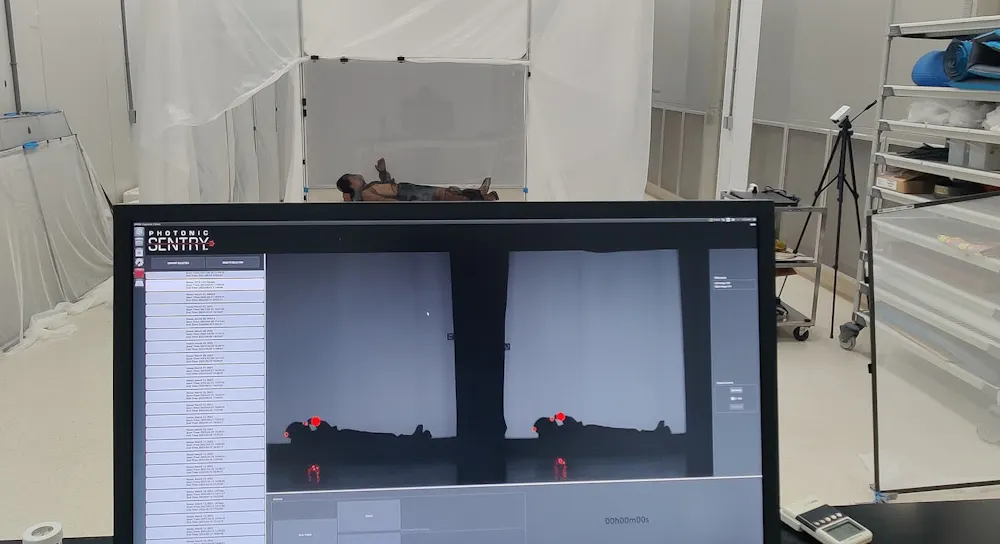
A man lying on the ground, and shown in two images on a laptop screen in the foreground
In a mesh suit, Chris Zuo awaits the mosquitoes while questioning his life choices.
David L. Hu, Georgia Tech

One of our collaborators, University of California, Riverside, biologist Ring Cardé, told us that back in the 1980s, scientists conducted “bite studies” by stripping down to their underwear and slapping the mosquitoes that landed on their naked bodies. He said nudity prevented confounding variables, such as the color of a shirt’s fabric.

Chris and I looked at each other. Sit naked and wait to become mosquito prey? Instead, we designed the mesh suit that Chris originally wore into the mosquito room. But after seeing Chris’ bites, we needed a better way.

Instead, Chris washed long-sleeved clothes in unscented detergent and wore gloves and a face mask. Fully protected, Chris only had to stand and wait, while a cloud of mosquitoes swarmed him.

The U.S. Centers for Disease Control and Prevention introduced us to the Photonic Sentry, a camera that simultaneously tracks hundreds of flying insects in a room. It records 100 frames per second at 5 mm resolution for a space like a large studio apartment. In just a few hours, Chris and another graduate student, Soohwan Kim, generated more mosquito flight data than had previously been measured in human history.

100 mosquitoes flying around Chris Zuo for 10 minutes. Only a fraction of tracks are shown.

Jörn Dunkel, Chenyi Fei and Alex Cohen, our mathematician collaborators at MIT, told us that the geometry of Chris’ body was still too complicated to study the mosquitoes’ reactions. Mathematicians excel at simplifying complex problems to their essence. Chenyi suggested we go easy on Chris – why not replace him with a simple dummy: a black Styrofoam ball on a stick combined with a canister of carbon dioxide.

Over the next two years, Chris filmed the mosquitoes circling the Styrofoam dummies mercilessly. Then he vacuumed up the mosquitoes, trying not to get bitten.

Deciphering the trajectories

A mosquito flies like you would an airplane: it turns left or right, accelerates or hits the brakes. We determined a mosquito’s flight behavior as a function of its speed, location and direction with respect to the target as the first step in creating our model of their behavior.

Our confidence in our behavioral rules increased as we read more trajectories, ultimately using 20 million mosquito positions and speeds. This idea of incorporating observations to support a mathematical hypothesis is a 200-year-old idea called Bayesian inference. We illustrated the mosquito behavior we’d observed in a web application.

4 panels showing trajectory of a mosquito in the presence of no target, visual target, CO2 target or both.
A mosquito’s flight changes with the kind of target presented.
David L. Hu

Using our model, we showed how different targets cause mosquitoes to fly differently. Visual targets cause fly-bys, where mosquitoes fly past the target. Carbon dioxide causes double takes, where mosquitoes slow down near the target. The combination of a visual cue and carbon dioxide creates high-speed orbiting patterns.

Up until now, we had used only experiments with Styrofoam spheres to train our model. The true test was whether it could predict mosquito flights around a human. Chris returned to the chamber, this time wearing all white clothes and a black hat, turning himself into a bull’s-eye. Our model successfully predicted the distribution of mosquitoes around him. We identified zones of danger, where there was a high chance of a mosquito circling around him.

Predicting mosquito behavior is a first step toward outsmarting them. In mosquito-prone areas, people design houses with features to prevent mosquitoes from following human cues and entering. Similarly, mosquito traps suck in mosquitoes when they get too close but still allow between 50% and 90% of mosquitoes to escape. Many of these designs are based on trial and error. We hope that our study provides a more precise tool for designing methods for mosquito capture or deterrence.

When Chris’ mother attended his master’s degree defense, I asked her how she felt about her son using himself as bait for mosquitoes. She said she was very proud. So am I – and not just because I’m relieved Chris didn’t ask me to take his place in the mosquito chamber.

The Conversation

David Hu does not work for, consult, own shares in or receive funding from any company or organization that would benefit from this article, and has disclosed no relevant affiliations beyond their academic appointment.

ref. Hundreds of hungry mosquitoes, a student volunteer and a mesh suit helped us figure out how these deadly insects reach their targets – https://theconversation.com/hundreds-of-hungry-mosquitoes-a-student-volunteer-and-a-mesh-suit-helped-us-figure-out-how-these-deadly-insects-reach-their-targets-278486

Evangelical holy war: Why some Christians think Trump will end the world

Source: The Conversation – Canada – By Matthew Burkholder, PhD Candidate, Theological Studies, University of Toronto

Soldiers in the United States Armed Forces have lodged more than 100 complaints with the Military Religious Freedom Foundation (MRFF) stating that their commanders are using extremist religious rhetoric to describe the U.S.-Israel war against Iran.

According to some complaints, American military commanders have told their troops the attack on Iran is a holy war, and that U.S. President Donald Trump was “anointed by Jesus to light the signal fire in Iran to cause Armageddon and mark his return to Earth.”

In a recent interview with Democracy Now!, the MRFF’s president, Mikey Weinstein, said the foundation was “inundated” with calls from soldiers indicating that commanders across the armed forces “were euphoric” because the war would serve as a way to “bring their version of weaponized Jesus back.”

The comments are among other violent religious rhetoric to come from U.S. officials. The U.S. ambassador to Israel, Mike Huckabee, caused a diplomatic row when he suggested Israel had a biblical claim to take over much of the Middle East.

The language also comes as some American officials have sought to characterize the Iranian government as fanatical. Secretary of State Marco Rubio said Iran was run by “religious fanatic lunatics.” Secretary of Defense Pete Hegseth said: “Crazy regimes like Iran, hell-bent on prophetic Islamic delusions, cannot have nuclear weapons.”

Meanwhile, American televangelist John Hagee recently claimed that Russia, Turkey, “what’s left of Iran” and “groups of Islamics” would soon invade Israel and be destroyed by God.

Democracy Now video: Whistleblowers speak out about religious extremism in military amid war on Iran.

American evangelicalism

During my PhD in Christian theology, I’ve asked why some American evangelical religious movements, which have gained increasing visibility and power through President Donald Trump’s MAGA politics shaped heavily by white Christian nationalism, embrace violent interpretations of what theologians refer to as “eschatology” (a theology of end times).


Read more:
When war looks like prophecy: How U.S. ‘end time’ narratives frame the war with Iran


While the term “evangelical Christian” is notoriously difficult to define, historian David Bebbington, who focused on these movements in the United Kingdom, delineated four broad charactersitics: a strong belief in the Bible, the death of Jesus for sins, a conversion experience and social activism.

My own research specialization is how modern Protestant Christians, including evangelical Christians, understand the significance of Jesus’s death, also referred to as the atonement, and its relationship to the end times.

Seeking Armageddon

Rhetoric about wars being religious, and Trump being divinely anointed and about to cause Armageddon, is deeply disturbing and has catalyzed condemnation from Christians in the U.S. and beyond advocating non-violent and diplomatic foreign policy.

Violent U.S. religious rhetoric being amplified with the U.S.-Israel war against Iran is associated with beliefs that once Israel is restored as a nation and the temple in Jerusalem is rebuilt, Jesus will return and judge humanity.


Read more:
As Iran war expands, some conservative Christians interpret the conflict through biblical prophecies


Christians adhering to these views read the Biblical Book of Revelation, with its vivid symbolic apocalyptic language, as making literal claims about history. They maintain their inspired and authoritative Biblical interpretation allows them to know that conflicts in the Middle East initiate God’s final act in history, with Trump seen as the dominating and aggressive man who can help usher in God’s violent judgment of his enemies.

Interpretations of Jesus’s death and violence

It’s relevant to consider how some Christian beliefs about Jesus’s death correlate with a willingness to support or justify violence.

Protestant Evangelical theologians, such as J. I. Packer and John Stott, argue that Jesus’s death primarily “paid the penalty” for human sin. They emphasize that God’s holiness requires a payment for this sin. In this framework, God orchestrates the violent death of Jesus to satisfy God’s penal justice to forgive humanity.

Non-evangelical Christians, on the other hand, like 19th-century Congregationalist Horace Bushnell and contemporary Mennonite theologian J. Denny Weaver, understand the death of Jesus as an example of God’s love.

In this interpretation, Jesus doesn’t endure violence to pay a debt to God. Instead, the death of Jesus is more akin to that of a martyr’s tragic death. These theologians reject violence as a condition for forgiveness.

A 2012 debate in the Presbyterian Church (U.S.A.) about a hymn demonstrates this tension, with a proposed change of hymn lyrics from “on that cross, as Jesus died, the wrath of God was satisfied” to “the love of God was magnified.” Ultimately, the authors rejected the proposal.

But the conflict demonstrates that Christians are passionate about their different interpretations of Jesus’s death.

Divine violence in atonement

Researchers have shown that penal atonement beliefs predict a negative association with a sense of responsibility for reducing pain and suffering in the world. This is not surprising when violence is incorporated as redemptive into theological frameworks.

I make a connection in my PhD dissertation between accepting divine violence in the atonement and divine violence in eschatology. Of course, this topic is far more complex and nuanced. Nonetheless, Christians are always going through a process of interpretation and negotiation when it comes to sacred texts.

For example, is Jesus the warrior Christ of Revelation 19 riding a warhorse to go into battle against his enemies or the teacher of peace in Matthew 21 who commands his followers to love their enemies just as God perfectly does?

Biblical interpretation and political beliefs

For those who see violence as a tool for redemption, they are more apt to subvert Jesus’s nonviolent teaching with images found in the Biblical book of Revelation. For those who see violence as incompatible with Christian ethics, they will interpret this allegorically, and with humility, paying attention to signs of God not just in their own lives and “insider” group. These two approaches will also inform political beliefs as well.

Consider a recent social media post by Reformed Baptist theologian and pastor John Piper. The post simply quotes Leviticus 19:34:

“You shall treat the stranger who sojourns with you as the native among you, and you shall love him as yourself, for you were strangers in the land of Egypt: I am the Lord your God.”

Piper was quickly labelled “woke” and pushing an “irresponsible” theology by Trump supporters. American theologan Russell Moore noted years ago:

“Multiple pastors tell me, essentially, the same story about quoting the Sermon on the Mount, parenthetically, in their preaching — ‘turn the other cheek’ — to have someone come up after to say, ‘Where did you get those liberal talking points?’”

A more responsible evangelical theology

I argue Christians should not believe in a God of violent death, but life. Violent atonement and eschatology portrays a God who is not above revenge and a God who leaves most of humanity hopeless.

We are left asking a series of disturbing questions if God is indeed about to end the world with violence. Why does the tone of this theology resemble the tone of empire, which crushes enemies instead of building bridges with them? Why does Jesus, as One Person of the One God, expect his followers to love their enemies — if God the Father ultimately does not?

All Christians in the U.S. and beyond need to reject violent theology as incompatible with the love of God that was magnified on the cross.

The Conversation

Matthew Burkholder is a member of the Liberal Party of Canada.

ref. Evangelical holy war: Why some Christians think Trump will end the world – https://theconversation.com/evangelical-holy-war-why-some-christians-think-trump-will-end-the-world-277617

How hatred of Jews became a common ground for Islamic terrorists and left-wing extremists, fueling domestic terrorism

Source: The Conversation – USA – By Arie Perliger, Director of Security Studies and Professor of Criminology and Justice Studies, UMass Lowell

A woman gathers children as law enforcement responds at a Michigan synagogue after an assailant drove a vehicle into the building on March 12, 2026. AP Photo/Corey Williams

Every major escalation in the Middle East sends shock waves far beyond the region. In the United States, those shock waves arrive not as distant tremors but as catalysts for domestic radicalization and violence, particularly against Jewish communities.

The data is unambiguous.

Following the Hamas attack on Israel on Oct. 7, 2023, which led to the deaths of more than 1,200 Israelis and taking of more than 200 hostages, Israel’s military responded in a campaign that intensified the following year, killing more than 70,000 Gazans.

At the same time, in 2024 the Anti-Defamation League recorded 9,354 antisemitic incidents in the U.S. – averaging more than 25 acts per day – the highest figure in the audit’s 46-year history.

FBI hate-crime statistics documented 1,938 anti-Jewish offenses in 2024, constituting 69% of all religion-based hate crimes. Jews comprise roughly 2% of the population.

The Secure Community Network, which provides Jewish communities in North America security services, tracked over 10,000 threat incidents and suspicious-activity reports since Oct. 7, 2023, including more than 500 credible threats to life in 2024.

Research shows similar trends following past military escalations in the Middle East.

Geopolitical violence abroad translates, with alarming efficiency, into homegrown threats in the U.S. and Canada. For the first time in the ADL audit’s history, a majority of incidents in 2024, 58%, contained elements explicitly related to Israel or Zionism. As someone who has studied domestic terrorism and hate for over 20 years, such dynamics are not surprising. They illustrate what my own research and that of others calls “imported conflict.”

The recent attacks against Jewish targets in Toronto, Michigan and possibly the one in San Jose underscore that the threat is neither abstract nor hypothetical.

A rubble-filled street in the middle of damaged buildings.
On March 6, 2026, a road strewn with rubble and debris is seen after heavy Israeli strikes on Beirut’s southern suburbs.
AFPTV / AFP via Getty Images

Radicalization of strange bedfellows

Foreign conflict can become domestic violence via multiple pathways.

Left-wing extremists, Jihadi-inspired militants and far-right white supremacists occupy distinct spaces along the ideological spectrum, yet they converge on a shared target: Jews.

Each escalatory cycle in the Middle East energizes their exposure to and gradual adoption of extremist views. Online ecosystems accelerate the process dramatically.

Encrypted Telegram channels circulate operational guidance from jihadist media wings within hours of a Middle East strike, encouraging attacks against Jews wherever they can be found. On platforms like 4chan and Gab, white-supremacist accelerationists seize on the same events to amplify “great replacement” narratives casting Jews as orchestrators of unwanted demographic change.

Meanwhile, TikTok and Instagram accounts repackage eliminationist slogans, advocating the end of the state of Israel – “from the river to the sea,” “glory to the resistance” – as mainstream progressive content, reaching millions of young users whose algorithmic feeds reward outrage over nuance.

What once required years of indoctrination within a closed network can now unfold in weeks of passive scrolling.

On university campuses, the atmosphere has grown particularly volatile. Campus Jewish organization Hillel International documented 2,334 antisemitic incidents during the 2024–25 academic year, the highest since tracking began.

These confrontations involve physical intimidation, exclusion from student organizations and what the organization describes as the normalization of eliminationist language cloaked in social justice vocabulary.

Antisemitism as anti-racism

To understand the increasing ease with which geopolitical violence abroad turns into antisemitic violence in the U.S. requires understanding the ideological developments in recent progressive thinking.

One observation that our research demonstrates is that today’s antisemitism may not come from the political fringes but from within progressive movements themselves. Much of progressive ideological frameworks tend to divide the world into oppressors and oppressed. Because Jews are often seen as white, wealthy and well connected, they can get placed on the oppressor side of that line.

Intersectionality – a concept originally designed to show how different forms of disadvantage overlap – is now regularly used to justify shutting Jews out of progressive coalitions and solidarity campaigns.

According to ADL survey data, Americans who agreed with the belief that problems in the world “come down to the oppressor vs. the oppressed” were 2.6 times more likely to hold negative or stereotypical views about Jewish people compared to those who disagreed with the statement.

I believe this is not a fringe problem. Among some parts of the intellectual and cultural elite, such as parts of academia, nonprofits and political parties, hostility toward Jews has become more apparent, with some suggesting that Jews simply do not deserve the same moral sympathy extended to other minorities. In some of these circles, if you do not accept that Jewish collective life is inherently oppressive, you are labeled a bad progressive and exiled.

A coalition of progressive California Democratic delegates pushed a resolution that opponents described as a Zionism “litmus test,” effectively requiring that delegates reject Zionism to be considered legitimate progressives. The D.C. chapter of the Sunrise Movement, an influential progressive climate group, boycotted a voting rights rally because of “the participation of a number of Zionist organizations.”

Such dynamics reflect that there is little room in this framework for the complexity of Jewish history, people who have been both persecuted and resilient.

Furthermore, they can facilitate the rebranding of antisemitism as anti-racism. Some writers have noted that attacking Jewish influence can become a moral duty rather than a bigoted act. Antisemitism is renovated with concepts such as equity, decolonization and liberation, despite promoting the same traditional antisemitic tropes.

A protester holding signs picturing Israeli leader Benjamin Netanyahu with a Hitler mustache.
A woman holds signs that depict Israeli leader Benjamin Netanyahu with a Hitler mustache at a protest outside the U.N. on Sept. 25, 2025, in New York.
Alexi J. Rosenfeld/Getty Images

Strange alliance

I assert that multiple ideological movements targeting Jews reflect a deeper structural alignment between political Islam and segments of the progressive left.

Superficially, the two camps could hardly appear more different. Contemporary left-wing activism champions LGBTQ rights, environmentalism, social and economic equality, human rights and government transparency. Radical Islamist movements reject most of these commitments outright.

Beneath these contradictions appears to exist a shared ideological architecture powerful enough to sustain cooperation: anti-globalization, anti-imperialism, rejection of the Western nation-state, the primacy of collective identity over individual rights, a revolutionary vision and, most critically, a common set of enemies.

This alliance is visible in the protest movements that have erupted on American streets and campuses since the attacks of Oct. 7, 2023. Marches under the banner of Palestinian liberation routinely feature Islamist slogans such as “From the water to the water, Palestine is Arab” alongside progressive placards, or Hezbollah iconography beside “Queers for Palestine” signs. What binds this coalition is opposition to Israel, to American power, and, increasingly, to Jews as symbols of both.

For domestic security, this Red-Green alliance matters because it creates a shared radicalization experience in which grievances originating in very different worldviews are fused into a single call to action.

And as a scholar of political violence and extremism, I believe that when a progressive activist and an Islamist militant attend the same rally, share the same social media space and chant the same slogans, the boundary between political protest and operational violence becomes dangerously thin. Consider two recent cases.

In May 2025, Elias Rodriguez − steeped in anti-Zionist rhetoric and whom the ADL has called a far-left activist − shot and killed Yaron Lischinsky and Sarah Milgrim, two young Israeli Embassy staffers, outside the Capital Jewish Museum in Washington, D.C., pulling out a keffiyeh and chanting “Free Palestine” as he was subdued. Weeks later in Boulder, Colorado, Mohamed Sabry Soliman, allegedly yelling “Free Palestine,” hurled Molotov cocktails at a weekly vigil for hostages held by Hamas, killing 82-year-old Karen Diamond.

These attackers occupied different positions on the spectrum between ideological radicalism and organized militancy, but they drew from the same well of dehumanizing language that circulates freely in spaces where political protest and incitement to violence have become indistinguishable.

Foreign crises, domestic failures

The structures governing how security agencies carry out their work in the U.S. are inadequate to this challenge.

Counterterrorism agencies seem to continue to treat Islamist militancy, far-right extremism and far-left radicalism as separate, unrelated threats. But the examples above point in a different direction: Ideologically distinct movements are converging on the same target − Jewish communities.

Meanwhile, civil rights agencies and nonprofit advocacy groups struggle to name progressive antisemitism for what it is, caught between legitimate commitments to anti-racism and the uncomfortable recognition that some anti-racist discourse has itself become bigotry.

Addressing the feedback loop between Middle East escalation and domestic antisemitic violence requires an honest reckoning with all of its sources – not only the familiar threats from jihadist networks and white supremacist cells, but also the ideological currents within progressive spaces that make hatred of Jews newly respectable.

Until policymakers, educators and leaders of civil society confront this threat’s full topology, Jewish Americans will continue to face a reality in which more than half report experiencing antisemitism in the past year and nearly half doubt that their neighbors would stand with them if the worst were to come.

The Conversation

Arie Perliger receives funding from Federal grants affiliated with DHS and DOJ.

ref. How hatred of Jews became a common ground for Islamic terrorists and left-wing extremists, fueling domestic terrorism – https://theconversation.com/how-hatred-of-jews-became-a-common-ground-for-islamic-terrorists-and-left-wing-extremists-fueling-domestic-terrorism-278373

If you think your toddler’s often ill, you’re right – what going to nursery means for catching colds and building immunity

Source: The Conversation – UK – By Lucy van Dorp, Principal Research Fellow, Microbial Genomics, UCL

Art_Photo/Shutterstock

There’s no nice way to put it: small children are snotty. A research study that tested children for multiple respiratory viruses every week for a year found that under-fives are carrying one or more viruses 50% of the time. A child aged 15 months will have 12-15 colds per year and eight or nine of those will show symptoms, such as a runny nose. If parents feel their small children are sick with a cold half the time, that’s backed up by evidence.

Our new study brings together information from different sources to understand how the immune systems of small children differ from adults, why children pass germs around so effectively and what parents can do to help.

Babies and toddlers are encountering a whole host of infectious diseases for the first time, which makes them more likely to have symptoms; this can make them more likely to pass these bugs on to others. We also found that going to nursery often accelerates a natural process of building up immunity that would otherwise take place at school. Finally, we highlighted vaccination as a major tool to reduce childhood sick days.

It’s worth saying that most of the evidence we reviewed is from studies conducted before COVID showed up. We don’t yet know whether COVID adds another virus to this mix.

Children experience about twice as many bouts of diarrhoea and vomiting per year as adults (two on average). Having an under five in your household increases your risk as an adult of having diarrhoea and vomiting three- to fivefold.

Children also pick up multiple viruses and bacteria that can cause rashes or skin infections. By 12 months of age, 70% of children have antibodies to the two viruses (HHV6A and 6B) that cause most cases of roseola (a common infection, usually causing high temperature and a rash). By age five, 65% of children in the UK have antibodies to varicella-zoster virus (chickenpox). In short, twelve colds, two rounds of diarrhoea and vomiting and one or two rash illnesses is typical between 12 and 24 months of age, with or without nursery.

Nursery bugs

But parents aren’t exaggerating when they say that starting at nursery leads to children and infants passing more germs around than might be caught at a birthday party or baby class. The process of picking up germs that cause colds, stomach bugs and rashes is sped up by starting at nursery and continues for one to two years.

However, this is a trade off against disease later.

Studies have shown that children who attend nursery have fewer infections when they start primary school than children who did not attend nursery. The idea that nursery gets bugs out of the way before starting school has evidence behind it. Whether or not this is a good thing may come down to parents’ opinions.

In some cases, delaying the age children get an infection for the first time is beneficial, such as for RSV, the cause of bronchiolitis. For others, earlier infection or vaccination (such as for varicella-zoster virus, the cause of chickenpox) seems to lead to milder symptoms than if infection is delayed to later in childhood.

We think it’s important for parents’ employers to know that all small children get ill frequently, and that this is entirely normal – their immune systems are barraged with new infections and they must develop immunity to those infections that can’t be prevented with vaccination. It’s not an indicator of poor hygiene at a nursery or parents being precious. Children can transmit before and after they show symptoms, simply keeping ill children home isn’t enough to stop transmission.

Beyond better support from employers, how do we make this situation better for young children and their parents and carers? We found in our research that vaccination is one of the most effective things we can do to prevent children from becoming sick and to reduce their symptoms.

With large outbreaks of measles in the US and UK, ensuring that young children receive their recommended vaccines, such as MMRV (for measles, mumps, rubella and, since early 2026, chickenpox) has never been more important. Between January 1 and March 6 2026, 34% of England’s measles cases were in the one to four years (nursery) age group. In summer 2025, over 96% of measles cases were in unvaccinated people.

In the future, vaccination programmes could even be designed to delay infection to the age at which it is safest for children to contract each specific infection, based on whether they are likely to be exposed at nursery.

Finally, we want to reassure parents that age, better hand hygiene and a more experienced immune system mean that rates of illness for nursery children go down by 50% each year of attendance. Things can only get better.

The Conversation

Lucy van Dorp receives funding from the UKRI Future Leaders Fellowshp Programme.

Charlotte Houldcroft receives funding from the Cambridge-Africa ALBORADA Trust and the European Research Council.

ref. If you think your toddler’s often ill, you’re right – what going to nursery means for catching colds and building immunity – https://theconversation.com/if-you-think-your-toddlers-often-ill-youre-right-what-going-to-nursery-means-for-catching-colds-and-building-immunity-275587

Taking Churchill off the banknote isn’t ‘erasing history’ – but it is a matter of identity

Source: The Conversation – UK – By David Lewis Thomas, PhD Candidate in Political Theory, University of Sussex

Janusz Pienkowski/shutterstock

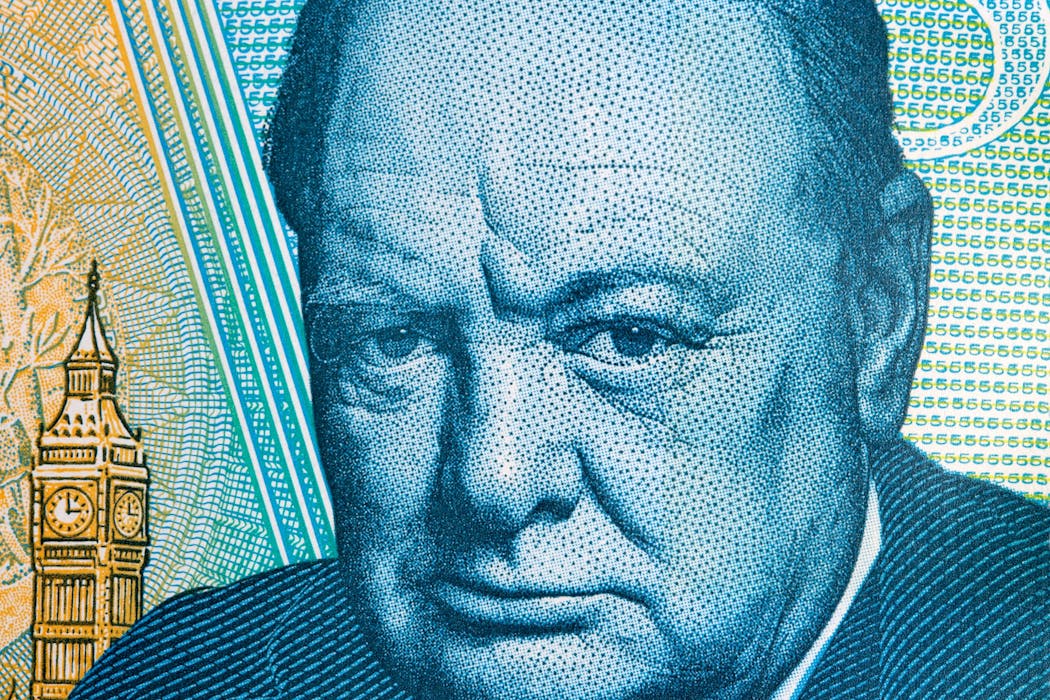
News of the intended removal of Winston Churchill’s image from the five pound note by the Bank of England has outraged some commentators and politicians. Reform UK’s Nigel Farage called it “the definition of woke”. Conservative leader Kemi Badenoch said the plans to replace historical figures with wildlife would be “erasing our history”.

As an anti-counterfeit measure, the Bank of England is replacing the historical figures on the next series of banknotes with wildlife. The wildlife to appear will be chosen after a public consultation.

Technically, of course, removing Churchill from a banknote would not erase him from history. Even if his reputation is at times questionable, the fact of his leadership through the second world war is not. What removing him from a banknote does threaten is something far more personal: the collective memory through which many people understand not just Churchill and Britain, but themselves.

Crucially, the Churchill presented in popular culture is not meant to be understood in historical terms. History involves research, debate and revision. The Churchill that most people encounter through television, school and national commemoration has instead entered mythology.

Empirical scrutiny of Churchill’s political record or his personal character becomes irrelevant. What matters is his image: hero, saviour of the free world, bastion of empire, epitome of the “bulldog spirit”. For those who have internalised this image, any criticism of Churchill is an attack on the very foundations of British identity.

It’s notable that this foundational identity does not seem to apply to Jane Austen or Alan Turing – the other famous images on British banknotes.

The late philosopher Bernard Stiegler has a useful way of understanding how these images become formative. Stiegler argued that human experience is constructed through three layers of attention. The first is our direct perception of a situation. Our second is personal memory, through which we organise our understanding of the past. The third layer, what Stiegler calls tertiary retentions, are external recordings of memory such as archives, media and institutions. It’s this third layer that shapes our collective, national identity.

What Churchill means to Britons

It’s baby boomer Britons who think positively of Churchill more than other generations. For those who grew up in the mid-20th century, mass media created a national narrative through shared cultural experiences. In the 1970s and early 1980s, there were still only three TV channels, meaning millions watched the same events simultaneously. Major sporting finals, royal weddings and state funerals became the cultural glue that held British identity together.

Churchill’s state funeral in January 1965 illustrates the scale of this. Around 25 million Britons watched on television, while another million lined the streets of London for the funeral cortege. Globally, an estimated tenth of the world’s population tuned in. For many viewers, the event – and the attention given to it – reinforced Churchill not just as a historical figure, but a symbol of national greatness. Such formative memories continue to shape that generation’s take on contemporary society.

This massified behaviour, as Stiegler calls it, blurs the boundaries between personal and national identities as the viewer is caught up in a synchronised memory. Media, schools and family life repeat the same narratives, reinforcing memory until they become part of the cultural fabric. Over time, the figure at the centre of that narrative ceases to be a complex historical figure, and becomes more of a cultural product. Debates over how Churchill is represented become a contestation of how people understand Britain’s past and their own place in it.

It is precisely such performance that we have seen this week. Those protesting the removal of Churchill’s image – much like those outraged at the defacing of Churchill’s statue in Parliament Square – are really protesting the undermining of their identity, which is constructed through these memories.

We see these memories and the identities they construct as universal truths or common sense. Yet they are memories that are both forged – in the sense of produced through participation – and forgery – in the sense that they are partly engineered by media narrative, and as such are inauthentic. Memories are not pictures of past events. They are images mediated by institutions: schools, newspapers, technology and their preferences.

Where once a handful of broadcasters shaped national memory, social media now channels audiences into competing communities, each with its own values and preferred memories. In this age of digital memory formation. Churchill’s image is – like all collective memory – not fixed. The Churchill myth, once widely shared, now sits within a contested cultural landscape.

The claim that history is being rewritten is better understood as a cry of defiance that a collective memory is being erased, and with it a personal identity, integrity and validity. The Churchillian identity is one that valorises domination and military strength as a measure of success. As new memories shape new expectations and identities evolve, we would do well to find new measures for understanding ourselves.

The Conversation

David Lewis Thomas does not work for, consult, own shares in or receive funding from any company or organisation that would benefit from this article, and has disclosed no relevant affiliations beyond their academic appointment.

ref. Taking Churchill off the banknote isn’t ‘erasing history’ – but it is a matter of identity – https://theconversation.com/taking-churchill-off-the-banknote-isnt-erasing-history-but-it-is-a-matter-of-identity-278561

Masked T-cell engagers: cancer immunotherapies for the future?

Source: The Conversation – UK – By Sheena Cruickshank, Professor in Immunology, University of Manchester

T-cells, a type of immune cell, can be used to attack cancer cells. Lightspring/ Shutterstock

A new immunotherapy drug has demonstrated early promise in a recent prostate cancer clinical trial. The drug, called VIR-5500, is a “masked T-cell engager”. This type of immunotherapy ignites our own immune arsenal to fight cancer.

In the trial, which is still in progress and has not yet undergone peer-review, patients with advanced prostate cancer who had failed to respond to other treatments were given VIR-5500. Remarkably, initial findings showed that in the patients who received the highest doses, 82% saw reductions in their PSA (prostate specific antigen) levels – a commonly used measure of prostate cancer.

Strikingly, nearly half of the patients within this group also showed tumour shrinkage at both the primary tumour sites as well as in metastatic tumours (tumours which had spread from the prostate into different parts of the body).

Cancer cells have mechanisms to evade being eliminated by our immune system. But immunotherapies boost our immune system’s capacity to fight cancer. They do this by combatting these evasion strategies.

Various immunotherapies have demonstrated phenomenal success in recent years. Yet many cancers, such as prostate cancer, remain difficult to treat exposing the need for more effective immunotherapies.

T-cell engagers are a specific type of immunotherapy that works by anchoring immune cells, called T-cells, and cancer cells together by engaging molecules on the surface of both cell types. This enforced proximity prompts the T-cells to produce toxic cancer-killing chemicals and generate a cascade of inflammatory processes that promote cancer killing.

There are now over 200 different T-cell engagers, many of which are in clinical trials to treat a range of tumours including multiple myeloma, leukaemia and lung cancer.

T-cell engagers

T-cell engagers are not just being trialled for cancer. They may also help with treating other viral conditions, such as hepatitis B, which can cause life-long infection. As in cancer, the virus can evade our immune responses – but T-cell engagers can promote more effective clearance of virally-infected cells.

Despite the great promise surrounding T-cell engagers, the vigorous inflammation they trigger can also be a double-edged sword. In some cases, it can cause a serious inflammatory condition called cytokine release syndrome.

Cytokines are protein messengers released by cells that can drive inflammation. Normally, their release is tightly controlled – but in cytokine release syndrome, the response is excessive and uncontrolled. This can lead to multi-organ failure with potentially life-threatening consequences.

A digital depiction of cytokines being released and attacking a cell.
T-cell engagers can also sometimes cause an uncontrolled immune response.
ALIOUI Mohammed Elamine7/ Shutterstock

Similar toxic inflammatory side-effects can be seen with other immunotherapies. It’s likely the condition is driven by the potent, acute activation of an immune response.

This is why T-cell engagers and other immunotherapy drugs need to be refined, to ensure their effects are less toxic.

One way of doing this involves producing versions of immunotherapies that are inactive but can be activated once inside tumours.

This is done by covering the drug in a “mask” that prevents it from engaging both the T-cells and cancer cells. When the drug enters tumours, molecules that are abundant in cancers can break down this mask, allowing the drug to engage its target cells. VIR-5500, the drug used in this recent, promising prostate cancer trial, is one of many new masked T-cell engagers.

As such, masking creates an effective drug that may also be safer. Tumour-specific activation should restrict the anti-cancer, inflammatory response to within the tumour, preventing widespread inflammation.

It may also enable the T-cell engagers to be more selective towards cancer cells, as some of their targets may also be expressed by normal healthy cells. This could simultaneously reduce toxicity and improve anti-cancer potency.

An additional benefit of masked immunotherapies is that the conversion from the inactive to active drug in the body takes time. This changes how the drug is dosed within patients.

In the clinic, T-cell engagers are often given in small doses that then need to be escalated to prevent acute immune over-activation. But the mask would allow the drug to be released more slowly, making delivery simpler and safer. The mask itself may also prevent the drugs from being broken down in the body and may extend their lifespan.

An important finding in this recent trial for prostate cancer was that most patients who received the highest doses of VIR-5500 suffered only mild inflammatory side effects. Given the known toxicity associated with T-cell engagers, this is an exciting finding – suggesting the masking is working to reduce the risks of excessive inflammation.

If further research proves that masking T-cell engagers creates safer, more effective drugs, then we can expand what we can do with them. They can be combined with more traditional cancer therapies, such as chemotherapy or radiotherapy, which may prove even more effective in eliminating cancer.

Other masked T-cell engagers have also shown early clinical promise in prostate cancer and trials have begun in numerous other cancers including pancreatic, colorectal and lung cancer.

As these trials are all ongoing, it’s too early to know the full extent of clinical success here. Early trials also only test within a small number of patients. The data has also not yet faced the scrutiny of peer-review and have only been presented at an oncology conferences.

Nevertheless, the initial results represent great hope for treating cancers that have proven otherwise difficult to treat with other immunotherapies.

The Conversation

Jonathan Worboys receives funding from Wellcome and the BBSRC.

Sheena Cruickshank does not work for, consult, own shares in or receive funding from any company or organisation that would benefit from this article, and has disclosed no relevant affiliations beyond their academic appointment.

ref. Masked T-cell engagers: cancer immunotherapies for the future? – https://theconversation.com/masked-t-cell-engagers-cancer-immunotherapies-for-the-future-277437

Your toddler is likely to get 12 or more illnesses in their first year at nursery – but they’ll build immunity, too

Source: The Conversation – UK – By Lucy van Dorp, Principal Research Fellow, Microbial Genomics, UCL

Art_Photo/Shutterstock

There’s no nice way to put it: small children are snotty. A research study that tested children for multiple respiratory viruses every week for a year found that under-fives are carrying one or more viruses 50% of the time. A child aged 15 months will have 12-15 colds per year and eight or nine of those will show symptoms, such as a runny nose. If parents feel their small children are sick with a cold half the time, that’s backed up by evidence.

Our new study brings together information from different sources to understand how the immune systems of small children differ from adults, why children pass germs around so effectively and what parents can do to help.

Babies and toddlers are encountering a whole host of infectious diseases for the first time, which makes them more likely to have symptoms; this can make them more likely to pass these bugs on to others. We also found that going to nursery often accelerates a natural process of building up immunity that would otherwise take place at school. Finally, we highlighted vaccination as a major tool to reduce childhood sick days.

It’s worth saying that most of the evidence we reviewed is from studies conducted before COVID showed up. We don’t yet know whether COVID adds another virus to this mix.

Children experience about twice as many bouts of diarrhoea and vomiting per year as adults (two on average). Having an under five in your household increases your risk as an adult of having diarrhoea and vomiting three- to fivefold.

Children also pick up multiple viruses and bacteria that can cause rashes or skin infections. By 12 months of age, 70% of children have antibodies to the two viruses (HHV6A and 6B) that cause most cases of roseola (a common infection, usually causing high temperature and a rash). By age five, 65% of children in the UK have antibodies to varicella-zoster virus (chickenpox). In short, twelve colds, two rounds of diarrhoea and vomiting and one or two rash illnesses is typical between 12 and 24 months of age, with or without nursery.

Nursery bugs

But parents aren’t exaggerating when they say that starting at nursery leads to children and infants passing more germs around than might be caught at a birthday party or baby class. The process of picking up germs that cause colds, stomach bugs and rashes is sped up by starting at nursery and continues for one to two years.

However, this is a trade off against disease later.

Studies have shown that children who attend nursery have fewer infections when they start primary school than children who did not attend nursery. The idea that nursery gets bugs out of the way before starting school has evidence behind it. Whether or not this is a good thing may come down to parents’ opinions.

In some cases, delaying the age children get an infection for the first time is beneficial, such as for RSV, the cause of bronchiolitis. For others, earlier infection or vaccination (such as for varicella-zoster virus, the cause of chickenpox) seems to lead to milder symptoms than if infection is delayed to later in childhood.

We think it’s important for parents’ employers to know that all small children get ill frequently, and that this is entirely normal – their immune systems are barraged with new infections and they must develop immunity to those infections that can’t be prevented with vaccination. It’s not an indicator of poor hygiene at a nursery or parents being precious. Children can transmit before and after they show symptoms, simply keeping ill children home isn’t enough to stop transmission.

Beyond better support from employers, how do we make this situation better for young children and their parents and carers? We found in our research that vaccination is one of the most effective things we can do to prevent children from becoming sick and to reduce their symptoms.

With large outbreaks of measles in the US and UK, ensuring that young children receive their recommended vaccines, such as MMRV (for measles, mumps, rubella and, since early 2026, chickenpox) has never been more important. Between January 1 and March 6 2026, 34% of England’s measles cases were in the one to four years (nursery) age group. In summer 2025, over 96% of measles cases were in unvaccinated people.

In the future, vaccination programmes could even be designed to delay infection to the age at which it is safest for children to contract each specific infection, based on whether they are likely to be exposed at nursery.

Finally, we want to reassure parents that age, better hand hygiene and a more experienced immune system mean that rates of illness for nursery children go down by 50% each year of attendance. Things can only get better.

The Conversation

Lucy van Dorp receives funding from the UKRI Future Leaders Fellowshp Programme.

Charlotte Houldcroft receives funding from the Cambridge-Africa ALBORADA Trust and the European Research Council.

ref. Your toddler is likely to get 12 or more illnesses in their first year at nursery – but they’ll build immunity, too – https://theconversation.com/your-toddler-is-likely-to-get-12-or-more-illnesses-in-their-first-year-at-nursery-but-theyll-build-immunity-too-275587

Human vision: what we actually see – and don’t see – tells us a lot about consciousness

Source: The Conversation – UK – By Henry Taylor, Associate Professor, Department of Philosophy, University of Birmingham

Kitreel/Shutterstock

What can you see right now? This might seem like a silly question, but what enters your consciousness is not the whole story when it comes to vision. A great deal of visual processing in the brain goes on well below our conscious awareness.

Some studies have probed the unconscious depths of vision. One source of
evidence comes from the neurological condition known as blindsight, which is caused by damage to areas of the brain involved in processing visual information. People with blindsight report that they are unable to see, either entirely or in a portion of their visual field. However, when asked to guess what is there, they can often do so with remarkable accuracy.

For example, in an experiment published in 2004 on someone with blindsight, a black bar was displayed in the portion of the visual field to which the person was blind. The person was asked to “guess” whether the bar was vertical or horizontal.

Despite denying any conscious awareness of the bar, the participant could answer correctly at a level well above chance. The participant even showed evidence of being able to pay attention to the bar – they were faster to respond when an arrow (placed in a healthy area of their visual field) correctly indicated the location of the bar.

The most popular interpretation (though not the only one) is that people with blindsight can see these objects, but not see them consciously. They see what is there, but it all goes on unconsciously, below their awareness.

The phenomenon of inattentional blindness seems to show you can see without the information crossing into your consciousness. Anyone can experience inattentional blindness. The phenomenon has been known about for a long time, but we can most easily get a handle on it by looking at a well-known experiment reported in 1999.

In this experiment, participants are shown a video of people playing basketball, and told to count the number of passes between the players wearing a white shirt. If you’ve never done this before, I urge to you stop reading now and watch the video.

In many cases, people are so busy counting the passes that they completely miss a large gorilla walking across the middle of the scene and beating its chest, then walking off. The gorilla’s right there, in the centre of your visual field. Light from the gorilla enters your eyes, and is processed in the visual system, but somehow you missed it, because you weren’t paying attention to it.

The gorilla has more to teach us. In another experiment reported in 2013, radiologists were given a series of lung scans. They were told to look for nodules (which show up as small light coloured circles) on each scan. In one of the scans, a large picture of a dancing gorilla was superimposed on top of the lung scan. In this study, 83% of the radiologists failed to spot it, even though it was 48 times bigger than the average nodule they were looking for. Some of them even looked directly at the gorilla and still didn’t notice it!

The interpretation of these experiments is controversial. Some scientists suggest that in these kinds of cases, you consciously see the gorilla, but immediately forget it (although a dancing gorilla in someone’s lung doesn’t seem like the kind of thing you’d forget). Others argue that you see the gorilla, but the information never made its way into consciousness. You saw the gorilla, but unconsciously.

Let’s assume that in the case of blindsight, and inattentional blindness, the information is seen, but didn’t make it all the way to consciousness. Then, the question is: what makes some information conscious, rather than the information that stays unconscious? This is one of the central questions for consciousness studies in philosophy, psychology and neuroscience.

The brain’s loudspeaker

There’s no agreement on which is the best theory of consciousness, but in my
opinion, the strongest contender is the global neuronal workspace theory.

According to this theory, consciousness is all to do with a particular area of the brain which is the seat of the “workspace”. The workspace is a system with a small capacity, so it can’t hold a lot of information at any one time. The job of the workspace is to take unconscious information and broadcast it to lots of different networks all across the brain. Global neuronal workspace theorists say that broadcasting the information in this way is what makes it conscious.

The job of the workspace is to act like the brain’s loudspeaker, and consciousness is the information that gets broadcast. The workspace takes unconscious information and boosts it so that many of the different systems in the brain hear about it and can use that information in their own processes. The late philosopher Daniel Dennett used to call consciousness “fame in the brain”. The workspace idea is similar.

One of the most striking implications of the global neuronal workspace theory is how little information makes it to consciousness. Since the workspace has quite a small capacity, it follows that we can only ever be conscious of a little at a time. We might think there’s a rich visual world in front of us, full of details, all of which we’re conscious of, but really – according to the theory – we’re only ever conscious of a small portion of that.

Some philosophers and scientists have objected to the theory on these grounds. They suggest that consciousness “overflows” the workspace: we are conscious of more information than can “fit” into the workspace at any one time. Even with these debates still ongoing, I think the global neuronal workspace theory gives us a reasonably clear answer to the question of what consciousness is for, and how it interacts with other systems in the brain.

In our brains, consciousness is only the tip of a very large iceberg. But the global neuronal workspace theory might give us insight into what makes that tip so special.

The Conversation

Henry Taylor has received funding from the Leverhulme Trust.

ref. Human vision: what we actually see – and don’t see – tells us a lot about consciousness – https://theconversation.com/human-vision-what-we-actually-see-and-dont-see-tells-us-a-lot-about-consciousness-276310

The UK’s high electricity prices are here to stay. But could they offer an opportunity?

Source: The Conversation – UK – By Renaud Foucart, Senior Lecturer in Economics, Lancaster University Management School, Lancaster University

K-FK/Shutterstock

Four years after Russia’s invasion of Ukraine, the world is bracing for another energy crisis. The US-Israel bombing of Iran and then the blockade of the strait of Hormuz have forced up the price of oil. The price of natural gas in Europe has also risen sharply.

In the UK, Prime Minister Keir Starmer has announced a £50 million package to support consumers who heat their homes with oil. The government is also considering a U-turn on the decision to increase fuel duty (currently almost 53p per litre of petrol or diesel) in September after a 15-year freeze. Other taxes would need to go up to compensate.

But the main question concerns what will happen to electricity prices this summer. A sustained crisis could push prices higher for both households and businesses. It could also push the Bank of England to avoid interest rate cuts, making mortgages more expensive. And the government could even end up paying part of everyone’s bills directly as it did between 2022 and 2024, piling up tens of billions of pounds of public debt.

To secure most of the future production of electricity – wind farms or new nuclear power stations for instance – the government signs what are known as “contracts for difference” with electricity producers. These contracts fix the price of electricity for decades, typically above expected wholesale prices.

These guaranteed prices correspond roughly to the expected average cost of producing electricity. Unlike gas, once a wind farm is built, each additional unit of electricity costs almost nothing to produce. So, without a guaranteed price, renewable producers would fear having to sell the electricity for free and never recouping their investment.

Consumers are shouldering the risk

The UK is not as sunny as somewhere like Spain and so will never get very cheap solar power. It is also trying to build new nuclear power plants, but the first attempt (Hinkley point C, currently expected to begin delivering electricity in 2030) is so expensive that the French state-owned energy operator EDF lost £10 billion in the process. Future projects now ask taxpayers to take most of the risk and pay upfront in the form of higher bills.

Consumers mostly notice these extra costs added to their bills (called “environmental levies”) when gas prices are low. The levies currently make up 6.5% of a typical bill, which is down from 13% after the government shifted some costs so that they would be paid for through general taxation.

So given that they’re paying upfront for the infrastructure, consumers might expect renewables to cut their bills when gas prices spike. But that is not how markets work: the price is set by the most expensive unit sold. Around 85% of the time in the UK this most expensive unit uses liquefied natural gas (LNG) transported by boat.

If one day the UK becomes like Spain where prices are mostly set by renewables (thanks to huge leaps in wind and solar), wholesale prices will often be zero. But consumers will still pay more, because they will still be charged the environmental levies that were put in place years before to invest in the infrastructure.

This is what led the CEO of energy giant E.ON, Chris Norbury, to declare in parliament that “even if the wholesale price was zero, bills would still be where they were today”. That’s true, but also a bit misleading.

Wholesale prices only go to zero because the country invested in renewables. The alternative – going back to more gas – would probably be much more expensive for everyone. It would certainly be more risky as the current conflict in the Middle East is illustrating.

Sunshine and wind do not need to pass through the strait of Hormuz and cannot be used as leverage by dictators. And what looks like a costly subsidy heaping pressure on billpayers in good times becomes insurance in a crisis.

During the peak of the energy crisis in 2022, the wholesale price of electricity was higher than the guaranteed one, and renewable generators paid money to the government instead of receiving subsidies. But because the government was helping out with everyone’s bills, consumers never saw the benefit.

Aerial photo of Ferrybridge Battery Energy Storage System under construction, part of UK renewable energy infrastructure, West Yorkshire.
Investing in storage at scale will be vital.
btimagery/Shutterstock

In 2025 in the UK, less than a third of electricity was generated using gas. Replacing renewables with gas would mean building power plants and importing more gas at ever-higher prices and greater geopolitical risk.

Gas is cheaper in the US where fracking makes the country almost energy independent. But fracking is much harder in places that are as densely populated as England. The government is currently planning to ban it everywhere in the UK.

But the UK’s vulnerable situation also gives it a chance to innovate and export. The key is making sure that consumers pay a price that reflects the real cost of electricity at any given moment.

The more we switch from fossil fuels – heating, cars, trucks – to electricity, the more battery capacity we have to fill. The price signal (the gap between cheap and expensive electricity) gives industries and households a strong incentive to innovate and invest in storage.

Most people only care about their monthly bill and won’t adapt directly. But smart appliances, home batteries and vehicle-to-grid systems (where vehicles can store electricity and sell it back to the grid when required) will do it for them.

The UK can gain in efficiency what nature has not provided in resources. This could give Britain a chance to sell its innovations to the world. Selling services is what the UK does as a country, after all. The large majority of global investments in energy are in renewables, and there will be huge opportunities for the countries that figure out how to run a grid on intermittent electricity sources.

The Conversation

Renaud Foucart does not work for, consult, own shares in or receive funding from any company or organisation that would benefit from this article, and has disclosed no relevant affiliations beyond their academic appointment.

ref. The UK’s high electricity prices are here to stay. But could they offer an opportunity? – https://theconversation.com/the-uks-high-electricity-prices-are-here-to-stay-but-could-they-offer-an-opportunity-278584