Workplace relief is coming for employees with symptoms of menstruation, perimenopause and menopause in Philly

Source: The Conversation – USA (3) – By Ann Juliano, Professor of Law, Villanova University

Accommodations might include brief, flexible breaks or temperature control to manage hot flashes. Disturbriana Media/E+ Collection via Getty Images

Imagine you’re a server at a busy restaurant that requires you to wear a form-fitting, polyester shirt as part of the uniform. When a hot flash hits, you are a sweaty mess. You really wish your employer would let you wear a cotton T-shirt instead.

If you live in Philadelphia, relief is on the way.

Beginning Jan. 1, 2027, the city of Philadelphia will prohibit discrimination on the basis of menstruation, perimenopause and menopause, and it will require employers to provide reasonable accommodations to employees for needs related to these conditions.

Perimenopause is the transitional period before menopause, marked by fluctuations in the hormones estrogen and progesterone. Menopause marks the end of the reproductive years, defined by not having a period for 12 consecutive months.

Both life stages are having a moment.

Social media is rife with influencers and life coaches selling supplements to relieve night sweats, clear brain fog and sustain libido. Many encourage strength training, walking with weighted vests, hormone replacement therapy and creatine, a compound that works to add muscle mass.

As a law professor at Villanova University, I teach and write about employment law and gender discrimination. I often focus on solutions to real-world problems for women and girls in the workplace.

Recently, I’ve taken up strength training, protein shakes and needlepoint. I’m clearly leaning into my identity as a woman over 50.

I believe the Philadelphia ordinance is a model for other cities and states to provide relief for workers suffering from symptoms of hormonal cycles and changes while balancing the needs of employers.

Woman lifts yellow shirt and reveals patch on stomach area
Low-dose estrogen patches have gained popularity as more people learn about the symptoms of perimenopause and menopause.
miodrag ignjatovic/E+ Collection via Getty Images

Following Rhode Island’s lead

Women’s health advocates have brought attention to the lack of training for medical professionals on the issues girls and women face resulting from menstruation, perimenopause and menopause.

In 2022, for example, a national survey of 145 OB-GYN residency program directors found that fewer than one-third of programs included curriculum on menopause. This is despite the fact that every single woman, if she lives long enough, will go through it.

While some progress has been made in the medical field, there has been even less when it comes to workplace protections.

To address this gap, in July 2025 Rhode Island became the first state to prohibit discrimination on the basis of menopause. Rhode Island also requires employers to provide reasonable accommodations to employees experiencing menopause-related symptoms.

The Philadelphia City Council said: “Hold my weighted vest.”

In December 2025, the council amended the Philadelphia Code to prohibit discrimination on the basis of menstruation, perimenopause and menopause. For example, if an employer fires an employee because of heavy menstrual bleeding resulting in leaking, that would violate the new law.

In addition, the City Council amended Section 9-1128, which requires employers to provide reasonable accommodations for needs related to pregnancy, childbirth or a related medical condition. That list now also includes “symptoms of menstruation, perimenopause or menopause” – provided the employee requests the accommodation and it does not cause an undue hardship for the employer.

Experts in medicine and public health and described the physical and emotional symptoms women and girls may face during these life stages. These symptoms include abdominal or pelvic cramping, fatigue, mood changes, headaches, irregular menstrual cycles, hot flashes, sleep disturbances and cognitive changes.

One expert noted that 23% of women who are experiencing perimenopause have symptoms severe enough to “.”

Employers will not have to accommodate every symptom, only those that “substantially interfere with an employee’s ability to perform one or more job functions.” Although the new ordinance does not define “susbtantially interfere,” the intent is to require accommodations when a worker cannot perform some part of her job – for instance, if period pain is so high that a retail worker cannot stand for their shift, or if hot flashes prevent a food service worker from staying in the kitchen.

Clear and explicit protections

In light of existing antidiscrimination laws, why is such a targeted law necessary?

Federal, state and local laws already prohibit employers in Philadelphia from discriminating because of sex. They also require employers with 15 or more employees to provide reasonable accommodations for pregnancy, childbirth and related medical conditions.

Federal, state and local laws also prohibit employers from discriminating against people with disabilities and require reasonable accommodations to allow them to perform the essential functions of the job.

But menopause and menstruation protections do not clearly fall within these protections.

There are a few cases across the country in which an employee successfully challenged their firing for a condition related to menstruation. But other employees have lost cases under federal law when courts ruled that menstruation is not covered by the Pregnancy Discrimination Act or Pregnant Workers Fairness Act.

Further, people seeking protection under the Americans with Disabilities Act for menstruation complications such as endometriosis, which occurs when tissue grows outside of the uterus and often causes severe pain during menstrual cycles, face an uphill battle. Instead of requiring employees who experience these sorts of symptoms to fit their cases into other statutes, Philadelphia’s new ordinance makes protection clear and explicit.

Reasonable accommodations

During a hearing on the proposed legislation, council member Nina Ahmad, who introduced the bill, noted that the accommodations envisioned are not costly. She and other council members gave : access to bathrooms and drinking water, brief flexible breaks, breathable uniforms, temperature control to manage hot flashes, fans or ventilation, ability to layer clothing, stocked period products and brief scheduling flexibility.

The type of accommodations necessary will change depending on the employee’s industry. Many women who experience symptoms already can decide what they wear to work, when they take a bathroom break and maybe even whether to work remotely. However, for workers in retail and service, or other workplaces with strict break policies, the ability to request a bathroom break or to drink water during a shift could significantly ease symptoms.

Just as the accommodations required will differ by job and industry, the employer’s ability to demonstrate undue hardship will also differ. Under the Philadelphia Code, undue hardship is an individualized assessment that considers such factors as the cost of the accommodations, the size of the workforce and the employer’s financial resources.

The devil is in the details, of course, but come January 2027, relief should be on the way for workers who are just trying to do their jobs while suffering from symptoms caused by menstruation, perimenopause and menopause.

Read more of our stories about Philadelphia and Pennsylvania, or sign up for our Philadelphia newsletter on Substack.

The Conversation

Ann Juliano does not work for, consult, own shares in or receive funding from any company or organization that would benefit from this article, and has disclosed no relevant affiliations beyond their academic appointment.

ref. Workplace relief is coming for employees with symptoms of menstruation, perimenopause and menopause in Philly – https://theconversation.com/workplace-relief-is-coming-for-employees-with-symptoms-of-menstruation-perimenopause-and-menopause-in-philly-275189

‘Vas Madness’ shows the power of messaging on men’s contraceptive decisions

Source: The Conversation – USA (3) – By Jenna Vinson, Associate Professor of English, UMass Lowell

Urologists market vasectomies to their clients during March Madness, when they can watch the basketball tournament while recovering from the procedure. Lew Robertson/Stone via Getty Images

Bracket-busting upsets, Cinderella stories, OT buzzer beaters – March Madness is here! Or, as some urologists think of it, vasectomy promotion season.

Since 2004, urologists have been promoting vasectomies every March, promising patients who elect the procedure an excellent excuse to relax on the couch and watch college basketball.

There’s evidence that these “Vas Madness” promotional tactics – sometimes paired with food giveaways and cheeky swag – may be effective. At least one study has noted an increase in vasectomy rates in the U.S. during the month of March.

This spike in vasectomies illustrates how communication about this procedure – and its perceived relation to manhood – can make a substantive shift in public acceptance of contraceptive sterilization for men.

I am a scholar of rhetoric and gender studies, and I have been studying the language around vasectomies for years. In my forthcoming book, “Stop Saying Snip! The Rhetoric of Vasectomy,” which will be published in April 2026, I show that communication plays a significant role in prompting people to welcome, seek or avoid vasectomies. In fact, I’ve found that language about fertility and communication about contraception greatly influence all decision-making around preventing pregnancy, particularly who should bear the burden of it.

Local news coverage of Vas Madness illustrates how people think about the procedure.

Gendered communication about contraception

For my book, I interviewed 17 people who rely on vasectomies to prevent pregnancies, and I asked them how they learned what a vasectomy was. Few knew for certain, and most did not remember at all.

This makes sense when you consider that information about this procedure is not routinely delivered to anyone. I have found that knowledge about vasectomies is not guaranteed to be covered through sex education in school, during annual doctor visits, through insurance coverage that encourages preventive health practices, or even in discussions with family and friends.

Rather, the rhetoric around preventing pregnancy places the onus of contraception on women. Throughout their lives, women receive messages from partners, parents, friends and medical providers that prompt them to think about their fertility and to take on the responsibility to manage that fertility. These messages subtly communicate that this is the most natural  or  normal way to prevent pregnancies.

In contrast, men do not often get this message that they should think about their fertility and take on the responsibility to manage that fertility. For example, men are rarely prompted to explain what they are doing to prevent pregnancies. One military father of two whom I interviewed for my book said that his primary care physician never discussed birth control with him at checkups. Yet each time his wife had a baby, her doctors would inquire whether she wanted to undergo tubal ligation, the sterilization procedure in which the fallopian tubes are cut.

Rhetoric, including questions providers do or don’t ask, plays a role in the unbalanced sterilization rates among men and women. According to a 2024 Kaiser Family Foundation survey, 25% of the women surveyed were sterilized, in contrast to just 11% of the men. And according to data from the National Survey of Family Growth, in 2022-2023, 6.8% of men age 18 to 49 had vasectomies, whereas during the same time period, 11.5% of women age 15 to 49 using contraception underwent sterilization.

In fact, female sterilization is the leading method of contraception used in the U.S., even though it is riskier and less cost-efficient than vasectomy.

A woman and man react with shock to the instructions for her birth control pills.
Rhetoric about contraception puts the responsibility for managing fertility on women.
Prostock Studio/iStock via Getty Images Plus

Manhood in the English language of fertility

The very language that English speakers use to refer to men’s fertility can conflate reproductive capacity with a positive vision of being a man. This makes acceptance of vasectomy quite tricky.

In medical articles, men’s reproductive capacity is discussed as “fertility.” But more colloquially, English speakers often use very different terms, such as “potency” and “virility.”

Potency comes from the Latin word potentia, meaning “power.” In English, potency refers to “power,” the “ability to affect something,” “authority” and “influence.” It also refers to the “ability to achieve erection or ejaculation in sexual intercourse,” to which the Oxford English Dictionary adds, “Also: fertility (of a male or female).” I have yet to encounter literature or messaging involving a potent woman — other than, perhaps, to refer to her scent.

Men who can reproduce may also be referred to as “virile,” from the Latin vir, meaning “man”. This inscribes a sense of “manhood” into language about men’s fertility: The Oxford English Dictionary defines virility as “mature or fully developed manhood or masculine force,” and “the power of procreation; capacity for sexual intercourse.”

The multiple meanings of these words help to explain the misconception that vasectomy, in curtailing fertility, threatens a man’s ability to influence others, access power and perform sexually. In this way, rhetoric around men’s fertility can interfere with broad acceptance of vasectomy.

After all, undergoing a vasectomy does require a willingness to be vulnerable. It involves talking to a medical expert about your sexual and reproductive desires, allowing medical staff to see and touch your otherwise private parts, and following another’s orders for what to do. This includes returning to the doctor’s office with semen to be analyzed in order to determine if the procedure was a success – a step many men skip.

And vasectomy is a surgical procedure, so it also means facing some risk of harm, albeit small.

Taken altogether, undergoing a vasectomy means behaving in a way that may feel in direct opposition to dominant cultural understandings of being “a man” – someone potent, virile and always in control.

Broadening communication about vasectomies

“Vas Madness” promotional tactics are one of the few public campaigns about the procedure. Yet even after the “madness” is all said and done, women still tend to do the brunt of pregnancy prevention work, consuming pills, implanting intrauterine devices, receiving injections and undergoing tubal ligation surgery, while managing all the doctor’s appointments and side effects those methods entail.

In conducting my research, I found that women’s efforts to give their partners information about vasectomies and to share the burdens they bear in managing fertility are an important driving force in many men’s decisions to have the procedure.

One 35-year-old man I spoke with had been relying on his partner to use birth control methods to prevent pregnancy, including an IUD placement that went wrong and then a contraceptive implant. After research and discussion, they decided on a vasectomy to prevent pregnancies moving forward. The man told me that his partner is “very informed about medical things.” He continued: “Any sort of trepidation I had about it, it was very easy to talk to her about it and be like, ‘OK, this really isn’t that big of a deal at all.’”

But communication from more sources, beyond seasonal urologist campaigns and the individual efforts of romantic partners, could help inspire more people to see vasectomies as a normal, needed and helpful procedure to prevent pregnancy.

In the meantime, reproductive labor continues to be, overwhelmingly, women’s work.

The Conversation

Jenna Vinson does not work for, consult, own shares in or receive funding from any company or organization that would benefit from this article, and has disclosed no relevant affiliations beyond their academic appointment.

ref. ‘Vas Madness’ shows the power of messaging on men’s contraceptive decisions – https://theconversation.com/vas-madness-shows-the-power-of-messaging-on-mens-contraceptive-decisions-278296

What an ancient devotional text means for the women of Nepal

Source: The Conversation – USA (3) – By Jessica Vantine Birkenholtz, Associate Professor of Women’s, Gender, and Sexuality Studies and Asian Studies, Penn State

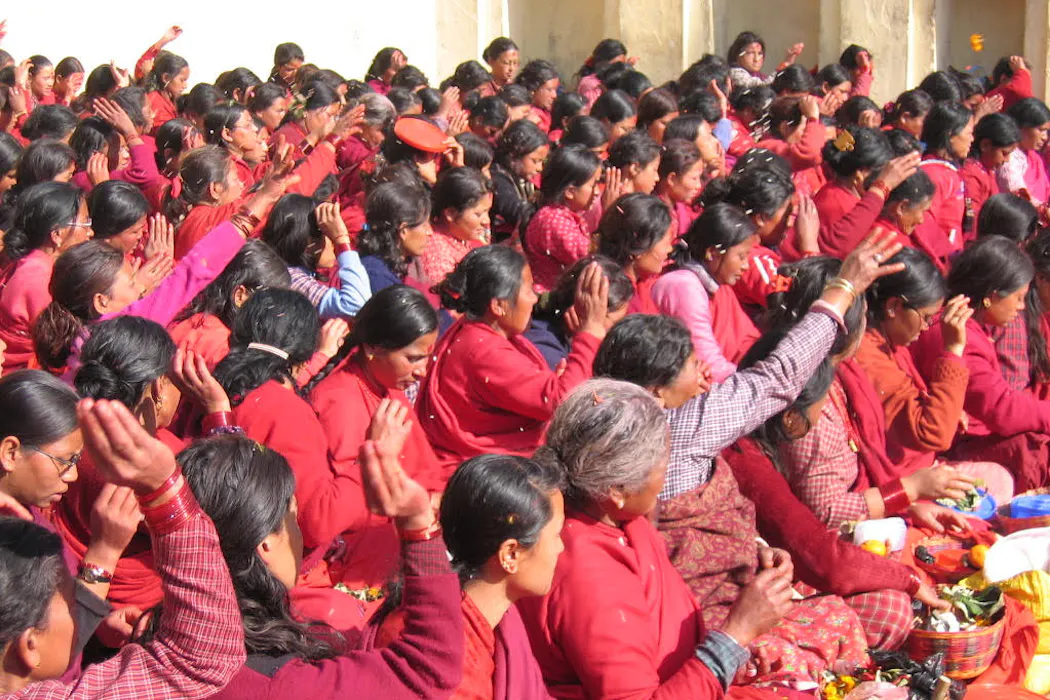
Nepalese women participate in the ‘Swasthani Vrata Katha’ ritual. Jessica Vantine Birkenholtz, CC BY-SA

I first heard the popular “Swasthani Vrata Katha” – a devotional text – recited in Sankhu, a village on the outskirts of Nepal’s Kathmandu Valley, some 25 years ago.

The text tells the story, or “katha,” of the ritual vow, or “vrata,” that women devotees perform to earn the favor of Swasthani, a local Nepali Hindu goddess.

Every day during the cold lunar month of January-February, 100 to 200 Hindu women, dressed all in red, carry out a ritual that requires them to bathe in the local river, eat only one meal per day, remain singularly focused and worship the Hindu god Shiva at midday. In the evening, they recite the devotional text or listen to it being recited.

Several women draped in red or white cloth bathe in the river, while men dressed in white also take part in the ritual dip.
Women taking a ritual bath.
Jessica Vantine Birkenholtz, CC BY-SA

This practice dates to the 16th century and continues today. Nepali families gather daily at their home or at a relative’s home to recite one of the 31 chapters of the text. The recitation is done even if no one in the family is participating in the ritual vow. Most devotees observe only a two-day ritual vow at the end of the month’s recitation, but some women perform the ritual vow for the whole month.

At the end of the month, devotees prepare a series of offerings to Swasthani for the concluding ritual. These include ritually specific cooked foods, fruit and flowers. After the ritual offerings are blessed by Swasthani, devotees give a portion to their husband. If there is no husband, then to their son. If there is no son, then to the son of a friend.

I have joined many families in their homes during my archival and ethnographic work over the past two decades. Like many Nepalis, I listened patiently to the Swasthani’s stories while waiting eagerly for the sweet treats that were given at the end of the nightly recitation.

As a scholar of gender and Hinduism in Nepal, I am aware of two readings of the text in Nepal: Some see it reinforcing patriarchal expectations, while many women find strength through the enduring hardships and perseverance of its female characters.

Stories in the text

The Swasthani text has a prominent place in Nepali culture. It is the only locally written work of Hindu literature that is actively read by lay Nepali Hindus. It is their primary source for key Hindu myths.

The first two-thirds of the text explain the creation of the universe and recount the most widely known myths associated with the supreme god Shiva. These are stories familiar to most Hindus.

For Nepalis, it is the last third of the text that is especially meaningful. Here, the focus shifts to the local and relatable stories of three mortals – Goma, Navaraj and Chandravati – and their devotion to the local Nepali Hindu goddess Swasthani.

Goma is married as a 7-year-old to a decrepit 70-year-old man. She dutifully endures marriage, motherhood and, too soon thereafter, widowhood. Her son, Navaraj, is obedient and dutiful. In contrast, his wife, Chandravati, is selfish as a daughter-in-law and disrespects Swasthani, leading to enormous misery for her.

Ultimately, all three experience social and economic transformation through devotion to Swasthani, which culminates in the crowning of Navaraj as a king and Chandravati and Goma becoming queen and queen mother, respectively.

Faithful wives – human and divine

Through its female characters, mortal and divine alike, the text highlights a woman’s principal role and identity as a faithful wife.

In addition to the pious, persevering Goma and flawed Chandravati in the mortal realm, in the divine realm there are the goddesses Sati and her reincarnation as Parvati. Both are known mainly for being devoted wives of Shiva. There are also wives of other lesser gods, semidivine beings and demons. They share in common unwavering devotion to their husbands but also regular subjection to the whims of their husbands or the gods.

Most notable of these other wives is Vrinda, the chaste wife of the demon Jalandhar. It is Vrinda’s chastity that protects her husband and prevents him from being killed by the gods for his brazen effort to seduce Shiva’s wife, Parvati.

To make Jalandhar vulnerable, the god Vishnu assumes Jalandhar’s form and debauches Vrinda. Her husband is immediately killed, and Vrinda is widowed through no fault of her own. She consequently commits sati, or self-immolation, on her husband’s funeral pyre – but curses Vishnu before doing so.

Patriarchy in Nepal

I have observed that in Nepal’s patriarchal culture, many women find strength in Goma’s plight and endurance. But that many Nepali feminists and youths question the treatment of women throughout the text.

Most Nepali women cannot inherit property and do not have equal citizenship rights. Child marriage remains a pervasive practice across Nepal and often results in girls dropping out of school to take on household responsibilities. According to the United Nations, one in three girls are married off before turning 18. Despite updates in Nepal’s 2015 constitution designed to remove gender discrimination, there remains a significant gap between the law and everyday lived experiences.

Marriage in Nepal is widely seen as “a woman’s destiny” and often gives the husband and his family “full authority to rule over a woman,” explains Luna KC, a scholar of global and international studies and gender studies. It is customary practice in Nepal and across South Asia for married couples to reside with the husband’s parents. As anthropologist Lynn Bennett and other researchers have demonstrated, this can be traumatic for the bride, who must leave her family and support system.

These dynamics play out in the Swasthani text and in current debates about its role in contemporary Nepali society.

Critics argue that the stories instill and normalize antiquated ideas and practices that reinforce gender inequality and impede women’s full participation in society and access to equal rights. “Our child marriage is based on this type of story,” according to a gender and human rights advocate I interviewed.

Rameshwori Pant, an independent researcher and journalist, echoes this when she describes how Goma’s story “haunted” her as a child because Pant’s own mother had also been married at age 7.

Finding hope in the text

Two pages of a book smudged with red.
A handwritten Swasthani Vrata Katha manuscript that dates to 1922 and is discolored from being worshipped with red vermillion by devotees.
Jessica Vantine Birkenholtz, CC BY-SA

Families often have centuries-old handwritten Swasthani manuscripts that are now family heirlooms. Increasingly, many also have a newly store-bought version. With their distinctive red wraparound cover, stacks of the printed Swasthani text stand out at local bookshops leading up to the annual recitation.

For many Nepali women, the Swasthani stories they learned as young girls linger and endure into their adulthood in complicated ways. As an adult, Pant was moved to write about the sociological, economic and gender aspects of the Swasthani practice. She asks, “Why is there violence against women and gender discrimination in a story written to celebrate women?”

Through my formal interviews and informal conversations over the years with Nepali women and devotees, it is also clear that many women find fortitude in the text’s description of familiar trials the women and goddesses face.

From this perspective, the Swasthani stories teach women that through perseverance, their hardships turn into triumphs and women’s suffering turns into strength. Goma is regularly invoked in popular discourse for her determination as a dutiful child bride, wife and mother who persists in the face of repeated adversity and ongoing lack of resources. These are the daily realities for many Nepali women living in a patriarchal society.

So while the text may not advocate for women’s social, economic or legal autonomy, it still offers encouragement: For some women, it provides a road map for working through life’s difficulties. This, too, can be empowering.

As a Nepali female lawyer explained to me: “The stories of the Swasthani have different life lessons to follow and apply. Just as the Buddha suffered and in the end found enlightenment, so, too, the Swasthani characters suffered but in the end found happiness.”

Staying power in modern times

Multiple stacks of red-covered books placed next to one another.
Swasthani books for sale.
Jessica Vantine Birkenholtz, CC BY-SA

I see and value both sides of the debates. They reflect the varied experiences, perspectives and concerns among Nepal’s diverse population. They also reflect the challenges of translating ancient and medieval beliefs and practices in the modern period.

What is striking is the text’s staying power. Its stories are centuries old – yet they are recited by many Nepalis every winter, even as the daily recitation now competes with many modern distractions, such as smartphones and social media.

The text remains an important piece of local Nepali heritage and culture. It offers a window into Nepal’s past, while also prompting reflections on Nepali values for the future.

The Conversation

Jessica Vantine Birkenholtz does not work for, consult, own shares in or receive funding from any company or organization that would benefit from this article, and has disclosed no relevant affiliations beyond their academic appointment.

ref. What an ancient devotional text means for the women of Nepal – https://theconversation.com/what-an-ancient-devotional-text-means-for-the-women-of-nepal-273901

This Mediterranean-style diet could keep your brain sharp as you age – new study

Source: The Conversation – UK – By Eef Hogervorst, Professor of Biological Psychology, Loughborough University

luigi giordano/Shutterstock.com

The Mediterranean diet – rich in olive oil, fish, vegetables and legumes – has long been linked to better heart health. Growing evidence suggests it may also help support brain health as we age, with a brain-focused variation of the diet drawing increasing scientific attention.

It is called the Mind diet. The name stands for Mediterranean-Dash Intervention for Neurodegenerative Delay – though what matters more than the acronym is what it actually involves: plenty of green vegetables, beans, whole grains, nuts, berries, poultry and fish, with olive oil as the main cooking fat, and limited amounts of red meat, butter, cheese, fried food and sweets. It combines the most brain-friendly elements of two well-studied eating patterns: the traditional Mediterranean diet and the Dash diet, which was originally developed to lower blood pressure.

A recent analysis from the long-running Framingham heart study examined the diets of adults aged 60 and over and assessed how these dietary patterns were associated with brain scan data collected later in the study. Those who followed the Mind diet most closely tended to have more grey matter – the tissue associated with memory and decision-making – and showed less overall loss of brain volume over time.

Both findings point in the same direction: that this way of eating may help keep the brain in better shape as we get older.

This is not the first study to suggest a link between diet and dementia risk. An earlier analysis combining 12 observational studies found an overall reduction in dementia risk of between 15 and 22% among people who followed Mediterranean-style diets, with the Mind diet showing the strongest effect of the three patterns studied. That is a meaningful difference, even if it cannot be taken as proof that diet alone is responsible.

Within the Framingham study, berries and poultry stood out as particularly beneficial for grey matter. This fits with what other research has suggested. Blueberries, for instance, have been the subject of several small trials, with one recent study finding improvements in memory even in people already showing early signs of memory problems.

Since red and processed meat have been linked to higher dementia risk in other studies, replacing them with chicken may be part of why poultry appears beneficial.

A factory worker putting sausages in a container.
Processed meat is linked to a higher dementia risk.
sergey kolesnikov/Shutterstock.com

Some of the findings were less straightforward. Fried food, as expected, was associated with worse outcomes. But whole grains, generally considered one of the healthier staples, produced a surprisingly weak result.

The reasons are unclear, though large amounts of bread and pasta – even wholegrain varieties – may raise blood sugar enough to offset some of the benefits. The evidence on whole grains and brain health remains mixed, and this is one area where more research is needed.

It is also worth noting who, in the Framingham study, was most likely to follow the Mind diet. They tended to be women, non-smokers, well-educated, and less likely to be overweight or to have diabetes, high blood pressure or heart disease. All of these factors are independently associated with better brain health, which makes it genuinely difficult to untangle how much of the benefit comes from the diet itself, and how much from the broader lifestyle it tends to accompany.

What the science can and can’t tell us

This is the central challenge facing all research in this area. Most of the studies are observational, meaning they track what people eat and what happens to them over time, rather than randomly assigning people to follow a particular diet and measuring the results.

Observational studies can show associations, but they cannot prove cause and effect. Self-reported diet data is also unreliable at the best of times – and particularly so among people whose memory is already beginning to fail.

The few trials that have actually put the Mind diet to the test have produced mixed results. One small three-month study found no improvement in memory or thinking skills, though participants did report better mood and quality of life.

Another trial found improvements in both brain scans and mental performance, but the participants were obese middle-aged women who also lost weight during the study, making it hard to know how much the diet itself contributed. Three months is also a short window in which to expect measurable changes in brain structure, and longer trials may yet tell a different story.

None of this means the Mind diet is not worth following. The broader evidence – across multiple studies and populations – consistently points in the same direction, and there is little downside to eating more vegetables, berries, fish and olive oil.

But diet is only one piece of a much larger picture. Not smoking, staying active, keeping blood pressure and blood sugar under control, and maintaining social connections all appear to matter at least as much when it comes to keeping the brain healthy in later life.

The Mind diet is not a cure for dementia, and it would be misleading to present it as one. What the evidence does suggest is that the food choices we make over decades – not just in later life, but across adulthood – may quietly shape the health of our brains in ways that only become visible much later. That is not a guarantee, but it is a reasonable basis for eating well.

The Conversation

Eef Hogervorst previously acted as consultant for Proctor and Gamble to review nutritional supplements and dementia risk/memory impairment. She received funding from ARUK, ISPF and ESRC to investigate (nutritional) risk factors for dementia. She also received PhD funding from DMT, Loughborough University and Universitas Indonesia She is a Chartered Psychologist with the BPS and holds an active BPS membership. She acted as expert on dementia risk and hormone treatment for NICE (2024) and ESHRE (2016) Guidelines.

ref. This Mediterranean-style diet could keep your brain sharp as you age – new study – https://theconversation.com/this-mediterranean-style-diet-could-keep-your-brain-sharp-as-you-age-new-study-278461

Netflix’s new Pride and Prejudice features Harewood House as Pemberley – here’s what the estate reveals about Austen’s world

Source: The Conversation – UK – By Robert W Jones, Professor of Eighteenth-Century Studies, University of Leeds

It is a truth, though not one universally acknowledged, that a country house possessed of spacious grounds must be in want of a large fortune. A film or television company might offer one, or at least an honourable provision.

The forthcoming marriage of Harewood House in west Yorkshire to Netflix, is much like any other in this respect. The union will produce a new version of Pride and Prejudice by Jane Austen (from whose work I have been very obviously scrumping), to be released later this year. Harewood will become Pemberley, Mr Darcy’s famously enticing home. Yorkshire will pose as Derbyshire.

Harewood is a grand house. Whether it is too grand for Pemberley is hard to say. In the book, Mr Darcy’s annual income of £10,000 is a huge sum. But the house might be contested in other ways too.

The estate has been the seat of the Lascelles family since 1738, when the Gawthorpe and Harewood Castle estates were acquired with money gained in the West Indies, from owning enslaved people, plantations, ships, warehouses and their associated goods and crops (as the estate’s website explains). The current owners, aware of the implications of the source of their inheritance, are among the cofounders of the Heirs of Slavery group, which advocates for compensation to address the ongoing consequences of slavery.

Harewood House appears as Pemberley in the teaser trailer for Netflix’s Pride and Prejudice.

Built between 1759 and 1771, the house boasts interiors designed by fashionable architect Robert Adam and furniture by Thomas Chippendale. Its serious art collection features Sir Joshua Reynolds, J.M.W Turner, Thomas Gainsborough and Sir Thomas Lawrence. Reynolds’s painting Mrs Hale as Euphrosyne (1762-64) graces, as she should, the splendid Adam-designed music room.


Read more:
Austen and Turner: A Country House Encounter captures the spirit of two great geniuses, born 250 years ago


Historian Mark Girouard’s classic study Life in an English County House: A Social and Architectural History (1978) still helpfully explains places like Harewood. He writes that these houses served several functions; business and work for much of the time, though the labour that sustained its splendours occurred in the Caribbean. They were also spaces intended for leisure and diverse forms of public and private sociability. Each activity was allocated (if imperfectly) different spaces within the house.

The music room at Harewood House has a piano, grand chandelier and ornate paintings on its walls.
The music room at Harewood House.
Michael D Beckwith/Wiki Commons, CC BY-SA

More recent studies academic studies, such as Karen Lipsedge’s Domestic Space in the British Eighteenth-Century Novel (2012) have developed this interest, explaining how space and gender interconnect. The music room at Harewood, with Mrs Hale as its central focus, would have held a special function in this respect.

Visiting Pemberley

Great houses like Harewood were designed to receive and impress guests. Any visitor would have needed to negotiate the shifting codes of privacy and publicity that might be in play (they were never static).


Read more:
Netflix to remake Pride and Prejudice – why Jane Austen novels make perfect period adaptations


The further into a house you were allowed, the more you entered a private realm where distinctions of rank might be in abeyance. In Pride and Prejudice the awful Lady Catherine de Bourgh knows this, doesn’t care and ploughs on. She enters the intimate space of the Bennet family’s drawing room where she expects to be accorded all respective and deference. Brilliantly, she isn’t. But she cannot be refused either and is guided to the more public realm of the garden.

Lady Catherine’s unwelcome visit as dramatised in the 1995 Pride and Prejudice.

In their Georgian heydays great houses like Harewood would have received many inveigling visitors, though they were not all like the bumptious, bungling de Bourgh. It is in this capacity that Pemberley is encountered in Pride and Prejudice, though its eligible but prideful owner (Darcy) has made the house intriguing long before.

Elizabeth and her aunt and uncle, the Gardiners, take their tour of the Derbyshire at the opening of the third volume of the novel. Elizabeth is still composing herself after the horrors of Darcy’s proposal and the revelations of his letter, detailing Mr Wickham’s atrocious conduct with its obvious implications for her young sister. As soon as Elizabeth sees the house and its grounds, she is taken with it and reflects: “To be mistress of Pemberley might be something.”

While the house is praised repeatedly in the novel, it is the views from Pemberley, not the “fine carpets and satin curtains” (which any house might have) which appear to attract Elizabeth most. There are several references to windows, and what can be seen from them in these scenes.

A tour of Harewood House.

If Darcy is redeemed in Elizabeth’s eyes at Pemberley, it is partly because he proves himself to be a good landlord. The change in Austen scholarship, especially since the last Pride and Prejudice adaptation, has been tremendous. Elizabeth has appeared more and more independent, less easily impressed by Darcy. Her perspective is now seen as far more important than all his trees, however much they convey his status.

Harewood and its prospects have changed too since Austen’s day. The landscape has altered. From some of Harewood’s windows you can still see what remains of Lancelot “Capability” Brown’s improvements: his clumps of trees and the great lake he introduced. But the Victorians removed a great deal.

What will the new Elizabeth see from Harewood — and what, in turn, will the viewer see? How might the new Darcy delight and interest his guest? Not by plunging into the lake surely. And from which window might Elizabeth finally catch that brilliant view?

The Conversation

Robert W Jones does not work for, consult, own shares in or receive funding from any company or organisation that would benefit from this article, and has disclosed no relevant affiliations beyond their academic appointment.

ref. Netflix’s new Pride and Prejudice features Harewood House as Pemberley – here’s what the estate reveals about Austen’s world – https://theconversation.com/netflixs-new-pride-and-prejudice-features-harewood-house-as-pemberley-heres-what-the-estate-reveals-about-austens-world-277786

Why social media bans won’t make parenting teenagers easier

Source: The Conversation – UK – By Tim Fowler, Associate Professor in Political Theory, University of Bristol

Dmitrij Galacewicz/Shutterstock

Countries around the world, including France, Spain and Malaysia, are planning to following Australia in enacting a ban on young people using social media. And now the UK is considering moving in the same direction.

These bans have emerged out of concerns about the effects of social media on children’s mental health, and increasing attempts to regulate teenage life. The UK recently brought in a “lifetime” smoking ban for anyone aged 15 or younger.

The potential ban on social media use is often explicitly justified by the support of parents. When announcing her party’s support for the measure, Conservative leader Kemi Badenoch said she knew “as a parent” that a ban was needed. It is seen as common sense that parents are leading proponents of these bans.

Bans offer two core promises to parents. They offer protection from the perceived harms of social media, and greater simplicity in managing day-to-day life. Rather than parents having to negotiate their child’s social media, parents may believe that once a ban is in place, they can simply say to their children that this behaviour is not allowed.

Official sanction can be used by parents as evidence that society views children’s use of social media as unacceptable. But in order to fulfil these promises, bans would need to be highly effective and socially endorsed. There are strong reasons to think this won’t be the case.

Teenage rebellion

Far from being passive, teenagers are technologically literate, socially networked and highly motivated. Recent UK experience with age verification for certain websites shows how quickly workarounds spread.

Since the passing of the Online Safety Act, the UK has seen a huge surge in downloads of virtual private networks (VPNs). These allow users to register as being from a different country to the one they are physically in. Teenagers may be able to use VPNs to bypass the bans.

They can also circumvent parental controls in less technologically savvy ways. This might mean buying a burner phone from a friend to access social media outside of their parents’ evening restrictions. Anecdotally, there are similar accounts of school children finding workarounds to avoid the increasingly prevalent “pouches” that restrict access to smartphones during the school day.

The larger lesson here is that by forcing behaviour to become covert, parents can often lose oversight of what their children are doing.

These examples are not too different to traditional tricks to get around social bans, like having a fake ID or getting an older friend to purchase cigarettes or alcohol. If parents reflect on their own experiences of teenage life, it may be evident why the act of banning does not eliminate this behaviour – and may even increase its attraction.

Girl unhappily handing over phone
Bans don’t stop prohibited teenage behaviour.
NDAB Creativity/Shutterstock

Even more importantly, as we also know in relation to alcohol or sexual activity, just because it is prohibited doesn’t take away the necessity of parents having conversations with their children about these topics.

Parents know that even if they harshly sanction their children for underage drinking, their child’s peers may have parents who turn a blind eye, condone alcohol, or supply it themselves. This means that getting teenagers to think about their use is essential – and the same holds true for social media.

Whether there is a ban or not, prohibited teenage behaviour continues. Navigating these risks is an unavoidable part of parenting adolescents.

As we have argued, parenting should be seen less as about achieving specified outcomes, and more as about valuing the individual relationship.

Putting the relationship between parent and child centre-stage means recognising there are different positions on the use and value of social media, and managing those differences successfully.

While digital life is novel and frankly scary to some parents, seeing the issue in a wider context of teenage life – sometimes risky, contested and hidden – makes these new issues more explicable to older generations.

Just as parenting requires understanding why a young person might choose to drink, have sex or use drugs, the case of social media also depends on understanding teenagers’ (online) worlds. This means engaging with the value and benefits of social media, and gaining some understanding of what platforms are being used and their content.

This is not to say that more effective regulation is impossible, just as legal regulation is important for other dangers that children and teenagers face. However, such regulation will not – and cannot – take away parents’ involvement, and its related challenges.

The Conversation

Funding provided by Economic and Social Research Council (ES/W002639/1) for Centre for Socio-Digital Futures ESRC Centre for Sociodigital Futures | Research | University of Bristol

Tim Fowler does not work for, consult, own shares in or receive funding from any company or organisation that would benefit from this article, and has disclosed no relevant affiliations beyond their academic appointment.

ref. Why social media bans won’t make parenting teenagers easier – https://theconversation.com/why-social-media-bans-wont-make-parenting-teenagers-easier-275263

The mathematical crimes of the Young Sherlock Holmes series

Source: The Conversation – UK – By Kit Yates, Professor of Mathematical Biology and Public Engagement, University of Bath

Warning this article contains spoilers about the new Amazon Prime series Young Sherlock.

I’ve read the whole Sherlock Holmes canon multiple times over. I love how Holmes uses analytical reasoning to unravel problems that look mysterious, but ultimately prove to have simple explanations. So I was excited when I saw Guy Ritchie’s Young Sherlock appear on Amazon Prime. My excitement was quickly tempered when I started watching, though.

A key part of the plot relies on mathematics. Holmes first meets his sidekick Moriarty (yes, he is working together with his future adversary) at the blackboard after a maths lecture at Oxford. Despite some mistakes in the dialogue, the maths on the blackboard is interesting enough. It is finding the solutions to the equation x5 + x4 + x3 + x2 + x + 1 = 0. As shown nicely in this video, the equation has five solutions.

In the maths many of us will have learned at school, we are taught that a positive times a positive makes a positive and that a negative times a negative also makes a positive. For example, 3 times 3 equals 9, but -3 times -3 also equals 9. Squaring a number (when you multiply a number by itself) should always give a positive result. The reverse operation – finding the number(s) you multiply together to give a positive number – is called taking the square root. The two square roots of 9 are 3 and -3, since when you square either of these numbers you get the answer 9.


Read more:
Taking a leap of faith into imaginary numbers opens new doors in the real world through complex analysis


If we want to take the square root of -1, say, then we need to venture into the realm of imaginary numbers. Imaginary numbers are the square roots of negative numbers. Mathematicians defined the imaginary number i to be the square root of -1 (technically -1 has two square roots i and -i). The square roots of other negative numbers are multiples of i. The square roots of -9, for example are 3i and -3i. Some of the solutions from the equation on the blackboard involve imaginary numbers (this will turn out to be an important plot point).

Mathematical blunders

It’s plausible that the equation on the blackboard might appear in an early first year undergraduate tutorial. Something approaching a passable solution is given, but in excruciating detail (the sort of detail you wouldn’t use at school, let alone in a maths degree at Oxford). And there are mistakes in the maths.

Towards the end of the lecture, the professor sets the students homework to find all the solutions to the equation, even though they are already written on the board (although incorrectly). Despite this, the end of the scene sees Sherlock spending some time trying to think of the solutions before Moriarty comes up and shows him two of the five solutions (as if they were the only ones). Moriarty too writes these down incorrectly, but in a different way to the incorrectness already on the board.

As Moriarty writes down the complex solution (complex means the answer contains both real and imaginary numbers) he says “These solutions, they’re not real. They’re imaginary.” which we can allow (although technically he means complex).

What we can’t forgive is Moriarty going on to say, “That means even if you can’t see the target, you can still shoot for it.” Which is nonsense, even as a metaphor. Complex numbers aren’t targets you can’t see, but well-defined, mainstream (even in the 1870s) mathematical quantities and there’s no sense in which you “aim at” a complex solution to an equation.

Death by numbers

In the last episode, Holmes and his team are battling to halt the distribution of a deadly chemical weapon known as the “creeping death”. They find a scrap of paper in a secret room which they say is the “equation for creating the creeping death.”

I was expecting to see some complex chemical reaction formulae sketched on the page, but when it’s held up to the camera, we see instead a mathematical equation: z3 + 4 z2 – 10 z + 12 = 0.

What does this have to do with the chemical process for creating the deadly nerve agent?

Nothing, it turns out. Or at least nothing I can imagine. In fact it’s a device to allow Holmes and Moriarty to hark back to that moment in the lecture theatre when they first met. What follows goes beyond artistic license into the realm of gibberish.

“If we have the positive equation”, they say, “then we can come up with the negative. And thus create a compound to neutralise the threat of creeping death.” Perhaps they meant “positive solution”, because equations themselves aren’t positive or negative. Either way, the idea that this simple mathematical equation or its solutions are the secret formula for making a weapon of mass destruction doesn’t make sense. There’s no context, no sense in which this equation could be the secret recipe for creating the nerve agent.

Moriarty points out that they have a problem. “This equation is not finished.” By this I think he means that the three solutions to the equation are not written out explicitly.

One solution, z = – 6 is given. And it’s correct. The rest of the scrap of paper contains a reformulation of the equation (a factorisation), which shows that the remaining solutions can be found by solving a quadratic equation: z2 – 2 z + 2 = 0.

A quadratic equation is just an equation built around a squared term (in this case z2), which has two solutions. The formula for the solutions may be familiar to GCSE students (normally aged 15 to 17 years old). For a general quadratic equation: a z2 + b z + c = 0, the two solutions are given below.

Yet, we are supposed to believe that, despite having supposedly solved a far more complicated equation than this in the first episode, Moriarty can’t find the solution to this much simpler equation. So stumped is Moriarty – the future maths professor – that he spends precious time, as a bomb is about to detonate, searching for a piece of paper with this missing solution. He almost loses his life when he could have just used a GCSE-level formula.

The piece of paper he eventually finds contains an incorrect statement of the quadratic formula alongside some nonsensical text, although the solutions are at least correct: z = 1 + i and z = 1 – i (where i, remember, is the imaginary number).

I appreciate my dissection of the maths is high-grade nerdery. Most people will have watched the series without pausing it like I did to look at the maths and probably won’t have noticed. But, if maths is going to be a pivotal plot point in your blockbuster series, then you’ll probably want to make sure you get it right.

The Conversation

Kit Yates does not work for, consult, own shares in or receive funding from any company or organisation that would benefit from this article, and has disclosed no relevant affiliations beyond their academic appointment.

ref. The mathematical crimes of the Young Sherlock Holmes series – https://theconversation.com/the-mathematical-crimes-of-the-young-sherlock-holmes-series-278812

The latest world climate report is grim, but it’s not the end of the story

Source: The Conversation – Global Perspectives – By Andrew King, ARC Future Fellow and Associate Professor in Climate Science, ARC Centre of Excellence for 21st Century Weather, The University of Melbourne

It’s no secret our planet is heating up.

And here’s the evidence: we’ve just experienced the 11 hottest years on record, with 2025 being the second or third warmest in global history.

The annual State of the Climate report, published today by the World Meteorological Organization, suggests we’re still too reliant on fossil fuels. And that’s pushing us further from our goal to decarbonise.

So what is happening to our climate? And how should we respond?

The climate picture

Unfortunately, the most recent climate data makes for grim reading.

Let’s look back at 2025, through the lens of four climate change indicators.

Carbon dioxide

We now have a record amount of carbon dioxide in the atmosphere, about 50% higher than pre-industrial levels. And we’re still emitting large amounts of carbon dioxide through our use of fossil fuels. In 2025, global emissions reached record high levels. The carbon dioxide we emit can stay in the atmosphere for a long time. So each year we keep emitting large amounts of carbon dioxide, the more concentrated it will be in our atmosphere.

Temperature

In 2025, the world experienced its second or third warmest year on record, depending on which dataset you use. The average temperature was about 1.43°C above the pre-industrial average.

This is particularly unusual given we observed slight La Niña conditions in the Pacific region. La Niña is a type of climate pattern characterised by temperature changes in the Pacific Ocean. It typically creates milder, wetter conditions in Australia and has a cooling effect on the global average temperature. But even with La Niña conditions, the planet stayed exceptionally hot.

And each of the last 11 years were hotter than any of the previous years in the global temperature series. This is true across all the different datasets used in the report. However, this does not mean a new record was set each year.

Oceans and ice

In 2025, the heat held within the world’s oceans reached a record high. And as our oceans continue to warm, sea levels will also rise. Hotter oceans also speed up the process of acidification, where oceans absorb an increased amount of carbon dioxide with potentially devastating consequences for some marine animals.

The amount of Arctic and Antarctic ice is also well below average. This report shows sea ice extent, a measure of how much ocean is covered by at least some sea ice, is at or close to record low levels in the Arctic. Meanwhile, the amount of ice stored in glaciers has also significantly decreased.

Extreme weather

Research shows many of the most devastating extreme weather events of 2025 were exacerbated by human-driven climate change. The heatwaves in Central Asia, wildfires in East Asia and Hurricane Melissa in the Carribean are just three examples. Through attribution analysis, which is how scientists determine the causes of an extreme weather or climate event, this report highlights how our greenhouse gas emissions are making severe weather events more common and intense.

How does Australia stack up?

Compared to most other countries, Australia has a disproportionate impact on the global climate.

This is largely because our per capita carbon dioxide emissions are about three times the global average. That means on average, each of us emits more carbon dioxide than people in all European countries and the US.

Emissions matter because they exacerbate the greenhouse effect. That is the process by which greenhouse gases, such as carbon dioxide and methane, trap heat near Earth’s surface. So by emitting more greenhouse gases, we contribute to global warming. And research suggests Earth is warming twice as fast today, compared to previous decades.

However, Australia is also experiencing first-hand the adverse effects of human-induced climate change.

In 2025, we lived through our fourth-warmest year on record. The annual surface temperatures of the seas around Australia reached historic highs, beating the record temperatures set in 2024. And last March was the hottest March we’ve seen across the continent.

Here in Australia, we are also battling longer and hotter heatwaves and bushfire seasons. And scientists warn these extreme weather events will only become more common.

The Bureau of Meteorology’s annual summary highlights how Australia’s climate is changing.

So what can we do?

The 2025 State of the Climate Report shows how much, and how quickly, we are changing our climate. And it is worryingly similar to previous reports, highlighting the need for urgent action.

The priority should be decreasing our emissions. This would slow down global warming, which will only continue if we keep the status quo. Some countries are already decarbonising rapidly, in part through transitioning to renewable electricity supplies. Others, including Australia, need to move much faster to reduce emissions.

Crucially, we must also meet our net zero targets. In Australia, as in many other countries, we are aiming to reach net zero by 2050. The sooner we reach net zero, the more likely we are to avoid harmful climate change impacts in future. To achieve net zero, we need to significantly reduce our emissions while also increasing how much carbon we remove from the atmosphere.

Even if we meet our net zero targets, climate change will not magically disappear. However, by turning away from fossil fuels and cutting our greenhouse gas emissions now, we may spare future generations from its worst effects. That’s the least we can do.

The Conversation

Andrew King receives funding from the Australian Research Council (Centre of Excellence for the Weather of the 21st Century and a Future Fellowship) and the Australian government National Environmental Science Program.

ref. The latest world climate report is grim, but it’s not the end of the story – https://theconversation.com/the-latest-world-climate-report-is-grim-but-its-not-the-end-of-the-story-278886

We’re asking the wrong questions about women’s athletic performance

Source: The Conversation – Canada – By Kurt Michael Downes, PhD Candidate, Kinesiology, University of Windsor

In 1992, an article in Nature asked, “Will women soon outrun men?” The question was sparked by a series of remarkable performances by women, including Florence Griffith-Joyner’s 100-metre world record in 1988.

At the time, women’s performances were improving faster than men’s, prompting speculation that the gap might eventually close in endurance events, and then possibly the sprints.

More than three decades later, the answer is clearer. Prior to puberty, boys and girls perform similarly, but the hormonal surge at adolescence sets in motion a lasting gap in speed, strength and endurance. Women have continued to narrow the gap, but a sizeable difference still remains. Even when talent, training and effort are equal, biology still sets upper limits of performance.

But does this really matter? Women’s sport does not need to be compared to men’s sport in order for it to be considered elite or credible. It can stand on its own. Maybe the real question is not how close the gap is between men and women but instead whether we are providing women with the training and resources to maximize their potential.

Puberty changes everything

Prior to puberty, boys and girls are similar from a performance perspective. Girls often keep pace or outperform boys, with similar race times, jump height and endurance capacities. Once puberty enters the equation, the balance shifts.

In boys, testosterone surges well above that of females at any age, driving gains in muscle, bone, heart size, lung capacity and hemoglobin — an iron-rich protein in blood cells that transports oxygen from the lungs to body tissues, including working muscles, which plays a major role in sports and is especially important in endurance events.

These traits boost speed, power and endurance capabilities.

On the other hand, girls experience spikes in estrogen and progesterone during puberty. These hormones are essential for reproductive health and are associated with higher body fat and wider pelvic structure, which in turn could alter athletic performance.

By the late teens, and importantly after the start of puberty, the divide is obvious. Men outperform women by 10 to 30 per cent across the majority of athletic events not because of differences in dedication or effort, but because physiology has set different athletic ceilings.

Biology sets the boundaries

Expanded investment, higher salaries, greater participation opportunities, stronger advocacy, the growth of professional leagues and improved coaching and training have benefited some sports like women’s football (soccer) over the last few decades. Recent developments, such as the new WNBA collective bargaining agreement that includes salary expansion and revenue sharing reflect a shift in momentum towards an increasing value in women’s sport.

Nonetheless, once training conditions become comparable at the elite level, the performance gap does not disappear — it stabilizes. Despite similar coaching, facilities and sports science support, a consistent performance divide remains because after puberty, muscle size, lung capacity and hemoglobin set a baseline that training cannot erase.

None of this diminishes the extraordinary sporting achievements of female athletes.

Exceptions to the rule? Where women excel

There are events in which women outperform men, and these cases are telling. In ultra-events and cold-water swims, women have occasionally won outright, likely as a result of greater fat metabolism, better pacing and higher tolerance for prolonged discomfort. These traits matter less in explosive events but can be decisive in prolonged endurance or sustained output activities.

Also, performance includes aspects of sport — like skill, tactics, and strategy — that are difficult to compare. The elements are a reminder that the performance gap shifts with context, rather than being finite.

Alternative questions

Acknowledging these differences does not diminish women’s achievements. Instead, it protects the principle of fair competition that women’s sport was created to uphold. Fairness, however, is not the same as equity.

The majority of women’s sport still receives less funding, media coverage and scientific investment, there are gender-specific barriers to sport and physical activity participation, and there are major gaps in understanding how female-specific physiology such as menstrual cycles, contraceptives and pregnancy affect performance and recovery.

These are realities that coaching practice and sport policy are only beginning to tackle. And this leads to an alternative question: when will the coaching/administration gap close?

This question is put forward in the face of continued disparities in the number of female coaches and administrators across most sports, a fact noted at the most recent Winter Olympic games.

Similarly, when will the training gap close? Along with sex differences in physiology, coaches and athletes acknowledge differences in coach-athlete relationships, injury risk and other aspects of health, yet training often continues to draw on sport science literature and sport programming historically based on male participants.

Anecdotally, after presenting on these topics to a group of high-performance coaches, several described seeing these differences in practice and expressed frustration that the research base remains too limited to guide them in sex-specific, evidence-based training practices. Nonetheless, expanding this research, as well as increasing the representation of women in sport leadership and administration, would be a step forward in creating change.

Will female athletes ever compete with males in the most physically demanding sports? Maybe, maybe not. But is this the right question?

Women’s sport does not need to mirror men’s to matter. Its value stems from fair competition and athletic achievement. It has earned the right to visibility, respect and investment — both financially and through research — to best allow all of our aspiring athletes to maximize their full potential.

The Conversation

Kurt Michael Downes receives funding from the Coaching Association of Ontario (CAO). He is the President and Head Coach the Border City Athletics Club (not-for-profit) and is a member on the boards of Inclusion in Canadian Sports Network (not-for-profit), Family Fuse (not-for-profit) and Resilient Kids Canada (not-for-profit).

Kevin Milne does not work for, consult, own shares in or receive funding from any company or organisation that would benefit from this article, and has disclosed no relevant affiliations beyond their academic appointment.

ref. We’re asking the wrong questions about women’s athletic performance – https://theconversation.com/were-asking-the-wrong-questions-about-womens-athletic-performance-270264

Psychological toll of betrayal trauma may help explain why women kept silent for decades after alleged abuse by civil rights icon Cesar Chavez

Source: The Conversation – USA – By Anne P. DePrince, Professor of Psychology, University of Denver

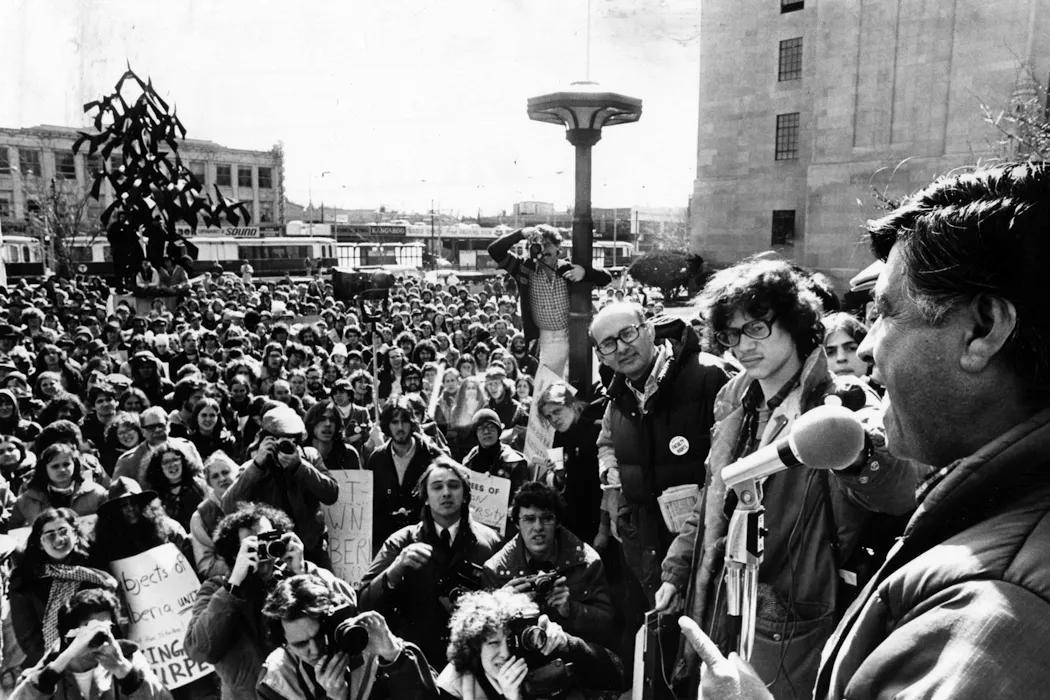
Cesar Chavez became a national hero for his advocacy of farmworkers’ rights. Here he gives a talk at Boston University in April 1979. Ted Dully/The Boston Globe via Getty Images

Multiple women told The New York Times that Mexican American civil rights hero Cesar Chavez assaulted them decades ago, including when some were just girls, one as young as 13. Over their multiyear investigation, published on March 18, 2026, journalists at the paper found “extensive evidence” of that abuse by poring over historical records and conducting interviews with more than 60 people.

While yearslong investigations into abuse allegations are rare, silence about abuse is common.

As a clinical psychologist who studies interpersonal trauma, I’ve seen how the dynamics of abuse can lead to silence, even over decades.

This research can help answer the question many asked when they heard about the charges against Chavez: Why didn’t the women speak earlier?

Power and trust betrayed

Among the women who disclosed abuse by Chavez, Dolores Huerta described seeing him “as my boss, as my hero, as, you know, somebody that would do the impossible.” Debra Rojas said, “I had love for him … He did his grooming very well.”

When perpetrators abuse those who trust and depend on them, the betrayal adds to the harm of trauma. Betrayal trauma theory helps explain why.

A woman with dark hair and a red dress and hat looking at a large mural of a man with brown hair.
United Farm Workers co-founder Dolores Huerta looks at a mural of the late Cesar Chavez on the San Jose State University campus in San Jose, Calif., on Sept. 4, 2008.
AP Photo/Paul Sakuma, File

Victims who depend on the people abusing them face extraordinary pressure to minimize what is happening. Disclosure can mean losing relationships or resources that are necessary for survival. Children abused by caregivers or community leaders risk relationships that they need to get their basic needs met. Adults who disclose abuse or harassment by employers risk losing their jobs and economic security.

Adding to the harm of abuse, perpetrators commonly twist reality to keep victims silent. They might directly instruct victims not to tell others what happened. They might also tell victims that they are actually the ones to blame for causing the abuse or that no one will believe them.

Victims must adapt to this untenable situation in which they depend on the very people causing harm.

For some people, betrayal results in dissociation symptoms and memory impairment for what happened. Dissociation is a common response to traumatic stress that can include amnesia, feelings that things are unreal or feeling disconnected from what is happening. Dissociation and memory impairment can help victims maintain necessary attachments in the short run.

Betrayal also contributes to more shame and self-blame, as well as more severe psychological and physical health problems.

Shame and self-blame can make it harder to disclose what happened. Not surprising, then, victims of high-betrayal traumas are less likely to disclose what happened relative to other kinds of traumas.

When betrayal-trauma survivors do speak up, delayed disclosures can be met with blame or disbelief, even from health providers. Survivors with more severe psychological symptoms are also met with more negative reactions to their disclosures.

Betrayal also makes escaping abusive relationships, including physically violent ones, difficult. Greater dependence on the perpetrator has been linked with a greater likelihood of staying with an abusive partner a year after a police report of domestic violence.

Cultural and institutional betrayal add to harm

Women told The New York Times that they stayed silent about their abuse, which for some began when they were girls, in part “for fear of tarnishing the image of a man who has become the face of the Latino civil rights movement.”

When people in marginalized groups are abused by someone from the same group, that constitutes an additional wound. Dr. Jennifer Gómez described this as “cultural betrayal trauma.”

With cultural betrayal trauma comes even greater pressure to stay silent as well as greater harm from the abuse.

When institutions such as churches, schools or unions fail to stop abuse or respond appropriately, that institutional betrayal can also add to the harm caused by the original abuse. In turn, institutional betrayal predicts greater dissociation and health problems, adding to the burden of abuse.

Anticipating disbelief and blame

Ana Murguia told The New York Times that she believed she would be blamed for the abuse.

Huerta, who was one of three co-founders, along with Chavez, of what ultimately became the United Farm Workers union, told the newspaper that she “feared that no one within the union would believe her.”

Anticipating disbelief and blame affects decisions to disclose. When researchers asked college women who were sexually victimized at some point in their lives why they kept what happened to themselves, they heard four common reasons. Women kept assaults private because they felt shame, guilt or embarrassment, minimized what happened, feared consequences of disclosing or wanted privacy.

Fears about negative reactions are unfortunately well founded. Research shows that when victims do disclose, victim blaming and other negative reactions are common. In turn, those negative social reactions add to psychological distress and the harm of abuse.

Connection and courage: Antidotes to betrayal

In the wake of the harm that betrayal trauma causes, healing is possible through connection and care.

Research shows that people can learn to respond in better ways to disclosures of abuse, such as connecting people to resources and expressing empathy. In addition, institutions that act with courage in the wake of abuse, such as by making it easy to report or taking actions to prevent future abuse, can help reduce harm to survivors.

Screenshot of an Instagram post about how a foundation honoring Dolores Huerta 'applauds her bravery in sharing her very personal story.'
Screenshot of an Instagram post by the Dolores Huerta Foundation in the wake of her revelations of abuse by Cesar Chavez.
Dolores Huerta Foundation Instagram

When survivors disclose, avoiding blame, disbelief and other negative reactions can minimize additional harm. Taking steps to offer emotional support and resources can even help open doors.

That’s what my research team found when we asked sexual assault survivors about the reactions they received from service providers, such as counselors or victim advocates. When survivors received more tangible support, they were more likely to later disclose what happened in a formal report to the police.

The Conversation

Anne P. DePrince has received funding from the Department of Justice, National Institutes of Health, State of Colorado, and University of Denver. She has received honoraria for giving presentations and has been paid as a consultant. She has a book with Oxford University Press. She is an Advisory Group Member of the National Crime Victim Law Institute and a Senior Advisor to the Center for Institutional Courage.

ref. Psychological toll of betrayal trauma may help explain why women kept silent for decades after alleged abuse by civil rights icon Cesar Chavez – https://theconversation.com/psychological-toll-of-betrayal-trauma-may-help-explain-why-women-kept-silent-for-decades-after-alleged-abuse-by-civil-rights-icon-cesar-chavez-278950