Psychological toll of betrayal trauma may help explain why women kept silent for decades after their allegations of abuse against civil rights icon Cesar Chavez

Source: The Conversation – USA – By Anne P. DePrince, Professor of Psychology, University of Denver
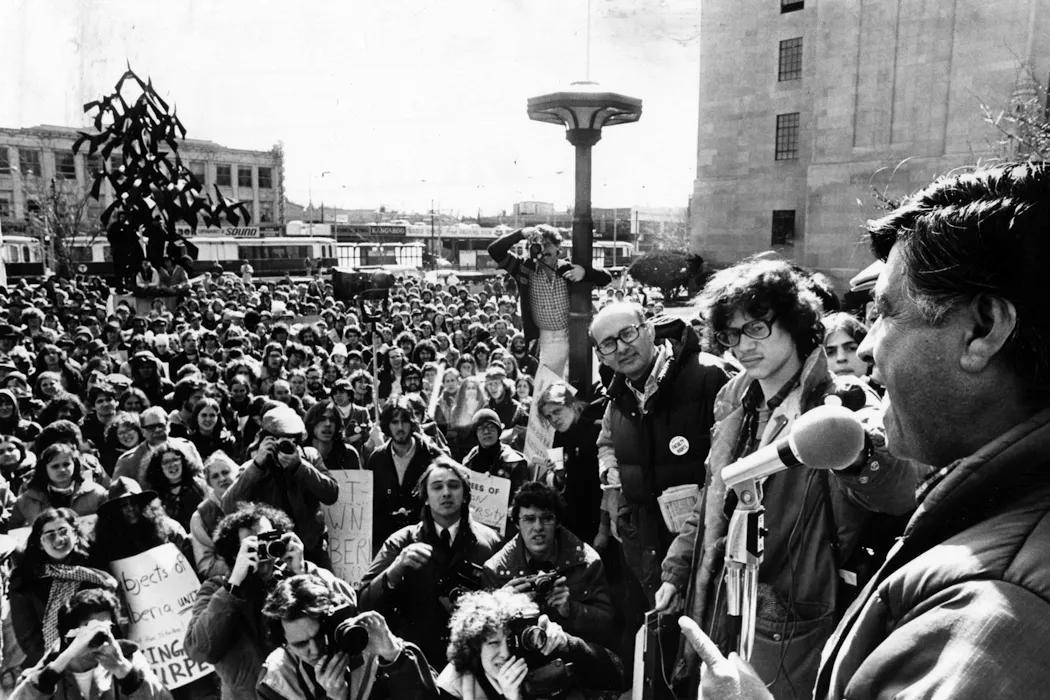
Cesar Chavez became a national hero for his advocacy of farmworkers’ rights. Here he gives a talk at Boston University in April 1979. Ted Dully/The Boston Globe via Getty Images

Multiple women told The New York Times that Mexican American civil rights hero Cesar Chavez assaulted them decades ago, including when some were just girls, one as young as 13. Over their multiyear investigation, published on March 18, 2026, journalists at the paper found “extensive evidence” of that abuse by poring over historical records and conducting interviews with more than 60 people.

While yearslong investigations into abuse allegations are rare, silence about abuse is common.

As a clinical psychologist who studies interpersonal trauma, I’ve seen how the dynamics of abuse can lead to silence, even over decades.

This research can help answer the question many asked when they heard about the charges against Chavez: Why didn’t the women speak earlier?

Power and trust betrayed

Among the women who disclosed abuse by Chavez, Dolores Huerta described seeing him “as my boss, as my hero, as, you know, somebody that would do the impossible.” Debra Rojas said, “I had love for him … He did his grooming very well.”

When perpetrators abuse those who trust and depend on them, the betrayal adds to the harm of trauma. Betrayal trauma theory helps explain why.

A woman with dark hair and a red dress and hat looking at a large mural of a man with brown hair.
United Farm Workers co-founder Dolores Huerta looks at a mural of the late Cesar Chavez on the San Jose State University campus in San Jose, Calif., on Sept. 4, 2008.
AP Photo/Paul Sakuma, File

Victims who depend on the people abusing them face extraordinary pressure to minimize what is happening. Disclosure can mean losing relationships or resources that are necessary for survival. Children abused by caregivers or community leaders risk relationships that they need to get their basic needs met. Adults who disclose abuse or harassment by employers risk losing their jobs and economic security.

Adding to the harm of abuse, perpetrators commonly twist reality to keep victims silent. They might directly instruct victims not to tell others what happened. They might also tell victims that they are actually the ones to blame for causing the abuse or that no one will believe them.

Victims must adapt to this untenable situation in which they depend on the very people causing harm.

For some people, betrayal results in dissociation symptoms and memory impairment for what happened. Dissociation is a common response to traumatic stress that can include amnesia, feelings that things are unreal or feeling disconnected from what is happening. Dissociation and memory impairment can help victims maintain necessary attachments in the short run.

Betrayal also contributes to more shame and self-blame, as well as more severe psychological and physical health problems.

Shame and self-blame can make it harder to disclose what happened. Not surprising, then, victims of high-betrayal traumas are less likely to disclose what happened relative to other kinds of traumas.

When betrayal-trauma survivors do speak up, delayed disclosures can be met with blame or disbelief, even from health providers. Survivors with more severe psychological symptoms are also met with more negative reactions to their disclosures.

Betrayal also makes escaping abusive relationships, including physically violent ones, difficult. Greater dependence on the perpetrator has been linked with a greater likelihood of staying with an abusive partner a year after a police report of domestic violence.

Cultural and institutional betrayal add to harm

Women told The New York Times that they stayed silent about their abuse, which for some began when they were girls, in part “for fear of tarnishing the image of a man who has become the face of the Latino civil rights movement.”

When people in marginalized groups are abused by someone from the same group, that constitutes an additional wound. Dr. Jennifer Gómez described this as “cultural betrayal trauma.”

With cultural betrayal trauma comes even greater pressure to stay silent as well as greater harm from the abuse.

When institutions such as churches, schools or unions fail to stop abuse or respond appropriately, that institutional betrayal can also add to the harm caused by the original abuse. In turn, institutional betrayal predicts greater dissociation and health problems, adding to the burden of abuse.

Anticipating disbelief and blame

Ana Murguia told The New York Times that she believed she would be blamed for the abuse.

Huerta, who was one of three co-founders, along with Chavez, of what ultimately became the United Farm Workers union, told the newspaper that she “feared that no one within the union would believe her.”

Anticipating disbelief and blame affects decisions to disclose. When researchers asked college women who were sexually victimized at some point in their lives why they kept what happened to themselves, they heard four common reasons. Women kept assaults private because they felt shame, guilt or embarrassment, minimized what happened, feared consequences of disclosing or wanted privacy.

Fears about negative reactions are unfortunately well founded. Research shows that when victims do disclose, victim blaming and other negative reactions are common. In turn, those negative social reactions add to psychological distress and the harm of abuse.

Connection and courage: Antidotes to betrayal

In the wake of the harm that betrayal trauma causes, healing is possible through connection and care.

Research shows that people can learn to respond in better ways to disclosures of abuse, such as connecting people to resources and expressing empathy. In addition, institutions that act with courage in the wake of abuse, such as by making it easy to report or taking actions to prevent future abuse, can help reduce harm to survivors.

Screenshot of an Instagram post about how a foundation honoring Dolores Huerta 'applauds her bravery in sharing her very personal story.'
Screenshot of an Instagram post by the Dolores Huerta Foundation in the wake of her revelations of abuse by Cesar Chavez.
Dolores Huerta Foundation Instagram

When survivors disclose, avoiding blame, disbelief and other negative reactions can minimize additional harm. Taking steps to offer emotional support and resources can even help open doors.

That’s what my research team found when we asked sexual assault survivors about the reactions they received from service providers, such as counselors or victim advocates. When survivors received more tangible support, they were more likely to later disclose what happened in a formal report to the police.

The Conversation

Anne P. DePrince has received funding from the Department of Justice, National Institutes of Health, State of Colorado, and University of Denver. She has received honoraria for giving presentations and has been paid as a consultant. She has a book with Oxford University Press. She is an Advisory Group Member of the National Crime Victim Law Institute and a Senior Advisor to the Center for Institutional Courage.

ref. Psychological toll of betrayal trauma may help explain why women kept silent for decades after their allegations of abuse against civil rights icon Cesar Chavez – https://theconversation.com/psychological-toll-of-betrayal-trauma-may-help-explain-why-women-kept-silent-for-decades-after-their-allegations-of-abuse-against-civil-rights-icon-cesar-chavez-278950
Over 400 million barrels will be added to the oil market soon – what are strategic reserves and what can they do?

Source: The Conversation – USA (2) – By Scott L. Montgomery, Lecturer in International Studies, University of Washington

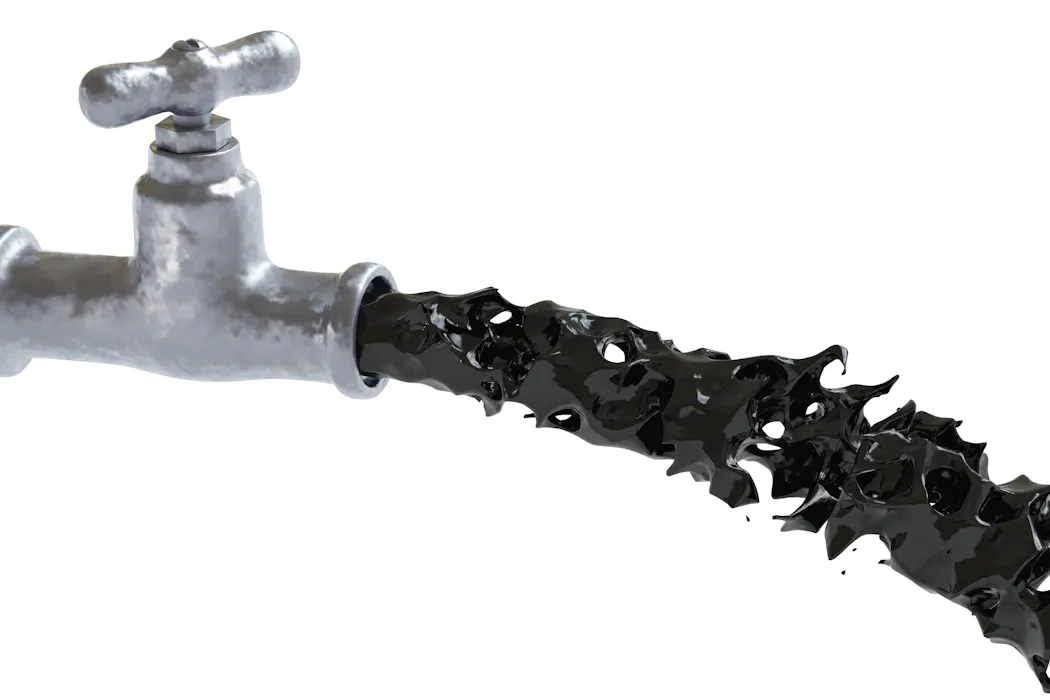
The world is about to open up reserve oil supplies. Photo illustration by PashaIgnatov/iStock/Getty Images Plus

In the second week of the Iran war – with the Strait of Hormuz effectively closed, cutting off shipping of 20% of the world’s oil supply – the International Energy Agency announced the largest release of strategic oil reserves in history. Thirty-two countries will sell a combined 412 million barrels from their reserves into the global market over four months, beginning in late March 2026.

Energy researchers like me know that the concept of a strategic oil stock goes back to the early 20th century, when the U.S. Navy first substituted oil for coal as a fuel for ships. Starting in 1912, Congress set aside several petroleum-rich areas in the U.S., including Elk Hills in California and Teapot Dome in Wyoming. In times of need, oil wells could be drilled in those regions to produce fuel for the Navy.

The current system involves oil that has already been produced and is stored so it can enter the market quickly. That approach was created by the International Energy Agency soon after its founding in the wake of the 1973-74 oil crisis. At that time, Arab nations in the Organization of the Petroleum Exporting Countries cut exports by as much as 25% to protest U.S. and other countries’ support for Israel in the Yom Kippur War. Global oil prices soared by over 350%, the equivalent today of US$70 – the price before Israel and the U.S. attacked Iran on Feb. 28, 2026 – jumping to $245.

Now, strategic reserves are a system of national oil stocks intended to replace at least 90 days of each country’s imports. In some cases, such as Japan, the reserve covers over 200 days. The 415 million barrels in the U.S. reserve as of March 13, 2026, covers only about 64 days.

A close-up photo of a gas pump shows prices above $4 per gallon
Gas prices have climbed since the U.S. attacked Iran.
AP Photo/Nam Y. Huh

What is the purpose of strategic oil reserves?

These reserves have a twofold purpose: to replace a portion of the disrupted supply and to moderate the resulting increase in prices.

In cases of a major loss to world supply, the International Energy Agency will propose a coordinated release from member countries. There have been five such releases, most recently in 2022, when Russia’s invasion of Ukraine caused oil prices to go above $120.

Together, members hold government stockpiles of about 1.2 billion barrels, with another 600 million barrels stored by private industry. The United States’ expected contribution of 172 million barrels is nearly half of the upcoming release.

To fill the U.S. reserve, the U.S. Department of Energy buys oil on the open market, using money funded by past sales and congressional appropriations. When releasing oil from the reserve, it sells to the highest bidder on the regular oil market, just like any other oil producer. Ideally, the reserve buys oil when the price is low and sells it at times of emergency when prices are high – though presidents of both parties have been accused of ordering oil releases for political gains rather than strictly economic reasons.

What can a major release from these reserves achieve?

Strategic releases are a short-term way to lessen the shock of an immediate supply loss.

A release provides a certain number of barrels – in the current case, perhaps 3 million to 4 million barrels per day – for a period of a few months.

But that amount is not enough to replace the roughly 10 million barrels per day or more now held back by the closed Strait of Hormuz.

My own study of the history of U.S. releases suggests, however, that a release can prevent prices from climbing to extreme levels at an early stage and staying there. That is because oil prices are mainly determined by futures contracts – legally binding agreements to buy or sell a quantity of oil at an agreed price for delivery one to three months in the future.

If oil buyers and sellers know additional oil will be released to the market in that period, they will likely agree to a lower price. So the strategic release temporarily moderates price increases.

What about the US reserve?

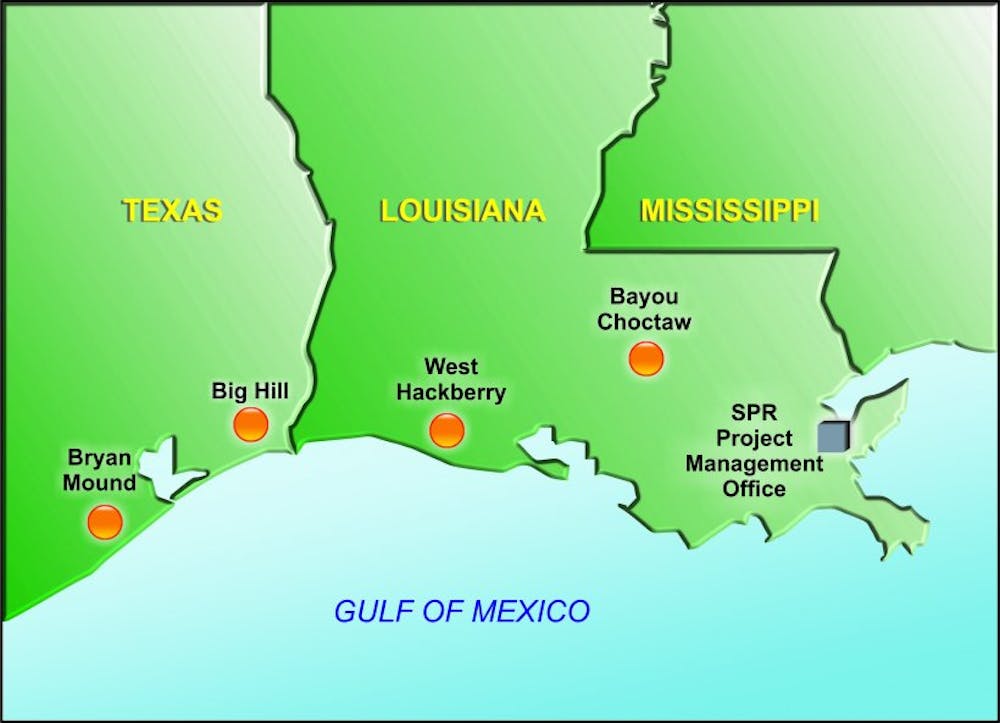
A map with red dots showing locations of SPR spots.
The map shows the locations of the oil held in the Strategic Petroleum Reserve.
Department of Energy

Congress created the Strategic Petroleum Reserve as part of the Energy Policy and Conservation Act of 1975. Its oil is stored underground in a series of large salt domes in four locations across the Gulf Coast, in Texas and Louisiana.

Congress originally said the reserve should hold up to 1 billion barrels of crude and refined petroleum products. Though it has never reached that size, the U.S. reserve was until 2025 the largest in the world, with a maximum volume of 713.5 million barrels.

Over the past decade, however, China has aggressively expanded its own stocks to an estimated 1.4 billion barrels. Such an enormous volume can be viewed as a sign of Beijing’s deep concern about oil security, as China relies on imports to supply more than 70% of its consumption.

In mid-March 2026, meanwhile, the U.S. reserve was only 60% full at 415 million barrels. In 2022, the Biden administration released 180 million barrels in response to the price jump caused by Russia’s invasion of Ukraine. An analysis by the U.S. Treasury Department concluded the release did reduce market volatility and lower prices at the pump by up to 30 to 40 cents per gallon. Nonetheless, it has not been a priority under the Biden or Trump administrations to refill the reserve.

As a result, the release of 172 million barrels recently ordered by the White House will temporarily shrink the U.S. reserve to 243 million barrels – only 34% of its capacity. That level is its lowest since the early 1980s.

U.S. Secretary of Energy Chris Wright has said plans are in place to add 200 million barrels back later in 2026. But doing so would return the reserve only to the pre-war stock level.

Risk or reward?

Nonetheless, the oil shock that has happened as a result of the Iran war has proven that the idea of strategic reserves is still relevant. Though the process of how it is utilized can be debated, having emergency stocks of a vital resource subject to supply crises can hardly be called irrational.

In the early days of the war, the White House said there was no reason for a release from the U.S. Strategic Petroleum Reserve.

But only days later, the administration changed its mind, reportedly because President Donald Trump saw oil prices soaring and remaining elevated.

But, as noted, this withdrawal will leave the U.S. and other nations in a highly vulnerable position. Additional price increases – like those that have occurred because of attacks on Gulf oil and gas facilities, production, and shipment locations – could well lead to a second call from the International Energy Agency to release oil from the world’s remaining reserves.

The Conversation

Scott L. Montgomery does not work for, consult, own shares in or receive funding from any company or organization that would benefit from this article, and has disclosed no relevant affiliations beyond their academic appointment.

ref. Over 400 million barrels will be added to the oil market soon – what are strategic reserves and what can they do? – https://theconversation.com/over-400-million-barrels-will-be-added-to-the-oil-market-soon-what-are-strategic-reserves-and-what-can-they-do-278370

How the words that Iran and America use about each other paved the way for conflict

Source: The Conversation – UK – By Trang Chu, Associate Fellow, Saïd Business School, University of Oxford

The conflict between the US – and its partner Israel – and Iran was nearly half a century in the making. Many explanations have been offered: strategic miscalculation, nuclear brinkmanship, regional rivalry and the failure of deterrence of Iran’s nuclear programme. But there is also the nature of the language through which each side has come to perceive the other.

Over 47 years, the language on each side has progressively hardened from assessments of behaviour into verdicts about the moral nature of each side’s adversary. It not only describes the enemy, but actively participates in creating it.

The language of American enmity towards Iran did not begin as a full moral verdict. In the 1980s and 1990s, Iran’s clerical leadership appeared in western media and policy discourse as the “mad mullahs”. It was a label that personalised the conflict and cast Iranian leaders as irrational rather than simply hostile. By the 1990s, the “rogue state” frame took hold, still defining Iran by its behaviour rather than its nature: a rogue, in principle, could change course.

A significant shift occurred in January 2002 when George W. Bush designated Iran as part of the “axis of evil”. His speechwriter David Frum later recalled drafting “axis of hatred”, but Bush insisted on using “evil” instead. This choice was unsurprising, as Bush’s was widely seen a “faith-based” presidency, influenced by deeply internalised evangelical Christianity.

By February 2026, the vocabulary had reached its most extreme register. Donald Trump described Iran’s supreme leader, Ayatollah Ali Khamenei, as “one of the most evil people in history”, killed along with “his gang of bloodthirsty THUGS”. In a video posted on his Truth Social, Trump explained the collapse of negotiations by stating that Iran’s leaders “just wanted to practise evil”. The Israeli prime minister, Benjamin Netanyahu, invoked the Book of Esther, equating the Iranian leadership with Haman — the inherently evil villain of Jewish scripture. He framed the operation as the fulfilment of a 2,500-year moral obligation.

Iran had its own vocabulary, with roots that were theological before becoming political. The designation of America by the Islamic Republic’s first supreme leader, Ayatollah Ruhollah Khomeini as the “Great Satan” drew on the Quranic figure of shaitan ar-rajim (accursed one/outcast devil). It eventually became a category through which American actions – the 1953 coup and decades of support for the deposed shah — were interpreted. The term also served a domestic purpose: the Great Satan depicted any Iranian advocate of rapprochement as a collaborator with Satan. This made moderation seem less like a policy dispute and more like a form of moral treason.

When Bush named Iran in his axis of evil, a parallel mechanism emerged on the other side. Political analysts found Iranian elites overwhelmingly viewed the designation as a boon for conservative factions in Iran – the metaphor appearing to reinforce the intransigence it claimed to criticise. Over the following two decades, Tehran increasingly framed its regional alignment as an axis of resistance: a loosely connected network of allied movements presented not as acts of aggression but as heroic solidarity against a cosmic aggressor.

What stands out across this arc is a pattern of accumulation. Each new label — Great Satan, mad mullahs, rogue state, axis of evil, axis of resistance — added another layer to the adversary’s story, making it progressively more resistant to revision. Both sides converged on the same device, each attributing a corrupted moral nature to the other, an entity whose soul was the central issue.

A soul to condemn

National anthropomorphism — the metaphorical attribution of human traits to a nation-state — is a common feature of political language. “Mother Russia”, “Uncle Sam”, and “Homeland-Mother China” each give the country a face, a will and a singular identity that can be addressed, celebrated or defended. Such figures allow citizens to experience attachment, obligation and hurt as if directed toward a single person.

However, labels such as “Great Satan”, “the Global Arrogance”, “mad mullahs”, and “gang of bloodthirsty thugs” serve a fundamentally different purpose. They moralise and condemn a nation’s soul itself. The moment a nation is characterised as evil rather than as an adversary, it drifts out of the realm of diplomacy altogether.

The framings were not just hostile but asymmetrical, with clear geopolitical implications. Iran’s language depicted the US as untrustworthy yet highly capable – powerful, calculating, world‑devouring. This portrays an adversary whose strengths you resent and feel compelled to match. It carries an emotional logic of envy in the technical sense – a rivalrous resentment towards an opponent you tacitly admit is formidable. Seen through such a lens, Iran’s nuclear ambitions appear less as pure aggression and more as an effort to close a capability gap with an opponent whose strength its own rhetoric acknowledges.

The US framing attributes untrustworthiness and malevolent incompetence to Iran. They are a country of mad mullahs, a rogue state, a gang of bloodthirsty thugs whose leaders “just wanted to practise evil”. This does not sketch a formidable rival – it conjures something menacing in intent yet incapable of reason, operating below the threshold of rational calculation. Groups framed in this manner tend to elicit contempt. An enemy framed as contemptuous is less likely to register as an adversary that can be deterred and more likely to appear as a problem to be removed.

Its members cease to exist as reasoning agents. Their stated aims are no longer believed, their experiences no longer imagined and their inner life no longer granted as grounds for negotiation.

When that perception becomes embedded within political leadership, the arguments for engagement with the adversary start to disintegrate.

What the words have led to

The US-Israeli strikes happened in the middle of active diplomacy, not after its failure. Iran had proposed a pause on enrichment and zero stockpiling. But within a framework that had spent 47 years defining Iran’s nature rather than its behaviour as the key issue, no such proposal could be seen as genuine by Washington. When a nation’s nature is repeatedly portrayed as irredeemably evil, what it does at the negotiating table becomes insignificant. The nature precedes the behaviour, and no behaviour can change it.


Read more:
Iran has been attacked by US and Israel when peace was within reach


To each side, the identity judgements of nearly half a century have become almost a self-fulfilling prophecy. Each side will interpret what follows as confirmation of what it has always believed. That is what 47 years of presupposed moral condemnation can become: a frame so absolute and impenetrable that the violence it accompanies becomes a vindication.

The Conversation

The authors do not work for, consult, own shares in or receive funding from any company or organisation that would benefit from this article, and have disclosed no relevant affiliations beyond their academic appointment.

ref. How the words that Iran and America use about each other paved the way for conflict – https://theconversation.com/how-the-words-that-iran-and-america-use-about-each-other-paved-the-way-for-conflict-279015

US attacks on Cuban medical missions risk damaging healthcare for poor people in developing countries

Source: The Conversation – UK – By Helen Yaffe, Lecturer in Economic and Social History, University of Glasgow

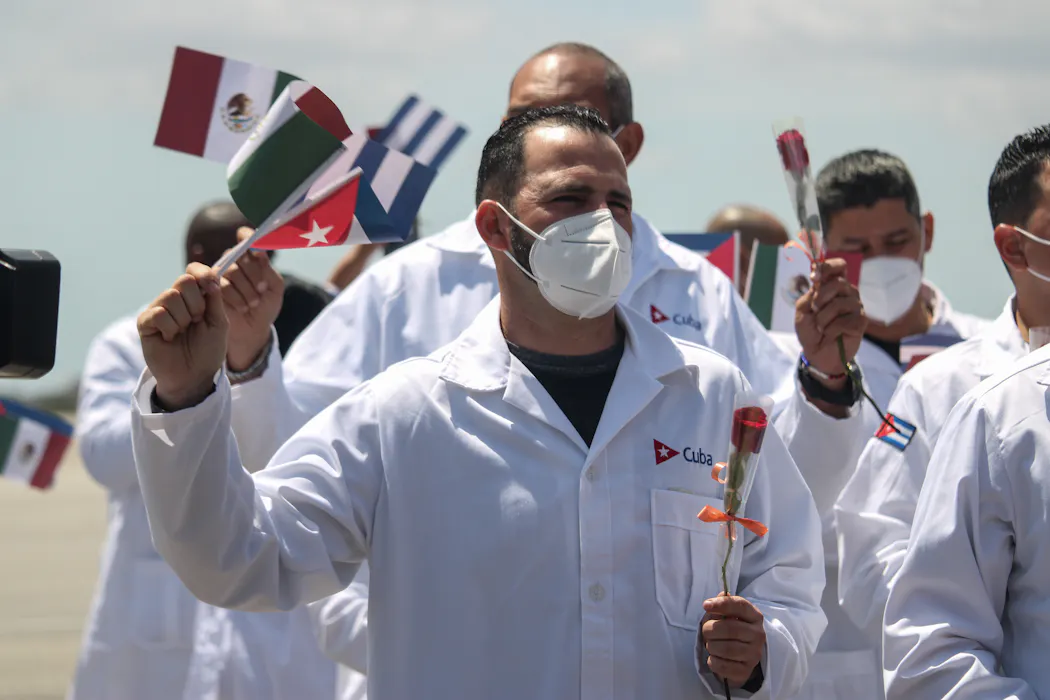
Cuban doctors who worked in Mexico during the height of the COVID pandemic return to Havana. Yandry_kw/Shutterstock

There were tearful scenes in the central American nation of Honduras on February 23, as locals said goodbye to the Cuban healthcare professionals who had been treating them for free for around two years. It came after the Honduran government abruptly ended the Cuban medical mission under pressure from the administration of the US president, Donald Trump.

That same day, a “sensitive” US State Department memo was sent to the secretary of state, Marco Rubio. It discussed the US strategy to sabotage Cuba’s medical internationalism, which has been an integral part of the island nation’s foreign policy since 1960. In recent years it has also become a key pillar of its economy.

The US has imposed unilateral sanctions on Cuba for more than 60 years. These prevent Cuba from engaging in “normal” international trade – for example, third parties cannot sell goods to Cuba if 10% of their components are from US companies or subsidiaries. And Cuba cannot export goods to the US. On top of that, the US blockade severely restricts Cuba’s access to the international financial system.

In this context, the export of medical professionals has become vital to the Cuban economy. For decades the Cuban government sent medical missions around the world as a donation to developing nations. But over the past two decades, it has developed cooperation agreements under which governments or local authorities pay the Cuban government for the medical services of its healthcare professionals.

Attacking that revenue looks to be a key component of the US push for regime change in Cuba by the end of the year. This is alongside the total oil blockade imposed by Trump’s executive order on January 29, which has now caused multiple national blackouts that have left the entire island in the dark.

It is a policy of carrots and sticks. Countries kicking out Cuban medics are offered US support for “infrastructure modernisation” – things like telemedicine and virtual training. A year earlier, Rubio had announced visa restrictions for current and former officials and their families from anywhere in the world who took part in Cuban programmes.

By mid-March this year, neighbouring governments fell into line. Guatemala, Paraguay, the Bahamas, Guyana and Jamaica terminated Cuban medical missions, ending decades of cooperation. In Guatemala, more than 400 Cuban healthcare professionals, most of them doctors, are serving indigenous communities under a three decades-long partnership. The last doctors will leave by the end of the year.

Cuban doctors leaving Honduras in February 2026.

The US government’s attack on Cuban medical internationalism is not new. It began in 2006, the year after the oil-for-doctors programme between Cuba and Venezuela transformed the export of healthcare professionals into Cuba’s greatest revenue source.

US policy sought to eliminate this income and undermine the prestige the programmes earned the island. The then US president, George W Bush, set up the Cuban Medical Professional Parole (CMPP) Program, encouraging Cuban medics abroad to abandon missions and defect to the US. The programme was ended only in 2017, in Barack Obama’s final days as president.

Despite this, and reflecting the deficit in healthcare globally, Cuba’s earnings from the export of healthcare services rose. Revenues in 2018 (the first year Cuba published separate data for health services) were US$6.4 billion (£4.8 billion). Trump’s first administration developed policies, and funding, to sabotage these programmes.

Cuba’s bill of health

It also devised a new justification for doing this. The US government could not openly demand that countries sacrifice the health and wellbeing of their populations just to deny Cuba revenue. So instead, it accused Cuba of human trafficking and equated its healthcare professionals to slaves.

Anyone who has spoken to Cuban participants – as I have – knows the overseas service contracts they sign provide them with their regular Cuban salary, plus extra remuneration from the host country. They are guaranteed holidays and contact with families.

Even with tens of thousands of medical workers overseas, the state’s investment in healthcare and medical training means that the Cuban population has the highest ratio of doctors per person in the world. In 2022, it was said to have nine doctors and nine nurses for every 1,000 citizens. In the US, there are 2.6 doctors per 1,000 citizens and in the UK the figure is 3.2.

For many Cuban healthcare professionals, it signifies the fulfilment of an internationalist duty; for others a way to travel or increase their income. The Cuban government takes the lion’s share of revenues and puts them back into Cuba’s universal free public healthcare provision and medical training.

But under Trump’s second administration, Rubio, the son of Cuban migrants who left the island during the Batista dictatorship, has spearheaded a renewed attack on the island’s international medical programmes. The recent State Department memo stated that Cuban medical brigades were a key source of “hard cash” for the regime.

The four forms of Cuban medical internationalism practices established in the 1960s are:

  1. emergency medical brigades overseas
  2. treatment of foreign patients in Cuba
  3. training foreign students as healthcare professionals, and,
  4. establishment of public healthcare facilities overseas.

This contribution to developing nations has often been ignored or censored. But it translates into millions of lives saved and improved globally every year. Sabotaging medical internationalism would devastate Cuba. But it would also leave millions of people around the world without the vital medical attention that they had previously enjoyed.

The Conversation

Helen Yaffe does not work for, consult, own shares in or receive funding from any company or organisation that would benefit from this article, and has disclosed no relevant affiliations beyond their academic appointment.

ref. US attacks on Cuban medical missions risk damaging healthcare for poor people in developing countries – https://theconversation.com/us-attacks-on-cuban-medical-missions-risk-damaging-healthcare-for-poor-people-in-developing-countries-278748

Why the damage to Qatar’s gas infrastructure could push costs higher for years to come

Source: The Conversation – UK – By Adi Imsirovic, Lecturer in Energy Systems, University of Oxford

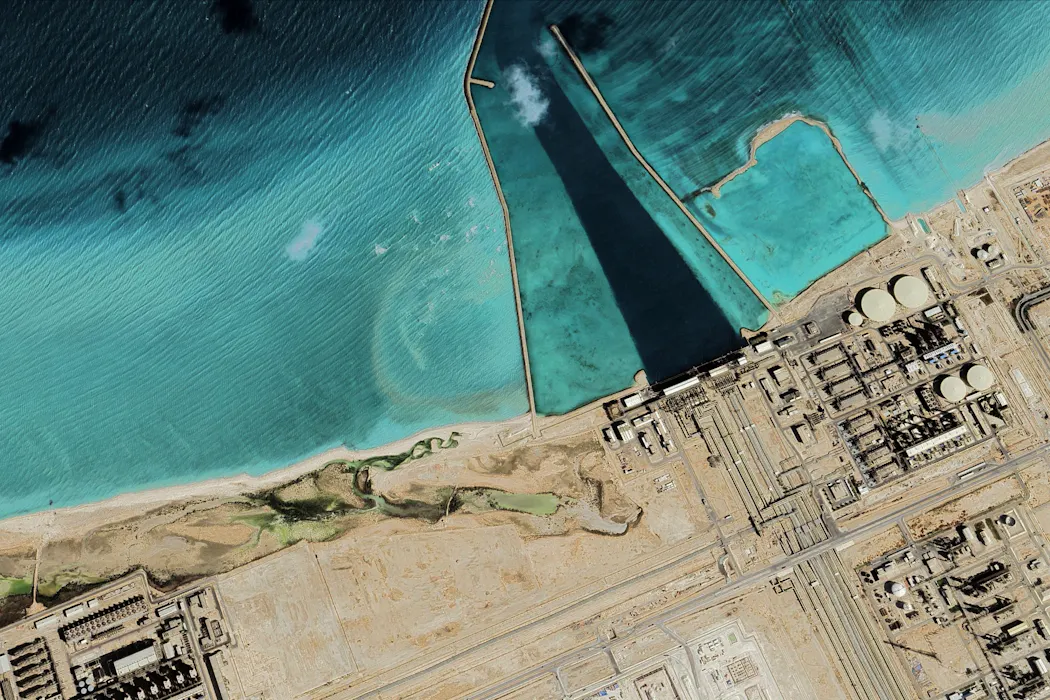
Qatar’s Ras Laffan “energy city” was hit by Iranian strikes. PaPicasso/Shutterstock

On March 19, Ras Laffan, the largest liquified natural gas (LNG) terminal in the world, supplying one-fifth of the world’s super-chilled fuel, was hit by Iranian missiles and drones. The Qatari terminal suffered substantial damage in the strikes – fires were raging across the gas-to-liquids facility within the complex, which covers 295 square kilometres – the size of a large city.

Investments worth tens if not hundreds of millions of dollars disappeared into thin air. Damage was estimated to be so extensive that QatarEnergy’s CEO, Saad Sherida al-Kaabi, said the company may have to declare a “force majeure” (non-fulfilment of orders due to circumstances outside their control) on long-term contracts. He said this could affect LNG supplies to Italy, Belgium, Korea and China “for up to five years”.

Similar to oil, gas exports from the Persian Gulf supplied about 20% of world demand. But gas (mostly methane) is a very different fuel from crude oil. To move it in liquified form, methane must be chilled to below -162°C.

But at these temperatures steel becomes brittle and shatters. So storing and transporting LNG in ships is expensive and very energy-intensive. Liquefaction and transportation of methane can easily consume 15% of the initial natural gas extracted.

It also means that the infrastructure that enables a highly flammable and explosive fuel to be handled at these extreme conditions has to be complex and consequently very expensive. Ras Laffan, for example, was built over decades and in several phases, costing tens of billions of dollars.

No quick fix

Interestingly, Qatar’s North Field and Iran’s South Pars gas field are part of the same massive geological structure, separated only by a maritime border in the Persian Gulf. Together, they form the world’s largest natural gas field.

So, Iran and Qatar are essentially exploiting the same gas reservoir the same way two people would use straws to drink from the same bottle. The US president, Donald Trump, now appears to have retreated from his threats to blow up “the entirety” of the Iranian gas field – but this geological fact had always made his comments quite ridiculous.

While Qatar exports most of its production, Iran uses the bulk of its gas domestically (although some exports go via pipeline to Turkey and Iraq).

But the damage to the complex has been done, and it affects some 17% of the country’s LNG infrastructure. Repairing it will take a long time, precisely because of the complexity of LNG projects.

The plant must be warmed up slowly before repairs and cooled down slowly after. Rapid temperature changes can cause pipes to bend or even snap. And parts of the plant are bulky and hard to transport. The main heat exchangers can be more than 50 metres long, and compressors, turbines and liquefaction trains can easily weigh 5,000 metric tonnes. Storage tanks must be built of special alloys with double walls and customised insulation.

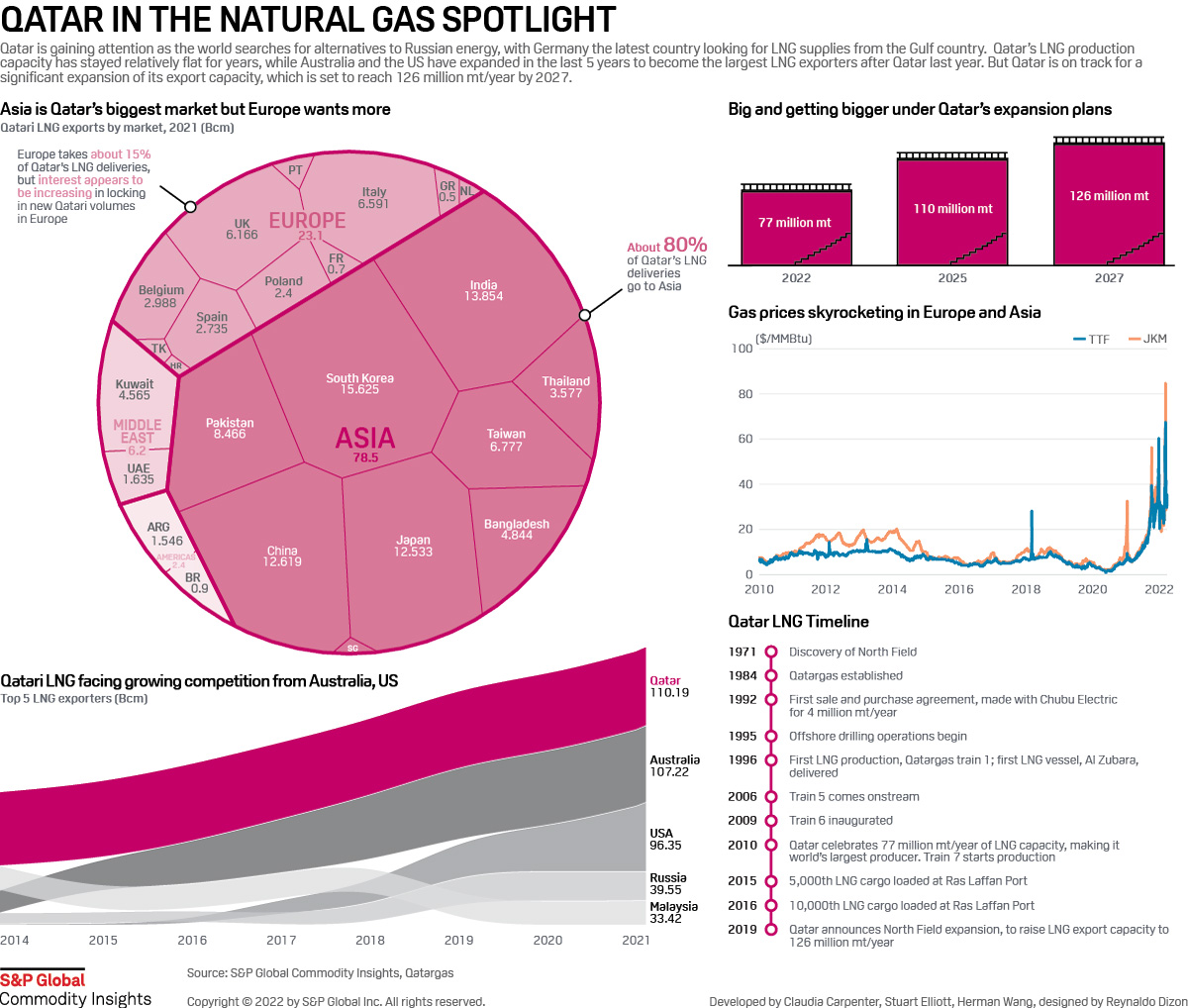
In other words, gas is very different to oil. Recent events have shown just how vulnerable the LNG supplies from the Gulf region are. They are going to affect Asia most, as about three-quarters of Qatar’s LNG ends up there – particularly China, India, Taiwan, South Korea and Pakistan, as well as others.

Most of the rest ends up in Europe – Italy, Belgium, Poland and a small amount to the UK (the UK imported only about 1% of its supply from Qatar last year). The majority of the UK’s imports come from its own UK production in the North Sea and imports from Norway and the US.

However, LNG is a part of the global energy market and the shortfall in production will result in higher prices globally. Gas will end up with the highest bidder, while some nations will probably go back to using coal. This may especially be the case with India, Pakistan, Bangladesh and a few other Asian countries that are very sensitive to high fuel prices.

Some European countries may even see coal as a cheaper option. Following the events in the Gulf, this “spark spread” (the profit margin from gas-fired electricity generation) has fallen, narrowing the gap in Europe with the “dark spread” (profit from generating power using coal).

The benchmark for European gas prices, the Dutch Title Transfer Facility, has more than doubled since mid-January. Coal prices have picked up due to higher demand, but not as much. Unlike oil, the LNG shortage has turned from a logistical problem – the closure of the strait of Hormuz – into a structural one. The damage to the Qatari production facility may take several years to repair. This means that gas prices – already high – are likely to remain elevated for some time.

The Conversation

Adi Imsirovic does not work for, consult, own shares in or receive funding from any company or organisation that would benefit from this article, and has disclosed no relevant affiliations beyond their academic appointment.

ref. Why the damage to Qatar’s gas infrastructure could push costs higher for years to come – https://theconversation.com/why-the-damage-to-qatars-gas-infrastructure-could-push-costs-higher-for-years-to-come-278943

Canada’s migratory caribou are under threat. Will we act before it’s too late?

Source: The Conversation – Canada – By Benjamin Larue, Faculty Affiliate in Wildlife Biology, University of Montana

Delegates are gathering in Campo Grande, Brazil, for the 15th Conference of the Parties (COP15) on the Convention on the Conservation of Migratory Species of Wild Animals. The meeting aims to address growing threats to migratory animals — from birds and whales to large land mammals.

The outcome could matter for caribou — one of Canada’s most recognizable wildlife species, immortalized on the country’s 25-cent quarters. Canada has not ratified the convention, but COP15 still matters here: it sets global norms and shines an international spotlight on a crisis unfolding in Canada’s North.

Every year, migratory tundra caribou travel hundreds — sometimes thousands — of kilometres across the Arctic and subarctic. These journeys are the longest known terrestrial migrations on Earth.

a silver 25 cent coin featuring a caribou with antlers
One side of the Canadian 25-cent coin featuring a caribou.
(Royal Canadian Mint)

As large herds of caribou migrate between the boreal forest in winter and the tundra in summer, they move nutrients across vast landscapes and shape vegetation, soils and food webs.

Their migrations also sustain Indigenous cultures and ways of life across the Arctic. For Inuit in Kugluktuk, caribou are part of a relationship of respect and reciprocity that supports physical, cultural and spiritual well-being. Generations of lived experience on the land have produced an deep understanding of caribou.

But today, caribou migrations are in peril. Once numbering around 470,000 animals, the Bathurst caribou herd has collapsed by more than 99 per cent since the 1980s. Today, only about 3,600 remain.

Within a single human lifetime, one of the great migrations of the North has nearly disappeared, a decline witnessed first-hand by people in Kugluktuk. Other herds across the North American Arctic tell similar stories, with devastating effects on Indigenous communities.

Navigating the perils of a changing Arctic

Animals learned to migrate because it helps them survive. For caribou, travelling long distances to calving grounds offers major advantages. First, migration allows females to time giving birth with the brief burst of nutritious spring vegetation, when plants provide the protein levels needed for females to nurse growing calves.

Second, when tens of thousands of females gather to give birth within a short window of time, predators such as wolves and bears can only consume a small fraction of calves — a phenomenon ecologists call “predator swamping.”

But the ecological conditions that once made caribou migrations so effective are changing.


Read more:
New research indicates caribou populations could decline 80 per cent by 2100


Arctic warming is altering vegetation growth in northern ecosystems. In many regions, plants growth is starting earlier in spring. Migratory animals like caribou may not always adjust their movements at the same pace, potentially creating mismatches between migrations and peak food availability.

Climate change may also be reshaping species interactions. Grizzly bears appear to be increasingly present in parts of the tundra where they were historically less common, potentially increasing predation during the calving season.

We recently conducted research into this trend, along with colleagues, using a large network of camera traps. We documented substantial overlap between grizzly bears and Bathurst caribou during calving.

If predators are increasingly present where calves are born and climate change affects the timing of resources available to mothers, migration may no longer be as advantageous.

Infrastructural barriers to migration

Migration depends on something deceptively simple: space. Caribou must be able to move freely across vast landscapes. Around the world, roads, fences and other human infrastructure have fragmented migration routes and limited the space available to animals.

The Arctic remains one of the last places where large-scale terrestrial migrations still unfold largely intact. But that distinction is increasingly under pressure.

Proposed infrastructure projects such as the Arctic Economic and Security Corridor in northern Canada and the Ambler Road Project in Alaska would cross hundreds of kilometres of key caribou migratory routes. For Indigenous communities, the stakes are high.

People from these communities have repeatedly raised concerns about the potential impacts of such projects. Their voices, and the land-based knowledge that informs them, must be central to planning and consent processes. Too often, consultation occurs only after major decisions have already been made and local voices are muted.

Where development proceeds, Indigenous Peoples must also be meaningful beneficiaries rather than communities left to bear the ecological and cultural costs of projects that threaten the wildlife they depend on.

Studies of caribou and other migratory ungulates show that roads and industrial activity can disrupt movements, reduce landscape connectivity and affect survival. These concerns have led some Indigenous organizations to oppose new road construction and resource development in caribou habitat, citing the long-term risks to herd viability. Together, Inuit and scientific knowledge contribute to wildlife co-management, and under Nunavut’s co-management system, Inuit are a strong voice for wildlife — especially caribou.

Protecting migrations in a changing world

Globally, migratory species are declining at alarming rates. A recent United Nations report found that nearly half of migratory species are experiencing population declines.

This week, governments from around the world are in Brazil for the Convention on the Conservation of Migratory Species of Wild Animals. As a non-party to the convention, Canada is not bound by its outcomes — but the moral and diplomatic pressure to act is no less real.


Read more:
Indigenous-led conservation aims to rekindle caribou abundance and traditions


The tools exist: transboundary protections, migratory corridor designations and co-ordinated limits on industrial development in critical habitat. What’s lacking is the political will to apply them at the scale the crisis demands.

For these measures to succeed for caribou, they must also incorporate Indigenous land rights alongside practical mitigation measures — such as seasonal traffic restrictions — that allow caribou to move freely across their migration routes.

Protecting caribou migrations also requires confronting the broader climate crisis driving Arctic change. The Arctic is warming nearly four times faster than the rest of the planet, and the phenological mismatches and shifting species ranges that threaten caribou will only intensify as greenhouse gas emissions rise. That means saving caribou migrations ultimately demands a rapid and genuine reduction in our collective carbon footprint.

As delegates gather in Brazil, the fate of Arctic caribou migrations should serve as both a warning and a test. Caribou migrations are among the great natural wonders of our planet. Whether future generations will still witness them depends on decisions being made right now — and on whether those decisions finally centre the peoples who live with, and for, the caribou.

The Conversation

Benjamin Larue receives funding from the Liber Ero Postdoctoral Fellowship, the World Wildlife Fund and the National Geographic Society.

Allen Niptanatiak and Amanda Dumond do not work for, consult, own shares in or receive funding from any company or organisation that would benefit from this article, and have disclosed no relevant affiliations beyond their academic appointment.

ref. Canada’s migratory caribou are under threat. Will we act before it’s too late? – https://theconversation.com/canadas-migratory-caribou-are-under-threat-will-we-act-before-its-too-late-277591

Vietnam ruined Lyndon B. Johnson’s political career. Will Donald Trump face the same fate over Iran?

Source: The Conversation – Canada – By Ronald W. Pruessen, Emeritus Professor of History, University of Toronto

Is United States President Donald Trump lurching toward decline and fall? Will he and his MAGA movement reprise Lyndon B. Johnson’s story, when the quagmire of the Vietnam War took the Democratic president out of the 1968 election and gave Republican Richard Nixon the opening he needed to defeat the Democrats?

Trump’s war on Iran is already hurting him politically. More than half of Americans disapprove of the decision to join Israel and attack Iran.

And Iran is not the only problem for Trump and MAGA. The loss of 92,000 jobs in February offers little good news. Neither does a Supreme Court ruling that weakened the tariff strategy at the core of Trump’s economic plan. There’s also the lingering risk posed by ongoing media and public attention to the Jeffrey Epstein files.

Amid all these storm clouds, Trump’s extreme and bizarre behaviour shows no signs of abating. His provocative boorishness continues: as with the “Good, I’m glad he’s dead” posting about the death of former FBI director Robert Mueller and the baseball cap he wore at the “dignified transfer” of the remains of U.S. soldiers who have died in the conflict.

Other disturbing and ultimately weightier behaviour has included Trump’s bulldozing of the American Constitution as readily as the East Wing of the White House by ignoring congressional powers, weaponizing the Department of Justice and fostering kleptocracy for friends and family via cryptocurrency ventures.

Without discounting the toll of the extreme and bizarre, however, the potential impact of a traditional force hiding in plain sight may prove more powerful. Will Trump’s 2024 voters shift loyalties because the purportedly amazing “deal maker” has forgotten that buyers have cancellation options when they become unhappy?

Parallels to LBJ

Former president Lyndon B. Johnson — known colloquially as LBJ — may offer the most dramatic cautionary tale for Trump. The shrewd Texan was a master of congressional coalitions crucial to achieving transformative “Great Society” milestones
like the Civil Rights Act of 1964 and the “War on Poverty.”

Becoming president after John F. Kennedy’s assassination, Johnson’s triumph in his own right in the 1964 election turned gradually toward disaster. The costs of a protracted conflict in Vietnam — that “bitch of a war,” in Johnson’s own words — was the primary driver in his reversal of electoral fortunes.

But his problems were also compounded by backlash against radicalization within the Civil Rights Movement, the tradition-shaking tremors emanating from the 1960s “counterculture” and the so-called sexual revolution.

Wilson and Truman

There are other lessons for Trump in the experiences of Woodrow Wilson and Harry Truman.

Wilson predated LBJ in a dramatic loss of support among once-enthusiastic voters.

At the end of the First World War, the 38th president and his Democrats faced disaster in 1919-20, when struggles at the Paris Peace Conference and the flaws of its Treaty of Versailles made it clear that a messianic crusade to “end all wars” and “make the world safe for democracy” had been vastly oversold.

Wilson damaged his party further by refusing to compromise with congressional internationalists of both parties (partially attributable to the president’s October 1919 stroke). Republicans went on to win the 1920, 1924 and 1928 elections.

Feisty Harry Truman came to the presidency after Franklin D. Roosevelt’s 1945 death and made his “Fair Deal” extensions of FDR’s New Deal popular enough to win election himself in 1948.

Serious problems then emerged when Soviet testing of an atomic bomb, and the emergence of the People’s Republic of China spurred Cold War anxieties. All of this was intensified by Sen. Joseph McCarthy’s rants about “pinko” domestic subversives and the mounting frustrations of a long-stalemated war in Korea.

Republicans under Dwight Eisenhower easily won the 1952 election.

Trump’s turn?

There’s little evidence Trump cares much about or understands historical precedents, but if he does, he might be experiencing some alarm at the moment.

The specifics of Trump’s transactional relationship with voters may not repeat past patterns exactly, but the underlying dynamics of political transactionalism are difficult to suppress.

Buyers’ remorse, in fact, may dramatically reveal itself later this year in the mid-term elections.

Promising “golden age” economic growth, Trump has instead delivered results that range from disappointing to devastating. Lurching tariff policies have caused tensions in profitable trade relationships, including Canada, and increases in prices.

Any easing of inflation is now seriously threatened by a war-related oil crisis. Gas price increases already greater than 20 per cent signal a cascading impact on manufacturing and food production costs. Voters do not need Democrat messaging to feel affordability stress — they’re living it.

ICE overkill

Trump also set immigration correction as a primary goal, tapping into clear voter desire. But his administration has used excessive force and scale that have turned off many voters.


Read more:
ICE pullback in Minneapolis shows the limits of Donald Trump’s scare tactics


The year 2025 may have resulted in a 93 per cent drop in apprehensions of unauthorized entrants at U.S. borders, but it also brought ICE ferocity, slayings of American citizens and the fierceness of incarcerations in facilities like Florida’s “Alligator Alcatraz” without due process.

There have also been disruptions of neighbourhoods and workplaces across the country as long-time “illegals” are rounded up or forced into hiding.

Another vaunted Trump promise: an “America First” stance that avoided the global activism requiring costly military ventures.

And yet, Trump has made threats against Greenland and Canada, embarked upon a military invasion of Venezuela and extracted President Victor Maduro, and launched military operations in Somalia, Yemen and Syria.

The ongoing war in Iran has now been waged with ever-shifting justifications and without congressional authorization.


Read more:
Allies or enemies? Trump’s threats against Canada and Greenland put NATO in a tough spot


Consequences

Flawed delivery on key campaign commitments reveals core weaknesses in Trump’s “art of the deal” posturing — particularly his insensitivity to the two-way-street dynamic of a successful transactional relationship with voters.

In a democratic system, even an imperfect one, voters show support for promises both made and kept.

There can be patience about the pacing of the delivery of those promises, as Trump seemed to be granted about inflation in the early months of his second presidency. There can be pragmatism about the realities of overseas conflicts of the kind LBJ enjoyed in the Vietnam War’s initial stages.

At some point, however, voters usually shift course because they see they’re not getting what they voted for. Will this fate befall Trump in November?

The Conversation

Ronald W. Pruessen has received funding from the Social Sciences and Humanities Research Council of Canada.

ref. Vietnam ruined Lyndon B. Johnson’s political career. Will Donald Trump face the same fate over Iran? – https://theconversation.com/vietnam-ruined-lyndon-b-johnsons-political-career-will-donald-trump-face-the-same-fate-over-iran-278847

Saturday Night Live UK’s first episode was a ratings success and had some shining moments that prove it can work

Source: The Conversation – UK – By Tom Hemingway, Teaching Fellow in Film and Television Studies, University of Warwick

An air of scepticism greeted the announcement last year that the American sketch comedy show Saturday Night Live (SNL) would get a UK counterpart.

Critics of the news brought up the incompatibility of British and American humour as a major issue, as well as the lack of big-name British comedians who could potentially work on the show. The latter concern seems to misunderstand the fact that the likes of Chevy Chase and Gilda Radner were plucked out of relative obscurity in 1975 to star in the first season of the original US version.

As a scholar in television comedy, I believe the only way SNL UK could work on its own terms is to allow a new crop of British talent to create their own group dynamic and to rely on the original version of the show in format only. Based on the first episode alone, it seems like they have achieved this with ease.

The most interesting thing about the first episode of SNL UK is how it sought to teach UK audiences how SNL typically works and what they can expect. Former US SNL comedian Tina Fey was selected to host the debut episode, effectively acting as a representative for the institution and fuelling further speculation about her potential takeover of the US show when SNL creator and producer, Lorne Michaels, eventually decides to retire.

In her successful opening monologue, Fey explained the show’s format, mentioning its sketch comedy, musical performances and the fact it was a live broadcast where things can go wrong. Fey’s monologue also included three celebrity cameos – another common feature of the show – from British TV stalwart Graham Norton and actors Michael Cera and Nicola Coughlan. Norton’s inclusion was smartly executed, providing UK viewers with a familiar face right at the start of the show.

The back-and-forth between Norton and Fey involved him quizzing her on various aspects of British comedy and culture more broadly. Along the way, Fey performed impressions from Monty Python, Fawlty Towers and Eastenders. Once again, British comedy culture, plus all of the weird stuff which seeps into the collective consciousness (“Nothing beats a Jet 2 holiday”, “What a sad little life, Jane”), was leaned on in the opener.

The sketches also helped teach the viewer how the show works on a moment-to-moment basis. For instance, the camera frequently tracked backwards once a sketch was complete to show the makeshift set, behind-the-scenes crew members and the live studio audience watching.

Wet Leg were the first British band to take the SNL UK stage, performing two songs from their recent album Moisturizer. Like the US version, the sound quality for these performances was somewhat muddled and poorly mixed, but the band’s energy carried them through.

As is often the case with SNL, not everything worked. David Attenborough’s Last Supper sketch ran too long, involving nearly every cast member playing a famous historical figure – ranging from Al Nash’s Winston Churchill to Emma Sidi’s Cilla Black. George Fouracres delivered a rather weak Attenborough impression. However, his version of the prime minister, Keir Starmer, during the political “cold open” (a topical live sketch that begins each episode) was well-received and will no doubt become a permanent fixture on the programme over the next few years.

Fouracres’ weirdest moment came during the 45 Seconds with Fouracres sketch. The sketch began with Fouracres frantically singing “what kind of Irish is your grandad?” direct to camera, followed by him speaking in various, sometimes unintelligible, Irish accents. This was reminiscent of early SNL sketches and was a clear direct descendent of the surreal humour found in Vic Reeves and Bob Mortimer’s Shooting Stars, an often surreal and absurd British panel show from the 1990s. As the show continues and grows in confidence, pushing further in this direction would be welcome.

Along with Fouracres, Jack Shep (with his lip-biting Princess Di) and Hammed Animashaun made the biggest impressions, appearing in nearly every sketch.

Other highlights included the very first Weekend Update segment with Ania Magliano and Paddy Young. Update is the longest-running recurring sketch in SNL history and comments on current news events with cast members playing the role of news anchors. The first UK version featured a prop joke about helium shortages due to the conflict around the strait of Hormuz which was so well executed, I won’t ruin it here.

It also can’t be overstated how much difference a few swear words can make. It’s common knowledge in comedy that a carefully timed “fuck” can double your laughs. In the case of this week’s episode, the same could be said for a carefully timed “cunt”. Due to a more relaxed approach to late-night programming, this is one of the major ways in which the UK version can differentiate itself from its occasionally tame US forebear. It will be interesting to see just how far this can be pushed in future episodes.

The first episode reached 226,000 viewers in its 10pm slot on Sky One, a number which is likely to increase as people watch on catch-up services later in the week. Sky One received a bigger audience share than Channel 4 in the same timeslot, which is a resounding success for a programme broadcast on a subscription-based television service. Time will tell whether this initial curiosity will sustain into longer-term engagement and enthusiasm. But for now, the stars and writers can rest easy knowing that the first episode exceeded all expectations and has the potential to begin a new era in British comedy. See you on Saturday night.

The Conversation

Tom Hemingway does not work for, consult, own shares in or receive funding from any company or organisation that would benefit from this article, and has disclosed no relevant affiliations beyond their academic appointment.

ref. Saturday Night Live UK’s first episode was a ratings success and had some shining moments that prove it can work – https://theconversation.com/saturday-night-live-uks-first-episode-was-a-ratings-success-and-had-some-shining-moments-that-prove-it-can-work-279021

Alcoholic capitalism: How rum fuelled Canada’s early economy

Source: The Conversation – Canada – By Allan Greer, Professor Emeritus of History, McGill University

With health-conscious young people drinking less than ever before, it’s interesting to look back to an earlier century when Canadians consumed more liquor — a lot more, in fact.

According to my estimates, the average consumption of spirits in the 1700s was about 15 times higher than today’s figures. Between the 1720s and the 1830s, the colonies that would later become Canada were awash in rum.

As I explain in my recent book, Canada in the Age of Rum, the spirit became deeply embedded in the economic life of early Canada.

Cheap rum came pouring in from New England and the Caribbean, supplemented with local production from distilleries in Halifax, Québec City and Montréal. It mostly fed the hard-drinking workforces of industries like fish, fur and timber.

Rum, labour and survival in the fisheries

Book cover of Canada in the Age of Rum by Allan Greer
Canada in the Age of Rum by Allan Greer.
(McGill-Queen’s University Press)

In the 18th century, alcohol was considered good for the health and warming to the body: just the thing for people working outdoors in a cold climate. But that’s not the main reason that rum flowed into Canada in such prodigious quantities.

More importantly, it provided a solution to export industries’ chronic labour problem. Every spring, Newfoundland fishing skippers had to hire four or five men to catch, clean and salt-dry cod for shipment abroad. Since the pool of qualified fishing hands was small and competition for their services stiff, generous salaries were offered. The catch was that payment was deferred until the end of the season.

In the meantime, the boat master would supply the men with free room and board, plus as much rum as they desired. The latter was charged against their salary at four to four times the retail price.

Consequently, when it came time to settle accounts in the fall, many fishermen found they had drunk away their wages. Some had even racked up a negative balance and had to sign on for the next season to work off their debts.

Under-capitalized and indebted to their merchant-suppliers, fishing entrepreneurs would have gone under if they paid their crews in full, but alcohol conferred the magical ability to claw back wages and hold on to workers for the future.

Drinking on the job

Far from prohibiting drinking on the job, employers actively encouraged it, since the more the men drank, the less they had to be paid.

A similar logic prevailed in the fur trade. The North West Company shipped hundreds of thousands of litres of rum every year from Montréal to destinations as far away as the Mackenzie River and the Pacific coast.

Some of this liquor was for Indigenous customers, but much was destined to slake the thirst of the French Canadian voyageurs who paddled the company’s canoes and manned its trading posts. In this industry, too, skilled labour was scarce and nominal salaries high, more in aggregate than the company could afford to pay.

Traders like Sir Alexander Mackenzie developed a policy of plying their crews with liquor during downtimes to cut costs and retain workers. This strategy was very effective. An 1805 ledger shows that 83 per cent of northern voyageurs were in debt to the company and that many signed on for another three years to pay for the overpriced rum they had already consumed.

Alcohol and the fur trade

Traders also found rum indispensable in their dealings with the Indigenous people who supplied them with furs.

The fur trade was rarely a matter of direct barter. From the trader’s point of view, it was more a matter of exchange mediated by credit.

Each fall, traders gave hunters the supplies they needed for the winter hunt, such as blankets, ammunition and pots. They kept a record of the debts incurred and expected the hunters to return with pelts of a corresponding value the following spring.

It made perfect sense from a capitalist perspective: value for value according to an implied contract.

Indigenous people saw things differently, however. For them, the exchange of goods always took place as part of a relationship of mutual support: gifts were a device to turn strangers into friends, as were hospitality, advice, protection and participation in ceremonies.

If circumstances prevented a hunter from delivering as many pelts as expected, that was a violation of contract for the trader, but not for the Indigenous person. One does what one can in a spirit of alliance, without numerical calculations or rigid deadlines.

Alcohol proved useful in bridging the gap between these divergent economic universes. After cultivating a taste for liquor in preliminary contacts, traders would present a keg of watered-down rum when hunters accepted goods “on credit.” Another keg would be gifted when they returned to pay their “debts.”

In between, a trader might distribute drinks as an incentive to be more productive. Rarely was alcohol treated as merchandise for sale. And despite enduring racist stereotypes, Indigenous people drank less liquor than the non-Indigenous.

The hidden cost of a rum-soaked economy

Alcohol played a vital role in making capitalism work in 18th-century Canada.

It was used in an effort to make Indigenous people conform to the ways of the global market and to ensure a supply of cheap labour at a time when workers were scarce.

Huge quantities of low-cost rum made all this possible, though it did exact a social cost in widespread drunkenness, lethal accidents, violence and spousal abuse.

Today’s capitalism thrives on other addictions, especially consumerism fuelled by digital media, while alcohol’s empire seems to be declining.

The Conversation

Allan Greer does not work for, consult, own shares in or receive funding from any company or organisation that would benefit from this article, and has disclosed no relevant affiliations beyond their academic appointment.

ref. Alcoholic capitalism: How rum fuelled Canada’s early economy – https://theconversation.com/alcoholic-capitalism-how-rum-fuelled-canadas-early-economy-277829

Einstein’s theories fuel the drama in Project Hail Mary

Source: The Conversation – UK – By Ed Macaulay, Lecturer in Physics and Data Science, Queen Mary University of London

The science fiction film Project Hail Mary brilliantly uses authentic science to underscore the human drama and narrative tension of the story.

Based on the novel by Andy Weir, the story revolves around an effort to save the Earth – threatened by an alien organism that is consuming the Sun. By combining real science, compelling characters and a gripping narrative, the filmmakers have crafted a science fiction odyssey that might just inspire a whole new generation of scientists.

The story begins with the main protagonist, Ryland Grace (Ryan Gosling), waking from a coma in a sealed lab with no windows. Affected by amnesia, the novel describes how he nevertheless applies his knowledge of high-school physics to deduce that gravity in the lab is 50% greater than on the surface of the Earth. He concludes that he must either be in a constantly accelerating spaceship, or on the surface of another planet.

This opening scene perfectly illustrates a concept that Einstein described in 1907 as his “happiest thought”. Einstein realised that while a person is in perfect free-fall, they don’t directly experience the effects of gravity themselves. This is the state of weightlessness experienced by astronauts in orbit – in a perpetual state of free-fall about the Earth.

By the same token, Einstein realised that this inertial experience of acceleration is also perfectly equivalent to the force of gravity. As Grace discovers, there’s no way to distinguish the two. This principle of equivalence was the essential insight that Einstein needed to describe gravity as the effects of warped space-time in his general theory of relativity.

Grace soon discovers that, not only is his increased sensation of gravity due to the constant acceleration of the spacecraft Hail Mary, he’s rapidly approaching the vicinity of the star Tau Ceti, some 11.9 light-years from Earth. To date, the fastest that humans have ever travelled was on the Apollo 10 mission, which reached nearly 25,000 miles per hour – or about seven miles per second.

That may sound fast, but at that speed, it would take about 320,000 years to reach Tau Ceti. But Grace nevertheless finds himself there well within the course of a human lifetime. To understand how, we have to turn to some of the most fascinating results from Einstein’s theory of relativity.

A famous equation

A capable sports car might accelerate from 0 to 60mph in a time of 2.7 seconds. This is the same rate at which an object falls to the ground due to the effects of Earth’s gravity: 1g of acceleration. The 1.5g of the Hail Mary spacecraft corresponds to a 0-60mph time of 1.8 seconds; clearly rapid, but a comparable rate to a modern hypercar.

Official trailer for Project Hail Mary.

The difference is that even the highest performance cars can maintain that acceleration for only a few seconds. The Hail Mary accelerates at that rate for eight and a half months, reaching a maximum speed of 92% of the speed of light, or about 165,000 miles per second; about 25,000 times faster than Apollo 10. So how could the Hail Mary sustain this acceleration for so long?

The answer lies in Einstein’s most famous equation: E=mc². The Hail Mary is fuelled with huge tanks of astrophage – the fictional microorganisms in the story that feed off the Sun and can convert matter to pure energy. The astrophage provides the continuous thrust required to reach almost the speed of light. But it takes light itself 11.9 years to reach Tau Ceti, so even at 92% of the speed of light, how could Grace experience the journey in less than half that time?

The ultimate speed limit

Relativity is clear that nothing can travel faster than the speed of light. At a constant speed of 92% of the speed of light, it would take the Hail Mary 12.9 years to reach Tau Ceti. However, one of the essential principles of relativity is that the speed of light is an absolute constant for all observers.

To keep the speed of light constant for all observers, Einstein realised that our intuitive expectations about time and space would have to be modified at relativistic speeds. To put it another way, some very weird stuff happens when travelling close to the speed of light.

If we assume that the Hail Mary is 40 metres long, an observer watching the ship fly by at 92% of the speed of light would observe the ship to be less than 16 metres in length. If we assume that Ryland Grace is the same height as his onscreen counterpart Ryan Gosling, he would appear to an external observer to be only 72 cm tall.

However, one of Einstein’s key insights from relativity is that anyone moving at a perfectly constant speed can consider themselves at rest, and everything else in the universe as moving towards them. If Grace is flying towards the distant star with a constant speed of 92% the speed of light, we can equally say that the Hail Mary is at rest, and that Tau Ceti is approaching the ship at close to light speed.

This can play with our perceptions. From the perspective of an external observer, at 92% the speed of light, the Hail Mary would appear to be length contracted by a factor of 2.55, but from the perspective of the Hail Mary, the ship is still its original length, and all other distances in the same direction appear to be contracted by this same amount.

Whereas the “rest-frame” distance to Tau Ceti remains 11.9 light-years, from the perspective of the Hail Mary, the distance is less than 4.7 light-years. At a constant speed of 92% the speed of light, the Hail Mary would arrive in about five years. This doesn’t mean that Tau Ceti is physically closer – only that from Grace’s point of view the distance is contracted. An observer tracking the mission back on Earth would still find that the journey took 12.9 years. While everyone would agree on the speed of the Hail Mary, the time and distance involved depend on the point of view of the observer.

By embracing the genuine principles of relativity, the filmmakers have crafted a science fiction masterpiece with a foundation in authentic physics. Far from detracting from the story, Weir’s masterful skill of weaving real science together with a riveting plot helps to underscore the emotional stakes of the narrative.

Science fiction is one of the few avenues through which concepts from relativity and astrophysics enter the mainstream public discourse. By brilliantly engaging with these concepts as part of such a compelling story, Project Hail Mary may just inspire a whole new generation to study these subjects, and perhaps even make new discoveries of their own.

The Conversation

Ed Macaulay does not work for, consult, own shares in or receive funding from any company or organisation that would benefit from this article, and has disclosed no relevant affiliations beyond their academic appointment.

ref. Einstein’s theories fuel the drama in Project Hail Mary – https://theconversation.com/einsteins-theories-fuel-the-drama-in-project-hail-mary-278470