Local election results show the hurdles along the path to power for French far right

Source: The Conversation – UK – By Timothy Peace, Senior Lecturer in Politics, University of Glasgow

Despite achieving historic scores and taking control of over 60 municipalities in the French local elections, the far-right Rassemblement National (National Rally, RN) will be disappointed by its failure to make a breakthrough in the larger towns and cities. The headlines coming out of France after the second round of elections on March 22 tell of the resilience of the mainstream centre left and centre right, whose candidates held on to every major city hall in the country.

The two parties that dominate France’s political extremes – the far-right RN, led by Marine le Pen and Jordan Bardella, and Jean-Luc Mélenchon’s far-left La France Insoumise (France Unbowed, LFI) – made some gains in smaller towns. But they failed to capture a single one of the large cities.

This matters because France goes to the polls again in 2027 to elect its next president. The local elections were widely seen as a dress rehearsal – and the results expose the limits of both parties’ strategies. For the RN, the failure to break through in cities such as Marseille and Toulon — combined with the refusal of the centre-right Les Républicains (LR) to enter into alliances with RN candidates — shows that, for the far right, the path to the Élysée Palace remains highly complicated.

For LFI, a similar inability to translate national prominence into local power raises questions about Mélenchon’s capacity to unite the left ahead of next year’s presidential campaign.

For the RN, the dream result would have been a win in Marseille. Capturing France’s second city would have been a massive statement of intent. After the first round of the local elections on March 16, however, a victory in the port city seemed unlikely – especially after the refusal of the centre-right candidate, Martine Vassal, to enter into any alliance with the RN.

A French TV presenter in front of a screen showing headlines after March municipal elections.
‘Le grande confusion’: all sides have claimed victory, but there are no real pointers ahead of next year’s presidential election.
France 24 screenshot.

Vassal’s decision is emblematic of one of the big lessons of these elections: the centre-right LR has resisted the temptation to ally itself with the far right, even where doing so might have delivered local power. The centre-left mayor of Marseille, Benoît Payan, drew his own red line, refusing to merge his electoral list with LFI. He still held on to his job comfortably, winning 54% in the second round, well ahead of the RN’s Franck Allisio on 40%. The double refusal in Marseille – the centre right rejecting the far right, the centre left rejecting the radical left – encapsulates the resilience of the political mainstream in France’s major cities.

Battle for credibility

While taking Marseille was always going to be a long shot, the RN had invested heavily in winning back another important port city on the south coast: Toulon. This is the city where in 1995 the party, then called the Front National (FN) and led by Marine Le Pen’s late father, Jean-Marie, made a historic breakthrough, taking control of the council. This was the first time the far right had captured a major French city since the second world war.

But the FN mayor, Jean-Marie Le Chevallier, endured a disastrous time in office. He fell out with his own city councillors and in 1999 ended up quitting the party after a spat with Le Pen (père). The failure to manage Toulon city council (Le Chevallier scored less than 8% when he was up for reelection in 2001) became an albatross around the party’s neck for many years to come.

As we have argued in our research on the RN in local government, overcoming this reputation for incompetence has been an important goal for all the party’s mayors elected since 2014. Recapturing Toulon would have been highly symbolic. But the RN candidate (and current MP) Laure Lavalette, despite leading after the first round, eventually fell short with 48% in the runoff against centre-right incumbent Josée Massi.

The result shows the enduring power of the front républicain: the tactical alliance of voters from across the political spectrum to keep out the far right.

Nevertheless, RN supporters could console themselves with some important victories in smaller towns across the south including Carcassonne, Menton and Orange – another municipality originally captured by the party in 1995. The RN also held on to the vast majority of the towns it was already governing, several of which it won outright in the first round. This includes Perpignan, still the largest town run by the party. In these established strongholds, RN mayors have worked to normalise the party’s reputation and professionalise its approach to local governance.

The success of this strategy is shown by the re-election of the longstanding mayor of Hénin-Beaumont, Steeve Briois, with a commanding 78% of the vote in the first round. His success seems to have had a kind of “coattail effect” across the former coal mining basin in France’s far north – with RN victories in a number of neighbouring towns. The consolidation of a solid block of RN-run municipalities in northern France, alongside those in its traditional heartland of the south-east, is one of the most striking outcomes of these elections.

Signs of things to come?

Yet arguably the most significant result for the far right came in a battle between former allies on the centre right. In Nice, France’s fifth-largest city, Éric Ciotti – who broke with the centre-right LR in 2024 to ally himself with the RN ahead of the legislative elections – defeated his former mentor, the outgoing mayor Christian Estrosi.

Ciotti’s victory raises an uncomfortable question for LR. Even as the party nationally held the line against allying with the far right, one of its most prominent former figures has demonstrated that crossing that line can be electorally rewarding. Whether Ciotti’s path remains an isolated case or becomes a template for other ambitious centre-right politicians will be one of the key dynamics to watch as the 2027 presidential campaign takes shape.

These local elections confirm that the RN’s road to the Élysée runs through a France that is not yet willing to hand over the keys. However, the cracks in the adherence of some significant political figures to the front républicain, cracks which became visible in Nice, even if not yet spreading to voters at large, suggest that “not yet” may not necessarily mean “never”.

The Conversation

Timothy Peace has received funding from the British Academy, the Economic and Social Research Council and the Royal Society of Edinburgh.

Fred Paxton receives funding from the Leverhulme Trust as an Early Career Fellow (2024-27).

ref. Local election results show the hurdles along the path to power for French far right – https://theconversation.com/local-election-results-show-the-hurdles-along-the-path-to-power-for-french-far-right-279016


Collagen supplements can help your skin and joints, large new study finds

Source: The Conversation – UK – By Heba Ghazal, Senior Lecturer, Pharmacy, Kingston University

insta photos/Shutterstock.com

Collagen supplements have become one of the bestselling products in the wellness industry, promising everything from smoother skin to stronger joints. But do they actually work?

A major new review of the evidence – pulling together data from 113 clinical trials – suggests that, for some health outcomes, the answer is probably yes. But as ever with nutrition science, the full picture is more complicated.

Collagen is a protein the body makes naturally. It gives skin its structure and elasticity, supports bones and muscles, helps wounds heal and plays a role in protecting organs. The problem is that production slows as we age, which is why so many people turn to supplements to top it up.

Not all collagen is the same, though. The collagen found naturally in food may be less well absorbed than the smaller forms used in most supplements. These hydrolysed forms – where the protein has been broken down into shorter chains called peptides – are thought to pass more readily into the bloodstream and making it easier for the body to transport these fragments to tissues where they may have biological effects, potentially supporting skin, joint and muscle health.

The new review examined research published up to March 2025, drawing on 16 systematic reviews that between them included nearly 8,000 participants. The overall picture was cautiously positive.

Collagen supplementation was linked to moderate improvements in muscle health and reduced pain in people with osteoarthritis. There were also improvements in skin elasticity and hydration – though these benefits built up gradually, suggesting that taking collagen consistently over a longer period matters more than a short-term burst.

Some of the findings were less clearcut. Results for skin elasticity and hydration shifted depending on when the studies were conducted, with newer research showing lower improvements in elasticity but greater improvements in hydration. That inconsistency is worth noting – it suggests the science is still settling.

The quality of the research itself is also worth scrutinising. The studies used a wide variety of methods, doses and ways of measuring outcomes, which makes direct comparisons difficult.

Fifteen out of the 16 reviews included were rated as low or critically low quality – not necessarily because the supplements don’t work, but because of methodological problems such as studies not being registered in advance and poor reporting on potential biases. Many trials were also short and included few participants, which limits what we can reliably conclude about long-term effects.

Not all collagen is equal

Part of the problem is that collagen supplements vary enormously. Some are derived from animals, such as cows, pigs and chickens, and others come from marine sources, including fish, jellyfish and shellfish. There are even so-called “vegan” collagen alternatives. Some studies used oral supplements, while others tested collagen dressings applied to the skin.

The way collagen is processed also affects the size and composition of the peptides in the final product, which in turn influences how it behaves and is absorbed in the body. Lumping all these different products together in a single analysis risks obscuring as much as it reveals.

Various collagen supplements against a pink background.
Collagen supplements vary a lot.
New Africa/Shutterstock.com

Individual differences matter too. Factors such as sun exposure, smoking, sleep quality, environment and hormone levels all affect how skin ages and how it might respond to supplementation. If studies fail to account for these variables, it becomes very difficult to know whether any observed changes are genuinely due to the collagen or simply reflect differences in participants’ lifestyles.

This review adds to a growing body of evidence suggesting collagen supplements are not simply expensive placebos. There appear to be real, if modest, benefits – particularly for skin hydration, joint pain and muscle health.

The research base still has significant gaps. Without more rigorous, standardised studies, it remains genuinely difficult to say what is driving those benefits, or who is most likely to see them. Studies need to clearly specify the type of collagen used, the dose, how it was delivered and the characteristics of the people taking it.

The Conversation

Heba Ghazal does not work for, consult, own shares in or receive funding from any company or organisation that would benefit from this article, and has disclosed no relevant affiliations beyond their academic appointment.

ref. Collagen supplements can help your skin and joints, large new study finds – https://theconversation.com/collagen-supplements-can-help-your-skin-and-joints-large-new-study-finds-278632

Do enhanced pre-sentence reports protect Black youth or expose bias?

Source: The Conversation – Canada – By Camisha Sibblis, Assistant Professor of Sociology and Criminology/Director of the Black Studies Institute, University of Windsor

Dr. Martin Luther King Jr. once declared: “Injustice anywhere is a threat to justice everywhere.” However, if the systems created to administer and protect justice are the very sources of injustice, what happens to us as a society?

Like Gladue reports (specialized documents used in Canadian courts for Indigenous offenders outlining intergenerational trauma), enhanced pre-sentence reports (EPSRs) — sometimes called impact of race and culture assessments — have been used by criminal courts to address anti-Black racism. They explain how systemic factors shaped the path and limited the choices of offenders.

This is done to encourage fair sentencing and reduce the over-representation of Black people in prison.

As an academic and clinician who authors EPSRs, I have wondered whether they actually help Canadian criminal courts achieve justice for Black youth as intended, or if the courts still act unjustly while using them.


Read more:
Do pre-sentencing reports really help Black offenders in Canada’s justice system?


The recent judgments on two youth who both appealed their adult sentences after being convicted of murder highlights how EPSR use can miss its mark. Although both crimes were severe, sentencing differed for multiple factors, showing that EPSRs may not correct racial bias when the judicial perception of Black youth is distorted.

Parallel crimes, different outcomes

In July 2025, the Supreme Court of Canada made decisions in the cases of R. v. S.B. and R. v. I.M. Both S.B., who had an EPSR, and I.M., who didn’t, violently killed unsuspecting victims in Toronto in 2010 and 2011 respectively, Yet it was determined that S.B. would receive an adult sentence and I.M. a youth sentence.

S.B., a 16-year-old Black male of Jamaican and Trinidadian descent, along with several other youths, lured a 16-year-old into an apartment building stairwell, where S.B. shot him, killing him instantly.

By contrast, I.M., a South Asian male seven months from his 18th birthday, went to the home of his 17-year-old victim with a group, forced him into an alley and stabbed him more than 11 times. After leaving the victim for dead, the group entered his home to rob it, struck his mother twice in the head with a handgun and forced her to sit with her head between her knees while they searched her home for guns.

Bias and the misuse of the EPSRs

In S.B.’s case, the court framed his actions through a lens of adult culpability, overlooking the mitigating factors of his youth and traumatic experiences as outlined in his EPSR. Despite being only 16, the judge determined that S.B.’s conduct showed an “adult-like ability to plan, as opposed to youthful impulsivity [and] propensity for risk-taking.”

This characterization rested on his actions outside of the murder: orchestrating the luring of the victim, directing a co-accused to delete messages and blame rivals for the murder and discussing the possibility of eliminating witnesses.

The court argued that these actions demonstrated “confidence in managing events post-offence rather than youthful panic,” framing his behaviour as inherently criminal. Furthermore, this assessment saw S.B. as having the “ability to exercise adult judgment and foresight.”

These comments suggest misunderstandings of panic, adolescence and brain development. They also underestimate the abilities, knowledge and intelligence of the average youth.

I.M.’s judgment, in stark contrast, highlighted “youthful bravado,” framing his actions as the product of immaturity rather than criminal sophistication. Despite his intention to “prove to others he was ready to progress into more serious criminal activity,” the court downplayed any planning or co-ordination involved in the crime. I.M.’s proximity to aging out of the youth system was overlooked.

While he boasted about the crime with a peer and flaunted a blood-stained shirt, these actions were dismissed as “ill-considered and imprudent,” supporting the perspective of him as a youth needing support. They were said to show “bravado consonant with the impulsivity of an adolescent” rather than learned hyper-masculine behaviour often performed by adults.

I.M.’s “difficult life circumstances” were understood as giving way to “heightened vulnerability” to negative influences like peer pressure, which decreased his moral blameworthiness.

A troubling, structural catch-22

The upholding of S.B.’s adult sentence — a mandatory life term — while granting I.M. a 10-year youth sentence reveals a racialized lens that distorts judgments of age and morality where Black men are concerned.

Despite the EPSR noting that S.B. showed remorse, he appears to have been regarded as irredeemable in the Supreme Court’s sentencing. On the other hand, despite I.M. being deemed by a psychiatrist to have “little remorse” and “a negative rehabilitative prognosis,” he received a lighter sentence.

It’s clear that S.B.’s EPSR failed to counteract the harmful racial stereotypes that equate Black bodies with risk and facilitate a just sentence.

The courts overlooked that poverty can make kids seem to grow up faster because it exposes them early to adult stressors and requires them to develop savvy for survival.

Gaps and similar paths to violence

S.B.’s parents divorced when he was 10, after which his mother was his sole caregiver. At 11, he witnessed his cousin’s murder at a mutual friend’s funeral, which left him “severely traumatized.”

He grew up poor “in a drug- and gang-ridden community,” where he was “groomed” by older gang affiliates. He experienced the loss of several acquaintances and was subjected to beatings and carding by police. Diagnosed with ADHD and a learning disability, S.B. was labelled as displaying “immature behaviour” by one teacher.

I.M., who immigrated to Canada from Bangladesh as an infant, was reportedly raised in a stable, two-parent household and experienced a single yet profound, traumatic event at age 16 — a school shooting. Like S.B., he was diagnosed with a learning disability, but his school records noted his potential as a student. His mother emphasized his attentiveness and willingness to listen.

Both youth began engaging in criminalized activity such as robberies and drug trafficking at around age 12, and both had long lists of misconduct reports, including assaults and trafficking, while in custody for the murders.

EPSRs are clinical assessments used to contextualize complex biological, psychological and social factors. If judges who lack expertise in child development disregard these analyses, what beliefs are they employing to determine developmental age versus chronological age?

This case comparison uncovers a troubling catch-22: Black individuals’ perceived dangerousness heightens with both their perceived intelligence and lack thereof.

Intelligence makes them “criminal masterminds,” and the lack of it makes them “uncontrollable savages.” Both interpretations negate rehabilitation and justify long-term incarceration.

The Conversation

Camisha Sibblis receives funding from Social Sciences and Humanities Research Council.

ref. Do enhanced pre-sentence reports protect Black youth or expose bias? – https://theconversation.com/do-enhanced-pre-sentence-reports-protect-black-youth-or-expose-bias-263255

Ukraine’s stolen children expose the lies at the heart of Russia’s four-year military assault

Source: The Conversation – Canada – By Vincent Artman, Senior Researcher, Geography and Regional Development, University of Ostrava

The United Nations’ Independent International Commission of Inquiry on Ukraine recently delivered a significant finding: Russia’s systematic removal and Russification of Ukrainian children constitutes both a war crime and a crime against humanity.

Russia takes Ukrainian children from occupied territories, places them in Russian families, gives them Russian names, and, by presidential decree, grants them fast-tracked Russian citizenship.

More than 1,200 cases were verified by the commission, but the real number is likely much higher. Eighty per cent of the children remain in Russia, in many cases adopted into Russian families.

This disturbing finding, however, undermines one of the most enduring and pernicious Russian myths about the war itself.

The ‘NATO expansion’ myth

One of the most durable narratives about Russia’s invasion of Ukraine, relentlessly promoted by figures like American international relations scholar John Mearsheimer, is that the war was simply a reluctant, defensive Russian reaction to “NATO expansionism.” The West, according to this narrative, provoked Russia, leaving Vladimir Putin with no choice but to respond.


Read more:
The Ukraine-Russia standoff is a troubling watershed moment for NATO


Ukraine, however, was not part of NATO in 2014 or 2022, and never even had a Membership Action Plan, an essential first step toward accession to NATO.

Western leaders explicitly accommodated Putin’s demands and kept Ukraine out of the alliance indefinitely. Despite various verbal assurances, NATO never actually offered Ukraine a pathway to membership, and Ukraine officially became a neutral, non-bloc state in 2010. That did not prevent Russia from invading in 2014.

“NATO expansion” was also not the reason cited in 2022 for launching Putin’s so-called “special military operation.” Instead, the Russian leader claimed the full-scale invasion was an effort to stop a genocide being perpetrated by the “neo-Nazi Kyiv regime” against Moscow’s puppet “people’s republics” in Luhansk and Donetsk. These claims are baseless.


Read more:
Vladimir Putin points to history to justify his Ukraine invasion, regardless of reality


In the same speech, Putin also reiterated the claim that Russians and Ukrainians comprise a “single whole, despite the existence of state borders,” echoing arguments made in his 2021 essay, “On the Historical Unity of Russians and Ukrainians.”

This belief forms part of what some scholars have argued is an ideology according to which Russia, as a distinct “civilization-state,” has a “civilizational mission” to “reunify” the Russian nation (including Ukrainians) and take back control of what are regarded as “historically Russian territories.”

According to Putin, that means the “true sovereignty of Ukraine is possible only in partnership with Russia.”

Little of this would seem to have much to do with legitimate security concerns.

The war Russia is truly fighting

The limits of the NATO expansion narrative become clearest when we look at how Russia is actually waging the war. If the Russian aim was truly to address security concerns, the country’s conduct would reflect that objective.

Instead, Russia razes entire cities and repopulates them with Russian citizens. It changes Ukrainian place names to Russian ones. It demolishes Ukrainian Orthodox churches and is “liquidating” the Roman Catholic Church in occupied territories.

It engages in passportization — a policy of forcing Russian citizenship on occupied populations by making basic survival contingent on accepting a Russian passport. It systematically targets schools, hospitals, energy infrastructure and cultural heritage, causing $176 billion in direct damage by the end of 2024, including destroying 13 per cent of Ukrainian housing.

As for the stolen children, the UN commission has found no functional mechanism for their return from Russia. Most will never go home.

Other children, still living in occupied territories, face the “eradication of their cultural identity,” including ideological indoctrination and militarization.

None of these actions make sense if understood through the lens of preventing NATO expansion, but they do once Russia’s eliminationist ideology, which actually fuels the conflict, is recognized and understood.

Why this matters for peace

In occupied territories, systematic Russification, linguistic discrimination, ideological education and coerced citizenship have been enforced through repression, torture, sexual violence and extrajudicial killings.

In front-line areas, the destruction of local governance, social infrastructure and demographic fabric are ongoing catastrophes. An estimated 3.55 million Ukrainians remain internally displaced; another 6.8 million have sought refuge abroad.

Achieving a just peace in Ukraine will therefore not be merely a matter of rebuilding damaged infrastructure. It will require a process of cultural and social restoration, one that will not succeed if policymakers remain attached to shallow and misleading explanations for why the destruction occurred in the first place.

If the war was truly about NATO, a land-for-peace deal with neutrality guarantees might theoretically suffice. But if the war is about erasing a people, their language, their culture and their future, then border adjustments will resolve little. A state whose leadership denies the existence of a separate Ukrainian identity will not be satisfied with mere territorial concessions.

Stolen generations

The NATO expansion myth cannot explain the war that Russia is actually fighting, nor can it explain the abduction and forced assimilation of Ukrainian children.

Ultimately, it’s a fable that shifts blame from the aggressor to the victims, undermining the prospects for a just and lasting peace.

Ukraine’s stolen generations are not “collateral damage” — they represent the war’s actual objectives. In the end, understanding those objectives will be essential to achieving peace and to rebuilding a country Russia appears intent on leaving without a future generation.

The Conversation

The authors do not work for, consult, own shares in or receive funding from any company or organisation that would benefit from this article, and have disclosed no relevant affiliations beyond their academic appointment.

ref. Ukraine’s stolen children expose the lies at the heart of Russia’s four-year military assault – https://theconversation.com/ukraines-stolen-children-expose-the-lies-at-the-heart-of-russias-four-year-military-assault-278576

Irrational decision or helpful evolutionary adaptation? A philosopher on the rationality wars behind ‘nudge’ policy

Source: The Conversation – USA – By Alejandro Hortal-Sánchez, Visiting Assistant Professor of Philosophy, Wake Forest University; University of North Carolina – Greensboro

A classic example of a nudge is making the healthy choices easier to grab in a cafeteria. Maskot via Getty Images

Twelve-year-old Jaysen Carr died in July 2025. While he swam in Lake Murray, a reservoir a few miles from Columbia, South Carolina, Naegleria fowleri – a rare amoeba found in warm fresh water – entered through his nose, causing a rapidly fatal brain infection.

Each year in the United States, drowning causes roughly 4,500 deaths, while infections from brain-eating amoebas typically number only two or three. Yet the vividness of these rare deaths powerfully shapes how people perceive and respond to risk. After a 2025 amoeba-related death made headlines in Iowa, for example, open-water swimmers began questioning whether lakes were safe, even as health officials emphasized how rare such infections remain.

Is it irrational to avoid swimming in lakes on hot summer days? How rational is it to fear flying? How many people worry about contaminants in their drinking water yet never think twice about skipping sunscreen, despite skin cancer being the most common, and largely preventable, cancer in the United States?

These reactions raise a deeper question: What does it mean to call a response “rational” or “irrational”? These are the kinds of ideas I explore in my research on behavioral public policy. How do the assumptions scientists make about human rationality shape the tools governments use to improve social welfare?

When mistakes aren’t really mistakes

Behavioral economists, following Daniel Kahneman, emphasize how heuristics – the mental shortcuts or rules of thumb people use to make quick decisions – produce systematic biases or predictable errors in judgment. From this perspective, these biases born from shortcuts lead people to make choices that do not serve their own interests or stated preferences.

Evolutionary psychologists such as Gerd Gigerenzer instead see those same shortcuts as adaptive responses to uncertainty. Rather than errors, they’re efficient strategies shaped by the environments in which human reasoning actually evolved.

These two perspectives are in disagreement about what counts as rational – and why that matters for policy.

Patient sitting with white-coated doctor looking at tablet
How a care team frames the risks of a procedure affects a patient’s choice.
Halfpoint Images/Moment via Getty Images

Consider a few familiar examples. Frame the same medical procedure as having a 90% survival rate rather than a 10% mortality rate and patients respond very differently. Set one option as the default – whether in organ donation, retirement savings or privacy settings – and most people stick with it simply because opting out takes effort.

From a behavioral economics perspective, these are clear cases of bias: judgments shaped by framing, whatever feels most vivid, or inertia rather than careful deliberation.

From an evolutionary perspective, however, the picture changes. In complex environments with limited time, information and attention, relying on defaults or whatever feels most vivid or familiar can be an efficient way to decide without becoming overwhelmed. What looks like a mistake when judged against idealized models of rational choice may instead be a sensible response to real-world uncertainty.

This perspective helps explain why small changes in choice environments – nudges such as placing salad bars directly in cafeteria serving lines or listing vegetarian options first on menus – can significantly shift behavior without forcing anyone to choose differently. In other words, nudges work precisely because they align with, not fight against, the shortcuts people already use, making the desired behavior the path of least resistance.

Behavioral economists defend nudges as tools for correcting cognitive biases. Gigerenzer criticizes them as ethically problematic and argues that public policy should emphasize education over subtle choice manipulation.

Should policy correct or educate? This divide, called the “rationality wars,” reflects a deeper disagreement about human rationality itself.

If human rationality is seen as deeply flawed, nudges appear attractive because they make better decisions easier without demanding reflection.

If, instead, rationality is viewed as adaptive and teachable, policy should focus on strengthening people’s capacity to learn, adapt and decide for themselves.

Rationality isn’t just one thing

From bestselling books such as behavioral economist Dan Ariely’s “Predictably Irrational” to the worldwide expansion of behavioral “nudge” units in government, many contemporary developments suggest that people are poor decision-makers. Struggles with retirement savings, health, weight loss and environmental protection seem to confirm that view.

And yet, as a species, humans have been extraordinarily successful – adapting to diverse environments, building complex societies and accumulating knowledge across generations.

My claim is that this apparent contradiction dissolves once you recognize that rationality is not a single thing. Human beings can be both rational and irrational, depending on the scientific lens in use. From a behavioral economics perspective, many decisions appear biased and suboptimal. From an ecological or evolutionary perspective, those same decisions can look adaptive, efficient and sensible given the environments in which they are made.

At this point, the disagreement is not merely empirical but conceptual. People often assume that “rationality” names a single property of human behavior, when in fact its meaning depends on the scientific framework being applied.

Consider love. In neuroscience, love appears as patterns of brain activity and hormones. In psychology, it is studied through attachment and emotion. In sociology, it takes the form of social bonds and norms.

None of these accounts is wrong – but none captures love in full. I suggest rationality works in much the same way.

young couple embrace while man kisses smiling woman's cheek
As with love, the lens you use to look at rationality may give you only part of the big picture.
Alina Rudya/Bell Collective/DigitalVision via Getty Images

Multiple ways to consider a complex whole

The danger arises when one perspective is treated as the whole story. Reducing love entirely to brain chemistry, or rationality entirely to cognitive biases, treats a partial explanation as a complete one. Scientific disciplines illuminate different aspects of complex phenomena, but none has a monopoly on their meaning.

Forgetting this carries a cost: We risk drawing overly narrow conclusions – about human behavior, intelligence or public policy – by mistaking the limits of a single framework for the limits of human rationality itself.

Seen this way, fear of rare brain-eating amoebas, of flying, or of tap water is not simply a failure of reason. Such reactions may appear irrational under one standard yet reflect a form of rationality adapted to uncertainty, vivid impressions and limited information.

What ultimately matters is not labeling people as rational or irrational, but being explicit about which conception of rationality is at work – and why. That choice, in turn, shapes whether public policy aims to nudge behavior, educate citizens or redesign environments so that human reasoning can operate at its best.

The Conversation

Alejandro Hortal-Sánchez does not work for, consult, own shares in or receive funding from any company or organization that would benefit from this article, and has disclosed no relevant affiliations beyond their academic appointment.

ref. Irrational decision or helpful evolutionary adaptation? A philosopher on the rationality wars behind ‘nudge’ policy – https://theconversation.com/irrational-decision-or-helpful-evolutionary-adaptation-a-philosopher-on-the-rationality-wars-behind-nudge-policy-274246

Drones paired with AI could help search-and-rescue teams find missing persons faster

Source: The Conversation – USA – By Adeel Khalid, Professor of Industrial & Systems Engineering, Kennesaw State University

An AI system can analyze data from a drone to detect people in a forest – and determine what condition they’re in. Adeel Khalid

A combination of infrared imaging, thermal imaging and color cameras on an uncrewed drone, along with an AI system to interpret the data, can help emergency responders and search-and-rescue teams locate, identify and track people who have gone missing in the wilderness. The experimental system helps responders pinpoint where a missing person is and determine whether they are hurt or even alive.

People who get lost or hurt while exploring nature can become stranded for days. Rescue teams often use drones to look for the person or signs of their whereabouts. The small drone my colleagues and I built at my lab at Kennesaw State University flies autonomously using a grid search pattern. It sends live video and images to a ground station operated by the rescue team.

When the AI system finds a person, it analyzes images to determine whether the individual is upright or lying on the ground. It segments parts of the person’s body, identifying the person’s head and the body’s position. It then zeroes in on the forehead. It extracts forehead temperature readings, pixel by pixel, from the imaging data to estimate forehead temperature. We have two papers detailing these findings accepted for the American Institute of Aeronautics and Astronautics Aviation Forum 2026 conference.

Our AI model then assesses whether the person is conscious or unconscious and identifies abnormal temperatures that could indicate heat stress, hypothermia or other physical complications, or death – all vital information for a search-and-rescue team.

In field trials we have conducted, the system has provided consistent temperature readings of the heads of volunteers from our research team who have walked out into a variety of environments, under different conditions.

Why it matters

It is critical to get accurate and timely information on the whereabouts of a missing person. The likelihood that the person will survive decreases steeply as time passes.

An AI-enhanced drone can make search-and-rescue operations significantly more efficient than sending teams of people out into the environment to search on foot, especially in poor weather conditions or under thick foliage. Rescuers who know whether a person is conscious or unconscious can also better gear up for what they need to do to retrieve the person and administer aid. Our technology could save lives.

What other research is being done

Search-and-rescue personnel use various kinds of drones, but the machines often lack the ability to positively identify humans, especially under thick foliage, in bad weather or when the person is lying down or unconscious. The AI-based technology we have developed overcomes those challenges.

Better sensors that are very lightweight, that can function at night or in rain, and can see more clearly through thick foliage could further improve our drone and drones used by others. Researchers are devising AI-powered sound recognition for detecting screams for help, advanced thermal imaging for better nighttime vision and autonomous drones that could act as first responders.

Also under development are drones that can carry heavy payloads, such as flotation devices, fly for up to 14 hours or perform real-time mapping of the ground below.

What’s next

One of our next steps is to have multiple drones fly together and autonomously coordinate search-and-rescue operations among themselves. This will allow the technology to cover a much larger area, perhaps hundreds of square miles.

We are also designing a large drone that can carry up to 110 pounds (50 kilograms) of payload and stay aloft for an hour.

The Research Brief is a short take on interesting academic work.

The Conversation

Adeel Khalid receives funding from the Office of Research at Kennesaw State University.

ref. Drones paired with AI could help search-and-rescue teams find missing persons faster – https://theconversation.com/drones-paired-with-ai-could-help-search-and-rescue-teams-find-missing-persons-faster-274819

60 years of fiber optics: How a carrier of light you can’t see underlies much of the modern world

Source: The Conversation – USA – By John Ballato, Professor of Materials Science and Engineering, Clemson University

Fiber optics, illustrated here, underpin much of modern communications. Yuichiro Chino/Moment via Getty Images

Imagine a world without internet, email, streaming services or social media. Imagine having to write letters or call everyone on a rotary dial phone to communicate. Imagine having to drive to a store to buy anything and everything. Unthinkable, right?

You can thank fiber optics for all these conveniences and more. And while you’re at it, wish the fiber a happy 60th birthday in 2026.

As a materials scientist who has worked with fiber optics for over 30 years, I’ve seen how useful they are, and how scientists are working to improve them.

What are fiber optics?

Fiber optics are hair-thin strands of glass that confine and carry light. Information encoded on that light is how we communicate, watch movies, buy things and stay connected.

To carry information over long distances, the fiber must be extraordinarily clear. The magic behind an optical fiber’s transparency is a combination of material science and manufacturing. As the light journeys along the fiber, little by little, some scatters off the glass molecules themselves and is lost. In modern fiber optics, this loss is so small that light can travel hundreds of miles and still be seen.

Carrying information in the form of light over long distances requires the fiber to act like a mirror. This way it can bounce those bits of light around corners when the fiber is bent, as it might be when strung like electrical wire inside a building.

Optical fibers comprise an inner core surrounded by an outer layer called a cladding, both made from glass. Protective plastic layers surround these glass parts and keep the fiber remarkably strong. The core glass is made from a material that has a slightly higher refractive index than the cladding.

You can think of the refractive index like density. A denser material has more atoms or molecules for its size, so it takes the light longer to travel through it. The refractive index measures this slowing of light inside a material.

In such a design, light undergoes “total internal reflection,” bouncing off the core-clad interface. A remarkable feature of this phenomenon is that the glasses comprising both the core and clad are transparent, but when sandwiched together, light impinging on that interface at certain angles reflects off like a perfect mirror. So how are these special types of glass made?

Fiber optics use total internal reflection to carry light over long distances.

A simple science

In the age of quantum technologies and AI, sometimes sophistication comes best from simplicity.

The optical fibers that wire our world are predominantly made from silicon dioxide, which also makes up beach sand. However, while chemically the same, beach sand is made up of tiny crystals of quartz that have been pulverized by geological weathering and the pounding of ocean waves. These natural origins riddle beach sand with impurities that can absorb light.

Manufacturers create fiber optic silicon dioxide, called silica, by chemically reacting gases that contain silicon with oxygen, leading to an ultrapure glass. This is all done using a process called chemical vapor deposition, where the reacted gases create layers of glass that build into the form of a rod. Typically, pure silica is used for the layers that make up the core and cladding, though to get a higher refractive index in the core, researchers add small amounts of other glass components to the silica. The finished rod is called a “blank” or “preform.”

That rod, containing both core and clad, is then heated and pulled into a thin fiber. Think of pulling on a wad of gum in your mouth – that thin strand is like the fiber, except scientists slowly lower the big preform into the furnace and pull out the small fiber quickly.

Another beauty of glass is that it controllably softens with temperature. This permits us scientists to reliably pull fiber from the preform rod that already has the core and clad built into it.

Billions of miles of fiber optics have been made for global communications, and it all conforms to a diameter of 125 micrometers – one millionth of a meter – with a tolerance typically less than about one micrometer.

Glass fibers, housed inside narrow cables inside a box.
A few bundles of glass cables.
AP Photo/Alex Brandon

That level of material purity and manufacturing control makes fiber optics a modern marvel. But fiber optics haven’t always been this advanced – it took time to get to this level of purity and control.

The trivergence

Three events took place within roughly a 10-year span that paved the way for today’s fiber optics.

In 1960, physicist Ted Maiman developed the laser by building on its 1950s predecessor, the maser. In 1966, 60 years ago, experiments by engineers George Hockham and Charles Kao tested the transparency of various materials along with some light-guiding structures. They determined that a glass fiber could, in theory, carry light over the span of at least a kilometer.

While that distance might not sound too good today, other communication systems at the time were losing far more signal strength.

The trick was to make the glass clean enough. With this finding, Hockham and Kao started a global race to make optical fiber that exceeded this level of transparency.

By 1970, scientists from Corning Inc. used chemical vapor deposition to make a fiber breaking Kao’s mark. With both these highly transparent fibers and more mature lasers to create light pulses, long-distance optical communication was born.

From 1970 to today, the clarity of fiber has continued to improve, becoming over 100 times clearer now and allowing networks to connect the world. For “groundbreaking achievements concerning the transmission of light in fibers for optical communication,” Charles Kao was awarded the 2009 Nobel Prize in physics.

Through the looking glass

Glass lets a lot of visible light through – you can tell by looking out your window. But interestingly, it is even clearer at colors, called wavelengths, that are invisible to the human eye. Fiber optics used in communication networks operate at a wavelength of light of about 1.55 micrometers, between 50 and 100 times smaller than a human hair. At this infrared wavelength, the interaction of the light with the silica glass is disappearingly small.

Billions of miles of fiber optics have been made since the 1970s and installed globally for communications. But the technology’s small size and weight, coupled with its high strength, flexibility and transparency, make fiber optics useful for many other applications.

Today, fiber optics are used as sensors for geologic events, such as earthquakes, as monitors for infrastructure, including bridges, roads and buildings, and as conduits for imaging and laser treatments inside the body. Optical fibers are also used as the source of light within the fiber lasers employed worldwide for machining, manufacturing, defense and security – to name just a few.

It’s remarkable how something that hardly interacts with light can underpin most of our human interactions. Fiber optics use light you can’t see to enable things most people cannot live without.

The Conversation

John Ballato receives funding from numerous federal funding organizations including the National Science Foundation and US Department of Defense.

ref. 60 years of fiber optics: How a carrier of light you can’t see underlies much of the modern world – https://theconversation.com/60-years-of-fiber-optics-how-a-carrier-of-light-you-cant-see-underlies-much-of-the-modern-world-277456

How the National Security Council typically functions to plan and fully assess risks when presidents consider going to war

Source: The Conversation – USA – By Gregory F. Treverton, Professor of Practice in International Relations, USC Dornsife College of Letters, Arts and Sciences

Director of National Intelligence Tulsi Gabbard, center, acting Commander of U.S. Cyber Command William Hartman and CIA Director John Ratcliffe, right, stand before the Senate Committee on Intelligence on Capitol Hill on March 18, 2026. AP Photo/Jose Luis Magana

Three weeks into the U.S. war with Iran, it seems increasingly evident that President Donald Trump and his administration miscalculated how Iran would respond to attacks.

Besides appearing unprepared by the escalation of war, the president has offered contradictory statements on the U.S. rationale for bombing Iran, including that Iranian missiles could “soon” rain down on American cities.

The administration’s inconsistent rationale for waging war was laid bare on March 18, 2026, when Tulsi Gabbard, the director of national intelligence, testified before the Senate Intelligence Committee and declined to say whether her agency had made an estimate of if and when Iran would threaten the U.S. mainland.

“It is not the intelligence community’s responsibility to determine what is and is not an imminent threat,” Gabbard said.

The statement was especially odd given that the briefing’s subject was the U.S. intelligence community’s latest global threat assessment. It’s clear to me that neither Gabbard nor other members of the intelligence community were part of Trump’s decision-making about going to war.

Besides serving as chair of the National Intelligence Council in the Barack Obama administration, I was a staff member of the National Security Council in the Jimmy Carter administration. I know that this apparent lack of a coordinated policy on Iran is a far cry from the war preparation and planning done during previous presidential administrations.

National Security Council

Typically, the National Security Council, which consists of the Cabinet secretaries of the national security agencies, does its work through its committees, including the Deputies Committee, which is made up of the top deputies in those departments. The Deputies Committee reviews plans and assesses options, usually presenting a recommendation to the principals, including the president.

In that sense, the National Security Council is seen within an administration as the honest broker, especially in balancing the roles of the two main foreign affairs departments: the State Department and the Defense Department.

To be sure, different administrations have used the National Security Council in different ways.

President Dwight Eisenhower created the modern National Security Council. His was an elaborate structure, with groups for both assessing options and overseeing implementation. It reflected his wartime experience, with careful staffing from a general staff whose responsibilities ranged from operations and logistics to intelligence and plans.

Other administrations have favored less formal arrangements. John F. Kennedy, for instance, kept discussions with the National Security Council secret during the 1962 Cuban missile crisis. But all the National Security Council stakeholders were represented, and Kennedy reached out to consult outside expertise on the Soviet Union.

Two men walk away from a podium.
President Barack Obama and Vice President Joe Biden walk away from the lectern after Obama announced a nuclear deal with Iran on July 14, 2015.
AP Photo/Andrew Harnik, Pool

Lyndon Johnson made Tuesday lunches his forum for debating decisions about U.S. involvement in Vietnam. Beginning with just his secretaries of state and defense, the lunches became a National Security Council meeting but in less formal circumstances. The CIA director, the chair of the Joint Chiefs of Staff and the press secretary were later added to the group.

In other administrations at war, including the George H.W. Bush and George W. Bush administrations in Iraq, the Deputies Committees would meet daily to assess progress and review options for what came next.

In the Obama administration, the National Intelligence Council I chaired supplied the intelligence support to the Deputies Committee. We provided a steady stream of intelligence assessments across various subjects. Those included pro-democracy protests during the Arab Spring in the 2010s to Russia’s annexation of Crimea in 2014 and the 2015 Iran nuclear deal.

The intelligence assessments provided the information – about where wars stood and what may come next – used for discussion among the deputies. They were discussions informed by experts on the Deputies Committee and from staff on the National Security Council who specialized in the region or military affairs.

This was nowhere better illustrated than in negotiating the Obama administration’s nuclear agreement with Iran. The deal required bringing together experts on Iran and regional dynamics in the Middle East with experts on nuclear fuel cycles and the making of nuclear weapons.

Hardly seen

The Trump administration cut the National Security Council staff in half in May 2025, to around 150. The plan was to streamline and restructure national intelligence under Secretary of State Marco Rubio.

Since White Houses always want to pretend they are cheaper than they are, most staff with the National Security Council are seconded – or loaned for free – from one of the agencies. The process saves the White House money. But it also provides it with invaluable in-house expertise and exposes those seconded officials to presidential policymaking.

A friend and colleague who served as under secretary of defense quipped that every time he saw a State Department counterpart coming to a Deputies Committee meeting, he knew what was coming in substance: a request for a military solution to a geopolitical problem.

His stock answer: “Yes, we can do that, but it’ll require 100,000 soldiers and cost US$10 billion.” That answer was his quip, but the Deputies Committee provided a forum for arguing about the merits of the case.

The Trump administration in January 2025 outlined the National Security Council structure in familiar terms. But the Joint Chiefs of Staff chairman and director of national intelligence, both a regular presence in debates in previous administrations, were made situational rather than regular members. They would attend as needed, not automatically.

A man with a white hat and seated at a table listens to a woman speak to him.
This photo provided by the White House shows President Donald Trump talking with White House chief of staff Susie Wiles as Secretary of State Marco Rubio listens at Mar-a-Lago during Operation Epic Fury on Feb. 28, 2026.
Daniel Torok/The White House via AP

But the National Security Council has hardly been seen since, unlike Trump’s Cabinet, which gathers occasionally at meetings that often begin with Cabinet members lavishing praise on the president.

Brian Kilmeade of Fox News Radio asked Trump on March 13, 2026, about that inner circle.

“In your Cabinet with the vice president, secretary of state, what is it like, what are the dynamics when you have a big decision like Iran or Venezuela?” Kilmeade asked. “Are people speaking up and speaking their minds?”

Trump’s answer spoke volumes.

“They do,” the president said. “I let them speak their mind, and they do. And we have some differences, but they, they never end up being much. I convince them all to, let’s do it my way.”

Perhaps this casual approach to national security from the Trump administration should not surprise Americans after “Signalgate” – when administration officials in 2025 used the messaging app Signal rather than secure government modes to discuss U.S. military strikes on Yemen and inadvertently included a journalist in the communications.

But when lives are at stake, not to mention Americans’ pocketbooks and the global economy, I think the nation deserves better. Conducting a war requires a hard-headed process for assessing progress and evaluating next steps. In other administrations, the National Security Council would have provided that.

The Conversation

Gregory F. Treverton does not work for, consult, own shares in or receive funding from any company or organization that would benefit from this article, and has disclosed no relevant affiliations beyond their academic appointment.

ref. How the National Security Council typically functions to plan and fully assess risks when presidents consider going to war – https://theconversation.com/how-the-national-security-council-typically-functions-to-plan-and-fully-assess-risks-when-presidents-consider-going-to-war-278513

Is it ‘Ih-ran’ or ‘E-ron’? Inside the politics of pronunciation

Source: The Conversation – USA – By Valerie M. Fridland, Professor of Linguistics, University of Nevada, Reno

How you pronounce the name of the country the U.S. is at war against may reflect your politics. paitoonpati/iStock via Getty Images Plus

With the war in Iran a topic on everyone’s lips, you might have noticed an inconsistency in the way that nation’s name is said, varying between a more native-like “Ih-ron” pronunciation and a more Americanized “Ih-ran” one.

An everyday listener might just chalk this up as being the result of regional differences or the version we learned growing up, like the alternate ways Americans have of saying “data” or “roof.”

But as a linguist who studies what our accents reveal about our histories and social identities, I know that the way we pronounce things often gives off clues about who we are and what we believe in.

That appears to be the case with these two distinct pronunciations.

President Donald Trump’s Feb. 28, 2026, statement on the commencement of U.S. strikes against Iran.

The sound of politics

It’s probably not a big surprise to learn that listeners often hear certain words or accents as indicating someone’s political inclinations.

That’s because people are primed to notice patterns that mark group membership – be it a style of clothes or pronouncing “fire” more like “far.” Once they notice these patterns, people then tend to assign whatever traits are believed to characterize that group to the sounds of their speech.

For instance, researchers examined how people perceived potential political candidates with a Southern vs. non-Southern American accent. They wrote in 2018 that they discovered listeners perceived Southern-sounding politicians as more likely to be conservative and to hold right-leaning views on issues such as gun rights and abortion. All that from hearing someone pronounce “pin” like “pen” or say “bah bah” for “bye.”

This suggests that even a small difference in the way a vowel is pronounced can suggest a lot more about political ideology than you might imagine, even if that suggestion is not always accurate.

Nationalism and names

Going back to the question of what drives variation in the pronunciation of Iran, a linguistic study examining politics and pronunciation during the Iraq War offers some insight.

In analyzing 2007 House of Representatives debates about sending more U.S. troops to Iraq, linguists found that a congress member’s political party affiliation was the strongest predictor of how the “a” vowel in Iraq was pronounced.

Republicans preferred the anglicized short “a” pronunciation closer to “ear-RACK,” while Democrats preferred a more “ah”-like one, as in “ear-ROCK.” The authors suggest that the Democratic preference, approximating a more native pronunciation, was motivated by greater multicultural sensitivity.

The pronunciation of the “i” vowel also exhibited a more anglicized option, as in “EYE-rack/rock,” which was also examined. Unlike the “a” vowel, a more “eye”-like pronunciation by itself did not significantly correlate with partisanship.

President George Bush’s 2003 Oval Office address announcing the U.S. invasion of Iraq.

Two later studies, in 2011 and 2018, of everyday speakers who were asked to pronounce Iraq in nonpolitical contexts discovered no significant difference by political affiliation. The biggest predictor favoring an “ear-ROCK” pronunciation was that a person spoke multiple languages, as the “ah” vowel sound is more frequent in languages commonly spoken in the U.S., such as Spanish, French and Italian.

Despite not directly patterning with politics, when people in the 2018 study were questioned explicitly about how saying “ear-RACK” or “ear-ROCK” tied into political views, the “ah” pronunciation of the vowel was indeed heard as linked with liberalism, an association particularly strong for those who used “ah” and were liberal themselves.

This suggests that people might have picked up on this pattern from hearing politicians. They were aware of the fact that this vowel variation had become, in relevant contexts, symbolic of liberal vs. conservative stances.

Respect and pronunciation

In looking more generally at the pronunciation of borrowed words written with the letter “a,” like that of “pasta” or “tobacco,” linguist Charles Boberg suggests that Americans generally follow two possible paths, either pronouncing it with the short “a” like in “bat” or with the “ah” like in “father.”

Boberg suggests that attitudinal factors play a role in the choice between the two. Since many Americans associate the “ah” pronunciation with more education and sophistication, given its connection to upper-crust British use in words like “bath” or “aunt,” there has been an increasing tendency for Americans to use “ah” in words borrowed since World War II, as with “origami” or “nacho.”

But in looking at variability in the pronunciation of Iraq, other linguists hypothesized that the “ah” vowel is only heard as more sophisticated when a source language is held in high esteem – as with the British-derived “ah” in “aunt” – or when those speaking foreign languages are well regarded.

In contrast, when there is less respect for a people or a place, the choice of an Americanized vowel rather than the more accurate native one might be preferred. This attitude difference may well explain much of the variation in politicians’ pronunciation of Iraq – and possibly Iran.

Not surprisingly, in their study of congressional variation in pronunciation of Iraq, these researchers found that, beyond party affiliation, the politician’s war stance – for or against sending additional troops – was a significant determinant of which vowel was used. If they used the “ear-RACK” pronunciation, they were more likely to favor sending more troops to the country.

Iran-born Ali Tabibnejad, who now lives in the U.S., gives instructions on the proper way to say Iran.

Trump and ‘I-ran’

While there is, as of yet, no similar study comparing politicians and their pronunciation of Iran, it is interesting to note that both President Donald Trump and Vice President JD Vance say the name in the more anglicized fashion, using the same vowel as in “ear-RACK” – that is, as “Ih-RAN” not “Ih-RON.”

Considering the highly contested nature of this war, this presidential preference for the anglicized version of the name may be driven by a similar politicized positioning to that found for the pronunciation of Iraq. Trump and Vance may be underscoring their “pro-America” focus by creating a linguistic and ideological distance with the named nation and its speakers.

A similar linguistic contrast was made during the Vietnam War, when “VietNAM” was commonly pronounced as having the same short “a” sound as in “bat,” including from the lips of President Lyndon B. Johnson. Now, years later, the “VietNOM” pronunciation dominates, and the “NAM” version is virtually absent in those born in more recent eras.

In the same way, Americans might eventually find a linguistic middle ground in the current pronunciation debate over Iran. But it might be a while before peace in the Middle East prevails long enough to give the next generation a linguistic clean slate.

The Conversation

Valerie M. Fridland does not work for, consult, own shares in or receive funding from any company or organization that would benefit from this article, and has disclosed no relevant affiliations beyond their academic appointment.

ref. Is it ‘Ih-ran’ or ‘E-ron’? Inside the politics of pronunciation – https://theconversation.com/is-it-ih-ran-or-e-ron-inside-the-politics-of-pronunciation-278954

The world’s great fish migrations are collapsing – that’s a problem for millions of people

Source: The Conversation – USA (2) – By Zeb Hogan, Professor of Biology, University of Nevada, Reno

Mahseer swim in the Ramganga River, a major tributary of the Ganges River in South Asia. Zeb Hogan

Hidden beneath the surface of the world’s rivers, some of Earth’s great animal movements unfold – migrations that rival, in sheer biomass, the famous mass movements of zebra and wildebeest across the Serengeti.

For centuries, fish migrations were as predictable as the seasons. Salmon, sturgeon, giant catfish and many other species moved through rivers in vast numbers, guided by rising water, flood pulses and evolved biological cues.

These species are extraordinarily diverse, ranging from beluga sturgeon – massive fish that can live for more than a century and produce the world’s most prized caviar – to giant river carp, tropical eels, gold-flecked shad and goliath catfish, all of which travel to survive, in some cases over hundreds or even thousands of miles.

Their journeys can span continents. But the fish and their migrations are disappearing.

A man holds a very large fish underwater.
The author, Zeb Hogan, holds a goonch underwater in the Ramganga River in northern India. The giant catfish was tagged and released to study its migration.
Rob Taylor

For most migratory fish, movement is not optional; it is how they survive. When dams block routes, when fishing intensifies at migratory bottlenecks and when floodplains and spawning grounds are cut off or degraded, most migratory fish do not simply go somewhere else. They cannot. First the migration thins, then it falters. In some rivers, especially those blocked by dams, it disappears altogether.

A new global assessment I led for the March 2026 international meeting of parties to the Convention on the Conservation of Migratory Species of Wild Animals provides the clearest picture yet of this decline – and what’s needed to stop it.

My co-authors and I reviewed more than 15,000 species of freshwater fish, identified which of them migrate, and assessed their conservation status, or risk of extinction. We then focused on migratory species with declining populations and identified those where countries will have to work together to help them recover and thrive.

A huge fish underwater, lit by studio lights.
The giant barb (Catlocarpio siamensis) is Cambodia’s national fish. Its populations have fallen dramatically as they lose habitat and face overfishing.
Zeb Hogan

The results are sobering.

We identified 325 migratory freshwater fish species as candidates for coordinated international conservation actions under the Convention on Migratory Species treaty. Many of the largest species, the giants that make the longest and most dramatic journeys, are in the most trouble. Among migratory fish already listed under the Convention on Migratory Species, 97% are at risk of extinction. In Asia, populations of migratory freshwater megafish have declined by over 95% since 1970.

The disappearing giants of the Mekong

For the past 25 years, I have studied the world’s largest freshwater fish as a biologist at the University of Nevada, Reno; host of Nat Geo Wild’s Monster Fish documentary series; and the Convention on Migratory Species councilor for freshwater fish.

One of these extraordinary animals, the Mekong giant catfish, grows to more than 650 pounds. It once migrated hundreds of miles along the Mekong River, supporting fisheries and cultural traditions across the region. Today it is critically endangered because dams are blocking its route to spawning grounds and overfishing at migration bottlenecks is killing the large adults that the population depends on.

A man floats in water next to a very large fish.
This Mekong giant catfish was tagged and released as part of a long-term partnership between the Cambodian Fisheries Administration, scientists and local communities.
Zeb Hogan

In Cambodia, small migratory fish known as trey riel are so significant that they gave their name to the national currency. In South Asia, one migratory shad, the hilsa, is so culturally important that it is sometimes given as a wedding gift, wrapped in ornate cloth and adorned with flowers.

Migrations of these fish, like migrations of buffalo on the American plains once did, shape ecosystems, livelihoods and culture. In the Mekong Basin alone, fisheries produce over 2 million metric tons of food each year, helping to feed tens of millions of people. When these fish disappear, people suffer.

Long migrations under threat

Declines are unfolding in other great river systems as well.

In the Amazon, some of the largest catfish on Earth migrate across much of the continent. The dorado, or gilded catfish, can reach six and a half feet (2 meters) in length and complete a migration of more than 6,000 miles (10,000 kilometers) between Andean headwaters and coastal nurseries, the longest freshwater fish migration ever recorded.

At Teotônio Rapids between Bolivia and Brazil, fishers once hung from wooden scaffolding above turbulent waters to spear dorado as they surged upstream – until the rapids were flooded by new dams. Altered river flows, barriers and overfishing are increasingly disrupting these journeys, and dorado populations in upstream Bolivia have plummeted.

The epic journey of the dorado catfish.

Across the Northern Hemisphere, migratory fish such as salmon, sturgeon and shad have suffered major losses because rivers have been dammed and polluted, while many populations were heavily overfished.

In the Columbia River basin, dam construction transformed an immense river system into a series of dams and reservoirs and blocked fish from large parts of their historical range.

In South Asia, fish such as mahseer, goonch catfish and hilsa are also declining under pressure from dams, overharvesting, sand mining, pollution and habitat loss, even as they remain central to fisheries and river cultures across the Ganges, Brahmaputra and Indus basins.

Why migratory fish are struggling

Migratory freshwater fish depend on long, connected river corridors, often across multiple countries. Dams, habitat fragmentation, pollution, overfishing and climate-driven changes are breaking those connections. Once routes are cut, populations can collapse quickly.

This is increasingly an international problem. More than 250 rivers and lakes worldwide cross national borders, and about 47% of Earth’s land surface lies within shared river basins. Yet freshwater fish are still too often managed at a local or national scale, as if rivers and fish movements stop at political boundaries.

That is why international agreements matter. The Convention on Migratory Species is the only global treaty specifically designed to encourage countries to work together to conserve migratory animals.

a diver takes a photo of a very large, bottom-skimming fish.
Wallago catfish are in decline in the Mekong River Basin, largely because of overfishing and habitat loss.
Courtesy of Zeb Hogan

For freshwater fish, cooperation can begin with something as simple as countries sharing data and can extend to coordinated actions to reduce overharvesting, protect floodplains and spawning grounds, and keep rivers connected. The most fundamental solution is to manage rivers as connected ecological systems rather than as isolated national waterways.

Of the 325 species we identified as priorities, many could be considered for listing under the convention. Listing does not automatically save a fish, but it provides a mechanism to enable countries to coordinate monitoring, management and conservation across borders. That matters because freshwater fish remain underrepresented in international conservation policy, despite the scale of their decline.

We found that the river basins where international cooperation is now most urgently needed include the Amazon and La Plata-Paraná in South America, the Danube in Europe, the Mekong in Asia, the Nile in Africa and the Ganges-Brahmaputra in South Asia.

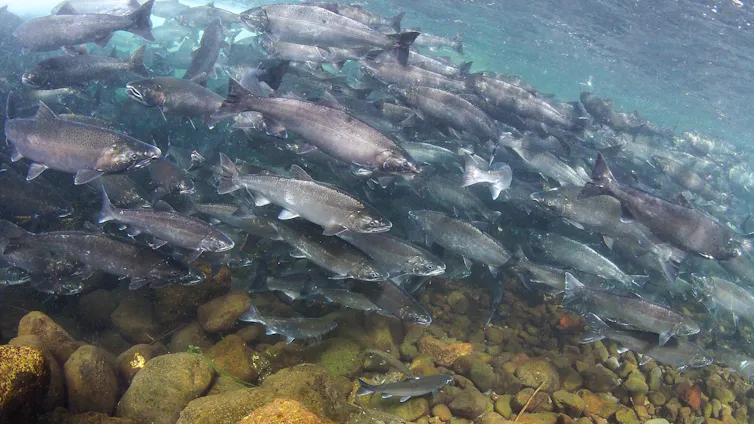
Hundreds of salmon swim in a river, inches from one another.
North America’s salmon are one example of fish whose migrations have been impeded by dams.
Roger Tabor/USFWS

How to bring back migratory fish

Restoring migratory fish populations means keeping healthy rivers free-flowing, reconnecting rivers fragmented by dams and channelization, improving fisheries management, protecting floodplains and wetlands, and restoring habitats that have been drained, cleared or isolated by development.

There are examples of success. In Washington state, dam removals on the Elwha and White Salmon rivers reopened habitat that had been inaccessible for migrating fish for about a century, allowing Chinook, coho, steelhead and lamprey to return.

Restoring salmon on the Elwha River in Washington state.

The world’s great fish migrations have not disappeared everywhere, but they are fading. This new assessment offers a clearer picture of where international cooperation is most urgently needed. It is up to humanity to protect these extraordinary aquatic animals, which support millions of people enrich their lives, and make the world a more wondrous place.

The Conversation

Zeb Hogan receives funding from private foundations, nonprofit organizations, and state and federal government grants. He is employed by the University of Nevada, Reno and serves in a volunteer capacity as the COP-appointed Councilor for Freshwater Fish for the Convention on Migratory Species.

ref. The world’s great fish migrations are collapsing – that’s a problem for millions of people – https://theconversation.com/the-worlds-great-fish-migrations-are-collapsing-thats-a-problem-for-millions-of-people-278970