What can technology do to stop AI-generated sexualised images?

Source: The Conversation – UK – By Simon Thorne, Senior Lecturer in Computing and ​Information Systems, Cardiff Metropolitan University

The global outcry over the sexualisation and nudification of photographs – including of children – by Grok, the chatbot developed by Elon Musk’s artificial intelligence company xAI, has led to urgent discussions about how such technology should be more strictly regulated.

But to what extent can technology also be used to prevent this explosion in the generation and sharing of deepfake content of real people, without their knowledge or consent?

On January 10, Indonesia became the first country to announce it was temporarily blocking access to Grok, followed soon after by Malaysia. Other governments, including the UK’s, have promised to take action against the chatbot and its related social media site X (formerly Twitter), on which the sexualised images have been shared.

But while outright national bans can limit casual use of the chatbot, such bans are easily bypassed using virtual private networks (VPNs) or alternative routing services. These mask the user’s real location and make it appear they originate from a location that allows access to the service.

As a result, country-level bans tend to reduce visibility rather than eliminate access. Their primary impact is symbolic and regulatory, placing pressure on companies such as xAI rather than preventing determined misuse. And content generated elsewhere can still circulate freely across borders via encrypted social media platforms and on the dark web.

In response to the controversy, X moved Grok’s image-generation features behind a paywall, making them only available to subscribers. X subsequently posted that it takes “action against illegal content on X, including child sexual abuse material, by removing it, permanently suspending accounts, and working with local governments and law enforcement as necessary”. Grok itself apologised for “the incident”, describing it as a “serious lapse”.

How the technology works

While not all chatbots have image generation capabilities, most of the mainstream providers including OpenAI, xAI, Meta and Google provide this service.

Modern AI image generators are typically built using diffusion models, which are trained by taking real images and gradually adding random visual distortion, known as noise, until the original image is no longer recognisable. The model then learns how to reverse this process, step by step, reconstructing an image by removing noise.

Over time, it will learn statistical patterns representing faces, bodies, clothing, lighting and other visual features. These patterns are organised within the model so that visually similar concepts sit close together. Because clothed and unclothed human bodies share very similar shapes and structures, the changes required to move between them can be relatively small.

So, when an existing image is used as the starting point and identity-preserving features are retained, transforming a clothed photograph into an unclothed one becomes technically straightforward. Of course, the AI model itself has no understanding of identity, consent or harm. It simply produces images that resemble what it has learned, in response to user requests.

However, after the core model has been trained, companies can apply “retrospective alignment” – rules, filters and policies that are layered on top of the trained system to block certain outputs and align its behaviour with the company’s ethical, legal and commercial principles.

But retrospective alignment does not remove capability; it simply limits what the AI image generator is allowed to output. Those limits are primarily a design and policy choice made by the company operating the chatbot, although these may also be shaped by legal or regulatory requirements imposed by governments – for example, requiring companies to disable or restrict certain features such as identity-preserving image generation.

Large, centrally hosted social media platforms could also play an important role here. All have the power to restrict the sharing of sexual imagery involving real people, and to require explicit consent mechanisms from those featured in images. But to date, the big tech companies have tended to drag their feet when it comes to labour-intensive moderation of their users’ content.

‘Jailbreaking’

Research by Nana Nwachukwu, a PhD candidate at Trinity College Dublin’s Centre for AI-Driven Digital Content Technology, highlighted the frequency of requests for sexualised images on Grok. Other research has estimated that before the service went behind a paywall, up to 6,700 undressed images were being produced every hour.

This has prompted regulatory scrutiny in Europe and beyond. French officials described some outputs as manifestly illegal and referred them to prosecutors. The UK’s communications watchdog, Ofcom, has launched an investigation into X and xAI over the issue.

But this problem is not limited to one platform. In early 2024, non-consensual AI-generated sexual images of Taylor Swift, produced using publicly available tools, spread widely on X before being removed because of a combination of legal risk, platform policy enforcement and reputational pressure.

Fake explicit Taylor Swift images raise new concerns about AI. Video: CBS News, January 2024.

Some platforms explicitly market minimal or no content restrictions as a feature rather than a risk. It is simple enough to find websites promoting “unrestricted” image generation and privacy focused use, relying largely on open-source models and offering far fewer moderation controls than mainstream providers. Furthermore, there is an even larger number of self-hosted image and video generation tools where safeguards can be removed entirely.

While precise figures are unavailable, independent estimates suggest tens of millions of AI generated images are created daily across platforms, with video generation rapidly accelerating.

Another potential issue is that some AI chatbots, including Meta’s Llama and Google’s Gemma, can be downloaded onto computers (even those with relatively light processing power), after which these models are completely free of oversight or moderation when run offline.

Even tightly controlled systems can be bypassed through “jailbreaking” – a way of constructing prompts to fool the generative AI system into breaking its own ethics filters.

Jailbreaking exploits the fact that retrospective alignment systems depend on contextual judgment, rather than absolute rules. Rather than directly asking for prohibited content, users reframe their prompts so the same underlying action appears to fall within an allowed category such as fiction, education, journalism or hypothetical analysis.

An early example was known as the “grandma hack”, because it involved a recently deceased grandmother recounting experiences from her technical profession in chemical engineering, leading the model to generate step-by-step descriptions of prohibited activities.

Speed and scale

The internet already contains an enormous quantity of illegal and non-consensual sexual imagery, far beyond the capacity of authorities to remove. What generative AI systems change is the speed and scale at which new material can be produced. Law enforcement agencies have warned that this could lead to a dramatic increase in volume, overwhelming moderation and investigative resources.

Laws that may apply in one country can be ambiguous or unenforceable when services are hosted elsewhere. This mirrors longstanding challenges in policing child sexual abuse material and other illegal pornography, where content is frequently hosted offshore and rapidly redistributed. Once images spread, attribution and removal are slow and often ineffective.

By making countless millions more people aware of the possibility of sexualising and nudifiying images, high-profile AI chatbots make it possible for large numbers of users to generate illegal and abusive sexual imagery through simple plain English prompts. Estimates suggest Grok alone currently has anywhere from 35 million to 64 million monthly active users.

If companies can build systems capable of generating such imagery, they can also stop it being generated. However, the technology exists and there is a demand for it – so the reality is, this capability can never now be eliminated.

The Conversation

Simon Thorne does not work for, consult, own shares in or receive funding from any company or organisation that would benefit from this article, and has disclosed no relevant affiliations beyond their academic appointment.

ref. What can technology do to stop AI-generated sexualised images? – https://theconversation.com/what-can-technology-do-to-stop-ai-generated-sexualised-images-273327


Why strict diets are a bad idea for long-term weight loss

Source: The Conversation – UK – By Chloe Casey, Lecturer in Nutrition and Behaviour , Bournemouth University

Psychologists and nutritionists both agree that short-term, restrictive diets aren’t great for long-term weight loss success. metamorworks/ Shutterstock

Those hoping to lose weight this year might be tempted to try to a diet challenge in the hopes of kick-starting their weight loss. But while we might think these kinds of short-term, restrictive diets will help give our waistlines a nudge, psychology and physiology shows us why this strategy can be so hard to stick to – and why it probably won’t result in long-term weight loss.

Research estimates that as few as 20% of people who lose weight through dieting manage to keep the weight off long-term.

For decades, psychologists have been trying to understand why it is that diets so often fail.

One potential reason for this is that diets often involve strict food rules – such as avoiding the foods you enjoy.

The problem with this strategy is that the foods people tend to crave most – such as chocolate, ice cream and crisps – activate the brain’s reward system. This creates positive feelings.

When we cut these foods out of our diet, we lose the pleasure they bring. This can then trigger food cravings – a complex psychological process where we experience an intense desire to eat a particular food, even when we’re not hungry.

Food cravings are often dependent on mood and may be particularly bad when we feel stressed. They can also be especially intense in the afternoon and evening when we feel more tired and have less willpower to resist these cravings.

Food cravings can drive overeating, especially when trying to diet. One review even showed that when people deliberately excluded certain foods from their diet, they experienced an increase in cravings for the foods they were avoiding.

Although the review’s authors conclude that this response can be unlearned, it explains why even short-term restrictive diets tend not to work. Crash diets can trigger stronger food cravings, which can make it harder to stick to your goals – and may even lead to weight gain instead.

Repeated dieting failures can also harm self-efficacy (our belief in our own ability to succeed), a psychological resource important for making lasting behaviour changes.

Nutritionists also agree that short-term restrictive diets aren’t great for long-term weight loss success.

Our appetite (how hungry we feel) and satiety (how long we feel full) are controlled by complex physiological signalling pathways that play a significant role in weight loss.

When we follow very low-calorie diets, our bodies react by increasing appetite, reducing satiety and even reducing energy expenditure (how many calories we burn).

The body also compensates for drastic calorie reductions by sending stronger hunger signals to the brain. This can drive overeating.

A man eyes a hamburger hungrily.
Cutting out foods we love can only make us crave them more.
Prostock-studio/ Shutterstock

These physiological responses mean diets that are too restrictive can make weight loss harder – and may even lead to weight regain.

From an evolutionary perspective, these responses helped our ancestors to survive food scarcity – but today, it explains why severe calorie restriction so often leads to weight regain. In fact, research shows that people tend to regain about 50%70% of the weight they lose after dieting.

Another possible explanation for this phenomenon is that you’re not just losing fat when the scale drops – you lose muscle too. This matters because muscle is a key contributor to resting energy expenditure, which is part of your metabolism. Research has also shown that a loss of muscle mass is associated with weight regain.

Since rapid weight loss diets create a large energy deficit and may contain lower amounts of protein, this increases the risk of losing muscle mass. It also increases your chances of regaining weight you may have lost while on the diet.

The best strategies for weight loss

If you’re aiming to make a substantial weight loss attempt, an “all-or-nothing” crash diet may not be your best option. A slower, more balanced approach is far more likely to protect your muscles and support longer-lasting results.

Think nutrient quality, not calories

When it comes to eating well, the key is not to “diet”. As we’ve shown, restricting calories often backfires as our bodies and brains compensate by increasing food cravings and hunger signals. So instead of focusing on what to cut out, think about what you can add to meals to make them healthier.

The types of food we eat influences our appetite and satiety signals – not just the number of calories we consume. For example, protein provides feeling of fullness, and high-fibre carbohydrates keep us more satisfied than highly processed refined ones.

So, aim for nutrient-rich foods. Adding plenty of fibre to your meals, such as whole grains, legumes, lentils, beans, fruits and vegetables, is a great start.

Research suggests that eating more fibre as part of a balanced diet can also help you maintain a healthy body weight throughout your life.

So, rather than making short-term changes in January, aim for small swaps you can stick with throughout the year.

Think like a health coach

Health psychologists have developed frameworks of behaviour change techniques that are known to help people change their physical activity and eating behaviour longer term. These evidence-based techniques are usually used by health coaches to support patients with lifestyle changes – but you can be your own coach by applying some of them yourself.

Examples include setting goals, making an action plan, identifying barriers, or teaming up with a friend or partner.

In practice, this could mean setting a goal to lose a realistic amount of weight per week incrementally (around one to two pounds per week), identifying the things that might get in the way of your goals, exercising with a friend and tracking your progress.

Quick-fix, low-calorie diet challenges might promise fast results, but they rarely deliver lasting change. Following evidence-based advice from the fields of psychology and nutrition can help you avoid the restrictive diet trap this January and achieve more sustainable, longer term lifestyle changes.

The Conversation

Sarah Hillier has previously received research funding from Slimming World (2019).

Chloe Casey does not work for, consult, own shares in or receive funding from any company or organisation that would benefit from this article, and has disclosed no relevant affiliations beyond their academic appointment.

ref. Why strict diets are a bad idea for long-term weight loss – https://theconversation.com/why-strict-diets-are-a-bad-idea-for-long-term-weight-loss-272755

The book that changed my mind – 12 experts share a perspective-shifting read

Source: The Conversation – UK – By Mark Lorch, Professor of Science Communication and Chemistry, University of Hull

Sylverarts Vectors/Shutterstock

Our beliefs aren’t fixed. They’re shaped, stretched and sometimes overturned by the ideas we encounter as we move through life. For many of us, books are the moments where that shift happens – a sentence that lingers, an argument that unsettles, a story that re-frames how we see the world. We asked 12 academic experts to share the book that challenged their assumptions and changed their thinking in a lasting way.

1. A Very Short Introduction to the Philosophy of Science (2002)

For much of my life as a scientist, I struggled to understand how anyone could have religious faith and follow the scientific method. Then I came across A Very Short Introduction to the Philosophy of Science and within it philosopher David Hume’s problem with inductive reasoning.

Induction lets us predict from patterns – if 11 eggs in a dozen are rotten, we expect the 12th to be rotten too. But as Hume notes, this reasoning is logically flawed: we justify induction by saying it has worked before, which is circular because it uses induction to defend itself.

This line of thought reshaped my views. There is no ultimate logical proof that induction works; I simply believe it does. In other words, I have faith in the scientific method.

Realising this stopped me fretting about how others reconcile science and religion. Faith and evidence coexist in my own thinking. I’m no more inclined to believe in a god, but I no longer have a problem understanding how faith and science can inhabit the same mind.

Mark Lorch is a biochemist, writer, and Professor of science communication

2. Nature is a Human Right, edited by Ellen Miles (2022)

Like so many others, I found myself gravitating back towards the natural world during the COVID pandemic, both in my academic work and my personal life. And I’d come to understand how disconnection and detachment from nature was harming the health and happiness of millions of people worldwide. But I hadn’t given much serious thought to equitable access to nature until I’d read Nature Is a Human Right.

The collection of essays and writings in this edited volume irrevocably convinced me that contact with, and access to, the natural world should not just be a privilege for some, but enshrined as a basic right for everyone.

The collection of ideas and arguments in this book – sometimes uncomfortable, sometimes upsetting – has persuaded me that we have to take action, not just to protect the natural world, but to ensure that contact with nature is a birthright for everyone.

Viren Swami is a professor of psychology

3. The Sketchnote Handbook by Mike Rhode (2012)

When I completed my PhD in 2012, I felt a strong pressure to adhere to a narrow view of computer science, where creativity and storytelling were often seen as superfluous. Then I attended a sketchnotes workshop, a practice I had never encountered before. Sketchnotes is a visual note-taking method that combines words and sketches to support creativity and memory recall.

The facilitator recommended Rohde’s book, and during my postdoctoral research, it quietly transformed my perspective. Joining the sketchnotes community, I met people from diverse backgrounds – teachers, chief technical officers and physicists – creating compelling visual stories. The book and community showed me that sketching should not be overlooked in computer science. Something I had always kept as a personal practice could become central to my research and teaching.

I challenged the stereotype of sketching as a “soft skill” and embraced it as a disciplined, creative and impactful way to understand people and their interactions with technology. Now, sketching is not just a tool, but a mindset that shapes everything I do.

Makayla Lewis is an senior lecturer of computer science (user experience)

4. Children of Time by Adrian Tchaikovsky (2015)

In Tchaikovsky’s novel, Earth has become uninhabitable and humanity spreads out into the stars in search of a new home. After much trial and error, we find a viable world – but it’s already home to a species of intelligent spiders.

I’m arachnophobic, so this novel might seem like an odd choice. However, Children of Time is told partly from the spiders’ perspective, and though they don’t think exactly like us, we can empathise with them as we follow the sometimes-painful growth of their civilisation, and their inevitable encounter with scary alien invaders – us.

I’m not claiming this novel to be a miracle cure, but it prompted me to reflect on my anxiety. I’m not going to get a pet tarantula anytime soon, but I’m more mindful of spiders than I was before. They really are quite fascinating little creatures when you get to know them.

Jack Fennell is a lecturer in English

5. On the Plurality of Worlds by David Lewis (1986)

Is the past real? How about the future? Common sense says no: the present encapsulates all existence. I used to agree. Then, in my early 20s, I read On the Plurality of Worlds. David Lewis’s metaphysical masterpiece changed my mind about many things, but most profoundly about time.

Lewis convinced me that time is analogous to space. Spatially distant objects (a café in Paris, a crater on Mars) are real, even if they aren’t “here”. Lewis argues time is identical. The past and future are merely temporal locations.

This leads to a stunning conclusion: Julius Caesar and the dinosaurs have just as much existence as you and I, even if they aren’t “now”. They haven’t vanished into nothingness. They are simply located elsewhere in the temporal dimension. The same applies to future things and events. Once I accepted this, I stopped seeing reality as a fleeting moment and began to see it as a vast, existing landscape of time. It was a complete conceptual shift that has remained with me ever since.

Benjamin L. Curtis is a senior lecturer in philosophy

6. Humankind: A Hopeful History and Utopia for Realists by Rutger Bregman (2019)

From criminal punishment to tax incentives, modern society assumes humans need guidance to avoid their worst instincts. Humankind by Rutger Bregman offers a very different perspective on our species and how peace can be achieved.

Have you ever felt embarrassed by blushing? You shouldn’t – blushing is a “superpower”. Our capacity to show shame helps form complex social bonds. History shows the most stable societies temper leaders’ ambitions and promote humility. Humans generally prioritise fairness over harm, and when violence occurs, it’s often due to hierarchy, not innate instinct. Bregman cites studies showing that leadership can reduce empathy, increase selfishness and encourage cheating.

The book challenged my view of government. I’d believed strong laws create order, but often it’s attempts to control others that empower strong leaders and cause instability. True social order comes from daily human relationships. A better world requires rethinking how we distribute power.

Michael Strange is an associate professor of international relations

7. Shikasta by Doris Lessing (1979)

When I was 18, Doris Lessing’s Shikasta first crossed my path. Even if I now, 46 years later, no longer remember the details of the plot, I still recall the unsettling feeling the novel gave me. It was as if I had glimpsed a dark future.

Materialism, egoism, war and unemployment thrived while deeper values as striving for collaboration or peace (ha!) vanished in to the air. When I read the book, I started to look upon the state of the world in new light. I wondered if the injustices on our planet could be avoided. And what we could expect in a nearby future.

I was both a bit scared and at the same time had the feeling that I had understood or seen something others didn’t talk about. For a long time, I waited to see Lessing’s vision unfold. Perhaps, in some ways, it now has.

Eva Wennås Brante is an associate professor in educational science

8. Sapiens by Yuval Noah Harari (2011)

Sapiens brilliantly weaves its author’s expertise in anthropology, behavioural science, geopolitics and socioeconomics into an enthralling, astute and thoroughly entertaining book that challenged, demolished and rebuilt my worldview. The unexpected ways creating, sharing and learning from stories have influenced who we trust, what we believe and how we govern ourselves, as individuals and as organised groups, are masterfully explained in the book.

In particular, the exploration of the impact of storytelling on our communities and the way we define, experience and shape culture fascinated me.

Harari draws from a wealth of real world examples that offer a fresh perspective on key historical events and core aspects of our societies that we routinely take for granted. I gained a new understanding of life and how to live it.

Alina Patelli is a senior lecturer in applied artificial intelligence

9. 50 Simple Things You Can Do to Save the Earth (1990)

In the 90s, my father gave me 50 Simple Things You Can Do to Save the Earth by the Earth Works Group. It started with short summaries on global environmental concerns at the time (the hole in the ozone layer, pollution, biodiversity loss). But then, importantly, it proceeded to give readers ideas about practical changes in their lives they could do to address those global concerns.

As a child, this book taught me that these were global issues but that my actions mattered, that we all had the power to help our natural world. It changed my mind about who can solve global problems and helped set me on a path to get involved in environmental conservation, which eventually became a career in marine climate change research. Today, this experience tells me that it is never too early to start thinking about what we as individuals can do for nature.

Ana M. Queirós is a professor in climate change and marine biology

10. Man’s Search for Meaning by Viktor Frankl (1946)

During my postdoctoral research, I was drawn towards Holocaust testimonies including Survival in Auschwitz by Primo Levi (1947) and Night by Elie Wiesel (1956). These are powerful, remarkable memoirs, but the book that redirected my thoughts was Viktor Frankl’s Man’s Search for Meaning.

Holocaust testimonies explore the experience of struggle, the shock of witnessing the unthinkable, the terrifying logistics of a genocide. But Man’s Search for Meaning also offers the reader an insight into Frankl’s enlightened psychological perspective as this book was written while he was still inside the camp, rather than as a reflection afterwards.

Frankl was an established psychiatrist when sent to Auschwitz, but his reflections on the meaning of abject psychological and physical suffering pushed him into philosophical territory. In the darkest place on Earth, he found an existential truth: A person can “choose one’s attitude in any set of given circumstances, to choose one’s own way”. He refers to this choice as “the last inner freedom … a spiritual freedom” in the face of despair and death.

Laura Stephenson is a senior lecturer in film

11. The Concept of the Mind by Gilbert Ryle (1949)

Pre-eminent among the books that have forever changed my thinking is Gilbert Ryle’s The Concept of Mind. In medical school I learnt all about the human sciences but was baffled by psychology, a parallel universe where the laws of physics didn’t seem to apply. Ryle explained that there’s no “ghost in the machine” but that we can describe our one world using a physical or a psychological vocabulary.

When I worked as a psychiatrist, The Concept of Mind showed me that different models of mental illness based on neurophysiology or psychoanalysis or behaviourism or social rehabilitation could all, in principle, be correct.

So I was free to help change patients minds by altering their neurochemistry or by psychological means, confident that their brains would also heal.

Ryle implies that inferences about mental facts should be as carefully drawn as those about physical phenomena. But it has seemed to me, as a mental capacity law researcher, that the process of inferring capacity is tortuous and irretrievably subjective. The Concept of Mind has given me the confidence to challenge the law and to provide radical alternatives. I am greatly in Gilbert Ryle’s debt.

Jonathan Fisk is a PhD candidate in law

12. The Mushroom at the End of The World by Anna Tsing (2015)

We are not used to reading stories without human heroes – and yet, as researchers, these are exactly the narratives we often reproduce. During my PhD, I spent four months in Botswana and South Africa chasing tails (and tales) of African wild dogs. For me, this is where Anna Tsing’s work came alive.

Though much of the research in my field tells us that non-human beings are active participants in shaping encounters and environments, this co-production is rarely extended to our work. The Mushroom at the End of the World asks us to “bring back curiosity”, noticing beyond seeing, opening up a multi-sensory world of presence and possibility.

In the field, this meant adapting my methods in situ, incorporating sound and smell to attend to wild dogs’ ways of moving through and understanding space. This counter-mapping transgresses imagined human boundaries and paths, opening up ways to research and respond to more-than human worlds.

Anna Bedenk-Smith is a lecturer in human geography

Has a book ever changed your mind? Let us know in the comments below


Looking for something good? Cut through the noise with a carefully curated selection of the latest releases, live events and exhibitions, straight to your inbox every fortnight, on Fridays. Sign up here.


This article features references to books that have been included for editorial reasons, and may contain links to bookshop.org. If you click on one of the links and go on to buy something from bookshop.org The Conversation UK may earn a commission.

The Conversation

The authors do not work for, consult, own shares in or receive funding from any company or organisation that would benefit from this article, and have disclosed no relevant affiliations beyond their academic appointment.

ref. The book that changed my mind – 12 experts share a perspective-shifting read – https://theconversation.com/the-book-that-changed-my-mind-12-experts-share-a-perspective-shifting-read-271243

The use of military force in Iran could backfire for Washington

Source: The Conversation – UK – By Bamo Nouri, Honorary Research Fellow, Department of International Politics, City St George’s, University of London

Tehran has said it is ‘ready for war’ after Trump’s threats of US military action. Lucas Parker / Mr Changezi / Shutterstock / Canva

Donald Trump is weighing military action in Iran over the state’s crackdown on protesters. Reports suggest that more than 600 people have been killed since the protests began in late December, with the US president saying the US military is now “looking at some very strong options”.

Trump has not yet elaborated on what these options are and has said that Iranian officials, keen to avoid a war with the US, had called him “to negotiate”. But he added that the US “may have to act before a meeting” if the deadly crackdown continues.

There is a wide spectrum of measures available to Washington should it decide to intervene in Iran. These range from diplomatic condemnation and an expanded sanctions regime, to cyber operations and military strikes. However, history weighs heavily against every move the US government may be considering.

Targeted sanctions and diplomatic pressure, which includes the 25% tariff rate recently introduced by Trump on any country that does business with Iran, remain the least escalatory tools. They allow the US to coordinate with its allies and signal moral support for protesters in Iran without triggering direct confrontation. Yet decades of experience show the limits of this approach.

Iran’s leadership has mastered how to absorb economic pressure, shift costs on to society and frame longstanding western sanctions as collective punishment imposed by hostile outsiders. The government in Tehran has adapted over time by developing alternative markets and expanding informal and non-dollar trade.

It has also boosted its economic resilience through regional networks, particularly in Iraq where political, financial and security ties help sustain revenue flows and cushion the impact of sanctions on the state.

There are other, more covert tools at Washington’s disposal, including cyber disruption and efforts to assist independent media or help protesters bypass internet shutdowns. These measures can help protesters stay visible internationally and complicate the state’s capacity to ramp up repression.

However, even here expectations should be modest. These tools may create friction within the Iranian elite by raising the costs of, and imposing technical difficulties on, surveillance and repression. But they do not change the core calculus of a regime that prioritises survival above all else.

At the most extreme end of the spectrum are military strikes. The rationale behind strikes would be to undermine the regime’s repression efforts. But in reality, they risk doing the opposite. Iran’s ruling system, and particularly the powerful Islamic Revolutionary Guard Corps branch of the armed forces, has historically relied on external threats to consolidate power domestically.

A preemptive US strike would almost certainly hand Iran’s security apparatus the very narrative it seeks: an existential battle for national survival. This framing is already explicit in the discourse of the Iranian elite.

Mohammad Bagher Ghalibaf, the hardline speaker of the Iranian parliament, warned in a recent speech that any attack on Iran would make Israel and all US military bases and assets in the region “legitimate targets”. Iranian state media then showed large crowds of regime supporters rallying in Tehran and other cities, chanting “Death to America” and “Death to Israel.”

Military escalation is especially dangerous given the character of the current protest movement. Women have been at the forefront, challenging the ideological foundations of the state, while regions populated largely by ethnic Kurds have endured disproportionate levels of violence at the hands of the authorities.

These protests are civic, decentralised and rooted in social grievances. US military strikes would allow the Iranian state to overwrite that reality, recasting a diverse domestic movement as a foreign-backed security threat. In doing so, it would legitimise a far harsher crackdown than anything seen so far.

Shadow of 1953

Many ordinary Iranians are also cautious of direct US interference. This stems from a CIA-backed coup in 1953 that ousted Iran’s elected prime minister, Mohammad Mosaddeq, and restored the monarchy under Shah Mohammad Reza Pahlavi. The coup was followed by nearly two decades of repression, political policing and authoritarian rule closely aligned with western interests.

This experience is not distant history; it is a foundational trauma that continues to shape Iranian political consciousness. As a result, recent suggestions by Trump that the collapse of Iran’s theocratic system would naturally make way for a democratic transition cannot be disentangled from the memory of an external intervention that produced dictatorship rather than self-rule.

It also explains why many people inside Iran are sceptical of figures such as Reza Pahlavi, the son of country’s last shah who has often been promoted in the west as a possible future leader of Iran. Pahlavi remains symbolically tied to a system associated with oppression and foreign backing. This leaves him without the broad domestic legitimacy required for any credible democratic transition, regardless of his messaging.

The scepticism of Iranians is reinforced by recent regional experiences. In Iraq, foreign intervention hollowed out the state, leaving a weak system that has been co-opted by external powers and militias.

And in Syria, the collapse of central authority paved the way for a former al-Qaeda leader, Ahmed al-Sharaa, to take power. He has been rebranded by western powers, including Trump, into a credible political figure despite his jihadist past.

These cases reinforce a belief across the Middle East that western intervention tends not to empower democratic forces. It instead appears to elevate the most organised and militarised parties to power, producing long-term instability rather than renewal.

Without a credible, homegrown transition, Iran risks fragmenting and sliding into chaos. For Washington, the most difficult reality may be that the wisest path is not bold intervention, but restraint combined with sustained support for Iranian society.

Genuine change in Iran cannot be engineered from the outside, especially at the point of a missile.

The Conversation

Bamo Nouri does not work for, consult, own shares in or receive funding from any company or organisation that would benefit from this article, and has disclosed no relevant affiliations beyond their academic appointment.

ref. The use of military force in Iran could backfire for Washington – https://theconversation.com/the-use-of-military-force-in-iran-could-backfire-for-washington-273264

From flammable neighborhoods to moral hazards, fire insurance maps capture early US cities and the landscape of discrimination

Source: The Conversation – USA (2) – By Jack Swab, Assistant Professor Department of Geography & Sustainability, University of Tennessee

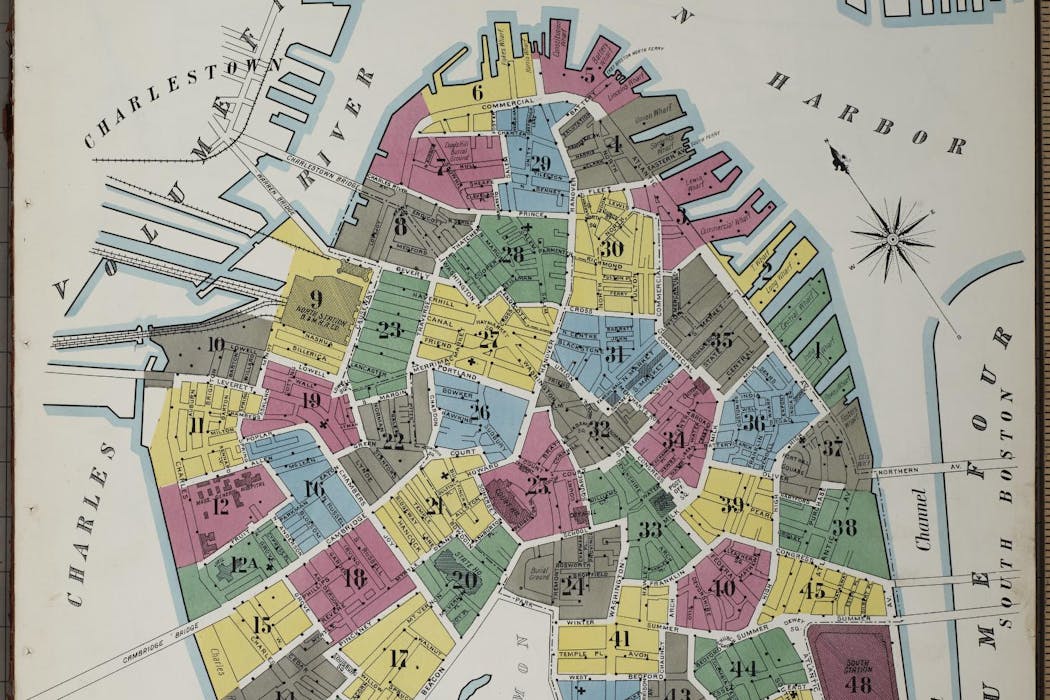
1909 Sanborn map of Suffolk County in Boston, Mass. Library of Congress

Imagine a map that allows you to see what your neighborhood looked like a century ago in immense detail. What you’re thinking of is probably very much like the fire insurance maps produced from the 1860s to the 1970s for insurance companies to identify potential fire risks.

Often referred to as Sanborn maps, after the Sanborn Map Co. that produced them, fire insurance maps were created for every city in the United States with a population greater than 1,000 people. Over a century, more than 50,000 editions of these maps were produced, comprising over 700,000 map sheets – many of which have been scanned and are publicly accessible through the Library of Congress.

Close-up of a map of various buildings spread-out on white space
1917 Sanborn map of The Hill at the University of Tennessee, Knoxville.
Library of Congress

Genealogists, historic preservationists, historians and urban planners commonly use these maps to understand past urban landscapes. But as a critical cartographer interested in how maps shape how people understand the world, I see these maps differently.

Fire insurance maps supply more than just detailed insights into how neighborhoods looked decades ago. Needing to turn a profit, insurers sought to minimize the amount of risk they underwrote or charged higher premiums to account for risk. These maps provide important clues into how insurance companies understood how risk was distributed across cities, revealing costly biases.

Mapping fire risk

Before zoning and land-use planning, American cities frequently mixed industrial, commercial and residential buildings in the same block. Insurance agents used the immense detail of fire insurance maps to determine whether a property was too risky to underwrite, often weighing the demographics of the neighborhoods with the flammability of the buildings in the neighborhood.

Illustrated legend listing what different colors designate
Key to interpreting the Sanborn maps.
Library of Congress

For example, an Atlanta neighborhood called Lightning was a Black, working-class district composed of a mixture of rail yards, noxious industries and residences in 1911. The neighborhood was also an immense fire hazard. Atlanta’s primary trash incinerator stood less than 150 feet from two massive natural gas storage tanks, while two gas processing plants manufactured specialized fuels just feet from homes.

Underwriters would use information from fire insurance maps to understand the local landscape. In these maps, colors correspond to the building’s construction material: pink indicates brick, while yellow indicates wood. Lightning was primarily made from wood, placing the entire neighborhood at risk if a fire broke out.

Fire insurance maps and discrimination

At the same time, fire insurance maps also highlight the social landscape of the neighborhood.

Many buildings in the Lightning fire insurance map are labeled “F.B.,” which stands for “female boarding,” a euphemism for brothels. While brothels were not a fire risk themselves, this code indicated the alleged moral hazard of a neighborhood, or the likelihood that property owners would allow riskier activities to occur on their property that could cost insurers more.

Close-up of a map of various buildings spread-out on white space
1911 Sanborn map of the Lightning neighborhood of Atlanta, Ga. It’s now Mercedes-Benz Stadium, home to the Atlanta Falcons of the National Football League and the Atlanta United FC of Major League Soccer.
Library of Congress

From this one map, an underwriter could quickly see that Lightning was an extremely risky place to insure. Along with disinvestment from fire insurers, marginalized communities like Lightning also experienced other forms of systemic discrimination. Scholars have documented racial discrimination in car, life and health insurance underwriting.

Indeed, in the 1970s, much of Lightning was purchased under the threat of eminent domain – the legal process through which the government takes ownership of private land for public use – to construct the Georgia Dome, now the site of Mercedes-Benz Stadium.

Although fire insurance maps are no longer used in the insurance industry, they provide researchers one way of seeing how discrimination in fire insurance and urban planning manifested in the United States during the 20th century.

The Conversation

Jack Swab does not work for, consult, own shares in or receive funding from any company or organization that would benefit from this article, and has disclosed no relevant affiliations beyond their academic appointment.

ref. From flammable neighborhoods to moral hazards, fire insurance maps capture early US cities and the landscape of discrimination – https://theconversation.com/from-flammable-neighborhoods-to-moral-hazards-fire-insurance-maps-capture-early-us-cities-and-the-landscape-of-discrimination-271271

DOJ criminal probe highlights risk of Fed losing independence – a central bank scholar explains what’s at stake

Source: The Conversation – USA (2) – By Cristina Bodea, Professor of Political Science, Michigan State University

U.S. President Donald Trump with Federal Reserve Chair Jerome Powell on July 24, 2025. Andrew Caballero-Reynolds/AFP via Getty Images)

The Department of Justice’s decision to open a criminal investigation into Federal Reserve chair Jerome Powell has reignited concern over the independence of the central bank.

In unusually blunt remarks, Powell described the unprecedented probe as part of a political attack by the White House over the Fed’s refusal to drastically cut interest rates, as President Donald Trump has long advocated.

But how unique are such apparent attempts to undermine the central bank’s authority? And what would be the consequences of chipping away at Fed independence? To understand what’s at stake, The Conversation turned to Cristina Bodea, a Michigan State University professor who has been studying central bank best practices for more than two decades.

How unique is this moment in American history?

It is unique in the sense that we haven’t seen a Fed chair criminally investigated ever.

But if we go back in history to the Nixon and Reagan years, presidents have put a lot of pressure on Fed chairs when economic conditions were bad – more precisely, there was high unemployment and high inflation.

In more recent history, Fed chairs and the U.S. Federal Reserve have enjoyed bipartisan support in being independent.

Why are central banks independent, and what is at stake?

Independence comes in two forms: legal and in practice. In the recent past, the laws governing central banks have tended to favor an arms-length relationship in which experts in these institutions look at the economic data and make interest rate decisions based on their mandate. If their mandate includes low inflation, they’re supposed to adjust interest rates based on their data so that they can achieve their goal in the medium term.

Legal independence means that the law governing the institution allows them to do this without politicians interfering in day-to-day operations. This does not mean that the institution is not accountable. The Fed is accountable to Congress, and the people who run the Fed are appointed by the president and voted on by the Senate

Then, there is the de facto independence. Because laws are debatable, what happens in practice can differ from the law, and there isn’t an application of the law to each and every instance in which an institution makes a decision.

In the past 30 years, the U.S. Federal Reserve has been more independent than the law suggests because there was a clear bipartisan consensus to not politicize the institution so that it could safeguard the country’s price environment and employment outcomes, without taking into account elections, electoral cycles and who is or isn’t in the White House.

Why do politicians seek to interfere with this independence?

Monetary policy is a fairly powerful tool, meaning that it can have fairly large and quick effects on outcomes. So, politicians would like to use it; the short-term political gains might include cheaper credit and somewhat more employment.

But it’s kind of a double-edged sword because politicians cannot fool people repeatedly. Along with people expecting politicians to use and misuse monetary policy comes inflation as well as an expectation of inflation. If people expect inflation rates to increase, they will adjust their expectations, and employment will only increase if your inflation expectations are stable.

It makes very little sense to put pressure on the Fed in the way that the current administration is – like a full-on assault, an attempt to take over the institution. The institution is useful. If you have an institution that is not a credible inflation fighter, it will actually not be able to stabilize employment either.

What are the stakes here for the American consumer?

The concern is inflation. Currently, data is ambiguous about the right monetary policy, and there are debates within the Fed about the right course of action. But there is no full-blown financial crisis or unemployment crisis.

Interest rates should not be lowered by 3 percentage points under these circumstances, as Trump has urged. Fairly drastic measures should be reserved for fairly drastic circumstances, and I don’t think we are in fairly drastic circumstances. If low interest rates are employed at this moment, you’re basically using all your ammunition on a moment that doesn’t seem to warrant using it.

We are at an uncertain juncture: There are risks to employment, tariffs can further damage the labor market, there is an affordability crisis. There could be an actual financial crisis in the future.

Lowering interest rates now would make the Fed’s interest rate instrument incapable of working should there be a true crisis in the near future.

A screen shows men and a caption above other men working
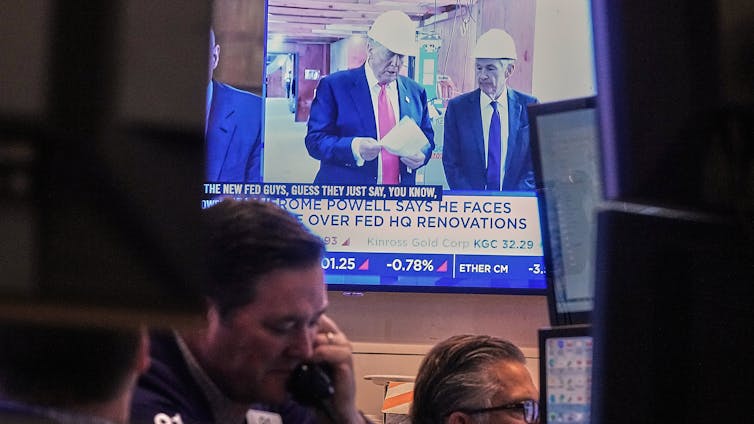
Traders digest news of Federal Reserve Chair Jerome Powell’s comments over a criminal investigation.
AP Photo/Richard Drew

Have we seen the independence of central banks under attack in other countries, or is this uniquely American?

This is not uniquely American, and has happened in countries like Turkey, Venezuela and Argentina. Central bank independence globally has been under attack, but not in democracies or in countries that claim to have strong institutions and rule of law.

The Conversation

Cristina Bodea does not work for, consult, own shares in or receive funding from any company or organization that would benefit from this article, and has disclosed no relevant affiliations beyond their academic appointment.

ref. DOJ criminal probe highlights risk of Fed losing independence – a central bank scholar explains what’s at stake – https://theconversation.com/doj-criminal-probe-highlights-risk-of-fed-losing-independence-a-central-bank-scholar-explains-whats-at-stake-273314

Slanguage: The trouble with idioms — how they can leave even fluent English speakers behind

Source: The Conversation – Canada – By Frank Boers, Professor of Applied Linguistics, Western University

Being a linguist — and someone who has tried to learn several languages (including English) in addition to my mother tongue (Flemish Dutch) — I have an annoying habit: instead of paying attention to what people are saying, I often get distracted by how they are saying it. The other day, this happened again in a meeting with colleagues.

I started writing down some of the expressions my colleagues were using to communicate their ideas that may be puzzling for users of English as a second or additional language.

In a span of about five minutes, I heard “it’s a no-brainer,” “to second something,” “being on the same page,” “to bring people up to speed,” “how you see fit,” “to table something” and “to have it out with someone.”

These are all expressions whose meanings do not follow straightforwardly from their lexical makeup — they’re called idioms by lexicologists.

Idioms are part of daily communication. But this anecdote also suggests that we take it for granted that such expressions are readily understood by members of the same community. However, when it comes to people who are new to said community, nothing could be further from the truth.


Learning a language is hard, but even native speakers get confused by pronunciation, connotations, definitions and etymology. The lexicon is constantly evolving, especially in the social media era, where new memes, catchphrases, slang, jargon and idioms are introduced at a rapid clip.
Slanguage, The Conversation Canada’s new series, dives into how language shapes the way we see the world and what it reveals about culture, power and belonging. Welcome to the wild and wonderful world of linguistics.


Idioms and the limits of language proficiency

Research conducted at the University of Birmingham several years ago revealed that international students for whom English is an additional language often misunderstand lecture content because they misinterpret their lecturers’ metaphorical phrases, including figurative idioms.

More recent research confirms that English idioms can remain elusive to second-language learners even if the expressions are intentionally embedded in transparent contexts.

One of my own recent studies, conducted with international students at Western University in Canada, also found that students incorrectly interpreted idioms and struggled to recall the actual meanings later on after being corrected.

This shows just how persistently confusing these expressions can be.

It’s worth mentioning that we’re talking about students who obtained high enough scores on standardized English proficiency tests to be admitted to English-medium universities. Knowledge of idioms appears to lag behind other facets of language.

When literal meanings get in the way

The challenge posed by idioms is not unique to English. All languages have large stocks of idioms, many of which second-language learners will find puzzling if the expressions do not have obvious counterparts in their mother tongue.

There are various obstacles to comprehending idioms, and recognizing these obstacles can help us empathize with those who are new to a community. For one thing, an idiom will inevitably be hard to understand if it includes a word that the learner does not know at all.

However, even if all the constituent words of an expression look familiar, the first meaning that comes to a learner’s mind can be misleading. For example, as a younger learner of English, I was convinced that the expression “to jump the gun” referred to an act of bravery because, to me, the phrase evoked an image of someone being held at gunpoint and who makes a sudden move to disarm an adversary.

I only realized that this idiom means “to act too soon” when I was told that the gun in this phrase does not allude to a firearm but to the pistol used to signal the start of a race.

I also used to think that to “follow suit” meant taking orders from someone in a position of authority because I thought “suit” alluded to business attire. Its actual meaning — “to do the same thing as someone else” — became clear only when I learned the other meaning of suit in card games such as bridge.

The idea that idioms prompt a literal interpretation may seem counter-intuitive to readers who have not learned a second language because we normally bypass such literal interpretations when we hear idioms in our first language. However, research suggests that second-language learners do tend to use literal meanings as they try to make sense of idioms.

Unfortunately, when language learners use a literal reading of an idiom to guess its figurative meaning, they are very often misled by ambiguous words. For example, they will almost inevitably misunderstand “limb” in the idiom “to go out on a limb” — meaning “to take a serious risk” — as a body part rather than a branch of a tree.

Recognizing the origin of an idiomatic expression can also be difficult because the domains of life from which certain idioms stem are not necessarily shared across cultures. For example, learners may struggle to understand English idioms derived from horse racing (“to win hands down”), golf (“par for the course”), rowing (“pull your weight”) and baseball (“cover your bases”), if these sports are uncommon in the communities in which they grew up.

A language’s stock of idioms provides a window into a community’s culture and history.

Same language, same idioms? Not exactly

Idiom repertoires vary across communities — whether defined regionally, demographically or otherwise — even when those communities share the same general language.

For example, if an Aussie were to criticize an anglophone Canadian for making a fuss by saying “you’re carrying on like a pork chop,” they may be lost in translation, even if there isn’t much of one. At least, linguistically that is.

Although people may have learned a handful of idioms in an English-language course taken in their home country, those particular idioms may not be the ones they will encounter later as international students or immigrants.

The moral is simple: be aware that expressions you consider perfectly transparent because you grew up with them may be puzzling to others. We need to have more empathy for people who are not yet familiar with the many hundreds of potentially confusing phrases that we use so spontaneously.

The Conversation

Frank Boers receives funding from the Social Science and Humanities Research Council of Canada.

ref. Slanguage: The trouble with idioms — how they can leave even fluent English speakers behind – https://theconversation.com/slanguage-the-trouble-with-idioms-how-they-can-leave-even-fluent-english-speakers-behind-271681

A Man on the Inside: Netflix comedy offers a timely defence of higher education

Source: The Conversation – Canada – By Barbara K Seeber, Professor, English Language & Literature, Brock University

Season 2 of Netflix’s A Man on the Inside finds Charles Nieuwendyk, private investigator and retired engineering professor (played by Ted Danson), undercover at Wheeler College.

The mission: recover the college president’s laptop. This might not seem juicy, but said laptop contains sensitive information about a $400 million donation by a tech multibillionaire, Brad Vinick.

As someone who has lived and studied academic life, I find the series created by Michael Schur (also behind The Good Place starring Ted Danson, among other hit series) is both funny and uncomfortable because it hits close to home.

Budgets trimmed to the bone

The P.I. is thrilled by his university case, calling it something “I can really sink my teeth into.”

Wheeler College, founded in 1883, has seen better days. It is struggling financially and its leadership is unpopular. The board of trustees hired a president who trims department budgets to the bone, cuts student aid and embraces corporate sponsorship — as well as the bonus he receives with every major donation.

These measures are not enough. Enter Vinick.

‘A Man on the Inside’ Season 2 trailer.

Vinick’s secret plan — “Project Aurora” — is to fire half the professors, exclude faculty from decision-making and close what he considers “non-essential departments,” leaving “three tracks of study — biotechnology, economics and computer science to prepare young adults for life in the modern world.”

President Jack Beringer knows Vinick’s intentions but does not want anyone to know he knows. Faculty uprisings would not help his bid for a higher-paying university job in Dallas, where he ate the best steak ever.

Language of efficiency, innovation

Any campus stroll reveals that Wheeler’s “Pepsi T-Mobile Covered Garage brought to you by Sephora” (Episode 4) is only a slight exaggeration.

Vinick’s language of efficiency and innovation dominates in real life. Universities are run increasingly on a corporate model, as numerous studies have demonstrated, including my collaboration with Maggie Berg in our book The Slow Professor: Challenging the Culture of Speed in the Academy.

Budgets and programs are being slashed, and in the guise of economic necessity, principles of higher education are undermined.

Professors also satirized

While Beringer and Vinick are the villains of the piece, there are, of course, some digs at the professors. (I admit we are an easy target).

The musicologist, for example, will abandon any conversation mid-sentence when inspiration hits.

In Episode 4, we see the chair of the English department is a snob about books you can buy at airports.

However, the show resists indulging in nutty, overpaid professor stereotypes because it recognizes, in the words of Dr. Benjamin Cole, head of the English department, “these are not the best of times.” The show focuses on staff and faculty efforts in an era of budget cuts and attacks on what the billionaire investor calls “pointless subjects” like art history and philosophy.

Holly Bodgemark, the provost, is so overworked she swallows nicotine gum (“It works faster if it goes right to the stomach”) and mixes her own “Peptocoffee.”

The musicologist may be flaky, but she buys used instruments out of her own pocket for students who can’t afford them. Money is tight for students. Student Claire Chung works a dozen jobs to pay tuition and housing. “When do you sleep?” Nieuwendyk asks. “In class,” she replies.

Defending higher education

To defend higher education, the show calls in the big guns: Ozymandias, a sonnet by 19th- century Romantic writer Percy Bysshe Shelley. It’s mentioned in one of Cole’s lectures, where he recites some of its lines and comments on its continued relevance: “Money, fame, power do not last. But ideas … can endure.”

Two men in discussion on a bench.
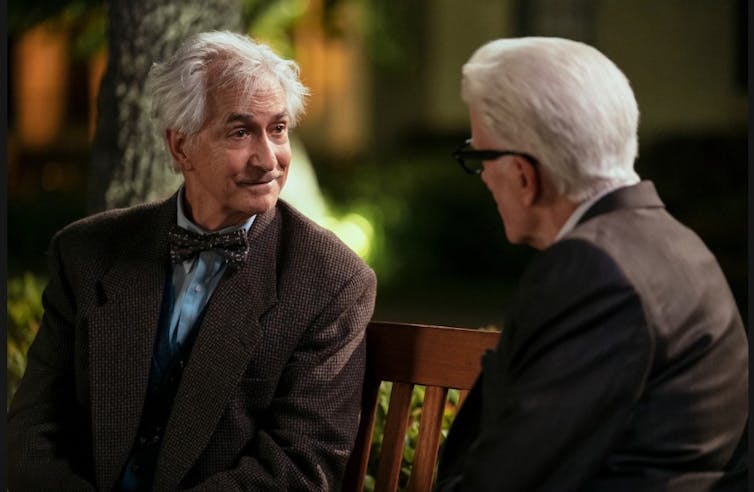
Literature professor Dr. Cole tells his students: ‘ideas … can endure.’
(Netflix)

Published in 1818, Ozymandias speaks of a “traveller from an antique land.” The traveller comes across the remains of a sculpture with an inscription that reads:

“‘My name is Ozymandias, King of Kings,

Look on my Works ye Mighty, and despair!’”

The rest of the sculpture is a “colossal Wreck,” and the king’s boast has dwindled into unintentional irony.

Given that the show is American, the literary allusion might be a veiled reference to the No Kings protests.

Making sense of the present

The series seems to side with philosophers like Martha Nussbaum, who argues that a liberal arts education can help us make sense of the present and read it critically.

Vinick is a modern Ozymandias. He wants to be immortal, literally (he undergoes longevity treatments) and figuratively (he commissions oil portraits of himself). As the professor of fine arts notes in the first episode of Season 2: “Newsflash: the billionaire is a narcissist.”

Not to give away the mystery, but a crisis is averted. Wheeler is safe … for now. It might go under, but, as the provost says, “better to end on our own terms.”

And those terms are: education is not a business; it cannot be reduced to the delivery of quantifiable outcomes. The book What Are Universities For?, by Stefan Collini, professor emeritus of intellectual history and English literature, makes this case in a particularly compelling (and at times laugh-out-loud) way.

Higher education is a public good because it teaches critical thinking and civil debate and prepares engaged citizens.

Community

Good satire like A Man on the Inside points out the problems as well as possible remedies. Vinick mocks the notion of community, but the show values it above all because, without it, resistance is impossible. Wheeler College’s faculty and staff celebrate each other and band together across disciplinary divides.

In the words of the provost in the last episode of the season, they are committed to protecting “community and knowledge for the sake of knowledge.”

Schur’s comedy offers a timely defence of higher education and is notable for bridging the gap between academics and the general public.

The Conversation

Barbara K Seeber received a Social Sciences and Humanities Research Council Institutional Grant at Brock University.

ref. A Man on the Inside: Netflix comedy offers a timely defence of higher education – https://theconversation.com/a-man-on-the-inside-netflix-comedy-offers-a-timely-defence-of-higher-education-270934

Why America hasn’t become great again

Source: The Conversation – Canada – By Robert Chernomas, Professor Of Economics, University of Manitoba

United States President Donald Trump and his MAGA base are often portrayed as a break from past political norms. While that is certainly true, it overlooks the long and predictable path that led to his rise.

The slogan “Make America Great Again” (MAGA) became the movement’s rallying cry, tapping into a nostalgic vision of a past era of economic prosperity and social dominance and appealing to voters who feel left behind by demographic and economic change.

Trump is the predictable result of the deteriorating economic conditions in the U.S. since the 1980s and the political machinations that brought those economic conditions about. In our recent book Why America Didn’t Become Great Again, we explore how the U.S. has set itself on a path toward self-destruction.

The rise of corporate power

Book cover of Why America Didn't Become Great Again by Robert Chernomas and Ian Hudson.
‘Why America Didn’t Become Great Again’ by Robert Chernomas and Ian Hudson.
(Taylor & Francis)

In the 1970s, higher taxes and regulation, a growing “rights-conscious revolution” around the environment, gender and race, demand for rising wages and increasing foreign competition threatened corporate power. In response, American business embarked on what billionaire Warren Buffett described as “class warfare.”

To transfer wealth and power from the many to the few, institutions had to be organized, government policies reoriented and economists, journalists and politicians recruited, funded and promoted.

Corporate lobbying skyrocketed. In 1971, only 175 firms had registered lobbyists in Washington, D.C.,; by 1982, 2,445 did. The number of corporate political action committees (PACs) rose from fewer than 300 in 1976 to more than 1,200 by the mid-1980s.

Business lobbying organizations advocated for policies like corporate tax cuts, deregulation, free trade, anti-worker legislation and more permissive rules on corporate political donations. Between 1998 and 2022, the U.S. Chamber of Commerce spent US$1.8 billion on lobbying activities, making it the single largest spender in the nation.

The role of wealthy individuals

Individual business owners also chipped in. Figures like Charles and David Koch funded organizations that aligned with their desire to create a U.S. free from government regulation, taxation, redistribution or public services. During the 2016 election cycle, Koch-backed PACs spent just under US$900 million.

Many of these organizations, like the Tea Party, also helped put into the mainstream an evangelical creationism that distrusted science and expert opinion, supported a patriarchal animosity to women’s rights, opposed policies to further racial equality and expressed xenophobic opinions.

The flood of corporate money shifted the political centre, making Democrats more conservative. No progressive economic policy has been passed in the United States since the 1970, with the tepid exception of the Affordable Care Act, which is friendly to the health insurance industry.

The strategy proved remarkably successful. According to political scientists Martin Gilens and Benjamin Page, when wealthy Americans strongly support a policy, it’s about twice as likely to be adopted. But strong support from the middle class has “essentially no effect.”

How does this happen in a working democracy?

Business leaders cannot win elections on their own — they need allies. One particularly large group was easy to convince. Since the 1960s, no Democratic presidential candidate has won the majority of white voters.

Between the 1960-64 and 1968-72 election cycle, support for Democratic candidates among less-educated white voters fell from 55 to 35 per cent. With the exception of the 1992 and 1996 elections when their votes were more evenly split, this gap has held to the present day.

Although their share of the population is declining, less-educated white voters still made up just under 50 per cent of the electorate nationally in 2018. College-educated white voters have tended to split their votes more evenly or provide a small edge to Republicans.

If Democrats have branded themselves as the party of inclusion — of different races, genders, ethnicities and sexualities — the Republican Party has defended what they euphemistically term “traditional values.”

In a Faustian bargain to advance a pro-business agenda, the Republican Party successfully appealed to less-educated white voters, whose historical economic and social advantages have been diminishing. They earn less and die younger than they used to and their advantages over other groups in society are diminishing.

The Republican Party seized on this group’s discontent and actively channelled it against African Americans and immigrants. As early as the 1960s, the Republican’s Southern strategy promoted racism, successfully shifting white voters to their party and shifting the political spectrum to the right. That strategy continued through Ronald Reagan, George W. Bush, the Tea Party and Trump.

Importantly, this shift in voting preferences occurred well before the advent of the so-called “Rust Belt.” According to Pew Research, manufacturing jobs peaked in 1979.

Faced with declining standards of living, less-educated white voters could have chosen solidarity with all other workers and forced concessions from the elite of the business community to make the lives of all working-class people better. Instead, they voted to maintain the relative advantage of being white.

Rising inequality

The redistribution of income and wealth was detrimental to most Americans. Between 1973 and 2000, the average income of the bottom 90 per cent of U.S. taxpayers fell by seven per cent. Incomes of the top one per cent rose by 148 per cent, the top 0.1 per cent by 343 per cent, and the top 0.01 per cent rose by 599 per cent.

If the income distribution had remained unchanged from the mid-1970s, by 2018, the median income would be 58 per cent higher ($21,000 more a year). The decline in profits was halted, but at the expense of working families. Stagnant wages, massive debt and ever longer working hours became their fate.

Income stagnation is not the only quality of life indicator that suffered. In 1980, life expectancy in the U.S. was about average for an affluent nation. By the 2020s, it dropped to the lowest among wealthy countries, even behind China or Chile, largely due to the stagnation of life expectancy for working-class people.

The paradox of “red state” support

Less-educated white voters have historically supported politicians (mainly Republicans) who support cutting taxes for the rich and cutting social programs that they significantly benefit from.

In 2023, the Republican Gov. Sarah Huckabee Sanders of Arkansas vowed to get the “bureaucratic tyrants” of the federal government “out of your wallets.” Yet the numbers tell a different story.

In 2019, the federal government collected only half as much in taxes as it spent in the state, amounting to about US$5,500 per person in Arkansas. Similar patterns hold in many other regions.

Republican Kentucky is the largest destination of federal transfers, receiving US$14,000 per resident, approximately 30 per cent of its entire gross domestic product.

The electoral preferences of red states don’t result in good outcomes. States won by Trump in the 2016 presidential election had lower average scores (similar to Russia) on the American Human Development Index — which measures income, education and health — than states won by Democrats, which are similar to the Netherlands.

The modern Republican agenda

For decades, the alliance between less-educated white voters and business worked very well for business. Trump’s MAGA still delivers longstanding pro-business policies, from deregulation to antagonism to workers’ rights and massive tax cuts for the rich.

Today, however, the Republican Party now also promotes policies that business has long fostered, if not supported, including a distrust of facts and science, the ethnic cleansing of the labour force, racism, a vengeance for justice and a hodgepodge of crony, incompetent economic priorities and policies.

This combination has created a more unstable and unpredictable political, economic and social environment, leaving a significant majority of CEOs yearning for the stable Republican Party of a bygone era.

The Conversation

Robert Chernomas is a Professor of Economics at the University of Manitoba and a member of Elbows Up: A Practical Program for Canadian Sovereignty. I am not affiliated with a political party or industry association but I am politically active.

Ian Hudson receives funding from SSHRC.
Ian Hudson is a Research Associate for the Canadian Centre for Policy Alternatives.

ref. Why America hasn’t become great again – https://theconversation.com/why-america-hasnt-become-great-again-272778

Why Donald Trump is telling such obvious lies on the ICE Minneapolis killing

Source: The Conversation – Canada – By Jennifer Saul, Chair in Social and Political Philosophy of Language, University of Waterloo

By now, many of us have probably seen the video of a Minneapolis woman whose last words were a calm “It’s fine, dude; I’m not mad at you,” before she was shot three times in the head as she turned her car to drive away from an Immigration and Customs Enforcement (ICE) agent.

U.S. President Donald Trump claimed that Renee Good “violently, willfully, and viciously ran over the ICE Officer, who seems to have shot her in self defense.

Vice-President JD Vance declared “the reason this woman is dead is because she tried to ram somebody with her car… You have a woman who aimed her car at a law enforcement officer and pressed on the accelerator. Nobody debates that.”

These statements, and others that doubled down on them, were made even as videos showing they were clearly false were in wide circulation.

It’s puzzling. Why lie in a situation like this? Who can you hope to deceive, when evidence falsifying your statements is freely available?

Seeing is not believing?

Our work on authoritarian public discourse stresses that there are multiple answers to this question, partly because there are many different audiences of mass communication. We need to come to grips with the multiple functions of obvious falsehoods like these to understand why they are made so often and so prominently, and how they serve authoritarian leaders.

First, something that seems obvious to you can be credible to others. How? Because in an era of algorithmic news feeds, we are not all getting the same news. Those with a newsfeed of nothing but MAGA influencers are in a different epistemic bubble from other people.

And they may well be in an echo chamber, in which opposing voices are so discredited that when an alternative narrative reaches them, it’s immediately dismissed.

Millions of people may not have seen the videos of the incident at all, or may have seen versions with instructions on how to interpret the visuals: she’s not turning around, she’s backing up in preparation to ram into the shooter; she’s not calmly indicating that she isn’t a threat, she’s refusing to comply with orders.

Videos of police using force often have this dual nature: they can document and prove wrongdoing; but they can also be used to train citizens to see threats where there are none.

Footage of the last moments of Renee Good’s life. (The Canadian Press)

Authoritarian tactics

Some people will find the lies too obvious to be plausible attempts at deception. Yet bald-faced lies are important in strongman politics.

Authoritarians can display their power by asserting obvious falsehoods, showing that they cannot be held to account. They also play to their base by showing contempt for a shared enemy, while demanding displays of loyalty and compliance from underlings.

Officials are forced to engage in the humiliating ritual of repeating what we call compliance lies. Think here of White House press secretary Sean Spicer at the start of Trump’s first term, forced to defend absurd lies about Trump’s and Obama’s inauguration crowds.

At the time, this may have seemed merely buffoonish. What’s happened since illustrates how dangerous this can be as the subject of the lies has changed to matters concerning life and death.

Other people may simply become confused by obvious lies. The competing interpretations of the Minneapolis video are diametrically opposed. Once news sites and social media feeds are sufficiently populated by these opposing views, it can feel like an overwhelming task to discern what’s really true.

And exposing a lie still doesn’t end its influence. It is easier to create an opinion with a lie than to undo that opinion when the lie is debunked, something known to psychologists as the continued influence effect.

Filling social media feeds with falsehoods to create confusion is a crucial part of the strategy that Steve Bannon, a Republican strategist and former Trump adviser, called “flooding the zone with shit.” This can leave people unsure of who to trust, what to believe, or even what the issue really is.

‘Both sides’ reporting

Relatively savvy and good-faith entities can be used as instruments of this strategy. In the name of neutrality and balance, centrist news media can fall back on a “both sides” model that frames stories mainly in terms of what each side is saying.

When one side commits to obvious lies, this approach obligingly repeats those lies while outsourcing the fact-checking to the opposing side, as if it were merely a partisan dispute.


Read more:
Why Donald Trump is such a relentless bullshitter


These duelling narratives can then become the story. The strategy to lie shifts focus away from the shooting itself, in this incident, and onto the alleged controversy.

In other words, obvious lies aren’t necessarily failed lies. They can confuse, distract, excite and intimidate a range of audiences. They can also be believed, no matter how obviously false they seem.

To treat them as mere indications of shamelessness or incompetence on the part of the liar is to overlook the serious harm they can do and the appeal they have in authoritarian politics.

The Conversation

Jennifer Saul is a member of Democrats Abroad.

Tim Kenyon has received funding from the Social Sciences and Humanities Research Council of Canada.

ref. Why Donald Trump is telling such obvious lies on the ICE Minneapolis killing – https://theconversation.com/why-donald-trump-is-telling-such-obvious-lies-on-the-ice-minneapolis-killing-273200