Basic income’s appeal today is similar to its roots in 18th-century England – it’s a way to compensate people for a common good taken for private gain

Source: The Conversation – USA (2) – By Will Glovinsky, Research Assistant Professor of Humanities, Binghamton University, State University of New York
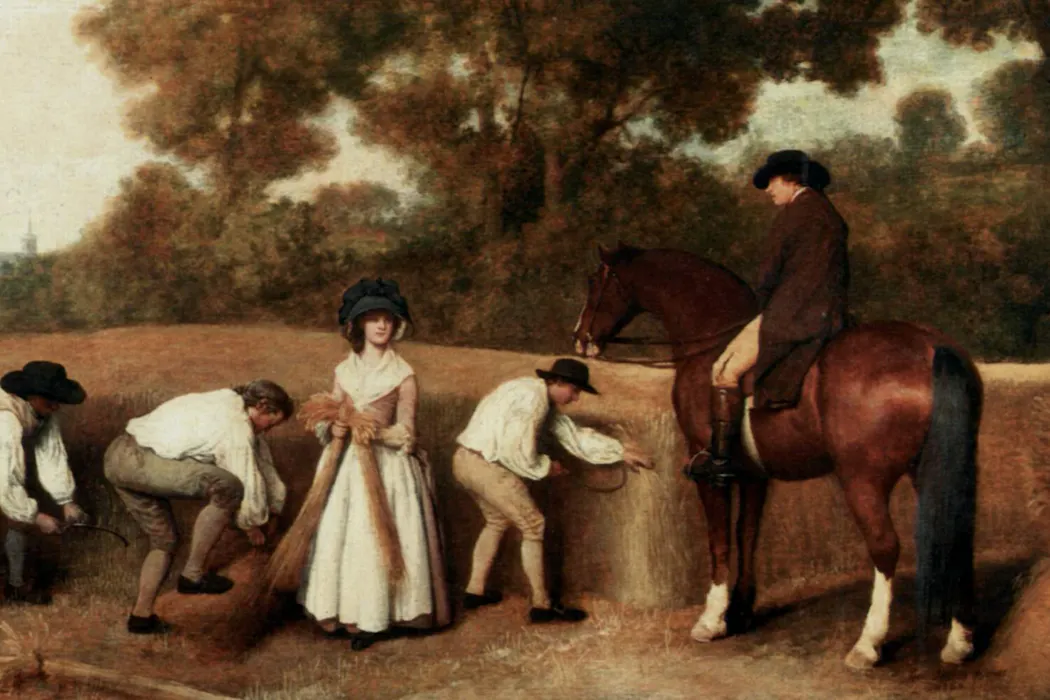
The first basic income proposals were a reaction to the seizure of common fields by English landlords. George Stubbs/The Yorck Project, CC BY

A story has been going around about artificial intelligence for the past decade: At some point, AI advances, robots and self-driving cars will throw countless people out of work.

The rich folks who control AI companies will get richer. Most other people’s fortunes will decline as their skills lose value and they fail to get new jobs. To prevent the U.S. from suffering mass hunger and political chaos, the story goes, it will need a new system: The government will provide many people, or maybe everyone, with no-strings-attached cash payments.

There are many names for this kind of policy, including “basic income.”

Backing from a diverse group

This is essentially the story told by 2020 presidential candidate Andrew Yang and by the labor leader Andy Stern. You may also hear it from an array of tech billionaires, including OpenAI CEO Sam Altman and Tesla and SpaceX CEO Elon Musk. In telling it, those moguls also get to hype their companies’ AI models.

Local governments from Stockton, California, to Atlanta are testing basic income programs by giving low-income residents cash. Across the Atlantic, British Investment Minister Jason Stockwood has said he and other leaders are “definitely talking” about the idea.

Meanwhile, social scientists are also interested. They point to basic income experiments that have found more tangible benefits, such as fewer hospitalizations and improved parenting practices.

A man looks off to the left with a quotation in the background.
When Michael Tubbs was the mayor of Stockton, Calif., the city temporarily ran a basic income program that gave 125 people money with no strings attached.
Nick Otto/AFP via Getty Images

Telling the ‘basic income’ origin story

I think this talk about basic income – as a solution to automation-driven job losses, or simply as a way to help people – misses something important.

As a scholar of British culture, literature and politics, I study the English thinkers and activists who first called for a form of basic income at the turn of the 19th century – an era of political turmoil, technological change and the global exchange of ideas. I believe that understanding the origins of basic income policies can help clarify what’s behind the current surge of interest in the idea.

This history suggests that basic income is not just about finding a solution to automation or efficiently reducing poverty, though it might do those things.

More fundamentally, calls for basic income respond to the sense that something has been unfairly taken from ordinary people.

AI’s ‘expertise theft’

The feared mass layoffs from AI have not yet materialized, though cracks may be forming in the job market for entry-level workers.

But technology is developing rapidly, making it hard to predict the future.

Meanwhile, another side of AI’s impact on workers is coming into focus.

Three MIT economists, including two Nobel laureates, published a paper in February 2026 in which they bluntly warned that current AI models are engaged in what they called “expertise theft.”

“AI systems,” they wrote, “freely scrape content from websites, social media, YouTube, newspapers, Wikipedia, and blogs, then statistically recombine this material and sell access to the results.”

The concern is that companies will sell all of us – or our former bosses – AI-mediated access to the very ideas, artwork and knowledge contributed by generations of skilled humans.

This large-scale appropriation of the resources that knowledge workers use to make a living – skills, styles, theorems, jokes, recipes – has a historical parallel. As the Oxford economist and machine learning expert Maximilian Kasy argues, AI companies’ wholesale data theft echoes the enclosure of common lands in England in the lead-up to the Industrial Revolution.

The loss of the commons

From 1604 to 1914, English landowners leveraged their control over Parliament to seize 6.8 million acres (275,186 square kilometers) of land once shared by commoners. In the mid-18th century, the process began to accelerate.

Previously, common people had shared the right to plow open fields, gather firewood, graze animals and cut peat from nearby bogs. Rules and fines had discouraged overuse.

Now, with these resources fenced off, commoners had to till someone else’s land for a wage. A communal inheritance was literally hedged in.

As with AI companies’ expertise theft today, the enclosure of the commons was defended by large landowners as a modernizing step. Experts debate the issue, but the economists Leander Heldring, James A. Robinson and Sebastian Vollmer found that English enclosures contributed to a 45% increase in farm yields.

But the enclosures of lands that previously belonged to all also reduced the economic independence of ordinary people. One observer summed up the feelings of commoners this way: “All I know is, I had a cow, and an act of Parliament has taken it from me.”

Amid this widespread dispossession, the first basic income proposals arose.

A response to losses due to enclosures

In the early 1770s, the magistrates of Newcastle attempted to enclose the town’s common land and keep its rental income for themselves.

The local townspeople successfully resisted. If they gave up their rights to use the land, they would divide its rent equally.

The struggle inspired a young Newcastle schoolmaster named Thomas Spence to develop the world’s first basic income proposal.

The son of an impoverished netmaker, Spence never left England. But he was intrigued by reports of Indigenous American systems of egalitarian land use.

His reading persuaded him that the English enclosures were designed to fence most people out from the very resources they needed to survive, rendering them dependent. “If Grass or Nettles they could eat,” he joked, landowners would fence them off, too.

Thomas Spence still has fans today.

Spence therefore called for the real estate of each parish, the ancient administrative unit in England, to be collectively owned by its residents. Farms would be leased out to the highest bidder, preserving competition.

But rather than accrue to landlords, the rents would fund parish-run schools, hospitals, courts and roads. The remainder would be distributed equally every three months to all residents of the parish, regardless of their age, occupation or gender. In one version of the plan, the local women would run the parish.

In 1798, Spence estimated the dividend at almost 10 pounds annually. In 1816, his followers proposed a version that would compensate former landholders but still yield a payout of 4 pounds.

Those 4 pounds in 1816 would be worth about 342 pounds, or US$456, as of February 2026. And 10 pounds in 1798 would equal 1,126 pounds, or $1,496.

Both were huge sums at a time when male farm laborers might make about 28 pounds annually if employed year-round. The economist Thomas Malthus, Spence’s contemporary, doubted the dividend would be so high.

Whatever the payment’s value, Spence argued that this money was owed to the people. If enclosing land they previously could farm forced commoners to work for landlords or move to northern factory towns, the payments would compensate them for the loss of their “natural rights” to the earth.

The first basic income movement

By the 1790s, Spence had landed in London.

There, hawking radical pamphlets and a sassafras-flavored beverage called saloop out of stalls and storefronts, he spread the gospel of basic income as the French Revolution raged.

A tireless propagandist, he published dialogues, handbills, ballads, anthologies and – when Spence was inevitably arrested – his own trial proceedings. He was imprisoned several times between 1792 and 1802, usually without any trial at all.

When he died in 1814, he had a loyal following of Spenceans, who chalked slogans on walls and sang ballads in the London taverns promoting his plan for unconditional cash dividends.

The doctrine of universal payments was considered so dangerous that the Spenceans were outlawed in 1817.
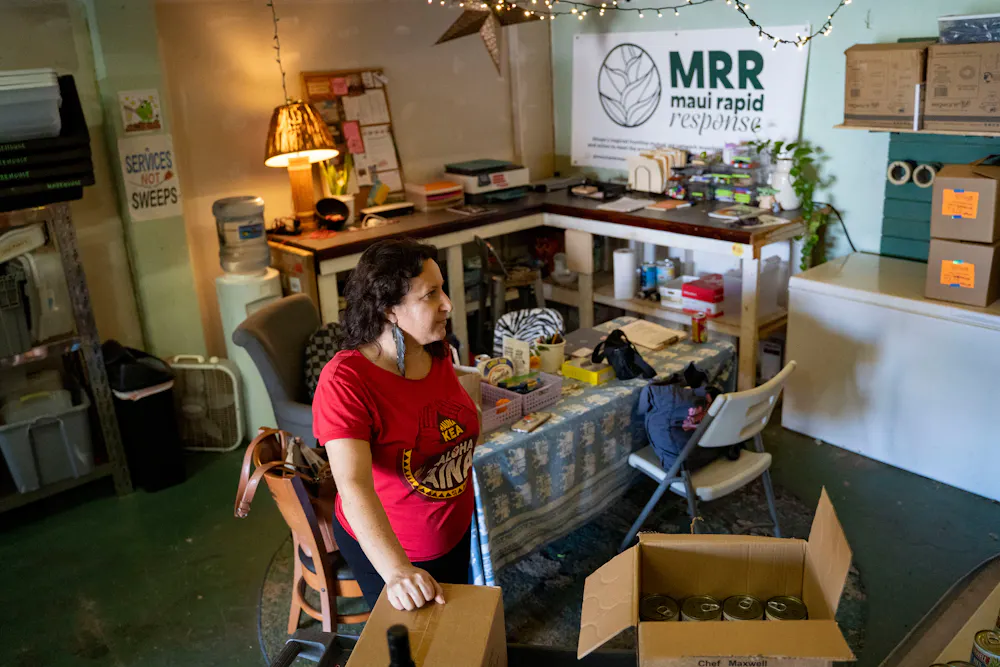
A woman stands in a room with a lot of boxes.
Nicole Huguenin runs Maui Rapid Response, a nonprofit supporting Maui fire survivors with cash assistance. She’s shown here organizing canned food at the organization’s warehouse in Kahului, Hawaii, in March 2026.
AP Photo/Mengshin Lin

Basic income aims to address dispossession

Up until recently, Spence’s ideas had found their closest analog in Alaska, which since 1982 has paid several thousand dollars yearly to every resident out of the revenue generated from the drilling of oil on state-owned lands.

In my view, Spence’s writings are evidence that the concept of basic income is a response to pervasive dispossession. Two centuries ago, Spence and his followers fought for universal cash payments because enclosure had made ordinary people too dependent on landowners for their livelihoods.

They did not emphasize that money would be good for people, as proponents do now. They argued that money was owed to people.

Today, concerns about AI-driven automation are driving the discussion about basic income. But automation may also be how the 21st-century form of semilegal theft becomes visible. Mounting calls for an “AI dividend,” provided on a regular basis, or “universal basic capital,” received as a lump sum, or even public ownership of AI may all reflect a dawning awareness of a new wave of dispossession.

This time, it’s fueled by the appropriation of humanity’s next common resource: our knowledge and skills.

The Conversation

Will Glovinsky does not work for, consult, own shares in or receive funding from any company or organization that would benefit from this article, and has disclosed no relevant affiliations beyond their academic appointment.

ref. Basic income’s appeal today is similar to its roots in 18th-century England – it’s a way to compensate people for a common good taken for private gain – https://theconversation.com/basic-incomes-appeal-today-is-similar-to-its-roots-in-18th-century-england-its-a-way-to-compensate-people-for-a-common-good-taken-for-private-gain-276950

Shiite grief over attacks on Iran’s sacred cities has deep historical roots

Source: The Conversation – USA (3) – By Mary Thurlkill, Professor of Religion, University of Mississippi

Several Shiite communities in South Asia recently refrained from celebrating Eid as they mourned the death of Iran’s supreme leader, Ayatollah Ali Khamenei. From Nigeria to Kashmir – well beyond the Gulf region – the assassination has stirred deep concerns among Shiite Muslims.

Shiite Islam is the official, and majority, religion of Iran. Shiite minorities in other countries tend to view Iranian leaders as protectors and have sometimes risked personal safety to protest the war.

As the violence expands around Tehran, Shiites are not only grieving the death of their leaders but also fear the loss of holy cities and shrines that anchor their collective memory.

Many of the cities targeted in the war today are home to these types of shrines, including Qom, Isfahan and Mashhad. In Isfahan, the 17th-century Jame Abbasi Mosque, also known as Shah Mosque, sustained damage during one of the airstrikes. After the ayatollah’s death, Shiites gathered at Imam Reza Shrine in Mashhad to mourn his loss. In a signal recognized by all Shiites, Iran raised the black flag at the shrine’s dome to mark the community’s shared grief.

Qom, located about 80 miles south of Tehran, has attracted much media attention because of the large-scale military attacks against it. Various social media platforms are showing destroyed buildings and plumes of smoke filling the skyline.

After Khamenei’s death, the city was targeted because the Assembly of Experts gathered there to elect his successor. Israel attacked Qom’s Shokouhiyeh Industrial Zone, known for its drone production companies.

With the news blackout in Iran and Gulf states, it’s impossible to know the impact of military operations on holy sites like Qom. Regardless of the level of material damage, Shiites are deploring the physical and spiritual assaults against their sacred landscape.

That’s because in Shiite Islam, grief is not only personal but collective. As a scholar of medieval Islam and Shiite piety, I have seen how this grief is expressed through rituals, pilgrimage and devotion to saints.

Redemptive suffering

Shared sorrow is a key part of Iran’s Twelver Shiite identity, which venerates the Prophet Muhammad’s family through daughter Fatima and cousin and son-in-law, Ali.

Fatima and Ali’s lineage is called the Imamate, with each individual imam recognized as a sinless spiritual leader. Each imam is responsible for providing guidance as the “proof of God” on earth.

Ali’s leadership and the imams’ leadership wasn’t recognized by all Muslims, however. Some of Muhammad’s companions and early leaders of the Umayyad dynasty, which ruled from 661-750 C.E., rejected their authority and punished their followers.

According to Shiite tradition, in 680 C.E. supporters of Ali’s family living in Kufa – in modern-day Iraq – appealed to Husayn, the prophet’s grandson, for assistance. They had refused to pledge their allegiance to the Umayyad Caliph Yazid because they viewed him as illegitimate and oppressive.

Husayn gathered a small group of friends and family, including wives, children and siblings, and headed to Kufa. Their party was intercepted outside the city, on the plains of Karbala, by Yazid’s forces led by Umar ibn Sa’d.

Cut off from water and vastly outnumbered, Husayn’s camp suffered for 10 days in the desert, and the Kufans never rallied to their defense. Desperate from thirst, Husayn rode out of the camp with his infant son to appeal for water, but an enemy archer shot an arrow through the child’s neck.

Tradition says that on the 10th of Muharram, Husayn and his companions met Yazid’s military on the battlefield and were massacred. Many of the men were beheaded and women captured; Umar ibn Sa’d marched the spiked heads and shackled women through various towns on the way back to Caliph Yazid in Damascus to deter further protest.

Husayn’s Kufan supporters acknowledged their failure to aid the imam and pledged to publicly atone. In 685 C.E. about 4,000 penitents revolted against Umayyads in Syria; the majority died.

Shiites worldwide still commemorate Husayn’s death at Karbala as a sacrifice for the community’s collective redemption.

Shiites frame their own suffering – from facing injustice to martyrdom – as symbolically participating in Husayn’s sacrifice. Public ceremonies include “taziyeh” plays performed during Muharram that recreate Husayn’s martyrdom and the public recitation of poetry dedicated to his family.

A sacred landscape

America and Israel associate holy sites such as Qom with underground bunkers, uranium plants and military headquarters. But for Shiites they are centers of pilgrimage, where the faithful seek connection with God, the imams and their sacred history.

Qom has universities and stunning sacred architecture that date back to the Safavids, a dynasty that ruled Iran from 1501 through 1736. Its seminary is the foremost clerical institution in the world, training students from Lebanon, Iraq and Afghanistan in a wide range of topics, including Shiite jurisprudence, Quranic interpretation and Arabic literature. Women also attend the seminary but with segregated classrooms and some course restrictions.

Several women in burqas stand before a shrine with tall minarets, holding a large photo of Ayatollah Khamenei.
Iranians mourn the death of Khamenei in a U.S. attack during a demonstration at the Hazrat Masumeh shrine in the city of Qom, Iran, on March 1, 2026.
Stringer/Anadolu via Getty Images

Qom’s primary sacred site, the shrine of Fatima bint Musa, who died in 816 C.E., is one of the most important sacred sites for Shii Muslims worldwide and attracts millions of pilgrims each year.

Popularly known as Fatima Masuma, she is the daughter of seventh imam Musa al-Kazim and sister to the eighth imam, Ali al-Rida.

Iranian Shiites – known as Twelvers – believe there are 12 imams in the Prophet Muhammad’s family lineage with exalted spiritual status, and that the 12th imam never died but went into “hiding.” Shiites know the 12th imam as al-Mahdi, or the messiah: they believe he will return at the world’s end times to restore God’s justice and peace.

According to Fatima’s hagiographies, or popular sacred stories, she remained unmarried and devoted herself to scholarship. She’s known as a trustworthy transmitter of hadith – sayings from the prophet and his family – and she studied the Quran and jurisprudence. She’s especially revered in Shiite Islam because of her kinship with the imams.

A mosque with a shining dome and tall minarets is seen through an archway with colorful intricate patterns.
The shrine of Fatima Masumeh in Qom, Iran.
Mansoreh Motamedi/Moment via Getty images

Tradition notes that when Fatima’s father, Musa al-Kazim, was unable to meet visitors with spiritual questions, he directed them to consult his daughter.

During her lifetime, the Abbasid dynasty rose to power in Baghdad and quickly sought to curtail the imamate’s popularity because many Muslims viewed Ali’s family as the only legitimate rulers.

Saintly intercession

Just on the outskirts of Qom is a village called Jamkaran, home to another important pilgrimage site. According to tradition, the 12th imam, or Imam al-Mahdi, appeared to a devotee in the 10th century and requested a shrine be constructed.

From 1995 to 2005 the Iranian government greatly expanded the mosque complex and city infrastructure to support the millions of pilgrims who visit annually.

Shiites believe al-Mahdi is mysteriously present at the site and listens to their concerns. In a popular ritual of prayer and piety, visitors write personal requests on bits of paper and drop them down the “Well of Requests.”

Shiites share political pain and injustice not only with each other but also with the imams, bound in collective grief and prayers for redemption. These traditions help explain the powerful reactions seen across Shiite communities following attacks on sacred sites and the killing of Grand Ayatollah Khamenei.

The Conversation

Mary Thurlkill does not work for, consult, own shares in or receive funding from any company or organization that would benefit from this article, and has disclosed no relevant affiliations beyond their academic appointment.

ref. Shiite grief over attacks on Iran’s sacred cities has deep historical roots – https://theconversation.com/shiite-grief-over-attacks-on-irans-sacred-cities-has-deep-historical-roots-278799

The challenge of delivering evidence-based medicine in children’s care

Source: The Conversation – UK – By Andrew Booth, Professor in Evidence Synthesis, University of Sheffield

Anna Litvin/Shutterstock.com

It is easy to overlook the fact that over 90% of medical treatments are not backed by strong evidence. People can find it frustrating – even infuriating – when a review concludes that the evidence for a treatment is too weak to say whether it helps or harms.

This has been the case with the NHS England’s recent decision to restrict new prescriptions of cross-sex hormones for 16- and 17-year-olds.

The struggle to base clinical decisions on solid evidence is not new, nor is it unique to gender medicine. Archie Cochrane, a pioneering Scottish researcher, awarded obstetrics and gynaecology a wooden spoon in 1979 for the worst use of scientific evidence in clinical practice – a damning verdict that prompted the field to overhaul how it evaluated and applied research. It led to the first evidence-based textbook, a global movement and an online library.

Other medical fields have also struggled to meet this challenge, often through no fault of their own. Paediatrics, for example, faces a difficult balancing act when trying to produce clear, reliable studies.

To understand the complexities involved, look no further than your medicine cabinet. Paracetamol (acetaminophen) is considered the pain relief and antifever medicine of choice for infants and children. Weight-adjusted doses are scaled down safely from adult quantities, making it a versatile and trusted option across all age groups.

Aspirin, by contrast, occupies a more cautionary position. Its use in children and adolescents – particularly for viral illness, such as influenza or chickenpox – carries a well-documented risk of Reye’s syndrome – a rare but potentially fatal condition. Authorities actively advise against prescribing aspirin to anyone under 16, unless there is a specific clinical reason to do so.

These differences show that doctors cannot treat children as if they are just small adults. Evidence in children’s medicine is built up slowly. It includes treatments that work for all ages, some just for children, some with weak evidence, and some that cannot be fully studied for ethical or legal reasons.

The contents of a medicine cabinet.
Ninety per cent of medical treatments are veiled in uncertainty.
Patrick Thomas/Shutterstock.com

In 2023, my colleagues and I at the University of Sheffield synthesised evidence on child and adolescent obesity to inform World Health Organization guidelines. While evidence on obesity treatments is generally plentiful, we faced challenges identifying published experiences of children regarding medical treatments.

Data for adolescents was limited and the experience of children of ten or under was entirely lacking. Without evidence, policymakers avoid “risky” options. But without policy support, researchers have little reason to study them.

How a verdict is reached

Looking beyond the complete absence of evidence, how does a health organisation decide evidence is “too weak”? Rather than a snap judgment, their verdict usually factors in four related concerns, each one lowering confidence a little further.

The first, most obvious reason is that studies may not have been designed or carried out very well. If parents know which children received the real medicine and which received the dummy version during a cough syrup trial, they may consciously or unconsciously report that the treatment looked better — or worse — than it really was. This design flaw makes it difficult to trust its conclusions.

Much of what medicine thinks it knows about treatments in children comes from observational data — records of what happened to patients in real-world clinical settings. Although valuable, these studies carry a trap. Children who receive a particular treatment are rarely typical. A rule of thumb is to ask whether a comparison is fair: were children who received the treatment genuinely similar to those who didn’t? If that question can’t be answered clearly, the finding deserves healthy scepticism.

A second concern arises when different studies asking the same question arrive at different conclusions. It is not enough to trust the majority verdict or the larger studies. It takes time to build a picture for each age group one study at a time — gathering enough to answer the question for an “average” child, if such a child ever exists.

Third, evidence may not match the question being asked. In the early 2000s, antidepressants were prescribed to children and teenagers with depression, largely based on evidence from adult studies. Close examination revealed that children taking some antidepressants showed higher rates of suicidal thoughts than those on a dummy pill.

Finally, studies need sizeable numbers of participants to narrow down uncertainty. Small studies of these antidepressants found that they appeared to reduce suicidal thinking. However, the true benefit of antidepressants lay somewhere between substantial and negligible – undermining confidence in study findings. Larger studies were needed.

Regulators in the US and the UK faced a dilemma: act on uncertain evidence or wait for better data while children continued to receive a potentially harmful treatment. Decisions still needed to be made. The regulators could not truly know when they decided to withdraw some of the antidepressants whether they had ultimately saved lives or denied young people much-needed treatment.

Thankfully, the evidence base in medicine, including paediatrics, is continually improving. Obsolete treatments are squeezed out of the health system, uncertainties about established treatments are reduced and new treatments are evaluated. A verdict for now is not a verdict forever. Identifying the causes of uncertainty helps direct attention to where future tipping points lie.

The Conversation

Andrew Booth receives funding from the World Health Organization and the National Institute for Health Research (UK). He is a co-convenor of the Cochrane Qualitative and Implementation Methods Group.

ref. The challenge of delivering evidence-based medicine in children’s care – https://theconversation.com/the-challenge-of-delivering-evidence-based-medicine-in-childrens-care-278255

Decades of putting others first – the toll it takes on women’s bodies

Source: The Conversation – UK – By Lowri Dowthwaite-Walsh, Lecturer, Psychology, University of Lancashire

Giulio_Fornasar/Shutterstock.com

Midlife can bring an unsettling realisation for many women: the years spent caring for others, raising children, managing work, running households and maintaining family life have taken a toll on their bodies.

Women in midlife may face a greater risk of chronic health issues due to decades of what psychologists call “self-silencing” – putting others’ needs first and holding back your own feelings. This pattern prioritises caregiving and maintaining harmony in relationships, often leading women to suppress their own needs, avoid conflict and hold back their true feelings.

Common forms of self-silencing include pleasing people, suppressing emotions, inhibiting self-expression and carefully monitoring what they say in order to avoid upsetting others.

Midlife itself is a period of significant transition, involving physical, hormonal, social and psychological changes. For women who tend to self-silence, this stage of life can bring additional strain. Studies show they may report greater mental and physical health symptoms, such as low mood, fatigue, poor sleep and increased aches and pains.

A tired looking mother in front of her toddler.
The years of looking after others eventually take their toll.
Nicoleta Ionescu/Shutterstock.com

A growing number of studies suggest that long-term patterns of emotional suppression and stress in relationships are associated with a range of health problems, including depression, heart disease and stroke. Some research has also associated these patterns with metabolic conditions such as diabetes and chronic inflammatory illnesses, including autoimmune disorders and cancer.

Although these studies cannot show that self-silencing directly causes these conditions – only that the patterns tend to occur together – the findings have been consistent. A study from the University of Plymouth, for example, found that women with fibromyalgia were more likely to report a history of childhood trauma alongside lifelong patterns of self-silencing.

For many people, these coping styles begin early in life. Children growing up in threatening or unstable environments may learn to minimise their own needs, hide distress or avoid conflict as a way of protecting themselves. Over time, this way of keeping safe becomes an ingrained way of relating to others.

Midlife is often when women reach a crisis point and seek support – though accepting help can be difficult for those who are used to neglecting their own needs. They often become highly skilled at coping alone and may play down their struggles because they don’t want to burden others.

Learning to put yourself first

Research consistently shows that social support can have a positive effect on wellbeing. Sharing emotions with a supportive person can buffer against the physiological effects of stress, and practical support with everyday responsibilities can reduce feelings of being overwhelmed and the isolation that often comes with self-silencing.

Health professionals and therapists can also play an important role. Trauma-focused therapies such as EMDR and IFS can help women process childhood trauma, ease depression, improve health and reduce chronic pain.

Research in women’s health also recognises that when women do not assert their needs, it can generate anger and resentment. Left unexpressed, these feelings can lead to chronic depression.

Assertiveness training – delivered by psychotherapists and coaches – supports women to express their needs, opinions and boundaries in a clear and respectful manner, developing strategies to communicate preferences, say no and protect their time and space. Building these skills can reduce psychological distress and improve confidence and self-esteem.

Alongside assertiveness, psychologists recognise the importance of self-compassion – offering ourselves the same care, understanding and kindness we would extend to a loved one.

Kristen Neff, a professor and pioneer in the field, recommends three key practices: recognising and validating feelings of pain and suffering; acknowledging that suffering is a shared human experience; and maintaining mindful awareness of emotions, rather than being overwhelmed by them. In practice, this means reminding yourself that things are hard right now, that you are not alone and that you will get through it.

Further research has found real health and wellbeing benefits for women in midlife who practise self-compassion. Those who do tend to feel less stressed, and are more likely to maintain healthy habits that improve their health.

Neither self-compassion nor assertiveness are quick fixes, but both can play an important role in protecting emotional and physical health. When women learn to recognise their own needs, assert their boundaries and offer themselves kindness rather than criticism, they reduce feelings of stress – and the negative effects this has on the body.

For generations, women have been encouraged to care for others and maintain harmony in relationships – valuable and much-needed qualities. But they can come at a personal cost when women feel unable to express their own needs alongside them.

Understanding the links between social expectations, emotional expression and health may open up important conversations about how we can best support women to care for others without abandoning themselves.

The Conversation

Lowri Dowthwaite-Walsh does not work for, consult, own shares in or receive funding from any company or organisation that would benefit from this article, and has disclosed no relevant affiliations beyond their academic appointment.

ref. Decades of putting others first – the toll it takes on women’s bodies – https://theconversation.com/decades-of-putting-others-first-the-toll-it-takes-on-womens-bodies-278001

Ancient bones show dogs have been woven into human life for nearly 16,000 years

Source: The Conversation – Global Perspectives – By Andrew Fairbairn, Professor of Archaeology, The University of Queensland

Reconstruction of 14,300-year-old dog jawbone from Gough’s Cave, England. Tom Anders & Longleat

Odin was a kelpie. Attentive and protective, with a happy smile and an endless hope for food, he succumbed to a terminal disease late last year. At his death, a deep sense of grief ripped through the household of one of us (Andrew): while Odin was not human, he was an irreplaceable member of the family.

Our new research, published in Nature this week, helps explain the unique and striking way dogs like Odin fit into the human world – whether reading our moods, following our movements or becoming part of the rhythm of everyday life.

Based on international collaborations lasting decades, the two new studies have unlocked previously unavailable information from the bones of dogs long dead. Yet these papers are not just about the dusty old bones found in our archaeological sites, or the cutting-edge science applied to them.

They shine light on a relationship that has been part of the human social world for at least 16,000 years.

A dog with a black, white and brown coat, eating a bone.
Vale Odin.
Andrew Fairbairn

The earliest known dog

Dogs are the earliest known animals to be both tamed and separated from their wild relatives over generations by humans. This process is known as domestication.

It has long been thought that dogs were domesticated from wolves, their closest relatives, during the last Ice Age. Solid evidence to test this has been hard to find in archaeological sites as dog bones are difficult to tell apart from those of wolves using their shape alone.

It has taken the successful extraction of ancient DNA (aDNA), a recently developed technique, to provide definitive identification of dogs, which differ genetically from wolves.

One of the new studies confirmed the earliest known dog is now from Pınarbaşı, a rockshelter site in Karaman, central Turkey. This dog lived around 15,800 years ago.

Excavated in 2004, the bones could have been from either dog pups or wolf cubs. But aDNA analysis confirmed their identity as dogs 20 years later, following 10 years of analysis and comparison with other aDNA results.

The dog pups were buried carefully and treated in death similarly to the humans buried nearby. This continued a close relationship with people during life, as shown by chemical analyses suggesting the dogs and humans shared similar foods, including small fish from the local wetlands. Dogs were not just animals lingering around the edges of campsites. They were already an integral part of human societies.

Integration of dogs into the human social world could have resulted from close cooperation during hunting. Dogs may also have acted as guardians and sentinels for their communities who lived in a world with many dangerous predators such as wolves and leopards.

An animated image of people camping in a cave with dogs, overlooking a grassy wetland.
Artistic reconstruction of Pınarbaşı 15,800 years ago, based on evidence from archaeological excavations by University of Liverpool.
Kathryn Killackey

Moving with people

The same analysis found dogs genetically similar to those at Pınarbaşı at Gough’s Cave in Britain around 14,300 years ago. This suggests a group of closely related dogs spread rapidly from Eurasia all the way to the far end of Europe, moving with people but also moving between different human communities.

These dogs were not related to European wolves and evidence from the second new study, suggests that European dogs were not domesticated separately to those elsewhere, rejecting a long held hypothesis. Their difference to east Asian dogs is due to the spread into Europe with farmers 8,500 years ago from Turkey of dogs which had interbred with local wolves.

We know this because of the DNA of a dog from our site of Boncuklu, an 11,000-year-old village, near Konya in central Turkey. Our excavations showed that pups were buried in the graves of people directly related to those earlier communities at Pınarbaşı, located 30 kilometres to the southeast, though they lived a very different life in permanent houses supported by small-scale farming.

Genetically related farmers from this region spread into Europe around 8,500 years ago, with dogs also genetically related to those at Boncuklu at their heels. The incoming dogs interbred with those already in Europe, but didn’t replace them entirely.

From the deep past to the present

Together, the studies show that dogs were already living alongside people across a surprisingly wide area from Anatolia to the far edge of western Europe in the last Ice Age, long before farming began, and that their history is older, more mobile and more entangled with human history than we once thought.

The detailed archaeological evidence from Boncuklu and Pınarbaşı show just how close dogs and humans had become and the larger scale analysis sees them repeatedly moving through human networks that crossed cultural boundaries.

We still do not know exactly where and when dog domestication began, and the patient research that will answer that question is already under way in excavations across the world.

But these two new studies make one thing very clear: by the end of the Ice Age, dogs were already deeply woven into human life and had become part of the community, forging deep bonds that continue to this day.

The Conversation

Andrew Fairbairn receives funding from the Australian Research Council, Australian Institute of Nuclear Science and Engineering, Wenner Gren Foundation for Anthropological Research and The University of Queensland.

Douglas Baird has received funding from The British Institute at Ankara, the British Academy, Gerda Henkel Stiftung, Australian Research Council, Arts and Humanities Research Council, National Geographic, Wainwright Fund Oxford, IFRGlobal.

Gökhan Mustafaoğlu has received funding from The British Institute at Ankara, the British Academy, Gerda Henkel Stiftung, Australian Research Council, Arts and Humanities Research Council, National Geographic, Wainwright Fund Oxford, IFRGlobal.

ref. Ancient bones show dogs have been woven into human life for nearly 16,000 years – https://theconversation.com/ancient-bones-show-dogs-have-been-woven-into-human-life-for-nearly-16-000-years-279219

Why do men sexually harass women at work? Science offers two explanations – but only one of them holds up

Source: The Conversation – Global Perspectives – By Cordelia Fine, Professor, History & Philosophy of Science program, School of Historical & Philosophical Studies, The University of Melbourne

What causes workplace sexual harassment? How can we continue to better understand it? And what can be done to prevent it?

Successful answers to questions like these need a good scientific explanation. But which explanation should we draw on?

Two very different explanations circulate among social scientists. In new research, we compared how the two stack up – and found one of them was a clear winner.

Evolved sexual tendencies or maintaining gender hierarchies?

On one view, sexual harassment – as the name implies – is all about sexuality. According to the evolutionary psychology research program, men and women have evolved different psychological mechanisms to solve the different challenges they faced to successfully reproduce back in the Pleistocene epoch.

For men, these adaptive mechanisms include a greater interest in casual sex, and a tendency to mistakenly conclude that women are sexually interested in them. Women, in contrast, evolved to be more sensitive to potential threats to their sexual autonomy – and therefore perceive men’s advances as harassing.

But for social science scholars informed by the gender hierarchy – the idea that men hold more power and status than women – sexual harassment is “an expression of workplace sexism, not sexuality or sexual desire”. It is a mechanism for preserving work roles as masculine terrain, and pushing back against threats to men’s higher status within a workplace.

These two accounts offer very different ways of explaining workplace sexual harassment. So how do we go about deciding which one to draw on?

It might be tempting to think one scientific view is preferred over another for political reasons: he likes the evolutionary psychology account because he is a misogynist; or she likes the gender hierarchy account because she is blinded by her feminist ideology.

Putting explanations to the test

These accusations don’t get us very far. Fortunately, the philosophy of science gives us three well-established criteria for what makes for a good scientific explanation.

These three criteria flow from thinking about what scientific explanations are for.

The intrinsic value of explanations is that they provide understanding. We understand something better when we have identified its causes.

When it comes to sexual harassment, ideally the causes we identify will explain a broad range of sexual harassment phenomena. Sexual harassment is not just the “powerful man exploits attractive female subordinate” scenario that tends to get the most press attention.

Scientific explanations also have instrumental value. The causal explanations scientists produce can be used to generate new predictions that can be tested in future research. In other words, a good scientific explanation is also fruitful.

Scientists’ causal explanations can also be used to identify factors that can be manipulated or controlled. This gives society potential interventions to shape outcomes we care about, such as reducing workplace sexual harassment.

Two explanations, head to head

In our recently published research, we used these three criteria for a good scientific explanation to compare the evolutionary psychology and gender hierarchy maintenance accounts of workplace sexual harassment. So what did we find?

First, we found that the gender hierarchy maintenance explanation was clearly superior when it came to identifying causes that make sense of a broad range of workplace sexual harassment phenomena.

Evolutionary psychology makes sense of sexual coercion and some forms of unwanted sexual attention, to be sure. But research shows these kinds of behaviours almost invariably go hand-in-hand with sexist jokes, crude sexual remarks and sexually degrading imagery, such as porn.

None of these behaviours are plausibly about trying to gain sexual favours, even though some are sexual in nature. These behaviours are called “gender harassment” –which is the most common form of sexual harassment.

Unlike evolutionary psychology, gender hierarchy maintenance can explain all three forms of harassment. Demands for sexual favours, sexist remarks and requests for note-taking can all be understood as behaviours that reinforce traditional gender roles and confer greater status and authority to men.

Second, we found that both explanations have given rise to fruitful research programs that generate and test predictions. However, evolutionary psychology faces a challenge here.

The theory’s core prediction is that ancestral men who misperceived sexual interest in women tended to enjoy greater reproductive success, which is impossible to test. It is also plausible that sex pests would have faced disadvantages within close-knit communities. Without a time machine, this prediction can never be tested.

Third, we found the gender hierarchy maintenance explanation has the edge when it comes to identifying effective interventions. Flattening organisational hierarchies, and loosening the link between status and masculinity, are potential ways to change things.

Evolutionary psychology points instead to interventions such as educating men about what counts as sexual harassment. However, evidence suggests this kind of training is not effective. And, of course, the only way to really change people’s evolved adaptive mechanisms would be to change their brains and genes – which we can’t do.

Gender hierarchy maintenance is a better explanation

Our research points to the value of understanding workplace sexual harassment through the lens of gender hierarchy maintenance. This offers hope for the future of workplace culture: it suggests men are not essentially predisposed to be sexual harassers, with little that can be done to alter their evolved natures.

Instead, sexual harassment is best understood as a consequence of our current social and cultural environment. And this is something we can shape to facilitate a better and safer future at work.

The Conversation

Cordelia Fine receives funding from the Australian Research Council, and has previously received funding from the Victorian Government Commission for Gender Equality in the Public Sector and the Women’s Leadership Institute Australia.

Kate Lynch receives funding from the Australian Research Council and the Arthropoda Foundation, and has previously received funding from the Australia & Pacific Science Foundation and the John Templeton Foundation.

Morgan Anna Weaving has previously received funding from the Australian Research Council.

ref. Why do men sexually harass women at work? Science offers two explanations – but only one of them holds up – https://theconversation.com/why-do-men-sexually-harass-women-at-work-science-offers-two-explanations-but-only-one-of-them-holds-up-278894

A war without accountability: why the Middle East crisis is also a legal quagmire

Source: The Conversation – Global Perspectives – By Anna Marie Brennan, Senior Lecturer in Law, University of Waikato

Hassan Ghaedi/Getty Images

What began with surprise US and Israeli strikes on Iran one month ago has hardened into a grinding stand-off, with no clear way out.

The conflict’s opening blows on February 28 killed senior leaders in Tehran, including Supreme Leader Ali Khamenei – prompting retaliatory missile and drone attacks on Israel, US bases and Gulf infrastructure.

Years of tension over Iran’s nuclear programme and its regional influence have now boiled over into open warfare, with diplomacy faltering as both sides entrench their positions.

On the ground in Iran, the violence is worsening what was already a strained human rights situation. News reporting from within the country carries daily images of damaged neighbourhoods, overwhelmed hospitals and families fleeing tit-for-tat strikes.

One incident in particular – the US airstrike on a school in Minab in southern Iran that left dozens of girls dead – highlights the scale of the devastation, as well as the war’s murky legal context.

Future war crimes investigators will need to ask some obvious questions. Was the school a civilian site, was it used for military purposes, what precautions were taken and was the civilian harm excessive relative to any military advantage?

Only then will responsibility be able to be determined – but such clarity is likely to be a long way off.

When the law is clear, but accountability is not

Many observers have already criticised the shaky legal basis for the conflict.

Some have described the US position – as set out in a letter to the United Nations invoking self-defence and the protection of Israel against an alleged imminent threat from Iran and its allied groups – as thin.

Others have argued that strikes supporting the stated goal of regime change were unlawful, citing the UN Charter’s prohibition on the use of force against the political independence of a state and the principle of non-intervention.

At this point, it is safe to assume that accountability for alleged international crimes by all sides to this ongoing conflict will remain elusive.

The International Criminal Court has no automatic jurisdiction because the United States, Israel and Iran are not parties to the Rome Statute, the treaty that established the court and defines its powers.

A UN Security Council referral of the situation to the court for investigation and possible prosecution is also unlikely, given the high potential for any such move to be blocked by veto-wielding permanent members.

Is any accountability likely to come through internal investigations by the states involved? This too is uncertain, as such investigations are often classified or narrowly framed by military and legal authorities.

This means independent investigators are often left to piece together their cases from satellite imagery, authenticated videos, mass graves, weapon remnants and medical and mortuary records.

While this can establish what happened and where, linking harm to identifiable decision-makers and proving intent is far harder while the conflict continues and key military records remain sealed.

This is not to say the laws of war themselves are ambiguous. They require forces to distinguish between civilians and fighters, avoid excessive civilian harm and take practical precautions.

International criminal cases turn on attribution and intent, meaning investigators must show who authorised an attack and what they knew. But without insider witnesses or key evidence, that is difficult, and proper accountability for war crimes often fall short.

A pattern of impunity?

We have seen this pattern before, where efforts to secure accountability are blocked or weakened by international deadlocks.

In 2014, the UN Security Council attempted to refer alleged war crimes and crimes against humanity against civilians in Syria’s civil war to the ICC. The effort failed after Russia and China vetoed it, citing concerns about sovereignty and the impact on a political settlement.

In 2021, the UN Human Rights Council ended the mandate of the Group of Eminent Experts on Yemen – an independent body tasked with investigating and reporting on violations by all parties – after some member states voted against renewing it. This removed one of the international community’s few mechanisms for documenting human rights abuses.

The ongoing crisis in Gaza has also proved a defining test of whether international law can be enforced.

The ICC has opened an investigation into Palestine and issued arrest warrants for senior Israeli and Hamas officials over alleged war crimes and crimes against humanity.

But such warrants depend on states to enforce them, and cooperation has been limited. A parallel UN inquiry has found Israel has committed genocide, yet the path to legal accountability remains contested.

In Iran, a similar outcome – or lack of one – now appears sadly likely.

The Conversation

I was a visiting professional at the International Criminal Court in 2014. I worked in chambers for Judge Sylvia Steiner on the Jean-Pierre Bemba Gombo (Central African Republic) case.

ref. A war without accountability: why the Middle East crisis is also a legal quagmire – https://theconversation.com/a-war-without-accountability-why-the-middle-east-crisis-is-also-a-legal-quagmire-279199

The Olympics’ transgender athlete ban is a legal and moral minefield

Source: The Conversation – Global Perspectives – By Matt Nichol, Lecturer in Law, CQUniversity Australia

The International Olympic Committee (IOC) has confirmed it is introducing a controversial new policy that will ban transgender athletes from competing in women’s events.

The IOC stated eligibility for women’s events will be determined by a “once-in-a-lifetime” sex test, which would prevent transgender women and those with differences in sexual development from competing.

It is an abrupt U-turn after the IOC previously left athletes’ eligibility up to their respective sports federations.

Reactions to the decision were unsurprisingly fierce.

From a legal point of view, it opens up a can of worms and will no doubt affect many athletes from the top level down to grassroots.

What is the test?

The IOC says “eligibility for the female category is to be determined in the first instance by SRY gene screening to detect the absence or presence of the SRY gene”.

It added:

Based on scientific evidence, the IOC considers the presence of the SRY gene is fixed throughout life and represents highly accurate evidence that an athlete has experienced male sex development.

SRY stands for “sex determining region Y” gene. The presence of the SRY gene is associated with men’s typical sexual development.


Read more:
World Athletics’ mandatory genetic test for women athletes is misguided. I should know – I discovered the relevant gene in 1990


Any athlete whose test shows the presence of the SRY gene will be banned from the women’s category.

The screening will be done via an athlete’s saliva, a cheek swab or blood sample.

The IOC stated it is not retroactive and does not apply to any grassroots or recreational sports.

Why did the IOC make this move?

In September 2025 the IOC established a working group to examine scientific, medical and legal developments in this space.

The IOC said the group reached a consensus that “male sex provides a performance advantage in all sports and events that rely on strength, power and endurance”.

IOC president Kirsty Coventry said:

At the Olympic Games, even the smallest margins can be the difference between victory and defeat. So, it is absolutely clear that it would not be fair for biological males to compete in the female category.

The IOC added it had surveyed more than 1,100 Olympic athletes, which revealed “a strong consensus that fairness and safety in the female category required clear, science-based eligibility rules, and that protecting the female category is a common priority”.

At the Tokyo Olympics in 2021, New Zealand weightlifter Laurel Hubbard became the first openly transgender woman to compete at an Olympic Games. She finished last in the super‑heavyweight category.

The policy is widely expected to be adopted by individual sports federations, although many have already implemented similar testing in recent months, including World Athletics and World Aquatics.

It will be implemented for women’s events at the Olympic Games, Youth Olympics and Games qualifiers, from Los Angeles 2028 onwards.

Human rights law and sport

The IOC’s decision may be in opposition to several laws that aim to ensure everyone has the right to participate in sport.

The United Nations’ International Charter of Physical Education and Sport states access to and participation in sport is an international human right.

In 2019, a UN Human Rights Council resolution called on sports governing organisations such as the IOC to implement policies and practices that comply with international human rights.

International human rights laws require countries protect and promote human rights.

As many international sports governing organisations such as the IOC are based in Europe, the European Convention on Human Rights also applies to the new genetic testing rule. The IOC policy may violate this.

The UN Human Rights Council states genetic sex testing as an eligibility requirement for women’s sport violates athletes’ international rights to equality, bodily and psychological integrity and privacy.

While many support the IOC’s new policy, others argue the athletes now banned from competing in women’s sports are not being granted basic, long-agreed human rights.

Affected athletes may challenge the new rules in the Court of Arbitration for Sport – world sport’s top court, which has in the past heard cases on gender eligibility.

The IOC’s new rule may also violate the Council of Europe’s Convention on Human Rights and Biomedicine and domestic laws in many countries that prohibit genetic testing unless a health purpose is achieved.

Those left on the sidelines

This policy is a monumental shift from world sport’s most powerful authority.

It has sparked celebration among some, and anger and disbelief among others.

There will be aftershocks, maybe in the form of appeals or lawsuits. Where it leaves the few transgender and intersex athletes who want to compete in elite women’s sports is anyone’s guess.

The Conversation

Matt Nichol does not work for, consult, own shares in or receive funding from any company or organisation that would benefit from this article, and has disclosed no relevant affiliations beyond their academic appointment.

ref. The Olympics’ transgender athlete ban is a legal and moral minefield – https://theconversation.com/the-olympics-transgender-athlete-ban-is-a-legal-and-moral-minefield-279445

How do Israel and Iran’s nuclear status differ under international law?

Source: The Conversation – France – By Catherine Maia, Professeure de droit international à l’Université Lusófona (Portugal) et professeure invitée à Sciences Po Paris (France), Sciences Po

At a time when military tensions in the Middle East have further intensified in recent weeks, in the context of operations conducted by the United States and Israel and renewed concerns surrounding Iran’s nuclear programme, a recurring question has re-emerged in public debate: why does Israel possess nuclear weapons while Iran is legally prohibited from acquiring them?

Often framed in terms of unequal treatment or “double standards,” this question actually relates to the very structure of the international legal regime governing nuclear weapons.

International law is a legal order created by states and for states. As such, it is grounded in the consent of states, which derives from their sovereignty. This fundamental principle also applies to the legal regime governing nuclear weapons: the possession of nuclear weapons – or the decision to renounce them – is a matter of sovereign choice. In other words, only a state may consent to limiting its military capabilities by renouncing possession of such weapons of mass destruction.

This state voluntarism is clearly reflected in the 1968 Treaty on the Non-Proliferation of Nuclear Weapons (NPT).

What’s the NPT?

This treaty constitutes one of the pillars of collective security in international law. Its purpose is to prevent the proliferation of nuclear weapons – in particular to additional states – in order to promote nuclear disarmament, and encourage safe and peaceful use of nuclear energy.

The NPT distinguishes between nuclear-weapon states (United States, Russia, the United Kingdom, France, and China) and non-nuclear-weapon states. More specifically, it defines nuclear-weapon states as those that had manufactured and exploded a nuclear weapon or other nuclear explosive device before 1 January 1967, while the other parties are classified as non-nuclear-weapon states and have agreed to forswear the possession of nuclear weapons.

Nuclear power: different rules for the haves and the have nots

This fundamental distinction structures the entire legal regime of the treaty and entails differentiated but complementary obligations among the 191 States parties. While non-nuclear-weapon states agree not to acquire nuclear weapons, nuclear-weapon states agree not to transfer such weapons or assist other states in acquiring them. The treaty also stipulates an obligation to pursue negotiations in good faith towards nuclear disarmament.

In a context marked by Cold War tensions and fears of an uncontrolled proliferation of nuclear powers, the spread of nuclear weapons to an increasing number of states was perceived in 1968 as a major factor of international instability and a heightened risk of nuclear conflict. Against this backdrop, the compromise at the heart of the NPT was accepted, based on a differentiated allocation of obligations between nuclear-weapon states and non-nuclear-weapon states.

Although this asymmetrical compromise may, at first glance, appear unequal, it was designed as an instrument of strategic stability and collective security, while also constituting a direct expression of state sovereignty. A state may indeed decide to limit its own prerogatives. In return, breaches of these commitments entail legal consequences. This is where the debate over the different treatment of Iran and Israel arises.

If Israel has a nuclear arsenal, why can’t Iran?

Iran has been a party to the NPT since 1970 and is legally bound, as a non-nuclear-weapon state, not to acquire nuclear weapons, while also being subject to the safeguards mechanisms of the International Atomic Energy Agency (IAEA). Its nuclear programme is therefore assessed within a treaty framework that imposes specific legal obligations and international verification requirements.

By contrast, Israel is not a party to the NPT. Under the principle of the relative effect of treaties, Israel, not being a party to the NPT, cannot be legally bound by obligations arising from that treaty.

A legal framework producing differentiated outcomes

The difference in treatment between the two countries thus stems less from a legal inconsistency than from the very logic of international law. It illustrates the coexistence within the international order of de jure nuclear-weapon states and de facto nuclear-weapon states, such as Israel.

Several states currently possess nuclear weapons outside the framework of the NPT. In addition to Israel, this is also the case for India, Pakistan and North Korea (since its withdrawal from the treaty in 2003). Their situation does not, in itself, constitute a violation of the NPT, since they are not (or are no longer) parties to it. They therefore operate within a legal framework distinct from that applicable to states bound by the treaty.

This situation reflects a fundamental feature of the international legal order: the coexistence of treaty regimes to which not all states necessarily adhere. One example is the 2017 Treaty on the Prohibition of Nuclear Weapons (TPNW), to which 74 states are currently parties, and which prohibits the acquisition, possession and use of such weapons. This legal regime coexists alongside that of the NPT.

Accordingly, the question of why Israel possesses nuclear weapons, while Iran is denied that possibility is less a reflection of a contradiction in international law than a consequence of its structure.

In the absence of a treaty commitment, general international law does not currently establish a comprehensive and absolute prohibition on the possession of nuclear weapons as such. Only those states that have consented to specific obligations – notably within the framework of the NPT or the TPNW – are legally bound.

This analysis is supported by the jurisprudence of the International Court of Justice. In its 1986 judgement in Military and Paramilitary Activities in and against Nicaragua, the Court stated:

“In international law there are no rules, other than such rules as may be accepted by the state concerned, by treaty or otherwise, whereby the level of armaments of a sovereign state can be limited, and this principle is valid for all states without exception.”

Thus, in accordance with the principle of sovereign equality, limitations on military capabilities derive solely from state consent. In the absence of such a commitment, no state may legally impose on another an obligation of renunciation.

International law governing nuclear weapons therefore does not establish any general right to possess such weapons.

Rather, it reflects the existence of sovereign commitments through which some states have chosen to renounce them, while others have decided not to subject themselves to such constraints.

This article was co-authored with Débora Surreco Carrilho, PhD candidate in international law, University of Orléans (France).


A weekly e-mail in English featuring expertise from scholars and researchers. It provides an introduction to the diversity of research coming out of the continent and considers some of the key issues facing European countries. Get the newsletter!


The Conversation

Catherine Maia ne travaille pas, ne conseille pas, ne possède pas de parts, ne reçoit pas de fonds d’une organisation qui pourrait tirer profit de cet article, et n’a déclaré aucune autre affiliation que son organisme de recherche.

ref. How do Israel and Iran’s nuclear status differ under international law? – https://theconversation.com/how-do-israel-and-irans-nuclear-status-differ-under-international-law-278916

Can countries replace SWIFT? Evidence from Russia suggests not easily

Source: The Conversation – Canada – By Mesbah Sharaf, Professor of Economics, University of Alberta

When Russian banks were cut off from the SWIFT messaging system in 2022, the move was seen as one of the strongest financial sanctions imposed after the invasion of Ukraine.

The measure, taken by the European Union and its allies, targeted major Russian banks and aimed to disrupt the country’s ability to conduct international transactions.

SWIFT — the Society for Worldwide Interbank Financial Telecommunication — allows more than 11,000 financial institutions in over 200 countries to send secure, standardized payment instructions to one another. Without it, cross-border transactions become slower, more difficult and more expensive.

But what happens if a country is pushed out of the world’s main financial messaging network? Can it simply build an alternative? Our recent research suggests the answer is no — or at least not nearly as easily as some claims suggest.

Russia’s workaround

Russia had been preparing for the risk of being cut off from global financial infrastructure for years. After earlier sanctions in 2014, it developed its own domestic system, known as the System for Transfer of Financial Messages (SPFS), to reduce its reliance on foreign financial infrastructure and make itself less vulnerable to future sanctions.

While SPFS was built mainly for the Russian market, the Bank of Russia says foreign users can also connect either directly or through a service bureau. This suggests an effort to extend its use beyond Russia, even if its international reach has remained limited.

When Russian banks were cut off from SWIFT in 2022, SPFS was presented as part of that fallback strategy. Other workarounds included capital controls, rules requiring exporters to sell part of their foreign-currency earnings and greater reliance on domestic payments infrastructure such as Mir.

At first glance, the strategy appeared to work. Russian exports remained high in the months after the sanctions, leading some observers to argue that the shock had been contained and that financial workarounds were doing their job. The Financial Times, for example, noted the surprising resilience of the Russian economy.

But our findings point to a more complicated reality.

What the data shows

Using monthly data from March 2020 to February 2024, we examined what happened to two key indicators after Russia’s exclusion from SWIFT: merchandise exports and international reserves.

The results showed a clear split between trade and finance. Export revenues stayed high for a time, but much of that was tied to the global surge in oil prices rather than to the strength of SPFS itself. Once oil prices were taken into account, the apparent export resilience became much weaker.

In other words, Russia benefited from unusually favourable market conditions. High energy prices helped keep export earnings afloat at exactly the moment when the country was facing major financial disruption. That is not the same thing as showing that a domestic payment system had replaced the role SWIFT normally plays in international finance.

The deeper strain showed up in Russia’s international reserves. Reserves are one of the clearest signs of a country’s external financial strength. They support currency stability, underpin investor confidence and provide a buffer against economic shocks.

Russia’s reserves fell sharply and stayed under pressure after the SWIFT exclusion, suggesting the financial damage ran deeper than the export numbers alone might imply.

Alternatives to SWIFT have limits

This helps explain why alternatives like SPFS have limits.
A domestic system may help preserve some continuity and allow certain transactions to keep moving inside the country or with a limited group of foreign partners.

But it does not automatically recreate the wider ecosystem that makes SWIFT powerful: global reach, liquidity, institutional trust and the network effects that come from being used almost everywhere.

The more institutions that use a system, the more valuable it becomes. Replicating that scale requires broad international participation and confidence, which are difficult to build quickly.

The future of global payments

Around the world, governments are paying much closer attention to financial sovereignty, sanctions risk and dependence on payment systems they do not control.

Countries such as Russia and China have tried to build alternatives, and debates about payment fragmentation are becoming more common.

In simple terms, payment fragmentation means the global financial system breaking into separate networks that do not fully connect with each other, making cross-border transactions more complex, costly and less predictable.

Yet building a domestic alternative is not the same as reproducing a global network built on decades of legal standards, co-ordination and trust.

Sanctions are still effective

The broader lesson is that payment technologies derive their value not simply from their design, but from who uses them, how widely they are accepted and whether people trust them in practice.

That is why Russia’s experience should be interpreted carefully. It does not demonstrate that countries can easily escape the economic force of sanctions by building local substitutes.

Instead, it shows that while some adjustment is possible — especially when helped by high commodity prices — the advantages of a global network are much harder to replace.

So can countries build alternatives to SWIFT? Yes.

Can they quickly build alternatives with the same reach, trust and financial weight? Russia’s experience shows that while a country may be able to keep some payments moving for a time, that is very different from preserving full financial resilience.

The Conversation

The authors do not work for, consult, own shares in or receive funding from any company or organisation that would benefit from this article, and have disclosed no relevant affiliations beyond their academic appointment.

ref. Can countries replace SWIFT? Evidence from Russia suggests not easily – https://theconversation.com/can-countries-replace-swift-evidence-from-russia-suggests-not-easily-278944