Economic policy in South Africa neglects informal traders: 5 focus areas to support the sector 

Source: The Conversation – Africa – By David Campbell Francis, Senior Researcher, Southern Centre for Inequality Studies, University of the Witwatersrand

The informal economy is responsible for a large share of economic output across the continent. Yet economic policy is almost always designed for the formal economy and overlooks the informal economy.

We are labour-market economists interested in the informal economy and informal work. We have spent the last two years investigating the concept of an economic policy for informal workers. We spent several months interviewing informal traders, traders’ associations and key stakeholders. Our aim was to better understand their challenges, and to inform the development of an economic policy for informal trading.

Drawing on our research partnership with Women in Informal Employment Globalising and Organising, we argue that rethinking economic policy from the perspective of the informal economy is essential.

We begin from the premise that economic policy must actively support the everyday economy. Recognising informal traders as economic agents, and investing in systems that support them, allows local economies to become more resilient, inclusive and sustainable. Traders need a supportive ecosystem so they can move beyond survival, and contribute to local growth and development.

Our findings highlight five areas that should support a policy ecosystem: macroeconomic stability; efficient administration; regulation of competition; participation in policy and governance; and inclusive infrastructure.

On the ground

Our research focused on informal traders in Gauteng, South Africa’s economic hub. The sector provides vital income for marginalised communities and brings essential goods and services closer to where people live. Yet traders remain on the periphery of policy attention. Urban management often treats them as a problem to control rather than as economic actors to engage.


Read more:
Johannesburg has failed its informal traders: policies are in place, but action is needed


Most informal traders are own-account workers, operating on survivalist incomes that often fall below the poverty line. They face unpredictable markets, limited access to infrastructure, and constant regulatory uncertainty. This makes it difficult to grow their businesses or improve earnings.

These difficulties reflect the fact that informal traders operate in environments that have multiple layers. These include:

  • local factors: municipal regulations, permits, policing, infrastructure, competition, community networks

  • broader national forces: macroeconomic trends, regulatory frameworks, structural inequalities, formal-sector dominance.


Read more:
Johannesburg’s produce market has supplied the informal sector for decades: a refresh is due


Understanding these interlocking layers is essential when creating policies that support sustainable livelihoods and growth.

Five policy pillars

(1) Macroeconomic stability

This needs to be the first pillar of the economic policy. The informal sector is highly sensitive to macroeconomic conditions for a number of reasons.

Firstly, informal traders earn low and unstable incomes. This means that rising living costs quickly erode their ability to sustain livelihoods. This is particularly true when it comes to food, transport and energy prices.

Secondly, the sector is vulnerable to poor growth and unemployment. The informal economy functions as a safety net during economic downturns by absorbing workers displaced from the formal sector. This was well illustrated during the COVID pandemic. But there’s a downside. A flood of new entrants into a constrained sector leads to overcrowding. In turn this:

  • leads to intensified competition for limited trading spaces

  • disrupts existing organisational systems

  • weakens trader networks

  • reduces earnings.

Macroeconomic instability, therefore, expands informality. It also threatens informal livelihoods.

Revisiting macroeconomic policy should also include a tax policy that doesn’t prejudice informal workers.

(2) Efficient administration

Administrative inefficiencies and exclusionary practices create barriers for informal traders. For example, delays in issuing permits and other documentation leave traders vulnerable to harassment, bribery and eviction.

Inconsistent enforcement of bylaws creates an uneven playing field. Compliant traders are disadvantaged while irregular practices persist.

These burdens are not solely the result of local government shortcomings. They also reflect national-level failures such as delays in processing asylum-seeker applications. This disadvantages traders who rely on formal documentation to operate legally.

Together, these administrative challenges have a number of knock-on effects. They:

  • intensify competition over limited spaces

  • erode trust in authorities

  • constrain the stability and growth of the informal sector.

(3) Regulation of competition

The South African informal sector faces competition on multiple fronts.

Traders compete among themselves for a limited number of customers and trading spaces. They also face intense competition from the formal sector. Examples include supermarkets, retail chains and shopping malls. Informal traders are pushed into less profitable or precarious locations.

It’s often assumed that there’s perfect competition in the sector – that market players can trade freely.

But they do face structural disadvantages such as regulatory barriers, formal-sector dominance and uneven access to prime trading spaces.

Formal-sector expansion is framed as economic “development”. But it frequently displaces long-standing informal systems.

Intense and unfair competition in the informal sector has another consequence: it forces traders to compete primarily on price rather than quality or service. This is because they can’t match the economies of scale, marketing power, or infrastructure advantages of formal retailers and better-resourced informal traders.

(4) Participation in policy and governance

An economic policy for informal traders needs to emerge from their involvement in policy and governance discussions.

Informal traders are often excluded from the planning and decision-making processes around things that affect them. This includes bylaw enforcement, market design and permit systems.

The result is policies that fail to reflect the realities of informal trade. In turn this:

  • creates unnecessary obstacles

  • increases uncertainty

  • limits traders’ ability to plan, invest and grow.

(5) Inclusive infrastructure

Many traders operate in spaces without electricity, water, sanitation or safe storage facilities. Poor infrastructure limits the types of goods traders can sell and increases operational. It also exposes both traders and customers to health and safety risks.

Too often, cities treat infrastructure provision for informal traders as optional. Or it’s not designed with the needs of informal traders in mind.

This neglect produces unsafe and precarious work environments, undermining both livelihoods and local economic activity.

Infrastructure that is designed to meet traders’ needs will translate investment into higher productivity, improved earnings, safer working conditions and more vibrant local markets. This will benefit both traders and the communities they serve.

The Conversation

David Francis received funding from Women in Informal Employment Globalising and Organising (WIEGO) to support the research that informed this article.

Siphelele Ngidi received funding from Women in Informal Employment Globalising and Organising (WIEGO) to support the research that informed this article.

ref. Economic policy in South Africa neglects informal traders: 5 focus areas to support the sector  – https://theconversation.com/economic-policy-in-south-africa-neglects-informal-traders-5-focus-areas-to-support-the-sector-278323

China is helping build Africa’s cities, but its approach sidelines local urban planners and residents

Source: The Conversation – Africa – By Ding Fei, Assistant Professor, Cornell University

As African cities experience some of the fastest urban growth rates in the world, China has become a major bilateral financier for urban infrastructure.

From Nairobi’s elevated expressways to Lagos’s airport upgrades and Addis Ababa’s new riverside developments, Chinese-backed projects are transforming skylines and daily life across the continent.

I study China’s economic engagements in Africa, focusing on how development is enacted, negotiated, and contested across sites of production, governance, and everyday life.

My recent analysis of 267 Chinese‑financed projects in Addis Ababa (Ethiopia), Kinshasa (Democratic Republic of Congo), Lagos (Nigeria), Luanda (Angola), Lusaka (Zambia) and Nairobi (Kenya) shows that while China delivers an impressive volume of infrastructure, it risks reinforcing Africa’s national government dominance in decision-making on urban infrastructure development.

The completion rate, and the speed at which most projects are finished, is impressive. But that’s only part of the equation. Cities – their governments and residents – are excluded from the project planning and negotiation process.

Across my project dataset, none of the infrastructure deals were financed directly through municipal governments. Instead, the agreements were mostly negotiated and funded through national ministries or state agencies. This happens partly because many cities are legally restricted from taking on external debt, and partly because lenders prefer working with sovereign governments.

This national-level dominance has far-reaching consequences for how African cities develop. When cities are not involved in financing negotiations, they lose the opportunity to align major infrastructure projects with long-term urban development plans.

China’s expanding footprint

African cities face massive infrastructure shortfalls. The African Union estimates that urban areas require about US$142 billion every year to build and maintain essential systems. In this context of urgent need, China has become one of the most important bilateral financiers helping to fill the gap.

The six cities examined in my study are the biggest urban centres in their respective countries. Together they house only about 13% of national populations. Yet they receive nearly 30% of all Chinese infrastructure financing flows into those countries.

Between 2000 and 2021, Chinese lenders committed about US$37 billion to urban infrastructure in these six cities. Transport projects account for the largest share, over US$17 billion. This is followed by social projects such as housing, schools and hospitals, which drew more than US$8 billion. Digital networks, electricity systems, water infrastructure and government buildings made up the remainder.

These investment patterns mirror the continent’s biggest infrastructure gaps, especially in transport and education, as identified in a 2022 UN-Habitat report.

Most of this financing is in the form of loans rather than grants. Loans represent nearly 68% of all projects and almost 89% of the total money committed to the six cities. The terms vary widely. Some loans are offered at very low interest rates. Others are closer to commercial rates, sometimes approaching 7%, with repayment periods stretching up to two decades.

Digital infrastructure projects often come with more favourable terms, though they are often tied to Chinese technology suppliers. Two large Chinese development banks, the Export-Import Bank of China and the China Development Bank, provide nearly 94% of project lending.

One notable feature of Chinese finance is the speed at which many projects are completed. Of the projects with available information, about 74% were completed. Many were completed within two to three years.

This is a relatively high rate compared with typical attrition levels in infrastructure projects across the continent.

The overall completion rate shows a capacity to deliver infrastructure projects at speed.

Still, speed and scale tell only part of the story. Equally significant is who negotiates the terms of lending.

Bypassing city authorities

Local governments are often mandated to implement projects and operate new infrastructure. Yet they lack the power or resources to do so.

In 2020, subnational governments across Africa received only 24% of total public spending, well below the global average of 39.5%. Weak property tax systems, heavy reliance on transfers from central government, and restrictions on borrowing leave most cities with limited fiscal autonomy.

Chinese financing, while substantial, has not altered this structural imbalance.

It’s not that cities don’t get funding at all. As urban hubs in their respective countries, the six cities under study often attract high-profile, foreign-funded projects. The projects elevate a city’s skyline. But they often don’t address neighbourhood-level gaps in water supply, transit access, or environmental services.

My other research indicates that large, showcase projects funded by China often take precedence over localised, community-level improvements. Thus infrastructure is unevenly provided in urban areas.

Cities need fiscal power

If African cities are to manage the rapid urbanisation and meet the needs of the roughly 1.5 billion people expected to live in urban areas by mid-century, they need more than new bridges and roads.

They need the fiscal power and planning capacity to plan, finance and govern infrastructure on their own terms.

Based on my research findings, these steps would be useful:

  • rethink how urban infrastructure is discussed

  • strengthen municipal revenue and financial capacity

  • improve planning coordination across governments.

Firstly, it is crucial to rethink how urban infrastructure is discussed in policy and the media. For years, the conversation has revolved around the idea that African cities simply lack enough roads, pipes, grids and public facilities.

While the shortfalls are real, this framing can reinforce the belief that only large, externally financed megaprojects can solve urban problems. It also risks sidelining the diverse and often creative ways communities already provide services when formal systems fall short.

Instead of viewing cities solely through the lens of what they lack, policymakers should also recognise the hybrid networks that public, private or community actors establish to keep daily services running. Examples of these include housing collectives in Harare and smart water meters in Nairobi.

Strengthening these systems requires a broader, more inclusive vision of what urban infrastructure can be.

Secondly, municipal revenue and financial capacity needs to be strengthened.

For cities to gain real decision-making power, they need stronger and more reliable sources of revenue. That means improving property tax systems, developing transparent land-based financing tools, and ensuring residents have equitable access to productive sector employment.

Some cities, such as Lagos, have already built robust tax bases and even issued municipal bonds to finance major projects.

But reforms cannot just happen at the city level. National governments must give municipalities clearer legal authority to raise revenues and borrow responsibly.

And when countries do rely on external finance, they need strong safeguards in terms of transparent bidding processes, rigorous project evaluations, and clear rules for how risks and costs are shared. Without oversight, long-term contracts can saddle cities with high user fees or hidden financial liabilities that become burdens on future budgets and residents.

Thirdly, planning coordination across governments and sectors must be improved.

Urban infrastructure does not function in silos. Transport depends on land use, water systems depend on energy, and digital networks depend on both. Yet planning is often fragmented across ministries, sectors and international partners.

A more coordinated approach is essential. National and local governments should work together through joint planning committees, shared databases and consultation processes that ensure new projects fit into long-term city strategies. Giving city governments and community groups a seat at the table, especially in the early stages of feasibility studies and project design, will help prevent mismatches between high-profile investments and everyday needs.

Reliable information is central to this effort. Many African countries still lack systems to track external financial flows, project progress, evaluation and management. Building comprehensive data systems is a cornerstone of transparent and responsible governance.

China’s involvement across multiple sectors offers an opportunity to pursue more integrated planning. The recent summits of the Forum on China-Africa Cooperation have pledged efforts to institutionalise subnational cooperation. But these will only be effective if African governments actively and strategically shape the agenda.

The challenge for African cities is not simply attracting more finance but gaining the authority and capacity to guide urban development. China will likely remain an important financier. But no external partner can substitute for strong city institutions, transparent financial systems, and coordinated planning.

The Conversation

Ding Fei does not work for, consult, own shares in or receive funding from any company or organisation that would benefit from this article, and has disclosed no relevant affiliations beyond their academic appointment.

ref. China is helping build Africa’s cities, but its approach sidelines local urban planners and residents – https://theconversation.com/china-is-helping-build-africas-cities-but-its-approach-sidelines-local-urban-planners-and-residents-278209

Violent conflicts are reshaping what farmers grow: what this means for food security

Source: The Conversation – Africa (2) – By Abeeb Babatunde Omotoso, Senior Lecturer at Oyo State College of Agriculture and Technology, Igboora, Nigeria and Senior Research Associate at North West University, North-West University

Agriculture is the backbone of Africa’s economy. It provides livelihoods for over 70% of the rural population and contributes to national food security and economic development.

For most rural households, farming is not just a source of income and sustenance. It also provides cultural identity and social stability. Over the past two decades, however, rural Africa has witnessed increasing levels of violent conflicts that undermine agricultural productivity, investment and long-term development.

Farmers facing insecurity often abandon productive crops, reduce land use and invest less in their farms. There are serious consequences for food security.

Conflict destroys lives and property. It also changes the decisions farmers make about investing in their land.

We are agricultural and applied economists with expertise in rural development,sustainable food system and climate-smart agriculture. We’ve studied the impact of conflict on food systems in the global south.

One of our studies examined how violent conflict influenced agricultural investment decisions among rural households in Nigeria. We combined nationally representative household data with detailed conflict records, to track how exposure to violence affects farming.

The findings showed that violent conflict altered agricultural investment decisions. It made farmers less likely to cultivate major crops.

The cultivation of yam, sweet potato, groundnut, cowpea, maize and cassava declined as conflict incidents increased. Sweet potato was the most affected, perhaps because it needs a lot of labour and a longer time to grow.

When conflict disrupts farming through abandoned fields, lost livestock, or altered investment decisions, it undermines food availability and long-term agricultural development.

Understanding these impacts is useful when designing ways to help farmers and sustain food systems in conflict-affected areas.

The reality

Our study used panel data from Nigeria’s Living Standards Measurement Study covering the periods 2012/2013, 2015/2016 and 2018/2019.

The national study provides detailed household-level information. This covers demographic characteristics, agricultural production, crop choice, land allocation, input use, production costs and market participation.

We combined the household coordinates with geocoded conflict data from the Armed Conflict Location and Event Data Project (ACLED) to measure exposure to violent conflict. The ACLED database provides detailed information on battles, violence against civilians, remote violence, protests and riots.

Our study focused on three indicators of violent conflict exposure:

  • total number of conflict incidents

  • number of violent incidents affecting civilians (including Boko Haram-related violence)

  • number of battles, including protests, riots and farmer–herder clashes.

To capture local exposure to violence, we measured conflict incidents within a radius of 10km of each surveyed household in a given year.

By linking spatial conflict data with household-level agricultural information across multiple survey waves, the study analysed how exposure to violent conflict influenced farmers’ production decisions, land allocation and agricultural outcomes over time.

The findings

The results indicate that insecurity discourages farmers from engaging in production activities that involve greater risk or long-term investment. Conflict exposure also affects land allocation decisions.

The analysis showed a reduction in the total cultivated land area and a decline in the share of land allocated to key staple crops.

This pattern suggests that farmers respond to insecurity by scaling down farming activities, avoiding distant plots, and concentrating on smaller or safer areas of land. Reducing the land cultivated may result in less food produced.

We found that conflict led to less spending on agricultural production. Farmers invested less in inputs such as fertilizer, pesticides and hired labour.

The effects varied across management types. Plots managed by men showed relatively stable investment levels. Production costs increased on plots managed by men and women. This could be due to reliance on external labour during periods of insecurity.

The findings demonstrate that violent conflict affects crop choices, reduces land use and discourages agricultural investment.

Disruptions also increase the cost of agricultural production and marketing, making farming less profitable. Government efforts to support agriculture, such as input subsidies and rural development programmes, don’t work so well in conflict zones.

The adverse effects are more severe for households in highly conflict-prone areas. Disputes have long-term economic impacts.

Recommendation and policy implications

The findings highlight the need for conflict-sensitive agricultural policies and targeted rural development interventions.

First, strong rural security and community conflict resolution mechanisms are essential. Government and local authorities should monitor security in major agricultural zones and help communities to build peace.

Policies should encourage farmers to plant climate-smart and low-risk crops that need fewer inputs and have shorter production cycles. This would make agricultural systems more resilient to conflict.

Extension services should advise farmers on which crops to plant, improved seed varieties, and farming strategies suitable for insecure environments.

Policymakers should invest in rural infrastructure and early-warning systems, including market access, transport networks and conflict monitoring systems.

The Conversation

The authors do not work for, consult, own shares in or receive funding from any company or organisation that would benefit from this article, and have disclosed no relevant affiliations beyond their academic appointment.

ref. Violent conflicts are reshaping what farmers grow: what this means for food security – https://theconversation.com/violent-conflicts-are-reshaping-what-farmers-grow-what-this-means-for-food-security-278719

First European case of H9N2 bird flu reported in Italy – what you need to know

Source: The Conversation – UK – By Ed Hutchinson, Professor, MRC-University of Glasgow Centre for Virus Research, University of Glasgow

Aschmidtyphotographer/Shutterstock.com

The first human case of H9N2 influenza virus (bird flu) has been reported in Europe. A human infection was recorded by the Italian Ministry of Health on March 25, 2026.

As an influenza virologist, I can explain what this means and why I am not particularly worried by it – yet.

What do we know about this case?

The patient was infected outside of Europe before travelling to the Lombardy region of northern Italy. Lombardy’s welfare councillor Guido Bertolaso has reported that the patient is a boy with underlying health conditions who was diagnosed after returning from a visit to Africa.

Fortunately, his infection hasn’t made him seriously unwell, but he has been placed in hospital isolation in the San Gerardo hospital in Monza. Italian public health authorities diagnosed H9N2 influenza virus infection using laboratory tests that detect the virus’s genetic material.

What is H9N2 influenza virus?

H9N2 influenza viruses are influenza A viruses. This large group of viruses includes two of the viruses causing human seasonal influenza (H1N1 and H3N2) as well as many other viruses that infect birds.

H9N2 influenza viruses are classified as “low pathogenicity avian influenza viruses”. “Low pathogenicity” refers to their ability to cause disease in poultry (avian influenza is a major threat to poultry farming), but it is unusual for H9N2 to cause anything other than mild illness in humans.

H9N2 is not well suited to infecting humans, and when it does manage to do so it tends to be through direct contact with poultry in heavily contaminated environments. Although this was the first human case in Europe, hundreds of human H9N2 cases have been recorded previously, mainly in China, but also in other countries across Asia and Africa.

People in protective suits attending a turkey farm where avian influenza had broken out.
There are regular outbreaks of avian influenza on poultry farms.
TLF/Shutterstock.com

What is the level of risk to humans?

Hopefully, the infected patient will make a good recovery. At the moment, the wider risk to humans is very low.

Why is this? Virologists look for multiple factors when assessing if an isolated human infection with an animal virus is likely to cause wider problems – in the worst case a pandemic, which avian influenza viruses have caused repeatedly in the past. This case of H9N2 currently shows no signs of this.

We know that this particular strain of influenza virus would need to acquire mutations in order to become well adapted to growing in humans. As a precaution, Italian public health authorities have traced contacts of the patient to confirm there was no onwards transmission. At the moment, it seems very unlikely that this will go any further.

However, there is a wider picture. There are many influenza viruses out there that are much more unpleasant than H9N2. Most troubling is the ongoing worldwide outbreak of H5N1 avian influenza viruses, which are much more pathogenic and are showing a troubling tendency to infect mammals.

An isolated case of H9N2 influenza in Europe may not be a major problem itself, but it is a reminder that we need to remain vigilant in monitoring the unpredictable behaviour of avian influenza viruses.

The Conversation

Ed Hutchinson receives funding from UKRI and the Wellcome Trust. He is the Chair of the Microbiology Society’s Virus Division, a Board Member of the European Scientific Working Group on Influenza, an unpaid scientific advisor to Pinpoint Medical, and has sat on an advisory board for Seqirus.

ref. First European case of H9N2 bird flu reported in Italy – what you need to know – https://theconversation.com/first-european-case-of-h9n2-bird-flu-reported-in-italy-what-you-need-to-know-279574

Birutė Galdikas: The last of ‘Leakey’s Angels’ in primatology’s most extraordinary chapter

Source: The Conversation – USA (2) – By Mireya Mayor, Director of Exploration and Science Communication, Florida International University

Birute Galdikas carries an orangutan named Isabel in Borneo, Indonesia. The 2011 film ‘Born To Be Wild 3D’ followed her work. AP Photo/Irwin Fedriansyah

Primatologist Birutė Galdikas died on March 24, 2026, and an era of science that began in the forests of Tanzania, Rwanda and Borneo studying humanity’s closest living relatives more than half a century ago is coming quietly to a close. Her passing marks more than the loss of a scientist – it’s the end of one of the most extraordinary chapters in modern science.

For more than half a century, primatology had three central figures: Jane Goodall, Dian Fossey and Galdikas — often called Leakey’s Angels, after their mentor — who transformed how we understand primates and, in many ways, how we understand ourselves.

A young woman sits with orangutans playing around her in the jungle.
Birutė Galdikas, shown in 1965.
Universal Archive/Universal Images Group via Getty Images

They were sent into the field by paleoanthropologist Louis Leakey, who believed that if we understood other primates, we might better understand human evolution and human nature. It was a radical idea at the time, not only scientifically but culturally. Leakey did not send large research teams or established professors. Instead, three young women went into forests, often alone, for years at a time.

What they discovered changed science and the public imagination.

Seeing chimpanzees and apes as individuals

Before the scientists’ work, primates were often described as creatures of instinct, their behavior explained largely through simple drives for food and reproduction. After their work, people began to talk about individuals with personalities, alliances, rivalries, friendships and grief.

Goodall, Fossey and Galdikas showed that chimpanzees make tools and wage political struggles, that gorillas live in complex family groups, and that orangutans raise their young with a patience and investment that rivals that of humans. The line between humans and other primates did not disappear, but it became harder to draw cleanly.

They also changed who could be a scientist.

Three women living for years in remote forests in the 1960s and ‘70s was not normal. By succeeding, they quietly expanded the boundaries of who could lead expeditions, run field sites, publish major research and become the public face of science. Many primatologists of my generation entered a field that these women forced open.

Birutė Galdikas talks about her career.

Each of these extraordinary women shaped my life in different ways. I never met Fossey, who died in Rwanda in 1985. But watching “Gorillas in the Mist,” a movie about her work, changed the course of my life and sent me toward primatology instead of law school. Years later, as a young primatologist studying lemurs, I met Goodall at a conference; she later wrote the foreword to my book and became a mentor and friend as I navigated my own path in conservation science. I met Galdikas, a scientist at Canada’s Simon Fraser University, professionally and immediately recognized a kindred spirit – another woman who had devoted her life to the study and protection of humans’ closest animal relatives.

With their deaths – Goodall died in 2025 – it falls to those of us who were inspired by them to continue and evolve their work at a time when it has never been more difficult or more important.

But the field today’s primatologists inherited is not the same one they began.

The next generation and primates’ struggle for survival

The first generation of field primatologists went into forests full of animals to discover how primates lived. They were explorers as much as scientists, and their work had the feel of discovery in the classic sense – new behaviors, new social structures, new understandings of intelligence and culture in animals.

Their research helped reshape anthropology, psychology and evolutionary biology. They helped answer one of the oldest questions humans ask about themselves: What makes us different from other species?

Birutė Galdikas talks about the documentary ‘Born to be Wild 3D’ and her work rescuing and returning orangutans to the wild.

By the time my generation began working in the field, many of those questions had already been answered. We knew primates used tools, formed political alliances, reconciled after fights and mourned their dead. We knew they had personalities and social strategies.

The question was no longer whether primates were like us, but whether they would survive us.

This is the quiet shift that defines modern primatology. My generation now goes into forests that are smaller, more fragmented and quieter, and the work is increasingly focused on making sure those animals are still there at all.

I have spent much of my career studying lemurs in Madagascar, where this shift is impossible to ignore. Lemurs are among the most endangered group of mammals on Earth, with more than 90% of species threatened with extinction. In many parts of Madagascar, forests now exist only as isolated fragments surrounded by agriculture and human settlement. Some lemur populations survive in forest patches so small that a single fire or logging operation could eliminate them entirely.

Conservation begins with caring

These primates that captured the world’s attention are also the species most like us. They have long childhoods, complex societies, intelligence, and emotional lives that feel familiar to us. Their similarity is what made people care. And that caring, in many cases, is what has kept them from disappearing entirely.

The great achievement of Leakey’s Angels was not only what they discovered, but that they made the world care about primates.

Before the three scientists’ work, chimpanzees, gorillas and orangutans were largely abstract animals to most people – zoo exhibits, textbook illustrations, evolutionary symbols. After their work, these creatures became individuals with names, families, histories and personalities. Each of the women’s work was celebrated in films and books, including the Morgan Freeman-narrated documentary “Born to Be Wild 3D” that followed Galdikas’ orangutan rescues.

Conservation begins with caring, and caring begins with stories. They gave the world those stories.

But caring is no longer enough. We are now in an era where the most important breakthroughs in primatology may not be new discoveries about behavior, but new ways to protect habitats, connect fragmented forests, preserve genetic diversity and help humans and primates survive on the same increasingly crowded landscapes.

The work has shifted from observation to intervention, from discovery to responsibility.

Every generation of scientists inherits a different world. The generation of Jane Goodall, Dian Fossey and Birutė Galdikas inherited a world full of primates we did not yet understand. My generation has inherited a world where we understand primates very well, but are in danger of losing them anyway.

The forests are quieter now than when these three young women went into them more than half a century ago. The responsibility, however, has only grown louder.

The central question of primatology is no longer what makes us human. It is whether a species intelligent enough to understand extinction will choose to prevent it in our closest living relatives.

The Conversation

Mireya Mayor does not work for, consult, own shares in or receive funding from any company or organization that would benefit from this article, and has disclosed no relevant affiliations beyond their academic appointment.

ref. Birutė Galdikas: The last of ‘Leakey’s Angels’ in primatology’s most extraordinary chapter – https://theconversation.com/birute-galdikas-the-last-of-leakeys-angels-in-primatologys-most-extraordinary-chapter-279398

Panicking scientists, canceled experiments – federal funding cuts turned my work as a research dean into crisis management

Source: The Conversation – USA – By Nara Parameswaran, Senior Associate Dean for Research, College of Human Medicine, Michigan State University

Cuts to federally funded research slow the progress of scientific innovations and new treatments. Michigan State University College of Human Medicine

Fielding frantic faculty emails and panicked texts was not how I had hoped my 2025 would begin. Little did I imagine that my role as a research dean at a medical school would be taken over by navigating chaotic grant terminations and delays of federal research funding, all justified in the name of scientific progress.

Under normal conditions, a major part of my job is reducing barriers for faculty, staff and students engaged in innovative research. For example, I make sure my faculty have enough human help to complete necessary administrative tasks so they can focus on their science while writing their grants. My overall goal is to remove roadblocks and foster an environment in which new discoveries are made that can improve people’s lives.

But none of us in research leadership positions around the country had ever faced anything like the Trump administration’s attacks on universities and science.

One of my first clues that we were no longer operating in business-as-usual mode was when the White House terminated U.S. Agency for International Development grants. Michigan State University was one of the institutions affected by this major blow to agricultural, food and other global research, but the medical school where I work wasn’t directly hit. Our turn came when DOGE – the Department of Government Efficiency, a Trump administration effort at eliminating bureaucratic wasteturned its attention to the U.S. National Institutes of Health.

As the White House took aim at higher education and the scientific research enterprise with its budgetary scalpels, my world was thrown into chaos.

man standing at a podium, speaking
Nara Parameswaran’s job as a medical school research dean transformed into dealing with much more chaos and uncertainty.
Michigan State University College of Human Medicine

The human costs of grant uncertainty

While interruptions to grant funding slow scientific progress, there is an immediate real-world human cost to the upheaval.

Consider the case of one of my junior faculty members. 2025 was a critical year for them: If they didn’t receive funding, they would lose their employment – it’s common in academia for scientists to need to raise money to support their own research and part of their salary. Their NIH program officer – the person who recommends whether a grant would be funded – had previously told them their proposal would likely be successful. But by February 2025, that NIH officer was DOGE’d – that is, fired – and so the fate of the grant remained in limbo.

The review of a second grant proposal that this MSU researcher had submitted to NIH was delayed by several months after NIH suspended the panels that assess the scientific merit of grant submissions.

By the time the faculty member received initial feedback on that grant and resubmitted it for reevaluation, the government had shut down and delayed the review again. By this point, nearly a year had passed and no grant had been awarded – or rejected, for that matter.

Without funding, this faculty member cannot conduct experiments, pay or train students and other lab members, or purchase essential supplies to do experiments. As a result, both scientific progress and their career advancement remain in jeopardy; they hang on by a thread while waiting for yet another grant to come through.

Sadly, this was not an unusual case. A number of faculty – at my school and across the country – had received funding, only to have the government cancel their grants mid-project for unknown or unclear reasons. Haphazard grant terminations or prolonged uncertainty create chaos not only for faculty, but also for students, research staff and all the families who depend on these positions for income.

Identifying new resources to help faculty continue their work became one of my top priorities. But finding spare money is not a trivial task. It meant working with the college and university leaders to identify resources, prioritizing some spending while holding back on other budget items, as well as raising money from the community for what we called “research rescue.”

A small group of medical school research deans from various universities started meeting on Sundays – the only day that worked for everyone. We share information, provide advice and support and try to think strategically about how to help faculty. We talk about any successes and commiserate about the depth of the chaos at our institutions. None of us were trained to deal with this kind of situation, and the support of this group has been critical for me personally.

In addition, the research deans from various colleges here at MSU discuss these issues regularly with each other and other university officials to strategize how to navigate these difficult times, sharing information among people with different roles.

young man in white lab coat works with materials under a lab hood
Early-career researchers are among those hardest hit by uncertainty and chaos – with some choosing to leave science altogether.
Michigan State University College of Human Medicine

A generation of scientists at risk

One of the most profound consequences of all this instability has been its impact on the next generation of scientists, especially Ph.D. students and postdoctoral scholars. Not only are these early-career researchers training to be the scientists of the future, but they are also essential contributors to performing grant-funded experiments, publishing in scientific journals and ensuring research program continuity.

By June 2025, several dozen Ph.D. students across my campus were affected by grant terminations or delays. With more than 100 faculty from my college concerned about funding, many postdoctoral scholars working under them faced uncertain futures. This wasn’t unique to our college or university – this was, and is, a national problem.

Anticipating deep cuts to funding for student stipends and training, institutions were forced to reduce or even cancel graduate student admissions for the year.

Additional widespread disruption stemmed from revoking F-1 visas, which had allowed international students to study in the U.S., and terminating related recordkeeping, placing international students in academic and personal limbo.

Recruitment and training were further complicated by a September 2025 proclamation calling for restrictions on H-1B visas. This further constrained universities’ ability to recruit postdoctoral scholars and faculty who aren’t American citizens.

Unsurprisingly, these conditions have profoundly shaped how students and trainees assess their future careers. In a 2025 survey of 824 trainees, 77% said that recent executive orders or federal policy changes influenced their career plans significantly or somewhat. The long-term implications of these barriers could be grim, especially because more than half of the country’s postdoc scholars in science, technology, engineering and math, and around a third of the country’s graduate students, are visa holders.

Recent data on who received grant funding revealed troubling trends, particularly for early-career investigators. As a research dean, my major worry is about the livelihoods of these scientists, especially because most of them have young families to provide for.

woman in white lab coat has a pipette in one hand and holds up a test tube
Every dollar that NIH spent on research in 2024 generated more than twice as much value to the economy by creating jobs, supporting small businesses and developing new technologies.
Michigan State University College of Human Medicine

A new reality for scientists

Countless breakthroughs that have altered the course of human and animal health have been made possible by sustained federal research investment through agencies such as NIH. These discoveries are made by real people working in research labs or in the communities we serve, and this work requires real money.

Declines in support for these researchers, coupled with reduced graduate enrollment and ongoing visa challenges, risk erasing an entire generation of scientists, with consequences that will reverberate for many years.

All these unresolved challenges – grant terminations, potential reductions in funding for research infrastructure, federal workforce cuts, visa instability, lawsuits and threats to the next generation of the scientific workforce – have converged into a single reality: Uncertainty has become the norm. Each day brings new questions about who will be affected and how to respond in ways that protect faculty, staff and students so they can continue their important work.

The Conversation

Nara Parameswaran has received funding from National Institutes of Health, American Heart Association, Korean Ginseng Society and the California Prune industry.

ref. Panicking scientists, canceled experiments – federal funding cuts turned my work as a research dean into crisis management – https://theconversation.com/panicking-scientists-canceled-experiments-federal-funding-cuts-turned-my-work-as-a-research-dean-into-crisis-management-277162

Sex test used in IOC’s new transgender ban more likely to exclude from Olympics intersex women who were assigned female at birth

Source: The Conversation – USA – By Ari Berkowitz, Presidential Professor and Graduate Liaison for biology programs; Director, Cellular & Behavioral Neurobiology Graduate Program, University of Oklahoma

Sex testing in elite sports has had a long, inconsistent history. anton5146/iStock via Getty Images Plus

The International Olympic Committee announced a new policy on March 26, 2026, for women’s competitions: Every athlete must be tested for a gene called SRY, usually found on the Y chromosome. Males typically have a Y chromosome and females typically don’t, so the IOC says this requirement will exclude “biological males.” This announcement comes as planning for the 2028 Summer Olympics, hosted in Los Angeles, is underway.

But the IOC statement hides the complexity of biological sex and continues the organization’s century of what the record shows is inconsistent and biologically unsound sports policies.

I’m a biology professor and author of an upcoming book, “The Binary Delusion: How Biology Defies the Myth of Two Sexes.” While the impetus for the new policy seems to be exclusion of transgender women from women’s athletics, it will more likely exclude and draw unwelcome publicity to many more women who are not transgender.

Few elite athletes are transgender

Transgender people have faced mounting legal and political attacks in recent years.

President Donald Trump issued an executive order on Jan. 20, 2025, asserting that biological sex is simple and binary – that everyone is unambiguously female or male – and another executive order precluding “males” from women’s competitions.

At least 29 U.S. states have excluded transgender girls and women from girl’s and women’s athletic competitions. These laws are built on the idea that men on average are superior to women in many sports, so women need to be protected from unfair competition.

Person holding a sign reading 'SPORTS FOR ALL' in front of U.S. Supreme Court; other people bearing trans flags
Numerous state bills have aimed to ban transgender athletes from participating in sports.
Oliver Contreras/AFP via Getty Images

But elite transgender athletes are rare. In a 2024 hearing before the U.S. Senate, the president of the NCAA testified that of the 510,000 athletes in U.S. colleges at that time, he was aware of fewer than 10 transgender athletes – less than 0.002%.

Only one known transgender woman has ever participated in an Olympic women’s competition since the committee allowed women to compete in the Games beginning in 1900: Laurel Hubbard, a weightlifter who competed for New Zealand in 2021 but did not medal.

The rarity of transgender athletes in elite competition suggests their exclusion is a solution in search of a problem.

Biological sex is complicated

The genetic test the IOC is requiring is more likely to identify intersex women.

Intersex people have a combination of typically female and typically male biological sex traits. These include sex chromosomes, internal and external reproductive anatomy, sex hormones and hormone receptors.

There are many variations of intersex traits, but three may be the most relevant for women’s athletic competitions: androgen insensitivity, 5-alpha-reductase deficiency and genetic mosaicism.

People with androgen insensitivity don’t respond as much to androgens like testosterone. Some believe that having high levels of testosterone can give athletes a competitive advantage. Athletes with this condition gain little or no advantage like muscle growth from androgens. This also means their visible sex characteristics, including their genitals, appear mostly or entirely female. The new IOC policy has an exception for “complete” androgen insensitivity but doesn’t say how athletes would demonstrate this.

The policy also doesn’t mention partial androgen insensitivity, where androgen receptors respond to testosterone but probably not enough to gain a significant advantage in performance. Nevertheless, athletes with partial androgen insensitivity will presumably fail the test and be excluded from participating under the new policy.

People with 5-alpha-reductase deficiency make and respond to testosterone but make little or none of a more potent androgen called dihydrotestosterone, or DHT. If they have no DHT, their genitals appear more female and they gain less athletic advantage from androgens. People with this condition who have a Y chromosome will fail the new sex test and be excluded.

People with mosaicism are born with some cells that have a Y chromosome and some that do not. Women can develop mosaicism during pregnancy, when fetal cells with Y chromosomes cross the placenta into her body. The woman will have some cells with a Y chromosome, perhaps for the rest of her life. Such cells could cause a previously pregnant athlete to fail the new test.

History of sex testing in women’s athletics

The IOC and associated sports federations have a long history of sex testing, especially for track events. Sex testing has switched from genitals to genes to testosterone levels, and now back to genes. While the stated goal for these policies was to uncover males pretending to be female, they have never found any. Instead, they identified and excluded intersex women.

For much of the 20th century, sports administrators examined genitals if a competitor was suspected of being male. In the mid-1960s, they began examining the genitals of all women participating in International Amateur Athletics Federation competitions in what were called “nude parades.”

The nude parades embarrassed athletes and sports federations and were replaced by newly available chromosome or gene tests in the late 1960s. These tests were often done without informed consent – athletes were instead told they were being tested for performance-enhancing drugs. The test results were then often revealed publicly without the athlete’s consent.

For example, in 1967, the Polish sprinter Ewa Klobukowska, who had won three gold medals and set three world records, was designated “male” by a chromosome test, though she had typically female genitals. She was excluded from competition and forced to return her medals. But the following year, she gave birth – she apparently had genetic mosaicism.

Black-and-white photo of athletes running on a track
Ewa Klobukowska (No. 3 bib) had her medals stripped after being incorrectly designated ‘male’ through genetic testing.
S&G/PA Images via Getty Images

In 1985, a Spanish hurdler, Maria José Martínez-Patiño, found out through a public announcement that she was designated “male” by a genetic test and excluded from competition. “I felt ashamed and embarrassed,” she has said in a personal account. “I lost friends, my fiancé, hope and energy. But I knew that I was a woman and that my genetic difference gave me no unfair physical advantage. I could hardly pretend to be a man; I have breasts and a vagina.” She has complete androgen insensitivity.

Genetic testing largely gave way to testing testosterone levels in recent decades, which also excluded many intersex athletes. The 2026 IOC announcement states that there is no overlap in the testosterone levels of female and male elite athletes, but published research examining hundreds of elite athletes contradicts this statement.

In 2021, the IOC announced a new policy stating that “Every person has the right to practise sport without discrimination and in a way that respects their health, safety and dignity.” But the committee left it to each sport’s federation to regulate their own competitions, leading to a confusing mix of criteria that may have paved the way for the organization’s simplified 2026 policy.

SRY gene test is misleading

The IOC’s 2026 policy hints at the complexity of biological sex, stating that sex includes “sex chromosomes, gonads and hormones.” But it’s odd that genitals didn’t make their list, considering that genitals – external sex organs like the vagina and penis – are how most ordinary people define female and male, how physicians assign sex at birth, and how the IOC itself defined sex for decades.

Sex testing through genital inspection, though embarrassing and traumatizing for many athletes, may have been a better indicator of athletic advantage from androgens like testosterone than the SRY gene. During prenatal development, androgens cause initially undefined body structures to become a penis and scrotum; in their absence, or with androgen insensitivity, these structures become a clitoris and labia instead. Thus, typically female genitals indicate low androgen levels or low sensitivity to androgens, which suggests an athlete’s physical performance was not enhanced by these hormones.

Unless the IOC takes scrupulous care to screen for these exceptions, its new genetic test will likely exclude athletes who have not gained an advantage from androgens. Their new policy, however, states that “the need for consistency and fairness across sports” will not allow for “case-by-case consideration.”

As a result, it’s likely that another generation of intersex women will be excluded from the Olympics.

The Conversation

Ari Berkowitz receives funding from the National Science Foundation.

ref. Sex test used in IOC’s new transgender ban more likely to exclude from Olympics intersex women who were assigned female at birth – https://theconversation.com/sex-test-used-in-iocs-new-transgender-ban-more-likely-to-exclude-from-olympics-intersex-women-who-were-assigned-female-at-birth-279489

NASA wants to build a base on the Moon by the 2030s – how and why it plans to build up to a long-term lunar presence

Source: The Conversation – USA – By Michelle L.D. Hanlon, Professor of Air and Space Law, University of Mississippi

NASA’s Space Launch System rocket that will take an astronaut crew around the Moon rolls out to the launchpad. Joel Kowsky/NASA via Getty Images

The next U.S. trip to the Moon isn’t about planting a flag. It’s about learning how to live and work there.

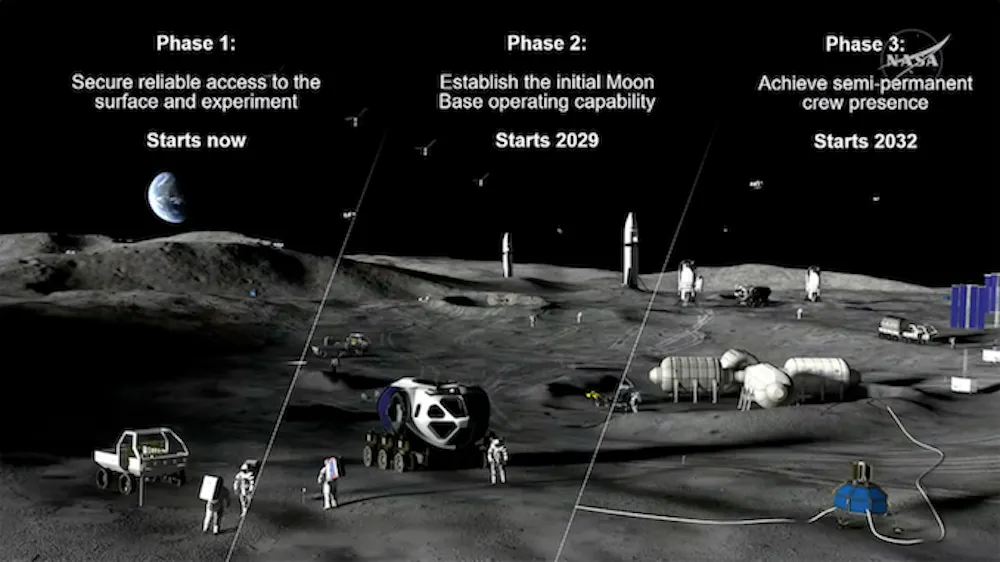
NASA has just reset its Artemis program, marking a clear strategic shift: Space exploration is moving away from a race to achieve milestones and toward a system built on repeated operations, a sustained presence and lunar infrastructure that could become part of the technology networks we rely on here on Earth.

That shift is reflected in newly announced plans to invest billions of dollars in building a long-term lunar base, with habitats, power systems and surface infrastructure designed to support ongoing human activity. The message? Humans have already normalized travel to space. The next step is normalizing living beyond Earth.

Artemis is NASA’s plan to return people to the Moon with the goal of staying. Unlike the short Apollo missions of the 1960s and 1970s, it consists of increasingly complex missions: flying around the Moon, landing on its surface and eventually establishing a base near the lunar south pole. The program aims to create a reliable way for humans to live and work there, develop technologies useful on Earth and prepare for the journey to Mars.

Rather than moving straight from the upcoming Artemis II crewed lunar flyby to a surface landing, the new road map adds an intermediate mission in 2027. Astronauts will test docking, life-support systems and communications with commercial lunar landers from SpaceX and Blue Origin, but in low Earth orbit, the region roughly 100 to 1,200 miles (160 to 2,000 kilometers above Earth’s surface, where rescue remains possible.

NASA head Jared Isaacman discussed changes to the Artemis program on Feb. 27, 2026.

The first landing near the lunar south pole is now targeted for 2028. This timeline may sound delayed, but in reality, it has been deliberately reset to prioritize building reliable systems that can operate long into the future over speed.

As a professor of air and space law, I’ve been watching these developments closely. The United States is still in a race – particularly with China – but it is choosing to compete on its own terms. Rather than chasing the fastest possible landing, NASA is focused on building a system that can support repeated missions and a lasting human presence.

From sprint to system

The original Artemis plan aimed to leap quickly from test flights to a crewed landing while simultaneously developing new rockets, spacecraft and landing systems. That approach carried risk. Artemis I, an uncrewed mission, flew successfully in 2022. After a few delays, Artemis II is now nearing launch, with windows planned for early April 2026. But the further jump to a safe and reliable landing remains significant.

NASA’s new road map slows the transition deliberately. Instead of stand-alone milestones, NASA is now building a sequence of repeatable steps to gain hands-on experience.

This change includes a substantial new investment, with a multiphase plan for a lunar base with habitats, power systems and the surface infrastructure needed for a long-term human presence on the Moon. Consistent launch cadence and repeatable operations are how teams develop the expertise needed for safe, reliable spaceflight and eventually for traveling to Mars.

A rocket on a launchpad overlooking water.
The Artemis II Space Launch System rocket is poised to launch a crew of four to space.
NASA/John Kraus

This shift is reflected in the decision to pause the planned lunar Gateway station, a small space station intended to orbit the Moon, and prioritize infrastructure on the lunar surface itself, where astronauts will live, work and build over time.

The new changes also emphasize a shifting role for commercial companies.
SpaceX’s and Blue Origin’s lunar landers are integrated into the mission architecture.

The 2027 test mission, for example, will practice docking between crewed spacecraft and new commercial lunar landers in low Earth orbit. NASA is coordinating a network of public and private partners rather than running a single government-run Apollo-like program.

This method spreads risk across partners, lowers costs and speeds development, though success now depends on multiple players working reliably together.

Law follows activity

NASA’s road map is not just about lowering technical risk. It is also about shaping the future environment of lunar activity.

International space law, including the 1967 Outer Space Treaty, sets out broad principles to guide space activities, like avoiding harmful interference with others’ activities. But those rules only gain real meaning through repeated, coordinated activity, especially on the lunar surface, where desirable landing sites are limited.

Countries and companies that maintain a sustained presence on the Moon will shape the practical expectations everyone will share while living and working on the Moon. One-off demonstrations, like lunar landings, don’t shape lunar activity like continued operations would.

A diagram showing the three phases on NASA's lunar base plan, with phase 1 securing access, phase 2 establishing a base and phase 3 a semipermanent crew presence
NASA’s Artemis program seeks to establish a long-term human presence on the lunar surface.
NASA TV

Why this matters – even if you never go to space

It would be easy to see these changes as purely technical, but they are not. The structure of a space program shapes what technologies are developed, how industries grow and which countries influence how space is used. Technologies developed for sustained lunar activity, including life-support systems, energy storage and advanced communications, have found applications on Earth, from medicine to disaster response.

There are economic effects as well. The Artemis program supports jobs across the United States and among its international partners. It helps build industries that extend far beyond NASA itself.

And there is a strategic dimension. As more countries and companies operate in space, the question is no longer just who arrives first, but who helps define how activity is carried out. Over time, that presence will likely become part of the infrastructure that supports daily life on Earth.

Communications, navigation, supply chains and scientific data already depend on space-based systems. As activity expands to the Moon, facilities there, from energy systems to communications relay systems that transmit data and signals back to Earth, will become integrated into those networks. What is built on the Moon will not sit apart from life on Earth, but increasingly function as an extension of it.

The Moon is becoming a place where infrastructure, industry and rules and expectations for how humans operate there are already beginning to take shape. NASA’s updated plan signals that the United States intends to be present there consistently.

The updates to the Artemis program are a statement about how the United States intends to engage in the next phase of space exploration. Rather than pursuing a single dramatic landing, the U.S. is committing to the steady, repeatable work of building a lasting foothold on the Moon, and redefining humanity’s relationship with space itself.

The Conversation

Michelle L.D. Hanlon does not work for, consult, own shares in or receive funding from any company or organization that would benefit from this article, and has disclosed no relevant affiliations beyond their academic appointment.

ref. NASA wants to build a base on the Moon by the 2030s – how and why it plans to build up to a long-term lunar presence – https://theconversation.com/nasa-wants-to-build-a-base-on-the-moon-by-the-2030s-how-and-why-it-plans-to-build-up-to-a-long-term-lunar-presence-279166

Are multiverses real? An astrophysicist explains why it depends on how you define ‘real’

Source: The Conversation – USA – By Zachary Slepian, Associate Professor of Astronomy, University of Florida

Physics has multiple theories and interpretations of the existence of a multiverse. Yana Iskayeva/Moment via Getty Images

Curious Kids is a series for children of all ages. If you have a question you’d like an expert to answer, send it to CuriousKidsUS@theconversation.com.


Are multiverses real? If so, what do they look like? How do you get there without disturbing time? – Emily, age 9, Pune, Maharashtra, India


The idea of a multiverse – a hypothetical collection of all possible universes – is one that
science fiction fans love to explore. But does the multiverse actually exist?

To answer the question of whether the multiverse is real, we first need to agree on what it means for something to be real. As an astrophysicist who studies cosmology – the large-scale history and structure of the universe – and the philosophy of physics, I’ve thought about this question more than a few times over my career.

The most immediate definition of “real” might be that you can see and touch it. My lunch is real in this sense, because I can taste it and you can hear me chewing it (hopefully not too loudly). So “real” might be defined as something you can perceive with at least one of your five senses.

But that would leave out a lot of things that are also real. The microwaves that heat up your food are real, but you can’t directly perceive them – only their effect, heated food. So some real things you can “see” only indirectly by the evidence they leave behind. The existence of dinosaurs is another example – you can see only their fossils.

So, you can ask two versions of the question of whether the multiverse is real. One: Can you see, hear, touch, smell or taste it? Two: Even if you can’t, is there any evidence of its effects?

Quantum mechanics of the multiverse

The answer most researchers would offer to whether you can perceive the multiverse with your five senses is probably not. But there are lots of real things that aren’t real in this sense, such as microwaves. So can we see any indirect evidence of the multiverse, such as the effects it might have on the observable world?

The short answer is yes, sort of.

The multiverse is one way to understand the behavior of very, very small things, such as atoms and subatomic particles. Scientists call the rules governing how these very small objects behave quantum mechanics. In quantum mechanics, it’s never certain what the outcome of an experiment will be. You can only write down the chance – that is, the probability – of something happening.

Schrödinger’s cat illustrates how multiple possibilities can exist at the same time.

It’s like rolling dice: You can’t be sure what number you’ll get, but you can say you have an equal chance of getting one, two, three, four, five or six on top of the dice. However, if you knew enough information about the dice – such as its exact shape and mass, the air patterns around it and the exact way you threw it – you could predict exactly what side it would land on. It might take a big computer simulation to crunch the numbers, but it’s possible.

Now imagine really, really, really small dice. Even if you had a very powerful computer, you wouldn’t be able to predict which side this super small dice would fall on. That’s because it’s governed by quantum mechanics, where you can’t predict outcomes with complete certainty. You can predict only probability.

Many worlds and the multiverse

Quantum mechanics is only somewhat random – not everything has an equal chance of happening. We can predict the chance of each scenario happening, but not the actual outcome. In the case of quantum dice, all we could know about it is that there’s a 1 in 6 chance of it landing on any face.

One way scientists have interpreted this strange property of quantum mechanics is that each possible scenario actually does happen. But when it does, it creates another universe. This is called the many-worlds view of quantum mechanics.

In the case of our quantum dice, the many-worlds view would say there’s a 1 in 6 chance of rolling each number because six universes are created every time we roll the dice. Although we stay in one of them – say, the world where the dice comes up three – five other universes are also created where the dice comes up as one of the other numbers.

In this picture of quantum mechanics, universes branch off with every scenario. Of course, we cannot really make a quantum mechanical dice and roll it – just interacting with the dice would destroy its quantum nature.

Does this mean quantum mechanics is evidence that the multiverse is real? I would say no. While it’s a fascinating way to imagine quantum mechanics, it’s just one interpretation, not undeniable evidence of the multiverse.

Illustration of sparkly blue spheres against a black background
If multiple universes possibly exist but you aren’t able to perceive any of them, do they actually exist?
Victor de Schwanberg/Science Photo Library via Getty Images

The multiverse and string theory

Another relevant aspect of the multiverse is its role in string theory. String theory argues that the fundamental particles that make up matter are themselves made of vibrating strings of energy. Think of an elastic band vibrating inside each particle.

String theory also argues that the universe has more than three dimensions. Different string theories predict different numbers of extra dimensions. This means physical constants such as the speed of light and the charge of electrons could have different values. So could the amount of stuff in the universe, such as matter. That suggests a landscape of possible different universes, each with different conditions – a multiverse.

So far, there isn’t definite evidence of a multiverse based on string theory. These universes probably wouldn’t connect to each other, otherwise they wouldn’t count as separate universes – just part of our own. So even if they do exist, we may never get direct evidence for their existence.

However, there could be indirect evidence of the existence of multiple universes. For instance, string theory can help scientists predict the results of very high-energy experiments in our own universe. It can also make predictions for how matter behaves on very, very small scales. If these predictions turn out to be true, that could be evidence for string theory. And if string theory is possibly real in our universe, this indirectly means the multiverse may also be real.

While there hasn’t been any definitive evidence in our own universe for string theory, who knows what the future may hold.


Hello, curious kids! Do you have a question you’d like an expert to answer? Ask an adult to send your question to CuriousKidsUS@theconversation.com. Please tell us your name, age and the city where you live.

And since curiosity has no age limit – adults, let us know what you’re wondering, too. We won’t be able to answer every question, but we will do our best.

The Conversation

Zachary Slepian does not work for, consult, own shares in or receive funding from any company or organization that would benefit from this article, and has disclosed no relevant affiliations beyond their academic appointment.

ref. Are multiverses real? An astrophysicist explains why it depends on how you define ‘real’ – https://theconversation.com/are-multiverses-real-an-astrophysicist-explains-why-it-depends-on-how-you-define-real-268357

We analyzed Philly street scenes and identified signs of gentrification using machine learning trained on longtime residents’ observations

Source: The Conversation – USA – By Maya Mueller, Ph.D. Candidate in Architectural Engineering, Drexel University

Researchers used Google Street View to pull images of gentrifying neighborhoods. @2021 Google Street View, CC BY-NC

What does gentrification in Philadelphia look like?

“High-rise, modern apartment buildings.”

“(A) modern look that’s so out of place with our traditional row homes that have been here for a hundred years.”

“Six- to seven-floor high-rises with garages in the basement. They charge an extra $200 to park.”

“Gray, industrial looking.”

“The houses are ugly as heck. No architectural style. They’re probably two-bedroom, some probably one. And they usually put a deck up. It’s not geared for kids or families. A lot of steps.”

These are some of the descriptions that longtime residents of gentrifying neighborhoods in Philly used to describe the new construction popping up around them.

We are Ph.D. candidates in architectural engineering and geography, environment and urban studies at Drexel and Temple universities in Philadelphia. Working with a multidisciplinary team of professors and students, we recently developed a new way to map gentrification in Philly neighborhoods using a combination of accounts from longtime residents, Google Street View images and machine learning.

View of grey, boxy new construction building next to two older, more traditional houses
Signs of gentrification in Philly include new buildings that don’t fit the surrounding architecture.
Jeff Fusco/The Conversation U.S., CC BY-SA

Using AI to spot gentrification

Our team posited that the best source for knowing what gentrification looks like comes from the perceptions of longtime residents in gentrifying neighborhoods.

So we held focus groups in three rapidly gentrifying neighborhoods – one in Northeast Philadelphia and two in the River Wards section north of Center City and along the Delaware River.

We asked residents to identify the visual cues of building designs, materials, colors and landscaping choices that they associate with gentrification.

Many of these residents could recount, in great detail, the exact street intersections where they saw gentrification-related development occur over the decades.

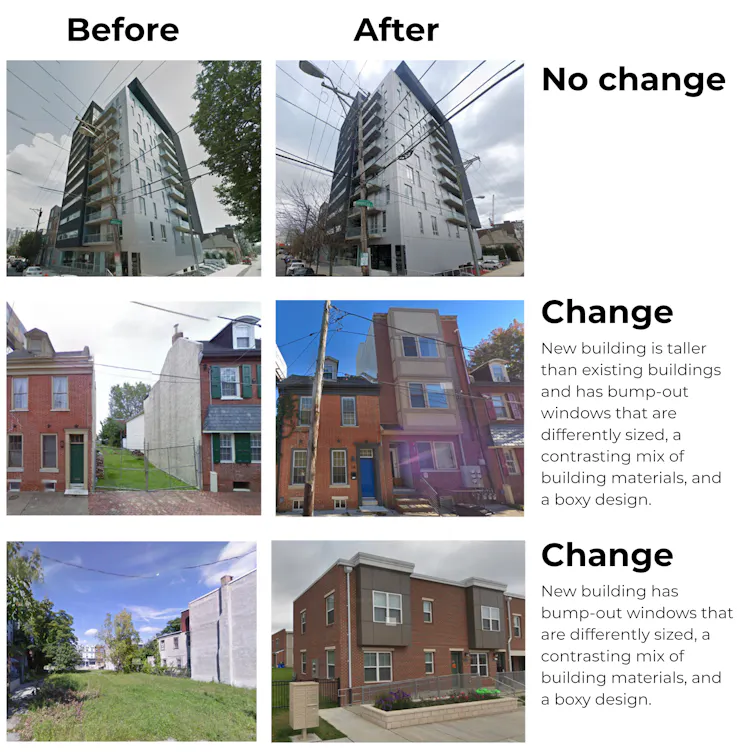
We corroborated each location they identified through historical Google Street View imagery. By examining the exteriors of these buildings, we could expand upon the more generalized language used in the discussions, such as “modern” or “boxy,” to , such as “presence of bump-out windows” and “increased floor area ratio,” which is a measure of how much of the surface area of a land parcel a building takes up.

When pulling panoramas of residential building exteriors from Google Street View, we looked at two distinct time periods: 2009-13 and 2017-21.

AI is getting better at spotting the visual signs of gentrification. Researchers refer to AI systems that categorize scenery according to certain characteristics, like seeming “gentrified” or “not-gentrified,” as “deep mapping” models.

Deep mapping models use neural network algorithms, which can pick up on patterns in big datasets. The particular model we used is able to pick up subtle, pixel‑level differences between two images.

The model learned to approximate how residents distinguish gentrified scenes from unchanged ones. When we tested the model’s output, we found that it was able to separate “gentrified” from “not‑gentrified” images with an accuracy of about 84%. This showed us that visual cues guided by residents’ observations can be translated into a reliable machine learning signal.

Gentrification doesn’t always look the same

As a neighborhood becomes gentrified, wealthier people move in and long-standing residents can be displaced through rent hikes or the loss of housing. Gentrification can also lead to the disappearance of a “sense of place” – characteristics that make a neighborhood feel familiar and like home.

Grid of before and after images of urban locations
Examples of images in the researchers’ gentrification audit.
Author provided, CC BY-SA

With deep mapping models, researchers and neighborhood stakeholders can pull their own data on landscape changes related to gentrification and better understand how gentrification changes physical environments. With better data, they can map hot spots of new development and use machine learning models that predict future trajectories of change.

For example, several of our focus group participants in one neighborhood noted that gentrification was connected to the demolition of old buildings that likely contained hazardous substances, such as asbestos and lead. They wondered about the potential for air pollution. With accurate data on where development is occurring, researchers can model relationships between new construction and environmental conditions such as air quality.

Moreover, this process can also give legitimacy to neighborhood groups that may see changes occurring around them but lack the quantitative data to legitimatize their concerns to the media and to city government.

By being more explicit about how gentrification is defined when we categorize images and train our machine learning model, researchers can be more transparent about how image data is prepared and prevent personal biases from guiding the model and the patterns it learns.

For example, certain research finds that gentrification leads to increased greenery. However, some participants in our focus groups reported that gentrification resulted in the loss of community gardens and greenery. This experience runs contrary to common assumptions in gentrification research.

Transparency in training models builds trust

By defining how gentrification is perceived by residents, researchers like us can add clarity to how we prepare the model data. Even with more clarity, however, these AI systems are still “black box” in nature. A black box model means that the connection between inputs and outputs is unclear to the model user.

One way to make the model more transparent is by applying an additional model called XAI, or explainable artificial intelligence. Through XAI, there is potential to better understand which characteristics in an image are more important to the model prediction. For example, does the model focus on the windows of a building or the relative height of buildings?

Answering these questions will help researchers and stakeholders trust model predictions.

At the same time, one of us is leading a complementary line of research focused on explaining the reasoning behind the machine learning model decisions. In Philadelphia and many other U.S. cities, street scenes can have a dense mix of cars, vegetation and architectural styles that can confuse the model. There is a lot of complicated visual information to parse through, a lot of variety. Understanding the model’s internal logic helps ensure that its predictions reflect real neighborhood dynamics rather than irrelevant details in the imagery.

Together, these research directions aim to deepen our understanding of how gentrification unfolds on the ground and how AI can help illuminate patterns that might otherwise go unnoticed.

Read more of our stories about Philadelphia and Pennsylvania, or sign up for our Philadelphia newsletter on Substack.

The Conversation

Maya Mueller receives funding from the National Science Foundation.

Isaac Quaye received funding from the National Science foundation.

ref. We analyzed Philly street scenes and identified signs of gentrification using machine learning trained on longtime residents’ observations – https://theconversation.com/we-analyzed-philly-street-scenes-and-identified-signs-of-gentrification-using-machine-learning-trained-on-longtime-residents-observations-277704