Decades of hostility between Iran and the US were preceded by a little-remembered century-long friendship

Source: The Conversation – USA – By Daniel Thomas Potts, Professor of Ancient Near Eastern Archaeology and History, New York University
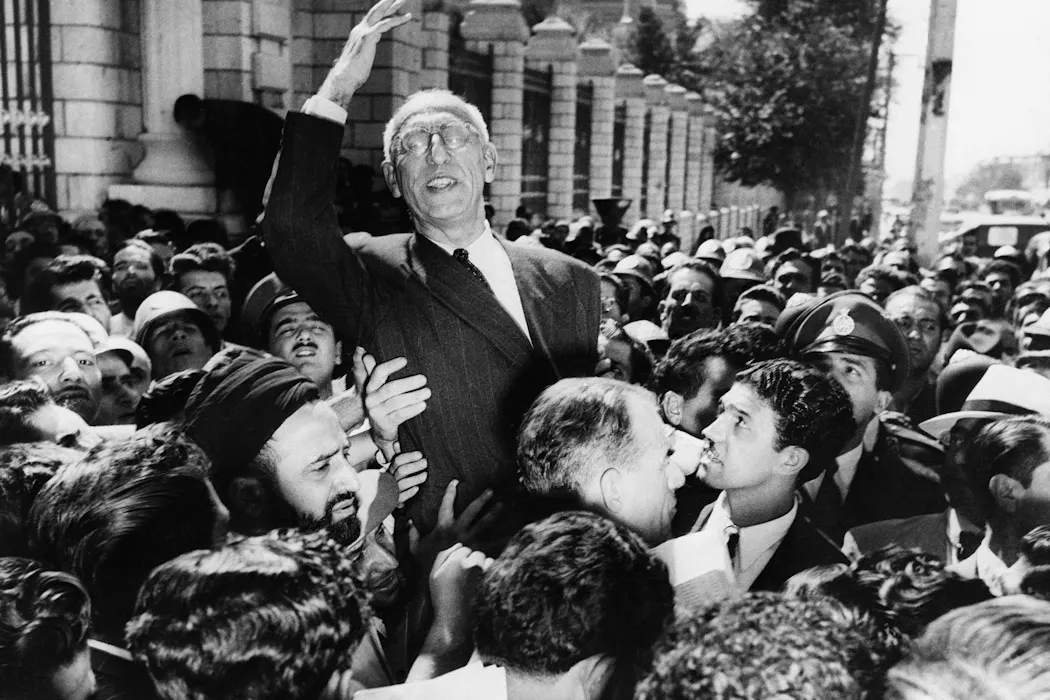
The ouster of Prime Minister Mohammad Mosaddegh marked a turning point in U.S.-Iran relations. AP Photo

The British- and American-backed plot to overthrow Iran’s prime minister in 1953 laid the groundwork for the 1979 Iran hostage crisis and decades of hostility with the U.S. that have now culminated in a war launched on Iran by the U.S. and Israel.

Many Americans only know the anger and tension with Iran that has grown from those roots set down during the middle of the last century. But as an archaeologist who has spent over 50 years specializing in Iran, and from my research on Iranian history in the context of changes undergone by Iran’s nomadic population through time, I believe it is worth recalling the time when the two countries had a distinctly different relationship.

In the 1800s, American missionaries journeyed to what was then called Persia.

The missionaries helped build important institutions – schools, colleges, hospitals and medical schools – in Persia, many of which still exist.

Dr. Joseph Plumb Cochran, an American physician fluent in Persian, Turkish, Kurdish and Assyrian, founded a hospital in Urmia in 1879, as well as Iran’s first medical school. When Cochran died at Urmia in northwestern Iran in 1905, over 10,000 people attended his funeral.

This image clashes with most American stereotypes of Iran and its people, and is at odds with decades of anti-Iranian sentiment emanating from Washington.

Iran and the United States, in fact, have a deep history of mutual respect and friendship.

From 1834, when the first Protestant American mission was established in Urmia, until 1953, when the CIA’s involvement in Iran’s internal affairs set the United States on the road to conflict with Tehran, Americans were the good guys.
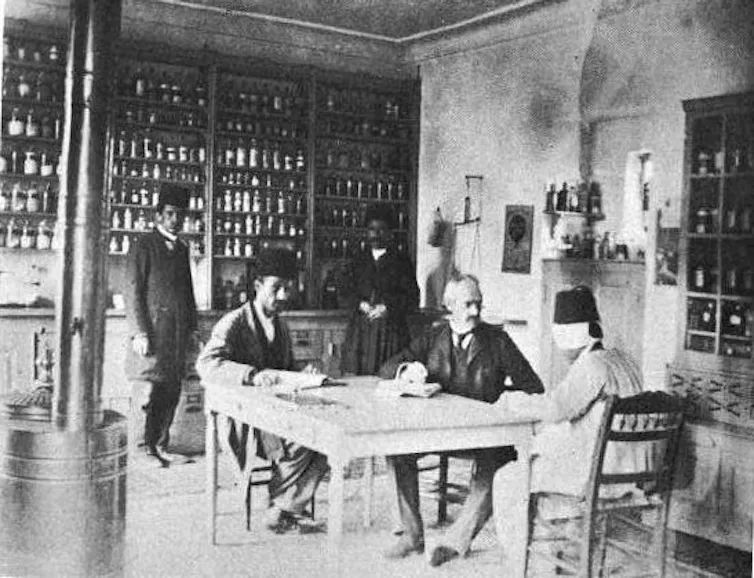
Joseph Plumb Cochran in his medical college at Urmia.
Wikipedia

Imperial bad guys

For years, Americans have seen images of Iranians shouting “Death to America.” President Donald Trump returned the sentiment during his first term, vowing to bring Iran death and destruction. And on Feb. 28, 2026, after weeks of threats and military preparation, the U.S. and Israel attacked Iran, killing Supreme Leader Ali Khamenei; that war continues to this day.

But before all that happened, when Americans were the good guys, there were other countries who were instead manipulators and who exerted undue influence over Iran.

The bad guys, at whose hands Iran suffered most, were Russia and Great Britain. Those two nations – often at the invitation of Iran’s leaders – economically exploited Persia to further their own imperial ambitions, using sustained diplomatic, military and economic pressure.

After two ill-judged wars fought against Russia – the First (1804-1813) and Second Russo-Persian Wars (1826-1828) – Persia (the name Iran was officially adopted in 1935) lost large amounts of territory to the czar.

Much later, Russia found another means of exerting control over the Persian crown, loaning millions of rubles to its rulers, like Mozaffar ed-Din Shah, who reigned from 1896-1902 and needed capital to fund his lavish lifestyle.

With the exception of the Anglo-Persian War (1856-1857), Persian relations with Great Britain were less openly hostile. But what they lacked in martial vigor was more than compensated for by economic exploitation.

Toward the end of the 19th century, the shah granted exclusive concessions to the British for everything from telegraph lines to tobacco. Rights to Iran’s oil were given to the Anglo-Persian (later Anglo-Iranian) Oil Company.

So assured were Britain and Russia in their control of Persia that, in 1907, they signed the infamous Anglo-Russian Convention. That agreement divided the country – unbeknownst to its Parliament, let alone its inhabitants – into Russian, British and “neutral” spheres of influence. After it became public it provoked the outrage of ordinary Persians and the international community at large.
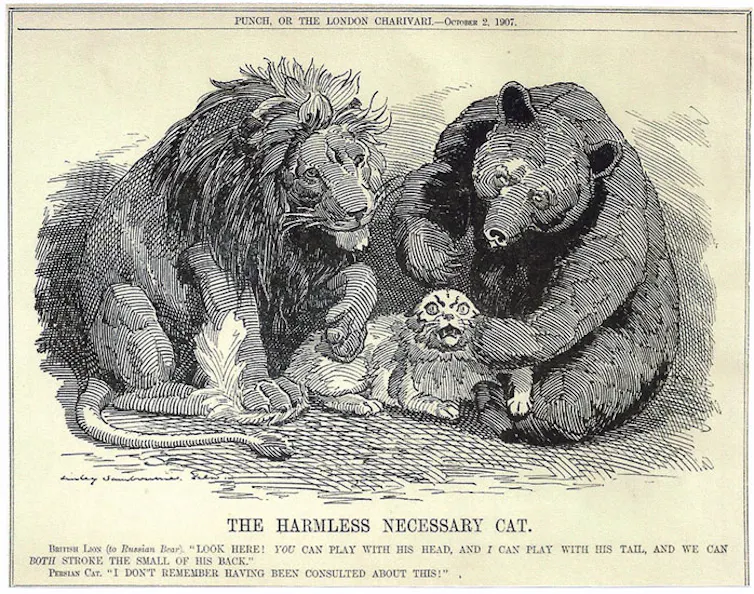
Cartoon from 1907 satirizing Russia and England dividing up Persia.
Punch/Pushkin House

America the good

Iran’s relations with the United States were completely different.

The 19th- and early 20th-century history of British and Russian imperial ambitions and involvement in Iran put Iran in a dependent, exploited position at the hands of the governments of these two countries.

But the presence in Iran of American missionaries and, later, invited government technocrats, was of an entirely different quality. These were Americans offering aid, with no expectation of advantage to be gained officially for the United States government.

American Presbyterian missionary efforts in Iran began in 1834 and focused on education, with 117 schools established around Urmia by 1895. Efforts were also directed at medical and social welfare. These were nongovernmental missions. The U.S. government was conspicuous by its absence in Iran and Iranian affairs.

By the late 19th century, the Presbyterian Board of Foreign Missions had opened new stations in cities across northern Iran, from Tehran to Mashhad. American diplomatic relations with Persia were established in 1883. A decade later the American Presbyterian Hospital was founded in Tehran by John G. Wishard.

After the First World War, Presbyterian schools for both boys and girls proliferated, the most famous of which were the American College of Tehran for boys, established in 1925, and Iran Bethel School for girls.

In 1910, the Persian Parliament, aware that the country’s finances were in disarray, invited the U.S. to identify a “disinterested American expert as treasurer-general to reorganize and conduct collection and disbursement of revenue.”

Despite Russian attempts to block the initiative, W. Morgan Shuster, a distinguished career civil servant, was appointed by Persia in February 1911. He arrived in Tehran in May, bringing with him four other Americans.

The mission was a failure, lasting only eight months, and, unsurprisingly, was adroitly sabotaged by the combined efforts of British and Russian diplomats in Tehran.

American William Morgan Shuster, treasurer-general of Persia.
Wikipedia

The country’s financial situation after the First World War was still precarious. With none of the colonialist baggage associated with the two European superpowers, America was turned to, almost as a last resort, to fix what ailed Iran. Riza Shah, father of the last shah, appointed an American, Arthur C. Millspaugh, as the administrator-general of the finances of Persia.

When Millspaugh arrived in Tehran in 1922, a newspaper editorial addressed him with these words: “You are the last doctor called to the death-bed of a sick person. If you fail, the patient will die. If you succeed, the patient will live.”

Despite his often testy relations with foreigners, Riza Shah acknowledged Millspaugh’s American Financial Mission was “the last hope of Persia.” The fact that the mission was far from an unqualified success does not detract from its importance. Nor did it diminish America’s image as an honest broker in Iranian eyes, in contrast to that of Russia and Great Britain.

Of course, not every Iranian-American interaction during this period was positive. Robert Imbrie, the American consul in Tehran, was brutally murdered in 1924, allegedly because a fanatical religious leader accused him of being a Baha’i and poisoning a well.

Riza Shah used the episode to crack down on dissidents and impose strict controls on public gatherings.

Students at the American Memorial School, Tabriz, 1923.
shahrefarang.com

America the bad

America’s benign image in Iran was forever shattered in 1953 when the CIA, working with Great Britain, engineered a coup against Mohammad Mossadegh, the democratically elected prime minister who had nationalized the Anglo-Iranian Oil Company.

Even though the overthrow of Mossadegh damaged Iranian trust in America, the years just prior to Iranian revolution in 1979 saw the number of Iranian students in the United States steadily rise.

Over one-third of the approximately 100,000 Iranian students pursuing university degrees abroad in 1977 were in the U.S. By the time of the Islamic revolution two years later, that number had climbed to 51,310, making Iran by far the biggest single source of foreign students in America, with 17% of the total foreign student population. The next-largest contributor of foreign students, Nigeria, accounted for only 6%.

“Iranian students have been here for nearly a century … there are deep and abiding connections that reveal themselves when you look at the historical record,” researcher Steven Ditto, who wrote a report on Iranian students in the U.S., told The Washington Post in 2017.

The legacy of American goodwill, personal friendship and doing the right thing by Iran has not been completely lost, although the war now underway may make it seem as though America’s good relationship with Iran has been lost irretrievably.

Deep friendships dating back well over a century can withstand a great deal. A reservoir of goodwill and affection may lie dormant while political storms rage. Iran and America were good friends in the past, and for good reason. I believe that Americans would do well to remember that.

This is an updated version of an article originally published on Aug. 19, 2020.

The Conversation

Daniel Thomas Potts does not work for, consult, own shares in or receive funding from any company or organization that would benefit from this article, and has disclosed no relevant affiliations beyond their academic appointment.

ref. Decades of hostility between Iran and the US were preceded by a little-remembered century-long friendship – https://theconversation.com/decades-of-hostility-between-iran-and-the-us-were-preceded-by-a-little-remembered-century-long-friendship-279636


Ontario is closing its supervised consumption sites, calling them a failure. But were they successful? Yes and no

Source: The Conversation – Canada – By Daniel Eisenkraft Klein, Postdoctoral Fellow, Harvard University

The Ontario government recently said it will cut provincial funding for seven supervised drug consumption sites in Toronto, Ottawa, Niagara, Peterborough and London, with 90 days given to wind down their operations.

In their place, the province is spending $378 million on 19 Homelessness and Addiction Recovery Treatment (HART) hubs, which explicitly exclude supervised consumption and needle exchange services.

While Premier Doug Ford’s government’s framing of supervised consumption as a “failed experiment” is selective, it’s not baseless in the way that defenders of these sites sometimes imply.

By certain measures, the sites have not lived up to their potential: the program has not clearly reduced provincewide overdose deaths, and the communities that host them bear costs that defenders too often dismiss.

But “failure” requires a definition of success, and the government’s is not the only one that matters. HART hubs offer care for people on a recovery pathway, while supervised consumption sites exist for those who are not on that pathway yet or who have left it. Entirely replacing safe consumption sites with HART hubs doesn’t address the primary function these sites have served: keeping people who are not in treatment alive. By this measure, the sites are a clear success.

Success by whose measure?

Whether supervised consumption sites “succeed” depends entirely on what they’re expected to do. If we judge the sites against Health Canada’s stated goals — keeping people alive on site, connecting them to treatment, reducing infections and lessening strain on emergency services — the evidence is strong.

No one has ever died of an overdose inside a supervised consumption site in Canada. And sites across the country have reversed more than 50,000 overdoses since 2017.

In Ontario, where more than 2,200 people died from opioid toxicity in 2024 and fentanyl was involved in more than 83 per cent of those deaths, the sites function as a last line of defence for people at highest risk. Since 2021, about one in five opioid toxicity deaths in Ontario has occurred among people experiencing homelessness — the same population these sites primarily serve.

Beyond lives saved, safe consumption sites generate measurable returns the government’s own cost-benefit logic should recognize: Vancouver’s Insite refers thousands of clients to health and social care monthly and a Calgary cost analysis found each overdose managed at a supervised consumption site saved approximately $1,600 in avoided ambulance and emergency department costs. Those resource savings are especially important amid severe emergency room overcrowding in Ontario.

Where the sites fall short

But the Ontario government’s claim that these programs lack population-level impact is not just rhetoric: the two largest provincial-level studies — covering British Columbia and Ontario — found no statistically significant effect on opioid mortality, emergency department visits or hospitalizations.

A systematic review also found that the studies carried high risk of bias because they didn’t account for confounding factors like housing, treatment access and drug supply composition.

A neighbourhood-level study of Toronto found a two-thirds reduction in overdose mortality within 500 metres of sites, but that finding did not replicate at larger geographic scales.

One possible explanation for this lack of effect is coverage: Ontario’s supervised consumption sites provided roughly 150 spaces accommodating up to 9,000 episodes per day, while the province may have 300,000 to 400,000 at-risk opioid users. Expecting a handful of supervised consumption sites to reduce provincewide overdose mortality is akin to stationing a single fire truck in a forest and asking why the wildfire kept burning.

Community concerns, which the Ford government often cites in arguing that safe consumption sites have failed, are similarly grounded in real experiences.

A study published in JAMA Network Open examining Toronto’s safe consumption sites found no long-term rise in overall crime, as well as fewer assaults and robberies. But the same study documented initial increases in break-and-enters near a number of sites.


Read more:
New study: Some crimes increased, others decreased around Toronto supervised consumption sites


Nearby residents have also described visible disorder, open drug use and discarded equipment.

Dismissing these experiences as NIMBYism or overblown only undermines the case for safe consumption sites. Advocates need to take these concerns seriously if they want the sites to survive politically.

What closures get wrong

Despite this mixed evidence, there’s little to suggest that Ontario’s plan to shift patients to the HART hubs will lead to success.

The Ontario government has cited a Canadian Centre of Recovery Excellence study that found no increase in mortality after the closure of one overdose prevention site in Red Deer, Alta.

But that study’s authors have acknowledged it was inconclusive because it covered only a six-month period. And a single study of a single site closure does not constitute an evidence base for dismantling an entire network of services across a province where opioid deaths remain catastrophically high.

Supervised consumption sites are not beyond criticism: they can be better designed, better integrated and more responsive to the communities that host them. But improving them requires better policy, not selective evidence and site closures.

The $378 million committed to HART hubs could expand addiction treatment without eliminating the services that keep people alive. Adding treatment capacity does not require removing the safety net beneath it.

The Conversation

Daniel Eisenkraft Klein does not work for, consult, own shares in or receive funding from any company or organisation that would benefit from this article, and has disclosed no relevant affiliations beyond their academic appointment.

ref. Ontario is closing its supervised consumption sites, calling them a failure. But were they successful? Yes and no – https://theconversation.com/ontario-is-closing-its-supervised-consumption-sites-calling-them-a-failure-but-were-they-successful-yes-and-no-279288

As that new food caddy lands, here’s how to reduce waste – not just recycle it

Source: The Conversation – UK – By Katy Tapper, Professor of Psychology, City St George’s, University of London

Thomas Holt/Shutterstock, CC BY-NC-ND

If you live in England, you may have recently received a new food waste caddy. Councils are now required to collect your separated food waste and turn it into fuel, fertiliser or compost. So you can live happily in the knowledge that your potato peelings and stale bread will be put to good use rather than going to landfill.

But there’s a risk that the less we feel bad about wasting food, the less effort we may make to try to limit the amount we waste. This is a problem, because around 40 to 50 times more energy goes into producing, transporting and selling food than can be recovered from recycling it. To drastically cut food-related emissions we need to get serious about reducing food waste, not just recycling it.

Reducing food waste is hard. It’s difficult to know exactly how many potatoes will get eaten at Sunday lunch. Leftover potatoes in the fridge can be easily forgotten. Predicting how many bananas your children will eat before they turn too ripe during the week is tricky. And it’s difficult to persuade yourself to eat that stale crust of bread for lunch when you could get a fresh baguette on your way to work.

There are so many different things that influence our food needs and preferences.

Plan and track

How can we make it easier? Our research points to two key steps that could make an important difference.

First, experiment with shorter term, more flexible meal planning. There is evidence that food planning behaviours cut waste. These include planning meals ahead of time, writing a shopping list and checking fridge and cupboard supplies before buying. But the further ahead we meal plan, the more time there is for things to change. You might get invited out to dinner, you could run out of time to cook, your child moves on from their obsession with hummus.

Introducing some flexibility could help. This may include planning for a meal of leftovers, including meals that can be adapted to accommodate different ingredients (such as stir fries or stews or something with eggs). Swapping meals around between days depending on time, inclination and number of mouths to feed also helps.

clipboard wiht meal planning notes, held by hands in front of open organised fridge with fresh veg
Meal planning can help reduce food waste.
Pixel-Shot/Shutterstock

This tactic won’t be right for everyone. If you have little interest in cooking or limited time and energy, this might just all sound like too much hard work.

Another approach is to use the introduction of the food waste collection scheme as an opportunity to start tracking your waste. How many caddies do you fill each week? Could you aim for a smaller number? Is there anything that seems to lead to more waste or less?

This type of monitoring can create a feedback loop where we compare what’s actually happening with what we want to happen and use any gap between the two to decide what to do next. Feedback loops may be especially helpful for outcomes that are influenced by many different things, such as a person’s weight, a population’s life expectancy or a household’s food waste.

Experimenting with different ways to cut your food waste can prompt you to identify the habits that work best for you. For example, you may discover your kids like frozen overripe bananas in smoothies. Or that putting your leftover potatoes toward the front of the fridge means you’re less likely to forget about them.

This all assumes you’re motivated to reduce your food waste in the first place. If carbon emissions don’t bother you, you could think about the financial savings. In the UK, an estimated £17.5 billion of food is wasted every year. That’s around £1,000 a year for a household of four. These costs are certainly not small potatoes.

The Conversation

Katy Tapper has received funding from Zero Waste Scotland and Oviva UK Limited. She has received consulting payments via City St George’s, University of London from Zero Waste Scotland, WRAP and Scottish Government.

Christian Reynolds serves in advisory roles with the Nutrition Society, Institute of Food Science & Technology, Faculty of Public Health, and ISO/TC 34/SC 20. He has received consulting payments via City St Georges, University of London, from WRAP, Zero Waste Scotland, DEFRA, Welcome trust, and the FSA. He has undertaken pro bono advisory, speaking, and review work with various organizations . In 2020, he received €49,858 in research funding from the Alpro Foundation.

ref. As that new food caddy lands, here’s how to reduce waste – not just recycle it – https://theconversation.com/as-that-new-food-caddy-lands-heres-how-to-reduce-waste-not-just-recycle-it-277674

Canada becomes testing ground for FIFA’s proposed ‘daylight’ offside rule

Source: The Conversation – Canada – By Taylor McKee, Assistant Professor, Sport Management, Brock University

After years of controversy over marginal offside decisions and the growing influence of video assistant referees, FIFA is now testing a potential alternative.

Starting in April 2026, the Canadian Premier League will serve as a testing ground for FIFA’s proposed “daylight offside” rule — a change championed by Arsène Wenger in his role as the organization’s chief of global development.

FIFA and the International Football Association Board typically test law changes in lower-profile competitions before considering wider adoption.


Read more:
Explainer: the offside rule


Under the proposal, an attacker is only offside if their entire body is completely ahead of the second-to-last defender. If any playable part of the attacker remains level with the defender, they are considered onside, effectively requiring visible “daylight” between the two players for a flag to be raised.

The CPL is not driving the change itself, but rather acting as a trial competition for a rule that could be adopted more widely if it proves successful.

A rule under strain

The rules governing English soccer, known as the “Laws of the Game,” are set by the International Football Association Board and were first codified in 1863, including an early version of the offside rule. Since then, there has only been two major changes, in 1925 and 1990.

That relative stability changed in the 2010s with the introduction of the video assistant referee (VAR). For the first time, an additional referee, not located on the pitch, was endowed with the authority to review and overturn decisions on goals, penalties and red cards.

Offside has become one of VAR’s most scrutinized uses, with decisions often determined using calibrated lines and multiple camera angles to identify the exact position of players at the moment the ball is played.

The impact has been significant. In the Premier League alone, 34 goals were nullified for being offside last season.

Precision versus perception

The subjectivity of the offside rule has been a topic of debate among fans since its inception.

VAR was introduced to promote transparency from referees and counter claims of unfairness, but it has arguably produced even more controversies.

Resistance to VAR has been steadily increasing in academic and public circles, leading to calls for change. Some research suggests that the offside rule is not only difficult to enforce but “systematically vulnerable to perceptual error.”

Especially in the face of major tournaments and high-pressure matches, tensions towards VAR and the offside rule have been heightened to an even greater level. The consequences of this can be seen within fan engagement and across social media.

The ‘offside trap’

For decades, the “offside trap” was a defender’s best friend. By stepping forward in unison, defenders could catch strikers out by a matter of inches, effectively killing an attack before it even started.

This allowed teams to play a “high line,” pushing the action far away from their own goal. Wenger’s proposal essentially breaks that trap, as strikers can now be almost a full body length ahead of the defence and still be onside.

Football’s new offside law explained (Tifo Football by The Athletic).

If a defender tries to catch a striker offside and fails, they are left in a foot race they’ve already lost by two metres. As a result, we expect what some have described as the “death of the high line.”

In response, teams may shift toward a “low block,” sitting much deeper and closer to their own goalkeeper. By “parking the bus” and removing the open grass behind them, defenders can negate the striker’s new head start.

The game may become higher scoring, but it will also force a more cautious, safety-first style of defending.

More clarity, or more controversy?

If the daylight rule is seen to improve clarity, increase attacking play or reduce controversy, it could be introduced more broadly in the coming years. If not, it may merely remain an experimental footnote.

However, the daylight rule is unlikely to resolve existing concerns about VAR. If anything, it may extend ongoing debates about consistency and legitimacy in offside decisions.

Questions will remain about how “daylight” is judged in practice, particularly in fast-moving situations or when bodies overlap at angles.

Pundits, journalists and professional soccer players will continue to assess whether this rule simplifies “the beautiful game” or hinders it. Public reaction on social media is also likely to remain mixed, and any discussions will shape collective views on the rule’s effectiveness.

Ultimately, the effectiveness of this new rule may come down to the subjectivity of referees. Soccer and offside calls will always come down to the mere millimetre, no matter how substantially the gap is widened.

A moment of opportunity for Canada

Beyond the technical change, the trial could matter a lot for how the CPL is regarded more broadly. It gives the Canadian league a chance to be part of an international conversation in a way smaller leagues rarely get the opportunity to do.

That alone could raise the CPL’s visibility and make Canadian domestic soccer more relevant in discussions about where the global game is headed.

In that sense, the bigger implication is about whether the CPL can use this moment to strengthen its place in the wider football world. For a league that’s still building its international profile, that kind of attention could matter just as much as what happens on the pitch.

This article was co-authored by Wai Leung, Gaetane Slootweg Allepuz and Agrim Gautam, undergraduate students at Brock University and members of the Brock University Centre for Sport Capacity Soccer Working Group.

The Conversation

Taylor McKee receives funding from the Social Sciences and Humanities Research Council of Canada

Michael Van Bussel does not work for, consult, own shares in or receive funding from any company or organisation that would benefit from this article, and has disclosed no relevant affiliations beyond their academic appointment.

ref. Canada becomes testing ground for FIFA’s proposed ‘daylight’ offside rule – https://theconversation.com/canada-becomes-testing-ground-for-fifas-proposed-daylight-offside-rule-278374

BTS: The Return shows a global band renegotiating identity and nationhood

Source: The Conversation – UK – By Sarah A. Son, Senior Lecturer in Korean Studies, University of Sheffield

When pop superstars BTS announced a temporary hiatus in 2022, it exposed a tension at the heart of their global success.

As I wrote at the time, the world’s biggest K-pop group had become entangled in South Korea’s competing priorities: cultural soft power on the one hand, and its national security obligations on the other.

Now, nearly four years later, the Netflix documentary BTS: The Return takes fans behind the scenes as they prepared for their much-anticipated comeback. Directed by Bao Nguyen, the documentary follows the group’s reunion after completing mandatory military service and the making of their new album, Arirang.

But the documentary is not the triumphant comeback narrative that fans may have been anticipating. Instead, it reveals the seven members (Jin, Suga, j-hope, RM, Jimin, V and Jung Kook) grappling with a more complicated question. What does it mean to return as global stars, as individuals reshaped by time and experience and as artists newly conscious of what it means to “represent” Korea?

The trailer for BTS: The Return.

At one level, The Return follows a familiar structure marked out by previous pop-star documentaries: studio footage, creative disagreements and moments of reflection. But early in the documentary there is a persistent sense of uncertainty.

The group’s seven members, who served in the South Korean military at different times over the preceding three years and nine months, are grappling with who they have become since leaving the limelight. The transition from military life back into music production feels abrupt and disorienting.

When the members regroup, there is also a strong sense of urgency. A comeback date is already fixed and deadlines drive an intense creative process that doesn’t always unfold as easily as they would wish.

Scenes of late-night discussions, constant revision and ongoing self-critique reinforce the idea that even at rest, the group remains in production mode. The Return shows the additional strain placed on artists who are global figures attempting evolve while newer K-pop boy bands have ascended the ranks and even topped the Billboard album charts.

The band speak openly about feeling stuck, worrying that songs fail to feel “cool”, and the difficulty of finding a sound that reflects who they are now. At one point they joke about naming a track Slump, reflecting their feeling of wanting to give up. At another, they suggest abandoning the pressure around the lead single entirely. But in each moment of doubt voiced by one member, another inevitably steps in with words of encouragement: “Come to your senses, we can do this!”

Their perspective is helped by sitting down to watch old footage of their first days as a group, performing in small venues and handing out flyers for free concerts. These scenes remind them that grit and hard work served them well on the road to global stardom and can do so again.

Representing Korea

The development of the new album in the documentary brings a central tension into focus.

The album draws on the traditional Korean folk song of the same name. It’s often described as an unofficial national anthem, associated with longing and separation. As the concept takes shape, the group are encouraged by producers to lean more explicitly into Korean cultural themes and references.

This generates both excitement and hesitation.

The band show a clear desire to showcase Korean language and identity, as they discuss writing more lyrics in Korean, arguing that authenticity has been diluted by their extensive use of English in prior work. At the same time, they are acutely aware of how these choices might be received by different audiences.

V worries that using an extended sample of Arirang in one song may be seen as “patriotic hype” by Koreans. RM reflects that naming the album after a folk song risks positioning the group as a “national team”.

While they reject the label of “global Korean heroes”, they ultimately decide to lean into their Korean heritage throughout parts of the album, acknowledging that it’s impossible to be certain about what will end up taking off among audiences.

For a group often framed as an instrument of South Korea’s soft power, these choices highlight the challenges of knowing how best to assert cultural identity and reconnect with what distinguishes them in a highly globalised industry.

K-pop operates through tightly controlled visibility, where “idols” are constantly seen but are heavily mediated for fear of tarnishing the clean image the industry seeks to project.

In this context, BTS are not just another K-pop band. Their long-running success and truly global appeal has made them leading representatives of K-pop as an industry and of a particular narrative of national success.

The documentary translates this geopolitical significance into interpersonal dynamics, where the group’s members show the need to “carry” something collectively, to display group cohesion and to meet expectations that extend far beyond music.

RM describes being part of BTS as wearing “a big, incredible crown”, the weight of which can feel overwhelming.

A reflective return

As the group return to Korea to finalise the album, the tone of the documentary shifts towards reflection. The band describe themselves as more introverted, more measured and more certain of themselves in some respects. They are also more conscious of the stakes. The Return is a negotiation between past identity, present experience and future direction.

The wrestling with their maturity and identity after an extended hiatus seems to be paying off so far. Despite RM experiencing an injury just before their live comeback concert in the historic Gwanghwamun Square in Seoul, the album received five stars from Rolling Stone Magazine and hit over 4 million sales in its first week.

BTS are back, but BTS: The Return makes clear that coming back means redefining themselves, their sound and the terms on which they carry Korea with them to the world.

The Conversation

Sarah A. Son does not work for, consult, own shares in or receive funding from any company or organisation that would benefit from this article, and has disclosed no relevant affiliations beyond their academic appointment.

ref. BTS: The Return shows a global band renegotiating identity and nationhood – https://theconversation.com/bts-the-return-shows-a-global-band-renegotiating-identity-and-nationhood-279582

The Symptomatic Surreal: Leonora Carrington exhibition explores her complex relationship with death

Source: The Conversation – UK – By Ailsa Peate, Lecturer in Latin American and Museum Studies, University of Westminster

Encounters with Leonora Carrington’s work are often shaped by their setting, from expansive museum displays to more intimate curatorial spaces. Nowhere is this more evident than at London’s Freud Museum, where new exhibition The Symptomatic Surreal offers a markedly different lens on her life and art.

It’s the first exhibition of the British-Mexican surrealist’s work in the UK for 35 years. The show offers a markedly different experience from encountering her art in Mexico, where she lived from 1942 until her death in 2011.

In institutions such as the Museo de la Mujer (Woman’s Museum) in Mexico City, displays tend to emphasise the more outlandish aspects of her work and personality. Instead, The Symptomatic Surreal houses a selection of Carrington’s sketches made during her internment in Peña Castillo sanatorium in Santander, Spain, in the latter half of 1940.

The exhibition is understated, located in a room far smaller and less open than where I’d engaged with her work previously. I noted no natural light can enter. It’s a perfect fit for the story of Carrington’s confinement and the creativity which ensued.

It’s also important that the museum was once home to Sigmund Freud and his family. As the exhibition unfolds, psychoanalysis comes increasingly to the fore, deepening visitors’ understanding of Carrington’s life, her art and her evolving interpretations of the unconscious.


Read more:
Freud Museum exhibition uses art to explore the psychoanalyst’s often contradictory relationships with women


A life less ordinary

Born in Chorley, north-west England, in 1917 into a family enriched by the textile industry, Carrington felt constrained by expectations that she perform the role of a debutante, despite her growing interest in art and surrealism. Leaving the UK for Paris, she pursued both her artistic ambitions and her relationship with the established – and married – German surrealist Max Ernst. The couple later settled in Provence in the south of the country, from where Ernst periodically returned to Paris to visit his wife, to whom he remained married.

The relationship was ultimately derailed in 1940 by Ernst’s second arrest for being an enemy alien in the country, and ensuing detainment in the Camp des Milles, not far from where he lived with Carrington. In despair after her separation from Ernst and enforced flight from their once shared Provençal home due to encroaching Nazi forces, Carrington crossed the border to Spain via Andorra. During the journey, her grasp on reality became fitful, resulting in a complete breakdown after she arrived in Madrid.

The Symptomatic Surreal presents the aftermath of this break, focusing on Carrington’s sketches at the sanatorium where she was kept for approximately six months. She compared her time there to “being dead”, telling friend Marina Warner: “I’d suffered so much when Max was taken away to the camp, I entered a catatonic state, and I was no longer suffering in an ordinary human dimension.”

Curator Vanessa Boni captures this suffering and foregrounds a period of Carrington’s life which was distinctly unsafe. It was a time during which, visitors learn, the artist was treated three times with Cardiazol, a “treatment” that induced seizures in sanatorium patients to render them compliant.


Read more:
New book sheds light on surrealist artist Leonora Carrington’s extraordinary life and work


Boni has taken Carrington’s own description of the sanatorium as “like death” to heart, making connections to death throughout the exhibition. Areas of the work foreshadow the beliefs around death Carrington would later be exposed to in Mexico. Boni’s choice to draw together statuettes and figures of Egyptian deities Anubis, Isis, Horus and Osiris from Freud’s own collection speaks to a shared interest in death as a stage of transformation.

Gently and with careful attention to language, the exhibition traces Carrington’s undoing and reconstitution, or “rebirth”, as Boni described it in conversation with me. This narrative unfolds through personal letters Carrington sent to her father during her internment, alongside important passages from her written work, Down Below (1944). It is further developed through the artwork of the same name, as well as sketches produced during her time in the sanatorium.

We learn that both Freud and Carrington held a preoccupation with what the artist termed the “down below”, or underworld. It is hard not to see Mexico, the home of the underworld of Mictlán, a place of transformation reached after death, suggested as a fated eventual home for the artist. In Mexican belief systems, death is not feared but a constant presence for the living. This is echoed in a quotation from Carrington chosen to welcome visitors to The Symptomatic Surreal: “I didn’t know where I was going. This seems to be a recurring thing in my life. I think it’s death practice.”

Having progressed through Carrington’s experiences and reactions to her treatment at the sanatorium, we are led to the painting of Down Below (1940), a piece which is certainly uneasy to take in. Lounging, disjointed figures stare vacantly, or indeed without eyes, in front of a circus tent, hinting at the frenzy which may occur behind its curtains. Glints of vibrancy – bright red stockings, mustard yellow tights, a goose feather white body and the Kelly green of Carrington’s horse alter-ego (also present in many of her sketches on display) – are at odds with the heavy experiences which led to the work’s creation, and which bleed into the darkening skies above.

The Symptomatic Surreal is a potent gift for any fan of Leonora Carrington, and certainly for those who seek to understand any of her later works, whether on the canvas, drawn, sculpted or written. The Freud Museum is an excellent home for the exhibition. The show highlights the way we process the unconscious, death and our relationships with mental health through careful curatorial choices.

The Symptomatic Surreal is at London’s Freud Museum until June 28 2026

The Conversation

Ailsa Peate does not work for, consult, own shares in or receive funding from any company or organisation that would benefit from this article, and has disclosed no relevant affiliations beyond their academic appointment.

ref. The Symptomatic Surreal: Leonora Carrington exhibition explores her complex relationship with death – https://theconversation.com/the-symptomatic-surreal-leonora-carrington-exhibition-explores-her-complex-relationship-with-death-279278

How adults can help children move from climate anxiety to resilience

Source: The Conversation – UK – By Sanae Okamoto, Senior Researcher in Behavioural Science and Psychology, United Nations University – Maastricht Economic and Social Research Institute on Innovation and Technology (UNU-MERIT), United Nations University

Rawpixel.com/Shutterstock

Children have the least control over the planet’s future, but will also be the most affected as it changes. They may well feel the mental toll of the “futility gap”: when individual actions feel meaningless against broader societal inaction on the climate crisis.

Promoting healthy psychological agency – the belief that we are in control of our lives – is fundamental here. There are things that we can do to combat the climate crisis. Children should be supported so they don’t lose hope.

Together with our colleague Kariũki Werũ, we’ve created a guide to how adults can help support their healthy psychological development.

Our approach acknowledges the severity of climate change while grounding children in hope. We aim to transform feelings of helplessness into self-efficacy – a belief that they can take action.

At home

To protect a child’s emotional wellbeing and talk about climate facts, adults also need to learn how to talk about climate change with children. This should involve adults listening, learning together and using language appropriate to their child’s age and comprehension. Schools and communities could help parents by providing tips for these conversations.

Monitoring a child’s online activity can safeguard them from traumatic news. Parents can emphasise progress and solutions, and help their children spend time experiencing and enjoying changing weather and the environment.

At school

Schools, educational methods and children’s relationships with teachers and their classmates are core influences on the development of their psychological agency. To promote climate resilience, this could mean moving beyond traditional rote learning towards age-appropriate “critical climate education”. This means empowering students to question existing systems and imagine fundamental transformations, rather than feeling defeated by the status quo.

Teacher and pupils work on solar power project
Young people can be empowered to focus on solutions.
Air Images/Shutterstock

Nature-based outdoor learning can further strengthen this development. It can both boost mental health and transform abstract climate concepts into tangible experiences. Learning outdoors can stimulate constructive climate conversations, and directly link human actions to environmental and sustainable solutions. Outdoor observations and investigative projects bridge the gap between learning and action.

The world online

Digital climate learning is a powerful catalyst for modern education. It offers interactive and global perspectives on the climate crisis. But it must be managed to address internet “filter bubbles” – when algorithms show viewers only information that aligns with their past interests. This can risk isolating and overwhelming children with repetitive content that affects their wellbeing. When used correctly, digital tools can expand a child’s perspective on climate solutions beyond their local environment.

Blended together

Effective climate education can combine digital learning with hands-on, real-world experiences. When this is supported by educators and caregivers who act as guides – while also leaving enough space for children to explore and create independently – children are able to benefit from both realistic and balanced education. Pioneering programs are blending classroom science with digital tools and outdoor experiments to turn student ideas into tangible community projects.

On a wider scale, climate education needs to bridge the gap between personal responsibility and collective power. The climate narrative should shift its focus from asking “what is wrong?” to “what can we do?” This will empower children with a sense of agency rather than climate anxiety. Social media is a key place where this change can happen.

When used with adult guidance and digital literacy, it can lead to constructive dialogues and evidence-based action. A moderated and positive use of digital tools can help children connect their own awareness to the world around them and drive action on a larger scale to truly tackle the climate crisis.

This can ultimately allow children to share their climate change knowledge and inspire actions among family and friends. They can go on to become influential at school and in their community.

In order to address the climate crisis and support wellbeing, we need to help children recognise their agency. Children can become agents of change who can counter misinformation and foster long-term psychological resilience.

Schools can work together with families, communities and leaders to create a supportive environment for learning about climate. _ Such approach could bridge the gaps between scientific climate facts and real-life experiences by providing the emotional care and practical skills needed to empower_ the climate generations to build a sustainable future together.

The Conversation

The authors do not work for, consult, own shares in or receive funding from any company or organisation that would benefit from this article, and have disclosed no relevant affiliations beyond their academic appointment.

ref. How adults can help children move from climate anxiety to resilience – https://theconversation.com/how-adults-can-help-children-move-from-climate-anxiety-to-resilience-274141

The meningitis vaccine now sits at the centre of two health crises

Source: The Conversation – UK – By Charlie Firth, PhD Candidate, Paediatrics, University of Oxford

The UK has recently seen a resurgence of meningococcal B (MenB) disease, with a cluster of cases in Kent described as “unprecedented” by the health secretary, Wes Streeting. As attention turns from the current MenB outbreak to how to prevent future outbreaks, another challenge is also growing: gonorrhoea is becoming harder to treat as antibiotic resistance rises. These two challenges might seem unrelated, but they are now linked by a single vaccine.

Some sexual health services are using a vaccine originally designed to prevent MenB disease as part of efforts to reduce gonorrhoea. At first glance, that might sound surprising. But the bacteria that cause meningitis and gonorrhoea are closely related, meaning a vaccine targeting one may offer some protection against the other.

This kind of scientific overlap is drawing increasing attention. Developing brand new vaccines from scratch takes years – sometimes decades – and is costly. Repurposing existing ones could offer a faster, more practical route.

The MenB vaccine itself already has a strong public profile in the UK. Campaigns calling for wider access became one of the most signed petitions in UK history. It has helped bring attention to meningococcal disease and shaping public expectations around vaccine availability.

Recommendations about how vaccines are used in the UK are made by the Joint Committee on Vaccination and Immunisation, which operates within a government-defined framework. Their advice takes into account the burden of disease, vaccine safety and effectiveness, as well as the cost-effectiveness of different immunisation strategies.

Repurposing vaccines

The evidence is still evolving when it comes to gonorrhoea. While earlier studies suggested the MenB vaccine might offer some “cross-protection”, a more recent randomised control trial – the gold standard in medical research – indicates that protection may be lower in people who have previously had gonorrhoea.

This raises important questions about who might benefit the most. If protection is stronger, or longer lasting, in people who have never had the infection, vaccination strategies may need to focus on these groups instead.

Our recent research suggests that people are open to this kind of complexity. In a survey of sexual health service users in the UK, more than 98% supported the introduction of a gonorrhoea vaccine. Many were willing to accept that the vaccine might not be perfect, as long as its benefits were explained clearly and transparently.

A hospital sign pointing to a sexual health clinic.
Ninety-eight per cent supported the introduction of a gonorrhoea vaccine.
Stephen Barnes/Shutterstock.com

That willingness matters. Repurposed vaccines are unlikely to offer complete protection, especially in the early stages. But even partial protection could reduce cases and ease pressure on healthcare systems, particularly for infections like gonorrhoea, where treatment options are narrowing.

At the same time, the context in which this vaccine is being used is changing. The UK is seeing renewed concern about MenB disease, including clusters of cases that have spread quickly. This places the MenB vaccine in an unusual position: it is being deployed simultaneously against a rare but severe infection and a common, increasingly drug-resistant one.

These overlapping pressures may shift how we think about its value. Traditionally, decisions about a national MenB programme have been based on the burden of meningococcal disease alone. But if the same vaccine can also contribute – even partially – to controlling gonorrhoea, the calculation becomes more complex.

In that light, the question is no longer just whether the MenB vaccine is cost-effective for one disease, but whether its combined impact across multiple infections changes the equation altogether.

There are also practical considerations. Vaccine supply, delivery capacity and prioritisation all come into play when a single product is expected to address more than one public health challenge. Expanding its use would require careful planning to avoid displacing more effective or cost-effective interventions.

Not just single-purpose tools

At the same time, this approach highlights a broader shift in biomedical thinking. Vaccines are increasingly being understood not just as single-purpose tools, but as tools that may have wider effects than originally anticipated. As our understanding of pathogens and immune responses deepens, opportunities to reuse or adapt existing drugs and vaccines are likely to grow.

With rising levels of antibiotic-resistant gonorrhoea alongside renewed concern about MenB, and strong public support for vaccination, the case for wider use of this vaccine may look different to before.

Whether that ultimately leads to routine immunisation will depend on the evolving evidence. But this moment may mark the beginning of a broader shift in how we evaluate vaccines, not just in terms of single diseases, but in terms of their potential to address multiple threats at once.

The Conversation

Charlie Firth receives funding from the National Institute for Health Research

ref. The meningitis vaccine now sits at the centre of two health crises – https://theconversation.com/the-meningitis-vaccine-now-sits-at-the-centre-of-two-health-crises-278931

How Brexit reduced the City of London’s financial clout – new research

Source: The Conversation – UK – By Amr Saber Algarhi, Senior Lecturer in Economics, Sheffield Hallam University

Sven Hansche/Shutterstock

The whole point of Brexit was to change the UK’s relationship with Europe. And one of the less visible shifts has occurred in the financial markets, affecting pension funds and the cost of borrowing.

Before the referendum, when London’s stock market sneezed, Europe caught a cold. Now though, our research suggests that the financial relationship between the UK and the EU has flipped.

The change came after decades of London being the focus of European finance – and what’s known as a “net transmitter” of financial shocks. This meant that changes in London’s stock exchange had an immediate impact on investors in Paris, Frankfurt and Milan. London’s institutional ties to the European single market served as the foundation for this financial leadership.

To see if this level of influence remained after Brexit, we observed daily movements of the stock markets in nine European countries, comparing two five-year periods: before the Brexit vote (2011–2016) and after the UK left the EU (2020–2025).

Our comparison featured a specialist financial metric called a “net volatility spillover score” which measures the difference between the amount of risk (volatility) a specific market transmits and receives from other markets.

The results were stark. Before Brexit, the UK had a net volatility spillover score of +11.8, meaning it sent far more financial turbulence into Europe than it received. After Brexit, that score fell to –5.5. The UK now absorbs more shocks from Europe than it sends, making it a net recipient of volatility.

This is largely down to the fact that European investors stopped reacting to UK market signals as strongly as they once did. The UK’s financial shocks still happen – they just matter less to the rest of the continent.

Meanwhile, over the same period, Germany’s transmitting influence grew by nearly 50%, and Italy transformed from a shock absorber into the second most influential market in the system.

When London was a financial leader in Europe, its market signals shaped how continental investors valued risk across borders. This gave the City extra influence over capital flows, borrowing costs and investment decisions.

Now that influence has weakened, the consequences go far beyond the offices of City traders.

UK firms seeking to raise capital from European investors may face higher costs, because European markets are now less attuned to British price signals. A UK pension fund invested in European equities, for instance, now finds its returns shaped more by what happens in Frankfurt or Milan than by signals from the London market it sits alongside.

And the UK has less sway over the financial conditions that govern cross-border trade and investment – conditions that ultimately feed into jobs, mortgages and the cost of living.

Trading places

The physical infrastructure tells a similar story. After Brexit, more than 440 financial firms moved at least some of their operations from the UK to the EU, taking with them more than £900 billion in bank assets – such as business loans, investment portfolios and cash reserves – worth around 10% of the UK’s banking system.

As part of this transition, London was not replaced by a single city, but by a range of European centres (including Frankfurt, Paris and Dublin) which all absorbed enough activity to reshape the network. And although London is still a major international financial hub, its cross-border ties with Europe have been weakened.

So can London win back its influence? It’s unlikely. This was not a temporary dip caused by market panic. Overall connectivity across European markets barely changed. The European financial network did not shrink – it just reorganised. Countries such as Germany and Italy simply stepped into the space that the UK had vacated.

The new system, driven by legal changes, relocations and regulatory divergence in financial services now shows no sign of changing.

And although the recent UK-EU summit suggests both sides want closer ties, so far that effort has centred on trade in goods and security rather than financial services. Until the reset reaches the City, London’s diminished role in European markets looks set to stay.

None of this means London is finished as a financial centre. But within the European network, the UK’s role has fundamentally changed.

It has gone from setting the tempo to following the beat from elsewhere. And for a country which built much of its post-industrial economic power around financial services, that’s quite a shift.

The Conversation

The authors would like to acknowledge the contribution of Archie Hill, a final year economics student at Sheffield Hallam University, who was a co-author of the original peer-reviewed research on which this article is based.

Adeola Y. Oyebowale does not work for, consult, own shares in or receive funding from any company or organisation that would benefit from this article, and has disclosed no relevant affiliations beyond their academic appointment.

ref. How Brexit reduced the City of London’s financial clout – new research – https://theconversation.com/how-brexit-reduced-the-city-of-londons-financial-clout-new-research-277107

What learning English means to migrants

Source: The Conversation – UK – By Sharon Freeman, PhD Candidate, School of Education, University of Leicester

Anna Stills/Shutterstock

It is widely accepted that learning English is essential for many adult migrants who move to the UK. Yet in the last census, over 1 million residents in England and Wales reported not speaking English well or at all.

Over the years, governments have firmly placed the duty to learn English on the newcomer, framing English proficiency as a requirement of integration. Recent migration reform proposals increase the emphasis on English proficiency and progress in deciding who can come to the UK and stay long term.

Experts argue that language learning is not always linear, and that these policies risk turning English into a surveillance tool, rather than a pathway to integration.


Read more:
Esol English classes are crucial for migrant integration, yet challenges remain unaddressed


Meanwhile, English classes for migrants have become increasingly politicised. In my ongoing PhD research, I have been speaking to learners in English for speakers of other languages (Esol) courses, across a devolved city region in the north of England, to find out what learning English means to them.

I found that, beyond needing English to fulfil immigration requirements, learning the language has helped them build confidence as they navigate public services and their new life in Britain.

Noor* is a qualified civil engineer and maths tutor, originally from Syria and seeking asylum in the UK. She attends a volunteer-led Esol class, as well as courses at a local college, and volunteers in a local charity shop. When I asked her what learning English meant to her, she told me:

English language is in my heart and in my mind, because it is the language of the country that took me in with respect and gave me hope and education and in working in the future … it will enable me to live a good life. And English is the key to our life here.

She felt like she was integrated into her community after attending classes, saying: “I belong. I quickly felt I belong here. Guess why? Because I found peace here.”

Belonging, confidence and family

Belonging was mentioned frequently. Soo-Ah arrived more than ten years ago, moving with her husband’s job from South Korea. She said: “I’m living in England, and I always think English is very important for me.” She explained that her class was not just about learning English as a language, but also as a culture. “I feel like I’m belonging to this country, I feel like connected with it,” she told me.

Bisrat, an Eritrean man seeking asylum after arriving on a small boat, explained, “It’s very safe to live here. Everything is nice here. They welcomed us very well.” He told me that he felt he belonged, and that he hopes to study social work at a university one day.

Improving confidence was mentioned by many interviewed. Learners told me how their class helped them to independently access services such as healthcare. Efehi explained it “helped me a lot, and I’m grateful because I have more confidence in so many things I can do, like speaking, spelling and going for my appointment, so I don’t need anyone to interpret for me”.

Lucia told me: “Since I started in this class, I have grown massively in confidence. Absolutely amazing.”

A smiling woman attending a doctor's appointment alone.
Some migrants are more confident attending healthcare appointments alone after learning English.
Studio Romantic/Shutterstock

Mothers discussed moving to the UK for their children’s education and wanting to support them. Zainab explained that parents’ evening at school, was “so easy for us if we speak English”. Bushra told me she needed to learn English now she lived here, not just for herself, but “for my kids’ future”.

Learners talked about their aspirations, including going to college or wanting to become a teaching assistant, teacher, social worker, sewing machinist or hospital domestic assistant. Shabana told me: “Now I am a housewife, but later on, after finish my courses and better my English, then I definitely want to do job.” Lucia too said: “I need to improve my English. And I found this class which give it a great support to all people like me. I just think [it is] amazing, what they doing for us … helping us to get these levels, which is important to get a job.”

These conversations with learners show that they are not choosing to learn English just because they are told they should. They are not passive. They are actively and pragmatically claiming a voice by adding English to their multilingual repertoires. They accept the importance of learning the dominant language in their new home.

Welcoming new neighbours with empathy and conviviality is key to helping them build a good life in a new country. And understanding their needs, wants and aspirations is fundamental to providing appropriate language support. Rather than just telling them what they should do, we should ask them what they need.

*All names have been changed

The Conversation

Sharon Freeman receives Future 50 Scholarship funding from University of Leicester.

ref. What learning English means to migrants – https://theconversation.com/what-learning-english-means-to-migrants-278232