How ‘ocean peacebuilding’ can help calm global conflicts

Source: The Conversation – UK – By Robert Blasiak, Associate Professor in Ocean Stewardship, Stockholm University

Irene Fox/Shutterstock

Conflict and turmoil are seemingly rife in the ocean. Choked shipping lanes. Sabotaged seabed cables and pipelines. Migrants risking dangerous sea passages. Collapsed fish populations. Coastlines washed away by a changing climate.

But if we only consider the ocean in terms of conflict, our policymakers start to focus just on threats, borders, extraction and defence. And we miss a key opportunity. Despite the friction, powerful solutions already exist and can be scaled up.

Research shows that the ocean can be a catalyst for proactive peacebuilding. Ocean peacebuilding is the use of marine scientific cooperation, sustainable resource management and conservation efforts to anticipate and prevent conflict while fostering trust among nations.

Ocean peacebuilding is already underway, even in the most unexpected places and those shaped by the sharpest geopolitical tensions. It happens in three key ways.

Building bridges

By embracing diversity of thought when tackling problems, stereotypes and biases can be challenged, simplistic assumptions crumble and common humanity can emerge. This “contact hypothesis” has been key to ocean peacebuilding in the Gulf of Mexico. One hundred miles of water separates the Florida Keys from Cuba – plus several decades of geopolitical tensions.

Beneath the water’s surface, marine ecosystems know no such boundaries. Coral larvae, endangered sharks, turtles and fish travel the currents of the gulf. Remove a key nesting site or a stop along a migratory corridor, and those species could disappear for everyone.

Marine biologists from Cuba, Mexico and the US began quietly meeting in the 2000s to discuss conservation of marine wildlife and share data, despite the diplomatic standoff between the US and Cuba. When relations thawed in 2014, the then US president Barack Obama and former Cuban president Raul Castro re-established diplomatic relations between their countries.

map of Cuba
Several decades of geopolitical tensions separate Cuba from Florida Keys, but marine life knows no such boundaries.
M-Production/Shutterstock

Together they established the “Redgolfo” network of marine protected areas across the Gulf of Mexico. Marine protected areas or MPAs are parts of the ocean or coastline where human activity is restricted to protect natural resources, biodiversity or cultural heritage.

Scientific cooperation became a trusted foundation for heads of state to sign agreements and shake hands. Things improved.

Building standards

But the world never stands still. Politicians come and go, priorities shift, norms evolve. The second mechanism of ocean peacebuilding is the spreading of norms that empower civil society.

Designating marine protected areas without consultation and excluding local or Indigenous communities can end in failure and even spark conflict.

So when 14 serving heads of state came together in 2018 to establish the High Level Panel for a Sustainable Ocean Economy, their flagship commitment was to ensure 100% sustainable management within their respective jurisdictions by 2025 through designing sustainable ocean plans.

They not only all agreed to this – they also agreed that these plans must be developed in an inclusive way and be underpinned by the best available science and Indigenous knowledge.

A group of countries that collectively accounts for 50% of the Earth’s coastlines had agreed on shared standards of how to plan ocean conservation and use. It relied on inclusion, consultation and empowerment of civil society.

Building trust

In 2004, the armed conflict in Indonesia’s Aceh province entered its 29th year. And then another disaster struck: an earthquake triggered a devastating tsunami that swept across the region. More than 230,000 people died. The shock was profound.

One former combatant said: “My family was gone; the people were gone; the enemy was gone. What is there to fight for?” Within months, a peace deal was signed.


Read more:
Reflecting on 20 years of the Aceh tsunami: From ‘megathrust’ threat to disaster mitigation


In the following months, efforts to establish an Indian Ocean tsunami early warning system began. Over time, the system was expanded and improved. Ocean scientists and seismologists in the region began working together. In Aceh, the government started multiple initiatives to install tsunami buoys and improve its early warning system.

The government was taking steps to improve the wellbeing of its people. This leads to collaboration that re-establishes and builds trust in public institutions – a critical priority in a post-conflict setting.

Can ocean peacebuilding stop a war?

Today, US-Cuba relations seem to be spiralling towards conflict. What difference could ocean peacebuilding make? History shows that even amid acute tension, ocean science is a vital diplomatic back channel. It keeps dialogue alive and gives a sense of shared prosperity and that ecological loss is a cost born by all.

At the height of the cold war and nuclear arms race, the US and USSR entered into a détente programme of ocean science collaboration. Known as the Polymode program, this focused on studying the structure of currents and eddies in the Atlantic Ocean. For years, hundreds of scientists from the two countries worked together, sharing data, vessels, ports and equipment. Science advanced. Yet when the USSR invaded Afghanistan in 1979, everything stopped.

So while we need new narratives, we cannot afford to be naïve.

Ocean peacebuilding won’t stop all wars. But it may help prevent some from starting and others from returning. In Northern Ireland, an environmental organisation called the Loughs Agency shows how cross-border institutions can sustain peace while stewarding shared marine ecosystems.

The more deeply peace is built into institutions, processes and standards, the stronger the prospects for avoiding future conflict.

The Conversation

Robert Blasiak is a member of the Advisory Board of the UN Decade of Ocean Science for Sustainable Development 2021-2030. This is a voluntary and unpaid position.

Paul Conville does not work for, consult, own shares in or receive funding from any company or organisation that would benefit from this article, and has disclosed no relevant affiliations beyond their academic appointment.

ref. How ‘ocean peacebuilding’ can help calm global conflicts – https://theconversation.com/how-ocean-peacebuilding-can-help-calm-global-conflicts-278903

Why business students should spend time connecting with nature

Source: The Conversation – UK – By George Ferns, Senior Lecturer in Business and Society, University of Bath

PeopleImages/Shutterstock

In business, nature often gets reduced to numbers: emissions targets, sustainability metrics, biodiversity data. But when professionals rely too heavily on what’s measurable, they can risk missing what’s meaningful. One of the most effective ways to tackle this is through outdoor education.

For business students and professionals, this approach offers something conventional leadership programs often miss. Outdoors, environmental issues become tangible. Ecosystems, soil, and water are no longer abstract case material, but living systems to notice and learn from.

My own work with students studying for a Masters in business administration (MBA) shows how outdoor learning can support business professionals. It helps them rethink leadership, sustainability and their relationship with the living world in ways that classroom teaching rarely achieves.

My students and I have headed out of seminar rooms at the University of Bath and into nearby fields and woodland to experience, instead of just think and talk about, sustainability. Some were hesitant at first. As they slowed down and tuned in, though, the conversations shifted.

One told me they had not felt so clear-headed in years. Others described sudden “ah-ha” moments – experiencing interdependence (a cornerstone of both ecology and sustainability) not as theory, but as an experienced reality.

These moments highlight what philosophers describe as the shift from “shallow” to “deep” connection with nature. As I have argued in research, shallow approaches treat nature as a backdrop for reports, strategies, or symbolic gestures. Deep connection arises when leaders feel their place within living systems through direct, embodied experience.

Other studies have found similar results. A research study that reviewed a wide range of outdoor learning programs found consistent outcomes. Participants reported stronger motivation, improved wellbeing and more positive environmental attitudes.

Recent research in has found that direct engagement with nature is one of the strongest predictors of a lifelong commitment to helping the environment. Experiential education can support this. It involves hands-on, immersive experiences in nature, where people engage emotionally with ecosystems and reflect on their place within them, rather than learning in abstract ways.

Photo of hands planting tree
Learning outdoors can shift perspectives.
Larek/Shutterstock

This matters for business because leadership decisions are not purely analytical. They are influenced by perception, emotions and values. Research shows that awe-inspiring encounters in nature can reduce stress and enhance empathy. In one study, participants who spent meaningful time outdoors later drew themselves smaller, reflecting a humbler, interconnected sense of self.

For business leaders, humility and empathy are not soft extras. They are essential for navigating crises, building trust and making effective long-term decisions. Outdoor learning creates the conditions for these qualities to develop.

This is why nature-based leadership retreats and wilderness programs are on the rise.

Business practice

A growing number of companies are taking their teams outdoors to connect employees more deeply with their sustainability strategies. Rather than discussing sustainability in meeting rooms, participants encounter nature directly through the living systems they depend on. The intention is to make organisational values tangible and emotionally resonant.

Clothing company Patagonia’s founder, Yvon Chouinard, has long credited time outdoors as foundational to his company’s environmental values. Footwear company Vivobarefoot’s leadership team has held nature immersions on remote beaches and in woodlands to guide a shift toward “regenerative thinking”.

These initiatives are not fringe experiments – they signal how business culture itself is beginning to shift.

Of course, there is a risk that outdoor learning initiatives become either a form of greenwashing or simply another obligatory corporate away day. Simply taking employees outdoors does not guarantee meaningful engagement with sustainability. Without careful design and integration into organisational practice and culture, such experiences may remain superficial – inspiring individuals without leading to real change.

Additionally, peer-reviewed research on the effectiveness of nature-based retreats for corporate sustainability is still limited. Many organisations that adopt them already hold strong pro-environmental values.

Evidence does, however, suggests outdoor education can influence how people think and lead. Reviews of outdoor leadership initiatives show strong “learning transfer”. Follow-up studies on outdoor education programmes indicate that leadership capacities developed in nature – such as independence, confidence and decision-making – persist after outdoor education retreats.

Business leaders must do more than analyse. They must feel their connection to the living world in order to lead with compassion and courage. Nurturing that connection may be one of the most strategic decisions any (future) business leader can make, both for the planet and for themselves.

The Conversation

George Ferns does not work for, consult, own shares in or receive funding from any company or organisation that would benefit from this article, and has disclosed no relevant affiliations beyond their academic appointment.

ref. Why business students should spend time connecting with nature – https://theconversation.com/why-business-students-should-spend-time-connecting-with-nature-259228

The revolution in dinosaur science started 50 years ago – here’s what we have learned

Source: The Conversation – UK – By Michael J. Benton, Professor of Vertebrate Palaeontology, University of Bristol

The study of dinosaurs has been through a revolution in recent decades. The story began half a century ago, when Robert McNeill Alexander, a professor of zoology at the University of Leeds, showed how the speed of an animal could be calculated from the spacing of its footprints and its body size.

This formula worked both for modern and extinct animals and so, for the first time, the speed of a dinosaur could be estimated from a fossilised trackway. Alexander calculated speeds for different dinosaurs of between 1.0 and 3.6 metres per second (up to 13kmh) – rather slower than others had guessed.

In the 1970s, dinosaurs were becoming exciting again after years of being treated as lumbering failures. Termed the “dinosaur renaissance”, American paleontologists Robert Bakker and John Ostrom were among those transforming understanding by arguing that dinosaurs were active, possibly warm-blooded, and that they included the ancestors of birds. Remarkable fossils of feathered dinosaurs from China, found from 1996 onwards, cemented this idea.

Before Alexander’s groundbreaking study in 1976, palaeontologists had made “reasonable guesses” about the function of dinosaurs – persuasive arguments but often untestable. Alexander began a movement to apply scientific methods to investigating dinosaur function and behaviour.

His research heralded the start of a revolution in palaeobiological methods, using modern scientific methods to bring dinosaurs to life in a testable way.

Modern techniques applied to the deep past

There are many questions about dinosaurian palaeobiology: what colours were they, how fast did they run, how did their jaws operate, how long did they take to grow to adult size?

Modern palaeobiologists conduct a three-step process to answer such questions. First, observe the fossil, then apply what we call the neontological toolkit – sets of observations and rules from the modern world that can be applied to ancient situations – and finally, make an inference about the dinosaur’s behaviour.

To establish the running speed of dinosaurs from fossilised dinosaur tracks, Alexander measured the tracks, applied the formula derived from modern animals, and presented the speed calculation. He showed definitively that large dinosaurs could not gallop at the speed of a racehorse, as some had suggested.

A more recent example by one of us (Emily) is the use of engineering methods to establish dinosaurs’ jaw movements. The computational methods are identical to those used to design aircraft, buildings and medical limb replacement devices, and so they are all stress-tested and they work. By making a 3D model of a skull or skeleton, the dinosaur’s jaw movements and forces, as well as leg movements, could be calculated.

Feeding calculations show that some flesh-eating dinosaurs punctured bone, while others pulled at their dead prey to yank off chunks of flesh. The most famous dinosaurian flesh eater, Tyrannosaurus rex, bit with a force of 50,000 newtons – enough to have bitten a car in half.

Video: CBBC.

Scanning can reveal embryonic dinosaurs inside their eggs, and sections through their bones show growth rings that tell us their age at death. This means palaeontologists can calculate the rate of growth of dinosaurs and indeed some of them, during growth spurts, were putting on as much as 1-2 tonnes a year.

Earlier calculations suggested T. rex reached adult size of 6-8 tonnes at 20 years, but re-examination by Holly Woodward and colleagues suggests more like 30 years. This revision is not based on guesswork, but on counting bone rings and estimating body masses from a larger sample of specimens than first used.

But what about their colours? Even here, the new wave of investigative palaeontology has revealed the answer. In 2010, in work done between Bristol, Beijing and Yale University, the colours and colour patterns of two small theropod dinosaurs, Sinosauropteryx and Anchiornis, were published.

The neontological toolkit here was from modern birds, whose melanosomes (tiny capsules inside their feathers) contain variants of the pigment melanin. Two types of melanin give either black, brown and grey colours or ginger colours, and each type is contained in a differently shaped capsule.

These shapes were preserved in the dinosaurs’ fossil feathers. Details of their coloured crests and wing and tail feather stripes show that small dinosaurs at least used these colours in competitive displays, just like some modern birds.

We don’t need a time machine

All these studies are scientific hypotheses that can be disproved by contrary evidence. We don’t need a time machine to determine, say, that the small Chinese dinosaur Sinosauropteryx had a ginger-and-white striped tail, or that T. rex could run at a range of speeds from 16 to 40 kilometres per hour.

Anyone who disagrees with these findings simply has to provide a critique of the chain of evidence to identify where an error has been made. But this scientific revolution in dinosaur studies does not mean every question about them has been answered.

For example, we don’t yet know the sounds dinosaurs made, nor exactly how they communicated with each other. In some cases, researchers have reconstructed the nasal passages and discovered what toots and honks some dinosaurs made – but we cannot be sure these are realistic.

What are the limits of our knowledge about dinosaurs? It would be wise to be cautious in our predictions. After all, it was once widely claimed we would never know their true colours. A new generation of smart investigators may soon identify new toolkits that solve many more questions about these extraordinary creatures.

The Conversation

Emily Rayfield receives funding from UK research councils NERC and BBSRC.

Michael J. Benton does not work for, consult, own shares in or receive funding from any company or organisation that would benefit from this article, and has disclosed no relevant affiliations beyond their academic appointment.

ref. The revolution in dinosaur science started 50 years ago – here’s what we have learned – https://theconversation.com/the-revolution-in-dinosaur-science-started-50-years-ago-heres-what-we-have-learned-278600

Noma wouldn’t be the first – in elite kitchens abuse is worn as a badge of honour and suffering is rewarded

Source: The Conversation – UK – By Rebecca Scott, Senior Lecturer in Marketing and Strategy, Cardiff University

hxdbzxy/Shutterstock

We love the magic of eating out. Instagrammable plates, a curated atmosphere, chefs that can serve artistry in every delectable bite. But what if our pleasure is part of an illusion? Behind many opulent dining rooms lies a harder truth: the taste and spectacle we celebrate are too often produced in kitchen cultures shaped by fear, humiliation and even violence.

René Redzepi of the renowned Danish restaurant Noma has recently quit after 35 staff members alleged he had been physically and emotionally abusive towards them. Having researched elite kitchens, I can tell you reports of toxic kitchen cultures are not new. So much so that this reality has bled into popular culture. This ranges from fictional chefs like the emotionally unstable Carmy of The Bear, who is depicted as having come up in kitchens like Noma’s, to the very real Anthony Bourdain, who wrote in his book, Kitchen Confidential, that macho, competitive, self-reliant and aggressive behaviours are normal behind closed doors.

In research alongside colleagues in sociology and organisational studies, I spoke to elite chefs who shared their experiences of working in such kitchens. What they told us exposed three reasons why cultures of violence persist in these work environments.

1. Out of sight

Elite kitchens are often hidden worlds, tucked into basements and behind closed doors, far from the calm luxury of the dining room. That separation creates what we call a “geography of deviance”: a space where social norms, workplace expectations and even employment protections can start to fall away.

Think about basement kitchens. These are often windowless and airless. There’s the clatter, the heat, the blades, the fire. Then there are all the tools of craft, which can be repurposed into tools of violence. If you’ve watched the first season of The Bear, you’ve seen this happen when sous-chef Sydney in a heated moment accidentally stabs front-of-house manager Ritchie. Throughout that show we see characters lose their cool and act abusively towards each other.

One chef that we interviewed described the kitchen “like being in a submarine”. Another chef explained how “being out of sight definitely allows abuse to happen”.

Hidden away, the kitchen becomes a backstage world where shouting, intimidation and physical abuse can be normalised. Shared hardship binds the brigade together, creating a tight-knit underworld of enduring violence. What emerges is a kind of community enclosure where new rules apply.

2. Scars are badges of honour

For many chefs, suffering is not just a part of the job; it becomes part of who they are. The pressure and pain of kitchen life are folded into a chef’s professional identity. Scars, burns and cuts are worn as marks of legitimacy. Chefs are recognised as elite by what is burned onto their skin. As one Michelin chef shared:

I was on the tube once and I was hanging – I stood up holding the top rail. And someone was like: “Oh, where are you a chef then?” I was like: “What do you mean?” And they were like: “Well look at your arm, you must be a chef!” And I had all burn marks on my arms from the oven. It felt so cool to be recognised as a chef.

What we call “embodied identity work” helps explain this: chefs don’t just endure suffering, they can come to see it as meaningful. Pain is often reframed as discipline, growth and transformation – a way to prove commitment, build skill and become the kind of chef they aspire to be.

3. Enduring pain leads to success

In elite kitchens suffering doesn’t just wound, it distinguishes, signalling that a chef can stand the heat and keep going. Physical and mental durability is often tied to employability and advancement.

One Michelin chef explains how:

It just blew up in the service … [He] picked up his bread knife from the middle of the kitchen and just – had it to my neck in front of everyone … [he] said: “I’m going to fucking kill you.” And that was traumatising … Not so long after that I got moved to the flagship – the three Michelin star restaurant. They thought: “Fuck, this guy’s good! … Fuck, man, that guy’s just done that to him and he doesn’t give a fuck. Bring him over.”

Like professional musicians, the military,
policing and athletic sports, elite kitchens can turn suffering into virtue. That is why violence persists and what makes cultures difficult to change. Violent behaviours are not always seen as a failure in the workplace, but part of what it takes to belong and succeed.

This article features references to books that have been included for editorial reasons, and may contain links to bookshop.org. If you click on one of the links and go on to buy something from bookshop.org The Conversation UK may earn a commission.

The Conversation

Rebecca Scott does not work for, consult, own shares in or receive funding from any company or organisation that would benefit from this article, and has disclosed no relevant affiliations beyond their academic appointment.

ref. Noma wouldn’t be the first – in elite kitchens abuse is worn as a badge of honour and suffering is rewarded – https://theconversation.com/noma-wouldnt-be-the-first-in-elite-kitchens-abuse-is-worn-as-a-badge-of-honour-and-suffering-is-rewarded-279546

Why a social media ban for teenagers misses the point

Source: The Conversation – UK – By Jeremy Howick, Professor and Director of the Stoneygate Centre for Excellence in Empathic Healthcare, University of Leicester

Pressmaster/Shutterstock.com

Taylor Little became so badly addicted to her smartphone that she felt she had lost many of her teenage years. “I was literally trapped by addiction at age 12 and lost my teenage years because of it,” she said. Her addiction was to social media, which led to suicide attempts and prolonged depression.

Molly Russell, at just 14, took her own life. Her parents blame the apps on her phone for exposing her to graphic and disturbing content that took control of her mindset.

These stories are not unique. Data from thousands of people shows that social media increases loneliness, depression, anxiety and suicidal thoughts. Last week, a jury in California found that Meta and YouTube were liable for causing a teenager’s addiction to social media. The idea that social media causes harm is no longer in dispute.

The proposed response – in Australia, now proposed in the UK and elsewhere – is to ban social media for under-16s. It is an understandable impulse. But there are good reasons to think it won’t work – despite politicians claiming a successful start to the ban.

Teenagers have always found ways around rules. Getting an older sibling to buy alcohol is a time-honoured tradition. When it comes to social media, teenagers are more tech-savvy than the adults trying to restrict them, and evidence is emerging that many are working around the age verification systems put in place to enforce bans, such as by using VPNs (virtual private networks).

Rules will exist, but compliance will be patchy and hard to enforce. Those most determined to access social media may also be the most resourceful in getting around restrictions. This means that the teenagers most at risk may also be the least affected by a ban. Evidence from other areas shows that when certain activities are driven underground, they often become more harmful.

Not neutral tools

Even if the bans worked perfectly, they would address only part of the problem. It is difficult to disentangle the harms of social media from the devices that deliver it.

Smartphones are not neutral tools: they are engineered to hold attention through constant notifications, “frictionless” access to content, and rewards for regular interactions. Research links smartphone use – not just social media – to disrupted sleep, impaired attention and cognition, mental health problems, physical ailments such as chronic back pain and addiction.

Social media is one component of a broader “smartphone ecosystem”, and targeting one app while leaving the ecosystem intact is unlikely to solve much.

If social media is blocked, teenagers are not going to put their phones down. They will migrate to mobile games, group chats and endless web browsing – activities that rely on the same design features driving their social media use: notifications, streaks (features that track consecutive days of use and reward consistency), infinite scroll. The problem is not any single app but a pattern of behaviour that will find new outlets.

Nor is this only a problem for teenagers. Adults struggle with excessive smartphone use too. Heavy use is associated with poorer sleep, reduced attention and higher stress – and in some respects the adult consequences are more severe. Distracted driving, often fuelled by phone use, kills thousands of people every year.

Man looking at his phone while driving.
Distracted driving kills thousands each year.
Noody/Shutterstock.com

This matters for teenagers because behaviour is learned by watching others. Children who see parents, teachers and other adults checking their phones absorb that as the norm. A policy that targets only young people does nothing to change the culture they are growing up inside.

And opting out is becoming harder for everyone. Primary school children are expected to use smartphones for homework – on apps that share more than a passing resemblance to addictive games. Online banking has become more difficult without one. Workplaces assume employees are reachable via multiple WhatsApp groups at all hours.

When opting out means opting out of modern life, restricting access to one category of app starts to look less like a solution and more like a gesture.

If the goal is to reduce harm, the focus needs to widen. The deeper issue is the central role smartphones now play in everyday life – for all of us, not just teenagers. That points towards different kinds of intervention: delaying smartphone adoption among younger children, encouraging simpler devices, redesigning compulsive features across all apps, and ensuring that essential services such as banking, education and travel stop assuming everyone is glued to a screen.

Banning social media for teenagers may feel like decisive action. But until the broader dependency is addressed, it will not deliver the change its advocates are hoping for.

The Conversation

Jeremy Howick does not work for, consult, own shares in or receive funding from any company or organisation that would benefit from this article, and has disclosed no relevant affiliations beyond their academic appointment.

ref. Why a social media ban for teenagers misses the point – https://theconversation.com/why-a-social-media-ban-for-teenagers-misses-the-point-279492

NT rock art thousands of years old sheds new light on the mysterious Tasmanian tiger

Source: The Conversation – Global Perspectives – By Paul S.C.Taçon, Chair in Rock Art Research and Director of the Place, Evolution and Rock Art Heritage Unit (PERAHU), Griffith University

Extinct animals have long fascinated people around the world – from dinosaurs, to giant kangaroos, to enormous flightless birds and almost unimaginable sea creatures.

But one of the most intriguing is the Tasmanian tiger, also known as the thylacine (Thylacinus cynocephalus).

These large dog-like animals with stripes on their backs once roamed throughout the Australian mainland. But when Europeans colonisers arrived, thylacines were only found in Tasmania, hence the name Tasmanian tiger.

alt
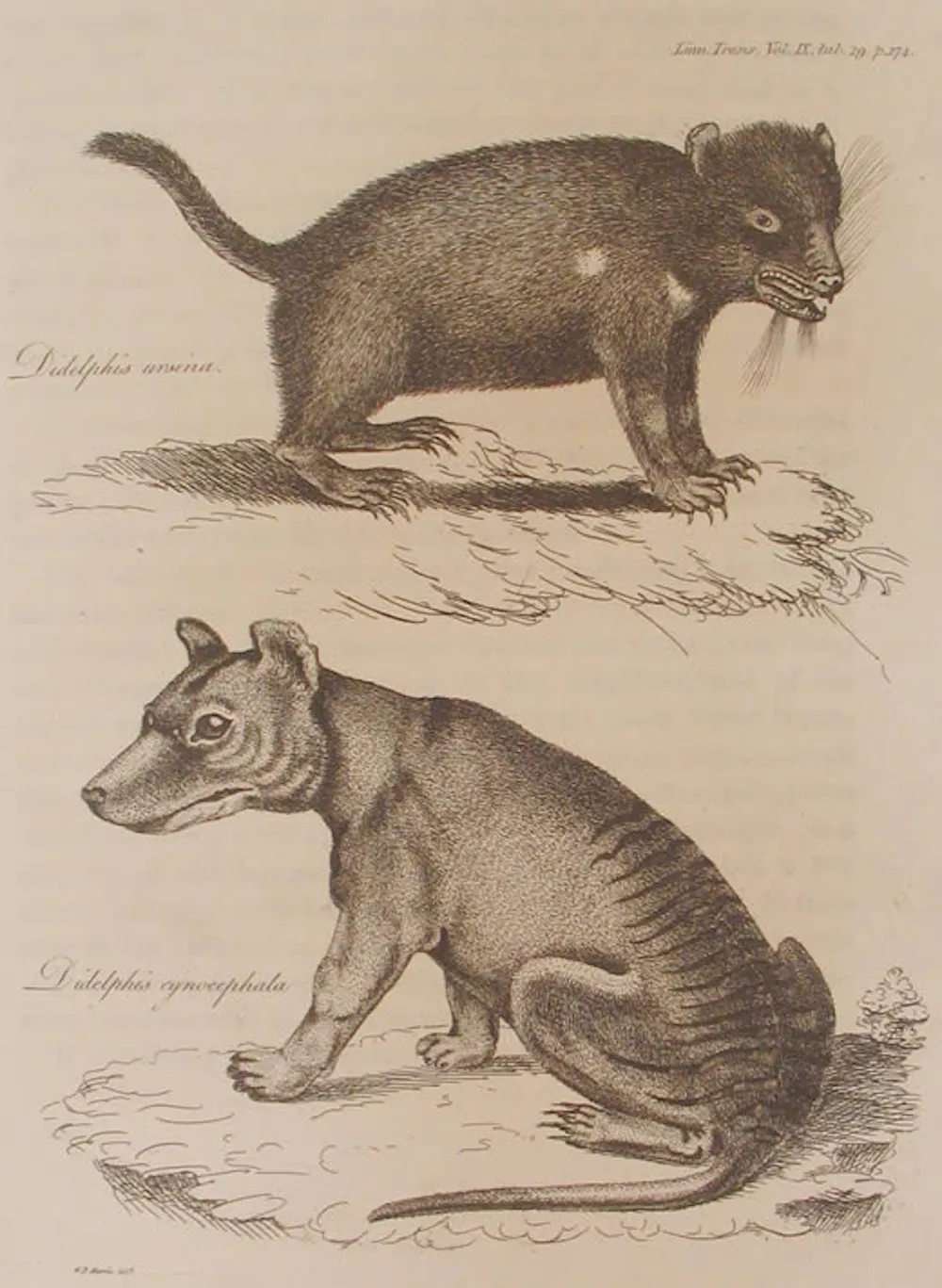
The earliest European drawing of a Tasmanian devil (top) and a Tasmanian tiger/thylacine (bottom) by George Prideaux Harris in 1808.
Wikimedia (Harris, G.P. 1808. Two new Didelphis species from Van Diemen’s Land. Transactions of the Linnean Society of London 9:174–178, Figure 1)

Our team of researchers has been documenting depictions of thylacines and other creatures at rock art sites in Arnhem Land, Northern Territory, for decades.

Today, we publish new research on rock art in north-west Arnhem Land, including 14 rock paintings of thylacines and two of Tasmanian devils. A few of these paintings were previously known but not described, while others were identified by our team over the past three years.

Besides rock art, we also examined recent paintings on bark, paper and canvas – as well as information from Aboriginal elders. Our findings emphasise how thylacines are still important to Arnhem Land Aboriginal communities today.

Memories of a curious creature

Scientists studying fossil remains suggest the thylacine became extinct on the Australian mainland about 3,000 years ago. The Tasmanian devil disappeared from the continent about the same time. Dingoes, humans and ancient climate change have been implicated in their demise.

The last known thylacine in Tasmania died in Hobart’s Beaumaris Zoo in 1936, but reports of tiger sightings in rugged, remote parts continued. Recent research suggests the thylacine may have persisted in Tasmania until the 1980s.

In the mid-1800s, Aboriginal people in Tasmania told settlers many things about thylacines, including that they had a powerful swimming ability, much like domestic dogs.

In the 1900s, rock paintings and engravings of thylacines were recorded at various locations on mainland Australia, especially in the north of the continent. Arnhem Land is particularly rich in images of this curious creature.

While making a digital tracing of a rock painting, co-author Joey Nganjmirra identifies the subject as a thylacine.

Paintings in red, white and yellow

Our research focuses on rock paintings from Awunbarna (Mount Borradaile) and Injalak Hill (near Gunbalanya), east of the East Alligator River that separates Arnhem Land from Kakadu National Park.

Since 2018, we have been working with local Aboriginal community members to record hundreds of rock art sites in each location – some of which include thylacine paintings.

North-west Arnhem Land is well known for its rich galleries of rock paintings. These have been made over at least the past 15,000 years and feature unique styles and subject matter. Our new findings add to the region’s cultural and scientific importance.

The thylacine and devil paintings we examined were made in various Aboriginal art styles. They were usually made with red and sometimes yellow ochre in various styles. The oldest were made about 15,000 years ago, while others were made at various times since.

Two of the paintings were made using white pipe clay (kaolin) with red ochre.

One red and yellow thylacine painting had fine white cross-hatching added to its body within the past few hundred years.

The white pigment does not last long and easily flakes off. It is coarse and sits on the rock surface rather than penetrating and staining the way red ochre does. Most paintings with white are less than 1,000 years old.

This suggests some depictions of the two extinct species are more recent than we might have expected.

Rock art depictions of thylacines are much more numerous and widespread across mainland Australia than Tasmanian devils. Including our new findings, only 25 Tasmanian devil images have been documented – versus more than 160 thylacine depictions.

Thylacines may have survived much longer in pockets of northern Australia than Tasmanian devils, but were likely also more culturally important.

At three rock art sites we recorded pairs of thylacines. Some Aboriginal elders we worked with had stories about Ngalyod (Rainbow Serpents) having two thylacines as pets that would swim in rock pools where Ngalyod resided.

The tails of the thylacines are shown in a few different positions – and some thylacines are depicted with teeth.

These variations don’t seem to be linked to the style or age of the work. It’s more likely they relate to different ways paintings were used to pass on information about the animal.

Stories passed down through generations

Contemporary artists in western Arnhem Land have long been inspired by these paintings and related stories. Today, they continue to portray the thylacine across various forms of media. They also have a name for thylacines: Djankerrk.

The thylacine lives on in western Arnhem Land, not as a living animal or a ghost from the past, but as a creature that still has present day relevance. Our new research, conducted in collaboration with community members, contributes towards our understanding of what makes the thylacine so meaningful.

The Conversation

Paul S.C.Taçon receives funding from the Australian Research Council.

Andrea Jalandoni receives funding from the Australian Research Council.

Sally K. May receives funding from the Australian Research Council.

Joey Nganjmirra does not work for, consult, own shares in or receive funding from any company or organisation that would benefit from this article, and has disclosed no relevant affiliations beyond their academic appointment.

ref. NT rock art thousands of years old sheds new light on the mysterious Tasmanian tiger – https://theconversation.com/nt-rock-art-thousands-of-years-old-sheds-new-light-on-the-mysterious-tasmanian-tiger-278670

Exploding head syndrome: the surprisingly common condition with a terrifying name

Source: The Conversation – Global Perspectives – By Flavie Waters, Research Professor, School of Psychological Science, The University of Western Australia

Have you ever been drifting off to sleep when suddenly you hear what sounds like a gunshot, a door slamming, or an explosion inside your head? You jolt awake, heart pounding, sit upright in bed, but the room is silent.

Nothing has happened – but it felt very real.

This experience has a dramatic name: exploding head syndrome.

Despite the alarming name, it’s not dangerous, not painful, and not a sign something is wrong with the brain.

What is it?

Exploding head syndrome is a type of sleep disorder known as a parasomnia.

Parasomnias are unusual experiences that occur while sleeping or during transitions between sleep and wakefulness.

In exploding head syndrome, a person “hears” a sudden noise that seem to originate from deep inside the head. It’s a sensory perception generated by the brain rather than an external sound.

It typically occurs when drifting in or out of sleep, most commonly when a person is drowsy and about to fall asleep.

People commonly describe a sudden bang or loud metallic noise, gunshots, an explosion, crashing waves, buzzing electricity, a door slamming, or fireworks.

Exploding head syndrome can be intensely frightening. The loud noise may be accompanied by other sensations, including a brief stab of pain in the head (though it’s normally painless), flashes of light, out-of-body sensations, or the sensation of electricity coursing through the body.

The episode only lasts for a split second or a few seconds, and typically disappears completely once the person wakes up. Some people experience only a single episode, while others may have occasional episodes or brief clusters before the condition settles.

Because the experience is so sudden and unusual, many fear they’ve had a stroke or seizure, or that something catastrophic has happened. Others interpret it as a supernatural or ominous event.

The distress is caused not by pain, but by confusion and the body’s alarm response. The brain is partially awake, disoriented, and briefly activates the fight-or-flight system.

What causes it?

We don’t know the exact cause, but researchers have proposed several theories.

Because episodes occur during the transition into and out of sleep, they may be related to the same processes that produce what are known as hypnagogic hallucinations (vivid sensory experiences you can get while falling asleep).

As we fall asleep, different parts of the brain gradually switch off in a coordinated sequence.

In exploding head syndrome, that process may be linked to the shutting down of neural systems that inhibit auditory sensory processing. Your brain may end up interpreting this as a loud sound.

A related theory proposes a brief reduction in activity of the brainstem, particularly the reticular activating system (which is involved in regulating transitions between wakefulness and sleep).

Exploding head syndrome typically does not involve pain, and is therefore different from headaches and migraines.

The syndrome’s distinct features also makes epilepsy an unlikely explanation for most people.

How common is it?

Exploding head syndrome is more common than you may think.

It occurs in at least 10% of the population, and around 30% of people will experience it at least once in their lifetime.

It can occur at any age, often after the age of 50. It may be slightly more common in women, but we don’t know why.

Exploding head syndrome is more likely in people who have other sleep disturbances, such as insomnia or sleep paralysis.

It is also associated with:

How is it treated?

Exploding head syndrome is harmless and not a sign of a serious brain problem. Episodes are usually brief, and may occur sporadically or in brief clusters before resolving on their own.

Once people are reassured the condition is not harmful and not a sign of brain damage or serious disease, episodes may become less frightening and frequent.

Medications are considered if episodes are frequent and very distressing but there haven’t been any large clinical trials that can guide treatment. Some sufferers have benefited from medications such as such as clomipramine but the evidence is limited, and more research is needed.

More commonly, treatment consists of reassurance and improving sleep habits. Some people report that addressing sleep problems such as insomnia, reducing tiredness and practising mindfulness and breathing techniques can help.

Generally harmless

In 1619 French philosopher René Descartes described having three dreams he regarded as a sign of divine revelation. In one, he heard a loud sound and saw a bright flash of light when he woke up. Some researchers have suggested what he was really experiencing was exploding head syndrome.

Despite its dramatic name, exploding head syndrome is harmless. For many people, the most effective intervention is understanding what it is – and knowing that it is not dangerous.

Although it is generally harmless, you should seek medical advice if episodes occur frequently, impact on your quality of life or are causing distress. Consult a doctor if they are painful, or associated with seizures, prolonged confusion, loss of consciousness or severe headache.

The Conversation

Flavie Waters does not work for, consult, own shares in or receive funding from any company or organisation that would benefit from this article, and has disclosed no relevant affiliations beyond their academic appointment.

ref. Exploding head syndrome: the surprisingly common condition with a terrifying name – https://theconversation.com/exploding-head-syndrome-the-surprisingly-common-condition-with-a-terrifying-name-276273

Strongest evidence yet that vaping likely causes cancer

Source: The Conversation – Global Perspectives – By Bernard Stewart, Professor, Paediatrics and Child Health, UNSW Sydney

Gustavo Vizart/Pexels

As early as the 1880s, there was evidence that smoking tobacco damaged your lungs. But it took almost 100 years to definitively show that smoking causes lung cancer.

So, what about vapes?

Until now, most research that has looked at the cancer risk for people using vapes, also known as electronic or e-cigarettes, has mainly focused on their role as a gateway to smoking tobacco. This is because we know people who vape are more likely than non-smokers to take up smoking.

But whether they cause cancer by themselves has been unclear. There are still no long-term studies. But now a comprehensive review of the evidence I conducted with colleagues, published today, has found vaping likely causes oral and lung cancers.

What we looked at and what we found

Given there is no long-term research on whether vaping directly causes cancer, we had to look for effects on the body that we know are linked to cancer.

We identified all peer-reviewed research published between 2017 and mid-2025 that looked at health impacts of vapes considered indicative of potential cancer causation.

The aerosol that vapers inhale contains a complex range of chemicals, including nicotine and its byproducts, and vapourised metals. This aerosol demonstrates almost all of the ten “key characteristics of carcinogens” identified by the World Health Organization.

Blood and urine analyses from vapers confirmed they had absorbed chemicals from e-cigarette chemicals that we know are linked to cancer. These studies revealed nicotine and its breakdown products present in their bodies, including carcinogenic (cancer-causing) metals from the heating element and organic compounds from vapourising e-liquids.

There is no doubt vaping alters tissues in the mouth and lungs. We found evidence of mutations in DNA from the mouth and lungs in those who vaped, which is further evidence of carcinogen exposure.

There was also evidence of changes to cancer biomarkers in the lung and mouth tissue of vapers. Cancer biomarkers are changes in cell or molecular structure that precede a tumour developing. Some of these can be observed under a microscope, such as inflammation, while others such as oxidative stress are detected by molecular analysis.

We also examined experiments on mice which found the aerosols in vapes caused lung cancer, as well as cases reported by dentists who thought that oral cancers in certain individual patients (who didn’t smoke) were caused by them vaping.

Our review did also examine studies that had addressed the possibility vaping may cause cancer. However none of these covered the wide range of evidence we had assessed.

What this means

The evidence shows nicotine-based vapes are likely to cause oral and lung cancer. We just don’t yet know how many cases it will cause.

But in the evidence we looked at, there was rising concern, and a significant shift in the conclusions that had been drawn.

Between 2017 and 2019, researchers tended to say there wasn’t enough evidence to conclude that vapes cause cancer. This included papers that typically looked at cancer biomarkers and carcinogenic mechanisms.

By 2024 and 2025, almost without exception, authors were expressing concern. They noted that the idea vaping has a lower cancer risk than smoking could no longer be supported, given the evidence we now have.

Our study, which looks at cancer caused by vapes in their own right, marks a new approach to what we know about the link between cancer and vaping.

What we still don’t know

We still don’t have direct evidence that there are more cancer cases than expected among people who vape.

The fact it took 100 years to demonstrate that smoking causes cancer indicates it will take decades to make a similar case for vaping. And it will be challenging, because definitive proof will depend on a population of people who only vape, not people who smoke and vape.

So we need large and carefully planned studies, which will then allow us to monitor and detect cancer early, and precisely determine if it is caused by – or worsened by – vaping. Lives can be saved by these means, but only if this research is funded and started now.

The Conversation

Bernard Stewart does not work for, consult, own shares in or receive funding from any company or organisation that would benefit from this article, and has disclosed no relevant affiliations beyond their academic appointment.

ref. Strongest evidence yet that vaping likely causes cancer – https://theconversation.com/strongest-evidence-yet-that-vaping-likely-causes-cancer-279550

How sea mines threaten global trade, and how navies detect them

Source: The Conversation – USA – By John Femiani, Associate Professor of Computer Science and Software Engineering, Miami University

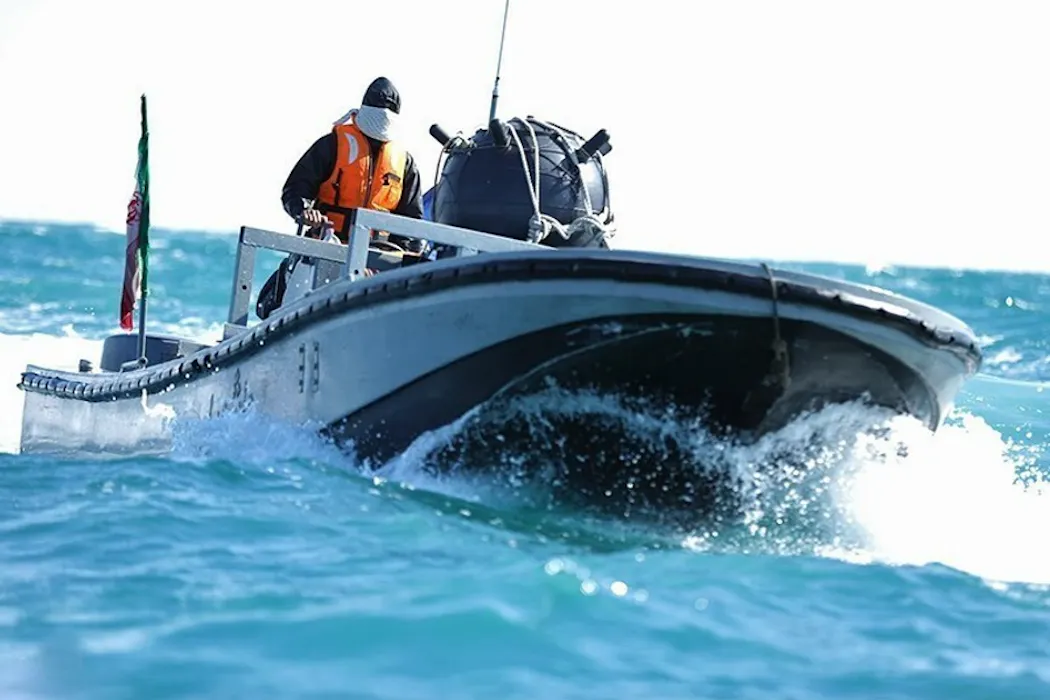
Iranian forces have used small speedboats to lay mines in the Strait of Hormuz. Tasnim News Agency, CC BY

U.S. intelligence officials have assessed that Iranian forces have deployed a small number of mines in the Strait of Hormuz, a critical choke point for global shipping, according to reports. The move gives the Iranians a means, along with missiles and drones, of threatening ships.

The U.S. Navy recently decommissioned the minesweeping vessels that it had operating in the Persian Gulf region. However, it has other ships and aircraft for finding and destroying mines.

As a computer scientist who researches how to detect mines, I have been researching how artificial intelligence techniques, such as machine learning, can help navies detect modern sea mines. Here’s what I’ve learned about how the mines work and how they can be neutralized.

Types of mines

The mines most people picture, like those seen in films such as “Godzilla Minus One,” are floating spheres tethered to the seabed, with small protrusions called Hertz horns that trigger the mine when it makes contact with a ship. These are called moored mines.

In the film, characters use a small wooden boat to sweep mines without triggering them because the mines responded to a metal-hulled ship’s magnetic field. Detecting magnetic fields is characteristic of influence mines, which respond to a ship’s magnetic, acoustic or pressure signature, as opposed to simple contact mines that detonate when ships run into them.

Modern mines typically combine multiple sensing modes. Some are designed to detonate only after a certain number of ships have passed, allowing them to ignore smaller vessels or minesweeping attempts and target higher-value ships. Examples include the Iranian Maham 3, which uses both magnetic and acoustic sensors.

Not all mines float. Many modern mines instead sit on the seabed. These mines are most effective in shallow water, where ships pass closer to the seabed. Some bottom mines sit exposed on the seabed, while others are partially or completely buried in sediment. Examples include the Iranian Maham 7 and the Manta mine, a low-profile bottom mine used by Iraq during the 1991 Gulf War. These mines can be deployed by small vessels or laid from aircraft, making them relatively easy to place. They are triggered when they sense a ship passing overhead.

a conical object on a sandy seabed
This is an example of a ‘Manta’ naval mine.
U.S. Naval Forces Central Command/U.S. Fifth Fleet on Flikr, CC BY

Many modern mines are cylindrical or torpedo-shaped, allowing them to be deployed from aircraft or submarines and descend in a controlled way before settling on the seabed. More advanced designs include so-called rising mines, which sit on the seabed and launch upward toward a target once it is detected.

Mine countermeasures

A key advantage of naval mines is not just the damage they can cause, but also the time and resources required to find and clear them. This is because it’s challenging to do so over large areas quickly and reliably.

Even the possibility of mines can disrupt shipping and force extensive and costly clearance operations. This has been demonstrated in practice: During the 1980s, Iran and Iraq deployed relatively small numbers of mines against each other in the so-called Tanker War in the Persian Gulf and Red Sea. This caused significant disruption to shipping and forced costly, time-consuming clearance operations, even when direct damage was limited.

Some countermeasures use uncrewed systems to trigger mines by mimicking the magnetic or acoustic signatures of ships, or to disable them with explosive charges. However, more targeted approaches require identifying individual mines, which motivates the need for reliable detection.

Mine hunting

Mine detection is best understood as a wide-area sonar search, which produces many contacts – essentially, anything unusual in the sonar data. Automatic target recognition algorithms then triage these contacts and classify them as either minelike objects or benign. Divers or camera systems then provide higher-confidence identification or confirmation to validate the result. This is known as a detect-classify-identify pipeline.

To collect data, an uncrewed surface vehicle – deployed from a larger ship – can tow a sonar platform at a fixed height above the seabed. The platform, called a towfish, resembles a small missile and carries multiple sensors, including port and starboard side-scan sonar. The British Royal Navy is also preparing to send this type of towed sonar array to the Persian Gulf region, according to a report.

a small boat with a closed top and several electronic devices onboard
The U.S. Navy uses this uncrewed surface vessel, which tows an underwater sonar device, to search for mines.
U.S. Navy
an illustration showing an underwater scene with colored lines demarking areas
The U.S. Navy’s towed sonar array includes forward-looking sonar to detect moored mines (yellow region) and side-looking sonar to scan for mines sitting on the seabed (white region).
U.S. Navy

These sonar devices use sound rather than light to form images. Unlike a photograph, a sonar image is built from one-dimensional measurements of returned sound energy as a function of distance from the sensor. As the platform moves, these slices are assembled to form a continuous image of the seabed. The center of the image corresponds to the water column directly beneath the sonar device and appears dark. The seabed appears as if illuminated from the sensor, with objects characterized by a bright highlight facing the sonar and a shadow extending away from it.

At the detection stage, researchers have developed a range of techniques to detect minelike objects in sonar imagery. Early methods segmented sonar imagery into regions that show as highlights paired with acoustic shadows. Other statistical approaches model seabeds and identify anomalies that deviate from it. Template-like matched filters are used to identify objects with known geometric characteristics.

More advanced approaches incorporate machine learning, using carefully selected features derived from texture, intensity and shadow geometry to classify objects.

More recently, researchers have applied deep learning methods directly to sonar imagery and have often shown improved performance, particularly in complex environments. But their effectiveness depends on the availability of representative training data.

Unlike the data for training many other computer vision systems, high-resolution side-scanning sonar data is particularly expensive to collect and label in large enough amounts to successfully train deep learning mine detection systems.

Perhaps, when it becomes safe to do so, navies can clear mines from the Strait of Hormuz and add to the limited supply of this data.

The Conversation

John Femiani receives U.S. Navy SBIR-funded research support related to underwater mine detection.

ref. How sea mines threaten global trade, and how navies detect them – https://theconversation.com/how-sea-mines-threaten-global-trade-and-how-navies-detect-them-279305

Ontario is closing its supervised consumption sites, calling them a failure. So what counts as ‘success?’

Source: The Conversation – Canada – By Daniel Eisenkraft Klein, Postdoctoral Fellow, Harvard University

The Ontario government recently said it will cut provincial funding for seven supervised drug consumption sites in Toronto, Ottawa, Niagara, Peterborough and London, with 90 days given to wind down their operations.

In their place, the province is spending $378 million on 19 Homelessness and Addiction Recovery Treatment (HART) hubs, which explicitly exclude supervised consumption and needle exchange services.

While Premier Doug Ford’s government’s framing of supervised consumption as a “failed experiment” is selective, it’s not baseless in the way that defenders of these sites sometimes imply.

By certain measures, the sites have not lived up to their potential: the program has not clearly reduced provincewide overdose deaths, and the communities that host them bear costs that defenders too often dismiss.

But “failure” requires a definition of success, and the government’s is not the only one that matters. HART hubs offer care for people on a recovery pathway, while supervised consumption sites exist for those who are not on that pathway yet or who have left it. Entirely replacing safe consumption sites with HART hubs doesn’t address the primary function these sites have served: keeping people who are not in treatment alive. By this measure, the sites are a clear success.

Success by whose measure?

Whether supervised consumption sites “succeed” depends entirely on what they’re expected to do. If we judge the sites against Health Canada’s stated goals — keeping people alive on site, connecting them to treatment, reducing infections and lessening strain on emergency services — the evidence is strong.

No one has ever died of an overdose inside a supervised consumption site in Canada. And sites across the country have reversed more than 50,000 overdoses since 2017.

In Ontario, where more than 2,200 people died from opioid toxicity in 2024 and fentanyl was involved in more than 83 per cent of those deaths, the sites function as a last line of defence for people at highest risk. Since 2021, about one in five opioid toxicity deaths in Ontario has occurred among people experiencing homelessness — the same population these sites primarily serve.

Beyond lives saved, safe consumption sites generate measurable returns the government’s own cost-benefit logic should recognize: Vancouver’s Insite refers thousands of clients to health and social care monthly and a Calgary cost analysis found each overdose managed at a supervised consumption site saved approximately $1,600 in avoided ambulance and emergency department costs. Those resource savings are especially important amid severe emergency room overcrowding in Ontario.

Where the sites fall short

But the Ontario government’s claim that these programs lack population-level impact is not just rhetoric: the two largest provincial-level studies — covering British Columbia and Ontario — found no statistically significant effect on opioid mortality, emergency department visits or hospitalizations.

A systematic review also found that the studies carried high risk of bias because they didn’t account for confounding factors like housing, treatment access and drug supply composition.

A neighbourhood-level study of Toronto found a two-thirds reduction in overdose mortality within 500 metres of sites, but that finding did not replicate at larger geographic scales.

One possible explanation for this lack of effect is coverage: Ontario’s supervised consumption sites provided roughly 150 spaces accommodating up to 9,000 episodes per day, while the province may have 300,000 to 400,000 at-risk opioid users. Expecting a handful of supervised consumption sites to reduce provincewide overdose mortality is akin to stationing a single fire truck in a forest and asking why the wildfire kept burning.

Community concerns, which the Ford government often cites in arguing that safe consumption sites have failed, are similarly grounded in real experiences.

A study published in JAMA Network Open examining Toronto’s safe consumption sites found no long-term rise in overall crime, as well as fewer assaults and robberies. But the same study documented initial increases in break-and-enters near a number of sites.


Read more:
New study: Some crimes increased, others decreased around Toronto supervised consumption sites


Nearby residents have also described visible disorder, open drug use and discarded equipment.

Dismissing these experiences as NIMBYism or overblown only undermines the case for safe consumption sites. Advocates need to take these concerns seriously if they want the sites to survive politically.

What closures get wrong

Despite this mixed evidence, there’s little to suggest that Ontario’s plan to shift patients to the HART hubs will lead to success.

The Ontario government has cited a Canadian Centre of Recovery Excellence study that found no increase in mortality after the closure of one overdose prevention site in Red Deer, Alta.

But that study’s authors have acknowledged it was inconclusive because it covered only a six-month period. And a single study of a single site closure does not constitute an evidence base for dismantling an entire network of services across a province where opioid deaths remain catastrophically high.

Supervised consumption sites are not beyond criticism: they can be better designed, better integrated and more responsive to the communities that host them. But improving them requires better policy, not selective evidence and site closures.

The $378 million committed to HART hubs could expand addiction treatment without eliminating the services that keep people alive. Adding treatment capacity does not require removing the safety net beneath it.

The Conversation

Daniel Eisenkraft Klein does not work for, consult, own shares in or receive funding from any company or organisation that would benefit from this article, and has disclosed no relevant affiliations beyond their academic appointment.

ref. Ontario is closing its supervised consumption sites, calling them a failure. So what counts as ‘success?’ – https://theconversation.com/ontario-is-closing-its-supervised-consumption-sites-calling-them-a-failure-so-what-counts-as-success-279288