Why measuring pain could reveal more about wellbeing than GDP

Source: The Conversation – UK – By Lucía Macchia, Lecturer in Psychology (Education and Research), City St George’s, University of London

Asier Romero/Shutterstock

Anna spends most of her workday typing on her laptop. After a few hours, she starts rubbing her wrists as her pain sets in. A glance at her desk reveals the painkillers that she uses to ease her discomfort. And for John, his neck pain sets in every time he listens to the news about a potential economic crisis and his stress levels start to rise.

These experiences of pain are not unique. Nearly 35% of people worldwide experience pain every day, and in the UK alone, almost 20 million people live with it.

Pain used to be thought of purely as a symptom of a physical problem: you break a leg, experience pain, see a doctor and the injury is treated. However, research has shown that pain can arise not only from physical injuries but also from emotional or psychological circumstances. This suggests that people can experience pain even in the absence of a physical injury.

In light of this understanding, other research conceptualised pain as something that can be related to a person’s socioeconomic situation, their thoughts and their behaviour. This perspective suggests that pain does not simply originate and stay in the body but influences and is influenced by other aspects of people’s lives.

For example, one study I was involved in found that people living in countries with higher unemployment rates reported greater levels of pain than those in countries where there was less joblessness. This was true regardless of an individual’s own employment status. It indicates that pain can be shaped not only by someone’s circumstances but also by broader social and economic environments.

One possible explanation is that being surrounded by higher levels of unemployment triggers feelings of financial and job insecurity, which in turn can exacerbate pain. This is consistent with evidence suggesting that stress can contribute to inflammation, and increase physical pain.

male warehouse worker leaning on shelves and grabbing his back in pain.
Around 30 million work days are lost to musculoskeletal conditions in the UK each year.
FOTO Eak/Shutterstock

And of course, pain has significant consequences in the workplace. For instance, in the UK, musculoskeletal conditions such as arthritis and back pain account for around 30 million lost working days each year.

This not only undermines the productivity of organisations, but it also affects key aspects of workers’ wellbeing. On the one hand, time lost from work can erode the sense of dignity and purpose that having a job provides, for example by limiting time spent on meaningful activities or building social relationships.

On the other, people’s capacity to earn a living may be reduced, especially in jobs where income is directly tied to the time they spend working – freelance workers, for example.

A different way of thinking about pain

More broadly, this all contributes to research into the measures used to assess how citizens in a country are feeling.

For a long time, governments have been using pure economic indicators, such as national income represented by GDP per capita to assess how well their citizens were doing. But these indicators fail to capture aspects that are key for wellbeing, including things like income inequality or air pollution.

As a result, researchers have suggested alternative metrics that can provide a more accurate picture of wellbeing. These include happiness and life satisfaction, which are typically assessed by asking people to report on these aspects of their experience.

But another strong metric that could be used to enhance this picture is pain. After all, pain can capture dimensions of the human experience that are not fully addressed by traditional economic indicators or by proposed wellbeing measures.

For instance, although measuring life satisfaction or emotions like sadness and anger can provide insights into how citizens are feeling, assessing them often requires complex evaluation and reflection.

In contrast, pain can be seen as a more direct and reliable indicator, as it is experienced in the body and does not require the same level of cognitive processing. One way to measure pain is to ask people to rate their pain from zero (meaning no pain) to ten (meaning the worst pain they can imagine).

Since everyone has felt pain at some point in their lives, this technique makes measuring it straightforward and the results relatively trustworthy.

What’s more, pain may be less susceptible to the stigma that can make people reluctant to report supposedly negative emotions like sadness or anger in certain settings or cultures.

This shows that pain may be much more than just a personal problem; it affects several domains including work and relationships. Unlike abstract numbers such as GDP or survey data, pain is something felt in the body. This can make it a powerful signal of wellbeing.

Paying attention to pain can help governments and workplaces understand what really matters for people’s quality of life – and why supporting those in pain isn’t just a health issue, but a matter of social and economic importance.

The Conversation

Lucía Macchia does not work for, consult, own shares in or receive funding from any company or organisation that would benefit from this article, and has disclosed no relevant affiliations beyond their academic appointment.

ref. Why measuring pain could reveal more about wellbeing than GDP – https://theconversation.com/why-measuring-pain-could-reveal-more-about-wellbeing-than-gdp-279294
How California’s war on smog and its ambitious car pollution rules made everyone’s air cleaner

Source: The Conversation – USA (2) – By Ann E. Carlson, Professor of Environmental Law, University of California, Los Angeles

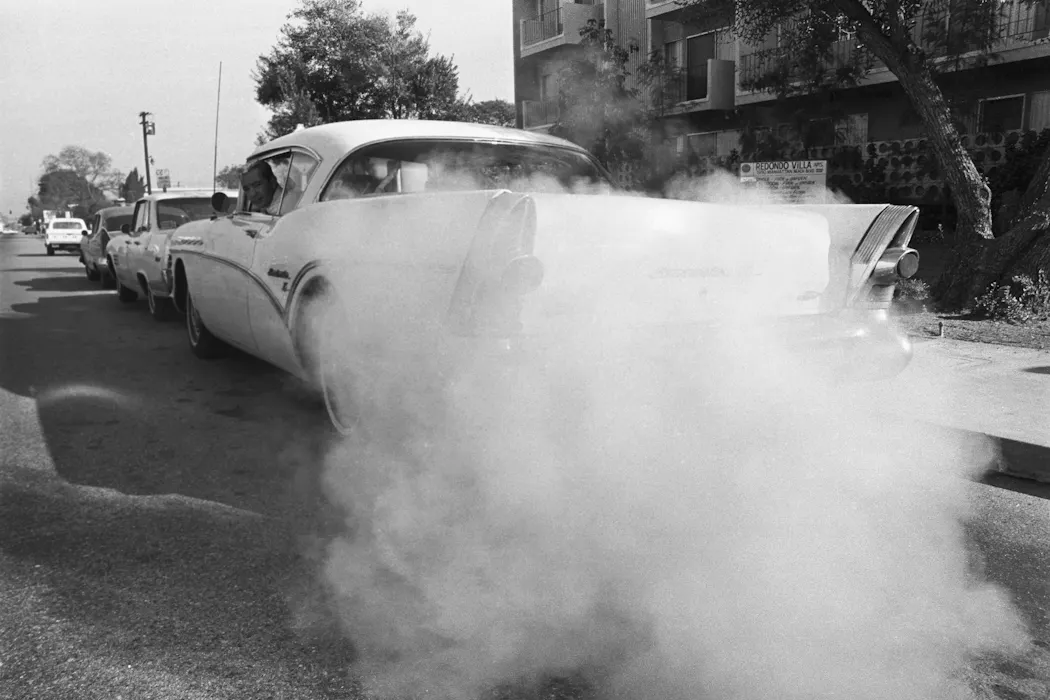
Before catalytic converters, starting a gas-powered vehicle could choke the surrounding area with smog. Bettmann via Getty Images

Cars on the road today are 99% cleaner than they were in 1970. Air quality in the United States is much, much better as a result. In Los Angeles, where I live, lead levels in the air were 50 times higher in the 1970s than today, and the amount of lead in kids’ blood has plummeted.

What made that drop possible is arguably the most important environmental technology ever invented: the catalytic converter.

California has long had the authority under the federal Clean Air Act to set emissions standards for cars and trucks that are higher than the nation’s, and its early use of that authority is a major reason why catalytic converters are now standard in vehicles and people are healthier across the country.

At a time when the Trump administration is attacking California’s ability to cut air and climate pollution and revoking its Clean Air Act waivers, it’s helpful to remember just how important the state’s leadership has been in making the air Americans breathe so much healthier.

A view of downtown LA through smog
In this 1973 photo, Los Angeles’ downtown high-rise buildings are obscured by a blanket of smog.
UCLA Library Special Collections/Whitney Fitzgerald/Los Angeles Times Photographic Collection, CC BY

As I recount in my forthcoming book, “Smog and Sunshine: The Surprising Story of How Los Angeles Cleaned Up Its Air,” California’s role in the emergence of catalytic technology is often downplayed. The passage of the 1970 Clean Air Act is typically given the credit. That law deserves accolades for its key role. So does William Ruckelshaus, the first administrator of the U.S. Environmental Protection Agency.

But without California’s willingness in the early 1970s to push automakers to meet tough standards, the technology would have developed more slowly and the air would have remained dirtier for many more years.

Birth of the catalytic converter

Eugene Houdry invented the first catalytic converter technology in the 1950s. Years earlier, he had developed the Houdry process for catalytic cracking, which makes converting crude oil into gasoline much easier. That invention in the mid-1930s helped spur the mass adoption of cars and trucks in the U.S.

Widespread car ownership altered American life, changing where people lived, worked and vacationed. But cars also brought terrible smog as their use skyrocketed. When Houdry realized his life’s work was choking the air of Los Angeles, he decided to do something about it. By the late 1950s, Houdry had invented a rudimentary catalytic converter.

What is a catalytic converter? The Engineers Post

You might think that this invention, which Houdry said could make “the lung cancer curve dip,” would lead carmakers to install the technology on their new vehicles.

But that is not what happened. Instead, auto manufacturers engaged in what the government described as a yearslong conspiracy to keep emissions-limiting technology off the market, ultimately leading to an antitrust legal settlement.

It wasn’t until the passage of the 1970 Clean Air Act that carmakers got serious about improving upon Houdry’s invention for mass market installation.

The Clean Air Act’s ambition

The 1970 Clean Air Act is a remarkable piece of legislation. Passed with only one negative vote and signed into law by President Richard Nixon, the act set wildly ambitious goals. They included a requirement that carmakers cut auto pollutants by 90% by 1975.

Congress passed this requirement knowing that the technology to cut emissions wasn’t ready for prime time. Houdry’s catalytic invention couldn’t work with leaded gasoline, and it hadn’t been tested in tough conditions, such as freezing cold or sweltering heat.

The Ford Motor Co., with Lee Iacocca as its president, told Congress in 1970, “If such (pollution cuts) are established … the technology as we know it today would not permit us to continue to produce cars after January 1, 1975.”

A man leans on a 1970s-ear car with two more behind him.
Ford Motor Co. President Lee Iacocca leans against a Ford Mustang in Bloomfield Hills, Mich., in 1974.
John Olson/Getty Images

Congress ignored Ford’s dire warning and passed the stringent cuts.

Automakers responded with two separate tactics. The first was to gear up – alongside companies like Corning Glass and the Engelhard Company – to develop technology to meet the 90% cuts. Most of their efforts focused on improving the catalytic converter, made more plausible when Engelhard determined that catalytic converters wouldn’t corrode with unleaded gasoline. The EPA’s Ruckelshaus ordered gas stations to make unleaded gasoline available as of Jan. 1, 1975.

While the auto companies worked to meet the congressional mandate, they also pressured Congress and the courts to weaken or delay it. The U.S. Court of Appeals for the District of Columbia Circuit obliged, ordering Ruckelshaus to extend the deadline for compliance by a year. Congress eventually extended the deadline to 1981.

But California did not let up.

A gamble that paid off

California has the authority under federal law to issue its own automobile pollution standards, as long as the standards are stronger than federal standards and the state receives a waiver from the EPA. No other state has similar power, but states can adopt California’s higher standards.

After the federal appeals court gave carmakers an extra year to comply with the federal rules, California decided it would not let car companies off the hook.

The state asked Ruckelshaus to grant a waiver for California to issue standards tough enough that carmakers would have to install catalytic technology to meet them.

Half a dozen people sitting on motorcycles and wearing gas masks.
After several of its motorcycle messengers became ill from driving in smog in 1955, a Los Angeles printing company bought gas masks for them.
Bettmann via Getty Images

Ruckelshaus faced enormous pressure to deny the waiver, with automakers arguing that the technology was neither effective nor available. But in a hint of the resolve he would later show in refusing Nixon’s order to fire Watergate special prosecutor Archibald Cox, Ruckelshaus gave California the go-ahead in 1973, and the state’s rules went into effect for the 1975 model year.

He reasoned that doing so would maintain “continued momentum toward installation of (catalyst) systems … while minimizing risks incident to national introduction of a new technology.” In other words, California could serve as a guinea pig for the rest of the country by adopting tough standards.

Ann Carlson and PBS’s “American Experience” explore Los Angeles’ war on smog.

The gamble paid off. Since California was the nation’s largest auto market, companies had strong economic incentives to change their models to meet the state’s standards. Catalytic technology is now not only standard on American vehicles but also on vehicles around the world, and air quality in the U.S. is vastly improved.

With the adoption of the catalytic converter, leaded gasoline was banned and eventually phased out, and lead levels began to drop almost immediately.

Continuing California’s legacy

Catalytic converters have removed 8 billion tons of pollution from the air in the U.S. They have saved hundreds of thousands of lives and led to the removal of a deadly neurotoxin, lead, from the atmosphere.

California’s standards have spurred important technological innovations for vehicles, including new types of less-polluting gasoline and vehicles that emit no pollution at all.

But the state’s ability to set higher standards is under attack. Congress – at the behest of the Trump administration – has overturned three waivers the state was granted to cut even more pollutants and the greenhouse gases that cause climate change. The Trump administration has also sued California to invalidate its mandates for automakers to sell zero-emissions vehicles.

Today, California officials are searching for alternative ways to continue to make cars and trucks cleaner. The state has set aside money to replace federal tax incentives for electric vehicles, and the Legislature is exploring creative ways to hold indirect sources of emissions, such as rail yards, ports and warehouses where vehicles are constantly running, accountable for air pollution.

But these alternatives aren’t as powerful as the authority to exceed federal standards to make the air cleaner.

The Conversation

Ann E. Carlson’s research was supported by UCLA. President Biden appointed her to serve as Chief Counsel and Acting Administrator of the National Highway Traffic Safety Administration from 2021-2024.

ref. How California’s war on smog and its ambitious car pollution rules made everyone’s air cleaner – https://theconversation.com/how-californias-war-on-smog-and-its-ambitious-car-pollution-rules-made-everyones-air-cleaner-279533

Trump Fed pick Kevin Warsh could shake up the central bank with his ‘family fight’ model

Source: The Conversation – USA (2) – By Simon Bowmaker, Distinguished Clinical Professor of Economics, New York University

Kevin Warsh, President Donald Trump’s nominee to helm the Fed, is expected to change the way the central bank operates. AP Photo/Alastair Grant

Since President Donald Trump named Kevin Warsh as his choice for Federal Reserve chair on Jan. 30, 2026, financial markets have focused on one question: Is he still the inflation hawk he once was, or is he now more comfortable with the lower interest rates that the president has long demanded?

We have a different take. Drawing on decades of research on central banking and an extended interview with Warsh conducted by one of us (Bowmaker) in 2023 for a forthcoming book on the Fed, we think the real change would be not in interest rates but in how the Fed communicates.

‘About right’

It’s no small matter. In modern central banking, policymakers’ pronouncements often shape the economy as much as their actual decisions.

The 2023 interview supports that view. Two themes ran through Warsh’s answers. The first was expected – a commitment to price stability. The second was more revealing: a desire to rethink how the Federal Reserve conducts its internal policy discussions and communicates them to the public.

In the interview, Warsh illustrated this with a story from 2006, when he was nominated to the Fed’s Board of Governors and sought advice from former chair Paul Volcker. Volcker told him the first task was to get interest rates “about right” – a phrase that, as Warsh noted, reflects the reality that policymakers never know the precise optimal level.

But Volcker added a second lesson he considered even more important: Make sure you look like you know what you are doing.

As Warsh interpreted it, modern central banking is not only about setting policy but also about presenting outcomes as the result of fulsome deliberation.

Warsh said he favors what he calls a “family fight” model of policymaking: open disagreement behind closed doors followed by unity in public. Recalling the 2007-09 financial crisis when the Fed was led by Ben Bernanke, he described arguments running their course in the chair’s office before members of the Fed’s rate-setting committee, known as the Federal Open Market Committee, reached their final decision and spoke collectively.

According to Warsh, large institutions – especially in times of crisis – need to project a single voice.

white man in a suit and carrying a black briefcase walks up the steps of a stone building
Although Alan Greenspan was the first chair to publicly announce the Fed’s decisions, the central bank remained inscrutable under his tenure, with analysts sizing up his briefcase to guess interest rate decisions.
Mark Wilson/Newsmakers via Getty Images

Shifting toward openness

In a 2014 review for the Bank of England, Warsh recommended that their policy meetings begin with an unrecorded discussion – essentially the same “family fight.”

His concern was that transcripts, even when released years later, can shape how officials speak. If policymakers know their words will eventually be scrutinized, they tend to hedge and qualify their views rather than speaking plainly. In that sense, the effort to avoid appearing wrong can weaken decision-making.

That position puts him at odds with the Federal Reserve’s path over the past three decades – all in the name of reducing uncertainty, stabilizing expectations and improving policy effectiveness.

Beginning in 1994, under Alan Greenspan, the Fed started publicly announcing its interest rate decisions, a major break from earlier practice when markets had to infer policy changes.

Bernanke expanded that shift after the financial crisis, introducing quarterly press conferences and forward guidance on interest rates, as well as publishing FOMC participants’ projections – the so-called “dot plot.”

His successors, Janet Yellen and Jerome Powell, largely kept the framework in place, with current chair Powell holding a press conference after every meeting and trying to replace “Fed speak” with clearer language. The result is a central bank far more open than at any point in its history, explaining not only its decisions but also how it interprets the economy.

Fed credibility

Warsh is skeptical about this approach. He worries that publishing policymakers’ projections engenders “a troubling convergence of views,” as he said in the 2023 interview, stifling genuine disagreement inside the committee.

In his view, short-term forecasting offers limited benefit while subtly shaping how officials think about policy.

Warsh’s concern extends to communication more broadly. In his view, expansive messaging can make it harder to adjust policy as conditions change. As he said in the interview, extensive communication constrains a central banker’s “ability to change his mind,” yet “a central bank that can’t change its mind isn’t credible.”

For Warsh, credibility comes from adaptability rather than consistency – a stance that could call into question practices such as the dot plot.

Predictable vs flexible

Why does this all matter?

Modern financial markets respond as much to signals as they do to actions. Investors do not wait for interest rates to change; they adjust their behavior based on expectations of the central bank’s moves. Forward guidance and projections reduce uncertainty by helping markets anticipate policy.

A shift toward less explicit signaling would not necessarily make policy tighter or looser, but we believe it would make it less predictable – even though speaking with a single voice might partially offset this. Market reactions could become more sensitive to incoming data due to fewer clues about the Fed’s intentions.

The implications extend beyond Wall Street. Mortgage rates, business investment and hiring decisions all depend on expectations about future borrowing costs. Clear communication stabilizes those expectations, while greater discretion gives policymakers flexibility to respond to surprises.

Warsh’s approach, based on the 2023 interview, suggests he wants to trade some of that predictability for flexibility. In our assessment, the public may hear less about where policy is heading but see faster changes when economic conditions shift.

We cannot predict whether Warsh will push for lower interest rates or follow Volcker’s advice to get policy “about right.” But his own words suggest he will try to reshape how the Federal Reserve debates, signals and justifies its decisions – and in modern central banking, changing communication can change policy itself.

The Conversation

The authors do not work for, consult, own shares in or receive funding from any company or organization that would benefit from this article, and have disclosed no relevant affiliations beyond their academic appointment.

ref. Trump Fed pick Kevin Warsh could shake up the central bank with his ‘family fight’ model – https://theconversation.com/trump-fed-pick-kevin-warsh-could-shake-up-the-central-bank-with-his-family-fight-model-275999

How polling failures, gambling legalization and political gridlock paved the way for the explosive rise of prediction markets

Source: The Conversation – USA (2) – By Parker Bach, PhD Student in Media and Communication, University of North Carolina at Chapel Hill

At their best, prediction markets aggregate collective intelligence to weigh the likelihood of future events. Fairfax Media/Getty Images

Though prediction markets have been legal in the U.S. for less than 18 months, they can’t stop making news and making money.

On prediction markets such as Kalshi and Polymarket, users can stake real money on just about anything, from the winner of the 2028 U.S. presidential election to when Taylor Swift will get married.

But this isn’t simple entertainment: In theory, these wagers serve as a means of collecting the public’s insights into the future.

That’s why you may have seen CNN’s pundits casually mention Kalshi’s election odds for the 2026 primaries, or watched CBS offer real-time Polymarket projections of which actors would win awards during the Golden Globes.

Existing research on the principles and history of prediction markets suggests they can be a valuable way of pooling collective knowledge about the future.

But as researchers like me, journalists and legislators race to understand the impact these markets are having on society and politics, several questions have emerged about the regulation of these platforms and their forecasting abilities.

The what and why of prediction markets

In practice, prediction markets are quite simple.

Each market offers what are known as “event contracts” on whether some future outcome will occur. Each contract costs between 1 and 99 cents, paying out US$1 if the event occurs or nothing if it does not.

Similar to sports betting, purchasing a contract represents a wager. There are higher returns for positions on outcomes deemed less likely. Like in the stock market, a trader can buy and sell contracts over time, as odds – and thus prices – fluctuate.

At the time of writing, Kalshi traders put the odds of the passage of the SAVE Act, legislation centered on requiring proof of U.S. citizenship to register to vote, at about 10%. So each contract for this outcome costs 10 cents. If I think the act is more likely to pass than that, I could purchase some “shares” and sell them at a higher price if the odds go up in the future. If I hold them and the bill ultimately becomes law, I would receive a return that’s 10 times what I originally paid.

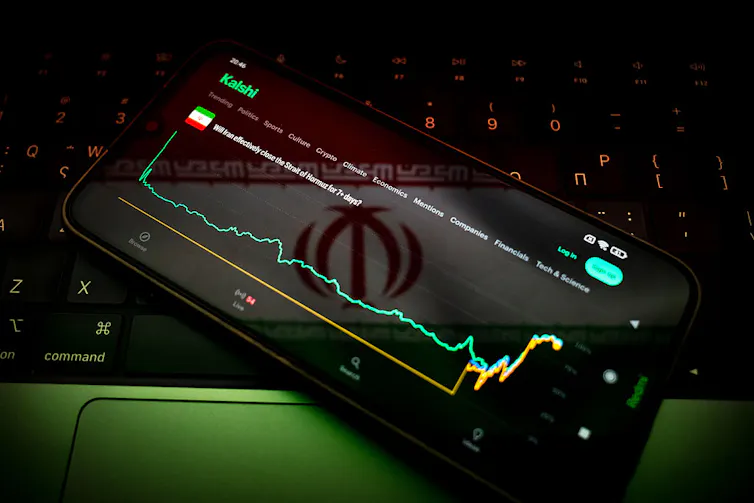
The Kalshi market for 'Will Iran effectively close the Strait of Hormuz for 7+ days?' appears on a smartphone screen.
Prediction markets let users trade on whether specific events will occur, ranging from election outcomes to geopolitical developments.
Nikolas Kokovlis/NurPhoto via Getty Images

Two theories support the idea that prediction markets should excel at forecasting: the wisdom of crowds and the efficient market hypothesis.

First described over a century ago, the wisdom of crowds refers to the idea that the median judgment of a large, diverse group of people operating independently is often more accurate than that of a single expert.

A related argument appears in the efficient market hypothesis, which emerged in the mid-20th century among economists who championed free markets. It holds that prices encode all available information, reflecting the collective judgments of profit-seeking sellers and deal-seeking buyers.

At their best, then, prediction markets aggregate collective intelligence to weigh the likelihood of future events.

Polling’s credibility crisis creates an opening

Gambling on the outcomes of the day’s events has a long history. In 16th-century Italy, gamblers could wager on the election of civic magistrates and the outcome of papal conclaves. And from the 1880s to 1930s, New York City was the hub of political wagering, which sometimes exceeded the stock market in daily volume.

Reporting on bets ahead of the 1924 presidential election, The New York Times observed, “It is an old axiom in the financial district that Wall Street betting odds are ‘never wrong.’”

However, the rise of scientific polling and legal crackdowns on political wagering forced prediction markets to fade to the background.

That changed in 2024.

One month before the U.S. elections, a federal court granted the prediction market startup Kalshi permission to legally operate prediction markets concerning U.S. election results.

Around the same time, Elon Musk posted on X about Donald Trump leading Kamala Harris in prediction market odds. Trump followed suit. Kalshi put up billboards with live election odds in Times Square. Users and dollars flowed in. By election day, a volume of over $500 million in presidential election bets had been traded on Kalshi alone. Polymarket featured over $3.6 billion more in volume.

Political polling, meanwhile, was facing a crisis of confidence. Response rates had been declining for decades, and Trump voters had been undercounted in 2016 and 2020.

The polls forecast the presidential election as a coin toss. The prediction market, meanwhile, favored Trump at roughly 60% odds to win.

After Trump won at the ballot box, prediction markets declared victory over polling as the new, trustworthy forecasters of public opinion.

The utility of the markets

Over the past 50 years, journalists have increasingly incorporated quantitative data in their reporting, and audiences have come to expect political forecasting as part of their news diet.

With polling experiencing a crisis of confidence, prediction markets have become an increasingly attractive way for journalists to offer a data-backed snapshot of public beliefs.

Prediction markets have other advantages over polls for journalists. They respond to events in real time, and they’re free to access. Polls, meanwhile, take time and money to administer. They provide forecasts for political outcomes that go beyond elections – such as Cabinet nominations and Supreme Court decisions – which are usually outside the purview of polling.

In recent months, Kalshi and Polymarket have inked several partnership deals with news outlets. There’s a symbiotic relationship at play: Prediction markets provide journalists with data to report and discuss. Journalists, in turn, legitimize prediction markets by citing them as a trusted source.

A blue, sphere-shaped LED screen features various trades that can be made through Polymarket.
Contracts on the next French presidential election are trading on Polymarket, alongside markets on whether a U.S.-Iran ceasefire will take place by certain dates.
Théo Marie-Courtois/AFP via Getty Images

Prediction markets have historically performed well on elections. Whether they’re more accurate than polls on other kinds of questions is still up for debate.

If traders behave purely rationally, in the economic sense, they might flit between positions to maximize profit based on new information, personal biases aside.

But when wagering on elections, most traders have seemed to consistently buy and sell only one position, rather than switching between them. They may think they’re trading rationally while exhibiting a “wishful thinking” bias. Or, like many sports bettors, they may be wagering out of fandom or for entertainment.

All of these scenarios could undercut the accuracy of these markets.

The elephant in the room

Many journalists are embracing the data even as their news outlets run stories about concerns over insider trading in predictive markets. Because the outcome of events is often determined by human actors, those privy to certain plans – say, a looming ceasefire deal – would have access to information not available to the public and could profit handsomely off that information.

Two anonymous accounts made hundreds of thousands of dollars predicting the downfall of Nicolás Maduro and betting on the toppling of Ayatollah Ali Khamanei, with traders putting their money down just before the U.S. took military action. This timing has raised some eyebrows.

Kalshi prohibits insider trading, and in early 2026 it fined and suspended two high-profile traders who were using inside information.

Likely in response to bad press and statements from lawmakers seeking to regulate the platforms, Kalshi and Polymarket also announced new insider trading rules on March 23, 2026, centered on politics and sports.

The legal mechanisms for enforcing these rules, however, are less clear. SEC Rule 10b5-1 prohibits trading securities on the basis of material nonpublic information.

But event contracts are not governed by the SEC. They’re under the purview of the Commodity Futures Trading Commission, a much smaller agency. As things stand, the small agency has too few employees to regulate the legality of specific event contracts, which are governed by the Commodity Exchange Act. Kalshi and certain other prediction market platforms are instead given the latitude to self-certify the legality of each contract.

Any efforts to meaningfully regulate insider trading would, in my view, require clear rules and viable enforcement mechanisms.

From participation to profit

As I conduct my research, I often consider what the booming popularity of prediction markets says about American culture and politics in 2026.

In 1969, sociologist Erving Goffman theorized that Americans’ attraction to gambling stemmed from a need for “action” in an increasingly bureaucratized society. Similarly, studies have suggested that betting on sports makes fans feel like they’re participating, not just observing.

Congress is less productive than ever. Most Americans feel they have little influence over the workings of the government, with many looking on helplessly as democratic guardrails have been dismantled.

Who knows what will happen in the coming year. The filibuster might be weakened, or the U.S. could invade Cuba. Most Americans will have little say. But prediction markets at least offer the chance to make a buck off the action.

The Conversation

Parker Bach does not work for, consult, own shares in or receive funding from any company or organization that would benefit from this article, and has disclosed no relevant affiliations beyond their academic appointment.

ref. How polling failures, gambling legalization and political gridlock paved the way for the explosive rise of prediction markets – https://theconversation.com/how-polling-failures-gambling-legalization-and-political-gridlock-paved-the-way-for-the-explosive-rise-of-prediction-markets-278873

Benefits of mindfulness meditation go far beyond relaxation – here’s what it is and how to practice it

Source: The Conversation – USA (3) – By Yuval Hadash, Postdoctoral Fellow in Psychology, Carnegie Mellon University

Mindfulness meditation is a process of noticing difficult thoughts and feelings rather than shutting them out. Marco VDM/E+ via Getty Images

Imagine being asked to sit alone in a quiet room for 15 minutes with nothing to do – no phone, no music, no external distraction. In a well-known 2014 study, many participants found that task so challenging that they chose to press a button to give themselves an unpleasant electric shock instead of continuing to sit with their thoughts and sensations.

Because being with their own thoughts, emotions and bodily sensations can be so difficult, people often turn away from them. Smartphones offer constant distraction from boredom or stress, allowing users to disengage from their present-moment sensations and thoughts with a quick swipe or tap.

But avoiding unpleasant internal experience can backfire. Studies show that doing so is associated with a range of mental health problems, including anxiety and depression.

We are psychological scientists who study mindfulness and how it affects stress, health and well-being.

Mindfulness is a mental state that people can learn to cultivate through training. When people are mindful, they direct their attention toward their moment-to-moment bodily sensations, emotions and thoughts, and they meet those experiences with an attitude of curiosity and open acceptance.

Mindfulness can be cultivated through “mindful moments” in daily life, moments in which people intentionally stay present with what they do, hear, see or feel. However, formal mindfulness meditation involves sustained practice that systematically trains attention and acceptance. Our research shows that training acceptance during mindfulness meditation can substantially improve your emotional well-being.

Research shows that practicing mindfulness meditation can ease the symptoms of health conditions such as pain, insomnia, anxiety and depression.

Tuning into experience can be hard – and helpful

Popular culture often portrays mindfulness as a way of relaxing. But we’ve found that mindfulness practice can often feel surprisingly difficult. In one of our studies, participants who directed their attention to their thoughts and feelings during a 20-minute mindfulness meditation noticed six times more unpleasant experiences than pleasant ones.

This doesn’t mean they were doing it wrong. Turning your attention inward can feel challenging. Often, it brings you into contact with experiences that you normally try to push away, such as feeling bored, uncomfortable or agitated. However, we’ve also found that facing difficult experiences during mindfulness training can have positive effects.

In particular, adopting an accepting attitude toward your experiences seems to drive many of the positive effects of mindfulness. Our research shows that developing the capacity for acceptance through mindfulness meditation can reduce feelings of loneliness and increase positive emotions, such as happiness. It also reduces stress hormones and helps people notice more positive experiences during stressful situations.

In these studies, we have found that acceptance is the critical driver. When acceptance is removed from mindfulness training, these benefits largely disappear.

The power of learning to accept experience

A key part of mindfulness practice involves turning toward difficult experiences, such as like stress, boredom and pain, rather than seeking distractions or pushing those experiences away. It means noticing feelings and thoughts as they arise, sensing how they show up in the body, and approaching them with an attitude of acceptance rather than judgment or resistance.

A helpful way to think about this comes from the “two arrows” metaphor, which is rooted in East Asian Buddhist traditions. It teaches that there are two types of suffering, which can be likened to being struck by two arrows.

The first arrow is the unavoidable unpleasant experience that comes with being human – for example, feeling exhausted after a poor night’s sleep. The second arrow is how we react to that unpleasantness: tensing up, resisting it, replaying it in our mind, criticizing ourselves or trying to escape it. Often this second arrow adds more suffering than the original unpleasant experience.

In mindfulness practice, the goal is not to stop having unpleasant sensations and feelings. Instead, mindfulness helps people accept the unavoidable difficulties of that first arrow and to soften the second arrow by letting go of struggle with those experiences and reactions that make them worse.

For example, let yourself feel bored without immediately reaching for distraction. Acknowledge anxiety, sadness or grief with openness, instead of trying to suppress those feelings or fueling them with harsh self-criticism.

Practicing mindfulness in everyday life

One way to cultivate this attitude is to treat thoughts, emotions and sensations as guests in your inner landscape. Instead of fighting them or clinging to them, notice when they arise. Acknowledge and welcome them, and when they naturally change, let them go. Some people find it helpful to imagine holding a difficult feeling as they would a crying baby, with a touch that’s steady, supportive and kind.

If you want to try this in daily life, the next time you feel a challenging experience, pause and open to the experience for a moment. Notice what you are feeling. Where does it show up in your body – a tightness in the chest or heaviness in the stomach? Can you allow it to be there, even briefly, without trying to fix it or distract yourself from it?

A driver's hand tightly grips a steering wheel with traffic visible ahead.
Mindfulness means acknowledging and accepting challenging feelings, such as stress and frustration from unexpected delays.
LB Studios/Connect Images via Getty Images

Then observe what happens. Does the challenging experience change over time in any way? Do your reactions shift or soften with repeated practice? Remember that a brief practice is unlikely to produce instant relief, and expecting quick results can actually make it harder to stay open to your experience as it is.

Rather, our findings suggest that meaningful change comes through consistent, ongoing practice. Every small step matters. Over time, brief moments of responding to stress or discomfort with mindfulness can reshape how you relate to challenges and provide greater resilience and ease.

In the study where people chose electric shocks over sitting alone with their thoughts, being with their inner experience felt almost intolerable. Mindfulness offers a different path: not escaping that experience but learning to stay with it. In doing so, what once felt unbearable can become something you can meet with greater emotional balance and well-being.

The Conversation

Yuval Hadash received funding for his mindfulness meditation research from Yad Hanadiv Foundation and Mind & Life Institute.

J. David Creswell receives funding for his mindfulness meditation research from the National Institutes of Health. He is also the Chief of Science at Equa Health, Inc.

ref. Benefits of mindfulness meditation go far beyond relaxation – here’s what it is and how to practice it – https://theconversation.com/benefits-of-mindfulness-meditation-go-far-beyond-relaxation-heres-what-it-is-and-how-to-practice-it-273700

Ticks are the backyard threat southwestern Pennsylvania homeowners keep ignoring

Source: The Conversation – USA (3) – By Danielle Tufts, Assistant Professor of Infectious Diseases and Microbiology and Immunology, University of Pittsburgh

Pennsylvania consistently ranks among the top three states in the country for reported Lyme disease cases each year. Ladislav Kubeš/istock via Getty Images Plus

As spring unfolds, new research highlights an issue for southwestern Pennsylvania residents: Most people know ticks are in their backyard, but few believe they’re actually at risk of contracting tick-borne illnesses.

Every year in the United States, an estimated 500,000 people are diagnosed with Lyme disease. The illness, caused by a bacterium called Borrelia burgdorferi, is transmitted to humans through the bite of an infected black-legged tick. A common early sign of Lyme disease is a distinctive “bull’s-eye” rash, occurring in 70% to 80% of infected people.

If not treated early, the infection can progress to more serious symptoms, such as joint swelling and arthritis, nerve pain, tingling or numbness, facial muscle weakness, heart inflammation and difficulties with memory or concentration.

Behind these infections is a complex ecological cycle that unfolds largely unnoticed in forests, parks and even backyards. Ticks acquire the bacterium when they take a blood meal from an infected animal. One of the most important hosts in this cycle is the white-footed mouse which are reservoirs for several tick-borne pathogens. Young ticks frequently feed on these mice and become infected. This allows them to transmit the bacteria later in life when they bite other animals or humans.

We are a disease ecologist and Ph.D. student at the University of Pittsburgh, where we study the ecology of ticks, wildlife hosts and tick-borne pathogens in western Pennsylvania. Our research examines how Lyme disease circulates in local environments and how communities interact with tick habitats in their everyday lives.

Understanding the biology of ticks is only part of the story. Effectively reducing disease risk also requires understanding how people perceive ticks and the pathogens they transmit, and what prevention strategies they are willing to use.

The cycle behind tick bites

Both black-legged ticks and white-footed mice are widespread across Pennsylvania. This creates conditions for Lyme disease bacteria transmission. As a result, Pennsylvania consistently ranks among the top three states in the country for reported Lyme disease cases each year.

A woman wearing a tank top and shorts is hiking in a very green forest.
Spring and summer in Pennsylvania come with a hidden health hazard: The state is one of the worst in the country for Lyme disease.
Alex Potemkin/iStock via Getty Images Plus

During the summer of 2024, our team conducted a community survey in neighborhoods across Allegheny, Washington and Westmoreland counties. These areas were selected because they border parks and forested habitats where ticks are commonly found. Homeowners were invited to participate in a short questionnaire that explored their experiences with ticks and tick-borne diseases.

Fifty-two residents completed the 12-question survey. We asked participants whether they had observed ticks on their property, whether they believed tick-borne diseases posed a health risk and what personal or property-level precautions they used to prevent tick bites.

The results revealed a striking contrast between awareness of ticks and perception of risk.

Most people don’t fear ticks

Over 80% of respondents reported seeing ticks on their property at some point. Despite this widespread exposure, far fewer homeowners believed tick-borne diseases posed a major health threat. Only 32% considered diseases such as Lyme disease to be a significant health risk to themselves or their family. More than half of respondents believe tick-borne diseases represent only a minor health concern, and 14% said they posed no health risk at all.

The survey also revealed clear patterns in how people protect themselves from ticks. Nearly all participants reported taking at least some precautionary measures when spending time outdoors. The most common strategy was performing tick checks, a simple but effective method for reducing infection risk, as ticks typically need to be attached for 24 to 48 hours to transmit the bacteria. Other reported precautions include wearing protective clothing, showering after outdoor activities, or changing clothes once returning indoors.

Here’s how you can check yourself, your children and your pets for ticks.

Interestingly, most homeowners reported they did not use pest control treatments to reduce tick populations in their yards. When asked how they might respond if ticks were discovered on their property, most participants said they would simply increase their use of personal protective behaviors over treating their property or consulting a pest management company.

Prevention starts with people

These findings highlight an important challenge in tick-borne disease prevention. While many residents recognize that ticks are present in their nearby environment, they may underestimate the health risks associated with them. Some may also prefer prevention strategies that focus on individual behavior rather than environmental control.

From a public health perspective, understanding these attitudes is essential. Strategies designed to reduce tick populations, such as yard treatments or rodent-targeted tick control devices, which kill ticks on mice or other wildlife carriers, are effective if homeowners are willing to adopt them. Research that examines community perceptions can help scientists and public health officials design prevention programs that are both practical and acceptable to the people who live in tick-endemic areas. These are the regions where specific tick populations are permanently established, constantly present and actively transmitting diseases.

A red, bullseye-shaped rash on the back of a human leg.
A common early sign of Lyme disease is a ‘bull’s-eye’ rash occurring in 70% to 80% of infected people.
anakopa/iStock via Getty Images Plus

The study also represents one of the first efforts to examine tick-related perceptions specifically in western Pennsylvania. As climate change, expanding wildlife populations and changes in land use continue to influence tick distributions, understanding how communities experience and respond to ticks is increasingly important. Our team will continue exploring ways to reduce tick exposure that will benefit homeowners and affected communities. This includes field evaluations of rodent-targeted tick control strategies and studies of how ticks and pathogens circulate among wildlife hosts.

For homeowners living near wooded areas, the message remains simple but important: Ticks are common, and taking precautions – performing tick checks, using repellents and managing yard habitats – can help reduce the risk of tick-borne diseases.

As research continues, combining ecological science with community perspectives may prove to be one of the most effective ways to combat Lyme disease and other tick-borne illnesses.

The Conversation

Danielle Tufts receives funding from the Centers for Disease Control and Prevention.

Emily Bache does not work for, consult, own shares in or receive funding from any company or organization that would benefit from this article, and has disclosed no relevant affiliations beyond their academic appointment.

ref. Ticks are the backyard threat southwestern Pennsylvania homeowners keep ignoring – https://theconversation.com/ticks-are-the-backyard-threat-southwestern-pennsylvania-homeowners-keep-ignoring-277594

Holocaust survivors in France came home to stolen apartments, looted furniture and bureaucratic hurdles

Source: The Conversation – USA (3) – By Shannon Fogg, Professor of History, Missouri University of Science and Technology

Furniture confiscated from Jewish homes is delivered to other people in Boulogne-Billancourt, Paris in April 1942, after an Allied bombing. Art Media/Print Collector/Getty Images

In 1945, an angry mob confronted Aba Mizreh and four of his sons outside their former home in Paris. The Jewish family had hidden in Lyon during World War II, only to learn that their apartment had been looted and rented in their absence. Despite an eviction notice, the new tenants refused to leave, leading to a street fight.

Following the violent confrontation, Mizreh wrote to the French government. “Don’t I have the right, after having suffered so much, to get my property back?” he asked. “Haven’t I really paid enough for this war?”

Mizreh, then 68, was just one of the 160,000 Holocaust survivors from Paris who struggled to rebuild their lives after the devastation of the Nazi occupation. Of his 11 children, five sons had fought for France and six of his children had been deported; at least two were murdered at Auschwitz. Now he simply wanted to return to the two-bedroom apartment that served as his home and furrier workshop in order to support his wife and orphaned grandchildren.

In my research on the looting and restitution of Jewish homes in Paris, I have discovered that property issues are often overlooked in Holocaust studies. But for ordinary Jews in France, attempts to reclaim their homes and furnishings were key to rebuilding their lives. What’s more, they are important for understanding the Holocaust’s lasting financial and emotional impact.

They also reveal the limits of the government’s attempts to repair the past. French laws related to recovering apartments, looted furniture and war damages promised equality to all war victims. Instead, they created bureaucratic barriers and favored non-Jewish war victims. For many who tried to reclaim their property, the answer to Mizreh’s question was “no.” They would continue to “pay” for the war for years to come.

Looting and return

Paris was the largest city under German occupation and home to the largest Jewish population in Western Europe. Tragically, around 75,000 Jews living in France were murdered during the Holocaust. For the 75% of the French Jewish population that survived, rebuilding their lives was a difficult and extended process.

A black-and-white photo of a crowd, including many uniformed officers, standing outside by a trolley.
French police in Paris round up Jewish residents on Aug. 20, 1941. Over the next few years, tens of thousands were sent to the Drancy internment camp, then to Auschwitz.
Keystone-France/Gamma-Rapho via Getty Images

With the aid of French citizens, the Nazis looted more than 38,000 private apartments in the capital, and as many as 25,000 empty apartments that had been home to Jewish families were rented to non-Jewish tenants. Social workers estimated that nearly 100,000 Parisian Jews had been evicted from their apartments during the war. For many surviving Jews, returning home was their first priority.

Memoirs and oral histories recount these first moments of return. As a girl, Rachel Jedinak survived the war by hiding under a false identity after her parents’ arrest. She remembered returning to her family home: “We tore the seals from the door and went in. There was nothing left – nothing. This empty apartment – without furniture, without belongings, without photos that would have allowed us to remember those who were gone, to reconnect us to our parents – made us cry. The loss of our memorabilia was even more painful than the loss of our material goods.”

Survivors like Rachel Jedinak, who was a child during the Holocaust, struggled to rebuild their lives after returning.

Reclaiming and then furnishing these apartments was both practical and emotional. Their homes provided a bed to sleep on, as well as the last links to family members lost in the Holocaust. The scale of loss meant that rebuilding would require a coordinated governmental effort.

Restitution and reparations

Two orders issued on Nov. 14, 1944, addressed renters’ rights to return to their prewar homes. Another ordinance, published on April 11, 1945, was meant to help return recovered furniture to its original owners.

These measures largely failed to meet Jewish survivors’ needs, however. The housing laws included exceptions that favored the new, non-Jewish tenants, such as Allied bombing victims and former prisoners of war. Additionally, only about 2,000 pieces of furniture were returned to survivors or heirs.

As a result, many survivors would rely on financial compensation for their losses. Jews whose apartments had been looted could file a claim under the War Damages Law of Oct. 28, 1946. But this long-awaited law proved to be a further disappointment.

A grand building of about five stories with large windows and arches.
Site of the Lévitan department store in Paris, where Nazi officials stored goods stolen from Jewish homes before reselling them.
Chabe01/Wikimedia Commons, CC BY-SA

Enacted two years after the liberation of Paris, the War Damages Law provided only limited funds for personal items. Eligible victims could receive 90,000 francs – less than US$10,300 or 9,000 Euros today – per household for the total loss of furnishings, or half the insured value of their stolen goods.

Claimants had to file a four-page form and submit documents proving their nationality, family status, legal standing and property rights, as well as witness statements to verify the losses.

If the government approved a survivor’s claim, payment was not immediate. A sample of the 2,750 files held in the Paris Archives reveals that more than 85% of claimants wrote to the government asking for faster payments.

One survivor writing to officials in 1948 summarized the feelings of many looting victims: “I think that we have all paid our dues and suffered enough for you to compensate us for at least a part of what the Germans stole from us almost six years ago.”

But for many, the payment process associated with the War Damages Law dragged on into the 1960s, underlining the long-term economic impact of wartime looting.

Continued exclusion

Only French citizens or foreigners who had fought for France were eligible for payments under the War Damages Law. More than half the Jews living there during the Holocaust, however, were foreigners – including nearly 100,000 refugees who had recently fled Nazi violence.

Arthur Deutsch was born in Vienna to Polish parents and moved to Paris in 1922, where he married and had five children. In 1938, he filed a request for naturalization, but it was not finalized before war broke out. He tried to volunteer for military service but was not called up.

The family fled Paris ahead of the Nazi invasion, ending up in the central city of Limoges, where they were arrested in December 1940. They were eventually transferred to the Rivesaltes internment camp, where Deutsch was assigned to forced labor. When the family returned to Paris after its liberation, they found their apartment completely empty.

A black-and-white photo of two brunette women in long coats walking through a street arm-in-arm, looking somber.
Under the German occupation, Jews in France were forced to wear the yellow star.
German Federal Archive via Wikimedia Commons, CC BY-SA

Deutsch filed a claim for war damages, which was rejected in 1952 due to his citizenship status. He contested his exclusion, writing: “If I am not French on paper, I am in my thoughts because one does not spend thirty years in Paris without being assimilated, and it is not four years of internment or the rejection of my furniture indemnity claim that will make me change my mind.”

As anthropologist Damiana Oţoiu notes, “the psychological damage caused by forced resettlement, seizure of property, and the loss of social and cultural capital cannot be compensated by the mere restitution of property years or decades after the crimes were perpetrated.”

But for Parisian Holocaust survivors, recovering or replacing stolen goods represented their ability to live with dignity and security. The struggle for compensation and for recognition of the persecution they faced continued for decades after the war’s end – and in some cases, continues today.

The Conversation

Funding for this research was provided through Seed Grant Funding for the Humanities, Social, and Behavioral Sciences by the Office of the Vice Chancellor for Research and Innovation at Missouri University of Science & Technology.

ref. Holocaust survivors in France came home to stolen apartments, looted furniture and bureaucratic hurdles – https://theconversation.com/holocaust-survivors-in-france-came-home-to-stolen-apartments-looted-furniture-and-bureaucratic-hurdles-276312

Why has it taken so long to return to the Moon?

Source: The Conversation – UK – By Domenico Vicinanza, Associate Professor of Intelligent Systems and Data Science, Anglia Ruskin University

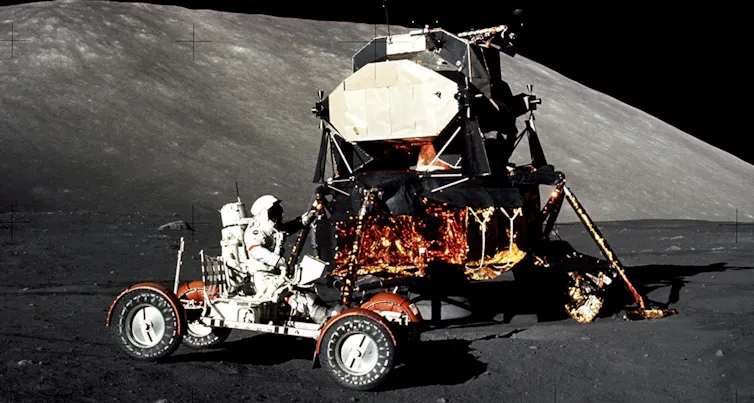
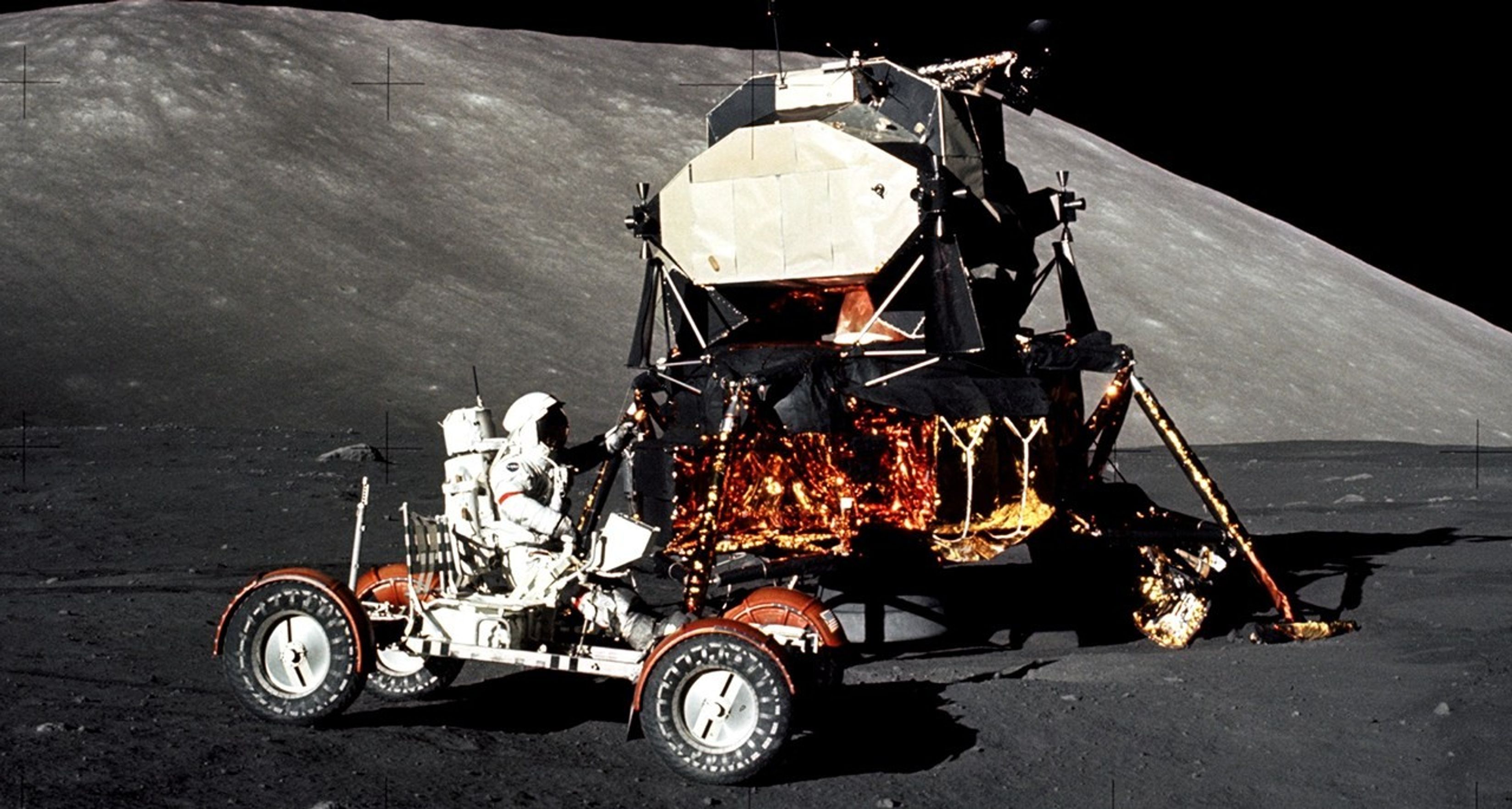
At 13:24:59 Central Standard Time on December 19 1972, the Apollo 17 command module splashed down in the Pacific Ocean, about 350 nautical miles south-east of Samoa, concluding the last mission to the Moon.

During his career, Apollo 17’s commander, Eugene A. Cernan, logged 566 hours and 15 minutes in space, of which more than 73 hours were spent on the surface of the Moon. Cernan was the second American to have walked in space, and the last person to leave his footprints on the surface of the Moon.

The conclusion of the Apollo 17 journey marked not only the end of a mission, but the close of an era. Between 1969 and 1972, 12 astronauts walked on the Moon over the course of six separate landings.

Half a century later, Nasa is preparing to return under its Artemis programme. For the Artemis II mission, set to launch on April 1 2026, four astronauts will travel in a loop around the Moon in Nasa’s next-generation Orion crew capsule.

More than 50 years is a long gap, and it is only natural to ask if Americans could reach the Moon routinely in the early 1970s, why did it take so long for them to try to go back?

The Apollo 17 mission in 1972 marks the last time humans set foot on the Moon.
Nasa

The answer is not simple. It has little to do with technology and much more with how politics, money and global support work. The place to start is with Apollo itself: its model of exploration was not built to last, and was clearly not sustainable.

On May 25 1961, before a joint session of Congress, President John F. Kennedy committed the US to the goal, before the decade was out, of landing a man on the Moon and returning him safely to the Earth.

After Kennedy’s assassination in 1963, President Lyndon B. Johnson ensured that this Moon landing goal was met. But rising costs from the Vietnam war and domestic reforms reduced his appetite for further space investment.

John F Kennedy’s speech at Rice University in 1962 reaffirmed America’s commitment to landing on the Moon.
JFK Library

In fact, Nasa’s budget peaked in 1966 and began falling even before Apollo’s success, undermining prospects for sustained exploration. Further funding was declined, planned missions were cancelled, and Apollo ended in 1972 – not because it failed, but because it had accomplished its task.

Sustainable exploration (in space as on Earth) requires stable political commitment, predictable funding, and a clear long-term purpose. After Apollo, the US struggled to maintain all three at once.

Policymakers began to ask what direction Nasa should take next. In 1972, President Richard Nixon directed the space agency to begin building the space shuttle. It would lead Nasa to shift its focus away from deep space exploration towards operations in low-Earth orbit.

‘Space truck’: the shuttle was marketed as providing affordable access to low-Earth orbit. The reality was somewhat different.
Nasa

Marketed as a reusable “space truck”, the space shuttle was intended to make orbital access routine and affordable. However, it would turn out to be a vehicle of incredible complexity, marred by technical failures and human tragedies – the Challenger and Columbia accidents in which 14 astronauts’ lives were lost.

Eight years into the shuttle programme, some in the space community believed it was time for the US to once again set its sights on the Moon – and the tantalising prospect of a landing on Mars. On July 20 1989, the 20th anniversary of Apollo 11’s first Moon landing, President George H.W. Bush announced the Space Exploration Initiative (SEI).

The plan aimed for a long-term commitment to construct Space Station Freedom, return astronauts to the Moon “to stay”, and finally send humans to the red planet.

However, the high estimated costs of SEI, reaching hundreds of billions of dollars, led to its downfall. Weak support in Congress along with other factors led to its cancellation under Bill Clinton’s presidential administration.

During the 1990s, the International Space Station (ISS) project cemented low-Earth orbit as the priority for human exploration. The space shuttle was the US’s means of building the station and transporting crews to and from the orbiting outpost.

The ISS became a symbol of scientific cooperation and technical prowess. Experiments carried out on the station generated valuable insights into everything from medical research to materials science. However, it also soaked up resources that might otherwise have supported deep-space exploration.

The Columbia disaster in 2003 – in which a space shuttle broke up over Texas with the loss of its crew – led to another rethink of America’s direction in space. As a result, President George W. Bush announced the Vision for Space Exploration.

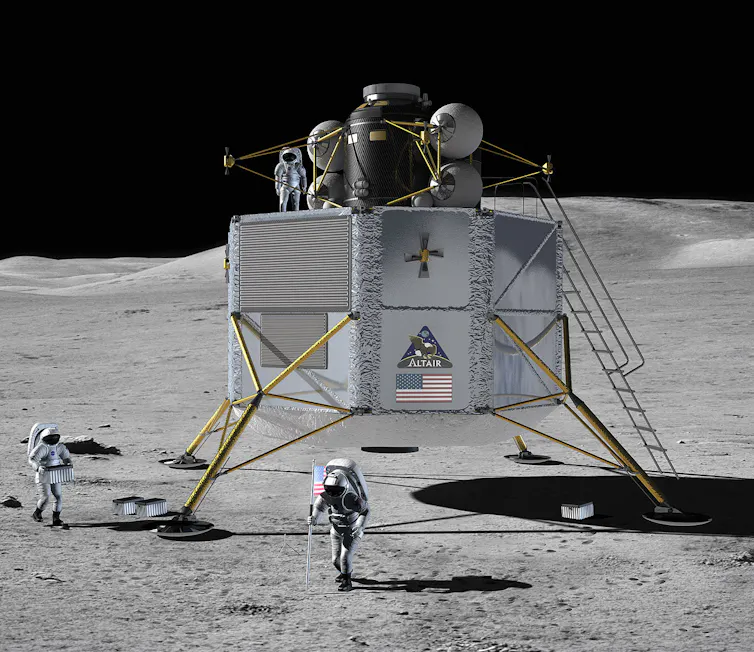
The aim of this proposal, which would give rise to what was known as the Constellation programme, was to rebuild Nasa’s capability for reaching the Moon, with Mars as its longer-term goal. But independent reviews warned that costs and schedules were unrealistic. Congress never really gave full financial support to Constellation, leading to its cancellation in 2010 during Barack Obama’s presidency.

This repeated cycle of cancelled space projects exposes some inherent limitations to the system for funding lunar exploration. A sustainable Moon programme needs strong multi-sector commitment, and mechanisms in place for guaranteed multi-decade funding.

Constellation would have sent astronauts to the lunar surface on a lander called Altair.
Nasa

But such large programmes must compete each year with defence, healthcare and social spending. Electoral turnover and shifting committee leadership in the US further weaken the prospect of continuity.

Lunar exploration has also suffered from an unresolved strategic question: why go back at all? Apollo’s purpose was largely geopolitical, and after the cold war no equally compelling justification really emerged.

Scientific returns from human space missions are limited compared with robotic exploration. Commercial prospects remain uncertain, and prestige alone rarely sustains or secures large budgets.

Maybe a more fitting question is: why does Artemis appear to have escaped the pattern? Well, Nasa argues that sending astronauts back to the lunar surface – and in particular, establishing a sustained presence there – will help researchers learn “how to live and work on another world as we prepare for human missions to Mars”. That is true, up to a point.

Nasa also emphasises that Artemis will be built through commercial partnerships and international cooperation, creating the first long-term human foothold on the Moon.

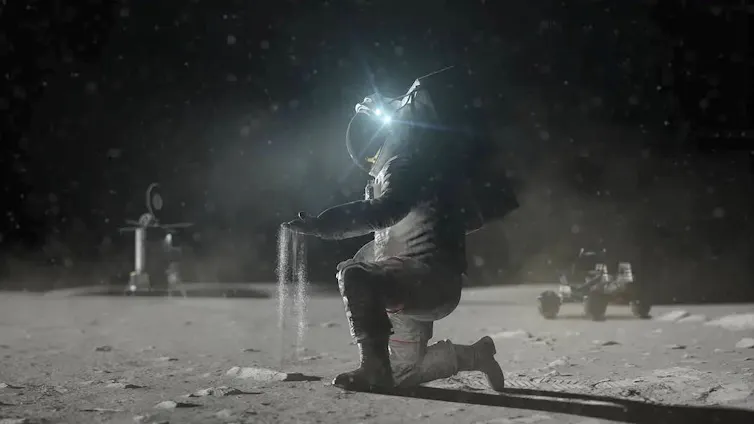
With Artemis, has Nasa finally found a rationale to maintain a more enduring presence on the Moon?
Nasa

The programme seems to sit at a carefully crafted intersection of US government leadership, commercial launch capabilities, and a broad coalition of international partners brought together under the Artemis Accords. The accords are a set of common principles regarding the use of the Moon and other targets in outer space, agreed between the US and other countries.

The main difference from previous promises to return to the Moon is that this, at least in theory, spreads risk and widens the base of political support. In practice, though, Artemis remains costly and exposed to shifting budgets and priorities.

There is also a cultural dimension to this question. Apollo created a powerful – albeit fragile – myth of swift, heroic technological advance. Artemis is building its large technological base in societies and democratic contexts where investments and commitments tend to evolve slowly, shaped by negotiation, compromise and
competing interests.

If Artemis succeeds, it will be because all the political, economic, societal and scientific incentives have finally aligned in a durable way. But until that alignment is proven, the 50-year gap between Apollo and Artemis is less an engineering puzzle than a reminder of how difficult sustained exploration is for modern democracies.

The Conversation

Domenico Vicinanza does not work for, consult, own shares in or receive funding from any company or organisation that would benefit from this article, and has disclosed no relevant affiliations beyond their academic appointment.

ref. Why has it taken so long to return to the Moon? – https://theconversation.com/why-has-it-taken-so-long-to-return-to-the-moon-274640

South Africa’s MeerKAT telescope is mapping previously invisible spaces between galaxies – and it’s found 60 new cosmic structures

Source: The Conversation – Africa (2) – By Konstantinos Kolokythas, Postdoctoral research fellow, Rhodes University

Diffuse radio emissions captured by the MeerKAT telescope spanning millions of light-years. Visualisation by Konstantinos Kolokythas, CC BY

Astronomers are uncovering previously hidden structures within some of the universe’s largest objects, known as galaxy clusters. Using the powerful MeerKAT radio telescope in South Africa, researchers have mapped faint, diffuse radio emissions, an imprint that reveals energy processes taking place in the vast spaces between galaxies when galaxy clusters collide or merge.

Konstantinos Kolokythas, a radio astronomer and postdoctoral research fellow at Rhodes University and the South African Radio Astronomy Observatory (SARAO), has led research into what these radio emissions reveal about our cosmic history. His findings provide a glimpse of what powerful instruments like MeerKAT and the upcoming Square Kilometre Array (SKA) will discover as they explore the “invisible” radio universe.

What has MeerKAT found, thanks to its sensitivity?

Think of a galaxy cluster not as a collection of thousands of galaxies, but as a bustling city. While telescopes usually see the “bright lights” of individual galaxies, MeerKAT has enabled us to detect the faint “smog” or “mist” filling the streets between them. Our search has been for this extremely faint “diffuse radio emission”. It is spread over millions of light-years, like a thin, glowing fog.

In the vast spaces between galaxies lies the Intracluster Medium – an incredibly hot, thin gas that fills the cluster. While the gas itself is usually seen by X-ray telescopes, it also contains magnetic fields and electrons travelling at nearly the speed of light.

When galaxy clusters merge, it is like a cosmic dance: the electrons encountering a magnetic field are compelled to spiral along the magnetic field lines, emitting energy as radio waves. This is the radio emission we see at 1.28 GHz with MeerKAT. It reveals the places of shock accelerations (the aftermath of cosmic collisions).

Our research within the MeerKAT Galaxy Cluster Legacy Survey (MGCLS), a programme led by the South African Radio Astronomy Observatory, used this capability to map 115 of these “cosmic cities”. We identified 103 diffuse sources, including 60 structures that were completely invisible to previous generations of telescopes. The legacy survey also produced its own overview.

We have essentially moved from having a blurry map of the neighbourhood to a high-definition atlas, revealing that the “empty” space between galaxies is actually teeming with energy. By combining this radio data with X-ray and optical observations, we can calculate the “energy budget” – essentially a full accounting of all the power, heat and magnetic energy moving through these massive structures.

How does this clarify or add to what was known before?

Before this work, we mainly observed only the brightest, most violent merger events. With our new catalogue, we can see the broader picture of cosmic evolution, detecting the faintest structures arising from galaxy cluster collisions. By identifying these features in over half (54%) of the surveyed clusters, we can study how energy is processed on a cosmic scale.

These radio signatures are the “scars” left by cluster mergers – colossal, slow-motion collisions where gravity draws two massive collections of galaxies together. This process generates turbulence and shockwaves that “kick” particles to extreme speeds.

Our findings demonstrate that these high-energy events
are a fundamental part of a cluster’s life cycle and the universe’s evolution. Clusters that appear “quiet” or “relaxed” in X-ray light often conceal a history of radio activity. We are mapping the
secret structures of magnetic fields over billions of years. In radio astronomy, the universe is never truly silent.

What direction does this point to for future research?

This catalogue serves as a high-resolution “baseline” for the coming decade. With MeerKAT, we have pushed the limits further, allowing us to observe more “ultra-steep spectrum” sources – faint emissions from the oldest, most “tired” particles in the universe. These are vital for understanding the long-term lifecycle of cosmic energy.

Looking forward, this research paves the way for the Square Kilometre Array (SKA) observatory, the world’s largest and
most sensitive radio telescope, which is expected to be fully operational by 2030. If MeerKAT can detect 60 new structures in a small patch of the sky, the SKA will likely find thousands.

Why does this matter?

Because these structures forming in clusters are the largest “natural laboratories” in the universe. By studying them, we aren’t just looking at pretty pictures; we are learning how gravity, magnetism and matter behave on a scale that is otherwise impossible to recreate and the human mind can barely conceive.


Read more:
Astronomers used machine learning to mine data from South Africa’s MeerKAT telescope: what they found


This research proves that South Africa is at the forefront of this discovery, using homegrown technology to answer the deepest questions about the fabric of our universe, where our universe came from and how it evolves.

The Conversation

Dr Konstantinos Kolokythas receives funding from the South African Radio Astronomy Observatory (SARAO) and the National Research Foundation (grant UID: 97930), an agency of the Department of Science
and Innovation. He works for Rhodes University / SARAO. He is also affiliated with the Istituto di Radioastronomia (INAF) in Bologna, Italy.

ref. South Africa’s MeerKAT telescope is mapping previously invisible spaces between galaxies – and it’s found 60 new cosmic structures – https://theconversation.com/south-africas-meerkat-telescope-is-mapping-previously-invisible-spaces-between-galaxies-and-its-found-60-new-cosmic-structures-279002

Red flags in the workplace: why whistleblowers are still few and far between

Source: The Conversation – France – By Wim Vandekerckhove, Professeur en éthique des affaires, EDHEC Business School

Whether it’s the Mediator pharmaceutic scandal in France or the outcry over the Dieselgate emissions case that rocked Europe’s largest carmaker, when a scandal breaks, we often hear about one or two whistleblowers, but we are also left wondering why all those who knew said nothing as the disaster unfolded.

Why do most people remain silent when they see wrongdoing?

A recent study in corporate whistleblowing practices by Transparency International reveals that 15% of employees believe wrongdoing is taking place in their workplace. Two thirds of them say they share their concern with others. Most of the time with their direct manager.

During a team meeting they might ask whether they understood the process correctly, or they might ask a colleague whether what they are supposed to do is in line with company policy. At that point, they express a concern, but that doesn’t necessarily make them a whistleblower or at least they do not see themselves as a whistleblower.

Previous research indicates the most common response to this low level of sharing a concern is that the employee is ignored.

Being ignored is for most of us also why we don’t take a concern further. At this stage, we then tend to remain silent. Very few employees will raise their concern with higher management or through a dedicated whistleblowing channel.

Why the ‘silent majority’?

According to Navex], one of Europe’s market leaders in operating internal whistleblowing systems and software within firms, on average the number of employees reporting wrongdoing through an internal whistleblowing channel sits at 1.57 in 100 employees.

Now let’s appreciate how little this is with actual figures. Imagine a company of 200 employees, according to the study by Transparency International, among 30 employees who witness wrongdoing, 19 will express some doubt.

The Navex study suggests that when ignored, only 3 will report their concern through an internal whistleblowing channel.

Summing this up, if you have 200 employees and 30 of them see wrongdoing, 27 remain silent and only 3 speak up.

Speaking up largely depends on the type of wrongdoing: we are most likely to report wrongdoing that poses a threat to someone’s health or safety, and least likely to report wrongdoing that concerns a breach in company policy. But here is the catch: before someone’s life is in danger, we have already spent much time remaining silent on the slippery slope of company policy breaches. Our silence on “lesser wrongdoings” provides behavioural training that actually encourages silence on bigger misconduct we might witness.

A lack of trust in ‘the process’

What seems to hold us back is a perception that speaking up is risky. In the TI study, only 17% of employees said they felt confident that reporting wrongdoing to their employer would be acted upon and they would not suffer as a result of reporting their concern. This stands in contrast to the over-confidence observed among top management: 68% of employers in the survey believed that if someone reported wrongdoing through the organization’s whistleblowing channel, it would be acted upon by the organization and the whistleblower would remain unharmed. In other words, employees remain silent because they do not trust reporting channels.

What are the big truth-telling demotivators?

The TI study also gives insight into the barriers employees see. Fear of retaliation is the biggest barrier, with 32% of employees saying they feared losing their job if they reported a wrongdoing. The second highest barrier is also important, with 24% indicating they remained silent because they did not believe their report would make any difference.

Hence, employee silence is driven by fear and futility.

Since 2019, the EU whistleblowing directive requires that all organizations of more than 50 employees have an internal whistleblowing channel, and that they have the capacity to carry out a diligent follow up of reports that come through those channels.

Transpositions into national legislation across the European Union’s 27 Member States have been in place for a while. With enhanced protection measures and channel requirements, the aim of the EU Whistleblowing Directive was to create an environment for employees to raise their concerns safely and effectively.

A new tool for testing whistleblowing monitoring in the EU

The fact remains that among organizations there is a lot of room for improvement.

As part of the EDHEC Business school’s European Commission backed BRIGHT project – Building Resilience through Integrity, Good Governance, and Honesty Training, a free online Speak-Up Self Assessment tool (SUSA) was developed for integrity professionals across Europe to self-assess the speak-up culture and whistleblowing systems in their organizations.

The tool is designed to provide feedback on how firms such as France’s EDF group for example, align with the EU
requirements, the ISO37002:2021 standard, and the guidelines from the International Chamber of Commerce (ICC).

What is the future of speak up culture?

SUSA data indicates that whistleblowing channels exist but are too often of poor quality. Whilst most organizations seem to hope for a quick fix, what is really needed is a continuous management effort to build and strengthen speak-up cultures.

We should not rest on our laurels in the hope that the silence of the old generation is on its way out, making way for the voice of the new generation. On the contrary, a study by Protect, the UK’s leading charity that supports and advises whistleblowers, shows that Gen Z is even more silent that the Baby Boomers.

Their recent study found that young workers (18-24 years old) are less likely to speak up than any other age group, regardless of the type of wrongdoing. The silent majority facing barriers of fear and futility seems to be growing, and that should be a cause for concern.


A weekly e-mail in English featuring expertise from scholars and researchers. It provides an introduction to the diversity of research coming out of the continent and considers some of the key issues facing European countries. Get the newsletter!


The Conversation

Wim Vandekerckhove was the coordinator for EDHEC Business School of the BRIGHT project, funded by the European Commission.

ref. Red flags in the workplace: why whistleblowers are still few and far between – https://theconversation.com/red-flags-in-the-workplace-why-whistleblowers-are-still-few-and-far-between-278239