Signs that Trump’s economic policies are alienating his rural Maga base

Source: The Conversation – UK – By Inderjeet Parmar, Professor in International Politics, City St George’s, University of London

As Donald Trump’s second term unfolds, the contradictions at the heart of his “America First” agenda are increasingly apparent. What began as a populist revolt against elite globalism appears to have morphed into policies that alienate the very rural and small-town constituencies that backed him in 2016, 2020 and 2024.

These rust-belt and rural counties were drawn to his promises of economic revival, border security and non-interventionism. Yet, emerging signs of fracture in this Maga base suggest a potential backlash in the upcoming midterms.

The administration’s domestic policies, coupled with aggressive foreign postures, are accelerating disillusionment among Trump’s core supporters.

Domestically, Trump’s intensified immigration enforcement has backfired. Ramped-up ICE raids were sold as fulfilling pledges of mass deportations targeting “criminals”. But these operations have swept up undocumented workers essential to rural economies. Small family farms and businesses in states including California, Idaho and Pennsylvania are reliant on immigrant labour for harvesting crops, dairy operations, and meatpacking. They now face acute shortages.

Agricultural employment dropped by 155,000 workers between March and July 2025, reversing prior growth trends. Farmers in Ventura County, California, for example, denounced raids that targeted routes frequented by agricultural workers. Fields lie unharvested signalling financial ruin for some operations. Family-run farms struggle to find replacements. Low wages and gruelling conditions simply fail to attract American-born labourers.

This labour crisis exacerbates a broader sense of betrayal. Rural voters supported Trump for his anti-elite rhetoric, expecting protection for their livelihoods. Instead, the administration’s actions have hollowed out local workforces without viable alternatives.

The H-2A visa programme, meant to provide temporary foreign workers, has been streamlined – but remains insufficient amid ongoing raids, which deter even legal migrants. These disruptions ripple through small-town economies, where agriculture underpins community stability. Democrats, sensing opportunity, are investing in rural outreach, emphasising economic populism to woo disillusioned voters who feel abandoned by Trump’s enforcement zeal.

Compounding these woes are the ongoing tariff disruptions. Trump touts his tariffs as tools to “make America great”, but in fact they have driven up costs for the same rural groups. Between January and September 2025, tariffs on imports from China, Canada, Mexico, and others have surged, collecting US$125 billion. However, the figure may be even higher according to experts.

But while the administration claims these taxes punish foreign adversaries, the burden falls squarely on American importers and consumers. Small businesses, which account for around 30% of imports, faced an average of US$151,000 in extra costs from April to September 2025, translating to $25,000 monthly hikes. Farmers, already squeezed by low grain prices, pay more for necessities, such as fertilisers (hit by 44% effective tariffs on Indian imports) and machinery parts.

Midwest producers of soybeans, corn, and pork – key US exports – suffer doubly from retaliatory tariffs abroad, which reduce demand and depress revenues. In Tennessee and Pennsylvania, builders report 2.5% rises in material costs, while food prices climb due to duties on beef, tomatoes and coffee.

Trump, meanwhile, is perceived as profiting personally. His properties and branding deals benefit from economic nationalism, even as family farms teeter on the verge of bankruptcy. This disparity fuels resentment. Polls show Trump’s approval slipping in swing counties, with economic anxiety eroding the loyalty that once overlooked his character flaws.

Foreign policy compounds domestic fractures

These domestic fractures are mirrored in foreign policy, where Trump’s interventionism starkly contradicts his campaign pledge of “America First” restraint. Having promised no new wars, he has instead pursued aggressive postures that many Republicans view as unnecessary. The most emblematic is his renewed bid to acquire Greenland, apparently by negotiation or force, which has swiftly followed the US raid on Venezuela in the first week of January, accompanied by threats against other Latin American countries including Cuba and Colombia.

The US president has justified demands for control over the Arctic island – citing threats from Russia and China – as a strategic necessity. But but Nato allies such as Denmark – of which Greenland is a constituent part – have rebuked it as an potentially alliance-shattering move. Congressional Republicans, including Mitch McConnell and Thom Tillis, have broken ranks, warning that force would obliterate Nato and tarnish US influence.

Such dissent highlights broader paradoxes. Trump’s populist realism prioritises tough rhetoric for domestic consumption but yields aggressive, even reckless actions abroad. His administration is effectively dismantling post-1945 institutions while embracing 19th-century spheres-of-influence and outright colonialist thinking, including invoking an updated version of the 1823 Monroe doctrine.


Read more:
The ‘Donroe doctrine’: Maduro is the guinea pig for Donald Trump’s new world order


Rural voters, weary of endless wars, supported his non-interventionist promises. Now they see echoes of past entanglements in Trump’s suggestion that the US could intervene in Iran. This cognitive dissonance is accelerating disillusionment with his presidency.

These self-inflicted but inherent contradictions are hastening a pivotal reckoning for Trumpism. In many counties that have thrice backed him – and especially in swing counties – economic hardship and policy betrayals erode the cultural ties binding rural America to the Republican party. Democrats, through programmes such as the Rural Urban Bridge Initiative, are betting on this “betrayal” narrative, spotlighting farmers’ plights to flip seats in November 2026.

Polls show Latinos and independents souring on Trump, with the US president’s base turnout potentially waning as the midterm elections approach in November. If Republicans suffer larger-than-expected losses in those elections, it could mark the decline of Trumpism’s grip by exposing its elite-serving underbelly beneath populist veneer.

Yet, without a compelling alternative vision, Democrats risk squandering this opening. For now, the fractures signal that Trump’s “America First” policies may ultimately leave its rural and rust belt champions behind. Whether Trumpism proves resilient or begins a long decline may well be decided not in Washington and Mar-a-Lago, but in the county seats and small towns that once formed its unbreakable base.

The Conversation

Inderjeet Parmar does not work for, consult, own shares in or receive funding from any company or organisation that would benefit from this article, and has disclosed no relevant affiliations beyond their academic appointment.

ref. Signs that Trump’s economic policies are alienating his rural Maga base – https://theconversation.com/signs-that-trumps-economic-policies-are-alienating-his-rural-maga-base-273876

From lunar nights to Martian dust storms: why batteries struggle in space

Source: The Conversation – UK – By Hammad Nazir, Senior Lecturer in Engingeering, University of South Wales

Mars’ Perseverance rover. Dima Zel/Shutterstock

Space agencies are no longer talking about visiting the Moon, they’re planning on living on it.

Nasa wants a permanent lunar presence by the 2030s through its Artemis programme. China, meanwhile, has set its sights on landing astronauts on the Moon by the end of the decade, with plans for a construction of a permanent lunar base alongside international partners. The goal is to establish a lunar research station by the mid-2030s.

But all of these grand ambitions rest on a surprisingly fragile foundation. How do you store energy in a place where almost everything is trying to destroy your battery?

It’s a question science fiction rarely pauses to consider. Films are happy to show rockets launching and habitats glowing against the darkness of space, but the power that keeps those systems alive is usually treated as a given. In real life, engineers know better because in space, batteries are often the weakest link.

In films such as The Martian and Interstellar, we see solar panels, generators or reactors in passing. But the hardest part of the problem – how energy is stored, protected and managed over long periods in extreme environments – is largely invisible.

Power systems just work reliably in the background. Batteries don’t degrade, freeze, overheat or fail at the worst possible moment. The chemistry that keeps rovers moving and life-support systems running is rarely questioned. After all, a degrading anode probably doesn’t make for gripping cinema.

Back in real life on Earth, batteries benefit from a mild, predictable environment. Space is the opposite, however. Temperatures can swing between -150°C during a lunar night and more than +150°C in direct sunlight. Intense radiation breaks chemical bonds. With no atmosphere, heat has nowhere to go. Even microgravity can alter how fluids move inside a battery cell.

The lithium-ion batteries that power phones, laptops and electric cars were never designed for this. Even today’s space missions rely on heavily modified, specialised systems. For example, the Perseverance rover on Mars carries batteries built to survive deep cold and dust storms. While the International Space Station replaced its ageing nickel–hydrogen units with lithium-ion packs engineered to withstand years of rapid thermal cycling.

If the human race is serious about lunar habitats, long-range rovers and sustained missions, we will need battery chemistry far more resilient than those used on Earth.

What space really does to a battery

My colleagues and I are trying to understand what really happens to a battery when it is pushed far beyond the conditions it was designed for. We use advanced modelling tools to recreate the extremes of space, from radiation that slowly degrades electrode materials to the way heat builds up when there is no air to carry it away.

What we see is sobering. In our simulations, electrodes can fracture during the deep freeze of a lunar night. Under direct sunlight, cells can overheat rapidly. During Martian dust storms, certain components degrade far faster than many existing models predict.

Each of these simulations is paired with experiments in our laboratory, where we test this behaviour under controlled conditions. By combining modelling with hands-on research, we are trying to pinpoint the precise mechanisms that cause failure, and how they might be prevented.

Again and again, our work shows the same thing: space doesn’t just stress a battery but exposes every weakness at once. A design that works perfectly well on Earth may survive only minutes on the Moon.

Surviving in space means rethinking what a battery is for. Energy density matters, but so do issues like safety, thermal stability and longevity.

One promising option is magnesium–air batteries, which use a lightweight and abundant metal and could deliver very high energy for their mass. These systems may be well suited to drones, mobility units or emergency backup power, where weight is critical.

For crewed missions, reliability often matters more than capacity. Lithium titanate batteries sacrifice some energy density but offer exceptional thermal stability, long cycle life and improved safety under stress. They are qualities which make them attractive for spacecraft and lunar surface systems.

Why this matters now

As off-world bases grow, energy storage will start to resemble a terrestrial power-grid problem. Here, sodium-ion and potassium-ion batteries could play a role. They are cheaper and easier to scale than lithium-based systems, making them potential candidates for stabilising habitat-scale energy networks on the Moon or Mars.

Certain types of technology could even serve multiple functions. Electrochemical systems that both store energy and generate useful compounds, such as hydrogen peroxide, could support sterilisation, water treatment or oxygen-related processes inside sealed habitats. In space engineering, a single system that does more than one job saves mass, and mass is everything.

If we can build batteries that survive space, the different futures imagined on screen may stop being fantasy and become genuine engineering problems. And that may be closer than most people realise.

The Conversation

Hammad Nazir does not work for, consult, own shares in or receive funding from any company or organisation that would benefit from this article, and has disclosed no relevant affiliations beyond their academic appointment.

ref. From lunar nights to Martian dust storms: why batteries struggle in space – https://theconversation.com/from-lunar-nights-to-martian-dust-storms-why-batteries-struggle-in-space-272379

Is AI hurting your ability to think? How to reclaim your brain

Source: The Conversation – UK – By Noel Carroll, Associate Professor in Business Information Systems, University of Galway

Prostock-studio/Shutterstock

The retirement of West Midlands police chief Craig Guildford is a wake-up call for those of us using artificial intelligence (AI) tools at work and in our personal lives. Guildford lost the confidence of the home secretary after it was revealed that the force used incorrect AI-generated evidence in their controversial decision to ban Israeli football fans from attending a match.

This is a particularly egregious example, but many people may be falling victim to the same phenomenon – outsourcing the “struggle” of thinking to AI.

As an expert on how new technology reshapes society and the human experience, I have observed a growing phenomenon which I and other researchers refer to as “cognitive atrophy”.

Essentially, AI is replacing tasks many people have grown reluctant to do themselves – thinking, writing, creating, analysing. But when we don’t use these skills, they can decline.

We also risk getting things very, very wrong. Generative AI works by predicting likely words from patterns trained on vast amounts of data. When you ask it to write an email or give advice, its responses sound logical. But it does not understand or know what is true.

There are countless anecdotal examples of people feeling like AI use is making them “lazy” or “stupid”. A recent study found that generative AI use among university students is driven by higher workloads and time pressure, and that greater AI use is associated with increased procrastination and memory loss and poorer academic performance. Misuse of generative AI tools (for example, to cheat on exams) may undermine skills like critical thinking, creativity and ethical decision-making.

Recognising atrophy

You might observe this happening in your own life. One sign might be that you’ve moved away from creating an initial unpolished version of a task. Not so long ago, you might have started with a rough draft – a messy, human brainstorming process on a whiteboard, a notepad or the back of a napkin.

You may now feel more comfortable with the “prompt-and-accept” reflex: asking for and accepting solutions, rather than trying to tease out your own ideas and solve problems.

If your first instinct for every task is to ask an AI tool to give you a starting point, you are skipping the most vital part of thinking. This is the heavy lifting of structure, logic and sparking new ideas which excite us.

Another sign of atrophy is a shrinking of your frustration threshold. If you find that after only 60 seconds of mental effort you feel an itch to see what AI suggests, your stamina for ambiguity, a little self-doubt and frustration is probably compromised. Impatience cuts off the cognitive space needed for divergent thinking – the ability to generate multiple unique solutions.

Do you find yourself accepting AI-generated output without questioning its validity? Or do you find yourself unable to trust your own gut instinct without checking with an AI search? This may be a sign that you are shifting from being a decision-maker to a decision-approver or worse, a passive passenger of your own thinking process.

Reclaim your thinking

How can you combat this cognitive atrophy? The goal should not necessarily be to quit using AI entirely, but to move toward responsible autonomy – reclaiming your capacity to think and make decisions for yourself, rather than blindly outsourcing judgement to AI systems. This requires building some strategic friction back into your daily life. It means embracing uncertainty and learning from the process of thinking, even if you are wrong on occasion. Here are some practical things you can try:

1. The 30-minute rule

Before you open any AI interface, try to commit to 30 minutes of deep thinking. Use a pen and paper. Pick your topic or task, and map out the problem, the potential solutions, the risks and the stakeholders. For example, before asking an AI tool to draft a marketing strategy, map out your target audience. Try to identify potential ethical or reputational risks and sketch out some ideas.

By doing the initial cognitive work, you will likely feel a stronger sense of ownership for your output. If you eventually use AI, use it to refine your thoughts, not replace them.

Close up of a person's hands writing with pen in a notebook, with crumpled up papers surrounding on the table
Don’t ignore the importance of the rough draft.
NewAfrica/Shutterstock

2. Be sceptical

One of the most persistent concerns is that people use AI as an oracle and believe its output without question. Instead, treat it as a deeply unreliable colleague who may know the right answer, but hallucinates from time to time.

Task yourself with finding three specific errors with AI’s output, or to break its logic. Tell yourself that you can do better. This forces your brain out of the consumer mode and back into creator and editor mode, keeping your critical faculties sharp.

3. Create thinking spaces

Identify one core task in your personal or professional life that you enjoy doing, and commit to performing it entirely without AI assistance. These thinking spaces help your brain maintain its ability to navigate complex and open-ended challenges from scratch.

As you regain confidence, try branching out to other tasks. If you lead a team at work, allow people to have time to think slowly in this way, free from the pressure of producing more.

4. Measure your ‘return on habit’

Think about the “return on habit” – the long-term benefits such as improved health or happiness gained from consistently practising small positive routines. Ask yourself: Is this AI tool making me smarter, or just faster? Is faster better? For whom?

If a tool helps you notice things you did not see before, it may enhance your thinking, not replace it. However, if it is merely replacing a skill you used to possess and did well, it is an atrophying agent. If you are not gaining a new capability in exchange for the one you have outsourced, you may be conceding to the algorithms.

The Conversation

Noel Carroll does not work for, consult, own shares in or receive funding from any company or organisation that would benefit from this article, and has disclosed no relevant affiliations beyond their academic appointment.

ref. Is AI hurting your ability to think? How to reclaim your brain – https://theconversation.com/is-ai-hurting-your-ability-to-think-how-to-reclaim-your-brain-272834

The House of Lords has voted to stop under 16s using social media – what happens now?

Source: The Conversation – UK – By Daniel Gover, Senior Lecturer in British Politics, Queen Mary University of London

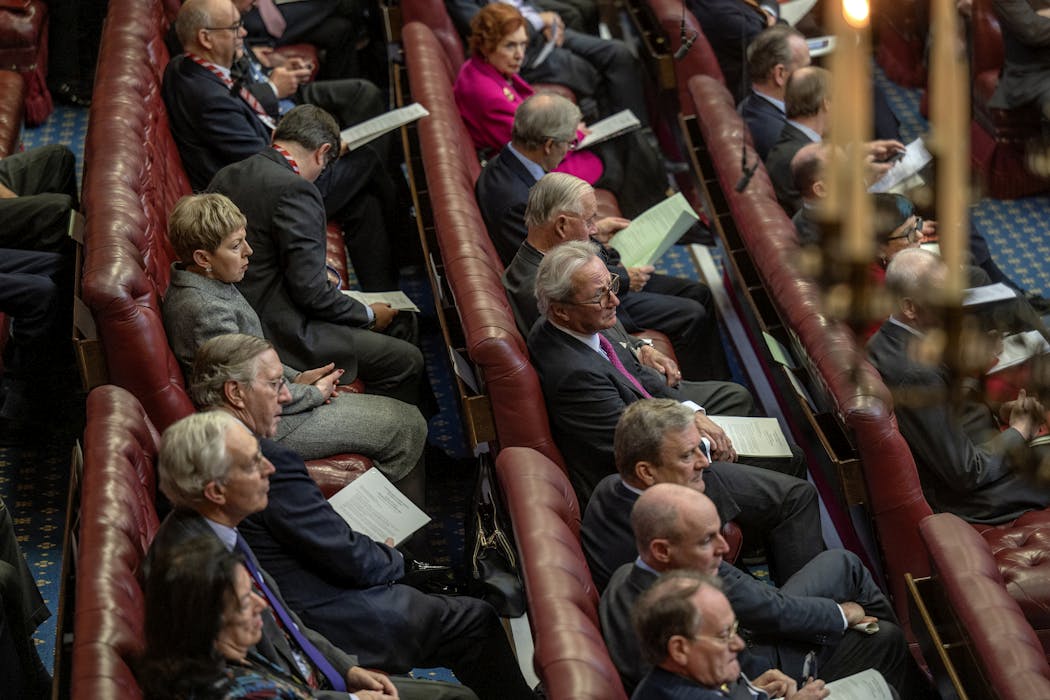
The House of Lords, October 2025. © House of Lords 2025/Annabel Moeller/Flickr

The House of Lords has voted, by a significant margin of 261 to 150, to prevent children under 16 in the UK from using social media platforms.

There has been growing political interest in introducing a ban after a similar change came into effect in Australia in late 2025. Around 60 Labour MPs have signed a letter publicly calling for the prime minister to act, while the matter was also raised at prime minister’s questions by the Conservative party leader Kemi Badenoch.

This latest vote in the Lords on January 21 will add momentum to these calls. But how significant is the vote, and how likely is it to ultimately be passed into law?

Wednesday’s vote in the Lords took place on an amendment – that is, a proposed change – put forward to the government’s Children’s Wellbeing and Schools Bill by cross-party peers led by Conservative former minister Lord Nash.

While government ministers opposed Nash’s proposal, and whipped Labour members of the Lords to vote against it, the chamber as a whole opted to back the amendment – producing what is referred to as a government defeat.

Unlike some other votes in parliament, which may be considered non-binding, votes on legislation can present a bigger headache for the government. This is because, if the text in this amendment remained in the bill when it completed its passage and received royal assent, it would become legally binding.

Boy on sofa looking at phone
The Lords’ amendment to the Children’s Wellbeing and Schools Bill would ban social media accounts for under-16s.
Dejan Dundjerski/Shutterstock

Yet government defeats in the Lords are not unusual, and not necessarily a sign of major trouble. During the 2019-24 parliament, the then Conservative governments suffered over 400 defeats in the Lords – most of them also on amendments to government legislation. Since 2024, under Labour, the number is already well over 100. One reason for this is that, in contrast to the Commons, no party has a majority of seats in the Lords. This means that, if opposition peers are united, governing parties can often be outvoted.

Both Houses must usually agree to a bill in identical form before it can be passed into law. Once both chambers have considered this bill, it will therefore begin a process known as “ping pong”’ – whereby it moves back and forth between the two Houses until all disagreements have been resolved. While in principle the Lords could insist repeatedly on this amendment, it is in practice rare for peers to dig in for long. Members of the Lords often describe their role as being to ask the Commons to “think again”.

The most important actors here are therefore not in the Lords – but MPs in the Commons.

Labour backbench MPs will be key

When the bill later returns to the Commons for the first ping pong stage, MPs will have three options on this amendment: to accept the Lords’ position, reject it outright, or propose an alternative form of words.

The government has a large majority in the Commons, and it is very likely to be able to use this position to get its way on this amendment. Early indications are that ministers intend to ask MPs to reject the amendment. This would effectively delete the proposal from the bill and then send the issue back to the Lords for further consideration.

Yet the prospect of a Commons vote does nonetheless create a problem for the government. This is an issue on which there is known to be widespread disquiet on the Labour benches – almost certainly extending beyond the 60-odd MPs who signed the public letter. Some of these may be reluctant to back down without some sort of concession.

While the government is very unlikely to be defeated in the Commons, this is not necessarily the point. Even the prospect of public dissent can be highly embarrassing, risking perceptions of a divided party unable to command the support of its own backbenchers while also eroding goodwill.

It is for this reason that government ministers are likely to adopt a conciliatory tone when the bill returns to the Commons. It is very unlikely they will accept the Lords amendment outright, but it is possible they may be willing to adopt a compromise form of words – a dynamic that is relatively common in response to Lords defeats.

But it is perhaps even more likely that MPs may be swayed by firm non-legislative commitments by ministers on future action they will take. Indeed, the government has already promised a rapid consultation – announced earlier this week – and this may provide many Labour MPs with the cover they need to back down for now. Others may use the threat of this vote to try to push ministers further, for example by seeking commitments on how the outcome of the consultation will be taken forward.

Taken together, it is very unlikely that the vote in the Lords this week will prove to be the end of the story on this issue. It is quite possible that, by the time the government has finished guiding this bill onto the statute book, this amendment will have been entirely removed. But it may nonetheless have served a large part of its intended purpose by putting pressure on ministers to act.

The Conversation

Daniel Gover does not work for, consult, own shares in or receive funding from any company or organisation that would benefit from this article, and has disclosed no relevant affiliations beyond their academic appointment.

ref. The House of Lords has voted to stop under 16s using social media – what happens now? – https://theconversation.com/the-house-of-lords-has-voted-to-stop-under-16s-using-social-media-what-happens-now-274139

Questions are being raised about microplastics studies – here’s what’s solid science and what isn’t

Source: The Conversation – UK – By Michael Richardson, Professor of Animal Development, Leiden University

Over the past few years, studies have suggested that plastic particles from bottles, food packaging and waste have been detected in human blood, lungs, placentas, arteries and even the brain. But a recent investigation by the Guardian suggests that some of these claims may be less robust than they first appeared.

The idea that tiny fragments of plastic might be accumulating in human bodies is unsettling. This concern stems largely from evidence that nanoplastics – the very smallest plastic fragments – can harm animal embryos and human cells grown in the laboratory. Slightly larger particles, called microplastics, are not known to be as harmful to living things when ingested. At least, we are not aware of any studies to this effect.

The Guardian report found that some scientists think that these reports of plastics in the human body may be false alarms. They are not suggesting any scientific misconduct. Rather, they suggest that the tissue samples were unintentionally contaminated in the laboratory or, in another example, that natural body fat in the samples produced readings that looked like plastic.

For instance, in February 2025, the journal Nature Medicine published a paper in which the authors suggested “a trend of increasing MNP [microplastics and nanoplastics] concentrations in the brain and liver”. But in November 2025, the same journal published a letter from another group of scientists criticising the methods used in that original paper.

Controversies such as this raise an awkward question: are small plastic particles really present throughout the human body, or is the science still too uncertain to support such claims?

Plastic pollution in our environment is not in dispute. Small plastic particles are everywhere, and so exposure is inevitable. However, detecting these particles, especially nanoparticles, in human tissue is no easy task and typically requires advanced analytical tools.

Most studies follow a similar path. A biological sample, such as blood or tissue, is collected as a biopsy during surgery or at a postmortem. The sample is then analysed using sensitive instruments designed to identify plastics based on their chemical fingerprints.

Contamination is a major challenge. Plastic fibres and fragments are everywhere: in laboratory air, operating theatres, clothing and equipment. Most problematically, plastic particles are probably in disposable labware, such as syringes, pipettes and centrifuge tubes – the very equipment used to process the tissue samples.

Even tiny amounts of plastic contaminants can overwhelm a signal when researchers are looking for extremely small particles in equally small numbers.

Standard practice in analytics is to run blank samples alongside real ones, or use tissue samples that are less likely to contain plastics (such as chicken embryos sealed inside the egg) to show how much background contamination is in the laboratory. Critics argue that some studies did not always compare the human samples with such “controls”.

We have to remember that the studies criticised by some scientists in the Guardian article were sincere attempts to answer an urgent question in a rapidly growing field. Regardless of the particular debate over each study criticised, the issues raised highlight that the entire field of detecting microplastics inside the human body is still very new, and many teams are working hard to find the best analytical techniques.

Disagreement and correction are part of how science works, and controversies are to be expected — especially when a topic attracts such intense public attention.

Scientists may be studying the wrong type of plastic particle

As noted earlier, small plastic particles fall into two broad categories: microplastics (typically the size of pollen grains) and the much smaller nanoplastics (the size of some viruses). Microplastics are fairly easy to detect, but nanoplastics are so small that only the most advanced techniques can identify them.

Most studies reporting plastic particles in the human body have focused on microplastics because they are easier to detect. Yet nanoplastics may be far more relevant to human health. Nanoplastics can cross biological barriers, are toxic to human cells grown in petri dishes and, in studies we have conducted, have been shown to harm developing embryos in animal studies.

Nanoplastics can also be taken up by cells, causing cellular damage or cell death. By contrast, microplastics are mostly too large to be taken up into cells.

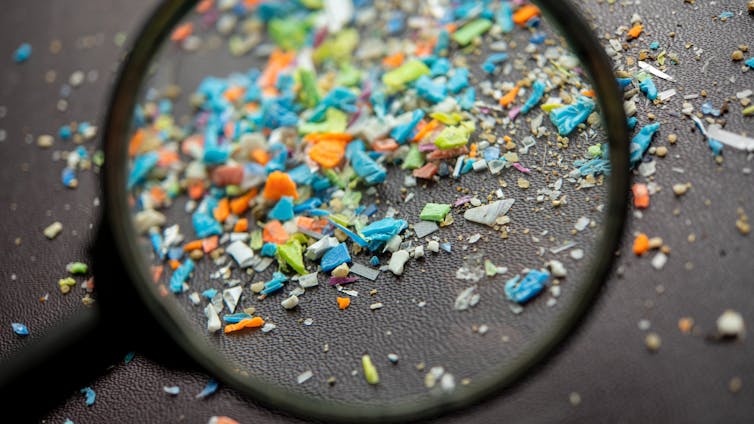
Small bits of plastic viewed under a magnifying glass.
Microplastics are too large to be absorbed by human cells.
SIVStockStudio/Shutterstock.com

This does not mean that microplastics are harmless, however. It is at least possible that they are recognised as foreign by the immune system and cause inflammation, although more research is needed to explore this possibility. Microplastics can also act like tiny sponges, soaking up toxic chemicals, such as persistent organic pollutants, from the environment and potentially carrying them into the body.

Controversies about the true risks posed by small plastic particles may create the false impression that the entire field is in question – which it is not. That is why researchers who work on measurement methods have been especially vocal about the need for higher standards. The good news is that those standards are improving quickly.

Laboratories are becoming more aware of contamination risks. Multiple analytical techniques are increasingly being used on the same samples to cross-check results. Hopefully, researchers will be able to develop standard operating procedures for analysing microplastics in human tissues and other biological samples.

If you have read alarming headlines about small plastic particles, the current state of knowledge calls for caution rather than panic. There is no clear evidence yet that large amounts of plastic are building up in human organs, or that reported increases over time reflect real biological trends rather than methodological errors.

At the same time, it may be sensible to reduce everyday exposure to plastic particles where practical. We can try to avoid food and drink that has come into contact with plastic packaging or containers, improve indoor ventilation, and use simple water filtration, such as charcoal filters, to reduce exposure.

The intense debate about these studies may feel unsettling, but it reflects an emerging scientific field finding its footing. As methods improve and human tissues are tested more rigorously, the picture will become clearer. What matters most is that claims about plastics in the human body are backed by robust evidence.

The Conversation

Michael Richardson receives funding from Nederlands Wetenschappelijk Organisatie (Duch Government Funding Agency).

Le Yang receives funding from China Scholarship Council and Nederlands Wetenschappelijke Organisatie (Dutch Government Funding Agency) .

ref. Questions are being raised about microplastics studies – here’s what’s solid science and what isn’t – https://theconversation.com/questions-are-being-raised-about-microplastics-studies-heres-whats-solid-science-and-what-isnt-273511

Donald Trump’s Board of Peace signed at Davos – key points I took away from my visit to the ski resort

Source: The Conversation – UK – By Francesco Grillo, Academic Fellow, Department of Social and Political Sciences, Bocconi University

Donald Trump’s newly launched “Board of Peace” presents itself as a bold attempt to break with what its founders describe as decades of failed international diplomacy. Its charter opens with a declaration that few would openly dispute: “Durable peace requires pragmatic judgment, common-sense solutions, and the courage to depart from approaches and institutions that have too often failed.”

It is true that the world urgently needs to overcome decades of inertia to reform its international organisations. It is true that new institutions are needed to solve global problems rather than merely managing never-ending crises.

This is perhaps why Donald Trump decided to hold the signing ceremony for his new board on the margins of the World Economic Forum in Davos. Here, more than any other place, is where results-oriented global business leaders supposedly gather. At the signing of the charter, a jubilant Trump was among 20 heads of state and prime ministers (of the 60 who had been invited).

The “most prestigious board ever formed” so far includes the presidents of Azerbaijan, Kazakhstan, Uzbekistan and the prime ministers of Mongolia, Armenia and Pakistan. Rightly, representatives of the governments more directly involved in the “Gaza peace plan” are also present, including Israel, Qatar, UAE, Saudi Arabia, Jordan and Egypt.

From south-east Asia we have Indonesia and Vietnam and from South America, President Javier Milei from Argentina. Hungary, Bulgaria and Kosovo are the only European countries to join so far.

The board’s charter goes on to set out a “partnership” that would be even less accountable than the old United Nations security council and even less democratic than any publicly listed company whose CEO is attending Davos.

It has potential as an instrument for building peace in Gaza, but risks failure if its scope becomes too diluted. And Davos itself risks losing credibility as a place where people “make sense of global challenges and move the world forward together”, if the search for a new world order becomes the celebration of one single man.

I have been to Davos several times. It’s certainly not one of the most prestigious ski resorts of the Swiss Alps. And this year, more than ever, I have felt increasingly sceptical about its capacity as a forum for generating the ideas that the world desperately needs to make sense of those global challenges.

Out of about 3,000 delegates, less than one out of ten seems to be under 30, to my eye. The gender balance is not good either. There are lots of Americans and most pay expensive attendance fees. It’s a world in which power lines are not clearly drawn unless you are in the know.

The Board of Peace is far more transparent when it comes to asserting where the power lies. Trump is expressly nominated by the charter as the chairman for life. He is the only one who can invite states to become members – and revoke their membership. He alone nominates his successor. He holds a veto over any decision.

At the security council, this is a power held by the five nations that won the second world war. Trump may continue to serve even if he is no longer president of the US. Nobody may, of course, seek to dismiss the chairman, although the charter graciously acknowledges that a removal may happen in case of “incapacity” of the supreme leader, if the other members of the board agree unanimously.

This is more power than most modern dictators can claim. Putin has to win elections, and Xi Jinping is nominated by a party. It is more power than even Roman emperors, who were formally designated by the senate (and in reality chosen by the army). Trump has proposed a document that hands him powers of which Augustus himself could not even dream.

What is striking is that most EU member states are “considering” the invitation to join. Some are even said to be trying to work out how they would navigate conflicts such a move would present with their own national constitutions or with the EU treaties (it should be obvious to any student of law that there is no such possibility for a self-declared liberal democracy).

It would be catastrophic if they did. They would be agreeing that an international organisation based on the unaccountable leadership of one single individual could be a starting point for constructing a new world order.

Trump’s advisers are right when they write in the charter that “too often the approaches to most of the global problems foster perpetual dependency, and institutionalise crisis rather than leading people beyond it”. We need to make sure that international organisations are rewarded according to their ability to solve problems and not just manage them endlessly. Yet this requires more accountability and participation – not less. We need proposals that are creative but serious.

I am sure that many have doubts about the World Economic Forum becoming the stage for the never-ending show of the producer of The Apprentice.

The Conversation

Francesco Grillo is affiliated with Vision, the think tank

ref. Donald Trump’s Board of Peace signed at Davos – key points I took away from my visit to the ski resort – https://theconversation.com/donald-trumps-board-of-peace-signed-at-davos-key-points-i-took-away-from-my-visit-to-the-ski-resort-274140

Blaming ‘wine moms’ for ICE protest violence is another baseless, misogynist myth

Source: The Conversation – Canada – By Darryn DiFrancesco, Assistant Professor, School of Nursing, Faculty of Human and Health Sciences, University of Northern British Columbia

Following the recent shooting of Renee Good by an agent for Immigration and Customs Enforcement (ICE) in the United States, the Donald Trump administration’s latest narrative suggests that “deluded wine moms” are to blame for the violence in ICE-related demonstrations in Minneapolis and across the country.

This mother-blaming is nothing more than an old trick with a new spin.

Organized gangs of ‘wine moms’

Earlier this week, a Fox News columnist wrote that “organized gangs of wine moms” are using “antifa tactics” to “harass and impede” ICE activity. In the opinion piece, he claimed that “confusion” over the what constitutes civil disobedience is what “got 37-year-old Renee Good killed.”

Similarly, Vice-President J.D. Vance called Good a “deranged leftist” while a new acronym, AWFUL — Affluent White Female Urban Liberal — has appeared on social media.

In framing protesters like Good, a mother of three, as confused, aggressive and “delusional,” this narrative delegitimizes and pathologizes maternal activism. This strategy aims to divert blame from the U.S. government and its heavy-handed approach to immigration while also drawing on a centuries-old strategy of blaming mothers for social problems.

What makes a ‘wine mom?’

The term “wine mom” emerged over the last two decades as a cultural symbol of the contemporary white, suburban mother who turns to a nightly glass of wine (or two) to cope with the stresses of daily life.

The archetype goes back much further, reflected in literature, film and television characters, such as the wily Lucille Bluth of Arrested Development.

A clip from ‘Arrested Development’ featuring Lucille Bluth’s fondness for boozing.

Yet, this motif is less light-hearted than assumed: a recent systematic review reveals a strong link between maternal drinking and stress, especially for working mothers.

While it would be easy to view problematic drinking as another example of maternal failure, it is important not to. Here’s why.

Mother-blame in history

Throughout history, mothers have found themselves in the midst of what American sociologist Linda Blum calls a “mother-valor/mother-blame binary.”

When behaving in accordance with socially acceptable and desirable parameters — that is with warmth, femininity and selflessness — mothers are viewed as “good.” When mothers violate these norms, whether by choice, circumstance or by virtue of their race or class position, they’re “bad mothers.”

Mother-blame ultimately reflects the belief that mothers are solely responsible for their children’s behaviour and outcomes, along with the cultural tendency to blame them when things go wrong. Yet, as Blum points out, “mother-blame also serves as a metaphor for a range of political fears.”

Perhaps the most striking example of this is the suffrage movement, which represented a direct challenge to patriarchal notions that women belonged in the domestic sphere and lacked the intelligence to engage in political discourse.

Suffragettes in the United Kingdom — many of them mothers — occasionally used extreme tactics, such as window-smashing and arson, while women in the U.S. obstructed traffic and waged hunger strikes.

These activists were framed as threatening to not only the establishment, but also to families and the moral fabric of society.

Ironically, despite the fact that women’s entry into politics led to increased spending and improved outcomes related to women, children, families and health care, scholars have found that mother-blaming was as common after the women’s movement as it was before.

Contemporary mother-blame

Beyond political matters, contemporary mother-blame is rampant in other domains.

Mothers have been blamed for a wide variety of their children’s psychological problems, including anxiety, depression and inherited trauma. In media and literature, mothers are often blamed for criminality and violence, reflecting the notion that “mothers make monsters.”
When children struggle in school, educators and administrators may blame the mother. Mothers risk being called “too passive” if they don’t advocate for their children or “too aggressive” when they do.

Similarly, the “crazy woman” or “hysterical mother” is a well-known trope in custody law, and mothers may be blamed even when their children are abused by others. Mass shootings? Mom’s failure. The list goes on.

By setting up mothering as a high-stakes endeavour, the cultural norm of mother-blame also serves to “divide and conquer.”

In my sociology research, I found that mothers on Facebook worked to align themselves with like-minded “superior” mothers, while distancing themselves from perceived “inferior” mothers. This feeds into the cultural norm of “combative mothering,” which pits mothers against each other.

An old trick with a new spin

The “wine mom” narrative builds on this historical pattern of mother-blame. It is meant to trivialize, delegitimize, divide and denigrate mothers who are, in fact, well-organized and motivated activists concerned for their communities.

While there are legitimate concerns around maternal drinking as a coping mechanism, the “wine mom” label has begun to represent something different. Mothers are reclaiming the title to expand their cause.

As @sara_wiles, promoting the activist group @redwineblueusa stated on Instagram: “They meant to scare us back into the kitchen, but our actual response is, ‘Oh, I want to join!’”

We should acknowledge that rather than causing societal problems, mothers have a long history of trying to fix them, even if imperfectly. Mothers like Renee Good are no exception.

The Conversation

Darryn DiFrancesco does not work for, consult, own shares in or receive funding from any company or organisation that would benefit from this article, and has disclosed no relevant affiliations beyond their academic appointment.

ref. Blaming ‘wine moms’ for ICE protest violence is another baseless, misogynist myth – https://theconversation.com/blaming-wine-moms-for-ice-protest-violence-is-another-baseless-misogynist-myth-273786

What a US military base lost under Greenland’s ice sheet reveals about the island’s real strategic importance

Source: The Conversation – UK – By Gemma Ware, Host, The Conversation Weekly Podcast, The Conversation

U.S. Army Corps of Engineers via Wikimedia Commons

In the summer of 1959, a group of American soldiers began carving trenches in the Greenland ice sheet. Those trenches would become the snow-covered tunnels of Camp Century, a secret Arctic research base powered by a nuclear reactor.

It was located about 150 miles inland from Thule, now Pituffik, a large American military base set up in north-western Greenland after a military agreement with Denmark during world war two.

Camp Century operated for six years, during which time the scientists based there managed to drill a mile down to collect a unique set of ice cores. But by 1966, Camp Century had been abandoned, deemed too expensive and difficult to maintain.

Today, Donald Trump’s territorial ambitions for Greenland continue to cause concern and confusion in Europe, particularly for Denmark and Greenlanders themselves, who insist their island is not for sale.

One of the attractions of Greenland is the gleam of its rich mineral wealth, particularly rare earth minerals. Now that Greenland’s ice sheet is melting due to global warming, will this make the mineral riches easier to get at?

In this episode of The Conversation Weekly podcast, we talk to Paul Bierman, a geologist and expert on Greenland’s ice at the University of Vermont in the US. He explains why the history of what happened to Camp Century – and the secrets of its ice cores, misplaced for decades, but now back under the microscope – help us to understand why it’s not that simple.

Listen to the interview with Paul Bierman on The Conversation Weekly podcast. You can also read article by him about the history of US involvement in Greenland and the difficulty of mining on the island.

This episode of The Conversation Weekly was written and produced by Mend Mariwany and Gemma Ware. Mixing by Michelle Macklem and theme music by Neeta Sarl. Gemma Ware is the executive producer.

Newsclips in this episode from New York Times Podcasts, the BBC and NBC News.

Listen to The Conversation Weekly via any of the apps listed above, download it directly via our RSS feed or find out how else to listen here. A transcript of this episode is available via the Apple Podcasts or Spotify apps.

The Conversation

Paul Bierman receives funding from the US National Science Foundation and the University of Vermont Gund Institute for Environment

ref. What a US military base lost under Greenland’s ice sheet reveals about the island’s real strategic importance – https://theconversation.com/what-a-us-military-base-lost-under-greenlands-ice-sheet-reveals-about-the-islands-real-strategic-importance-274067

Mark Carney invoked Thucydides at Davos – what people get wrong about this ancient Greek writer’s take on power

Source: The Conversation – UK – By Neville Morley, Professor in Classics, Ancient History, Religion, and Theology, University of Exeter

In his speech to this year’s World Economic Forum at Davos, Canadian prime minister Mark Carney mourned the demise of international cooperation by evoking an authority from ancient Greece.

“It seems that every day we’re reminded that we live in an era of great power rivalry, that the rules-based order is fading, that the strong can do what they can, and the weak must suffer what they must. And this aphorism of Thucydides is presented as inevitable, as the natural logic of international relations reasserting itself.”

Journalists and academics from Denmark, Greece and the United States have quoted the same line from the ancient Greek historian when discussing Donald Trump’s demand for Greenland. It is cited as inspiration for his adviser Stephen Miller’s aggressive foreign policy approach, not least towards Venezuela.

In blogs and social media, the fate of Gaza and Russia’s invasion of Ukraine have been interpreted through the same frame. It’s clearly difficult to contemplate today’s world and not react as W.H. Auden did to the collapse of the old order in 1939: “Exiled Thucydides knew.”

The paradox of the “strong do what they can” line is that it’s understood in radically different ways. On the one hand, it’s presented as a description of the true nature of the world (against naive liberals) and as a normative statement (the weak should submit).

On the other hand, it’s seen as an image of the dark authoritarian past we hoped was behind us, and as a condemnation of unfettered power. All these interpretations claim the authority of Thucydides.

That is a powerful imprimatur.

Thucydides’ insistence on the importance of seeking out the truth about the past, rather than accepting any old story, grounded his claim that such inquiry would help readers understand present and future events.

As a result, in the modern era he has been praised both as the forerunner of critical scientific historiography and as a pioneering political theorist. The absence of anything much resembling theoretical rules in his text has not stopped people from claiming to identify them.

The strong/weak quote is a key example. It comes from the Melian dialogue from Thucydides’ History of the Peloponnesian War. In 416BC, an Athenian force arrived at the neutral island of Melos and demanded its surrender. The Melian leaders asked to negotiate, and Thucydides presents a fictional reconstruction of the subsequent exchange.

The quote comes from the beginning, when the Athenians stipulated that they would not claim any right to seize Melos, other than the power to do so, and conversely would not listen to any arguments from principle. “Questions of justice apply only to those equal in power,” they stated bluntly. “Otherwise, such things as are possible, the superior exact and the weak give up.”

Within modern international relations theory, this is sometimes interpreted as the first statement of the realist school of thought.

Scholars like John Mearsheimer claim that Thucydides identified the basic principle of realist theory that, in an “anarchic” world, international law applies only if it’s in powerful states’ strategic interest, and otherwise might makes right. The fate of the Melians, utterly destroyed after they foolishly decided to resist, reinforces the lesson.

But these are the words of characters in Thucydides’ narrative, not of Thucydides himself. We cannot simply assume that Thucydides believed that “might makes right” is the true nature of the world, or that he intended his readers to draw that conclusion.

The Athenians themselves may not have believed it, since their goal was to intimidate the Melians into surrendering without a fight. More importantly, Thucydides and his readers knew all about the disastrous Athenian expedition to Sicily the following year, which showed the serious practical limits to the “want, take, have” mentality.

So, we shouldn’t take this as a realist theoretical proposition. But if Thucydides intended instead simply to depict imperialist arrogance, teach “pride comes before a fall”, or explore how Athenian attitudes led to catastrophic miscalculation, he could have composed a single speech.

His choice of dialogue shows that things are more complicated, and not just about Athens. He is equally interested in the psychology of the “weak”, the Melians’ combination of pleading, bargaining, wishful thinking and defiance, and their ultimate refusal to accept the Athenian argument.

This doesn’t mean that the Melian arguments are correct, even if we sympathise with them more. Their thinking can be equally problematic. Perhaps they have a point in suggesting that if they give in immediately, they lose all hope, “but if we resist you then there is still hope we may not be destroyed”.

Their belief that the gods will help them “because we are righteous men defending ourselves against aggression”, however, is naive at best. The willingness of the ruling clique to sacrifice the whole city to preserve their own position must be questioned.

The back and forth of dialogue highlights conflicting world views and values, and should prompt us to consider our own position. What is the place of justice in an anarchic world? Is it right to put sovereignty above people’s lives? How does it feel to be strong or weak?

It’s worthwhile engaging with the whole episode, not just isolated lines – or even trying to find your own way through the debate to a less bad outcome.

The English political philosopher Thomas Hobbes, introducing his classic 1629 translation, noted that Thucydides never offered rules or lessons but was nevertheless “the most politic historiographer that ever writ”. Modern readers have too often taken isolated quotes out of context, assumed that they represent the author’s own views and claimed them as timeless laws. Hobbes saw Thucydides as presenting complex situations that we need to puzzle out.

It’s remarkable that an author famed for his depth and complexity gets reduced to soundbites. But the contradictions in how those soundbites are interpreted – the way that Thucydides presents us with a powerful and controversial idea but doesn’t tell us what to think about it – should send us back to the original.


Looking for something good? Cut through the noise with a carefully curated selection of the latest releases, live events and exhibitions, straight to your inbox every fortnight, on Fridays. Sign up here.


The Conversation

Neville Morley does not work for, consult, own shares in or receive funding from any company or organisation that would benefit from this article, and has disclosed no relevant affiliations beyond their academic appointment.

ref. Mark Carney invoked Thucydides at Davos – what people get wrong about this ancient Greek writer’s take on power – https://theconversation.com/mark-carney-invoked-thucydides-at-davos-what-people-get-wrong-about-this-ancient-greek-writers-take-on-power-274086

America’s next big critical minerals source could be coal mine pollution – if we can agree on who owns it

Source: The Conversation – USA (2) – By Hélène Nguemgaing, Assistant Clinical Professor of Critical Resources & Sustainability Analytics, University of Maryland

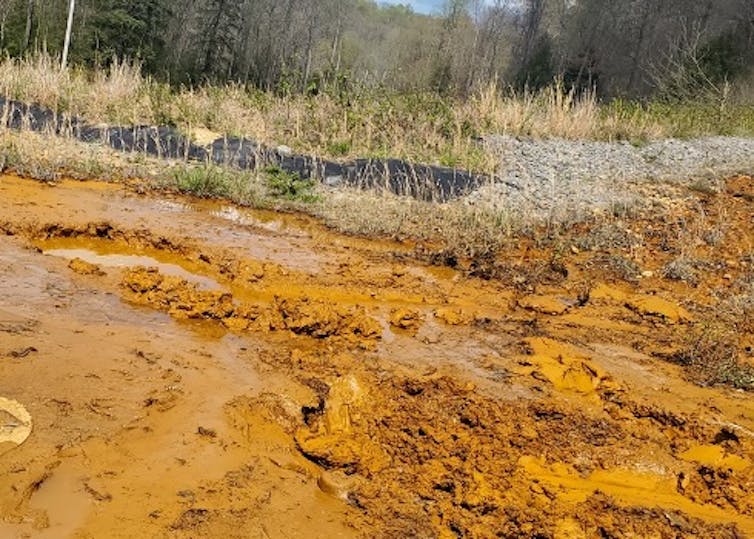
Acid mine waste turns rocks orange along Shamokin Creek in Pennsylvania.
Jake C/Wikimedia Commons, CC BY-SA

Across Appalachia, rust-colored water seeps from abandoned coal mines, staining rocks orange and coating stream beds with metals. These acidic discharges, known as acid mine drainage, are among the region’s most persistent environmental problems. They disrupt aquatic life, corrode pipes and can contaminate drinking water for decades.

However, hidden in that orange drainage are valuable metals known as rare earth elements that are vital for many technologies the U.S. relies on, including smartphones, wind turbines and military jets. In fact, studies have found that the concentrations of rare earths in acid mine waste can be comparable to the amount in ores mined to extract rare earths.

Scientists estimate that more than 13,700 miles (22,000 kilometers) of U.S. streams, predominantly in Pennsylvania and West Virginia, are contaminated with acid mine discharge.

A closer look at acid mine drainage from abandoned mines in Pennsylvania. Pennsylvania Fish and Boat Commission.

We and our colleagues at West Virginia University have been working on ways to turn the acid waste in those bright orange creeks into a reliable domestic source for rare earths while also cleaning the water.

Experiments show extraction can work. If states can also sort out who owns that mine waste, the environmental cost of mining might help power a clean energy future.

Rare earths face a supply chain risk

Rare earth elements are a group of 17 metals, also classified as critical minerals, that are considered vital to the nation’s economy or security.

Despite their name, rare earth elements are not all that rare. They occur in many places around the planet, but in small quantities mixed with other minerals, which makes them costly and complex to separate and refine.

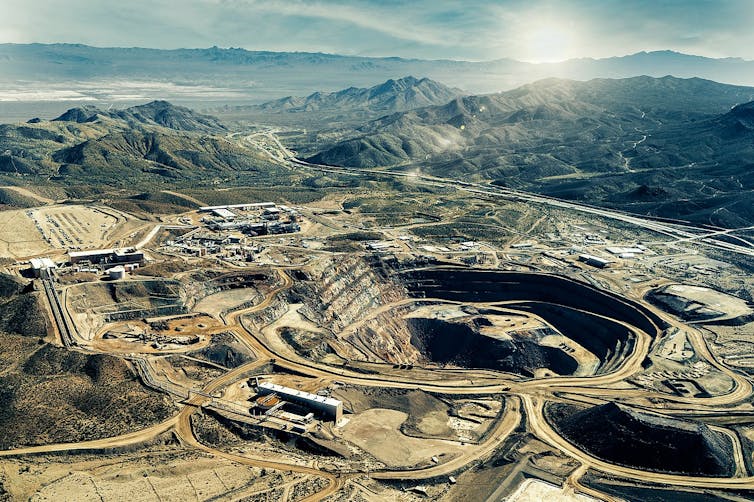
A mine and buildings with mountains in the background.
MP Materials’ Mountain Pass Rare Earth Mine and Processing Facility, in California near the Nevada border, is one of the few rare earth mines in the U.S.
Tmy350/Wikimedia Commons, CC BY-SA

China controls about 70% of global rare earth production and nearly all refining capacity. This near monopoly gives the Chinese government the power to influence prices, export policies and access to rare earth elements. China has used that power in trade disputes as recently as 2025.

The United States, which currently imports about 80% of the rare earth elements it uses, sees China’s control over these critical minerals as a risk and has made locating domestic sources a national priority.

The U.S. Geological Survey has been mapping locations for potential rare earth mining, shown in pink. But it takes years to explore a locations and then get a mine up and running.
USGS

Although the U.S. Geological Survey has been mapping potential locations for extracting rare earth elements, getting from exploration to production takes years. That’s why unconventional sources, like extracting rare earth elements from acid mine waste, are drawing interest.

Turning a mine waste problem into a solution

Acid mine drainage forms when sulfide minerals, such as pyrite, are exposed to air during mining. This creates sulfuric acid, which then dissolves heavy metals such as copper, lead and mercury from surrounding rock. The metals end up in groundwater and creeks, where iron in the mix gives the water an orange color.

Expensive treatment systems can neutralize the acid, with the dissolved metals settling into an orange sludge in treatment ponds.

For decades, that sludge was treated as hazardous waste and hauled to landfills. But scientists at West Virginia University and the National Energy Technology Laboratory have found that it contains concentrations of rare earth elements comparable to those found in mined ores. These elements are also easier to extract from acid mine waste because the acidic water has already released them from the surrounding rock.

Metals flowing from acid mine waste make a creek look orange.
Acid mine drainage flowing into Decker’s Creek in Morgantown, West Virginia, in 2024.
Helene Nguemgaing

Experiments have shown how the metals can be extracted: Researchers collected sludge, separated out rare earth elements using water-safe chemistry, and then returned the cleaner water to nearby streams.

It is like mining without digging, turning something harmful into a useful resource. If scaled up, this process could lower cleanup costs, create local jobs and strengthen America’s supply of materials needed for renewable energy and high-tech manufacturing.

But there’s a problem: Who owns the recovered minerals?

The ownership question

Traditional mining law covers minerals underground, not those extracted from water naturally running off abandoned mine sites.

Nonprofit watershed groups that treat mine waste to clean up the water often receive public funding meant solely for environmental cleanup. If these groups start selling recovered rare earth elements, they could generate revenue for more stream cleanup projects, but they might also risk violating grant terms or nonprofit rules.

To better understand the policy challenges, we surveyed mine water treatment operators across Pennsylvania and West Virginia. The majority of treatment systems were under landowner agreements in which the operators had no permanent property rights. Most operators said “ownership uncertainty” was one of the biggest barriers to investment in the recovery of rare earth elements, projects that can cost millions of dollars.

Not surprisingly, water treatment operators who owned the land where treatment was taking place were much more likely to be interested in rare earth element extraction.

A map shows many acid mine drainage sites, largely in the column from the southwest to the northeast.
Map of acid mine drainage sites in West Virginia.
Created by Helene Nguemgaing, based on data from West Virginia Department of Environmental Protection, West Virginia Office of GIS Coordination, and U.S. Geological Survey

West Virginia took steps in 2022 to boost rare earth recovery, innovation and cleanup of acid mine drainage. A new law gives ownership of recovered rare earth elements to whoever extracts them. So far, the law has not been applied to large-scale projects.

Across the border, Pennsylvania’s Environmental Good Samaritan Act protects volunteers who treat mine water from liability but says nothing about ownership.

A map shows many acid mine drainage sites, particularly in the western part of the state.
Map of acid mine drainage sites in Pennsylvania.
Created by Helene Nguemgaing, based on data from Pennsylvania Spatial Data Access

This difference matters. Clear rules like West Virginia’s provide greater certainty, while the lack of guidance in Pennsylvania can leave companies and nonprofits hesitant about undertaking expensive recovery projects. Among the treatment operators we surveyed, interest in rare earth element extraction was twice as high in West Virginia than in Pennsylvania.

The economics of waste to value

Recovering rare earth elements from mine water won’t replace conventional mining. The quantities available at drainage sites are far smaller than those produced by large mines, even though the concentration can be just as high, and the technology to extract them from mine waste is still developing.

Still, the use of mine waste offers a promising way to supplement the supply of rare earth elements with a domestic source and help offset environmental costs while cleaning up polluted streams.

Early studies suggest that recovering rare earth elements using technologies being developed today could be profitable, particularly when the projects also recover additional critical materials, such as cobalt and manganese, which are used in industrial processes and batteries. Extraction methods are improving, too, making the process safer, cleaner and cheaper.

Government incentives, research funding and public-private partnerships could speed this progress, much as subsidies support fossil fuel extraction and have helped solar and wind power scale up in providing electricity.

Treating acid mine drainage and extracting its valuable rare earth elements offers a way to transform pollution into prosperity. Creating policies that clarify ownership, investing in research and supporting responsible recovery could ensure that Appalachian communities benefit from this new chapter, one in which cleanup and clean energy advance together.

The Conversation

The authors do not work for, consult, own shares in or receive funding from any company or organization that would benefit from this article, and have disclosed no relevant affiliations beyond their academic appointment.

ref. America’s next big critical minerals source could be coal mine pollution – if we can agree on who owns it – https://theconversation.com/americas-next-big-critical-minerals-source-could-be-coal-mine-pollution-if-we-can-agree-on-who-owns-it-272029