Source: The Conversation – Canada – By Tiara Sukhan, Assistant Professor, Faculty of Information & Media Studies, Western University
Age-gap relationships — romantic partnerships in which there is a significant age difference — are of enduring interest. They’re also often framed as a question of morality.
When I was 27, I dated a man who was nearly my father’s age. This didn’t reflect an established age preference pattern for either one of us, and I pursued him. We were together for eight months, but it didn’t end well. Was our 20-year age gap the problem? Not entirely, but it certainly didn’t help.
Rather than simply being about age, what actually shapes the success or failure of these relationships revolves around the advantages that shape how we move through the world, including youth, time, health, accumulated power, wealth or life experience.
When I saw Netflix launched its latest reality dating show based on age-gap relationships earlier this month, I knew the controversial premise would spark debate as a scholar of television and media representation.
Age gaps make us uncomfortable
The Age of Attraction purports to test whether love is “truly ageless,” following couples with large age gaps to see if their relationships can withstand the stigma and pressures of the real world.
When older people perpetually date younger ones, for example, they may be trying to avoid confronting the reality of aging. And when younger people are consistently attracted to older ones, they may be drawn to the financial security that often comes with it.
But age isn’t the only variable to consider when unpacking age-gap dynamics in heterosexual relationships — gender matters too.
In The Age of Attraction, set in the intimate setting of a forest retreat near Whistler, B.C., 40 singles go on a series of face-to-face speed dates with one caveat. Until they are ready to officially commit to moving forward with a potential partner, they must not ask or answer the question: “How old are you?”
Once that’s done, they then commit to the next stage of the experiment: living together for two weeks in a condo in Vancouver. Promise rings are then exchanged and ages are, finally, revealed.
Withholding age from viewers until this point allows us to consider how much of our own response to age gaps is perceptual rather than material.
We may root for particular pairings only to have to re-evaluate once age is known. And this is because we form judgments based on what we think people should want or be capable of at different stages of life, rather than what is true about a unique and specific situation.
What psychology says about age gaps
Though these dynamics can’t be examined in isolation, they are increasingly being staged and scrutinized in popular culture.
Vanessa, who is 49 years old, and 29-year-old Logan are a clear generational mismatch in the Netflix show. She has been engaged (but never married) four times, while he says he wants kids but has never introduced a partner to his parents. They appear to be “trying on” a partnership that is fraught with conflict, as each one jockeys to control the other.
The gentle dynamic that 23-year-old Pfeiffer and 43-year-old Derrick have is built on quiet conversation and mutual respect. However, they have their own set of problems. He is established in his career with two children, and so for her to be in a relationship with him, she would need to move from Seattle to Texas — something she struggles with in principle as she believes “giving up everything for a relationship” fundamentally undermines her values.
When we imagine introducing a much older or younger partner to family, friends or even colleagues, we can’t help but anticipate negative judgment, and this becomes a barrier to discerning what or who actually makes us happy.
In addition to going from dating to living together in less than two weeks, surprise visits from friends and family are engineered.
Theresa, 54 years of age, struggles with this the most, as she had counted on being able to introduce 27-year-old John to her three children in their 20s on her own timeline. When forced into a meeting, she refuses to tell them his age. Having to acknowledge openly that she is dating a man younger than her oldest son, who is 29, provokes the realization that her children will also be vulnerable to social judgment if she continues the relationship.
These portrayals reflect broader psychological assumptions about age and power, illustrating how imbalances play out in practice.
The truth behind relationship failure
In the final commitment ceremony, all three couples say “yes” to continuing their relationships after the show ends.
But will their relationships survive once the cameras stop rolling? With reality TV, it’s always difficult to say. But what we can accept is that age gaps themselves are not inherently problematic.
As the depictions of these Age of Attraction couples suggest, what can make or break an age-gap relationship is the discrepancy in social power between partners — the greater it is, the more potential there is for conflict and incompatibility. Sometimes, even love isn’t enough.
Tiara Sukhan does not work for, consult, own shares in or receive funding from any company or organisation that would benefit from this article, and has disclosed no relevant affiliations beyond their academic appointment.
The first time I understood that names could hold two worlds was not by changing mine, but by hearing it differently. As a Pakistani child growing up in Canada, I learned early that my name could sound different depending on who was saying it. My name is simple and deeply familiar in my family. Yet in school and, later, in professional spaces, I became accustomed to the anglicized pronunciation.
Over time, I introduced myself that way at work, and still do, because it became my new normal. At home, my name still sounds like me.
Many young children, especially newcomer and racialized children, face similar circumstances from the earliest grades and learn to make this same quiet adjustment long before they can explain what they are giving up.
It is the everyday morning greetings, language expectations and reactions to food or clothing that teach children who they can be at school.
Importance of names
Research shows name mispronunciations, alterations or avoidances are not trivial: Name-based microaggressions in early schooling disrupt identity and belonging and produce identity shame, and this is often initiated or normalized by educators themselves.
When an educator stumbles over a child’s name year after year, or when a child’s food or language is treated as strange, these messages build up.
The earliest cuts
When names are mispronounced or disrespected, what could be a ritual of recognition is one of erasure.
Even when unintended, name mispronunciation and other forms of marginalization that communicate children must leave parts of themselves at the door — like discouraging home language during circle or misreading cultural communication styles — chip away at safety and participation for young children.
Canadianresearch shows that belonging is a protective factor across K–12 (including the primary years), while loneliness is widespread and felt most strongly by marginalized students.
In the early years sector, newcomer families often face barriers that shape young children’s social-emotional well-being, including one-way communication, limited linguistic responsiveness and monocultural expectations. It also shows that using developmentally appropriate, participatory methods (drawing, photos) helps pre-school newcomers express what belonging feels like and what they need.
In Ontario, belonging and identity are built into provincial guidance:
• The resource “How Does Learning Happen? Ontario’s Pedagogy for the Early Years” identifies belonging as one of the four foundations for children from birth through the primary grades. It outlines program expectations to cultivate authentic relationships and connections.
• School Mental Health Ontario, a provincial support team that helps school districts enhance student mental health through the use of evidence-informed strategies and services, suggests daily practices. These include greeting each child by name, as well as establishing predictable visual routines, multilingual signage and regular family connections that help newcomer and racialized children feel seen and supported.
Early years practices for belonging
So, how do we make equity, inclusion and belonging felt in the early years? Three practices to consider:
1) Learn, and use, each child’s real name (every day).
This is one of the simplest and most powerful ways educators communicate respect. Name mistakes, mispronouncing, shortening or anglicizing can make children feel less seen and signal whose identities are considered “easy” or “normal.”
To do for educators: Ask caregivers for pronunciation, practice until it’s fluent and use children’s full names in greetings and routines to reinforce that every identity belongs.
2) Celebrate the languages and cultures children bring.
Young children participate more confidently when their home languages are reflected in the classroom. (Allison Shelley/EDUimages), CC BY-NC
To do for educators: Add multilingual labels and bilingual books, invite families’ words and songs into circle time and welcome trans-languaging — moving fluently between languages — during play.
3) Build small belonging-focused rituals or practices into the day.
Belonging in the early years is created through simple, predictable interactions that help children feel recognized. Canadian analyses show these routines support social-emotional development, particularly for marginalized learners.
To do for educators: Greet each child warmly by name, use brief check-ins where every voice is heard and display children’s names, photos and home languages at their eye level.
Small choices speak
As a Pakistani educator whose name is said one way at work and another at home, I know how easy it is to slip into the version that fits the room. Many young children learn to do the same long before they can explain what’s happening.
That is why this work matters.
When adults take the time to pronounce a child’s name correctly, welcome their home language and check in with them every day, these small choices signal that all parts of children belong.
If we want every child to carry their full self through the door, we have to show them, every day, that everything about them fits here.
Amina Yousaf does not work for, consult, own shares in or receive funding from any company or organisation that would benefit from this article, and has disclosed no relevant affiliations beyond their academic appointment.
The International Olympic Committee (IOC) has announced a new policy on the protection of the women’s category that will force thousands of elite women athletes from around the world to undergo genetic sex testing in order to compete.
Critics argue the policy is based on weak science and raises urgent and important questions about fairness and human rights. It requires athletes seeking to participate in the women’s category at IOC events, such as the Olympic Games and the Youth Olympic Games, to undergo screening for the sex-determining region Y (SRY) gene.
The IOC’s policy is an extension of the genetic sex testing practices recently adopted by international sport federations for athletics, swimming, boxing and skiing and snowboarding. It also encourages other international sport federations to implement similar exclusionary policies for competitions outside the Olympics.
The purpose of the test is to identify and exclude transgender women and women with sex variations due to the perception that they threaten the integrity of women’s sport. Athletes who test positive for the SRY gene are ineligible for the women’s category, unless they can demonstrate complete insensitivity to testosterone through clinical evaluations.
The International Olympic Committee President Kirsty Coventry announced a new policy on the protection of the female (women’s) category in Olympic Sport and guiding considerations for international sport federations. (IOC Media)
These groups noted that the intrusive and exclusionary practices now codified in the IOC’s policy are rooted in stereotypes and generalized assumptions of performance advantage rather than robust, sport-specific evidence. They also noted that the practices risk violating the human rights principles of non-discrimination, bodily and psychological integrity, dignity and privacy for all women athletes.
Ethics, flawed evidence and cost
According to the IOC, the new policy is informed by consultations with experts, reviews of scientific evidence and input from the IOC’s “Protection of the Female Category Working Group.” Yet, the identities of these experts and members of the working group have not been revealed, and the alleged scientific evidence relied upon by the IOC has not been cited.
The truth is that there is no independent, high-quality evidence showing that women with the SRY gene and sex variations have an athletic advantage.
Similarly, for transgender women, the scientific research is inconclusive and recently led a Belgian court to conclude that a ban on transgender women in international cycling was unlawful.
Contrary to the IOC’s assertions, genetic sex testing is highly invasive, which is why it is strictly regulated under various laws.
In many jurisdictions, it can only be conducted for clear medical purposes, after an individual has provided free and informed consent, and where the processing of genetic data is subject to adequate safeguards.
The IOC’s response to this illegality is that athletes can simply travel to other countries without such laws to take the test.
Pragmatic questions about the costs of genetic sex testing have not been addressed in the IOC policy and cannot be ignored. It is estimated that the cost to test an athlete could exceed US$10,000 in some cases, and it is not clear who will finance these costs.
Two days earlier, the Future of Sport in Canada Commission released its final report. The report recognizes the precarity of Canada’s sport system and the need for a massive infusion of funding to maintain safe sport standards for all athletes.
Given this national focus, the genetic screening of women athletes seems far from a priority.
What’s at stake for the future
While the IOC has said its new policy only applies at the international level, there are concerns that this narrowing of the women’s category will filter down to lower levels of sport.
Without a change in course, genetic sex testing could become commonplace, and many women and girls may choose to leave sport to avoid having their bodies policed and their identity questioned.
To truly protect women’s sport, we believe that governments, athletes and other members of civil society must strongly oppose the exclusionary and rights-infringing policies of the IOC and international sport federations.
The outcome of a recent privacy complaint in Canada that will limit the use of certain sensitive personal data for sex testing provides a glimpse of the resistance that is possible.
Silvia Camporesi is a member of WADA’s Ethics External Advisory Group (EEAG).
Marcus Mazzucco and Sarah Teetzel do not work for, consult, own shares in or receive funding from any company or organisation that would benefit from this article, and have disclosed no relevant affiliations beyond their academic appointment.
The country has certainly suffered many tactical losses. But its missiles and drones have been strategically successful.
Iran so far has launched at least 5,400 such projectiles. Surprisingly, less than a tenth of them have targeted Israel, its traditional rival.
Missiles over Israel
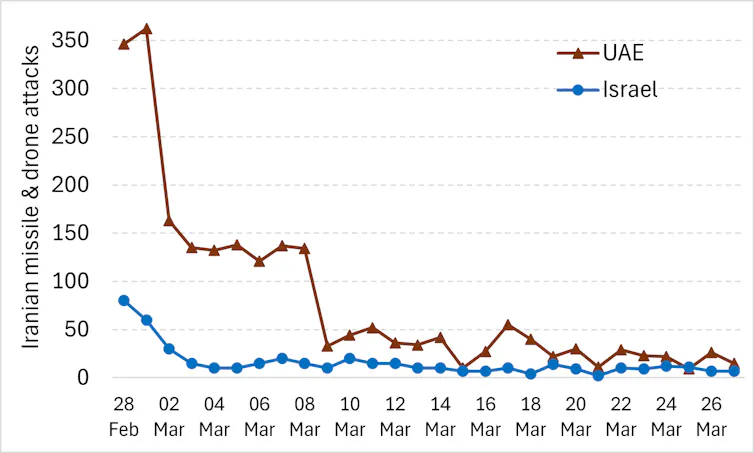
Israel faced about 450 Iranian missile attacks during the war’s first four weeks. The rate of fire fell rapidly after the first weekend but has never halted.
Some missiles carry several hundred kilograms of explosives, enough to destroy an entire building. The rest instead dispense dozens of cluster bombs over wide areas. Those are less powerful but still lethal.
But interceptorssometimes miss. And their supply is limited. Consequently, at least nine large warheads and 150 cluster bombs have hit populated areas.
These numbers imply that almost all Iranian missiles are accurate enough to need interception. By contrast, during Israel’s earlier conflicts with Gaza in 2008, 2011 and 2014, less than a third of incoming rockets were so accurate.
Meanwhile, more than 90 per cent of Iran’s missiles and drones have targeted Arab countries in the Persian Gulf.
Number of Iranian missiles and drones arriving daily over Israel and the UAE, February 28 to March 27. Published news reports, CC BY
Drones across the Persian Gulf
Saudi Arabia, Jordan, Iraq, Kuwait, Bahrain, Qatar, Oman and the United Arab Emirates (UAE) collectively reported around 4,900 Iranian attacks during the first four weeks. Only one fifth were missiles: the rest were drones.
These countries have stated they are neutral in the war. However, they do have defence agreements with the U.S., and some host American military facilities.
These countries defend themselves using weapons like the U.S.-made Patriot and Israeli-made SPYDER interceptors. Drone experts from Ukraine now advise the defenders too.
For example, the UAE reported attacks by 1,835 drones, 378 ballistic missiles and 15 cruise missiles. As of March 10, it claimed to have intercepted 94 per cent of the drones and 99 per cent of the missiles.
The deadliness of these attacks has varied.
Continuing lethality
In Israel, Iranian missiles have killed 20 people, implying roughly 4.1 deaths per hundred missiles arriving.
That’s less than the 5.1 the country saw during its 2025 war with Iran. But it’s four to 40 times higher than the rates it suffered from rockets in earlier Gaza and Lebanon conflicts.
There were about 0.6 deaths per hundred Iranian attacks in Kuwait, Bahrain and the UAE combined. That’s much lower than Israel’s rate, presumably because those countries were attacked by drones and short-range missiles carrying smaller warheads.
Interestingly, although the quantity of Iranian attacks fell after the first week, their lethality did not. Death rates per projectile in Arab countries showed little change week-to-week. In Israel, the rates were highest in Week 3.
In fact, Iranian missiles keep hitting precise targets, like U.S. military aircraft parked beside runways.
So, U.S. and Israeli warplanes have bombed thousands of targets, killed thousands of civilians, and slowed Iran’s missile fire. But they haven’t stopped it.
That’s not surprising. Airstrikes alone didn’t stop rocket fire during Israel’s previous conflicts in Gaza and Lebanon. Ground invasions were needed for that.
Trump recently, and inadvertently, admitted this weakness. While discussing Iran’s closure of the Strait of Hormuz, he said “it would be great if we could do something, but theyhave to open it.”
This strategic failure despite tactical success is reminiscent of the Vietnam War. U.S. units had overwhelming firepower as they killed enemy soldiers. But body countsby themselves indicated little about strategic progress.
Trump talks about being the greatest U.S. president in history. So, perhaps his Iran war will make him the new leader on that policy failure list.
Michael J. Armstrong does not work for, consult, own shares in or receive funding from any company or organisation that would benefit from this article, and has disclosed no relevant affiliations beyond their academic appointment.
Meta has been leading the way with smart glasses technology since launching its Ray-Ban model in 2021. Now the company may have plans to introduce facial recognition to its AI-enabled glasses, according to an internal memo leaked to The New York Times.
As a member of sex worker communities, and a researcher studying the intersection of sex work, law and technological surveillance, I am concerned about the integration of AI-enabled smart glasses with facial recognition technologies.
I am especially worried about the impact on sex workers and other vulnerable members of our population.
These glasses already enable wearers to take photos and videos in public and private spaces without consent. In 2025, a number of Instagram accounts uploaded videos of men entering massage parlours and soliciting women for sexual services. The videos, uploaded without the women’s knowledge or consent, garnered millions of views.
CNN Creators discuss the issue of covert filming with smart glasses, and speak to some of the women involved.
Sex workers are particularly at risk of non-consensual filming while at work. The consequences of this can include being outed to friends and family as a sex worker, blackmail and job loss. This can lead to loss of health, financial and housing services. Covert filming can also lead to stalking, abuse and violence.
Many sex workers use social media, just like everyone else. Some use it for work, while others only use it to connect with friends and family. Some use it for both. The issue with facial recognition is that sex workers’ efforts to remain anonymous could be easily trampled, especially if Meta explores options to identify people via Facebook and Instagram accounts.
While Meta will likely include safety features if it does pursue the integration of facial recognition into smart glasses, the trend in technological advances in recent months has shown that AI often works outside the scope of what it is programmed to do.
Sex workers’ rights are intimately tied with women’s and children’s rights. When a system or technology threatens the safety and well-being of sex workers, it also threatens women and children. Predatory technologies that allow vulnerable people to be secretly recorded and have their identities revealed without consent will lead to inevitable harms.
One way we can protect ourselves is through an app called Nearby Glasses. This allows users to scan their vicinity for Bluetooth signals from smart glasses with camera functionality. It alerts users about possible recording and also notes the manufacturer name of smart glasses detected. The developer designed this app as a form of resistance to expanding surveillance technology.
Is mass surveillance inevitable?
Legal scholar Woodrow Hartzog and his colleagues have characterized facial recognition technology as “the most dangerous surveillance tool ever invented,” posing unique threats to “privacy, civil liberties, human flourishing and democracy.” They speak of a slippery slope towards inevitable mass surveillance.
Meanwhile, Meta CEO Mark Zuckerberg recently declared: “It’s hard to imagine a world in several years where most glasses that people wear aren’t AI glasses.”
To protect the anonymity of sex workers and other vulnerable persons, it is imperative that we speak up and raise awareness of the consequences of such a world.
Brynn Colledge does not work for, consult, own shares in or receive funding from any company or organisation that would benefit from this article, and has disclosed no relevant affiliations beyond their academic appointment.
Source: The Conversation – USA – By Emily A. Margolis, Curator of Contemporary Spaceflight, National Air and Space Museum, Smithsonian Institution
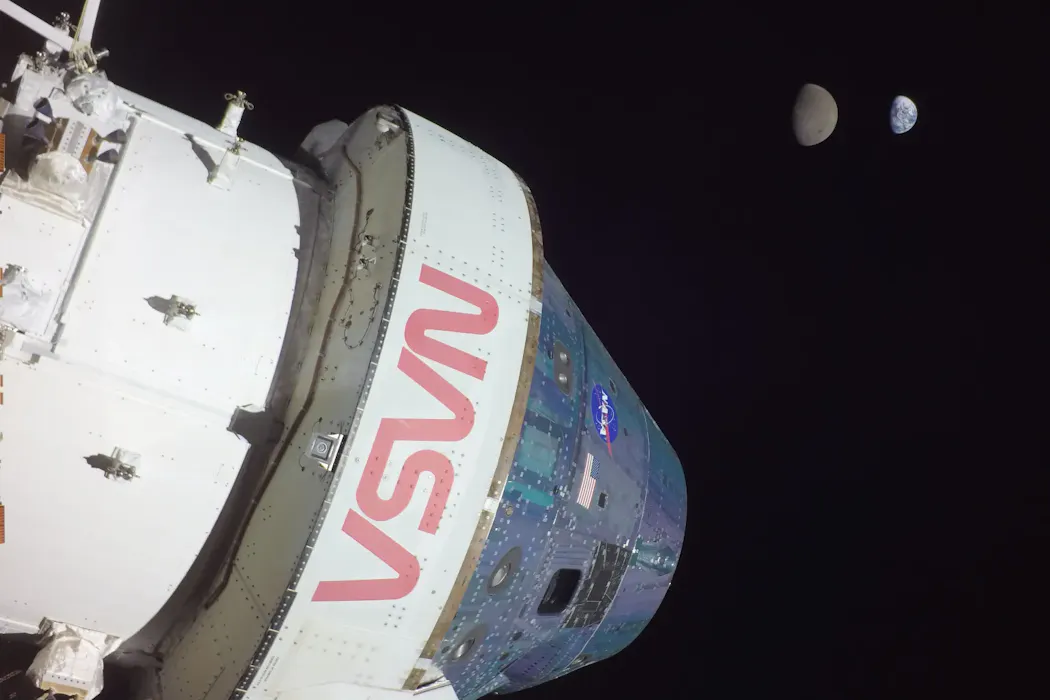
The Artemis I crew and service modules with the Moon and Earth in the distance on Nov. 28, 2022.NASA
While I was leading a tour of the National Air and Space Museum in January 2026, a visitor posed this insightful question: “Why has it taken so long to return to the Moon?”
After all, NASA had the know-how and technology to send humans to the lunar surface more than 50 years ago as part of the Apollo program. And, as another tour guest reminded us, computers today can do so much more than they could back then, as evidenced by the smartphones most of us carry in our pockets. Shouldn’t it be easier to get to the Moon than ever before?
The truth is that sending humans into space safely continues to be difficult, especially as missions increase in complexity.
The Artemis II SLS rocket and Orion spacecraft Integrity en route from the vehicle assembly building to Launch Complex 39B at the Kennedy Space Center, Jan. 17, 2026. NASA/John Kraus
New technologies require years of study, development and testing before they can be certified for flight. And even then, systems and materials can behave in ways that surprise and worry engineers and mission planners; look no further than Boeing’s Starliner CFT mission or the performance of the Orion heat shield on Artemis I.
Issues with Starliner’s thrusters led NASA to return the spacecraft from the International Space Station without its crew. Unanticipated chipping of the Orion heat shield resulted in years of research, culminating in NASA altering the atmospheric reentry plans for the Artemis II mission.
NASA’s programs also require sustained political will and financial support across multiple presidential administrations, Congresses and fiscal years. As a historian of human spaceflight, I have studied the space agency’s efforts to engage the broader public to convince American taxpayers that their programs hold value for the nation.
NASA is now on the eve of the first crewed flight to the Moon since the Apollo era: Artemis II. A crew of four will conduct a lunar flyby, laying the groundwork, the agency hopes, for a landing on the Artemis IV mission.
In early 1970, with two successful Moon landings on the books, President Richard Nixon sought to reduce NASA’s budget to better align with his administration’s priorities. This decision put the space agency in a difficult position, which ultimately led to the cancellation of three planned Apollo missions to conserve funding for its plans for long-term human activity in low Earth orbit.
NASA repurposed the third stage of a Saturn V rocket to create the first U.S. space station, Skylab, which operated from 1973 to 1974. The space agency used leftover Saturn IB rockets and Apollo command and service modules to send crews to the station.
Over the next three decades, NASA developed and operated the space shuttle. The fleet of space shuttle orbiters supported satellite deployment and microgravity research on orbital missions of up to 17 days. This work was meant to enable future long-duration human missions and provide benefits to people on Earth. For example, data from protein crystal growth experiments have informed the development of medicines.
The space shuttle program facilitated the construction, maintenance and staffing of a continuously inhabited research platform in orbit, the International Space Station. The first modules launched in late 1998.
Space shuttle Endeavour’s robotic arm begins the sequence to deploy the Unity module of the International Space Station on Dec. 5, 1998. NASA
Where to next?
As the new millennium approached, the Clinton administration tasked NASA to think beyond the space station. What could robots and humans do next in space? And where could they do it? Notably, the White House expressed an interest in locations beyond low Earth orbit.
NASA, it turned out, was well positioned to meet the administration’s request. NASA Administrator Daniel Goldin was already thinking about preparing proposals for the next presidential administration and had recently sponsored a human lunar return study. In 1999, he established a team to investigate new technologies, missions and destinations for the 21st century.
This work took on new significance following the tragic loss of the space shuttle Columbia crew in February 2003. Many people, including those in the new George W. Bush White House, wondered whether the human spaceflight program should continue – and, if so, how.
Administration discussions culminated in Bush’s Vision for Space Exploration in 2004, which directed NASA to retire the space shuttle after the completion of the space station. It called for returning humans to the Moon on a crew exploration vehicle designed for destinations beyond low Earth orbit.
It also called for continuing robotic exploration of Mars and engaging companies and international partners in space. Fifteen years earlier, President George H. W. Bush had also announced a Moon and Mars exploration program, but congressional concerns about cost kept space travelers close to home.
President George W. Bush announces his administration’s Vision for Space Exploration at NASA Headquarters in Washington, D.C., on Jan. 14, 2004. NASA/Bill Ingalls
The Constellation program’s legacy
In December 2004, NASA began the process of finding a manufacturer for the crew exploration vehicle. By August 2006, the space agency awarded Lockheed Martin the contract to build the capsule, which it had named Orion – the same Orion planned to carry Artemis astronauts to the Moon.
Years of research, development and testing followed for Orion as well as the Ares I crew and Ares V cargo launch vehicles. Together, these technologies made up the Constellation program.
An illustration of the Ares rockets from the Constellation program. The Ares I rocket with Orion spacecraft on top is on the left − it was intended for activities in low Earth orbit. The Ares V heavy-lift rocket, on the right, was designed for lunar missions. NASA
Constellation had two primary objectives: in the near term, to help transport crew to and from the space station after the space shuttle program ended; in the long term, to enable human lunar exploration.
Building systems that could work in both Earth orbit and around the Moon was supposed to save the time and cost of developing two vehicles. Similarly, adapting space shuttle program hardware could supposedly cut costs.
During the first months of Barack Obama’s presidency in 2009, the administration initiated an independent review of NASA’s human spaceflight plans. The Augustine Committee, chaired by retired aerospace executive Norman Augustine, found that the agency’s ambitions outstripped its limited budget, leading to significant delays. The first Orion spacecraft was likely to arrive after the space station ceased operations.
The committee proposed several paths forward at the current funding level, which prioritized space shuttle and space station programs. An additional annual investment of US$3 billion would allow for human exploration beyond low Earth orbit.
Ultimately, the Obama administration canceled Constellation, but two of its technologies lived on, thanks to U.S. senators from states that would have been affected by cuts.
The NASA Authorization Act of 2010 funded Orion’s continued development, shifting responsibility for space station crew transportation to commercial vehicles. It also directed NASA to develop the space launch system, a redesigned Ares V heavy booster, to send Orion to the Moon. The technical strategy had political benefits, too, preserving jobs in numerous congressional districts by providing continuity for aerospace contractors.
In December 2014, a Delta IV heavy rocket launched the first Orion capsule on a test flight, providing engineers with data on spacecraft systems and the heat shield. By October 2015, the space launch system had completed a critical design review, the last step before manufacturing could begin.
In this photo, the Orion capsule awaits recovery after splashdown after a test flight on Dec. 5, 2014. U.S. Navy, CC BY-NC
Introducing Artemis
In December 2017, the new Trump administration issued a policy directive shifting the focus of NASA’s human spaceflight program back to the Moon. The space agency would use Orion and the space launch system in a race to meet an ambitious 2024 landing date. NASA officially named the program Artemis in May 2019.
The 25-day Artemis I mission, launched in November 2022, was a major milestone for the program. This uncrewed flight was the first flight of the space launch system and the first to integrate SLS and Orion. It laid the groundwork for Artemis II, which will be the first crewed flight of the SLS.
Over more than 50 years, each new presidential administration has reassessed the place of spaceflight among its priorities, either encouraging or curtailing NASA’s efforts to return humans to the lunar surface.
Each crewed flight requires the alignment of technical expertise, political will and financial support over years if not decades. For the space fans who plan to watch the Artemis II launch, the wait for countdown may feel long. But it’s just a blink in NASA’s long journey back to the Moon.
Emily A. Margolis does not work for, consult, own shares in or receive funding from any company or organization that would benefit from this article, and has disclosed no relevant affiliations beyond their academic appointment.
Ryland Grace, the ‘Project Hail Mary’ protagonist, exhibits intellectual humility while problem-solving to save the Earth. Amazon MGM Studios
Early in Phil Lord and Christopher Miller’s science fiction blockbuster “Project Hail Mary,” middle school teacher Ryland Grace, played by Ryan Gosling, is tasked by an international coalition to uncover the biology of a strange microbe known as an “astrophage” that has been absorbing energy from an ever-dimming Sun.
Grace is a molecular biologist by training, but his controversial ideas and overconfident attitude have kept him out of academia. The viewer will see through flashbacks that as he’s matured, he’s developed a vital skill for solving the astrophage crisis: intellectual humility.
I’m an anthropologist who studies astronauts and space professionals to understand what space symbolizes to the people who experience it firsthand. Grace’s character in “Project Hail Mary” developed several of the traits that I’ve observed in the astronauts I’ve interviewed. These characteristics prove essential to success in high-stakes, uncertain situations. Warning: some plot points will be revealed ahead.
‘Project Hail Mary’ follows a middle school science teacher tasked with saving Earth from star-eating microbes.
Grace has been chosen as one of the first to study astrophage because of his Ph.D. dissertation on whether life can exist without water, a hot take in the world of science that, along with his rude response to peer reviewers, has gotten him banned from polite science conferences. The solar microbes eating the Sun seem to live without water, so Grace is the acknowledged expert.
Unfortunately, Grace can’t see into the mysterious, opaque little organisms until a dead one becomes translucent. Finally, Grace can see inside the microbe to study it, and he believes his hypothesis about life not needing water will be proven. However, chemical analysis reveals astrophage is made up of mostly water.
In a moment that undercuts both his expertise and his expectations, Grace is wrong. Crushed, he throws a tantrum, observed by a bemused assembly of international leaders.
What actually matters isn’t that Grace is wrong but what he does next. Only after Grace overcomes his frustration and need to be right is he able to move forward, returning to the problem with curiosity rather than defensiveness and the resolve to learn enough about astrophage to make saving the world a possibility.
Admitting what you don’t know
Perhaps the real hero of the story is not Ryland Grace himself but his intellectual humility. Intellectual humility, the admission of your own limited knowledge and a willingness to learn from others, sometimes seems to be undervalued, particularly by those in leadership positions.
People who are intellectually humble will say things like, “Tell me more,” or “I wish I had thought of that.” They don’t feel threatened when admitting vulnerability.
Some people, however, do feel threatened by the thought of admitting incomplete knowledge or appearing to have limitations. Instead of confessing what they don’t know, they may claim a kind of certainty that goes beyond their true expertise, shutting down further questioning. Intellectual humility, in contrast, encourages someone to remain engaged by highlighting how much they still have to learn.
Being contradicted by the facts can produce diverse reactions. For someone without intellectual humility, not knowing can feel like failure. It can lead to defensiveness, denial or a refusal to engage. With humility, however, not knowing is more interesting than scary. The defensiveness is gone, replaced by curiosity.
When Grace realizes his expectations about astrophage aren’t supported by scientific evidence, he goes from feeling sure to feeling unsure. Reality itself hasn’t changed, but Grace’s sense of reality shifts in an important way. He realizes that there is a great deal he still needs to learn about these microbes, without assumptions blocking new knowledge. His intellectual humility gives him a path forward, a way to reset and take in new information without shutting down.
Intellectual humility as a method
Ryland Grace is willing to learn, and this serves him well throughout the movie. His intellectual humility operates as a method, guiding how he approaches problems step by step.
For instance, once he realizes, to his dismay, that astrophage is made of water, Grace acknowledges this new truth. He doesn’t like it, but he accepts it. Moving forward, he avoids making assumptions about astrophage. Instead, he tests hypotheses using simple tools that have been cobbled together from items available in a big-box store.
His partner in this experiment is Carl, played by Lionel Boyce, who is there as a sort of half-“babysitter,” half-security guard, keeping an eye on Grace but also being irresistibly pulled into his scientific orbit.
While Carl doesn’t have any scientific training, Grace listens to his ideas and enlists his help with his experiments. Amazon MGM Studios
Grace’s intellectual humility transforms Carl from a minder into a partner. Even though Carl isn’t a scientist himself, when Grace has to figure out how to make the lab’s astrophage experiment replicate the conditions causing the crisis in our solar system, it is Carl who suggests a solution.
Instead of being bothered that a nonscientist knew better than he did, Grace acknowledges the solution’s value, thanks Carl and uses Carl’s idea to reach a crucial discovery, proving himself to be open to ideas and feedback from others.
When Grace’s experiments struggle, he moves forward without defensiveness and instead displays increasing curiosity. His method of intellectual humility is to admit ignorance, test variables and revise working hypotheses based on new data, staying open to suggestions from others the whole time. To borrow a phrase from a different space story, “this is the way.”
Science fiction to real space exploration
Although “Project Hail Mary” is fictional, the attitude displayed by Ryland Grace is something I have seen in ethnographic interviews with astronauts and other space professionals, including engineers, astronomers and flight surgeons. Ethnography is a method of research, usually done in the long term, that combines interviews and participant observation.
When confronted with the reality of the universe – an enormous starry void we humans are only beginning to understand – scientists and space explorers are often stunned and humbled by the extent of their own ignorance. Although there are, without a doubt, less-than-humble people building rockets or going into space, intellectual humility is often a guiding force among many successful space researchers.
The universe is full of stars, planets and galaxies – astronauts report feeling humility when confronted with the vastness of space. NASA/STScI
In my book, “The Ultraview Effect,” I trace the way a sense of cosmic awe can provoke feelings of humility and openness, which serve as catalysts for curiosity. This pattern, which I began to notice after an astronaut told me how seeing billions of stars with his own eyes made him realize how little he actually knew, is very similar to what Grace experiences in the movie.
Being open to awe and willing to be humbled by it isn’t weakness but strength. And in his embrace of intellectual humility, Grace lives up to his name.
Deana L. Weibel has received a research award from the Smithsonian National Air and Space Museum for upcoming archival research. She is an advisor to Cosmic Girls and a Fellow of the Explorers Club.
PlantNet is the brainchild of a consortium composed of four French research organisations (CIRAD, Inria, INRAE and IRD) and the Agropolis Foundation. It has recorded over 80,000 plant species and registers, on average, 100,000-700,000 new users per day and is available in 54 languages.Plantnet.org, Fourni par l’auteur
Identifying weeds, checking out the pollen map, or discovering new plant life-forms are among the promising wealth of data available to users of PlantNet – a “Shazam!” for plants. Pierre Bonnet and computer scientist Alexis Joly introduced us to the digitally enhanced plant recognition application they developed.
The Conversation: What can you tell us about PlantNet users?
Pierre Bonnet and Alexis Joly: An impact study carried out a few years ago identified that 12% of users used the app for work, either for research, land management, farming or teaching purposes. The large majority of users use PlantNet out of curiosity or personal interest.
Looking at who and where PlantNet users are based reflects the way technology is used in different parts of the world. In Asia, we have quite a few young users, because they are the most connected. We can also observe that the Chinese flora, which is nevertheless very rich, is poorly represented by the users of the application, and this is explained in particular by the fact that non-state or non-Chinese platforms, which are not carried by Chinese companies or partners, are much less present on this market.
Tropical parts of the world are very biodiversity-rich, is PlantNet particularly big there?
P.B. and A.J.: Brazil is in eighth place with just over 600,000 annual users. Indonesia and India are in the top 20. Currently, the bulk of PlantNet’s activity is still in Europe and North America. Several things explain this. PlantNet has already been launched in France and in Europe, and has therefore been further promoted and attracted media attention in this region of the world. Backed by user demand, the application was also initially adapted to the French and Mediterranean flora before it was gradually extended to include other European flora, then North American, and tropical.
It should also be taken into account that in tropical areas, species richness is certainly far greater, but access capacities are often more limited. The road network is less developed; 3G connectivity can be poor, particularly in forested mountain areas.
In the field, plant biodiversity can also be more complex to photograph, take for example, the many tropical plants that are epiphytic that is to say, that grow on another plant, especially at canopy level. When we talk about trees that are several tens of metres high, it immediately becomes more complex to photograph.
All this makes tropical plants and flowers considerably less known. The application covers almost 100% of European flora, compared with coverage of a few tens of percent for tropical countries. This is something that is not unique to PlantNet, and generally applies to all institutional databases, especially since covering tropical areas costs more.
But despite this, we are working with partners in Costa Rica, Guyana, Brazil, Cameroon, Madagascar and Malaysia, in particular to extend our coverage of the number of species.
In the tropics or elsewhere, what can be noted about the plants that users are looking to identify? Are the most common plants the most in demand or not necessarily?
P.B. and A.J.: There is necessarily a correlation, because very rare plants are necessarily rarely observed. But we also note that certain plants are very common, but of little interest, because they are “discreet”. These can be crop weeds, plants found by the roadside but which do not have noticeable flowers, which are pollinated by the wind with slender, greenish flowers, such as species of fescue (Festuca spp.), or bromes (Bromus spp.). They are less observed because they are actually less attractive. We can also note that tree searches are popular, whereas certain herbaceous or epiphytic plants tend to be extremely rare.
People actually often observe plants that they like, or plants that seem useful to them. Incidentally, we get a lot of requests about fruits, berries, and plums, probably because people want to know if they are edible or not.
But the goal of tracking useful plants for humans was not the main objective of the PlantNet project from the get-go. We had to adapt it, however, to meet expectations in terms of this type of use while remaining fairly moderate regarding the volume of information we provide.
At the same time, we are working more and more with people who study animal health, either in human health and who use the PlantNet service or data for their own work. Like for instance, people who worked for ToxiPlant which identifies plants that are toxic for horses. We also regularly consult doctors on different uses of PlantNet for identifying allergenic plants, especially those that cause skin allergies. We also liaise with the French regional agency for monitoring air quality ATMO Occitanie, which uses shared data on flowering plants listed through PlantNet that it integrates into its air quality estimation models indicating pollen counts.
Are there certain plants that would benefit from being photographed more?
P.B. and A.J.: Yes. There are plants that interest us, or our partners, but for which we have very little data. These include allergenic plants for respiratory allergies, such as male junipers, which release pollen when their cones open.
These cones are very discreet. Junipers are therefore photographed, but rarely with illustrations that show the development stage of the cones. Seeing as they cause allergies, some of our partners would like to collect more data on the subject. We hope to remedy this through animation features, either directly through the platform or through social media, to generate interest in collecting data on this type of plant or on rare, endangered plants or plants that have conservation issues, such as Marsilea strigosa Willd. and Arenaria provincialis Chater & P. Halliday (native to the South-eastern France).
We also have the case of certain plants that interest us for agriculture, weeds, for example, which we have barely identified at the stage of young shoots, such as ‘Imperatacylindrica_ (L.) Raeusch. or that Galium aparine L.
Your application encourages users to take several different pictures. This can be photos of flowers, leaves, fruits, bark, or of the entire plant, for example, to help them identify plants. What types of data do you have the most of?
P.B. and A.J.: Data on flowers, especially in their blooming seasons – during spring and early summer. Flowers attract interest and trigger observation. They are also the most effective visually, and have typically been used a lot by botanists in the past.
On PlantNet, after flowers, we notice a decreasing degree of performance for fruit, leaves, and then twigs and bark, which are sometimes more difficult to take pictures of, even if users are always encouraged to combine several criteria (flower and fruit, flower and leaf…) each time to maximise their chance of correctly identifying a plant.
What happens when PlantNet can’t match a photograph with an existing species?
P.B. and A.J.: Troubleshooting “no results found” is still a tricky business for all forms of AI, and PlantNet is no exception. Some species are very poorly represented, and it is very difficult to teach the model behind the app to differentiate between something that is very rare in the learning database and something that we do not have at all. We therefore seek to quantify the uncertainty, rather than decide when the model is uncertain or not. We are working with our team on creating confidence intervals. That is why, in some cases, the application will provide several species.
One thing that makes this work difficult is that new species often resemble existing species. A new species is thought to be very picturesque, but it isn’t always the case, hence the confusion.
There is also the issue of hybrid, ornamental plants. You will always come across new plant creations. We cover them, but not as well as other plants, even though we are trying to overcome this difficulty.
We also set out to simply identify more and more plants. Today PlantNet covers 85,000 species out of an estimated 400,000, with 2,000 new species being discovered each year. These discoveries are made by taxonomists worldwide and via the World Flora Online network, which brings together several dozen universities, herbaria and botanical gardens, which PlantNet joined in 2025.
Working closely with these networks will enable us to improve cases where PlantNet performs poorly, particularly when new species emerge thanks to the research carried out by the taxonomists, who actually further knowledge by dividing what was previously thought as a single species, but which represents, in fact, several of them or, conversely, by grouping together what were thought to be different species, but which turns out in reality to be only one plant.
Let’s come back to the 10% of users who used PlantNet for work. Who are they? What line of work are they in?
P.B. and A.J.: PlantNet’s data is very useful for building species distribution models predicting where a given species is commonly found. There are certainly biases in our data, depending on where people do and don’t go, but they can help us to gain a better understanding of the factors that influence these distributions, including climate change. This provides answers to questions like, “will species change habitats or stay put?” or “what is the human impact on species distribution?” Many ecologists download the PlantNet data and couple it with other data for species distribution modelling.
PlantNet data can also help in the detection of invasive species that are often notable for their size, density, visual appearance, or novelty, such as Carpobrotus edulis (L.) N.E.Br or Mirabilis jalapa L. We are working on this subject with the French Biodiversity Office, which is interested in using plant monitoring cameras to detect the presence of invasive plants, in order to contain their expansion within the areas where they are found.
We have an ongoing project that focuses on improving the classification of species that are present in farming environments and recognition of plant pathogens whether they are viruses, bacteria, fungi…
Have you discovered any unusual uses of the app that have surprised you?
P.B. and A.J.: Perhaps the most surprising was a Dutch museum which used PlantNet to identify plants featured in the paintings it had on display.
Other surprises have included people using PlantNet to identify a tattoo of a plant, or a plant-inspired pattern of an oilcloth… along with other more fun uses of the app like on the Explorama or Geo Quest apps which use our automated identification service.
PlantNet supports the diversity of possible uses, not by trying to integrate them, but rather by sharing its plant-identifying services. We have more than 20,000 accounts that have incorporated PlantNet’s service into their own mobile or web application, or in their data processing workflow.
And what other uses for PlantNet could be developed?
P.B. and A.J.: We have processed just over 1.3 billion plant ID requests. Among this data, there is a lot of material for characterising environments and species… However, the data is still difficult to use due to its sheer volume. These photos most probably contain new species and data on species that do not exist elsewhere. Photos users have posted provide potentially interesting information about the associated communities (not just in the foreground, i.e.; the plant photographed, but in the background) and about plants’ surrounding environments. While it’s not what the photo primarily sets out to do, it does offer potentially very interesting data on plant associations, that for the moment, remain untapped.
Little use has been made of our data to study the impact of current, fairly fast-moving climate change. PlantNet has, in this respect, collected extensive data over the last five to ten years that could allow us to gain greater understanding on how plants react to such swift environmental changes. From one year to the next, there may be a lot of variability, but for now, it is difficult to measure this impact.
What can PlantNet users do to help with further research going forward?
P.B. and A.J.: Creating a user profile significantly increases the benefits for research. By creating an account, people agree to terms of use and facilitate re-exploitation for research. The more qualitative the data is, the more relevant it is to research activities. Geolocation is, for example, very valuable to us. It is also beneficial for users with a potentially higher level of determination.
Interview by Gabrielle Maréchaux, Environment Journalist at The Conversation France.
A weekly e-mail in English featuring expertise from scholars and researchers. It provides an introduction to the diversity of research coming out of the continent and considers some of the key issues facing European countries. Get the newsletter!
Pierre Bonnet a reçu des financementsde la commission européenne (projets HORIZON GUARDEN – 101060693 et MAMBO – 101060639) ainsi que de l’agence nationale de la recherche (PEPR AgroEcoNum – 22-PEAE-0009).
Alexis Joly a reçu des financements de la commission européenne (projets HORIZON GUARDEN et MAMBO) ainsi que de l’agence nationale de la recherche (PEPR AgroEcoNum).
We reviewed the evidence from 46 studies focusing on the effectiveness of talking therapies, clinical contact (such as letters, postcards, phone calls or contact with a GP or support worker) and two digital apps in reducing self-harm.
Talking therapies use conversation to help people understand patterns in their thinking, emotions and behaviour, and to help them build healthier ways of dealing with challenges. Many forms of therapy or contact also provide information about self-harm, risk factors, understanding stressors and looking out for warning signs of self-harm.
But our review found that after completing some type of talking therapy or series of clinical contacts, only women saw a decrease in rates of self-harm. For men, there was no change in rates of self-harm. This meant that men were 20% more likely than women to self-harm again after attending any form of therapy.
We found this was only the case for adults. There was no difference between male and female adolescents – though there were fewer studies involving adolescents. Most studies were done in western countries.
Around two-thirds of the information in our review came from women. Most of the studies identified people presenting with self-harm in hospital or mental health settings. As men are less likely to seek help for self-harm, this reduces the pool of men who can be approached for self-harm studies. Yet despite the fact that there were fewer men than women in the studies, there was still a sufficient number of men to detect sex differences in our review.
Reducing self-harm
If talking therapies are less effective for preventing self-harm in men compared to women, this may be one of many contributing factors to higher suicide rates in men.
This could suggest that talking therapies don’t address the underlying issues that are causing men to harm themselves. For instance, socioeconomic adversity – such as problems with housing, finances or employment – are particularly important risk factors for poor mental health and suicide in men.
Other approaches, such as community-based activities, may be more effective for men than talk therapy. Lee Charlie/ Shutterstock
Men are also half as likely to be in contact with psychological services after self-harm compared to women. Traditional views of masculinity and stigma may mean men are less comfortable talking about their emotions and seeking help for psychological distress.
Addressing self-harm and suicide in men needs to involve a whole society approach. This should include early emotional education in homes and schools and de-stigmatising psychological distress and asking for help.
Understanding signs of self-harm and how men present to GPs, emergency departments and other services is also important.
Men may punch objects, abuse alcohol or drugs or engage in risky behaviours which might not be recognised as self-harm. This means that healthcare professionals may not identify self-harm as readily in men and refer them for help.
Community-based approaches such as sports clubs, men’s support groups or helplines could be more effective for men in addressing mental health than talking therapies. Instead of a direct focus on talking about feelings, men also find activities such as working on a project together, problem solving, coaching and mentoring helpful.
Many of these approaches also reduce loneliness and social isolation, which are major risk factors for self-harm and suicide. Prioritising these approaches to support men’s mental health may help to reduce self-harm and suicide in men.
National Institute for Health and Care Research ARC North Thames
Rose McCabe received funding from the National Institute for Health and Care Research ARC North Thames.
Israel’s prime minister, Benjamin Netanyahu, instructed the military on March 29 to expand its operations in southern Lebanon. It is the latest conflict between Israel and Hezbollah, in which Netanyahu has again promised to dismantle the Lebanese Shia group, and does not seem close to a conclusion.
This is not the first time Israel has invaded southern Lebanon. And people across the country are bracing themselves knowing that previous Israeli invasions have almost always resulted in longer-term occupation. Lebanese fears are worsened by the opaque situation on the ground.
Contradictory reports regularly break about the success or failure of Israeli incursions. The latest of these is a widespread but unconfirmed rumour that Israeli troops have captured the Beaufort Castle, a 12-century fortress that overlooks the Litani River.
The Litani splits Lebanon horizontally to form the country’s southernmost region, which is seen by Israeli officials as a buffer zone that can help protect it from Hezbollah attacks. More recently, however, extremist Israeli groups have begun to aspire to settle the area.
As Hezbollah fights the Israeli military in the south, a different kind of battle is taking place north of the Litani. Since the start of the war in early March, more than a million people have been forced to leave their homes. These people are mainly Shia Lebanese from the south and Beqaa Valley.
In a deeply divided society where most areas are clearly – even if unofficially – demarcated along religious lines, the influx of huge numbers of displaced Shia into traditionally Christian and Sunni areas was always bound to heighten sectarian tensions.
Reports have circulated of displaced women and children being accused of bearing loyalty to Hezbollah and turned back in some places. Many displaced men have also been judged to be Hezbollah operatives whose presence in non-Shia areas could result in targeted Israeli strikes.
The last round of conflict between Hezbollah and Israel in 2024 was met with a feeling of unity inside Lebanon. Sparked by a shocking attack in which Israel blew up communication devices used by Hezbollah operatives, killing 42 people and wounding thousands more, this conflict led to a general sense of injustice among Lebanese people.
This time, however, the war is seen by most to have been started after Hezbollah fired rockets towards Israel in retaliation for the killing of Iran’s supreme leader, Ali Khamenei. As a result, it has left many Lebanese people feeling dragged into a war they did not want.
Combined with the fact that Israel has not refrained from attacking non-Shia areas of Lebanon where it has identified targets for assassination, Christian and Sunni residents across the country have felt less ready to welcome those who have been displaced.
The government’s lack of preparation for the task of providing shelter and food for more than a million people has only aggravated the situation. While over 1,000 public schools have been converted into shelters, many displaced people are renting from private landlords. The result has been a direct integration of the displaced population into non-Shia areas.
On March 24, missile fragments that were later revealed to have originated from an intercepted Iranian missile fell over the Christian area of the coastal city of Jounieh. Within hours, a group of residents were filmed attempting to expel displaced people from their area, blaming them for what had happened.
A few days prior, a planned shelter in the Christian-dominated Karantina neighbourhood of the capital, Beirut, had to be cancelled because of a public campaign by residents who feared it would “bring strikes to the area”.
There is some evidence that Israel is using heightened sectarian tensions to provoke some kind of uprising against Hezbollah in Lebanon. Israeli warnings for residents in southern Lebanon to evacuate in early March included specific instructions to “move north toward [Sunni-dominated] Tripoli … and east toward [Christian-dominated] Mount Lebanon”.
And days later, on March 13, Israeli planes dropped leaflets over Beirut telling citizens that “Hezbollah is turning your homes into terrorist hideouts”.
Incoming political battle
Another difference to the 2024 conflict is the government in place in Lebanon. At that time, a caretaker government was in charge, while the presidential position remained vacant. In early 2025, a new president (Joseph Aoun) and prime minister (Nawaf Salam) were sworn into office and have since promised to tackle Hezbollah’s military capabilities.
Widely seen as pro-US, this government – which does include two Hezbollah ministers – has tried to take overt steps to distance itself from Hezbollah’s military operations against Israel in a clear attempt to safeguard the rest of the country.
On March 1, it became the first Lebanese government to ban Hezbollah’s military activities. And more recently it has attempted to expel the Iranian ambassador, Mohammad Reza Shibani, from the country in protest at Iran’s involvement in Lebanese politics.
The fact that Hezbollah has continued fighting Israel and the ambassador has defied the government’s orders gives a clear indication of how little power the Lebanese government holds. Still, the consequences of its declarations are felt in the country as they give anti-Hezbollah elements of society grounds to accuse the party of acting against the Lebanese state.
The last time such a direct confrontation of Hezbollah occurred within Lebanon was in 2008, when the government attempted to take down the group’s clandestine infrastructure. The result of this was violent sectarian clashes in Beirut.
Hezbollah has rejected the government’s actions. The deputy head of Hezbollah’s political council, Mahmoud Qomati, insisted on March 17 that the group is “able to upend the country … and upend the government in the face of such decisions”. He then implied a comparison between the Lebanese government and Vichy France, the collaborationist regime that governed southern France during the Nazi occupation in the second world war.
Past experience shows that there is no hope for an end to the hostilities in Lebanon so long as Hezbollah and the Lebanese government remain as diametrically opposed as they currently are. As it stands, there is no Shia representative in the proposed Lebanese delegation for ceasefire negotiations – highlighting how distant a resolution remains.
As Hezbollah continues to fight Israel in the south, the rest of Lebanon is facing the prospect of another devastating civil conflict.
Tarek Abou Jaoude receives funding from The Leverhulme Trust.